Saturday, October 14, 2023


Dialog beyond spoken words important in teaching-learning situations, even digitally

virtual learning
Credit: Unsplash/CC0 Public Domain

Even in digital courses, it's not just the spoken word that counts. Aspects such as tone of voice, eye contact and the appreciation experienced are also important, as a study by the University of Würzburg shows.With the pandemic came its big boom: Digital  events. Depending on the incidence and the respective regulations, lecturers and students met purely digitally in specially set up Zoom meetings. Alternatively, some of the students sat at a  in the lecture hall, while the rest followed the proceedings on their PCs in their home study.

A team from the Institute of Education at the Julius-Maximilians-Universität Würzburg (JMU) used the example of two seminars in the

 summer semester of 2023 to investigate how these different settings affect teaching and learning. Regina Egetenmeyer, Professor for Adult and Continuing Education at JMU, and Ramon Flecha, sociologist, Professor Emeritus at the University of Barcelona and at that time Visiting Professor at the Institute of Education, were responsible for the study. The researchers have now published the results of their research in the Multidisciplinary Journal of Educational Research.

Dialogic teaching works even in synchronous-hybrid teaching settings

"The study shows that it is highly relevant to think about dialogue in teaching-learning situations beyond spoken words. It is therefore the task of teachers to observe learners and to design appreciative dialogs in teaching-learning settings beyond spoken words," Egetenmeyer summarizes the central result of her study. The two seminars in the summer semester of 2023 showed that this is also possible in events in which some of the students are present on site and some are connected via computer.

In fact, the study shows that dialogic teaching has a positive effect on students even in synchronous-hybrid teaching settings—whereby it is not only the words spoken that matter, but also the tone of voice, eye contact and the appreciation experienced. "The evaluation shows that students see dialogue as very positive for their learning process. In some cases, they even see a transformative potential of dialogue with regard to their ," says Egetenmeyer.

Looking at speech acts alone is not enough

"In the recent past, scholars have been intensively studying issues around dialogic teaching in face-to-face as well as online and hybrid sessions," says Professor Ramon Flecha, explaining the background of the study. However, in his view, most analyses of dialogic teaching are reduced to an identification of dialogue with words, with so-called speech acts. Yet, he says, it has long been clear that looking at speech acts alone is not enough to capture a dialogue, because speech acts do not take into account central dimensions of human relationships.

"That's why new theoretical developments are now taking the place of the traditional ones. One of them is the move from speech acts to communicative acts," says Professor Marta Soler of the University of Barcelona, who is co-author of the paper. These are characterized by the fact that communication takes place not only through words, but also through other signs such as looks, voice pitch and body language. Accordingly, it is possible to develop dialogic teaching beyond words. So far, however, there have been no  based on this theoretical approach. The study now published by the Spanish-German team is thus the first in this field.

Positive verdicts from students

Two seminars of a university master's program at JMU were the focus of the research. Participation in them was possible both in presence and digitally. In the synchronous-hybrid seminars, students were provided with accompanying materials; there they could also give anonymous feedback on the individual events. In parallel, the research team closely monitored all forms of communication related to the seminars and created a documentary analysis of all feedback written by students at the end of each session.

"Our evaluations show that the  consistently rated this form of dialogic teaching, which is based on communicative actions beyond speech acts, positively," says Ane López de Aguileta from the University of Barcelona, who was also a visiting researcher at the University of Würzburg during the summer semester. On the one hand, the seminar participants were extremely satisfied with their own learning success. On the other hand, they were of the opinion that they would be able to use this method to initiate changes in their later professional lives, for example in educational projects.

Based on this study, Egetenmeyer and Flecha now want to investigate other teaching-learning settings at the University of Würzburg with regard to their significance of "Dialogic Teaching beyond Words" in order to expand knowledge of the innovative teaching potential.

More information: Mar Joanpere Foraster et al, Dialogic teaching beyond words, Multidisciplinary Journal of Educational Research (2023). DOI: 10.17583/remie.12867


More JWST observations are finding fewer early massive galaxies

More JWST Observations are Finding Fewer Early Massive Galaxies
The first JWST Deep Field Image, showing large distant galaxies. Credit: NASA, ESA, CSA, STScI

There's a common pattern in science. We develop some new process or tool that allows us to gather all kinds of data we've never had before, the data threatens to overturn all we've assumed about some long-established theory, and then the dust settles. Unfortunately, the early stage of this process generates a lot of sensationalism in the press. Early results from the JWST are a good example of this.

The James Webb Space Telescope is the most powerful infrared telescope we've ever built. It is sensitive enough to capture detailed images of some of the earliest . Those that formed soon after the so-called dark ages of the early universe.

Before JWST we only had galactic observations from a slightly later period, when the galaxies were fully established. Based on those observations and our understanding of the Big Bang, we had a good idea of how quickly galaxies evolve. Or so we thought, because initial observations from JWST seemed to overturn that.

The galaxies JWST found were large, bright, and already had structure to them. So the headlines ranged from claims that the Big Bang and possibly even general relativity had been disproven. But now the dust is starting to settle, and it turns out those revolutionary results weren't quite as unusual as some implied, as a new study shows.

Identifying the most distant galaxies is a bit of a challenge, so there are a few tricks astronomers use to help them out. One of these is to use what is known as a break in a galactic spectrum. For , there is only so much energy it can absorb before it becomes ionized. This means that if photons from a galaxy are above this limit, they will ionize hydrogen in the  and be scattered so much we don't see it. This is known as the Lyman break.

There's a similar break called the Balmer break. Galactic light that shows these breaks are called double-break galaxies. Since astronomers know the wavelengths of these breaks, they can specifically target galaxies at a certain distance by looking for breaks with the right redshift.

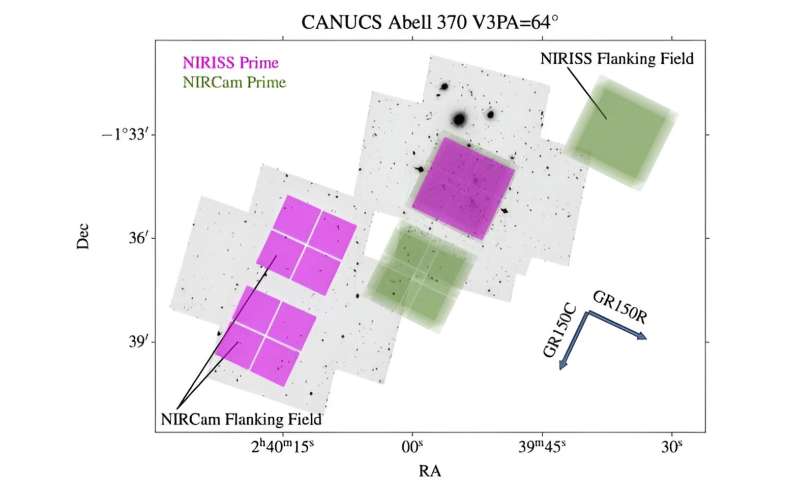
CANUCS observation fields of Abell 370. Credit: JWST/CANUCS

Hubble (top) and Webb (bottom) images of distant galaxies. Credit: Roan Haggar using data from Hubble and JWST


Thefirst JWST results looked for double-break galaxies at redshifts of about z=7, or when the universe was less than a billion years old. And they found all those galaxies that caused such a star. Too many, too bright, and too evolved.

But while the double-break method is great for finding galaxies, you can see where it could introduce a bit of bias into the data. The galaxies need to be bright enough and hot enough to ionize hydrogen, so smaller, dimmer, and cooler galaxies might be left out. This bias is well known, but this new study wanted to get a handle on how severe the bias might be.

The team used data from the CAnadian NIRISS Unbiased Cluster Survey (CANUCS), which uses JWST images of galaxy clusters looking for small distant galaxies that are gravitationally lensed to make them appear brighter. Their findings have been published on the pre-print server arXiv.

From this data, they identified 19 double-break galaxies. Since CANUCS galaxies contained more than double-break galaxies, the team could compare the distribution of double-break galaxies to a larger population.

What they found is that double-break selection methods can bias towards larger and brighter galaxies. Particularly in  such as theirs, even a single large outlier can give the impression that galaxies are larger and brighter than they statistically are. In other words, we shouldn't bet the farm on our initial results. As we gather more data and get detailed observations of more galaxies, the selective bias can wash out.

JWST observations may still force us to drastically revise our standard cosmological model in time, but this study shows we are still in the early stages. The  isn't out of the game yet, and it will take many more observations to see where the dust really settles.

More information: Guillaume Desprez et al, ΛCDM not dead yet: massive high-z Balmer break galaxies are less common than previously reported, arXiv (2023). DOI: 10.48550/arxiv.2310.03063


Journal information: arXiv 


Provided by Universe Today Growth of 'baby galaxies' witnessed with James Webb Space Telescope


A new theory to explain Abell 3827's hazy and askew gravitationally lensed galaxies

A new theory to explain Abell 3827's hazy and askew gravitationally lensed galaxies
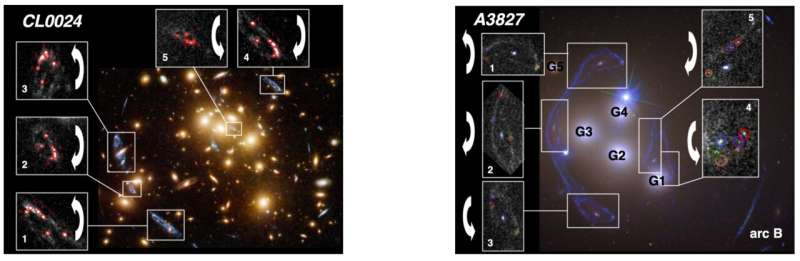
Comparison of multiple-image configurations between CL0024 (left) and A3827 (right). 
Relative parities (white arrows) in CL0024 are in agreement with standard cusp and fold 
configurations in single-plane lensing (see Wagner et al. (2018); Lin et al. (2022) for details)
, while relative orientations in A3827 cannot be brought into agreement with that. 
For instance, the transformation from image 1 to image 2 in A3827 still requires a 
clockwise rotation of 90 degrees compared to the transformation between image 1 
and image 2 in CL0024. The central galaxies are labeled G1–4 with G5 being the closest 
member galaxy outside the multiple-image configuration. These galaxies were labeled N1–4
 and N6 in Massey et al. (2015). Brightness features in A3827 (colored circles) are obtained
 with our persistent-feature extraction pipeline (Lin et al. 2022) as detailed in Section 2.
 Image credits: CL0024 adapted from Wagner et al. (2018), A3827 color image from Massey
 et al. (2015), details of multiple images from HST/WFC3 F336W filter band 
(program GO-12817).
 Credit: Monthly Notices of the Royal Astronomical Society (2023). 
DOI: 10.1093/mnras/stad2800

A trio of astrophysicists, two from Carnegie Mellon University and the third from Bahamas Advanced Study Institute and Conferences, is proposing a new theory to explain the unique lensing seen with Abell 3827—a galaxy cluster approximately 1.3 billion light-years away. In their paper published in Monthly Notices of the Royal Astronomical Society, Joyce Lin, Richard Griffiths and Jenny Wagner, describe their new theory and explain how it might help better understand the nature of dark matter.

Abell 3827 is a designation for a cluster of hundreds of , as viewed from Earth—just four of the galaxies are clearly prominent. Situated approximately 1.3 billion light-years away, the cluster has represented an opportunity for astrophysicists to study dark matter due to its unique lensing properties.

Prior research has suggested that the visible part of the cluster makes up just 10% of its mass—the rest is believed to be dark matter. Prior research has also found that because of the nature and arrangement of the galaxies in the cluster, it serves as an unusually large gravitational lens. Such lensing has resulted in the formation of what looks like a glowing blue ring around the edges of the cluster.

Abell 3827 was discovered just two years ago by a team studying data from the Hubble Space Telescope. Since that time, astronomers have been debating the number of images that can be seen when looking at it—estimates range from four to eight. The difficulty in pinning down the exact number is due, it is believed, to gravitational distortion of the light emitted by the stars that make up the galaxies, by unseen dark matter.

It has also been noted that some of the distortion is likely related to rotation, which some have claimed is an example of self-interacting dark . In this new effort, the research trio is proposing that some of the characteristics of Abell 3827 are due to the morphology of the lensing.

They suggest that the lensing seen with the cluster is due to its three-dimensional characteristics—a major departure from prior theories which describe lensing as thin and flat. In their theory, Abell 3827's  is shaped more like a waffle, with different parts having different amounts of thickness—a characteristic that could explain why the cluster appears to look stretched more in some parts than others.

Notably, for their theory to hold water, the galaxies making up the  must not all be the same distance from Earth—the research team believes that three of the major four galaxies are all nearly the same distance while the fourth is perhaps tens of millions of  closer.

More information: Joyce Lin et al, Much ado about no offset—characterizing the anomalous multiple-image configuration and the model-driven displacement between light and mass in the multiplane strong lens Abell 3827, Monthly Notices of the Royal Astronomical Society (2023). DOI: 10.1093/mnras/stad2800 . On arXivdoi.org/10.48550/arXiv.2306.11779


Journal information: arXiv 


 Notices of the Royal Astronomical Society 

© 2023 Science X Network

Hubble watches cosmic light bend

RIP

Canadian-French astrophysicist Hubert Reeves dies aged 91

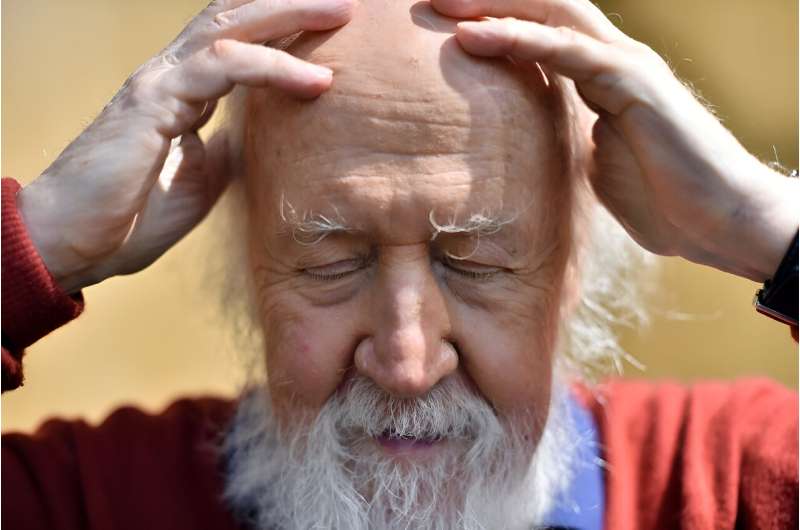
Astrophysicist Hubert Reeves, seen here in France in 2016, was a passionate defender of the environment
Astrophysicist Hubert Reeves, seen here in France in 2016, was a passionate defender of
 the environment.

Canadian-French astrophysicist Hubert Reeves, who was renowned for his work popularizing space science, died Friday aged 91, his son said in a post on Facebook.

"My whole family joins me in the pain of having to announce that our dear father has gone to join the stars," Benoit Reeves said.

The history of the universe was Reeves' life passion—he famously said that "to look far is to look early," evoking the concept of space-time—and he was also an ardent defender of planet Earth.

Born in Montreal on July 13, 1932, his thirst for knowledge began at a young age.

At night at their home in Quebec, Reeves and his family would go out to admire the sky, where he first learned to recognize constellations using a cardboard sheet.

He excelled in physics and, by age 18, knew he wanted to become an astronomer.

He did a doctorate at Cornell University and became a  to NASA in the early 1960s before teaching at the University of Belgium.

He later became director of research at France's National Centre for Scientific Research (CNRS) and adviser to the country's Atomic Energy Commission.

Reeves wrote books and made numerous popular films and documentaries, all underpinned by the fundamental question: does the universe have meaning?

And he became a passionate environmental campaigner, calling for politicians to take action.

We must "prevent the planet from becoming uninhabitable," he pleaded at the Elysee Palace in 2014 during an environment conference.

"We are facing a battle ... Who will win? Nobody knows," said the father of four and eight-time grandfather in a poignant speech.

For him, saving the planet was a matter of "the heart."

"Ecology is not just one big problem, but millions of little problems," he told AFP in an interview in 2018. That means people have to "want to tackle them" every day.

© 2023 AFP


Pfizer cuts earnings outlook on lower COVID-19 drug sales

pfizer
Credit: Unsplash/CC0 Public Domain

The US pharmaceutical giant Pfizer sharply scaled back its earnings outlook for the year, blaming lower-than-expected sales of two drugs used to treat COVID-19, the company said Friday.

It now "anticipates full-year 2023 revenues to be in the range of $58.0 to $61.0 billion, versus its previous guidance range of $67.0 to $70.0 billion," Pfizer announced in a statement.

Earnings per —the benchmark for the markets—should come in at between 1.45 and 1.65 dollars, compared with 3.25 to 3.45 dollars previously anticipated.

The cut to Pfizer's guidance was "solely due to its COVID products," the company said.

"Full-year 2023 revenues for Paxlovid and Comirnaty are expected to be approximately $12.5 billion, a decline of $9.0 billion versus original expectations," it added.

The sharp revision to expected sales of Paxlovid, an oral antiviral drug, and the COVID-19 vaccine Comirnaty sent Pfizer's stock tumbling.

The company's shares were more than three percent lower in after hours trading at 5:30pm local time in New York (2130 GMT).

After a late summer surge, COVID-19 rates have since come down sharply.

Test positivity rates, hospitalizations and deaths due to the virus are all down over the last week, according to CDC data.

In the statement, Pfizer's chief executive, Albert Bourla, insisted that the 's non-COVID product portfolio is still on track for robust growth this year.

"Pfizer's non-COVID product portfolio remains strong, and we continue to expect these products to achieve year-over-year operational  growth in the range of 6% to 8% in 2023," he said.

© 2023 AFP

Pfizer eyes big drop in COVID-related revenues in 2023


Drones delivering opioid overdose reversal kits could reach people more quickly than ambulances

Drones delivering opioid overdose reversal kits could reach people more quickly than ambulances
Credit: HeroTech8

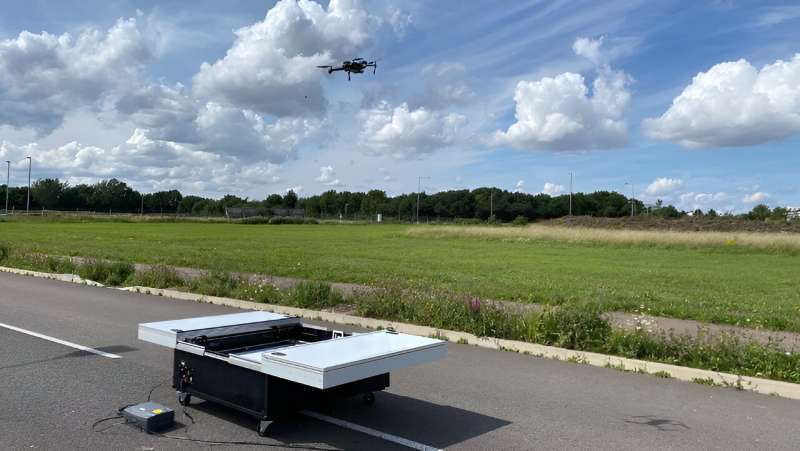
Researchers from King's College London used real-world data of fatal opioid overdoses where a bystander was present to show that commercial-off-the-shelf drones could have reached 78% of cases within seven minutes—the benchmark time for the arrival of emergency services for Category 1 calls in England—a huge increase on the 14% reached by ambulances.

The researchers also found that by increasing the speeds of the drones and designing specialist cargo cradles, an estimated 98% of  could be reached within seven minutes. The study, "An evaluation of naloxone transit for opioid overdose using drones: A  using real-world coroner data" is published today (Oct. 13) in Addiction.

Naloxone is a life-saving drug which reverses or blocks the effect of opioids and rapidly restores normal breathing. "Take-home" naloxone kits are increasingly available from community pharmacies and drug treatment services, but a supply is not always readily accessible. Paramedics routinely carry naloxone and aim to attend emergencies in seven minutes, however this can be impacted by factors such as ambulance waiting times or the location of a patient, such as a music festival.

The modeling suggests the naloxone kit would be delivered to the site of the overdose, and the bystander would administer the medicine by nasal spray. Paramedics would attend the scene as usual and deliver the patient to urgent care.

"When a person overdoses and stops breathing, every second counts. Naloxone is very effective when given at the first signs of overdose and is easy to use. This study shows that drones can get naloxone to the site of an  more quickly than paramedics in an ambulance. This could make a huge difference to people's survival," says lead author Dr. Caroline Copeland, from the School of Cancer & Pharmaceutical Sciences.

She added, "Bystanders leaving the scene of overdoses occurs due to fear of prosecution as illegal drugs are often present at the scene. If naloxone can reach those who need it before paramedics and , bystanders may be encouraged to help before leaving."

Dr. Paul Royall, from the School of Cancer & Pharmaceutical Sciences, first author and co-founder of Drone Mat Lab said, "Drones have the potential to revolutionize medicine delivery. A robust drone network can deliver  kits efficiently. The  under evaluation have collision detection technology so they don't fly into buildings or through air space, and are deployed using a standalone drone station."

More information: Paul G. Royall et al, An evaluation of naloxone transit for opioid overdose using drones: A case study using real‐world coroner data, Addiction (2023). DOI: 10.1111/add.16361


Journal information: Addiction 

FDA approves second OTC naloxone spray for suspected opioid overdose


Opioid limits didn't change surgery patients' experience, study shows

surgery patient
Credit: Pixabay/CC0 Public Domain

Worries that surgery patients would have a tougher recovery if their doctors had to abide by a five-day limit on opioid pain medication prescriptions didn't play out as expected, a new study finds.

Instead, patient-reported pain levels and satisfaction didn't change at all for Michigan adults who had their appendix or gallbladder removed, a hernia repaired, a hysterectomy or other common operations after the state's largest insurer put the limit in place, the study shows.

At the same time, the amount of  pain medication patients covered by that insurer received dropped immediately after the limit went into effect. On average, patients having these operations received about three fewer opioid-containing pills.

The study, which merges two statewide databases on patients covered by Blue Cross Blue Shield of Michigan (BCBSM), is the first large study to evaluate whether opioid prescribing limits change  after surgery.

The study has been published in JAMA Health Forum by a team from Michigan Medicine, the University of Michigan's academic medical center.

Measuring the impact of limits from patients' perspectives

The BCBSM limit of five days' supply, which went into effect in early 2018, is even stricter than the seven-days' supply limit put in place a few months later by the state of Michigan. Other major insurers and states have also implemented limits, most of which allow are seven-day limits.

Limits are designed to reduce the risk of long-term opioid use and opioid use disorder, as well as to reduce the risk of accidental overdose and the risk of unauthorized use of leftover pills.

"Opioid prescribing limits are now everywhere, so understanding their effects is crucial," said Kao-Ping Chua, M.D., Ph.D., the study's lead author. "We know these limits can reduce opioid prescribing, but it hasn't been clear until now whether they can do so without worsening patient experience."

He noted that even the 15% of patients who had been taking opioids for other reasons before having their operations didn't show an increase in pain or a decrease in satisfaction after the limit was put in place, even though opioid prescribing for these patients decreased. That decrease was actually contrary to the intent of the limit, which was only designed to reduce prescribing to patients who hadn't taken opioids recently.

Chua and several of his co-authors belong to the U-M Opioid Research Institute and Institute for Health Care Policy and Innovation. In addition to his work on opioids, Chua is an assistant professor of pediatrics at the U-M Medical School and a member of the Susan B. Meister Child Health Evaluation and Research Center at U-M.

Some of the authors helped develop evidence-based surgical opioid prescribing guidelines published by U-M's Opioid Prescribing Engagement Network (OPEN), a group that recommends prioritizing non-opioid pain relief and limiting prescriptions to no more than 10 opioid pills for most of the operations considered in the study.

How the study was done

For the new study, Chua and colleagues used data from the Michigan Surgical Quality Collaborative, which collects data on patients having common operations at 70 Michigan hospitals. MSQC surveys patients about their pain, level of satisfaction and level of regret after their operations.

The team paired anonymized MSQC data with data on controlled substance prescription fills from the state's prescription drug monitoring program, called MAPS.

In all, they were able to look at opioid prescribing and patient experience data from 1,323 BCBSM patients who had common operations in the 13 months before the five-day limit went into effect, and 4,722 patients who had operations in the 20 months after the limit went into effect.

About 86% of both groups were non-Hispanic white, patients' average age was just under 49, and just under a quarter of both groups had their operations on an emergency or urgent basis. Just under half were admitted to the hospital for at least one night.

About 27% of both groups had their gallbladders taken out laparoscopically, and a similar percentage had minor hernia repairs. About 10% had an appendectomy done laparoscopically, and a similar percentage had laparoscopic hysterectomies. The rest had more invasive procedures, like open hysterectomies major hernia repairs, or colon removal.

The percentage of prescribers who prescribed opioids to their patients having these operations did not change, but the percentage of patients who filled a prescription for an opioid did, possibly because pharmacists rejected prescriptions that weren't compliant with the BCBSM limit, Chua speculates.

Jennifer Waljee, M.D., M.P.H., M.S., senior author of the study, notes that the MSQC database doesn't include all types of procedures, such as knee replacements and spine surgery, which typically require larger postoperative opioid prescriptions because of their associated pain.

She indicated that it's important to understand the impact of opioid prescribing limits on the experiences of such patients, because limits have the most potential to worsen pain for these individuals.

"Opioid prescribing limits may not worsen patient experience for common, less- like those we studied, because opioid prescriptions for most of these procedures were already under the maximum allowed by limits. But this may not be the case for painful operations where opioid prescribing was suddenly cut from an eight- to 10-day supply to a five-day supply," said Waljee, an associate professor of surgery at the Medical School and director of the U-M Center for Health care Outcomes & Policy.

She added, "The message of this study is not that we can simply go to five days' supply across the board for operations. We need to understand the effects of these limits across a broad range of procedures and patients given how much pain needs vary in order to right size prescribing to patient need without resulting in additional harms."

More information: Changes in Surgical Opioid Prescribing and Patient-Reported Outcomes After Implementation of an Insurer Opioid Prescribing Limit, JAMA Health Forum (2023). DOI: 10.1001/jamahealthforum.2023.3541


Journal information: JAMA Health Forum 

Provided by University of Michigan 

Analysis shows opioid prescription rates have decreased for US adolescents


Monkey survives for two years with genetically engineered pig kidney

Monkey survives for two years with genetically engineered pig kidney
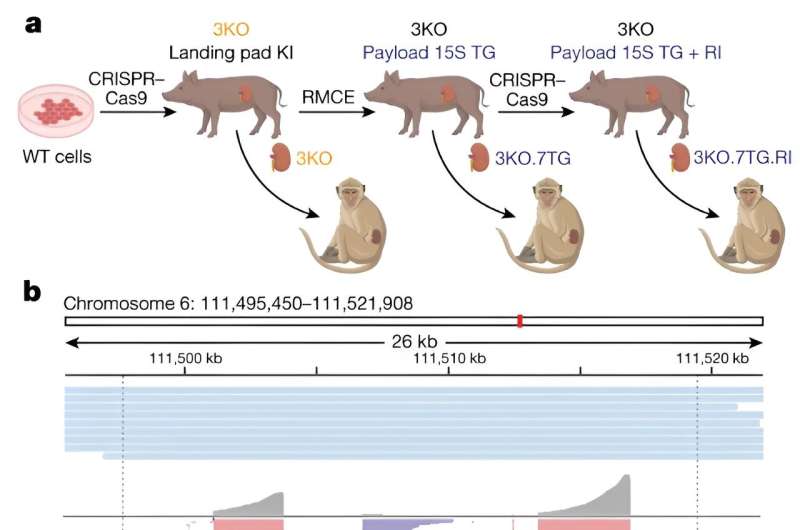
a, The porcine donor kidney, 3KO.7TG.RI, was engineered to eliminate three 
glycan antigens (3KO), overexpress seven human transgenes (PL15S) and 
inactivate PERV elements (RI) through three rounds of editing and cloning. 
The donor kidney, 3KO.7TG, carries 3KO and PL15S, without RI. KI, knock in;
 RMCE, recombinase-mediated cassette exchange. b, Reads from Nanopore
 long-read whole-genome sequencing of the 3KO.7TG.RI donor, A9161, were 
aligned to a custom chromosome carrying PL15S inserted at the AAVS1 
genomic safe harbor site (top). Reads from Nanopore direct RNA-seq of A9161
 kidney mRNA were aligned to the custom chromosome (bottom). All three 
transcription units were transcribed. 
Credit: Nature (2023). DOI: 10.1038/s41586-023-06594-4

A large team of medical researchers affiliated with multiple institutions in the U.S. reports that genetically altering the genome of pigs can reduce the chance of rejection of their organs when transplanted into a primate.

In their study, published in the journal Nature, the group altered the genomes of several miniature pigs and transplanted their kidneys into cynomolgus monkeys to see if they could reduce the chances of rejection. Muhammad Mohiuddin with the University of Maryland School of Medicine, has published a News & Views piece in the same journal issue outlining the work done by the team on this new effort.

One of the primary means for treating people with  is transplantation of an organ from a human donor. Unfortunately, the demand for such organs far outstrips the supply. So scientists have been looking for alternatives, such as growing new organs using , creating new organs using nonbiological materials, or using animal organs.

The latter option has shown promise but organ rejection, in which the immune system of the recipient attacks the organ, is still an issue. In this new effort, the research team tested a new approach: Altering the genome of the donating animal so that its organs will be less likely to be rejected.

Monkey survives for two years with genetically engineered pig kidney
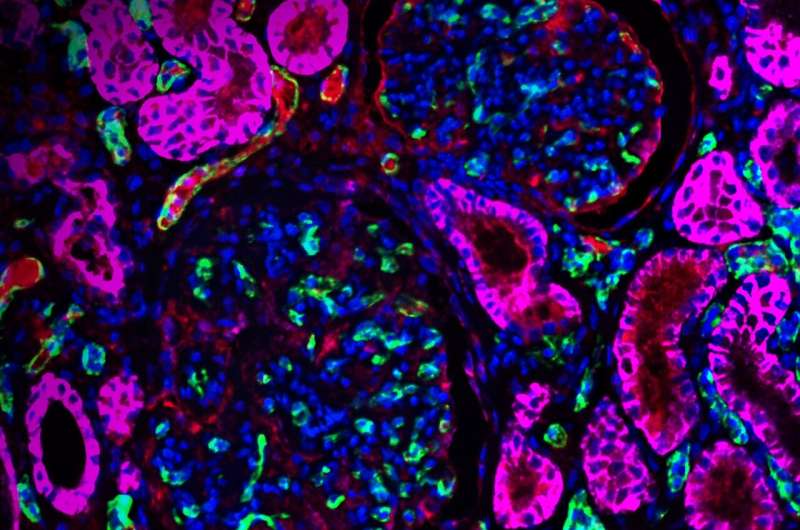
CRISPR Kidney Supported Life in the NHP for 758 Days Legend: Working from the hostile 
NHP environment, CRISPR-edited porcine kidney survived and supported life for 758 days. 
Green: CD31+ endothelial cells; fuchsia, human CD46; C4d, red; blue, nucleus. 
Credit: Violette Paragas, eGenesis.

In their work, the researchers edited 69 of the pig's genes. Three were involved in producing rejection-related molecules and 59 were related to retroviral DNA that became embedded in the pig  many generations ago. The final seven involved adding  that are known to promote healthy organ growth, such as by preventing improper blood clotting.

The research team allowed the pigs to grow to maturity, then harvested kidneys from 15 of them, which were placed into cynomolgus macaques—each of the monkeys also received  to prevent . Other monkeys that did not receive edited kidneys lived for less than two months. Of the  that received the kidneys from the genetically altered pigs, nine lived longer than two months; five of those lived for over a year, and one survived for two years. Testing showed that the organs performed just as well as native organs.

The researchers suggest that they are on the right track, but more testing is required. But the team is confident that their approach will one day lead to a method for safely transplanting animal organs into humans.

More information: Ranjith P. Anand et al, Design and testing of a humanized porcine donor for xenotransplantation, Nature (2023). DOI: 10.1038/s41586-023-06594-4

Muhammad M. Mohiuddin, Pig-to-primate organ transplants require genetic modifications of donor, Nature (2023). DOI: 10.1038/d41586-023-02817-w


Journal information: Nature 


© 2023 Science X Network

US experts carry out second pig-to-human heart transplant