Thursday, October 03, 2024


Public discourse promotes socially responsible behavior


University of Zurich


Public discourse campaigns often promote social responsibility, but do such discussions also impact our market behavior? Economists at the University of Zurich have published a new study that shows that engaging in public discourse increases socially responsible market behavior – regardless of participants’ social norms and values.

Movements such as Fridays for Future and organizations such as the World Economic Forum support discussions on how consumers and firms can take action to mitigate climate change. Behavioral economists at the University of Zurich have now investigated whether and how such public discourse influences consumer behavior. “We wanted to find out how to increase the market share of socially responsible products,” says study author Björn Bartling. “In our experiments, we were able to observe that engaging in public discourse prior to a purchase results in more socially responsible behavior, even if it incurs personal costs.”

Experiments reveal effects of communication

The researchers conducted three lab experiments, in which close to 2,500 participants in 187 fictitious markets took on the roles of buyers, sellers and third parties who weren't part of trading but still affected by it. They traded goods that varied in their social impact. In all experiments, sellers and buyers could choose between harmful products that cost less to produce but create external harm or responsible products with higher production costs but no external harm. Before making their decision, the participants were able to engage in discussion with each other.

In the experiments, the researchers observed a significant increase in trade with fair products when participants had engaged in different forms of discourse compared to the baseline condition in which there had been no discourse. The only situation that yielded no increase in socially responsible market behavior was when participants were able to avoid discourse altogether. “Our findings illustrate how important active participation in public discourse is for initiating meaningful changes in market behavior,” says Bartling.

Different market, similar results

The experiments were not only carried out in Switzerland but also in China, where, according to previous studies, socially responsible market behavior is less pronounced. In China too, previous engagement in public discourse resulted in a clear increase in market social responsibility. The market share of products traded fairly was at roughly the same level in China as in Switzerland.

Lab studies have their limitations when it comes to measuring the diverse impact of public discourse. Factors such as nationality and differences in income among market participants that may make it more difficult for discourse to yield sustainable agreements were not considered in the study, the authors emphasize. “Nevertheless, our findings provide valuable insights into the mechanisms underlying socially responsible market behavior and show that public discourse has the potential to promote socially responsible behavior,” says Bartling.


New ACS report: Breast cancer mortality continues three decade decline overall, but steeper increases in incidence for women <50 & Asian American, Pacific Islanders of all ages


American Cancer Society
ACS Breast Cancer Statistics Report 2024 

image: 

Breast Cancer Report from the American Cancer Society

view more 

Credit: American Cancer Society


The American Cancer Society (ACS) today released Breast Cancer Statistics, 2024, the organization’s biennial update on breast cancer occurrence and trends in the United States. The new report finds breast cancer mortality rates overall have dropped by 44% since 1989, averting approximately 517,900 breast cancer deaths. However, not all women have benefited from this progress, notably American Indian and Alaska Native (AIAN) women, whose rates have remained unchanged over the past three decades. Also concerning is the continued upward trend in breast cancer incidence, rising by 1% annually during 2012-2021, with the steepest increase in women younger than 50 years (1.4% per year) and Asian American/Pacific Islander (AAPI) women of any age (2.5%-2.7% per year). These important findings are published in CA: A Cancer Journal for Cliniciansalongside its consumer-friendly companion, Breast Cancer Facts & Figures 2024, available on cancer.org.

“The encouraging news is breast cancer mortality rates continue to decrease thanks to advances in early detection and treatment,” said Angela Giaquinto, associate scientist, cancer surveillance research at the American Cancer Society and lead author of the study. “But future progress may be thwarted by increasing incidence, especially among younger women, and consequences of the COVID-19 pandemic, such as delayed diagnosis due to interruptions in screening.”

Breast cancer is the most common cancer among U.S. women after skin cancer and the leading cause of cancer death in Hispanic women. In 2024, an estimated 310,720 new cases of invasive breast cancer will be diagnosed in women, and approximately 42,250 women are expected to die from the disease. While rare, this year, 2,790 men will also be diagnosed with breast cancer, and 530 men will die from the disease.

For the report, researchers analyzed population-based cancer incidence and mortality data collected by the National Cancer Institute’s Surveillance, Epidemiology, and End Results (SEER) program, the Centers for Disease Control and Prevention’s National Program of Cancer Registries (NPCR), and the National Center for Health Statistics. Combined SEER and NPCR data provided by the North American Association of Central Cancer Registries (NAACCR) were the source for short-term incidence trends (1998-2021) and contemporary incidence rates (2017–2021) by race and ethnicity, age, molecular subtype, state, and stage (SEER Summary).

“Women today are a lot less likely to die from breast cancer, but alarming disparities still remain, especially for Asian American, Pacific Islander, Native American and Black women,” said Dr. William Dahut, chief scientific officer at the American Cancer Society. “These gaps need to be rectified through systematic efforts to ensure access to high-quality screening and treatment for every woman.”

Other key findings from the report include:

  • AIAN women have 10% lower breast cancer incidence than White women, but 6% higher mortality, and only 51% of AIAN women 40 years or older had a mammogram in the past two years compared to 68% of White women. 
  • Breast cancer in women under 50 years has increased in AAPI women by 50% since 2000, surpassing the rate in young Hispanic, AIAN, and Black women to become the highest rate alongside White women (both 86 per 100,000).
  • Black women continue to have a 38% higher breast cancer mortality rate than White women, despite a 5% lower incidence. Black women also have lower survival than White women for every breast cancer subtype and stage of diagnosis except localized disease, with which they are 10% less likely to be diagnosed (58% versus 68%).

To address ongoing cancer disparities in Black women, the ACS launched the VOICES of Black Women study in May 2024. The study aims to enroll over 100,000 Black women in the U.S. between the ages of 25 and 55 from diverse backgrounds and income levels who have not been diagnosed with cancer to better understand cancer risk and outcomes. For more information and to participate, visit voices.cancer.org.

“Building upon the progress we have made in reducing breast cancer mortality rates requires ensuring more individuals have access to breast cancer screenings,” said Lisa A. Lacasse, president of the American Cancer Society Cancer Action Network (ACS CAN), the advocacy affiliate of the American Cancer Society. “Through cooperative agreements with all 50 states, tribal organizations and territories, the National Breast and Cervical Cancer Early Detection Program (NBCCEDP) has been a lifeline for limited-income, uninsured and underinsured women, providing them with critical screenings and treatment. Congress has a chance to pass the Screening for Communities to Receive Early and Equitable Needed Services (SCREENS) for Cancer Act, which would reauthorize the NBCCEDP and expand its reach to more people who may not otherwise be screened. We urge Congress to take this step towards saving lives from cancer while reducing costs for our health care system.”

Rebecca Siegel is senior author of the report. Other ACS authors participating in the study include Dr. Ahmedin JemalDr. Hyuna SungJessica Star and Dr. Robert Smith.

More information on breast cancer can be found here.

# # #

About the American Cancer Society
The American Cancer Society is the leading cancer-fighting organization with a vision to end cancer as we know it for everyone. For more than 110 years, we have been the only organization improving the lives of people with cancer and their families through advocacy, research, and patient support, to ensure that everyone has an opportunity to prevent, detect, treat, and survive cancer. To learn more, visit cancer.org or call our 24/7 helpline at 1-800-227-2345. Connect with us on Facebook, X, and Instagram.


Vaccinating the young to save the old in the Tropics


PNAS Nexus
Tropical vaccines 

image: 

Mortality among vaccine allocations that reserve the largest portion of vaccines for the 10–19 age group (blue) or two oldest age groups (orange) for vaccine supplies covering 10-90% of the population. No vaccine allocations exist allocating a plurality of vaccines to the 60–69 or 70+ age groups when vaccine supply exceeds 40%.

view more 

Credit: Servadio et al


A model suggests that vaccinating children and teens against the flu can help protect the elderly in tropical countries. Influenza kills up to 650,000 people worldwide every year. In part due to the lack of strong seasonality and differences in vaccine supply, optimal vaccination strategies for the tropics may differ from those in temperate zones. Joseph Servadio and colleagues parameterized an age-structured mathematical model of influenza transmission to the asynchronous, non-annual epidemiology of tropical influenza in Vietnam, a country with low vaccine coverage. The model includes three subtypes of the flu virus. Vaccinating year-round was found to be more effective than vaccinating all at once. Focusing vaccination effort on young people ages 10–19, a group who are especially likely to transmit the virus, was the best strategy for most vaccine supply scenarios, but remaining vaccine doses must be carefully allocated to other age groups—particularly those over 60 years of age—to minimize mortality. The scarcer the vaccines, the more crucial age-specific allocation is to keeping death rates low. When vaccine supplies are limited, the authors advocate for allocating vaccines to school-age children and elderly adults.


Clinical trial shows synthetic cannabis reduces agitation in Alzheimer’s disease


Synthetic THC (dronabinol) was well tolerated by patients without adverse effects often seen from current Alzheimer’s agitation medications


Johns Hopkins Medicine


In a study led by the Johns Hopkins University School of Medicine and Tufts University School of Medicine, researchers show that a pill form of the drug dronabinol, an FDA-approved synthetic version of marijuana’s main ingredient, THC, reduces agitation in patients with Alzheimer’s by an average of 30%.

The researchers say that compared to current treatments for agitation, such as antipsychotics, dronabinol produced similar calming effects without adverse results such as delirium or seizures.

Results of the eight-year clinical trial were presented at the International Psychogeriatric Association conference in Buenos Aires, Argentina, on Sept. 26.“These new findings represent eight years of work dedicated to people who have Alzheimer’s as well as their caregivers,” says Paul Rosenberg, M.D., professor of psychiatry and behavioral sciences at the Johns Hopkins University School of Medicine and co-principal investigator for this study. “Agitation is one of the most distressing symptoms of Alzheimer’s dementia, and we are pleased to make positive strides forward in treatment of these patients.”

Alzheimer’s disease is the most common neurodegenerative disease in the United States, with an estimated 6.7 million cases in Americans age 65 and older, according to the National Institutes of Health. This number is predicted to grow to 13.8 million by 2060. Agitation is difficult to manage. It is defined as excess motor activity (pacing or repetitive movements), verbal aggression and/or physical aggression. An estimated 40% of people with Alzheimer’s develop agitation.

Although mild agitation can sometimes be moderated by behavioral intervention, in moderate to severe cases, some form of medication is typically required to manage symptoms and provide relief for caregivers.“It is the agitation, not the memory loss, that often drives individuals with dementia to the emergency department and long-term-care facilities,” says Brent Forester, M.D., psychiatrist-in-chief and chairman of the Department of Psychiatry at Tufts Medical Center and co-principal investigator on the study. “Dronabinol has the potential to both reduce health care costs and make an important, positive impact on caregivers’ mental and physical health.”

In the new study, researchers recruited 75 patients with severe Alzheimer’s agitation across five clinical sites, including 35 admitted to The Johns Hopkins Hospital between March 2017 and May 2024. To qualify, patients had to have a formal clinical diagnosis of Alzheimer’s disease and show at least one major symptom of agitation for at least two weeks. Prior to treatment, patients were tested for agitation using the Pittsburgh Agitation Scale (PAS) and the Neuropsychiatric Inventory Agitation/Aggression subscale (NPI-C).

The PAS scores agitation from 0 to 4, with 4 being the most agitated. The NPI-C provides a brief assessment of neuropsychiatric symptoms including delusions, hallucinations, anxiety/depression and other factors. Baseline scores were acquired from caregivers at the onset of the trial.

Participants were then randomly selected to get either 5 milligrams of dronabinol in pill form or a placebo in pill form twice daily for three weeks, and then retested using the PAS and NPI-C.

 Results from the dronabinol group show an average PAS starting value of 9.68 and an end value of 7.26 after three weeks, a 30% decrease compared to the scores in the placebo group which did not change. Additionally, dronabinol was well tolerated by patients compared to current treatments for agitation.“Results like this are encouraging. We are thrilled that FDA-approved dronabinol was robustly effective and appeared safe for treatment of agitation,” says Rosenberg. “This adds another tool in our efforts to improve the care of our loved ones with Alzheimer’s disease.”

The researchers say they plan longer-term studies of dronabinol for Alzheimer’s disease, as well as expanded sample sizes. They also hope to continue to explore other ways medical cannabis can benefit both patients and caregivers.

Dronabinol is a synthetic form of THC, the psychoactive main ingredient in cannabis (marijuana). The drug was approved by the U.S. Food and Drug Administration in 1985 to treat loss of appetite in patients with HIV/AIDS, and is currently prescribed to treat nausea and vomiting in those undergoing cancer chemotherapy.

The investigators caution that their current study results are not intended to encourage or inform the use of other forms of medical marijuana available in 38 states and the District of Columbia.

Co-investigators include Halima Amjad, Haroon Burhanullah and Milap Nowrangi at the Johns Hopkins University School of Medicine, Marc Agronin at Miami Jewish Health, and James Wilkins and David Harper at McLean Hospital.

The study was funded by a grant from the National Institute of Aging at the National Institutes of Health. 

Public Call to NBA: Cancel Pre-Season Games in UAE in Solidarity with the People of Sudan


October 3, 2024


WASHINGTON—In an open letter released today, a growing coalition of human rights organizations and concerned citizens are calling on the NBA to cancel their October 4 and 6 pre-season games with the Boston Celtics and the Denver Nuggets in Abu Dhabi in light of the United Arab Emirate’s fueling of atrocities in Sudan.

Groups including Refugees International, The Sentry, the Raoul Wallenberg Centre for Human Rights, Darfur Women Action Group, Sudanese Youth Network, and the Sudanese American Public Affairs Association, alongside hundreds of individuals have endorsed the open call for the NBA to cancel the games in light of the UAE’s role in what is now the world’s largest hunger and displacement crisis.

“The NBA’s partnership with the UAE in hosting games risks making the NBA complicit in UAE efforts to divert global attention from its illicit support to the genocidal RSF militia in Sudan,” said Jeremy Konydyk, President of Refugees International, one of the leaders of the Speak Out on Sudan Campaign. “Refugees International and a growing coalition of concerned organizations and citizens urge the NBA to suspend its partnership with the UAE until it stops supplying weapons to the RSF and acts to restrain its campaign of crimes against humanity.”

“The people of Sudan have suffered immensely from the current war and the UAE has been the most egregious outside supporter of the Rapid Support Forces committing serious international crimes,” said Niemat Ahmadi, Founder and President of Darfur Women Action Group. “The NBA should not be partnering with enablers of atrocities. Rather it should be speaking out and standing in solidarity with the people of Sudan.”

Learn more at www.speakoutonsudan.org.
Beyond humanitarian aid
AFRICA IS A COUNTRY
2/10/24

The war in Sudan shows how during conflict, the internet is as critical as food or medicine.


Satellite over the African continent. Credit ESA/Mlabspace via Wikimedia Commons CC BY-SA 3.0 IGO.


Sudan is battling not only bullets but also the suffocating absence of communication infrastructure, an often-overlooked lifeline that is as critical as food or medicine. As the country grapples with a severe food-security crisis, grassroots initiatives, such as mutual aid groups and emergency kitchens, are the only reliable sources of survival for millions. Yet these fragile support networks depend on stable internet access—a vital tool now throttled by war. With the Rapid Support Forces (RSF) tightening its grip on communications in territories it controls and using smuggled Starlink devices to monitor and control access, international actors remain disturbingly silent on this critical obstruction.

The stakes are clear: Without the restoration of internet access, Sudan’s humanitarian and political futures stand to collapse. The very infrastructure that once mobilized resistance, toppled dictators, and enabled life-saving coordination is now at the mercy of warlords and foreign indifference.

Sudan’s food-security crisis is dire and worsening. As international aid becomes increasingly inaccessible due to the conflict, the most vulnerable communities are relying on mutual aid groups, support from the Sudanese diaspora, and central kitchens run by voluntary emergency rooms. These grassroots initiatives are not merely filling gaps left by international humanitarian efforts; in many cases, they are people’s only lifeline. “Sudanese are barely helping each other survive, with minimal international support or protection,” said William Carter, Sudan country director for the Norwegian Refugee Council. For many, this local network is the difference between a daily meal and days of starvation.

However, these life-saving efforts rely entirely on stable communication and internet access. Families sending remittances, mutual aid groups identifying communities in need, and emergency kitchens coordinating supplies all need the internet to function. Without it, this already fragile support system—stretched to its breaking point—will collapse.

In RSF-controlled areas, communication relies solely on smuggled Starlink devices, which operate unofficially and at a steep cost. Access is scarce, dangerous, and heavily monitored, as many of these devices are controlled by RSF soldiers. It is outrageous that, despite the RSF’s ongoing obstruction of aid, international actors have remained silent on their failure to maintain communication infrastructure. This lack of accountability further exacerbates the humanitarian crisis and undermines the vital networks that Sudanese communities depend on for survival.

However, the stakes extend far beyond immediate humanitarian needs—the internet is crucial to Sudan’s political future. The ongoing war is reshaping the country’s political landscape and civic space. Long before the outbreak of conflict on April 15, the internet was a vital piece of infrastructure for civic engagement. It was the battleground where Sudan’s grassroots movements organized, confronted divisive narratives, and led the opposition that toppled a 30-year dictatorship in 2019. The same digital networks sustained resistance to the 2021 coup and spurred the remarkable local emergency responses we see today. Their activism was pivotal. Yet the ongoing war has dramatically disrupted this dynamic, threatening the very infrastructure that once empowered a generation of activists and transformed Sudan’s civic landscape.

The conflict-driven displacement has forced countless activists, politicians, and civil society leaders to flee major cities targeted by the RSF, with many unable to return due to the worsening security situation. In the relatively safer states of northern and eastern Sudan, the Sudanese Armed Forces (SAF) imposes severe restrictions, with increasing reports of activists and politicians being targeted. As a result, political and civil society gatherings have largely shifted outside Sudan, leaving the country’s internal civic space severely compromised. Resistance committees—once the backbone of civilian resistance—have been devastated by this displacement. Their ability to convene and organize within Sudan has been further crippled by communication blackouts.

Despite repeated promises by the US special envoy to prioritize Sudanese citizen voices in the negotiation process, the design of these processes remains vague. Moreover, the demands placed on the warring factions have failed to restore civilian agency. On the contrary, the mediation framework has further militarized civilian actors, eroding citizen agency as many Sudanese are now left waiting for the outcome of US elections. A critical and immediate demand—restoring and maintaining internet access—cannot wait until a ceasefire. It is a fundamental right that must be secured without delay.

Meanwhile, the RSF continues to exploit humanitarian platforms, offering only lip service to mediators and international actors. A straightforward and enforceable demand—that they ensure a functional communication system in all areas under their control—would be a vital step, both easy to monitor and essential for the survival of grassroots efforts.


One in five Hong Kongers now live in poverty, report finds

The figures offer a warning that all is not well, despite recent stimulus measures, experts say.
By Ha Syut for RFA Cantonese
2024.10.03

One in five Hong Kongers now live in poverty, report findsA woman sleeps amongst cardboard boxes on a street in Hong Kong, April 25, 2022.
 Peter Parks/AFP

The people of Hong Kong have gotten poorer in recent years, with more than a million people -- one in every five residents -- living below the poverty line since the start of this year, according to a new report from Oxfam.

The city's overall poverty rate topped 20% in the first quarter of 2024, with 1.39 million people living in poverty, an increase of 42.9% since the same period in 2019, according to the charity, which analyzed data from the city's Census and Statistics Department, while the number of poor households rose by 22.7% to 619,000, compared with the same period in 2019.

The figures come amid weak economic performance across the whole of China since the lifting of pandemic restrictions in 2022, and after the city authorities eliminated the political opposition as part of an ongoing crackdown on dissent.

Hong Kong's restaurants and retail outlets have also been hard-hit by the downturn, with bargain-hungry shoppers from Hong Kong flocking to Japan to stock up on affordable treats and household necessities, shoppers told Radio Free Asia in recent interviews.

Hong Kong's poverty line in the first quarter of 2024 was a monthly income of HK$5,000 (US$644) for a single-person household, HK$11,300 (US$1,455 for a two-person household and HK$25,200 (US$3,245) for a household of four persons.

CHINA-HONG KONG-POVERTY-ECONOMY 02.png

Meanwhile, the gap between rich and poor has also widened, with the poorest 10% of households earning more than 80 times less than the richest 10%, the "Hong Kong Poverty Report 2024" found.

The median income for the poorest 10% fell by more than half since 2019, to just HK$1,600 a month, with the report citing a rise in the number of elderly people living in poverty.

"These numbers have sounded a warning to the rest of society," Oxfam's Hong Kong Director General Kalina Tsang told reporters on Wednesday. "We hope the Chief Executive will step up efforts in poverty alleviation, to help people below the poverty line."

The charity also called on the authorities to take steps to improve the lives of elderly people, amid a rapidly aging population, including subsidized job opportunities for older people.

Subsidized childcare and a living wage should also be priority measures to help lift households out of poverty, the report found.

‘Stewed beans’

An unemployed man who gave only the surname Kwan for fear of reprisals said he lost his job at the beginning of the year, and is now trying to eke out a living by getting odd jobs in maintenance and construction.

"I also think public transportation is expensive," Kwan said. "HK$500 (US$64) on your Octopus [smart card] used to be enough to get to work and back for a whole month, but these days, I have to top it up with another HK$500."

A visually impaired person who gave only the surname Leung for fear of reprisals said he has a job as a data entry clerk in an IT company, yet found it hard to make ends meet due to rising rent for his subdivided apartment, which was barely more than a cubby hole with a bed in it.

Leung was later allocated public housing, which now takes up 20% of his monthly salary, but now the cost of food -- even at restaurant chains famed for their affordability -- is also rising, he said.

"Nowadays, even a meal at Café de Coral costs HK$50 or HK$60 (US$7.70), and a meal at McDonalds costs more than HK$40 (US$5)," Leung said. "I barely spend anything now, and I cook everything myself, for just a few dollars a meal. I'm living on stewed beans."

People stand in front of an empty shop lot for rent in Hong Kong, Dec. 10, 2021. (Bertha Wang/AFP)

Consumer prices in Hong Kong are on the rise, with the city government reporting a 2.5% increase in the Consumer Price Index for August, repeating a rise that had also been seen in July, prompting the government to announce a series of one-off relief measures, the Census and Statistics Department said on Sept. 24.

Prices of alcoholic drinks and tobacco rose by 20.8% year-on-year, while electricity, gas and water bills saw a 4.8% increase. The cost of housing rose by 3.3% year-on-year, while transportation, meals out and takeaway food all saw increases of more than 2%, it said.

"Prices of meals out and takeaway food increased at a moderate pace over a year earlier, and those of basic food inched up further," a government spokesman said.

Favoring the powerful

Exiled labor activist Christopher Mung said the figures were "staggering," and showed the failure of the Hong Kong government's anti-poverty policies, and blamed the situation on a lack of opposition voices in the city's political life amid an ongoing crackdown on public dissent under Chinese Communist Party rule.

"The Hong Kong government is in a state of low tolerance [for dissent], so it will support the political and financial elite as part of the [Communist Party's] United Front," Mung said. "This means that any policies it introduces will inevitably favor the powerful."

"Both the Legislative and the Executive Councils are dominated by powerful people, opposition voices have been eliminated, and it's increasingly difficult for anyone to organize any kind of collective action to speak out for themselves," Mung said. 

"For anyone at the grassroots level, life is precarious, and anyone who does have a job is afraid they could lose it at any time," he said, adding that government figures also disguise the true number of jobless, by ignoring those who have simply given up looking for work.


RELATED STORIES

China calls on Hong Kong tycoons to help kickstart national economy

Hong Kong sees a sharp fall in the number of schoolchildren

Hong Kong loses 10,000 civil servants amid political crackdown


A villager walks past a squatter settlement in Hong Kong, Aug. 25, 2024. (Chan Long Hei/AP)

Mung, who agreed with the idea of a minimum wage, said the problem could fuel future social unrest if left unaddressed, describing it as "a ticking bomb" for social stability.

Hong Kong has lost its status as the world's freest economy due to ongoing curbs on its civil and political freedoms, Canada's Fraser Institute reported last year, adding that many container ships are bypassing the once-bustling port in favor of neighboring Shenzhen.

report from RFA Cantonese in April revealed that major shipping companies are pulling out of Hong Kong as it loses its status as a free, international container port, with experts blaming the recent political crackdown and structural changes.

Total container volumes coming through Hong Kong fell to 14.3 million TEUs in 2023, the lowest volume since 1998, a year after the handover to China.

A man sits in a grocery store in Hong Kong, Sept. 30, 2022. (Isaac Lawrence/AFP)

Translated by Luisetta Mudie.

Priesthood about a person's gifts, 'not their genitalia,' says woman priest

(EXCEPT IN THE CASE OF THE POPE)


by Rhina Guidos
View Author Profile
Rome — October 3, 2024

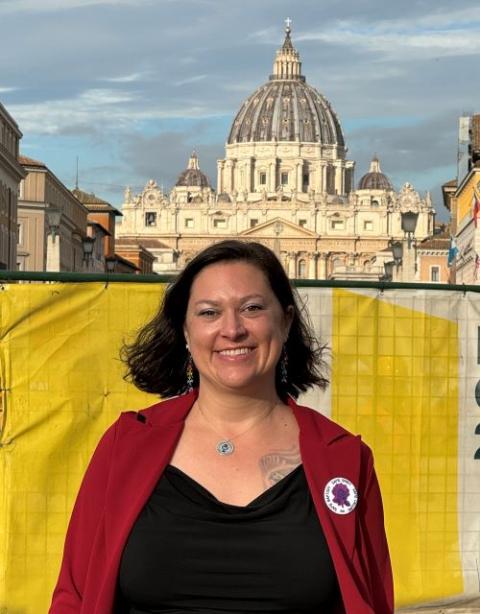
The U.S. representative of a women's ordination movement said she is encouraged by people praying that the Catholic Church will open the priesthood to all who feel called to the ministry — particularly women.

"What I feel right now is excitement and solidarity because I feel like there is a lot of good energy and movement in the greater body of the church that really wants to see equality come in so many different ways," said Rev. Angela Nevitt Meyer of Roman Catholic Womenpriests-USA. She is in Rome as the synod on synodality begins its final gathering Oct. 2-27 at the Vatican.

Rev. Angela Nevitt Meyer, of Roman Catholic Womenpriests-USA, poses near St. Peter's Basilica Oct. 2. (NCR photo/Rhina Guidos)


Meyer joined women from other countries Oct. 2, who gathered to pray near the Vatican so that synod participants would consider the importance of ordination to the priesthood and other roles for women, even as talk of women's diaconate was taken off the synod agenda.

"It's not just standing here on the street corner, but there's so many people here in Rome right now that are on the periphery, guided by the spirit, to let these voices be known," she said. "And even if we don't have a space at the center, the Spirit's not given up, so I'm not giving up either."

Women, and some men, from Poland, Switzerland, Germany, Canada, the U.S., England, Wales and South Africa are participating in events organized in Rome by Women's Ordination Worldwide movement as the synod, a four-year worldwide consultation process, is taking place at the Vatican, Meyer said. Many, including Meyer, were disappointed when Pope Francis responded "no" to a journalist's question about whether he supported the diaconate for women. Some had been hopeful that opening the diaconate to women meant the church would one day be open to women priests.
Related: Vatican doctrinal chief tells synod it's not time for women deacons


"When someone speaks their truth, I believe them," Meyer told National Catholic Reporter Oct. 2. "And I believe that there is no intention to truly and sincerely consider women's vocations [to the priesthood] at this point in time, because if there was any sincerity, our conversations would be open. They wouldn't be relegated to spaces inside."

"It's disappointing to hear reports leak about what could possibly take place in the future to appease those fighting for ordination of women and tease that perhaps it will happen decades from now. In the end, it has much to do with those in clerical positions who feel that their gender attaches them to their sense of purpose," Meyer said.

"It's not their genitalia," she said. "It is the personhood and the gifts that come within and how you're moved by the Spirit. Discernment needs to be about something so much deeper than your chromosomes."

Being moved by the Spirit is what Meyer said she experienced at age 10 as one of her diocese's first female altar servers in her Bartonville, Illinois, parish.

"I've loved Mass my whole life. I hung on the Liturgy of the Word. Participating in the Eucharist always felt deeply personal, deeply meaningful to me," she said, closing her eyes.

'I believe that there is no intention to truly and sincerely consider women's vocations [to the priesthood] at this point in time.'
—Rev. Angela Nevitt Meyer

For a while, she thought that meant following a vocation as a woman religious but it was different, she said, and she talked with her mother about it, "about what was possible for me." That's when, through discernment, she realized that her vocation instead was to "stand up for my gender in my church, because this isn't right, we are all equal" and she found a different way to follow her calling.

"I was working with the Sisters of St. Francis, and I started to have friends tell me, 'Angela, you would be such a good priest.' And I kept thinking, that's ridiculous. That's just ridiculous," she said. "My initial reaction was, 'Why would anybody say that?' Because in my head, my imagination was still stuck in this … well, a priest is a guy."

But that's not really what priesthood is, she added. "Priesthood isn't a gender. It is a vocation. It is how we provide care for one another and create a sense of pastoral safety and theological reflection and growth and community."


Rosemary Ganley, left, and the Rev. Angela Nevitt Meyer hold letters as part of a group that spelled out "Ordain Women" near St. Peter's Basilica as the synod on synodality began Oct. 2 at the Vatican. (NCR photo/Rhina Guidos)


Meyer started talking to her spiritual director and learned about a woman ordained in Indianapolis.

"I learned about Roman Catholic women priests. And then I learned that there were several actually very close to me. So, I started in conversation with them," she said.

After spiritual direction and formation in the spirit of Vatican II, in 2019, she was ordained deacon at Holy Wisdom Monastery in Madison, Wisconsin, and was ordained a priest in 2021. Organizations such as Roman Catholic Womenpriests and the Association of Roman Catholic Women Priests have helped her find community, even if they're on the periphery of the church, she said.


'It's not their genitalia. It is the personhood and the gifts that come within and how you're moved by the Spirit. Discernment needs to be about something so much deeper than your chromosomes.'
—Rev. Angela Nevitt Meyer

Tweet this


Officially, the church does not recognize the ordination of women to the diaconate, nor the priesthood. Roman Catholic Womenpriests acknowledges that on its website, which says, "Yes, we have challenged and broken the Church's Canon Law 1024, an unjust law that discriminates against women." They say they believe their ordinations are valid.

"There are those who will say we're not really Catholic," she told NCR. "But what we're doing is we're creating a space where people can come and be and participate in a way that they don't feel their morality compromised, and that they can receive and participate co-equally in community care, pastoral care and sacramental care."
Related: As patience over women's ministries wanes, theologian urges dialogue


At one time, she said, it was "extremely hurtful" not to be recognized by a church she so loves.

"I carried a lot of hurt and a lot of pain because of that sense of rejection, of not being good enough, or not enough, not right enough, not whole enough," she said. "Right now, I don't personally feel pain, but I feel the pain and recognize the pain that so many other people carry like I did. And that deserves to be healed. Nobody should have to carry those feelings around."

What she feels the most these days is joy at being part of Brownsburg Inclusive Catholic Community in Indiana.

"I have the just tremendous blessing to preside as priest … it feels like something has been just deeply liberated within me. And for me, it's about connection," she said. "It's about facilitating spiritual wholeness and healing and co-support. I deeply believe in the part of Jesus' prayer, 'your kingdom come, your will be done on Earth as it is in heaven.' I feel like that 'on Earth' piece is often so discarded when so much of Jesus' ministry was about healing and being in relationship here and now. For me, the Gospel is so earthy and lived and relational and I feel like I get to do that in such an authentic way, to be supported by our community. And I love to preach. I love to preach!"

Late on Oct. 2, she sat by a column at St. Peter's Square, praying with others that the synod taking place in the buildings nearby will respond to women who feel excluded by a church they love.

"I know myself as a Catholic and I know that I won't always be recognized as such by central authority figures," she said. "It's a complicated thing … but I also believe that evolution is always happening. And so long as we continue to show up, we can continue to have some influence."

This story appears in the Synod on Synodality feature series. View the full series.
'White male in his 50s or 60s' cited for killing geese in Springfield Ohio — not Haitians

Travis Gettys
October 3, 2024 1:47PM ET
RAW STORY

Canada geese eat grass at Central Park in Santa Clara, California, on Monday, March 21, 2022. - Dai Sugano/Bay Area News Group/TNS

It turns out that someone was illegally killing geese in Springfield, Ohio, but it wasn't a Haitian immigrant.

Donald Trump and Sen. J.D. Vance (R-OH) spread baseless claims that the city's sizable Haitian immigrant population was stealing and eating other residents' pets, and police investigated rumors they were also killing Canada geese – but journalist Steven Monacelli found exactly one such case involving a white man from the area on the day of the presidential debate.

"Complainant Michael Dudley ... observed a white male in his late 50s or early 60s, who was heavy set and riding a lawnmower, get off the lawnmower with a shotgun and shoot two geese near water on [Rocky Lake Golf Course]," police said in an incident report. "The man picked up the first goose and tossed it into the weeds. The second goose was wounded and as he collected it the man twisted it breaking its neck. This goose was disposed of in the same manner."

Police spoke to the golf course manager the following day, Sept. 11, and she admitted that she allowed several individuals to hunt geese on the property, and based on the witness description she believed the hunter was one of her employees named Brian Comer, who then called officers himself.

ALSO READ: Revealed: Anti-Trump Larry Hogan’s ties to Project 2025 and billionaire MAGA donors

"Mr. Comer advised that he was responsible for shooting the geese," police said. "Mr. Comer advised that he thought the golf course had a nuisance permit and that he could shoot the geese."

However, police found the golf course did not hold a goose damage permit, and Comer did not have the necessary permits required to shoot the geese, and he was cited for hunting without an Ohio wetlands stamp, a fourth-degree misdemeanor that carries a maximum 30-day jail term or $250 in fines.


Investigating war crimes in Gaza

 Al Jazeera Investigations

Al Jazeera today publishes evidence of potential war crimes committed by Israeli forces based on material from their own soldiers who may have incriminated themselves by posting film or photographs on social media.

Many of the scenes are extremely disturbing.