Thursday, March 27, 2025

US may miss out on green tech boom: Germany


By AFP
March 26, 2025


German Chancellor Olaf Scholz attends the Petersberg Climate Dialogue
- Copyright AFP Geoff Robins

Europe must seize on the “huge economic opportunities” offered by the green technology boom, Germany said Wednesday — adding it was up to the United States if it decided to miss out.

Since returning to the White House, President Donald Trump’s administration has withdrawn the United States from the landmark Paris Agreement for a second time and vowed to focus heavily on fossil fuel extraction.

German Chancellor Olaf Scholz said at a climate conference in Berlin that he “deeply regretted” the United States leaving the Paris climate accord and stressed the “enormous” economic opportunities it is missing out on.

“The global market for climate-friendly key technologies continues to grow rapidly,” Scholz told the Petersberg Climate Dialogue.

He said investments in the global energy transition had exceeded the $2 trillion mark, which “corresponds to the volume of the entire global oil trade today”.

The meeting’s host, Foreign Minister Annalena Baerbock, said economic data contradicted the “old prejudice” that investing in climate protection was “unaffordable”.

“We all know that there are spoilers in the world right now who want to prevent” greater climate investments, she told the first major meeting of the year related to the COP30 summit taking place in Brazil in November.

Baerbock added that “today climate protection and economic growth no longer contradict one another”.

“Climate protection opens up huge economic opportunities, and we as Europeans want to seize them”, she added.

Europe especially wants to work with “companies and countries in Latin America, Africa and other regions around the world,” Baerbock said.

“If others, such as the United States, decide to stay out of it, that is their decision.”


– ‘Renewing economies’ –


United Nations Secretary-General Antonio Guterres echoed Baerbock’s message, telling the Berlin meeting in a virtual address that “renewables are renewing economies”.

“They are powering growth, creating jobs, lowering energy bills and cleaning our air. And every day, they become an even smarter investment.”

Baerbock also hailed as “historic” a recent agreement struck in Germany to channel an extra 100 billion euros ($107 billion) to climate measures.

Her Greens, who are set to leave government after faring poorly in February elections, wrung the concession from other political parties in exchange for agreeing to support plans for greater defence and infrastructure spending.

EU climate commissioner Wopke Hoekstra meanwhile warned that the world was living in “tremendously difficult times”.

“We’re facing problems literally from every direction — and clearly also in the domain of climate action,” he told the meeting.

Beyond the United States withdrawing from climate cooperation, there have also been concerns that the issue is being pushed down the global agenda by national security and economic pressures.

“But there’s no alternative,” Hoekstra stressed. “Humanity doesn’t have an alternative and cannot wait.
Jamaica rebuffs Rubio push against Cuban doctors


By AFP
March 26, 2025


US Secretary of State Marco Rubio speaks a joint press conference with Prime Minister of Jamaica Andrew Holness - Copyright AFP Juliette PAVY

Shaun TANDON

Jamaica on Wednesday rebuffed a push by US Secretary of State Marco Rubio to sever a program that brings in Cuban doctors, who have become critical to health care in fellow Caribbean countries despite allegations of labor exploitation.

Donald Trump’s top diplomat held talks on the sidelines of a Caribbean summit aimed in part at finding new ideas on violence-ravaged Haiti, with host Jamaica saying it would help the new US administration in a “global war on gangs.”

But Jamaican Prime Minister Andrew Holness made clear his differences with Rubio on the doctors, who are sent by Cuba around the world and have become a major source of revenue for the cash-strapped government.

Rubio, a Cuban-American and vociferous foe of the communist government in Havana, announced last month that the Trump administration would bar visas for foreign government officials who assist the program, which he characterized as human trafficking.

“Let us be clear, the Cuban doctors in Jamaica have been incredibly helpful to us,” Holness said at a joint news conference with Rubio.

He said that the 400 Cuban doctors in the country filled a deficit as Jamaican health workers emigrated.

“We are, however, very careful not to exploit the Cuban doctors who are here. We ensure that they are treated within our labor laws and benefit like any other worker,” Holness said.

“So any characterization of the program by others certainly would not be applicable to Jamaica.”

Rubio promised to engage with Jamaica to have a “better understanding” of how it treats Cuban doctors.

“Perhaps none of this applies in the way it’s handled here,” Rubio said.

But Rubio said the United States remained opposed “in general” to the program.

“The regime does not pay these doctors, takes away their passports and basically, it is, in many ways, forced labor, and that we cannot be in support of,” Rubio said.

The US special envoy on Latin America, Mauricio Claver-Caron, has also credited Barbados with taking steps to pay Cuban directors directly.

Antiguan Prime Minister Gaston Browne earlier this month sharply denounced the US pressure, saying the absence of Cuban doctors would “literally dismantle our healthcare services and put our people at risk.”

According to Cuban official figures, Cuba sent 22,632 medical professionals to 57 countries in 2023, with Cuba earning $6.3 billion in 2018 and $3.9 billion in 2020, in part in the form of oil from Venezuela.


– ‘Global war on gangs’ –


Rubio’s trip comes as he considers a new strategy on Haiti, the hemisphere’s poorest country, which has been plunged into chaos for years after government authority collapsed and armed groups took over.

A Kenyan-led mission supported by former US president Joe Biden has deployed to Haiti in hopes of bringing stability, but the troop numbers have come up short and violence has resumed.

Holness said the United States has been an “incredible partner” on Haiti but that the priority should be on a “significant expansion in resources” to Haiti’s fledgling national police so it can take on gangs.

“The present holding situation that we have, it’s not necessarily moving the situation forward,” he said.

Holness said he spoke with Rubio about “a global war on gangs, and there is already significant policy alignment” between Jamaica and the Trump administration.

Rubio has issued a waiver to Trump’s sweeping cuts to aid to back the Haiti mission. He also announced that the United States would provide assistance to Jamaica to combat gangs, including software.

Rubio said that the support to Jamaica “highlights exactly what our vision for aid moving forward is.”

“The United States is not getting out of the aid business,” he said.

But instead of funding non-governmental groups, Rubio said, “We want to provide foreign aid in a way that is strategically aligned with our foreign policy priorities.”


Rubio offers US security for oil-rich Guyana as Venezuela looms


By  AFP
March 27, 2025


US Secretary of State Marco Rubio speaks during a joint press conference with Prime Minister of Jamaica Andrew Holness in Kingston on March 26, 2025 - Copyright POOL/AFP Nathan Howard

Shaun TANDON

Secretary of State Marco Rubio heads Thursday to Guyana to offer to put the newly oil-rich nation under the US security umbrella as neighboring Venezuela asserts claims.

A decade after the discovery of vast reserves, the small South American nation is poised this year to become the world’s largest producer of oil on a per capita basis, outpacing Qatar and Kuwait.

With tensions on the rise between Guyana and US nemesis Venezuela, Rubio will sign a memorandum of understanding that outlines security cooperation, according to the State Department.

Rubio, who is flying to Guyana after talks with Caribbean nations in Jamaica, will also stop later Thursday in Guyana’s neighbor Suriname, whose own oil production is on the rise.

President Donald Trump’s administration said it envisioned a relationship with Guyana akin to those with oil-rich Gulf Arab nations, which welcome US troops for their security, particularly against larger neighbor Iran.

“The security of Guyana is a key priority for us in the same way that we have been working with countries in the Gulf states to ensure the security cooperation from the regional threats there,” said Mauricio Claver-Carone, the US special envoy on Latin America.

“We’ve seen the threats from Venezuela,” he told reporters ahead of the trip.

“Obviously, that’s unacceptable and we want to work together,” he said, to “find an agreement towards binding security cooperation.”

Guyana, an English-speaking former British and Dutch colony where the majority of the 800,000 people still live in poverty, has for years had a long-shot movement that has sought to join the United States.

Such formal accession is not expected to be discussed, but Trump has made no secrets of his passion for expansionism in the hemisphere, even at the expense of traditional alliances.

Trump has vowed to take control of Greenland from Denmark, with Vice President JD Vance paying a visit Friday criticized by NATO ally Denmark, and has insisted that the United States will “take back” the Panama Canal.


– Rising oil, rising tensions –


Guyanese President Irfaan Ali, who faces reelection this year, has embraced closer defense cooperation with the United States, including through joint maritime patrols.

Venezuela, whose leftist leader Nicolas Maduro is despised by the Cuban-American Rubio, has laid claim to Guyana’s Essequibo, which covers most of the country and is the center of oil production.

Guyana earlier in March denounced what it called a Venezuelan military vessel’s incursion into its waters.

Venezuela denied any violation and requested a meeting with Ali, who dismissed the offer.

The parliament in Caracas last year approved a bill to declare Essequibo as Venezuela’s 24th state, a move rejected internationally.

Guyana insists the border was finalized by an 1899 arbitration panel, but Venezuela claims the Essequibo River to the region’s east as a natural border recognized as far back as 1777.

The Trump administration has put a high priority on ramping up oil production, seeing both economic and security incentives, and has brushed aside the push by previous president Joe Biden to diversify to renewables to address the planet’s fast-rising temperatures and climate disasters.

Texas-based ExxonMobil has taken the lead in oil production in Guyana which has rapidly scaled up over the past five years.

ExxonMobil anticipates gross production from Guyana of 1.3 million barrels a day by the end of the decade, dwarfing current output from Venezuela, whose industry has slumped since the 1990s after mismanagement and US sanctions.

The Trump administration, under pressure from anti-communist Latino lawmakers, has canceled US oil major Chevron’s exemption from US sanctions to operate in Venezuela.
CLIMATE CRISIS

South Korea wildfires ‘largest on record’: disaster chief


By AFP
March 26, 2025


Smoke rises from a wildfire in Andong early on March 27, 2025 - Copyright Brazilian Supreme Court/AFP Handout

Kang Jin-kyu

Wildfires in South Korea are now “the largest on record” having burned more forest than any previous blaze, the country’s disaster chief said Thursday, as the death toll rose to 26.

More than a dozen fires broke out over the weekend, scorching wide swathes of the southeast, forcing around 27,000 people to urgently evacuate, with the fire cutting off roads and downing communications lines as residents fled in panic.

“The wildfire is spreading rapidly,” said Lee Han-kyung, disaster and safety division chief.

“26 people have died, eight are seriously injured and 22 have been lightly injured,” he said.

“The forest damage has reached 35,810 hectares, already exceeding the area affected by the 2000 east coast wildfire, previously the largest on record, by more than 10,000 hectares.”

The extent of damage makes it South Korea’s largest ever wildfire, after the inferno in April 2000 that scorched 23,913 hectares across the east coast.

Authorities said changing wind patterns and dry weather had revealed the limitations of conventional firefighting methods.

Most of those killed were local residents, but at least three firefighters were killed, and a pilot in a firefighting helicopter died when his aircraft crashed in a mountain area, officials said.

Last year was South Korea’s hottest year on record, with the Korea Meteorological Administration saying that the average annual temperature was 14.5 degrees Celsius — two degrees higher than the preceding 30-year average of 12.5 degrees.

The fire-hit region had been experiencing unusually dry weather with below-average precipitation, authorities said, with the South experiencing more than double the number of fires this year than last.

Some types of extreme weather have a well-established link with climate change, such as heatwaves or heavy rainfall.

Other phenomena, such as forest fires, droughts, snowstorms and tropical storms can result from a combination of complex factors.


– ‘Climate crisis’ –


“This wildfire has once again exposed the harsh reality of a climate crisis unlike anything we’ve experienced before,” disaster chief Lee said.

“The affected areas have seen only half the average rainfall, coupled with unusually strong winds, which have drastically accelerated the spread of the fire and intensified the damage,” he said.

Expert Yeh Sang-Wook, professor of climatology at Seoul’s Hanyang University, told AFP that the lack of rainfall had dried out the land “creating favourable conditions for wildfires.”

“This can be seen as one of the fundamental causes,” he said.

“We can’t say that it’s only due to climate change, but climate change is directly (and) indirectly affecting the changes we are experiencing now. This is a sheer fact.”

The impact of South Korea’s demographic crisis was also on full display — the country is a so-called super aged society, with one of the world’s lowest birthrates.

“It is worrying that many of the victims are senior citizens, including patients at nursing hospitals,” Acting President Han Duck-soo said, as he ordered the country’s interior minister to relocate to the affected area to oversee relief efforts.

Rain is forecast for late Thursday, potentially giving authorities a much-needed window to extinguish the blazes.

Multiple historic sites, including two listed with UNESCO, were threatened by the fires, with South Korean heritage officials working with firefighters.

At UNESCO-listed Byungsan Suwon, a former Confucian academy, the sky was full of haze, AFP reporters saw, with fire trucks spraying water and fire-retardants onto the historic site in a desperate bit to save it.

“We are spraying three tonnes of water every day as a fire prevention measure across the premises, including the buildings,” Lee Seung-myung, head of fire safety team at Andong fire department told AFP.

“If a fire breaks out here, it is likely to be triggered by flames spreading from the pine trees, so we are now cutting them down near the site to prevent such a scenario,” Lee added.


‘Like the apocalypse’: S. Korea wildfires tear through mountains

By AFP
March 26, 2025


A wildfire is seen next to a stone lantern of a family tomb in Andong on March 26, 2025 -
 Copyright AFP YASUYOSHI CHIBA

Sue Han Kim with Hieun Shin in Seoul

Truck driver Lee Seung-joo was driving through South Korea’s Andong mountains when the wildfires hit, engulfing the area in flames and turning it into “a literal hell”.

“It was like the apocalypse,” the 39-year-old said, as he recalled seeing the fire tear through the area, which, even before the inferno struck, had been suffering from a particularly dry spell.

“The mountain burning looked like literal hell,” he added.

Tens of thousands of people in the southeast had to evacuate from the wildfires, which have been burning continuously for five days, fanned by high winds and fuelled by the super-dry conditions.

Sections of National Route 7, the main east coast highway, descended into chaos as the fires caught up with evacuees stuck in traffic jams, struggling to escape.

“Fireballs rained down like rain between the jammed vehicles, setting cars on fire,” one eyewitness told local media.

“Drivers barely escaped from the burning cars — it was utter chaos.”

Apple farmer Cho Jae-oak, 75, who fled from his property, told AFP that he also saw fireballs flying down from the mountain.

He and his wife had sprayed water to try and save their farm but were eventually forced to escape.

At least 24 people have been killed so far, some of whom died during the evacuation process, the Korea Forest Service said.

The country’s acting president, Han Duck-soo, said the multiple fires had caused “unprecedented damage” and warned it could still get worse.

The strong winds — plus a crash, killing a pilot — have forced authorities to suspend helicopter and drone operations to battle the blazes, which are straining conventional firefighting capacity, officials said.


– Evacuate! –


“Attention Hawmaeri residents. Please evacuate quickly!” yelled the village chief.

“The entire village is on fire, and your house will catch fire soon.”

A heart wrenching video circulating online and verified by AFP showed the village chief of Hawmaeri, home to around 46 households, urging residents to flee as the Uiseong fire barrelled towards their homes.

Most of the villagers escaped, but officials later confirmed that the village chief and his family were found dead on Tuesday, next to their burned-out car.

The car was heading the opposite direction from evacuees, local police told reporters.

Locals said the family had been “trying to rescue residents who might have been isolated”.

Most of the deaths were residents, but at least three firefighters were killed, and a helicopter pilot, who died when his aircraft crashed in a mountain area, officials said.

There are also reports of missing people, officials say, including one woman in her 80s who was suffering from dementia.

In addition to thousands of firefighters, backed up by soldiers and other emergency staff, rescue workers have been heading to the southeast to assist around 27,000 evacuees.

Animal rescue organisations have also rushed to the area, as many dogs in rural South Korea are kept tied up outside, with local media reporting that dozens of animals had died from smoke inhalation.

The groups reported finding dogs that survived, trembling in fear with severe burns.


– Shock and anger –


Inside an evacuation shelter in Andong, a quiet elementary school gym now filled with mostly elderly residents, the air was silent and heavy with shock.

South Korea’s demographic crisis — it is a super-aged society with the world’s lowest birth rate — was also on full display.

The average age in many villages exceeds 60, officials have said.

Most of the evacuees were elderly and AFP reporters saw medics handing out medicine to those who had fled too quickly to bring what they need to manage chronic illnesses.

Officials told reporters that most of the dead were in their sixties to seventies.

Many evacuees at the shelter voiced not only shock but frustration, saying their homes had been burned before fire fighters showed up.

The fire was reportedly started by someone tending an ancestral grave site, who then called emergency services saying they had accidentally triggered the conflagration.

“It’s not a problem who started the fire, but this entire region needs to cooperate with the country to put out this fire. We need to put out the fire quickly,” Park Sung-tae, farmer told AFP.

He said he was concerned that if the smoke blocked out the sunlight for too long, this year’s crop would be lost.

“It will make farming difficult,” he added.


Workers save Buddha as S. Korea’s wildfires raze ancient temple


By AFP
March 26, 2025


Wildfires in South Korea have claimed 24 lives and destroyed thousands of hectares of forests - Copyright AFP YASUYOSHI CHIBA

Sue Han Kim with Hailey Jo in Seoul

At South Korea’s thousand-year-old Gounsa Temple, workers delicately swaddled a giant gilded Buddha statue with a fire-retardant blanket.

Hours later much of the temple burned down in one of the deadliest wildfires to hit South Korea — but the Buddha and the wooden hall it was in survived.

All across the country’s southeast, officials are racing to relocate priceless historic artifacts and protect UNESCO-listed sites from the blazes, which have killed 24 people and destroyed thousands of hectares of forest.

In the UNESCO-listed Hahoe village — a popular tourist site once visited by England’s late Queen Elizabeth II — fire fighters and cultural heritage officials have been spraying water and fire retardants onto the thatched buildings, hoping they would be spared from the flames.

“It is very heartbreaking and painful to see the precious temples that are over a thousand years old being lost,” Deung-woon, a 65-year-old monk told AFP.

When 68-year-old monk Joung-ou heard that the Gounsa temple had burned down in wildfires which have killed 24 people so far, he said he felt “so devastated that I couldn’t come to my senses.”

“It was an extremely painful feeling, and I wondered why something like this could happen,” he said.

AFP reporters who returned to the temple after the blaze found the north side of the building razed to charred rubble, with broken tablets scattered on the ground.

The giant Buddha at the centre of the building survived.

A heavy bell that once hung on an ancient wooden structure nearby sat cracked on top of the debris.

“We will do our best to restore the function of the temple,” monk Joung-ou vowed.


– ‘Inherently vulnerable’ –


One issue facing officials is that many of the cultural heritage sites in the area, including the UNESCO-listed Hahoe village are “inherently vulnerable to fires,” one expert told AFP.

Hahoe, which dates to the 14th or 15th century, is described by UNESCO as a “representative historic clan village”.

The late Queen Elizabeth II visited in 1999 during her four-day visit to South Korea and was honoured with a banquet marking her 73rd birthday — although the aristocratic village chief refused to allow the queen into his living room, which was for men only.

The village’s layout and location — “sheltered by forested mountains and facing out onto a river and open agricultural fields” is said by UNESCO to “reflect the distinctive aristocratic Confucian culture of the early part of the Joseon Dynasty (1392-1910)”.

But it is precisely this location that makes the site vulnerable, said Lee Sang-hyun, professor of Cultural Heritage Studies at Gyeongkuk National University.

“It is difficult to devise preservation measures when a wildfire breaks out,” he said.

“The wildfire poses a significant threat to the preservation of these cultural treasures. The predominant use of wood in these structures makes them even more susceptible to fires,” he added.

“This is an unprecedented crisis. I am over 60 years old, but I have never seen a fire of this magnitude before,” he said.


– ‘Impossible to predict’ –


As the flames drew closer to Hahoe, AFP reporters at the scene saw huge chunks of ash floating in the air, as fire trucks sprayed water and fire retardants onto the thatched roof houses and buildings.

Thick wildfire-induced fog and the smell of burning filled the air, with police barring entry to all except fire control officials. The area — which typically draws more than one million visitors annually — was eerily deserted.

Nearby Byeongsan Seowon is also a UNESCO site, and a Korea Heritage Service official told AFP that saving the two locations were a top priority for officials.

“It is impossible to predict the current situation due to wind and changes in other conditions, but there is currently no damage to Hahoe Village,” they said.

“As a countermeasure, we have used sprinkler trucks to soak the surfaces of the structures there with a lot of water.”

Byun Ji-hyun, senior programme specialist at UNESCO, told AFP that “if Hahoe village were to be destroyed by fire, its value as a world heritage site could be significantly compromised.

“That is why everyone is working together to prevent such an event. We believe that such an event will not occur.”

In addition to scores of firefighters, the Korea Heritage Service has deployed 750 people to move and urgently care for the ancient treasures, including relocating them, or if not possible trying to equip them to survive the blaze.

So far, the service said at least 15 items considered important national heritage have been damaged and two designated “national treasures” had been completely destroyed.

“We have a number of personnel at the wildfire sites and they will continue to help move and protect national heritages,” an official from the Korea Heritage Service told AFP.

Hundreds of items have been moved to safety, including books and other items in the Bongjeongsa Temple in Andong.

The agency has “conducted on-site inspections to assess whether national heritage sites are at risk,” it said in a statement.

“Urgent relocation of cultural assets held by temples and other institutions is underway,” they said adding that they are “mobilising all available personnel from the Cultural Heritage Administration and its affiliated agencies to respond”.

South Korea says 18 dead in raging wildfires


By AFP
March 25, 2025


A helicopter drops water as a wildfire advances towards Gounsa Temple in Uiseong - Copyright AFP/File ANGELA WEISS


At least 18 people have been killed in one of South Korea’s worst wildfire outbreaks, with multiple blazes burning and causing “unprecedented damage”, the acting president said Wednesday.

More than a dozen different blazes broke out over the weekend, with the death toll jumping overnight as one major fire tore through villages and burned a historical temple to the ground.

The government has raised the crisis alert to its highest level and declared a “a full-scale national response” to bring the fires under control.

“Eighteen people died in the wildfires,” a ministry of safety official told AFP.

“Additionally, six people were seriously injured and 13 suffered minor injuries.”

Dry, windy weather has hampered efforts to contain the fires, with the government taking the rare step of evacuating thousands of prisoners out of detention centres in affected counties.

On Tuesday, authorities issued an emergency alert for Hahoe Folk Village — a UNESCO-listed world heritage site popular with tourists — as the blaze drew closer.

“Wildfires burning for a fifth-consecutive day in Ulsan and the Gyeongsang region are causing unprecedented damage,” South Korea’s acting president Han Duck-soo said.

He told an emergency safety and disaster meeting that the blazes were “developing in a way that is exceeding both existing prediction models and earlier expectations.”

Authorities launched emergency evacuations Tuesday afternoon “but sadly, casualties could not be prevented,” he said.

“Throughout the night, chaos continued as power and communication lines were cut in several areas and roads were blocked,” he added.

Thousands of firefighters have been deployed, but “strong winds reaching speeds of 25 metres per second persisted from yesterday afternoon through the night, forcing the suspension of helicopter and drone operations,” Han said.

“Constantly shifting wind directions and ongoing dry weather advisories have revealed the limitations of conventional firefighting methods,” he added.

Han said the government has launched a “full-scale national response”.


– ‘Fire came from the mountain’ –


Evacuees sheltering in the gym of Sinsung elementary school told AFP that the fire had hit their villages so quickly they did not have time to take anything with them as they fled.

“The wind was so strong,” Kwon So-han, a 79-year-old resident in Andong told AFP, adding that as soon as he got the evacuation order he fled.

“The fire came from the mountain and fell on my house,” he said.

“Those who haven’t experienced it won’t know. I could only bring my body.”

Han said more people were being moved to temporary shelters and the government was working to provide emergency relief and financial support to those displaced by the fires.

Rain is forecast for late Wednesday, with authorities hoping to capitalise on even a light sprinkling to help extinguish the fires.

Some types of extreme weather have a well-established link with climate change, such as heatwaves or heavy rainfall.

Other phenomena, such as forest fires, droughts, snowstorms and tropical storms can result from a combination of complex factors.

The fire in Uiseong was reportedly caused by a person who was tending to a family grave site and accidentally ignited the blaze.
FacebookTwitterLinkedInEmailShare

CRIME AGAINST HUMANITY
Trump administration to cut vaccine support to developing countries: report 


By AFP
March 26, 2025


Health worker tries to immunise a child during a vaccination campaign against polio at Hotoro-Kudu, Nassarawa district of Kano in northwest Nigeria - Copyright AFP Juliette PAVY

President Donald Trump’s administration is set to cut funding to Gavi, the global health organization that provides vaccines across the developing world, a report said Wednesday.

The decision was included in a 281-page spreadsheet that the severely downsized United States Agency for International Development (USAID) sent to Congress on Monday night.

The document details which grants the agency intends to continue and which it will terminate, according to the New York Times, which obtained a copy.

The United States will also significantly scale back support for malaria programs but will maintain some funding streams for treating HIV, tuberculosis, and providing food aid in countries facing conflict and natural disasters.

Only 869 of more than 6,000 USAID employees remain on active duty, according to the Times. The administration has decided to continue about 900 grants while ending over 5,340.

The newspaper estimated a $40 billion reduction in the annual budget of the agency, which has since been absorbed by its parent department, the State Department.

“#USA support for @Gavi is vital. With US support, we can save over 8 million lives over the next 5 years and give millions of children a better chance at a healthy, prosperous future,” Gavi, a public-private partnership headquartered in Geneva, wrote on X in response to the report.

“The withdrawal of US financial support for Gavi would severely threaten the tremendous progress made in reducing deaths due to vaccine-preventable diseases and would increase the risk of outbreaks here in the United States,” added William Moss, executive director of the international vaccines access center at Johns Hopkins Bloomberg School of Public Health.

It estimated that US support over the past 25 years has helped save 18 million lives and enabled 19 countries to transition away from Gavi’s support, with some becoming donors themselves. The United States provides around a quarter of the organization’s budget.


Lula urges Mercosur-Japan deal to counter Trump protectionism


By AFP
March 26, 2025


Brazilian President Luiz Inacio Lula da Silva (L) said his country and Japan had ' more to gain from integration than from protectionist practices' - Copyright AFP Kazuhiro NOGI

Brazil’s President Luiz Inacio Lula da Silva called Wednesday for a trade deal between South America’s Mercosur bloc and Japan to counter growing US protectionism.

“I am certain that we need to move forward in signing an Economic Partnership Agreement between Japan and Mercosur,” Lula said during a multi-day visit to Tokyo.

“Our countries have more to gain from integration than from protectionist practices,” he said at an economic forum attended by business and political figures from Brazil and Japan.

Mercosur’s four members — Argentina, Brazil, Paraguay and Uruguay — in December struck a free-trade deal with the European Union although it still faces hurdles before final approval.

Business groups in Japan, the world’s fourth-largest economy, have been pressing the government to also strike an agreement with the bloc.

The Keidanren business federation “urgently” called in November for “expedited efforts” towards a Japan-Mercosur Economic Partnership Agreement (EPA), an accord similar to a free trade deal.

“The benefits that a Japan-Mercosur EPA would bring to both parties are immense,” the group said, noting the South American bloc’s population of 300 million people and economic output approaching $3 trillion.

But an agreement may be politically hard because of fears about the impact on Japanese farmers of large-scale agricultural imports, particularly from Brazil and Argentina.

Japanese Prime Minister Shigeru Ishiba said on Wednesday that he and Lula will “strongly push towards more smooth bilateral trade and investment”.

“Business circles of both countries have pushed for early agreement on a Japan-Mercosur EPA. While listening to these voices, we will continue talks towards strengthening bilateral and economic ties,” he said.

Lula, 79, arrived in Japan on Monday accompanied by a 100-strong business delegation.

He and Ishiba were expected to restate their commitment to free trade — in light of US President Donald Trump’s levies on steel and other imports — in a joint statement expected later Wednesday.

“We cannot go back to relying on protectionism. We do not want a second Cold War,” Lula said Wednesday.

“We want free trade so that we can ensure that democracy, economic growth and wealth distribution become established in our countries,” he added.

Lula and Ishiba, 68, were also expected to discuss the joint development of biofuels ahead of November’s COP30 UN climate summit in the Brazilian Amazon.
Japan warns of ‘significant impact’ from US tariffs


By AFP
March 27, 2025


Japanese automakers account for around 16 percent of car imports into the United States - Copyright AFP Philip FONG

Kyoko HASEGAWA, Hiroshi HIYAMA

Japan’s government warned Thursday of a “significant impact” on its economic ties with the United States and on global trade, after President Donald Trump announced import tariffs on cars.

Tokyo is one of Washington’s closest economic and strategic allies, with its firms the biggest investors in the United States and one in 10 Japanese jobs tied to the auto sector.

Trump announced on Wednesday 25 percent tariffs “on all cars that are not made in the United States” effective 12:01 am (0401 GMT) eastern time on April 3.

Prime Minister Shigeru Ishiba, who last month held friendly talks with Trump at the White House, said Japan was reviewing an “appropriate” response.

“Japan has made significant investments and significant job creation, which doesn’t apply to all countries… We are the number one (country) in investment in the United States,” Ishiba added.

“We believe that the current measures and other broad-based trade restrictions by the US government could have a significant impact on the economic relationship between Japan and the US, as well as on the global economy and the multilateral trading system,” government spokesman Yoshimasa Hayashi said.

“In response to this announcement, we have again told the US government that this measure was extremely regrettable and we strongly urged the US government to exclude Japan from the scope of this measure,” Hayashi said.

South Korea’s trade and industry minister Ahn Duk-geun held an emergency meeting with major automakers and others after Trump’s announcement, the government said.

“The government will work closely with the industry to devise countermeasures and, in coordination with other ministries, announce a comprehensive emergency response plan for the auto sector in April,” Ahn said.


– Shares down –


Trump’s announcement hammered carmakers in Asia, although they later recovered some ground.

The world’s top-selling automaker Toyota closed down 2.0 percent, while Nissan shed 1.7 percent and Honda was off 2.5 percent.

In South Korea, Hyundai shares dipped 4.0 percent.

Contacted by AFP, Toyota was not immediately available for comment on Thursday.

Honda said it would “study the impact of the tariffs on our businesses, then we will take measures to minimise the impact”.


– US-Japan ties –


Vehicles accounted for around 28 percent of Japan’s 21.3 trillion yen ($142 billion) of US-bound exports in 2024.

Japanese ministers have been lobbying their US counterparts to secure tariff exemptions for goods like steel and vehicles, but these requests have been denied.

The Trump administration says levies will raise government revenue, revitalise American industry and press countries on US priorities.

Critics say they will increase prices for US consumers.

About 50 percent of cars sold in the United States are manufactured domestically.

Japanese automakers account for around 16 percent of car imports into the United States, and South Koreans 15 percent.

Takahide Kiuchi, an economist at Nomura, said that the 25-percent tariff will shrink Japan’s economy by around 0.2 percent.

“It would encourage a contraction of domestic production and employment and encourage a hollowing out of the economy,” Kiuchi said.

Seiji Sugiura, senior analyst at Tokai Tokyo Intelligence Laboratory, estimated that the tariffs could collectively mean an additional cost of $11.4 billion for Japan’s top six automakers.

“This is very high-impact,” Sugiura told AFP. “Against that, the automakers have not issued anything about how they plan to deal with it.”

“I have some clients in the auto industry. I think there will be a big impact. I will see some impact on myself, even though it will probably be indirect, because 25 percent is pretty big,” said Hiroki Ito, an IT company employee.

“Of course we have different opinions, but I hope (Japan and the US) can find some common grounds to compromise so that we could solve issues in a calm manner,” Ito told AFP.

burs-stu/tc
Lesotho fears Trump shake-up could tear threadbare economy

By AFP
March 27, 2025


The textile industry is Lesotho's largest employer with more than 35,000 workers - Copyright AFP Mandel NGAN


Hillary ORINDE

In a sweltering factory in Lesotho, rows of workers hunch over thrumming sewing machines churning out piles of jeans for the global market from a country that US President Donald Trump has mocked as unknown.

Buy sportswear from US retail giant Walmart or blue jeans at South Africa’s apparel behemoth Mr Price and there is a half-decent chance it was stitched on the floor of this garment factory in the capital Maseru which counts 400-odd employees.

Although modest in size compared to global textile powerhouses like Bangladesh and China, the tiny mountain kingdom’s clothing industry is the country’s largest employer with more than 35,000 workers, according to official data.

These workers are now fretting over their future after Trump this month called Lesotho “a country nobody has ever heard of” while defending his sweeping aid cuts.

“I was lost for words when I heard him speak. He thought we were useless to him,” Motlatsi Marou told AFP, a streak of sweat dripping from his face as he ironed grey pants at the Afri-Expo Textiles company.

The 33-year-old has worked at the company for two years in his longest stretch of steady employment.

Production manager Malerai Snay Mosotho was equally taken back by Trump’s comments before the US Congress.

“It’s something that we didn’t expect,” the 30-year-old said. “It made me feel bad because we are doing a lot of good work,” she said.


– ‘A lot of uncertainty’ –


Completely surrounded by South Africa, Lesotho is the largest of just three enclaved states in the world, far bigger than San Marino and Vatican City, both within Italy.

Nicknamed the “kingdom of the sky”, the country the size of Belgium is heavily reliant on export for its $2 billion GDP, mostly through textile products bound for the United States.

The items are shipped more than 15,000 kilometres (9,300 miles) to the United States under the African Growth and Opportunity Act (AGOA) deal, which provides duty-free access for some products from about 30 sub-Saharan African countries.

Under the accord, Lesotho lags behind just Kenya, South Africa and Madagascar in terms of non-oil exports, earning $167 million in 2023.

Until 2019, the nation of an estimated 2.3 million people was the second-largest textile exporter to the United States under AGOA.

The law which came into force in 2000 is up for review in September, but analysts warn its future is in doubt.

“If AGOA is terminated, it will have an immediate impact on the economy because it could mean the loss of jobs for 30,000 to 40,000 people,” King Letsie III told AFP in his palace in Matsieng, some 45 km from Maseru.

Unemployment is already high at nearly 25 percent in 2023, according to the World Bank.

Any end to the trade deal would have a profound ripple effect on every sector of Lesotho’s economy, said Malira Sekonyela, trade manager at the Lesotho National Development Corporation (LNDC).

“There is still a lot of uncertainty around AGOA renewal with the new administration,” she said.

Already, the textiles industry alone shed more than 1,800 jobs in 2024 after five companies ceased operations because of lower demand from the United States, according to LNDC.

“It is difficult to find work,” Karabelo Magapalla told AFP as she marked denim for trimming.

Only employed since September, the 23-year-old earns 180 loti a day ($10) from work she describes as “stressing and depressing”.

But at least she is only supporting her grandmother, she said, unlike others who provide for a constellation of relatives.


– ‘Wake-up call’ –


Trump’s dismissive attitude to Lesotho was “a wake-up call” for the kingdom’s textile industry, said Teboho Kobeli, who founded Afri-Expo Textiles in 2016.

African countries must send strong delegations to renegotiate AGOA and actively explore untapped markets, especially in Europe, the businessman urged.

“The era of being beggars, getting things for nothing, is over,” he said.

On the streets of the diamond-rich nation, many echoed his sentiment.

“Africa can survive without him (Trump),” declared 57-year-old Maleshoane Mokhaji. “He can keep his dollars and then we keep our minerals. Period!”

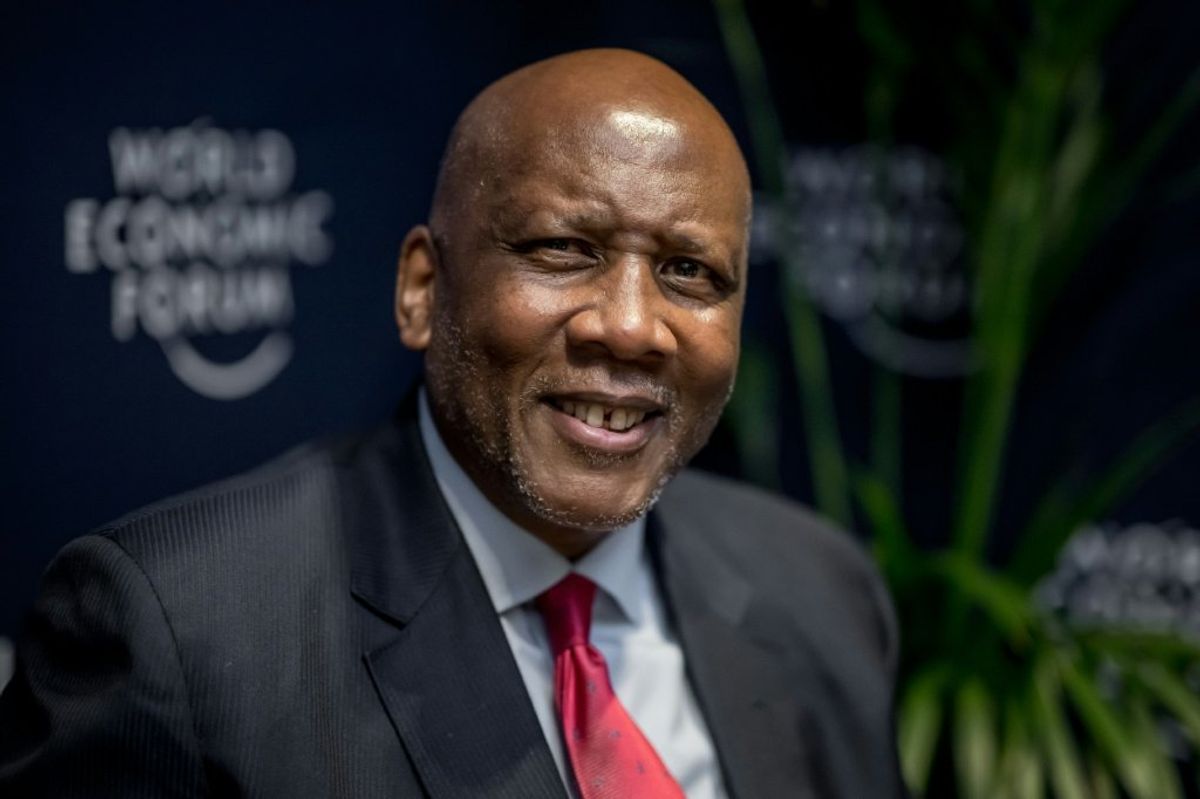
Lesotho's king warns nation will reel from Trump cuts


AFP
March 25, 2025


Lesotho King Letsie III (AFP)


Lesotho will suffer from Donald Trump's aid cuts and stands to lose up to 40,000 jobs if the US president also cancels a trade pact granting duty-free access to the American market, the monarch of the tiny southern African kingdom warned ahead of a trip to Europe on Wednesday.

Entirely surrounded by South Africa, Lesotho is heavily reliant on exports and foreign aid to fund its $2 billion gross domestic product.

"If AGOA is terminated, it will have an immediate impact on the economy because it could mean the loss of jobs for 30,000 to 40,000 people," King Letsie III told AFP in his palace in Matsieng, some 45 kilometres (28 miles) from the capital Maseru.

"It's a worrying thing but if it happens, we'll have to deal with it," he said.

Enacted in 2000, the African Growth and Opportunity Act (AGOA) provides duty-free access for some products from about 30 sub-Saharan countries.

It is due for renewal in September and many are questioning its fate after the blitz of trade policy changes since the return of Trump to the White House.

The poor nation of about 2.3 million people has one of the highest rates of HIV in the world and is already reeling from a freeze to US funding of its healthcare.


The United States has committed more than $630 million since 2006 to anti-HIV/AIDS efforts in Lesotho, according to the US embassy.

Trump kicked up a diplomatic storm earlier this month when he defended the cuts to Lesotho, saying it was a country "nobody has ever heard of".

"I was a little bit upset," said Letsie III, who has no formal power.

"We have enjoyed very warm relations with the US and the people," he said, vowing to use the publicity from Trump's mockery to promote the country known for its beautiful mountainous terrain.

Letsie III will travel to France on Wednesday and is due to meet President Emmanuel Macron on Thursday.


He is later expected to participate in a nutrition summit to round up the Europe trip at the weekend.

Trump tariffs could push up inflation: senior Fed official


By AFP

March 26, 2025


St. Louis Fed President Alberto Musalem is a voting member of the US central bank's rate-setting committee this year - Copyright AFP/File

 JOEL SAGET

US President Donald Trump’s tariff plans could increase inflation by as much as 1.2 percentage points if they are fully implemented, a senior Federal Reserve official said Wednesday.

Trump made tackling inflation a key campaign issue in the run-up to the 2024 presidential elections.

But tariffs — his signature economic policy since his return to office — could have the opposite effect, St. Louis Fed President Alberto Musalem warned during a speech in Kentucky on Wednesday.

“New tariffs are expected to have both direct and indirect effects,” said Musalem, who is a voting member of the Fed’s rate-setting committee this year.

Tariffs are likely to cause a direct, time-limited increase on prices, and another indirect — or second-round — effect, which could have a “more persistent” impact on inflation, he said.

US inflation remains stuck above the Fed’s long-term target of two percent, according to its favored personal consumption expenditures (PCE) measure.

Staff at the St. Louis Fed estimate that, “if fully implemented, a 10 percent increase in the effective US tariff rate — roughly the increase that would be associated with tariff hikes announced to date — could increase the PCE inflation rate by as much as 1.2 percentage points,” Musalem said.

“The direct and one-time price-level effect is estimated to be on the order of 0.5 percentage points,” he said, adding that the indirect effect would likely be around 0.7 percentage points.

“From the standpoint of monetary policy, it could be appropriate to ‘look through’ direct effects of higher tariffs on the price level and at the same time ‘lean against’ indirect and second-round effects,” he said.

“I would be wary of assuming that the impact of tariff increases on inflation will be entirely temporary,” he continued, adding that a “patient and vigilant approach” to monetary policy was appropriate.

Since his return to office, Trump has begun imposing tariffs against top US trading partners including China, Canada and Mexico — only to then roll some of them back.

The stop-start nature of the rollout has increased uncertainty and unnerved investors, with US financial markets plunging since the tariffs first began to take effect.

Trump has said he will announce retaliatory tariffs against US trading partners on April 2, which could also take non-tariff measures like value-added taxes, or VAT, into account.

The White House confirmed Wednesday that Trump also plans to unveil tariffs against the automotive sector at 4pm local time in Washington (2000 GMT).

At the most recent interest rate decision, Fed officials penciled in two rate cuts for this year, while raising their outlook for inflation and downgrading their expectations for economic growth.


Damaging cluster of UK winter storms driven by swirling polar vortex miles above Earth


Powerful winter storms which led to deaths and power outages in the UK and Ireland were made more likely by an intense swirling vortex of winds miles above the Arctic, say scientists.


University of Leeds


Damaging cluster of UK winter storms driven by swirling polar vortex miles above Earth 

Powerful winter storms which led to deaths and power outages in the UK and Ireland were made more likely by an intense swirling vortex of winds miles above the Arctic, say scientists. 

A team of researchers led by the University of Leeds has pinpointed a new reason for winter storm clusters such as the trio named Dudley, Eunice and Franklin, which hit the nation within the space of a week in February 2022. 

The findings which are published today in the journal Communications Earth and Environment reveal the cluster of extreme UK winter storms was connected to stronger winds in the Arctic stratosphere, and the researchers believe this could help weather forecasters to know when there is an increased risk of storm clusters up to a month before they happen. 

Lead author Dr Ryan Williams, who carried out the research while at the University of Leeds, said: “Our research demonstrates the need to better understand the different drivers of the North Atlantic storm track, such as the state of the stratospheric polar vortex that is potentially predictable several weeks in advance. 

“Being able to provide early warnings of possible severe weather is all the more pertinent with climate change, as there is evidence that major winter storms will become more intense, exacerbating impacts such as flooding and wind damage." 

February 2022 was a particularly stormy month in the UK, Ireland, Scandinavia and Germany with several intense cyclones - rotating low pressure weather systems that often create strong winds and heavy rain. 

For the first time since 2015 when the UK Met Office began naming impactful cyclones, the UK experienced three named storms in a week - Dudley, Eunice and Franklin. A total of seven storms were tracked near the UK during that month, the fourth highest number during February since 1979. 

Four deaths were reported across the UK and Ireland and 1 million homes were affected by power outages lasting up to several days. The estimated insurance bill in the UK and the rest of Europe due to the windstorms was almost four billion euros. 

Storm Eunice, which impacted the UK on 18th February 2022, was described as a once in a decade event and the most severe since 2014 with record wind gusts for England of 122 miles per hour recorded at the Needles on the Isle of Wight. 

February 2022 was also characterised by an extremely strong stratospheric polar vortex - a large spinning mass of cold air in the stratosphere around 15 miles above the Arctic that is prominent during winter months. 

The researchers were keen to understand the role played by such a strong stratospheric polar vortex (SPV) in driving the risk of the storms, something which had not previously been well explored. 

They compared seasonal forecasts from January 2022, which showed the unusually strong state of the polar vortex, with those which suggested it would be close to average strength.  Examining the properties of UK storms in these contrasting forecasts allowed the influence of the SPV to be identified. 

They concluded that the strong SPV made it up to three times more likely there would be intense storms affecting the UK and northern Europe during February 2022.  

Their results also reveal that the strong SPV at that time increased the likelihood of three or more storms reaching the UK in a single week by around 80% compared with when the SPV is normal. 

Crucially, the researchers say that the signal for a strong SPV was evident from forecasts carried out as early as November 2021 and that spotting these conditions could offer a ‘window of opportunity’ for enhanced European predictability. 

Co-author Jeff Knight, the Science Lead in Monthly to Decadal Prediction in the UK Met Office, said: “It’s been understood for a while that the Arctic stratosphere can affect the type of winter we get in the UK, but these results show that it can even affect the occurrence of stormy spells within the season.  

“An intense stratospheric polar vortex can now be recognised as a warning to forecasters of increased risks of damaging storms. This was likely seen in the most recent winter, around the time of storm Eowyn in late January.” 

Professor Amanda Maycock from the School of Earth and Environment who led the project, added: “The stormy conditions and strong stratospheric polar vortex during February 2022 bare parallels to other periods, such as what occurred in February 2020 and even what we have seen at the start of this year. Future work should investigate the connection we have found for other winters.” 

Ends 

For media enquiries, please contact Kersti Mitchell in the University of Leeds press office via k.mitchell@leeds.co.uk 

University of Leeds  

The University of Leeds is one of the largest higher education institutions in the UK, with more than 40,000 students from about 140 different countries. We are renowned globally for the quality of our teaching and research.  

We are a values-driven university, and we harness our expertise in research and education to help shape a better future for humanity, working through collaboration to tackle inequalities, achieve societal impact and drive change.   

The University is a member of the Russell Group of research-intensive universities, and is a major partner in the Alan Turing, Rosalind Franklin and Royce Institutes www.leeds.ac.uk   

Follow University of Leeds or tag us in to coverage: Bluesky | Facebook | LinkedIn | Instagram 


Losing forest carbon stocks could put climate goals out of reach


Potsdam Institute for Climate Impact Research (PIK)


In the past, intact forests absorbed 7.8 billion tonnes of CO₂ annually – about a fifth of all human emissions – but their carbon storage is increasingly at risk from climate change and human activities such as deforestation. A new study from the Potsdam Institute for Climate Impact Research (PIK) shows that failing to account for the potentially decreasing ability of forests to absorb CO₂ could make reaching the Paris agreement targets significantly harder, if not impossible, and much more costly.

“Delaying action leads to disproportionately higher costs,” explains Michael Windisch, lead author of the study published in Nature Communications and PIK guest scientist. “Right now, our climate strategies bet on forests not only remaining intact, but even expanding,” Windisch says. “However, with escalating wildfires like in California, and continued deforestation in the Amazon, that’s a gamble. Climate change itself puts forests’ immense carbon stores at risk.” According to the study, postponing action to reduce emissions and to protect and monitor forests could jeopardise climate targets. “We must act immediately to safeguard the carbon stored in forests,” Windisch emphasises. “Otherwise, compensating for potential forest carbon losses through steeper emissions cuts in key emission sectors like energy, industry and transport will become increasingly expensive and possibly unattainable.”

Considering forest carbon losses in climate mitigation pathways

The study analysed how climate targets can be met despite forests’ reduced capacity for storing carbon. The authors used REMIND-MAgPIE - an integrated global land and water use modelling as well as an energy-economy modelling system - together with the global vegetation model LPJmL to evaluate how natural disturbances and human impacts on forests influence the feasibility of achieving climate mitigation goals. The research team compared a foresighted policy response with various delayed and myopic approaches.

Regardless of the assessed disturbance rate, the study revealed just how steep the price of inaction can be. Even a five-year delay in responding to forest carbon loss would lead to a roughly two-fold increase in both the stringency and overall cost of measures to offset that lost carbon, the authors find. Emission cuts in the energy sector, for instance, would have to be ramped up considerably, supported by a near-doubling of negative emissions capacity – which itself demands a corresponding expansion in land use. Ultimately, these extra efforts drive up overall costs, and result in GDP setbacks that are approximately double those of immediate action.

The study also highlights that current models may be overly optimistic about future forest carbon storage because they ignore disturbances, overvalue CO₂ fertilisation and underestimate deforestation. To mitigate climate impacts, safeguard carbon stocks and prevent escalating costs, the scientists recommend immediate action. “Forests are not an infinite resource, but need careful monitoring to detect reductions in carbon sinks early on,” explains Florian Humpenöder, PIK scientist and study author. He also stresses the need for stronger forest conservation, and faster decarbonisation. Forests may absorb less CO2 than expected, making realistic forest carbon projections essential.

“Staying below critical warming thresholds requires more than just hoping forests will remain intact,” concludes Alexander Popp, head of PIK’s Land Use Transition lab and author of the study. “Alongside protecting forests, it is essential to promote sustainable land use practices– not only to preserve biodiversity but also to avoid drastic economic consequences and to secure our climate future.”


Article: Michael G. Windisch, Florian Humpenöder, Leon Merfort, Nico Bauer, Gunnar Luderer, Jan Philipp Dietrich, Jens Heinke, Christoph Müller, Gabriel Abrahao, Hermann Lotze-Campen, Alexander Popp (2025): Hedging our bet on forest permanence for the economic viability of climate targets. Nature Communications. DOI: [10.1038/s41467-025-57607-x]

Weblink to the article, once published:  https://www.nature.com/articles/s41467-025-57607-x