Tuesday, May 27, 2025

Forced labour, disease and conflict: The hidden side of industrial fishing in Saya de Malha


SAYA DE MALHA – Near-shore fishing stocks in Thailand and Sri Lanka are increasingly depleted and more and more fishing boats are drawn to the remote, abundant waters of the Saya de Malha Bank. But for distant-water crews on the high seas, living conditions on board are often extremely challenging. Fishermen grapple with long sailing times, malnutrition and conflict on perilous journeys that sometimes end in death.


By: Outlaw Ocean Project
Issued on: 14/05/2025 -

 © Studio graphique France Médias Monde


In October 2022, a British-American couple, Kyle and Maryanne Webb, were sailing their yacht through a remote area of the Indian Ocean between Mauritius and Seychelles, just south of the Saya de Malha Bank, the world’s largest seagrass field. The Webbs were sailing enthusiasts and had covered tens of thousands of miles on their vessel, the Begonia, over the previous years. As they passed the bank, they spotted a small fishing vessel, about 55 feet in length, painted bright yellow and turquoise, with about a dozen red and orange flags billowing from the roof of its cabin. It was a Sri Lankan gillnet boat called, in Sinhali, the Hasaranga Putha.

Looking gaunt and desperate, the crew told the Webbs that they had sailed roughly 2,000 miles from their home port, in Beruwala, Sri Lanka. They had been at sea for two weeks, they said, but had only caught four fish. They begged the Webbs for food, soda and cigarettes. The Webbs gave them what they could, including fresh water, then headed on their way. "They were clearly in a struggling financial position, "Mrs. Webb said. "It broke my heart to see the efforts they feel they must go to provide for their families."

Read moreThe Saya de Malha Bank, a 'forgotten ecosystem' in need of protection

A month later, again near the Saya de Malha Bank, the Hasaranga Putha hailed another vessel – the South African ocean research and supply ship, S.A. Agulhas II, who was on an expedition in Saya de Malha for the environmental non-profit Monaco Explorations. By this time, the Sri Lankan crew was almost out of fuel and begged for diesel. The scientists did not have the right type of petrol to offer but they still boarded a dinghy and brought the fishers water and cigarettes. Grateful, the Sri Lankans gave them fish in return. The Hasaranga Putha would remain at sea for another six months before returning to Colombo in April 2023.

The scientists aboard the Monaco Explorations research vessel provided assistance to the Sri Lankans by delivering water, food, and soda, but they did not have the type of fuel the smaller vessel required. (2022) © Monaco Explorations/The Outlaw Ocean Project


A perilous journey


Hundreds of miles from the nearest port, the Saya de Malha Bank is one of the most remote areas on the planet, which means it can be a harrowing workplace for the thousands of fishers from a half dozen countries that make the perilous journey to reach it. The farther from shore that vessels travel, and the more time they spend at sea, the more the risks pile up. Dangerous storms, deadly accidents, malnutrition, and physical violence are common threats faced by distant-water crews. Each year, a fleet of several dozen Sri Lankan gill-netters makes some of the longest trips made to the area, often in the least equipped boats.

Some of the vessels that fish the Saya de Malha Bank engage in a practice called transshipment, where they offload their catch to refrigerated carriers without returning to shore, so that they can remain fishing on the high seas for longer periods of time. Fishing is the most dangerous occupation in the world, and more than 100,000 fishermen die on the job each year. When they do, particularly on longer journeys far from shore, it is not uncommon for their bodies to be buried at sea.

Sri Lankan gillnetters are not the only fishing vessels making perilous journeys to reach the rich and biodiverse Saya de Malha Bank. Thai fishmeal trawlers also target these waters, traveling more than 2,500 nautical miles from the port of Kantang. In January 2016, for example, three Thai trawlers left the Saya de Malha Bank and returned to Thailand. During the journey, 38 Cambodian crew members fell ill, and by the time they returned to port, six had already died. The remaining sick crew were hospitalised and treated for beriberi, a disease caused by a deficiency of Vitamin B1 or thiamine. Symptoms include tingling, burning, numbness, difficulty breathing, lethargy, chest pain, dizziness, confusion, and severe swelling.

Easily preventable, yet fatal if left untreated, beriberi has historically appeared in prisons, asylums, and migrant camps, but it has largely been stamped out. Experts say that when it occurs at sea, beriberi often indicates criminal neglect. One medical examiner described it as "slow-motion murder" because it is so easily treatable and avoidable.

The disease has become more prevalent on distant-water fishing vessels in part because ships stay so long at sea, a trend facilitated by transshipment. Working practices involving hard labour and extensive working hours cause the body to deplete vitamin B1 at a faster metabolic rate to produce energy, the Thai government concluded in a report on the deaths. Further research by Greenpeace found that some of the workers were victims of forced labour.


Crime on the high seas

Today, fewer vessels from the Thai fleet are traveling to Saya de Mahla, but some still make the trip, and questions about their working conditions linger. In April 2023, one of those vessels, the Chokephoemsin 1, a bright blue 90-foot trawler, set out for the Saya de Malha Bank with a crew member named Ae Khunsena, who boarded the ship in Samut Prakan, Thailand, for a five-month tour, according to a report compiled by Stella Maris, a non-profit organisation that helps fishers. As is typical on high-seas vessels, the hours were long and punishing. Khunsena earned 10,000 baht, or about $288, per month, according to his contract.

Read moreIn the Saya de Malha Bank, sharks are being hunted to extinction for their fins

In one of his last calls to his family through Facebook, Khunsena said he had witnessed a fight that resulted in more than one death. He said the body of a crew member who was killed was brought back to the ship and kept in the freezer. When his family pressed for details, Khunsena said he would tell them more later. He added that another Thai crew member who also witnessed the killing had been threatened with death and so he fled the ship while it was still near shore along the Thai coast. Khunsena’s family spoke to Khunsena for the last time on July 22, 2023. A company official contested this claim and said no such fight happened and added that there was an observer from the Department of Fisheries aboard the vessel, who would have reported such an incident had it happened.


On July 29, while working in waters near Sri Lanka, Khunsena went overboard, off the stern of the ship. The incident was captured on a ship security camera. A man listed as Khunsena’s employer on his contract named Chaiyapruk Kowikai told Khunsena’s family that he had jumped. The ship’s captain then spent a day unsuccessfully searching the area to rescue him, before returning to fishing, Kowikai said.

The vessel returned to port in Thailand roughly two months later. Police, company and insurance officials eventually concluded that Khunsena’s death was likely a suicide. This claim seemed to be backed up by the onboard footage, which did not show anyone near him when he went over the side of the boat.

In September, 2024, a reporting team from the Outlaw Ocean Project visited Khunsena’s village. Settled by rice farmers about a century ago, Non Siao is located in Bua Lai District, Nakhon Ratchasima, roughly two hundred miles to the northeast of Bangkok. The reporting team interviewed Khusena’s mother and cousin as well as the local labour inspector, police chief, aid worker and an official from the company that owned the ship. While the police and company officials said the death was likely a suicide, Khusena’s family avidly disagreed. "Why would he jump?" said Palita, Khunsena’s cousin, explaining why she highly doubted that Khusena took his own life. "He didn't have any problems with anyone." Sitting on the ground under an overcast sky as she spoke with the reporter in a follow-up conversation by video chat, Palita went silent and looked down at her phone. "He wanted to see me," added Khusena’s mother, Boonpeng Khunsena, who also doubted his suicide, since he kept saying in calls that he intended to be home by Mother’s Day. His family instead speculated that Khusena had likely witnessed a violent crime and therefore to silence him, he had been coerced to jump overboard.

As is often the case with crimes at sea, where evidence is limited, witnesses are few and frequently unreliable, it is difficult to know whether Khusena died due to foul play. Perhaps, as his family speculated in interviews with The Outlaw Ocean Project, he had witnessed a violent crime and, consequently, had been forced to jump overboard. Perhaps, instead, he jumped willingly from the ship, a suicidal gesture likely driven by depression or mental health issues. In either scenario, the point remains the same: these distant-water ships are traveling so far from shore that the working and living conditions are brutal and sometimes violent. And these very conditions are likely playing a role in sinister outcomes.


A transit route for migrants


And yet, the human tragedy that criss-crosses this remote patch of high seas is not just tied to fishers. The Saya de Malha Bank has also become a transit route for migrants fleeing Sri Lanka. Since 2016, hundreds of Sri Lankans have attempted to make the perilous journey on fishing boats to the French-administered island of Reunion, in the Indian Ocean, some making the journey directly from Saya de Malha. Those who do succeed in making landfall on Reunion are often repatriated. In one case, on December 7, 2023, a Sri Lankan vessel that had spent the previous three months fishing in Saya de Malha, the Imul-A-0813 KLT, illegally entered the waters around Reunion. The seven crew members were apprehended by local authorities and repatriated to Sri Lanka two weeks later. Joining them on the repatriation flight were crew members of two other Sri Lankan fishing vessels that had previously been detained by Reunion authorities.

With near-shore stocks overfished in Thailand and Sri Lanka, vessel owners send their crews further and further from shore in search of a worthwhile catch. That is what makes the Saya de Malha – far from land, poorly monitored, and with a bountiful ecosystem – such an attractive target. But the fishers forced to work there live a precarious existence, and for some, the long journey to the Saya de Malha is the last they ever take.

This article was written by Ian Urbina, Maya Martin, Joe Galvin, Susan Ryan, and Austin Brush - Editors at The Outlaw Ocean Project.

The Outlaw Ocean Project is a non-profit journalism organisation based in Washington DC that produces investigative stories about human rights, labour and environmental concerns on the two thirds of the planet covered by water. The organisation is run by Ian Urbina, an award-winning journalist who used to work for The New York Times.

Most of the stories are reported at least partially at sea. In the United States, the group publishes its stories in various news outlets, including the New Yorker, NBC News, The Atlantic and The Washington Post. The reporting is also regularly translated into other languages, particularly French and Spanish, and broadcast in partnership with dozens of foreign newspapers, magazines, radio and television outlets.

'We must reduce our dependency against pesticides in French agriculture and across the EU'


REACTIONARY LANDOWNERS FUCK THE PLANET

France 24
Issued on: 27/05/2025 - 

French farmers disrupted highway traffic around Paris and rallied in front of parliament with their tractors on Monday, protesting against amendments filed by opposition lawmakers to a bill that would loosen environmental regulations on farming. The draft legislation proposes simplifying approvals for breeding facilities and irrigation reservoirs and re-authorising a banned neonicotinoid pesticide used in sugar beet cultivation that environmentalists say is harmful to bees. For in-depth analysis and a deeper perspective, FRANCE 24's Eve Irvine welcomes François Veillerette, Spokesperson for the French association Générations Futures and on the European Board of the Pesticide Action Network.


Video by:  Eve IRVINE

07:30© France 24

Uganda's LGBTQ community faces persecution after parliament passes anti-gay law


13:01


EYE ON AFRICA © FRANCE 24
Issued: 27/05/2025 - 
From the show

Human Rights Watch said Monday that Uganda's LGBTQ community has faced heavy persecution since the country passed one of the world's harshest anti-gay laws two years ago. The Anti-Homosexuality Act of 2023 imposes penalties of up to life in prison for consensual same sex relations, and contains provisions that make “aggravated homosexuality” punishable by death.


Also, Kenya has been producing more electricity than it needs, and a new industry is stepping in to make use of the surplus - cryptocurrency mining. Companies are using mobile bitcoin farms to convert otherwise wasted energy into digital currency. Supporters call it a win-win situation, but questions remain as to whether this new use of energy will benefit the country as a whole.

Finally, Kamfers Dam in South Africa used to be one of only four breeding sites for lesser flamingos on the continent. However, a recent series of sewage spills has poisoned its waters, and the pink birds have now become a rare sight there.


Macron in Hanoi as a 'reliable' EU partner, in contrast to Trump who is 'stuck in the 19th century'


FRANCE24
Issued on: 26/05/2025 - 


France and Vietnam signed deals on Airbus planes, defence and other pacts, worth over $10 billion as President Emmanuel Macron visited Hanoi seeking to boost France's influence in its former colony amid risks of high US tariffs. Macron's first formal visit to Vietnam, the first by a French president in nearly a decade, follows US President Donald Trump's threats on Friday to impose 50% duties on European Union goods from June 1, fuelling tensions with the 27-country bloc, only to push back the deadline by a month. For in-depth analysis and a deeper perspective, FRANCE 24's François Picard welcomes Dr. David Camroux, Honorary Research Fellow at the Center for International Studies at Sciences-Po and Senior Lecturer in Asian Studies.

South African police minister rejects Trump's 'white genocide' claim


South Africa's police minister on Friday said that his country does not face a "white genocide" and claims that most victims of murders on farms are white are a distortion of statistics, dismissing statements by US President Donald Trump. The minister also rejected claims repeated by Trump that the government was expropriating land held by white farmers.


 23/05/2025 - 

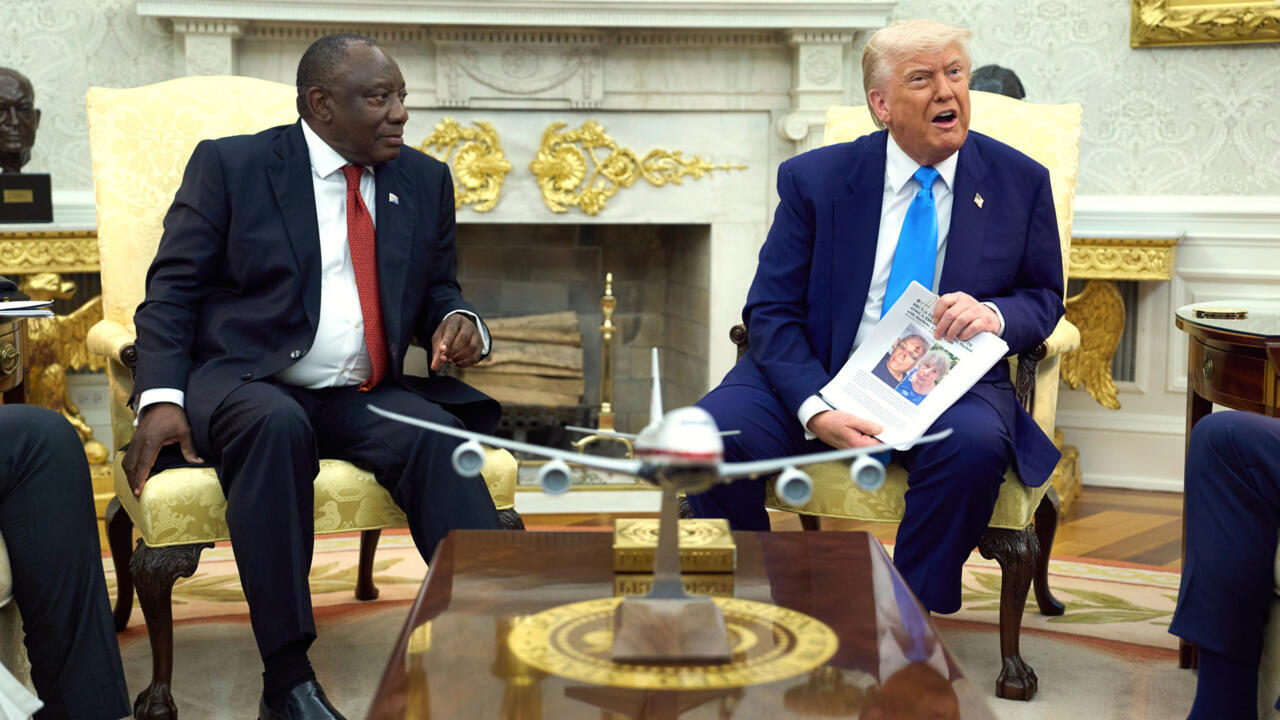
President Donald Trump meets South Africa's President Cyril Ramaphosa in the Oval Office of the White House, Wednesday, May 21, 2025, in Washington. © Evan Vucci, AP

South Africa does not face a "white genocide" and claims that most victims of murders on farms are white are a distortion of statistics, the police minister said Friday, dismissing statements by US President Donald Trump.

The genocide conspiracy is "totally unfounded and totally unsubstantiated", Senzo Mchunu said, rejecting claims by Trump who again charged at talks with President Cyril Ramaphosa Wednesday that "thousands" of white farmers were being killed.

"The history of murders in the country has always been distorted and reported in an unbalanced way," Mchunu told reporters.

"The truth is that farm murders have always included African people and in more numbers."

Presenting the quarterly crime statistics, he said that two farm owners were murdered between January and March 2025 and both of them were Black.

14:54© France 24


One farm dweller, two farm employees and one farm manager also lost their lives in attacks on farms over the quarter. Only the farm dweller was white, Mchunu said.

"We don't deny that the levels of crime in the country are high," he said, but it "cuts across all divides, rural and urban areas".

Twelve murders on farms were recorded in the previous quarter, from October to December 2024, of which only one victim – a farm owner – was white, the minister said.

At Wednesday's talks in the Oval Office, Trump showed a video and articles purporting to support his claims of "persecution" and which AFP found contained many falsehoods.

Ties between the two nations have nosedived since Trump took office in January, with the US leader cutting aid, expelling the South African ambassador and offering "refuge" to South African whites fleeing "persecution".
No land grabs

The minister said police figures did not usually categorise crimes by race but had made this distinction for farm murders "in the context of claims of genocide of white people".

To "show a fuller picture", the police would include new categories in their statistics to distinguish between killings in rural areas, urban environments and on commercial farms, he said.

Read more Trump shows photo from DRC as proof of ‘white genocide’ in South Africa

The minister also rejected claims repeated by Trump that the government was expropriating land held by white farmers.

The police had recorded a few cases of "unlawful" land invasion – most in urban areas – but there were no government-sanctioned land grabs, he said.

"It is an unsubstantiated allegation, and it remains so, even though it is said by people who are in high positions," he said.

The statistics for the January-March quarter showed a 12-percent drop in the number of murders compared to the same period last year, with 5,727 people killed.

This averages about 63 murders per day, whereas police figures for the 2023/24 financial year showed just over 75 killings a day. Most victims of crime are young, Black men in urban areas.

The numbers released Friday also showed a slight increase in reported cases of rape to almost 10,700 in three months, Mchunu said.

(FRANCE 24 with AFP)
French PM to reconsider reform in standoff with taxi drivers

French Prime Minister François Bayrou announced on Saturday that he would reconsider a controversial reform following threats from taxi drivers to intensify their protests. The drivers have warned of plans to block access to Paris airports and the Roland Garros tennis tournament over a standoff with the government about payments for transporting patients.


24/05/2025 -
By: FRANCE 24

President Federation Nationale du Taxi (FNDT) Emmanuelle Cordier answers journalists' questions after a meeting between France's Prime Minister Francois Bayrou and representatives of taxis drivers outside the Ministry of Transport in Paris on May 24, 2025. © Geoffroy Van der Hasselt, AFP


French Prime Minister François Bayrou said Saturday he would re-examine a proposed reform after taxi drivers threatened to step up protest actions, including paralysing access to Paris airports and the Roland Garros tennis tournament.

French taxi drivers have over the last week blocked roads at points across the country in an increasingly acrimonious standoff with the government about payments for transporting patients, which for many cab drivers form a major part of their businesses.

"We'll be working on the details of the decisions, measures and directions that need to be taken over the coming weeks," Bayrou told journalists after meeting with taxi federations.

"They have ideas for making savings," he added.

Earlier Saturday, cab drivers had threatened further blockades, notably of Paris airports and of Sunday's first round of Roland Garros.

In the afternoon, some 1,200 cabs were parked on a boulevard near the transport ministry's offices in Paris.

Their chief demand is the scrapping of new rules coming into force in October on the transportation of patients to harmonise prices nationwide, which the taxi drivers say will severely erode their income.

"We are calling for the immediate withdrawal of this agreement and for a return to the negotiating table," Emmanuelle Cordier, president of the National Taxi Federation (FNDT), told France Info radio Saturday morning.

Grievances against ride-hailing services such as Uber and Bolt have also resurfaced, with taxi drivers seeing them as a poorly regulated threat to their livelihood.

(FRANCE 24 with AFP)
Why are Israeli officials blaming France, Canada and the UK for the DC shooting?

Israel’s leaders have responded to the killing of two of its embassy staff in Washington, DC Wednesday by accusing European governments of stoking anti-Semitic and anti-Israel hatred. The comments highlight the country’s growing diplomatic isolation as it launches a fresh assault on the devastated Gaza Strip.

Explainer
FRANCE24
By:  Paul MILLAR
Issued on: 23/05/2025 - 

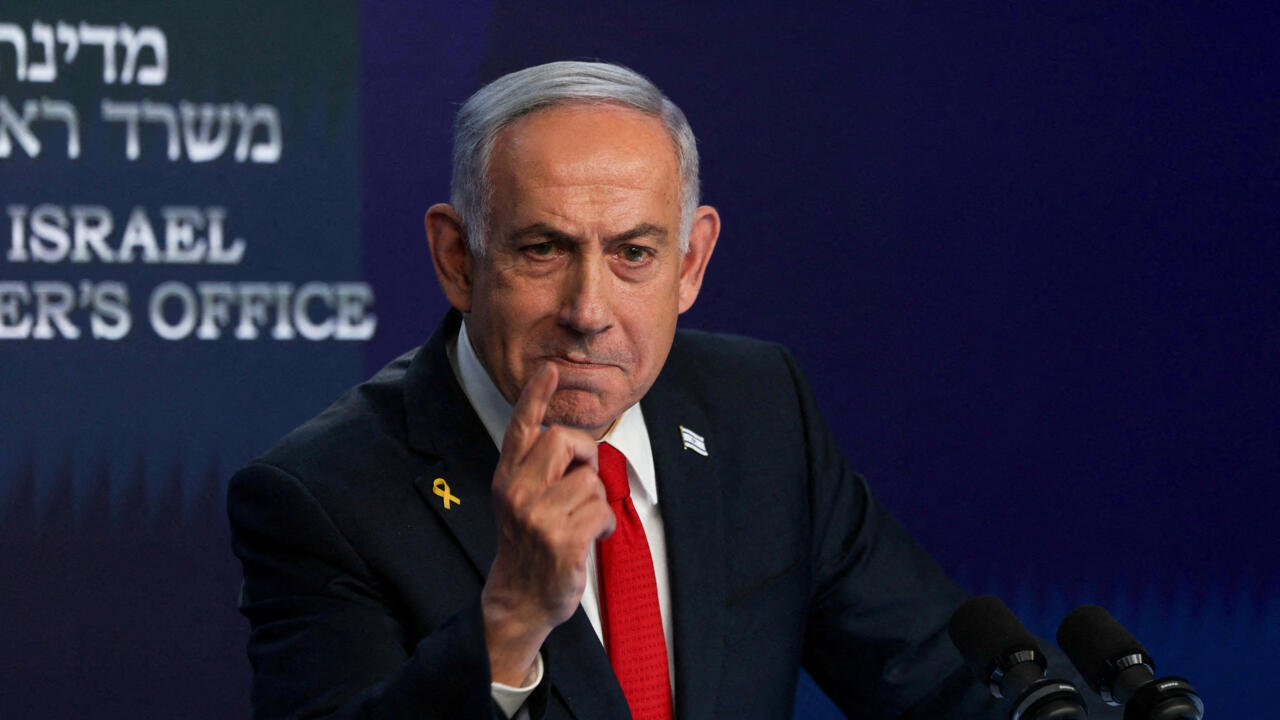
Israeli Prime Minister Benjamin Netanyahu speaks during a press conference in Jerusalem, May 21, 2025. © Ronen Zvulun, Reuters

In the wake of the fatal shooting of two Israeli embassy staff in Washington, DC on Wednesday evening, Israel’s Foreign Affairs Minister Gideon Saar was quick to cast blame on those he held responsible for the killings: Europe’s leaders.

"There is a direct line connecting anti-Semitic and anti-Israeli incitement to this murder," he said. "This incitement is also done by leaders and officials of many countries and international organisations, especially from Europe.”

The Israeli government found itself facing unprecedented criticism from some of its staunchest European supporters this week as it launches a massive ground assault in the Gaza Strip, which Israel has cut off from all humanitarian aid for almost three months. The pressure pushed Israel this week to allow limited aid into the enclave even as it issued fresh evacuation orders for the Strip's north.

An IDF spokesperson said earlier in May that the operation, dubbed “Gideon’s Chariots”, would result in “the displacement of most of the population” of the Palestinian territory.


Yair Wallach, reader in Israeli studies at SOAS, University of London, said that the country’s growing diplomatic isolation in part reflected the dire humanitarian situation in Gaza.

“We’ve seen a demonstration over the last week that when the consensus emerges that a war crime is being pursued, suddenly you’re going to see many people coming on board and agreeing to the kinds of policies that would have been unthinkable certainly a year and a half ago,” he said.

It is these criticisms, Saar said, that fed into a climate of anti-Israeli feeling that led directly to the two staffers’ deaths.

The two embassy employees, identified as Yaron Lischinsky and Sara Lynn Milgrim, were shot dead as they were leaving the Capital Jewish Museum. Witnesses reported that 31-year-old Elias Rodriguez, who has been charged with the couple’s murder, shouted “Free Palestine!” as police came to arrest him.

Saar’s statements were soon echoed by Prime Minister Benjamin Netanyahu, who accused France, Canada and the UK in particular of “emboldening Hamas” with their joint call earlier this week for Israel to halt its ongoing Gaza campaign and allow humanitarian aid to enter the devastated territory.


The statement, which called on Palestinian militant group Hamas to release all hostages, also condemned public comments by far-right cabinet ministers promising to “conquer” and “cleanse” Gaza and threatened sanctions against illegal Israeli settlements in the occupied West Bank.

“Because by issuing their demand – replete with a threat of sanctions against Israel, against Israel, not Hamas – these three leaders effectively said they want Hamas to remain in power,” he said in a statement posted on social media Thursday. “You're on the wrong side of humanity and you're on the wrong side of history.”

Officials from the three countries strongly rejected Netanyahu’s statement, with French Foreign Minister Jean-Noël Barrot saying the remarks were “absurd and slanderous”. He emphasised that Paris was "unwaveringly committed to Israel's security". All three nations have designated Hamas as a terrorist group.

Israel has maintained a blockade of the shattered enclave since early March, refusing to allow food, shelter and medical supplies to enter the Strip as it renews its military assault. The UN today warned that 14,000 malnourished children in the coastal enclave face the real risk of starving to death by the end of the year.

More than 53,000 Palestinians, most of them women and children, have been killed by Israeli troops since the October 7 terrorist attacks carried out by Hamas and its allies, the Gaza health ministry says.


The rising diplomatic tensions reflect what seems to be something of a breaking point between Israel and a number of its erstwhile backers in Europe and the broader West.

The European Union this week announced it would be reviewing its Association Agreement with Israel in light of the worsening situation in Gaza, with the UK also putting negotiations around a free trade agreement with Israel on hold.

And while Israel’s main supporter, the US, has so far been unwilling to lend its voice to the chorus, the administration of President Donald Trump has done little to dissuade the condemnations.

Wallach said that Trump’s decision not to meet with Netanyahu during his recent tour of the Middle East likely reflected a sense of growing impatience in Washington with the Israeli government’s intransigence.

Trump’s Special Middle East Envoy Steve Witkoff, who has been negotiating directly with Hamas leadership rather than going through intermediaries used in previous rounds of negotiations, reportedly pressed Israel and the militant group to accept an updated ceasefire proposal earlier this week.


“I think why we’re seeing this kind of intervention now is that people waited for Trump’s visit to the region, if this would allow some kind of ceasefire,” Wallach said. “And then when that didn’t happen, and when there’s a real risk of starvation and images are coming out, they’ve – quite belatedly I would say – realised they needed a stronger reaction,” he said.

Wallach said he thought the killing of two of its young embassy staffers in the heart of the US would be unlikely to change the equation for Israel's critics.

“Whether the US would change tack – I’m sure that there would be people in the administration calling for that, but I don’t think so. I think the interests of the US, as the administration understands them, is to … get the situation under control.”

“So I doubt this will trigger a U-turn for the US – although I’m of course saying this with the caveat that this is Trump, and he could wake up and decide something else.”
‘Victim of its own success’: Is France's beloved comté cheese bad for the environment?


Comté is the most eaten AOP cheese in France, but activists claims its very popularity – at home and overseas – is damaging the environment. The milk to make the comté can only be produced on the Jura plateau in eastern France where there are reports of intensification of livestock farming and pollution linked to wastewater treatment.


Explainer
FRANCE24
By: Bahar MAKOOI
 16/05/2025 - 

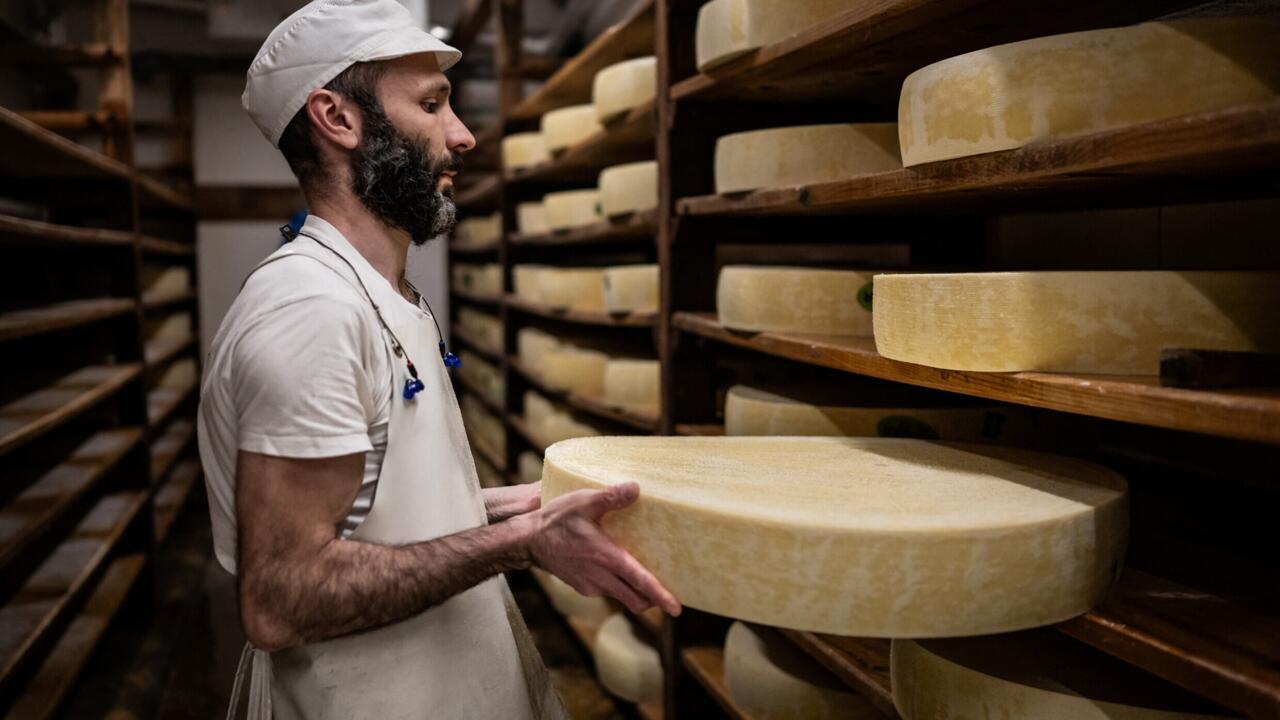
An employee works in the maturing cellar at a Comte cheese dairy in Arc-sous-Cicon, eastern France on March 20, 2024. © Arnaud Finistre, AFP

Comté is France’s most popular cheese with AOP (Appellation d'origine protégée) status, meaning it can only be produced in one location – in this case on the mountainous Jura plateau in eastern France.

Some 1.6 million wheels of the hard-rind cheese were sold in 2022. Now environmental activists are asking whether French – and global – customers should cut back on their consumption.

“For years, the industry has been criticised for the damage it causes to soil and water,” prominent environmental campaigner Pierre Rigaux told French radio station France Inter in April.

Much of the damage, he said, comes from breeding and rearing the Montbéliard cows that produce the milk used to make comté. The cattle are mainly farmed in three French departments: Doubs, Jura and Ain.


“Along with other farming practices linked to comté, their excrement fills the soil with phosphorus and nitrogen. These quickly reach waterways causing a proliferation of algae, the death of fish, and a decline in aquatic biodiversity,” Rigaux said.
A ‘cheese plan’

Cloudy water, white foam, sewage odours and dead fish were reported in 2019 and 2020 near dairy farms in these departments that were found to have major wastewater treatment failures. After an investigation by the regional environmental protection centre in Besançon, two cheese producers were given heavy fines in 2022.

Read more French cheeses on the brink of extinction?

Due to a lack of capacity, treatment plants on site at the two locations were discharging untreated water into surrounding areas with highly permeable soil resulting in “catastrophic consequences for the environment”, according to Besançon’s public prosecutor Étienne Manteaux.

As part of a sweeping “cheese plan” launched in 2022, notices were issued to 14 out of 96 cheese dairies in Doubs to bring their water treatment facilities up to standard and repair faulty pipes.

Nearly all were found to have met the standard in 2024, according to the government department responsible for economic change.

Consequently, famers who provide the milk used to produce comté claim to have a clean production chain that protects the environment.

“Using individual cases of negligence to discredit the entire industry cannot be allowed,” Alain Mathieu, president of the interprofessional committee for comté management told AFP on Monday.

“These attacks are damaging and unfair given the high standards we set ourselves in the region,” he said in response to a national debate sparked by Rigaux’s interview.

The call to eat less comté angered farmers, many of whom posted on social media using the hashtag #TouchePasAuComté (#don’ttouchcomté) along with politicians who supported their cause, including France’s Agriculture Minister Annie Genevard.

"Comté is much more than a cheese: its the fruit of our land, know-how and a source of French pride," Genevard wrote on X.

Politicians on the right also voiced their support for the cheese. Laurent Wauquiez, candidate for the presidency of Les Républicains party said denouncing comté was akin to envisaging “a France without identity and flavour”.

MPs from France’s hard-right National Rally party, including regional counsellor for Bourgogne-Franche-Comté Julien Odoul, issued a call to “protect” the cheese.
Increased production

The production of comté cheese has some environmental benefits. “The AOP specifications protect natural grasslands, which are carbon sinks and promote biodiversity. Thanks to comté, Montbéliarde cows graze on meadows, which drastically reduces the use of pesticides,” says Jean Burkard, advocacy director at WWF France.

Meadows require up to 12 times less pesticide treatment than traditional agricultural plots, according to WWF, which has just published a report on the importance of protecting France's grasslands.

The problem is that comté is a “victim of its own success”, Burkard says. “The more comté we eat, the more that intensifies production. That means we need more and more cows. Cows create methane and manure, so nitrogen and fertiliser are going to end up in the water.

In the last 30 years, the production of comté has more than doubled from 30,000 tonnes in 1991 to 72,000 in 2004, according to environmental organisation SOS Loue et Rivières Comtoises.

“The number of cows has certainly increased, but they are also producing more milk than they used to which means they are eating more and excreting more … That contributes to the increase of nitrates in our rivers,” the association said.
Global demand

It is not just French consumers who have a taste for comté. It is the most exported cheese in France with 10.7% of all production sold overseas in 2023, a 7.5% growth on exports from the previous year. The biggest international consumers include Belgium, Germany, the United States, the UK and Japan.

Comté cheese wheels at a producers' stand at the Salon International de l'Agriculture in Paris on February 24, 2025. © Thibaud Moritz, AFP

This is, in part, because the comté cheese industry has invested in massive international promotion campaigns in the last ten years.

But opponents say there is an urgent need to scale down production. Fisheries warden and member of a local collective for the protection of the Doubs river, Patrice Malavaux, told France Inter there was now an "overproduction of milk”.

"We're making milk to be sold all over the world. It's just not possible. Rivers are not capable of absorbing such quantities of pollution," he said.

The Jura plateau is “a very calcareous, and therefore very porous, environment", Burkard says. “This means that even a small amount of chemical inputs, fertilisers and nitrogen from these meadows will infiltrate extremely quickly into the watercourses. This explains why a lot of our rivers are severely degraded, with some pretty staggering figures on the disappearance of fish species, particularly trout in certain rivers in the region."

The controversy over comté might indicate the extent to which environmental protections so often come second to economics – but also the role consumers play in this equation. “A simple solution would be to remind people that comté is a very good product, and that its impact can remain limited ... as long as we show a little restraint," Burkard adds.

(with AFP)

This article has ben adapted from the original in French.
🌟 The Bright Side: Famed Sherpa guide breaks own record by climbing Mount Everest for 31st time

Kami Rita Sherpa, a Nepali climber who has led expeditions up Mount Everest since 1994, broke his own record Tuesday by reaching the mountain's peak for the 31st time.


Issued on: 27/05/2025 - 
FRANCE24
By: NEWS WIRES

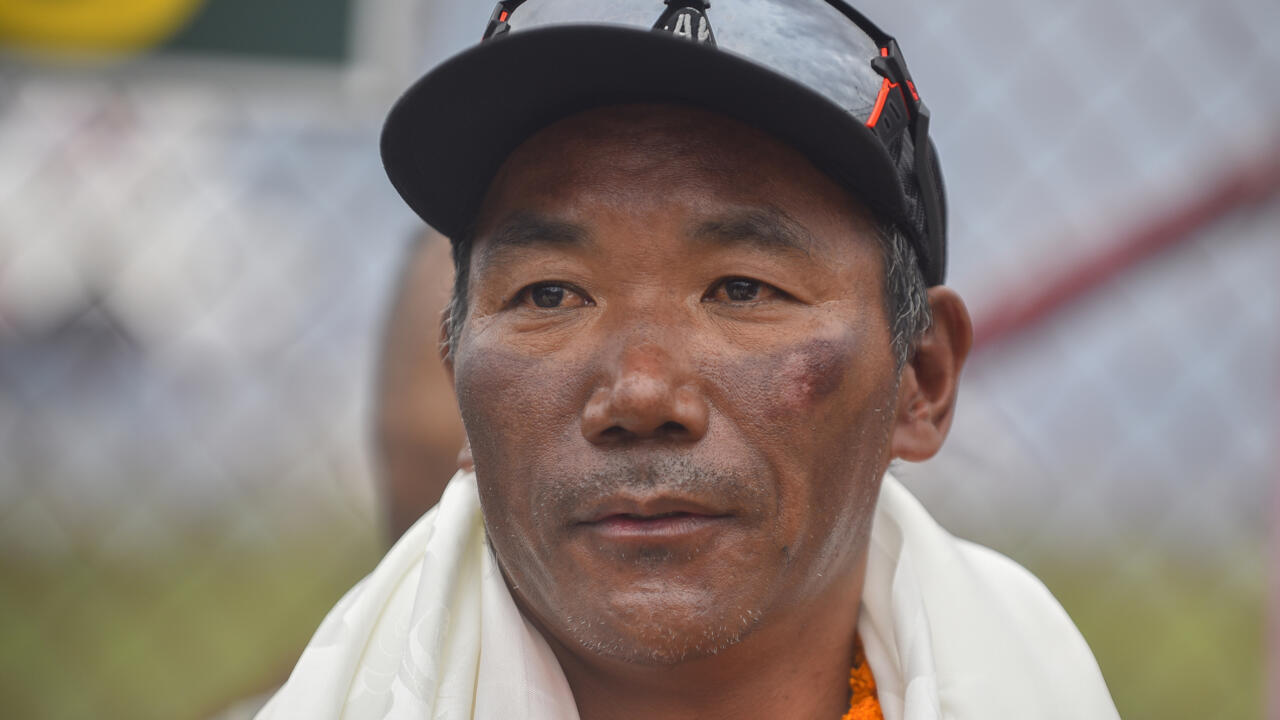
Nepali guide Kami Rita Sherpa reached the peak of the world's highest mountain for a record 31st time on May 27, 2025. © Nisha Bhandari, AFP
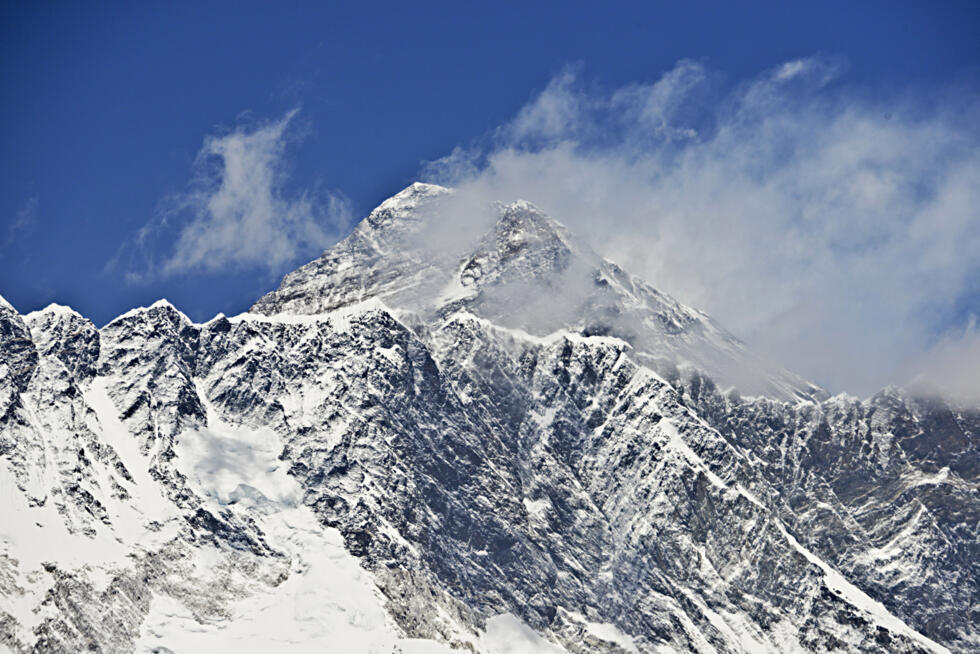

A 55-year-old Nepali climber dubbed the "Everest Man" reached the peak of the world's highest mountain for a record 31st time on Tuesday, more than three decades after his first summit.

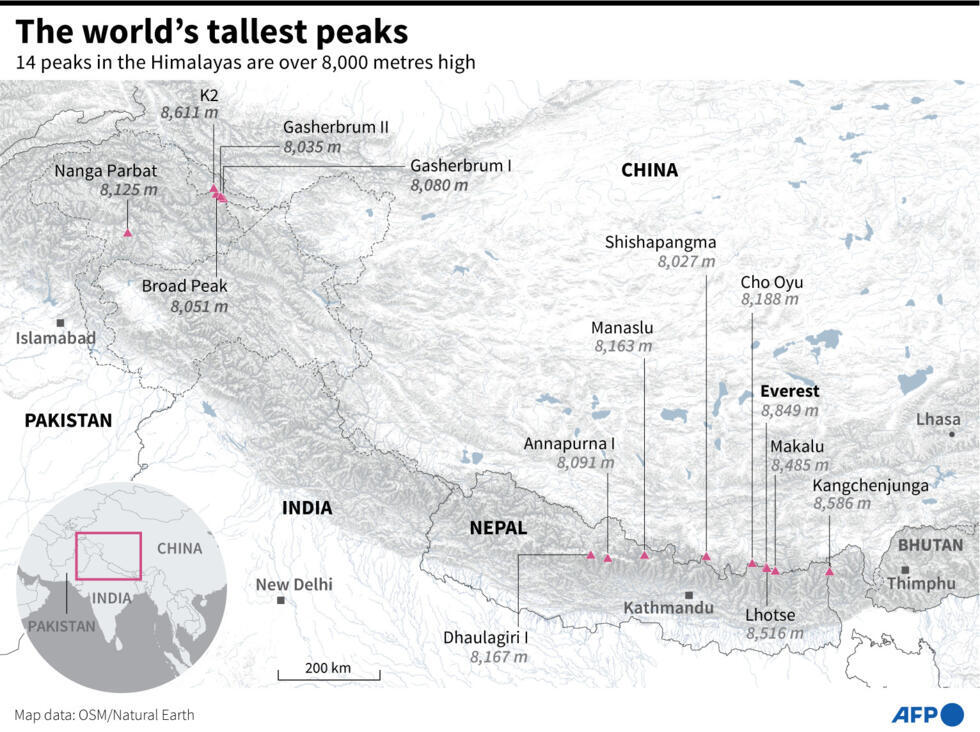
Kami Rita Sherpa reached the 8,849-metre (29,032 foot) peak – the highest in the world – by the traditional southeast ridge route while guiding a 22-member Indian army team, officials said, adding that 27 other Sherpas also accompanied the group.

"Massive congratulations to the legendary Kami Rita Sherpa on his 31st successful ascent of Everest – the highest number of ascents by anyone in history," said a statement from expedition organisers, Seven Summit Treks.

"Kami Rita Sherpa needs no introduction. He is not just a national climbing hero, but a global symbol of Everest itself," it added.


Sherpa first stood on the top of Mount Everest in 1994 when working for a commercial expedition. He has climbed Everest almost every year since, guiding clients.

Sherpa, speaking a year ago after he had climbed the peak for the 29th and 30th times, said that he was "just working" and did not plan on setting records.

"I am glad for the record, but records are eventually broken," he told AFP in May 2024.

The world's tallest peaks © John Saeki, AFP

"I am more happy that my climbs help Nepal be recognised in the world."

Seven Summit Treks said he completed the climb on Tuesday as the leader of the Indian army team, adding that he "not only reached the summit himself, but also led and guided the last remaining members of the team to the top".

Sherpa's father was among the first Sherpa mountain guides. In addition to Everest, Kami Rita has climbed other peaks that are among the world’s highest, including K2, Cho Oyu, Manaslu and Lhotse.
'To the next height'

The achievement comes as the spring climbing season nears its end.

More than 500 climbers and their guides have already reached the summit of Everest since the route opened, taking advantage of brief spells of good weather, according to Nepal's tourism department.

The season has so far recorded the fewest number of deaths on Everest in recent years. Two climbers, a Filipino and an Indian, have died on its high camps.

Nepal has issued more than 1,100 permits for mountaineers this season, including 458 for Everest, earning more than $5 million in royalties. © Roberto Schmidt, AFP/File

Nepal has issued more than 1,100 permits for mountaineers this season, including 458 for Everest, earning more than $5 million in royalties.

The country is home to eight of the world's 10 highest peaks and welcomes hundreds of climbers each spring, when temperatures are warmer and winds typically calmer.

Earlier this month British climber Kenton Cool, 51, successfully climbed Everest for the 19th time, extending his own record for the most summits by a non-Nepali.

Tourist ministry official Himal Gautam, director of its mountaineering and adventure section, said Sherpa's achievement reflected on the country's wider efforts.

"Kami Rita Sherpa's record ascent has helped to take Nepal's mountaineering sector to the next height," Gautam said.

A climbing boom has made mountaineering a lucrative business since Edmund Hillary and Tenzing Norgay Sherpa made the first ascent in 1953.

Last year more than 800 climbers made it to the peak of Everest, including 74 from the northern Tibet side.

(FRANCE 24 with AFP, AP and Reuters)
Victims of Le Scouarnec slam lack of action in France’s landmark child sex abuse case

Former French surgeon Joël Le Scouarnec sexually abused 299 children over the course of 25 years, most of whom were under the age of 15, in one of the largest cases of child sexual abuse France has ever seen. As the trial comes to a close, his victims and organisations combatting violence against children wish the case had garnered more public attention or political action.

Analysis
Issued on: 27/05/2025
FRANCE24
By: Lara BULLENS

Protestors react during a demonstration in support of the victims of former surgeon Joel Le Scouarnec outside the court in Vannes, western France on May 19, 2025. 
AFP - DAMIEN MEYER

Just over a dozen victims and their families rallied outside a courthouse in western France last week, surrounded by activists.

By their feet, a crime scene had been reconstructed. Symbolic objects like children’s clothes, toys and a notebook were scattered atop a white sheet. Each object was given a number, as though it would later be taken in for forensic testing.

Joël Le Scouarnec, a French paedophile surgeon accused of raping and abusing 299 child patients between 1989 and 2014, has been on trial since February in one of the largest sex abuse cases France has ever seen.

A final verdict is expected tomorrow, on May 28.


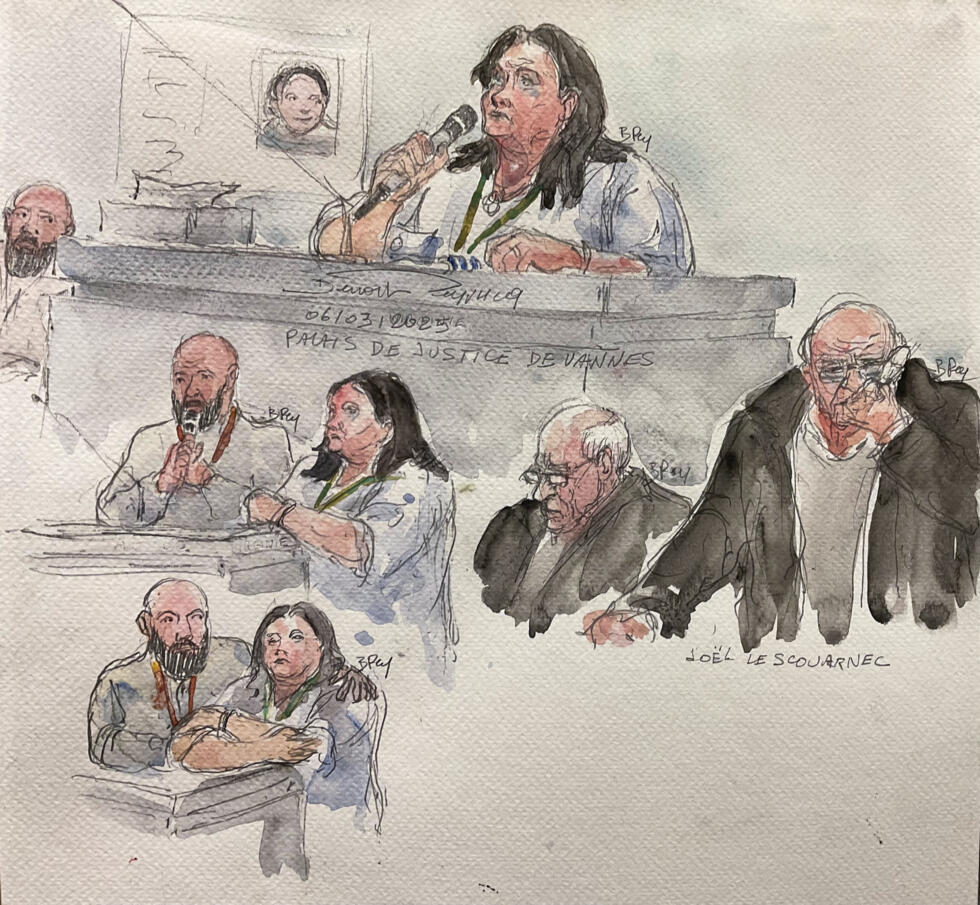
This court sketch from 6 March shows a victim being auditioned and French paedophile surgeon Joel Le Scouarnec during his trial. 
© Benoit Peyrucq, AFP

As the three-month trial draws to a close, victims and organisations combatting child abuse are not only frustrated with the lack of attention the case has received, but angry at the meagre actions taken by the French government to ensure a crime of this scale never happens again.
‘Shame must change sides’

But it is not for want of trying. Those who fell victim to Le Scouarnec’s abuse as children have made significant efforts to try and draw public attention to the case, and the issue of child sexual abuse more broadly.

Many waived their right to anonymity in the hearings, agreeing to testify in the courtroom. Others demanded action, like Nicolas Gourlet, who during his testimony in late April asked that “things change so we don’t end up with another Le Scouarnec out there”.

Gourlet was sexually assaulted by Le Scouarnec in 2006 at the age of 13, after undergoing surgery for a cyst on his navel. He is now 31 years old.

Throughout the trial, an increasing number of victims also changed their minds about speaking openly to the press in the hope that “shame changes sides”, as Gourlet said, echoing the words of Gisèle Pelicot in the mass rape trial that rocked France last year.

Read moreFrance unveils new measures to protect women in wake of Pelicot affair

But despite their efforts, Le Scouarnec’s victims say very little has been done.

“Nothing is happening. We haven’t seen a single political reaction,” Manon Lemoine, who was 11 when she was raped by Le Scouarnec, told AFP. “Despite how difficult this trial is for us, we are obliged to put our energy into making ourselves heard, to try and get a bit of visibility, a bit of consideration,” she said.
Protesters recreate an evidence scene during a demonstration in support of the victims of Le Scouarnec on May 19, 2025. 
© Damien Meyer, AFP

The victims' group has asked the French government to form a special committee of representatives from the health and justice ministries, as well as the children’s commissioner, to draw lessons from the Scouarnec case and improve the government response to, and prevention of, child sexual abuse.

“We haven’t heard back yet, but we’re waiting for them to act on what’s happening now, on this tragedy,” Lemoine said.

Gabriel Trouve, who was assaulted by Le Scouarnec at age 5 when he was hospitalised, believes the trial should serve as an “open-air lab” to expose “all the systemic failures” that exist, and to ensure a “solid support and prevention system” is put in place.
In the shadow of Pelicot and Betharram

Those frustrated with the lack of public attention the Scouarnec trial received have often made comparisons to the Pelicot trial and the sex abuse scandal at the Catholic boarding school Notre-Dame de Bétharram, which has garnered a lot of attention in recent months.

But Martine Brousse, president of “La Voix de l’Enfant”, a French organisation that combats violence against children, says that the case against Scouarnec has not gained as much attention as the Pelicot or Bétharram trials partly because of how isolated the former surgeon’s victims were from the start.

“Most of them didn’t know each other before the trial. And while some people knew they had been abused or raped, some only found out during the investigation,” Brousse underlines.

“In the Pelicot trial, it was one woman surrounded by feminist organisations. In the case of Bétharram, hundreds of victims banded together and created a collective [with an appointed spokesperson],” she continues. “That is not the case for the victims of Le Scouarnec.”

The spokesperson at the head of the Bétharram collective also published a book on April 24, called "The Silence of Bétharram".

But the sex abuse scandal at the Bétharram Catholic school in southwest France also had important political implications. Prime Minister François Bayrou was accused of knowing about the widespread abuse that took place at the school during his time as education minister between 1993 and 1997. One of his own daughters, Hélène Perlant, spoke out about suffering abuse while attending summer camp at the school when she was 14.

Bayrou denies the accusations, but faced one of the most delicate moments of his tenure so far when he was questioned about the abuse by a parliamentary committee – amplifying debates around the case in both the political and public spheres.

As the trial closes, Brousse thinks it is “unfortunately too late” for the victims to create the same amount of traction as the Pelicot and Bétharram cases.

Le Scouarnec was questioned for the last time on May 20 at a hearing in a courthouse in Vannes, western France.
A long road ahead

For Brousse, there are many things that have changed to better protect children in medical settings in recent decades.

Paediatric reception centres known as “Enfants en Danger” (“Children in Danger”) or UAPED have become widespread across France. The specialised service brings together paediatricians, child psychiatrists, forensic doctors, legal professionals and psychologists who accommodate victims in a safe location and offer them support. Training on violence against children is also recommended to all healthcare professionals, though not mandatory.

“But there is still a long way to go,” Brousse says. “Especially regarding prevention.”

Le Scouarnec was first convicted 20 years ago, in 2005, for possession of child pornography. He was given a four-month suspended prison sentence and a €90 fine. But the paedophile surgeon continued to work in hospitals, without any professional restrictions, and continued to abuse children until he was finally arrested in 2017.

“I’m always surprised at how few penalties there are for possessing child pornography,” says Solène Podevin-Favre, the co-director of Ciivise, an independent commission that collects testimonies on incest and sexual violence towards children.

“These are people who take pleasure in seeing a child being raped,” she continues. “We need to monitor and punish professionals accordingly.”

France increased the minimum sentence for possessing and consulting child pornography from three to five years in 2021, as part of a three-year plan to end violence against children. Offenders are also now automatically included in a registry that bans them from working with children.

What has shocked many in the Scouarnec case was the lack of disciplinary action the paedophile received, despite numerous attempts to flag him.

Read more'They knew and did nothing': French surgeon's trial for sexual abuse exposes systematic failures

A psychiatrist who worked with Le Scouarnec raised concerns in 2006 after his initial conviction and wrote to the Order of Physicians, which regulates France’s medical profession. He doubted the former surgeon’s ability to “remain completely calm when treating young children”, but no action was taken.

The hospital they worked at promoted Le Scouarnec as head of surgery instead, and its director applauded his “excellent relations both with patients and their families”.

“Anywhere children are being looked after, whether it is a school or a sports club or a hospital, employees should be systematically obliged to present certificates proving they have not previously been convicted [of child abuse],” Brousse says. “That is what prevention is all about. Making sure you don’t let a predator into your establishment.”

Podevin-Favre agrees with Brousse that people working with children should be screened regularly. “We need to systematically check their files to see if they are listed as perpetrators of sexual or violent offenses. Not only when they are hired, but every year, to ensure that children are safe to be around them.”

The French government approved a recommendation by Ciivise to make these kinds of checks mandatory. “While this means the government considers the measure a priority and is committed to implementing it, it is still unclear when that will happen and with what resources,” Podevin Favre explains.

Another recommendation made by the commission is to make it mandatory for doctors to report all cases of abuse, “not only for minors under the age of 15, which was the case until now, and ensuring those who report a case are not sanctioned by the Order of Physicians”, says Podevin-Favre. That recommendation was also greenlit by the government.

The Order of Physicians has come under fire for not responding to initial warnings concerning Le Scouarnec. And a 2019 report by the Court of Auditors revealed that the institution did not address sexual misconduct allegations “with sufficient rigour”. From 2014 to 2017, 43 percent of complaints were dismissed, and only 12 percent resulted in medical licenses being revoked.

The report even made a direct reference to Le Scouarnec on page 108 when it mentioned the "recent actions of a surgeon" in western France, saying the case was "proof" of how important it is for the Order of Physicians to share information as quickly as possible.

“There is no comprehensive child protection policy in France, and that’s what’s really lacking,” Podevin-Favre points out. “We pile up measures left and right, but we don’t provide the means for a response that is up to par with the issue of child sexual abuse.”

“We have to stay vigilant. And we have to give children the benefit of the doubt,” concludes Brousse.

'They knew and did nothing': French surgeon's trial for sexual abuse exposes systematic failures

The trial of French surgeon Joël Le Scouarnec began on Monday with him facing accusations of assaulting nearly 300 patients, mostly children, over several decades. The case has sparked widespread outrage, with France’s Order of Physicians accused of turning a blind eye to early warnings.


Explainer
Issued on: 24/02/2025 - 
By: Anaelle JONAH
 FRANCE24

This court sketch created on February 24, 2025 shows retired surgeon Joel Le Scouarnec during a hearing on the opening day of his trial on charges of assaulting or raping 299 patients at the Criminal Court in Vannes.
 © Benoit Peyrucq, AFP


French surgeon Joël Le Scouarnec, already serving a 15-year prison sentence for child abuse, went on trial on Monday accused of sexually assaulting nearly 300 patients, most of them children, over several decades. The 74-year-old, who continued practising medicine despite a 2005 conviction for possessing child abuse images and repeated warnings from colleagues, faces up to 20 additional years in prison if found guilty.

"I've done hideous things," Le Scouarnec told the court as his trial opened, adding that he is "perfectly aware these wounds cannot be erased or healed".

Read moreFrench former surgeon admits to ‘vast majority’ of cases in historic child sexual abuse trial

Held at the Criminal Court of Morbihan in Brittany, the new trial centres on allegations that Le Scouarnec assaulted or raped 299 patients, primarily while they were under general anaesthesia, between 1989 and 2014. Of the victims, 256 were under the age of 15, with the youngest just one year old.

Le Scouarnec was first convicted in 2020 for abusing four children, including two of his nieces. However, his ability to continue practising medicine until his retirement despite early red flags has drawn sharp criticism of France’s medical regulatory bodies, particularly the Order of Physicians, which is now a civil party in the case.

"How many people knew he was a paedophile and let him practise medicine?" one victim asked AFP. "They knew and they did nothing."
Systemic failures under scrutiny

Le Scouarnec was flagged by the FBI in 2004 for accessing child abuse images online while he was working in Lorient, a city in Britanny. A year later, a French court handed him a suspended four-month sentence. By then, he had already moved to a city 20 kilometres away in Quimperlé, where he was welcomed as a much-needed surgeon.

Psychiatrist Thierry Bonvalot, who worked with Le Scouarnec at the local hospital, raised concerns in 2006 after learning of his conviction.

"He described surgery using so many sexual metaphors that I was shocked. He admitted he had been sentenced for child pornography," Bonvalot told AFP. "I realised he was dangerous and asked him to resign. He refused."

Bonvalot wrote to the Order of Physicians, which regulates France’s medical profession, questioning Le Scouarnec’s ability "to remain completely calm when treating young children" in view of his "legal past".

However, no action was taken. Instead, the hospital promoted Le Scouarnec to head of surgery, with the director describing him as a "serious and competent" doctor with "excellent relations both with patients and their families, as well as with staff".

A report questioning his moral fitness to practise medicine reached the health ministry in 2007 after the "concerning" death of a patient on his operation table. However, due to a government reshuffle, no action was taken. Le Scouarnec continued working in Brittany before moving to Jonzac in southwestern France in 2008, where he remained until his retirement in 2017.

It was only in 2017, when a 6-year-old girl accused him of rape, that police uncovered extensive diaries detailing decades of abuse.
'Illegitimate and irresponsible'

The Order of Physicians has faced mounting criticism for its failure to act on early warnings about Le Scouarnec. Victims and medical associations have condemned the organisation’s inaction as reckless.

"We believe that the constitution of a civil party is illegitimate and irresponsible, not to say insulting in view of [the Order of Physicians’] inaction since 2006," a group of doctors’ unions and associations said in a statement ahead of the trial.

The Order, which did not accept FRANCE 24's request for comment on the case, said it will "reserve its comments for the time of the hearing".

In a separate statement, it pledged to fight against sexual violence in medicine. "In recent years, the Order of Physicians has undertaken reforms to strengthen vigilance and coordination with the judiciary. Such acts should never have happened and must never happen again," it said.

However, a 2019 report by the Court of Auditors found that the organisation failed to handle sexual misconduct cases "with sufficient rigour". Between 2014 and 2017, 43 percent of complaints were dismissed, and only 12 percent led to disbarment.
Doctors 'can't be neutral'

The case has reignited calls for reforms to France’s medical ethics codes, which critics say discourage doctors from reporting abuse. Those who speak out risk legal consequences for violating professional "fraternity" rules.

"There have been cases where professionals reported an offence and were then sued for breaching professional solidarity. This has to stop. Doctors who report sexual assault must be protected," said Dr. Gilles Lazimi, a general practitioner and member of the High Council for Equality Between Women and Men.

The Independent Commission on Incest and Sexual Violence Against Children has repeatedly called for reforms, warning in 2022 and again in 2024 that doctors who report abuse risk professional retaliation.

The commission also urged clarification “on the obligation for doctors to report child victims of sexual violence".

"A doctor can't be neutral. He can't remain silent, can't fail to act. If he stays silent, he is necessarily on the side of the aggressor," Lazimi said.

The trial is expected to last several weeks, with the verdict likely to have far-reaching implications for the regulatory framework for French medicine.