Showing posts sorted by relevance for query KURDS. Sort by date Show all posts

Monday, December 30, 2024

Kurds Seek Federal Solution as Tensions Rise in Syria and Beyond

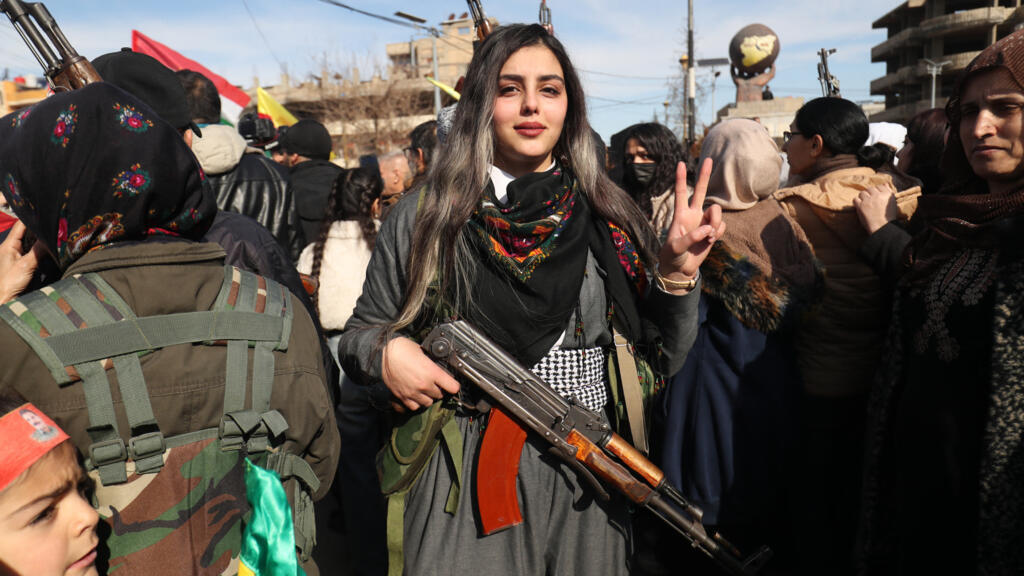
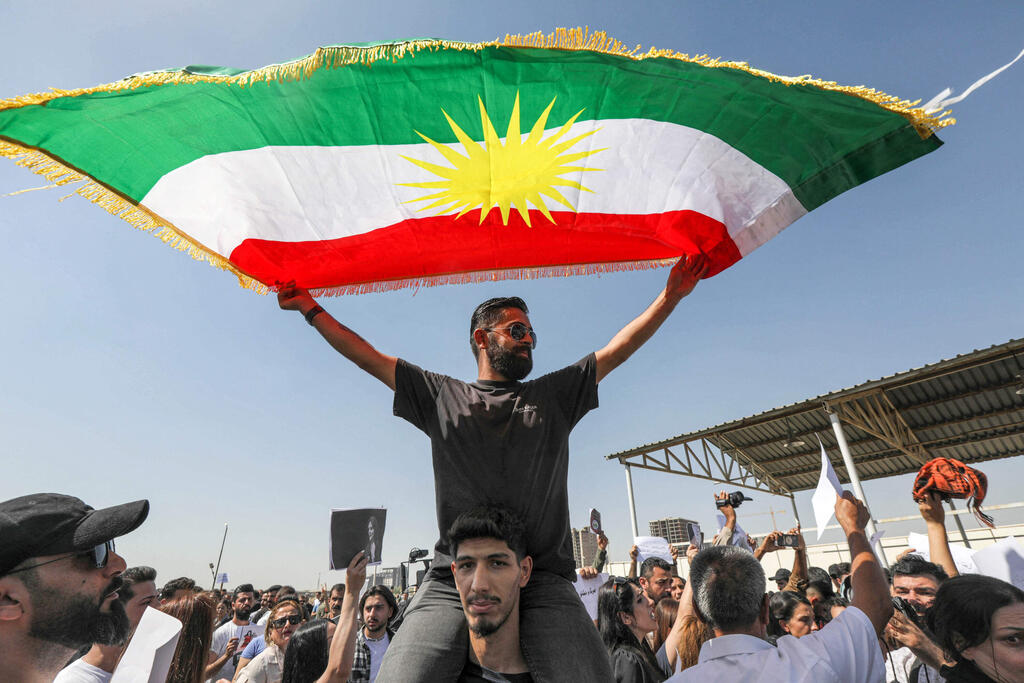
Kurds wave independence-era flags during a demonstration in support of the US-backed, Kurdish-led Syrian Democratic Forces in the northeastern city of Qamishli, on Dec. 19, 2024. (DELIL SOULEIMAN/AFP via Getty Images)

GIORGIA VALENTE
MEDIALINE
12/29/2024

Kurds face oppression across the Middle East, battling for recognition and autonomy while resisting extremism, Turkey's aggression, and regional political challenges

The Kurdish people, often referred to as the largest stateless ethnic group in the world, have faced centuries of marginalization and persecution. Scattered across Turkey, Syria, Iraq, and Iran, the Kurds share a cultural, linguistic, and historical bond but remain divided by political borders imposed after World War I. In Syria, their plight has been particularly stark with decades of oppression under the Arab nationalist Baath regime.

“The Kurds are native to Turkey, Syria, Iraq, and Iran. Today, they are probably the largest ethnic group that does not have a state of its own. There are about 20 million in Turkey, 10 [million] in Iraq, 6 [million] in Iran, and 3 or 4 [million] in Syria. We do not have exact numbers. It’s all estimates,” Henri Barkey, adjunct senior fellow for Middle East Studies at CFR, said to The Media Line.

Kurds in Syria have long been treated as second-class citizens. Stripped of citizenship rights in the 1960s, many were rendered stateless and denied access to education, property ownership, and other fundamental rights.


I was perhaps one of the few Kurds who did not belong to the ruling party in Syria and still had the opportunity to work academically in Syrian universities, despite being classified as an opponent of the regime. When I earned my doctorate with distinction, the regime’s security agencies issued a secret order banning me from teaching in all public and private universities.

“I was perhaps one of the few Kurds who did not belong to the ruling party in Syria and still had the opportunity to work academically in Syrian universities, despite being classified as an opponent of the regime,” said to The Media Line, Serbest Nabi, a Syrian Kurdish political philosophy professor, currently living in Erbil, Kurdistan. However, his achievements came at a cost. “When I earned my doctorate with distinction, the regime’s security agencies issued a secret order banning me from teaching in all public and private universities,” he said.

This marginalization was rooted in the Baathist ideology, which sought to suppress ethnic diversity in favor of Arab nationalism. For Kurds, asserting their identity or demanding rights was met with suspicion and repression. “The suspicion of being an extreme Kurdish nationalist followed me everywhere and throughout my academic life,” he shared.

Many Syrian Kurds facing these issues, like Nabi, had to escape to Iraq, a country where Kurds achieved autonomy as part of a federal state. As of January 2024, the UN High Commissioner for Refugees reported that approximately 270,000 Syrian refugees were residing in Iraq, with the majority being Syrian Kurds.


I sought refuge in Iraqi Kurdistan. My family joined me here later. My children, who grew up here, know nothing about their homeland and their father’s birthplace.

“I sought refuge in Iraqi Kurdistan. My family joined me here later. My children, who grew up here, know nothing about their homeland and their father’s birthplace,” Nabi addressed.

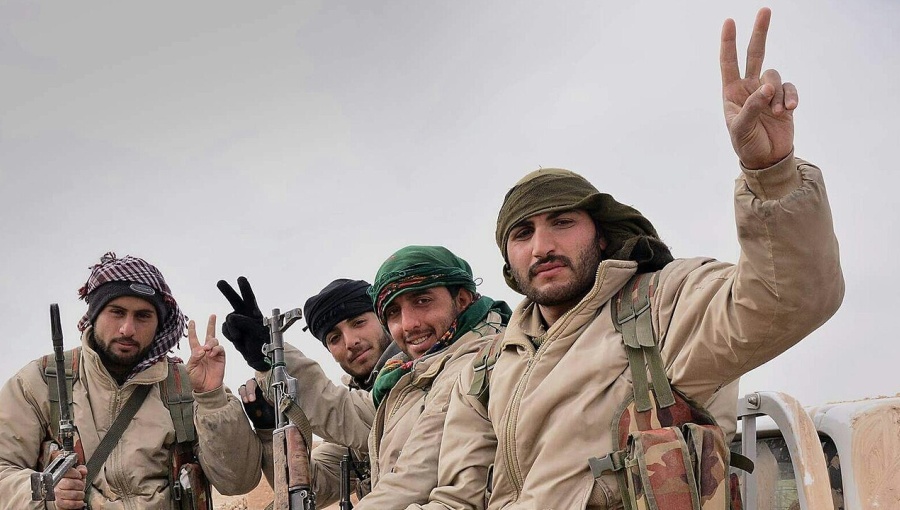
Since the Syrian Civil War in 2011, Kurdish forces, primarily the Syrian Democratic Forces (SDF), have played a crucial role in fighting ISIS and controlling key territories in northern Syria.

“The Kurds in Syria alone have faced the culture of religious extremism and the racism of the Arab Baathist regime. Fate has forced them to confront groups like ISIS, Al-Nusra, and others with takfiri ideologies,” Barkey stated.

“The Kurds are responsible for holding 40,000 ISIS prisoners, including fighters, women, and children. If Turkey keeps pushing militias to obstacle them, these prisoners could escape, spreading across the Middle East and reigniting the ISIS threat in Syria like in the past,” he added.

SDF historically allied with the US against ISIS, but this has led to tensions with Turkey, which views the group as an extension of the PKK (Kurdistan Workers’ Party), a designated terrorist organization.

“Turkey has invaded Syrian territory controlled by the Kurds three times since 2016, shrinking Kurdish-held areas under the pretext of fighting terrorism. Turkey, a NATO member, has been attacking Kurdish forces with impunity while the US did very little to protect them. Kurds were betrayed by allies,” Barkey said.

By supporting extremist factions, like Hay’at Tahrir al-Sham (HTS), and creating proxy forces like the Syrian National Army, Ankara has sought to prevent any form of Kurdish autonomy along its borders.


Turkey is strategically afraid of Kurdish autonomy. If the Syrian Kurds negotiate something similar to Iraq’s federal structure, it raises the possibility that Turkish Kurds will demand the same. For Erdogan, this is a red line.

“Turkey is strategically afraid of Kurdish autonomy. If the Syrian Kurds negotiate something similar to Iraq’s federal structure, it raises the possibility that Turkish Kurds will demand the same. For Erdogan, this is a red line,” explained Barkey.

“Erdogan wants to bring back Ottoman thoughts—control Egypt, the Mediterranean Sea, Greece, and Cyprus. It’s all for pipelines and regional dominance, but the Kurds are an obstacle to this plan,” Juan Saadoun, a Syrian Kurd media activist currently living in Canada, said to The Media Line.

He also highlighted the hypocrisy in the West’s position these days. “The irony is that while the West normalized HTS, which originated from Al-Qaeda, they label Kurds as terrorists for past PKK ties,” he said.

Turkey’s aggression also aims to prevent solidarity between Kurds across borders. “We, along with the Kurds of Turkey, represent a shared social, cultural, and historical extension. Political borders cannot separate our common consciousness of belonging to our identity,” Saadoun noted.

He emphasized how Turkey’s proxy forces exacerbated the plight of civilians. “The Turkish-backed factions in Afrin and other areas in Syria commit atrocities, prevent families from returning, and enforce extremist practices like Jizya taxation,” he stated.

Personal stories of loss underscore the gravity of the situation and point out the fear of an ISIS comeback. “My brother Yusuf led fierce battles against ISIS and was martyred resisting the Turkish invasion in 2019 in Ras al-Ain (Sere Kaniye). My cousin, Haji, was martyred in the battles to liberate Raqqa from ISIS. We must prevent this from happening again,” Nabi shared.

Despite these challenges, the Kurds remain resilient, united by a shared vision for self-determination. “The Kurdish tragedy cannot continue in this manner. A solution must transcend the colonial-imposed borders of the Middle East after World War I to ensure the rightful place of the Kurds in this geography,” Barkey stated.

We want a federal region, like the Kurdistan region in Iraq. We want safety and protection for Alawites, Druze, and other minorities as well.

Saadoun shared this view: “We want a federal region, like the Kurdistan region in Iraq. We want safety and protection for Alawites, Druze, and other minorities as well.”

Yet, achieving this dream is fraught with obstacles. “I aspire to return to my country and participate in political life,” Nabi said. “However, I find it very difficult to return to a country ruled by an Islamic political-religious movement. I will most likely be on the side of the opposition, continuing to confront any tendency toward establishing a tyrannical religious authority in Syria.”, he claimed.

The Kurdish struggle for recognition, equality, and safety continues, a testament to their enduring spirit in the face of adversity. As Nabi pointed out, “The current situation requires resilience and global solidarity. Without it, the Kurds will remain caught in a cycle of war and marginalization, their sacrifices overshadowed by regional and international politics.”

Sunday, December 15, 2024

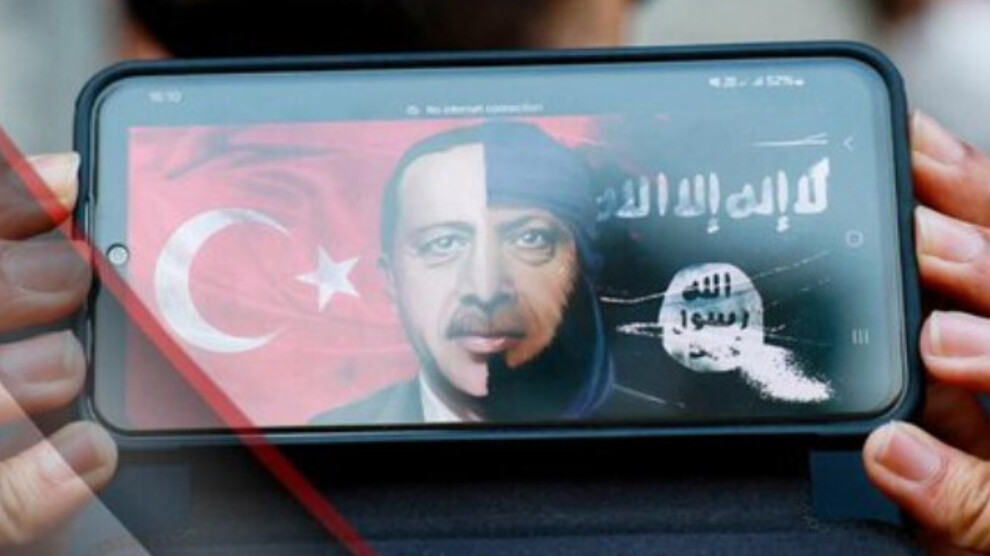
Erdoğan's government is caught up in the hysteria of destroying Kurds

Erdoğan's government aims to crush the Kurds by deploying SNA forces against them. But this is not enough. They are directly coordinating military operations, and inciting Arab populations in the autonomous regions to create instability."


ZEKI AKIL
NEWS DESK
Sunday, 15 December 2024, 

The Turkish press and circles close to the government have framed the developments in Syria as a personal victory. They are seizing the shifting balances and power vacuums to pursue the eradication of the Syrian Democratic Forces (SDF) and, ultimately, to "close the book" on the Kurds. There appears to be a complete mental paralysis when it comes to the Kurds. Can those who proclaim, "Kurds and Turks are brothers; we have lived together for a thousand years," genuinely celebrate the metaphorical burial of the Kurds with such enthusiasm? Is it normal for them to be so deeply invested in and leading such efforts? Those who question or critically reflect on this situation are conspicuously absent.

In Turkey, the Kurdish population is estimated to be in the tens of millions, although the exact number remains uncertain. These Kurds live alongside Turks, attending the same schools, serving in the military, and working together in various sectors. How can peoples who coexist so intimately tolerate such oppression and suppression of one another? How can they become complicit in enabling the war-mongering elites orchestrating even greater disasters for the Kurds? These are questions worth asking. From the perspective of those who respect history and the coexistence of peoples, this reflects a complete breakdown of rationality and morality.

What have the Kurds ever done to the Turkish state to warrant this hostility? What disasters or conspiracies have they orchestrated or participated in? None.

The Kurds have been divided between four states and stripped of their political will. They have endured systematic assimilation. In this context, the Kurds are undeniably a victimized and oppressed people. Their demands are straightforward: recognition of their existence and respect for their political agency. They have not sought to divide any state, nor do they currently advocate for establishing an independent state. Instead, they emphasize a shared will to live peacefully alongside the peoples with whom they coexist. Their demands are for peace and democracy, not only for themselves but for the broader region as well. Do such reasonable demands justify the level of hostility and aggression they face?

Those who claim, "Kurds and Turks are brothers, and we have lived together for a thousand years," are actively devising and executing catastrophic plans against the Kurds in Syria. The Turkish press and leadership, brimming with enthusiasm, celebrate the victories of the Syrian National Army (SNA) and urge them to escalate their attacks on the Kurds. But who are these forces labeled as SNA? Many of them are former members of DAESH (ISIS) and Al-Qaeda, rebranded under new names and symbols. Among them are individuals involved in looting and atrocities, including foreign fighters who have engaged in widespread violence. They looted Afrin and played a significant role in ethnic cleansing. Reports from the United Nations and other human rights organizations document numerous war crimes committed by these groups. Despite this, the Turkish media and officials have glorified them as heroes. Their primary motivation for doing so is to use these forces as a tool against the Kurds and to further intensify their attacks.

The guiding principle of Erdoğan’s administration is clear: "As long as the Kurds gain nothing, let the world burn." Shouldn’t the Turkish press, political elites, and democratic forces be questioning this stance? Is it Turkey's role to whitewash the crimes of the SNA? Yet they celebrate attacks on Kurdish regions and the autonomous administration with great fervor. They seem consumed by a hysterical determination to ensure that the Kurds never benefit from the current situation—to destroy them, and to do so as quickly as possible.

Erdoğan's administration has also claimed a major victory following Hayat Tahrir al-Sham’s (HTS) consolidation of power, seeking to use it as a political weapon to suppress domestic opposition and distract from economic crises like hunger and poverty. Erdoğan is exploiting every opportunity to ensure his political survival, eyeing the chance to remain in power indefinitely.

When will the people of Turkey wake up from this spell and see reality? Is it truly in their interest to see a Taliban-like regime take root next door? The dynamics of the region are shifting rapidly, with unforeseen developments unfolding. Russia and Iran have been sidelined in Syria, while Israel is extending its influence deeper into Syrian territory, bombing strategic targets. Israel asserts that it is acting to ensure stability, claiming it does not want a strong and unpredictable regime on its border. Meanwhile, Erdoğan and his inner circle remain silent, even when it comes to groups like HTS. Now, Iraq and Iran appear to be next in line. Has Turkey aligned itself with U.S. and Israeli interests in this regard as well? What price will Turkey ultimately pay for allowing Erdoğan to meddle so deeply in Syria?

Erdoğan's government aims to crush the Kurds by deploying SNA forces against them. But this is not enough. They are directly coordinating military operations, providing air support, and inciting Arab populations in the autonomous regions to create instability and chaos. They view this as the weakest link in the Autonomous Administration and are exploiting it. Yet many voices around the world are calling for an end to violence and a resolution to the conflict. Turkey, however, is working tirelessly to destabilize the most democratic and stable autonomous regions, oppress the Kurds, and erase their political agency. They are unyielding in their hostility toward Kurdish existence. For them, principles like the fraternity of peoples, the rule of law, or moral standards are irrelevant.

Reports of massacres and revenge attacks against Alevis, Kurds, women, and prisoners in Syria are beginning to surface. It is not difficult to imagine that the reality is even worse than what has been reported. Can a democratic and stable Syria ever emerge from such a mentality?

In summary, the overarching policy toward the Kurds is one of genocide and eradication. There is no alternative discourse. The Kurdish people and democratic forces must recognize that Syria is heading toward an even darker and more uncertain future. Whatever must be done, it must be done without delay.

Saturday, July 12, 2025

Mass arrests and executions: Kurds in Iran bear the brunt of war with Israel

As Iranian forces crack down on Kurdish regions in the wake of the war with Israel, locals face arrests, executions and rising repression, with activists and analysts warning of deepening isolation and a broader struggle for democratic change

Lior Ben Ari|
Ynetnews


The war with Israel has deeply affected the lives of Kurds in Iran. Kurdish regions made headlines during the war, primarily because they lie along the country’s western border—seen as a gateway for Israeli strikes. Following the outbreak of war, the regime began arresting Kurds for allegedly aiding Israel.

Razaneh, a Kurdish international relations researcher who lived in Iran until 2020 and now resides in Europe, spoke to Ynet about the complex situation facing Iran’s Kurdish population and the impact of the recent war. “Under the Islamic Republic, the Kurdish population numbers between 9 and 12 million, representing 12–17 percent of Iran’s total population,” she said.

Kurds in Iran are concentrated in the northwest, in the region of Iranian Kurdistan, which also spans northern Iraq, southeastern Turkey and northeastern Syria. “Most Iranian Kurds live in the western provinces,” Razaneh explained, citing Kurdistan, Kermanshah, West Azerbaijan, Ilam and Lorestan, with smaller communities in northeastern Khorasan. They speak various Kurdish dialects. Most are Sunni Muslims, though there are also Shiite Kurds and followers of other faiths.


“Kurds in eastern Kurdistan (Iran), like others across Kurdistan, are generally not radical in their religious outlook,” she noted. “Most are more secular in their lifestyles and beliefs. The Kurdish political parties are not religious and tend to adopt leftist or social-

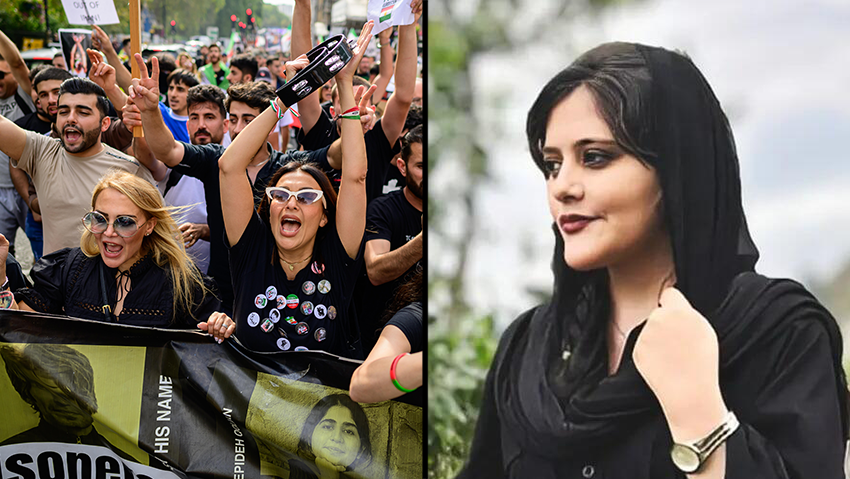
Razaneh noted that during times of crisis—such as the war with Israel or the 2022 mass protests in the wake of Mahsa Amini’s killing—a sense of shared identity arises among Kurds that often sparks calls for unity and solidarity across the four parts of Kurdistan. However, she added, tensions persist among Kurds in Iran, Iraq, Turkey and Syria, with differences in ideological goals—some advocating federalism, others independence.


Mahsa Amini
(Photo: Getty Images Europe /Leon Neal)


Iraqi Kurds protesting the death of Mahsa Amini
(Photo: AFP)

She also highlighted that some Iranian Kurds have connections with diaspora communities in Europe and the U.S. These communities play a vital role in raising awareness of Kurdish issues, organizing protests and engaging with foreign governments.

Friends to all peoples in the Middle East

During the Israel–Iran war, Iranian military sites in Kurdish-populated areas — including missile storage and launch facilities — were targeted. Those tracking Persian-language reports and Iran’s air defense activity could clearly follow the strikes.
According to Razaneh, Tehran also carried out multiple military operations in these regions, especially near the border — a move she says helped the regime tighten its grip on eastern Kurdistan.


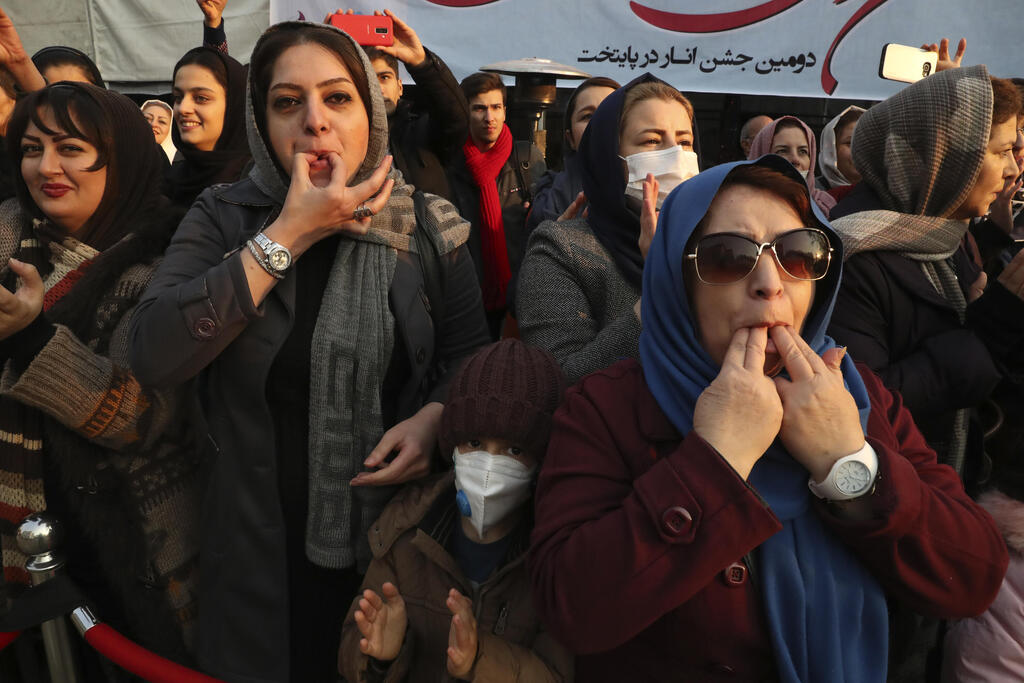
Kurds celebrate Yalda Night in Tehran
(Photo: AP Photo/Vahid Salemi)

“Some of the Israeli targets included military bases in Kurdish cities such as Mahabad, Kermanshah and Urmia,” she told Ynet. “Security oversight increased, as did arrests by the Iranian government. Following the start of the war, the regime became stricter in Kurdish areas, arresting hundreds for alleged cooperation or spying with Israel. At least three Kurdish men were executed in Urmia,” she added, also noting “new checkpoints and house and phone searches were deployed.”

“Exiled Kurdish parties in northern Iraq watched the war closely,” Razaneh said. “Some, like the PAK, saw it as an opportunity to strike back at the Iranian regime. Others, like Komala, urged restraint and patience. Many Kurds inside Iran hope the war will lead to future change.”

Kurds in Iran remain almost unable to communicate directly with Israeli officials or media — especially now — but one source in Sanandaj, Karwan (a pseudonym), told Ynet: “[Economically, socially and in terms of security,] the recent Iran–Israel conflict has directly affected all Iranians, including Kurds. In recent weeks, prices of basic goods have skyrocketed, widespread arrests have surged and death sentences and executions have increased. Iranian cities have become heavily militarized, with arbitrary arrest measures intensifying.”


Kurds in Iran
(Photo: AP Photo/Vahid Salemi)

Karwan said Iran has used the allegation of “collaboration with the enemy” to justify its crackdown. “Iranians, including Kurds, aspire to democratic change in their country. Kurds see themselves as friends to all peoples in the Middle East and hope for free, dignified and peaceful lives for all its inhabitants.” He added that Kurdish regions have long been neglected due to Iran’s centralizing policies.

On Kurdish political activity, Karwan observed: “Because of high political awareness and organization in these territories, they have historically been centers of pro-democracy and freedom-driven movements — and are thus subjected to heavy security repression. Kurdish activists frequently face threats of arrest, imprisonment or execution.”


Tuesday, March 04, 2025

Halabja: In Remembrance of the Tragedy of the  Iraqi Kurds


By:Azad Berweriye
TiL
Date: March 2, 2025

A dead Kurdish man protecting his child during the poison gas attack by Saddam Hussein’s forces in 1988 in Halabja, Iraqi Kurdistan. 
Photo: Archive/no credit

Azad Berwerîye | Exclusive to The Insight International

The Kurdish nation is no stranger to tragedy. Even now, while the protestors at Tishreen Dam suffer casualties in the name of Rojava’s defense and the Kurds suffer from cultural repression beneath the boots of the governments oppressing them, suffering is a daily routine for Kurdish existence.

The Kurds have always endured and continue to endure mistreatment at the hands of powers that view them as obstacles to their goals of domination, seeing their lives and identity as disposable and insignificant as ants.

While the Kurds have received more coverage regarding their struggle for survival, the extent to which they endured massacres is still in need of more attention, with little mention in international media.

It makes the Kurdish saying, “The Kurds have no friends but the mountains,” ring valid in the hearts of most Kurds, suffering in isolation while the rest of the world does little to listen to their plight.

No other massacre demonstrates this more poignantly than the Halabja Massacre, which occurred on March 16, 1988. In this massacre, Saddam Hussein ordered the use of chemical weapons in the town of Halabja, with his army launching poison gas against the city.

The attack is the largest use of chemical weapons toward civilians in modern history, resulting in 5,000 casualties in the region. Due to these attacks, Halabja and surrounding areas still suffer from polluted water and soil. There is also a higher risk of cancer and infertility in the region
.
Dead bodies in the aftermath of the Chemical attack in Halabja, Iraqi Kurdistan, March 16, 1988. Photo: SM/Archive

The attack was one of many in Saddam’s Anfal campaign. Following the Ba’ath regime’s killing of 8,000 Kurds from the Barzanis in 1983, the Anfal campaign against the Kurds began in February 1988. It ended in September of that same year, destroying over 3,000 Kurdish villages and resulting in around 150,000-180,000 people dead.

Many of them were in mass graves, and there are still reports of people missing from the results of the genocide. The basis for these attacks was that, during the Persian Gulf War, the Kurds allied themselves with Iran to gain autonomy from the Ba’ath regime, which had previously limited their jurisdiction.

Since Iran was Iraq’s enemy during the war, on top of the Ba’ath regime’s Arabization policies, the government used the war as an excuse to carry out mass killings against the Kurds, calling them collaborators with the enemy. Even the name of the campaign, “the Spoils” in Arabic, named after the eighth sura of the Koran, showcases the intent of the regime to reduce the Kurds to nothing more than people to exploit for their political gain.

The residents of Halabja would bear the arguably biggest brunt of these attacks. The Iraqi military launched chemicals consisting of mustard gas, Sarin, and Tabun, resulting in the deaths of many Halabja residents.

Women, children, and older people consisted of 75% of the victims of the attacks. The attacks led to the destruction of several residential areas and many fleeing outside the city to Iran and adjacent regions. Most of them never came back.
Dead bodies after the Chemical attack in Halabja, Iraqi Kurdistan, March 16, 1988. Photo: SM/Archive/via Ekurd.net

Despite Southern Kurdistan achieving semi-autonomy under the Kurdistan Regional Government (KRG), recognition of and justice for the horrors the victims faced in Halabja is limited. For instance, while the High Tribunal and Supreme Court of Iraq acknowledged the Anfal campaign as a genocide after Saddam Hussein’s execution, they have not given the same recognition to the Halabja massacre.

Saddam did receive his death sentence based on the Anfal campaign as his crime, but the Iraqi government did not list the Halabja massacre as one of his crimes. Even in Europe, where politicians like Bernard Kouchner from France raised attention to the killings at the time, not all countries have acknowledged what happened at Halabja.
Chemical attack on Kurdish civilians in Halabja, Iraqi Kurdistan 1988. Photo: Archive

It adds insult to injury, knowing that even international attention towards the event at the time was negligible. Due to the West’s backing of Saddam Hussein’s war against Iran at the time, they voiced no criticisms of Saddam’s actions to maintain relations with them against what they perceived to be an enemy to the West.

The Halabja victims were and continue to be without a voice or any kind of acknowledgment, their struggles unending, and any cries for justice only reaching the void.

The Halabja massacre is not the only tragedy that the Kurds have suffered to this extent. Similar massacres against Kurds have happened in the past and continue to the present day. They’re almost too similar to the devastation of the Halabja massacre and the lack of recognition these massacres have received. It’s too reflective of the overall issues the Kurds face as a people today

.
Turkish Dersim genocide against Kurds. Photo: Courtesy/wikipedia

One particular massacre that showcases this struggle is the Dersim Massacre, which the Turkish state carried out against the Kurdish Alevis in Dersim. After the establishment of the Turkish Republic around the early 20th century, Turkey adopted a Turkification policy towards different ethnicities, suppressing their language and culture.

This policy was ruthless towards Kurds and Alevis, who staged revolts against the government to achieve cultural rights, the Turkish state killing many of them and their leaders in the process. This pattern of revolt and suppression ultimately led to the Turkish military carrying out the Dersim Massacre between 1937-1938, where they bombarded the town.

The result was the death of around 30,000 Alevis, with a potential count of closer to 70,000. The Turkish State described this event as a “pacification” and “a mission of civilization” until Recep Tayyip Erdogan apologized for the massacre in 2009.

Over 14,000 thousand Kurds were killed in the Dersim massacre. Photo: Haberpan

Despite this acknowledgment, the Alevis still suffer from persecution under the Turkish government with its policies against Kurdish culture and language, on top of policies particular to Alevis. On top of the criminalization of Kurdish identity, the Turkish state uses religious education (RE) courses to enforce Sunnification in Turkey’s borders.

The government enforces a pro-Sunni Turkish identity in the schools, excluding the Alevis and Kurdish culture. Alevi students often endure mistreatment from students and teachers because of this. On top of the massacres against them in Dersim and similar policies in the 60s, such as the Turkish state building mosques in Alevi villages to enforce Sunni Islam onto them, these educational policies only finish what the Turkish state had already started with the Dersim Massacre, a policy whose aims were the ethnocide of the Kurds and Alevis

.
Pro-Turkey Syrian Islamic mercenary fighters execute 9 civilians Kurds including senior Syrian Kurdish political leader Hevrin Khalaf in Syrian Kurdistan, October 12, 2019. Photo: SM

Rojava also knows full well the intensity of suffering from massacres against them from oppressors. When Turkey captured the city in its “Operation Olive Branch,” carried out by its proxies, the Syrian National Army (SNA) in January 2018, they subjected the city to drastic displacement changes and tightened control.

For instance, after the invasion, Turkey resettled Sunni Arab refugees into Kurdish homes after the Kurds fled the invasion and continued similar trends into 2019 with their military actions between Tel Abyad and Ras al-Ain. Due to these resettlements, the Kurdish population dropped from 80-90% before the invasion to around 25% as of 2022.

The SNA has also arbitrarily arrested/kidnapped 8,696 people, with a third of the people’s whereabouts unknown. The city became a haven of thugs and corruption, in contrast to the democratic society that existed before the Turkish invasion.

Pro-Turkey Syrian mercenary FSA Islamic fighter are looting in the Kurdish city of Afrin in Syrian Kurdistan (Rojava), March 18, 2018. Photo: AFP

It is atrocities like this that make it crucial always to remember the Halabja massacre. The Halabja massacre reflects not only the tragedy of the people who had to endure this massacre but also the struggles of other Kurds throughout Kurdistan.

The lack of justice against the perpetrators of the Halabja massacre is the same as the lack of accountability towards Turkey for its mistreatment of Kurdish Alevis after the Dersim massacre. The cries of Halabja’s victims echo the moans of former Afrin residents to return to their homes in freedom and for their perpetrators to bear the weight of their atrocities. Any atrocity against a group of Kurds is a wound on the whole of Kurdistan, despite whatever borders exist between the four parts of Kurdistan.
People walk through debris in the center of the Kurdish town of Afrin in Syrian Kurdistan (Rojava), on March 18, 2018 Turkish troops supporting pro-Turkey Syrian mercenary FSA fighters drove the Kurdish YPG forces out of Afrin, over hundred thousand Kurds leave the Afrin Canton. March 24, 2018. Photo: Reuters

As Rojava’s fate is uncertain with the new HTS administration in Syria and the results of the peace talks between Ocalan and Turkey still unknown, it is crucial now more than ever to remember these massacres.

Doing so reminds us of why the Kurdish movement exists today and how their existence is at stake without it. They are reminders of how the division of the Kurds by the governments ruling them has hurt them and how important it is for the Kurds to stick together united to protect each other from similar events.

As the Halabja massacre nears its 37th anniversary on March 16, 2025, we grieve the loss of life from this attack. We remember that the injustice of the victims of this attack, and others like it, still exists. We remember that injustice for massacres doesn’t stop with autonomy or that memory of the event is unlimited from just a single acknowledgment. We remember that fighting against injustice is a constant battle.

We remember the Halabja Massacre to continue that fight.

BibliographyAftergood, S. (1998, November 8). Chemical Weapons Programs: History. Chemical Weapons Programs – Iraq Special Weapons Facilities. https://nuke.fas.org/guide/iraq/cw/program.htm
Cetin, U., & Jenkins, C. (2025). The Sunnification and Turkification of Alevi Kurds in Turkey: The Use of Education as a Colonising Practice. In D. Anand & N. Kaul (Eds.), Contemporary Colonialities: Kurds and Kashmiris (pp. 59–80). University of Westminster Press. http://www.jstor.org/stable/10.16997/book70.7
Human Rights Watch. (n.d.). Introduction : GENOCIDE IN IRAQ: The Anfal Campaign Against the Kurds (Human Rights Watch Report, 1993). Human Rights Watch. https://www.hrw.org/reports/1993/iraqanfal/ANFALINT.htm
IC, R. (2023, January 20). Explainer: Afrin, 5 years under Turkish occupation. Rojava Information Center. https://rojavainformationcenter.org/2023/01/explainer-afrin-5-years-under-turkish-occupation/
Karim, H. F., & Baser, B. (2023). Collective Memory in Post-Genocide Societies: Rethinking Enduring Trauma and Resilience in Halabja. Review of Middle East Studies, 56(1), 56–72. https://www.jstor.org/stable/27240924
Lukas, H. (2011, July 27). Dersim Massacre, 1937-1938. SciencesPo. https://www.sciencespo.fr/mass-violence-war-massacre-resistance/en/document/dersim-massacre-1937-1938.html
Mlodoch, K. (2012). “We Want to be Remembered as Strong Women, Not as Shepherds”: Women Anfal Survivors in Kurdistan-Iraq Struggling for Agency and Acknowledgement. Journal of Middle East Women’s Studies, 8(1), 63–91. https://doi.org/10.2979/jmiddeastwomstud.8.1.63
Sadiq, I., Baser, B., & McLoughlin, S. (2023). Revisiting Legacies of Anfal and Reconsidering Genocide in the Middle East Today: Collective Memory, Victimhood, Resilience, and Enduring Trauma. Review of Middle East Studies, 56(1), 4–8. https://www.jstor.org/stable/27240919
Zayadin, H. (2024, February 29). “Everything is by the Power of the Weapon.” Human Rights Watch. https://www.hrw.org/report/2024/02/29/everything-power-weapon/abuses-and-impunity-turkish-occupied-northern-syria

Caleb Fox (Azad Berwari) is a Kurdish speaker and the author of the cultural blog Dengê Çiyayên: Voice of the Mountains, where he explores Kurdish culture, language, and heritage.

The opinions expressed in this article are solely those of the author.

Copyright © 2025 The Insight International. All rights reserved

Wednesday, December 04, 2024

TURKIYE'S WAR ON SYRIAN KURDISTAN

After Aleppo, what will happen to the Kurds of northwest Syria?

Analysis: 
With thousands having already fled the rebel offensive in Aleppo and surrounding areas, Syrian Kurds fear for their future in the country's northwest.


Paul Iddon
04 December, 2024
THE NEW ARAB

The momentous takeover of Syria’s second city, Aleppo, and surrounding areas on 29 November by the Islamist Hayat Tahrir al-Sham (HTS) and the Turkish-backed self-styled Syrian National Army (SNA) has significant ramifications for Syria and possibly the wider region.

More immediate, however, is its impact on the hundreds of thousands of Kurds who live in northwest Syria.

As Aleppo collapsed to the lightning HTS-led offensive, the Turkish-backed SNA seized on the momentum to capture the town of Tel Rifaat and surrounding villages from the Kurdish People’s Protection Units (YPG).
Related

Syria's rebel offensive: Why now and what could happen next?
Analysis
Shelly Kittleson


Tens of thousands of Kurds have fled from that area. They are enduring freezing winter conditions on their way to the relative safety of the Kurdish-administered territories east of the Euphrates River.

HTS originated as an offshoot of Al-Qaeda called Jabhat al-Nusra and has fought the regime of Syrian President Bashar al-Assad since the early years of the civil war that began in 2011. The group has established itself as Assad’s most formidable adversary in the conflict and has long controlled large parts of Syria’s strategic northwestern Idlib province.

The SNA consists of numerous armed groups that Turkey has used as proxies, mainly against the YPG and the larger multi-ethnic Syrian Democratic Forces (SDF), of which the YPG is the backbone. Turkey used these rebels to invade the northwestern Kurdish enclave of Afrin in 2018, displacing tens of thousands of its native population, primarily into the adjacent Tel Rifaat area. These same Kurds now find themselves displaced once again.

Aleppo city has two Kurdish-majority neighbourhoods, Sheikh Maqsoud and Ashrafiyeh. Altogether, there are approximately 500,000 Kurds in this large northwestern area west of the Euphrates River, now largely under HTS and SNA control.

“Kurds have had a bad experience with HTS folks from the Jabhat al-Nusra days,” Mohammed A. Salih, Non-Resident Senior Fellow in the Foreign Policy Research Institute and an expert on Kurdish and regional affairs, told The New Arab.

“The fundamental problem with many Assad opposition groups is that they are chauvinistic toward Kurds, perhaps as a result of decades of Baathist exclusionary nationalist teachings,” he said.

In Salih’s estimation, most of these groups are Islamist extremists, putting them at odds with the majority of Syria’s Kurdish minority.

“Kurds want to deal with a party in the opposition that is willing to take into account their demands for cultural and political rights as a distinct community within Syria,” Salih said. “And even though the majority of Syrian Kurds are Muslims, they are staunchly secular in their way of life and expect this to be respected.”

In his view, Kurdish civilians are undoubtedly in danger due to the current circumstances in Aleppo and other areas west of the Euphrates.


Analysts view the Turkish-backed SNA as a markedly more significant threat to Kurds than HTS. [Getty]

“Kurds cannot trust the HTS or the SNA,” Salih said. “They have good reason for this based on the ideological nature of these groups and their past records both in dealing with them and the non-Sunni, non-Arab and non-Turkmen populations of Syria,” he added. “It’s a very fluid and unpredictable situation.”

Consequently, he believes the “best option” for Kurds is to evacuate east of the Euphrates, where the SDF is in a much better position to protect them. Reports suggest that the YPG has begun pulling forces from the Kurdish-majority neighbourhoods in coordination with HTS to allow Kurdish residents to evacuate.

It’s unclear if HTS can provide security guarantees for any Kurds who decide to remain in their homes in the city.

“In Aleppo, it depends on whether the YPG can reach a reliable understanding with HTS there for Kurdish civilians not to be harmed. There is no guarantee for that,” Salih said.

“In reality, it is more likely that a humanitarian disaster will materialise as a result of the influx of tens of thousands of displaced people to SDF-controlled areas in west Euphrates, which are already stretched thin in terms of resources and governance capabilities,” he added.

Kyle Orton, an independent Middle East analyst, described the present situation for Kurds in northern Syria as “precarious” but believes they have a better chance of surviving under HTS rule than other Syrian minorities.

“In theory, HTS’s Islamist worldview is actually less of a menace to Kurds per se, those that do not have ties to the YPG, since Kurds are Muslims,” Orton told TNA. “Christians and particularly Alawis have the most to fear from HTS rule, again in theory.”

He noted that HTS has made a “concerted effort to present a tolerant face” towards minorities in areas it has controlled, such as Christians in Idlib.

Related
What the Turkey-Syria rapprochement might mean for Syria's Kurds
Analysis
Paul Iddon


“How long any of this lasts is anyone’s guess: whatever the formal status of HTS’s relations with Al-Qaeda, it is a jihadist-derived entity, and there is every reason for scepticism,” Orton said.

“Assuming HTS does not initiate a concerted campaign of persecution against Kurds in Sheikh Maqsoud and other Kurdish-majority areas it has captured, we should expect most people to stay put,” he added.

“Settled communities will endure great hardships to maintain their homes and only move when they really have no other choice.”

Both analysts see the Turkish-backed SNA as a markedly more significant threat to Kurds than HTS.

“What we are seeing is that there is an actual demographic change campaign against Kurds underway in areas west of the Euphrates, particularly those areas under the control of the SNA. The SNA represents the most anti-Kurdish faction among the anti-Assad opposition groups,” Salih said.

“Kurds in the Tel Rifaat and the entire Shahba region are in danger of retribution by SNA groups whose entire mission at this point at Turkey’s behest appears to be fighting Kurds,” he added. “A mass displacement of Kurds from these areas is already going on.”

Orton also believes the SNA is a “much more worrying” threat to Kurds.

“There is little discipline in SNA ranks, and its fighters carry a much more bitterly ethno-sectarian outlook,” he said. “The chances of indiscriminate attacks on Kurdish populations by the SNA are much higher, and even without a targeted assault, the SNA’s governance methods are much more predatory and chaotic,” he added.


A humanitarian disaster could materialise as a result of the influx of tens of thousands of displaced people to SDF-controlled areas in west Euphrates. [Getty]

“It will not be so easy to live a ‘normal’ life in areas the SNA administers, and there is every reason to expect a larger outflow of Kurds.”

As if matters couldn’t get any worse, this new crisis could unwittingly end up empowering remnants of the Islamic State (IS) if the SDF has to focus its attention and resources elsewhere. The US has partnered with the SDF against IS for a decade now. The SDF was the main fighting force against IS, dismantling the entirety of its territorial self-styled caliphate on Syrian soil by 2019.

“It has to be assumed that the SDF will take contingency steps to protect its borders, and to that extent, its focus on IS diminishes. Odds are that IS will try to make its presence felt in the current melee,” Orton said.

“It seems likely IS will make its move in the northwest, at the centre of the action, but it could well be within the SDF statelet, especially if developments extend the instability further east,” he added.

Salih also believes the post-29 November turmoil is “inevitably impacting” SDF priorities.

“If Kurds are under attack in northwestern Syria, SDF fighters will have less incentive to prioritise the fight against IS,” he said.

In Salih’s view, this situation “highlights a fundamental miscalculation” in America’s strategy toward Syria’s Kurds, namely focusing exclusively on their joint fight against IS. By doing so, Washington ignored the “dire governance and humanitarian conditions” in the SDF-controlled areas caused by Turkish strikes and now the mass displacement and killing of Kurds in northwest Syria.

“This approach is unsustainable and counterproductive,” Salih said. “If continued, it will only further bolster IS and recreate the conditions for its resurgence.”

Paul Iddon is a freelance journalist based in Erbil, Iraqi Kurdistan, who writes about Middle East affairs.

Follow him on Twitter: @pauliddon


'We feel abandoned': Fear rises among Aleppo’s Kurdish residents

The takeover of Aleppo by the Islamist rebel group Hay’at Tahrir al-Sham (HTS) has left the city’s Kurdish minority on edge. As Kurdish fighters reportedly withdrew from the area, a resident of the Kurdish quarter of Aleppo shared his concerns with the FRANCE 24 Observers team.

Issued on: 03/12/2024 - 
Aleppo's Kurdish district has been plunged into uncertainty since the arrival of HTS Islamist rebel groups. This image shows Kurdish fighters (left and right) and a Syrian islamist rebel (centre). 
© The Observers

By: Guillaume Maurice

On the night of November 29-30, Islamist rebel groups led by Hayʼat Tahrir al-Sham (HTS) seized control of Aleppo, Syria’s second-largest city. Within the Kurdish minority now trapped in the city, many fear reprisals from HTS, whose fighters include former members of the Al-Nusra Front, a group once linked to Al-Qaeda.

Read more  Key points on the rebel gains that reignited Syria's civil war

Since 2016, most of Aleppo has been held by Syrian President Bashar al-Assad’s army, except for the northern part which remained under the control of Syrian Kurdish forces.

This map shows areas of Aleppo under the control of the Islamist rebel HTS on December 2, 2024 in green. Zones controlled by the Kurdish-led SDF are shown in yellow. 
© LiveUaMap

The Sheikh Maqsoud district in northern Aleppo has been under the control of the Kurdish-led Syrian Democratic Forces (SDF) since the 2012–2016 Battle of Aleppo. The Kurdish forces navigated a complex web of alliances, clashing at times with Assad’s regime and fighting against other Syrian rebel factions.

When HTS advances were first reported, Kurdish fighters said they were ready to defend Sheikh Maqsoud. Some started converging towards Aleppo during the night.
Dans cette vidéo publiée le 29 novembre 2024 des membres de la minorité kurde d’Alep se disent prêts à défendre leur quartier de la ville, Cheikh-Maksoud. ©X/ofisa_agahi

As HTS fighters were taking control of Aleppo, clashes broke out between Kurdish fighters and members of both the HTS and the Syrian National Army (SNA), a coalition of Turkish-backed armed groups. Kurdish soldiers were reported captured.
This video, posted on December 1, 2024 and geolocated in northern Aleppo, shows Kurdish fighters being captured by HTS forces.

On December 1, the HTS issued a statement via Telegram calling on Kurdish fighters to evacuate Sheikh Maqsoud. “We propose that you leave Aleppo with your weapons, heading safely to northeastern Syria. We affirm that Syrian Kurds are an integral part of Syrian society, and should enjoy the same rights as the rest of the country's population,” the statement reads.

In this statement published on December 1, 2024, the Islamist rebel group HTS asks Kurdish forces to evacuate the city of Aleppo. In return, they agree not to attack Kurdish civilians in the city. 
© Telegram / aleamaliaat_aleaskaria

In response, the SDF commander-in-chief announced plans to evacuate Kurdish civilians from Aleppo.“We have intervened to establish a humanitarian corridor between our eastern regions and Aleppo [...] to protect our people from massacres,” reads the statement published on December 2.

But these announcements have done little to reassure Kurdish civilians in Aleppo.
'We don’t know what’s going to happen; we’re plunged into uncertainty'

A resident of Sheikh Maqsoud, who requested anonymity for security reasons, told The Observers he was deeply concerned.

We don’t know what’s going to happen; we’re plunged into uncertainty. We feel alone and abandoned.

I wasn’t in the area when the HTS attacked Assad’s forces in Aleppo, but I was nearby during their assaults on the Kurdish neighbourhood. The HTS used vehicles, shots were fired. There have been two or three attacks in the past few days.

Since Friday, we’ve had almost nothing to defend ourselves. We’ve received some support from the Syrian Democratic Forces, a few soldiers and weapons, but not much else, even though so many of us live here.

I don’t trust the Islamists’ promises not to harm us. They’ve already dismantled the Asayish –the Kurdish police force in the district. After that, they could easily turn violent.
'Are they just doing it opportunistically to expand their territory?'

For Broderick McDonald, a researcher at Oxford University, it is not clear how the HTS group will position itself vis-à-vis the Kurdish population, especially given the group's history.

This is part of HTS's strategy to make itself less confrontational with a whole host of different actors. It puts out statements not only to Kurdish groups but also to the government of Iraq, to the Russian government.

They are basically saying 'our fight is with Assad and as long as you do not align yourself with Assad, we don't have a problem with you.' Now, it's going to be difficult for them (the Kurds) to believe that, given the history of HTS. HTS has a track record of human rights abuses against many different minorities, including Kurds.

It is difficult to see how they will follow through on that. However it's interesting that HTS has tried as much as it can to avoid direct clashes with Kurdish groups. In fact, it's the SNA groups largely which are clashing or negotiating with the Kurds, much more than it is HTS itself.

There are still big questions: can you trust HTS to do this long term, or are they just doing it opportunistically to expand their territory? But by and large, I think they are trying their best to avoid getting into direct clashes with the Kurds and instead focusing their energy on the Assad regime.

As of the afternoon of December 2, videos circulating on social media showed Kurdish forces retreating from Aleppo toward the Kurdish-controlled regions of Raqqa and Manbij.
This video posted on Twitter on December 2, 2024 shows convoys of Kurdish forces withdrawing from Aleppo towards to the Kurdish-controlled regions of Raqqa and Manbij.

Sporadic clashes were reported later that day, though these accounts could not be independently verified.


Sunday, September 19, 2021

As US Prepares to Leave Iraq, Ex-Advisor to Iraqi President Says Kurds Need Reliable Partners

© AP Photo / Jim MacMillan, File
Elizabeth Blade

Washington has a proven track record failing its allies, says a former Kurdish official, whereas such countries as Iran and Russia are known for standing by their partners and fighting for them until the end.

With the pullout from Afghanistan officially over, the US is now looking to meet another deadline and withdraw its forces from Iraq, where they have been stationed since 2003.
Today, there are some 2,500 US troops in Iraq. They help local forces combat remnants of Daesh* and other terrorist groups. After the withdrawal, only few troops will be left, and they are expected to train and advise the Iraqi military.

Kurds Worried

The promise to leave the region has already stirred worries among many Kurds within Iraq, and Hiwa Osman, an Erbil-based political analyst and former advisor to Jalal Talabani, a Kurdish politician who served as the president of Iraq from 2006 to 2014, says that the pullout of American forces from the country will not turn it into another Afghanistan, but Iraq will be "fragmented and divided".


"The south will fall into the hands of Iran. In the north, where the Kurds are, there will be a Turkish takeover, whereas in the centre, where most Sunnies reside, there will be a civil war," Osman believes.

Up until recently, the Kurds of Iraq had high expectations of US President Joe Biden, who took office in January.

Unlike his predecessor Donald Trump, who was perceived as someone who used the Kurds in his fight against Daesh and who dumped them years later, Biden has been viewed as a reliable partner, and as a leader who could solve their multiple problems.
And those were in abundance. They included the attempts of Iran and Turkey to bite off some territories from the Kurds, the lack of agreement with Iraq's central government over oil revenues and disputed land and the involvement of the Kurdish Peshmerga forces in the Iraqi military.


Unreliable Partners

Now, as the policy of the Biden administration is clear, many Kurds feel exposed but Osman says he has not been surprised by the move, given Washington's "poor history" mistreating its allies. "They have always said they would not leave the Kurds. But history taught us they always did".

Such was the case in 1975, when following the Iran-Iraq border treaty, the Kurds were attacked by the then-leader of Iraq, Saddam Hussein, while the Americans, who initially seemed to have supported the Kurdish leader Masoud Barzani, were sitting idly by.
In the 1980s, the Kurds experienced a similar setback when they joined the Iranian revolutionary guards in the Iran-Iraq war. Once the hostilities came to an end, Saddam Hussein became even more ruthless towards the ethnic minority that had cooperated with his enemy. Washington once again preferred not to interfere.

"They have also left the Kurds of Syria," says Osman, referring to the 2019 US withdrawal from the war-torn country and refusal to confront Turkey over its decision to move troops and proxy forces into Kurdish-controlled areas. "They cannot be trusted, and this is the reason, why the Kurds should be looking for alternatives."

Looking for Allies

One such alternative could be Iran, thinks the former advisor. Steps in that direction have already been taken. In 2018, Kurds gave reassurances to the Iranians that they would not allow any Kurdish opposition groups to launch cross-border attacks from Iraqi Kurdistan, something that brought the two sides closer.

And, more recently, eastern Kurdistan made a series of appointments that indicated they were seeking closer ties with the Islamic Republic.

There have also been attempts at rapprochement with Russia. In 2020, Moscow made sure to involve the Kurds in negotiations with Syrian President Bashar al-Assad, whereas Russian President Vladimir Putin has reiterated the importance of Iraq's Kurdish Pershmerga forces in their fight against Daesh.

"For the Kurds, it makes perfect sense to align themselves with such countries as Iran and Russia. Those stand by their allies to the last bullet. So if I were a decision maker and I needed to choose between Washington and Moscow, I would most certainly go for the latter", Osman concludes.

*Daesh, also known as ISIS/IS/Islamic State, is a terrorist group banned in Russia and many other countries.

Monday, August 07, 2023

Sweden’s NATO Entry Launches a New Phase for the Country’s Kurds

The conviction of a PKK member may have helped smooth the way for Stockholm’s membership, but it also signals a tense turning point

Sweden’s NATO Entry Launches a New Phase for the Country’s Kurds
Demonstrators in Malmo, Sweden, protest Turkish military attacks against Kurds in Syria in 2018. (Magnus Persson/SOPA Images/LightRocket via Getty Images)

On July 6, the conviction of Yahya Gungor, 41, a Kurdistan Workers’ Party (PKK) member, caused shockwaves in the Swedish-Kurdish diaspora. Gungor had extorted a Kurdish businessman in order to get him to fund the PKK, a designated terror organization in Sweden, the United States and the EU. According to the judge, Gungor had been part of a European fundraising campaign and will serve a four-and-a-half-year prison sentence and then be extradited to Turkey. This is the first time a PKK member has been convicted in a Swedish court.

This will worry the 100,000-strong Swedish-Kurdish diaspora, as they see Gungor’s case as politically motivated, aimed at smoothing the Nordic country’s entry into NATO by doing Turkey’s bidding. His case follows the Russian invasion of Ukraine, after which Sweden’s security interests changed overnight. Sweden abandoned its long-standing neutrality in favor of NATO membership and, consequently, became dependent on Turkey, a NATO member, which held veto power over the bid. Turkey said it would only let Sweden in if its security concerns were satisfied. Ankara has long accused Sweden specifically, and Europe generally, of being too easy on an organization linked not only to terror attacks but organized crime, including extortion and drug trafficking.

Swedish judges went to great pains to stress that Gungor’s case had nothing to do with Turkish demands that Sweden crack down on the PKK. But that likely won’t stop Swedish Kurds from seeing the decision as a sign of an insecure future. While the political views of Swedish Kurds are manifold and varied, there is considerable sympathy for the organization, even if many disagree with its methods and radical ideas. Many Swedish Kurds still hold a common grievance against the Turkish state and may even have attended PKK rallies in solidarity. Now, displays of sympathy could land them in a Turkish prison.

Such fears are not wholly baseless. Even before Gungor’s conviction, on June 7 a Swedish court approved Turkish demands to extradite Mehmet Kokulu in order to finish off a prison sentence for drug trafficking. From the outside, Kokulu’s extradition appears quite reasonable. States often send convicted criminals to complete prison sentences in the countries in which their crimes were committed. However, Kokulu was also a refugee and a PKK supporter, and the case suggests that anyone who is a PKK sympathizer might face the prospect of extradition in spite of their refugee status. Both court cases appear to signal the end of Sweden’s tolerance for the political activities of its Swedish-Kurdish citizens, and may herald their becoming a suspect community. Yet in reality, that relationship between Swedish society and its Swedish-Kurdish citizens has always been one of alternating admiration and suspicion, since the time the latter arrived in the country.

When Kurds arrived in Sweden after World War II in the 1960s, Sweden had gone from being a country whose citizens migrated to other countries to one which required migrants for its growing industries. The first wave of Kurdish migrants was not dissimilar to the German foreign workers (“Gastarbeiter”) and came mostly from southeastern Turkey. The second wave came in the late ’70s and ’80s and were far more educated, middle class and politically active. They were also affected by political instability, repression and martial law which they suffered not only at the hands of the Turkish state, but also the Syrian, Iranian and Iraqi states. None of these countries wanted to see a Kurdish state being carved out of their territory.

The Kurdish diaspora felt aggrieved. Many of these countries that had sprung up from the former Ottoman empire erased their identity, either under the guise of Turkish nationalism or pan-Arabism. This took forms including the genocidal policies of the Iraqi Baath Party, culminating in the Anfal campaign, which killed thousands of Kurds in the late 1980s, and the land seizures of Syrian President Hafez al-Assad, which aimed to create an “Arab belt” by seizing land from Kurds and bequeathing it to Arabs, and, in the case of Turkey, the process of Turkification, which sought to turn Kurds (or “mountain Turks,” as they were euphemistically known) into assimilated Turks bereft of an independent ethnic identity.

The latter policy manifested itself in the suppression of Kurdish language and culture in Turkish institutions. Since Kurds did not speak Turkish very well, they were left behind in a rapidly modernizing country. Even in 2022, the Kurdish soprano, Pervin Chakar, was allegedly canceled by her local university in the city of Mardin, on the Turkish-Syrian border, for including a Kurdish folk song in her repertoire. So the freedom experienced in Sweden was not underestimated by the nascent Swedish-Kurdish diaspora.

According to Barzoo Eliassi, a researcher of social policy at Oxford University, and Minoo Alinia, professor of sociology at Uppsala University in Sweden, Kurds were regarded as a “culturally remote and incompatible group in Swedish society.” Facing immense prejudice and racism and feeling a sense of alienation from their homeland, the Kurdish diaspora developed a sense of their “Kurdishness.” Sweden had become a melting pot, where Kurds from Turkey, Syria, Iraq and Iran could gather freely for the first time, having previously been separated by national boundaries. Martin van Bruinessen, an anthropologist who specializes in the Kurds, notes that the presence of Kurdish intellectuals helped to stitch the community together and contributed to the spread of Kurdish nationalism.

As Eliassi and Alinia point out, the first generation did not care whether they were accepted by Swedes or not. They were migrants and they knew it; they were just thankful to be in a country that didn’t persecute them. For the first generation, prejudice was a price worth paying for the immense political freedom they experienced in their daily lives. For Kurdish women in particular, life in Sweden led to opportunities that they would never have experienced back home.

For their children, however, the situation was very different, as they didn’t have that pre-migratory experience of their parents. For them, to be accepted as Swedish mattered, and the realization that they were never going to be “Svensk Svensk” (Swedish Swedish) took a toll on them. If they didn’t face overt racism, at the very least, they experienced what Zlatan Ibrahimovic, the Swedish-Balkan soccer player, identified as “undercover racism.” They experienced the stigma that came with not having a surname like “Andersson or Svensson,” as he put it. It manifested itself in fewer job prospects or the near-complete segregation of foreign-born Swedes, who lived in self-contained suburbs like Rinkeby away from their white compatriots.

Alinia, who has written extensively on the Kurdish diaspora in Sweden, told me that Kurds were made to feel doubly incompatible with Swedish society, especially after 9/11. Not only did they experience the prejudice that many Muslim communities faced globally but they were also affected by the backlash that followed the honor killings of Pela Atroshi in 1999 and Fadime Sahindal in 2002. Atroshi was killed by her uncles for moving out of the family home. Sahindal was shot by her father for having a Swedish boyfriend and speaking out in the Swedish Parliament. It was a common accusation that Kurdish men were seen as “perpetrators” and women “their victims,” Alinia said. It made second-generation Kurds feel spurned by their country of birth.

And so sometimes, the second or third generation became even more hardcore Kurdish nationalists than their parents. Unlike the latter, who had experienced life in their homeland, the second generation created little idyllic Kurdistans in their heads, far removed from the messy political reality that always comes with such nation-building projects. As Alinia points out, nationalism became the framework and created a sense of “collective identity,” perhaps even more so when, in 2005, following the U.S. invasion of Iraq, a federal Iraq was created and Kurdish Iraqis were given an autonomous Kurdistan governorate rich in oil resources.

Arguably, the Swedish Kurds spread and strengthened Kurdish nationalism in Sweden because it gave both first- and second-generation Kurds a way to protect themselves from the prejudice of wider Swedish society; it gave them self-confidence and self-respect. In many ways it anchored them to something, even if it was just a vague idea.

Politically and culturally, however, according to Khalid Khayati, a political scientist at Linkoping University, Sweden became a “gravitational center” for Swedish Kurds. Up until now, at least, the Kurdish diaspora felt they could express themselves freely in Sweden. The Swedish state supported cultural federations in general, and Kurds could form associations and societies in a way that they couldn’t in Turkey or Syria. Kurdiska Riksforbundet i Sverige, the Federation of Kurdish Association in Sweden, had 40 or so associations and many other associations were formed in the ’90s. Kurds also established several TV and radio channels, as well as newspapers. Kurdish libraries and publishing houses printed books in the Kurdish languages that riveted the Kurdish diaspora in Sweden. These activities would be difficult or impossible in Turkey. Unlike many other ethnic minorities in Sweden, Swedish Kurds had managed to penetrate many spaces of Swedish society, rarely available to ethnic minority Swedes.

As someone born in Stockholm and raised in Rinkeby, to spot a white Swede there is a rarity, something noteworthy, and to witness the grit and tenacity of Swedish Kurds is extraordinary. Not only did Swedish Kurds manage to elect six members (MPs) to Parliament in 2018 but they had journalists, intellectuals, writers, academics and pop singers in wider Swedish society, too. In fact, such was the political skill of some that Amineh Kakabaveh, an independent MP of Kurdish heritage and a former PKK guerrilla fighter, for one brief moment held the decisive vote that could have resulted in the fall of the Swedish Social Democrats’ minority government. Kakabaveh managed to leverage her single vote to secure concessions for the Kurdish factions fighting in Syria.

But there were problems too. Many of these societies were dominated by supporters of the PKK, which started life as a Marxist-Leninist and radical leftist party. Even though there were other political parties in Kurdish politics, the PKK was the loudest in channeling the grievances of the Kurdish diaspora. The problem was that the PKK was outlawed by Swedish Prime Minister Olof Palme after a PKK defector was killed in 1984. When Palme was assassinated in 1986, the national security service, SAPO, suspected that the PKK had killed him out of revenge. These allegations proved baseless, and over the years the Swedish state left them more or less alone because they threatened neither the Swedish state nor the West, despite the fact that the group was accused of involvement in terrorism, human trafficking and the heroin trade. A 2019 paper by the European Monitoring Centre for Drugs and Drug Addiction suggested that the PKK controlled the nexus for heroin trafficking in southern Turkey and there was “limited” open source evidence that the PKK was involved in importing narcotics into Europe. Until recent years, the PKK was never deemed “a question” for the Swedish state, according to Svante Cornell of the Institute of Security and Development Policy, and so they were left to do their politicking among the Kurdish diaspora unchecked.

With the outbreak of the Syrian conflict in 2011, however, turning a blind eye toward the PKK was seen as tacit support. The Kurdish political groups seized northern Syria by 2012 and captured the Western imagination in the battle for Kobani and Rojava in 2015. While as many as 300 Swedish nationals joined jihadist groups and made Swedish headlines by beheading Syrian pilots, ramming a truck into a famous department store in Stockholm and taking some of their blond and blue-eyed children to the Islamic State caliphate, the Kurds led the fight against them. One of the PKK’s offshoots, the YPG, was prominent in the fight against the Islamic State. For a fleeting moment, Kurds could do nothing wrong, as the YPG appealed to Swedish sensibilities. They seemed egalitarian. Kurdish women fought on the front lines against a barbaric jihadist group that enslaved Yazidis and oppressed women. No longer were the Kurds seen as the perpetrators of honor killings. Popular support translated into political support; Sweden, alongside the U.S. and other NATO countries, supported the YPG in its fight against the Islamic State.

Such support, however, was deemed unacceptable to Turkey, especially as the truce between it and the PKK ended in 2015. As a result of the renewed clashes between the two, according to the International Crisis Group, from 2015 up until very recently, 6,677 fatalities have occurred in Turkey, 614 of whom were civilian victims. In 2016, the Kurdish Freedom Hawks, said to be an offshoot of the PKK, bombed transport hubs in Ankara and a mosque in Bursa, in northwest Turkey, as “payback” for a Turkish military operation. While not all Kurds are part of the PKK, Turkey believed that Sweden was not only supporting the YPG but harboring cadres involved in extorting money and funding the PKK. These fundraising activities supposedly affected not only small stores in Rinkeby and elsewhere in Western Europe but also the streets of Turkey in acts of terror. Turkey needed to cut off the indirect relationship between the PKK and the Swedish government. In this, Sweden was not an exception in attracting Turkey’s ire over PKK activities. Other countries such as France had also fallen afoul of Turkey, but Sweden arguably occupied a special place because of its important role in Kurdish cultural and political life. Turkey saw its opportunity in 2022, with the Russian invasion of Ukraine.

The Russian invasion led Sweden to discard its neutrality by applying for NATO membership. This application, however, could have been vetoed by Turkey, meaning that Sweden had to placate Ankara’s security concerns. Moreover, by 2022, Sweden was governed by a right-wing coalition led by Ulf Kristerson that relied on the support of the far-right Sweden Democrats party, which was even less sympathetic to immigrants, let alone Kurdish causes. And so Swedish Foreign Minister Tobias Billstrom distanced the government from organizations like the YPG, while also turning its attention to the PKK’s activities at home. While wider Swedish society fretted over being dictated to by Turkey, the Kurdish diaspora in Sweden felt a deep betrayal at this seeming about-face from the Swedish state. After all, Kurds had died on the frontline fighting on behalf of the West. They were also holding European jihadist women and children, including Swedes, in camps such as al-Hol and Roj in northeastern Syria.

The cases of Gungor and Kokulu were not seen as merely coincidental by Swedish Kurds but rather as betrayals auguring an insecure future. For many Swedish Kurds, the new detente between Sweden and Turkey could mean their extradition and the beginning of a new relationship between them and Swedish society; one in which they are viewed as a suspect community.