Serbians strike in protest over fatal roof collapse
By AFP
January 24, 2025

Thousands of young people took to the streets in Belgrade against perceived corruption - Copyright AFP Kena Betancur
Ognjen ZORIC, Camille BOUISSOU
Thousands of young people took to streets across Serbia on Friday, after student protest organisers called for a general strike over the fatal collapse of a train station roof in November.
Friday’s strike call was the latest move to increase pressure on the government, following demands for high-ranking officials to resign and greater transparency into the accident investigation.
Public outrage has fuelled almost daily protests across Serbia after 15 people died, including several children, at the station in the northern city of Novi Sad.
The deaths came shortly after the completion of a three-year renovation project, and many attribute the accident to corruption and poor oversight of construction projects.
Thousands of young people, including many high school students, filled streets across the capital and urged the public to join Friday’s one-day general strike.
Teachers also joined the walkout, shutting schools throughout the Balkan country, as did lawyers. Several theatres and cinemas closed.
Exact numbers for the number of participants was not immediately available.
“I have come here today, just as I have for the past two months, to support the students in this great fight for a free country, for justice, for accountability, and for expertise,” said Nikola Nikacevic, a 48-year-old professor in Belgrade.
– Regular protests –
Demonstrations were also held in Novi Sad, Nis, and Jagodina, the latter hosting a rival pro-government rally on Friday evening.
President Aleksandar Vucic, of the ruling SNS party, addressed several thousand people who rallied in the central town.
“Serbia is being attacked from both within and outside” the country, Vucic told the crowd from an improvised stage at the town’s central square.
The participants of the rally occasionally chanted Vucic’s name and “We don’t give Serbia away” while many waved Serbian flags.
Vucic and the government, which are facing mounting pressure, regularly accuse demonstrators of being backed by foreign powers.
They also say they have already met all the students’ demands by releasing documents on the station renovation project.
On Friday, Vucic invited students to dialogue.
“Despite everything, despite all insults, harsh words, I invite them (students) to dialogue to tell us what it is that has not been fulfilled.
“Tell us publicly which particular demand has not been fulfilled,” he said.
Students insist that the president is not the one who can address their demands arguing he has no jurisdiction over them.
– Simmering tensions –
Earlier Friday, video posted online also showed a car ramming demonstrators at a rally in Belgrade, injuring at least one person, according to local media.
The interior minister later said that the driver had been arrested immediately after the incident.
Despite calls for strikes, public transport in Belgrade operated normally, as did the supply of electricity and gas.
The strike coincided with protests held every Friday, when demonstrators block roads across Serbia at 11:52 am local time (10:52 GMT) — the exact time the roof collapsed in Novi Sad — and hold 15 minutes of silence.
More than a dozen people have been charged in connection with the accident, including former transport minister Goran Vesic, who resigned days after it occurred.
According to Javni kupovi, an association that documents all demonstrations, more than 50 rallies have taken place in Serbia since November 1.
Ognjen ZORIC, Camille BOUISSOU
Thousands of young people took to streets across Serbia on Friday, after student protest organisers called for a general strike over the fatal collapse of a train station roof in November.
Friday’s strike call was the latest move to increase pressure on the government, following demands for high-ranking officials to resign and greater transparency into the accident investigation.
Public outrage has fuelled almost daily protests across Serbia after 15 people died, including several children, at the station in the northern city of Novi Sad.
The deaths came shortly after the completion of a three-year renovation project, and many attribute the accident to corruption and poor oversight of construction projects.
Thousands of young people, including many high school students, filled streets across the capital and urged the public to join Friday’s one-day general strike.
Teachers also joined the walkout, shutting schools throughout the Balkan country, as did lawyers. Several theatres and cinemas closed.
Exact numbers for the number of participants was not immediately available.
“I have come here today, just as I have for the past two months, to support the students in this great fight for a free country, for justice, for accountability, and for expertise,” said Nikola Nikacevic, a 48-year-old professor in Belgrade.
– Regular protests –
Demonstrations were also held in Novi Sad, Nis, and Jagodina, the latter hosting a rival pro-government rally on Friday evening.
President Aleksandar Vucic, of the ruling SNS party, addressed several thousand people who rallied in the central town.
“Serbia is being attacked from both within and outside” the country, Vucic told the crowd from an improvised stage at the town’s central square.
The participants of the rally occasionally chanted Vucic’s name and “We don’t give Serbia away” while many waved Serbian flags.
Vucic and the government, which are facing mounting pressure, regularly accuse demonstrators of being backed by foreign powers.
They also say they have already met all the students’ demands by releasing documents on the station renovation project.
On Friday, Vucic invited students to dialogue.
“Despite everything, despite all insults, harsh words, I invite them (students) to dialogue to tell us what it is that has not been fulfilled.
“Tell us publicly which particular demand has not been fulfilled,” he said.
Students insist that the president is not the one who can address their demands arguing he has no jurisdiction over them.
– Simmering tensions –
Earlier Friday, video posted online also showed a car ramming demonstrators at a rally in Belgrade, injuring at least one person, according to local media.
The interior minister later said that the driver had been arrested immediately after the incident.
Despite calls for strikes, public transport in Belgrade operated normally, as did the supply of electricity and gas.
The strike coincided with protests held every Friday, when demonstrators block roads across Serbia at 11:52 am local time (10:52 GMT) — the exact time the roof collapsed in Novi Sad — and hold 15 minutes of silence.
More than a dozen people have been charged in connection with the accident, including former transport minister Goran Vesic, who resigned days after it occurred.
According to Javni kupovi, an association that documents all demonstrations, more than 50 rallies have taken place in Serbia since November 1.
Serbia goes on strike
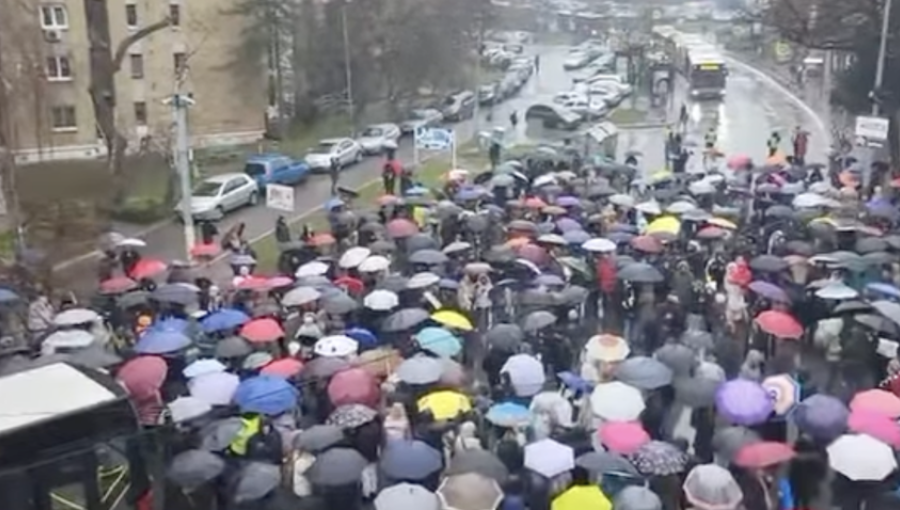
Large parts of Serbian society are out on strike on January 24, as students, cultural institutions and workers across various sectors rally in solidarity with ongoing protests against the government. The strike, which includes schools, cultural organisations and businesses, is a form of civil disobedience aimed at pressuring the government following weeks of protests sparked by the deadly collapse of a concrete canopy at the Novi Sad railway station in November.
The students behind the call for the strike have urged all citizens to participate, emphasising that the action is not just a strike but a broader expression of civil disobedience. "General strike" in their terms refers to a suspension of all activities as a collective stand against the government. This appeal has been met with widespread support from diverse groups including educators, cultural workers, media organisations and entrepreneurs.
"On January 24, it will not be business as usual," said Dusan Kokot, president of the Independent Union of Educational Workers of Serbia, who declared a strike in schools earlier this month. "We are standing together with the students for justice and accountability."
The Republic Union of Culture and several cultural institutions, including theaters, libraries, cinemas and museums, have also closed in support of the protest. Prominent venues such as CineGrand and Tuckwood, along with art exhibitions like the Banksy exhibit, have suspended their programs. Even big publishing houses like Laguna have joined the movement, highlighting the growing cultural solidarity against the government.
The protests, which began after the tragic collapse at the Novi Sad railway station that left 15 dead and many more injured, have now expanded to a broader demand for political change. The demonstrations have criticised what protesters describe as systemic corruption, economic mismanagement and the suppression of dissent.
The government has prepared a counter-rally in Jagodina, where President Aleksandar Vucic will try to launch a new 'people's' movement. Critics say that the rally reeks of desperation and is reminiscent of the tactics used by the late Slobodan Milosevic before he was ousted from power in popular protests nicknamed the ‘Bulldozer Revolution’ in 2000.
"This is just another attempt to create a false narrative of popular support while ignoring the legitimate grievances of the Serbian people," said an opposition leader. "People will be bused in, and the rally will be carefully orchestrated by the ruling party."
The Serbian Progressive Party (SNS), which has dominated the political scene for over a decade, is facing the first sustained challenge to its political legitimacy. Despite the government’s attempts to placate protesters by heeding some of their demands, including releasing classified documents related to the station collapse in Novi Sad and prosecuting top officials, the movement shows no signs of abating.
On social media, calls for the general strike quickly went viral, with citizens from all walks of life declaring their support for the action. Media outlets including N1, Danas and Sport Club have stopped regular reporting to participate in the strike. Bars, restaurants, hair salons and gyms shut their doors to express their discontent. "The government can try to suppress us, but we are united in this fight for a better Serbia," said a protestor in Belgrade. "We will not stop until our voices are heard."

No comments:
Post a Comment