'Looks like Gaza': As Israel violently attacks Jenin, thousands displaced and hospitals besieged
"It looks like Gaza," Asri Fayyad, a resident of Jenin camp, described to The New Arab while talking about his forced displacement.
Fayha Shalash
West Bank
24 January, 2025
NEW ARAB

"Women and children are the most affected during this, as soldiers deliberately intimidate them and shoot over their heads during their displacement." [Getty]
Hours after Israeli officials threatened to tighten a security grip and expand the illegal annexation of the occupied West Bank, the Israeli military assault, particularly in Jenin, has been devastating.
Dozens of military vehicles participated in the raid, which was concentrated in the Jenin neighbourhoods close to the refugee camp. Unlike previous raids, most of the camp residents are now displaced, forced to shelter in towns adjacent to the city.
The main hospitals in Jenin are still besieged, while the Israeli army placed dirt barriers at all entrances to Jenin Governmental Hospital to prevent entry or exit permanently.
At the same time, the Palestinian Authority arrested Palestinian resistance fighters after they were able to leave the Jenin camp. PA's security forces surrounded Al-Razi Hospital and arrested two wounded people from within the premises, accusing them of being members of the Jenin Battalion.
West Bank
24 January, 2025
NEW ARAB

"Women and children are the most affected during this, as soldiers deliberately intimidate them and shoot over their heads during their displacement." [Getty]
Hours after Israeli officials threatened to tighten a security grip and expand the illegal annexation of the occupied West Bank, the Israeli military assault, particularly in Jenin, has been devastating.
Dozens of military vehicles participated in the raid, which was concentrated in the Jenin neighbourhoods close to the refugee camp. Unlike previous raids, most of the camp residents are now displaced, forced to shelter in towns adjacent to the city.
The main hospitals in Jenin are still besieged, while the Israeli army placed dirt barriers at all entrances to Jenin Governmental Hospital to prevent entry or exit permanently.
At the same time, the Palestinian Authority arrested Palestinian resistance fighters after they were able to leave the Jenin camp. PA's security forces surrounded Al-Razi Hospital and arrested two wounded people from within the premises, accusing them of being members of the Jenin Battalion.
Expanding genocide
What is clear about this massive assault, which Israeli officials dubbed the "Iron Wall," is the large number of displaced people from Jenin camp, whose lives have become difficult due to the lack of living conditions.
"It looks like Gaza," Asri Fayyad, a resident of Jenin camp, described to The New Arab while talking about his forced displacement.
"We stayed in the camp for two days. There was no electricity, no water, no bread, even no milk for the children. The first day witnessed a violent incursion aimed at intimidation. The entire targeting was only against civilians, and more than fifty were injured and thrown in the streets," Fayyad said.
The Palestinian residents began to flee from the camp towards the Awda roundabout. They were reportedly subjected to searches during that time, and the Israeli army divided them into groups of five, photographed them and examined their fingerprints and eyes.
Whoever the soldier wanted to arrest him was put aside, stripped of his clothes, tied up, and blindfolded, according to eyewitnesses.
The displaced people were prohibited from using vehicles, so they were forced to walk more than a kilometre on foot, carrying only basic items with them.
"The land was completely bulldozed and muddy and difficult to walk on. Even the streets have disappeared due to Israel's use of giant D10 bulldozers. The Israeli army demolished three houses in the camp and burned others. There are fears that residential squares will be blown up, as happened in Gaza," he added.
Israeli soldiers occupied a number of high-rise houses and deployed snipers. The bombing was repeated from time to time against specific targets.
"The displaced are still living in harsh conditions and a lack of services in light of the tight Israeli siege on the city and the prevention of aid from entering them," Fayyad noted.
Shock and fear
About 17 thousand Palestinians live in Jenin camp, but most have been displaced since the start of the Palestinian Authority's security campaign a month and a half ago due to deteriorating living conditions and the denial of services.
Farha Abu Al-Haija, a member of the Popular Committee for Camp Services, told TNA that Jenin's entrances are sealed and no one is allowed to enter, while the Israeli army forced the residents to leave it forcibly after threatening to blow up their homes.
Every day, from nine in the morning until five in the afternoon, dozens of Palestinians begin their exodus from the camp under strict security measures imposed by the Israeli army.
"Women and children are the most affected during this, as soldiers deliberately intimidate them and shoot over their heads during their displacement. There are sick cases, citizens with special needs, and the elderly. All of them were subjected to humiliation and abuse," she added.
In light of the freezing weather, the displaced lack means of heating and blankets, and the Israeli army prevents the entry of aid to them. There are those who were displaced to the homes of their relatives, and there are those who were forced to spend the night in public centres and mosques.
"The situation is painful, sad, and disturbing in this cold climate, and citizens are living in a state of shock and fear of what might happen to their homes, which were almost destroyed from previous [Israeli] incursions," she added.
The camp's resident have survived one siege to another, and the size of the Israeli incursion includes many military vehicles and aircraft flying in the sky all the time.
The number of detainees from the camp is not yet known due to the continued siege on Jenin and the prevention of any movement. It is slowly turning into a major humanitarian catastrophe, pushed by an Israeli army seeking to achieve any image of victory.
Israeli aggression on Jenin continues for 4th day, leaving 12 martyrs and over 40 injured
QNA/Occupied Jerusalem
Al Saadi confirmed that airstrikes and raids are ongoing, and that hundreds of residents have been forced to flee the camp.
In another report, local sources told Palestinian News Agency (WAFA) that the Israeli forces set fire to homes in Jenin camp and blocked civil defense teams from reaching the area to put out the flames.
Occupation forces also imposed a curfew on Palestinians inside the camp, forcing hundreds of families to abandon their homes at gunpoint. Only one route was left open, forcing them to pass through eye and facial recognition cameras.
Five Palestinians were wounded last night by gunfire from Israeli forces as raids continued.
Electricity has been cut off to Jenin camp and surrounding areas, causing power outages at Jenin Government Hospital and Ibn Sina Hospital, while crews from the local electricity company were blocked from repairing network.
On Tuesday, Israel launched a large-scale assault on the city and camp of Jenin, which has so far claimed the lives of 12 Palestinians, left 40 others injured, displaced nearly 2,000 people to nearby villages, and caused extensive damage to city's infrastructure, according to official Palestinian sources.
Israeli forces ‘block entrances to Jenin’ as deadly raid enters fourth day
In addition to Jenin governorate, Israeli forces have been stepping up their operation across the occupied West Bank since January 21.

Situation across West Bank, not only Jenin, ‘really catastrophic’: Palestinian activist
Published On 24 Jan 202524 Jan 2025
Israeli forces have blocked four main entrances to Jenin city and its refugee camp on Friday as the deadly raid into the city entered a fourth day, officials said.
Mansour Saadi, deputy governor of Jenin, was quoted as saying by the Wafa news agency that the Israeli army “blocked all four main entrances to the city and its refugee camp with earth mounds, preventing entry and exit”.
Palestinian sources said Israeli forces launched drones with loudspeakers in the refugee camp and imposed a curfew from Thursday evening until Friday morning.
Wafa news agency also reported that Israeli forces set fire to homes in the camp and blocked civil defence teams from reaching the area to put out the flames.
This comes after they issued forced evacuation threats to Jenin refugee camp residents on Thursday, as thousands of Palestinians fled amid the deadly assault by Israeli forces.
In addition to Jenin governorate, Israeli forces have been stepping up their operation across the occupied West Bank since January 21, just days after the ceasefire in Gaza came into effect on January 19.

Source: Al Jazeera and news agencies

Commuters wait in their vehicles at the Israeli Atara checkpoint on route 465 near Ramallah in the occupied West Bank on January 22, 2025. (AFP)
- Concrete blocks, metal gates -
Left-leaning Israeli newspaper Haaretz reported that Israeli authorities ordered the military to operate dozens of checkpoints around the West Bank during the first 42 days of the ceasefire.
According to the Palestinian Wall Resistance Commission, 146 iron gates were erected around the West Bank after the Gaza war began, 17 of them in January alone, bringing the total number of roadblocks in the Palestinian territory to 898.
"Checkpoints are still checkpoints, but the difference now is that they've enclosed us with gates. That's the big change," said Anas Ahmad, who found himself stuck in traffic for hours on his way home after a usually open road near the university town of Birzeit was closed.
Hundreds of drivers were left idling on the road out of the city as they waited for the Israeli soldiers to allow them through.
The orange metal gates Ahmad was referring to are a lighter version of full checkpoints, which usually feature a gate and concrete shelters for soldiers checking drivers' IDs or searching their vehicles.
"The moment the truce was signed, everything changed 180 degrees. The Israeli government is making the Palestinian people pay the price," said Ahmad, a policeman who works in Ramallah.
Israeli military spokesman Nadav Shoshani did not comment on whether there had been an increase in the number of checkpoints but said the military used them to arrest wanted Palestinian gunmen.
"We make sure that the terrorists do not get away but the civilians have a chance to get out or go wherever they want and have their freedom of movement," he said in a media briefing on Wednesday.

QNA/Occupied Jerusalem
January 24, 2025 |
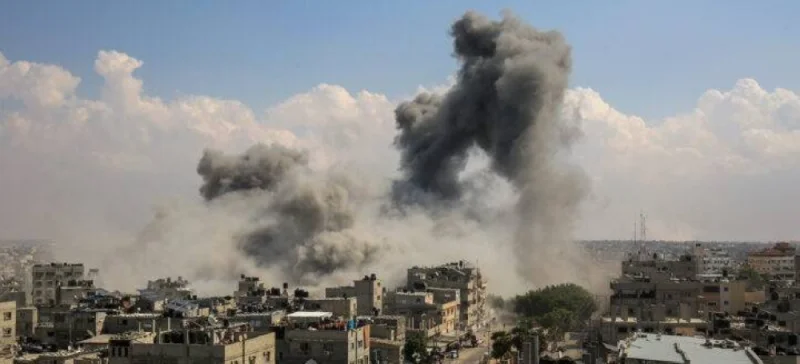
Israeli occupation forces continued their assault on the city and refugee camp of Jenin in occupied West Bank for the fourth consecutive day, resulting in the deaths of 12 Palestinians, numerous injuries and arrests, and widespread destruction of infrastructure and property.
Jenin Deputy Governor Mansour al Saadi, told reporters that occupation forces have blocked all four entrances to the city and camp with dirt barriers, preventing movement in and out. He warned of difficulties faced by patients and medical staff at Jenin Government Hospital due to power cuts and fuel shortages caused by the ongoing Israeli attack.
Al Saadi confirmed that airstrikes and raids are ongoing, and that hundreds of residents have been forced to flee the camp.
In another report, local sources told Palestinian News Agency (WAFA) that the Israeli forces set fire to homes in Jenin camp and blocked civil defense teams from reaching the area to put out the flames.
Occupation forces also imposed a curfew on Palestinians inside the camp, forcing hundreds of families to abandon their homes at gunpoint. Only one route was left open, forcing them to pass through eye and facial recognition cameras.
Five Palestinians were wounded last night by gunfire from Israeli forces as raids continued.
Electricity has been cut off to Jenin camp and surrounding areas, causing power outages at Jenin Government Hospital and Ibn Sina Hospital, while crews from the local electricity company were blocked from repairing network.
On Tuesday, Israel launched a large-scale assault on the city and camp of Jenin, which has so far claimed the lives of 12 Palestinians, left 40 others injured, displaced nearly 2,000 people to nearby villages, and caused extensive damage to city's infrastructure, according to official Palestinian sources.
Israeli forces ‘block entrances to Jenin’ as deadly raid enters fourth day
In addition to Jenin governorate, Israeli forces have been stepping up their operation across the occupied West Bank since January 21.
Situation across West Bank, not only Jenin, ‘really catastrophic’: Palestinian activist
Published On 24 Jan 202524 Jan 2025
Israeli forces have blocked four main entrances to Jenin city and its refugee camp on Friday as the deadly raid into the city entered a fourth day, officials said.
Mansour Saadi, deputy governor of Jenin, was quoted as saying by the Wafa news agency that the Israeli army “blocked all four main entrances to the city and its refugee camp with earth mounds, preventing entry and exit”.
Palestinian sources said Israeli forces launched drones with loudspeakers in the refugee camp and imposed a curfew from Thursday evening until Friday morning.
Wafa news agency also reported that Israeli forces set fire to homes in the camp and blocked civil defence teams from reaching the area to put out the flames.
This comes after they issued forced evacuation threats to Jenin refugee camp residents on Thursday, as thousands of Palestinians fled amid the deadly assault by Israeli forces.
In addition to Jenin governorate, Israeli forces have been stepping up their operation across the occupied West Bank since January 21, just days after the ceasefire in Gaza came into effect on January 19.
Palestinian women sit across from the rubble of a house after an Israeli raid in Burqin village near Jenin in the occupied West Bank [AFP]
As of Thursday, the death toll in Israeli raids had reached 12. Dozens have also been wounded and detained.
The situation at Jenin government hospital on Friday was “dire”, Saadi said, with medical staff struggling to provide care to patients amid power cuts and fuel shortages caused by the ongoing Israeli operation.
Al Jazeera’s Hamdah Salhut said many Palestinians in the occupied West Bank, including in Jenin, fear Israel will do “just as it did in Gaza”.
“In their thousands, Palestinians have been forced to leave their homes in the Jenin refugee camp,” said Salhut, who is reporting from Jordan because Al Jazeera has been banned by the Palestinian Authority (PA) from reporting in the occupied West Bank.
“People there say Israeli forces want to raze these Palestinian towns to the ground just as they did in Gaza.”
Sources told Al Jazeera that Palestinian fighters have also been fighting back against Israeli forces, targeting them with an explosive device while they were travelling along Jenin’s Nazareth Street. There were no immediate reports of casualties.
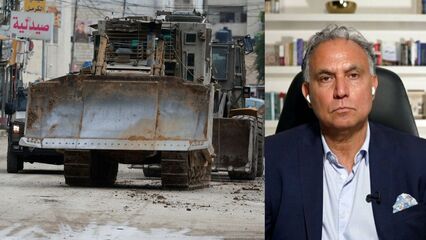
Bulldozer or Butcher: Netanyahu follows in Sharon footsteps from Jenin to Jabalia:
In some of the ongoing raids, PA security forces were involved in going after Palestinian fighters, including in Tulkarem, Ramallah, Hebron and Qalqilya on Friday.
Armed clashes have also broken out between Palestinian fighters and PA forces in the town of Yabad, west of Jenin.
PA security forces have reportedly severely beaten up a number of Palestinian fighters after arresting them.
Al Jazeera’s senior political analyst Marwan Bishara said the Israeli government is shifting its focus from Gaza to the occupied West Bank.
He said the operations in Jenin and other parts of the occupied West Bank serve as a “deflection” from the Israeli government’s failures of October 7. Bishara added that the operation also creates an opportunity for Israel to advance annexation policies.
Since the war on Gaza began in October 2023, Israeli forces have increased the size and frequency of their raids in the occupied West Bank, killing nearly 900 Palestinians and wounding thousands.
Israel says eliminating armed Palestinian fighters in the occupied West Bank is part of its overarching goals for the war on Gaza. United Nations Special Rapporteur Francesca Albanese warns that Israel’s genocide would not be confined to Gaza if the military offensive in the West Bank does not end.
As of Thursday, the death toll in Israeli raids had reached 12. Dozens have also been wounded and detained.
The situation at Jenin government hospital on Friday was “dire”, Saadi said, with medical staff struggling to provide care to patients amid power cuts and fuel shortages caused by the ongoing Israeli operation.
Al Jazeera’s Hamdah Salhut said many Palestinians in the occupied West Bank, including in Jenin, fear Israel will do “just as it did in Gaza”.
“In their thousands, Palestinians have been forced to leave their homes in the Jenin refugee camp,” said Salhut, who is reporting from Jordan because Al Jazeera has been banned by the Palestinian Authority (PA) from reporting in the occupied West Bank.
“People there say Israeli forces want to raze these Palestinian towns to the ground just as they did in Gaza.”
Sources told Al Jazeera that Palestinian fighters have also been fighting back against Israeli forces, targeting them with an explosive device while they were travelling along Jenin’s Nazareth Street. There were no immediate reports of casualties.
Bulldozer or Butcher: Netanyahu follows in Sharon footsteps from Jenin to Jabalia:
In some of the ongoing raids, PA security forces were involved in going after Palestinian fighters, including in Tulkarem, Ramallah, Hebron and Qalqilya on Friday.
Armed clashes have also broken out between Palestinian fighters and PA forces in the town of Yabad, west of Jenin.
PA security forces have reportedly severely beaten up a number of Palestinian fighters after arresting them.
Al Jazeera’s senior political analyst Marwan Bishara said the Israeli government is shifting its focus from Gaza to the occupied West Bank.
He said the operations in Jenin and other parts of the occupied West Bank serve as a “deflection” from the Israeli government’s failures of October 7. Bishara added that the operation also creates an opportunity for Israel to advance annexation policies.
Since the war on Gaza began in October 2023, Israeli forces have increased the size and frequency of their raids in the occupied West Bank, killing nearly 900 Palestinians and wounding thousands.
Israel says eliminating armed Palestinian fighters in the occupied West Bank is part of its overarching goals for the war on Gaza. United Nations Special Rapporteur Francesca Albanese warns that Israel’s genocide would not be confined to Gaza if the military offensive in the West Bank does not end.
Source: Al Jazeera and news agencies
Checkpoint gridlock: Israel's expanding restrictions paralyse life in the occupied West Bank
According to WSRC figures, more than 173 barriers and metal gates have been erected in the occupied West Bank since Israel launched its war on Gaza in Oct 2023.
Aseel Mafarjeh
West Bank
24 January, 2025
NEW ARAB

"There are currently 898 barriers across the West Bank, including iron gates, earth mounds, and permanent checkpoints. That's an increase of 18 barriers in a span of three days." [Getty]
In tandem with US President Donald Trump's inauguration, and his lifting of sanctions imposed by the previous administration on illegal Israeli settlers in the occupied West Bank over increased violence, the number of Israeli military checkpoints and gates have spiked in the region. These barriers, locals say, are disrupting daily movements of Palestinians, significantly impacting their economy, and restricting access to essential medical services.
While Israeli authorities justify the measures as necessary for security, human rights groups condemn them as collective punishment that exacerbates an already volatile situation. In Jenin and elsewhere in the occupied West Bank, Israeli army and settlers have ramped up violence over the past three days, with military raids killing more than 10 people.
The roadblocks are making matters worse for residents.
On 22 January, the official Palestinian news agency reported that a 45-year-old mother of six suffering from a stroke passed away because Israeli soldiers at a checkpoint in Hebron denied her the urgent care she needed by blocking the ambulance vehicle carrying her to the hospital.
"Between every two barriers, is another barrier," Amir Dawood, head of public relations at the Wall and Settlement Resistance Commission (WSRC), told The New Arab. "There are currently 898 barriers across the West Bank, including iron gates, earth mounds, and permanent checkpoints. That's an increase of 18 barriers in a span of three days."
Dawood added that, although these barriers existed before, "their numbers and sophistication have grown significantly," increasing the restrictions on Palestinian movements.
He noted that Hebron, the largest governorate, has the highest concentration of checkpoints, followed by Ramallah.
Meanwhile, Jenin, despite its ongoing military crackdown, has fewer checkpoints, which Dawood attributes to its unique geography. Still, the limited entry points have turned Jenin into a humanitarian crisis zone, with medical services unable to reach those in need.
A long wait on the road to nowhere
Basil Fakousa, a Palestinian resident of the occupied West Bank, said he was upheld for 13 hours at the notorious Container Checkpoint while en route from Hebron to Ramallah.
"I watched an entire season of Bab Al-Hara on my phone while waiting from 9 a.m. until 10 p.m.," he said sarcastically, referring to a famous Syrian soap opera known for its lengthy episodes. His day began with a work trip to Ramallah, but ended in frustration.
Upon reaching the checkpoint, Fakousa and others were informed it was closed indefinitely. Stranded with no way to return to Hebron, he spent the day drinking coffee and buying roasted chestnuts from roadside vendors, lamenting the waste of time and opportunities.
"Eventually, around 10 p.m., they opened the checkpoint. Perhaps the soldiers switched shifts, and one of them took pity on us," he said with bitter humour.
His frustration is shared by many Palestinians. "I won't go back to Ramallah or leave Hebron again until this nightmare ends. The situation is unbearable," Fakousa added.
According to WSRC figures, more than 173 barriers and metal gates have been erected in the occupied West Bank since Israel launched its war on Gaza on 7 October 2023. Residents fear that, with Washington giving Israel the greenlight to up its violence, more of these barriers will emerge.
Restrictions for political gains
Journalist Ameed Shehadeh sees the surge in checkpoints as a political manoeuvre rather than a security necessity. "The Israeli military has gone overboard with checkpoints, especially after the recent political deal between Prime Minister Benjamin Netanyahu and Minister Bezalel Smotrich," he said.
Netanyahu faced criticism and fishers in his cabinet for going ahead with the Gaza ceasefire, which many in Israel, including far-right Smotrich, deemed as conceding to Hamas’ terms. Israeli press reported that Smotrich agreed to remain in the cabinet following several commitments from Netanyahu.
According to Shehadeh, the additional gates are measures that often seem arbitrary, with checkpoint policies "dependent on the whims of soldiers".
Shehadeh also criticised the checkpoints as a tactic to create chaos and pressure Palestinian civilians, ruling out that they have any actual security benefits to Israel. "Resistance fighters don't cross these checkpoints, so their presence isn’t about security. It's about control and collective punishment," he said.
A stranglehold on movement
The checkpoints have made life particularly difficult for residents of cities like Jenin and Nablus, which frequently face closures. Jenin, a hotspot of resistance, has become virtually inaccessible. Even Red Crescent medical teams are regularly denied entry.
"Ambulances are delayed or turned away altogether, worsening the humanitarian crisis," Shehadeh said.
Sari Arabi, a political analyst, argues that the primary purpose of these checkpoints is to serve the expansion of Israeli settlements. He believes the recent escalation is part of a broader strategy to compensate for perceived failures in Gaza.
"Israel's military campaign in the West Bank is aimed at demonstrating its power. Smotrich even referred to it as a 'steel wall' to crush resistance," Arabi told TNA. He added that the checkpoints also aim to "suffocate Palestinian economic life and morale".
Stating that long delays prevent workers from reaching jobs, while businesses in major commercial hubs face dwindling customers, Arabi said the toll on the occupied West Bank and its residents are crushing.
"The West Bank's economy is already struggling, and the checkpoints are making it far worse," Arabi said.
This piece was published in collaboration with Egab.
‘Living in a Cage’: West Bank Checkpoints Proliferate After Gaza Truce
According to WSRC figures, more than 173 barriers and metal gates have been erected in the occupied West Bank since Israel launched its war on Gaza in Oct 2023.
Aseel Mafarjeh
West Bank
24 January, 2025
NEW ARAB

"There are currently 898 barriers across the West Bank, including iron gates, earth mounds, and permanent checkpoints. That's an increase of 18 barriers in a span of three days." [Getty]
In tandem with US President Donald Trump's inauguration, and his lifting of sanctions imposed by the previous administration on illegal Israeli settlers in the occupied West Bank over increased violence, the number of Israeli military checkpoints and gates have spiked in the region. These barriers, locals say, are disrupting daily movements of Palestinians, significantly impacting their economy, and restricting access to essential medical services.
While Israeli authorities justify the measures as necessary for security, human rights groups condemn them as collective punishment that exacerbates an already volatile situation. In Jenin and elsewhere in the occupied West Bank, Israeli army and settlers have ramped up violence over the past three days, with military raids killing more than 10 people.
The roadblocks are making matters worse for residents.
On 22 January, the official Palestinian news agency reported that a 45-year-old mother of six suffering from a stroke passed away because Israeli soldiers at a checkpoint in Hebron denied her the urgent care she needed by blocking the ambulance vehicle carrying her to the hospital.
"Between every two barriers, is another barrier," Amir Dawood, head of public relations at the Wall and Settlement Resistance Commission (WSRC), told The New Arab. "There are currently 898 barriers across the West Bank, including iron gates, earth mounds, and permanent checkpoints. That's an increase of 18 barriers in a span of three days."
Dawood added that, although these barriers existed before, "their numbers and sophistication have grown significantly," increasing the restrictions on Palestinian movements.
He noted that Hebron, the largest governorate, has the highest concentration of checkpoints, followed by Ramallah.
Meanwhile, Jenin, despite its ongoing military crackdown, has fewer checkpoints, which Dawood attributes to its unique geography. Still, the limited entry points have turned Jenin into a humanitarian crisis zone, with medical services unable to reach those in need.
A long wait on the road to nowhere
Basil Fakousa, a Palestinian resident of the occupied West Bank, said he was upheld for 13 hours at the notorious Container Checkpoint while en route from Hebron to Ramallah.
"I watched an entire season of Bab Al-Hara on my phone while waiting from 9 a.m. until 10 p.m.," he said sarcastically, referring to a famous Syrian soap opera known for its lengthy episodes. His day began with a work trip to Ramallah, but ended in frustration.
Upon reaching the checkpoint, Fakousa and others were informed it was closed indefinitely. Stranded with no way to return to Hebron, he spent the day drinking coffee and buying roasted chestnuts from roadside vendors, lamenting the waste of time and opportunities.
"Eventually, around 10 p.m., they opened the checkpoint. Perhaps the soldiers switched shifts, and one of them took pity on us," he said with bitter humour.
His frustration is shared by many Palestinians. "I won't go back to Ramallah or leave Hebron again until this nightmare ends. The situation is unbearable," Fakousa added.
According to WSRC figures, more than 173 barriers and metal gates have been erected in the occupied West Bank since Israel launched its war on Gaza on 7 October 2023. Residents fear that, with Washington giving Israel the greenlight to up its violence, more of these barriers will emerge.
Restrictions for political gains
Journalist Ameed Shehadeh sees the surge in checkpoints as a political manoeuvre rather than a security necessity. "The Israeli military has gone overboard with checkpoints, especially after the recent political deal between Prime Minister Benjamin Netanyahu and Minister Bezalel Smotrich," he said.
Netanyahu faced criticism and fishers in his cabinet for going ahead with the Gaza ceasefire, which many in Israel, including far-right Smotrich, deemed as conceding to Hamas’ terms. Israeli press reported that Smotrich agreed to remain in the cabinet following several commitments from Netanyahu.
According to Shehadeh, the additional gates are measures that often seem arbitrary, with checkpoint policies "dependent on the whims of soldiers".
Shehadeh also criticised the checkpoints as a tactic to create chaos and pressure Palestinian civilians, ruling out that they have any actual security benefits to Israel. "Resistance fighters don't cross these checkpoints, so their presence isn’t about security. It's about control and collective punishment," he said.
A stranglehold on movement
The checkpoints have made life particularly difficult for residents of cities like Jenin and Nablus, which frequently face closures. Jenin, a hotspot of resistance, has become virtually inaccessible. Even Red Crescent medical teams are regularly denied entry.
"Ambulances are delayed or turned away altogether, worsening the humanitarian crisis," Shehadeh said.
Sari Arabi, a political analyst, argues that the primary purpose of these checkpoints is to serve the expansion of Israeli settlements. He believes the recent escalation is part of a broader strategy to compensate for perceived failures in Gaza.
"Israel's military campaign in the West Bank is aimed at demonstrating its power. Smotrich even referred to it as a 'steel wall' to crush resistance," Arabi told TNA. He added that the checkpoints also aim to "suffocate Palestinian economic life and morale".
Stating that long delays prevent workers from reaching jobs, while businesses in major commercial hubs face dwindling customers, Arabi said the toll on the occupied West Bank and its residents are crushing.
"The West Bank's economy is already struggling, and the checkpoints are making it far worse," Arabi said.
This piece was published in collaboration with Egab.
‘Living in a Cage’: West Bank Checkpoints Proliferate After Gaza Truce
Commuters wait in their vehicles at the Israeli Atara checkpoint on route 465 near Ramallah in the occupied West Bank on January 22, 2025. (AFP)
24 January 2025
AD ـ 25 Rajab 1446 AH
Father Bashar Basiel moved freely in and out of his parish in the occupied West Bank until Israeli troops installed gates at the entrance of his village Taybeh overnight, just hours after a ceasefire began in Gaza.
"We woke up and we were surprised to see that we have the iron gates in our entrance of Taybeh, on the roads that are going to Jericho, to Jerusalem, to Nablus," said Basiel, a Catholic priest in the Christian village north of Ramallah.
All over the West Bank, commuters have been finding that their journey to work takes much longer since the Gaza ceasefire started.
"We have not lived such a difficult situation (in terms of movement) since the Second Intifada," Basiel told AFP in reference to a Palestinian uprising in the early 2000s.
He said he was used to the checkpoints, which are dotted along the separation barrier that cuts through much of the West Bank and at the entrances to Palestinian towns and cities.
But while waiting times got longer in the aftermath of the October 2023 Hamas attack that sparked the Gaza war, now it has become almost impossible to move between cities and villages in the West Bank.

Father Bashar Basiel moved freely in and out of his parish in the occupied West Bank until Israeli troops installed gates at the entrance of his village Taybeh overnight, just hours after a ceasefire began in Gaza.
"We woke up and we were surprised to see that we have the iron gates in our entrance of Taybeh, on the roads that are going to Jericho, to Jerusalem, to Nablus," said Basiel, a Catholic priest in the Christian village north of Ramallah.
All over the West Bank, commuters have been finding that their journey to work takes much longer since the Gaza ceasefire started.
"We have not lived such a difficult situation (in terms of movement) since the Second Intifada," Basiel told AFP in reference to a Palestinian uprising in the early 2000s.
He said he was used to the checkpoints, which are dotted along the separation barrier that cuts through much of the West Bank and at the entrances to Palestinian towns and cities.
But while waiting times got longer in the aftermath of the October 2023 Hamas attack that sparked the Gaza war, now it has become almost impossible to move between cities and villages in the West Bank.
Commuters wait in their vehicles at the Israeli Atara checkpoint on route 465 near Ramallah in the occupied West Bank on January 22, 2025. (AFP)
- Concrete blocks, metal gates -
Left-leaning Israeli newspaper Haaretz reported that Israeli authorities ordered the military to operate dozens of checkpoints around the West Bank during the first 42 days of the ceasefire.
According to the Palestinian Wall Resistance Commission, 146 iron gates were erected around the West Bank after the Gaza war began, 17 of them in January alone, bringing the total number of roadblocks in the Palestinian territory to 898.
"Checkpoints are still checkpoints, but the difference now is that they've enclosed us with gates. That's the big change," said Anas Ahmad, who found himself stuck in traffic for hours on his way home after a usually open road near the university town of Birzeit was closed.
Hundreds of drivers were left idling on the road out of the city as they waited for the Israeli soldiers to allow them through.
The orange metal gates Ahmad was referring to are a lighter version of full checkpoints, which usually feature a gate and concrete shelters for soldiers checking drivers' IDs or searching their vehicles.
"The moment the truce was signed, everything changed 180 degrees. The Israeli government is making the Palestinian people pay the price," said Ahmad, a policeman who works in Ramallah.
Israeli military spokesman Nadav Shoshani did not comment on whether there had been an increase in the number of checkpoints but said the military used them to arrest wanted Palestinian gunmen.
"We make sure that the terrorists do not get away but the civilians have a chance to get out or go wherever they want and have their freedom of movement," he said in a media briefing on Wednesday.
Members of the Israeli security forces check vehicles at the Israeli Atara checkpoint on route 465 near Ramallah in the occupied West Bank on January 22, 2025. (AFP)
- 'Like rabbits in a cage' -
Basiel said that now, when the gates are closed, "I have to wait, or I have to take another way" into Taybeh.
He said that on Monday people waited in their cars from 4:00 pm to 2:00 am while each vehicle entering the village was meticulously checked.
Another Ramallah area resident, who preferred not to be named for security reasons, compared his new environment to that of a caged animal.
"It's like rabbits living in a cage. In the morning they can go out, do things, then in the evening they have to go home to the cage," he said.
Shadi Zahod, a government employee who commutes daily between Salfit and Ramallah, felt similarly constrained.
"It's as if they're sending us a message: stay trapped in your town, don't go anywhere", he told AFP.
"Since the truce, we've been paying the price in every Palestinian city," he said, as his wait at a checkpoint in Birzeit dragged into a third hour.
- Impossible to make plans -
Before approving the Gaza ceasefire, Israel's security cabinet reportedly added to its war goals the "strengthening of security" in the West Bank.
Israeli human rights group B'Tselem said in a statement on Tuesday that Israel "is merely shifting its focus from Gaza to other areas it controls in the West Bank".
A 2019 academic paper by Jerusalem's Applied Research Institute estimated that at the time Palestinians lost 60 million work hours per year to restrictions.
But for Basiel, the worst impact is an inability to plan even a day ahead.
"The worst thing that we are facing now, is that we don't have any vision for the near future, even tomorrow."
- 'Like rabbits in a cage' -
Basiel said that now, when the gates are closed, "I have to wait, or I have to take another way" into Taybeh.
He said that on Monday people waited in their cars from 4:00 pm to 2:00 am while each vehicle entering the village was meticulously checked.
Another Ramallah area resident, who preferred not to be named for security reasons, compared his new environment to that of a caged animal.
"It's like rabbits living in a cage. In the morning they can go out, do things, then in the evening they have to go home to the cage," he said.
Shadi Zahod, a government employee who commutes daily between Salfit and Ramallah, felt similarly constrained.
"It's as if they're sending us a message: stay trapped in your town, don't go anywhere", he told AFP.
"Since the truce, we've been paying the price in every Palestinian city," he said, as his wait at a checkpoint in Birzeit dragged into a third hour.
- Impossible to make plans -
Before approving the Gaza ceasefire, Israel's security cabinet reportedly added to its war goals the "strengthening of security" in the West Bank.
Israeli human rights group B'Tselem said in a statement on Tuesday that Israel "is merely shifting its focus from Gaza to other areas it controls in the West Bank".
A 2019 academic paper by Jerusalem's Applied Research Institute estimated that at the time Palestinians lost 60 million work hours per year to restrictions.
But for Basiel, the worst impact is an inability to plan even a day ahead.
"The worst thing that we are facing now, is that we don't have any vision for the near future, even tomorrow."

No comments:
Post a Comment