Syrian government launches assault on Aleppo’s Kurdish neighborhoods
First published at Rojava Information Centre.
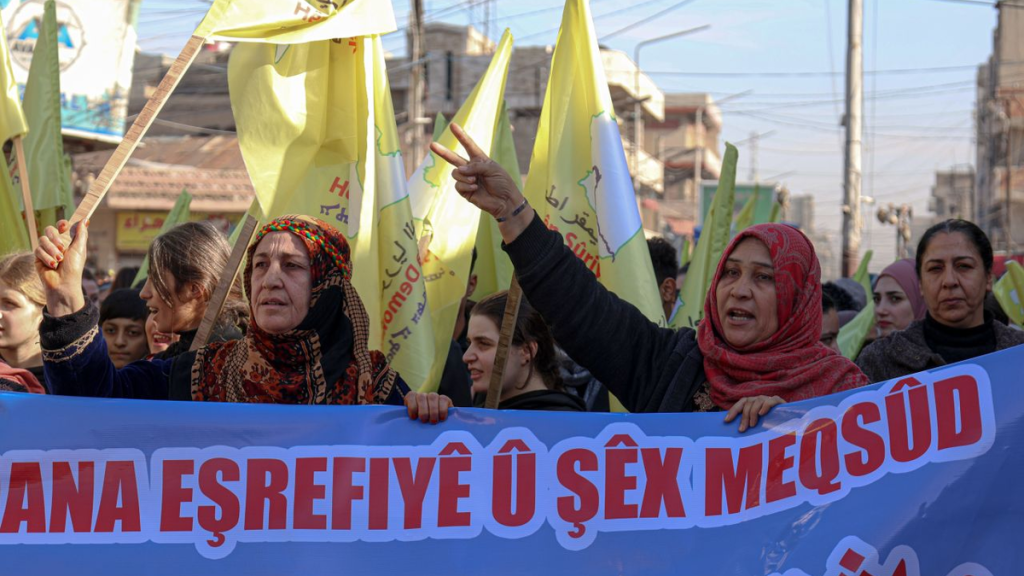
Two Kurdish neighborhoods in Aleppo are facing an armed assault by the forces of the Syrian Transitional Government (STG) aimed at seizing control of the neighborhoods. The STG and Kurdish-led Democratic Autonomous Administration of North and East Syria (DAANES) had reached a March 2025 ceasefire agreement covering the isolated Sheikh Maqsoud and Ashrafiyeh neighborhoods, but the subsequent nine months have been marked by escalating tensions culminating in the January 6 assault.
These neighborhoods had maintained their autonomy from both the Assad government and Islamist opposition factions since the start of the Syrian Civil War, becoming a safe haven for those fleeing violence, persecution and violent repression elsewhere in Aleppo and Syria. However, they have faced ongoing economic, humanitarian and military pressure from both Assad’s forces and the new authorities in Damascus. In this explainer, Rojava Information Center (RIC) provides key information on these isolated neighborhoods, their humanitarian and political significance, the ongoing attacks they have endured over the past decade, and the grave threats they now face.
What and where are Sheikh Maqsoud and Ashrafiyeh?
With a population of only around 10,000 prior to the 2011 outbreak of the Syrian revolution, these Kurdish-majority neighborhoods within Syria’s diverse second-largest city Aleppo soon swelled. While majority-Kurdish, members of the region’s Christian minorities and Arab families displaced by the war have also found a safe haven in these neighborhoods. Different sources estimate the population in these neighborhoods between 100,000 and 200,000 people.
“At first, the people who arrived had nothing, so an organization for helping the displaced people was built up. Many houses were empty because the Islamist militias had damaged them, or they had been burnt and looted. The organization found homes for those who did not have any money. Families moved into houses that had been abandoned but were still habitable and just needed to be repaired and refurbished. Organizations like the Kurdish Red Crescent also took care of the displaced and distributed blankets and clothes.” – Sheikh Maqsoud Council member
What was the situation in Sheikh Maqsoud and Ashrafiyeh prior to Assad’s fall?
In 2011 Aleppo became one of the centres of the Syrian revolution and saw some of the heaviest fighting of the civil war. Strong local assemblies and communes resisted influence from ISIS and Jabbat al-Nusra. Armed resistance pushed out Assad from eastern Aleppo and the northern neighborhoods of Sheikh Maqsoud and Ashrafiyeh which fell under the protection of the Kurdish People’s Defense Forces (YPG). These neighborhoods were among the first Kurdish regions to rise up against the Assad government, and subsequently endured successive attacks, embargoes and sieges by both Islamist armed groups and pro-Assad forces.
In 2016, Amnesty International described indiscriminate shelling of Sheikh Maqsoud by Islamist groups including Ahrar al-Sham and Jaysh al-Islam as amounting to war crimes. The rights watchdog documented the death of at least 83 civilians, including 30 children, in attacks which Amnesty reported may have involved the use of chlorine, a banned chemical weapon.
By 2016 Assad had regained control over the whole city, with the sole exception of Sheikh Maqsoud and Ashrafiyeh, which have remained under the political administration of what is now the multi-ethnic Democratic Autonomous Administration of North and East Syria (DAANES). By early 2017, a Turkish invasion targeting the Kurdish-led, multi-ethnic autonomous region had isolated Sheikh Maqsoud and Ashrafiyeh from the contiguous regions under the control of the DAANES. Since then the neighborhoods have governed themselves autonomously while retaining close political and humanitarian ties to the DAANES.
Electricity and water was allowed to enter the districts, while there was also coordination for education provision. This enabled the neighborhood administration to continue building a network of district-level communes and implementing its stated goals of women’s autonomy and ethnic minority participation, retaining political autonomy despite the close presence of hostile forces.
Following Assad’s recapture of Aleppo, the Kurdish neighborhoods were at times placed under siege by the Assad government preventing the entry of fuel and other essential supplies to exert political pressure on DAANES. These measures led to critical fuel and medicine shortages and worsening humanitarian conditions in the neighborhoods.
What has happened in Sheikh Maqsoud and Ashrafiyeh since Assad’s fall?
On November 29, 2024, HTS and Turkish-backed Syrian National Army (SNA) groups entered Aleppo on the third day of the offensive that toppled the Assad government. Fighting between the former Turkish-backed SNA factions folded into the new Syrian military and the DAANES’ Syrian Defense Forces (SDF) in early 2025 led to two agreements:
The first, known as the March 10 agreement and signed between the SDF and the new Syrian Transitional Government (STG) led by Ahmed al-Sharaa, offered a roadmap for North and East Syria (NES) to integrate into the new Syrian political and military system by the end of 2025. However, negotiations have failed to progress. A second agreement was reached in early April, attempting to bring an end to clashes around the perimeter of the neighborhoods. The neighborhoods were broadly demilitarised, with SDF fighters withdrawing and taking heavy weaponry with them. As per the terms of the agreement, the DAANES’ Asayish (Internal Security Forces) remained to police the neighborhoods with light weapons.
What violence have Sheikh Maqsoud and Ashrafiyeh faced this year?
Despite Assad’s demise, the new Syrian authorities have continued a similar approach of exerting humanitarian and economic pressure on the neighborhoods as a political tool. Residents of Sheikh Maqsoud and Ashrafiyeh have faced intermittent embargos with access to electricity, water, fuel, food and free movement to and from the neighborhood cut off periodically since July when fuel access was cut off for 14 days.
This approach escalated from late September onwards, when STG forces began constructing earth barriers at checkpoints into the neighborhoods. On October 6 all access to Sheikh Maqsoud was cut off leading to protests by residents and eventually fighting between the Asayish and STG forces, after the latter opened fire on protestors and attempted to enter the neighborhood.
On December 22, fighting once again broke out between STG forces and Asayish. Hevin Suliman, Co-Chair of the Sheikh Maqsoud Council, told RIC at the time: “This did not come from nowhere. It is connected to the visit of the Turkish delegation to Damascus, led by Hakan Fidan. These factions, though officially under the Syrian Ministry of Defense (MoD), take direct orders from Turkey. The Turkish state has significant influence over Aleppo and controls these factions.”
Meanwhile, bouts of government-led violence against minorities elsewhere in Syria saw over 1500 members of the Alawite minority killed by the STG’s forces in March 2025, and over 1000 members of the Druze minority similarly killed in July 2025. These attacks underscored the risks faced by Kurds and other minorities living in the isolated neighborhoods, particularly following the SDF’s withdrawal as per the ceasefire agreement, with DAANES officials warning that similar violence against their own populations could follow.
What is the current situation in Sheikh Maqsoud and Ashrafiyeh?
In January 2026, the latest small-scale skirmishes between the STG and Asayish that have happened for several months beforehand were taken as the pretext for the STG to launch a full-scale assault aimed at seizing control of the neighborhoods. More broadly, the operation came after a sudden breakdown in talks aimed at implementing the March 10 agreement between SDF and the STG, again reportedly as a result of Turkish pressure demanding an end to the negotiations.
The inciting incident occurred on the Deir Hafer front on January 5, 50 kilometers (40 miles) from Aleppo. The STG alleged an SDF drone hit a military police vehicle which the SDF denied. On January 5, Sheikh Maqsoud Asayish reported drone attacks from government forces killed one civilian and injured two others, leading to a rapid escalation.
Artillery bombardment rapidly escalated into a ground assault, and the neighborhoods are currently in their fifth day of siege and heavy fighting. Since then, Aleppo has seen heavy fighting on the ground as STG forces repeatedly attempted to enter the neighborhoods using tanks and armoured vehicles. Internationally sanctioned groups, formerly part of the Turkish-backed SNA, Hamzat, al-Amshat, Sultan Murad, and Nour al-Din al-Zenki – integrated into the new Syrian Army’s 76th, 62nd, 72nd, and 80th divisions – are reported to be involved in the attacks.
The government has repeatedly shelled or attacked the neighborhoods with drones, destroying or damaging over 300 homes and hitting the only operating hospital in Sheikh Maqsoud several times, leaving the Martyr Khaled Fajr hospital without power since January 8. 13 civilians have been killed and more than 64 are injured, numbers expected to rise significantly in the coming days as more casualties are reported.
Ashrafiyeh has seen particularly heavy fighting as STG forces have repeatedly entered the neighborhood and seized some territory. One person in Ashrafiyeh told RIC, “I was inside a house with some of my cousins when three armed men pointed their guns at us. They were speaking Turkish and took any money and valuables they could find. Many of the fighters who entered the Ashrafiyeh neighborhood were speaking Turkish.”
Each day, the STG forces have opened crossings to allow civilians to leave, and it is estimated that tens of thousands have fled. This includes Kurdish IDPs from Turkish-occupied Afrin who are attempting to return to the nearby region, despite the risks of returning to areas controlled by former SNA factions that have spent years committing violations against civilians with impunity.
“We left because of the constant bombing and shelling, fearing for our children. We can’t judge whether it’s safe to return or not,” one source told RIC. “We have mixed feelings, between fear and disappointment. We are not returning to Afrin because it is safe, but rather to escape death and stay alive.”
Yesterday, ambulances from the Kurdish Red Crescent attempting to cross from DAANES-held territory to the neighborhoods to retrieve the wounded and bring them to DAANES hospitals have been denied access. The Kurdish Red Crescent have put out an urgent call asking for donations and humanitarian aid.
Meanwhile, preparations were made for a convoy of civilians to make their way towards Aleppo, mirroring the actions taken last year at Tishreen Dam. Today, a convoy of hundreds of cars from Kobani, Qamislo, Raqqa and cities across NES made their way to the Deir Hafer crossing in a bid to cross and reach Aleppo.
Conclusion: An end to co-existence?
At the time of writing, fighting continues in some areas of Sheikh Maqsoud. The STG has announced full control of the neighbourhoods, a claim strongly denied by the Asayish. The future is unclear for both the civilians who remain in Sheikh Maqsoud and Ashrafiyeh and those displaced from their homes by the military operation.
A continued ceasefire and gradual development of stronger intra-communal links with the rest of Aleppo could have offered a blueprint for safe, secure, practically-realisable integration between Syria’s two remaining power blocs in the DAANES and STG. But with the STG seemingly able to use force to seize control of the neighborhoods amid muted international reaction rather than a negotiated settlement, it is unclear how negotiations over NES’ integration are supposed to progress. Rather, the STG’s assault on Sheikh Maqsoud and Ashrafiyeh has pushed Syria a step further down the path toward a renewed civil war.
Why Arab tribes haven’t defected from the Syrian Democratic Forces
First published at Syria in Transition.
After the Assad regime’s collapse in December 2024, many predicted that the SDF would rapidly unravel from within: the SDF’s Arab components would defect en masse and realign with the HTS-led government. More than a year later those expectations have not materialised. Why?
During the recent clashes between the Asayish and government forces in Aleppo city, some observers claimed that Arab tribal components of the SDF had defected to the government side, presenting this as a decisive factor behind the SDF’s defeat there. A closer look suggests these claims are somewhat simplistic.
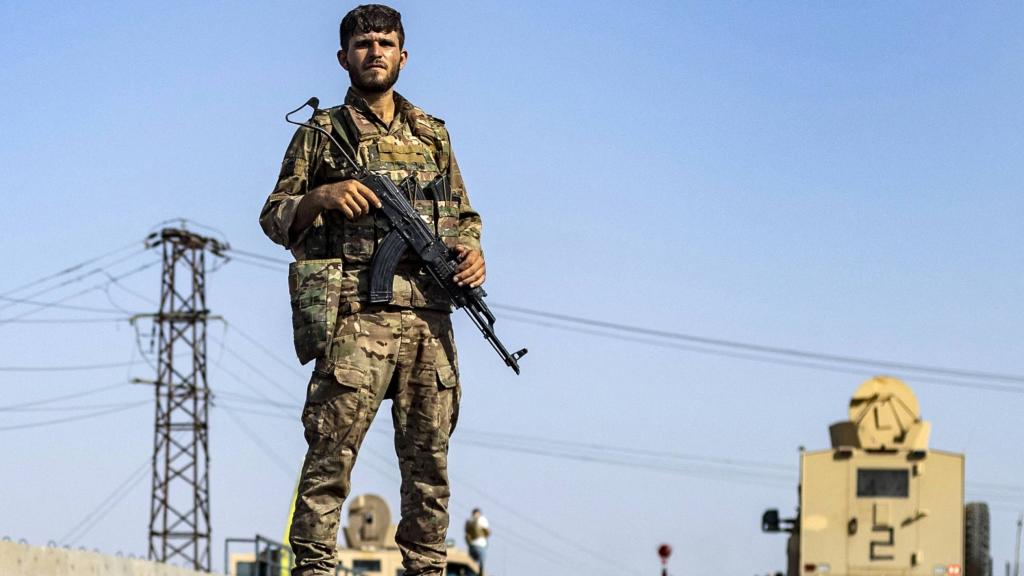
The armed tribesmen who appeared in the Kurdish-majority Ashrafiya district were local Baggara tribesmen of various backgrounds. Some were civilians, others members of the Iranian-backed Baqir Brigade network that had defected during the collapse of the Assad regime, and others still had been working with the SDF in Aleppo since the days prior to the regime's fall. Their alignment and coordination with the new HTS-led government began from its inception. They had simply been waiting for the government to make a decisive military move against the SDF in Aleppo.
Other cases that were interpreted as defections involved Kurdish SDF members originally from Afrin, who had been displaced to Aleppo after Turkey’s 2018 invasion. These fighters chose to abandon the SDF, surrender their weapons, and seek a return to their homes in Afrin — a personal decision rooted in displacement fatigue rather than an organised Arab tribal break with the SDF.
Far from signalling a broader internal collapse, these episodes underline a recurring pattern: despite repeated predictions to the contrary, the SDF has remained broadly cohesive in the core territories it controls. Understanding why requires a clearer picture of what the SDF actually is — and what it is not.
SDF as a coalition
Despite its own portrayal as a unified, professional army, the SDF is better understood as a coalition operating under a single general command. It consists of several layers: foundational factions with their own chains of command; provincial and local military councils; various “special forces” units; and a self-defence conscription force based out of Hasakah city. The SDF’s ‘internal system’, published in 2020, explicitly names seven factions as its “foundational components”.
The most important of these is the YPG, the armed wing of the PYD and the original US-backed force against Islamic State. Other factions such as the Northern Democratic Forces in Raqqa or Jabhat al-Akrad function largely as satellites of the YPG and PYD. They issue statements, participate in rallies, and help sustain the movement’s ideological narrative, but do not operate as autonomous power centres.
The military councils, by contrast, are a later and distinct development. Although they often appear alongside YPG symbols in SDF media, they are formally separate structures. A representative of the Tabqa Military Council told me that while councils coordinate with SDF factions on, for example, training or operations, they retain their own internal composition and reason for being.
In Arab-majority areas such as Raqqa and Deir Ezzor, these councils emphasise local recruitment. According to a representative of the Hajin Military Council, most of its fighters come from the areas it covers, though recruitment patterns also reflect tribal dynamics. In eastern Deir Ezzor, the SDF has largely drawn from select Ugaydat clans (the Bukayir and Shu'aytat in particular) rather than the Obayd clan of Hajin, a reminder that the organisation’s social base is neither uniform nor politically neutral.
The councils also work hard to claim revolutionary legitimacy. A spokesman from the Hajin military council told me that roughly 80 per cent of its personnel were former Free Syrian Army fighters, with the remainder consisting of regime defectors or civilians who had not previously taken up arms. This narrative matters in regions where the 2011 uprising still carries moral weight.
Officially, the military councils endorse the SDF’s ideological vision of a decentralised Syria and insist they enjoy popular support. Critics disagree. Activists opposed to the SDF argue that what exists in Arab-majority areas is not consent but enforced quiet. One activist from Hajin in Deir Ezzor governorate, now living outside SDF control, described the situation as “temporary silence”, sustained by US backing and economic necessity. Another activist from Gharanij (another town in Deir Ezzor) put it more bluntly: “No one here is happy except those who benefit from the system”.
Reasons for loyalty and defection
Still, large-scale defections have not followed. In the immediate aftermath of Assad’s fall, there was a brief revolutionary momentum that may have encouraged some SDF members to reconsider earlier compromises. Turki al-Dhari, a former head of the al-Kasra Military Council, explained his defection to the government side at the time as a “return to the embrace of the revolution,” echoing long-standing grievances about Arab marginalisation within the SDF.
But such cases have remained the exception. SDF representatives offer several explanations. The Hajin Military Council spokesman told me that defectors acted out of fear, haste, or external pressure. He also cited concerns about Islamic State infiltration of government forces, the risk of abandoning one’s home, and uncertainty over the fate of those who defect.
Some of these concerns are not hypothetical. Al-Dhari himself survived an assassination attempt in Deir Ezzor in March 2025 and continues to be denounced by some as a traitor for having joined the SDF in the first place. There is also a quieter deterrent: the widespread belief that families of defectors may face suspicion or retaliation from the SDF.
Beyond fear, there is inertia. For many SDF members in Raqqa and Deir Ezzor, continued affiliation provides income, status, and a degree of protection in a context where alternatives remain unclear. As long as negotiations between the SDF and Damascus over the implementation of the 10 March agreement remain unresolved, waiting is rational.
The core disagreement between Damascus and the SDF remains intact: the SDF seeks to retain military and administrative autonomy, while the government insists on a centralised state. Whether the outcome resembles Iraqi Kurdistan-style autonomy or individual-level integration into state institutions, many locals currently working with the SDF calculate that staying put for now maximises their chances of securing a role in the future order.
This may well change though if Damascus clearly signals that it will launch a major military offensive against the SDF in Raqqa and Deir Ezzor, in which case any existing contacts between central government supporters and members of the military councils will likely be intensified with the aim of securing defections at 'zero hour'. In the face of real military pressure, it is doubtful whether the councils would fight to preserve the SDF's position.
Aymenn Jawad al-Tamimi is a historian, translator, and researcher based in Syria
The United States and the European Union on Saturday urged the Syrian government and Kurdish authorities to return to negotiations after days of deadly clashes in the northern city of Aleppo.
Issued on: 11/01/2026 - RFI
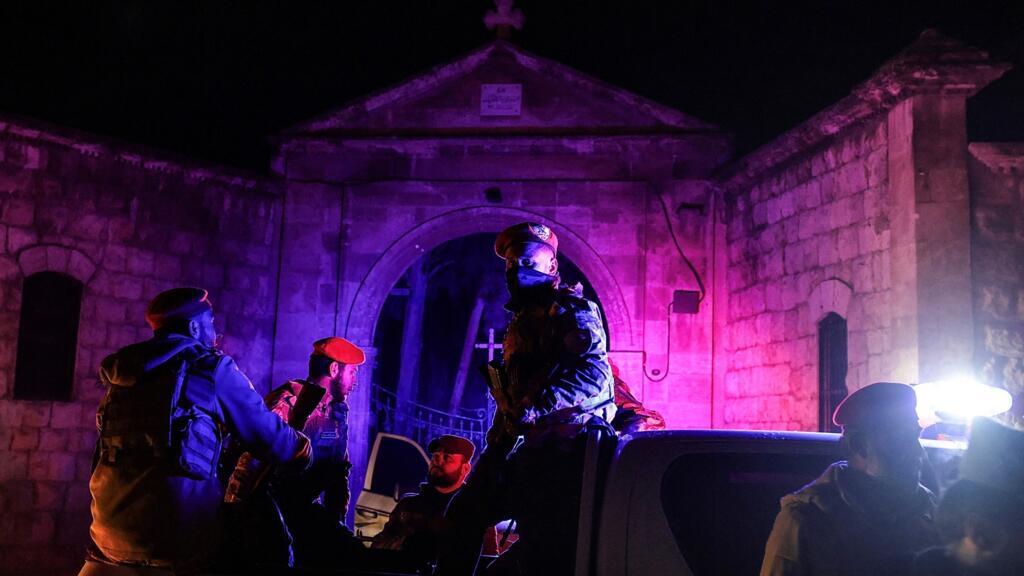
Conflicting reports emerged from the city, as authorities announced a halt to the fighting and said they had begun transferring Kurdish fighters out of Aleppo, but Kurdish forces denied the claims shortly after.
An AFP correspondent saw at least five buses on Saturday carrying men leaving the Kurdish-majority Sheikh Maqsud district, accompanied by security forces.
While the authorities said they were fighters, the Kurdish forces insisted they were "civilians who were forcibly displaced". AFP could not independently verify the men's identities.
Another correspondent saw at least six buses entering the neighbourhood and leaving without anyone on board, with relative calm in the area.
US envoy Tom Barrack met Saturday with Syrian President Ahmed al-Sharaa, and afterwards issued a call for a "return to dialogue" with the Kurds in accordance with an integration agreement sealed last year.
A statement from the European Union called for an end to fighting in and around Aleppo to protect the civilian population.
"We urge all parties to implement the ceasefire announced today and to return urgently to a political dialogue for a political solution," the statement added.
Civilians killed
The violence in Aleppo erupted after efforts to integrate the Kurds' de facto autonomous administration and military into the country's new government stalled.
Since the fighting began on Tuesday, at least 21 civilians have been killed, according to figures from both sides, while Aleppo's governor said 155,000 people had been forced to flee their homes.
On Saturday evening, state television reported that Kurdish fighters "who announced their surrender...were transported by bus to the city of Tabaqa" in the Kurdish-controlled northeast.
A Syrian security source had told AFP the last Kurdish fighters had entrenched themselves in the area of al-Razi hospital in Sheikh Maqsud, before being evacuated by the authorities.
Kurdish forces said in a statement that news of fighters being transferred was "entirely false" and that those taken included "young civilians who were abducted and transferred to an unknown location".
Residents waiting to return
On the outskirts of Sheikh Maqsud, families who had been unable to flee the violence were leaving, accompanied by Syrian security forces, according to an AFP correspondent.
Men carried their children on their backs as women and children wept, before boarding buses taking them to shelters.
Dozens of young men in civilian clothing were separated from the rest, with security forces making them sit on the ground before being taken by bus to an unknown destination, according to the correspondent.
A Syrian security official told AFP on condition of anonymity that the young men were "fighters" being "transferred to Syrian detention centres".
At the entrance to the district, 60-year-old resident Imad al-Ahmad was waiting for permission to return home.
"I left four days ago...I took refuge at my sister's house," he told AFP. "I don't know if we'll be able to return today."
Nahed Mohammad Qassab, a 40-year-old widow also waiting to return, said she had left before the fighting to attend a funeral.
"My three children are still inside, at my neighbour's house. I want to get them out," she said.
The clashes, some of the most intense since Syria's new Islamist authorities took power, present another challenge as the country struggles on a new path after the ousting of longtime ruler Bashar al-Assad in December 2024.
Both sides have blamed the other for starting the violence in Aleppo.
'Fierce' resistance
A flight suspension at Aleppo airport was extended until further notice.
The Kurdish-led Syrian Democratic Forces (SDF) control swathes of the country's oil-rich north and northeast, much of which they captured during Syria's civil war and the fight against the Islamic State group.
But Turkey, a close ally of neighbouring Syria's new leaders, views its main component as an extension of the Kurdistan Workers' Party (PKK), which agreed last year to end its four-decade armed struggle against Ankara.
Turkey has launched successive offensives to push Kurdish forces from the frontier.
Elham Ahmad, a senior official in the Kurdish administration in Syria's northeast, accused Syrian authorities of "choosing the path of war". But he said the Kurds remained committed to agreements reached with Damascus.
The March integration agreement was meant to be implemented last year, but differences, including Kurdish demands for decentralised rule, stymied progress as Damascus repeatedly rejected the idea.
Nanar Hawach, senior Syria analyst at the International Crisis Group, said the renewed clashes cast doubt on the government's ability to unite the country after years of civil war.
Syria's authorities have committed to protecting minorities, but sectarian bloodshed rocked the Alawite and Druze communities last year.
(AFP)

No comments:
Post a Comment