AI drones made in Germany see duty on Ukraine's front line
The German defense company Helsing is supplying combat drones to Ukraine and will soon provide them to the German army. How effective are they on the front line? DW joined a Ukrainian combat mission to find out.

In a forested strip, two Ukrainian soldiers — a technician and an electrician — attach wings to a large black box. The kit is an HX-2 combat drone from the German manufacturer Helsing, equipped with artificial intelligence.
The billion-dollar startup from Bavaria is supplying thousands of these kits to the Ukrainian military, funded by the German government. Germany's armed forces have also recently awarded Helsing a multimillion-euro contract.
At the beginning of the year, critical reports about the drones appeared in Western media, including German outlets. They cited Ukrainian soldiers who reportedly identified technical issues during test deployments in 2025. According to a report by the newspaper Die Welt, many drones were not flight-ready or crashed shortly after takeoff. The hit rate was also said to be low. Its report quoted Ukrainian soldiers fighting at the front in eastern Ukraine.
The manufacturer, however, refuted these reports. "Members of the Ukrainian armed forces are testing the HX-2 drone together with Helsing staff at the front," a spokesperson told DW in late January. The first results of the tests, it said, were "encouraging."
How Ukraine's drone pilots help hold front near Pokrovsk 08:41
Combat deployment near Pokrovsk
The soldiers setting up the HX-2 drone repeatedly glance up at a detector mounted on a tree. It tracks Russian drones flying over their position.
Inside a shelter, two other soldiers — a pilot and a navigator — prepare to launch the German drone. They switch on their laptops and monitors, and also arrange a string of lights meant to create a bit of atmosphere. The crew is operating in the front-line section in Ukraine’s eastern Donbas coal region , where the Russian army is advancing.
"Our task is to destroy their logistics routes," says the pilot and commander, who goes by the call sign Black.
Helsing initially delivered its earlier, simpler HF-1 model, developed with a Ukrainian manufacturer. At the time, the order covered 4,000 drones. In early 2025, the German company announced delivery of an additional 6,000 drones of the new HX-2 model.
Black's crew, currently operating the HX-2, had first used Helsing’s first drone, the HF-1. The HX-2 is described as fast and agile. "It gives us a major advantage in the air — for the enemy it is harder to shoot down," says Black.
Target acquisition is carried out using artificial intelligence. "Normally we fly toward the target that reconnaissance drone pilots show us. However, the HX-2 system can independently identify targets. That said, it still can't tell if a target has already been destroyed or not," says Black.
Once the pilot confirms the target selected by the artificial intelligence, the drone continues its flight autonomously. According to commander Black, the HX-2 — like most drones — is vulnerable to electronic warfare.
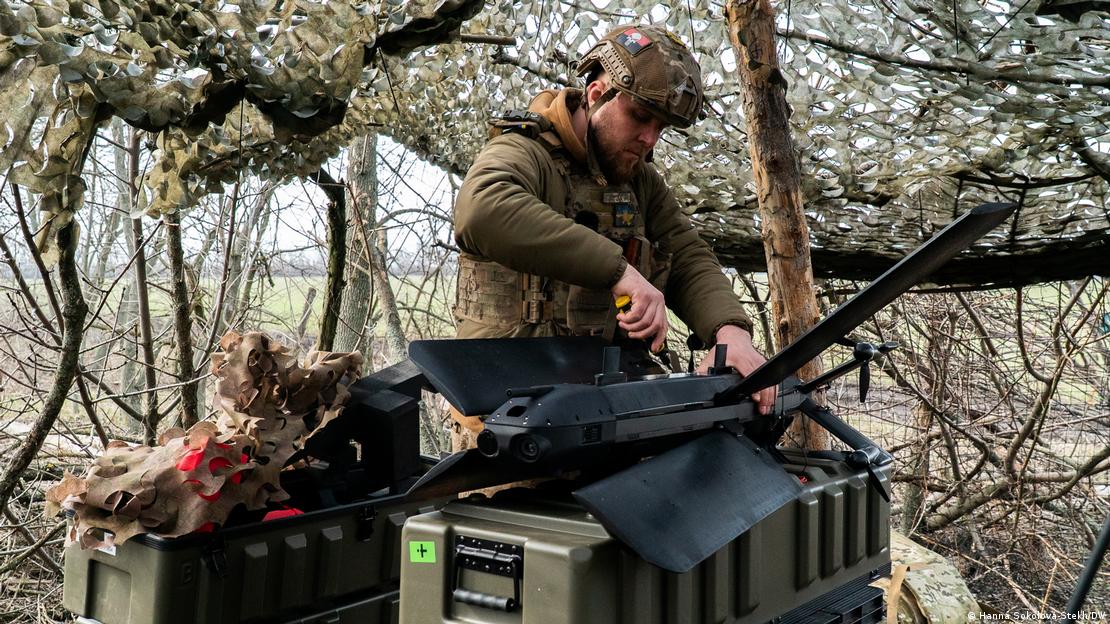
The Ukrainian military personnel DW spoke with have identified several shortcomings with the drones that they do not want to make public. "Representatives of the manufacturer will come soon to look into it. We have a support chat with them," the commander says.
In response to a DW request, Helsing said the HX-2 drones have so far "not flown in sufficient numbers at the front to allow a fundamental assessment of performance under wartime conditions." The company added they are currently being adapted to front-line conditions, particularly to constantly changing electronic warfare measures used by the opposing side.
Helsing did not respond to DW’s request at the end of April regarding the current hit rate of the HX-2.
Problems arise during launch
The crew carefully selected the day for the HX-2 flight, taking into account wind speed, precipitation and cloud cover. The weather is clear. The drone is supposed to fly several dozen kilometers into the Russian-occupied part of the Donetsk region.
A few hours later, the HX-2 crew finally receives the launch order. The drone, however, doesn't launch from the catapult. The motor fails to start, the electrician reports over radio.
Together with the technician, he tries again and it finally takes off. It originally had a problem connecting with the ground station, something which occasionally occurs with this type of drone, explains Oleksandr Karpyuk, the unit's senior sergeant.
Putin admits Ukraine's drones are hurting Russia's economy 19:19
A hit in better weather
Despite the favorable weather forecast, the sky is now overcast again and the drone pilot is having difficulties with navigation. The test has to be aborted.
On the next deployment, when the DW reporter was no longer present, the crew successfully struck a truck. The drone operation was recorded by a reconnaissance drone and the military personnel show the video. They attribute the success to better weather conditions than during the previous mission.
Karpyuk reported that the earlier HF-1 model also delivered poor results at first, but the manufacturer responded to feedback and improved the product. As a result, the HF-1 has hit more than 50% of targets in the Pokrovsk front-line area.
When asked whether he would continue working with this drone, Karpyuk answers yes. In his view, the Russians currently have no comparable model to the HX-2. He cites the Russian "kamikaze drone" Lancet as an example.
"In the Lancet, the motor is at the rear — it's a pusher motor. The wings, also mounted at the rear, control the drone. Only Helsing has equipped its drones with four forward-facing motors. Why? Because it gives them maneuverability and speed," says Karpyuk.
This article was originally published in Ukrainian.

Hanna Sokolova-Stekh DW correspondent in Ukraine

Roman Goncharenko Writer and senior editor with a focus on European security, Russia and the war in Ukraine.
NATO's drone problem: Can European industry close the gap?
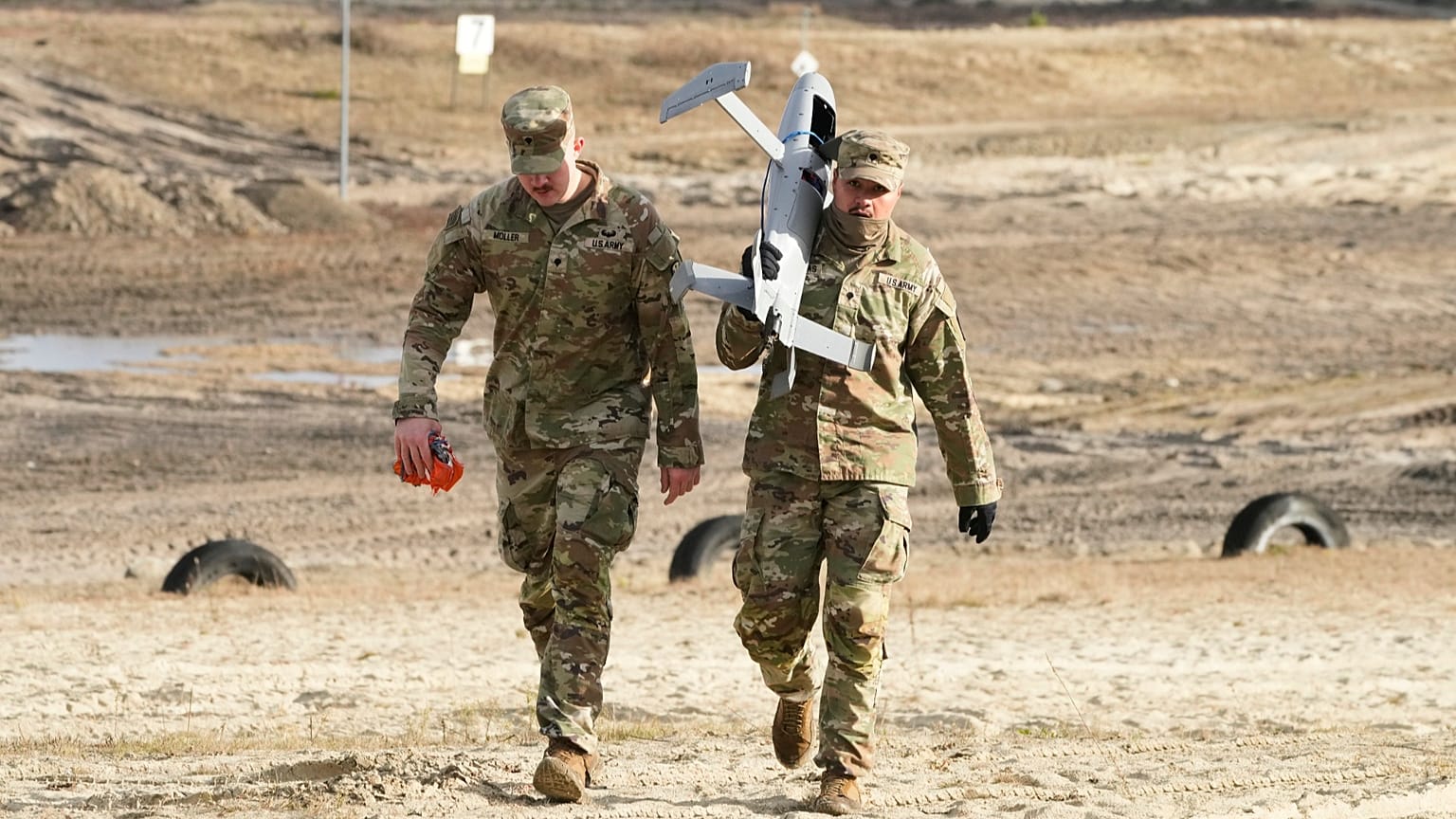
At NATO AIRCOM's Industry Day in Ramstein, Euronews had exclusive access, speaking to military leaders and defence companies about the race to develop cheaper, faster and more effective ways to counter drones.
To find a more cost-effective solution and strengthen collaboration, NATO is turning to industry for ways to counter unmanned systems. Earlier this week, the second AIRCOM Industry Day took place at Germany's Ramstein Air Base, bringing together representatives from European arms manufacturers and the military.
A drone crashing into a house in Romania, another violating Lithuanian airspace, and Munich Airport suspending operations for several hours following a suspected sighting: unmanned systems, and how to counter them, have become an increasingly acute threat for NATO.
If a drone is detected violating NATO airspace, the operation known as "Eastern Sentry" is triggered, which involves the deployment of several fighter jets to either track the drone or, if necessary, neutralise it. This, however, is deemed a costly intervention: drones are relatively cheap, with some being produced for less than €100,000. A single NATO fighter jet scramble against a drone can cost tens of thousands of euros per hour, though, with a typical two-jet interception costing more than €85,000 before any missiles are fired.
In his opening remarks, Lieutenant General Guillaume Thomas, Deputy Commander of the Allied Air Command, emphasised that drone warfare is confronting NATO with "collective challenges," pointing out the masse that Russia is using in its war against Ukraine. For him, the solution is to stay ahead of three key curves: cost, production and innovation. Achieving that requires close cooperation between industry and the armed forces.
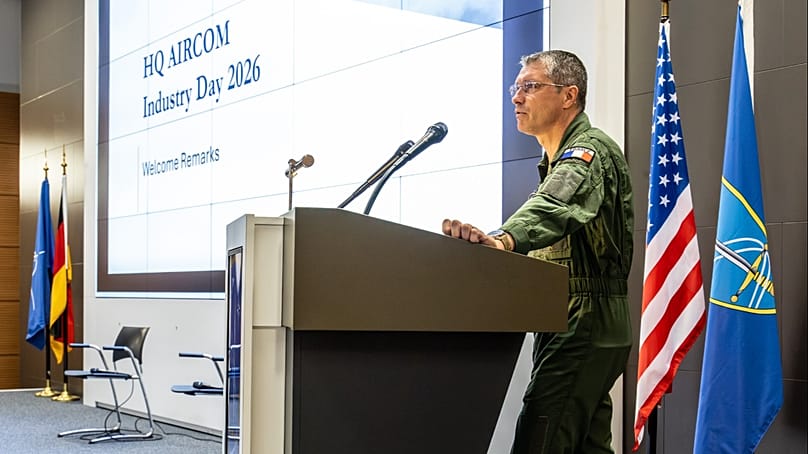
Lieutenant General Guillaume Thomas, Deputy Commander, NATO Allied Air Command (AIRCOM) provided by NAT
Working with Ukraine a 'requirement'
According to senior policy fellow at the European Council on Foreign Relations, Dr. Ulrike Franke, one of the event's keynote speakers, drones "have brought mass to the battlefield," which forces the alliance to focus on mass and cost, not using expensive equipment to take down cheap drones and work with Ukrainians. The latter, she called a "requirement" in countering drone threats.
Senior Lieutenant Oleksandr Vorobiov, call sign "Zhan" and deputy chief of air defence of Ukraine's 3rd Army Corps, said Ukraine's biggest shortcoming is reliable radar detection. He explained that intermittent radar tracking has prevented the development of fully autonomous interceptor drones, as existing radar systems often lose track of small drones for several seconds.
"The one thing that really stopped us [in Ukraine] from making it fully autonomous. The radars we mostly use in Ukraine were not designed to detect this type of drone. They're weather radars, jet radars, basically any type of radar except ones designed for these drones. That means the target sometimes disappears from the radar picture. If the drone still can't see the target and the radar loses track of it for ten seconds, then the drone needs to be operated manually for that time. That's the biggest gap: reliable detection of these kinds of targets. Maybe Europe has that capability, maybe the US has it, I don't know," he told Euronews.
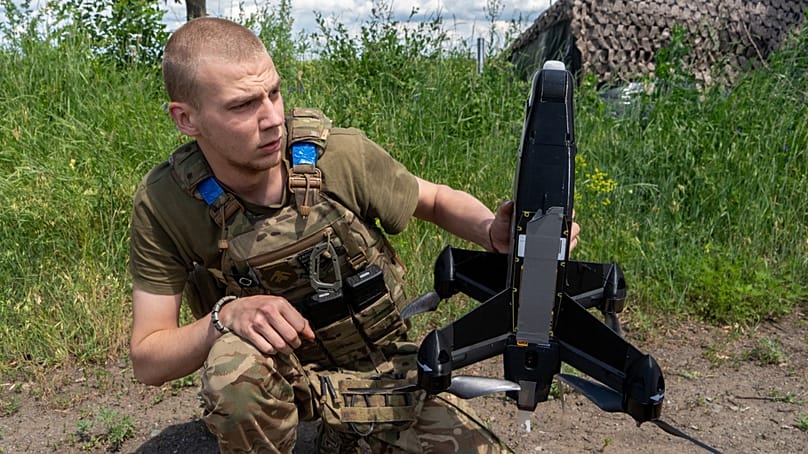
Connecting military needs with industrial innovation
The aim of this year's industry day "is about innovation in technologies overall," Lieutenant Colonel Steffen Bott, the event's project manager told Euronews. He emphasised that during these industry days, the military's role "remains unchanged."
"Neither we as the military nor NATO itself enter into contractual relationships with defence companies. However, one of the main drivers behind the current focus on counter-UAS is that the military has identified specific operational requirements. To carry out these operations effectively, it has become clear that technologies in the counter-UAS field are evolving extremely quickly. Start-ups, alongside established defence companies, are driving much of this innovation. At the same time, military requirements, particularly in light of the war in Ukraine, are evolving rapidly. Those requirements may not change completely, but they adapt much faster than the procurement and acquisition processes designed to meet them," he explained.
Reflecting that focus on rapidly evolving counter-drone technologies, around 35 companies exhibited their latest systems at the event, including Matra BAe Dynamics Alenia (MBDA), Alta Ares, Hensoldt and Aselsan, to name a few. The systems and counter measures ranged from radars to interceptor drones and missiles, such as MBDA's specialised counter-drone missile. A representative told Euronews that the missile was developed to counter mass drone attacks, "such as those we have seen in Ukraine and the Middle East, typically involving Shahed or Geran drones, in a cost-efficient and effective way."
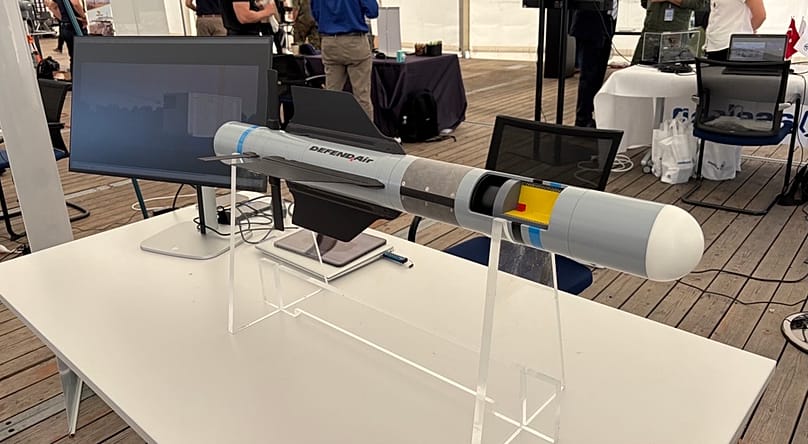
The missile is being integrated into Rheinmetall's Skyranger 30 air defence system, the first of which are earmarked for Germany's brigade in Lithuania, with deliveries expected between 2027 and 2028. Each Skyranger 30 carries nine missiles, allowing a six-vehicle battery to field 54 ready-to-fire interceptors. Smaller Class 1 drones, such as quadcopters, are engaged by the system's 30 mm cannon, while the "Defend Air-missile is intended for larger threats, including Shahed-type drones, the company representative said.
Learnings from Russia's full-scale invasion of Ukraine
Walking through the exhibition tent, one thing quickly stood out: the absence of Ukrainian companies. The event was reserved for firms from NATO member countries, Euronews has been told. Still, Ukraine was an ever present topic for both the alliance and the companies, with many of them highlighting the collaboration with Ukraine.
Turkey's defence giant Aselsan told Euronews that the key learning from Russia's war against Ukraine is reliability. "The system has to be reliable. When the target comes towards you, you have just a few seconds to decide and act. The system should use artificial intelligence to shorten the decision-making time," he said.
A representative from the French defence company Alta Ares that develops AI-powered software and systems for intelligence, surveillance and reconnaissance (ISR) and counter-drone (counter-UAS) operations, told Euronews, that they "don't really see Ukraine as a lab". The French company has presented two different types of interceptors on NATO Aircom's industry day: the x-block, designed for short and mid-range interception, so with a maximum range of 15 kilometers and one is for longer range, which can go up to 40 kilometers from launching site.
"Our two co-founders were in Ukraine at the beginning of the war. And they worked closely with Ukrainian units in order to understand the needs, to understand clearly how the battlefield is evolving. They wanted to give them solutions adapted to their needs, so they worked on AI solutions in order to be integrated on the drones," the representative explained.
With more than 30 competitors exhibiting their products, competition is never far away. "If you adpot the Ukrainian way of thinking, we are only partners because we potentially need solutions like this in Europe," he told Euronews. "There's not enough on offer. There will be too much demand," he added, pointing out that Alta Ares has recently signed an Memorandum of Understanding (MOU) with the German drone company Quantum Systems.
Senior Lieutenant Oleksandr Vorobiov agreed saying it's "good they are there," as without, there's a lack of knowledge about the modern battlefield. Vorobiov added that he can't say if these efforts are enough, but the mindset, that European companies go to Ukraine and are present on the battlefield is good, albeit a little late.
.jpg)
July 6, 2026
By Turan Darishov
Key Takeaways
Azerbaijan Leads, Armenia Catches Up, Georgia Lags — Azerbaijan is the clear frontrunner with domestic production, dedicated Unmanned Systems Troops, and diversified procurement. Armenia is rapidly modernizing its drone capabilities after its 2020 defeat. Georgia is falling significantly behind despite limited local initiatives.
Ongoing Military Modernization — All three South Caucasus states are investing more in unmanned systems (aerial and ground), reflecting lessons from Ukraine and the 2020 war. Azerbaijan and Armenia have substantially increased defense spending, while Georgia’s efforts remain modest.
The military use of unmanned aerial vehicles dates back decades, with early reconnaissance drones already appearing during the Vietnam War and later conflicts. However, drones only began being used widely during the war in Afghanistan, where the United States relied heavily on UAVs for surveillance, reconnaissance, intelligence gathering, and targeted strikes against enemy targets. The conflict demonstrated the value of persistent aerial monitoring and precision remote strikes, gradually normalizing the use of unmanned systems in modern warfare. In Afghanistan, drones were also increasingly used for logistics support, infrastructure monitoring, and broader military coordination, further expanding their battlefield role.
The use of drones leaped even further during the 2020 Nagorno-Karabakh War between Azerbaijan and Armenia, which became the first major interstate conflict where unmanned systems played a central battlefield role. Azerbaijan’s extensive use of Turkish Bayraktar TB-2 drones, Israeli loitering munitions, and reconnaissance UAVs demonstrated how deadly drones can be against armored vehicles, artillery systems, and air defenses. This conflict sealed UAVs as a vital part of the modern battlefield rather than supplementary assets.
In the Ukraine war, both sides increasingly relied on drones for reconnaissance, artillery adjustment, long-range strikes, logistics disruption, and direct attacks against armored vehicles and personnel. The conflict eventually accelerated the rapid evolution of FPV drones, loitering munitions, naval drones, and AI-assisted systems. The scale of drone usage and the unprecedented damage inflicted by relatively cheap unmanned systems fundamentally changed global military discussions about the future of warfare itself.
Regional Insecurity and Unmanned Systems in the South Caucasus
The South Caucasus occupies a particularly important place in the evolution of modern drone warfare. The 2020 Nagorno-Karabakh War became the first conflict where unmanned systems were systematically integrated to overwhelm and defeat a capable conventional force.
Although the region has not witnessed large-scale armed conflict since Azerbaijan’s 2023 operation in Nagorno-Karabakh, the South Caucasus still retains a noticeable degree of geopolitical instability. More than 20% of Georgia’s territory remains occupied by Russia following the 2008 war, while relations between the two countries continue to be tense. Armenia’s relations with Russia have also become increasingly strained in recent years as Prime Minister Nikol Pashinyan gradually expanded cooperation with the European Union and the United States. In addition, the Iran war introduced another layer of regional tension, with Azerbaijan briefly becoming involved after an alleged Iranian drone hit an Azerbaijani airport in Nakhchivan. Even though direct military confrontation remains unlikely in the near future, these security concerns continue to encourage South Caucasus states to modernize their armed forces and further explore the military potential of unmanned systems.
Azerbaijan: Drone Pioneer and Expanding Military Hegemon
Azerbaijan remains the most advanced and institutionally developed drone operator in the South Caucasus. The country continues actively expanding its unmanned warfare capabilities through both procurement and domestic development efforts. In recent years, Azerbaijan adopted several new drone systems into service, including domestically produced UAVs such as the “İti Qovan.” Azerbaijan’s leading defense producer “Azersilah” is also actively involved in UAV design and production efforts. Alongside local production initiatives, Azerbaijan continues operating a diverse fleet of Turkish and Israeli unmanned systems, including Bayraktar TB-2 and Akıncı drones, while also showing interest in acquiring additional advanced UAV platforms in the future. The country also established dedicated training and maintenance facilities for Akıncı drones. The military cooperation framework established with Türkiye under the 2021 Shusha Declaration further strengthened cooperation in defense technologies, training, and military-industrial development.
Azerbaijan also increasingly seeks to deepen cooperation with Turkish defense companies beyond simple procurement by exploring possibilities for joint drone production and broader defense-industrial collaboration with Baykar. In recent years, both sides signed cooperation agreements and memorandums regarding technology exchange, industrial cooperation, and potential localized production of Baykar systems in Azerbaijan, signaling Baku’s long-term interest in developing more sustainable domestic unmanned systems production.
One of the most important developments, which received little international attention, was the formal establishment of dedicated Unmanned Systems Troops within the Azerbaijani Armed Forces. The experience of Ukraine demonstrated that such an institutionalization of unmanned forces allows for better coordination and battlefield results. The commander of the newly established forces, Colonel Adam Huseynov, is known to have received high-level military decorations following the 2020 Nagorno-Karabakh War. Although Azerbaijani authorities have not officially clarified the exact location of the Unmanned Systems Troops within the broader military structure, the sequence of units presented during the 2025 military parade suggests that the new forces are likely integrated into the Azerbaijani Air Force structure.
Azerbaijan’s expanding drone capabilities are also supported by steadily increasing military expenditure. The country’s defense budget grew from approximately $2.24 billion in 2020 to a planned $5.1 billion in 2026, reflecting Baku’s continued emphasis on military modernization and technological development.
Armenia: Adapting to the Lessons of Defeat
Armenia’s approach to drone warfare and unmanned systems modernization is heavily shaped by the lessons of its military defeat during the 2020 Nagorno-Karabakh War, where Azerbaijani drones inflicted devastating damage on Armenian units and exposed major weaknesses in Armenia’s armed force structure. Since then, Yerevan has accelerated military modernization efforts with a strong emphasis on unmanned systems. This shift was clearly visible during the 28 May 2026 military parade, where Armenia showcased a wide variety of modern UAVs and unmanned systems ranging from small reconnaissance drones to larger strike-capable platforms. Among the systems displayed were reconnaissance and attack drones such as the UL350 and Storm-320. Armenia also showcased Chinese-made CH-4 strike drones equipped with precision-guided munitions, Iranian AD-08 Majid short-range air defense systems, and domestically produced drones such as the AW5R and Krunk-25.
One of the most interesting developments was Armenia’s demonstration of ground-based robots known as “Gail” (“wolf”). Similar unmanned ground systems have increasingly attracted attention following their use in Ukraine, where they were employed for logistics, reconnaissance, casualty evacuation, and even direct combat support missions. However, effective use of such systems requires strong communications infrastructure, coordination capabilities, maintenance networks, and institutional adaptation — areas where Armenia still faces important challenges. Nevertheless, the decision to integrate UGVs into military modernization efforts demonstrates Armenia’s growing awareness of broader unmanned warfare trends extending beyond aerial drones alone.
Another major post-2020 development was the establishment of the Unmanned Aerial Vehicle Directorate within the Armenian Armed Forces in 2024. The creation of a specialized UAV command structure demonstrates that Armenia increasingly views unmanned warfare as a strategically crucial military sphere. Armenian officials have repeatedly referenced the lessons of Ukraine as highly important for Armenia’s future military development, while simultaneously continuing active drone-related cooperation
Armenia’s military procurement strategy also underwent significant diversification following 2020. While Russia previously dominated Armenian arms imports, Yerevan increasingly expanded defense cooperation with countries such as India, France, China, Iran, and the United States, while still maintaining certain Russian military ties. The purchase of Chinese strike drones and American-made V-BAT reconnaissance UAV’s reflects Armenia’s broader attempt to avoid overdependence on a single supplier.
Armenia’s military modernization is also reflected in rapidly increasing defense expenditure. The country’s military budget increased from approximately $634 million in 2020 to around $1.44 billion in 2026, demonstrating the importance Yerevan places on rebuilding and modernizing its armed forces following the 2020 war.
Georgia: Falling Behind in Drone Warfare
Compared to Azerbaijan and Armenia, Georgia appears significantly less advanced in the integration of unmanned systems within its armed forces and is increasingly falling behind in this field. The country’s arguably only significant drone-related project is the cooperation between the Georgian defense company Delta and the Polish firm WB Technologies under the Delta WB initiative. The partnership focuses on local production of systems such as the FlyEye reconnaissance drone and the Warmate loitering munition. Georgian authorities announced plans for serial production of these systems in summer 2023, and the initiative initially attracted considerable attention as a potential step toward strengthening Georgia’s domestic military-industrial capabilities.
However, despite the ambitious plans, there have been no follow-up announcements regarding successful large-scale production or operational deployment. Unlike Azerbaijan and Armenia, Georgia also has not established dedicated unmanned systems forces or specialized drone branches within its military structure. The relatively modest scale of Georgia’s recent military parade raises further questions regarding the current pace of military modernization. During the 26 May 2026 Independence Day Parade, Georgia showcased very limited military equipment and did not publicly demonstrate drone systems, in contrast to Armenia and Azerbaijan where unmanned systems occupied a visible place in military presentations.
Recently, professor and political analyst Lasha Dzebisashvili sharply criticized the government for insufficient military funding, procurement problems, and the lack of meaningful development of domestic military production capabilities. Georgia’s prolonged political instability and polarization may also partially explain the weak pace of military reform and modernization in recent years. This situation is particularly important given Georgia’s geopolitical environment, where Abkhazia and South Ossetia remain occupied by Russia following the 2008 war, creating a long-term security challenge for the Georgian state.
Georgia’s military spending reflects a similarly cautious trajectory. While the defense budget increased from approximately $288 million in 2020 to around $662 million in 2026, military expenditure as a percentage of GDP declined during the same period. This differs noticeably from Armenia and Azerbaijan, both of which significantly expanded military spending and modernization efforts following the 2020 Nagorno-Karabakh War.
Looking Ahead
The South Caucasus remains one of the regions where the importance of unmanned systems is most visible. The experience of the Nagorno-Karabakh wars, followed by the lessons emerging from Ukraine, demonstrated to regional actors that drones are a crucial weapon in 21st century warfare. As a result, all three South Caucasus states show at least some level of interest in developing unmanned warfare capabilities, although the scale of implementation varies significantly.
Azerbaijan currently stands out as the clear regional leader in drone warfare integration due to its domestic production, diversified procurement, and creation of dedicated unmanned systems structures. Armenia, largely motivated by the lessons of defeat in 2020, is rapidly attempting to modernize and diversify its military capabilities with increased emphasis on drones. Georgia, despite possessing some domestic production initiatives, lags significantly in practical adaptation. Overall, it appears that drone adaptation will remain one of the most important military modernization trends in the South Caucasus in the coming years.
About Geopolitical Monitor
Geopoliticalmonitor.com is an open-source intelligence collection and forecasting service, providing research, analysis and up to date coverage on situations and events that have a substantive impact on political, military and economic affairs.
View all posts by Geopolitical Monitor →

No comments:
Post a Comment