Trump EPA Urged to Withdraw Rule to Let Data Centers Obtain Pollution Permits in Secret
“The result will be some of the dirtiest power sources rushed into neighborhoods without giving communities any opportunity to weigh in,” said one critic.
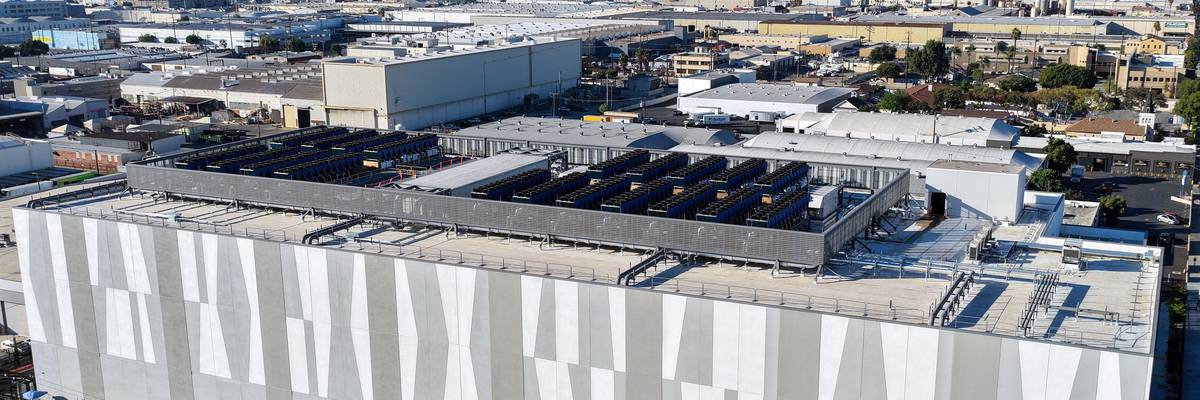
An aerial view of a 33 megawatt data center with closed-loop cooling system on October 20, 2025 in Vernon, California.
(Photo by Mario Tama/Getty Images)
“The result will be some of the dirtiest power sources rushed into neighborhoods without giving communities any opportunity to weigh in,” said one critic.
An aerial view of a 33 megawatt data center with closed-loop cooling system on October 20, 2025 in Vernon, California.
(Photo by Mario Tama/Getty Images)
Brad Reed
Aug 25, 2026
COMMON DREAMS
Critics are warning that President Donald Trump’s Environmental Protection Agency is pushing through a rule that would let artificial intelligence data center builders off the hook for making public disclosures ahead of construction.
The rule, which first came to light during an EPA meeting last month, would delegate power to states over public participation in the permitting process for specific sources of air pollution, such as diesel generators that are frequently used by data centers.
According to a July report in Mother Jones, the proposed rule “could have major consequences for how ordinary people are given notice about new or expanded polluting facilities coming into their neighborhoods.”
Late last week, a coalition of more than 200 environmental groups filed objections to the rule change, which they warned would make public notice for certain polluting projects entirely optional, depending on the whims of state and local governments.
Dori Jaffe, managing attorney at Sierra Club, said on Monday that the rule change would “help data center developers evade more health standards and do so secretly.”
“We demand that the EPA rescind this attempt to further cut the public out of decisions made in their own backyards,” said Jaffe. “We deserve to have a say about developments in our community that would impact our air quality and the health of our families.”
Sheena Patel, attorney for the Natural Resources Defense Council, noted that the administration was attempting to limit public input into polluting projects at a time when opposition to AI data center construction has hit a record high among US voters.
If the rule change goes through, Patel added, “the result will be some of the dirtiest power sources rushed into neighborhoods without giving communities any opportunity to weigh in.”
Brandon Jones-Cobb, senior attorney at the Center for Biological Diversity, said it was “beyond cruel” that the EPA seems determined to “silence front-line communities who bear the brunt of unhealthy air” generated by polluting industries.
“The agency has already turned its back on science, cut enforcement against industrial polluters and eliminated life-saving air pollution measures,” said Jones-Cobb. “Now it wants to shut the public out of decisions to build or expand facilities that expose communities to dangerous air pollution, including data centers. This EPA is so out of touch with Americans and only focuses on making polluters happy.”
In an interview with The Guardian published Tuesday, Joe Goffman, former assistant administrator for the EPA’s office of air and radiation, said the rule change would dismantle what he described as an “ironclad promise” made in the 1963 Clean Air Act to give ordinary citizens voices in where, how, and whether potential centers of air pollution are built.
“The administration is basically saying: ‘You all may have thought this was an ironclad promise, but it no longer is,’” Goffman emphasized.
Aug 25, 2026
COMMON DREAMS
Critics are warning that President Donald Trump’s Environmental Protection Agency is pushing through a rule that would let artificial intelligence data center builders off the hook for making public disclosures ahead of construction.
The rule, which first came to light during an EPA meeting last month, would delegate power to states over public participation in the permitting process for specific sources of air pollution, such as diesel generators that are frequently used by data centers.
According to a July report in Mother Jones, the proposed rule “could have major consequences for how ordinary people are given notice about new or expanded polluting facilities coming into their neighborhoods.”
Late last week, a coalition of more than 200 environmental groups filed objections to the rule change, which they warned would make public notice for certain polluting projects entirely optional, depending on the whims of state and local governments.
Dori Jaffe, managing attorney at Sierra Club, said on Monday that the rule change would “help data center developers evade more health standards and do so secretly.”
“We demand that the EPA rescind this attempt to further cut the public out of decisions made in their own backyards,” said Jaffe. “We deserve to have a say about developments in our community that would impact our air quality and the health of our families.”
Sheena Patel, attorney for the Natural Resources Defense Council, noted that the administration was attempting to limit public input into polluting projects at a time when opposition to AI data center construction has hit a record high among US voters.
If the rule change goes through, Patel added, “the result will be some of the dirtiest power sources rushed into neighborhoods without giving communities any opportunity to weigh in.”
Brandon Jones-Cobb, senior attorney at the Center for Biological Diversity, said it was “beyond cruel” that the EPA seems determined to “silence front-line communities who bear the brunt of unhealthy air” generated by polluting industries.
“The agency has already turned its back on science, cut enforcement against industrial polluters and eliminated life-saving air pollution measures,” said Jones-Cobb. “Now it wants to shut the public out of decisions to build or expand facilities that expose communities to dangerous air pollution, including data centers. This EPA is so out of touch with Americans and only focuses on making polluters happy.”
In an interview with The Guardian published Tuesday, Joe Goffman, former assistant administrator for the EPA’s office of air and radiation, said the rule change would dismantle what he described as an “ironclad promise” made in the 1963 Clean Air Act to give ordinary citizens voices in where, how, and whether potential centers of air pollution are built.
“The administration is basically saying: ‘You all may have thought this was an ironclad promise, but it no longer is,’” Goffman emphasized.
Trump Regulators Issue Key Permit for Proposed $100 Million Underwater Data Center Off Maine Coast
“No one really wants it here,” said one local resident who helped gather signatures in support of blocking the data center.

Skip Johnson and his grandson, Parker Jarrett, fish for mackerel on September 15, 2023 in Eastport, Maine, which is being considered as the site of an underwater data center—alarming locals and the fishing industry.
(Photo by Joe Raedle/Getty Images)
Julia Conley
Aug 24, 2026
COMMON DREAMS
Residents of Eastport, Maine are set to attend a public hearing Monday evening on two proposed ordinances to halt the construction of large artificial intelligence data centers, with proponents of the proposals hoping the coastal city’s planning board will be able to prevent the build-out of a 27-acre, $100 million facility that a Massachusetts-based developer aims to build underwater—right near Eastport’s working waterfront.
The public hearing is being held days after President Donald Trump’s Federal Energy Regulatory Commission (FERC) accepted a preliminary permit for DeepGreen Holdings, LLC, the firm managed by luxury real estate development Louis Wolfson, which aims to build the facility that would be powered by tidal energy.
The 48-month permit does not allow DeepGreen to start construction, but gives approval for engineering and environmental studies needed to secure funding and officially begin the project.
DeepGreen would use ocean water to cool the heat created by the facility’s massive computer servers. The company has also proposed using ocean tides to power turbines that would generate up to 5 megawatts of electricity.
The approval came weeks after FERC asked DeepGreen to amend its application, lowering its energy output from 51 megawatts to 15 megawatts and creating scalable project phases.
The community has mobilized against the proposed data center since DeepGreen applied for the permit in February, with the Eastport City Council voting unanimously earlier this month in support of a 180-day moratorium halting all progress on the center.
The local policymakers said the moratorium would give the city time to consult with the planning board about the two citizen-led initiatives to pass new ordinances—one that would permanently ban data centers in Eastport, which the city’s legal counsel has said could be put to voters with a minor formatting change to the question, and another that would require voter approval for any new industrial or commercial development larger than 10,000 square feet in the ocean or 25,000 square feet on land.
The second ordinance was found by the legal counsel to be “unenforceable and unlawful,” as the town is not permitted to regulate elections via ordinance.
But residents, officials with the Sipayik Passamaquoddy community, and local groups like Eastport Coalition for Healthy Oceans are all pushing to stop DeepGreen and the development it incorporated a month before applying for the permit, DeepGreen Western Passage SPV, or special purpose vehicle.
DeepGreen has also applied for a permit to build an underwater data center in Cook Inlet, Alaska.
Opponents say thermal pollution from the project would be destructive to the habitat of lobsters off the coast of Eastport, which are crucial to the city’s fishing economy and working waterfront. They have also raised concerns that a data center off the coast would harm tourism as well as whales and other marine wildlife.
One local opponent, commercial fisherman and renewable energy developer Nathan Curtis, said DeepGreen carries “unmitigated risks of thermal pollution.”
The proposed data center would “require continuous ocean cooling, converting Western Passage into an unmetered industrial heat sink,” wrote Curtis in a letter to FERC before the commission issued the permit. “Continuous thermal discharge into the water column threatens local water temperatures, localized current dynamics, and critical benthic habitats that support Eastport’s commercial fisheries and working waterfront.”
Wolfson denied that the data center, which was approved for an energy output up to 15 megawatts, would harm the coastal region of Eastport.
“As a property manager and developer who has operated within coastal dynamics for 40 years, I have too much respect for working waterfronts to introduce a project that threatens them,” said Wolfson in a letter to Monitor Local.
But Eastport resident Suellen Hendrix, who was part of a local effort to gather signatures in support for the proposed ordinances, told Maine Public that locals appear unconvinced by any assurances from the data center developer.
“Everyone was behind ‘we don’t want this data center,’” Hendrix told Maine Public. “Nobody was questioning, ‘Well, we need the jobs.’ Nobody was questioning why it should be here because no one really wants it here.”
As Common Dreams reported last week, as the Trump administration and AI executives have aggressively pushed for the expansion of data centers, public support has collapsed, with 75% of respondents to a poll by Embold Research saying they would not support a data center near where they live.
“This has happened nationwide, folks, it’s nothing new,” Dwayne Tomah, a historian with the Sipayik Passamaquoddy community adjacent to Eastport, told a crowd of data center opponents at a recent rally on the town’s waterfront. “We’ve got to resist.”
“No one really wants it here,” said one local resident who helped gather signatures in support of blocking the data center.
Skip Johnson and his grandson, Parker Jarrett, fish for mackerel on September 15, 2023 in Eastport, Maine, which is being considered as the site of an underwater data center—alarming locals and the fishing industry.
(Photo by Joe Raedle/Getty Images)
Julia Conley
Aug 24, 2026
COMMON DREAMS
Residents of Eastport, Maine are set to attend a public hearing Monday evening on two proposed ordinances to halt the construction of large artificial intelligence data centers, with proponents of the proposals hoping the coastal city’s planning board will be able to prevent the build-out of a 27-acre, $100 million facility that a Massachusetts-based developer aims to build underwater—right near Eastport’s working waterfront.
The public hearing is being held days after President Donald Trump’s Federal Energy Regulatory Commission (FERC) accepted a preliminary permit for DeepGreen Holdings, LLC, the firm managed by luxury real estate development Louis Wolfson, which aims to build the facility that would be powered by tidal energy.
The 48-month permit does not allow DeepGreen to start construction, but gives approval for engineering and environmental studies needed to secure funding and officially begin the project.
DeepGreen would use ocean water to cool the heat created by the facility’s massive computer servers. The company has also proposed using ocean tides to power turbines that would generate up to 5 megawatts of electricity.
The approval came weeks after FERC asked DeepGreen to amend its application, lowering its energy output from 51 megawatts to 15 megawatts and creating scalable project phases.
The community has mobilized against the proposed data center since DeepGreen applied for the permit in February, with the Eastport City Council voting unanimously earlier this month in support of a 180-day moratorium halting all progress on the center.
The local policymakers said the moratorium would give the city time to consult with the planning board about the two citizen-led initiatives to pass new ordinances—one that would permanently ban data centers in Eastport, which the city’s legal counsel has said could be put to voters with a minor formatting change to the question, and another that would require voter approval for any new industrial or commercial development larger than 10,000 square feet in the ocean or 25,000 square feet on land.
The second ordinance was found by the legal counsel to be “unenforceable and unlawful,” as the town is not permitted to regulate elections via ordinance.
But residents, officials with the Sipayik Passamaquoddy community, and local groups like Eastport Coalition for Healthy Oceans are all pushing to stop DeepGreen and the development it incorporated a month before applying for the permit, DeepGreen Western Passage SPV, or special purpose vehicle.
DeepGreen has also applied for a permit to build an underwater data center in Cook Inlet, Alaska.
Opponents say thermal pollution from the project would be destructive to the habitat of lobsters off the coast of Eastport, which are crucial to the city’s fishing economy and working waterfront. They have also raised concerns that a data center off the coast would harm tourism as well as whales and other marine wildlife.
One local opponent, commercial fisherman and renewable energy developer Nathan Curtis, said DeepGreen carries “unmitigated risks of thermal pollution.”
The proposed data center would “require continuous ocean cooling, converting Western Passage into an unmetered industrial heat sink,” wrote Curtis in a letter to FERC before the commission issued the permit. “Continuous thermal discharge into the water column threatens local water temperatures, localized current dynamics, and critical benthic habitats that support Eastport’s commercial fisheries and working waterfront.”
Wolfson denied that the data center, which was approved for an energy output up to 15 megawatts, would harm the coastal region of Eastport.
“As a property manager and developer who has operated within coastal dynamics for 40 years, I have too much respect for working waterfronts to introduce a project that threatens them,” said Wolfson in a letter to Monitor Local.
But Eastport resident Suellen Hendrix, who was part of a local effort to gather signatures in support for the proposed ordinances, told Maine Public that locals appear unconvinced by any assurances from the data center developer.
“Everyone was behind ‘we don’t want this data center,’” Hendrix told Maine Public. “Nobody was questioning, ‘Well, we need the jobs.’ Nobody was questioning why it should be here because no one really wants it here.”
As Common Dreams reported last week, as the Trump administration and AI executives have aggressively pushed for the expansion of data centers, public support has collapsed, with 75% of respondents to a poll by Embold Research saying they would not support a data center near where they live.
“This has happened nationwide, folks, it’s nothing new,” Dwayne Tomah, a historian with the Sipayik Passamaquoddy community adjacent to Eastport, told a crowd of data center opponents at a recent rally on the town’s waterfront. “We’ve got to resist.”
Pennsylvania’s new data-center rules get one principle exactly right: Innovation doesn’t include sending your infrastructure bill to everyone else.
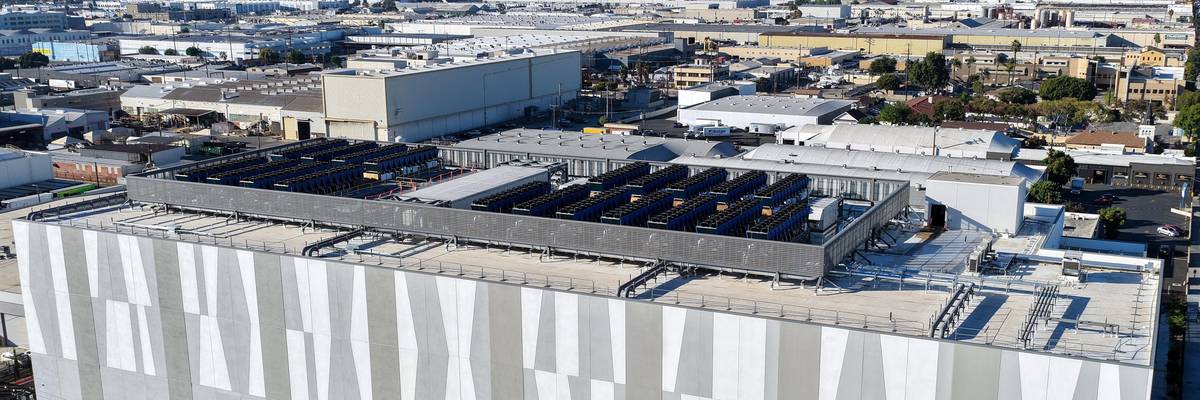
An aerial view of a 33 megawatt data center with a closed-loop cooling system is shown on October 20, 2025 in Vernon, California.
(Photo by Mario Tama/Getty Images)
Joshua W.J. Brown
Aug 25, 2026
Common Dreams
There is a remarkably simple test for whether the AI boom is actually as economically transformative as its boosters say it is: Make the companies building it pay their own damn electricity bill.
Not just the meter at the server warehouse. The whole bill.
There is a remarkably simple test for whether the AI boom is actually as economically transformative as its boosters say it is: Make the companies building it pay their own damn electricity bill.
Not just the meter at the server warehouse. The whole bill.
If a hyperscale data center requires a new power plant, transmission line, substation, distribution upgrade, water system, or grid-reliability backstop, put that cost on the project that caused it. If the economics still work, excellent. Build it. If they don’t, then the public has just learned something extremely important about the business model.
Pennsylvania moved sharply in that direction on August 18. Gov. Josh Shapiro’s new executive order requires data-center developers seeking state permits to meet Responsible Infrastructure Development standards. Among them: Developers must cover the cost of new generation, transmission, distribution, and related infrastructure needed for their projects without shifting those costs to households and businesses.
If the AI boom is real, it can survive a full-cost test.
The order also requires local approval, ends the use of nondisclosure agreements for data-center projects, demands energy and water reporting, and ties state tax benefits to compliance. Pennsylvania’s special counsel for energy affordability is also supposed to work with utility regulators so data centers, rather than ordinary customers, absorb the cost of reliability measures created by their demand.
This shouldn’t be treated as an anti-AI policy. It’s a pro-accounting policy.
The AI industry has been allowed to narrate electricity as though it were weather: Demand is “surging,” capacity is “tight,” the grid is “strained,” and somehow billions of dollars of wires, turbines, transformers, and land just need to appear around the technology.
But demand isn’t weather. Somebody made a decision.
And there is another reason to force the accounting now: A lot of the supposed demand isn’t load yet. It’s proposals. Pennsylvania says more than 100 data-center projects have approached the state, while the governor says only a handful currently look viable enough to have the necessary permits. Across the country, regulators have worried about speculative projects showing up in multiple interconnection queues and inflating forecasts before anybody has proved the customer, financing, or power plan is real.
That matters because utilities build decades-long assets against forecasts. If a speculative 500-megawatt project gets counted as inevitable, everybody can end up paying for infrastructure long after the spreadsheet that justified it has disappeared.
So add another rule: Prove you’re real before the public builds around you. Put down financial security. Identify the end user. Show the power source. Accept a minimum bill that covers infrastructure reserved for you. And if you walk away, you don’t get to leave a transformer-shaped hole in everybody else’s rates.
The International Energy Agency (IEA) reported in April that electricity consumption by data centers jumped 17% in 2025, while electricity use at AI-focused facilities rose even faster. Its 2026 outlook still sees total data-center consumption roughly doubling by 2030 and AI-focused consumption tripling.
In the United States, data centers accounted for roughly half of total electricity-demand growth in 2025, according to the IEA. The Department of Energy had already estimated that data centers consumed about 4.4% of US electricity in 2023 and could reach 6.7-12% by 2028.
There is nothing inherently illegitimate about using that much power. Aluminum smelters use enormous amounts of electricity. Steel mills use enormous amounts of electricity. Electrifying transportation and heating will use enormous amounts of electricity too. A serious industrial society needs to know how to build power.
The illegitimate part begins when one customer’s expansion becomes everyone else’s compulsory investment.
That risk isn’t theoretical. In Virginia, the world’s largest data-center market, Reuters reported this month that Dominion’s fuel costs have risen nearly 90% in five years as data-center growth leaves the utility more exposed to expensive wholesale electricity. Across PJM, which serves 67 million people, the grid operator is now proposing rules that would put some new data centers first in line for curtailment during shortages unless they bring adequate power with them.
Good.
If an AI company wants the upside of scale, it can own the downside of scale too.
That means at least five things.
Make large-load customers pay for the incremental grid infrastructure they cause. Require financial security so households aren’t stuck with stranded assets if a project disappears. Make large-load forecasts public enough to detect speculative projects being counted multiple times. Give communities access to energy, water, and ownership information before approvals. And establish emergency curtailment rules before the emergency arrives.
This is what mature industrial policy looks like. It doesn’t worship growth, and it doesn’t panic about growth. It prices the actual machine.
The alternative is a familiar political trick: Call the upside private innovation and the downside public infrastructure.
No.
If the AI boom is real, it can survive a full-cost test.
If a company needs a new power plant, let it pay for the whole damn thing.
Our work is licensed under Creative Commons (CC BY-NC-ND 3.0). Feel free to republish and share widely.
Joshua W.J. Brown
Joshua W.J. Brown is a Canadian writer, filmmaker, and systems builder whose work examines infrastructure, AI, political economy, and culture.
Full Bio >

No comments:
Post a Comment