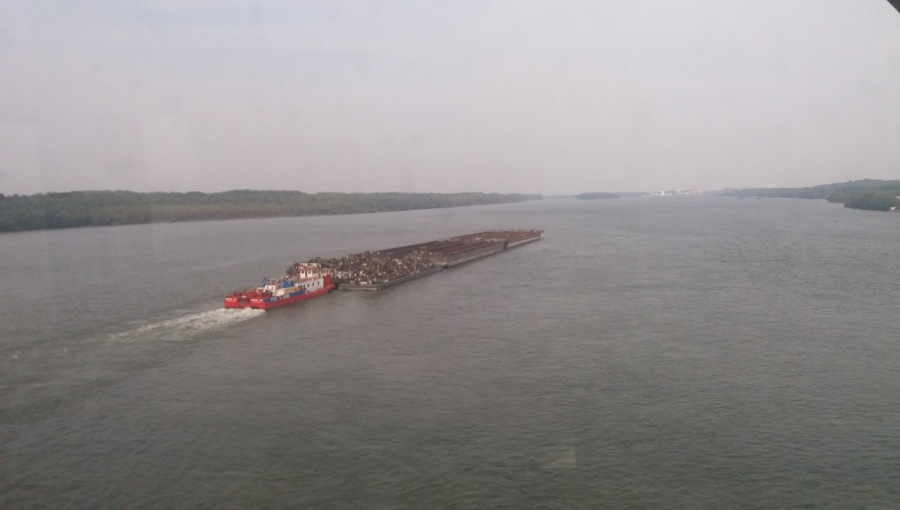
Persistently low water levels on the Danube could weigh on Bulgaria's transport, agriculture and energy sectors, although the impact on economic growth would be limited if conditions improve by autumn, insurer Coface said in a report cited by Bulgarian news agency BTA on August 25.
As IntelliNews reported, exceptionally low water levels on the Danube are disrupting shipping and putting pressure on power generation across Southeast Europe after a summer of extreme heat and drought.
"If the low levels persist only until the fall of 2026, the effect on Bulgarian GDP will likely be limited, but tangible in transport, agriculture and energy," Plamen Dimitrov, manager of Coface Bulgaria, said in a report cited by BTA.
The Danube is at critically low levels along Bulgaria's section of the river, with restrictions on the draft of vessels introduced along its entire course, Coface said.
Ships are waiting to pass through critical sections around Belene and Batin, reducing the carrying capacity of vessels and disrupting imports and exports through the Danube ports of Ruse, Lom, Vidin and Svishtov.
Agriculture, particularly grain and fertiliser transport, as well as construction and metallurgy, are among the Bulgarian sectors most reliant on low-cost river transport, Coface said.
Low water levels are also creating risks for regional power supplies, with restrictions affecting Hungary's Paks and Romania's Cernavoda nuclear plants. This is forcing the region to rely more on expensive power sources and imports, putting upward pressure on electricity prices in neighbouring markets, including Bulgaria.
Bulgaria's Kozloduy nuclear plant continues to operate because of a specially built cooling-water channel, but regional electricity prices are rising and Bulgaria is expected to increase power exports to help cover the shortfall elsewhere in the region, Coface said.
The insurer said water levels on the Danube and Rhine were unlikely to rise significantly in the short term, while longer-term climate trends could make periods of low water more frequent and severe.
"If similar conditions are repeated annually, the Danube could turn from a competitive advantage into a structural economic and trade risk for Northern Bulgaria and the entire national economy," Dimitrov said.

No comments:
Post a Comment