Heatwaves and secret emissions: Why nuclear power may not be as ‘green’ as you think
The war on Iran has triggered calls to double down on nuclear power. But is it really ‘clean’, can Europe’s energy grid cope and will it survive the wrath of climate change?
The world stood still on 11 March 2011, when a major earthquake triggered a 15-metre tsunami that left an unforgettable scar on Japan’s east coast.
A series of powerful waves ripped through homes, businesses and roads – leaving more than 450,000 people homeless and killing 15,500. Alongside the chaos, the tsunami caused the meltdown of three nuclear reactors at the Fukushima Daiichi Nuclear Power Plant, spewing out toxic, radioactive materials and forcing thousands to evacuate.
The event triggered global conversation about the safety of nuclear energy, leading several countries to plan to phase out nuclear energy or stop its expansion.
But 15 years later and the horrors of Fukushima have slowly been replaced with calls to double down on nuclear power, particularly following the war on Iran and its subsequent energy crisis. Speaking exclusively to Euronews, EU Climate Action Commissioner Wopke Hoekstra listed nuclear as one of the power sources EU countries must lean on.
However, an expert from the University of Oxford has warned that new nuclear capacity will not fix today’s energy problems – urging policy makers to consider the true risks of nuclear.
“In the high‑renewables systems of Europe, the problem is increasingly not how to generate more electricity but how to access it when and where it’s needed,” says Dr Bettina Wittneben, a lecturer in Management at Oxford’s Saïd Business School and associate fellow at Pembroke College and the School of Geography and the Environment.
Is nuclear power really ‘clean’?
Nuclear energy is often touted as a clean form of energy as it is low carbon at the point of generation.
In layman’s terms, nuclear reactors can create electricity without releasing carbon dioxide or smog-forming pollutants into the atmosphere. However, experts point out that this isn’t the full picture.
“The bulky concrete structures mean that it has a large amount of embodied carbon and, of course, it is not a renewable energy as it requires the mining of uranium, bringing with it carbon costs in terms of extraction and transport,” says Dr Bettina.
“Nuclear waste disposal and decommissioning must also be factored into the carbon budget of nuclear energy generation.”
Are nuclear power plants climate resilient?
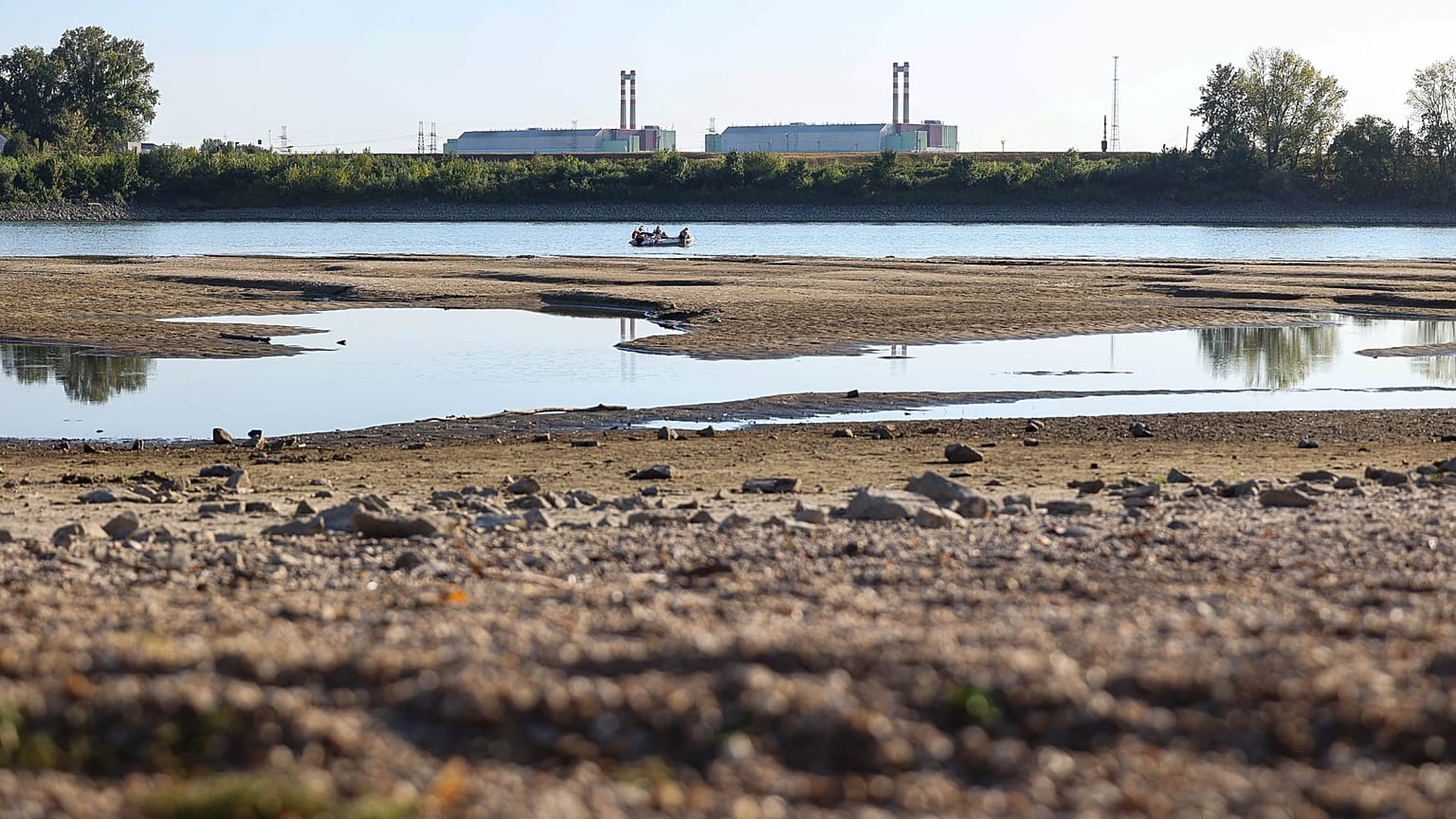
Europe was scorched by back-to-back heatwaves this summer, which experts say would have been “virtually impossible” if it weren’t for climate change. The extreme heat, combined with scant rainfall, triggered droughts across much of the continent, draining some of Europe’s biggest rivers to record-level lows.
This forced several nuclear power plants to temporarily shut off or be set to a reduced output across France, Hungary and Romania.
Nuclear requires vast amounts of water, particularly for the cooling process, and is often known as the “thirstiest power source”. According to The Nuclear Energy Institute, one nuclear reactor requires between 1,514 and 2,725 litres of water per MWh – equating to hundreds of gigalitres every year.
It’s why nuclear power plants are often built near large bodies of water. Without a constant, reliable source of water a nuclear reactor risks overheating – which could lead to serious core damage and end up releasing harmful radiation into the environment.
Coal power and hydropower also suffered during the heatwave, but a surge in solar power helped meet heightened electricity demand from cooling devices such as air conditioning.
According to energy think-tank Ember, solar output in European countries rose by up to 17 per cent on heatwave days in June and July – becoming the only major power source to perform “better than usual” during hot weather.
'Hellbrise': Nuclear is not as reliable as some say
Intermittent forms of energy such as wind and solar are often blamed for overloading Europe’s outdated energy grid.
When electricity demand outstrips supply, surplus energy is often wasted – and can lead to negative electricity prices. This is often referred to as 'Hellbrise' (hell= bright, brise= breeze) and can occur on sunny, windy days.
“This is also the narrative of fossil fuel advocates, who present fossil gas as the saviour of the baseload, or the electricity that is available when renewables fall short,” says Dr Wittneben.
“Fossil fuel sceptics point instead to nuclear power as a reliable baseload technology.”
However, the expert points out that nuclear power plants are slow and costly to turn off, which means they only “amplify” the grid’s Hellbrise challenge – rather than present a solution to it.
The EU has recognised that battery energy storage systems (BESS) are a “crucial technology” to help prevent renewable energy from being wasted or entering sub-zero pricing. The logic is that batteries can store electricity produced by renewables during the day (when consumption tends to be low) and release it to households when demand increases in the evening.
Europe installed 36 GWh of new BESS in 2025, bringing its total operational capacity beyond 100 GWh for the first time. This is enough stored energy to power around 75 million homes.
Which EU countries have become reliant on nuclear power?
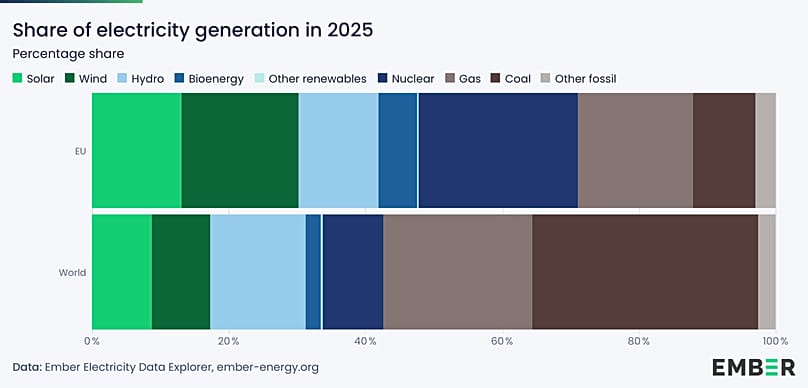
Last year, the European Union generated 652TWh of electricity from nuclear, representing 23.3 per cent of the bloc’s total electricity mix.
This was more than solar (13.1 per cent) and wind (17.1 per cent) – and put nuclear as the largest share of electricity generation for 2025.
More than half of this (392 TWh) was generated in France, which has the biggest nuclear output across the bloc. In fact, France generated more than two-thirds (68.8 per cent) of its electricity from nuclear last year.
This was followed by Spain (54.1 TWh), Sweden (46.7 TWh), Finland (32.8 TWh), Czechia (31.9 TWh), Belgium (24.1 TWh), Slovakia (19.3 TWh), Hungary (16.1 TWh), Bulgaria (14.8 TWh), Romania (10.2 TWh), Slovenia (5.83 TWh) and the Netherlands (3.99 TWh).
Because European power grids are interconnected, many countries that do not have active nuclear power plants can purchase electricity generated by nuclear power from other EU countries. In 2024, France was Europe’s biggest electricity exporter – and much of this was generated from nuclear power.
But not every EU country is onboard with running nuclear power plants, particularly following the Fukushima incident.
Back in 2020, Germany generated 170 TWh of electricity from nuclear – putting it as the second largest producer in the EU. This was the year the country first passed a legal plan to end nuclear power.
Germany officially stopped using nuclear power for electricity on April 15, 2023, when it shut down its three final operating reactors.
The move was described as a “grave strategic mistake” by Chancellor Friedrich Merz – and saw the country’s reliance on polluting fossil fuels temporarily increase to bridge the gap in energy supply.
However, a recent analysis from think-tank Energy Institute found that together wind and solar generated 44 per cent of Germany’s electricity in 2025, overtaking fossil fuels by one per cent.
At the same time, coal fell from supplying more than half of the country’s electricity in 2000 to just 21 per cent last year. Experts are now hopeful that Germany will be able to wean itself off coal completely before 2038.

No comments:
Post a Comment