How Would Transferring Law Enforcement Over Israeli Settlers To Police Deepen De Facto Annexation Of The West Bank? – Analysis
By Sherouk Zakaria
Key Takeaways:
- Defense Minister Katz on Aug. 17 ordered an IDF plan (two-week clock) to give Israeli police “civilian enforcement” over West Bank settlers while the army keeps authority over Palestinians—analysts call it another shift from temporary occupation command to permanent civilian institutions.
- Context cited: Smotrich’s 2023 Settlement Administration, Hillel Roth’s 2024 Civil Administration powers, Feb. 2026 land-purchase easing into Areas A/B; Yesh Din 2005–25 data that ~94% of settler-violence files close without indictment; OCHA 1,380+ settler incidents in 2026; Katz already ended Israeli administrative detention.
- Palestinian analysts (Mustafa, AbuMousa) and HRW/UN COI say uniforms matter less than impunity and Oslo’s Area C being absorbed; Israel rejects systematic enablement and blames a fringe—Qusra’s siege is the on-the-ground test.
Israel’s proposed transfer of law enforcement powers over settlers in the occupied West Bank from the military to the police would further embed Israeli civilian institutions in the territory, in a move analysts said marks another step toward de facto annexation.
Defense Minister Israel Katz said on Aug. 17 that he had instructed the Israeli Defense Forces to prepare a plan to hand over responsibility for “civilian enforcement” concerning Israeli settlers in the West Bank to the police. Under the proposal, to be drawn up within two weeks, the military would retain authority over Palestinians across the territory.
While analysts said the transfer would do little to curb settler violence against Palestinians, they noted its significance lies in shifting another function of West Bank governance from the military — whose authority as an occupying power is legally temporary — to Israel’s permanent civilian institutions.
Tahani Mustafa, political analyst and visiting fellow at the European Council on Foreign Relations, said the move was part of steady measures taken by Israel to entrench a new reality on the ground through institutional, legal, and structural means.
“This is basically a combination of all three mechanisms that Israel has been pursuing since Oct.7 war on Gaza,” Mustafa told Arab News.
Under international occupation law, the military commander acts as a temporary administrator of the occupied territory. Transferring this authority to permanent civilian institutions erodes that distinction, Mustafa said.
“By putting it into the hands of civil powers, you’re in effect making that now part of the territory of Israel,” she added.
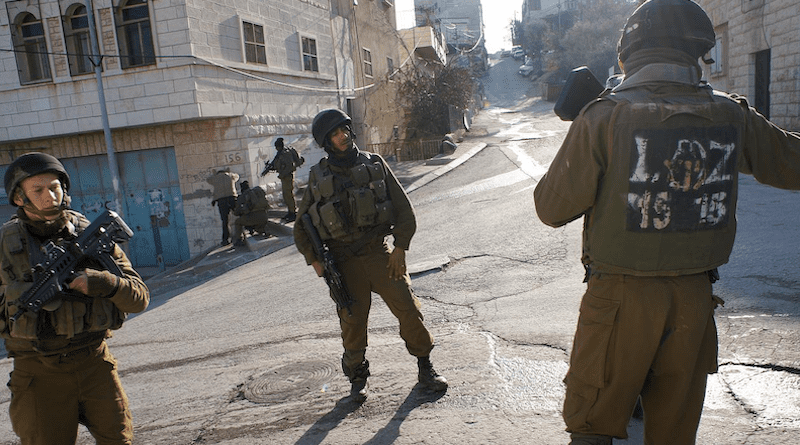
Katz’s announcement came amid a surge in settler violence and an ongoing siege by violent settlers of Palestinian residents in the village of Qusra, southeast of Nablus, despite the deployment of Israeli forces.
The proposed transfer would build on a series of measures taken by Prime Minister Benjamin Netanyahu’s government to reshape the administrative structure of the West Bank by shifting powers over planning, land and enforcement into Israel’s domestic governing institutions, alongside a rapid expansion of settlements since the October 7, 2023 war in Gaza.
In February 2023, far-right Finance Minister Bezalel Smotrich was given authority over key West Bank civilian affairs within the Defense Ministry, including settlement planning and land policy, through a newly created Settlement Administration.
The process deepened in May 2024, when powers previously held by the military-run Civil Administration over matters including planning, construction, land transactions, registration and government property were delegated to a civilian deputy, Hillel Roth.
In February, Israel’s security cabinet eased restrictions on Israeli land purchases and expanded Civil Administration enforcement into Areas A and B, both under Palestinian civil authority.
For Palestinians, the Israeli police takeover in the West Bank would do little to protect them from the soaring settler violence.
Jaser AbuMousa, a Palestinian political analyst and senior fellow at the Middle East Institute, said suspected Israeli offenders are already investigated by police and prosecuted in civilian courts rather than the military courts used for Palestinians.
“The Israeli police already have jurisdiction over Israeli citizens in the West Bank. Settlers have never been tried in military courts; they are investigated by police and prosecuted in Israeli civilian courts,” AbuMousa told Arab News.
The IDF hands Israeli suspects detained in the West Bank over to the police for interrogation or arrest, who often release the suspects without charge.
Israeli rights organization Yesh Din, which has tracked offenses from 2005 to 2025, found that 93.6 percent of investigations into settler violence against Palestinians closed without an indictment, and only about 3 percent ended in full or partial conviction.
Offenses committed by Israelis against Palestinians showed that the police failed in investigating 82 percent of these cases.
The Palestinian Wall and Settlement Resistance Commission warned that Israel’s proposal to transfer enforcement to the police could weaken the field response to settler attacks, especially if Israeli soldiers withdraw from the initial intervention duties without an immediate and effective police response.
Although the proposal has not yet come into force, the commission said the directive’s political impact began before implementation. “It sends a message about the priority given to protecting outposts,” the commission said.
Katz’s proposal comes after he ended the use of administrative detention against Israeli civilians in November 2024, scrapping a measure that allowed the military to detain suspects without charge or trial and remove them from the West Bank.
The decision widened an already stark disparity in how Israelis and Palestinians are subjected to detention in the West Bank. At the time Katz announced the policy, seven Israelis were being held in administrative detention, compared to none today.
In comparison, Israel was holding 3,198 Palestinians in administrative detention without charge or trial by August 2026, according to Israel Prison Service figures provided to Israeli rights group HaMoked.
Rights groups and Palestinians say the government’s policies have further emboldened settlers.
The existing legal system has produced a decades-long accountability gap, with human rights organizations and international bodies accusing Israeli authorities of actively facilitating and enabling settler violence and fostering a climate of impunity.
According to Yesh Din, in roughly half of the nearly 30 incidents of organized mass settler violence documented between 2023 and late 2025, soldiers or police were present, sometimes assisting the attacks directly or indirectly.
“This is because settler violence serves Israel’s objectives to expand its control over the occupied territory by terrorizing and exercising violence against Palestinians while maintaining a semblance of the rule of law,” Yesh Din wrote in its January report.
A UN Commission of Inquiry in June said settler violence functioned as a means of implementing Israeli state policy, with authorities and violent settlers working toward shared objectives including settlement expansion, annexation and the displacement of Palestinians from their land.
On Aug. 20, Human Rights Watch said settlers received “financial, material, and legal backing” from the Israeli state and that armed attacks frequently took place under the protection of Israeli forces.
Israel has repeatedly rejected accusations that it systematically enables settler violence, dismissing concerns as overblown and attributing the attacks to fringe groups of a few hundred youths.
For AbuMousa, therefore, the real question is the extent to which the move would further normalize an existing system.
“Katz is not introducing policing where there was none. He is proposing to move a responsibility that has been exercised badly from one Israeli body to another,” AbuMousa told Arab News.
“For a farmer in Qusra, the uniform in front of him matters less than the fact that nobody is stopping what is happening,” he added.
Experts also pointed to another blurring on the ground. The distinction between settlers and Israeli security forces has become difficult to draw on the ground.
A growing number of settlers became officers after attending hardline ideological pre-military academies.
Following the Oct. 7, 2023 war, thousands of settler reservists were mobilized into local defense units responsible for protecting settlements in the West Bank as most soldiers were sent to fight in Gaza and Lebanon.
According to Yesh Din, around 7,000 settlers were armed and mobilized into these units during the first months of the war.
While many are no longer on active reserve duty, the military has allowed them to keep their firearms and uniforms, according to Yesh Din, enabling soaring violence by settlers posing as soldiers.
Netanyahu’s government inaction was also widely seen as part of efforts to win over blocs of ultranationalist voters ahead of the election campaign in October.
Violence in the West Bank reached record levels this year as extremist settlers routinely enter Palestinian towns, clashing with villagers, burning homes, mosques and cars, and stealing livestock.
By late July, the UN Office for the Coordination of Humanitarian Affairs had documented more than 1,380 settler-related incidents in 2026 across more than 250 Palestinian communities — an average of about 6.6 incidents a day.
More than 2,300 had been displaced by settler attacks and related access restrictions this year, while 87 Palestinians have been killed by Israeli settlers and soldiers in the West Bank, according to the Palestinian Authority’s Health Ministry.
The growing settler violence and rapid settlement expansion drew regional and international condemnation.
Today, more than 500,000 Israelis live in settlements in the West Bank, which are illegal under international law, among 3 million Palestinians in the territory.
The longer-term significance of Katz’s proposal also lies in what it means for the framework established by the 1995 Oslo II agreement that divided the West Bank into Areas A, B and C.
Area A placed civil and internal security affairs under the Palestinian Authority; Area B placed civil affairs and Palestinian public order under the PA while Israel retained overriding security powers; and Area C remained under full Israeli civil and security control.
AbuMousa said that under Oslo, Israeli police are not meant to operate in Areas A and B without coordination, but the February 2026 cabinet decisions already pushed Civil Administration enforcement into both. “A permanent Israeli civilian police presence would go further,” he told Arab News.
The deeper problem was that Area C, which Oslo envisaged as temporary and negotiable, is being absorbed into permanent Israeli institutions.
“Thirty-one years on, Israel is registering land title there, opening it to direct purchase and now discussing permanent civilian policing,” he told Arab News.
“The PA continues administering people in Areas A and B while Israel consolidates control over the territory around them.
“That is not a step toward sovereignty. It is municipal administration inside somebody else’s planning regime.”

No comments:
Post a Comment