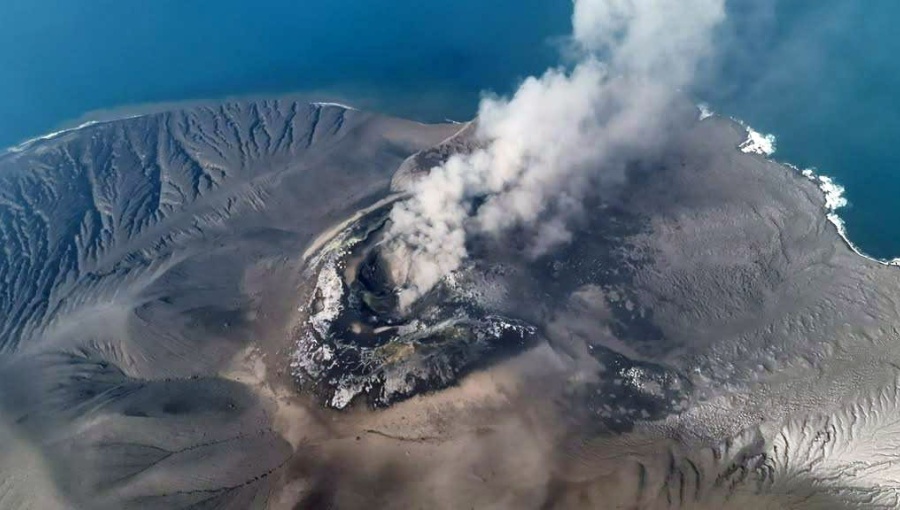
Heightened tectonic and volcanic activity have spread out across the Indonesian archipelago with four major volcanoes erupting within a single 24-hour window, CNN Indonesia reports. According to official bulletins issued by the Geological Agency of the Ministry of Energy and Mineral Resources (ESDM), PVMBG, and BMKG, as of September 6, at 9am local time, Mount Anak Krakatau, Mount Ibu, Mount Ili Lewotolok, and Mount Semeru have all experienced active eruptive pulses.
The eruptions span multiple island chains across the Pacific Ring of Fire, from the Sunda Strait and East Java to East Nusa Tenggara and North Maluku.
Among the active sites, Mount Anak Krakatau generated the broadest environmental impact. Based on Darwin Volcanic Ash Advisory Centre (VAAC) data and Himawari-9 satellite RGB imagery, its volcanic ash split into two main plumes: one drifting northeast-south across the country’s capital city of Jakarta, Banten, and West Java, and another moving southwest-northwest across Lampung, Bengkulu, and the Indian Ocean.
In East Java, Mount Semeru produced the highest eruption plume at 1,000 metres above its peak, prompting the Geological Agency to enforce a strict 13-kilometre exclusion zone along the Besuk Kobokan river corridor to protect against pyroclastic density currents and cold lava flows. In East Nusa Tenggara, Mount Ili Lewotolok registered a 600-metre ash column following four eruptive pulses over 48 hours, while Mount Ibu in North Maluku recorded a 400-meter plume.
To protect civil aviation and regional populations, geological monitoring agencies are routing real-time satellite imagery directly into flight advisories and localised evacuations.
The simultaneous eruptions across four provinces is also pushing Indonesia's disaster management system to prioritise the management of cross-province aviation safety via VAAC tracking. Monitoring volcanic ash dispersion via Darwin VAAC and BMKG Himawari-9 satellite imagery is helping to protect air corridors and coordinate necessary airport closures across Java, Sumatra, and Eastern Indonesia.
Restricting access along the 13-kilometer Besuk Kobokan sector is also aimed at protecting local residents from potential hot ash clouds and cold lava flows during rain events.
Flights suspended at Indonesia's main airport due to volcanic eruption
 Copyright Copyright 2026 The Associated Press. All rights reserved.
Mount Anak Krakatoa is an active volcano that sits in the Sunda Strait, between the islands of Java and Sumatra.
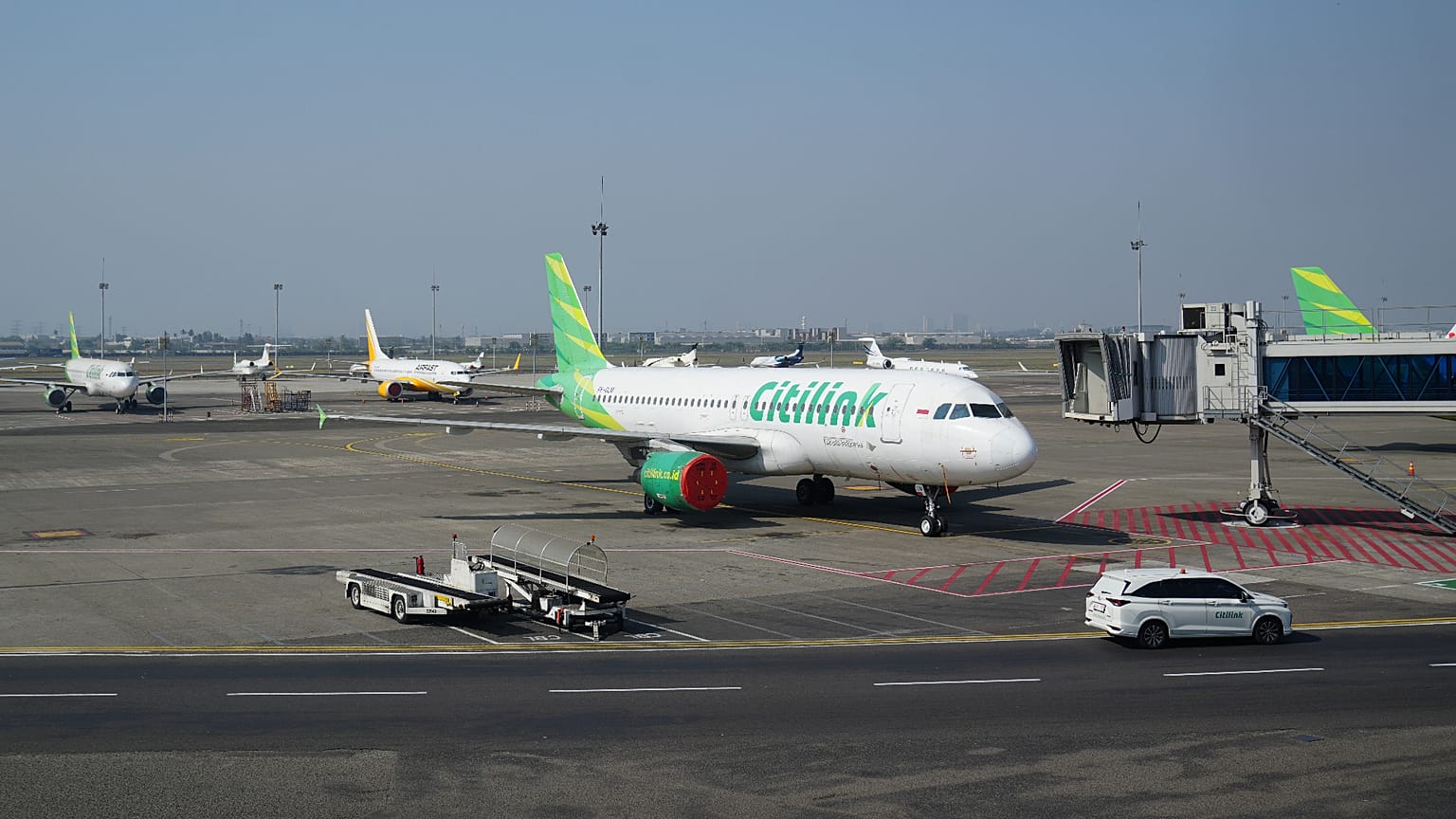
Indonesia's Soekarno–Hatta International Airport suspended flight operations on Sunday after an eruption of the Anak Krakatoa volcano.
Mount Anak Krakatoa began erupting on Saturday, producing a lava fountain and "booming sounds and tremors" that were reported by residents in several parts of the country, according to Indonesia's geology agency.
Authorities suspended operations at the airport from 1:30 am local time on Sunday morning after ash from the volcano was detected in the airspace surrounding the airport.
"The latest paper test…showed positive results indicating the spread of volcanic ash in the Soekarno-Hatta International Airport area, consequently the airport closure was extended until Sunday at 09:30 am (0230 GMT)," Indonesia's transport ministry said in a statement.
More than 22,000 passengers have been affected by the suspension, the ministry said, with 209 flights impacted, in particular to and from Singapore.
Routes to destinations including Doha, Sydney, and Kuala Lumpur have also been affected. At least 16 domestic flights to Bali were also cancelled, per local airport authorities.
Anak Krakatoa is an active volcano that sits in the Sunda Strait, between the islands of Java and Sumatra.
Indonesia's Soekarno–Hatta International Airport suspended flight operations on Sunday after an eruption of the Anak Krakatoa volcano.
Mount Anak Krakatoa began erupting on Saturday, producing a lava fountain and "booming sounds and tremors" that were reported by residents in several parts of the country, according to Indonesia's geology agency.
Authorities suspended operations at the airport from 1:30 am local time on Sunday morning after ash from the volcano was detected in the airspace surrounding the airport.
"The latest paper test…showed positive results indicating the spread of volcanic ash in the Soekarno-Hatta International Airport area, consequently the airport closure was extended until Sunday at 09:30 am (0230 GMT)," Indonesia's transport ministry said in a statement.
More than 22,000 passengers have been affected by the suspension, the ministry said, with 209 flights impacted, in particular to and from Singapore.
Routes to destinations including Doha, Sydney, and Kuala Lumpur have also been affected. At least 16 domestic flights to Bali were also cancelled, per local airport authorities.
Anak Krakatoa is an active volcano that sits in the Sunda Strait, between the islands of Java and Sumatra.

No comments:
Post a Comment