Brazil: Defeat neofascism in the runoff! Mobilize and vote for Lula!
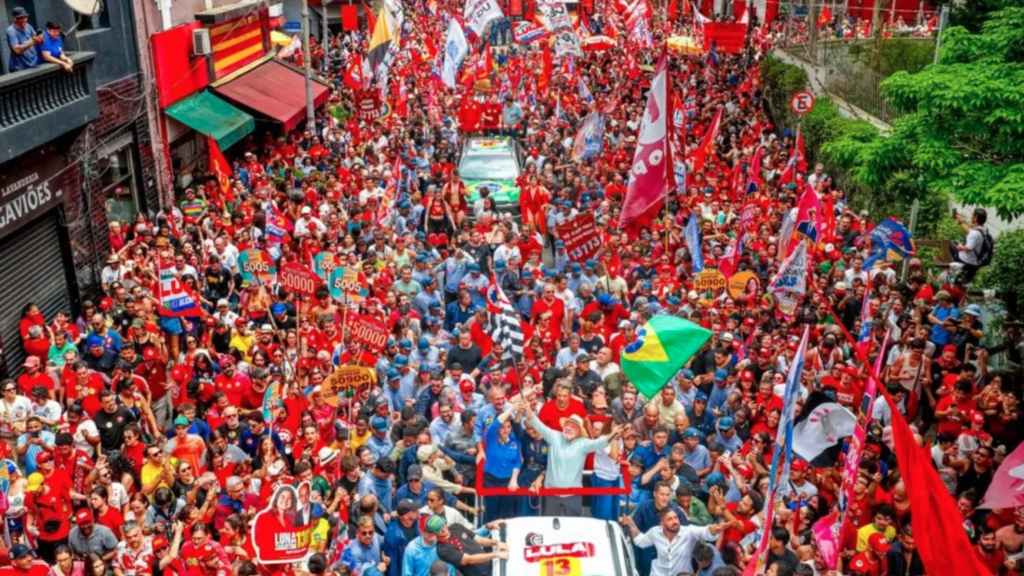
First published at Revista Movimento.
Lula can win the runoff and be elected president: we have less than 20 days to secure the votes we still need. It is also clear that the first-round results represented a significant victory for the far right across the country. The second-round battle will therefore be extremely tough, with Flávio Bolsonaro entering the race with an advantage. As we begin our preliminary analysis of the election results, we are not wasting any time. We are already rolling up our sleeves to organize and mobilize activists for this battle. Meetings, plenaries, marches, and other mobilization activities are already being organized for this week.
PSOL achieved a historic result, expanding and strengthening its parliamentary caucuses, ranking among the most-voted parties in several states and even placing five of its candidates among the most-voted legislators in the country. Despite this, the anti-democratic mechanisms of the current restrictive political system — which helped pave the way for Bolsonarism — threaten to be used against PSOL. The so-called electoral threshold was created primarily to prevent the anti-capitalist left from growing, and had there not been an alleged misuse of women’s quotas by the PSD (a right-wing party) in the state of Espírito Santo, or anti-democratic measures against PSOL in the state of Sergipe, the party would have secured the ninth state it needed to overcome these restrictions.
This was the only major contradiction in PSOL’s results. It is a difficulty bordering on the absurd, since it is clear that PSOL is a necessary party for the people. Restrictions imposed through measures such as the performance clause constitute an attack that can only be defended by opponents of democracy, and this issue is now the subject of political and legal struggle.
Over the coming weeks, our organizations will meet to produce a more in-depth assessment of the political process we are experiencing, the initial lessons emerging from the electoral process, and the overall dynamics. Here, we want to continue calling on MES and PSOL activists to engage in an unrelenting struggle to turn the election around, re-elect Lula, and prevent neofascism from coming to power. This is the time to fight; this is the time for political warfare.
Far-right victory on October 4
Flávio Bolsonaro and the far right were the big winners of the first round. The far-right bloc bringing together the Bolsonaro clan and the faction aligned with Tarcísio de Freitas (São Paulo’s governor) had a sweeping election victory. Contrary to all the polls, Flávio won 47% of the valid votes, compared with Lula’s 45%, a difference of just over two million votes. The elections for state governments and the Senate reflected this major victory as well.
Almost all of the major states were decided in the first round, with the PL (Bolsonaro’s party) electing five governors and Flávio’s supporters being elected in Rio Grande do Sul (Zucco), Santa Catarina (Jorginho), Paraná (Moro), Mato Grosso do Sul (Riedel), Mato Grosso (Pivetta), São Paulo (Tarcísio), Minas Gerais (Cleitinho), Pará (Dr. Daniel), Roraima (Arthur), and Rondônia (Marcos). Particularly noteworthy were Tarcísio’s and Cleitinho’s victories, as well as the surprise rise of Ruas in Rio, who could be declared the winner if Garotinho’s votes are annulled.
The PL won 19 of the 54 Senate seats up for election, making it the largest bloc in the chamber. It also achieved a historic result in Congress, securing the largest-ever delegation elected to the Chamber of Deputies, with 121 representatives. These are striking numbers — truly a political blowout.
The initial electoral assessment already points to an unfavorable shift in the balance of forces.
Flávio Bolsonaro and the far right won “à la Colombian.” In other words, they outperformed the scattered polling by several points, demonstrating their ability to mobilize voters and establishing a new balance of forces. They inflicted multiple defeats on the political camp built around Lula, in stark contrast to the overly optimistic assessments of PT leaders, some of whom had even anticipated a first-round victory.
The campaign unfolded in a relatively “cool” political climate until the Supreme Court (STF) crisis erupted, weakening the government and further amplifying the allegations against the political establishment. The exposure of Alexandre de Moraes and the STF neutralized the defensive position Flávio had adopted following the initial revelations about the Dark Horse case (a corruption scandal involving involving Bolsonaro’s family), leaving the “Vorcaro” issue as a neutral factor, increasingly turning against the “New Republic.” In the home stretch, a package of political measures was introduced. This was accompanied by greater mobilization among activists and strong street rallies organized by the campaign and by Lula himself, creating a stronger visible presence of voters and supporters in the streets. Unlike on previous occasions, Bolsonarism kept a lower profile and relied on a “silent majority,” securing a solid electoral majority by winning over sections of the Centrão and patronage-oriented parties. The presence of right-wing candidates failed to halt Flávio’s momentum.
The PT maintained its dominance in the Northeast, although by a narrower margin than in previous elections, winning in the three states where it currently holds the governorship: Piauí, Ceará, and Bahia. In Rio Grande do Norte, which is also governed by the PT, the party’s candidate, Cadu, performed strongly and made it to the second round with a chance of winning. In Amapá and Pará, the government-backed candidates were defeated.
Lula was unable to reverse his government’s unpopularity with the limited measures he introduced. The media — even largely non-Bolsonarist outlets such as Globo, Folha, and Estadão — adopted an increasingly confrontational stance toward the government, particularly after the crisis surrounding the Globo televisional debate. They amplified criticism calling for a more severe fiscal adjustment and for placing a future government under greater constraint.
To understand the result, we need to understand how the erosion of Lula’s support has fueled a resilient far right, even when it has sometimes been on the defensive. We cannot forget that Jair is in prison and that Flávio failed to unite the business community and its political parties. Lula’s defeat and that of the political camp around him stem from both broader and more specific factors. At the broader level, we can speak of a threefold exhaustion: (I) the exhaustion of the New Republic regime, with the STF crisis representing a particularly grotesque manifestation of it; (II) the exhaustion of Lula himself (and, by extension, his party) as a political force — a kind of “material fatigue”; and (III) the strategy adopted by the PT since the New Republic, based on the “institutional” resolution of class conflicts.
The New Republic has seen its last pillars shaken. The STF, which had played a progressive role in confronting the anti-democratic actions surrounding January 8 and the interference of Trump and of the Centrão, which had strengthened its position through congressional amendments, ultimately became the target of a protest vote amid growing discontent, and was captured by the far right.
Lula, the greatest statesman in Brazil’s history, a man who embodies the country’s recent political history in his own person, has been weakened by the lack of prospects and has been unable to regain the initiative and build a movement strong enough to stop the far right.
Finally, the strategy of class conciliation has created a dependence on a corrupt STF and on the Centrão (the opportunistic and right-wing sector of Congress), as well as on the government’s own austerity program, led by Galípolo (the president of the Central Bank), which has been unable to meet popular demands. In other words, most of the popular vote for Flávio and his allies — the greatest asset of anti-PT sentiment — reflects rejection of the government and its inability to respond to the deterioration of people’s living conditions, as well as rejection of the political system as a whole, which is seen as corrupt and which Flávio encourages through his hypocritical rhetoric against the “system.” Lula governs within the limits imposed by his alliances, generating popular discontent that, in turn, fuels the far-right opposition and strengthens the Centrão’s and sections of the business elite’s influence over the government, creating a vicious cycle that repeats itself as tragedy.
Flávio established himself as the Clan’s direct choice, bringing together the social coalition that brought his father to power in 2018: from sections of the business elite and the financial sector, the powerful ranks of agribusiness, major extractive and mining corporations, and technology companies, to sections of the military and civilian security forces, conservative sectors of the state apparatus, and a broad base of evangelical sectors.
The presence of technology companies is a defining element of contemporary politics. Meta, Starlink, and other so-called Big Tech companies have acted — and continue to act — to defeat Lula and elect Flávio. Peter Thiel has been following developments in Brazil from Buenos Aires and was in São Paulo a few months ago. According to the text, this is an organized effort underpinning a “new type of party” — what researchers at Cebrap have described as a “Bolsonarist digital party.”
Trump has mobilized, and Brazil’s political struggle is part of a broader global struggle. The closure of embassies was one of the measures, but the truth, according to the text, is that Trump has spent the past year actively working to remove Lula from power through the elections. He has used Milei, but there are other channels as well, such as funding from BlackBridge, described here as a kind of billionaire “combat” think tank. Pressure on Moraes and Pix, Trump, and Zionism are racing against the clock. The “conquest of Brasília” is essential to this project, given the uncertain outlook for the next U.S. elections and the weakening of far-right governments in the region. It could have a domino effect: Chile, Venezuela, Peru, Colombia, and now Brazil.
It is important to understand that this process runs deeper, because Flávio and the far right have a more comprehensive strategy. Their aim is not merely to take control of the government, but to pursue a strategy of “revolution” that is, in reality, a counterrevolution.
Elect senators and surround the STF, concentrate power in the hands of the Clan, grant Jair amnesty, and advance authoritarian measures; then build a country according to their strategy and program and hand it over to Trump as a colony. According to the text, this is the action plan of this new government.
Nunes Marques (a Supreme Court justice allied with Bolsonaro ) has already put Bolsonaro’s amnesty on the agenda, while the market has also sent signals, with euphoria in the stock market and financial circles following last Sunday’s results.
The specific factors explaining the process include serious political-strategic mistakes by the PT, as well as its mistaken assessment of the possibility of winning in the first round. They also include the “broad-front” strategy of backing weak candidates, which led to disasters in states such as Rio Grande do Sul and São Paulo, as well as the delay in choosing a candidate in Minas Gerais, among other factors.
Nevertheless, in our assessment, there is a real polarization, with the left also among the most-voted political forces in the country and in several states. This is a battle with a generational dimension: Nikolas and Pavanato versus Érika Hilton and Sâmia Bomfim; the case of the young Minas Gerais candidate Ana Elise, who was among the PT’s top vote-getters; and Fábio Félix, the most-voted candidate in the Federal District. These are ideological examples that stand in opposition to the conservative vote of the so-called “red pills.”
There is a living political energy, even though it is tempered by anxiety and disorientation among the movement’s major leaderships. It can be seen, for example, in the state capitals where Lula won — São Paulo and Porto Alegre — as well as in the final campaign rallies and in the growing recognition of the neofascist implications of a new government led by the Clan, together with a certain awareness of the limitations of the Lulist strategy.
PSOL and the fight against the electoral threshold
PSOL must fight against the electoral threshold. This was the contradiction at the heart of the election results: the party has just emerged from the elections with successful candidates, reflecting the aspirations of sections of the population for political renewal and greater radicalism, yet it now faces a situation in which restrictive measures could be imposed on the party’s operations, including the loss of a number of political rights for failing to clear the electoral threshold. In last week’s editorial, we warned that this was a challenge every bit as important as the struggle to elect Lula and our candidates:
The second, no less important task, is to convince voters to vote for PSOL candidates for the Chamber of Deputies and Senate. PSOL needs to overcome the electoral threshold, one of the many anti-democratic mechanisms of the political system.
After the PSOL/Rede federation ticket in the state of Sergipe was disqualified on what the text describes as a legalistic pretext, the possibility of securing a ninth state came to rest on three or four potential states, with Santa Catarina considered the most likely by PSOL’s leadership. The unfavorable result left the party dependent on Espírito Santo, where the initial count put PSOL just 185 votes short. What remains at stake is that several cases of alleged fraud involving the gender quota by patronage-oriented parties in the state have since been uncovered. This could lead to a recount that would put PSOL at 1.50% of the vote for the Chamber of Deputies in Espírito Santo. A similar case was successfully decided years ago, giving PSOL an additional seat in the Belém City Council after a recount following the annulment of a ticket that had fraudulently circumvented the mandatory quota for women.
We are fighting with all our strength to prevent this measure from being imposed on PSOL, which represents a political project fundamentally opposed to neofascism and enjoys the solidarity and support of millions of Brazilians.
Our Party has grown in parliamentary terms, with the PSOL/Rede Federation electing 15 federal deputies, winning representation for the first time in four of the country’s five regions. We also outperformed the PT federation in the state of São Paulo, the birthplace of Lulism and the country’s main economic hub. The party has grown with a feminist and anti-racist profile, presenting itself as a coherent and combative alternative, confronting reactionary forces and placing its bets on collective struggle. It has also made gains in state legislatures, expanding its caucuses in several states.
In the face of such a profound contradiction, we are calling for a major campaign among Brazilian society, in light of the evidence of fraud in Espírito Santo, so that PSOL can retain its full political rights, including its television and radio airtime and its ability to operate with full rights in the National Congress. We will strengthen and affirm PSOL as a Necessary Party, committed to the major causes at the heart of the Brazilian people’s struggles.
The struggle of today shapes the future: Our role as MES/PSOL
From this moment on, we call on all activists and supporters to become even more engaged in the runoff. We need to expand and channel this social energy into a permanent collective mobilization to win over the votes separating Lula from Flávio, grounded in the political awareness of working people. The involvement of universities and the convening of broad plenaries are examples that should be followed.
Our message is simple and should be directed toward people in the peripheries and those who voted neither for Lula nor for Flávio — or who simply did not vote: it is all or nothing, yes or no, when it comes to ending the 6×1 work schedule; defending women’s lives; preventing Brazil from becoming a protectorate of Trump; preventing the Brazilian economy from collapsing and forcing us back into the breadline; deciding who can cut or abolish Bolsa Família; and confronting those who want to shut down unions and surround universities. We must also find a way to reach the hearts and minds of the millions of Brazilians trapped in debt and held hostage by high interest rates and financial capital, while addressing among young people the issues of education, democratic freedoms, and the climate emergency.
And we make this call with our heads held high and proud of MES’s performance. Our organization has grown because we have combined political radicalism with broad influence. We elected three federal deputies: Sâmia, Fábio, and Fernanda. Sâmia was a true phenomenon, ranking among the five most-voted female deputies in Brazil, with nearly 600,000 votes. Fernanda Melchionna increased her vote total and ranked among the most-voted candidates in Rio Grande do Sul, with 276,000 votes, despite the far-right electoral wave that swept through the state. Fábio Felix was the most-voted candidate in the Federal District, and, proportionally, one of the most-voted candidates in the country.
We re-elected three state deputies, including Luciana Genro and Camila Valadão, who ranked among the most-voted candidates in Rio Grande do Sul and Espírito Santo, respectively. Monica and the Pretas surpassed all their previous vote totals, coming close to 200,000 votes.
We also suffered some setbacks, such as the case of Josemar, a combative deputy from Rio de Janeiro who was not re-elected, despite increasing his vote total and surpassing the 40,000-vote mark. PSOL fell just a few votes short of winning a second seat in Rio Grande do Sul, where Roberto Robaina was the Party’s second-most-voted candidate.
We elected two new female deputies: Mariana Conti, with more than 124,000 votes, internationally recognized for her role in the Flotilla, expanding MES’s collective caucus in São Paulo; and Keka Bagno, the first Black left-wing woman to hold a seat in the District Legislative Chamber, and a leader of MES and PSOL.
Although they were not elected, Vivi and Professora Ângela received significant vote totals in the states of Pará and Paraná, respectively, establishing themselves as key political figures for the Party. We are also proud of the dozens of comrades who ran for the Chamber of Deputies and the Senate under the banner of MES and PSOL, as well as the comrades we supported and whose campaigns we actively participated in.
Polarization will continue and intensify, as it is doing around the world. Trump may lose the next legislative elections in the United States; new youth mobilizations are shaking Spain and France; the extremes are gaining ground, with neofascists once again becoming a mass political force in Germany through the AfD, while Berlin responds with Die Linke’s victory. In the United States, the DSA is confronting Trump and growing as a mass political force. In Peru under Keiko Fujimori, left-wing leader Verónika Mendoza has just been elected governor of Cusco. And here in Brazil, the hope placed in PSOL expresses the desire for a renewed anti-capitalist left.
We will fight on the front line against the neofascist Flávio, Trump’s auxiliary force. This is the battle of the coming days, placing our bets on strategic debate and the struggle of ideas while reorganizing militant forces for what lies ahead. The future is decided now.
Brazil: Lula and the race for a turnaround
First published in Portuguese at Outras Palavras. Translation by International Viewpoint.
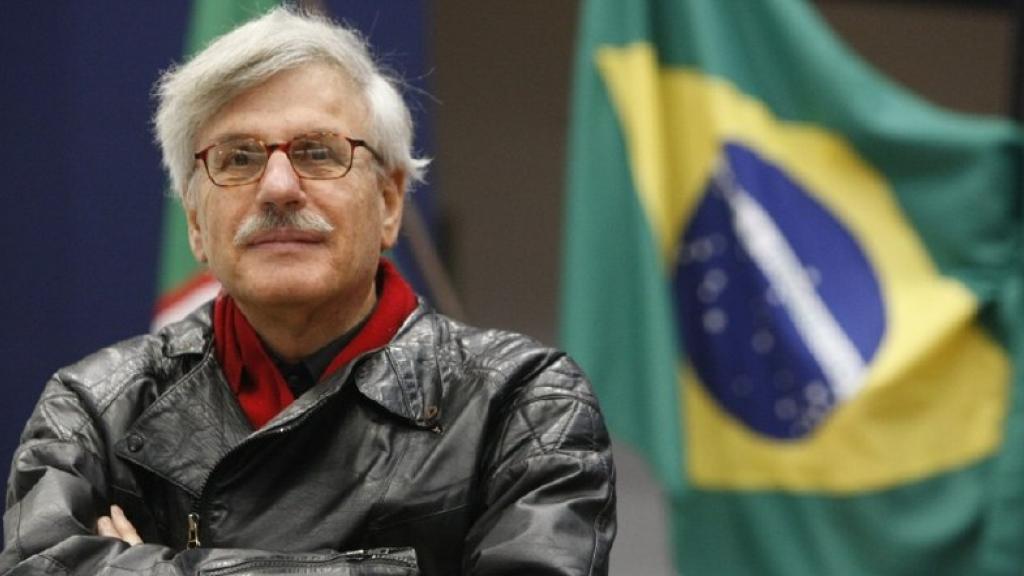
Michael Löwy answered these questions in writing four days before the first round. When he wrote that we need to buy time, nobody yet knew how Sunday night would end. It ended with Flávio Bolsonaro at 47.03% of the valid votes, 56,104,503 voters, and Lula at 45.16%, 53,879,538. A little over two million votes separate the two, and three weeks separate the country from October 25. In the Congress that takes office in 2027, the PL will have the largest caucus any single party has had since 1988, with 121 deputies, and it elected nineteen senators at once. The PSOL/Rede federation fell 185 votes short of clearing the electoral threshold in Espírito Santo, 1.49% where it needed 1.5%, and lost its share of the party fund and its television airtime. Falling with it were the PDT, Avante and Solidariedade. Of the ten parties and federations that cleared the threshold, only one is on the left.
Löwy is eighty-eight years old, sixty-five of them lived outside Brazil. Emeritus research director at the CNRS and director of studies at the École des Hautes Études en Sciences Sociales, he has been publishing since 1970, when The Theory of Revolution in the Young Marx appeared. Then came The Adventures of Karl Marx Against Baron Münchhausen, on Marxism and positivism in the sociology of knowledge, and Redemption and Utopia, where Jewish messianism and libertarian utopia appear bound by the same elective affinity. With Robert Sayre he wrote Romanticism Against the Tide of Modernity, the book that separated the romanticism that wants the past as destiny from the kind that steals from the past the spark to ignite the future. In The War of the Gods he showed that the PT, the CUT and the MST were born, to a decisive extent, in the ecclesial base communities. He read surrealism in Morning Star, read Kafka in Franz Kafka, Defiant Dreamer, read Weber in The Iron Cage, read Latin America in Marxism and Liberation Theology. In 2001 he signed, with Joel Kovel, the manifesto that founded ecosocialism.1 And in 2005 he published Fire Alarm: Reading Walter Benjamin’s “On the Concept of History”, the reading of the theses from which comes the image that opens this conversation. Revolution is not the locomotive; it is the act of pulling the brake.
In the answers that follow, he rejects the brake applied to a ballot, calls what stands on the other side a false messiah, and recalls a proper name. Luiz Eduardo Merlino, a journalist, twenty-three years old, killed under torture in 1971 on the orders of Colonel Ustra, a friend of his. An amnesty would run over that name.
On January 14, 1919, one day before she was murdered, Rosa Luxemburg wrote that order reigned in Berlin and that this order was built on sand. The revolution would rise again and announce, to the horror of the victors, what it had always said of itself. I was, I am, I shall be. Between 1.49% and 1.5% there were one hundred and eighty-five votes in Espírito Santo. Between yesterday and the runoff there are three weeks. None of these distances is made of stone.
Michael Löwy was interviewed by Thiago Gama on October 5.
I begin with the question you must be tired of seeing badly formulated. In Fire Alarm, you show that Benjamin inverts Marx’s metaphor. Revolution is not the locomotive of history; it is the act of pulling the emergency brake. In Brazil, the image has become common currency for describing catastrophe and almost never for describing an election. So I ask, with all the risk that entails: is a vote for Lula on October 25 an emergency brake in the Benjaminian sense, or is it exactly the opposite, boarding the locomotive and asking it to go more slowly? And does the concept survive being applied to a ballot, or does applying it there dissolve it?
Walter Benjamin, the emergency brake is a revolution, not a simple presidential election. In Brazil’s case, revolution would be a rupture with the foundations of modern industrial capitalist civilization and the beginning of a process of radical change whose horizon would be a new civilization, which I call ecosocialist, based on solidarity, social justice and respect for nature.
A vote for Lula is obviously something far more modest, yet extremely important, because it allows the driver of the locomotive to be someone willing to slow down this suicide train. We need to buy time! Slowing down is essential. The other candidate, Flávio Bolsonaro, is clearly determined to throw more wood on the fire or, if you prefer, more coal into the locomotive’s furnace. From the standpoint of preserving the Amazon rainforest, a decisive issue not only for the peoples of the forest but for all of humanity, Lula, unlike his opponent, tries to limit the damage. That is not the case, unfortunately, with the oil of the Foz do Amazonas, which Lula is willing to exploit.
In The War of the Gods you established something that Brazilian political science still digests poorly: that the PT, the CUT and the MST were born, to a decisive extent, inside the Church, in the ecclesial base communities, and not in defiance of it. The Lula of 1980 came from the CEBs and from the ABC region. The Lula of 2026 negotiates with the evangelical caucus. What is left of that origin within the party, and does a fourth term still owe anything to it, or has the genealogy become mere history?
The legacy of what I would call liberation Christianity, linked to the Church but not necessarily within the Church, still exists in the PT and in Lula’s government. But it is far more important in the social movements, in the struggles of residents, peasants, Indigenous peoples, ecologists. The Landless Workers’ Movement, for example. Its founders were pastoral agents of the Pastoral Land Commission. From the beginning the MST defined itself as a secular movement, with no religious affiliation, but its political culture and its rituals, such as the Movement’s famous “mística,” have deep roots in liberation Christianity. Other movements, such as the Homeless Workers’ Movement, have many members who are Christians, Catholic or even evangelical. The base communities no longer have the same impact they had in the 1960s or 1970s, but they are still quite present in the popular movements of the peripheral neighborhoods. Besides the PT, other left parties, such as the PSOL, have a significant presence of liberation Christians among their activists.
You are one of the founders of ecosocialism, co-author of the manifesto with Joel Kovel. The Lula government reduced deforestation and, at the same time, pushed the oil frontier toward the Equatorial Margin. In strictly ecosocialist terms, not electoral ones, is this government part of the solution or a more presentable version of the problem? And here comes the discomfort I don’t know how to resolve. Does ecosocialist criticism have the right to be voiced in the week of a runoff, or is it precisely this purism that has historically done the right a favor?
Lula’s program is obviously not ecosocialist, and it has serious social and ecological limits. Oil exploration in the Equatorial Margin, a disaster for the forest, for the local population and for humanity if that oil is extracted and burned, is only the most obvious example. Ecosocialist criticism of Lula is therefore exercised in the first round, in the runoff and after the elections.
That said, we ecosocialists know that a Lula government is infinitely preferable to a government of the Bolsonaro clique, which is ecofascist in character and totally opposed to any social or ecological measure. Such a government would be directly ecocidal, and a catastrophe for Brazil, Latin America and the planet. It would be a dramatic regression in terms of democracy, Indigenous rights, women’s rights, the environment, education, culture, society. It would hand Brazil over to the destructive rage of Donald Trump’s United States, the number one enemy of the peoples of Latin America and of nature. Therefore, without any hesitation, ecosocialists will vote for Lula da Silva, who, with all his limits, is the only alternative to the Bolsonarist catastrophe.
In Romanticism Against the Tide of Modernity, you and Robert Sayre establish that romanticism forks. There is the restorative way out, which wants the past as destiny, and the revolutionary way out, which steals from the past the spark to ignite the future. Bolsonarism seems to me anticapitalist romanticism in the first key: nostalgia for a lost order, the family, the nation, the barracks, all against modernity without ever touching capital. If the far right has occupied the romantic critique of modernity, what is left for the left? Is there revolutionary romanticism available in the Brazil of 2026, or has the left been left with the role you always feared, that of the party of modernization and administration? And, in this typology, what is a fourth Lula term?
Look, romanticism, as Sayre and I defined it in Romanticism Against the Tide of Modernity, is a revolt against capitalism in the name of the values of a pre-capitalist past, real or imaginary. Bolsonarism does not fit this definition. It does not criticize capitalism, quite the opposite, and the past it refers to, the military dictatorship, is merely a more authoritarian and brutal form of the capitalist system itself. It is, as in the case of fascism, what the historian Jeffrey Herf called reactionary modernism. It identifies with capitalism, with industry and with modern technology, today artificial intelligence, and rejects only the legacy of the French Revolution: liberty, equality, fraternity.
Who are the representatives of revolutionary romanticism in Brazil? Those communists, ecologists, ecosocialists and Indigenous-rights advocates who reject capitalist civilization and believe we have much to learn from the way of life of Brazil’s Indigenous peoples. We cannot go back to living in the forest, certainly, but we should study with interest and respect the critique that Indigenous peoples make of the world of commodities in which we live, and the relationship of harmony they maintain with the environment, the trees, the animals, the rivers.
The governing left, the fourth Lula term, belong more to what I would call progressive modernism. Without questioning the capitalist system itself, they seek progressive social reforms. It is a kind of social liberalism. It does not break with the neoliberal model, but tries to do everything possible for the disadvantaged, the poor, the excluded, on the condition of not touching the privileges of the oligarchs. The limits of this policy are evident, but it cannot be denied that it lifted millions of Brazilians out of poverty and carried out important reforms, such as the end of the 6×1 work schedule and the income tax exemption for the poorest.
You edited and defended Mariátegui, and his phrase that Latin American socialism can be neither imitation nor copy, that it has to be heroic creation. What, in the Lulism of 2026, is creation and what is imitation? I link this question to Redemption and Utopia, where you showed the elective affinity between Jewish messianism and libertarian utopia, and the Benjaminian idea of a weak messianic power entrusted to each generation. Does that force still exist in Brazilian politics, or has the messianic migrated entirely to the other side?
When it emerged in 1979, under the leadership of the ABC union leader Lula da Silva, the Workers’ Party was a true heroic creation. Heroic because it immediately confronted the military regime in the great workers’ strikes of those years. Creation because it is neither imitation nor copy, but something new: a workers’ party that brings together the working class, the base communities, left-wing intellectuals, veterans of the class struggle such as Mário Pedrosa and Apolônio de Carvalho, and Marxist, Trotskyist and Maoist groups. A party that manages to integrate all these components into a democratic organization, rooted in grassroots committees. And that would adopt, in 1990, after the fall of the Wall, a socialist, democratic, explicitly anticapitalist program.
Obviously, the Lulism of 2026 is very far from that first version of the PT. It is merely a variant of the so-called progressive governments of Latin America, which manage to carry out some significant reforms but have lost their subversive, anti-systemic dynamic. In Lula’s case, the limits are even more evident, partly owing to the control of Congress by the corrupt and reactionary right.
That is exactly where I am going now. Dark Horse, the biopic of a convicted and imprisoned Jair Bolsonaro, financed with money linked to Banco Master, a bank liquidated for insolvency, has Jim Caviezel in his role, the actor who played Christ for Mel Gibson. You have spent your life studying the elective affinity between religion and emancipation. Here there seems to be the exact opposite: messianism without utopia, redemption without emancipation, the face of Christ pasted onto a leader who attempted a coup. Does this have a name in your work? Is it the aestheticization of politics that Benjamin spoke of, or is it a new figure, which the categories of Redemption and Utopia do not reach, because there the messianic still pointed toward someone’s liberation?
For Walter Benjamin, fascism is a false messianism, and its leaders are figures of the Antichrist, a miserable caricature of liberating messianism. The history of religions, and of politics, is full of false messiahs who present themselves as saviors and redeemers and are nothing but tyrants in the service of the ruling elites. Such is the case of the Jair in question, regarded as a messiah or myth by his admirers, but who is nothing but an obscure horse, a dark horse, mounted by the Brazilian oligarchy. It is worse than the aestheticization of politics that Benjamin referred to, in another context. It is a mythification, a mystification of politics. Jair is far from the only one. His great friend and ally, Donald Trump, is another false messiah, who has the gall to have himself represented, in an image created by artificial intelligence, as a kind of new Christ. Some Roman emperors, such as Domitian, already demanded to be worshipped as dominus et deus. It is an old story.
In 2021, you reviewed in En attendant Nadeau the book by Leneide Duarte-Plon and Clarisse Meireles on Frei Tito de Alencar, the Dominican friar kidnapped and tortured by the dictatorship, exiled in France, dead in 1974. Fifty-two years later, a presidential candidate campaigns for the freedom of a man convicted of attempting a coup, and Congress debates an amnesty for the coup plotters. An important part of the Brazilian religious field asks for this amnesty. You, who worked on the Benjaminian thesis that not even the dead will be safe if the enemy wins, what do you say about an election in which amnesty is a platform? What does an amnesty do to Frei Tito?
An amnesty for the 2022 coup plotters would be a direct attack on Brazilian democracy and a green light for future military coup attempts. The same goes for an amnesty for Jair Bolsonaro, with an aggravating factor. He never ceased to express his admiration for the military dictatorship and, in particular, for the torturer Colonel Ustra. His amnesty would be an insult to the memory not only of Frei Tito but of all the victims of the military dictatorship, the thousands who were tortured and the hundreds murdered by the barracks regime. Among them a friend of mine, Luiz Eduardo Merlino, a twenty-three-year-old journalist, killed under torture on the orders of Colonel Ustra. As Walter Benjamin said, if fascism wins, not even our dead will be safe.
Thesis VIII says that the tradition of the oppressed teaches us that the state of exception in which we live is the rule. I apply it to the concrete: the hundreds of thousands dead in the pandemic, January 8, the coup plot that has been tried. If Flávio Bolsonaro wins on October 25, is that a rupture, or the continuation of a normality that Brazil’s oppressed have always known, and the astonishment is only ours, of those of us who thought we were outside it? And, of your eighty-eight years, sixty-five of them looking at Brazil from the outside, is there a Brazilian specificity here, or is it one more chapter of the wave you have been describing since the nineties?
In the history of the class struggle, the rule is domination by the elites. The exception is the revolution of the oppressed: the revolt of the slaves with Spartacus, that of the peasant serfs with Thomas Müntzer, that of the proletarians in the Paris Commune and in the October Revolution. But there are differences within that domination. Fascism is the most violent, barbaric and destructive form of the power of the oligarchies. It is not an exception; it is the most brutal and inhuman form of the rule. That is why we must do everything possible so that the nightmare that was the father’s government does not return with the son. Hoping that one day, with the ecosocialist revolution, we can establish what Walter Benjamin called the true state of exception, the emancipation of the oppressed and the exploited.
The neofascist wave is not a Brazilian specificity. It is planetary. It already governs the leading imperialist power, with Trump, and the most populous country on the planet, Modi’s India, as well as several countries in Latin America, and it already threatens several countries in Europe. If Brazil manages to stop this catastrophic wave in the October elections, it will be an encouraging sign for the whole world. Otherwise, the whole of the American continent, with the exception of Mexico and Canada, will be under the neofascist boot.
For me, Trump, Bolsonaro and Milei are manifestations of neofascism. It is not a repetition of the Nazi-fascism of the 1930s. We do not have totalitarian states, concentration camps, uniformed shock troops, national-corporatist economic policies. The main difference is economic policy, because neofascism is fanatically neoliberal. But it has in common with classical fascism racism, xenophobia, hatred of communism and of any form of the left, the cult of the Leader and authoritarianism.
- 1
In 2001, Kovel and Michael Löwy, released An Ecosocialist Manifesto. which set out to define eco-socialism.
Showdown in Brazil
First published at The Call.
More than one hundred million people will go to the polls in October to choose Brazil’s next president and determine control of that country’s Congress. It’s a battle with eerie similarities to the 2024 presidential election here: a candidate of the far right, mounting a right-wing “populist” campaign and marred by corruption charges, is attempting a comeback for the right after its defeat in the previous election. The comparison extends further too: the outgoing right-wing administration of Jair Bolsonaro tried to carry out a (very botched) coup after losing in 2022. This time, Jair Bolsonaro won’t be on the ballot — unlike in the U.S., Brazil’s Supreme Court has forbidden the coup-plotter to run for reelection, and he currently lives in exile (in Miami, naturally) — but he has handed off the role of standard-bearer of the right to his son, Flávio.
Of course, the hope of the left in Brazil and here is that the similarities will end there, and that Bolsonaro and his gang will go down to defeat. Facing off against Bolsonaro is Lula from the Workers Party (the Partido dos Trabalhadores, the PT), as he runs for his fourth term. Lula has the support of most other parties on the left, the major unions, and social movements. Among his supporters are the activists of the Socialism and Liberty Party (Partido Socialismo e Liberdade, or PSOL).
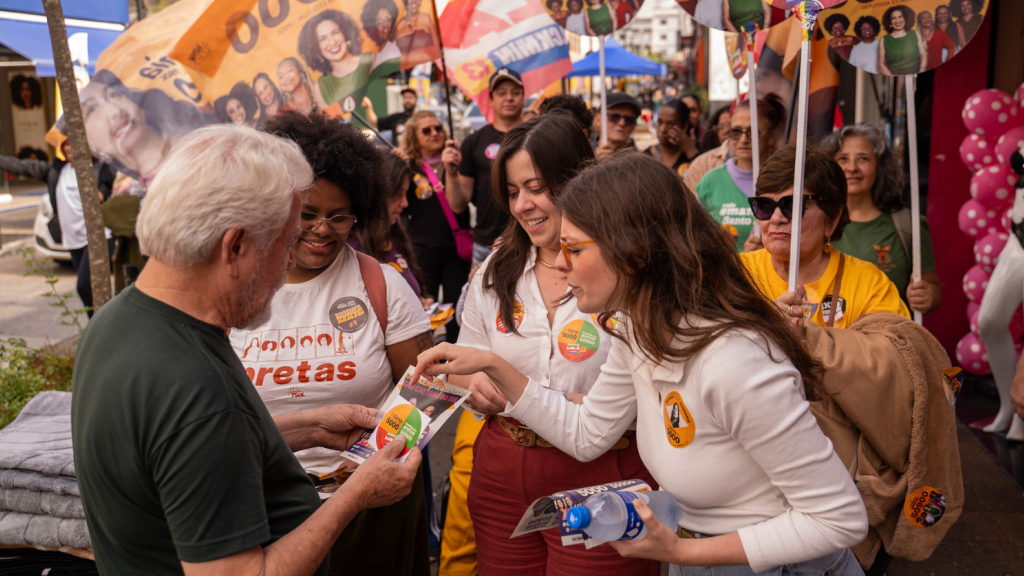
In this interview with two activists from PSOL, Pedro Fuentes and Peter B., they give us the lay of the land. They also share how their tendency within PSOL, the Socialist Left Movement (Movimento Esquerda Socialista, MES), is growing. Pedro Fuentes is a part of the national leadership of the Brazilian socialist party PSOL and the Socialist Left Movement (MES). Peter B. is a political activist in PSOL and MES.
The election is happening as Donald Trump and Marco Rubio are pushing forward a much more aggressive attempt to place Latin America under U.S. domination. How is this shaping the election campaign?
Pedro Fuentes: There is a clear rise in political aggressiveness in the Trump era. Trump feels strengthened after tightening control over Venezuela and following recent electoral victories for the right in Colombia, Peru, and Argentina with Javier Milei. Yet this assertiveness is undermined by his growing geopolitical weakness and his domestic weakness in the United States.
Trump’s foreign policy has faced serious setbacks: he failed to impose his will in the Middle East despite the devastating war in Gaza, he has become bogged down in the war on Iran, he has lost influence among Arab countries, and all of his actions in the region have contributed to rising oil prices and global economic instability. He has had to retreat from an initially aggressive posture against China, while Canada is moving closer to the European Union.
Unable to secure victories elsewhere, the Trump administration has intensified direct political and economic intervention in the region south of the Rio Grande — its “Western Hemisphere.” Washington seeks to reaffirm its ability to impose an authoritarian, neocolonial order by curbing China’s influence and pressuring governments that resist direct control, including Mexico, Canada, and Brazil.
In this context, Brazil’s election becomes strategically significant. The vote has the feel of a referendum: a Bolsonaro victory would be a vote to strengthen U.S. influence in Brazil, while a victory for Lula would maintain Brazil’s relative autonomy and balanced position between China and the United States. The race remains tight, and either outcome is possible.
The broader balance of forces in Latin America has still not lurched to the right entirely, however. Electoral victories of the far right have been narrow, and what will ultimately shape Brazil’s future is social mobilization, not just the election result. Regardless of who wins, the country faces major social and economic challenges: extreme capital concentration in the hands of the rich and big corporations, rising poverty, deteriorating living conditions, and increasingly destructive climate‑related disasters. Our forecast is that we will live through years of great social mobilizations as are already happening in Argentina, Chile, and Bolivia.
How does the ruling class in Brazil view Lula and Bolsonaro? What are they most concerned about as they look at the election?
Pedro Fuentes: Brazil’s bourgeoisie, like any bourgeoisie in the world, is far from homogeneous. A significant portion of the business elite initially sought a “third way,” rejecting both Bolsonaro and Lula, but that project failed. The country is now fully polarized between Bolsonaro’s neofascist camp and Lula.
Bolsonaro enjoys strong support from the agribusiness sector, which carries enormous weight in Brazil’s economy. This sector relies heavily on genetically modified seeds and environmentally destructive herbicides and is expanding the agricultural frontier through the deforestation of the Amazon. Bolsonaro’s climate change denialism and anti‑science stance make him their ideal candidate. He also has backing from industrial and food‑processing sectors, such as coffee exporters, whose markets are oriented toward the United States.
It would be a mistake, however, to assume Lula lacks bourgeois support. His vice president is Geraldo Alckmin, who enjoys the backing of segments of São Paulo’s industrial bourgeoisie, which reflects their inclusion in Lula’s coalition. They suffer from competition with Chinese imports and other foreign producers. Most importantly, Lula has received consistent support from financial capital. Across his three previous administrations, banks benefited enormously, and Brazil today has some of the highest interest rates in the world. Financial profits have been exorbitant compared to other sectors, making finance a key pillar of Lula’s bourgeois backing.
In the last few weeks, a major corruption scandal has hurt Lula’s reelection chances. Lula and Bolsonaro are now tied in the polls. What happened?
Pedro Fuentes: Yes, the race is now a tie. The crisis reached a new peak last week with an unprecedented breakdown inside the Supreme Federal Court (STF), the country’s highest judicial authority. Until now, the STF had played a key role in prosecuting the coup attempt and sending Jair Bolsonaro to prison. But a session last week — broadcast live for more than ten hours — turned into a public confrontation between two factions of the Court and ended without a decision. Four justices defended Alexandre de Moraes [who has been one of the justices most critical of Bolsonaro], while four aligned with Justice Nunes Marques, who has defended Bolsonaro.
Two points are important for readers in the United States. Daniel Vorcaro, the banker at the center of the scandal, built his fortune through a Ponzi scheme similar to Bernie Madoff’s. He bought influence across the political system, from numerous deputies, at least four STF justices — including Alexandre de Moraes — and governors. They invested public pension funds in his bank, generating enormous profits.
The two big cases currently under review involve, first, Alexandre de Moraes, whose wife’s law firm received millions of [Brazilian] reals from Vorcaro. Investigators have identified 53 phone calls between the banker and the justice. The second case concerns more than 60 million reals transferred by Vorcaro at the request of Flávio Bolsonaro for a film about his father. The money’s destination remains unclear, but part of it appears to have financed the lavish lifestyle of Eduardo Bolsonaro [another son of Jair] in the United States.
At this specific moment, Lula is the most affected, since the crisis in the political system that this case represents is seen as a crisis for those who are currently governing. But Lula has no open judicial case, while Flávio Bolsonaro is accused by the STF of money laundering and criminal organization. Nevertheless, it is still Lula who has suffered principally from the corruption scandal.
The frustration and anger among the people of Brazil are sowing the seeds of an explosion. We in MES argue that a political revolution is necessary to transform the political regime. We put forward demands including the popular election of judges and eliminating the upper chamber of the Brazilian National Congress [like the U.S., Brazil has a Senate that strengthens the hand of the right].
What has been the PT’s response to the election becoming more competitive?
Peter B: At first, the PT seemed to have been caught off guard. In fact, until just a few weeks ago, most of the party leadership was operating under the assumption that the election was relatively secure.
Now Lula is sharpening his attacks on the Bolsonaro family, which is essential. In speeches and social media posts, he has been reminding voters of the sheer brutality of Jair Bolsonaro’s government and encouraging them to think: if that is what it was like with the father, imagine what it would be like with the son.
Even so, we in MES still feel that the most important element is missing: a call to take to the streets and build a powerful popular mobilization to prevent the Bolsonaro family from returning to power. That can only be achieved through a combination of a hard-hitting message on social media and television and real mobilizations on the ground. At the same time, the government needs to move forward with popular measures that are still within its power to implement.
PSOL is supporting Lula in this election, instead of running its own presidential candidate. What are the most important points of unity with the PT?
Peter B: The main point, and the fundamental reason for this unity, is to prevent the state apparatus from falling back into the hands of neo-fascists, this time in an alliance with U.S. imperialism. In that sense, our unity is above all a unity against the Bolsonaros.
Within that framework, we also agree on defending basic standards of national sovereignty and preserving and expanding working-class rights. In the immediate term, ending the six-day workweek, the so-called “6×1 schedule,” is one of those issues.
It is fair to say that the PT and PSOL still have strategic and programmatic differences. But in this election, we are seeking to prioritize joint action around a small number of very clear issues that can mobilize society to defeat neo-fascism.
From the point of view of PSOL and especially MES, what are your biggest points of difference with Lula’s most recent administration (2023-present)?
Peter B: The most fundamental one is economic. Lula’s third administration has pursued a deeply contractionary fiscal policy designed primarily to satisfy Brazilian and international capital, especially financial and rentier interests. It is known as the Fiscal Framework (Arcabouço Fiscal). PSOL lawmakers voted against it and publicly explained why.
This is a fundamental disagreement, because it is precisely as a result of this misguided economic policy that there is not enough funding for public healthcare, public education, and a wide range of social programs. We therefore have a contradictory situation: Lula often speaks in favor of these rights, but his government does not actually invest heavily enough in them. This is also one of the factors behind the social discontent we are seeing during the election period, which in turn strengthens the opposition to the government.
PSOL also criticizes the broader development model represented by “Lulismo,” particularly when it comes to environmental issues. Today, for example, Lula supports and is moving forward with oil exploration near the mouth of the Amazon River. PSOL opposes this.
We believe the Brazilian economy remains dependent on financial interests and on multiple imperial powers, preventing both genuine national development and social justice. When Lula talks about promoting development and social justice, we believe he tends to prioritize approaches that don’t go far enough to address the deeper needs of the working class.
Finally, PSOL also criticizes the PT over the need for renewal on the left: renewal of its leadership, its politics, its communication, and the social forces at the forefront of struggle. Today, therefore, we recognize Lula as a bulwark against the far right. But if we want to address the underlying conditions that give rise to neo-fascism, we also need to go beyond Lula.
There is a real challenge here. How do you go about supporting the PT while continuing to put forward a left-wing alternative to it?
Pedro Fuentes: There is an important clarification to make regarding how we combine voting for Lula with maintaining full political independence. In several states, the PT is not running its own gubernatorial candidates because it is supporting the candidates of bourgeois parties. In those cases, we vote for Lula for president, but we support our own candidates for governor. And we run our own candidates for the Senate, and for national and state legislatures. Across the country, our candidates run independent campaigns with their own program and identity.
MES candidates in particular defend a more radical program than Lula’s. One example is the fight against the 6×1 work‑schedule system — a struggle originally launched by PSOL and now also supported by Lula. We advocate for a 5×2 system, which would significantly improve workers’ lives [like the traditional U.S. work schedule: five days of work, two days off]. We also defend national sovereignty and a stronger confrontation with imperialism, higher taxation on the wealthy, agrarian and urban reform, and an ecosocialist perspective. These positions clearly differentiate us from the PT and reaffirm our political independence, even when we share a tactical vote to stop the advance of the neofascist right.
Is PSOL growing in this moment?
Pedro Fuentes: Yes, PSOL is growing significantly. The PT is worn down after many years in government and as part of a political system that has failed to address Brazil’s structural problems. A revealing trend has emerged: many voters choose Lula for president but cast their congressional vote for PSOL candidates. This pattern is visible across several states. For example, Fernanda Melchionna is likely to receive the most votes among left-wing candidates in Rio Grande do Sul, and Sâmia Bomfim is expected to receive a strong vote in São Paulo [both are candidates from MES].
This growth is not only due to PSOL’s central role in the fight against the 6×1 work‑schedule, but also because it remains closely connected to social struggles. It is practically the only party with no ties whatsoever to the Vorcaro corruption scandal. That further strengthens its credibility among sectors seeking an alternative to the traditional political system.
What are the prospects for PSOL in the congressional elections? And for MES?
Peter B: In 2022, PSOL elected 12 members of Congress. This time, we believe we can increase that number to around 16. Together with the Sustainability Network (“Rede Sustentabilidade,” REDE), which PSOL is aligned with as part of a broader party federation, we could come close to 20 seats, or roughly four percent of Congress.
MES is an important part of that growth. In addition to reelecting our current representatives, Sâmia Bomfim and Fernanda Melchionna, we are also seeking to elect Fábio Felix in the Federal District and Roberto Robaina in Rio Grande do Sul.
Even more importantly, together with other groups, MES has been building what we call a “Radical Left Caucus” inside PSOL, which could include or influence roughly half of the party’s future congressional delegation. The exact numbers are still very much up in the air.
Beyond the electoral results themselves, something we value greatly is the opportunity the campaign gives us to carry out mass political agitation, politicize broader sections of the population, and bring new activists into PSOL and MES. We have been making progress on that front. In São Paulo alone, through Sâmia’s campaign, for example, we held a meeting in early September for people interested in joining PSOL that brought together 80 new people.
Sâmia Bomfim’s campaign is especially strong this year. Can you tell us more about that?
Peter B: More important than being a member of Congress, Sâmia is first and foremost an activist and a leader of both MES and PSOL. She is certainly one of the five most influential figures on the Brazilian left in the National Congress today. That makes her, in my view, one of the country’s most important political leaders.
She is still relatively young, at 37. She’s a feminist, a mother, a public-sector worker with a background in the labor movement, and a courageous fighter against the far right. This will be her third campaign for the Chamber of Deputies, and the level of mobilization has been strong.
She is among the ten congressional candidates nationwide who have raised the most money through grassroots donations. We have thousands of people registered through our website to receive campaign materials, hand out literature with us, and engage with the campaign on social media. We have also organized lots of PSOL activists around the campaign.
Together with hundreds of activists, Sâmia has developed a campaign platform of more than 100 pages covering dozens of policy areas, as part of an effort to set an example of what a genuinely political and programmatic campaign can look like.
Once again, our expectation is that she will receive more than 200,000 votes in the state of São Paulo.
Is there a lesson in this campaign that we in DSA can learn as we think about our tactics for the presidential election in two years?
Pedro Fuentes: There are many common points between the Brazilian and U.S. elections. In both cases, the central task is stopping the advance of the neofascist right — Bolsonaro in Brazil and Trump in the United States. And I would even say that the struggle in the U.S., both in the upcoming midterms and especially in 2028, is more decisive for Brazil and for the world as a whole than our own elections, because that is where the “devil,” the leading force of reaction, is located.
Some socialist comrades might ask: If both candidates represent bourgeois interests, why should we vote for one of them? Because they are not the same. Lula — and the Democratic candidate in 2028 — may govern in favor of the bourgeoisie, but they do so within a bourgeois democratic regime. This is not the political system socialists defend. We fight for a political revolution. But this regime still preserves certain democratic freedoms that make it easier for workers, immigrants, and oppressed sectors to organize and fight.
Voting in these cases does not imply we agree with the programs of candidates closer to the center than us. We do not support Lula’s program in government, and we say this openly even as we vote for him. But we are engaged in unity of action. In Brazil, we will vote to stop the neofascist fight, even while we maintain a clear political critique of the shortcomings of Lula’s administration.
Brazil: We must confront Bolsonaro’s supporters in the streets and at the polls
Published in Spanish at Punto de Vista Internacional. Translation and footnotes by David Fagan for International Viewpoint.
A crucial battle awaits us over the next three weeks. We are working across the country — from north to south — seeking votes and engaging in dialogue with social and political activists to ensure Lula’s1 re-election, to surpass the PSOL’s electoral threshold, and secure the election of our parliamentary candidates.
The Master-Vorcaro scandal2 dominates the political and electoral landscape. On one hand, it exposes the state of decay into which the Brazilian political regime has sunk. On the other, it serves as the basis for a manoeuvre orchestrated by André Mendonça3 —at the behest of the United States — to taint and confuse public opinion, shifting political momentum toward the Bolsonaro camp and even reviving the possibility of a Flávio4 election victory. Uncertainty remains the prevailing feature of the electoral contest.
New developments reinforce this uncertainty: Fachin attempts to mediate the crisis, Dino reveals the secret surrounding Dark Horse, and accusations against Mendonça flood the news.5 We must prepare for the current political crisis in order to grasp the profound significance of these events and regain the initiative ahead of the elections.
Sovereignty, Trump and Brazil
The Brazilian elections are among the most important in the realm of international geopolitical competition, surpassed only by the United States midterm elections, which will be held in November.
What is unfolding here is a specific manifestation of the international situation, marked by the geopolitical struggle of a hegemonic imperialism in crisis; the rearmament of core nations, which present war as a possible way out; the neocolonialist offensive of that same imperialism; climate chaos — the result of environmental destruction — and the use of AI to maximise the profits of billionaires and further control those who live by their labour.
All these factors are a direct consequence of the brutal and multifaceted crisis of capitalism. Trump needs to assert control over Latin America. This is a fundamental necessity, all the more so given the pressures he faces on three main fronts: the quagmire in the Middle East following the defeat regarding Iran; the looming electoral defeat that would isolate his administration within the United States; and the need to uphold the tenets and promises of the Monroe Doctrine in Latin America. These three factors — the crisis and defeat in Iran and the Middle East, the domestic electoral defeat, and the conflict in Latin America — are intrinsically related.
To this end, Trump is resorting to extreme measures born of desperation and interventionism. He even went so far as to promise US$5,000 — to every U.S. citizen in the event of his victory. Alternatively, to avert the collapse of the Milei project in Argentina — which is suffering a drop in popularity — he promised to reclaim the Malvinas Islands, a long-held aspiration of the average Argentine citizen. This unrestrained Trump seeks to defeat Lula in October, following the script of recent elections in Peru and Colombia.
In this way, the plebiscitary nature of the Brazilian elections is reinforced in almost every respect, but especially regarding sovereignty.
Threats to Pix (Brazil’s instant payment system), control over natural resources and rare-earth elements, and rising tariffs are the prelude to a strategy to turn Brazil into a protectorate — a process that would be facilitated by a new government led by the Bolsonaro clan, with an orientation directly subordinate to the neocolonialism of Trump and the billionaires backing him. The far right’s victory in the German regional election underscores this danger, as it demonstrates the level of international coordination possessed by neo-fascism — with Musk as one of its leading agitators, alongside figures such as Peter Thiel.6
Danel Vorcaro and electoral dynamics
Lula’s lacklustre re-election campaign took a significant turn a few months ago when a series of crises shifted the spotlight onto his main rival, Flávio Bolsonaro. Revelations stemming from Federal Police investigations regarding deep ties between Vorcaro and the Bolsonaro clan weakened the far-right candidate amidst the “Bolsón or Banco Master” scandal, which was linked to the financing of the film “Dark Horse”.
Isolated within his campaign circles and facing tensions even with Michelle Bolsonaro and other allies, Flávio began the campaign on the defensive, while Lula — albeit without much enthusiasm — was identified as the frontrunner by analysts across various electoral indices. The structural key to this progress was the agreement reached with Davi Alcolumbre of the conservative União Brasil, (Brazil Union or UNIÃO), which "pacified" relations in Congress.
The situation has shifted, turning unfavourable for Lula in recent weeks following André Mendonça’s decisive move to attack Alexandre de Moraes — a key figure providing stability to the reelection bid and the preservation of the "New Republic." Moraes had already been targeted by the far-right and anti-Supreme Court factions due to his principled stance against coup plotters and resistance to Trump’s blackmail; now, he has come under fire over his questionable ties to Vorcaro. Calls for his resignation have resurfaced, now backed by sectors of the liberal establishment itself, such as the newspapers Folha and Estadão.
The situation has worsened for Lula. Opinion polls show a decline in his approval ratings, electoral figures, and support from allies in certain states; this was compounded by a renewed initiative led by Flávio — joined by Tarcísio de Freitas, Michelle Bolsonaro, and Nikolas Ferreira, all standard bearers for the Brazilian right — who called for the September 7th rally during an election broadcast.
The event drew approximately 30,000 people to Avenida Paulista — a figure far lower than that which the Bolsonaro movement managed to gather at its peak — but it repositioned Bolsonaro’s political initiative, steering his thousands of activists across Brazil toward a firmer stance. The segment of the bourgeoisie that does not support Bolsonaro — with its various strains of conservatism — has failed to find an alternative: Ronaldo Caiado and Romeu Zema are drifting toward political oblivion due to a lack of votes; Renan Santos has yet to launch a project capable of challenging the far-right’s hegemony; and the newcomer, Augusto Cury, initially boosted by internet bots, appears to be stalling, having slipped in recent opinion polls.
The most recent Datafolha poll indicates that the gap between Lula and Flávio is narrowing (39% versus 35% for the first round — a statistical tie within the margin of error for the second round); it also points to a rise in governors aligned with Bolsonaro and growing opposition to Lula. Another, more recent Datafolha survey shows that 37% want Mendonça removed from office, while 34% want Alexandre de Moraes, Jtsice of the Supreme Federal Court, removed.
Amidst this uncertain landscape, the struggle to shape the liberal-right’s political agenda centres on controlling the next government — securing further commitments from the future coalition administration, the legislature, and the Supreme Federal Court in the event of a Lula victory. Their programme calls for severe fiscal austerity, a policy of equidistance in trade relations with the United States, China, and the EU, a freeze on the minimum wage and social benefits, and the opening of public services, state-owned enterprises, and natural resources to private capital.
What remains to be seen
The current situation, which has fuelled controversy, is not definitive. Bolsonaro’s undeniable offensive in recent weeks is not absolute. At least three important factors indicate that the outcome remains open — unlike in 2018, when the offensive that began with the September 7 stabbing7 propelled Bolsonaro and the far right into action.
The most significant development so far is that the counter-offensive has been launched from within the Tribunal Supremo Federal (Supreme Federal Court or STF) itself, without waiting for the September 15 plenary session to debate Moraes’s role. The breach of confidentiality regarding the “Banco Master Case” — specifically concerning the use of the film “Dark Horse”, a key electoral asset — sparked a series of accusations. This provided potent ammunition for the campaign, clearly demonstrating André Mendonça’s selectivity and turning him into a target just as contentious as — if not more so than — Moraes.
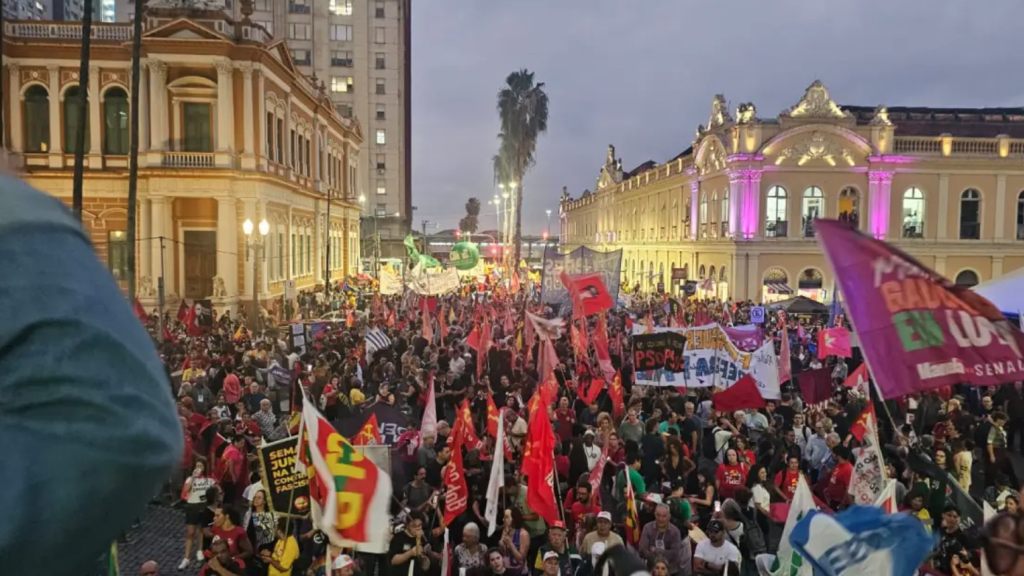
The second aspect — albeit a slow-moving one — was an increase in participation in anti-Bolsonaro activism, as evidenced by the Lula rallies that drew 10,000 people in Porto Alegre, 12,000 in Curitiba, and 2,000 to the weekend march in Brasília; but this was particularly apparent in the analysis of networks and interactions, which shifted the majority of references regarding the Master/STF case toward the Left and its key figures.
The third element is polling uncertainty, involving Centrão (center-right bloc) candidates in the states — or even those linked to Cury’s constituency — as well as undecided voters and those unwilling to vote; this helps explain the high disapproval rating for Flávio (who ties with Lula in this regard in the latest Datafolha poll, at 46%). How will the interplay between state-level scenarios and the national race unfold? This question is significant given the uncertainty surrounding the proportional and Senate elections — the latter being highly contested and unpredictable due to the two-vote system and the fact that current poll leaders still hold relatively low support, mostly in the 15% to 25% range.
For Bolsonaro, winning in as many states as possible in the first round is crucial. Lula needs to secure his vote in the Northeast and in the country’s major capital cities. For instance, ensuring strong results for his candidates in the North and Northeast — and forcing a runoff in strategic states like São Paulo, Minas Gerais, and the Federal District — will be key to shaping the dynamic. The most complex case is São Paulo, where Tarcísio has a real chance of winning in the first round, and where Fernando Haddad and the PT are struggling to mount an effective response.
What is certain is that polarisation will increase in the coming weeks, accompanied by a certain degree of aggression on the streets and at events, as well as heightened politicisation and the battle for votes. The far-right, led by Nikolas, mobilised thousands of people in Amapá to attack and humiliate Alcolumbre.
Lula’s victory is fundamental and will mark the start of the political battle over the next fifty days — alongside the votes we cast for proportional representation, where we will present our leaders and our platform. Lula needs an intense campaign, outperforming Flávio by at least eight or ten points in the first round, to be well-positioned for the runoff; the latter will undoubtedly be the most hotly contested and polarised in recent political history, thereby taking on crucial importance.
The campaign needs to mobilise activism now — reaching beyond spontaneous activists and paid campaign staff — to elevate the debate surrounding the plebiscite and engage undecided voters and those reluctant to vote across all regions of the country. This entails occupying every public space and increasing the visibility of activities—ranging from simple initiatives like information booths to joint city gatherings and events with candidates from major parties — as well as preparing a social media strategy to capture attention across all platforms.
Once again, the plebiscitary nature of the election is fundamental. What is crucial is to raise the tone and define the election as a plebiscite. There is no tied or middle ground: either Lula wins, or we will have the worst government in history, leading to a dangerous political situation.
In this instance, two campaign strategies clash: the one led by the PT (Workers’ Party) majority — spearheaded by Lula and his central campaign team — versus a strategy of heightened polarisation centered on mobilisation, which involves raising the tone and relentlessly attacking Flávio and his project. The government’s apologetic view, which focuses on its achievements and successes, presents an unrealistic picture of Brazil given the socioeconomic crisis. The resolution adopted by the PT’s Executive Committee — criticised even by the party’s left wing, such as Valter Pomar — proves insufficient because it relies solely on the Supreme Federal Court (STF) and the previous strategy, despite acknowledging the need to intensify mobilisation.
The PSOL is playing an important role, especially through its candidates. The party’s overall strategy should be to mobilise the population, raise the tone, attack Bolsonaro, turn the debate into a referendum, and present a vision for the future.
It is necessary to resume the political struggle and push the campaign forward with renewed vigour. The majority of the working class lives in precarious conditions — holding insecure jobs devoid of rights and facing high levels of debt amidst a rising cost of living. We must frame these hardships as demands and demonstrate that Flávio is not anti-establishment. Mendonça used the Supreme Court crisis to downplay the debate over the "6x1" work schedule,8 which is stalled in the Senate and barely mentioned in the media.
We need to frame this as a plebiscite on four issues, distilled into a single vote: Will Brazil become a U.S. colony? Will workers work one day less per week? Will the country minimise violence against women? Will climate change denial make us more vulnerable to El Niño?
And alongside that — as we have already begun to do — we keep emphasising who Flávio and his cronies really are: the dire economic hardship, the nearly one million pandemic deaths, the cost of food in supermarkets, the widespread corruption, the militarisation of the government, the fires in the Amazon and the Pantanal, the nefarious coup plotters of January 8th, the threat to Pix (Brazil’s instant payment system), and the humiliation before Trump. We emphasise the relationship with Vorcaro — the banker behind the bacchanals and the most expensive film in cinema history — as well as the connection to Eduardo Bolsonaro and the strategic selection of André Mendonça as his operative. We maintain that Flávio deserved to join his father in Papuda Prison rather than entering the Planalto Palace, the workplace of the Brazilian president through the front door. This could come about in various ways, such as PSOL’s Sâmia Bomfim’s request to the Federal Police to confiscate the genocidal son’s passport.
And gradually, raise the level of engagement. Call for the coordinated distribution of leaflets and for community cleanups in the city’s largest neighbourhoods and transit hubs; involve more people; and break the bureaucratic inertia that characterises some of the PT (Workers’ Party) campaigns. Our role as PSOL is to be at the forefront of this struggle and to elect strong, active representatives from PSOL and the federation.
PSOL’s place
PSOL is running major campaigns in the states where it holds parliamentary seats, with the federation9 formed alongside Rede contesting Senate seats in Rio Grande do Sul, São Paulo, and Ceará, in addition to being well-positioned in Rio de Janeiro with Mónica Benício, where Benedita da Silva is leading the polls. PSOL is objectively gaining strength. PSOL should advocate for a shift in Lula’s campaign strategy; in addition to Lula’s correct stance of “investigating everyone, to the very end, regardless of whom it hurts,” the party should argue for raising the tone, organising mobilisation, proposing plebiscites, and launching a comprehensive offensive against Flávio.
On social media and in the streets, PSOL stands out as a key player in mobilising the left-wing electorate. It must engage with the youth and the working class to champion its platform. To win, it is essential to secure votes for the PSOL — votes for "number 50", the official electoral number used by the party on voting ballots, and for candidates with a real chance of being elected to the Federal Chamber and the legislative assemblies. Furthermore, it is crucial to strengthen the campaign in Sergipe, Santa Catarina, Espírito Santo, and Paraíba — states that have the potential to surpass the 1.5% vote threshold and thereby clear the electoral hurdle.
Our policies
Our struggle must combine broad-based demands — such as the "6×1" work schedule, sovereignty, the fight against violence towards women, and the climate emergency — with our own programmatic stance. This includes advocating for transitional measures such as free public transport; taxation of large fortunes; regulation of social media and the digital sphere; environmental protection through an eco-socialist programme; curbing the betting industry and financial capital; amnesty for indebted families; defense of the minimum wage, moving towards the "DIEESE wage" standard; rent controls (as we are demanding in the Federal District); defense of state-owned enterprises and the re-nationalisation of essential services like water and rail transport; national control over rare earth elements and critical minerals; and investment in and defense of the SUS (Brazil’s public health system).
Our strategy to drive street protests consists of cracking down hard on Flávio, exposing Bolsonaro’s disastrous administration, leveraging the tension surrounding the Supreme Court to channel energy into street protests (during both the first and second rounds), and supporting strikes by postal and Caixa Econômica Federal workers, alongside our own election campaign activities. In this context, we must address the fact that the Supreme Court crisis demands profound changes — something not to be confused with the fact that Moraes belongs to a class enjoying exorbitant salaries and powers; a class that played a progressive role in confronting the Bolsonaro clan and Trump, yet embodies the selective, elitist democracy of the wealthy.
We must advocate for profound changes, for a radical political reform. We advocate for a different institutional framework and a different judiciary — indeed, for a covert political revolution that establishes new criteria for the selection and oversight of judges, transparency in decisions and terms of office, an end to parliamentary amendments, and other concrete measures.
In this battle, we will work to engage and recruit activists, bringing them into PSOL and the MES by leveraging our presence and local cells in workplaces and schools. The new edition of “Retomada” magazine will be published soon, serving to rally a critical, radical, and anti-capitalist force. We recognise that this is part of an international political struggle — working to halt Trump’s offensive in Brazil and standing at the forefront of the fight against neo-fascism, just as we did at the First International Anti-Fascist Conference earlier this year.
We will take to the streets, to social media, and then to the polls to defeat the far right. This is the most important political battle between now and October 6.
- 1
Luiz Inácio Lula da Silva known as Lula, is the President of Brazil and candidate of a coalition including the Partido dos Trabalhadores (Workers’ Party or PT) for President in the upcoming general elections set for October 4, 2026.
- 2
Refers to a massive financial and political corruption case of both fraud and money laundering involving the banker Daniel Vorcaro and the collapse of Banco Master.
- 3
André Mendonça, a Presbyterian pastor, is Justice of the Supreme Federal Court of Brazil.
- 4
Flávio Bolsonaro is the son of the right-wing and former Brazilian President Jair Bolsonaro, he is running for President for the far right Partido Liberal (Liberal Party or PL).
- 5
Luiz Fachin is a Justice of the Supreme Federal Court of Brazil. Supreme Court Justice Flávio Dino lifted the confidentiality order on a high-profile Federal Police investigation into the financing of "Dark Horse," a biographical film about former Brazilian President Jair Bolsonaro.
- 6
Peter Thiel is a German-American, venture capitalist, and conservative political activist who co-founded PayPal and Palantir Technologies.
- 7
On 6 September 2018, then federal deputy Jair Bolsonaro suffered an attack during a rally promoting his election campaign for the presidency of Brazil.
- 8
The 6×1 work schedule means six days of work for one day of rest. It is the standard week in many workplaces across Brazil. The changes debated in parliament set a maximum week of 40 hours spread over five days. It guarantees two days of paid rest, forbids any salary cut and phases the change in gradually.
- 9
The PSOL REDE Federation (Federação PSOL REDE) is an electoral and parliamentary group formed by PSOL and the Sustainability Network (REDE).

No comments:
Post a Comment