EU-Canada 'love story' needs more than warm words, senior MEP warns
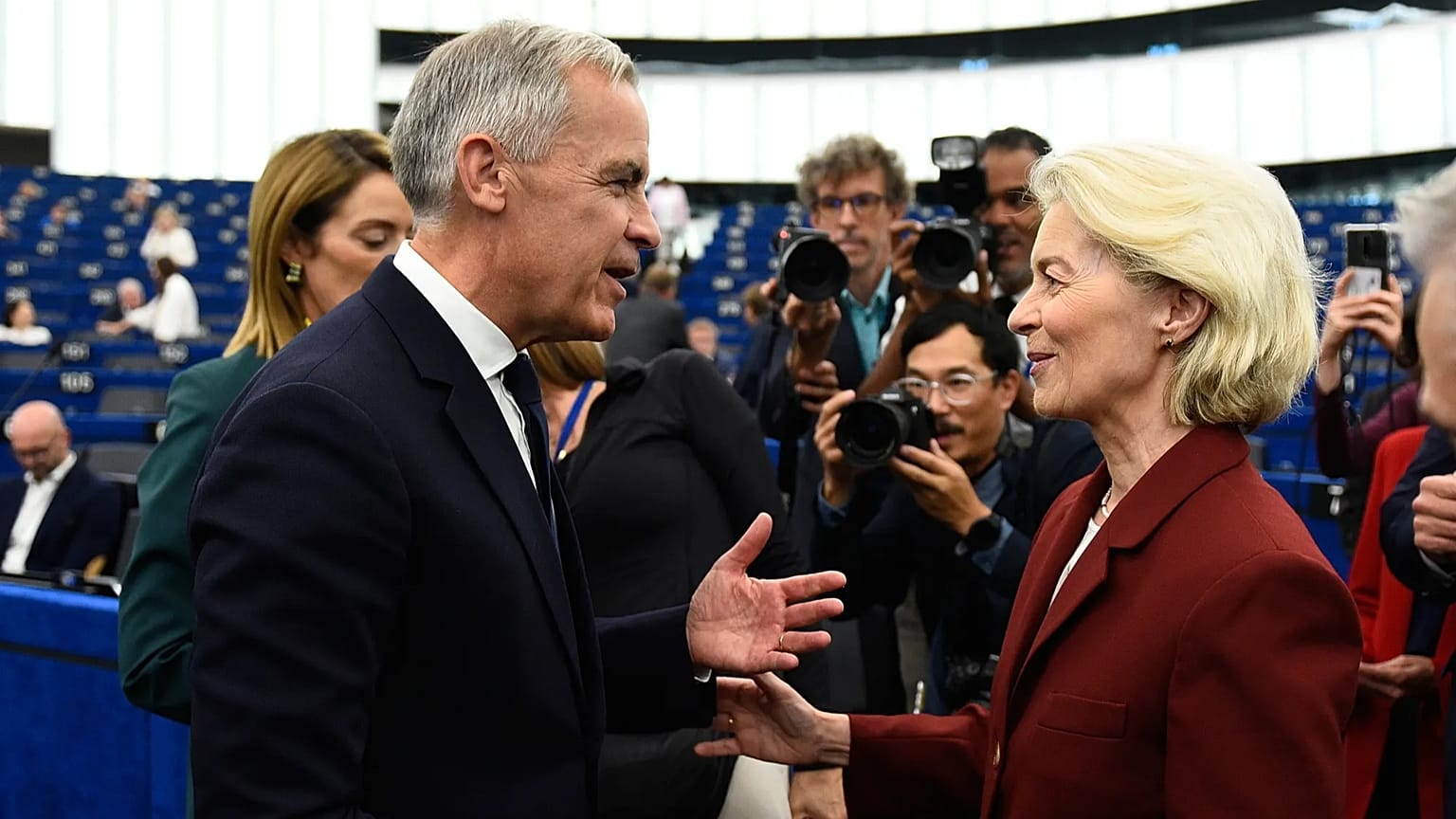
European Parliament’s point man on Canada, Tobias Cremer, told Euronews that the planned “associate membership” should include an institutional framework formalising closer ties between the EU and Canada.
The EU must turn its offer of “associate membership” to Canada into a meaningful partnership that goes well beyond trade, Tobias Cremer, the European Parliament's standing rapporteur on Canada, told Euronews.
European Commission President Ursula von der Leyen invited Canada to become the EU's first “associate member” in September, but gave little indication of what the unprecedented status would mean in practice.
The offer comes as geopolitical upheaval draws Brussels and Ottawa closer together. Canada is embroiled in a trade war with its traditional US ally, while the EU is struggling to keep Washington on its side over Ukraine.
The two sides are due to meet at a summit in Montreal at the end of next week, with agreements expected in several areas, including critical raw materials and digital cooperation.
“For the last couple of months, we've been great, Canada and Europe, at writing each other love letters and saying how much we really want to work together,” said Cremer, a German socialist MEP. “But I think now is really the time to start to get serious and turn that love story into concrete commitments.”
He added that “associate membership” must mean the “closest possible partnership that the EU can offer to a non-European country and since Canada is probably the most European of non-European countries that should be very close.”
Beyond trade deals
Cremer insisted that the relationship must amount to more than “a trade deal ‘plus’”.
“There must be a new quality to the relation.”
He called for a “pragmatic approach,” involving sectoral agreements covering trade, defence, digital cooperation, the Arctic and students, but also going further.
“We should go a step further and start embedding all of these great initiatives into something more enduring, into a common institutional framework of coordination and cooperation.”
Cremer suggested that Canada could participate “as an observer” in the Council of the EU, where national ministers meet, and called for the creation of a formal parliamentary partnership assembly.
Such a body could follow the model of the existing EU-UK Parliamentary Partnership Assembly, which brings together 35 members from each side twice a year for sessions that can focus on specific policy areas.
Regarding the UK, however, the MEP described it as a European country for which, “if it wishes so,” the ambition “should not be associate membership, but full membership.”
His comments came as UK Prime Minister Andy Burnham recently floated the idea of rejoining the EU, with polls showing that a majority of Britons want to return to the bloc.
But Cremer also argued for closer cooperation not only with the UK and Canada, but also with countries such as Australia and South Korea.
“I think it is of our interest to bring all of these actors together and say 'hold on, actually the majority of the world wants to play 21st century politics which is focused on collective security, on shared interests, on mutual respect rather than might is right.'”
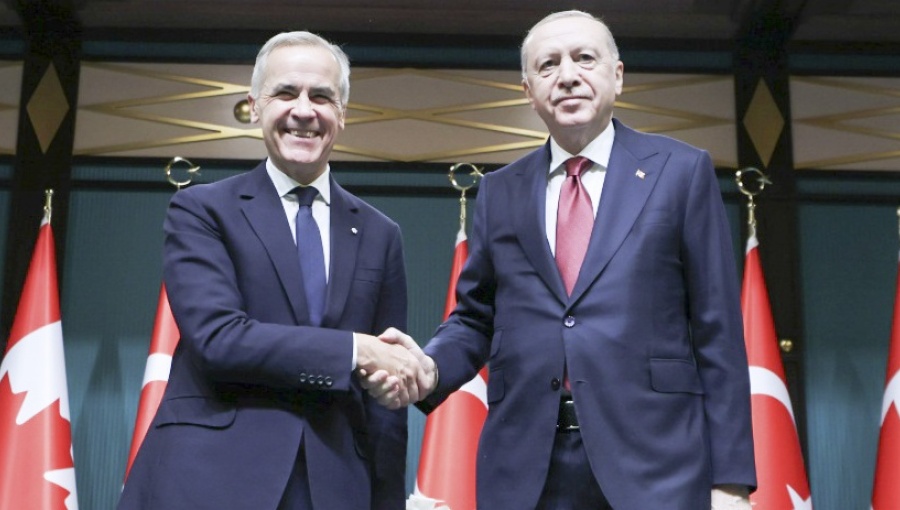
Defence, transportation and energy will be at the heart of a new “strategic partnership” between Canada and Turkey, Canadian Prime Minister Mark Carney said on October 22, while on an official visit to Ankara.
Carney is eager to build ties with countries around the world, given that he is locked in an escalating and bruising trade war with US President Donald Trump that means he is in a hurry to reduce Canadian dependence on neighbouring America.
Carney and Erdogan signed the partnership declaration between the two middle powers together and announced the start of negotiations on a free trade agreement.
“We have taken a historic step toward the future of our relations,” Erdogan said after the signing ceremony, as quoted by the Associated Press (AP). “Elevating our relations to the level of a strategic partnership will not remain merely on paper; it will not be a merely symbolic step,” he added.
“No country, whatever it’s blessed with, no country builds strength alone,” Carney said. “The most resilient countries bring together complementary strengths, with trusted partners.”
Carney will visit Istanbul on October 23 for talks with Turkish business groups.
Erdogan said Turkey and Canada are hopeful of building up their annual bilateral trade from around $3bn to $5bn initially, and then to $10bn.
In investment, there is some prospect that Ottawa and Ankara will study the feasibility of a bid by Canada's Candu nuclear team to build Turkey's planned second or third nuclear power plant.
In 2024, Canada ended an export ban on the sale of weapons to Turkey. It was imposed in a response to military incursions into Syria conducted by Turkey, as well as to show Canada’s opposition to the provision by Ankara of backing for Azerbaijan in its conflict with Armenia. Some military drone equipment provided to the Azerbaijanis by Turkey was, to Ottawa's displeasure, partly made with Canadian parts.
“Allies must be able to rely on each other for equipment and capabilities that keep us safe,” Carney was further reported as saying by the AP.
“Today’s new agreement on defence industry partnership will connect Canadian and Turkish companies to work together, creating good jobs at home, export opportunities abroad, greater security for our citizens and contributing to a stronger Nato alliance,” he added.
CBC reported Erdogan as saying that a new chapter in relations between Turkey and Canada was opening, stating: "We had diplomatic relations, but we had some kind of disconnect for a very long time now. And today we put an end to it. Now comes a new period, a new era for Turkey and Canada. This is what we're starting today."
The fact that Turkey has become increasingly authoritarian under Erdogan, its leader of 23 years, has not gone unnoticed in Canada and there is considerable disquiet in the country at the upgrading in relations with Ankara.
"This is morally a difficult dilemma on the Canadian side, but the calculus appears on the part of the government that if Canada were to choose to diversify only with democracies the ceiling for success would be low," Thomas Juneau of the University of Ottawa, an expert on the Middle East, was quoted as saying by CBC.

No comments:
Post a Comment