Tuesday, May 18, 2021

CANUCKS IN SPACE
SpaceX is literally sending Dogecoin to the moon in upcoming mission

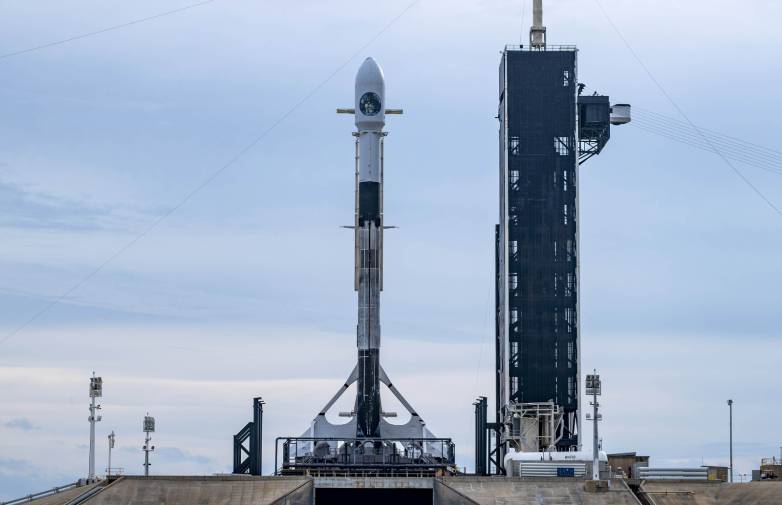
SpaceX Falcon 9 rocket preparing for launch. Image source: SpaceX

By Jacob Siegal @JacobSiegal
May 11th, 2021 

The cryptocurrency Dogecoin was created as a joke in 2013, and as of this January, it was worth less than a penny per coin. By the end of the month, it had hit 5 cents, and in May, it reached a new high of 74 cents. This meteoric rise uncoincidentally coincided with Tesla and SpaceX CEO Elon Musk repeatedly talking about the cryptocurrency on his Twitter account, and its value peaked just days before Musk was set to host SNL for the very first time.


By the time the episode was over, dogecoin’s value had tanked, as many owners likely cashed out. The coin’s value is so volatile that it’s hard to predict what will happen next, but it’s clear that the billionaire’s interest has yet to abate, as CNN reports that SpaceX will accept dogecoin as a form of payment for an upcoming mission.

Canada’s Geometric Energy Corporation announced in a press release on Monday that it will launch a commercial lunar payload on one of SpaceX’s Falcon 9 rockets in the first quarter of 2022, and it plans to pay for its spot aboard the rocket entirely with dogecoin. The 88-pound satellite that the company is putting on the rocket will appropriately be called DOGE-1, and once the rocket launches, DOGE-1 “will obtain lunar-spatial intelligence from sensors and cameras on-board with integrated communications and computational systems.”

“This is not a joke,” Geometric Energy Corporation CEO Samuel Reid told CNN of the deal.

The press release from Geometric Energy Corporation goes on to explain the significance of the mission:


Indeed, through this very transaction, DOGE has proven to be a fast, reliable, and cryptographically secure digital currency that operates when traditional banks cannot and is sophisticated enough to finance a commercial Moon mission in full. It has been chosen as the unit of account for all lunar business between SpaceX and Geometric Energy Corporation and sets precedent for future missions to the Moon and Mars.


Dogecoin has been hovering around 50 cents since Musk’s Saturday Night Live appearance, but the fact that it still hasn’t dropped further seems to suggest that plenty of owners have held on to their coins. Dogecoin is still up more than 10,000% compared to last May, and its market cap is sitting around $65 billion.

As CNN notes, Geometric Energy Corporation was founded in 2015, and mainly focuses on intellectual property, manufacturing, and logistics. Its focus has expanded over the years to include energy, space, software, and medicine, which led to the development of four subsidiaries: Geometric Space, GeometricLabs, Geometric Medical, and Geometric Gaming. Geometric Space is the group that will be working with SpaceX on this mission.

In related news, Tesla recently began accepting bitcoin as a form of payment for its cars, and on Tuesday, Elon Musk asked his followers in a tweet if the company should accept dogecoin as well. “Yes” is winning.


SpaceX will launch a moon mission funded by Dogecoin in 2022

SpaceX accepted Dogecoin as a payment to launch a mission to the moon.
SpaceX accepted Dogecoin as a payment to launch a mission to the moon. (Image credit: Saul Martinez/Getty Images)

SpaceX books a mission to the moon funded entirely by Dogecoin just days after SpaceX founder Elon Musk joked on Saturday Night Live about his role in spreading memes about the cryptocurrency.

Geometric Energy Corp. has planned a rideshare mission to the moon aboard a SpaceX Falcon 9 rocket, which usually costs about $62 million to book, or about 129 million Dogecoin (at the cryptocurrency's $0.48 value as of 2:30 p.m. on Monday (May 10)). How much money or crypto will actually change hands, however, has not yet been revealed, nor has information about what other missions will fly on the rocket.

Musk tweeted about the deal on Sunday, saying this is the first time that cryptocurrency will be used in space, and that it will also be the first meme used in space. "To the mooooonnn!!" he added. (We couldn't immediately verify his claims about being the first (with either crypto or memes), but it is important to note that the cryptocurrency Blockstream has a satellite network that broadcasts the Bitcoin blockchain as a backup for ground network interruptions.)

Related: Elon Musk says he's going to put Dogecoin on 'the literal moon'

00:00 of 02:01Volume 0%
 
PLAY SOUND


The mission, which is set to launch in the first quarter of 2022, follows an announcement Musk made April 1 promising to put Dogecoin "on the literal moon." Now, since he tweeted about this on April Fool's Day, not everyone took it seriously at first.

But the mission continues to solidify, and currently it is designed to be orbital. With the mission, SpaceX aims to send an 88-pound (40-kilogram) CubeSat (appropriately named Doge-1) on a mission to gain "lunar-spatial intelligence … with integrated communications and computational systems," according to a Geometric press release. The payload will also include sensors and cameras, the details of which are not yet public. 

Geometric CEO Samuel Reid further stated in the release that the deal "solidified DOGE as a unit of account for lunar business in the space sector." The company also pledged to transact all future missions in Dogecoin, touting benefits such as its security and the fact that trades can happen even outside of business hours.

That said, publications such as Barron's see some potential risks, and point to mitigating valuation factors in cryptocurrencies and their volatility. There have also been some industry reports musing about the stability of cryptocurrency infrastructure, and its role in funding illegal activities.

Cryptocurrencies like Dogecoin, according to Investopedia, are digital or virtual currencies secured using cryptography. Many of these currencies are based on blockchain technology that distributes a ledger or record of the currency across a computer network, independent of government regulation. At least two forms of cryptocurrency, Dogecoin and Etherum, have hit all-time highs in recent weeks, according to media reports.

Dogecoin was launched in 2013 as a joke by two software engineers, Billy Markus (from IBM) and Jackson Palmer (from Adobe), according to Business Insider. They put together two big discussion topics of the day — Bitcoin and a widely memed Shiba Inu dog meme nicknamed "doge" — to create Dogecoin. When released, Dogecoin became popular quickly, in part, because it is easier to use than Bitcoin, Business Insider added.

Follow Elizabeth Howell on Twitter @howellspace. Follow us on Twitter @Spacedotcom and on Facebook. 


Commentary: Dogecoin and why we should quit taking cryptocurrency seriously

The success of the joke currency has lessons for cryptocurrency investors and business analysts, says the Financial Times' Jemima Kelly.


Cryptocurrency representations are seen in front of the Dogecoin logo in this illustration picture taken April 20, 2021. (Photo: REUTERS/Dado Ruvic/Illustration)

By Jemima Kelly13 May 2021

LONDON: It has often been hard to make sense of financial markets in 2021.

First there was the 1,500 per cent rally in flailing video game retailer GameStop, then there was the US$100 million valuation of a New Jersey deli, and then there was a 15,000 per cent surge in dogecoin, a cryptocurrency designed as a joke.

“Do you want Tesla to accept Doge?” the electric car company’s chief executive and self-styled “technoking” Elon Musk asked his Twitter followers on Tuesday (May 11).

The tweet was just the latest of several Musk shout-outs to the digital coin, which is based on a meme showing the face of a Shiba Inu dog overlaid with an imaginary inner monologue: “Wow”; “so scare”; “keep ur hands away from me”.

Dogecoin functions the same way as bitcoin — it’s a digital token underpinned by a decentralised network of computers that process and keep track of transactions via a digital ledger called a blockchain.

But unlike the original cryptocurrency, whose backers use highbrow arguments to justify and shore up its value, dogecoin has been a joke from the outset.

Yet while few people are claiming that dogecoin will “democratise finance”, or become “the global reserve currency”, or fundamentally change the world, since its creation in December 2013 it has hugely outperformed bitcoin.


This illustration photo shows the Coinbase logo in the background as a person checks cryptocurrencies prizes on a smartphone in Los Angeles on April 13, 2021 (Photo: AFP/Chris DELMAS)

While the latter has climbed a remarkable 7,700 per cent during that period, dogecoin has rocketed by an almost unfathomable 200,000 per cent.

In other words, if you wanted to make some money on crypto over the past seven-and-a-half years and chose to buy bitcoin rather than dogecoin, the joke’s sort of on you.

HOW TO TREAT CRYPTO SERIOUSLY?


Dogecoin gives the lie to the idea that we should take bitcoin and other cryptocurrencies terribly seriously.

While crypto evangelists might want everyone to buy into the notion that bitcoin is going to take over from the dollar one day, and that we all need to hold some of it in order to protect ourselves from the evil central bankers who want to inflate away the value of our money, the reality is that their arguments are largely just a self-interested attempt to boost the price of cryptocurrencies.

Much like a pyramid scheme, those who got in early on bitcoin have a huge financial incentive to draw in others by any means necessary.

But while getting rich is clearly the main motivating factor — and some people have indeed managed to become incredibly rich from crypto — it is not the only one.


READ: Commentary: Amid record high value, Tesla's bitcoin bet raises uncomfortable questions

LIKE GAMBLING


Buying into crypto should be considered akin to gambling and, like gambling, people get into it not just because they might make money, but also because it’s entertaining.

It’s no coincidence that cryptocurrencies and “meme-stocks” have surged in a year in which much of the world has been locked up indoors.

It is the result of what Bloomberg columnist Matt Levine has called the “boredom markets hypothesis”.

Crypto trading is often more accessible than gambling, particularly in places where betting is heavily regulated, such as in the US. It allows buyers to feel like they’re in some kind of tribe.

And while the “LOL” factor might not be considered a traditional metric for working out the value of an asset, that doesn’t mean it shouldn’t be: Clearly, the extent to which it is fun to buy into something has an impact on how much it is bought, and nowhere can that be seen more clearly than in dogecoin.

MAYBE TAKE IT LESS SERIOUSLY

The joke-coin makes a mockery of the idea that crypto investing should be considered a serious pursuit. Its very existence undermines the notion that bitcoin derives value from its scarcity.

While bitcoin’s total supply will eventually be capped at 21million, as written into its original source code, there is no limit to the number of copycat cryptocurrencies that compete with it — there are now almost 10,000, and dogecoin itself has no hard supply cap.

Dogecoin’s success makes just as much sense as the rest of the crypto market — people buy into these coins because doing so is exciting, it gives them something to do and discuss with their friends, and of course because it can allow them to make a quick buck.

But perhaps it can also allow us to stop taking the crypto project quite so seriously. While we’re at it, we might do the same with the stock market.

If none of what happened with GameStop made sense to you, listen to financial veterans break down how different players powered the surge and which listed company could see copycat attacks in CNA's Heart of the Matter podcast:
HOW BAD ARE BITCOIN AND DOGECOIN FOR THE ENVIRONMENT?

Elon Musk says Telsa will suspend taking Bitcoin until its mining uses ‘more sustainable energy’

Graeme Massie
Los Angeles@graemekmassie 

Elon Musk has become one of the world’s richest and most successful entrepreneurs with his commitment to reinventing the electric car and to renewable energy.

The billionaire Tesla CEO’s flirtations with cryptocurrency was therefore always problematic.

For the Bitcoin industry as a whole is estimated to use the same amount of energy as a the annual amount used by a country the size of Malaysia, according to industry observers.


“We are concerned about rapidly increasing use of fossil fuels for bitcoin mining and transactions, especially coal, which has the worst emissions of any fuel,” Mr Musk tweeted on Wednesday.

“Cryptocurrency is a good idea on many levels and we believe it has a promising future, but this cannot come at great cost to the environment,” he added.

And Musk vowed to start using Bitcoin again “as soon as mining transitions to more sustainable energy.”

The industry is environmentally unsound because the process of mining for Bitcoin, or the complex mathematical calculations that are computed for every new Bitcoin, is highly energy-intensive.

The University of Cambridge’s Centre for Alternative Finance estimates that as of Wednesday the industry had reached 147.8 terawatt hours.


Sign up to our free weekly climate newsletter by clicking here and it will arrive in your inbox every Friday

And that is a significant increase from around 121.9 terawatt hours, or as much energy as a country like Argentina uses each year, when Tesla bought $1.5bn worth of Bitcoin in February.

The Centre for Alternative Finance says that Bitcoin now represents an estimated 0.59 per cent of global electricity production, or enough to power all the kettles in Britain to boil water for 33 years.

If renewable energy, such as solar or wind power, was used to drive the energy consumption it may not have become such an issue for Mr. Musk.

But the majority of Bitcoin is mined in China and is largely fuelled by cheap coal power in the Xinjiang region, according to reports.

According to the University of Cambridge researchers almost two-thirds of Bitcoin generation as of April 2020 took place in China, with one-third of that being done in Xinjiang.

It is the same region that has become notorious in recent years for the treatment of the Uighur Muslim minorities by the Chinese government.

Industries that are heavily dependent on cheap electricity are often drawn to Xinjiang, which has vast natural reserves of coal that is hard to ship around China, by its cheap power rates, according to Bloomberg.

While experts say that all cryptocurrencies are relatively environmentally damaging, some do have less of an impact than others, according to statistics from TRG Datacenters.

The company, which is based in Houston, Texas, says that XRP is the least damaging, using 0.0079 of a Kilowatt hour (KWh) per transaction.

Dogecoin, which is a favourite of Mr Musk and which he plugged during his recent Saturday Night Live appearance, is rated by the firm at 0.12 KWH.

Litecoin, which has been described as silver to Bitcoin’s gold, is rated at 18.522 KWh, while Ethereum uses 62.56 KWh, according to TRG.

Bitcoin, the most successful of all the cryptocurrencies, is bottom of their list at 707 KWh.

However, some people disagree with the TRG Datacenters’ analysis. The Independent has contacted the company for an explanation of their methodology.

This article was amended on 17 May 2021 to ensure that TRG Datacenters’ figures were clearly attributed to the firm, and to say that some people disagreed with their analysis.