Tuesday, May 18, 2021

Britain to host first global conference on LGBTQ+ rights
© Provided by The Guardian Photograph: Andy Rain/EPA

THE COUNTRY WHERE BEING QUEER WAS A HANGING OFFENSE UNTIL THE 20TH CENTURY

Nosheen Iqbal 
THE GUARDIAN
16/5/2021

The first-ever global conference on lesbian, gay, bisexual and transgender rights is to be hosted in the UK next year, as the government races to fulfil its pledges to the international 42-country Equal Rights Coalition.

The “Safe To Be Me” event is expected to be the largest of its kind and will invite elected officials, activists and policymakers from across the world to participate in London over two days in June 2022, coinciding with the 50th anniversary of the first official London Pride marches.

Nick Herbert, who was the Conservative MP for Arundel and South Downs from 2005 to 2019 before being made a lord last year, has been announced as chair of the event and as the prime minister’s special envoy on LGBTQ+ rights.

The conference will be used to champion equality at home and abroad, and ministers say it will attempt to “make progress on legislative reform, tackling violence and discrimination, and ensuring equal access to public services for LGBT people”.

Herbert said: “It will be the first time that a global event on this scale – including parliamentarians – has been held, and I hope it will help to drive collective action for real change.”

The announcement comes at a crucial juncture, as the 2021 Rainbow Europe Map, a continent-wide benchmarking tool, reveals there has been widespread and almost complete stagnation on human rights for LGBTQ+ people across Europe over the last 12 months.

In an annual survey published in full on Monday, the International Lesbian, Gay Bisexual, Trans and Intersex Association (Ilga Europe) has ranked 49 countries and found “a disturbing standstill” on legislative and policy progress, with an increase in LGBTQ-phobic hatred and political repression.

Under Boris Johnson’s premiership, the British government has been criticised by LGBTQ+ activists and human rights charities for rolling back the rights of trans people. Last Tuesday, new voter registration laws announced in the Queen’s speech were labelled “divisive and discriminatory” by lawyers at Liberty, who said that plans to force voters to carry photo identification would disproportionately affect minorities including trans and non-gender-conforming people.

Last autumn, when the government scrapped reforms to the Gender Recognition Act (GRA) which would have allowed allow trans people to self-identify, Stonewall’s chief executive, Nancy Kelley, described the move as “a shocking failure in leadership” where the government had “missed a key opportunity to progress LGBT equality”.© Provided by The Guardian Liz Truss, the equalities minister, has been criticised by campaigners for her stance on the Gender Recognition Act. Photograph: John Sibley/Reuters

The UK took over as co-chair of the global Equal Rights Coalition alongside Argentina in July 2019, and has been expected to launch a comprehensive five-year strategy to increase international action to defend the rights of LGBTQ+ people around the world. The Safe To Be Me conference has been designed to meet that commitment and is being worked on by the Government Equality Office and the Foreign Office.

Amelia Abraham, the author of Queer Intentions and a forthcoming book on LGBTQ+ rights, We Can Do Better Than This, said she welcomed the announcement of the conference but was wary of the Conservative party’s track record on influencing minority rights across the world.

“The prime minister should deal with some of the huge issues facing LGBTQ+ people here before holding the UK up as a bastion of progress,” she said. “For instance, the UK government should stop asking us to vote on whether gay conversion therapy should be banned, as if that’s a question at all. They should also make it legal to have a third gender option on passports – like dozens of other countries around the world do – in order to legally recognise the thousands of non-binary people living here, who were also ignored on the census.”

Liz Truss, the minister for women and equalities, said: “This conference will take aim at the prejudices LGBT people still face, and look at the collective action we can take to tackle those injustices alongside our international friends and partners. People should be judged on the basis of their individual character and talents alone, and we want to ensure that this message is heard around the world.”

© Photograph: Andy Rain/EPA The London Pride parade in 2018. The Conservative government has come under fire for its record on gender and sexuality.

Abraham said the minister’s comments were “a hypocritical slap in the face given Truss’s failure to support trans rights and adequately reform the GRA as government had promised to”.

On Saturday, Kishwer Falkner, who was appointed by Truss to lead the Equality and Human Rights Commission, said it was “entirely reasonable” to challenge the biological status of trans women. Baroness Falkner was speaking after the commission intervened in the case of a woman who lost her job after colleagues complained that she was bigoted and transphobic.

A judge ruled that the woman’s views were “not worthy of respect in a democratic society” and threw out her claim at an employment tribunal for unfair dismissal. Falkner claimed, however, that it was “a freedom of belief” that the commission was determined to protect.

The foreign secretary, Dominic Raab, said next year’s conference would be a chance to promote progressive values. He said: “The right to live life without fear and persecution are the bedrock of inclusive and open societies and the UK, as a force for good, will protect and promote these values at home and around the world.”

GREEN CAPITALI$M

Renewables to thrive this year after a record-breaking expansion during pandemic

Capital City: New York in Fiscal Crisis, 

1966-1978

Michael Reagan

University of Washington

Abstract

This dissertation is a history of the 1975 New York City fiscal crisis. It explores the cultural and material  causes and consequences of the city’s near bankruptcy and subsequent social and fiscal restructuring. It  argues that the cause of the crisis was a combination of a severe economic depression in the city’s real  economy, and a market failure, the worst in the nation’s history, in the municipal bond market. The combination of these factors meant that the city was forced into deficit spending, and simultaneously frozen out of the credit markets. 

With the federal government taking no action, the city was forced to make severe, historic, cuts on its social programs, a move to austerity that has come to define our own era. This shift requires more than a fiscal explanation, as previous crises, when deficits were twice as large as those of the 1970s, were successfully navigated without the resort to the kinds of austerity seen in 1975.

 Instead, we have to look to a cultural turn on the part of the city’s elites. Where in the 1960s, bankers, state planners, and academics were willing to manage deficits as part of a larger social contract that included a commitment to the city’s poor, by 1975 that commitment was largely undone. 

The rejection was a reaction to the victories of the social movements of 1960s, specifically those for civil rights and black liberation. City elites sought mechanisms to check the costs, and more, the power and the politics, of the movements. This was achieved through fiscal measures, which profoundly reshaped social life in New York.

 The result for working people, women, and people of color was a pervasive sense of hopelessness and despair, evident even decades later, the artistic work of figures like Notorious B.I.G. His 1994 album of lost opportunity and personal “everyday struggle” spoke for the generation born to austerity; Big and his generation were “Ready To Die.”

PhD THESIS PDF Reagan_washington_0250E_17396.pdf


#ENCOURAGEMUTINY

Interview: Every Soldier ‘Knows What They Are Doing is Wrong’

Privates Myo Min Tun and Phyo Wai Oo defected from Myanmar’s army to join the resistance against the junta.

2021-05-14
Soldiers are transported on a military truck amid mass protests against the military coup in Naypyidaw on February 16, 2021.
AFP


Myo Min Tun and Phyo Wai Oo, both privates in Myanmar’s army, met while in the same basic training unit five years ago. The two ethnic Shan soldiers were then assigned to the Special Construction Operations Command Headquarters in the capital Naypyidaw and became close friends. Myo Min Tun, 40, and Phyo Wai Oo, 26, are members of ethnic Shan minority groups. They joined the army to protect the people of Myanmar, but Phyo Wai Oo said that armed conflicts with ethnic minorities bothered him, so when the military ousted the country’s democratically elected government on Feb. 1, the two friends decided to defect to an undisclosed region of Shan state in eastern Myanmar. Washington, D.C.-based RFA Myanmar Service reporter Khin Maung Soe conducted a telephone interview with the two soldiers, who said they planned to join the People’s Defense Force (PDF), a military organization which the shadow National Unity Government (NUG) hopes will grow to eventually be able to resist the junta by force. The interview has been edited for clarity and length.

RFA: Why did you decide to defect?

Myo Min Tun: Since the military coup, I felt very upset when I saw all that was happening. I felt so sorry… especially when the military was treating civilians like that. It got to be worse and worse, so I contacted some people to join the Civil Disobedience Movement. We will work together with the people to overthrow the dictatorship.

Phyo Wai Oo: I don't like the military. Because I come from an ethnic area near the border, I have a different opinion on things. I thought that things would be fine if I could just make it to retirement…but I did not support the coup. What good is it if the people die? I do not like the army shooting at people protesting. When the death toll rose higher and higher, my thinking [about staying until retirement] changed. I felt very bad.

RFA: Are most soldiers aware of the scope of what is happening? Do they know the extent of the violence and bloodshed?

Myo Min Tun: We did not know much about what was going on. We cannot use the internet in our units. We were not allowed to go out anymore, so we could not use the internet in nearby areas. Some said they had internet in Naypyidaw. I was closely following current events until the lines were shut down.

Phyo Wai Oo: At first, I was still able to watch the news when the internet was only partly shut down during the night. When wireless internet was cut off, we could not follow the news anymore. We learned about the first death in Naypyidaw when Mya Thwei Thwei Khine was killed. Later I heard about the killings in Mandalay. We last heard there were about a hundred deaths, and we only now found out that it was more than 800. I called home and learned from friends who are participating in the protests.”

RFA: What do you know about the wealth of coup leader Sr. Gen. Min Aung Hlaing and other military leaders?

Phyo Wai Oo: We saw reports about their backgrounds recently. We found out that their daughters owned hospitals. I knew they were rich, but I didn't know what they own. We only found out from online reports recently how much they own and how rich they are. How could he own that much with an official [monthly] salary of 5 million kyat [U.S $3211.12]? Even if he were to starve himself for a whole month there’s no way he could be so wealthy on that salary.

RFA: Are there others in the military who want to defect?

Phyo Wai Oo: Most soldiers feel the same way I do. There are some people who cannot leave even though they know things are so bad, because they have families and they have to stay because you cannot leave as a family. Many are aware of what is going on though. Everyone knows that what they are doing is wrong. There are so many just waiting for an opportunity to leave, but it is too difficult for this right now.

RFA: How were the two of you able to defect?

Phyo Wai Oo We had been trying to leave for a long time but we did not get the opportunity. We had no money. We had to wait until the end of the month and soon after getting our salary we left by motorcycle as if we were out shipping to some small villages nearby. We used to go shopping there before.

RFA: What will you do next?

Phyo Wai Oo: “I would like to join the PDF if the opportunity comes. That is what we decided to do when we left.

RFA: What do you think lies in store for the future of Myanmar?

Phyo Wai Oo: This coup is an opportunity for the people. Simply put, they are giving the people a chance to overthrow the dictatorship. The people should take advantage of this opportunity. I just want to say that this is the time when we can get rid of it completely. Additionally, I am very happy that people from the majority are sympathetic to the lives of the ethnic minorities. In the past they did not realize that murders and rapes were happening in the mountains. Now the majority is sympathetic to ethnic minorities because it is now, they too that are being shot, arrested and tortured. Now we are all one.

Reported by Khin Maung Soe for RFA’s Myanmar Service. Translated by Khin Maung Nyane. Written in English by Eugene Whong.
More than 60% of Russian territory is permafrost. Now it is melting

Climate change is about to dramatically change the Russian North. The country is now starting the building of a new permafrost monitoring system.
Melting permafrost in the Yamal-Nenets region. Photo: Yanao.ru


Read in Russian | Читать по-русски
By
Atle Staalesen

May 14, 2021

Russian authorities have made the Arctic a top priority and big sums are invested in new regional industry and infrastructure.

But the melting of the permafrost could potentially stagger plans. Across the country’s north, buildings, roads and industrial installations are slowly sliding into the ground.

Decision makers in Moscow now increasingly see the permafrost melting as an issue of concern, and measures are taken to step up mapping.

According to Minister of Natural Resources Aleksandr Kozlov, a state monitoring system for the permafrost will be established, and this system will be anchored in federal legislation.

“65 percent of Russia’s territory is located in the permafrost zone, but this is not mentioned in a single federal program document, despite the fact that the permafrost area is a vital component in the natural environment, of which the landscape, vegetation and coastline is dependent,” Kozlov says in a statement.

The melting already has major consequences for people living in the region, he explains.

“We see how the melting of the permafrost is triggering accidents at industrial and housing objects, therefore it is obvious that the state needs a system for monitoring and early-warning of negative consequences of the degradation of the permafrost,” he underlines.


“We have to protect the nature from environmental catastophe,” he says.

The new monitoring system will be based on existing research installations managed by state meteorological authority Roshydromet, and two development phases are envisaged.

The first pilot phase will cover the period 2022-2024 and be based on experiences and methodology applied in Spitsbergen, Franz Josef Land and Severnaya Zemlya, the Ministry of Natural Resources informs.

In addition to the federal monitoring system come several regional initiatives. In the Yamal-Nenets region, a laboratory for permafrost studies will this year be opened.

The lab is developed on an initiative from governor Dmitry Artyukhov, the regional government informs. It is believed to be the first of its kind in Russia.

“Climate change and the melting of the permafrost is a huge challenge not only to Yamal, but to the whole of Russia,” Artyukhov says.
Wales will launch a pilot universal basic income scheme
Under a UBI scheme, every citizen - regardless of their income or means - receives regular sums of money to cover the basic cost of living.


 by Henry Goodwin
May 15, 2021
in Politics


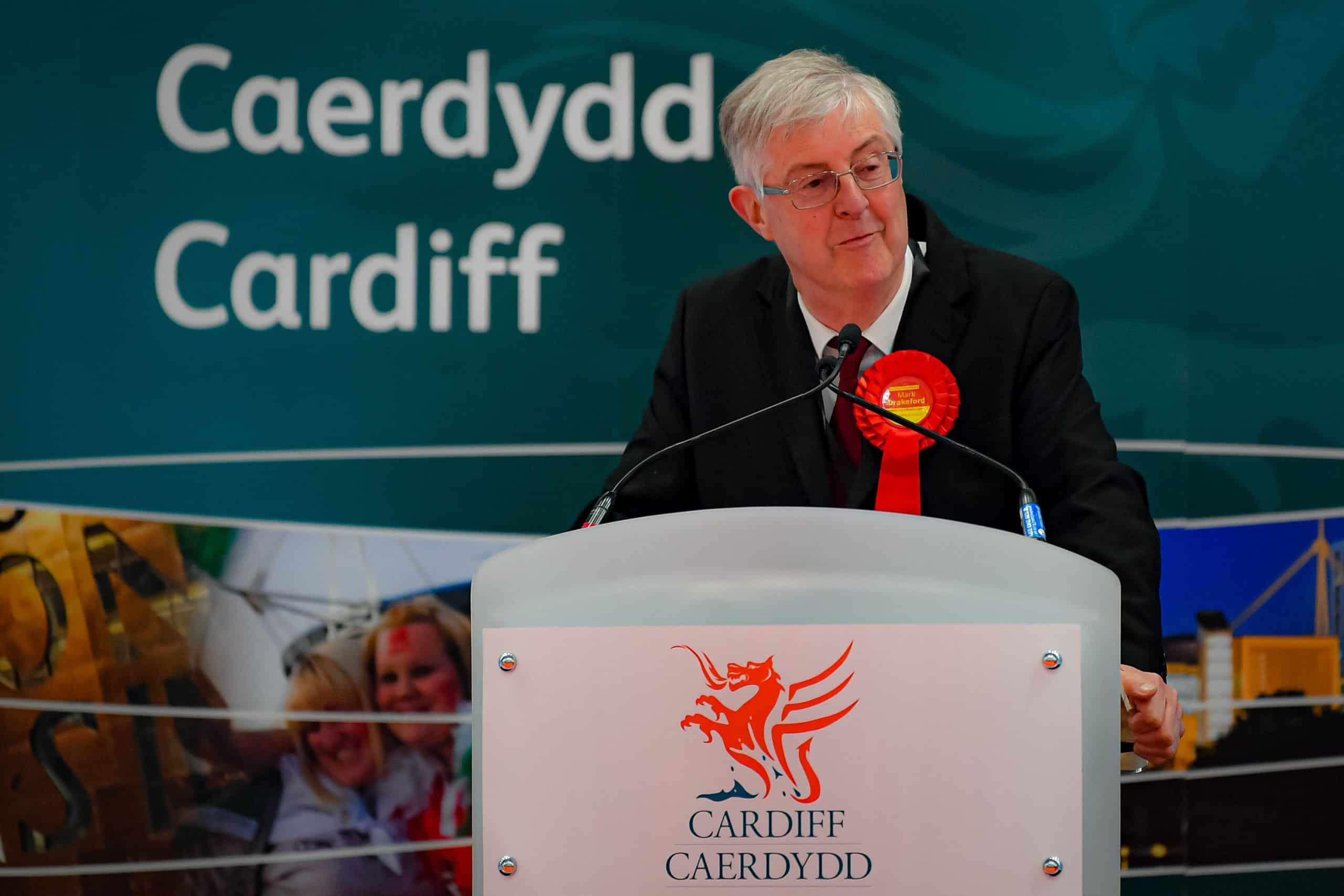
Wales is to launch a pilot universal basic income (UBI scheme, Mark Drakeford – the first minister – has revealed.


The new minister for social justice – Jane Hutt, a close ally of Drakeford’s – will be asked to work on the pilot.


Under a UBI scheme, every citizen – regardless of their income or means – receives regular sums of money to cover the basic cost of living.


Its supporters argue that it can alleviate poverty, and give people more time to retrain and adapt to changing workplaces – as well as making people more active, creative and engaged.

In the run-up to this month’s elections in England, Wales and Scotland, a worldwide group of activists and researchers called the UBI Lab Network asked candidates to sign a pledge vowing to put pressure on governments and councils to launch trials.

Twenty-five candidates who went on to win seats in the 60-strong Senedd signed up – as did 29 in the Scottish parliament.


Earlier this week, a Welsh government spokesperson said: “In principle, the idea of a universal basic income has its benefits. To introduce this in Wales would require an active commitment from the UK government as the welfare system is not devolved.”

But, in a radio interview on Friday, Drakeford went further. When asked if he would commit to a pilot, he replied: “Yes”.


“A basic income pilot is one of the specific responsibilities of our new social justice minister,” Drakeford said.

“It will have to be carefully designed, it will draw on the experience of attempted pilots in Scotland, but I have a very longstanding interest in basic income. I hope we will be able to mount an experiment here that will test whether the claims that are made for a basic income approach are actually delivered.

Advertisement

“We’ll do it on a cross-party basis. There are 25 members of the Senedd in different parties who have expressed an interest in it. I want to do it on that broad basis and design the best possible pilot.”

Jonathan Rhys Williams, of UBI Lab Wales, said: “This is a huge moment for the basic income movement in the UK and around the world. To see the first minister firmly commit to a trial is incredibly satisfying.

“This is a big step towards creating our generation’s NHS, and we look forward to learning more from Jane Hutt and her team. We hope the trial will include a number of different cohorts of people, such as employed people, unemployed people and children, and that it focuses on areas most in need of a basic income.”

Beth Winter, the Labour MP for Cynon Valley in south Wales, said: “This is an incredibly exciting time for UBI in Wales. My local authority, Rhondda Cynon Taf, is one of a number of councils who have expressed a desire to host a UBI pilot. This huge level of interest in UBI in Wales only serves to illustrate how people feel let down by the existing welfare system. It’s time for big changes and big ideas, and a well-designed pilot is the crucial next step towards a fairer future.”

The future generations commissioner for Wales, Sophie Howe, added: “Signalling basic income as a priority for the new government is an incredibly significant commitment by the first minister to tackling Wales’ poverty and health inequalities. It’s a huge moment.

“The current system isn’t working. Wales’ commitment to exploring a basic income once again proves it’s often the small countries that can be world-leading and make the biggest changes.”
Meet UK’s first Roma candidate who won seat by a landslide

“The traveller community have their way of living and it’s part of their human rights, to be able to travel and live the life you want to live based on the values you have inherited.”

Nicu Ion.
A Roma maths teacher is among the first Romanians in the UK to win council seats following the 6 May local elections.

Nicu Ion, 41, ran for the Elswick ward of Newcastle-upon-Tyne, on behalf of the Labour party, and won a massive 66 per cent of the vote.

Official results show he obtained 1,599 votes, whilst the Conservative candidate only received 436. It is a traditionally safe Labour area, but as we have seen in Hartlepool, the political fault lines are changing.

The London Economic has spoken to him in depth about his journey to becoming a councillor, and what he thinks about UK’s biggest parties, the Hartlepool by-elections, the EU and the Police and Crime Bill.

Who is Nicu Ion?

Nicu moved to the UK 12 years ago from the Black Sea port city of Constanta, and has been living in Newcastle since.

“We decided to move to the UK to offer our then three-year-old daughter a society where she would experience less discrimination and more equal opportunity,” he said.


When he first arrived, he worked as a teaching assistant across subjects and later qualified as a secondary school maths teacher.

Nicu thinks the UK is not a “perfect society” and that living in Newcastle has its challenges, but he is committed to the area: “The jobs are not as well paid but the people are very welcoming, very warm, so we love it here.”

A councillor for the Newcastle community

Nicu said the Romanian and Roma votes in Newcastle account for 10 per cent of votes, but the rest of his votes came from “most communities”.

He thinks the Roma community is hugely underrepresented, and as a councillor he wants to change that whilst serving all residents. “I am not a councillor for the Roma or Romanians, I am a councillor for the community,” he said.
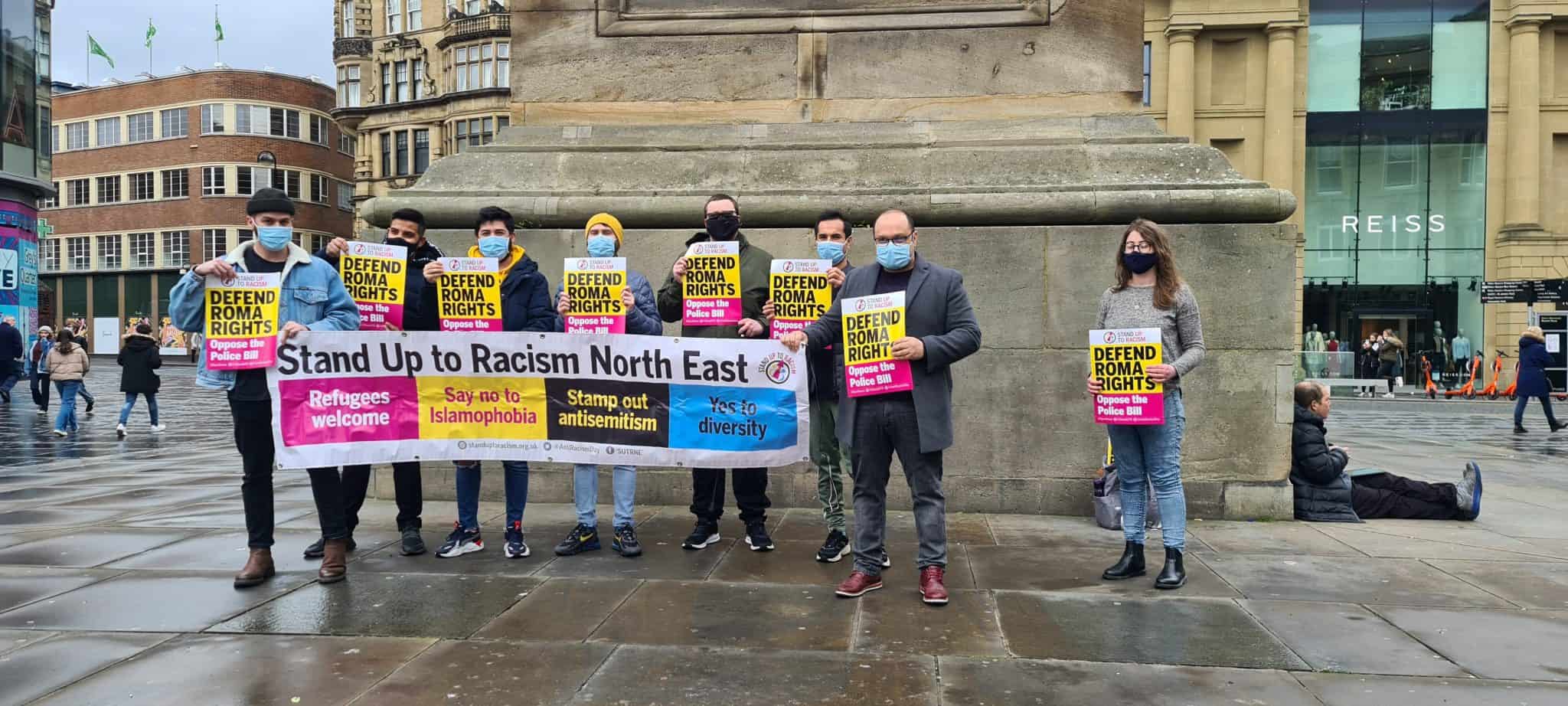
Nicu Ion (right), at a protest against the Police Bill

Asked why he made the jump from teaching to politics, he said: “It’s not a jump, I think they go together. As a teacher, I help the children, but as a councillor, I help the families.

“They go home, and where do they go, they go to deprivation. There are children whose only meal is the lunch at school.”
Pro-European and against the Tories’ Police Bill

Nicu is pro-European and believes UK being part of the EU was a good thing.

He said: “The benefits of being part of the EU, such as free trade and exports, are far more extensive than what we give up by following the policies and organisation of the EU.”

He has signed petitions and campaigned against the Tories’ Police and Crime Bill.

He thinks the bill is “dangerous”, and it’s “targeting lifestyle”.

He said: “Look at the past, with the position of the Jewish community, it started with targeting their way of life, things like their worship choices. They didn’t start with concentration camps, they started little by little.

“The traveller community have their way of living and it’s part of their human rights, to be able to travel and live the life you want to live based on the values you have inherited.”

‘UK’s greatest policies were done by Labour’

Nicu thinks people “don’t realise that the greatest policies we have in this country were done by the Labour Party”.

“People take pride in the NHS, but the NHS was done by the Labour government.”

He thinks the historical North-South divide can still be seen in the way people currently vote.

He said: “The North has been disadvantaged with infrastructure and jobs because of the Tory governments.

“We have big groups of people in the South who vote Conservative because they have been advantaged by them.”
Nicu on why the Tories won in Hartlepool and what will happen next

But when it comes to Hartlepool, who voted for its first Conservative MP after 47 years, Nicu thinks the pandemic and Brexit made it possible.

He said: “People voted based on their perception of the situation at this point, they think the government is doing really good things.

“My view is that any government would have done the same with the vaccines but a Labour government would have done much better. When the pandemic started, Boris Johnson hesitated many times with the lockdowns and many situations, we were behind many countries in Europe and many lives were lost.”

He thinks Brits will see the effects of Brexit in the years to come and change their voting behaviour.

He said: “When things go back to normal, people will realise what is happening and why it’s in their best interest to vote for the Labour Party.

“We are promoting policies and values for the working class, middle class and people struggling.”

Related: First Romanian County Councillor in the UK officially elected

Migrants4Labour: The new political group out to give EU citizens a voice in UK politics
The US is buying COVID-19 vaccine for everyone. That could pave the way for drug price reform


SARAH GANTZ THE PHILADELPHIA INQUIRER
MAY 12, 2021 

Before the coronavirus vaccines had even been proven to work, the United States scrambled to pre-order hundreds of millions of doses. The government has paid billions to Pfizer, Moderna and other vaccine makers so that every person in the country can get vaccinated free of charge.

It doesn’t matter if you’re uninsured, undocumented, don’t have a regular doctor or a driver’s license. In the interest of taming the pandemic, the government did away with some of the biggest barriers people often face in accessing health care.

Industry analysts and patient advocates are keeping a close eye on what happens next: If, once the federal health emergency has ended, the government stops bulk-buying the vaccine, costs could go up and people who are uninsured may be at risk of going without. Or perhaps the government’s approach to COVID-19 vaccination could lead the way to drug price reform that would allow federal programs, such as Medicare, to negotiate prices.


“The price negotiation the U.S. government has engaged in with COVID-19 vaccines is exactly what is prohibited for other drugs,” said Larry Levitt, executive vice president for health policy at the Kaiser Family Foundation. “We in the U.S. pay far higher prices for drugs than in other countries where governments negotiate or set prices. COVID-19 vaccines have been the exception because of the role the federal government played in purchasing doses and providing them to everyone at no charge.”

Normally, private health insurers, Medicare, Medicaid and other agencies that operate public health programs, such as Veterans Affairs, all independently negotiate rates for vaccines and prescription medications directly with pharmaceutical companies. Access depends on what type of health insurance you have.

But in order to get as many people as possible vaccinated quickly, the government took a different approach for the COVID-19 vaccine.

Under bulk purchasing agreements each worth over $1.5 billion, the U.S. is paying about $15 per shot for Moderna’s vaccine and $19.50 per shot for Pfizer’s vaccine — a price Pfizer’s chief financial officer, Frank A. D’Amelio, called “pandemic pricing.”

“Obviously, that’s not a normal price,” he said in February, during a call with investors following the release of the company’s 2020 fourth quarter earnings. Pfizer would normally charge between $150 and $175 per dose for this type of vaccine, he said.

The government’s ability to negotiate as the sole purchaser of vaccines in the U.S. only partly explains the bargain prices, Levitt said. Pre-purchasing before the vaccines were available likely helped hold down prices.

“Drug companies have likely been hesitant to look like they were price gouging in the middle of a pandemic, especially with a coming political debate over drug prices more generally,” Levitt said.

When will SLO Public Market open?
Here’s the latest restaurant to join the nearly-complete project at Bonetti Ranch
READ MORE

The pharmaceutical industry’s public reputation has soared during the pandemic, as people saw competitors collaborate in a worldwide moment of crisis.

Even at a steeply discounted price, drug companies have profited from the coronavirus vaccines. Pfizer, for instance, has a 20% profit margin on its vaccine, D’Amelio said during the February earnings call.

In response to questions from the Inquirer about its plans for vaccine pricing, Pfizer pointed to its 2021 proxy statements, in which executives said the company expects a “pandemic phase” — where governments are the primary purchasers of the vaccine — could last into 2022.

“We recognize the urgent need for people all over the world to receive this vaccine and have accordingly set the price of our vaccine for the pandemic period to encourage broad access, rather than using traditional value-based pricing frameworks,” the company wrote in its proxy statement.

IQVIA, a health care analytics company, estimates global spending on coronavirus vaccines will top $157 billion over the next five years. Competition from new manufacturers could help drive down prices, though cost will vary by country, said Murray Aitkin, a senior vice president and executive director of the IQVIA Institute for Human Data Science.

The U.S. government is expected to continue negotiating bulk purchasing agreements with vaccine makers for the duration of the public health emergency. If boosters are needed to protect against new variants or if researchers discover immunity lasts for only so long, the government will most likely purchase those, too, said Stacie Dusetzina, an associate professor in the Department of Health Policy at Vanderbilt University. That should help keep prices steady — at least for now, she said.

Pharmaceutical companies are known for routinely hiking prices of drugs that have been on the market for years. But a vaccine for a global pandemic is different, Dusetzina said.

“People really don’t have any leeway for price gouging when the country is in a bind, and this is definitely one of those times,” she said. “Globally, nationally, we’re in a bind. We should expect companies to be able to make a profit, but we should not expect or allow companies to make excessive profit.”

But eventually, once the pandemic is over, a coronavirus booster may be just one more of the common immunizations that children and adults receive, like those for influenza or hepatitis.

Under the Affordable Care Act, most health insurance plans are required to cover routine immunizations without an out-of-pocket cost. Medicare and Medicaid also cover at no additional cost most vaccinations.

The federal childhood immunization program ensures that all children are able to get vaccines, even if they are uninsured. Pfizer recently received emergency use authorization for its COVID-19 vaccine among children ages 12 to 15. Both Pfizer and Moderna are conducting clinical trials to test the vaccine in children as young as 6 months.

But without careful planning — or a policy change — people at the greatest risk of getting sick could have the least access to the vaccine, said Jen Kates, a senior vice president at the Kaiser Family Foundation. People who are uninsured often hold “essential worker” jobs that do not offer health benefits, and may be unable to work from home, take time off work or social distance.

Uninsured adults are often able to access routine vaccines at federally funded health clinics, but coverage isn’t guaranteed. People without health insurance are often reluctant to seek out medical treatment for fear that they won’t be able to pay.

“COVID is probably the clearest example people have had in their lifetime of what happens if you have an infectious agent that causes a subset of people to become very sick, be hospitalized and possibly die,” Kates said. “It really goes against everyone else’s best interest if there are groups that don’t have access to the vaccine.”

Musk poses dogecoin question, but what about Tesla’s Shanghai plans?

Tesla founder Elon Musk boosted dogecoin with a tweet, but reports of abandoned Shanghai plans pushed Tesla’s own stock down further
If Elon Musk was trying to reverse the effect on the price of dogecoin of his SNL appearance, he had limited success with a tweet on Tuesday. Tesla's own stock continued its downward move. File picture: Reuters.

(ATF) Tesla founder Elon Musk tweeted a query about whether the firm should accept dogecoin, giving the cryptocurrency a 20% boost, but Tesla’s own stock fell further on a report it has abandoned plans to expand in Shanghai.

Musk’s tweeted question about whether Tesla should accept dogecoin, the cryptocurrency that began as a joke, brought over 3 million responses from his 54 million followers and gave the token an initial boost of 20% from its price at the time of the tweet of 46 cents.

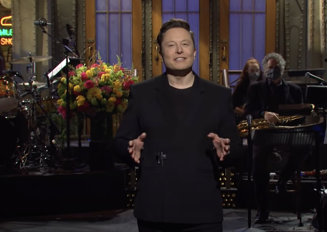
The spike in the value of dogecoin faded later in the day, however, and did not have a net effect comparable to his comment in a sketch on the US TV show SNL on May 8 that the token was a “hustle”, which contributed to a fall of roughly 30% from a recent high that at one point had its capitalisation at around $95 billion.

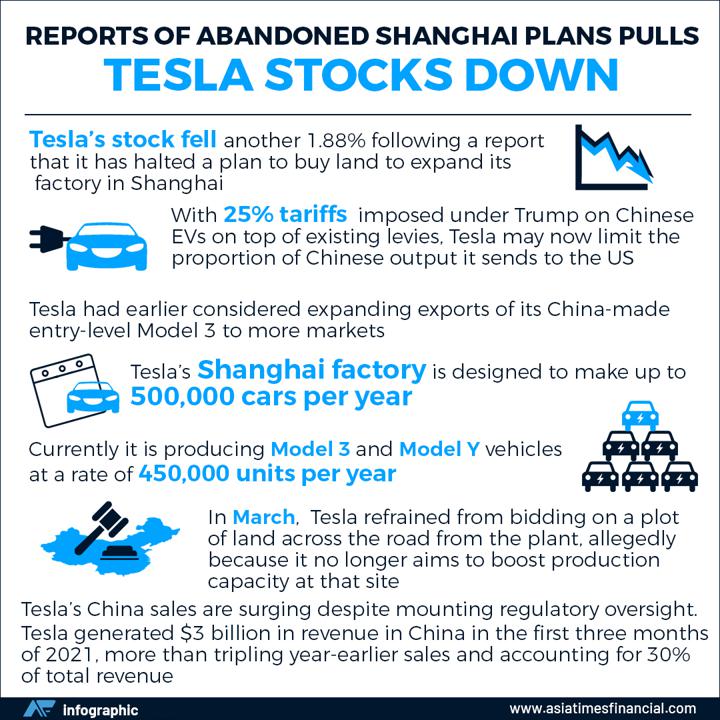
Tesla’s own stock fell another 1.88% on Tuesday May 11 – after a bruising dip of 6.4% on Monday – following a report that it has halted a plan to buy land to expand its Shanghai plant as part of a move to create a global export hub.

Reuters reported that with 25% tariffs on imported Chinese electric vehicles imposed on top of existing levies under former President Donald Trump still in place, Tesla now intends to limit the proportion of Chinese output in its global production.

Tesla is walking a reputational tightrope in China – the biggest market in the world for electric vehicles – so any perception that it is scaling back commitment to the country could be harmful, even if it is simply reworking its expansion plans.

Tesla had earlier considered expanding exports of its China-made entry-level Model 3 to more markets, including the United States, sources told Reuters, a plan that had not previously been reported.

Tesla currently ships China-made Model 3s to Europe, where it is building a factory in Germany that has itself been delayed by at least six months from a planned launch in July.

Tesla’s Shanghai factory is designed to make up to 500,000 cars per year, and is currently producing Model 3 and Model Y vehicles at a rate of 450,000 units per year.

In March, Tesla refrained from bidding on a plot of land across the road from the plant as it no longer aimed to boost China production capacity significantly, at least for now, sources said.

In a statement to Reuters, Tesla said its Shanghai factory was “developing as planned”.

The Shanghai city government, a key supporter in Tesla’s establishment of a wholly-owned factory in China – the first and only foreign passenger car plant not required to form a joint venture – did not respond to a request for comment.

Tesla had never declared an intention to acquire the land, which is about half the size of the 200-acre (80 hectare) plot housing Tesla’s current facility and would enable the company to lift capacity by another 200,000 to 300,000 cars, two sources said.

Tesla’s China sales are surging despite mounting regulatory pressure in the country after consumer disputes over product safety and scrutiny over how it handles data.

Adding capacity in Shanghai

It generated $3 billion in revenue in China in the first three months of this year, more than tripling year-earlier sales and accounting for 30% of total revenue.

Construction documents posted on a government website in March show Tesla is revamping its plant in Shanghai to add capacity.

Tesla still has land, designed for production but now used for parking, at its Shanghai site. One of the people said Tesla could expand its capacity beyond 500,000 on its existing site. Another said Tesla may acquire more land for more car production lines in the future.

Separately, Tesla is building facilities to repair and reproduce key components such as electric motors and battery cells and build electric vehicle chargers at its Shanghai plant.

The Shanghai government has been talking to several companies to sell the land for new-energy commercial vehicle production, said a person with direct knowledge of the matter.

Tesla faces intensifying competition in China from domestic players such as Nio, which is considering making mass market products under another marque.

Even before the trade war tariffs, relatively few China-made cars were shipped to the United States.

General Motors sells its China-made Buick Envision in the United States, paying the additional 25% tariff, but the SUV is not a high volume model.
CRIMINAL CRYPTOCAPITALI$M
Crypto Exchange Binance Under Investigation by Department of Justice and IRS


by San Lee

Crypto exchange giant Binance is allegedly under investigation by the U.S. Internal Revenue Service (IRS), as well as the Department of Justice (DOJ) for money laundering and tax evasion.

According to Bloomberg, the federal probe is confidential, with both the DOJ and IRS having “sought information from individuals with insight into Binance’s business.” The report accused Binance of succeeding without strong government oversight, with its lack of corporate headquarters and incorporation in the Cayman Islands — which levies no taxes and offers more lenient business practices.

“We take our legal obligations very seriously and engage with regulators and law enforcement in a collaborative fashion. We have worked hard to build a robust compliance program that incorporates anti-money laundering principles and tools used by financial institutions to detect and address suspicious activity,” said a Binance spokesperson in response to the recent probe.
Binance and Crypto Markets Continue to Face Regulatory Scrutiny

One of the biggest criticisms of Bitcoin and the crypto space at large has been their use for criminal activity. Back in January, Treasury Secretary Janet Yellen raised concerns over cryptocurrencies being used in terrorist and illegal financing, with other major financial figures like Charlie Munger associating the industry with “kidnappers” and “extortionists.”
5 BTC + 300 Free Spins for new players & 15 BTC + 35.000 Free Spins every month, only at mBitcasino. Play Now!

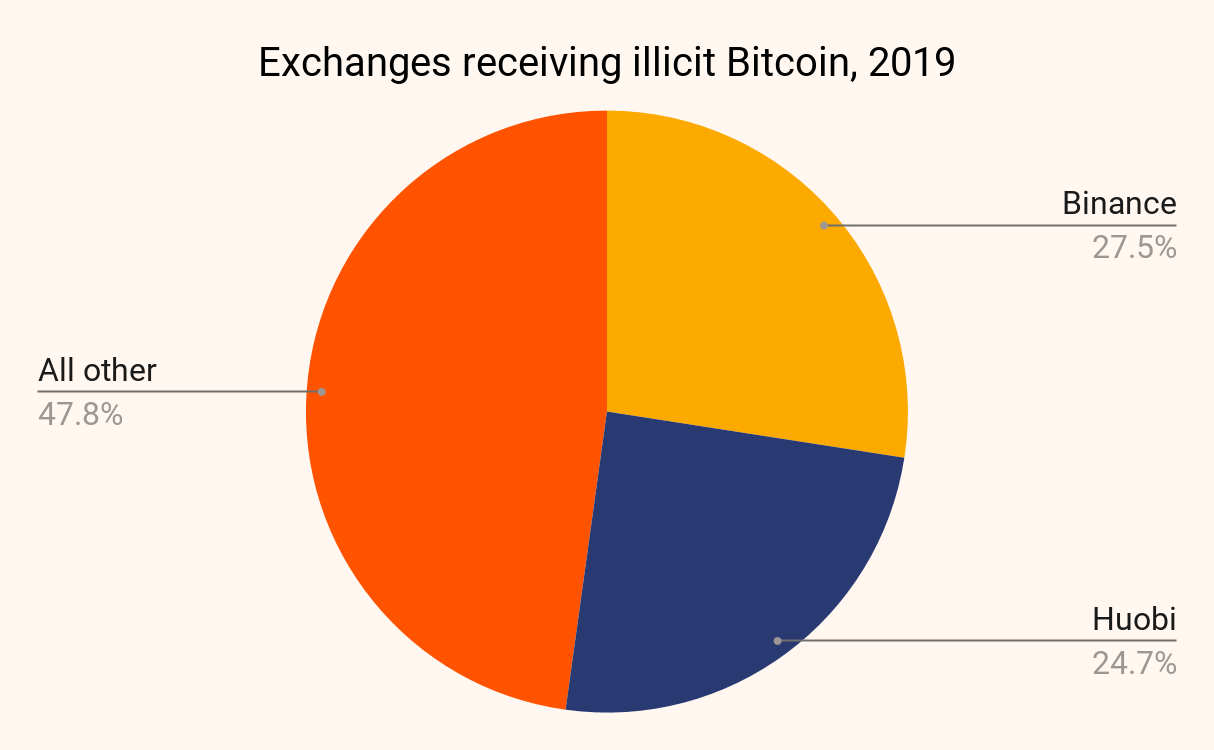
Chainalysis, a blockchain-based data analytics firm used by U.S. federal agencies, reported in 2019 that Binance saw more funds tied to criminal activity than any other exchanges based on the transactions that it had analyzed.

Binance and Huobi, which are two of the largest cryptocurrency exchanges in the world by volume, saw over 51% of total illicit transactions in the space. Source: Chainalysis Blog


“Binance and Huobi lead all exchanges in illicit Bitcoin received by a significant margin. That may come as a surprise given that Binance and Huobi are two of the largest exchanges operating, and are subject to KYC regulations. How can they be receiving so much Bitcoin from criminal sources? Let’s start by looking at the specific accounts receiving illicit funds at both exchanges.”

This is certainly not the first time Binance has been embroiled in legal troubles. Recently, the exchange’s venture into tradable stock tokens landed the company under the scrutiny of European regulators, including the U.K’s Financial Conduct Authority (FCA) and Germany’s BaFin. In March, Binance hired former U.S. senator Max Baucus as a regulatory advisor.

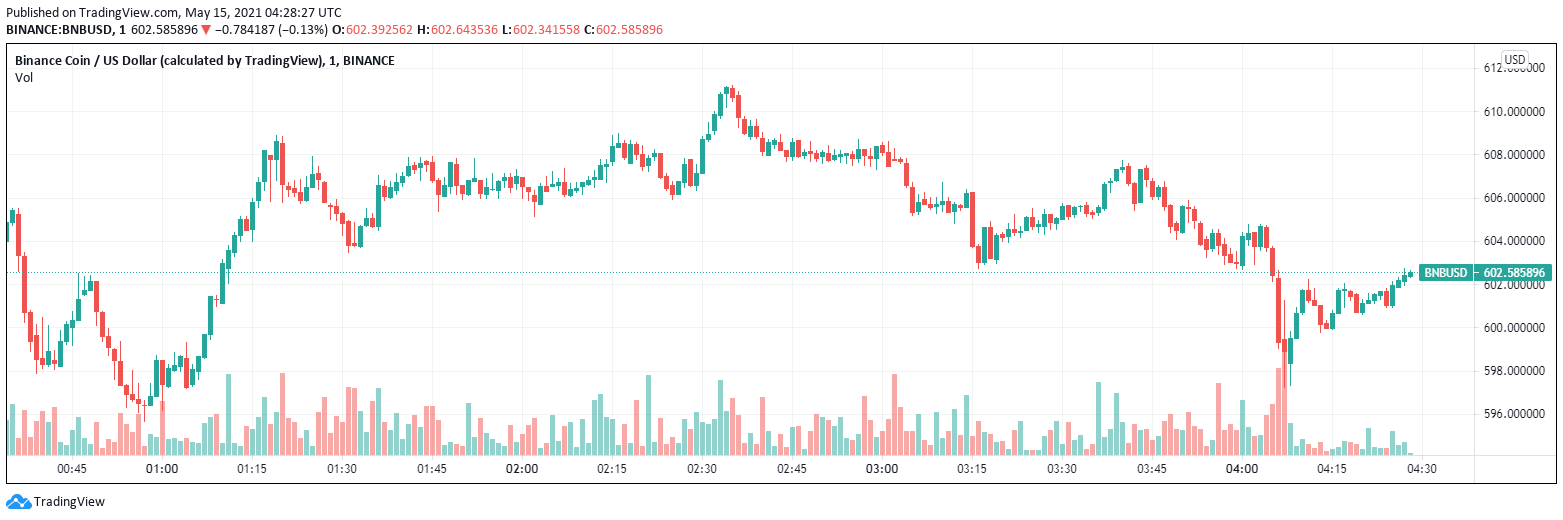
Binance Coin (BNB) on Tradingview.comFeatured image from UnSplash