Tuesday, May 18, 2021

Caitlyn Jenner’s bid to be California’s next Governator is falling flat


She hopes to repeat Schwarzenegger’s success as a celebrity running to replace the governor. Polls suggest it’s not working


Caitlyn Jenner in February 2020. Jenner has described herself as a ‘compassionate disrupter’ in California’s recall campaign. Photograph: Gregg DeGuire/Getty Images

Andrew Gumbel in Los Angeles
THE GUARDIAN
Thu 13 May 2021 

Caitlyn Jenner hopes to pull the same trick as Arnold Schwarzenegger: snatching away the governorship of bluer-than-blue California in the chaos of a free-wheeling recall election. So far, though, the voters are not buying it.

The Olympic track star and Kardashian step-parent has not lacked for media coverage since announcing her campaign last month. In the past week alone, she has been interviewed by the Los Angeles Times, CNN, and Fox News. She’s put out an introductory campaign ad positioning herself not as a Trump true believer – as many Republican candidates feel compelled to be these days – but as a “compassionate disrupter” who will shake the political establishment out of its complacency, much as Schwarzenegger promised to do in 2003.

Yet a new poll this week shows Jenner gaining little traction. Just 6% of respondents said they would vote for her, putting her far behind other Republican contenders including Kevin Faulconer, a former San Diego mayor, and John Cox, a businessman and perennial GOP candidate who in 2018 was trounced by the man they all want to unseat, Governor Gavin Newsom.
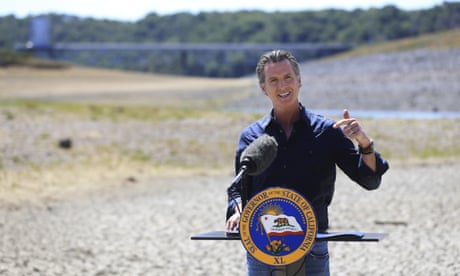

California’s recall election: how does it work – and will Gavin Newsom survive?

Read more


Schwarzenegger, by contrast, was the clear frontrunner from the moment he stepped into the 2003 recall, using appearances on Jay Leno’s Tonight Show and on Oprah to build tension around the question of whether he would run at all and deploying the considerable communications skills he’d built up over decades of celebrity interviews.

Jenner’s media savvy is not quite so evident. She told Sean Hannity on Fox News that she wanted to “secure” the border wall promoted by Donald Trump. But when asked in a subsequent interview how she would do that when the border was not within the state government’s control, she changed the subject.

In voicing her frustration with California’s large homeless population, she created an unflattering Twitter sensation by talking about a fellow private plane owner who “can’t take it any more”.

She alienated many transgender Californians and their supporters by saying, more than once, that she opposes trans girls competing on school sport teams that match their gender. And, on Tuesday, she told Dana Bash on CNN that she hadn’t found anything to get excited about in the 2020 general election and went golfing instead of going to the polls.
  
Arnold Schwarzenegger talks to reporters as he leaves the Los Angeles county registrar’s office carrying the papers needed to run for governor, in 2003. Photograph: Lee Celano/AP


The statement raised questions about her interest in California policy issues, in a year when high-profile topics such as cash bail, the rights of ride-share drivers, rent control and affirmative action were on the ballot. It also turned out to be untrue, as revealed when Politico dug up documentation showing that she had voted last November after all.

With Jenner apparently unaware that who votes and who does not is a matter of public record in California, a former Republican campaign operative, Jack Pitney, told Politico: “This is not someone who is serious about public life.”

Jenner’s struggles are about the timing of her celebrity candidacy as much as the content. California voters ended up deeply disenchanted with Schwarzenegger’s governorship, even if he remains personally popular, and have demonstrated in every election since 2016 that they found Trump’s own celebrity “disruptor” campaigns little short of abhorrent. (Trump lost California by about 30 points in 2016 and in 2020.)


The recall circus is back: Schwarzenegger’s 2003 win and the fight to oust Gavin Newsom


They are also far from sold on recalling Newsom. The governor has taken his share of bipartisan criticism over his handling of the pandemic, and he provoked widespread outrage when he was caught dining at Napa Valley’s premier restaurant, the French Laundry, in violation of his own lockdown rules last November. But the threat of the recall has spurred him into moving much faster to reopen the economy and the state’s public schools. Now that the pandemic is receding and 36% of Californians are fully vaccinated, his approval ratings are back above 50%. Almost every poll predicts he will survive the recall challenge.

A candidate of Schwarzenegger’s charisma could potentially upend that support between now and election day, expected in October or November. But Jenner appears to have just a small political base . Only 13% of Republicans back her, according to this week’s poll, and she has little crossover appeal to Democrats. Her poor initial showing is likely to lead to problems with fundraising and courting the endorsement of Republican leaders in and out of California.

For now, the “Caitlyn for California” wine glasses are going for $35 a pair. It’s unclear, though, if anyone is buying.
THE WAR ON CHILDREN 
Police shootings of children spark new outcry, calls for training to deal with adolescents in crisis


KIMBERLY KINDY, JULIE TATE, JENNIFER JENKINS AND TED MELLNIK
The Washington Post
MAY 13, 2021

Stavian Rodriguez squeezed his 15-year-old body through the drive-through window of the Okie Gas Express convenience store, poking his hands out first so police could see that they were empty. He jumped to the ground, holding his hands in the air, then lifted his shirt to reveal a gun tucked into his front waistband. Using the tips of his thumb and index finger, Stavian gently pinched the end of the barrel far from the trigger and dropped the weapon to the ground.

As the gun hit the pavement, Stavian reached for his rear pocket; a volley of bullets burst out and the teenager sank to the ground, surveillance and camera footage show. Dozens of Oklahoma City police officers had responded last November to the 911 call at the convenience store, where Stavian was a robbery suspect. Five of them shot 13 bullets into the teen, from his head to his feet.

He is one of 112 children who have been fatally shot and killed by police between Jan. 1, 2015, and Monday, according to a Washington Post database that tracks fatal police shootings. Over the same period of time, 6,168 adults were shot by police.

“They knew he was a child. They were joking about whether he was in there calling his mom,” said Cameo Holland, Stavian’s mother, referring to conversations recorded on officers’ body cameras. “No one was asking, ‘How do we tactically approach this so no one dies today?’ ”

Furor erupts over Columbus police officer's fatal shooting of girl, 16


The five officers who fired shots into Ms. Holland’s child are now facing first-degree manslaughter charges. This is a rare response by prosecutors who tend to side with police investigators who routinely clear officers of wrongdoing. Prosecutors must also consider whether they can persuade jurors, who tend to trust police more than other witnesses. The department said the officers shot because they perceived a threat, and the officers’ attorneys say the shooting was justified.

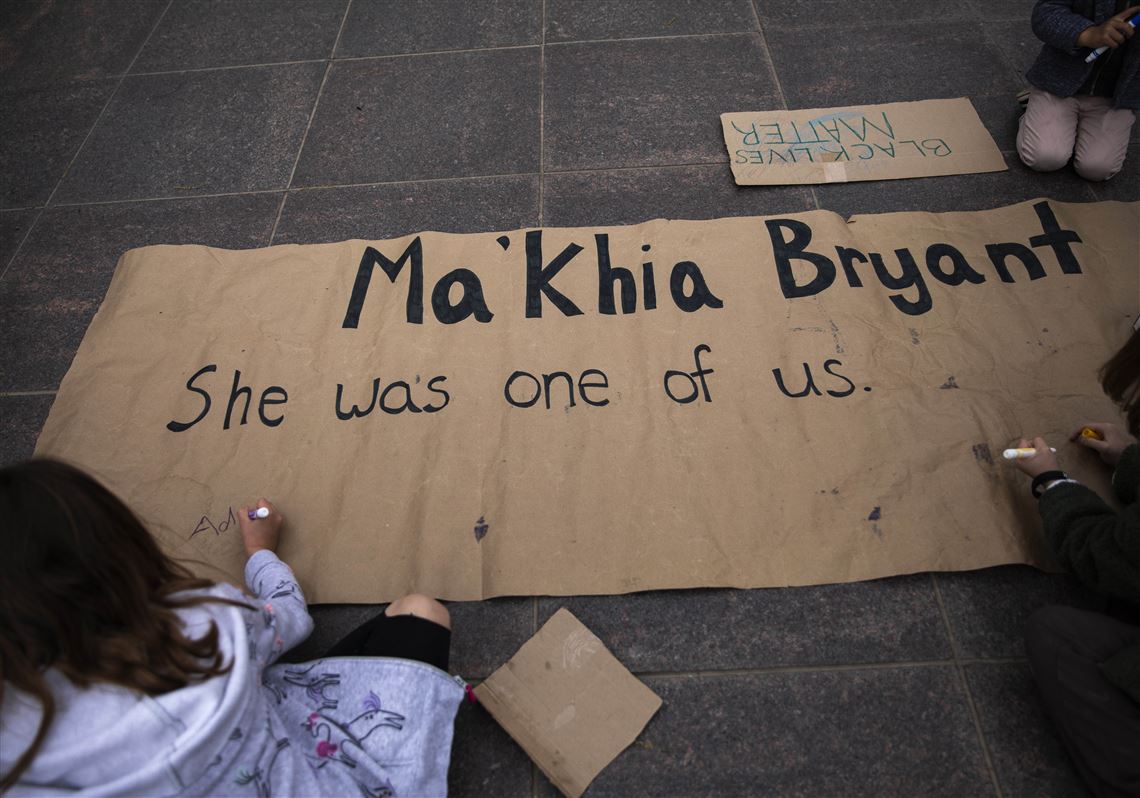
The long-standing question of how fatal police shootings of children could be avoided and lives spared has engulfed the nation in recent weeks. The debate was renewed by the death of 13-year-old Adam Toledo, who was killed by an officer on March 29 in Chicago and further fueled by another fatal police shooting of a knife-wielding 16-year-old, Ma’Khia Bryant, on April 20 in Columbus, Ohio.

Three other children were shot and killed by police during the three-week span between Adam’s and Ma’Khia’s deaths.

Police leaders have asked the public to withhold judgment in the Adam Toledo and Ma’Khia Bryant cases until the investigations into their shootings are complete. But they acknowledge that communities are less likely to listen as they become increasingly weary and distrustful of police. A Washington Post-ABC News poll in April showed that 55% of Americans said they were not confident that police are adequately trained to avoid excessive use of force — up from 52% in July and 44% in 2014.

Patrick Yoes, national president of the Fraternal Order of Police, said he hopes the public will recognize that officers are faced with instant life-or-death decisions and that even a child can be dangerous, especially if armed.

Of Officer Nicholas Reardon, who shot Ma’Khia, Mr. Yoes said: “I assure you he wasn’t focused on her age. He was focused on the knife. He was looking to save a life. Even children can pose a threat.”

Lawrence Miller — a clinical, forensic and police psychologist based in Palm Beach County, Fla. — said there is no national standard or set of protocols regarding how officers should handle encounters with children.


The Associated Press
Prosecutor on leave over statements about Chicago boy shot by police


He and other police training experts said they know of no academies or programs that offer specialized training to officers in this area as they do for other segments of society, such as the mentally ill.

“They need to talk to them like they are children, not yell a bunch of commands at them,” Mr. Miller said.

Of the 112 people younger than 18 who have been fatally shot by police, according to The Post’s database, five were shot and killed by Columbus Police Department officers, the most of any single agency. Nine other departments had multiple fatal shootings of children. In the other 87 departments with such shootings since 2015, one child’s death was recorded.

The database shows that the circumstances leading to the shootings of children are varied, with about half beginning with a robbery, a traffic stop, a stolen car or a 911 call. Most of the incidents took place during daytime hours; one appears to have involved alcohol use by the child; 19 of the children were experiencing a mental health crisis at the time of the shooting.

The database shows that children are frequently armed with a gun or a knife during these fatal police encounters, but not as often as adults who die by police gunfire — 63% of the time for children vs. 76% for adults.

Sixty-six percent of the children who died in police shootings were Black, Latino, Asian or Native American compared to 44% of adults who were racial minorities.

Children also were more often shot while running from police: 50% compared to 33% of adults.

The youngest of the children who have died were 6-year-olds — Kameron Prescott in Texas and Jeremy Mardis in Louisiana. Both were killed as police fired at but missed the suspects who were their intended targets.

The renewed focus on shootings of children owes much to their visibility: Videos of the Adam Toledo and Ma’Khia Bryant killings went viral, prompting national protests and stinging rebukes of police from high-profile celebrities and politicians.

Public pressure prompted police officials to quickly release body-camera video of the incidents. In one, Ma’Khia, who was Black, appears to be swinging a knife at two girls before she is shot. In another, Adam, who was Latino, is running from police before he stops and turns, tossing an object that police say was a firearm. A split second later, after turning toward the officers with his hands raised, he is shot in the chest.

Among the 112 deaths of children in the database, five incidents have resulted in officers being criminally charged, according to a Post analysis. Four officers in three cases have been found guilty on charges that ranged from murder to aggravated assault. An officer in a fourth case faced a single homicide charge, which allowed jurors to chose between murder or manslaughter, but they ultimately acquitted him.

In the fifth case, the five officers who fired the lethal shots at Stavian last year were charged in March with first-degree manslaughter. They have pleaded not guilty. No trial date has been set.

Prosecutors dispute the police department’s and the union’s characterization of the events that led to Stavian’s death. The department initially said in a news release that the teen was shot because he “did not follow officers’ commands” and had been “holding a pistol” when he climbed through the window.

“Our brave officers leave their families behind and walk into dangerous situations every day to protect and serve this community,” Mark Nelson, Oklahoma City Fraternal Order of Police Lodge 123 vice president, said in a statement several days after the shooting. “Officers often provide commands in tense moments to ensure the safety of all individuals involved. Police training and experience tells us furtive movements and a lack of following commands present a deadly threat.”

Since then, additional videos became public — from police body cameras, news camera crews and surveillance cameras — and a more complex picture of what happened that night in November began to emerge.

Court documents say security footage from inside the store, along with a police interview with the clerk, shows that the robbery began with Stavian pointing a gun at the employee as he demanded money. Another teen, 17-year-old Wyatt Cheatham, loaded packs of cigarettes into a backpack. (Wyatt entered a guilty plea on April 19 on a felony charge of robbery with a firearm.)

Both youths left the store briefly, and after about two minutes, Stavian returned alone and demanded more money, according to court records.

The clerk escaped through a window and used a security system to lock Stavian inside, court records say. He called 911 and officers poured into the parking lot within minutes, several taking cover behind the gas pumps.

For more than 10 minutes, officers yelled conflicting and overlapping commands to Stavian as he hid inside the store, video and court documents show. In charging documents, prosecutors said there appeared to be no commanding officer organizing the response.

Police body-camera videos also captured officers joking about Stavian and the robbery during the standoff. “He’s probably calling his mom,” one says. Another says, “Oops,” and Officer Bethany Sears laughs and adds, “I messed up,” speculating on the teenager’s state of mind as he hides.

Minutes later, Stavian stuck his hands through the window and pulled himself through. On a half-dozen videos, officers can be heard simultaneously yelling different commands at him — “Hands!” “Facedown! On the ground!” “Drop it!”

A strobe light from at least one of the patrol cars — often used to disorient suspects — flashed into Stavian’s face.

As he dropped the gun to the ground, the teen reached for his left rear pocket.

At that moment, Officer Sarah Carli fired a 40 mm foam projectile that struck the teenager, according to prosecutors.

Almost immediately, the other officers fired at him, the video shows. “A cellphone was recovered from the left rear pocket he had his hand in at the time he was shot,” the prosecutors’ affidavit said.

On a body-camera video, Stavian winces in pain as officers yell at the teen to show his hands. Officer John Skuta can be heard repeatedly muttering “Damn it.”

Then officers quickly huddle, video shows, and one of them tells Officer Brad Pemberton to shut off his body-camera video. Police are only required to leave their cameras on when they are interacting with the public, according to department policy.

Officers Pemberton, Sears, Skuta — and also Officers Jared Barton and Corey Adams — were those charged with first-degree manslaughter, which carries a sentence of between four years and life in prison.

Attorneys representing the officers who have been charged say the shooting was legally justified because Stavian reached toward the back of his pants after he dropped the gun. At that moment, they say, officers thought he could have been reaching for a second weapon.

“This case is ultimately about whether each individual officer responded to a perceived threat in a way that was reasonable and in accordance with the law,” the attorneys said in a joint statement. “Five officers, with similar training, came to the same conclusion when the suspect made a sharp movement toward his waistband after being told to show officers his hands and get on the ground. While the results were tragic, the officers’ actions were reasonable and legally justified under the circumstances created by an armed robbery suspect.”

David Thomas, a forensics psychologist and former police officer, said there is a natural assumption that officers know how to respond differently in tense encounters if it becomes clear that they are dealing with a child.

“They think they will put on their father’s hat or mother’s hat and be able to sit down and talk to a child without being a macho cop,” he said. “Or have a big brother or big sister conversation. Training for this — it just doesn’t exist.”

Mr. Miller, the Florida psychologist, said that children’s responses to police commands are often found “at both ends of the spectrum.” They are either quickly compliant or, he said, become confused or defiant and attempt to run away.

“They are egocentric, impulsive, unpredictable,” Mr. Miller said of teens. “They are less likely to show the kind of restraint adults tend to, unless there is a mental illness or drugs involved.”

Mr. Thomas said it would be helpful for officers to learn more about development of the human brain, which is not complete until someone reaches their mid-20s. That can make teens more impulsive.

Mr. Miller said officers often put themselves and children at risk by underestimating them, especially if they are slight in build. He said the Stavian Rodriguez case is an example of this, as police joked about the unfolding scene, and, in some cases, stood out in the open at the window where they knew the teen would have to exit.

“It should never have never gotten to that point. Being a child, in a sense, worked against the decedent. If it was an adult, they would have taken cover,” Mr. Miller said. “They would have probably had him strip down to his skivvies so they wouldn’t have to worry about whether he had a weapon on him.”

Ms. Holland, Stavian’s mother, said without the video that documented how police handled the incident, prosecutors would have been left with the version of events that the police department presented after the shooting.

In 66% of the database incidents involving children, there is no video documentation. Sometimes the only witnesses who support an officers’ contention that a shooting was justified are fellow officers at the scene.

The 2016 fatal shooting of 13-year-old Tyre King falls into this category. Like Ma’Khia, the Black teen was fatally shot by a Columbus officer.

The officer, Bryan Mason, said the teen was reaching into his shorts for a weapon — which turned out to be a BB gun — when Officer Mason shot and killed him. A fellow officer backed up Officer Mason’s description of the incident, court records show. However, three civilian eyewitnesses, including a nun, said they did not see this movement, instead saying the teen appeared to be trying to run away, according to court records.

It was Officer Mason’s fourth shooting — and the first fatal one — in six years, personnel records show. City officials said the shooting was within department policy, as they determined his previous three shootings had been, and a grand jury declined to bring charges. Officer Mason’s attorney did not respond to calls and emails seeking comment. Officer Mason could not be reached for comment.

In all five incidents in which children were shot by police, the Columbus department determined that the shootings were justified.

“This is never an outcome Columbus police want to see. Any loss of life is tragic, even more so when it involves a juvenile,” said Columbus Public Safety Director Ned Pettus. “Each of these incidents is singular and has to be evaluated on its own merits and circumstances. Our priority every day on every call is to protect life and safety.”

Dearrea King, the teen’s grandmother, said police need to understand why children — particularly those who are racial minorities — sometimes do not comply with their commands.

“These kids are running away because they are afraid,” said Ms. King, who has a lawsuit pending against the city. “They are trying to get someplace safe because they do not trust the police.”

Like Officer Mason, three of the Oklahoma City police officers involved in Stavian’s shooting had also been cleared in previous shootings. In each case involving the Oklahoma City officers, the person they shot died.

Ms. Holland said she worries that when departments justify police shootings, future shootings could be fueled.

“They are used to shooting people and they are used to not having a lot of consequences,” she said. “How do you [kill] multiple people and are somehow still fit to carry a gun? Supposedly they are traumatized from these shootings. If they are so traumatized, why don’t they do something different?”

First Published May 13, 2021, 2:45am
Scientists Discover How Hidden Underwater Forces Can Increase Hurricane Intensity

David Nield SCIENCE ALERT 16/5/2021

Previously undiscovered underwater currents can seriously increase the power of hurricanes, a new study shows, research which should make storm system forecasts more accurate in the future.
© NASA

The findings were made through detailed measurements of the 2017 Category 5 storm Hurricane Maria, taken from a suite of subsurface oceanographic instruments. The analysis revealed interactions between ocean islands and the hurricane that fed the storm with more and more energy.

Researchers estimate that Hurricane Maria gained up to 65 percent more potential intensity because of the sloping shelf patterns of the island shorelines, which produced currents that strengthened and stabilized the different bands of temperature in the ocean.

"We were surprised to find that the direction of the approaching hurricane winds relative to the coastline kept the ocean surface layer distinctly warmer compared to the colder waters below," says oceanographer Olivia Cheriton, from the US Geological Survey (USGS).

"This is important because warmer sea surface temperatures provided more energy for the storm."

Sea-surface temperatures (SSTs) are one of the main factors controlling the energy in a hurricane, and in this case the records showed that waters around the coasts of the battered islands didn't cool down until at least 11 hours after Hurricane Maria had passed.

The stratification or layering of temperatures plays a big part in cooling rates, because it means warmer and cooler waters don't mix. The researchers' data showed how a warm layer of water was kept trapped by rising pressure underneath and strong ocean currents (produced by the hurricane winds) from above.

Underlying ocean temperature changes aren't currently factored into hurricane model simulations, but the researchers show that these shifts can control both the intensity and the direction of a storm system.

There are thousands of islands in tropical oceans that could be hit by similar sorts of hurricane systems, and the new data – which is of a much higher resolution than recordings made by satellites or buoys – should help produce more accurate forecasts.

"While hurricane research along the US Gulf and East Coasts continues to advance, much less is understood about hurricane interactions with small islands, whose communities are especially vulnerable to hurricane impacts," says geologist Curt Storlazzi from USGS.


diagram, map: hurricane chart
Auto Rotation On
Full Screen

1/1 SLIDES © Provided by ScienceAlert

hurricane chartOcean currents identified by researchers as the eye of the hurricane passes. (Cheriton et al., Science Advances, 2021)

We're all well aware of the devastating impact of hurricanes, and Maria was responsible for more than 3,000 deaths, more than $90 billion in damage, and the longest blackout the US has ever seen. Improving hurricane forecasting is a crucial part of the work to try and reduce those kinds of impacts.

Human life and critical infrastructure can be better protected if people know what's coming, and as the planet warms up we're seeing more hurricanes of greater intensity – so experts need all the data they can get to better understand them.

Interestingly, the array of high-resolution ocean measurement tools that captured all this valuable full-column water temperature data weren't put in place to measure Hurricane Maria – the instruments were there to study coral reefs around Puerto Rico, until the storm came along.

"We had originally planned to recover the instruments in October 2017, but that all changed after Hurricane Maria," says geological oceanographer Clark Sherman, from the University of Puerto Rico at Mayagüez.

"It was not until January 2018 that we were able to get back in the water and we weren't sure what, if anything, would still be there."

The research has been published in Science Advances.


USGS Scientists Add Another Piece to Puzzle of How Hurricanes Can Gain Strength
New Info May Aid Forecasting, Save Lives & Protect Infrastructure


Release Date: MAY 12, 2021

Unique observations collected by U.S. Geological Survey scientists during Hurricane Maria in 2017, revealed previously unknown ocean processes that may aid in more accurate hurricane forecasting and impact predictions.

Such forecasting is critical in preparing communities in the storm's path to help minimize the loss of life and the long-term repercussions of damage to critical infrastructure such as airports, communications networks, roads and power grids.

The research,published in the journal Science Advances, reveals how the interaction between ocean islands and extreme storms can generate underwater currents that make the storms more powerful. The results are applicable to the thousands of islands in the world's tropical oceans subject to these types of weather systems.

"We were surprised to find that the direction of the approaching hurricane winds relative to the coastline kept the ocean surface layer distinctly warmer compared to the colder waters below," said USGS oceanographer Olivia Cheriton, lead author of the paper. "This is important because warmer sea surface temperatures provided more energy for the storm."

The underwater instrument package that collected the high-resolution ocean observations during Hurricane Maria. The package included an acoustic current profiler, an acoustic current velocimeter, and temperature, salinity, and turbidity sensors and was deployed at a depth of 54 meters, 12 kilometers offshore of La Parguera, Puerto Rico. Photo taken July 27, 2017 looking south-southwest.

(Credit: Evan Tuohy, University of Puerto Rico-Mayaguez. Public domain.)

Researchers from the USGS and the University of Puerto Rico-Mayaguez did not set out to make observations during a hurricane. In the summer of 2017, they deployed a large suite of subsurface oceanographic instruments off the southwest coast of Puerto Rico to study the area's coral reefs. Those plans changed when Hurricane Maria, the strongest weather system to hit Puerto Rico since 1928, made landfall on Sept. 20, 2017.

"We had originally planned to recover the instruments in October 2017, but that all changed after Hurricane Maria," said Clark Sherman, UPR-M professor of marine science. "It was not until January 2018 that we were able to get back in the water and we weren't sure what, if anything, would still be there."

The instruments not only survived the passage of Hurricane Maria, they collected a rare, high-resolution set of underwater ocean observations not detectable by more common surface observation platforms, such as buoys or satellites. In addition, this type of subsurface information is not currently incorporated into ocean hurricane model simulations. Doing so may improve forecasts.

Understanding how the underlying ocean temperature changes in response to hurricane forces is critical to accurately forecasting the tracks and intensities of extreme storms. Hurricane Maria caused thousands of deaths, more than $90 billion in damage and the largest electrical blackout in U.S. history.

"While hurricane research along the U.S. Gulf and East Coasts continues to advance, much less is understood about hurricane interactions with small islands, whose communities are especially vulnerable to hurricane impacts," said Curt Storlazzi, USGS research geologist and the project's chief scientist.

Information from this study is intended for use by a wide variety of scientists and emergency managers working on hurricane forecasts and impacts to coastal communities.


Scientists from the U.S. Geological Survey Add Another Piece to the Hurricanes' Puzzle Can Gain Strength

New Information Could Help Develop Future Forecasts, Save Lives and Protect Essential Infrastructures


Warm waters off the coast of Puerto Rico were able to increase the intensity of Hurricane Maria in September 2017 according to recently published data. Observations show unknown ocean processes so far that could help predict more certainly hurricane forecasts and impacts.

Research published in the scientific journal Science Advances reveals how the combination of strong hurricane-force winds and a steep ocean-platform island can generate underwater currents that keep the ocean surface warm, providing more energy for extreme storms.

Researchers from the United States Geological Survey (USGS) and the University of Puerto Rico, Mayaguez Campus (UPRM) were not planning to comment during a hurricane. In the summer of 2017, they placed a series of oceanographic instruments leaving the southwest coast of Puerto Rico to study coral reefs in that region. These plans changed when Hurricane Maria, the most powerful atmospheric phenomenon that has passed through Puerto Rico since 1928, hit the island on September 20, 2017.

"We planned to extract the instruments in October 2017, but all that changed after Hurricane Maria passed," said Clark Sherman, UPRM's professor of Marine Sciences. "It wasn't until January 2018 that we were able to go to the ocean and we weren't sure if we were going to find some instruments there."

The instruments not only survived the passage of Hurricane Maria, but unusual high-resolution underwater data were obtained.

"We were surprised to discover that the direction in which hurricane winds approached relative to the coastline kept the ocean surface layer warmer compared to the colder waters in the underwater layers," said Olivia Cheriton, USGS oceanographer and lead author of this scientific paper. "This is an important finding, because hotter waters on the surface provide more energy for storms."

Understanding how the underlying temperature of the ocean changes in response to hurricane forces is critical to accurately forecasting the trajectories and intensities of extreme storms. This coastal underwater dynamics could not have been detected by common surface platforms such as buoys or satellites and are not currently implemented in computer models for hurricane simulations.

Hurricane Maria caused thousands of deaths, more than $90 billion in damage, and the largest electric blackout in U.S. history. "As hurricane research across the U.S. continent continues to progress, less is known about the interaction of hurricanes with small islands, whose communities are vulnerable to hurricane impact," said Curt Storlazzi, USGS research geologist and head of this project.

The information in this study applies to the thousands of islands in the world's tropical oceans subjected to extreme storms and is intended for use by a wide variety of scientists and emergency handlers working on hurricane forecasts and impacts in coastal communities.
Related Content

Science
Earth's Core May Have Trapped Noble Gases From Ancient Solar Wind Blasts


Powerful solar winds escape from coronal holes in the Sun's atmosphere. (NASA/SDO/AIA)


MICHELLE STARR
17 MAY 2021


4.5 billion years ago, when the Solar System was still forming, particles from our Sun's solar wind probably got caught up in the core of Earth as it assembled from space rubble.

That's the conclusion scientists have drawn after analysing an iron meteorite and finding an excess of noble gases with isotope ratios consistent with solar wind. Since iron meteorites are thought to be analogous to planetary core formation, this suggests similar abundances ought to have been included in Earth's core.

The meteorite, named Washington County for the place it was found back in 1927, is a rare one. Of all the space rocks that fall to Earth, roughly only 5 percent of the ones we retrieve are made of iron.

Based on our understanding of planet formation, these iron meteorites are interpreted as the cores of failed planets.

Planets are thought to form when their stars are very young - possibly even at the same time as the star is still forming - and are orbited by a swirling thick cloud of dust and gas. Dust and pebbles in this cloud start to collide and stick together: first electrostatically, then gravitationally as the object grows more massive and can attract more material. These objects are basically planet 'seeds', or planetesimals.


As planetesimals grow, they become hot and a bit molten, allowing material to move around. Core differentiation is the process whereby denser material sinks inwards towards the center of the object while less dense material rises outwards.

Not everything that starts to become a planet actually makes it all the way. Asteroids are thought to be the remnants of planetesimals that were disrupted and fragmented before they could reach full planet growth; and iron meteorites are thought to be fragments of differentiated planetesimal cores.

For this reason, planetary scientists study iron meteorites to better understand the formation of our own planet, which has a dense iron core. And the Washington County iron meteorite has been known for some time to be special.

Scientists first discovered that it seemed to contain unusual isotopes of the noble gases helium and neon back in the 1960s, and researchers have been intrigued by it ever since.

Initially, the gases were thought to be cosmogenic in origin - that is, generated by interactions with galactic cosmic rays to which the iron meteoroid was exposed during billions of years in space.

Then, in the 1980s, astronomers found the ratios to be more consistent with solar wind isotope ratios. Now, a team led by cosmochemist Manfred Vogt of the University of Heidelberg in Germany has confirmed it.

Using noble gas mass spectrometry, they have positively identified that some of the isotope ratios of neon and helium found in the Washington County meteorite are much more consistent with a solar wind rather than a cosmogenic origin.

"The measurements had to be extraordinarily accurate and precise to differentiate the solar signatures from the dominant cosmogenic noble gases and atmospheric contamination," Vogt explained.

Extrapolating the meteorite to planetary cores, the team concluded it was possible that similar solar wind particles had been captured by Earth's forming core, and dissolved into the liquid metal. Interestingly, observational evidence supports this conclusion.

Solar isotopes of helium and neon can also be found in the igneous rock of oceanic islands. At least some of these oceanic basalts are sourced from deep mantle plumes thought to extend as far down as the core-mantle boundary, around 2,900 kilometers (1,800 miles) deep.

Since the solar isotopes are not found in volcanic rock sourced from shallower materials, this suggests the isotopes are being sourced from deep within Earth, the researchers said.

"We always wondered why such different gas signatures could exist at all in a slowly albeit constantly convecting mantle," explained cosmochemist Mario Trieloff of the University of Heidelberg.

According to the team's calculations, the observed mantle abundances of solar neon and helium isotopes wouldn't require huge amounts of material similar to the Washington County meteorite. If just 1 to 2 percent of the core had a similar composition, this could explain what Trieloff and his team have observed.

Given how turbulent conditions would have been during the Solar System's formation, and how wild the Sun, it's perhaps not surprising that solar particles would get mixed up in everything.

But the fact those particles might be seeping out of the core and into the mantle is surprising, and suggests we may need to factor a leaky core in future research and modeling, the researchers said.

"For our planet, this may offer a new solution for problems associated with keeping different mantle regimes with distinct noble gas signatures, by fluxing individual reservoirs from the underlying core," they wrote in their paper.

"At the same time, this would imply a considerable - previously neglected - active role of Earth's core in mantle geochemistry and volatile geodynamics, which should be integrated into future studies."

The research has been published in Communications Earth and Environment.
An 'Impossible' Quasicrystal Was Forged in The World's First Nuclear Bomb Test

The sample of red trinitite that contained the quasicrystal. (Bindi et al., PNAS, 2021)


MICHELLE STARR
18 MAY 2021


At 5:29 am on the morning of 16 July 1945, in the state of New Mexico, a dreadful slice of history was made.

The dawn calm was torn asunder as the United States Army detonated a plutonium implosion device known as the Gadget - the world's very first test of a nuclear bomb, known as the Trinity test. This moment would change warfare forever.


The energy release, equivalent to 21 kilotons of TNT, vaporized the 30-metre test tower (98 ft) and miles of copper wires connecting it to recording equipment. The resulting fireball fused the tower and copper with the asphalt and desert sand below into green glass - a new mineral called trinitite.

Decades later, scientists have discovered a secret hidden in a piece of that trinitite - a rare form of matter known as a quasicrystal, once thought to be impossible.

"Quasicrystals are formed in extreme environments that rarely exist on Earth," explained geophysicist Terry Wallace of Los Alamos National Laboratory.

"They require a traumatic event with extreme shock, temperature, and pressure. We don't typically see that, except in something as dramatic as a nuclear explosion."

Most crystals, from the humble table salt to the toughest diamonds, obey the same rule: their atoms are arranged in a lattice structure that repeats in three-dimensional space. Quasicrystals break this rule - the pattern in which their atoms are arranged does not repeat.

When the concept first emerged in the scientific world in 1984, this was thought to be impossible: crystals were either ordered or disordered, with no in-between. Then they were actually found, both created in laboratory settings and in the wild - deep inside meteorites, forged by thermodynamic shock from events like a hypervelocity impact.


Knowing that extreme conditions are required to produce quasicrystals, a team of scientists led by geologist Luca Bindi of the University of Florence in Italy decided to take a closer look at trinitite.

But not the green stuff. Although they're uncommon, we have seen enough quasicrystals to know that they tend to incorporate metals, so the team went looking for a much rarer form of the mineral - red trinitite, given its hue by the vaporized copper wires incorporated therein.

Using techniques such as scanning electron microscopy and X-ray diffraction, they analyzed six small samples of red trinitite. Finally, they got a hit in one of the samples - a tiny, 20-sided grain of silicon, copper, calcium and iron, with a five-fold rotational symmetry impossible in conventional crystals - an "unintended consequence" of warmongering.

"This quasicrystal is magnificent in its complexity - but nobody can yet tell us why it was formed in this way," Wallace said.

"But someday, a scientist or engineer is going to figure that out and the scales will be lifted from our eyes and we will have a thermodynamic explanation for its creation. Then, I hope, we can use that knowledge to better understand nuclear explosions and ultimately lead to a more complete picture of what a nuclear test represents."


This discovery represents the oldest known anthropogenic quasicrystal, and it suggests that there may be other natural pathways for the formation of quasicrystals. For example, the fulgurites of molten sand forged by lightning strikes, and material from meteor impact sites, could both be a source of quasicrystals in the wild.

The research could also help us better understand illicit nuclear tests, with the eventual aim of curbing the proliferation of nuclear armaments, the researchers said. Studying the minerals forged at other nuclear testing sites could uncover more quasicrystals, the thermodynamic properties of which could be a tool for nuclear forensics.

"Understanding other countries' nuclear weapons requires that we have a clear understanding of their nuclear testing programs," Wallace said.

"We typically analyze radioactive debris and gases to understand how the weapons were built or what materials they contained, but those signatures decay. A quasicrystal that is formed at the site of a nuclear blast can potentially tell us new types of information - and they'll exist forever."

The research has been published in PNAS.
Forbes staffers announce intention to unionize

 At Forbes, a publication known for its coverage of the rich and powerful, its employees are fighting for something rather less glamorous: fair pay and job security.
© Lilly Lawrence/Getty Images A general view of the atmosphere at FORBES Magazine Celebrates Sophia Amoruso for "Self Made Women" issue at Nasty Gal on June 8, 2016 in Los Angeles, California. (Photo by Lilly Lawrence/Getty Images)

On Tuesday, staffers at the 103-year-old magazine brand announced their plans to form a union.

The union would encompass about 105 employees who work in Forbes' editorial departments, including reporters, editors, designers, photographers, videographers and social media editors. More than 80% of those staffers have signed union cards with the NewsGuild of New York, which also represents the unions of The New York Times, Time magazine, NBC News Digital and others.

In a mission statement shared with CNN Business, Forbes staffers said they are unionizing for better workplace policies and protections including job security, pay equity and clear editorial independence, along with more efforts to improve newsroom diversity.

"Our current top-down structure restricts our ability to be inclusive and allows exploitative labor practices," the union wrote. "We want a better balance of power and, most importantly, we want our passion for journalism to drive us instead of the fear of losing our jobs. The unhealthy work culture takes labor for granted, shows a clear lack of interest in retaining talent—from ambitious, entry-level journalists to more experienced veterans—and perpetuates a lack of diversity in the newsroom."

After this story was published, a Forbes spokesperson told CNN Business that the company sent a letter to employees in March acknowledging their right to organize. The union said it is looking for voluntary recognition, but the spokesperson declined to comment on whether the company will do so.

"Comprehensive salary reviews are an ongoing process at Forbes, and compensation ranges ensure that there are no pay inequities, " the spokesperson said.

Forbes joins the massive wave of unionization that has occurred throughout the media industry. Last year, more than 1,800 journalists unionized with the NewsGuild and the Writers Guild of America, up from about 1,500 the prior year, according to research conducted by Axios. Recent efforts include digital-native newsroom Insider and the tech workers at The New York Times.

Sarah Hansen, a breaking news reporter at Forbes who also serves on the organizing committee, told CNN Business that the conversations among Forbes staffers on the decision to unionize began last summer.

"It's fair to say the [pandemic] played a role," Hansen said. "A lot of the goals that we have were thrown into a clearer light once we were working from home and everybody's work-life balance got destroyed."

Some specific issues Forbes union hopes to address include a lack of overtime pay, abrupt changes in job requirements and more transparent pathways to promotions. The union also hopes to secure just cause — a labor protection that requires an employer to build a case for why an employee should be fired — in its contract. Staffers in The New Yorker's union had advocated for just cause since announcing their intention to unionize in 2018 and reached an agreement with their management last year.

"We're looking to put into practice things that have become standard at other media organizations," Ariel Shapiro, a media and entertainment reporter at Forbes and a member of the union's organizing committee, told CNN Business.

The union wrote in its organizing letter that it plans "to address diversity within our newsroom without fear of retaliation. Forbes needs a measurable action plan to help improve newsroom diversity for all position levels and a committee that holds management accountable."

Forbes made several commitments to diversity initiatives last year such as appointing an assistant managing editor to focus on diversifying the company's recruiting and hiring and creating a fellowship for students from historically Black colleges and universities. But the union claimed in its letter that about a dozen people of color had left the editorial staff since 2017.

Forbes said on Tuesday that it avoided layoffs, furloughs and salary reductions and even added 59 new staffers in 2020, a year during which other media companies cut staff because of the economic headwinds prompted by the pandemic.

Of those 59 new employees, 45% are from underrepresented groups, Forbes said, adding that the company promoted 100 employees last year who were what it considered to be "diverse."

Forbes also touted its "well-above benchmark time-off policies," which includes the standard holidays, a day off to celebrate the birthday of Malcolm Forbes, its former editor in chief, and the newly added Juneteenth.

The union effort comes amid reports that Forbes is being sold. Reuters reported last month that Forbes has received multiple bids, several of which would keep it a privately held company and one that could involve a merger with a special purpose acquisition company. The magazine was primarily owned by the Forbes family until 2014 when Integrated Whale Media Investments, a Hong Kong-based investor group, purchased a majority stake. (Disclosure: This writer interned at Forbes for three months in 2014.)

"If it's not this deal that's being reported in various outlets, it could be any other deal," Shapiro said. "The point is to have an understanding with management that transcends any new acquisition."

"We're prepared to come to the table in good faith and have a lot of productive discussions and we hope that Forbes does too," Hansen said. "There's been a lot of change, and we're joining thousands and thousands of our peers in the same goal to make things more collaborative, more inclusive, more transparent across the board."
Gay activist upset at Ottawa's attempt to block challenge of blood-donation ban

OTTAWA — A man who is challenging Canada's policy that prohibits sexually active gay men from donating blood wants to know why the Trudeau government is trying to block his case, despite a 2015 Liberal pledge to end the ban

.
© Provided by The Canadian Press

Christopher Karas brought a human-rights complaint against Health Canada in 2016 and three years later the Canadian Human Rights Commission decided to refer the matter to a tribunal for a more substantial probe.

But the federal government has launched a judicial review to stop the complaint from going further, arguing that it is about a policy not set by Health Canada, but rather by the Canadian Blood Services — an arm's-length agency.

Karas says he is confused and upset Ottawa is challenging his case, especially since Prime Minister Justin Trudeau has promised repeatedly since 2015 his government would end the gay blood ban.

The policy of excluding men who have had recent sex with men from donating blood or plasma — originally a lifetime ban — was implemented in 1992 after thousands of Canadians were infected with HIV and hepatitis C through tainted blood products.

Karas' lawyer, Shakir Rahim, argues Health Canada is the regulator for the country's blood system, and therefore has a role in the Canadian Blood Services' policies, including the ban.

This report by The Canadian Press was first published May 18, 2021.

Teresa Wright, The Canadian Press
"It’s very volatile": How a scientific debate over COVID spread turned into an online war


Tom Blackwell 
POSTMEDIA 
© Provided by National Post Should we all be wearing N95 masks

Dr. John Conly is no slouch as an infectious disease specialist.

He’s an international leader in fighting antibiotic resistance, was inducted into the Order of Canada and now chairs an expert committee that advises the World Health Organization on COVID-19 infection control.

But when the University of Calgary professor downplayed the role of airborne transmission of the virus during a panel discussion last month — then was the subject of an unflattering news story — the response was harsh.

Social media attacks compared Conly and like-thinking colleagues to Auschwitz doctor Josef Mengele , called him stupid and a quack, and suggested he was responsible for “millions” of deaths.
Sgt Johanie Maheu / Rideau Hall Dr. John Conly received the Order of Canada during a ceremony at Rideau Hall, on May 8, 2019.

The Calgary scientist’s online skewering, however, was just one recent salvo in a scientific row that has turned surprisingly combative.

The dispute revolves around what once might have seemed like an esoteric question: How exactly does SARS-CoV-2 spread from person to person. The conventional wisdom points to close contact and heavy “droplets” that fall quickly to the ground, but a growing and vocal alternative school of thought asserts that it is largely via tiny aerosol particles that can stay airborne and travel longer distances.

Who’s right has important implications for the ways we combat COVID-19 — at least until vaccination is widespread. The disagreement, in the meantime, is heated.

Two other infectious disease experts contacted for this story declined to be interviewed on the record. One who had a paper on the topic published last year called it a “dicey, dicey” issue that had already brought him much online abuse. Another said he had also been the target of online harassment.

“It’s very volatile, the topic,” the researcher said. “There’s a Twitter mob that attacks any time anybody suggests the transmission might not be 100 per cent aerosol. It’s a very loud voice, unfortunately.”

There’s even been hate for a Canadian-run clinical trial trying to resolve one of the key issues in the debate — whether health-care workers should wear more protective N95 masks or regular surgical ones.

An Australian emergency physician active on Twitter castigated the study as being so unethical it was “full Nazi.” Other health professionals have urged funding agencies to shut the trial down and have the lead investigator “apologize” to subjects.

Ontario’s nurses’ union advised its members against participating.

“I don’t understand why (aerosol vs. droplet) is such a touch point of controversy,” said Dr. Allison McGeer of Toronto’s Mount Sinai hospital, one of the country’s leading experts on respiratory viruses. “You would like us academics to achieve consensus in the middle of chaos, but this is one of those areas where we can’t do that.”

The feverishness of the dispute seems at least partly a symptom of both the verbal knife-fighting that social-media often fosters and a pandemic whose science — and passionate scientific disagreements — are unspooling under unprecedented public scrutiny.

Added to the mix are health-care unions that have forcefully pushed for more widespread use of N95 masks as a defence against what they’re convinced is airborne spread.
© Blair Gable Some health-care workers say they need better access to N95 masks.

The Ontario Nurses Association was even scheduled to be in court Wednesday over the issue, asking a judge to order the province’s chief medical officer of health to declare that the coronavirus is primarily transmitted by aerosol.

Linsey Marr, the Virginia Tech engineering professor who is at the forefront of the airborne-transmission movement, sees another reason for the rancour. The experts most attached to the close-contact/droplet theory of spread tend to be infectious disease doctors long steeped in the droplet theory, she said.

“There is a paradigm shift going on here where, because of cognitive bias in the way people were trained, it’s really hard for them to see the evidence for what it is,” Marr said. “Which is overwhelming now that COVID-19 is being transmitted by aerosols.”

Settled or not, the question in some ways comes down to tiny fractions of millimetres.

The long-held view is that respiratory viruses such as COVID are spread primarily through “droplets” expelled by infected people, globules of moisture often visible with the naked eye. Relatively heavy, they sink to the ground within a metre or so. Someone contracts the bug when a droplet lands on their eyes, nose or mouth, or they touch those facial openings with droplet-contaminated hands.

Until recently, major public health bodies like the WHO, Health Canada and U.S. Centers for Disease Control, have attributed the pandemic’s spread almost entirely to that mode of transmission.

But many scientists — led by engineers and other researchers who study air flow and aerosolization — argue COVID-19 has been spread to a great degree by much smaller, aerosol particles that, like cigarette smoke, can float in the air for hours before someone inhales them.

Looser-fitting surgical and cloth masks provide minimal protection against those particles. As well as advocating for tighter-fitting N95 masks or their equivalent, aerosol proponents call for better building ventilation and stress the added infection risk of indoor activity.

As evidence, they cite outbreaks that seem hard to explain with the droplet theory, like the scores of passengers on the Diamond Princess cruise ship infected while mostly holed up in their cabins, people in quarantine hotels who contracted COVID despite having no direct contact with the infected person next door, and choir practices where multiple, well-separated vocalists were infected by a singing index patient.

They also point to the discovery of virus in hospital duct systems, in the air of patient rooms and even a COVID case’s car. Experiments have managed to infect animals with the virus through airborne transmission.

The proof may not be definitive but it actually surpasses the science backing up the droplet idea and is more than enough reason to take action, asserts Dr. Raymond Tellier, a McGill University medical microbiologist.

“If you smell smoke and the fire alarm goes off, do you wait to see the flames before getting out?”

In fact, after some vocal protests, both the WHO and CDC have revised their online messaging about COVID-19 transmission, acknowledging a significant role for aerosols.

“I think the scientific debate is getting to the end,” said Tellier.

Or maybe not. Other experts argue there is still much uncertainty .

Yes, airborne spread occurs in some circumstances, they concede, but it’s unclear how much of a role it plays and what that means for practical matters like deciding what type of protective equipment is best for health-care workers and others.

Infectious disease specialists say their experience in the clinic is that most patients were infected by close contact.

They also point to a sort of surrogate form of evidence: the effectiveness of different types of mask.

In the pandemic’s first wave, limited testing that disproportionately targeted health-care workers made it difficult to assess their relative risk, said McGeer. But a Public Health Ontario study found that by last September, as testing broadened, those staff were no more likely to catch the virus than the general public. Yet the province’s protocol was for workers to wear surgical masks and face shields, donning N95s only for “aerosol-generating” procedures like inserting breathing tubes, or if deemed necessary by workers’ own personal risk assessment.

Then there is the huge “natural experiment” set in motion by Germany and Austria earlier this year. Both nations mandated that citizens wear the equivalent of N95 in stores, public transit and other enclosed spaces — the kind of practice that airborne-spread proponents urge. The measure failed, however, to prevent a raging third wave of coronavirus that stretched the countries’ hospitals to the limit.
© Bing Guan A North Dakota Army National Guard deputy state surgeon wears a UVEX face shield and N95 protective mask as he watches a drive-thru COVID-19 testing site in October 2020.

A Canadian clinical trial is trying to empirically measure the face coverings’ relative value against SARS-CoV-2, and is facing repeated push-back. The volunteers randomly assigned to the surgical-mask arm of the study are following current protocol and can put on N95s when they feel it necessary; those in the other arm wear N95s all the time. Yet opponents argue the trial puts nurses at undue risk.

“We don’t need a study. In the midst of a pandemic, this is unethical,” said Vicki McKenna, president of the ONA. “On humans, really? It just leaves a bad taste and optically it’s really wrong.”

Conly, meanwhile, said he’s alright with a vigorous exchange of scientific views, as he said happened in the pre-social-media age.

But on the internet during the pandemic, he maintains, lines are constantly being crossed.

In the online seminar, Conly — a respected clinician and scientist, whose role as chair of the WHO’s infection control and prevention research working group is unpaid — suggested additional research is needed on airborne transmission. He responded to a call for more widespread N95 use in part by suggesting the tight-fitting masks had drawbacks, including causing acne. A later CBC story portrayed him as a powerful, out-of-touch force preventing the WHO from seeing the light on aerosols.

Then came the online barrage.


Critics urged the university to retire Conly and others to file disciplinary complaints with Alberta’s medical regulator. One tweet said he “could be responsible for millions of deaths & suffering because of is (sic) arrogance in not looking at the science of airborne trans.”

Another referred to a paper he and others wrote that proposed a pyramid of different levels of evidence for determining how COVID is spread, where the top would be deliberate, experimental infection of subjects. They didn’t actually advocate such research. But the Twitter user referred to it as “Mengele’s pyramid,” after the doctor who conducted cruel experiments on children and other prisoners at the Auschwitz concentration camp.

The post was re-tweeted by David Fisman, a University of Toronto epidemiologist, who referred to Conly and his co-authors — two of whom are women — as “a group of sulky men on the wrong side of an argument.”

Conly says he has a “strong constitution” but began taking the insults to heart when his children said they had to defend him to friends who’d seen the social media assaults.

“It’s hurtful, there’s no two ways about it,” he said. “I’m seeing too much of this: personal attack, denigrating individuals, not just in academia, but in public health, too…. It just seems to me that we’ve lost our way.”

Trudeau to announce $200 million toward new vaccine plant in Mississauga

In total the new facility will cost $400 million to build


Author of the article:
Ryan Tumilty
Publishing date:May 18, 2021  • 

Prime Minister Justin Trudeau holds a press conference in Ottawa on Friday, May 7, 2021, during the COVID-19 pandemic. PHOTO BY SEAN KILPATRICK /The Canadian Press


OTTAWA – Prime Minister Justin Trudeau will announce a nearly $200 million investment Tuesday in a facility designed to manufacture mRNA vaccines in Mississauga.

The money from the federal government’s Strategic Innovation Fund will go to Resilience Biotechnologies Inc, a government source confirmed to the National Post. In total the new facility will cost $400 million to build.

mRNA vaccines are a relatively new technology and are the underlying science behind vaccines from Moderna and Pfizer, which have shown to be highly effective against COVID-19. Canada had very little domestic vaccine manufacturing at the start of the pandemic and because the technology is novel, mRNA vaccines in particular are made in only a small handful of facilities around the world.

The new facility is expected to have the capacity to make between 112 million and 640 million doses of mRNA vaccines every year. The company is a contract manufacturer, making drugs for other companies, and the facility will be able to make several types of vaccines and therapies.
Bella Hadid Marches for Palestine, Gets Reprimanded by Israel
Olivia Blair
ELLE CANADA 
Bella Hadid stands with Palestine
The half-Palestinian model has joined her sister Gigi in speaking out this week.


Bella Hadid‘s use of social media and attendance at a recent march to raise awareness and campaign for the rights of Palestinian people has been condemned by the state of Israel.

The model, who is half Palestinian along with her sister Gigi and brother Anwar, has redirected her focus on her social media platforms given the recent escalation of violence and tensions amid the ongoing conflict in the Israeli-Palestine region. The siblings’ father Mohamed Hadid was born in Palestine before fleeing with his family during the 1947-1949 Palestine war.

The 24-year-old also took her campaigning offline over the weekend and joined a pro-Palestine and Palestinian rights rally in New York City. Hadid shared pictures of herself attending the rally, holding the Palestine flag and chanting ‘Free Palestine’. She was joined at the protest by Pose actor Indya Moore.


Hadid was later criticized on the state of Israel’s official Twitter account, where it implied that she should be ashamed of herself and accused her of advocating for the ‘elimination of the Jewish state’.

Hadid has not yet directly responded to the tweet from Israel’s account but on Sunday shared an image on her Instagram Stories which read: ‘Don’t trade your authenticity for approval.’

Over the past week, Hadid has become emotional while sharing news reports about Palestinian civilians killed and injured during the fighting in Gaza. She has also sought to ‘educate’ her followers and fans on the ongoing conflict in the region and denied that criticizing the Israeli government and its treatment of Palestinian people in the past and present is equated with anti-Semitism.


The model has not been alone in speaking up for Palestine. She has been joined by her sister Gigi who also shared an image of herself responding to a commenter, saying she ‘condemns anti-Semitism’ and wants ‘equal rights for Palestinians’.

Gigi’s boyfriend and the father of her daughter Khai, former One Direction singer Zayn Malik, has also spoken out, writing on Instagram: ‘I stand with the Palestinian people and support their resistance to colonisation an protection of their human rights… This must end. Free Palestine.’

This story originally appeared on ELLE UK