Wednesday, August 17, 2022

Foreign Investors Dump the Most Canadian Stocks Since 2007

Stefanie Marotta
Tue, August 16, 2022 


(Bloomberg) -- Foreign investors pulled the most money out of Canadian stocks in 15 years amid fears that recession would hit an equity market that’s highly sensitive to changes in the economic cycles.

They reduced their exposure by C$12.6 billion ($9.8 billion) in June, the third consecutive month of outflows, according to Statistics Canada data released on Tuesday. Foreign investors took out the most money since 2007 as inflation soared at its fastest pace in four decades. Canadian stocks tend to be dominated by cyclical industries like banks and energy companies.

The biggest outflows in June came in bank stocks, which make up about a fifth of the S&P TSX Composite Index. These equities have dropped about 15% from their February high.

Decade-high inflation and fears of recession have weighed on Canada’s market, and some strategists have cooled on Canadian stocks. Others remain bullish that the market will beat the S&P 500 Index for the first time in six years.

Meanwhile, underlying price pressures remain high in Canada, with inflation building in July from the the prior month, which will likely keep the nation’s central bank aggressively hiking rates. While Canadian equities have rebounded in August as companies book better-than-expected earnings, the Big Six bank earnings next week could give investors a look into whether the downturn is a blip or the new status quo. The stock jumps of recent weeks could be little more than a “temporary summer bounce,” according to Scotiabank.

“The summer bounce in equities is great and could extend a bit more, but we wouldn’t get too excited,” Scotiabank analyst Hugo Ste-Marie said in a note in early August. “Key leading indicators are still heading lower, suggesting the economic malaise and pain will persist for some time.”
Barclays Warns of Credit Pain in Return to 1970s Inflation Regime

Olivia Raimonde
Tue, August 16, 2022


(Bloomberg) -- Rising prices amid a US economic slowdown will menace embattled credit markets, if history repeats.

The current inflation and growth environment is most akin to the 1973 to 1975 and 1978 to 1980 time periods, when credit markets did badly, according to Barclays Plc. strategists led by Dominique Toublan.

“Credit performance was poor then, and we do not expect this time to be different,” the strategists wrote in a note dated Aug. 12. The asset class “could experience even more pain if the current stagflationary backdrop develops into a deflationary one.”

Through the 1970s periods of rising inflation and weak growth, monthly high-grade credit excess returns were negative 14 basis points on average. Monthly performance was negative 58% of the time, about 15% higher than the long-term average, the strategists wrote.

Credit markets have been battered this year, particularly high-grade, as Treasury yields surged and the Federal Reserve boosted rates to tackle inflation. Despite a July rally -- which marked the best monthly return in two years -- investment-grade bonds are down almost 12% for 2022 so far, according to Bloomberg index data.

Bonds issued by technology companies, banks and basic industry sectors outperformed through inflationary years in both investment-grade and high-yield, according to Barclays. High-grade energy and junk-rated insurance debt also fared better.

During periods of stagflation, insurance, communications and consumer cyclical sectors underperformed, the strategists wrote.

“Stagflationary environments have not been kind to credit, with returns being negative on average when the growth backdrop deteriorates,” the strategists wrote.

Credit investors should be wary of stagflation or significantly slower growth, according to Terence Wheat, co-head of investment-grade corporate bonds at PGIM Fixed Income. He expects high-grade spreads to tighten from current levels before widening out by year-end as the US economy slows.

The spread on the benchmark high-grade index tightened to 131 basis points on Monday, off the 2022 peak of 160 basis points struck on July 5.

“There is still a probability of a deeper recession coming, so we have to be wary of that,” Wheat said.

There is, however, evidence that the worst of inflation may be over, according to David Norris, head of US credit at TwentyFour Asset Management. “The discussions on inflation is what’s going to drive performance,” he said. “There are very good arguments to suggest it has reached its peak.”

Norris expects investment-grade debt to perform better in the fourth quarter. He views spreads at 150 basis points to 160 basis points as good entry points.

U.S. Shale Faces More Than $10 Billion In Hedging Losses

Editor OilPrice.com
Tue, August 16, 2022

U.S. shale oil producers are in line to suffer more than $10 billion in derivative hedging losses this year if oil prices remain around $100 per barrel, Rystad Energy research shows. Many shale operators offset their risk exposure through derivative hedging, helping them to raise capital for operations more efficiently. Those who hedged at lower prices last year are in line to suffer significant associated losses as their contracts mean they cannot capitalize on sky-high prices.

Despite these hedging losses, record-high cash flow and net income have been widely reported by US onshore exploration and production (E&P) companies this earnings season. These operators are now adapting their strategies and negotiating contracts for the second half of 2022 and 2023 based on current high prices, so if oil prices fall next year, these agile E&Ps will be able to capitalize and will likely boast even stronger financials.

Anticipating the significant negative impact of these hedges, shale operators made a concerted effort in the first half of this year to lower their exposure and limit the impact on their balance sheets.

Many operators have successfully negotiated higher ceilings for 2023 contracts and based on current reported hedging activity for next year, even at a crude price of $100 per barrel, losses would total just $3 billion, a significant drop from this year. At $85 per barrel, hedged losses would total $1.5 billion; if it fell further to $65, hedging activity would be a net earner for operators.

E&Ps typically employ derivative hedging to limit cash flow risks and secure funding for operations. However, commodity derivative hedging is not the only risk management strategy operators use. Rystad Energy’s analysis looked at a peer group of 28 US light tight oil (LTO) producers, whose collective guided 2022 oil production accounts for close to 40% of the expected US shale total. Of this group, 21 operators have detailed their 2022 hedging positions as of August. The group includes all public hedging activity in the sector as supermajors do not employ derivative hedging as a funding strategy, and private operators do not disclose their hedges publicly.

“With huge losses on the table, operators have been frantically adapting their hedging strategies to minimize losses this year and next. As a result, we may not have seen peak cash flow in the industry yet, which is hard to believe given the soaring financials reported in recent weeks,” says Rystad Energy vice president Alisa Lukash.


Operators currently have 42% of their total guided and estimated oil output for 2022 hedged at a West Texas Intermediate (WTI) average floor of $55 per barrel. Overall, producers have hedged 46% of their expected crude oil output for the year. In the second quarter, companies reported an average negative hedging impact of $21 per barrel on their realized crude prices – the value they receive for production minus any negative hedging impact.

For some operators like Chesapeake Energy and Laredo Petroleum, the impact has been higher, at above $35 per barrel. Fewer companies reported any significant effect on their derivatives contracts in the latest quarter compared to the previous three months. Still, an analysis of the difference in the hedging impact on realized prices per operator between the first and the second quarter shows that in most cases, second-quarter losses were stronger by $4 per barrel on average.


The U.S. onshore oil and gas industry’s hedging strategy has been closely tracked as a critical barometer for cash flows, particularly given the sharp price volatility over the past few years, allowing investors and lenders to make funding calls. Operators have already increased the cover for their expected oil volumes in 2023 to 17%, with many targeting 20% to 40% of output to be secured with derivatives. Significantly, 2023 contracts would limit hedging losses at $100 per barrel WTI to only $3 billion compared to $10.2 billion in 2022.


The analysis includes all contracts, with full or partial floor protection: swaps, collars and three-way collars. Collected contracts reference different price strips: WTI Nymex, WTI Midland, WTI Houston and Brent. We have converted everything to a Nymex WTI equivalent, assuming a spread of $0.30 per barrel for WTI Midland, $0.70 for WTI Houston and $2.50 for Brent.

By Rystad Energy
Alex Jones and his media company have a net worth up to $270 million, forensic economist testifies, saying the conspiracy theorist has monetized 'hate speech'


Natalie Musumeci,Haven Orecchio-Egresitz
August 5, 2022·2

Alex Jones.Tom Williams/CQ Roll Call

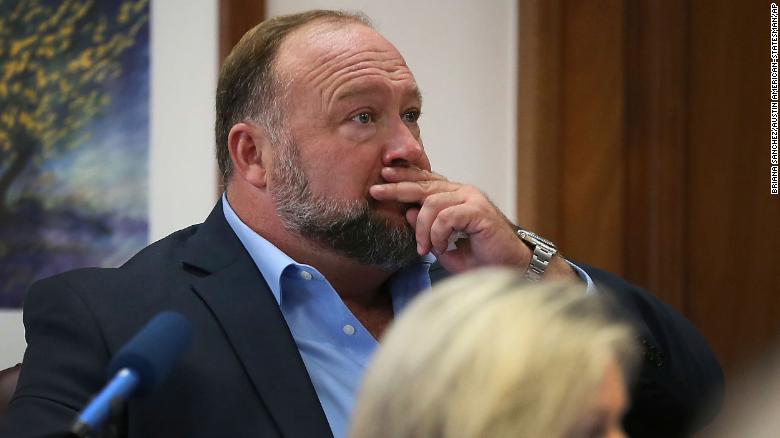
Alex Jones and his media company Free Speech Systems have a net worth of up to $270 million, a forensic economist testified.

"He is a very successful man," forensic economist Bernard Pettingill said of Jones.

Sandy Hook parents who sued Jones over his false "hoax" claims about the massacre are seeking punitive damages from him.

Far-right conspiracy theorist Alex Jones and the parent company that operates his Infowars website have a net worth of up to $270 million, a forensic economist testified in a Texas court on Friday.

The combined net worth of Jones and his media company Free Speech Systems — which filed for bankruptcy protection last week — is estimated between $135 million and $270 million, forensic economist Bernard Pettingill said during the Sandy Hook defamation trial against Jones.

"As much of a maverick that he is, as much of an outsider that he is, he is a very successful man," Pettingill said of Jones as he likened the broadcaster to 13th century Mongolian warrior Genghis Khan.

The forensic economist also estimated Jones' personal net worth between $70 million to $140 million.

"You cant separate Alex Jones from the company — he is the company," Pettingill told the court.

"He didn't ride a wave, he created the wave," Pettingill told the court, explaining that he believes Jones is a "revolutionary."

Pettingill testified that Jones "promulgated some hate speech and some misinformation, but he made a lot of money and he monetized that."

Jone was found liable for defamation by default by the Texas court and a court in Connecticut for falsely claiming the 2012 Sandy Hook Elementary School mass shooting was a "hoax."

Neil Heslin and Scarlett Lewis — the parents of 6-year-old Jesse Lewis, who was one of the 26 killed in the Newtown, Connecticut, massacre — sued Jones, the founder of Infowars, and Free Speech Systems for defamation over his falsehoods about the mass shooting.

On Thursday, a jury awarded Heslin and Lewis more than $4 million in compensatory damages; now Jones faces additional punitive penalties for his repeated falsehoods.

Pettingill, who was hired by the plaintiffs to testify about Jones' net worth, told the court that he tracked Jones' funds and found that Jones raked in $165 million from September 2015 to December 2018.

"It averages to $53.2 million-a-year, but that is the starting point," Pettingill said as he pointed to previous testimony in the case from Jones who told the court that Infowars took in $70 million in revenue last year.

Pettingill testified that he found that Jones withdrew $61.9 million from Free Speech Systems in 2021 — the year the default judgements were issued against Jones.

"That number represents in my opinion, a value, a value of Alex Jones' net worth," said Pettingill.

Pettingill said that Jones withdrew another $18 million from Free Speech Systems over a three-year period from 2015 to 2018.

New head of Alex Jones' company faces questions from lawyers for Sandy Hook families

By Sonia Moghe, CNN
Thu August 4, 2022


(CNN Business)The accountant now in charge of overseeing right-wing conspiracy theorist Alex Jones' company Free Speech Systems through its bankruptcy was questioned Wednesday by attorneys for families of Sandy Hook shooting victims over $62 million in funds Jones has drawn from the company over the years.

Free Speech Systems, which runs Jones' conspiratorial outlet Infowars, filed for bankruptcy protection on Friday, amid proceedings in two states to determine how much Jones owes in damages to families of Sandy Hook victims over his false claims that the shooting was a hoax and they had not actually gone through the experience of losing a child in it.

Marc Schwartz testified he signed a contract to take over as Chief Restructuring Officer for the company in June and now controls all bank accounts, payroll and hiring decisions. Schwartz testified that Jones withdrew about $62 million dollars from the company over 14 years, and testified that $30 million of those withdrawals was paid to the IRS.

Schwartz also testified during the hearing, which ran for more than six hours, that Infowars received about $9 million in cryptocurrency donations and that "they went directly to Mr. Jones."


Alex Jones' company files for bankruptcy amid Texas trial to award damages to Sandy Hook families
Schwartz said during his testimony that Free Speech Systems should be allowed to use cash it has on hand to be able to pay vendors, saying otherwise it will have to shut down.

"If we can't pay the critical vendors then we will be shut down," Schwartz said. "The company's in a situation right now where there's not a whole lot of breathing room."

US Bankruptcy Judge Christopher Lopez said Wednesday he would not permit more withdrawals moving forward and that he found some of Schwartz's testimony "troubling."

Court documents filed Friday as part of Free Speech Systems' bankruptcy showed the company has between $10 million and $50 million in estimated assets and between $50 million and $100 million in estimated liabilities. An attorney for Free Speech Systems said at the hearing Wednesday that the company has about $1.3 million cash on hand.

Schwartz stressed the importance of being able to pay vendors that allow the company to broadcast and sell products online, saying that when Jones is not on the air discussing products he sells, the company sees a 30% drop in sales.

"If we can't broadcast, we can't sell," Schwartz said.

Schwartz testified the management structure of Free Speech Systems was not set up the way a successful business should be managed.

"There is Alex and then there is everybody else," Schwartz testified.

Schwartz said accounting controls were, as far as he could tell after taking control of the company, "nonexistent," that the people responsible for maintaining the company's books did not have accounting degrees and that there had been no financial reports produced in at least 18 months when he took over.
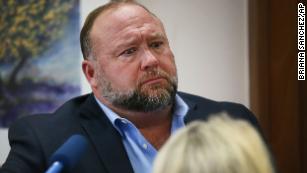
Lawyers homed in on Jones' salary under the bankruptcy plan, saying documents showed Jones' salary before the bankruptcy was $625,000 a year, and under a restructuring plan, it would amount to about $1.3 million. Schwartz said Jones' salary could be considered reasonable because of his value to the company.

Sandy Hook family attorney exposes Alex Jones' dishonesty during brutal cross-examination
"Who is more valuable? Nobody," Schwartz said. Lopez authorized a lower salary for Jones to be paid, of about $20,000 every other week.

When asked how much the company had spent on legal expenses related to the Sandy Hook lawsuits, Schwartz said company records show at least $4.5 million have been spent between 2018 and 2021, but that he does not believe that number is accurate.

Schwartz also testified that Jones used a company-associated American Express card to pay for personal expenses, including housekeeping charges, regularly in the past 18 months. The card had $300,000 a month in charges, but Schwartz said accounting staff did not label what the charges were for.

"We can't tell you whether it's for electricity, entertainment or electronic supplies for the production studio," Schwartz said.

Lopez said he would not authorize the current American Express bill of about $172,000 to be paid.
Schwartz said he didn't know who Jones was before being hired, and that he doesn't agree with many of Jones' views but occasionally consults with him on matters involving the business.

Three smaller companies tied to Jones declared bankruptcy earlier this year, briefly pausing the suits against Jones. But the families suing him dropped those companies from their lawsuits so that the cases could move forward against only Jones and Free Speech Systems. Shortly after, the companies exited bankruptcy protection.

-- CNN's Oliver Darcy contributed reporting.
China’s Li Urges More Pro-Growth Policy as Economy Sputters

Bloomberg News
Tue, 16 August 2022


(Bloomberg) -- China’s Premier Li Keqiang asked local officials from six key provinces that account for about 40% of the country’s economy to bolster pro-growth measures after data for July showed consumption and output grew slower than expectations due to Covid lockdowns and the ongoing property slump.

Li told officials at a meeting to take the lead in helping boost consumption and offer more fiscal support via government bond issuance for investments, state television CCTV reported Tuesday evening. He also vowed to “reasonably” step up policy support to stabilize employment, prices and ensure economic growth.

“Only when the main entities of the market are stable can the economy and employment be stable,” Li was cited as saying at the meeting in a front-page report carried in the People’s Daily, the flagship newspaper of the Communist Party.

The meeting came after Monday’s surprise interest-rate cut did little to allay concern over the property and Covid Zero-led slowdown. Economists have warned of even weaker growth and have called for additional stimulus, such as further cuts in policy rates and bank reserve ratios and more fiscal spending.

Li acknowledged the greater-than-expected downward pressure from Covid lockdowns in the second quarter and asked the local officials to strike a balance between Covid control measures and the need to lift the economy. “Only by development shall we solve all problems,” Li said, according to the broadcaster.

Indicating China may resort to more local debt issuance to pump-prime the economy, Li said “the balance of local special bonds has not reached the debt limit” and the country should “activate the debt limit space according to law,” according to the People’s Daily report.

Read more: China’s Politburo Ignites Talk About $220 Billion More in Debt

Based on the government budget, local authorities may be able to issue an estimated 1.5 trillion yuan ($221 billion) of extra debt and bonds this year to support infrastructure spending, after top leaders urged better use of the existing debt ceiling limit in a key July Politburo meeting. The arrangement could be approved in August, according to some analysts.

China’s 10-year government yield rose for the first time this week, up one basis point to 2.64% from the lowest in more than two years.

Li urged local governments to accelerate the construction of projects with sound fundamentals in the third quarter to drive investment, the report said, and also asked officials to expand domestic consumption of big-ticket items such as automobiles and support housing demand.

He also stressed the importance of opening up the domestic market to foreign investors, noting that the six major provinces -- Guangdong, Jiangsu, Zhejiang, Henan, Sichuan and Shandong -- account for nearly 60% of the country’s total foreign trade and foreign investment.

“Opening up is the only way to make full use of the two markets and resources and improve international competitiveness,” Li was cited as saying.

Li’s appearance suggests state leaders have completed their annual two-week policy retreat in resort area of Beidaihe.

‘Too Little, Too Late’ China Rate Cut Spurs Call for More Moves

Bloomberg News
Mon, August 15, 2022 


(Bloomberg) -- China’s surprise interest-rate cut has done little to allay concern over the property and Covid Zero-led slowdown, with economists and state media calling for additional stimulus.

In a front-page report Tuesday, the central-bank backed Financial News said Beijing should introduce new pro-growth policies at the appropriate time to keep growth within a reasonable range, citing Wen Bin, chief economist at China Minsheng Bank. The Securities Times said in a separate report the People’s Bank of China’s surprise rate cut may be the first in a series of policies to stabilize growth.

Nomura Holdings Inc.’s Lu Ting, who described Monday’s 10-basis point reduction as “too little, too late,” says even a likely cut next week in the loan prime rate, the de facto benchmark lending rate, won’t do much to boost credit demand. Economists from Standard Chartered Plc to UBS AG now see a greater chance of policy support in coming months, including more interest rate cuts, a pickup in the PBOC’s re-lending program and a further fiscal push.

“Given the lingering Covid restrictions and fragile economic recovery, we expect the government to continue increasing policy support in the rest of 2022,” Wang Tao, UBS’s chief China economist, said in a note. “The path of economic recovery in the second half will be bumpy and uncertain, depending on Covid and related policies, developments in the property market, and strength of external growth.”

Traders are betting that the next easing move could come as soon as Monday, with a reduction in banks’ loan prime rates. Interest-rate swaps on the nation’s one-year LPR declined after the PBOC’s surprise move on Monday, with the curve now implying a cut of about 10 basis points from the current 3.7% level, according to Xing Zhaopeng, a senior strategist at Australian & New Zealand Banking Group Ltd.

Unlike many advanced economies right now, China’s core inflation -- which excludes volatile energy and food prices -- is pretty tame, slowing to 0.8% in July as domestic demand remained weak. That gives the PBOC room to take action to fulfill its objectives, which include maintaining a stable currency, supporting growth and preventing financial risks.

At the same time, the central bank has been cautious about being too aggressive with easing, which could damage the economy in the long term given its already elevated debt levels.

Here’s a rundown of what policy action to watch out for:

PBOC Rates

Some analysts see the PBOC’s surprise move raising the possibility of more interest rate cuts in coming months while inflation and currency depreciation concerns are not as urgent. Bloomberg Economics expects a cut in the medium-term lending facility rate again in the fourth quarter. Standard Chartered Plc’s Ding Shuang also forecasts more easing, predicting a 10-point cut to policy interest rates by the end of October. However, others like Nomura’s Lu, say the room for further reductions is limited due to the narrowing profit margin for banks and the tightening monetary policy in the US and elsewhere.

Lending Rates

Banks are likely to trim loan prime rates on Monday. The LPRs are based on interest rates that 18 banks offer their best customers and are provided as a spread over the PBOC’s one-year policy rate.

Zheshang Securities’ economist Li Chao forecasts a 10 basis-point decline in the one-year LPR and a 25 basis-point fall in the five-year LPR, a reference for long-term loans including mortgages. Lenders last reduced the five-year rate by a record 15 basis points in May.

RRR Cut

More economists are expecting the PBOC to lower the reserve requirement ratio, or the amount of cash banks must put in reserve, to help reduce lenders’ funding costs. Unlike policy loans, liquidity from a RRR cut will come at no cost to banks. Ping An Securities forecasts the PBOC may cut the RRR by 25-50 basis points between September and December to replace maturing MLF funds, while Shenwan Hongyuan Group’s Qin Tai sees a 50 basis-point cut between September and November for the same reason.

Structural Tools

The PBOC has placed a greater focus since 2020 on structural tools aimed at helping targeted sectors of the economy, such as small businesses, and it may continue to step up that effort. Ping An Securities says the PBOC could expand the relending program and reduce the interest rate for those funds to help banks provide more loans.

Fiscal Policy

Many economists expect fiscal policy to play a greater role in boosting the economy in the rest of this year, since Covid restrictions and the property slowdown have blunted the effect of monetary stimulus. The government could bring forward next year’s special local government bond quota to this year, use leftover special bond quota from previous years, and relax the financing rules for local government financing vehicles modestly, according to Wang of UBS. That’ll help underpin infrastructure investment growth of 10%-12% in the second half of the year, she said in a note.

Property Support

Some large Chinese developers surged in the stock and bond markets Tuesday following a report that regulators plan to have state-owned firms guarantee the sale of new onshore notes. Several stressed developers were notified at closed-door meetings early last week that regulators plan to provide liquidity support via new yuan bonds guaranteed and underwritten by state-owned firms, REDD reported, citing unidentified people.

(Updates with additional details.)

Chinese Builders Rally on Plans for State-Guaranteed Bond Deals

Bloomberg News
Tue, August 16, 2022


(Bloomberg) -- China’s embattled developers surged in the stock and bond markets Tuesday on news that authorities are planning to help some raise fresh financing, adding to signs of official support for an industry grappling with a debt crisis and slumping home sales.

Notes from Country Garden Holdings Co., CIFI Holdings Group Co. and Longfor Group Holdings Ltd. soared at least 11 cents on the dollar Tuesday, according to Bloomberg-compiled prices, set for the biggest gains since March. Their shares surged more than 9% in Hong Kong and a Bloomberg Intelligence gauge of the sector gained 2.4%, the most in three weeks.

Chinese authorities have told several property developers that state-owned credit support provider China Bond Insurance Co. will give full guarantees for some of their upcoming onshore bond offerings, according to people familiar with the matter. The first batch of private developers to be included in the plan include Longfor, Seazen Group Ltd., CIFI, Country Garden and Gemdale Corp., the people said, asking not to be identified because the matter is private.

Investors applauded the possibility of more help for the industry, even though it wouldn’t be the large-scale support that many have clamored for as officials signal that homeowners are the priority of property-sector stabilization efforts, not builders. Developers are suffering from a liquidity crunch, sparked by government efforts to curb leverage, that’s caused record levels of defaults and prompted concern about debt repayment from even the largest companies.

“The mooted state-supported onshore bond issuances are undoubtedly a positive for these developers and the broader sector and signal the government’s continued willingness to evolve policy,” said Owen Gallimore, head of APAC credit analysis at Deutsche Bank AG. “But we have had similar regulatory efforts over the past year and the market will judge this on the execution and scale of the supported bond issuance.”

In response to China’s deepening economic slowdown, The People’s Bank of China unexpectedly cut interest rates Monday. That move has done little to allay concerns, with economists and state media calling for additional stimulus.

China Bond Insurance will provide unconditional and irrevocable guarantees in full amount for the batch of bond sales in the interbank market by these developers, according to the people familiar with the matter. Regulators will likely arrange policy banks and state-owned lenders to subscribe to these bonds, to make sure they can be fully sold, the people said. Proceeds raised will be more flexibly used, including to be used offshore.

“The government may have realized it is easier and cheaper to support property developers by helping them issuing bonds than to deal with their unfinished projects after they default in order to preserve social stability,” said Bloomberg Intelligence analyst Dan Wang. “Yuan bonds of some of these higher-quality developers, especially Gemdale and Longfor, have been dropping in the past few weeks -- which signal risks that they could lose access to the onshore bond market.”

A Longfor unit plans to issue 1 billion to 1.7 billion yuan ($147 million to $250 million) of medium-term notes in China’s interbank market on Aug. 24, according to people familiar with the matter. The funds will be used for purposes including project construction and offshore bond repayment and buybacks.

Longfor said regulators plan to offer positive support, and the detailed plan is being discussed. Country Garden, Seazen, CIFI and Sino-Ocean didn’t immediately respond to requests for comments. Gemdale declined to comment. Calls to the front desk of China Bond Insurance went answered. There was also no immediate response from the National Association of Financial Market Institutional Investors, China’s interbank market watchdog, to requests for comment.

Firms including Country Garden and Longfor announced onshore bond offerings in May as regulators planned to help some builders sell debt at a time issuance was at multiyear lows. Still, their dollar notes fell to record lows last month as worries about the debt-laden property sector mounted.

That earlier debt-sales effort “was relatively small to make a difference, said Agnes Wong, head of APAC credit strategy at BNP Paribas. Still, the latest reports are an “indication that the policy risk has seen its bottom and we are getting closer to a tipping point.”

Onshore, the credit market is flooded with cheap money, but a growing number of weaker borrowers are struggling to obtain it.

“We believe investors will likely remain skeptical until further proof that these few private developers will enjoy continual funding support from government,” JPMorgan analysts including Karl Chan wrote in a research note.

The bursting housing bubble has erased about $90 billion of equity and dollar-bond market value this year.

Reuters and REDD reported on the bond guarantee plans earlier.


©2022 Bloomberg L.P.

China supports several private developers with bond guarantee -sources

Residential buildings under construction in Shanghai

HONG KONG (Reuters) - Chinese regulators have instructed state-owned China Bond Insurance Co. Ltd. to provide guarantees for onshore bond issuance by a few private property developers including Longfor Group and CIFI Holdings, according to four sources with knowledge of the matter.

The support from the state comes amid mounting concerns that a deepening debt crisis and defaults in the sector could impact property developers that have been regarded as financially sound.

Property developers' shares surged on Tuesday following the news, with Longfor, CIFI and top developer Country Garden all jumping over 15%. The Hang Seng Mainland Properties Index firmed 9.2%, versus a 0.6% gain in the main Hang Seng Index.

China Bond Insurance Co, which provides financial guarantee services, will provide "full amount, unconditional and irrevocable joint liability guarantee" to these medium-term notes, the sources said. The guarantee provides more protection than credit risk management tools, they said.

Two of the sources said Longfor has already sold 3-year and 5-year medium term notes totalling up to 1.5 billion yuan with a guarantee from China Bond Insurance Co.

Financial information provider REDD first reported the plan to provide a guarantee for issuers on Monday evening. Its report said policymakers had drawn up a list of half a dozen developers regarded as financially stronger, including Gemdale Corporation and Country Garden Holdings, whose bond issues would receive guarantees.

REDD also said policymakers were considering asking state investors to subscribe for new notes issued by developers. The issuers would have to provide collateral for the state guarantee but the use of proceeds would be flexible, it said.

CIFI, Country Garden and Longfor declined to comment. China Bond Insurance Co. Ltd and Gemdale were unavailable for comment.

Reuters reported authorities had also helped some financially sound developers to boost liquidity in May, when it encouraged Country Garden, Longfor and Midea Real Estate to issue bonds, while also requesting securities firms to provide credit risk management tools for potential investors in the bonds.

(Reporting by Kevin Huang and Shuyan Wang in Beijing, Clare Jim in Hong Kong; Editing by Simon Cameron-Moore)

Ford’s green bond sees $5 billion in demand as Biden signs climate bill

Joy Wiltermuth - Yesterday

Investors swarmed over Ford Motor Co.’s new $1.75 billion green-bond deal on Tuesday to help boost its development of more electric vehicles.


© Bill Pugliano/Getty

Related video: The energy transition and the fight over green funding
Duration 6:57 View on Watch


Order books for Ford’s speculative-grade debt deal reached more than $5 billion, according to a portfolio manager and Informa Global Markets, which helped the auto giant achieve cheaper funding than initially expected.


The bond deal came the same day President Joe Biden signed the Inflation Reduction Act into law, a smaller version of the earlier Build Back Better proposal, which includes an up to $7,500 credit for qualifying electric vehicles if the assembly is finalized in North America.

Ford said in a public filing Tuesday that proceeds from the bond financing will aim to fund clean-transportation projects, including the design, development and manufacturing of electric vehicles in North America. This includes next-generation electric F-150 pickups, future Lincoln vehicles and other vehicles that have yet to be announced.

Ford didn’t immediately respond to a request for comment.

Its single 10-year class of green bonds, rated Ba2 by Moody’s Investors Service and BB+ by S&P Global, fetched 6.1%, according to Informa. Initial talk was in the 6.375% range, CreditSights said.

That compares with the yield on the ICE BofA US High Yield Index narrowing to about 7.2% this week from a peak of 8.8% in July, after the junk-bond market staged a record rally in recent weeks.EV tax credit

In conjunction with the act’s signing, the U.S. Treasury Department on Tuesday released a two-page fact sheet and related guidance on how the law can make electric vehicles more affordable for households, including for model 2022 and 2023 EVs.

Read: Here’s how the Inflation Reduction Act’s rebates and tax credits for heat pumps and solar can lower your energy bill

Like a wave of other companies in the early part of the COVID crisis, Ford lost its coveted investment-grade credit rating in 2020 after it was downgraded to speculative, or “junk,” status.

In late July, Ford reported second-quarter earnings that blew past Wall Street expectations, despite continued supply-chain issues and concerns about the U.S. economy. Total revenue rose 50% to $40.2 billion, from $26.8 billion a year ago, including a 57% increase in automotive revenue. The “popularity” of Ford’s lineup drove the “solid” results, the company said.

In recent years, investors have been pouring funds into strategies that aim to produce better environmental, social and governance outcomes. Global green-bond issuance has remained robust in 2022, totaling $136 billion in the year’s first half, according to Moody’s Investors Service.

Green bonds were expected to account for about half of Moody’s $1 trillion forecast for sustainable bond issuance this year, a category that includes green, social, sustainability and sustainability-linked bonds.

Shares of Ford were up 0.7% Tuesday, while the S&P 500 index and Dow Jones Industrial Average finished 0.2% and 0.7% higher, respectively, to extend a powerful summer rally.

Read: Tesla and Ford attract new investments from George Soros’s fund


Ford Taps Green Bond Market to Fund EV Development

Olivia Raimonde and Teresa Xie
Tue, August 16, 2022


(Bloomberg) -- Ford Motor Co. is taking advantage of a credit-market rally to sell green bonds.

The vehicle maker sold $1.75 billion of debt expected to mature in 10 years, according to a person familiar with the matter. The security will yield 6.1% after early pricing discussions of around 6.375%, the person said. That compares to an average yield of 5.97% for debt in the BB tier.

Fitch Ratings assigned the bond a preliminary BB+ rating with a positive outlook. Although the ratings firm expects supply chain and inflationary pressures to continue for the rest of the year, the company’s profitability is still on the path to improvement, as it “benefits from ongoing redesign activities, as well as execution on its Ford+ plan,” according to the note.

The Dearborn, Michigan-based company will use the proceeds to help finance new existing green projects, the person said. Ford expects to allocate the net proceeds from this offering exclusively to clean transportation projects and specifically to the design, development and manufacture of its battery electric vehicle portfolio. The company expects to fully allocate the net proceeds of this offering by the end of 2023, said the person.

This is the first junk-rated green sale since June 1 and Ford’s first green issuance since its $2.5 billion debut green bond last year, according to data compiled by Bloomberg. The deal was led by Barclays Plc.

Ford’s new debt sale is part of the company’s overall green strategy, which includes spending $50 billion to build two million electric vehicles a year by 2026. The company said it is the first US automaker to commit to a sustainable financing strategy for both its auto and lending unit, Ford Credit.

Ford may tap the bond market before its next round of debt maturities in June, which could be a near-term consideration for bond spreads, according to Bloomberg Intelligence credit analyst Joel Levington. There has been somewhat of a revival in junk-bond markets this week as a market-rally pushes yields lower, drawing issuers off the sidelines to sell debt.

In November 2021, Ford repurchased $5 billion in junk-rated debt to bolster its balance sheet after shutting down factories at the onset of the pandemic in April 2020.

“Ford’s credit ratings are on an upward trajectory with a potential to cross back into investment grade in 2023,” Levington said. “Credit rating agencies are looking for more consistent free cash flows and manufacturing operations, as well as considering where economic conditions will be next year.” At the end of the second quarter, Ford reported $2.9 billion in operating cash flow and $40.2 billion in revenue.


US Steel, Equinor & Shell Join Forces For Clean Energy Hub - What's The Benefit?

Akanksha Bakshi
Tue, August 16, 2022

United States Steel Corp (NYSE: X), Equinor ASA (NYSE: EQNR), and Shell PLC's (NYSE: SHEL) Shell US Gas & Power LLC have entered into a non-exclusive Cooperation Agreement to advance a collaborative clean energy hub in the Ohio, West Virginia, Pennsylvania region.

The hub would focus on decarbonization opportunities that feature carbon capture utilization and storage (CCUS) and hydrogen production and utilization.

The hub would generate new jobs, stimulate economic growth, and reduce carbon emissions.

The regional CCUS and hydrogen hub aligns with the U.S. and project partners' ambitions to realize net-zero carbon emissions by 2050.

Equinor and Shell will jointly apply for U.S. Department of Energy funding designated for creating regional clean energy hubs.


U. S. Steel is evaluating its role in the hub, including as a potential funding participant, customer, supplier, or partner.

The parties will engage the local industry, labor, educational institutions, communities, and others, to realize the true potential of a working hub.

Price Action: X shares are trading higher by 2.21% at $24.95, EQNR shares are trading higher by 0.71% at $37.40, and SHEL lower by 0.98% at $52.52 on the last check Tuesday.
WIN/WIN
Clean Energy Or Fossil Fuels? Wall Street Is Betting On Both


Editor OilPrice.com
Tue, August 16, 2022 

The U.S. clean energy sector has been soaring so far in the aftermath of the Senate’s passage of a historic climate and energy bill that experts have hailed as the largest investment in fighting climate change ever made by the country. Dubbed the Inflation Reduction Act, the bill allocates $369 billion to renewable energy with the American Clean Power Association estimating it could more than triple clean energy production, cut emissions by 40% by 2030, and create 550,000 clean energy jobs.

The Inflation Reduction Act will extend a number of tax credits already available for renewable energy and also create new incentives for investment in clean energy technology or energy generation. For the first time ever, would-be investors in clean energy have assurances in the form of a decade of subsidies from the federal government.

But make no mistake about it: hundreds of billions of dollars continue flowing into fossil fuels every year, with no signs of the trend changing any time soon.

The latest climate report endorsed by 505 organizations from 51 countries around the world reveals that the world’s 60 largest banks have reached a staggering $4.6 trillion in the six years since the adoption of the Paris Agreement in 2015, with $742 billion going into fossil fuel financing in 2021 alone. The report says that even though net-zero commitments have been all the rage, the financial sector has continued its business-as-usual driving of climate chaos.

Related: Barclays Slashes Oil Price Forecast To $103 Per Barrel

Dubbed Banking On Climate Chaos, the report says that overall, JPMorgan Chase, Citi, Wells Fargo, and Bank of America are the world’s leading fossil fuel financiers, together accounting for one quarter of all fossil fuel financing over the last six years. RBC is Canada’s worst banker of fossil fuels, with Barclays the worst in Europe and MUFG the leading financier in Japan. The report laments the fact that these banks continue to tout their commitments to helping their clients transition, and yet the 60 banks profiled in the report funneled $185.5 billion in 2021 into the 100 companies doing the most to expand the fossil fuel sector, such as Saudi Aramco and ExxonMobil (NYSE: XOM)--even when carbon budgets make clear that we cannot afford any new coal, gas, or oil supply or infrastructure.

Here are some key highlights from the report, extracting only the data (without the politics):

Oil sands: Alarmingly, oil sands saw a 51% increase in financing from 2020–2021, to $23.3 billion, with the biggest jump coming from Canadian banks RBC and TD.

Arctic oil and gas: JPMorgan Chase, SMBC Group, and Intesa Sanpaolo were the top bankers of Arctic oil and gas last year. The sector saw $8.2 billion in funding in 2021, underscoring that policies restricting direct financing for projects don’t go far enough.

Offshore oil and gas: Big banks funneled $52.9 billion into offshore oil and gas last year, with U.S. banks Citi and JPMorgan Chase providing the most financing in 2021. BNP Paribas was the biggest banker of offshore oil and gas over the six year period since the Paris Agreement.

Fracked oil and gas: Fracking saw $62.1 billion in financing last year, dominated by North American banks with Wells Fargo at the top, funding producers like Diamondback Energy and pipeline companies like Kinder Morgan.

Liquefied natural gas (LNG): Morgan Stanley, RBC, and Goldman Sachs were 2021’s worst bankers of LNG, a sector that is looking to banks to help push through a slate of enormous infrastructure projects.

Coal mining: The Chinese lead the financing of coal mining, with China Everbright Bank and China CITIC Bank at the top of the list as of last year, and with big banks providing $17.4 billion to the sector last year overall.

Coal power: Despite the fact that coal is supposed to be targeted for phase-out, this segment has remained largely flat over the past three years in terms of financing, with some $44 billion in financing, again led by Chinese banks.


All-In Energy Policy


Wall Street marches on in the energy sector, straddling oil and gas financing and the increasingly attractive clean energy prospects. According to Dealogic, the amount of money raised through bonds and loans for green projects and by oil-and-gas companies was nearly identical at about $570 billion in 2021. Fundraising may have slowed a bit, but that’s largely because of market volatility rather than dirty-vs-clean energy. Dealogic says that the ratio of green-to-fossil-fuel financing has stayed roughly similar.

Many investors say that it’s next to impossible to fully forego fossil-fuel investments, because oil, gas and coal still account for about 80% of the world’s energy. Energy and food shortages driven by the war in Ukraine have hammered home this reality while highlighting the risks of hasty or haphazard shifts away from fossil fuels in many European countries.

The IRA bill passed last Friday by the House of Representatives appears to take a similar tack, with principal backer Sen. Joe Manchin (D., W.Va.) and others dubbing it an “all-in energy policy."

“The answer is not either-or, it’s all of the above," Megan Starr, global head of impact at private-equity firm Carlyle Group Inc., has told the Wall Street Journal. It’s true that some in the oil industry have taken issue with the Biden administration’s new regulations, such as higher taxes for methane leaks and other aspects of the IRA; however, plenty of others view it as a major opportunity for the energy section–and not just the clean segment.

By Alex Kimani for Oilprice.com
A Major Change Is Coming to Wall Street and Corporate America

President Biden is set to sign a measure that will displease investors and financiers. But the bill also addresses a practice that's been severely criticized.

It's a masterstroke that went almost unnoticed on Main Street. 

But it has not escaped the attention of Wall Street, which will not be pleased with this move by the Democrats.

In President Joe Biden's bill addressing climate change and health care, the Inflation Reduction Act, companies for the first time face a tax on stock buybacks.  

Companies will pay a 1% excise tax on purchases of their own shares, a kind of financial penalty for this move, which is intended to return cash to shareholders and boost share prices. For example, a company buying shares valued at $1 billion will pay $10 million of taxes. 

The goal is to encourage companies to increase the wages of their employees and to invest in the companies themselves rather than favoring shareholders -- and more particularly activist shareholders in search of quick returns.

Biden will is set to sign the overall bill on Aug. 16, and the buyback tax will be effective beginning Jan. 1. The excise tax is projected to bring the government an additional $74 billion in revenue over 10 years.

Share-Buyback Frenzy

Democrats hope this new tax will be the catalyst for a major change in corporate behavior. 

Companies in the benchmark S&P 500 index bought a record $881.7 billion of their shares in 2021, up 70% from $519.8 billion in 2020, according to a recent report from S&P Dow Jones Indices.

The previous record was $804.6 billion in 2018.

"Current indications are that companies have maintained their buybacks through the recent downturn, which means they'll be getting more shares for their expenditures and reducing share count even further, resulting in higher [earnings per share]," said Howard Silverblatt, senior index analyst at S&P Dow Jones Indices.

He added: "Given the strong base buying, expected earnings, even with a potential consumer slowdown and lower margins, buybacks could set another record in 2022."

Big Tech is one of the most popular sectors for share buybacks. It is followed by companies in the financial, energy and communication services sectors.