Monday, August 07, 2023

Six months on from earthquakes, tent hospital treats patients in Syria

The hospital was established as an urgent response to the earthquake disaster and the region’s need for expanded medical services.

Staff work in a treatment room at the hospital, put together in the aftermath of deadly earthquakes in February [Ali Haj Suleiman/Al Jazeera]

By Ali Haj Suleiman
Published On 7 Aug 2023

Afrin, Syria – When patients first arrive at the Amanos Hospital, the tents the facility is solely built of are a reminder of what this region of northwestern Syria has been through in recent months.

Constructed on the outskirts of Afrin, the hospital was pieced together in an unusual style because of the thousands of people who suddenly needed attention but had nowhere to go.

Six months ago, devastating earthquakes hit this region, with the epicentres just across the border, in southeastern Turkey.

More than 4,000 people died in Syria, alongside the 50,000 or so who were killed in Turkey.

With aftershocks common in the wake of the quakes, a tent hospital seemed safer than already destabilised buildings.

“The hospital was established as an urgent response to the earthquake disaster and the region’s need for expanded medical services,” Dr Osama Darwish, a specialist in general surgery and the director of the Amanos Hospital, told Al Jazeera. “It is designed to operate for 15 years, according to the tents’ manufacturer.”


The structure may be made of tents, but it is expansive. A total of 112 beds, distributed across several sterilised tents, are available, along with two operating rooms, an emergency department, a radiology department, clinics, and a laboratory.

“The primary goal of constructing the hospital from tents was to provide a safer environment during natural disasters, and since our region is considered a war zone, it also allows for easier relocation to a safer place,” said Darwish, referring to the ongoing war in Syria, which is now more than a decade old and which has particularly affected opposition-controlled areas such as Afrin.

“We are working on expanding the hospital further, either by adding caravans or constructing a more permanent structure to provide additional services needed in the area, such as a central pharmacy,” Darwish said.
A patient in a wheelchair is guided by an employee through the Amanos Hospital 
[Ali Haj Suleiman/Al Jazeera]

Half a year on from the earthquakes, the healthcare sector in northwestern Syria is still suffering the consequences, because of what healthcare professionals say is the scarcity of aid provided by international organisations.

“The healthcare sector is still suffering from many gaps and the need for modern medical equipment and quality medications,” said Dr Zuhair al-Qarrat, the head of the Idlib Health Directorate. Additionally, healthcare workers lack sufficient training in this field.”

Al-Qarrat told Al Jazeera that hospitals and medical centres in Idlib had received some medicine and medical equipment after the earthquakes, but that it only covered around 20 percent of the health sector’s needs, despite appeals to several international and Arab entities. The closure of the Bab al-Hawa border crossing with Turkey has further worsened the health situation in the region, especially for cancer patients.

“We urgently need specialised centres for cancer treatment, cardiac surgery, and neonatal care, in addition to a radiology centre equipped with all the necessary devices,” said al-Qarrat.

Cancer patients


For cancer patients in particular, healthcare facilities in northwestern Syria are not capable of providing proper treatment.

Many have instead taken to travelling to Turkey for care, but the earthquakes brought on a new problem, as Turkish authorities temporarily halted the entry of Syrian cancer patients, saying that the process of rebuilding from the earthquakes had left Turkish hospitals in the south unable to receive Syrian patients.

Entry has since been restored for pre-existing patients to continue their treatment, but has not been allowed for cancer patients diagnosed after the earthquakes, according to officials on the Syrian side of the Bab al-Hawa crossing.

Medical sources in northern Syria estimate that the number of these new patients is more than 600, with some having already lost their lives while waiting for permission to enter and receive treatment in Turkey.

“The halt in entry for cancer patients seeking radiation therapy has put us under tremendous pressure, and we can no longer accommodate the large numbers of patients coming for chemotherapy,” said Dr Ayham Jamou, a specialist in haematology and oncology and the director of the Syrian American Medical Society (SAMS) Oncology Department at Idlib Central Hospital.

The services provided by the SAMS Cancer Treatment Center are now limited to diagnosing new cases and administering the available chemotherapy to patients for free, making it the only facility in northwest Syria offering such medical care.

“We are left powerless in the face of patients who require radiation therapy due to the unavailability of radiation devices in the area, as well as patients who need expensive immunotherapy,” said Jamou.

In response to the plight of cancer patients in opposition-controlled areas of Syria, staff from medical and humanitarian organisations in Idlib, as well as activists, have staged an ongoing protest near the Bab al-Hawa border crossing since July, demanding urgent action from the international community to facilitate the treatment of those affected.

A total 112 beds are available at the tent hospital, along with two operating wards
[Ali Haj Suleiman/Al Jazeera]

The Turkish government responded to demands by allowing cancer patients with permission to cross to receive free treatment within its territory.

“I am six months late for the treatment prescribed by the doctor in Turkey, because of the closure of the border crossing,” said Hala al-Ahmad, a 17-year-old displaced girl from Aleppo residing in Sarmada city near the Syrian-Turkish border.

Al-Ahmad has been suffering from kidney cancer for two years and used to receive treatment in Turkish hospitals. She returned to Syria just before the earthquakes, waiting for her next treatment dose, but has not been able to re-enter Turkey after the border crossing closure, which has put her in a difficult situation as she waits for permission.

“The decision to reopen Bab al-Hawa crossing for cancer patients to receive treatment has given me hope for life again,” said al-Ahmad. “But today, I went to the crossing, and they scheduled my entry to Turkey for three months from now. I’m now worried about what will happen to me.”

Britain begins detaining migrants on barge firefighters called ‘deathtrap

By Karla Adam
August 7, 2023
The Washington Post

The Bibby Stockholm, the rectangular gray barge in the foreground, is moored in the Portland harbor on the Dorset Coast of England on Aug. 1. 

LONDON — The British government on Monday began housing asylum seekers on a hulking barge moored on the Dorset Coast in an effort to cut down on the high costs of housing migrants in hotels — currently running at about $7.6 million a day — and to deter others from attempting the dangerous English Channel crossing.

The arrival of a small group of asylum seekers onto the football-field-sized Bibby Stockholm, an engineless barge registered in Barbados, was a highly symbolic moment in the debate here over migration. The government wants to use barges and former military facilities to address a recent surge in irregular entry.

More than 45,000 people last year made the crossing from northern France to England — up sharply from 300 in 2018. The numbers for the first half of 2023 have dipped slightly, but it’s unclear whether that’s to do with recent policy efforts or the season’s strong winds and choppy seas.

British Prime Minister Rishi Sunak has pledged to “stop the boats,” one of his key priorities before the next general election, to be held by January 2025. The crossing is only about 20 miles, but it goes through one of the busiest shipping lanes in the world — a journey that can be deadly.

At least 27 migrants drown in English Channel, in one of the deadliest incidents on a dangerous route

The arrival Monday of the first tranche of migrants to the barge in Portland on the English Channel followed days of delays. The move-in date was expected last week, but pushed back after firefighters warned that the vessel was a “potential deathtrap.”

The barge, owned by a Liverpool-based company, looms three stories high and 305 feet long. The British government has retrofitted it with bunk beds to house 500 men in its 222 rooms. Fifteen people moved in on Monday; more are expected in the coming days.

The government says it’s cheaper to house migrants on barges than in hotels, but that it will affect only the small number who are waiting for decisions on their asylum applications.

More than 50,000 migrants were being housed in hotels as of June this year, the government reported Monday, at a cost of about 6 million pounds ($7.6 million) per day.

The use of barges to house migrants has proved contentious. Some neighbors in Plymouth say they’re worried about the impact on the community and local services; others have called it a “floating prison” and say that it’s no way to house migrants.

Steve Smith, executive officer of Care4Calais, said the refugee charity’s lawyers helped to stop about 20 people from being moved onto the barge.

“Amongst our clients are people who are disabled, who have survived torture and modern slavery and who have had traumatic experiences at sea,” Smith said. “To house any human being in a ‘quasi floating prison’ like the Bibby Stockholm is inhumane. To try and do so with this group of people is unbelievably cruel.”

Steve Valdez-Symonds, the refugee and migrant rights director at Amnesty International UK, said the vessel was “reminiscent of the prison hulks from the Victorian era” and an “utterly shameful way to house people who’ve fled terror, conflict and persecution.”

“Housing people on a floating barge is likely to be re-traumatizing,” he said. “There should be major concerns about confining each person to living quarters the typical size of a car parking space.”

 Karla Adam is a London correspondent for The Washington Post, which she joined in 2006. She is a former president of the Association of American Correspondents in London. Twitter


UK asylum seekers 'at high risk after being housed at ex-nuclear weapons base'

Former US Air Force site exposes them to hazardous and radioactive material, says report


The former US airfield may have been used to store nuclear and chemical weapons, including mustard gas, a study found. Photo: Wethersfield Action Group

Tariq Tahir
Jul 31, 2023

Asylum seekers are at a “high risk” from contact with hazardous material, some of it radioactive, at a former military base being used to house them, a report has found.

Another study into the Wethersfield site also found nuclear and chemical weapons, including mustard gas, may once have been stored there when it was used by the US Air Force.

The government wants to move 1,700 migrants into the site in the Essex countryside but residents living nearby, who are opposed to the plans, have highlighted contamination of the former airfield.

About 40 asylum seekers, who are believed to have arrived in the UK after crossing the English Channel in small boats, are the first occupants.


The camp was originally known as RAF Wethersfield and was first used during the Second World War before being taken over by the US Air Force during the Cold War.

A report commissioned by the local parish council, as well as other government studies, has highlighted the legacy of contamination.

One study by engineering consultancy Buro Happold was commissioned by the parish council’s Wethersfield Airbase Scrutiny Committee.

Its chairman Andrew Hull, who is a resident fighting the plans, told The National that reports into the site reveal a “frankly terrifying list of potential contaminants”.


Buro Happold said the risks associated with the site from “Hazard Class 1” materials include radioactivity, aircraft and vehicle fuel, asbestos, firefighting foam and demolition material.

For any “future site users/visitors” who may come into direct contact with the materials, ingest them or inhale dust containing them, there is a “high risk”, says the report.

There is also a “moderate” risk from explosives and ordnance to those two groups at the site.

It recommends the ground is examined by specialists, including those in radioactivity and explosives, with chemical analysis carried out and a decontamination plan put in place.

The camp is surrounded by a barbed wire fence. The National

Opponents have also obtained two other reports into the site under freedom of information rules, one from the Defence Infrastructure Organisation (DIO) and another from Homes England, the government’s housing and regeneration agency.

The 248-page DIO study says there is “anecdotal evidence” that the US Air Force may have stored nuclear and chemical weapons including mustard gas at the site.

It also suggests the presence of potential contamination from radioactivity, explosives, fuel, asbestos, hazardous chemicals and waste storage.

Homes England warned of a contamination risk when it investigated the site for a “garden community”.


“The Wethersfield site will undoubtedly contain residual contamination in various areas of the site as there are no signs of any significant demolition and remediation having been carried out,” said its report.

Pictures shot from a drone show work being undertaken to ready the site for more arrivals, with a crane lifting cabins into place.

Mr Hull said “to even contemplate building, or housing people, on such land, seems beyond reckless to human life” but “neither the Home Office nor the Ministry of Justice are listening to warnings”.

“The Buro Happold report, which we as 13 parish councils commissioned, was written by a highly regarded expert on land contamination,” he said.

“Many Class 1 hazards have been identified on the site, which could lead to a high risk of severe consequences to human health, as the site currently stands. Visitors, staff and residents are all being put through high risk.”


MDP Wethersfield, a former airbase in Essex where the Home Office is housing adult male migrants, leaving villagers living nearby divided. 
All photos: PA

Alan MacKenzie, chairman of residents’ group The Fields Association, said the findings meant “it is fundamentally dangerous to have anybody at the site until it has been properly investigated”.

He said the report had been presented to the Home Office but “we’ve had nothing back from them at all and they’ve not responded to any questions provided”.

“They’ve been handed a report from an international organisation but they’re doing nothing about it,” he added.

British Prime Minister Rishi Sunak has made stopping small boats ferrying migrants across the Channel one of his government's key pledges.

About 12,000 have made the journey so far this year, while last year the total exceeded 45,000. Huge tents have also been bought to house migrants to avoid the more expensive option of keeping them in hotels.

A UK government representative said: “Delivering accommodation on surplus military sites will provide cheaper and more orderly, suitable accommodation for those arriving in small boats while helping to reduce the use of hotels.

“These accommodation sites will house asylum seekers in basic, safe and secure accommodation as they await a decision on their claim. The safety of individuals in our care is always our absolute priority.”
Israel’s Slippery Slope
Amir Levy/Getty Images

Jul 31, 2023

Israel's right-wing government has raised alarms around the world with its plans to disempower the judiciary. But while most of the criticism has focused on the implications for Israeli democracy, the "reforms" pose an equally salient threat to Israel's economy, labor market, national wealth, and security.

TEL AVIV – My current visit to Israel has coincided with a period of unprecedented political turmoil. A radical right-wing government’s package of legislation to disempower the judiciary has started to be adopted, leading many to worry that this great country’s robust liberal democracy is being eroded.

Since Israel lacks a formal written constitution, it is crucial that it maintains an independent Supreme Court and judiciary. That, after all, is what makes a democracy liberal – not just free and fair elections but also rule of law, protections for minorities, and appropriate checks and balances on executive and legislative power.

The government’s “reforms” will gradually move Israel closer to becoming an illiberal democracy of the kind one finds in Turkey and Hungary. The long-term damage to the economy could be so severe that, if the governing coalition’s judicial coup continues, this vaunted “start-up nation” could turn into a “fall-down nation” with severely diminishing economic prospects.

The opposition to the “reforms” comprises not just the half of the population on the left and center-left, but also many within the ruling conservative Likud Party. It also includes the most dynamic segments of the Israeli economy: the tech firms that account for 50% of exports, 25% of government revenues, 400,000 well-paid jobs, and over 20% of GDP (when accounting for their effects on other sectors).

Most Israeli tech leaders and workers are secular liberals, and many are now planning to move their operations abroad over time. This is easily done, because they use little physical capital and rely more on knowledge, intangible assets, and highly mobile tech-savvy workers.

At the same time, foreign venture-capital firms have pulled back from making new investments in Israel, and even many ordinary citizens are considering moving their savings out of the country. The “reforms” are also likely to discourage many Jews in the United States, Europe, and around the world from moving to, or retiring in, Israel – and many Israelis who are working or studying abroad may decide not to return. But most alarmingly, the government’s agenda is even putting Israel’s security at risk, with CNN reporting that, “thousands of Israeli army reservists – the backbone of the Israeli military – are threatening not to show up for work” in protest.


The composition of these protests matters, because the extreme ultra-orthodox men who support the governing coalition do not serve in the armed forces, do not study scientific subjects, are not important members of the labor force, and hardly pay taxes. On the contrary, they receive large transfer payments that grow with the size of their families.

If Israel had a proper, fair system of transfers financed by progressive taxation, beneficiaries would be induced to participate in civil service (if not the military), pursue marketable courses of study, join the labor force, and thus pay taxes. There are plenty of Likud members who would support such sensible reforms. But as matters stand, most ultra-orthodox are trapped in a cycle of poverty and dependency on the state.

Israel is also divided economically between tech and other large and medium-size businesses, on one hand, and local governments and smaller businesses, on the other. While the first group is generally corruption-free, the latter is rife with graft and nepotism in the permitting of construction, business operations, and other locally regulated activities. Worse, other proposed reforms would have the effect of replacing capable civil servants with incompetent, corrupt lackeys, further sapping the economy of dynamism and innovation.

The government’s plans thus amount to a time bomb, because rating agencies could soon see fit to downgrade Israel’s creditworthiness. If tech and other firms move abroad, the government’s revenue base will shrink, making the growing transfer payments to the ultra-orthodox unsustainable.

Over time, a deteriorating fiscal and public-debt outlook, combined with the erosion of the rule of law, will add to the current temptation to challenge the central bank’s independence, so that growing deficits can be monetized. If Israel heads down this road, the outcome will be predictable. Just look at what is happening in autocratic Turkey, where inflation is expected to hit 58% this year.

All these factors will curtail growth, perhaps leading eventually to economic stagnation and even eventual recession. Those who will suffer the most will be the extremist poor communities that are clamoring for the government’s radical legal reforms. If the stock market falls, interest-rate costs for the public and private sectors will increase, and a declining currency will fuel inflation, which is already rising.

Israel may well need some judicial reforms. But given the lack of a formal constitution, such changes would need to command the support of a large coalition of forces, not a narrow parliamentary majority that is controlled by extremist anti-democratic and theocratic parties. One hopes that Likud and its leader, Prime Minister Binyamin Netanyahu, will recognize that they are undermining not only Israel’s democracy but also its economy, labor market, national wealth, and security.

The damage has only started, so there is still time to reverse course. But if the ruling coalition continues to pass extreme legislation over the next three and a half years of its term, the “start-up nation” will grind to a halt.


NOURIEL ROUBINI
Writing for PS since 2007
179 Commentaries
Nouriel Roubini, Professor Emeritus of Economics at New York University’s Stern School of Business, is Chief Economist at Atlas Capital Team, CEO of Roubini Macro Associates, Co-Founder of TheBoomBust.com, and author of MegaThreats: Ten Dangerous Trends That Imperil Our Future, and How to Survive Them (Little, Brown and Company, 2022). He is a former senior economist for international affairs in the White House’s Council of Economic Advisers during the Clinton Administration and has worked for the International Monetary Fund, the US Federal Reserve, and the World Bank. His website is NourielRoubini.com, and he is the host of NourielToday.com.
Palestinian teenager dies days after being shot near Israeli settlement


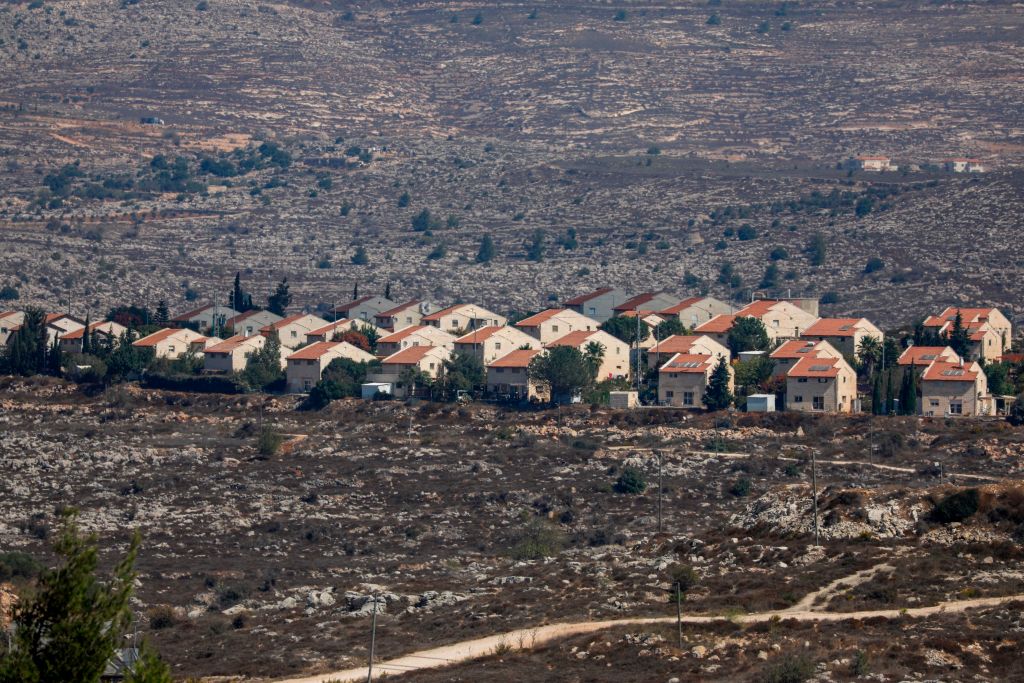
At the time of the shooting, Ramzi Fathi Hamed, 17, was in a car close to the Ofra settlement, the mayor of the town of Silwad in the occupied West Bank said.


The Palestinian teenager was reportedly shot by a settlement guard 
[AHMAD GHARABLI/AFP/Getty-archive (2020)]

A Palestinian teenager died on Monday, days after reportedly being shot by an Israeli settler in the occupied West Bank.

Seventeen-year-old Ramzi Fathi Hamed succumbed to his injuries after being shot by the "occupation", the Palestinian health ministry announced, without giving further details. Raed Hamed, the mayor of the town of Silwad in Ramallah and Al-Bireh province, said a settler was responsible.

Ramzi was in a car close to the Ofra settlement when he was hit, the mayor said according to Wafa, the official Palestinian news agency, which also claimed he was shot by a guard.

He suffered a severe pulmonary embolism in hospital, leading to his death, according to medics.


Israeli forces and settlers routinely use deadly violence against Palestinians, with over 200 fatalities so far this year.

Israeli settlements are illegal under international law and are considered a key barrier to a workable two-state solution.

There are more than 700,000 settlers residing in the West Bank and East Jerusalem.

Palestinian teenager dies after he was shot by Israeli troops in the West Bank last week


Mourners pray over the body of Ramzi Hamed, 17, during his funeral in the West Bank city of Ramallah, Monday, Aug. 7, 2023. Ramzi Hamed, who was shot by Israeli troops last week after throwing a firebomb at soldiers in the occupied West Bank died Monday, the Palestinian Health Ministry said. 


Mourners carry the body of Ramzi Hamed, 17, during his funeral in the West Bank city of Ramallah, Monday, Aug. 7, 2023. 
Adam Hamed, center, the eldest brother of Ramzi Hamed, 17, cries during his funeral in the West Bank city of Ramallah, Monday, Aug. 7, 2023. 

The body of Ramzi Hamed, 17, is carried by a Palestinian honor guard during his funeral in the West Bank city of Ramallah, Monday, Aug. 7, 2023. 


Mourners help Fatehi Hamed, second left, father of Ramzi Hamed, 17, while his son is carried by a Palestinian honor guard during his funeral in the West Bank city of Ramallah, Monday, Aug. 7, 2023. 

(AP Photo/Nasser Nasser)

ugust 7, 2023

JERUSALEM (AP) — A Palestinian teenager who was shot by Israeli troops last week after throwing a firebomb in the occupied West Bank died Monday, the Palestinian Health Ministry said.

It was the latest in a long string of violent incidents involving Israelis and Palestinians in the West Bank in the last year and a half. It came after a bloody weekend in which a settler killed a Palestinian man and a Palestinian gunman killed an Israeli security guard in Tel Aviv.

The Palestinian official news agency Wafa reported that Ramzi Hamed, 17, was shot near the West Bank settlement of Ofra, near his hometown of Silwad north of Ramallah.

Fathi Hamed, the boy’s father, told The Associated Press that his son was shot by Israeli troops early last Wednesday after throwing firebombs at soldiers operating near Silwad.

OTHER NEWS

Israel kills 3 suspected Palestinian militants as West Bank violence shows no signs of slowing

Palestinian shooting attack in downtown Tel Aviv kills Israeli security guard

An American billionaire says he’ll stop funding the think tank behind Israel’s judicial overhaul

The Israeli military said “it appears” that Hamed had thrown the firebomb toward the settlement’s front gate. It provided security camera footage of what it said was the incident, in which a young male is seen getting out of a vehicle, throwing a firebomb and speeding away in a car after an explosion. It was not immediately clear how close the explosion was to security forces or when the teen was shot

Violence has surged across the northern West Bank with the rise of shooting attacks by Palestinian groups against Israelis, near-daily arrest raids by the Israeli military, and growing attacks by extremist Jewish settlers.

On Monday, the Israeli military said troops arrested 17 Palestinians across the West Bank overnight. Israeli media reported that five of those arrested were suspected of involvement in clashes with Israeli settlers on Friday that left one Palestinian dead.

Israeli settlers attacked a Palestinian village in the West Bank on Friday. They set fire to cars and fired on Palestinians who threw stones at them. Two Israeli settlers suspected of killing 19-year-old Palestinian Qusai Matan remained in police custody on Monday.

The surge in fighting is one of the worst between Israelis and Palestinians in recent decades. More than 160 Palestinians have been killed by Israeli fire this year in the West Bank and east Jerusalem, according to a tally by The Associated Press.

Israel says most of those killed have been militants, but stone-throwing youths protesting army raids and innocent bystanders have also been killed.

At least 30 people have been killed in Palestinian attacks against Israelis so far this year.

Israel captured the West Bank in the 1967 Mideast war, along with the Gaza Strip and east Jerusalem. Palestinians seek those territories for their hoped-for independent state.
Gaza Protests Struggle to Gain Traction as Police Crack Down

Demonstrators’ efforts to rally against Hamas, including at protests on Monday, have been foiled by a heavy security presence.

A Palestinian girl in the Gaza Strip tries to stay cool during a heat wave last week when power outages compounded frustrations with Hamas.
Credit...Mahmud Hams/Agence France-Presse — Getty Images

By Patrick Kingsley and Iyad Abuheweila
Reporting from Jerusalem and Gaza
NEW YORK TIMES
Aug. 7, 2023,

Security forces in the Gaza Strip prevented protesters from holding rallies across the territory on Monday, quelling a rare expression of dissent against Hamas, the authoritarian Islamist group that controls the territory.

For the third time in recent days, protest leaders had called for demonstrations — but a heavy police presence throughout the territory deterred efforts to gather in large numbers.

The failed effort followed more successful rallies last week, when several hundred Gazans — an unusually high number given the limits on free expression — evaded police interventions to march through several neighborhoods. But, a second attempt to hold demonstrations on Friday was also prevented by large numbers of police, who detained several journalists attempting to cover the protests.

The protest organizers — some of them Palestinians based abroad — said the attempted demonstrations were mainly a reaction against Hamas’s authoritarian rule, as well as its failure to improve dire living conditions.

Hamas captured the Gaza Strip in 2007 from the secular Palestinian leadership, prompting Israel and Egypt to place the territory under a blockade to stymie the flow of arms to the group.

Israeli-Palestinian Relations
Israeli Raid in Jenin:
 A 48-hour military operation in the city was one of the largest in many years against armed militant groups in the occupied West Bank. But did it solve anything?

A State of Despair: In the aftermath of the raid, Palestinians in the West Bank said they felt betrayed by their leaders, forgotten by world powers and unable to protect themselves from attacks by Israelis.

Writing Out Their Last Words: In one of the deadliest periods in years in the West Bank, young Palestinians drawn into the struggle against Israel are preparing farewell messages for their loved ones.

West Bank Settlements: Efforts to expand Jewish settlements in the West Bank have intensified this year, reflecting the agenda of Israel’s right-wing government and prompting international condemnation.

The blockade restricts the importing of goods, including electronic and computer equipment, that could be used to make weapons and prevents most people from leaving the territory.

Protests against chronic power shortages last week in Khan Younis, southern Gaza Strip. Hamas leaders have said the protests were not genuine expressions of local dissent, and were instead organized by collaborators with Israel.
Credit...Associated Press

The restrictions have helped undermine the economy in Gaza, where more than 2 million people live in one of the world’s most crowded territories. Last year, the unemployment rate was higher than 45 percent. Only 10 percent of residents have direct access to clean water, according to a UNICEF analysis from 2020; electricity works for only several hours a day; and many complex medical procedures are not available.

Hamas says that the blockade is wholly to blame for the situation, a view shared by many Gazans. Israel and Egypt control how much fuel enters the territory, for instance, which affects how much electricity the Gazan power plant can provide.

But some feel Hamas itself is at least partly at fault because of its poor governance. The group is frequently accused of nepotism and corruption, and of focusing too much on military operations instead of economic and infrastructure projects. Public anger has also been spurred by the fact that many senior Hamas officials, including its leader Ismail Haniyeh, live in safer conditions outside of the Gaza Strip.

Frustrations were further compounded by an unusual surge in power outages during the July heat wave, as well as a decision by the authorities to demolish an unauthorized recent addition to a building in southern Gaza. The owner was buried under rubble during the demolition, killing him and setting off an outcry.

“All of these people went out to demand their rights and their daily bread,” said Jasser Barbakh, a protester who broadcast part of a demonstration on July 30 from his social media account. “These people you can see went out for their livelihoods and their electricity.”

Some anger has also been directed at Mahmoud Abbas, the leader of the Palestinian Authority, the administration that controlled the strip until Hamas captured it in 2007. The authority is also widely accused of corruption and of failing to do enough to improve the situation in Gaza, where it still pays the salaries of several thousand government officials.

“O Haniyeh, O Abbas, we want a decent life,” some protesters were filmed chanting last week.

Hamas leaders have said the protests were not genuine expressions of local dissent, and were instead organized by collaborators with Israel.

“The outsiders and the collaborator agitators have been disappointed,” a Hamas spokesman, Salah al-Bardawil, wrote on social media after the police successfully prevented protests on Friday.

“The sick agitators’ storm in a teacup against Gaza has died,” he added.


Patrick Kingsley is the Jerusalem bureau chief, covering Israel and the occupied territories. He has reported from more than 40 countries, written two books and previously covered migration and the Middle East for The Guardian. 

 END FUR FARMING

Finland orders cull of 50,000 mink and foxes due to bird flu

The Finnish food authority said  it has ordered 50,000 farmed mink and foxes to be culled at three fur farms hit by bird flu infections as mink can host the virus, increasing the chance of it mutating and affecting humans.


Caged minks in fur farm. EYEPRESS via Reuters Connect.

COPENHAGEN (Reuters) – The Finnish food authority said on Tuesday it has ordered 50,000 farmed mink and foxes to be culled at three fur farms hit by bird flu infections as mink can host the virus, increasing the chance of it mutating and affecting humans.

Finland and Norway are facing record outbreaks of the H5N1 virus strain this year. The virus has killed thousands of seagulls and other bird species, put livestock at risk and restricted travel in some areas.

“Mink is an especially problematic species when it comes to avian influenza infections,” the authority said, as it can be an effective intermediate host for bird flu, enabling the virus to mutate more effectively into a form that will infect humans.

This year, avian influenza, commonly called bird flu, was found at 20 fur farms in Finland as of the end of July, with samples from another four farms currently being analysed, according to the food authority.

It said it was preparing further cull orders this week.

(Reporting by Louise Breusch Rasmussen, editing by Alexandra Hudson)

Banning Abortion will Please Russian Conservatives but Do Nothing to Help Country’s Demographic Problems

            Staunton – Imposing restrictions on abortions or even totally banning them will please Russian conservatives who want to do everything in their power to preserve “traditional values;” but it will do little or nothing to help their country overcome its demographic disaster, according to Russian analysts.

            There are two basic reasons for that, they say. On the one hand, the state can only ban currently legal abortions; it can do little or nothing to prevent women from seeking illegal ones if legal ones are not available (tochno.st/materials/za-dva-goda-minzdrav-predotvratil-pochti-100-tysyach-abortov-zhenshchin-otgovarivayut-ot-preryvaniya-beremennosti-s-pomoshchyu-spetsialnykh-metodichek-no-demografii-eto-ne-pomozhet-i-vot-pochemu).

            And on the other hand, the decline in the number of births in the Russian Federation has occurred over precisely the same period as the decline in the number of abortions, an obvious indication that factors other than the availability of abortions are behind this change and other policies will have to be adopted if it is to be changed.

            Since the end of Soviet times, the number of abortions both absolutely and relative to the number of women in prime child-bearing age groups have declined. The total number of abortions fell from 3.5 million in 1992 to 411,000 in 2021, and the number per 1000 women between the ages of 15 and 49 declined from 94.7 to 12 over the same period.

            As other means of contraception became more widely available after the collapse of Soviet power, women used abortions less as part of their family planning strategies. Until 2007, there were more abortions in the Russian Federation than births; now, the number of abortions is less than 20 percent of the total number of live births.

            Despite this pattern, many Russian politicians and commentators continue to believe that restricting abortions will boost the number of births. But that isn’t the case either over time or among regions. If it were, births would increase more in federal subjects where restrictions are imposed but in fact the reverse is true.

            Sergey Zakharov, a scholar at the Moscow Institute of Demography of the Higher School of Economics, says that “the government must support the striving of families to have a desired child at a desired time and not to try to talk people out of abortions” or otherwise restrict their access to legal ones. Doing otherwise, he suggests, will be counterproductive.

            But he and other Russian experts say that one reason politicians believe that restricting abortion will boost birthrates is that in contrast to the first two decades after the end of Soviet times, there has not been a boost in other means of contraception in the last ten years. Consequently, they assume that restricting abortion will work as they hope.

GEOTHERMAL IS FRACKING

Alaska Division of Oil and Gas plans geothermal lease sale for volcano near Anchorage

Mount Spurr, 80 miles from Alaska’s biggest city, was the site of past lease sales and ambitions — new policies might help make development a success, the division says


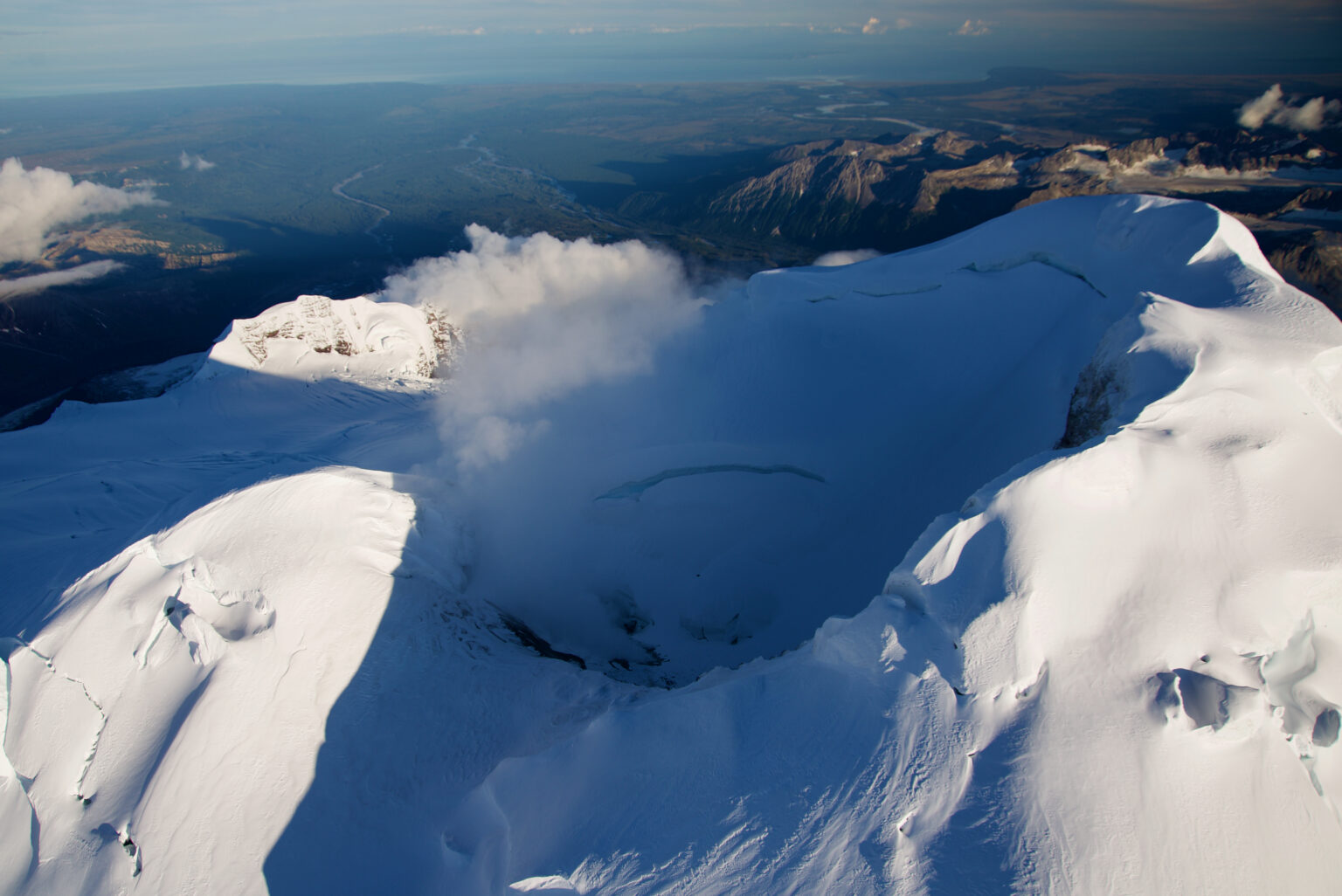
The summit crater of snowy Mount Spurr is seen on Aug. 27, 2020, from the air. The volcano, which dumped ash on Anchorage in 1992, has for many years been considered a potential source of geothermal energy to be used by people in the region. (Photo by Cyrus Read/Alaska Volcano Observatory-U.S. Geological Survey)

The Alaska Division of Oil and Gas is preparing to hold a lease sale offering rights to explore for geothermal energy resources of Mount Spurr, a snow-capped volcano about 80 miles northwest of Anchorage.

The decision was announced on July 28 by Division Director Derek Nottingham

It comes two years after the division issued noncompetitive permits to two companies to explore geothermal energy resources on specific parcels on the 11,070-foot Spurr, the closest of Alaska’s numerous active volcanoes to the state’s largest city.

If the division follows through, this would be the fourth competitive lease sale held for Mount Spurr geothermal resources, after sales in 1983, 1986 and 2008.

The most successful of those past competitive auctions, the 2008 sale, resulted in the leasing of about 36,000 acres and an exploration drilling program carried out by Ormat Technologies, one of the world’s leading geothermal companies. However, Ormat dropped its Mount Spurr program in 2015.

There are reasons to believe that leasing this time will produce a more successful result, according to the analysis issued by Nottingham.

Under the Inflation Reduction Act of 2022, there are several new financial incentives for geothermal energy development, including a federal tax credit up to 30% through 2032, tax credits for geothermal power plants and credits for makers of geothermal technologies, the document siad.

“In sum, federal energy policy has shifted significantly since the noncompetitive permits were issued in 2021, which has generated renewed interest in geothermal exploration,” the document said.

Mount Spurr and Crater Peak are seen on June 14, 2018, during an overflight. Crater Peak is a feature of the volcano that developed in a breach in the caldera, and is located about 3.2 kilometers south of Spurr. All of Spurr's eruptions in the past few thousand years have been from Crater Peak, according to the Alaska Volcano Observatory. (Photo by M.W.Loewen/Alaska Volcano Observatory-U.S. Geological Survey)
 Mount Spurr and Crater Peak are seen on June 14, 2018, during an overflight. Crater Peak is a feature of the volcano that developed in a breach in the caldera, and is located about 2 miles south of Spurr. All of Spurr’s eruptions in the past few thousand years have been from Crater Peak, according to the Alaska Volcano Observatory. (Photo by M.W.Loewen/Alaska Volcano Observatory-U.S. Geological Survey) 

The companies granted permits in 2021 for Mount Spurr exploration were GeoAlaska LLC., which got rights to explore 6,376 acres, and Raser Power Systems LLC., which got rights to explore 7,666 acres.

The Division of Oil and Gas plan for a future lease sale, with a date yet to be determined, includes a provision for those leaseholders to submit bids in the competitive process. Leases would be for 10-year terms, the typical duration in leases offered by the division.

The state’s plan to sell leases competitively makes sense, said Paul Craig, GeoAlaska’s president.

The Mount Spurr exploration permits granted in 2021 were for terms of only two years, with an option for a one-year extension, which is “not a realistic timeline” for getting a geothermal prospect explored, Craig said.

“We’re really pleased that the state made this decision,” he said.

Craig declined to say whether GeoAlaska would bid in an upcoming competitive lease sale. “What I can guarantee you is GeoAlaska has the rights to highly prospective geothermal prospects, and we fully intend to explore and develop those prospects to the benefit of Alaska,” he said.

GeoAlaska has been doing on-site work at Mount Spurr, and it is also using data collected by Ormat during that company’s exploration program, Craig said.

GeoAlaska also holds a similar state exploration permit for Augustine Volcano, the 4,134-foot Cook Inlet island peak located about 175 miles southwest of Anchorage, and the company has done some preliminary on-site work there. The Augustine permit was granted by the Division of Oil and Gas last year.

Augustine Volcano is seen reflected in an island lake on June 25, 2022. The volcano is located about 175 miles southwest of Anchorage. Photo by Kristina Walowski,/Provided by the Alaska Volcano Observatory)
 Augustine Volcano is seen reflected in an island lake on June 25, 2022. The volcano is located about 175 miles southwest of Anchorage. (Photo by Kristina Walowski/Provided by the Alaska Volcano Observatory)


There has been interest in Augustine’s geothermal prospects but never any exploration drilling like that conducted by Ormat at Spurr.

The division is currently soliciting public comment on possible plans to allow more geothermal exploration at Augustine, either through permits or leases.

Both Spurr and Augustine have had explosive eruptions in the recent decades.

A series of explosions at Spurr in 1992 dumped ash on Anchorage and other Cook Inlet communities, according to the Alaska Volcano Observatory, a joint program of the U.S. Geological Survey, the University of Alaska Fairbanks and the Alaska Division of Geological and Geophysical Surveys.

Augustine’s most recent eruption was in early 2006 and produced both ash clouds and lava flows, the observatory reported. A 1986 eruption also sent ash across the Cook Inlet region, including to Anchorage, according to the observatory.

The history of eruptions is considered when GeoAlaska sends work crews to the sites, Craig said. If the Alaska Volcano Observatory issues any kind of alert about potential eruptions, crews are pulled out, he said.

There are more than 50 Alaska volcanoes that have been active since the mid-18th century, according to the U.S. Geological Survey. The Alaska Volcano Observatory monitors more than 20 of them with continuously recording devices that are installed on the volcanos to measure their seismic activity. On Friday, five Alaska volcanoes were showing varying signs of activity. One, Shishaldin in the eastern Aleutians, was erupting explosively and sending an ash cloud to more than 30,000 feet above sea level, into the zone used by commercial aircraft. Another, Great Sitkin in the western Aleutians, was producing a slow stream of lava with its ongoing eruption. Three others had signs of seismic unrest that might be a precursor to eruptions, the observatory reported.


Alaska Beacon is part of States Newsroom, a network of news bureaus supported by grants and a coalition of donors as a 501c(3) public charity. Alaska Beacon maintains editorial independence. Contact Editor Andrew Kitchenman for questions: info@alaskabeacon.com. Follow Alaska Beacon on Facebook and Twitter.

TOPSOE SELECTED BY WORLD ENERGY GH2 TO SUPPLY AMMONIA LOOP FOR CANADA’S LARGEST RENEWABLE HYDROGEN PLANT


Topsoe

Topsoe, a global leader in carbon emission reduction technologies, has signed an agreement with World Energy GH2 solutions provider, to provide Topsoe’s dynamic ammonia loop technology for Canada’s largest, and one of the world’s first-to-market, renewable hydrogen projects – Project Nujio’qonik.

Located in the Bay St. George region of Newfoundland and Labrador, Project Nujio’qonik was announced by World Energy GH2 in spring 2022 with an intended investment of USD $12 billion to produce renewable hydrogen, also referred to as green hydrogen, to decarbonize the hard-to-abate sectors globally. World Energy GH2 will supply 250,000 metric tons of renewable hydrogen per year to global markets at the completion of its renewable hydrogen project. The project will use wind energy power for production on the site, which is expected to begin producing hydrogen in 2025.

Topsoe’s ammonia loop technology will be used to generate up to 1,650 metric tons per day of renewable ammonia on the site.

John Risley, Chairman of World Energy GH2, said:
“Project Nujio’qonik is one of Canada’s first-to-market projects to produce hydrogen and ammonia at scale using renewable wind energy, and is a key cornerstone of the country’s agreement with Germany to stimulate hydrogen production by 2025. Following a rigorous analysis, we are pleased to have selected Topsoe’s proven technology for our project. Project Nujio’qonik will be instrumental in ensuring Newfoundland and Labrador takes its place as a preeminent global leader in the fight against climate change and becomes a catalyst for the development of other renewable hydrogen projects across Canada and across the world.”

Henrik Rasmussen, Managing Director, the Americas, Topsoe, said:
“We are very pleased to support World Energy GH2 in one of the world’s first-to-market renewable hydrogen and ammonia production projects, highlighting our commitment to lead the development of the renewable hydrogen industry. The agreement is testament to the quality and depth of Topsoe’s ammonia production expertise and a huge sign of confidence in our world leading technology. We look forward to working with World Energy GH2 to deliver on its targets for production in 2025.”

Renewable hydrogen and ammonia are under the Power-to-X umbrella, and a key enabler to make the energy transition happen.

Sundus Cordelia Ramli, CCO Power-to-X at Topsoe, said:
“We need projects like Nujio’qonik. Large scale projects that can deliver the called for renewable fuels and chemicals to decarbonize hard-to-abate sectors like steel, aviation and shipping. On a global scale, much more commercial-size plants are needed, but World Energy GH2 project bears testimony to the fact, that it can be done.”

About World Energy GH2
World Energy GH2 Inc. is a Newfoundland and Labrador-based renewable energy company. Project Nujio’qonik is a consortium of Canadian and international partners focused on developing a cost-effective, wind energy to green hydrogen/ammonia production facility located on the west coast of the province of Newfoundland and Labrador, Canada. Project Nujio’qonik aims to be Canada’s first commercial green hydrogen/ammonia producer created from 3+ gigawatts of wind energy in one of the world’s best wind resource regions. https://worldenergygh2.com/

About Topsoe
Founded in 1940, Topsoe is a leading global developer and supplier of decarbonization technology, catalysts, and services for the energy transition.

Our mission is to combat climate change by helping our partners and customers achieve their decarbonization and emission-reduction targets, including those in hard-to-abate sectors such as aviation, shipping, and the production of raw materials. From carbon reduction chemicals to renewable fuels and plastic upcycling, we are uniquely positioned to aid humanity in realizing a sustainable future.

Topsoe is headquartered in Denmark, with over 2,400 employees serving customers all around the globe. To learn more, visit www.topsoe.com