Saturday, October 14, 2023

WE NEED CENTRAL PLANNING

Study finds global climate change adaptation actions are too uncoordinated


Impacted individuals and households have borne the main burden of adaptation to the consequences of climate change. A new survey of the literature reveals that systematic networking of various actor groups has generally been insufficient

Peer-Reviewed Publication

THE ALLIANCE OF BIOVERSITY INTERNATIONAL AND THE INTERNATIONAL CENTER FOR TROPICAL AGRICULTURE

Actors and their roles in adapting to climate change 

IMAGE: 

FIGURE FROM THE STUDY: RESULTS OF THE CHI-SQUARE TEST CALCULATING  THE DIFFERENCE BETWEEN THE OBSERVED AND THE EXPECTED FREQUENCY OF EACH COMBINATION OF ACTOR AND ADAPTATION ROLE. POSITIVE RESIDUALS (GREEN) INDICATE A HIGHER OBSERVED FREQUENCY OF AN ACTOR–ROLE COMBINATION, AND NEGATIVE RESIDUALS (PURPLE) INDICATE A LOWER-THAN-EXPECTED FREQUENCY. 

HTTPS://WWW.NATURE.COM/ARTICLES/S41558-023-01824-Z/FIGURES/1

view more 

CREDIT: CREDIT TO THE STUDY AUTHORS


How are governments, organizations, companies, and individuals dealing with the impacts of global warming? Indeed, who are the actors, when it comes to reducing climate risks, such as droughts, floods, and forest fires? What do the individual actor groups contribute? And where and how are they already working together in a systematic fashion?

A new study provides the first global analysis of actors engaged in climate adaptation and the roles they are playing. For the publication, an international team of scientists assessed more than 1,400 scientific studies on the subject of climate change adaptation. The results show that there are, across the globe, many gaps in distribution of roles and responsibilities for adaptation. Above all, there is a lack of adaptation that profoundly transforms societies, infrastructure, and risk management in response to the massive impacts of climate change. Further, there is a lack of comprehensive collaborations between various state and non-state actors.

“Comprehensive, fair, and forward-looking adaptation is successful when formal organizations and the various other actor group are integrated at all levels,”

says Dr. Jan Petzold, geographer at Ludwig-Maximilians-Universität München, Germany and lead author of the study.

“Our study indicates, however, that adaptation to climate change still tends to be isolated and uncoordinated, with individuals or households the most prominent actors implementing adaptation,”

says Dr. Alcade Segnon, co-author and scientist at the Alliance of Bioversity International and CIAT, Senegal. “This situation shows how urgent and important comprehensive adaptation is.”

To date, affected individuals and households have been left to do the heavy lifting of implementing actual adaptation. This is particularly so in the Global South, where individuals and households have had to carry the principal burden of adaptation. By contrast, these groups are hardly involved at all in the design and implementation of institutional changes. It should be noted, however, that the situation differs in urban and non-urban areas. Whereas in rural areas, individual households are the prime actors and there is little in the way of coordination, state actors tend to organize adaptation much more frequently in cities. According to the study, the private sector has engaged in comparatively little adaptation to date and is scarcely involved in joint measures with other actors.

“When it’s primarily individual persons like farmers big and small who are engaging in this work worldwide, this is a sign that collaborations between various actor groups are lacking. For sustainable adaptation projects, however, this would be a necessary condition,”

says Jan Petzold. Many interventions such as the climate-adapted restructuring of forests, the conversion of farmland into uncultivated floodplains, the adjustment of urban infrastructure, or even resettlement from coastal areas urgently require coordinated concepts.

“The results reveal that we need a more intensive and explicit debate on the question as to who should take on which tasks in adapting to the consequences of climate change. This may look very differently from one locality to the next, but it should be organized and structured,”

says Professor Matthias Garschagen, who holds the Chair of Human Geography and heads the Teaching and Research Unit for Human Environment Relations at LMU, and helped coordinate the study. “It’s not only since the massive forest fires, heatwaves, and flood events of the past few months that we’ve known how serious the effects of climate change are. In the most recent IPCC report, we emphasized that all stakeholders must therefore pursue climate change adaptation all the faster, more thoroughly, and with greater coordination, if we are to effectively counter the expected further increase in climate change impacts. Our study shows how we’ve to date struggled to do this globally, and it points out where the gaps are greatest. This knowledge is vitally important to support actors on the road to more effective and more coordinated adaptation.”

“The unique model of AICCRA (Accelerating Impacts of CGIAR Climate Research for Africa) for research and innovation development helping to bridge the “missing middle” between science and action is addressing the gaps identified in the study” says Dr Alcade Segnon, who also the Science Officer for AICCRA in West Africa. “AICCRA works to build and deepen the partnerships between a whole range of organisations and stakeholders to deliver climate-smart innovations in agriculture for African farmers. The stronger partnerships fostered between scientists, researchers, the private sector and public institutions will help collectively identify ‘best-bet’ innovations that help farmers adapt and speed up their deployment”. AICCRA is supported by a grant from the International Development Association of the World Bank and led by the Alliance of Bioversity International and CIAT.


New center addresses global climate change impacts on water, other resources


Grant and Award Announcement

UNIVERSITY OF CALIFORNIA - SAN DIEGO

Wael Al-Delaimy, M.D., Ph.D. 

IMAGE: 

WAEL AL-DELAIMY, M.D., PH.D., UC SAN DIEGO HERBERT WERTHEIM SCHOOL OF PUBLIC HEALTH AND HUMAN LONGEVITY SCIENCE

view more 

CREDIT: WAEL AL-DELAIMY, MD, PHD


Jordan ranks second among countries with the lowest access to water and is expected to reach water insecurity by 2030. Within the country, the most water deprived communities live in the Northeast region of Mafraq’s Azraq Basin which is also home to approximately 120,000 resettled Syrian refugees who are dependent on water resources.

A new three-year program called the Global Center on Climate Change, Water, Energy, Food, and Health Systems, led by the University of California San Diego Herbert Wertheim School of Public Health and Human Longevity Science, and supported by an international consortium of universities and community organizations, will address the impacts of climate change in the climate-vulnerable communities in the Azraq Basin.

“The Middle East is the front post or early warning of what a climate change crisis will look like. We need to act now through prevention and preparation to support the region to adapt to and for us to learn from it to prepare the most vulnerable communities locally and globally,” said Herbert Wertheim School of Public Health professor Wael Al-Delaimy, M.D., Ph.D., principal investigator of the Global Center on Climate Change, Water, Energy, Food, and Health Systems.

Funded by a $3.8 million National Institutes of Health (NIH) P20 grant, the program launched in mid-September with 30 scientists from UC San Diego, UC San Francisco, Texas A&M, University of Jordan, Hashemite University, The Royal Scientific Society in Jordan, and six Jordanian community organizations to target rural and refugee communities in the most water-deprived areas of Jordan. The program will address the four core elements of the NIH’s investment in climate health research: health effects research, health equity, intervention research, and training and capacity building.

“This program will provide an important resource for research partnerships and innovation in climate change impacts for disadvantaged communities around the globe,” said Vice Chancellor for Research Corinne Peek-Asa, Ph.D., M.P.H., Distinguished Professor at the Herbert Wertheim School of Public Health.

“It is a testament to our broad interdisciplinary and global footprint in climate and health research that UC San Diego successfully competed for an NIH-funded GeoHealth Hub on Climate Change and Health, and this grant will continue UC San Diego’s leadership in global climate change health impacts.”

Al-Delaimy is the director for the newly funded center as well the GeoHealth Hub and will be representing UC San Diego at the 2023 United Nations Climate Change Conference or Conference of the Parties of the UNFCCC, more commonly referred to as COP28, which for the first time has dedicated a day to address health impacts of climate change. 

Given its status as the most water scarce-region, the area with the highest records of extreme heat, extreme income disparities between the very poor and very affluent, and political instability among many of the region’s countries, the Middle East is going to be the epicenter of the climate change health impacts, said Al-Delaimy.

Jordan is one of the few politically stable countries in the region and is aggressively looking for solutions to the water crises and has created a high-profile governmental committee to develop policies that can address this crisis in the short and long term.

Texas A&M University Water Energy Food Nexus Research Group is a partnering university within this center, represented by Rabi Mohtar, Ph.D., professor of Biological and Agricultural Engineering and Civil and Environmental Engineering, and founded the Texas A&M’s Water-Energy-Food Nexus Initiative.

“We are thrilled to receive this support from the NIH. This is an amazing collaboration that will be advancing the field and breaking new grounds by bringing in health as part of the nexus. We will start the initiative in Jordan and then expand it regionally and globally,” said Mohtar.


Hostile sexism linked to less responsive parenting


Peer-Reviewed Publication

SOCIETY FOR PERSONALITY AND SOCIAL PSYCHOLOGY


Fathers and mothers who believe that men should hold the power and authority in the family exhibit less responsive parenting behavior, according to a new article in Social Psychological and Personality Science. This research provides the first behavioral evidence demonstrating that hostile sexism is linked to less responsive parenting by both fathers and mothers.

Hostile sexism is characterized by beliefs that men should hold power and authority in society. Its harmful effects are well-established, especially in predicting harmful behavior toward women. However, this new research highlights its impact on parenting attitudes and behaviors.

"Gender inequality and child well-being are ongoing global challenges, and sexist beliefs about the kinds of roles that are appropriate for men and women contribute to gender inequalities,” says lead author Nickola Overall, of the University of Auckland. “The current results emphasize that the harmful effects of sexist attitudes also involves poorer parenting, which has important long-term consequences for children’s well-being and development.”

In a study with 95 families, fathers with higher levels of hostile sexism self-reported less warm and more controlling parenting attitudes. Importantly, when observing fathers and mothers during family interactions with their five-year-old children, fathers and mothers higher in hostile sexism exhibited less responsive parenting behavior. A second study involved observing 532 family interactions and replicated the effects of Study 1. Both fathers and mothers higher in hostile sexism exhibited less responsive parenting behavior, regardless of children's gender.

Dr. Overall notes that the discovery that mothers who agree with hostile sexism were likely to be less responsive parents was unexpected, and warrants further research.

“Accepting fathers’ authority could mean that mothers higher in hostile sexism follow fathers’ lead in directing family interactions, producing less engaged and child-focused parenting,” Dr. Overall explains. “Another possibility is that mothers higher in hostile sexism guard their role as caregiver by restricting fathers’ parental involvement, which detracts from being responsive to their children.”

Responsive parenting is pivotal to healthy child development, and its absence can lead to behavioral issues, emotional difficulties, and lower academic achievement.

While the findings are insightful, they do not establish that hostile sexism causes less responsive parenting. The associations remained strong even after considering alternative factors, but Dr. Overall notes that other explanations cannot be ruled out.

This study's implications extend beyond academia. To improve child well-being and reduce gender inequality, addressing and challenging hostile attitudes about power dynamics between men and women within families is vital. Educational interventions focusing on these dynamics may effectively reduce sexist beliefs in both men and women, benefiting parenting and child well-being.

This research marks a critical milestone in understanding the impact of sexist attitudes on families and emphasizes the need for further exploration of pathways and interventions to reduce hostile sexism and enhance responsive parenting.


Extraordinary fossil find reveals details about the weight and diet of extinct saber-toothed marsupial


Peer-Reviewed Publication

SMITHSONIAN TROPICAL RESEARCH INSTITUTE

Present landscape 

IMAGE: 

CURRENT LANDSCAPE IN ONE OF THE FOSSILIFEROUS LOCALITIES OF THE LA TATACOA DESERT.

view more 

CREDIT: CATALINA SUAREZ


Recent paleontological explorations in the Tatacoa Desert in Colombia led to the recovery of the most complete skeleton of a "saber-toothed marsupial” discovered in northern South America. The specimen belongs to the species Anachlysictis gracilis, which is part of a group of extinct predatory mammals known as sparassodonts, that lived in South America during the Cenozoic, after the extinction of the dinosaurs.

This species lived approximately 13 million years ago in the area known among paleontologists as ‘La Venta’, in the current La Tatacoa desert, a tropical dry forest that “at that time was a tropical rainforest, similar to the current Amazon,” said Dr. Catalina Suarez, a Swiss National Science Foundation fellow working at the Argentine Institute of Nivology, Glaciology and Environmental Sciences, who led the analysis of the remains and the publication of their results in the scientific journal Geodiversitas.

Prior to this finding, only a piece of a mandible and few additional remains had been found for this species related to living marsupials such as kangaroos, koalas, or opossums. Before it disappeared, A. gracilis was one of a number of terrestrial carnivores in South America, like the pumas, wildcats, foxes, bears and others that currently roam our continent.

“Thanks to this discovery, we were able to learn new details about this fascinating species,” said Suarez. “The analyses allowed us to understand what these extinct predators were like and how they lived in Neotropical South America millions of years ago.”

Suarez began her research on A. gracilis in the laboratory of paleontologist Carlos Jaramillo at the Smithsonian Tropical Research Institute, where she was an intern and a pre- and post-doctoral fellow. She is now a specialist in metatherians, the group that includes marsupials and their extinct relatives, such as the family of Thylacosmilidae to which the fossil of A. gracilis belongs. The most peculiar feature of this family is their curved and flattened canines, resembling the shape of a saber, so they are commonly known as "saber-toothed marsupials".

“Our research confirms that this Colombian fossil ‘saber-tooth marsupial’ A. gracilis, is closely related to Thylacosmilus, which is the most widely recognized ‘saber-tooth marsupial,” said Dr. Javier Luque, a former STRI fellow, co-author of the study and senior research associate at the University of Cambridge Museum of Zoology. “Both groups, together with Patagosmilus (another one of these ‘saber-tooth marsupials’), form their own family in the mammal tree of life, known as Thylacosmilidae. This family is characterized by its long and enormous curved and saber-shaped upper canines, and by an extension of the anterior part of the jaw that looks like the sheath of said 'sabers.”

By analyzing the molar teeth, tooth shape and mandible of the remains, it was possible to define the approximate weight and diet type of A. gracilis. The results revealed that it weighed on average about 23 kg (like a lynx) and was a hypercarnivore that ate only meat, not bone. Its potential prey would have included small mammals that inhabited the area, such as marsupials, spiny rats, porcupines, rodents of various sizes and even primates, which were very abundant in the region.

“In a future study we will address all the other bones in its body, which include various sections of the spine, ribs, hip, scapulae —what we call 'shoulder blades' for humans— and bones in its legs," Suarez said. "This will allow us to explore aspects of how it moved, the position in which its neck held its head, whether it was a runner, whether it could climb, whether its hands could hold objects more easily, as many marsupials do when feeding, or whether it was a bit more difficult, as it is for example for a dog or a cat.”

The new fossil of A. gracilis is housed in the La Tatacoa Natural History Museum, in the town of La Victoria in the municipality of Villavieja (department of Huila, Colombia), along with other surprising finds that have been unearthed in one of the most amazing places on the continent.

“The fossil specimen of A. gracilis that we describe in this research constitutes an iconic fossil because of its excellent preservation, three-dimensionality, and importance for understanding the paleobiological aspects of this predatory marsupial that roamed the forests of northern South America approximately 13 million years ago,” added Dr. Edwin Cadena, researcher at Universidad del Rosario and STRI, and co-author of the study. “With this finding we show the importance of continuing to support paleontological scientific activity in the Neotropics, in order to be able to make new discoveries that will help us understand the evolutionary history and paleobiodiversity of this part of the continent.”

This research was the result of an international collaboration between specialists representing institutions from Argentina (IANIGLA-CCT Conicet Mendoza, Museo de La Plata and Unidad Ejecutora Lillo-CONICET, Fundación Miguel Lillo), Colombia (Universidad del Rosario and Museo de Historia Natural La Tatacoa), United States (Field Museum of Natural History), Japan (Ashoro Museum of Paleontology), Panama (Smithsonian Tropical Research Institute) and United Kingdom (University of Cambridge).

STRI, headquartered in Panama City, Panama, is a unit of the Smithsonian Institution. The institute furthers the understanding of tropical biodiversity and its importance to human welfare, trains students to conduct research in the tropics and promotes conservation by increasing public awareness of the beauty and importance of tropical ecosystems.


Scheme of the skeleton of Anachlysictis gracilis with the recently discovered remains.

CREDIT

Photography and design by Daniella Carvalho and Aldo Benites-Palomino.


The three species of the family Thylacosmilidae on the South American continent: Anachlysictis gracilis (left, above), Thylacosmilus atrox (right) and Patagosmilus goini (left, below).

CREDIT

Artist: Jorge Blanco

New book imagines society based on animal rights


What are Animal Rights For? has been published by University of Leicester politics expert Dr Steve Cooke

Book Announcement

UNIVERSITY OF LEICESTER

Dr Steve Cooke 

IMAGE: 

DR STEVE COOKE FROM THE UNIVERSITY OF LEICESTER’S SCHOOL OF HISTORY, POLITICS AND INTERNATIONAL RELATIONS.

view more 

CREDIT: SOURCE: UNIVERSITY OF LEICESTER


What would a society based on animal rights look like? A new book by a University of Leicester politics expert explores how our laws and institutions might change if non-human animals had the same rights as humans.

What are Animal Rights For? by Dr Steve Cooke, Associate Professor of Political Theory at the University of Leicester, explains the nature, function, purpose, and limitations of animal rights, showing why they are needed and what society would look like if they were implemented. It forms part of the ‘What is it For?’ series from Bristol University Press, which seeks to be an agent for positive change, asking tough questions about purpose and fitness for purpose: what has to change for the future to be better? It publishes books from authors who are experts in their field and passionate about communicating to a wide readership.

The book will be launched at an event at Bookhaus in Bristol on 15 November as part of University Press Week 2023, in what will be its first ever non-US event.

The field of animal rights raises big questions about how humans treat the other animals with which we share the planet. These questions are becoming more pressing as livestock farming exerts an ever-greater toll on the planet and the animals themselves, and we learn more about their capacity to think and experience pain.

What are Animal Rights For? charts the intellectual history of animal rights, from as far back as ancient Greeks, through the Victorian era and 1970s and their impact on the modern animal rights movement. New research is examined that shows that animals we used to think incapable of suffering have much more complex mental lives than we realised. It also considers the prevalence of factory farming, with more than 70% of farmed animals raised in factory farms and more than 1100 mega-farms in Britain alone.

The book is aimed at both members of the public and students and scholars with an interest animal ethics.

Dr Steve Cooke from the University’s School of History, Politics and International Relations said: “Whilst the focus is on rights, I also devote space to explaining other ethical frameworks. This includes going beyond the idea of a just society for humans and animals to also consider what a good society would look like, from our personal relationships with our companion animals to the political institutions we would need to develop.

“The key message of the book is that the fact that nonhuman animals are able to suffer and feel like us means that they ought to be granted fundamental rights. These rights should offer legal protections against harms such as being killed or made to suffer. Existing welfare protections don’t go nearly far enough because they permit serious and systematic wrongful harms.

“One important, and perhaps surprising, conclusion is that the protection of nonhuman animal interests justifies much more stringent legal protections than we currently have. Typically, people tend to think that whether people eat meat or use animal products is a matter of choice or preference. However, if nonhuman animals have rights, as the book argues, then how we treat them should not be a matter of individual choice. Rather, their interests ought to receive constitutional protections in the same way as human rights are protected.”


SEE

Mohamed Muizzu wins Maldives election in victory for pro-China camp

Incumbent Ibrahim Mohamed Solih concedes defeat shortly before midnight after Muizzu wins 54 percent of the vote.

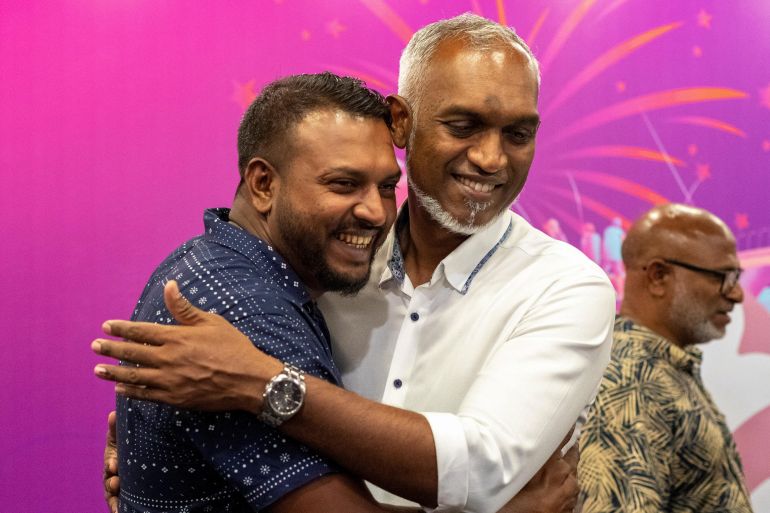
A supporter hugs Mohamed Muizzu

Mohamed Muizzu has won the presidential election in the Maldives after a second-round run-off against incumbent Ibrahim Mohamed Solih, which was seen as a test of the Indian Ocean archipelago’s nascent democracy as well as its ties with China and traditional benefactor India.

Muizzu, 45, leads a party that welcomed an influx of Chinese loans and oversaw a wide-ranging crackdown on dissent when it was last in powerend of list

Incumbent Ibrahim Mohamed Solih conceded defeat shortly before midnight after the Elections Commission of the Maldives said Muizzu had won 54.06 percent of the vote in the run-off contest.

“Congratulations to president-elect Muizzu,” Solih wrote on X, formerly known as Twitter.

“Thank you for the beautiful democratic example shown by the people in the elections,” he added.

Solih, 61, will remain as caretaker president until his successor’s inauguration on November 17.

Muizzu, 45, emerged as the surprise frontrunner during the first round of voting on September 8, taking some 46 percent of the ballots cast. Solih – hurt by a low voter turnout and a split within his Maldivian Democratic Party (MDP) – won 39 percent.

The run-off was seen as having significant implications for the Maldives’s foreign policy, especially in deciding China and India’s battle for influence in the strategically-located country.

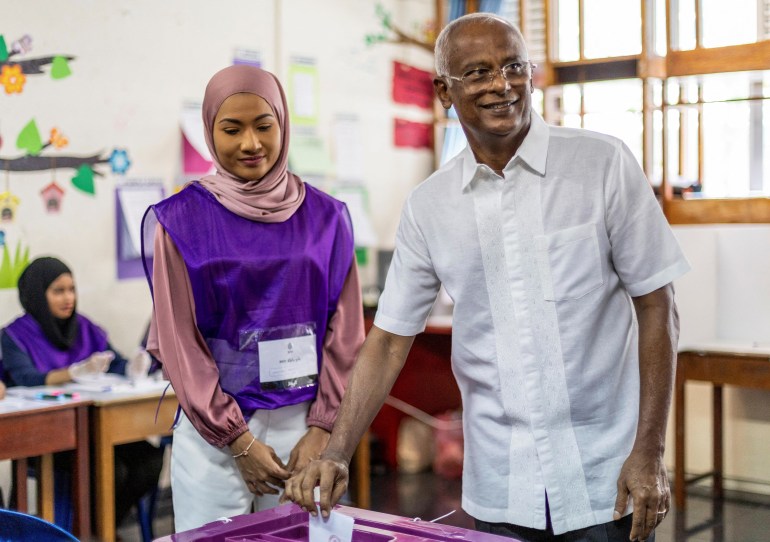
Maldives President Ibrahim Solih casts his vote
Maldives President Ibrahim Solih casts his vote [Dhahau Naseem/Reuters]

“Today’s result is a reflection of the patriotism of our people. A call on all our neighbours and bilateral partners to fully respect our independence and sovereignty,” Mohamed Shareef, a top official from Muizzu’s Progressive Party of Maldives, was quoted as saying by the Associated Press news agency.

Muizzu, who is currently the mayor of the capital Male, made a brief appearance outside his party’s campaign headquarters to urge supporters not to celebrate until Sunday morning, when campaign restrictions officially come to an end.

Muizzu, a one-time housing minister, played a pivotal role in an earlier government’s development programme, bankrolled in part by financial largesse from China’s Belt and Road infrastructure initiative.

He told a meeting with Chinese Communist Party officials last year that his party’s return to office would “script a further chapter of strong ties between our two countries”.

The party’s return to power might also mean freedom for former President Abdulla Yameen, Muizzu’s mentor.

Yameen, who lost power in 2018 as he moved the country closer to China and became increasingly autocratic, is serving an 11-year prison term for corruption and money laundering. His supporters say the charges against him are politically motivated.

Watchdog group Transparency Maldives said there had been some incidents of “electoral violence,” without specifying further details.

There were more than 282,000 eligible voters and turnout was 85 percent, slightly higher than the first-round vote.

India, China angle

Solih, who was first elected president in 2018, was battling allegations by Muizzu that he had allowed India an unchecked presence in the country.

Solih has insisted that the Indian military’s presence in the Maldives was only to build a dockyard under an agreement between the two governments and that his country’s sovereignty will not be violated.

Muizzu promised that if he won the presidency, he would remove Indian troops from the Maldives and balance the country’s trade relations, which he claimed were heavily in India’s favour.

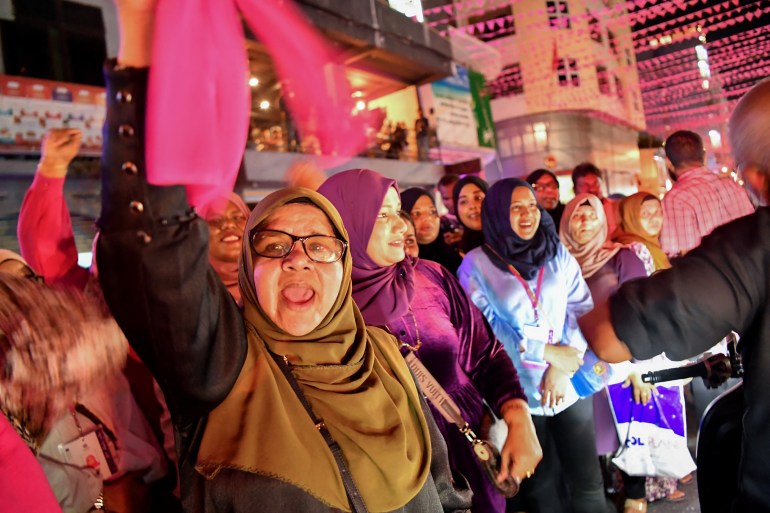
Supporters of Muizzu's People's National Congress celebrate on the streets and call for the release of former president Abdulla Yameen.
Muizzu’s supporters call for the release of arrested Maldives’ former president Abdulla Yameen [Mohamed Afrah/AFP]

Ahmed Shaheed, a former foreign minister of the Maldives, described the outcome as a verdict on the government’s failure to meet economic and governance expectations rather than concerns over Indian influence.

“I don’t think India was at all in the people’s minds,” Saheed said.

Solih suffered a setback closer to the election when Mohamed Nasheed, a charismatic former president, broke away from his Maldivian Democratic Party (MDP) and fielded his own candidate in the first round. He decided to remain neutral in the second round.

“Nasheed’s departure took the motherboard away from the MDP,” Shaheed said.

Yameen, leader of the Progressive Party of the Maldives, made the Maldives a part of China’s Belt and Road Initiative during his presidency from 2013 to 2018. The initiative is meant to build railroads, ports and highways to expand trade – and China’s influence – across Asia, Africa and Europe.

Nevertheless, Muizzu is unlikely to change the foreign policy of affording an important place to India. Rather, opposition to Chinese projects is likely to lessen, evening power balances out, Shaheed said.

SOURCE: AL JAZEERA AND NEWS AGENCIES

Fate of India ties, democracy in balance as Maldives votes in run-off

Voters in the Maldives choose their next president in a run-off election closely watched by China and India.


By Al Jazeera Staff
Published On 30 Sep 202330 Sep 2023

Voters in the Maldives are casting their ballots in a presidential run-off that could determine the fate of the Indian Ocean archipelago’s nascent democracy as well as its ties with China and India.

The election on Saturday pits President Ibrahim Mohamed Solih, who has championed an India-first policy, against the mayor of the capital, Mohamed Muizzu, whose opposition coalition sought closer ties with China and oversaw a wide-ranging crackdown on dissent while in power from 2013-18.end of list

Muizzu emerged as the surprise frontrunner during the first round of voting on September 8, taking some 46 percent of the ballots cast. Solih – hurt by low voter turnout and a split within his Maldivian Democratic Party (MDP) – won 39 percent.

But with the incumbent leader ramping up his campaign – including with pledges of handouts and warnings of a return to authoritarianism should his opponent win – the run-off looks too close to call, according to observers.

Polling opened at 8am local time (03:00 GMT) and will close at 5pm (12:00 GMT). Vote counting begins immediately afterwards, and the results will likely be known within hours.

Some 282,804 people in the country of 500,000 people are eligible to vote.

Here’s what you need to know about the Maldives’s high-stakes election.
China-India rivalry

The run-off has significant implications for the Maldives’ foreign policy, as the outcome could be key in deciding China and India’s battle for influence in the strategically located archipelago.

Solih, who won the last election in 2018 amid widespread anger over corruption and human rights abuses under his predecessor, has brought the Maldives closer to India, obtaining more than $1bn in loans for housing and transport projects in the capital, Male.

The Maldives owes a similar amount to China.

Under Solih’s predecessor, Abdulla Yameen, Beijing funded a first-of-its-kind bridge connecting Male to its neighbouring islands, as well as upgrades to the Maldives’s main international airport.

The infrastructure projects have driven the Maldives’ debt to 113 percent of the country’s GDP at the end of 2022, with India and China estimated to hold 26 percent of GDP each.

N Sathiya Moorthy, a political commentator based in the Indian city of Chennai, said for both Beijing and New Delhi, Saturday’s election is “about the predictability of their Maldivian relations under the next presidency”. Solih is by now predictable for both, he said, but Muizzu – who is contesting the election after Yameen was jailed on a corruption conviction last year – spells uncertainty.

This is because Muizzu’s Progressive Party of Maldives (PPM)-led coalition has launched a vitriolic “India Out” campaign seeking to reduce what it calls New Delhi’s outsized influence in the country’s affairs. “India has become the unnamed issue in this second round of polling with anti-India social media posts doing the rounds much more than in the first,” Moorthy said

.
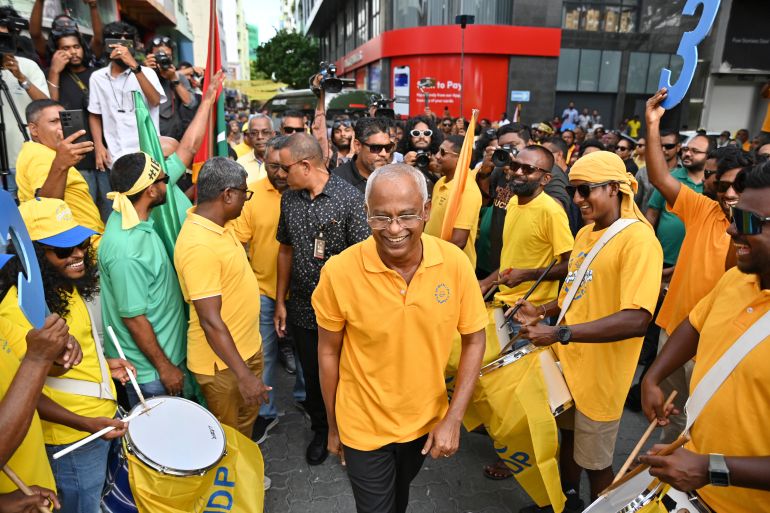
The Maldives’ main opposition candidate Mohamed Muizzu participates in a rally [Mohamed Sharuhaan/AP]

Fears for democracy

A change in government will not only test the country’s foreign policy, but also its fledgling democracy.

Muizzu’s opponents say the mayor – who was a cabinet member in Yameen’s government – could return the country to the authoritarianism seen under the former president. While in office, Yameen presided over a wide-ranging crackdown on dissent that included the jailing of nearly all opposition leaders, the prosecution of journalists and a huge corruption scandal, in which tens of millions of dollars were stolen from public coffers and used to bribe judges, legislators and members of watchdog institutions. He also turned a blind eye to the growing presence of groups linked to al-Qaeda and ISIL (ISIS), even after the killing of a young journalist and a blogger.

“The Maldivian experiment with democratic politics is still very precarious,” said Azim Zahir, a lecturer and research fellow in international relations and politics at the University of Western Australia in Perth. “This very experiment was under serious threat when PPM was in power. The fact that Muizzu was a cabinet minister of that government makes me really nervous for the future of democracy should he win the election.”

Amid the fears, Muizzu has repeatedly pledged not to go after his political opponents.

“I do not support brutality,” the 45-year-old mayor told the Dhauru newspaper last week. “I will not take action against my opponents for disagreeing with me … Everyone will have the opportunity [to carry out political activities].”
Ruling party split

Solih, meanwhile, has dismissed Muizzu’s assurances.

The incumbent has portrayed Saturday’s vote as a contest between democracy and autocracy.

“This election is a choice between peace and stability in the Maldives, or brutality, fear and chaos,” the 61-year-old president told supporters on the eve of the run-off. “If you do not vote [for me], the whole of Maldives may have to mourn and shed tears.”

With much at stake, the president has sought to win the backing of third, fourth and fifth placed candidates in the first round, but to no avail.

The politician who came in third in the first round of voting was Ilyas Labeeb, who won seven percent of the ballots cast. Labeeb was the candidate of the Democrats, a party founded by Parliament Speaker and former President Mohamed Nasheed, who fell out with Solih after losing a bitterly contested presidential primary earlier this year.

Nasheed and the Democrats accuse Solih of failing to fulfil campaign pledges he made in 2018 to ensure justice for the Maldives’s biggest corruption scandal as well as the al-Qaeda-linked killings. They also accuse his government of putting in place a vast system of patronage, using state-owned enterprises to buy out the media and hand out thousands of jobs to ensure political loyalty.

The government denies the claims.

Without the backing of the Democrats, Solih comes to the second round with a “significant disadvantage”, said Ahmed Shaheed, a former Maldives foreign minister and professor of international human rights law at the University of Essex in the United Kingdom.

“It is quite striking that [Solih] has not managed to put together a firm coalition. And without an open endorsement from [Nasheed], it is unlikely the Democrats will vote for Solih,” Shaheed said.

“It’s going to be a very tight contest,” he added. “I don’t think anyone is in a position to comfortably declare that the election is theirs.”

SOURCE: AL JAZEERA


State.gov

https://www.state.gov/countries-areas/maldives

U.S.-Maldives Relations ... The United States established diplomatic relations with Maldives in 1966 following its independence from the United Kingdom and has ...

Worldbank.org

https://www.worldbank.org/en/country/maldives/overview

The economy is heavily dependent on tourism which has been the main driver of economic growth in Maldives and the dependence on tourism makes the country highly ...

 ARACHNOLOGY

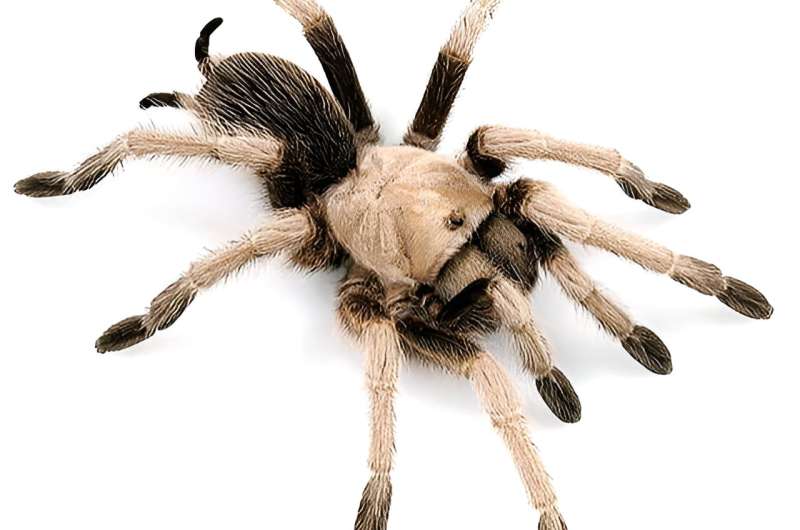
Spiders, spiders everywhere? Tarantula mating season starts early amid threats to arachnids

Spiders, spiders everywhere? Tarantula mating season starts early amid threats to arachnids
Credit: ZooKeys (2016). DOI: 10.3897/zookeys.560.6264

It's tarantula season in the golden hills of the Bay Area: that period every fall when black, hairy males of the species Aphonopelma iodius emerge from their underground burrows in search of a receptive female—a first and final act of carnal exploration before they die.

On a recent weekday evening, a group of Sierra Club members met before sunset at Mount Diablo State Park in Walnut Creek in hopes of witnessing a few of these desperate, single-minded, eight-legged prowlers.

"They said they saw 18 on a hike last week," said Ken Lavin, a naturalist at the state park and former National Park ranger at Muir Woods and Marin Headlands. "I doubt it, though; they probably just kept crossing paths with the same ones. I think we'll be lucky if we see one."

Lavin—who's been leading these tours for roughly 25 years—said male tarantulas are coming out earlier in the season than they used to, and in fewer numbers. By the end of the two-hour hike that evening, three lusty male tarantulas had been spotted.

Historically, the  has fallen between late September and early October, but Lavin said it's now starting in August.

He said that may be related to —hypothesizing that insects are more active in higher temperatures—but it might be due to something else. Either way, it's clear things have changed.

Lavin's observations are not unique, said Jason Bond, a spider researcher at UC Davis. He's heard similar reports.

The problem is that "there's just no good baseline data" for biologists and wildlife officials to gauge how climate change is affecting wild spider populations, Bond said.

It's a problem that's plagued researchers in recent years as anecdotal information about population crashes in insect and spider populations have been reported. Unlike birds, mammals or fish—for which there is generally good, long-term data on population and range—insects and spiders have been pretty well ignored.

"There are many species that we've described—that I've worked on—that, if you were using the [International Union for Conservation of Nature] Red List criteria, they'd be designated as threatened or endangered," Bond said, adding that "a number of species ... are now extinct," and exist only in museum collections.

Two of them, he said, were trapdoor spider species in Dana Point and Palm Springs that were wiped out by the construction of golf courses.

The International Union for Conservation of Nature has no invertebrates on its Red List, although it is looking to include them in the future—prioritizing certain taxonomic groups including "bumblebees, monarch butterflies, swallowtail butterflies, freshwater crustaceans, dragonflies, velvet worms, giant clams, abalones, sea urchins" and "selected families of spiders, scorpions, and grasshoppers."

The situation is concerning, Bond said, considering how important spiders are for healthy, functioning ecosystems. They not only keep insect populations in check, but they provide sustenance for animals such as birds and mammals.

And, he said, they're really cool.

Some spiders, he said, form aggregations and cooperate in brood care—in which adult spiders care for other spiders' offspring. Others appear to participate in lekking behavior, in which two or more males will perform for a female—duking it out through courtship displays—to gain her favor.

Then there's the portia spider—a kind of jumping spider—which appears to use trial and error when faced with new kinds of prey, and then seems to remember what worked when faced with similar prey.

Asked if spiders have brains, or neuronal circuity more like that of octopuses, Bond laughed, and said that while they have a centralized ganglion up in the front part of the face, "you probably don't want to over-glamorize their intelligence."

They're no octopuses, he said, but that doesn't mean spiders aren't worthy of our awe, respect and protection.

Aside from Australia, California has the world's highest diversity of trapdoor spiders—a type similar in appearance to tarantulas—and they're nearly everywhere that hasn't been paved over, built upon or excavated, Bond said.

"You ever been to the beach and sat on a sand dune?" he asked. "You were probably right next door to one."

Like tarantulas, trapdoor spiders burrow into the ground, where they hang out waiting for prey to approach on the ground above. While tarantulas wait below with their eight eyes pointed skyward,  build a webbed door and fling it open when the unsuspecting prey walks by.

They're also really good moms, Bond said. "Oftentimes they'll have a brood of spiderlings that are hanging out in the burrow, getting fed by Mom, sometimes for more than a year," he said. He's even found a "couple of larger juveniles, the kind of teenagers that won't leave," in a few cases.

But typically, "once everybody reaches maturity, they'll leave the burrow and wander out; find a place to make their burrow," he said.

And that's in part why they are of particular conservation concern, Bond said, "They don't get very far ... or disperse really great distances."

Many spiders use their webbing to create balloons or parachutes that allow them to float away—sometimes traveling many miles.

Trapdoor spiders and tarantula spiderlings tend to disperse by walking, Bond said, "so if the habitat gets destroyed or messed up, perturbed in some way, they're really limited [in] ... how far they can go."

Genetic analyses bear this out: The difference in the genomes of trapdoor spider species living just a few miles apart is often greater than that between a human and a chimp, he said.

Trapdoor spiders were probably once distributed across the entire Los Angeles Basin, Bond said. "Of course, now they are all extinct."

He said that if they were  monkeys instead of spiders, that devastation would "have been on the front page of every newspaper."

"It pains me because they are incredibly beautiful animals," he said. "They deserve the same level of protection."

Journal information: ZooKeys 

2023 Los Angeles Times. Distributed by Tribune Content Agency, LLC.