Friday, February 21, 2025

Blackouts Are Becoming the Norm—Can the U.S. Power Grid Be Saved?

By Alex Kimani - Feb 20, 2025


Aging grids and extreme weather are straining U.S. power reliability, with natural gas plants proving especially vulnerable during crises.

Upgrading the grid carries a multi-trillion dollar price tag.

FERC has approved the first major U.S. transmission upgrade in over a decade, aiming to speed up grid modernization and improve reliability.


Last week, a monkey snuck into a substation in Sri Lanka and knocked out power, plunging the island nation into darkness that lasted six hours. The major blackout forced medical facilities and water purification plants in the country to turn to backup generators to maintain critical operations while traffic was gridlocked because traffic lights were not functioning.

Unlike many developing nations, Sri Lanka has ample installed power generation capacity and has plenty to spare even during peak demand periods. Unfortunately, Sri Lanka, like many countries, has an outdated power grid that’s vulnerable to widespread disruptions.

And, the U.S. is not much better, with rolling blackouts, freezing homes and skyrocketing electricity prices now the norm rather than the exception. A few decades ago, power outages in vast swathes of the United States were relatively rare and would normally be seen as black swan events. Unfortunately, mass blackouts have now become a regular feature of modern American life. Power outages have increased 64% from the early 2000s while weather-related outages have soared 78%. According to one analysis, the United States now records more power outages than any other developed country, with people living in the upper Midwest losing power for an average of 92 minutes every year compared to just 4 minutes in Japan.


Climate change and extreme weather events are largely to blame for this sad state of affairs. However, the U.S. is not an exceptional case, with Europe feeling the adverse effects of a rapidly changing climate just as keenly as, if not worse than, the U.S. A closer look at the problem reveals that one fuel could be at the center of the conundrum: natural gas.

Over the past two decades, the shale revolution unlocked a deluge of cheap natural gas, and made it easier for the country to transition from coal-fired generation to natural gas plants. Indeed, natural gas is widely touted as the ‘bridge fuel’ as the world gradually moves away from coal as the primary fuel used to generate electricity to renewables thanks to natural gas having a much cleaner emissions profile than coal. Gas now makes up ~41% of U.S. power generation, more than double its share in Europe’s energy mix at 19.6%.


The harsh reality is that natural gas plants, even relatively modern ones, are proving to have the worst failure rate when faced with extreme weather compared with other generation methods. During the massive Arctic Blast, gas units accounted for 63% of the failures while representing just 44% of the total installed capacity. The country’s vast network of gas plants and pipelines--the largest in the world--and the regulations that govern them simply were never designed or built without the realities of extreme weather in mind. Gas facilities aren’t uniformly winterized, with many relying on single gas pipelines for supply. Meanwhile, many generators lack the ability to burn an alternate fuel or keep back-up gas on hand in case of emergencies.


More alarmingly, even the best gas generating facilities are showing a large degree of vulnerability. PJM Interconnection LLC is the operator of the country’s largest power grid, serving 65 million people in 13 states and Washington, DC, or about a fifth of Americans. The firm’s grid is generally considered to be one of the most reliable in the country thanks to its ample operating reserves and rich shale gas deposits. During the winter blast on Dec. 23, 2022, PJM called a “maximum generation emergency action,” meaning standby plants were supposed to run ramp up to full power. Whereas nearly 20% of those gas plants ran at 100% or more for at least an hour, more than 20% never got above even half capacity while many dropped to 0% output at some point during the emergency. PJM spokesperson Susan Buehler has conceded that generation performance during the storm “was not acceptable,” and added, “What we need, and what we are working on with all of our stakeholders, regulators and policymakers, is for all of our resources to perform when called upon.”

Mind you, PJM actually performed better than many neighboring grids, many of which reported widespread electricity interruptions or blackouts, leaving one to wonder how the country’s multiple, highly fragmented and aging grids will manage to stay afloat as Americans continue to consume ever increasing amounts of electricity. During the crisis, a large number of new-model combined-cycle gas plants failed, with some reporting mechanical issues, and failures to start according to people familiar with the operations and official filings. Others couldn’t get the fuel frozen wells, falling pipe pressure or compressor station failures. Others failed to get gas because they are supplied by utility pipelines that prioritize households and businesses first.

“That’s a crisis that’s coming. It’s coming a lot closer and a lot nearer and a lot faster than even I thought a year ago when I first said we’re facing a reliability crisis,’’ Mark Christie, a member of the Federal Energy Regulatory Commission, has told Bloomberg.


More Renewables And Grid Upgrades


Some experts suggest that extending the existing gas infrastructure can help solve the problem. Many, however, believe that grid upgrades and incorporating more renewable energy is the long-term solution.

For decades, the United States has been relying on an aging electrical grid that's increasingly unstable, underfunded and incapable of taking the country to a new energy future. Despite being the wealthiest country in the world, the U.S. only ranks 13th in the quality of its infrastructure.

Indeed, the U.S. power grid is considered the weakest link in the ongoing energy transition.

A study by UC Berkeley and GridLab found that it will be economically feasible for renewable energy to power 90% of a reliable grid by 2035, while only depending on natural gas for 10% of annual electricity production. Unfortunately, whereas renewable power sources have grown dramatically in recent years, the country’s aging electrical grid is simply incapable of fully integrating them into our energy use, leading to so much potential power wasted.

But, as is usually the case, the biggest challenge remains funding: a Wood Mackenzie analysis has estimated it would cost a staggering $4.5 trillion for the U.S. to fully decarbonize, including constructing and operating new generation facilities; investing in transmission and distribution infrastructure, making capacity payments, delivering customer-facing grid edge technology and more. Suddenly, the $13 billion that the previous administration allocated to upgrading the national grid looks puny.

FERC Approves First Major U.S. Electric Transmission Upgrade

Thankfully, the United States' aging power infrastructure might soon start getting a much-needed revamp--if the Trump administration is up to it. Last year, the U.S. Federal Energy Regulatory Commission (FERC) approved the first major electric transmission policy update in over a decade, a move expected to speed up new interregional lines to help the grid cope with surging demand. The new rule marks FERC’s first ever update on long-term transmission planning and is seen as a big win for the U.S. administration’s ambitious goal to generate 80% of the country's electricity from renewables by 2030 and 100% carbon-free electricity by 2035.

"This rule cannot come fast enough," FERC Chairman Willie Phillips, who voted in favor of the final rule, told Reuters. "There is an urgent need to act to ensure the reliability and the affordability of our grid. We are at a transformational moment for the electric grid with phenomenal load growth," he added, citing the surge in domestic manufacturing, proliferation of data centers, and the surge in extreme weather events.

Under the Biden administration, FERC worked to reform how new electric transmissions are approved and paid for. The final rule requires transmission project participants to submit plans for how to split costs between states and companies and also determine whether transmission proposals will meet long-term needs cost-effectively and give operators the ability to re-evaluate projects that face delays or cost-overruns or delays.


By Alex Kimani for Oilprice.com
Fortescue rethinks timeframes for green energy projects, shares drop as profit dips


Reuters | February 19, 2025 | 


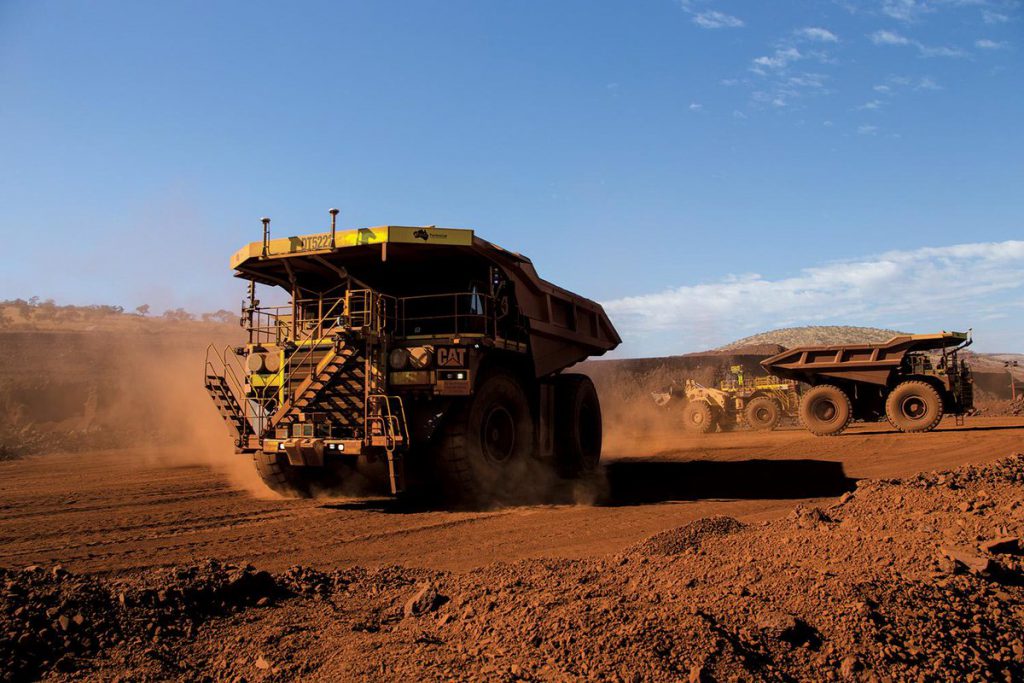
Fortescue’s Solomon Hub operations. (Credit: Fortescue)


Fortescue on Thursday reported a drop in first-half profit and said it was reconsidering timeframes for some of its green energy projects as a pause in grants by the United States was leading to funding uncertainty.


The miner also revised its full-year forecast for its green energy unit’s capital expenditure to $400 million from its previously provided forecast of $500 million.

“Market conditions are uncertain, with the Trump Administration instructing federal agencies to pause grant payments under the Inflation Reduction Act,” the company said for its green energy projects.

In July last year, the miner said the unit, Fortescue Energy, was unlikely to meet its target of producing 15 million metric tons of green hydrogen by 2030.

Fortescue swoops on Red Hawk, secures 90% stake

Green iron is produced by reducing iron ore using hydrogen gas, which is then converted into steel in an electric arc furnace.

“Market will want to see Energy capex (capital expenditure) and opex (operating expenditure) cut further,” analysts at Citi said in a note.

The world’s fourth-largest iron ore miner said underlying attributable net profit after tax dropped 53% to $1.55 billion for the six months ended December 31, as prices of iron ore moderated due to weak demand from China’s struggling property sector and high portside inventories.

That missed a Visible Alpha consensus estimate of $1.76 billion.

It also declared an interim dividend of A$0.50 per share, which was 7% lower than the consensus.

Shares of the miner fell 6.7% to A$18.14 in early trading.

Fortescue added its Iron Bridge facility was on track to achieve fiscal 2025 target for shipments of 5 to 9 metric tonnes.

(By Roshan Thomas and Sherin Sunny; Editing by Anil D’Silva)
Vale logs loss on Canada impairments, but analysts welcome share buyback, dividends


Reuters | February 19, 2025 | 


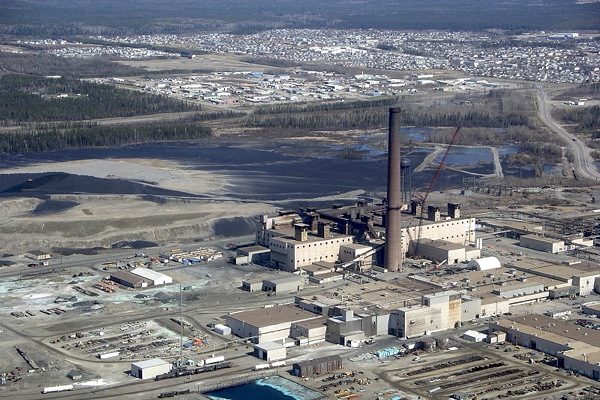
Vale’s operations in Thompson, Manitoba. Image from Vale.

Brazilian miner Vale reported on Wednesday a $694 million loss in the fourth quarter, missing estimates and swinging from a hefty profit a year earlier, as it logged impairments on some of its base metals assets in Canada.


Vale, one of the world’s largest iron ore producers, also announced fresh remuneration to shareholders through dividends and a share buyback, which analysts welcomed, and cut its planned spending estimate for this year.

The firm’s quarterly net loss, far below the $1.95 billion profit expected by analysts in a LSEG poll and the $2.4 billion profit a year earlier, was hit by impairments of $1.4 billion on its Thompson nickel operations and $540 million on a project to expand its Voisey’s Bay mine, both in Canada.

Vale noted the impairments followed a review of assets in Vale Base Metals, which last month said it had started a “strategic review” of its nickel assets in Thompson, including their potential sale.


Vale’s core profit as measured by adjusted earnings before interest, taxes, depreciation and amortization (EBITDA) came in at $3.79 billion in the quarter, down 41% and below analysts’ estimate of $3.96 billion.


Excluding the impairments and one-offs, Vale’s net profit would have reached $872 million in the quarter, still 64% lower year-on-year amid a decline in iron ore prices and sales volumes.


Vale announced a dividend of about 2.14 reais per share and a share buyback of up to 120 million shares, up to 3% of its share base, to be carried out over 18 months.

Santander analysts welcomed “solid results”, citing operating numbers that do not include the impairment and other one-offs.

“We expect a positive market reaction on the back of a stronger-than-expected shareholder remuneration, and the new buyback program,” they wrote in a note to clients.

Itau BBA analysts also expected a positive market reaction, noting a quarter of the announced dividends are extraordinary payments.

Vale last month released its sales and production report, which showed a near 5% decline in its quarterly iron ore output compared to a year earlier, with the company prioritizing higher-margin products.

Still, the miner notched its highest annual production since 2018 in the year.

Vale said its net revenue in the fourth quarter came in at $10.1 billion, down 22% and mostly in line with analysts’ expectations.

In a separate filing on Wednesday, Vale trimmed its projected capital expenditures for this year from about $6.5 billion to some $5.9 billion, mostly on lower planned investments in growth and energy-transition metals.

(By Andre Romani; Editing by Kylie Madry and Sonali Paul)


Anglo takes another De Beers writedown as diamond woes bite

Bloomberg News | February 20, 2025 | 

De Beers grading facility in Surat, an Indian city that is a major hub of diamond cutting and polishing. (Image courtesy of De Beers Group.)

Anglo American Plc took another writedown on its struggling De Beers diamond unit, and posted a slide in profit, as the miner moves ahead with a radical overhaul of its business.


Last year Anglo, in the process of fending off a $49 billion approach from BHP Group, announced a restructuring that would leave its business focused on iron ore and copper. So far, the plan has gone well. Anglo has agreed to sell its coal and nickel mines and is on course to exit platinum later this year. That just leaves De Beers to go.

Yet the diamond industry is in the midst of a crisis. Demand has collapsed in China, a crucial market, and lab-grown gems continue to win share in some segments. Anglo said Thursday it was taking a $2.9 billion impairment on the value of De Beers after last year taking a $1.6 billion writedown.

Anglo said it hopes to progress its planned De Beers exit — which could be either a trade sale or a listing — in the second half of the year.

“Given the state of the market, given the shape of the business as it stands right now, I’m really not expecting much traction or progress in the first half, but picking up in the second half,” chief executive officer Duncan Wanblad said on a call with reporters.

The scale of the problems were laid bare by the unit’s performance last year, when it posted an underlying loss of $25 million. It made a profit of just $72 million the year before.

What started as a post-pandemic slowdown has spiraled as inflation hit customer purchases, before a collapse in China’s luxury market further eroded demand. Rough diamond prices have plunged nearly 50% in the past two years, while the price of polished stones has fallen about 35%.

De Beers has dramatically cut production to try and limit the supply glut, but so far prices have remained subdued.

Anglo reported a 15% fall in underlying earnings to $8.46 billion, while cutting its final dividend by 46% from the same period in 2023. Copper and iron ore, the businesses that will underpin Anglo’s future, contributed 76% of its profit. Net debt remained stable.

The company also announced a deal with Chile’s state mining company Codelco to jointly develop their adjacent Los Bronces and Andina operations as Anglo seeks to improve a mine that has struggled in recent years. Jefferies LLC said the deal could be a source of value for Anglo that the market had not anticipated.

“We are encouraged by Anglo’s operational improvements and continued progress on the company’s restructuring,” said Chris LaFemina, an analyst at Jefferies. “We believe further progress on the restructuring makes Anglo more attractive on a standalone basis and a compelling potential acquisition target.”

Anglo’s shares gained as much as 4.1% in London trading.

The company joins its mining peers — Rio Tinto Group, BHP and Glencore Plc — in reporting declining earnings this week. Iron ore has been under sustained pressure from China’s property crisis, while coal — a key Glencore earner — has slumped in the face of a supply glut.

(By Thomas Biesheuvel)


Trump says he will check amount of gold stored at Fort Knox

Bloomberg News | February 20, 2025 

Aircraft flies over the US Gold Bullion Depository. Credit: PICRYL

President Donald Trump said his administration intends to ensure that the significant amount of US gold reserves held at Fort Knox is accounted for and accurate.


“We hope everything’s fine with Fort Knox, but we’re going to go to Fort Knox — the favorite Fort Knox — to make sure the gold is there,” Trump told reporters aboard Air Force One on Wednesday en route to Washington from an event in Miami.

“If the gold isn’t there, we’re going to be very upset,” he added.

The president’s comments come amid speculation over an idea that the US Treasury could revalue its gold stockpiles. The idea has gripped some on Wall Street even as people familiar with the matter say that the concept is not under serious consideration by Trump’s top economic advisers.

The speculation centers around the notion that the US Treasury could re-peg its gold holdings at a higher level — a move that would generate cash for the government. Such a move would likely require Trump to seek congressional approval.

Fort Knox, a US Army installation in Kentucky, holds little over half of the Treasury’s gold reserves. Gold was transferred there from New York and Philadelphia in the 1930s, in part to make it less vulnerable to foreign attack. Much of the rest of the bullion is held in facilities in Denver and West Point, New York.

(By Hadriana Lowenkron)


PUSSY GALORE HOLLYWOODS OUT LESBIAN FEMINIST
SHE WAS THE ORIGINAL DIANA RIGG FROM THE AVENGERS


ICMM releases updated tailings management and mine closure guidance

Staff Writer | February 19, 2025 | 


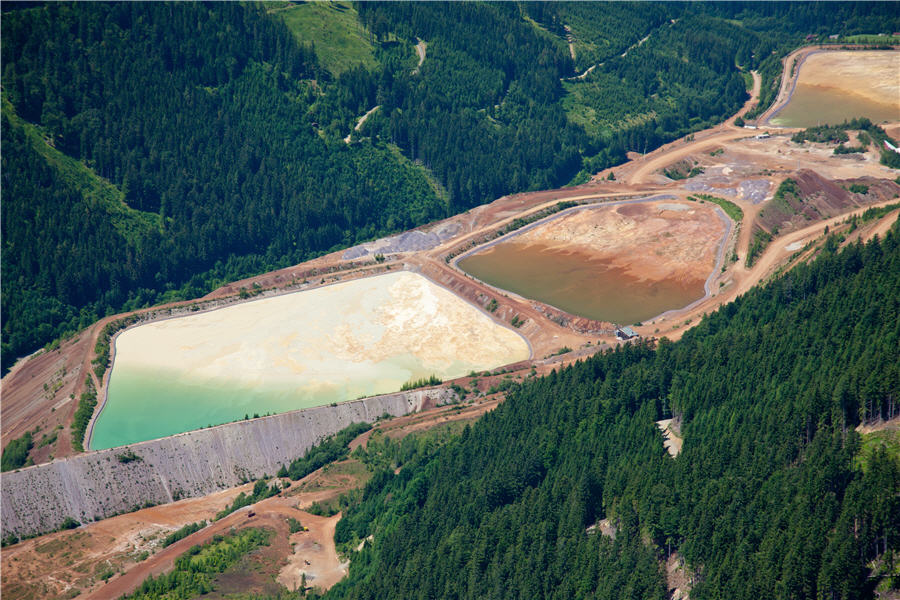
Tailings dam. Stock image.


The International Council on Mining and Metals (ICMM) announced Wednesday it has published new editions of resources with updates designed to improve how mining companies plan and manage the closure of tailings storage facilities.


The closure of tailings storage facilities is one of the most complex and resource-intensive phases within a mine’s lifecycle. It requires extensive environmental assessments, long-term monitoring, rehabilitation and maintenance strategies to manage safety, environmental and social risks.

The Tailings Management Good Practice Guide (2nd edition) and Integrated Mine Closure Good Practice Guide (3rd edition) introduce improved strategies for integrating tailings management and mine closure processes, the Council said, adding that the updates reflect the latest industry knowledge and guide companies to strengthen the governance and long-term stability of closed facilities.

ICMM said its approach emphasizes early planning, strong governance and progressive closure activities to support delivery of positive outcomes for both ecosystems and local communities.

“Closure is a critical phase of every mining or metals processing operation and presents an opportunity to strengthen environmental, social and economic resilience far beyond the mine’s life cycle,” ICMM managing director Emma Gagen said in a news release.

Gagen said achieving these positive outcomes hinges on early planning and progressive closure approaches – especially for tailings storage facilities, where risks can extend long after operations cease.

The updates support companies in developing criteria for the closure of a tailings storage facility, setting clearer governance structures during closure and post-closure stages and improving integration of closure considerations into tailings storage facility design and operation.

More information is here.
Column: A tungsten-tipped answer to the West’s critical metals dilemma


Reuters | February 20, 2025 | 


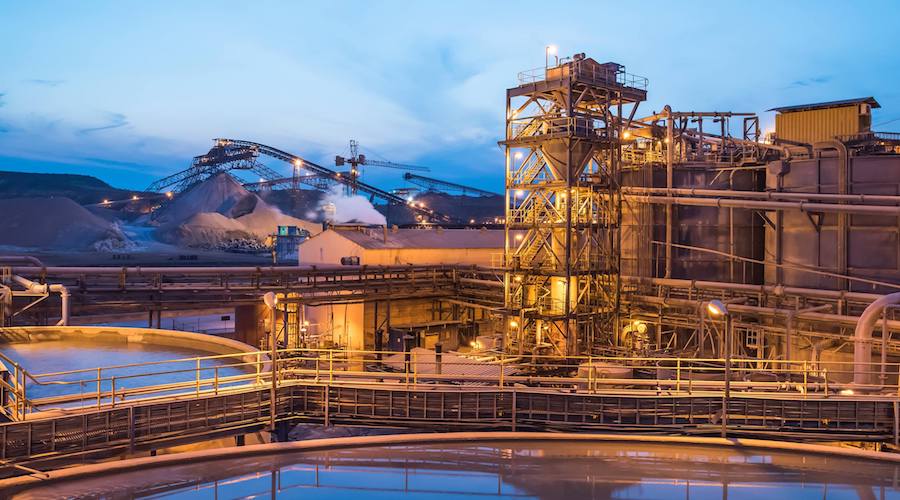
Stock image.


The critical minerals war is escalating.


China’s response to US President Donald Trump’s 10% tariff hike on Chinese imports includes restricting exports of another five esoteric components of the periodic table.

Exports of bismuth, indium, molybdenum, tellurium and tungsten will only be allowed subject to Ministry of Commerce approval they will not be used in military applications.

That’s a big problem for tungsten in particular.

In a world where just about every metal is critical for someone, the word may be losing its meaning, as my colleague Clyde Russell has argued.

But, for want of a better word, tungsten is a critical component of the 21st-century industrial supply chain, both civilian and military.

GRAPH: The critical minerals to watch in the US

So critical indeed that users are starting to embrace new pricing mechanisms to guarantee non-Chinese supply.
Green ammo

Tungsten has the highest melting point of any element, is extremely hard and has good electrical and thermal conductivity.

The metal lit up the last century in the form of the incandescent light bulb and is now used in an extraordinarily wide range of applications.

Tungsten carbide is the hardest material after diamond and its use in drills spans every other metallic supply chain from mine to machining. Tungsten crucibles make it possible to melt just about any other element.

The metal has seeped stealthily into telecoms, electronics, semiconductor and power sectors.

Tungsten is a small market with global output of just over 100,000 metric tons and an estimated value of around $5 billion in 2023. But the industries that depend on it are exponentially bigger, which is why it is on everyone’s critical mineral list.

It is also the material of choice for what the military calls penetrators – high-density, armour-piercing projectiles.

The only other material that can match its kinetic performance is depleted uranium, which makes tungsten the environmentally friendly battlefield option.

And one that is in high demand in Ukraine.
Decoupling

China dominates the tungsten market, accounting for 83% of last year’s global mine production of 81,000 tons, according to the US Geological Survey.

Tungsten has not been mined commercially in the United States since 2015 and the country relies heavily on imports, 37% of which came from China last year.

The Joe Biden administration kick-started the process of weaning US companies off their dependence on Chinese tungsten with a 25% duty on imports from China imposed in December last year.


The US military faces a 2027 deadline for halting any purchases of tungsten manufactured or mined in China or Russia, which is the world’s third largest producer.

The Defense Logistics Agency holds stocks of tungsten concentrate and is in the market for up to 2,040 tons more in the current fiscal year to September 2025.

The Department of Defense has awarded $15.8 million to Canada’s Fireweed Metals Corp to accelerate the development of the Mactung tungsten mine in Yukon.

The money will fund test work and a feasibility study, which suggests it will be a while before a final go-ahead decision, let alone production.
No downside

Until the DoD’s money can deliver results in Yukon, the West’s tungsten fortunes hang largely on the restart of the Sangdong mine in South Korea.

Sangdong was once the jewel in the country’s mining crown but closed due to low prices in the 1990s.

It is being reactivated by Almonty Industries, with commissioning of the first 2,300-ton per year phase already in progress. A second phase of similar size could follow 12 months down the line.

All of the first-phase production has been committed to Global Tungsten & Powders, the US arm of Austria’s Plansee Group.

The contract comes with a minimum floor price of $235 per metric ton unit (mtu) basis the price of ammonium paratungstate and no upside cap. The current price is $342.50 per mtu.

Floor prices are by no means uncommon in the mining industry but normally they come in the form of fancy financial hedging programs paid for by the producer.

But there is no futures market in tungsten, which makes this particular contract unique – or almost unique: Almonty has pulled off the same trick with its Sangdong molybdenum project, locking in a hard floor price of $19 per lb with SeAH M&S, Korea’s largest processor.

The idea is to insulate the projects from the sort of destructive Chinese supply surge that is playing out in battery metals such as lithium, cobalt and nickel. Lacking any floor price protection, battery-metal start-ups have been crushed by low prices.
At any cost?

Almonty may not have to worry too much about floor prices if China starts choking off the supply of tungsten products to the West.

Although there is no outright ban yet, it is worth noting that germanium, gallium and antimony all got the special licensing treatment before Beijing put a total ban on exports of all three to the United States.

As buyers scramble for non-Chinese material at any price, antimony has rocketed to $47,250 from $11,000 per kilogram at the start of 2024.

Plansee Group’s granting of what is in effect a free put option on Amonty’s tungsten output bears testimony to how critical it thinks Sangdong’s output will be to the non-Chinese tungsten market.

The lesson for other critical mineral users is that relying on market prices alone to ensure supply will not guarantee you get the stuff you really need.

(The opinions expressed here are those of the author, Andy Home, a columnist for Reuters.)

(Editing by Barbara Lewis)

Thursday, February 20, 2025

Rio Tinto CEO goes to Washington to get handle on Trump tariffs

Bloomberg News | February 19, 2025 | 

CEO Jakob Stausholm (left) and Jared Osborne, general manager at Rio’s Bundoora Tech Development Centre. (Image: Stausholm’s LinkedIn.)


The chief executive officer of Rio Tinto Group took the unusual step of hosting the UK company’s earnings from Washington, as part of a whirlwind trip to understand what President Donald Trump intends to accomplish with his expanding trade war.


Jakob Stausholm, whose company is based in London and boasts almost half of its business and employees in Australia, said he would be spending the week meeting with US senators, congressmen and others. The CEO on Wednesday presented company earnings from the US capital that proved more resilient than its rivals.

“I’m here in Washington DC because I want to understand what the new government wants to achieve for America,” Stausholm said in an interview from the company’s offices. He said he’s not asking anything of the administration, but noted that “policies are being formulated by the day.”

It’s a significant move that indicates how seriously the chief of the world’s second-largest mining company is taking the new president’s tariff policies. Rio Tinto is the biggest supplier of aluminum to the US market, but about half of its 3.3 million tons of production was manufactured last year in Canada — which Trump has threatened to slap with 25% tariffs beginning next month.

Rio Tinto has a large presence inside the US, producing copper, gold, silver, tellurium, molybdenum and boron. The company in 2023 acquired a 50% stake in Matalco, which produces recycled aluminum in the US. The country last year consumed about 4.3 million tons of the metal used in everything from window frames to automobiles and iPhones. Canada represents about 70% of unwrought aluminum imports, according to researcher Harbor Intelligence.

Rio Tinto was a vocal opponent of the 10% duty Trump imposed on Canadian aluminum imports during his first term in 2018. Its lobbying, in conjunction with the US Aluminum Association, Alcoa Corp. and others, helped secure an exemption for Canada that has remained in effect.

However, concerns have returned as last week Trump announced he would rescind all exemptions and implement a 25% tariff in March on all aluminum imports coming into the country.

(By Joe Deaux)
Barrick reaches agreement with Mali to resolve mining dispute – report


Staff Writer | February 20, 2025 | 

The Loulo-Gounkoto gold complex. (Image courtesy of Barrick Gold.)


Barrick Gold (NYSE: GOLD) (TSX: ABX) has reached an agreement with Mali to end the ongoing dispute over its mining assets in the West African country, Reuters reported, citing four people familiar with the matter.


According to the news agency, the deal is pending formal approval from Mali’s government.

As part of the agreement, Barrick will pay a total of 275 billion CFA ($438 million) to the Malian state in exchange for the release of detained employees, the return of seized gold and the resumption of operations at the Loulo-Gounkoto mine.

Barrick did not immediately respond to an email query from MINING.COM.

Shares of the gold miner were trading down 0.45% Thursday afternoon in Toronto at C$26.60 ($18.75), giving the company a market capitalization of C$40.6 billion ($28.6 billion).

Last week, Barrick said it was considering placing its suspended Loulo-Gounkoto mine complex, one of the largest in Mali, on care and maintenance.

The Toronto-based miner applied for arbitration with the International Centre for Settlement of Investment Disputes in December.

For now, the Loulo-Gounkoto mine is excluded from the company’s guidance, with production expected to return to forecasts in 2027.

Meanwhile, the Canadian miner reported on Thursday strong performance in the fourth quarter of 2024, with gold production rising 15% and copper production increasing 33% over the previous three months, allowing it to meet its annual production guidance.


FLOATING PATHOGEN FACTORY

MSC’s First American Mega Cruise Ship Completes Sea Trials

MSC World America cruise ship
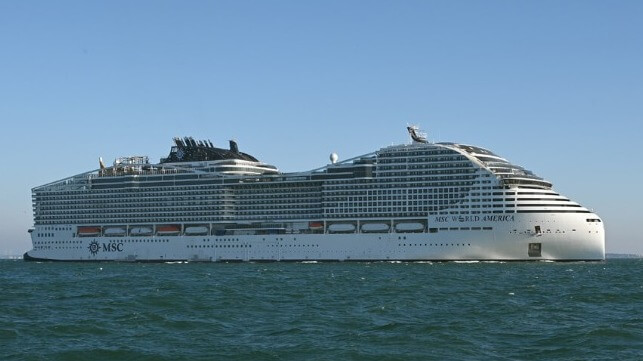
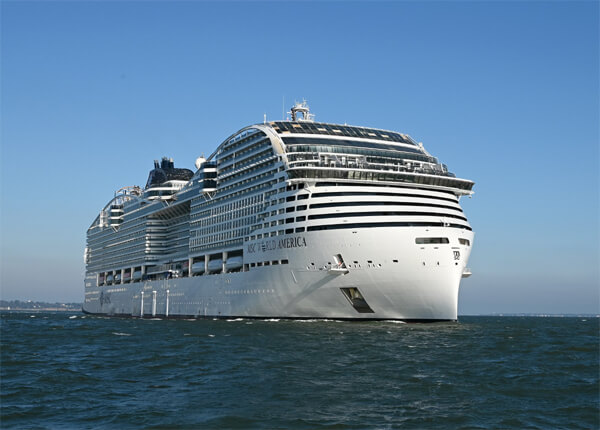
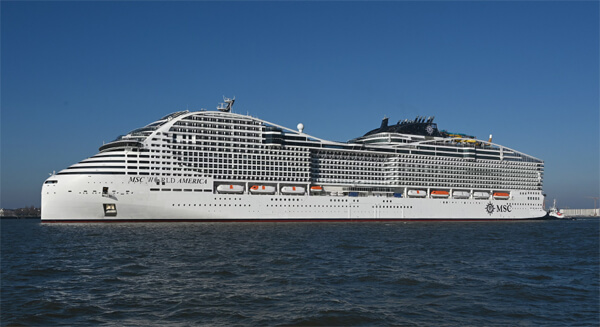
MSC World America completed sea trials ahead of her delivery next month (Chantiers de l'Atlantique)

Published Feb 19, 2025 6:31 PM by The Maritime Executive


MSC Cruises is continuing its expansion into the American market preparing for the arrival of its first “World Class” cruise ship, MSC World America, which will enter service in April 2025. Currently finishing construction at Chantiers de l’Atlantique in France, the new ship recently completed its second and final sea trials before delivery.

The new mega cruise ship underwent deep-water intensive systems tests during a final sea trial in the Atlantic Ocean announced MSC Cruises. The sea trials checked the performance of the ship’s engines, maneuverability, fuel consumption, safety systems, speed, and stopping distances. The ship will now receive her final finishing touches at the shipyard in Saint Nazaire, France before being officially delivered to the cruise line on March 27.  

At 216,638 gross tons, the MSC World America is almost a quarter larger than the cruise ships the company has been deploying in the American market. It is part of an effort to expand the brand’s presence in the United States which has also seen MSC open new homeports in Port Canaveral, Florida, and Galveston, Texas, and plans to send a cruise ship to Alaska.

She is the second ship of the class following the MSC World Europa which was introduced at the end of 2022. Last year, MSC also exercised options for two more ships of the class, with MSC World Asia due to enter service in 2026 cruising in the Western Mediterranean. A fourth ship as yet unnamed is due to enter service in 2027.


MSC World America is scheduled to be named in Miami, Florida on April 9 and enter service that weekend sailing to the Caribbean. MSC will be the second company to have a cruise ship of over 200,000 gross tons in the U.S. market following Royal Caribbean International. Both Carnival Cruise Line and Norwegian Cruise Line last year also ordered ships of this size to add to their fleets late in this decade and the next decade.

The addition marks a key step for MSC Cruises which has been building cruise ships for just 20 years and began in the 1990s with a series of small, secondhand cruise ships. MSC World America will be the 23rd cruise ship for the company which today rivals the three traditional brand leaders (Carnival Cruise Line, Norwegian Cruise Line, and Royal Caribbean International) in size and scope of operations.


MSC highlights that the MSC World America is being tailored to the U.S. market with re-imagined venues and concepts. She has seven onboard districts including bars, restaurants, entertainment, and leisure facilities. She will feature 18 bars and lounges, 19 dining venues, including four main restaurants and two buffets, as well as six specialty restaurants. The ship introduces a new Greek restaurant, a branded Eataly restaurant, a sports bar, and a comedy-karaoke club.

Measuring 1,093 feet (333 meters) in length, MSC constructed what is being billed as the largest cruise terminal in North America located in Miami to serve as her homeport. The ship has 22 decks and 2,614 passenger cabins. She will accommodate 6,762 passengers and have a crew of 2,138.

The ship incorporates the advanced technologies seen in the cruise sector, including being LNG dual-fueled. She has shore power connections and an advanced wastewater treatment plant.

Her arrival coincides with one of the strongest cycles in the cruise industry with many brands reporting record booking positions and strong pricing. PortMiami which last year set a new record of nearly 7.3 million passengers, looks forward to the arrival of the MSC World America which will continue to the continued growth of the port.