Saturday, February 22, 2025

Sanctioned Russian Oil Vanishes From Tracking in Gulf of Oman

By Julian LeeFebruary 21, 2025
A crude oil tanker. 
Photographer: Marcelo del Pozo/Bloomberg 

(Bloomberg) -- A cargo of Russian oil that’s under heavy US sanctions vanished from global tracking systems, evidence of how difficult it will be to keep track of — and enforce — the measures.

The 900-foot oil tanker Meru left Murmansk in the Arctic Sea on Jan. 20, ten days after the US Treasury’s Office of Foreign Assets Control imposed most-aggressive sanctions on Russia’s oil trade — especially those from the Arctic.

The Meru was initially destined for the Indian port of Vadinar, according to shipping information seen by Bloomberg — even if the tanker’s digital tracking system showed “Suez” until it reached the southern Red Sea. At that point, it was changed to “Persian Gulf.”

While the Meru is now visible again on the industry’s Automatic Identification System, it disappeared from vessel tracking systems for just long enough for its cargo to be switched onto another as-yet-unidentified ship.

The Meru’s signals show it arrived at the entrance to the Strait of Hormuz — an area favored for the clandestine switching of cargoes from one vessel to another — on Tuesday, leaving again the following day and reporting a draft indicating that it had offloaded its cargo.


The identity of the receiving tanker remains a mystery at this time — a fact that may make it easier for the cargo to be discharged without attracting the attention of OFAC.

The shipment falls foul of OFAC sanctions in multiple ways.

The oil was pumped by Russia’s Gazprom Neft, sanctioned as part of the Jan. 10 measures. It was hauled to Murmansk on sanctioned shuttle tankers and stored on the Umba oil tanker, also sanctioned, before being loaded onto the Meru. All of the vessels involved were also blacklisted on Jan. 10.

A maritime database identifies Night Moon Navigation LLC, based in Baku, Azerbaijan, as the manager of the Meru. The company didn’t reply to an email request for clarification of the ship’s movement and cargo transfer, sent outside local office hours.

The Meru subsequently headed for Duqm on the Omani coast, where its signals indicate it arrived on Thursday.

Its presence there — and that it was empty — were confirmed by Tankertrackers.com, a firm that uses satellite imagery, shoreside photography, and real-time AIS to track crude oil shipments, especially sensitive ones.

©2025 Bloomberg L.P.


Harmony Gold reports fatality at Mponeng mine


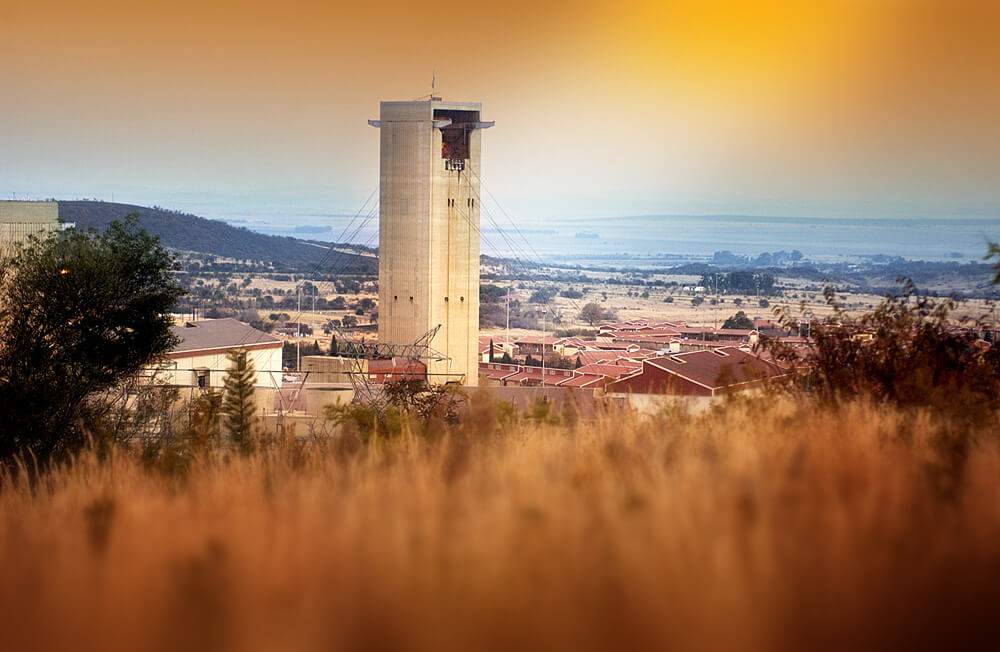
Mponeng, in South Africa’s Gauteng province, is the world’s deepest gold mine. (Image courtesy of AngloGold Ashanti)

Harmony Gold on Friday said a worker had died at its Mponeng mine, the world’s deepest, after a seismic event.

The accident took place on Thursday morning when the seismic event was followed by a ground collapse, Harmony said in a statement.

(By Nelson Banya)


Ivanhoe nets $193M profit but floods, quick expansion cloud outlook


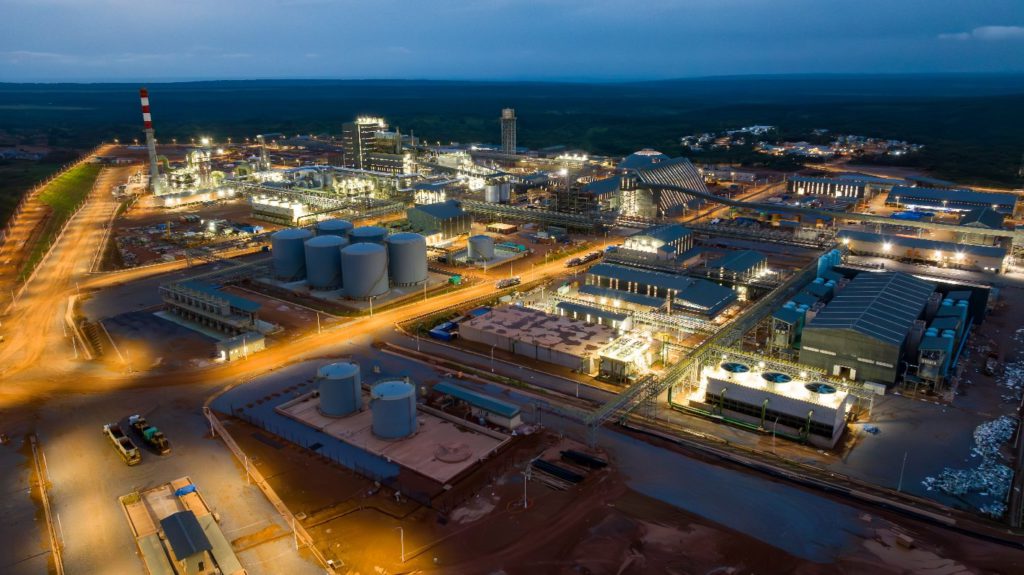
Construction of Africa’s largest and greenest smelter project at Kamoa-Kakula is now complete. Credit: Ivanhoe Mines

Ivanhoe Mines’ (TSX: IVN) update on 2024 shows solid performance booking a $193 million profit, but an analyst says it’s marred by operational setbacks and an overly ambitious growth plan.

The company’s flagship Kamoa-Kakula copper complex in the Democratic Republic of Congo set record output of 437,061 tonnes of copper in concentrate and $3.11 billion in revenue. Adjusted earnings before interest, tax, depreciation and amortization rose to $625 million from $604 million in 2023, the company said on Thursday.

The performance contrasts with Canaccord Genuity mining analyst Dalton Baretto recalling how a Jan. 2 fire knocked out backup power and delayed Ivanhoe’s forecast for this year. Baretto also critiqued the company’s $1.2 billion plan to expand the Platreef project in South Africa to output of 450,000 to 550,000 oz. of three platinum group metals and gold by late 2027.

“We note that these were more aggressive on timelines, capex and particularly costs,” Baretto said on a note on Friday. “We have adjusted our estimates.” The bank’s target share price slid to C$24 from C$27.50.

Ivanhoe shares fell 11% to close on Friday at C$14.97 apiece as wider markets dropped. The company is trading close to the bottom of its 12-month range at C$13.84, having achieved C$21.32 in the period. It has a market capitalization of C$20.3 billion.

After adjustments, Ivanhoe’s normalized profit was $386 million. This included a $164 million loss from the fair value of convertible notes and extra finance costs.

Kamoa-Kakula

Founder and co-chairman Robert Friedland lauded Kamoa-Kakula’s “extraordinary performance” in its record 133,819 tonnes for the three months to Dec. 31. “The completion of Africa’s largest and greenest copper smelter marks a pivotal moment, unlocking new potential for enhanced profitability, reduced costs and streamlined efficiencies,” he said.

Ivanhoe reported the complex faced challenges like higher use of imported and backup power. Still, its C1 or cash cost was between $1.65 and $1.85 per pound.

The site’s stage-three expansion is complete. The brand new, direct-to-blister copper smelter is to be switched on in April after a three-month delay caused by intermittent power availability. Similar challenges loom in 2025.

Kipushi flooding

The Kipushi mine, a high‐grade zinc–copper–germanium–silver asset also in the DRC, managed to hit design processing rates late in 2024 after initial ramp-up challenges. However, an electrical failure followed by flooding has now delayed further development.

A 344,000-tonne surface stockpile keeps mill operations running at design rates. But analysts warn that delays might hurt production later this year if development doesn’t meet expectations.

The disruption at Kipushi not only pushed C1 costs higher but also underlines the vulnerability of operations when critical infrastructure issues arise.

A debottlenecking effort is ongoing to boost processing capacity by 20%. They are also assessing an upstream dense media separation circuit to handle fines.

“For 2025, Ivanhoe is guiding to C1 costs of 90¢ to $1 per lb., well above our estimates,” Baretto said in Friday’s note. “We have updated our life-of-mine cost assumptions to be more conservative.”

Platreef

Ivanhoe’s expansion plan for Platreef aims to ramp up annual processing to 700,000 tonnes late this year with projected output of 100,000 oz. of three platinum group metals plus gold.

The second stage is projected to boost mining and processing rates to 4.1 million tonnes per year at an all-in sustaining cost (AISC) of roughly $700 per ounce. A third stage plans to further increase capacity to 10.7 million tonnes at an additional capital cost of about $800 million, with production forecasts of 1 to 1.2 million oz. per year at an AISC of around $650 per oz. coming online in late 2030.


Global exploration budgets fall as juniors tighten belts: S&P


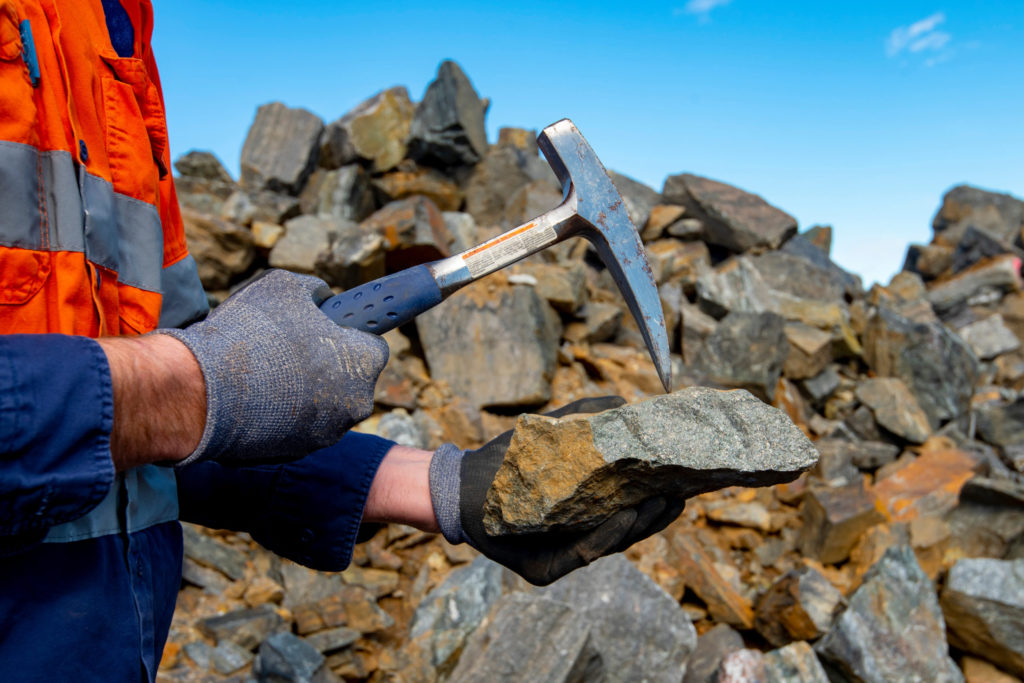
Mining exploration. CREDIT: Adobe Stock.

Global nonferrous exploration spending declined for the second straight year due to financing challenges for junior miners, S&P Global said.

Global spending dropped 3% to $12.5 billion, S&P’s Corporate Exploration Strategies 2024 report, released Friday, shows. The decline raises concerns over the industry’s capacity to discover new deposits when demand for battery and critical metals is rising.

Less grassroots exploration could lead to serious problems, S&P project lead Eillen Grace Dela Cruz warned.

“Junior companies offset the rise in prices by scaling back their expenditures in early-stage, higher-risk projects,” she said in the report. “With the junior sector continuing to struggle to access funds, causing its allocations to decrease again.”

She suggests that as companies retreat to lower-risk investments, the potential for breakthrough discoveries diminishes even as market fundamentals suggest an urgent need to find new resources.

The report highlights a broader shift as the share of grassroots exploration hit a record low. Companies are playing it safe by focusing on established deposits instead of risky projects – a trend that might reduce future supplies of critical metals.

Reserve replacement

Exploration spending in 2025 will likely drop too, S&P says. This is due to the 2024 budgets being tight and junior companies having a hard time getting capital.

The current retrenchment poses tough questions about the long-term ability of the sector. Mining companies need to replenish dwindling reserves to meet the growing global demand for nonferrous metals.

Regional dynamics further illustrate a tightening market. Latin America continues to command the largest share of exploration funding, while juniors in Canada and Australia face significant budget cuts. In the United States, small increases — particularly in copper allocations — hint at cautious optimism despite broader challenges.

Funds raised by junior and intermediate mining companies fell 12% in 2024 to $10.3 billion, the lowest in five years, according to an earlier S&P report. Monthly figures also slumped, with December’s fundraising dipping 21% to $890 million, highlighting a tightening financing climate for gold juniors.

In contrast to the junior sector, big companies, backed by steady internal revenues, kept spending on later-stage projects.

Exploration budgets

Gold exploration budgets fell 7% overall to $5.6 billion despite prices topping $2,700 an oz. last year. Junior gold funding dropped 21% to $1.8 billion.

Canada ranked first among regions for gold investment, though its $1.3 billion allocation dropped by 16% from the prior year. Also, the number of gold-focused companies fell about 8% to 1,235.

Copper spending increased 2% to reach $3.2 billion, driven by a 12% rise in mine site exploration — the highest total since 2013. Lithium exploration budgets surged 30%, breaking the $1 billion threshold for the first time. Junior funding for lithium, meanwhile, nearly halved from 2023 levels.

Nickel exploration budgets dropped 30% to $534 million while cobalt budgets fell 35% to $51.1 million. Weak market conditions and oversupply hurt investor confidence.

Uranium exploration rose by 33% to $331 million. The increase came from a renewed focus on nuclear power as part of decarbonization efforts.


US-Sponsored 30-Nation Naval Exercise Concludes in Bahrain

US Navy exercise
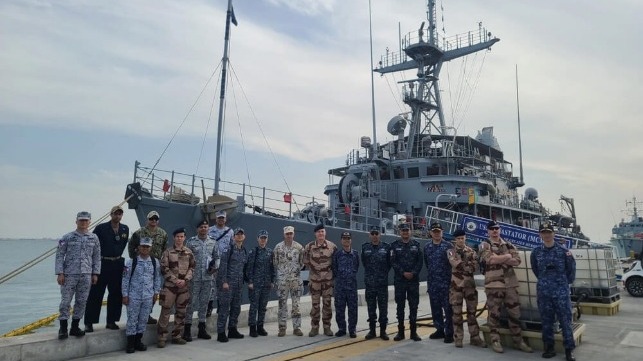
Exercise participants visit Avenger-Class mine countermeasure ship USS Devastator (MCM 6) alongside in Bahrain (NAVCENT Public Affairs)

Published Feb 21, 2025 6:44 PM by The Maritime Executive


With a closing address given in Bahrain on February 20, Vice Adm. George Wikoff, commander of US Naval Forces Central Command (NAVCENT), has brought to a close International Maritime Exercise (IMX) 2025, completing the ninth iteration of this international naval exercise since it was first was held in 2012. This year, the main centers of exercise activity were in Aqaba (Jordan) and Bahrain, with some practical phases at sea.

The exercise started with senior naval staff academic discussions and brainstorming covering the naval planning process, maritime operations center procedures, and disaster response coordination.

The exercise then moved on to a Command Post Exercise over a distributed network, involving both naval command headquarters but also civilian maritime coordination centers such as the Seychelles’ Regional Coordination Operations Centre and Oman’s Maritime Security Centre. Scenarios were played out covering the Red Sea, the Arabian Gulf, and the Gulf of Aden and Oman. The exercise was directed by Commodore Rashid Mahmood Sheikh from Pakistan, who in a press release reported that international participation had brought different perspectives on how to deal with similar incidents at sea.


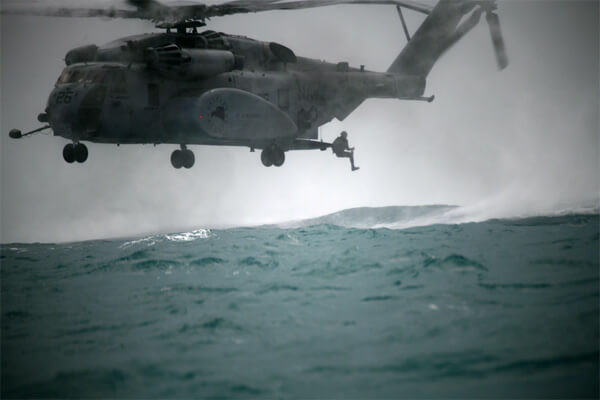
Divers leap from a Sea Dragon helicopter for floating mine response operations during International Maritime Exercise (IMX) 2025


An operational phase at sea or afloat focused on mine and countermeasures; visit, board, search and seizure procedures; unmanned systems and artificial intelligence integration; explosive ordnance disposal; vessel and harbor defense; search and rescue; and the coordination of responses to mass casualty events.

NAVCENT reported that more than 5,000 personnel from more than 35 nations and international organizations had taken part in the different phases of the exercise. However, NAVCENT did not publish a list of participating countries, leaving your correspondent to identify participants from Australia, Bahrain, Canada, Djibouti, Egypt, France, Germany, Greece, Italy, Japan, Jordan, Oman, Pakistan, Philippines, South Korea, Sri Lanka, Thailand, Yemen and the UK. Potentially present but not spotted were any sailors from Saudi Arabia or the United Arab Emirates, whose participation at this time would be of particular political interest. The UAE withdrew its operational participation in NAVCENT-led Combined Maritime Force operations in March 2023, citing its failure to prevent Iranian ship hijackings. But in early February, the Emiratis hosted three ships from the IRGC Navy and the Sina Class fast attack craft IRINS Zereh (P235) on a port visit to Sharjah, suggesting some sort of realignment of interests. 


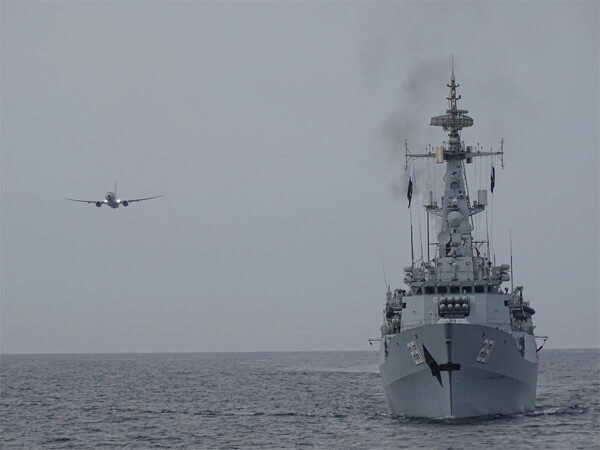
Poseidon aircraft conducts a low elevation flight over participating ships in the Gulf of Oman 


In coordination with IMX 2025, US Africa Command has been simultaneously holding Exercise Cutlass Express. Cutlass Express has had the same phases as IMX 2025 – academic, Command Post Exercise, and practical training – but covers participating nations from the East African coast and the Western Indian Ocean. This year’s participants are Belgium, Comoros, Djibouti, France, Georgia, India, Kenya, Madagascar, Malawi, Mauritius, Morocco, Mozambique, Senegal, Seychelles, Somalia, Tanzania, Tunisia, and the UK. The exercise is directed from the Naples headquarters of the US 6th Fleet. The geographical focus of this year’s exercise was Mauritius, Seychelles, and Tanzania, and involved nine maritime operation centers located throughout the region.


Iran's Arm Shipments to the Houthis Continue, a Sign of Trouble Ahead

Dhow
Courtesy USCG

Published Feb 20, 2025 10:03 PM by The Maritime Executive


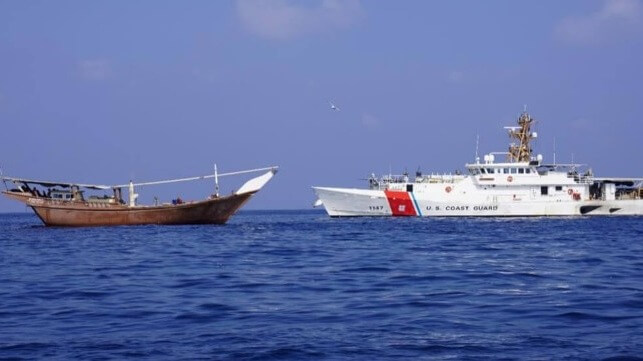
US Central Command has belatedly confirmed that on January 28, the US Coast Guard Sentinel Class cutter USCGC Clarence Sutphin Jr. intercepted a dhow in the Arabian Sea and discovered a consignment of Iranian arms and explosives on board.

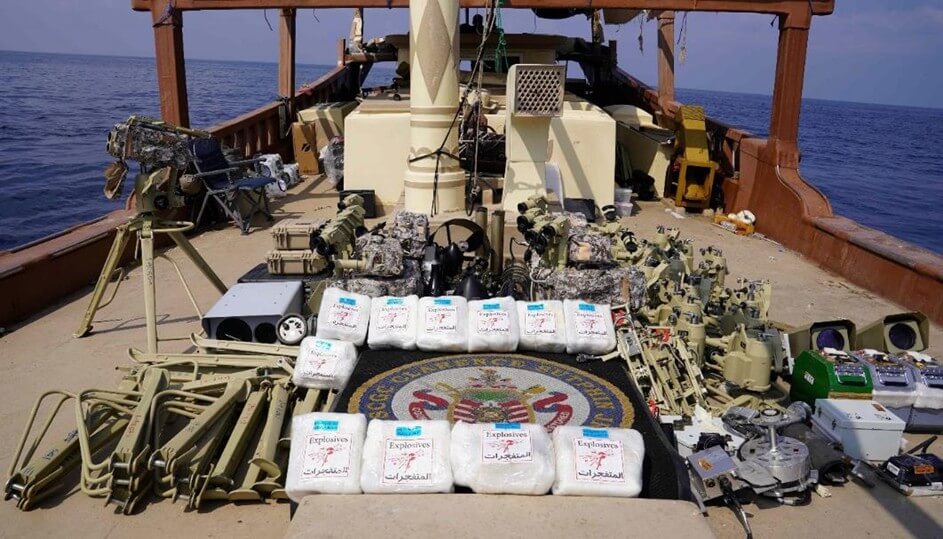
The consignment consisted of components for medium-range ballistic missiles and unmanned sea drones, plus military-grade communication and network equipment and anti-tank guided missile launcher assemblies.

The delay in releasing details of the seizure may have occurred because the US Coast Guard boarding party are also likely to have gathered material which after analysis proved that the consignment had been dispatched from Iran and was en route to Houthi forces in Yemen.

Arms, explosives and equipment seized by USCGC Clarence Sutphin Jr on January 28 (NAVCENT)

The seizure conforms to a well-established pattern, confirmed in annual United Nations Panel of Expert reports. Materiel destined for the Houthis is loaded onto nondescript dhows, manned by stateless crews, from warehouses controlled by the Islamic Revolutionary Guard Corps (IRGC) Quds Force Unit 190 in Chah Bahar, Bandar Abbas and elsewhere. The material is transshipped to fishing vessels from the Yemeni coast, and is then smuggled over beaches and through to Houthi-controlled areas. 

In the last year, however, some smuggling dhows have sailed directly into small fishing ports in Houthi-controlled areas of the Red Sea. The Unit 190 logistic plan is to assume that some loads will be intercepted and lost – but if consignments are spread across numerous vessels, enough materiel will get through.

The seizure indicates that Iran still has undiminished intent to keep the Houthis well-supplied, maintaining the dispersed threat that Iran orchestrates through its control of the Axis of Resistance. Hezbollah and Iranian-linked militias in Syria may be much diminished as part of this constellation, but the Houthis remain a potent contributor to the Iranian-controlled capability, and much valued because the Houthis disperse the threat. Stocks of missiles and drones expended before the ceasefire came into effect in the Red Sea, or destroyed by US, Israeli and UK air strikes, all need to be replenished.

The Iranian leadership is nervous about the intentions of the new Trump administration, as well as the threat to the Iranian nuclear program from Israel. Ceasefires in Gaza and Lebanon have provided Israel additional space for maneuvering, and previous attacks on Iran have weakened its air defenses. 

In a speech in Tabriz on the 46th anniversary of the Islamic Revolution, Supreme Leader Ali Khamenei acknowledged the increased risk of attack and said that Iran’s ‘capability to counter hard threats is at an "excellent level."  Almost all of Iran’s ballistic missile capability - which is spread across 25 underground complexes - remains intact, and would be capable of launching a much heavier attack than Iran’s Operation True Promise-2 launched against Israel on October 1, 2024. Senior IRGC leaders have echoed the threat of an Operation True Promise-3.

Iran is also building up that missile inventory. To meet the solid fuel needs for its production of ballistic missiles, Iran successfully landed 34 containers loaded with sodium perchlorate when the MV Golbon docked in Bandar Abbas last week. Sodium perchlorate is processed into ammonium perchlorate rocket fuel, demand for which Iran is unable to satisfy from domestic sources. A sister ship, MV Jairani, planned to have a similar load on board, is still on its way back from Shanghai.

WWIII

Russia Recommends Increased Port Security Citing Threat from NATO

Russia Ust-Luga port
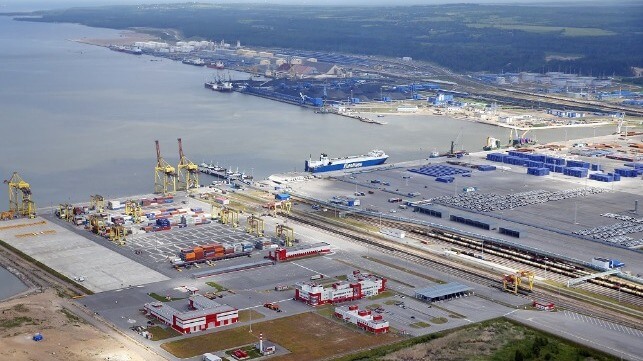
Security calls follow a tanker explosion at the Ust-Luga terminal and incidents involving two Greek tankers in the Mediterranean (Gazprom file photo)

Published Feb 21, 2025 12:33 PM by The Maritime Executive


Russia’s Security Council cited increasing threats to the country’s ports and seabed infrastructure calling for increased efforts to protect its assets. This comes after NATO and neighboring countries have increased patrols in the Baltic after several incidents in which undersea cables were damaged and there has been speculation of attacks against tankers in the Russian oil trade.

Reports from the Russian media indicate that the Security Council recommended “step up monitoring of the activities of countries capable of creating threats to underwater and critical port infrastructure.” Grigory Molchanov cited the increased activity of NATO in the Baltic. He also referenced the ongoing use of unmanned attack boats by Ukraine in the Black Sea which he contends have been “repeatedly destroyed by units of the Russian Navy.”

Molchanov is quoted as saying, “There was an increase in sources of military dangers and military threats to the Russian Federation in connection with NATO’s build-up.” He asserted that NATO could be targeting maritime transport and major oil terminals, as well as railway connections. Last month, NATO along with the Baltic nations increased patrols after incidents of damage to undersea cables.

The reports did not indicate any planned specific actions, but Reuters is reporting it saw a letter from the Russian Transport Ministry outlining actions. It informs shipowners, according to Reuters, that all vessels will need to be inspected when they arrive in Russian ports. This will include the use of divers to check the hulls for possible explosives.

The move comes after it was revealed that Italian and Greek authorities are investigating damage to two Greek-owned tankers that have transported Russian oil in the past. Thenamaris confirmed that its vessel was damaged while offloading in Italy last weekend and also revealed an incident with another tanker in January as it neared Turkey. The Italian authorities included the possibility of terrorism or sabotage which has led to speculation that tankers transporting Russian oil could be the targets.

A Turkish-owned tanker was damaged while docked in Russia’s Ust-Luga early in February. Media reports called it an engine room explosion, but the mayor was quick to call it an attack on the vessel. Ust-Luga is the major Russian energy terminal on the Baltic.


Turkey and AD Ports End Negotiations for Izmir’s Alsancak Port

Alsancak, Turkey
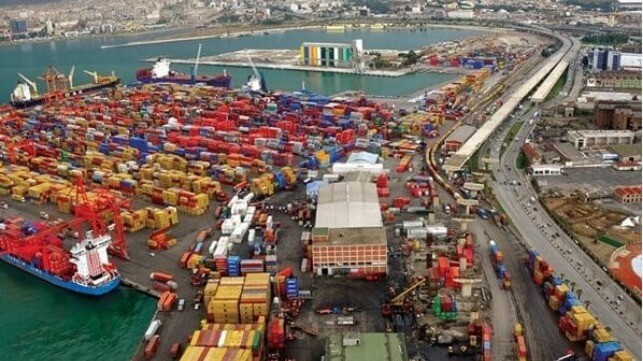
Alsancak Port is strategically located with easy access to the Mediterranean (Invest in Izmir)

Published Feb 21, 2025 5:15 PM by The Maritime Executive


The planned investment by AD Ports Group in Turkey’s Alsancak Port in Izmir has fallen apart after failed negotiations. The Turkish government this week confirmed that it has ended talks with the UAE company over the operation of the port. 

The negotiations have been ongoing for almost two years. AD Ports was expected to buy a stake in the port in the western province of Izmir. The port has been operational since 1959, and according to the Invest in Izmir initiative, the port is today the country’s seventh largest in terms of container volume and thirteenth in terms of cargo tonnage.

“We have pursued long negotiations with the investor from the Gulf, but no agreement has been achieved,” Turkish Transportation Minister Abdulkadir Uraloglu told Bloomberg. “The aim was to get a partner to expand Alsancak port.” No further update was given on why the negotiations collapsed.

This becomes the second attempt to privatize Alsancak Port without success. In 2007, a group of investors including Hutchison Port Holdings submitted a $1.28 billion bid for the port. The deal was later blocked by a court leading the investors to withdraw. 

Since 2017, Alsancak has been owned by Turkey’s sovereign wealth fund TWF. It is currently operated by the national railway company TCDD. 

Faced with capacity challenges, the port has recorded a drop in cargo traffic. In container handling, the drop has come from a high of 390,300 TEUs in 2022 to 261,900 last year. 

The negotiations were part of a wider effort by the government to attract additional foreign investment. Turkey opened its market to UAE investments, looking to raise capital for its critical sectors. In 2023, Turkey’s President Tayyip Erdogan inked deals worth $51 billion during a state visit to the UAE. The deals touched sectors such as energy, natural resources development, and defense. Trade relations between Turkey and UAE continue to develop, exceeding $50 billion in 2024, an increase of 11 percent year on year, according to data by the Turkish-Arab Economic Forum.

AD Ports' entry would have added to the massive investment by the DP World in the Turkish port sector. One of the largest container ports, Yarimca Terminal (Port of Izmit), on the Sea of Marmara east of Istanbul, is controlled by DP World. The terminal has an annual capacity of 1.15 million TEUs. Last year, the operator expanded into the neighboring Evyapport terminal in Izmit, through a merger with Evyap Group. 

Alsancak offers a strategic advantage in its position. It does not require a transit of the Dardanelles. It is seen as a port with potential because of its location and easy access to the Mediterranean.


At Seatrade Qatar, Shipping Stakeholders Debate IMO 2050 Target

Seatrade Qatar
Courtesy Seatrade Qatar

Published Feb 20, 2025 9:55 PM by Dr. Akinseye Olatokunbo Aluko


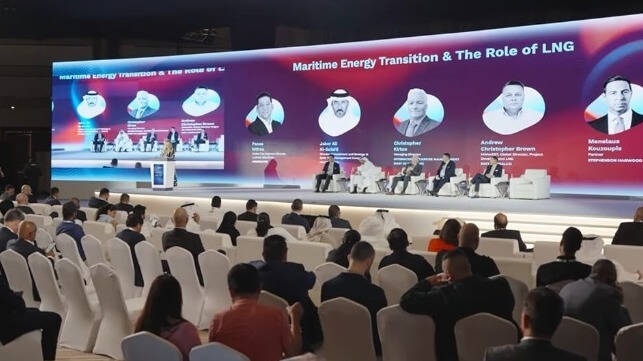
The global maritime industry is creating an avenue for effective transition of the industry into a more sustainably driven maritime environment.  With the just concluded Seatrade Maritime Qatar Conference, maritime leaders considered factors and strategic measures that can be adopted to achieve the 2050 IMO target. The panelists and major stakeholders provided positive contributions, especially from the GCC region. Panel discussions that stood out included talks on the maritime energy transition; green financing with the global maritime industry; strategic collaboration between maritime stakeholders; sustainable logistics and capacity building; and the maritime talent pool, among others.

Maritime Energy Transition

The maritime industry contributes an estimated three percent of global CO2 emissions, and the IMO seeks to reduce this to zero by the year 2050. This implies that the entire shipping industry should be carbon-neutral by 2050.

The process calls for using significant amounts of renewable energy to power maritime vessels worldwide, and the panelists suggested that the industry has a 50-50 chance of achieving this target. The transition would require a significant amount of commitment from all major stakeholders, effective implementation of maritime regulations, sustainable maritime infrastructure and capacity building, research institutions collaborating with the industry, effective government interventions, and support from investors and bankers.

Green Financing

This panel covered the ongoing, collaborative discussion between financiers and shipowners. 2024 witnessed a considerable investment turnaround for the global maritime shipping industry in acquiring modern, technologically enhanced, and environmentally friendly vessels. These proactive steps are also a clear starting point for actualizing the International Maritime Organization’s 2050 goals. This strategic financial collaboration will further reduce energy consumption and cost accumulation on maintenance for maritime vessels.

Strategic Collaboration of Maritime Stakeholders

Collaboration requires synergy between the shipowners, shipbuilders, logistics companies, technology companies, port authorities, investment companies, national governments and others. Data-driven collaboration will revolutionize the global maritime operational process and harness effective and efficient data mining, sharing, and meaningful interaction between stakeholders. The panel identified the 100% digitalization of the maritime industry as a significant bottleneck for the strategic collaboration of stakeholders within the industry, but when achieved, it promises to enhance the operational efficiency of maritime trade on a global scale.

Knowledge Exchange and Talent Pool

The shortage of effective collaboration between research institutes, universities, academia, and maritime colleges was also mentioned as a significant limitation in achieving the 2050 IMO net zero target. This was emphasized by the president of the University of Doha Science and Technology (UDST), Dr. Salem Al-Naemi, who called on key maritime stakeholders to invest their resources into research and development and technological infrastructure for maritime education. He also emphasized the need for maritime investment companies, maritime operators, and governments to invest in educational scholarships at both undergraduate and postgraduate levels. It is evident that not having enough competent hands in the maritime industry has reduced the level of productive output and growth of maritime sea trade on a global scale.

Regarding the possibility of achieving meaningful, sustainable net-zero targets by the IMO, many of the infrastructural measures debated at this conference will need to be implemented.    

Dr. Akinseye Olatokunbo Aluko, SFHEA, FCMI is the Coordinator of Research and Knowledge Exchange Office, Oryx Universal College/Liverpool John Moores University School of Leadership & Management Practice, Doha, Qatar.

The opinions expressed herein are the author's and not necessarily those of The Maritime Executive.


First Commercial Installation Awarded for Michelin’s Inflatable Wind Sail

patrol boat with wind propulsion
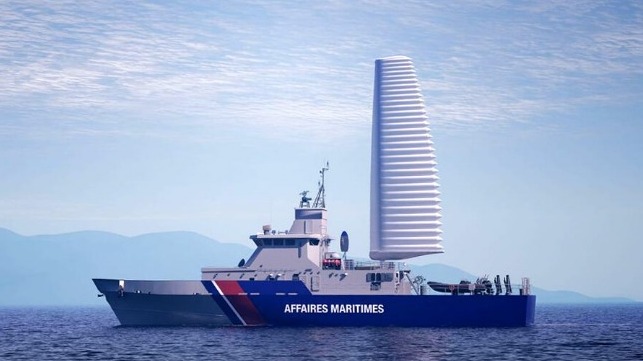
The new patrol boat is the first commercial contract for Michelin's wingsail (Michelin)

Published Feb 21, 2025 1:51 PM by The Maritime Executive


France’s Michelin Group confirmed the recent awarding of its first commercial contract for its innovative inflatable wind sail for shipping. The first installation will be on a new patrol boat for France.

The new vessel will be built by the Socarenam shipyards with designed by French naval architecture firm. Mauric. The contract for the design and shipbuilding was awarded in December 2024 by the Directorate General for Maritime Affairs, Fisheries and Aquaculture (DGAMPA) which is responsible for maritime surveillance on the French Atlantic coast. The tender was launched in January 2024.

With a length of 54 meters (177 feet), the offshore patrol vessel is designed for extended 12-day missions. Capabilities for extended missions and energy efficiency were key to the design. The vessel will employ a diesel-electric hybrid system with wind-assisted propulsion. It is designed to provide the vessel with a maximum speed of 17 knots and a range exceeding 3,600 nautical miles at a cruising speed of 12 knots.

Michelin was selected to provide the wind propulsion deploying its WISAMO (Wing Sail Mobility) project. The wingsail will have a surface area of 170 square meters (1,829 square feet). Michelin reports a fuel consumption reduction of approximately 15 percent is expected through optimizations of the design and the vessel’s operational profile. 

The WISAMO concept consists of a telescopic, inflatable wingsail. It includes an intuitive, automated control system and a simplified interface that greatly reduces the challenges of vessel integration. The system is based on three key components, including a self-supporting telescopic mast that is fully retractable and a durable lightweight fabric envelope that is inflated at low pressure to form a symmetrical wingsail profile. A fully automated control system manages all sail functions (hoisting, lowering, adjusting, maneuvering, reefing, and protective stowage according to environmental conditions), eliminating the need for additional crew workload.

Mauric reports the vessel's design with a steel hull and an aluminum superstructure places paramount importance on seakeeping and crew comfort. It will carry a crew of 20 and the design integrates an anti-roll stabilization combining active fins and passive free surface tank, to ensure optimal operability in all sea states.

Construction will be carried out at Socarenam's shipyard in Boulogne-Sur-Mer, with delivery scheduled for the second half of 2027. When completed, it will replace the approximately 40-year-old patrol vessel Iris. The new ship will be based in La Rochelle and operated along the Atlantic coast, particularly in the Bay of Biscay. Its mission is maritime surveillance and regulatory enforcement of fisheries, as well as navigation monitoring, maritime pollution control, environmental law enforcement, and search-and-rescue operations.

Micheline first unveiled its wingsail concept in 2021 highlighting the opportunities to support maritime decarbonization. The sail concept received design approval from DNV and in 2023 the first trials were conducted in 2023 aboard the MN Pelican demonstrating the endurance of the system.


Largest, High-Speed, Hydrogen Ready Multi-Fuel Ferry to be Built by Austal

high-speed multi-fuel hydrogen ferry
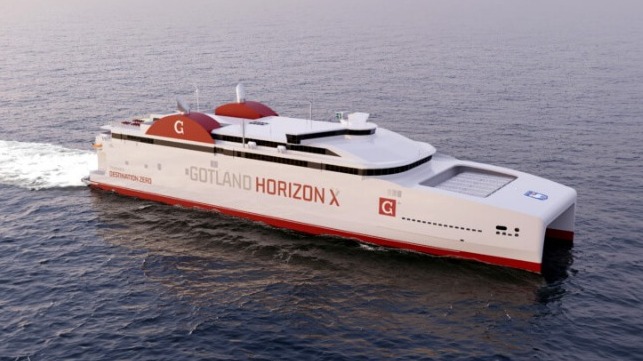
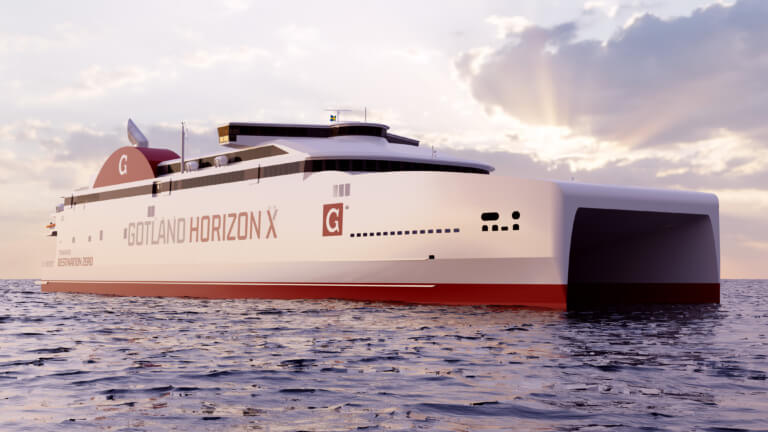
Gotland's Horizon X will be the largest ferry built by Austal and use a unique power plant capable of conversion to hydrogen fuel (Gotland)

Published Feb 21, 2025 3:08 PM by The Maritime Executive


A unique project to design a large, high-speed next-generation ferry is coming to fruition with news that Sweden’s Gotlandsbolaget has ordered construction of the ferry developed working with Austal. The goal was to develop a vessel for climate-neutral trips and sustainable solutions that would be a pioneer in new technologies.

Austal and Gotlandsbolaget announced plans for the development of the 130-meter (426-foot) multi-fuel high-speed vehicle passenger ferry design, with the flexibility to be able to operate on a variety of fuel types including hydrogen, in April 2023. Since then, Austal and Gotland Tech Development report they have engaged with technology providers from around the world to select preferred main equipment, and to define system arrangements. This has included the development of a unique propulsion system arrangement that repurposes engine exhaust to contribute to vessel propulsion and reduce emissions. In October 2024, the project gained approval in principle from DNV.

"Horizon X is an incredibly exciting project that is going to redefine commercial ferry capabilities, with a multi-fuel and hydrogen-capable combined cycle power plant and a class-leading, efficient hull design,” said Austal Chief Executive Officer Paddy Gregg.


According to Austal, the design will feature a unique, highly efficient combined cycle propulsion system that includes both gas and steam turbines, a first for a high-speed craft. The gas turbines will be used in the drive train of Horizon X and they are designed to be powered by several types of alternative fuels, fossil-free. It will be a multi-fuel vessel and the design is prepared to convert to hydrogen when hydrogen production becomes commercially available.

The companies highlighted the multi-fuel capabilities will best prepare the vessel while there are still great uncertainties regarding which alternative fuels will be available to the maritime sector. To minimize energy requirements and achieve high efficiency, the companies highlight that a great deal of work has been done to develop energy-efficient hulls, minimize weight, optimize energy consumption on board, and streamline operations and flows throughout the ship.

"Shipping must change, and reducing the climate footprint of travel and transport to and from Gotland is of great importance for the island's development and attractiveness,” said HÃ¥kan Johansson, CEO of Gotlandsbolaget. “The construction of Horizon X is a crucial step in our journey towards climate-neutral crossings. At the same time, the ship will offer the same efficient crossing times as today, and a new and modern onboard experience.” 

The ferry is designed to carry up to 1,500 passengers and 400 passenger cars at speeds up to 29 knots. It will be able to make the crossing between the Swedish mainland and Gotland in just over three hours. Plans call for it to operate during the peak summer travel season as well as in the spring and fall.

Austal is valuing the construction contract at between A$265 and A$275 million (US$168 and US$175 million). The vessel will be built at the Austal Philippines shipyard with work commencing in 2026. The hull will be built in aluminum and where possible for the construction, green aluminum will be chosen, which means that approximately 60 percent of all aluminum on board is manufactured with renewable energy.

After delivery in mid-2028, the ship will sail to Gotland. The company says the exact timing for its entry into service is yet to be determined, but that it will be on the route by the spring of 2029.