Sunday, March 09, 2025

Suicide risk extremely high among UK and US musicians, new research says

women in the business are significantly more at risk
Jack Whitehall pays tribute to Liam Payne during the Brit Awards 2025 in London, Saturday, March.1, 2025
Copyright Invision

By Jonny Walfisz
Published on 

New research from the UK and US has found that the music industry is not a safe profession due to its high risk of suicide and that women in the business are significantly more at risk.

Poor mental health and music have a troubled shared history. From 27 Club examples like Kurt Cobain to recent pop stars like Liam Payne, suicide has a prevalent link to stardom. Now, research has confirmed that the career is directly linked to higher suicide risk levels.

Research from the UK and US has found that the music industry is not a safe profession due to its high risk of suicide. UK figures put musicians as the fourth most at-risk occupational group for suicide in the UK, behind construction workers, building finishing tradespeople and agricultural workers.

The fifth-highest suicide-risk group was actors and entertainers. It puts musicians at the highest risk group within the occupational group defined as culture, media and sport occupations. For UK musicians, the risk of suicide was 20% than the average for men and a shocking 69% higher than the average rate for women.

Data from the US also found similarly high risk levels. Women in the entertainment industry – including musicians – had the highest suicide rate of any occupational group across multiple years of data. For men, it’s the third-highest risk group.

“When you look at the mortality data in the US and UK, women are demonstrably at risk of suicide compared to women in the general public,” says Dr George Musgrave, Senior Lecturer in Cultural Sociology and Creative Industries at Goldmiths University, who co-authored the study with Dr Dorian Lamis, Associate Professor at Emory Univeristy.

Musgrave explains the high risk levels: “there are occupational stresses that musicians face – profound emotional precarity, vulnerability to exposure on social media, travelling and touring and the emotional strain that can place on them, and investing their lives and identity in a precarious dream.”

“Along with elevated instances of mental ill health – with levels of anxiety and depression – together with substance use and abuse, we can see why musicians are so at risk of suicide,” he continues.

In the paper, the authors quote many examples of the prevalent link between musicians and suicide. Recent famous examples such as One Direction’s Liam Payne and EDM DJ Avicii are given, as well as references to genres with longstanding links to suicide, from metalheads to jazz musicians.

It quotes Jimi Hendrix, who died aged 27: “The moment I feel that I do not have anything more to give musically, that’s when I will not be found on this planet, unless I have a wife and children, because if I do not have anything to communicate through my music, then there is nothing for me to live for. I’m not sure I will live to be twenty-eight years old”.

While media has sometimes made controversy about the suicidal ideation in the lyrics of certain genres like emo and, more recently, Soundcloud rap, the paper notes that “there is no scholarly evidence on increased suicide risk for either performers or listeners of this genre (or group of genres) as this has not yet been investigated.”

A South Korean man pays tribute to K-pop star Goo Hara at a memorial altar at the Seoul St. Mary's Hospital in Seoul, Monday, Nov. 25, 2019.
A South Korean man pays tribute to K-pop star Goo Hara at a memorial altar at the Seoul St. Mary's Hospital in Seoul, Monday, Nov. 25, 2019.AP Photo

Still, rates of suicide are shockingly high for the profession. It’s not just a problem in the UK and the US. Many K-pop stars have died by suicide in recent years, a trend the paper takes note of.

“Korea has one of the highest rates of suicide in the world,” Musgrave says. Although they don’t have the data as to whether musicians are more at risk, there are factors that could make them high risk such as the “socially prescribed perfectionism” of Korean culture.

No tolerance tactics

In response to their findings, Musgrave and Lamis are calling for a zero-suicide approach to policy to help reduce the risk to musicians’ lives. Zero suicide framework is a seven-element strategy for suicide prevention through holistic care through the workforce, care systems, and treatments.

“There is substantial evidence that the zero suicide approach is effective in reducing suicide among a variety of populations,” Lamis explains. “One example of this is the New York Office of Mental Health. Over 18 months of implementing this approach suicides decreased by 75%. By incorporating the zero suicide approach among musicians, and the music industry, suicides will decrease and mental health outcomes will be improved.”

Musgrave has also commented on dismantling the romanticisation that comes with linking suicide to the music industry: “What we have done for far too long is tolerate early mortality and suicide risk among musicians. We’ve done that as a society because musicians have been represented as being inherently tortured, as suffering for their art. This has got to stop.”

More than 1,000 people killed in deadly clashes between new Syrian regime and minorities

More than 1,000 people killed in deadly clashes between new Syrian regime and minorities
Mass casualties among Alawite community trigger military reinforcements along Syrian coast / bne IntelliNewsFacebook
By bnm Gulf bureau March 9, 2025

Syrian authorities announced on March 9 the reinforcement of security forces in the coastal region and the imposition of control over areas that witnessed clashes. The announcement followed reports of the killing of over 1000 Alawite civilians by security forces and allied groups, as reported by state media.

Interim president Ahmed al-Sharaa urged Alawite fighters to surrender before it was too late. Residents of the coastal area described killings of civilians during sweeping operations and clashes with pro-Assad fighters, which erupted two days ago and have been the fiercest since the ousting of al-Assad on December 8.

The overall death toll since the clashes began has risen to 1000, including fighters from both sides and Syrians, according to the Syrian Observatory for Human Rights (SOHR), said on March 8. 

As clashes subsided on March 9, Syria’s official news agency (SANA) reported that security forces had reinforced their presence, particularly in Baniyas, Latakia, and Jableh, to “restore order.”

Syrian Defence Ministry spokesperson Hassan Abdul Ghani announced that security forces had "regained control over areas that witnessed treacherous attacks against public security personnel."

In a video statement to SANA, he urged all field units engaged in combat to “strictly adhere to the instructions of military and security commanders,” stressing that “no one is permitted to enter any home or harm any individual inside their residence, except under objectives determined by Defence Ministry officers.”

Abdul Ghani announced the closure of roads leading to the coastal region to restore stability, coordinating with the Public Security Administration. A special committee was formed to monitor violations, and those who disobeyed military orders during the recent operation were referred to the military court.

Meanwhile, the International Committee of the Red Cross called for the “protection of civilian lives and for medical and humanitarian workers to be granted safe access to provide medical aid and transport the wounded and deceased.”

Tensions initially flared two days ago in an Alawite-majority village in rural Latakia after security forces arrested a wanted individual. The situation quickly escalated into clashes when Alawite gunmen opened fire, according to SOHR.

SOHR shared videos showing dozens of civilian-clothed bodies, some piled up in a courtyard near a house with bloodstains visible nearby, while women wailed at the scene.

Dozens killed in coastal Syria as clashes between army and pro-Assad militias escalate

Dozens killed in coastal Syria as clashes between army and pro-Assad militias escalate
Dozens killed in coastal Syria as clashes between army and pro-Assad militias escalate. / bne IntelliNewsFacebook
By bne IntelliNews March 8, 2025

Clashes in Syrian Western coasts intensified on March 7 as the Syrian army sent large military reinforcements to the coast to repel attacks from remnants of Bashar al-Assad’s forces, Al Sharq Al Awsat reported. 

Syrian security forces are currently engaged in battles against armed groups loyal to former officer Suhail al-Hassan who was once a prominent commander under Assad. Tensions erupted in Beit Ana, the home town of al-Hassan, after security forces attempted to arrest an alleged arms dealer.

Deadly clashes are escalating in Latakia between Syrian Security Forces and pro-Assad militants. This is the deadliest attack since Assad’s ouster on December 8, involving helicopter strikes and heavy artillery. Over 70 people were killed, mostly security forces and pro-Assad militants in the fighting. 

Al Hurra reported that a curfew was imposed until 10 am by the General Security Administration to contain the chaos.

Syria’s Ministry of Defence said later the government forces had achieved rapid field progress and reestablished control over areas that witnessed attacks against security forces in the coastal region, as reported by the state-run SANA news agency. 

SANA reported that Syrian Defence Ministry troops have entered the city of Tartus in support of the General Security Administration’s forces against what it described as the remnants of Assad’s militias.

Syrian Defence Ministry spokesman, Hassan Abdulghani, stated that "top war criminals" are now hiding in the mountains and that "their only fate is the courts, where they will face justice."

Addressing Assad’s remaining loyalists, he warned: "Do not be fuel for a lost war... The choice is clear: Surrender your weapons or face your inevitable fate."

Al-Hassan: The "barrel bombs" Assad fellow

Al-Hassan (nickname Tiger), 55 years old, was born in Jableh and is of Alawite descent. Alawites make up about 10% of Syria’s population and played a significant key role in Assad’s regime. While many Alawites surrendered their weapons after Assad’s fall in December, a significant number have refused to disarm.

In the early years of the Syrian war (2011) he trained special forces and led military operations, particularly in Latakia. In 2013, he was assigned to command the elite Tiger Forces.

Al-Hassan was linked to massacres across Syria and allegedly ordered attacks on civilians using barrel bombs. These are explosives packed with shrapnel and dropped from helicopters.

Known for his "scorched earth" strategy, he used intense air power before ground forces moved in. His brutal tactics were seen in Eastern Ghouta (2018), causing heavy civilian casualties.

Al-Hassan is under EU sanctions. Der Spiegel suggested earlier that Russia might have considered him a potential replacement for Assad. Russian media also showed him appearing as a subordinate to Russian military leadership.

In December last year, Al-Hassan was leading government special forces against opposition fighters in Hama when he was reportedly injured by a drone strike near Jabal Zain al-Abidin.

NO NUKES!

Poland’s Tusk outlines push for nuclear weapons, plans to expand army to 500,000

Poland’s Tusk outlines push for nuclear weapons, plans to expand army to 500,000
Poland’s Tusk outlines push for nuclear weapons, grow army to 500,000 / bne IntelliNewsFacebookTwitter
By bne IntelliNews March 8, 2025

Poland will strive to enlarge its armed forces to 500,000 servicemen and work to obtain nuclear weapons, Prime Minister Donald Tusk said in an address to the Polish parliament on March 7.

Tusk delivered his speech in the wake of a flurry of activity in Europe following US President Donald Trump’s abruptly ending of military and intelligence assistance to Ukraine. The Trump administration’s subsequent hints of a “reset” in Washington’s relations with Russia further has fuelled worries that the US is readying to leave Europe to take care of its own defence against a newly emboldened Russia.

“We must reach for the most modern solutions related to nuclear weapons and the most modern conventional weapons," Tusk told Parliament.

It was not clear if Tusk meant Poland should develop its own nuclear deterrence or – as he said moments earlier – Poland was about to “talk seriously to the French about [their] idea of nuclear umbrella.”

“It is time to look at the latest battlefield technologies more boldly. Conventional means are no longer enough,” Tusk added.

Tusk dropped the verbal A-bomb at the very end of his speech, which he mostly devoted to interpreting Trump’s line on Russia-Ukraine war.

“We are witnessing a major shift in US policy on the war in Ukraine,” Tusk said, adding that “we cannot be offended by [this] reality.”

Instead, the PM said, Poland should assess the situation clearly and know what serves its interest best.

According to Tusk, despite Trump’s lack of predictability, the alliance with the US remains the pillar of Poland’s security, alongside its position in Europe. But, Tusk added, “it is not easy to agree the two now.”

Bordering Russia’s ally Belarus, war-torn Ukraine, and Russia that is “[readying for] a full-scale war in three to four years,” Poland needs to step up the thorough modernisation of its armed forces, including by training all adult men in a system similar to Switzerland’s, Tusk said.

That could give Poland an army of 500,000 servicemen in a time of conflict, consisting of professional troops and well-trained reservists, Tusk said.

But Poland’s future depends greatly on where Ukraine will stand following Trump’s onslaught against it, apparently hand in hand with Russia.

“If Ukraine loses the war or accepts peace, a truce, or capitulation on terms that weaken its sovereignty and make it easier for Putin to gain control over Ukraine, then without question – and we will all agree on this – Poland will find itself in a much more difficult geopolitical situation," Tusk said.

Tusk also mooted Poland’s pulling out from the international conventions banning anti-personnel mines and cluster munitions.

“These are not nice things but the problem is that those who we are afraid of all have them,” Tusk said.

The prime minister said that to meet the plan he outlined Poland should strive to maintain the level of defence expenditure at 5% of GDP next year and in the coming years.

“It will pay off strategically. Not just in the coming few years but in the perspective of decades to come,” Tusk said.


Poland mulls mines treaty exit, plans military training for men

ANOTHER NATO WAR CRIMINAL (LANDMINES)

By AFP
March 7, 2025


Poland is far ahead of its allies in terms of military expenditure, aiming to spend 4.7 percent of its GDP on defence this year - Copyright AFP BASHAR TALEB

Magdalena PACIOREK

Polish Prime Minister Donald Tusk on Friday announced a slew of measures aimed at boosting his country’s defence, including a possible exit from a landmark anti-mines treaty and large-scale military trainings for men.

Poland, a staunch Ukraine ally, has been arming itself heavily as it eyes warily neighbouring Russia and amid calls from US President Donald Trump for European countries to take more responsibility for their own defence.

Warsaw is already far ahead of its allies in terms of military expenditure, aiming to spend 4.7 percent of its GDP on defence this year — and now it mulls new measures.

“We are facing a very serious race, and it is a race for security,” Tusk told the parliament.

“We must be aware that Poland must reach for the most modern possibilities, also related to nuclear weapons and modern unconventional weapons,” he said, pledging Poland would use “every available opportunity to increase our defence”.

A new military training scheme was intended to be ready by the end of the year “so that every adult man in Poland is trained in case of war,” Tusk announced.

The trainings will turn “those who do not join the army to fully-fledged and valuable soldiers during a conflict,” Tusk said, adding the goal was to have a military reserve force “adequate to potential threats”.

Tusk, who this week has called on Europe to strengthen its defences to win the “arms race” with Moscow, has also backed withdrawing his country from a landmark treaty prohibiting the use of anti-personnel landmines.

“I will recommend a positive opinion for Poland to withdraw from the Ottawa Convention and possibly from the Dublin Convention,” Tusk told lawmakers, referring to treaties on anti-personnel mines and on cluster munitions.

“Let’s face it: it’s not something nice, nothing pleasant. We know that very well,” Tusk said.

“The problem is that in our environment, those we may be afraid of, or those who are at war, they all have it,” he added.


– Constitutional amendment –


Designed to be buried or hidden on the ground, anti-personnel mines often mutilate victims who are not immediately killed and aid groups have decried their long-term impact on civilians.

The Anti-Personnel Landmines Convention, also known as the Ottawa Convention, prohibits the use, stockpiling, production and transfer of landmines.

At least two NATO countries, Finland and Lithuania — both also bordering Russia — have in the past months mulled exiting from the Ottawa Convention.

Lithuania on Thursday has quit the treaty banning cluster bombs citing security concerns over a threat from Moscow, sparking outrage from human rights watchdogs.

Amnesty International called the move “disastrous”, while Human Rights Watch said it was “alarming”, and the International Committee of the Red Cross (ICRC) warned it “weakens vital protections for civilians”.

But Tusk brushed off a potential backlash.

“We will not look at anyone. We will not fear anyone’s criticism,” he told the parliament.

Earlier on Friday, Polish President Andrzej Duda said he had submitted an amendment to anchor in the constitution a defence spending mark of four percent of GDP, twice NATO’s current target.

Poland is far ahead of its allies in terms of military expenditure, aiming to spend 4.7 percent of its GDP on defence this year.

The amendment would be “a guarantee that these expenses will actually be carried out,” Duda, allied with the conservative right-wing opposition, told reporters.

Tusk said the proposal should be “analysed very seriously” but did not say if his ruling coalition would back it.

It would need a cross-party support of two-thirds of the lawmakers in the Polish parliament’s lower chamber to enter into force.


Should Australia Rebuild its Merchant Navy?

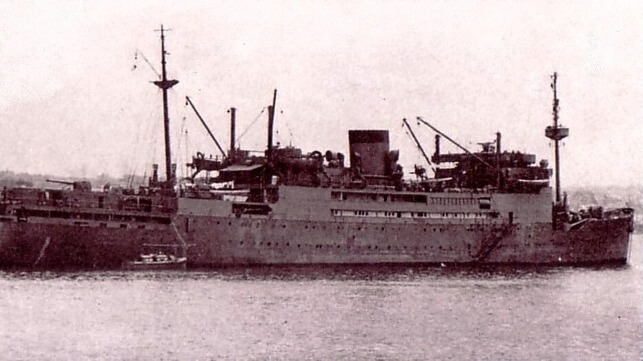
The passenger liner turned armed merchant cruiser HMAS Manoora (Royal Australian Navy)

Published Mar 9, 2025 3:09 PM by The Lowy Interpreter


Australia’s vulnerability to maritime trade disruption is well recognized. International shipping moves some 99 per cent of the nation’s traded goods by volume worth A$755 billion in 2021, and provides not just prosperity but also vital resources such as 91 per cent of the country’s fuel and 90 per cent of its medicines. Canberra’s options to manage these risks range from resource stockpiling to electrifying transport systems. But for any extended disruption to regular trade, some seaborne supply of critical resources will be necessary. And here the nation faces a melancholy trifecta.

In a crisis, only Australian-flagged (i.e., controlled) ships could be requisitioned to sail for Canberra. Yet of the some 6,000 vessels conducting our international trade, only four of any size (over 2,000 tonnes of cargo) are Australian – insufficient to assure supply. Further, the armed risks to trade are growing. For non-state actors, a key danger was once lightly armed pirates in skiffs. Today, the Houthis have added various suicide drones, Anti-Ship Cruise and Ballistic Missiles (ASCM and ASBM), and helicopter assaults into the mix, and similar groups will likely copy them. For states, Australia’s key risk is a blockade by China, which has amongst the world’s most powerful navies and is both still growing that force and now deploying it into Canberra’s backyard.

The capability to manage such risks is decreasing. Fundamentally, securing supply means protecting merchant ships by using naval forces – commercial vessels simply lack the sensors and weapons to intercept drones, ASCMs and ASBMs. Yet the Royal Australian Navy (RAN) can’t fully crew even its ten frigates and destroyers suited against complex threats, let alone protect 6,000 merchant ships. Which is why Canberra depends in particular on the United States Navy, still the world’s premier fleet, to maintain a peaceful global maritime order.

Yet the US Navy’s contribution is in doubt. The fleet is at its smallest and oldest in decades, and fighting the Houthis has depleted weapons stockpiles, so if new dangers arise, it’s unclear if they will be met effectively. Further, the Trump administration has shown it’s willing to cease being a global security provider, or to charge exorbitantly for its services. So even if the US Navy is able, Washington may be unwilling – without a price. Note that a year of Houthi-focused US Navy operations cost around A$8 billion, and if you think the United States wouldn’t ask for that back, just call Zelenskyy.

So, Canberra needs more large Australian-flagged vessels while dramatically improving the RAN’s capability for their defense – and ideally with low cost, risk, and crewing impacts. Fortunately, there’s a way: an optionally armed Merchant Navy.

A country’s Merchant Navy are the commercial vessels under its flag, able to be requisitioned during crises. Australia once had a Merchant Navy, and the 2023 Strategic Fleet Report proposes (without using the term Merchant Navy) just such a body of vessels. It argues for 12 (and ideally 50) larger ships, with these commercially owned and operated, and Canberra paying some A$8 million per ship annually to cover Australia’s higher operating costs. While the report doesn’t mention arming such vessels, there’s a history of doing so from Defensively Equipped Merchant Ships (DEMS) equipped for limited self-defence to Armed Merchant Cruisers (AMC) with heavier weapons to guard convoys. A Merchant Navy of 50 ships (though Canberra’s only agreed to 12) optionally armed with easily removable weapons as DEMS and AMC has great merit.

DEMS could mount Phalanx gun and SeaRAM missile systems atop minorly modified 20- and 40-foot shipping containers. These systems together can address the most probable threats, and have self-contained sensors, computers, and weapons – minimizing integration risks. For convoy protection, an AMC could equip Mark 70 launcher units, each with four large missile cells in a 40-foot container. The 1500-square-meter cargo surface area on a modestly sized AMC could notionally provide 50 launchers with 200 ASCM to hold Chinese ships at bay (Beijing’s most potent Type 55 destroyer holds at most 112 ASCM), with this arsenal remote-controlled by RAN escorts, again minimizing integration risks.

This approach offers huge cost savings. Phalanx and SeaRAM are each A$25-40 million, and while the AGM-158C ASCM for the Mark 70 costs some A$5.5 million apiece, 200 fit on an AMC that costs Canberra nothing to buy versus 32 on a Hunter frigate that’s A$3.7 billion. Also, as containerized weapons could be easily added or removed, fewer units could be bought and then swapped between vessels. Further, 50 vessels at A$8 million each would cost A$400 million annually, noting eight ANZAC frigates were A$374 million.

Finally, the RAN crewing impact is favorable. DEMS ships had a few naval personnel to operate their weapons, while AMC replaced their regular staff with military crews. So, DEMS would likely need some three RAN personnel and AMC around 20-30. For 50 ships this means 150-1,500 personnel; in contrast, a single Hunter has 183.

So an armed Merchant Navy has enormous potential, though it wouldn’t replace warships. The Hunters (and others) cost so much, including due to their exquisite sensors, computer systems, and damage resistance. But DEMS and AMC offer a cheap, crew-friendly way to enhance Australia’s supply lifelines. As such, they deserve a close look.

Dr Victor Abramowicz has worked for over 20 years in the national security sector, across government, industry, and academia. He specialises in defence policy and strategy, military technology, security relations in East Asia and Eastern Europe, and military history. He is also the Principal of Ostoya Consulting, which provides advisory and business development services to a range of companies in the defense sector.

This article appears courtesy of The Interpreter and may be found in its original form here


The opinions expressed herein are the author's and not necessarily those of The Maritime Executive.


After Fatal Accidents, South Africa Begins Safety Audits on Fishing Fleet

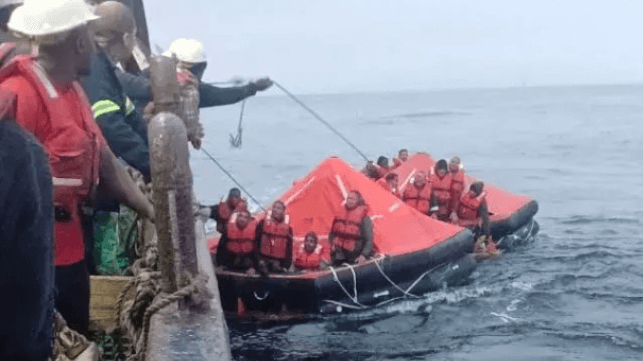
Good Samaritans rescue survivors from the lost fishing vessel Armana (SAMSA)

Published Mar 9, 2025 4:50 PM by The Maritime Executive


South Africa Begins Safety Audits on its Commercial Fishing Fleet

South Africa has launched nationwide safety inspections on all its commercial fishing vessels. Last week, the South African Maritime Safety Authority (SAMSA) said that the audits are in response to a series of recent fatal fishing incidents. This saw eighteen fishermen lose their lives last year, leading to calls for higher safety standards in the fishing sector.

The safety inspections began last week at Port Elizabeth (Gqeberha) and will be conducted in the next four months, covering all other major fishing ports across South Africa. Specifically, the audit will focus on fishing vessels that have been involved in major maritime incidents. Other targeted fishing vessels include those built or registered before 1998.

“The audits play a vital role in shaping a robust fishing vessel safety improvement plan, aimed at preventing future maritime incidents,” said SAMSA Acting CEO Mbalenhle Golding.

SAMSA earlier reported that its rescue team had to deal with significantly higher numbers of maritime accidents in 2024 compared with previous years. Top on the list of incidents involved commercial fishing vessels. The most tragic was the sinking of the 63-year-old FV Lepanto back in May, resulting in the deaths of 11 crewmembers. The vessel capsized around 34 nautical miles off the coast of Kommetjie town, near Cape Town.

Incidentally, five months later, the sister vessel of FV Lepanto, the 62-year old FV Armana, caught fire and sank off Cape Town. All the 20 crew members evacuated successfully. While the age of the South African commercial fishing fleet has been brought to question, there are apparent violations to safety and operational procedures, according to a preliminary report on the sinking of FV Lepanto. The report released in December by SAMSA revealed the troubling state of maritime safety in South Africa.

In the case of Lepanto, investigators found glaring gaps in crew training on basic life-saving equipment. Survivors also confirmed that the accommodation doors on the port and starboard side were left open at the time of incident. These watertight doors are required to be closed at all times while the vessel is at sea.

Other issues include modifications to the vessel without complying with stability calculations. For instance, wood decking had been replaced with concrete decking, which may not have been approved.


Innovations in Maritime Fluid Technology for a Low-Carbon Future

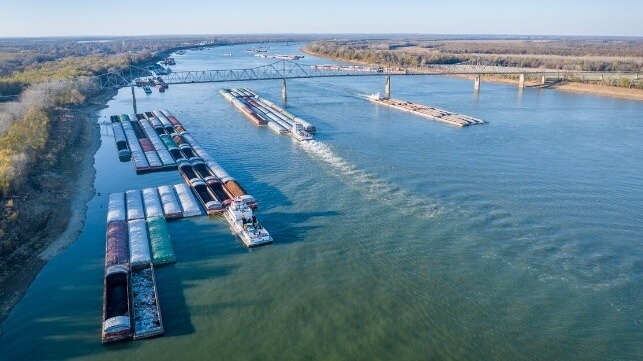
Inland towboat
iStock

Published Mar 9, 2025 3:32 PM by Ronald Boffa


The maritime industry is transforming due to an emphasis on carbon reductions, technological advancement, and stricter regulations. Operators in both coastal and inland waterways now face the challenge of maintaining reliable, compliant operations while adapting to evolving performance standards, and advancements in fluid technology are helping drive this.

Key Trends in Maritime Fluid Technology

It’s no secret that helping reduce greenhouse gas emissions intensity is a primary goal across the shipping industry. This shift toward lower carbon-intensity fuels and higher engine efficiency presents new challenges for lubricants. This is where investments in renewable base stocks and additive technologies come into play.

Traditionally, vegetable-based Environmental Acceptable Lubricants (EALs) have struggled to match the durability and performance of mineral oils. However, newer synthetic EALs, deliver high-performance attributes including oxidation and wear protection, as well as compatibility with modern equipment materials. These advancements ensure that lubricants can meet both regulatory and operational demands.

Environmental Compliance and Fluid Formulation

Regulatory compliance remains a key aspect of maritime operations. The EPA's Vessel General Permit (VGP) standards require operators to use biodegradable lubricants in certain applications, such as propulsion and hydraulic systems. Although conventional mineral oils are less expensive, they fail to meet these compliance standards and pose significant environmental risks in the event of leaks or spills.

To address these needs, there are now new synthetic, renewable EAL formulations on the market that provide both biodegradability and superior performance. For instance, some formulations even meet stringent VGP biodegradability requirements, breaking down by 60% or more within 28 days.

Unlike earlier generations of EALs, which suffered from short lifespans and incompatibility with seals and polymers, these next-generation products offer improved thermal stability, longer service intervals, and reduced equipment wear. Esters, a popular base for some EALs, demonstrate better heat resistance than vegetable oils but can degrade polymer seals in machinery.

By refining plant-derived base stocks to synthetic quality, there are now solutions that integrate seamlessly with existing equipment. This reduces the risk of breakdowns and minimizes lifecycle costs, helping operators achieve their lower carbon goals.

Balancing Cost, Performance, and Compliance

One of the most common concerns raised by operators is the higher upfront cost of EALs compared to traditional lubricants. However, these costs should be weighed against the potential financial impact of environmental incidents. A single spill or leak can lead to cleanup expenses and regulatory fines far exceeding the investment in compliant fluids. By choosing premium EALs, maritime operators can safeguard both their assets and their bottom line.

Those using VGP-approved lubricants have reported longer oil life and reduced maintenance costs, leading to improved return on investment. Don’t be afraid to reach out to the technical service teams of lubricant providers for help – they are often happy to work closely with you to optimize maintenance strategies, including regular fleet surveys and fluid condition monitoring. These proactive measures help prevent equipment failures, ensuring maximum uptime and efficiency.

Additionally, education is key to ensuring the effective adoption of new lubricant technologies. Many lubricant providers offer a range of resources from industry forums and OEM collaboration to training sessions to help you better understand the benefits of lower carbon intensity fluid technologies.

The Future of Marine Fluids

The maritime industry’s future depends on innovation and helping to advance a lower carbon future. Over the next 5 to 10 years, we anticipate continued advancements in renewable base stocks, additive technology, and regulatory compliance standards. We need to be committed to leading this charge by developing products that not only meet but exceed these requirements with the next generation of marine lubricants.

With its combination of synthetic renewable base oils, high performance, and biodegradability, it sets a new standard in the sector. As maritime operators navigate these challenges, they can rely on new, innovative solutions that enhance both environmental stewardship and operational excellence. Staying ahead of regulatory trends and technological advancements can help you achieve long-term success as the world moves to a lower carbon future.

Ronald Boffa is a Lead Inland Marine Specialist at Chevron.

The opinions expressed herein are the author's and not necessarily those of The Maritime Executive.


Jan Allman Returns to Her Post as CEO of Fincantieri Marinette Marine

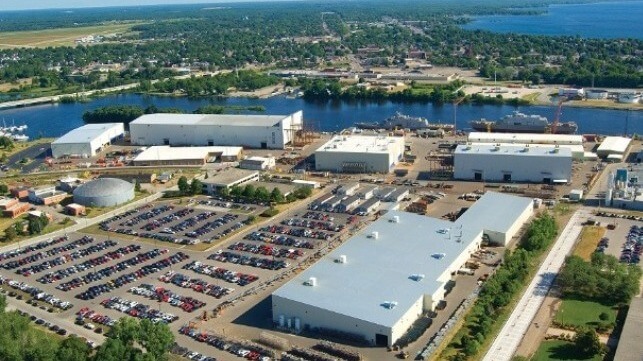
File image courtesy Fincantieri Marine Group

Published Mar 9, 2025 6:40 PM by The Maritime Executive


Fincantieri Marinette Marine announced a significant leadership transition this week, with Jan Allman returning to assume the role of chief executive officer. The company's board of directors approved the appointment last week, marking Allman's return to a position she previously held for seven years.

Ms. Allman, who served as CEO of Marinette Marine from 2014 to 2021, rejoins the Wisconsin shipbuilder after serving as vice president and general manager of Fincantieri Bay Shipbuilding since April 2023. Between her executive roles, she also worked as senior vice president for public affairs and community relations at Fincantieri Marine Group.

The current CEO, Mark Vandroff, will transition to a new role as senior vice president of government relations in Washington, where he began his tenure with Fincantieri Marine Group in 2021. In this position, Mr. Vandroff will manage the company's relationships with high-ranking government officials, including those in the Department of Defense and Navy, as well as elected and appointed officials. Vandroff has been at the helm at Fincantieri Marinette Marine since July 2021, and has overseen the yard throughout the maturation process for the Constellation-class frigate program, which began under Allman's leadership.

"I want to thank Mark for his exceptional leadership at FMM, and I look forward to working with him as we navigate our company's many opportunities with government stakeholders in Washington," said Marco Galbiati, CEO of Fincantieri Marine Group, in a statement. "And I want to welcome Jan back to Marinette, where she spent many years overseeing the successful production of Freedom-class LCSs and the start of the frigate program."

The leadership change comes at a pivotal moment for the shipbuilder. Fincantieri Marinette Marine is currently completing the long-awaited detailed design of the lead ship for the Constellation-class frigate, with construction expected to begin later this spring. The first ship is scheduled for delivery in 2029, and the company has secured contracts for five additional frigates, ensuring continued shipbuilding operations in Marinette for at least the next decade.

Fincantieri Marine Group has three shipyards in the Great Lakes region and employs nearly 3,000 people, making it one of Northeast Wisconsin's largest employers. The company is a subsidiary of Italian shipbuilding conglomerate Fincantieri, which specializes in complex naval, cruise and offshore shipbuilding. 


DP World Launches $800 Million Modern Terminal in Jeddah

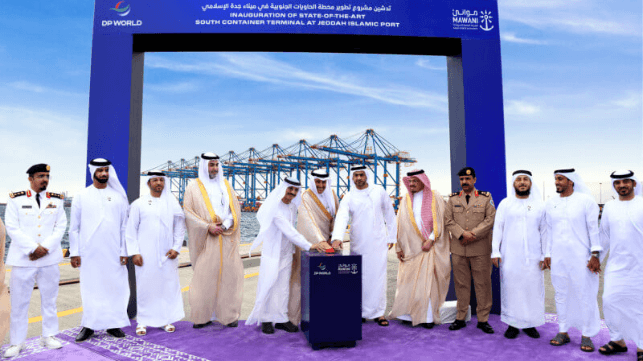
DP World Jeddah inauguration
Courtesy Mawani

Published Mar 9, 2025 7:32 PM by The Maritime Executive


DP World has inaugurated its newly modernized South Container Terminal at Jeddah Islamic Port. The modernization and expansion program has been ongoing for the last three years, under a 30-year Build-Operate-Transfer concession signed in 2019 with the Saudi Ports Authority (Mawani).

The $800 million upgrade has seen the terminal’s capacity double from 1.8 million TEU to 4 million TEU. The capacity will further rise to 5 million TEU in a subsequent expansion phase.

The new terminal spans a total quay length of 2,150 meters, including a deep-water quay with an 18-meter depth, capable of accommodating up to five ultra-large container vessels simultaneously.

In response to the growing demand for perishable cargo, the terminal’s capacity for reefer containers has also been expanded from 1,200 to 2,340. In addition, DP World has developed a facility for inspecting up to 75 reefers at one time - the biggest such port-centric facility in Saudi Arabia.

In line with DP World’s carbon neutrality strategy, the new terminal features automated and electrified yard cranes. The operator said that the target is to reduce CO2 emissions at the terminal by 50 percent in the next five years. Other measures in the pipeline include floating solar platforms, electrified trucks and water recycling systems.  

DP World has been operating in Jeddah port since 1999. In fact, it was the first concession for the operator outside its UAE home base.

With Jeddah a crucial link for Saudi Arabia’s global trade, DP World is further investing in a large logistics park, adjacent to its South Container Terminal. The 415,000 square meter Jeddah Logistics Park is the largest integrated facility of its kind in Saudi Arabia. It will offer warehousing, distribution and freight forwarding services, further cementing Jeddah’s position as a key regional trade hub connecting Africa, Asia and Europe. The construction of the facility began last year in May and is expected to be completed by Q2 2026.

The launch of the Gemini Cooperation between Maersk and Hapag-Lloyd has come with liner connectivity advantages for Jeddah Port. Under Gemini, five new shipping services were added to three Saudi ports, including Jeddah, Dammam and Jubail. On top, Jeddah was selected as one of the regional hubs for the Gemini cooperation. The new shipping services connected the three Saudi ports to other international terminals, including Port Said in Egypt, Tangier in Morocco, Algeciras in Spain, Mundra and Pipavav in India.

Iran's Navy Makes It to the Parade

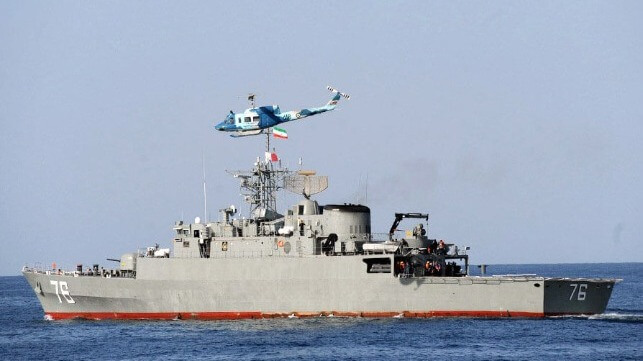
Jamaran - Iranian Navy
File image courtesy Iranian Navy

Published Mar 9, 2025 2:04 PM by The Maritime Executive


At the beginning of the year, the IRGC Navy (Nedsa) announced that it would hold a series of major exercises in January, to be concluded by the Nedsa's "largest ever fleet review" on January 27.  

Nothing quite fitting this description appears to have occurred, but Iran’s other naval force, the Islamic Republic of Iran Navy (Nedaja) assembled a substantial sail-past of ships at the conclusion of the naval element of Exercise Zulfiqar 1403 on February 26.The presence of ships on this fleet review is of some interest, at a time when the new US administration has warned that it could commence stop and searches of tankers in international waters believed to be carrying sanctioned Iranian oil. At a time when the Nedaja is limiting its press releases revealing the make–up and location of its operationally-deployed assets which could be tasked to protect such tankers, it is of interest to note which ships remain in home waters.

The Nedaja has not released the names of vessels seen on February 26 off Bandar Abbas, but it is possible to identify more than ten that were involved. Often, Iranian media sources splice in video from previous exercises to bulk up the assets on display, but in this instance the choppy sea state and meteorological conditions common to all the imagery released provide some veracity.

The Alvand and Moudge Class frigates IRINS Alvand (F71) and IRINS Jamaran (F76) led the fleet, followed by IRINS Bayandor (F81). Two submarines were spotted:  IRINS Fateh (S920) and an unidentified Ghadir Class midget submarine struggling in the heavy swell. Kaman and Sina Class fast attack craft IRINS Neyzeh (P231) and IRINS Zereh (P235) were also suffering in the swell, and in separate footage the Kaivan Class patrol boat IRINS Tiran (P202), first launched in USCG’s Curtis Bay (MD) yard in 1957, was seen launching a 35km-range Nasr anti-ship missile, developed from the Chinese C-704. 

Numbers were made up by IRINS Sirjan (K472) and a second unidentified Delvar Class logistics vessel, and by the Hendijan Class auxiliary IRINS Bahregan (A1406).  The largest vessel in the Nedaja, the converted tanker IRINS Makran (K441) was not featured in the sail-past but could be seen in the background.

Known to be out on deployment at the moment are the Nedaja’s 100th Flotilla, made up of IRINS Bushehr (K422) and IRINS Lavan (L514), on the annual winter training cruise with 220 naval cadets aboard. The flotilla was due to leave Mumbai on February 28.

The Nedaja had announced last November that the 100th Flotilla was heading to the Red Sea to rotate into the Red Sea and Gulf of Aden security mission. With the 100th Flotilla clearly elsewhere, it is not clear when the 99th Flotilla led by IRINS Dena (F75) left the Red Sea, as there was no normal homecoming announcement, but IRINS Dena was spotted in Port Klang, Malaysia on February 24. 

Rear Admiral Shahram Irani, the Nedaja commander, had indicated to Press TV in February that there were a further two unaccounted-for flotillas currently deployed in the Indian Ocean.  It appears therefore that the Nedaja is maintaining a high level of operational deployments at present, which - given the obsolescent status of most of its fleet - is an impressive maintenance and manning achievement. Given the security situation in the region at present, it will need to be sustained.

The Iranians usually conduct Exercise Maritime Security Belt with the Chinese and Russian navies in mid-March, and the suspected Russian contingent appears to still be on track to make the date. The Steregushchiy Class Project 20380 missile corvettes Hero of the Russian Federation Aldar Tsydenzhapov (F339) and Rezkiy (F343) and the oiler Pechenga (IMO 7710977) were on March 3 conducting a live firing exercise in the Eastern Indian Ocean.