Trump’s Venezuela Oil Dream Meets a $100 Billion Reality Check
- The U.S.-led removal of Nicolás Maduro opens the door to a new, U.S.-aligned leadership in Caracas.
- Restoring production to historic levels would require around $100 billion over a decade.
- While Washington is urging U.S. firms to re-enter Venezuela and heavy crude is in strong demand, companies remain wary.
The shock-and-awe capture of Nicolas Maduro by the United States, which was the culmination of the U.S. pressure on Venezuela in recent months, ended a tumultuous chapter in the history of the South American nation sitting on 17% of the world’s proven oil reserves.
Maduro’s arrest and the installation of a U.S.-compliant leadership in Caracas open another chapter in Venezuela’s history, which could be equally tumultuous and, in these early days, face uncertainties and operational challenges.
U.S. President Donald Trump wants the big U.S. oil firms to return to Venezuela and invest in rebuilding the oil infrastructure in the country holding the world’s biggest proven oil reserves, estimated at about 303 billion barrels.
Venezuela, a founding member of OPEC, has more oil reserves than each of its fellow OPEC members and top exporters in the Gulf, including Saudi Arabia, Iraq, the United Arab Emirates (UAE), and Iran.
With Maduro out, U.S. oil giants are set to invest billions of U.S. dollars to fix the oil infrastructure and start making money for Venezuela, according to President Trump.
“We’re going to have our very large U.S. oil companies, the biggest anywhere in the world, go in, spend billions of dollars, fix the badly broken infrastructure, oil infrastructure, and start making money for the country,” President Trump said on Saturday, shortly after the Venezuelan leader was captured and flown to the U.S. to face drug cartel-related charges in New York.
Related: The Oil Ultimatum That Led to Maduro’s Capture
The U.S. President’s vision sounds like a great opportunity for the U.S. supermajors, of which only Chevron is currently authorized to operate in Venezuela and export the crude to the United States.
In reality, the mission to fix Venezuela’s dilapidated oil infrastructure after decades of mismanagement and corruption would be a real challenge, the political and security situation on the ground permitting.
Analysts have started to quantify how much money it would take to resurrect Venezuela’s industry. It’s quite a lot, and will take at least a decade, even if U.S. oil firms were to flock to the opportunity, they say.
Returning Venezuela’s oil production to the 1970s peak of 3.5 million barrels per day (bpd), more than triple the current output of about 1 million bpd, would need $10 billion in annual investment from U.S. oil majors over the next decade, Francisco Monaldi, director of Latin American energy policy at Rice University’s Baker Institute for Public Policy, told Bloomberg.
That’s $100 billion in total over a decade.
Chevron, the other U.S. supermajor, ExxonMobil, and the largest independent, ConocoPhillips, are all being mentioned as the firms that could drive a U.S.-led recovery of Venezuela’s oil industry.
When late Venezuelan President Hugo Chavez nationalized the country’s oil production in 2007, he forced Exxon and ConocoPhillips out. Exxon was entangled in an arbitration to recover its investments, while ConocoPhillips is still owed about $10 billion, which it seeks to recoup from the assets that Chavez ordered seized.
“ConocoPhillips is monitoring developments in Venezuela and their potential implications for global energy supply and stability. It would be premature to speculate on any future business activities or investments,” a company spokesperson told Reuters.
U.S. firms are in no rush to return to Venezuela. Two days after Maduro was captured, it’s not certain whether there would be a profound change in the way Venezuela and its oil industry are being run.
“I haven’t spoken to U.S. oil companies in the last few days, but we’re pretty certain that there will be dramatic interest from Western companies,” U.S. Secretary of State Marco Rubio told ABC in an interview on Sunday.
“Non-Russian, non-Chinese companies will be very interested,” Rubio added.
“Our refineries in the Gulf Coast of the United States are the best in terms of refining this heavy crude, and there’s actually been a shortage of heavy crude around the world, so I think there would be tremendous demand and interest from private industry if given the space to do it, if given the opportunity to do it.”
By Tsvetana Paraskova for Oilprice.com
Trump and Pump: Another Oil Quagmire
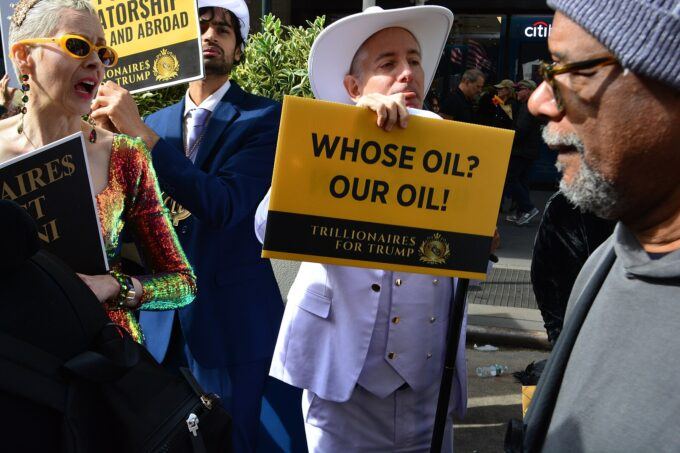
Photo by Joe Mabel – CC BY-SA 4.0
Kleptocracy, crony capitalism, imperialism, colonialism, carbon politics or Kissinger-style politics. Call it what you wish. But the Trump semi coup in Venezuela is another example of the retro politics of the Trump administration, and it is destined to pull the US into yet another quagmire, reminiscent of Iraq, Afghanistan and perhaps even Vietnam.
There is an adage that states always prepared to fight the last war. Trump’s incoherent views of the US were always backward looking, thus to make America great again has always been retro, looking at the US through Halcyon, rose colored glasses, seeing a time when the US dominated the world.
Yet as Karl Marx once observed in The Eighteenth Brumaire, the first time history repeats itself it is a tragedy, the second time it is a farce. What is unfolding in Venezuela fits neatly into that second category. It is not merely repetition, but repetition stripped of strategic seriousness. What remains is spectacle masquerading as statecraft.
From the beginning, it has been obvious that Venezuela was never about drugs. The Trump administration’s 2025 National Security Strategy made that clear. Rather than focusing on narcotics, governance, or humanitarian concerns, it resurrected an explicitly imperial vision of hemispheric dominance. Venezuela was framed as a problem of control, not law enforcement.
That document called for an update to the Monroe Doctrine, which some critics quickly dubbed the “Donroe Doctrine.” The premise was blunt: the United States should dominate the Western Hemisphere. Europe would be left to Europe, Asia to Asia, and Africa barely merited mention. This was not realism so much as nostalgia dressed up as strategy.
Yet the 2025 National Security Strategy was hardly a strategy at all. It read like a campaign speech extended into foreign policy form. It offered slogans, not plans, and branding rather than analysis. Venezuela appeared less as a case study than as a marketing opportunity.
The document foreshadowed what soon became clear: Venezuela was never about drugs, but about domination. That domination draws on an older historical memory, one rooted in the early twentieth century. During that period, the United States treated much of South America as an economic extension of its own industrial needs. Venezuela’s oil was extracted, exported, and monetized with little regard for Venezuelan sovereignty.
The semi-coup Trump orchestrated is an attempt to recapture that lost era. It is a bid to reclaim oil that the United States once took openly and unapologetically. The logic is strikingly familiar. As was once said during debates over the Panama Canal, what was stolen “fair and square” should be kept. That same logic now underwrites U.S. policy toward Venezuela.
Trump’s decision to charge Nicolás Maduro with drug crimes is similarly retro. It echoes the Bush administration’s justification for arresting Manuel Noriega decades earlier. In both cases, criminal charges substituted for political legitimacy. Law enforcement became a fig leaf for regime change.
This backward-looking politics is also about reviving carbon politics at a time when it is rapidly losing relevance. Daniel Yergin’s trilogy—The Prize, The Quest, and The New Map—documents how the twentieth century revolved around oil and energy dominance. But the economic logic that once favored fossil fuels is eroding. Renewable energy is no longer speculative; it is increasingly cheaper, faster, and more scalable.
China understands this shift and is acting accordingly. It is investing heavily in solar, wind, batteries, and electric infrastructure. The United States, by contrast, under Trump sought to double down on oil and gas. Venezuela thus becomes a symbolic battleground between past and future energy regimes.
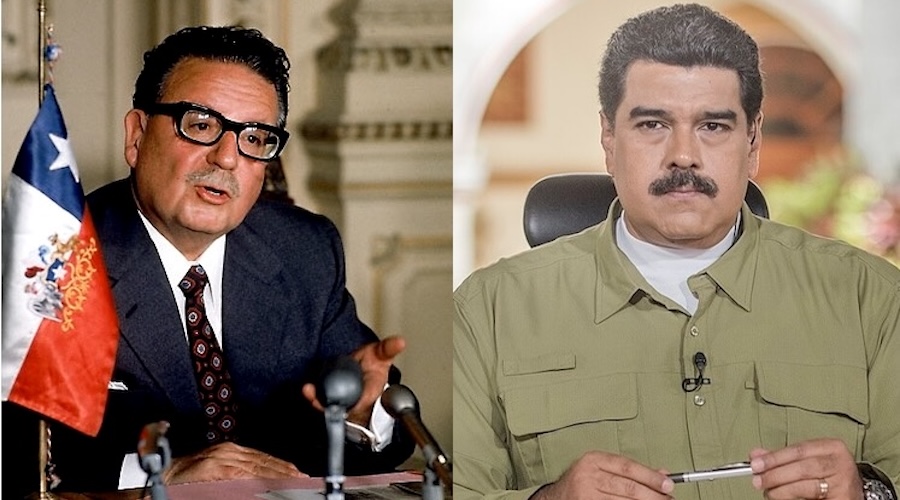
Even by the standards of regime change, this effort is oddly incomplete. Henry Kissinger, for all his moral failures, at least understood how to execute a coup decisively. Chile under Allende stands as grim evidence of that competence. What Trump has engineered instead is a semi-coup, lacking both legitimacy and control.
Trump has declared that the United States will run Venezuela, but not necessarily directly. Instead, it will rely on sanctions, embargoes, financial pressure, and the seizure of oil revenues. The opposition has not been empowered but marginalized. Maduro’s vice president remains in charge, and there is little evidence that the military has defected.
The result is a dangerous stalemate. It creates the conditions for civil conflict rather than political transition. As instability grows, U.S. involvement will deepen by necessity rather than design. Oil infrastructure will need protection, and protection will require troops.
When that moment comes, the justification will change. It will be framed as security, stability, or humanitarian necessity. But the underlying motive will remain the same. Control of resources will once again be dressed up as national interest.
The final stage of this episode will likely involve personal enrichment. Trump has consistently blurred the line between public power and private gain. Venezuela offers another opportunity for branding and profit. This would mirror how earlier American elites, including the Rockefellers, benefited from Venezuelan oil a century ago.
Welcome to Trump-and-Pump America. The more we pump, the more we are told we grow. It is an old story with a new logo. And like so many times before, it is likely to end badly.
Chevron Keeps Venezuelan Oil Flowing as Asia Shipments Stall
Venezuela’s beleaguered oil export system is narrowing rapidly around Chevron as shipments to its largest traditional customer in China remain stalled amid an intensified U.S. oil embargo and mounting geopolitical upheaval.
Shipping data as of January 6 shows crude loading for Chinese buyers at Venezuelan ports has been on hold for the fifth straight day—but Chevron’s vessels continue to load and export crude to the United States. PDVSA’s attempts to serve its Asia contracts have been disrupted by the U.S. naval blockade imposed late last year under President Donald Trump’s administration to choke off revenue that financed the Maduro government. Without outbound cargoes, inland and floating storage are nearing capacity, forcing PDVSA to consider deeper production cuts.
Chevron is the only U.S. oil major still operating in Venezuela under a Washington licence that exempts it from broad sanctions on the country’s energy sector. The company resumed exports to U.S. Gulf Coast refineries after a brief four-day pause and has recalled offshore workers after flights resumed. But crude oil bound for Asian refineries has sat idle since January 1, leaving tankers anchored and Venezuelan output under strain.
The backdrop to these trade flows is the high-profile US forces operation over the weekend that captured Venezuelan President Nicolás Maduro and transported him to New York on drug-related charges, a move President Trump has publicly tied to securing access to Venezuela’s vast oil reserves. Trump has said the United States will seek to boost Venezuelan oil output and could even subsidize U.S. companies to rebuild the country’s dilapidated energy infrastructure, projecting that expanded production will ultimately lower domestic fuel costs.
For now, at least, Chevron stands alone as Venezuela’s main oil export channel while the rest of the country’s crude trade buckles under political and logistical gridlock. The ability of the U.S. and private oil firms to upscale production amid the turmoil remains uncertain, and PDVSA’s operational capacity is under acute stress.
By Julianne Geiger for Oilprice.com
Only 10% of Canadian oil likely to be replaced by Venezuela in short term, says analyst
By Anam Khan
Published: January 07, 2026
Canadian oil markets do not have to worry about Venezuelan oil substituting Canadian oil at U.S. refineries — at least for now, according to one economic analyst.
Only 10 per cent of Canadian oil could be replaced by Venezuela in the short term, Charles St-Arnaud, chief economist at Service Credit Union and former Bank of Canada economist, told BNN Bloomberg.
His analysis comes amid fears that Venezuelan crude could eventually compete with and displace Canadian barrels in key U.S. refining markets after U.S. President Donald Trump announced plans to operate and revitalize Venezuela’s oil industry following Maduro’s ouster.
St-Arnaud explained that while more than 90 per cent of Canadian oil goes to the U.S., the risk of being replaced by Venezuelan oil depends on which U.S. regions the oil goes to.
He said that 70 per cent of Canadian oil is exported to the refineries in the U.S. Midwest, 10 per cent is exported to the Gulf Coast and another 10 per cent goes to the West Coast.
“The only place where Canadian oil could be displaced is really at the Gulf Coast, where the U.S. could import oil directly from Venezuela to use in those refineries,” said St-Arnaud.Canadian oil stocks slip is a ‘massive overreaction’ to Venezuela: Eric Nuttall
He explains that oil arriving at the Gulf Coast cannot travel north toward the Midwest refineries because the pipeline system is designed to bring Canadian oil from the Midwest to the Gulf Coast.
On the other hand, the refineries on the West Coast have direct access to Canadian exports because they are fed through a branch in the Trans Mountain system.
“So it will be very hard for venues or Venezuelan oil to actually reach that region,” said St-Arnaud.
Venezuela would have to drastically ramp up production
Currently, Venezuela produces about one million barrels of oil per day, while Canada produces approximately five million.
To displace more Canadian oil, Venezuela would need to significantly ramp up production, according to St-Arnaud. He also questions whether there is an incentive to transport that oil to the Midwest.
“Is the pricing good? Is the investment in the pipeline infrastructure favourable enough to actually justify that investment?” he asks.
“That’s why, in the short term, it is very difficult for Venezuelan oil to displace Canadian oil. In the long term, if the economic incentives are there, it remains a possibility.”
A 10 per cent loss of oil exports would represent an approximate $13 billion loss for Canada. While manageable at a national level, it would result in a three per cent hit to Alberta’s GDP. Furthermore, competition between Canadian and Venezuelan oil would likely lead to price discounts on Canadian crude.
“That will have more impact on the economy, but also a lot of impact on the fiscal situation here in Alberta,” St-Arnaud added.
How much Venezuelan production can be expected in the short term?
Venezuelan oil output will begin increasing in the fourth quarter of this year, according to a forecast by Eric Lee, energy strategist at Citigroup.
He said if sanctions and blockades are lifted, he expects an additional production of half a million barrels per day.
“You might need on the order of US$100 billion of more sustained investment up to a decade before you could see Venezuela getting back to historic highs,” Lee told BNN Bloomberg.
“It was once at three to 3.5 million barrels…that would be a longer road, in our view.”
Oil as a leverage in Canada’s trade agreement
In the upcoming trade agreement, if the U.S. suggests it doesn’t need Canada’s oil because it has access to Venezuelan oil reserves, the Canadian government can call its bluff.
According to St-Arnaud, the Canadian government can challenge this claim because the U.S. would require immense investment to increase production enough to displace Canadian oil.
“So that’s not a guarantee yet,” said St-Arnaud, adding that increased production in Venezuela would also contribute to the current global oil oversupply.
“With those low oil prices, will the financial incentive of producing more and committing more long-term investment money actually make sense for the big American companies?”
Anam Khan
Journalist, BNNBloomberg.ca
Trump says U.S. to get 30 million to 50 million barrels of oil from Venezuela at market price
ByThe Associated Press
January 06, 2026

U.S. President Donald Trump said Tuesday that Venezuela would be providing 30 million to 50 million barrels of oil to the U.S., and he pledged to use proceeds from the sale of this oil “to benefit the people” of both countries.
The White House is organizing a meeting Friday with U.S. oil company executives to discuss Venezuela, which the Trump administration has been pressuring to open its vast-but-struggling oil industry more widely to American investment and know-how.
Representatives of Exxon, Chevron and ConocoPhillips are expected to attend the White House meeting, according to a person familiar with the matter who requested anonymity to discuss the plans.
Earlier Tuesday, officials in Caracas announced that at least 24 Venezuelan security officers were killed in the dead-of-night U.S. military operation to capture Nicolas Maduro and spirit him to the United States to face drug charges. And the country’s acting president, Delcy Rodriguez, pushed back on Trump, who earlier this week warned she’d face an outcome worse than Maduro’s if she does not “do what’s right” and overhaul Venezuela into a country that aligns with U.S. interests, including by granting access to American energy companies.
Rodriguez, delivering an address Tuesday before government agricultural and industrial sector officials, said, “Personally, to those who threaten me: My destiny is not determined by them, but by God.
Venezuela’s Attorney General Tarek William Saab said overall “dozens” of officers and civilians were killed in the weekend strike in Caracas and said prosecutors would investigate the deaths in what he described as a “war crime.” He didn’t specify if the estimate was specifically referring to Venezuelans.

In addition to the Venezuelan security officials, Cuba’s government had previously confirmed that 32 Cuban military and police officers working in Venezuela were killed in the raid. The Cuban government says the personnel killed belonged to the Revolutionary Armed Forces and the Ministry of the Interior, the country’s two main security agencies.
Seven U.S. service members were also injured in the raid, according to the Pentagon. Five have already returned to duty, while two are still recovering from their injuries. The injuries included gunshot wounds and shrapnel injuries, according to a U.S. official who was not authorized to comment on the matter publicly and spoke on the condition of anonymity.
A video tribute to the slain Venezuelan security officials posted to the military’s Instagram account features faces of the fallen over black-and-white videos of soldiers, American aircraft flying over Caracas and armored vehicles destroyed by the blasts. Meanwhile, the streets of Caracas, deserted for days following Maduro’s capture, briefly filled with masses of people waving Venezuelan flags and bouncing to patriotic music at a state-organized display of support for the government.
“Their spilled blood does not cry out for vengeance, but for justice and strength,” the military wrote in an Instagram post. “It reaffirms our unwavering oath not to rest until we rescue our legitimate President, completely dismantle the terrorist groups operating from abroad, and ensure that events such as these never again sully our sovereign soil.”

Questions about the future of Venezuelan oil
With oil trading at roughly $56 a barrel, the transaction Trump announced late Tuesday could be worth as much as $2.8 billion. The U.S. goes through an average of roughly 20 million barrels a day of oil and related products, so Venezuela’s transfer would be the equivalent of as much as two and a half days of supply, according to the U.S. Energy Information Administration.
Despite Venezuela having the world’s largest proven crude oil reserves, it only produces on average about one million barrels day, significantly below the U.S. average daily production of 13.9 million barrels a day during October.
The press office for Venezuela’s government did not immediately respond to a request for comment on Trump’s announcement.
ExxonMobil is developing a mammoth offshore oil deposit in the waters off Guyana, Venezuela’s neighbor to the east. The company’s major oil discovery in 2015 prompted Venezuela to revive a century-old territorial dispute with Guyana and take steps to annex the remote region known as Essequibo, which comprises about two-thirds of Guyana’s land mass.
The development has also led to wide-ranging accusations from Venezuela’s government, including Rodriguez, against Guyana’s leaders and ExxonMobil. Two years ago, Venezuelan lawmakers even considered banning any future operation in Venezuela of oil companies working in Guyana.
Earlier Tuesday, Trump pushed back against Democratic criticism of this weekend’s military operation, noting that his Democratic predecessor Joe Biden had also called for the arrest of the Venezuelan leader on drug trafficking charges.
Trump in remarks before a House Republican retreat in Washington grumbled that Democrats were not giving him credit for a successful military operation, even though there was bipartisan agreement that Maduro was not the rightful president of Venezuela.

In 2020, Maduro was indicted in the United States, accused in a decades-long narco-terrorism and international cocaine trafficking conspiracy. White House officials have noted that Biden’s administration in his final days in office last year raised the award for information leading to Maduro’s arrest after he assumed a third term in office despite evidence suggesting that he lost Venezuela’s most recent election. The Trump administration doubled the award to $50 million in August.
“You know, at some point, they should say, `You know, you did a great job. Thank you. Congratulations.’ Wouldn’t it be good?” Trump said. “I would say that if they did a good job, their philosophies are so different. But if they did a good job, I’d be happy for the country. They’ve been after this guy for years and years and years.”
What U.S. opinion polls show
Americans are split about the capture of Maduro -- with many still forming opinions -- according to a poll conducted by The Washington Post and SSRS using text messages over the weekend. About 4 in 10 approved of the U.S. military being sent to capture Maduro, while roughly the same share were opposed. About 2 in 10 were unsure.
Nearly half of Americans, 45%, were opposed to the U.S. taking control of Venezuela and choosing a new government for the country. About 9 in 10 Americans said the Venezuelan people should be the ones to decide the future leadership of their country.
Maduro pleaded not guilty to federal drug trafficking charges in a U.S. courtroom on Monday. U.S. forces captured Maduro and his wife early Saturday in a raid on a compound where they were surrounded by Cuban guards. Maduro’s No. 2, Delcy Rodriguez, has been sworn in as Venezuela’s acting president.

In the days since Maduro’s ouster, Trump and top administration officials have raised anxiety around the globe that the operation could mark the beginning of a more expansionist U.S. foreign policy in the Western Hemisphere. The president in recent days has renewed his calls for an American takeover of the Danish territory of Greenland for the sake of U.S. security interests and threatened military action on Colombia for facilitating the global sale of cocaine, while his top diplomat declared the communist government in Cuba is “in a lot of trouble.”
Colombia responds to Trump
Colombia’s Foreign Affairs Minister Rosa Villavicencio said Tuesday she’ll meet with the U.S. Embassy’s charge d’affaires in Bogota to present him with a formal complaint over the recent threats issued by the United States.

On Sunday, Trump said he wasn’t ruling out an attack on Colombia and described its president, who’s been an outspoken critic of the U.S. pressure campaign on Venezuela, as a “sick man who likes making cocaine and selling it to the United States.”
Villavicencio said she’s hoping to strengthen relations with the United States and improve cooperation in the fight against drug trafficking.
“It is necessary for the Trump administration to know in more detail about all that we are doing in the fight against drug trafficking,” she said.
Meanwhile, the leaders of France, Germany, Italy, Poland, Spain and the United Kingdom on Tuesday joined Danish Prime Minister Mette Frederiksen in defending Greenland’s sovereignty. The island is a self-governing territory of the kingdom of Denmark and thus part of the NATO military alliance.
“Greenland belongs to its people,” the statement said. “It is for Denmark and Greenland, and them only, to decide on matters concerning Denmark and Greenland.”
Madhani reported from Washington and Janetsky from Mexico City. AP writer Linley Sanders and Manuel Rueda contributed reporting.
Regina Garcia Cano, Aamer Madhani And Megan Janetsky, The Associated Press