Trump Uses State of the Union Address to Falsely Declare Economy Is “Roaring”
Ignoring the economic reality of most Americans is an incredible gamble for the president.
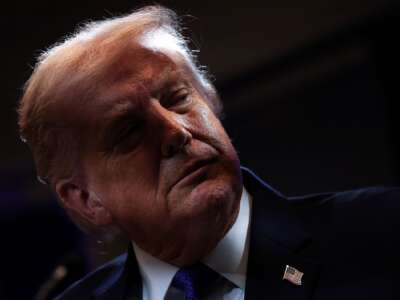
Trump’s Pre-State of the Union Polling Numbers Among the Worst He’s Ever Had
Trump receives negative marks on the economy, foreign policy matters, his handling of immigration, and more. By Chris Walker , Truthout February 23, 2026
The president also touted tax cuts in his so-called “One Big Beautiful Bill” Act as beneficial for most Americans. However, the law’s tax cuts largely benefited the wealthy, and the bill made significant cuts to Medicaid and the Supplemental Nutrition Assistance Program (SNAP).
Trump also praised his tariffs and blasted the Supreme Court decision last week that declared them unlawful and unconstitutional. He promised to institute more tariffs, using different mechanisms, and falsely claimed that American consumers wouldn’t bear the costs.
He absurdly claimed tariffs could replace income taxes one day, too.
“I believe the tariffs, paid for by foreign countries, will, like in the past, substantially replace the modern-day system of income tax, taking a great financial burden off the people that I love,” Trump said.
Experts regard tariffs as a regressive form of taxation, affecting people with lower incomes much more than the wealthy. Trump’s tariffs are also the largest increase in taxes seen since 1993. Some economists believe that Trump’s tariffs have negatively impacted job growth in the U.S.
Trump’s comments were absurd at times.
“Our country is winning again. In fact, we’re winning so much that we really don’t know what to do about it. People are asking me, please, please, please, Mr. President, we’re winning too much,” Trump said at one point.
“We can’t take it anymore. We’re not used to winning in our country. Until you came along, we were just always losing, but now we’re winning too much,” he continued, adding that he’s not going to stop, and the U.S. will supposedly “win bigger than ever.”
Throughout his speech, Trump celebrated an economy that the majority of Americans think he is mishandling.
“We are the hottest country anywhere in the world,” he said.
A majority of Americans do not share that sentiment, several polls have found.
Trump entered the State of the Union Address with some of the worst polling numbers he’s seen in his two terms in office. A CNN/SSRS poll, for example, showed that only 36 percent of Americans approve of how Trump is handling his presidency, with 63 percent saying they disapprove.
A recent Pew Research poll found that only 28 percent of Americans believe the president’s economic policies have improved the country, while 52 percent believe his administration’s actions have made things worse.
An Economist/YouGov poll published on Tuesday also found that only 28 percent of Americans rate the current state of the economy as “excellent” or “good,” while 69 percent only rate it as “fair” or “poor.”
Most respondents in that poll were pessimistic about how the economy is trending, with 50 percent stating that things are “getting worse” overall.
Trump’s speech on Tuesday night is unlikely to ease the concerns of most Americans, as most State of the Union addresses fail to provide more than a statistical “bump” in presidents’ polling numbers. But if Trump continues to celebrate the economy while Americans by and large do not share the same rosy outlooks, the president’s risky gamble could affect how well the Republican Party does against Democrats in the midterms this fall.
Ignoring the economic reality of most Americans is an incredible gamble for the president.
By Chris Walker ,
February 25, 2026
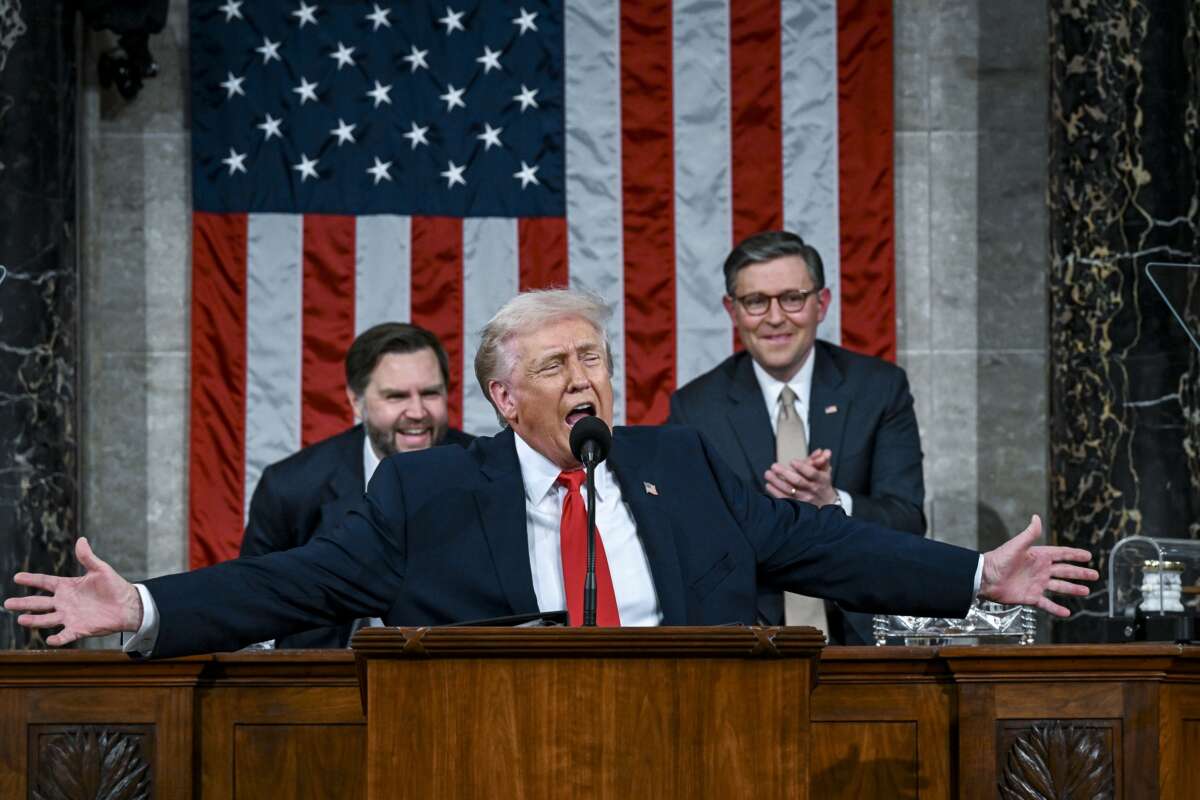
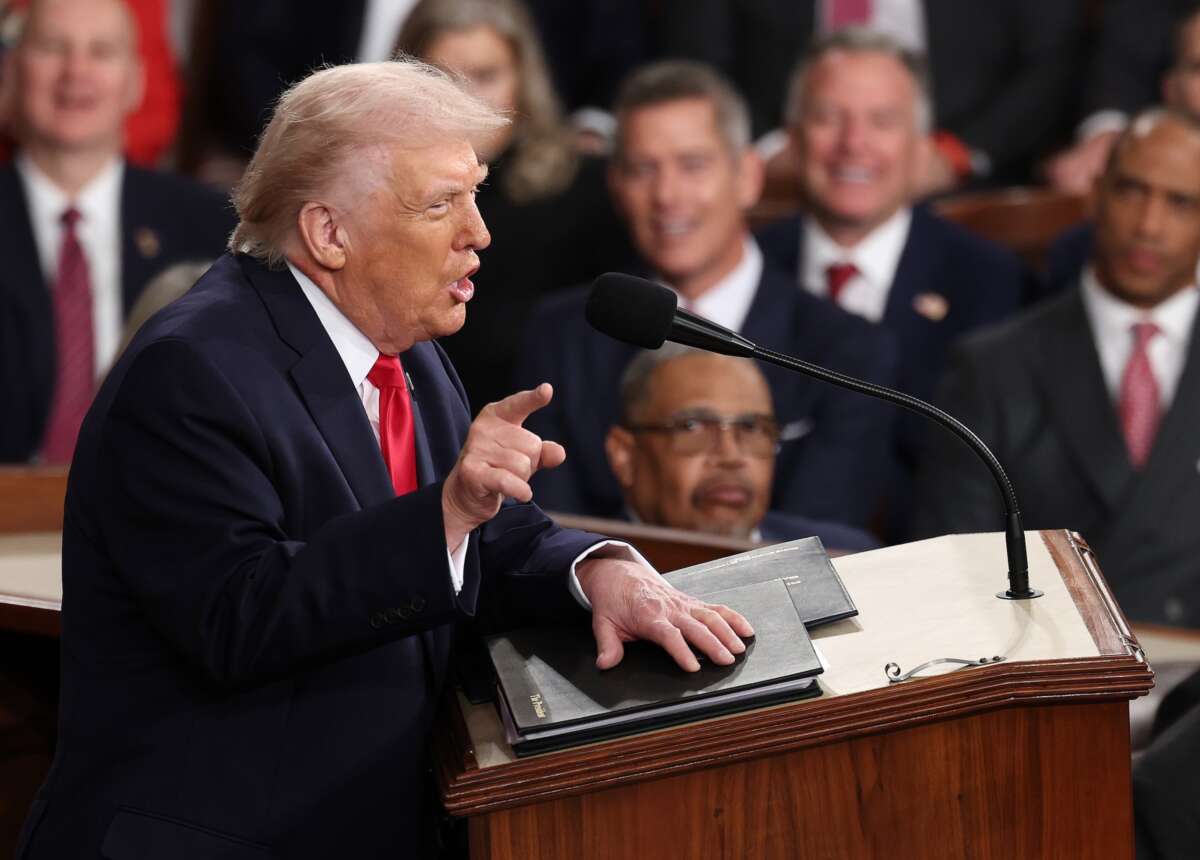
President Donald Trump delivers the State of the Union address during a joint session of Congress on February 24, 2026.Kenny Holston-Pool / Getty Images
President Donald Trump delivered his first State of the Union speech since returning to the White House for a second term, largely ignoring the real economic conditions of the American people.
Trump declared economic success, claiming “the interests of hardworking American citizens are always our first and ultimate concern.”
“The roaring economy is roaring like never before,” Trump said.
During his speech, Trump claimed there was “no inflation,” only to state later that “inflation is plummeting.”
In reality, the 2.7 percent rate of inflation seen in 2025 is only 0.2 percent lower than it was in the year prior to Trump re-entering the White House. Food prices are also up by 2.4 percent overall during the first year of Trump’s second term.
President Donald Trump delivered his first State of the Union speech since returning to the White House for a second term, largely ignoring the real economic conditions of the American people.
Trump declared economic success, claiming “the interests of hardworking American citizens are always our first and ultimate concern.”
“The roaring economy is roaring like never before,” Trump said.
During his speech, Trump claimed there was “no inflation,” only to state later that “inflation is plummeting.”
In reality, the 2.7 percent rate of inflation seen in 2025 is only 0.2 percent lower than it was in the year prior to Trump re-entering the White House. Food prices are also up by 2.4 percent overall during the first year of Trump’s second term.
Trump’s Pre-State of the Union Polling Numbers Among the Worst He’s Ever Had
Trump receives negative marks on the economy, foreign policy matters, his handling of immigration, and more. By Chris Walker , Truthout February 23, 2026
The president also touted tax cuts in his so-called “One Big Beautiful Bill” Act as beneficial for most Americans. However, the law’s tax cuts largely benefited the wealthy, and the bill made significant cuts to Medicaid and the Supplemental Nutrition Assistance Program (SNAP).
Trump also praised his tariffs and blasted the Supreme Court decision last week that declared them unlawful and unconstitutional. He promised to institute more tariffs, using different mechanisms, and falsely claimed that American consumers wouldn’t bear the costs.
He absurdly claimed tariffs could replace income taxes one day, too.
“I believe the tariffs, paid for by foreign countries, will, like in the past, substantially replace the modern-day system of income tax, taking a great financial burden off the people that I love,” Trump said.
Experts regard tariffs as a regressive form of taxation, affecting people with lower incomes much more than the wealthy. Trump’s tariffs are also the largest increase in taxes seen since 1993. Some economists believe that Trump’s tariffs have negatively impacted job growth in the U.S.
Trump’s comments were absurd at times.
“Our country is winning again. In fact, we’re winning so much that we really don’t know what to do about it. People are asking me, please, please, please, Mr. President, we’re winning too much,” Trump said at one point.
“We can’t take it anymore. We’re not used to winning in our country. Until you came along, we were just always losing, but now we’re winning too much,” he continued, adding that he’s not going to stop, and the U.S. will supposedly “win bigger than ever.”
Throughout his speech, Trump celebrated an economy that the majority of Americans think he is mishandling.
“We are the hottest country anywhere in the world,” he said.
A majority of Americans do not share that sentiment, several polls have found.
Trump entered the State of the Union Address with some of the worst polling numbers he’s seen in his two terms in office. A CNN/SSRS poll, for example, showed that only 36 percent of Americans approve of how Trump is handling his presidency, with 63 percent saying they disapprove.
A recent Pew Research poll found that only 28 percent of Americans believe the president’s economic policies have improved the country, while 52 percent believe his administration’s actions have made things worse.
An Economist/YouGov poll published on Tuesday also found that only 28 percent of Americans rate the current state of the economy as “excellent” or “good,” while 69 percent only rate it as “fair” or “poor.”
Most respondents in that poll were pessimistic about how the economy is trending, with 50 percent stating that things are “getting worse” overall.
Trump’s speech on Tuesday night is unlikely to ease the concerns of most Americans, as most State of the Union addresses fail to provide more than a statistical “bump” in presidents’ polling numbers. But if Trump continues to celebrate the economy while Americans by and large do not share the same rosy outlooks, the president’s risky gamble could affect how well the Republican Party does against Democrats in the midterms this fall.
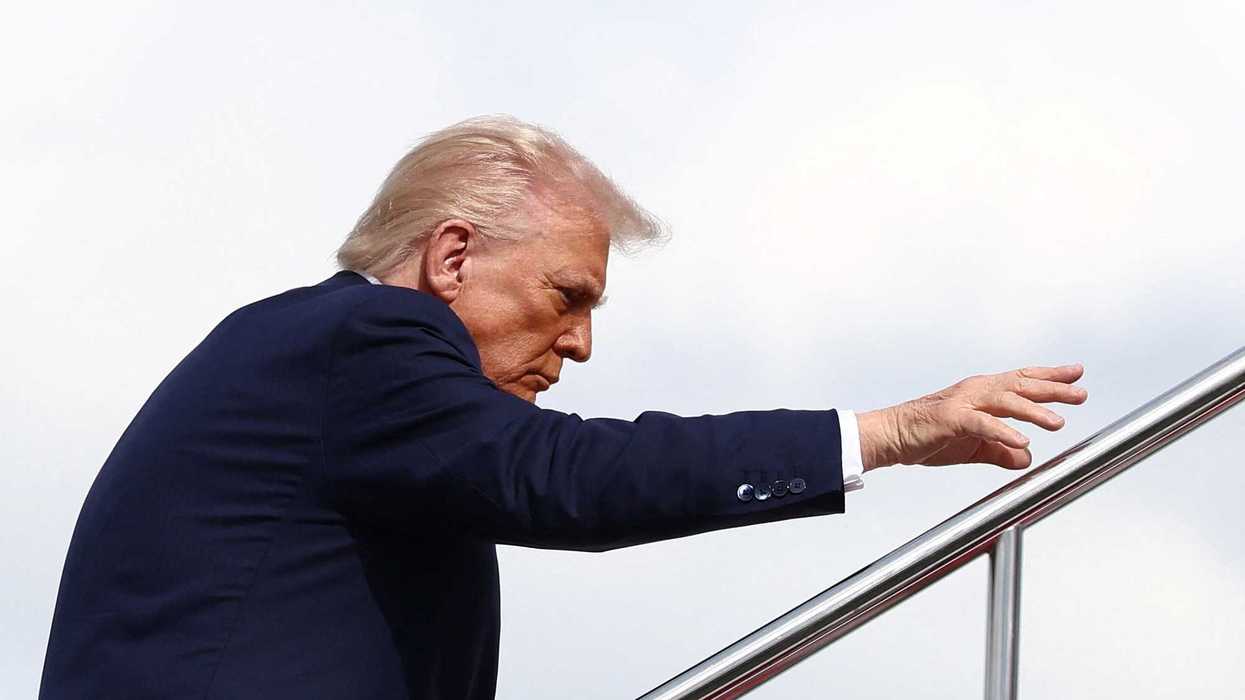
U.S. President Donald Trump boards Air Force One to depart Haneda Airport for South Korea, in Tokyo, Japan, October 29, 2025. REUTERS Evelyn Hockstein
February 25, 2026
ALTERNET
President Donald Trump and Republicans enjoy bashing the European economy as a foil to America’s awesome growth, but Nobel laureate economist Paul Krugman says the party really doesn’t have much to brag about.
“When comparing the US and the EU, uncritical use of real GDP numbers can lead to the conclusion that Europe is getting poorer relative to America. But it isn’t,” said Krugman on his substack.
A lazy glance at growth in real GDP between the U.S. and the EU might suggest the U.S. is growing substantially more than the EU, but “not so fast,” said Krugman. A third comparison adjusting for differences in the overall price level goods in the U.S. and EU puts the rate of growth between the two economies extremely close to one another between 2007 and 2024.
“One says that in real terms the U.S. economy has grown much faster than the EU economy. The other says that in real terms the two economies have stayed roughly equal in size,” said Krugman, adding that the contradiction appears to exist “because the concept of real GDP is often misunderstood.”
It can certainly lead you astray when “comparing nations that produce different mixes of goods because they have staked out different positions in the global economy,” said Krugman.
The U.S. conceivably produces more tech than the EU, and this spurs rapid technological progress, but that progress gets “passed on to everyone in the form of lower prices. … The relative size of the economies measured [while adjusting for differences in the overall price level] doesn’t change.”
And should Europe envy the United States for its tech sector? No, said Krugman. Big tech makes big money for big tech billionaires.
”Aside from the fact that Europeans are living well, tech generates a big negative externality, because among other things it generates tech-bro billionaires, who are corrupting our politics,” Krugman said, likely referring to Elon Musk putting his finger on Trump’s re-election, and his more recent failed endeavor to win a Wisconsin Supreme Court seat for Republicans.
President Donald Trump and Republicans enjoy bashing the European economy as a foil to America’s awesome growth, but Nobel laureate economist Paul Krugman says the party really doesn’t have much to brag about.
“When comparing the US and the EU, uncritical use of real GDP numbers can lead to the conclusion that Europe is getting poorer relative to America. But it isn’t,” said Krugman on his substack.
A lazy glance at growth in real GDP between the U.S. and the EU might suggest the U.S. is growing substantially more than the EU, but “not so fast,” said Krugman. A third comparison adjusting for differences in the overall price level goods in the U.S. and EU puts the rate of growth between the two economies extremely close to one another between 2007 and 2024.
“One says that in real terms the U.S. economy has grown much faster than the EU economy. The other says that in real terms the two economies have stayed roughly equal in size,” said Krugman, adding that the contradiction appears to exist “because the concept of real GDP is often misunderstood.”
It can certainly lead you astray when “comparing nations that produce different mixes of goods because they have staked out different positions in the global economy,” said Krugman.
The U.S. conceivably produces more tech than the EU, and this spurs rapid technological progress, but that progress gets “passed on to everyone in the form of lower prices. … The relative size of the economies measured [while adjusting for differences in the overall price level] doesn’t change.”
And should Europe envy the United States for its tech sector? No, said Krugman. Big tech makes big money for big tech billionaires.
”Aside from the fact that Europeans are living well, tech generates a big negative externality, because among other things it generates tech-bro billionaires, who are corrupting our politics,” Krugman said, likely referring to Elon Musk putting his finger on Trump’s re-election, and his more recent failed endeavor to win a Wisconsin Supreme Court seat for Republicans.
DC insider lets loose on Trump's bad economy — and Republicans' 'irrelevance'
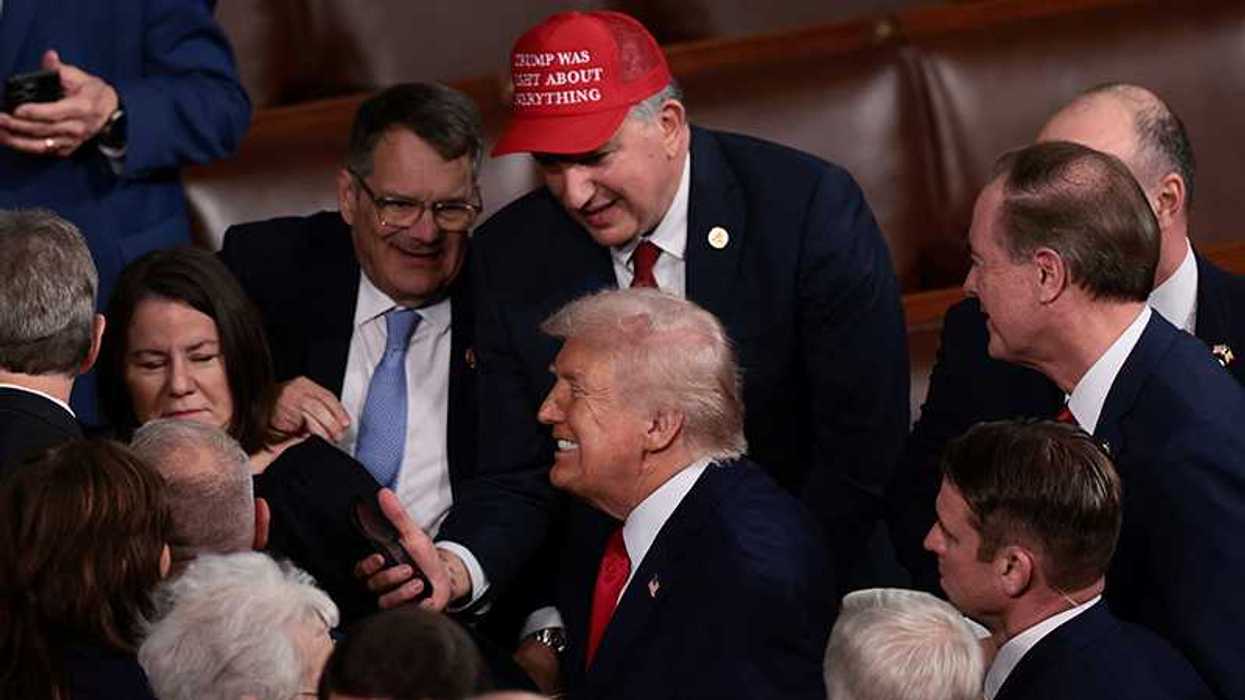
U.S. President Donald Trump smiles as he departs following the State of the Union address to a joint session of Congress at the U.S. Capitol in Washington, D.C., U.S., February 24, 2026. REUTERS/Evelyn Hockstein
U.S. President Donald Trump smiles as he departs following the State of the Union address to a joint session of Congress at the U.S. Capitol in Washington, D.C., U.S., February 24, 2026. REUTERS/Evelyn Hockstein
February 25, 2026
ALTERNET
President Donald Trump is being trashed for the false claims he made last night in his speech, distorting the truth about the economy. But one former Republican leader said something worse is happening.
Speaking to MS NOW's Katy Tur, fellow host Michael Steele said that voters are already telling the country that whatever efforts Trump has attempted aren't working.
"He's upside down, not just with the broad swath of Americans. Independents, he's lost 43 points with Independents. He's down 16 points with his own base. I mean, come on," said Steele.
He said that support among Republicans may still be high, but losing any ground is a unique situation for Trump.
"But here, let's level-set what we're talking about here. You know this, you've known this, and followed this guy from the very moment he stepped on the stage. He doesn't care about the politics of politics within the organs and the sinews of a party to get folks elected and connect that to a broader message, to sort of drag the laggards to the —" Steele said before he was cut off by Tur.
"He doesn't care about Congress," she said.
Steele argued that Trump doesn't care about anything other than himself.
For those working in Republican Party politics, Trump would never be someone to rely on.
"So, if you're in the game of politics, [and] the titular head of your party doesn't even care that you're there, meaning your fate is not aligned with his, and his is not aligned with yours, particularly in a congressional cycle where they should be aligned. That's how you don't lose 63 House seats if you're the Democratic Party, or what's going to happen to Republicans this November," said Steele.
Tur said that Trump has always been the one to say he can do everything by himself and doesn't need help from anyone to accomplish his goals. Now he's in a position where he holds every house of Congress, and the Supreme Court is dominated by conservatives.
Steele and Tur agreed that Trump still can't get anything passed because Republicans are unwilling to work with Democrats on bipartisan legislation.
"So, there's been basically no legislation," he said.
It means that Trump has turned House and Senate Republicans "irrelevant," so it ultimately hurts their reelection campaigns.
"Here's the kicker. Republicans in the House and Senate have made themselves irrelevant because at any juncture, particularly after the decision by the Supreme Court on tariffs, that's a moment where you step in. The Supreme Court is giving you your power back," continued Steele.
It's a rare opportunity to work on tariffs, Steele said, and show Americans that they are relevant again. What Speaker Mike Johnson did, however, was to continue allowing Trump to run the show.
The two compared it to having someone throw a ball and stepping aside, letting it sit.
Tur simply couldn't understand why.
"Because they're mini men," he said. "They play small ball. From the very beginning, they always saw Donald Trump as something that he was not. And they gave him power he did not have because Donald Trump wasn't in the districts. He may endorse you, but he's not running your race. He's not managing your campaign. He's not getting you elected. They made him who he is," Steele closed.
"And at no time along the way have they decided that this individual is not in our political best interest. And the political calculation for that was realized when Mitch McConnell refused to convict after Jan. 6," he said.
President Donald Trump is being trashed for the false claims he made last night in his speech, distorting the truth about the economy. But one former Republican leader said something worse is happening.
Speaking to MS NOW's Katy Tur, fellow host Michael Steele said that voters are already telling the country that whatever efforts Trump has attempted aren't working.
"He's upside down, not just with the broad swath of Americans. Independents, he's lost 43 points with Independents. He's down 16 points with his own base. I mean, come on," said Steele.
He said that support among Republicans may still be high, but losing any ground is a unique situation for Trump.
"But here, let's level-set what we're talking about here. You know this, you've known this, and followed this guy from the very moment he stepped on the stage. He doesn't care about the politics of politics within the organs and the sinews of a party to get folks elected and connect that to a broader message, to sort of drag the laggards to the —" Steele said before he was cut off by Tur.
"He doesn't care about Congress," she said.
Steele argued that Trump doesn't care about anything other than himself.
For those working in Republican Party politics, Trump would never be someone to rely on.
"So, if you're in the game of politics, [and] the titular head of your party doesn't even care that you're there, meaning your fate is not aligned with his, and his is not aligned with yours, particularly in a congressional cycle where they should be aligned. That's how you don't lose 63 House seats if you're the Democratic Party, or what's going to happen to Republicans this November," said Steele.
Tur said that Trump has always been the one to say he can do everything by himself and doesn't need help from anyone to accomplish his goals. Now he's in a position where he holds every house of Congress, and the Supreme Court is dominated by conservatives.
Steele and Tur agreed that Trump still can't get anything passed because Republicans are unwilling to work with Democrats on bipartisan legislation.
"So, there's been basically no legislation," he said.
It means that Trump has turned House and Senate Republicans "irrelevant," so it ultimately hurts their reelection campaigns.
"Here's the kicker. Republicans in the House and Senate have made themselves irrelevant because at any juncture, particularly after the decision by the Supreme Court on tariffs, that's a moment where you step in. The Supreme Court is giving you your power back," continued Steele.
It's a rare opportunity to work on tariffs, Steele said, and show Americans that they are relevant again. What Speaker Mike Johnson did, however, was to continue allowing Trump to run the show.
The two compared it to having someone throw a ball and stepping aside, letting it sit.
Tur simply couldn't understand why.
"Because they're mini men," he said. "They play small ball. From the very beginning, they always saw Donald Trump as something that he was not. And they gave him power he did not have because Donald Trump wasn't in the districts. He may endorse you, but he's not running your race. He's not managing your campaign. He's not getting you elected. They made him who he is," Steele closed.
"And at no time along the way have they decided that this individual is not in our political best interest. And the political calculation for that was realized when Mitch McConnell refused to convict after Jan. 6," he said.
'His policies have failed': Nobel economist disputes Trump's myths
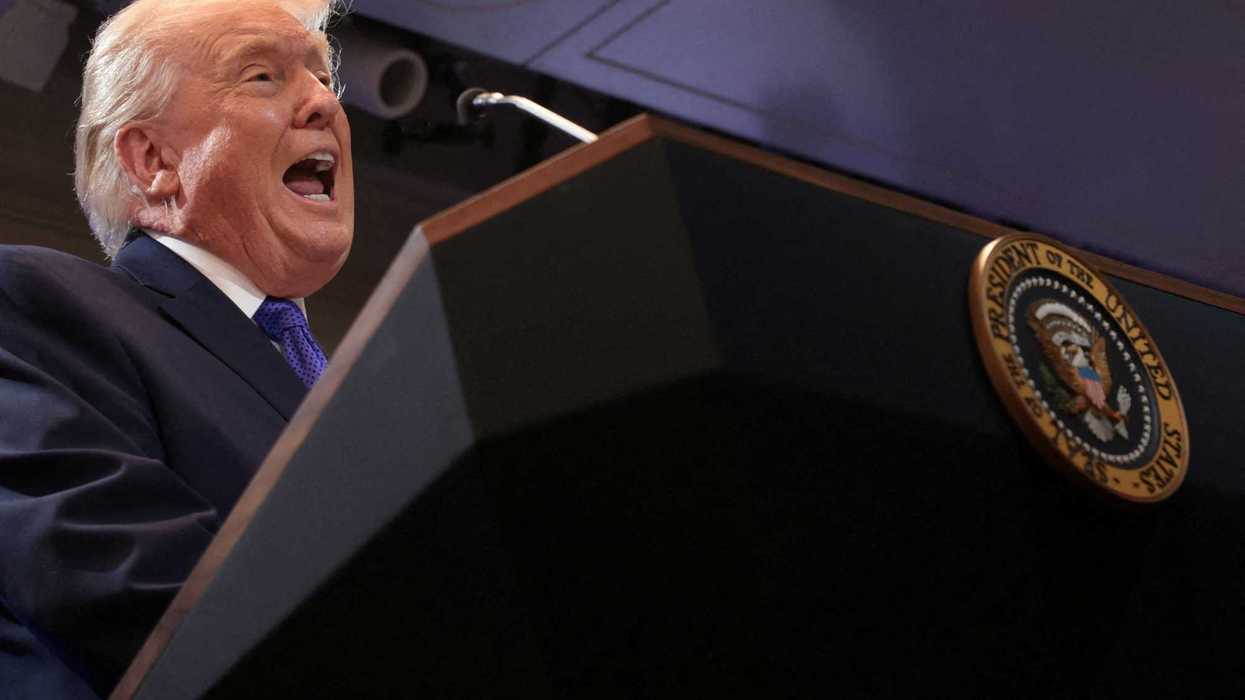
U.S. President Donald Trump in Washington, D.C., U.S., February 20, 2026. REUTERS/Jonathan Ernst
PRESIDENT DONALD TRUMP: Everything was working well. Countries that were ripping us off for decades are now paying us hundreds of billions of dollars. They were ripping us so badly, you all know that. Everybody knows it. Even the Democrats know it, they just don’t want to say it. And yet these countries are now happy and so are we. We made deals. The deals are all done and they’re happy. They’re not making money like they used to but we’re making a lot of money. There was no inflation, tremendous growth. And the big story was how Donald Trump called the economy correctly and 22 Nobel Prize winners in economics didn’t. They got it totally wrong. They got it really wrong. And then just four days ago, an unfortunate ruling from the United States Supreme Court, it just came down. It came down.
PEOPLE: [applause]
PRESIDENT DONALD TRUMP: Very unfortunate ruling.
PEOPLE: [cheers and applause]
PRESIDENT DONALD TRUMP: But the good news is that almost all countries and corporations want to keep the deal that they already made. Right, Scott? Knowing that the legal power that I as president have to make a new deal could be far worse for them. And therefore, they will continue to work along the same successful path that we had negotiated before the Supreme Court’s unfortunate involvement.
So despite the disappointing ruling, these powerful country-saving—it’s saving our country, the kind of money we’re taking in—peace-protecting—many of the wars I settled was because of the threat of tariffs, I wouldn’t have been able to settle them without—will remain in place under fully approved and tested alternative legal statutes, and they have been tested for a long time—they’re a little more complex but they’re actually probably better—leading to a solution that will be even stronger than before.
Congressional action will not be necessary. It’s already time-tested and approved. And as time goes by, I believe the tariffs, paid for by foreign countries, will like in the past substantially replace the modern-day system of income tax, taking a great financial burden off the people that I love.
PEOPLE: [applause]
AMY GOODMAN: We are joined now by Joseph Stiglitz, Nobel Prize-winning economist, Columbia University professor, former chair of the Council of Economic Advisers. Professor Stiglitz is also currently the chief economist of the Roosevelt Institute. His latest book just out in paperback this week, The Road to Freedom: Economics and the Good Society.
Professor Stiglitz, welcome back to Democracy Now! Your response? You were among the signatories, the economists who have signed a letter against the tariffs. Talk about the president’s State of the Union and his argument for tariffs and against the Supreme Court. Two of his own appointees ruled against him.
JOSEPH STIGLITZ: Well, the speech was characteristic of Trump's lies, misleading statements.
I was with a group of a large number of Nobel Prize winners who predicted that he would be bad for the economy and we were right. The tariffs are paid by Americans. They’re not paid for by the foreigners. He says they didn’t have any effect on inflation. We saw inflation was going down, and if we compare where inflation would have been with where we are today, it is estimated the average family is paying somewhere between $1,000 and $1,700 in extra money because of the tariffs.
The irony is he said it was going to bring back manufacturing jobs. Manufacturing jobs are down in the United States in 2025 when they were up under President Biden. He doesn’t talk about that. In fact, last year was one of the slowest growth in jobs ever in recent memory, about a quarter of what it was under President Biden. And interestingly, most or more than 100% of the jobs that were created were in the healthcare sector, nothing to do with his tariffs at all.
AMY GOODMAN: Trump said in the past, “We have the most people working in history.” What is the state of unemployment, of livable employment, the overall economy?
JOSEPH STIGLITZ: Well, when the economy is ”more people in the country? Yes, there are going to be more people working. That’s true. The fact is that labor force participation has not gone up. The unemployment rate has gone up a little bit, not a lot. But what is striking is how weak the job market is. As I said before, we have not created very many jobs, less than a quarter of what we had created under President Biden. And anybody with friends trying to get jobs knows what a difficult labor market today’s labor market is.
AMY GOODMAN: I want to go back to President Trump speaking last night.
PRESIDENT DONALD TRUMP: Now the same people in this chamber who voted for those disasters suddenly use the word “affordability,” a word they just used it, somebody gave it to them knowing full well that they caused and created the increased prices that all of our citizens had to endure. You caused that problem. You caused that problem.
AMY GOODMAN: “Affordability,” Professor Stiglitz. We are speaking to you here in New York. Of course the new mayor Zohran Mamdani sent the message to people all over the country, especially those who are considering elected office or to diehard politicians, senators, congressmembers, that affordability was the word, was the issue people are most concerned about. What about President Trump mocking it?
JOSEPH STIGLITZ: I think he is mocking the American people when he mocks the issue of affordability. The reason people worry about affordability is things are not affordable. And the other way of putting it is that their real incomes adjusted for inflation are down. Now, one of the striking things about what President Trump has done, he talked about this tax cut, the biggest tax cut in history. He was wrong about that. As a percentage of GDP, it doesn’t even rank near the top.
But where it does rank at the top is that it was the most regressive tax cut. That is to say the benefits went to the millionaires, the billionaires, the corporations, and those at the bottom paid the price. They paid the price with almost a $1 trillion cut in Medicaid. That was why the Democrats had insisted on the government shutdown. They said, “You can’t do that! That’s not right!” That you would be giving a tax cut for billionaires and asking the poorest Americans not to have adequate healthcare in a country where healthcare has been so bad, so bad that life expectancy even before the pandemic was on the down.
AMY GOODMAN: Your final comments, Professor Stiglitz, coming off of what’s considered one of the longest State of the Unions, an assessment of this country, in modern history?
JOSEPH STIGLITZ: Well, long speeches like that reminds me of Castro and other demagogues who just loves ”they get the platform and they just talk and talk and talk. But I think the striking thing is that in spite of the tariffs that were supposed to bring back manufacturing jobs, manufacturing jobs are actually down. And in spite of the tariffs that were supposed to eliminate the huge trade deficit in goods, the trade deficit in goods is actually up. So his policies have failed even in the areas where he—in the objectives that he set forth. So, yes, his speech was filled with misleading statements, with lies. We’ve come to expect that. But in the core aspect of his agenda, the numbers show that he has dramatically failed to do what he promised.
AMY GOODMAN: Joseph Stiglitz, Nobel Prize-winning economist, Columbia University professor, and former chair of the Council of Economic Advisers. Professor Stiglitz is also currently the chief economist of the Roosevelt Institute. His new book just out in paperback this week, The Road to Freedom: Economics and the Good Society.
U.S. President Donald Trump in Washington, D.C., U.S., February 20, 2026. REUTERS/Jonathan Ernst
February 25, 2026
Nobel Prize-winning economist Joseph Stiglitz responds to Donald Trump’s State of the Union address on Tuesday, when the president repeatedly touted his tariffs as saving the country money and boosting the economy. Stiglitz says Trump’s “lies” about tariffs can’t erase the truth about how they have raised costs for most U.S. residents. “It is estimated the average family is paying somewhere between $1,000 and $1,700 in extra money because of the tariffs,” says Stiglitz. “His policies have failed.”
This is a rush transcript. Copy may not be in its final form.
AMY GOODMAN: “Streets of Minneapolis” by Bruce Springsteen. Later in the broadcast, we will speak with Aliya Rahman. She was ripped out of her car, her windshield ”the passenger glass broken by immigration agents as they cut her seatbelt. A U.S. citizen who was then invited to the State of the Union by Congressmember Ilhan Omar. She was removed from the gallery. We will ask her if she was also arrested. That’s coming up.
This is Democracy Now!, Democracynow.org, the War and Peace Report. I’m Amy Goodman. During his State of the Union, President Trump repeatedly hailed his economic record over the past year. He also openly criticized the Supreme Court again for striking down his global tariffs in a decision that’s having major implications on the global economy. Less than half, four of the nine Supreme Court justices, attended the speech. This is part of what Trump said.
Nobel Prize-winning economist Joseph Stiglitz responds to Donald Trump’s State of the Union address on Tuesday, when the president repeatedly touted his tariffs as saving the country money and boosting the economy. Stiglitz says Trump’s “lies” about tariffs can’t erase the truth about how they have raised costs for most U.S. residents. “It is estimated the average family is paying somewhere between $1,000 and $1,700 in extra money because of the tariffs,” says Stiglitz. “His policies have failed.”
This is a rush transcript. Copy may not be in its final form.
AMY GOODMAN: “Streets of Minneapolis” by Bruce Springsteen. Later in the broadcast, we will speak with Aliya Rahman. She was ripped out of her car, her windshield ”the passenger glass broken by immigration agents as they cut her seatbelt. A U.S. citizen who was then invited to the State of the Union by Congressmember Ilhan Omar. She was removed from the gallery. We will ask her if she was also arrested. That’s coming up.
This is Democracy Now!, Democracynow.org, the War and Peace Report. I’m Amy Goodman. During his State of the Union, President Trump repeatedly hailed his economic record over the past year. He also openly criticized the Supreme Court again for striking down his global tariffs in a decision that’s having major implications on the global economy. Less than half, four of the nine Supreme Court justices, attended the speech. This is part of what Trump said.
PRESIDENT DONALD TRUMP: Everything was working well. Countries that were ripping us off for decades are now paying us hundreds of billions of dollars. They were ripping us so badly, you all know that. Everybody knows it. Even the Democrats know it, they just don’t want to say it. And yet these countries are now happy and so are we. We made deals. The deals are all done and they’re happy. They’re not making money like they used to but we’re making a lot of money. There was no inflation, tremendous growth. And the big story was how Donald Trump called the economy correctly and 22 Nobel Prize winners in economics didn’t. They got it totally wrong. They got it really wrong. And then just four days ago, an unfortunate ruling from the United States Supreme Court, it just came down. It came down.
PEOPLE: [applause]
PRESIDENT DONALD TRUMP: Very unfortunate ruling.
PEOPLE: [cheers and applause]
PRESIDENT DONALD TRUMP: But the good news is that almost all countries and corporations want to keep the deal that they already made. Right, Scott? Knowing that the legal power that I as president have to make a new deal could be far worse for them. And therefore, they will continue to work along the same successful path that we had negotiated before the Supreme Court’s unfortunate involvement.
So despite the disappointing ruling, these powerful country-saving—it’s saving our country, the kind of money we’re taking in—peace-protecting—many of the wars I settled was because of the threat of tariffs, I wouldn’t have been able to settle them without—will remain in place under fully approved and tested alternative legal statutes, and they have been tested for a long time—they’re a little more complex but they’re actually probably better—leading to a solution that will be even stronger than before.
Congressional action will not be necessary. It’s already time-tested and approved. And as time goes by, I believe the tariffs, paid for by foreign countries, will like in the past substantially replace the modern-day system of income tax, taking a great financial burden off the people that I love.
PEOPLE: [applause]
AMY GOODMAN: We are joined now by Joseph Stiglitz, Nobel Prize-winning economist, Columbia University professor, former chair of the Council of Economic Advisers. Professor Stiglitz is also currently the chief economist of the Roosevelt Institute. His latest book just out in paperback this week, The Road to Freedom: Economics and the Good Society.
Professor Stiglitz, welcome back to Democracy Now! Your response? You were among the signatories, the economists who have signed a letter against the tariffs. Talk about the president’s State of the Union and his argument for tariffs and against the Supreme Court. Two of his own appointees ruled against him.
JOSEPH STIGLITZ: Well, the speech was characteristic of Trump's lies, misleading statements.
I was with a group of a large number of Nobel Prize winners who predicted that he would be bad for the economy and we were right. The tariffs are paid by Americans. They’re not paid for by the foreigners. He says they didn’t have any effect on inflation. We saw inflation was going down, and if we compare where inflation would have been with where we are today, it is estimated the average family is paying somewhere between $1,000 and $1,700 in extra money because of the tariffs.
The irony is he said it was going to bring back manufacturing jobs. Manufacturing jobs are down in the United States in 2025 when they were up under President Biden. He doesn’t talk about that. In fact, last year was one of the slowest growth in jobs ever in recent memory, about a quarter of what it was under President Biden. And interestingly, most or more than 100% of the jobs that were created were in the healthcare sector, nothing to do with his tariffs at all.
AMY GOODMAN: Trump said in the past, “We have the most people working in history.” What is the state of unemployment, of livable employment, the overall economy?
JOSEPH STIGLITZ: Well, when the economy is ”more people in the country? Yes, there are going to be more people working. That’s true. The fact is that labor force participation has not gone up. The unemployment rate has gone up a little bit, not a lot. But what is striking is how weak the job market is. As I said before, we have not created very many jobs, less than a quarter of what we had created under President Biden. And anybody with friends trying to get jobs knows what a difficult labor market today’s labor market is.
AMY GOODMAN: I want to go back to President Trump speaking last night.
PRESIDENT DONALD TRUMP: Now the same people in this chamber who voted for those disasters suddenly use the word “affordability,” a word they just used it, somebody gave it to them knowing full well that they caused and created the increased prices that all of our citizens had to endure. You caused that problem. You caused that problem.
AMY GOODMAN: “Affordability,” Professor Stiglitz. We are speaking to you here in New York. Of course the new mayor Zohran Mamdani sent the message to people all over the country, especially those who are considering elected office or to diehard politicians, senators, congressmembers, that affordability was the word, was the issue people are most concerned about. What about President Trump mocking it?
JOSEPH STIGLITZ: I think he is mocking the American people when he mocks the issue of affordability. The reason people worry about affordability is things are not affordable. And the other way of putting it is that their real incomes adjusted for inflation are down. Now, one of the striking things about what President Trump has done, he talked about this tax cut, the biggest tax cut in history. He was wrong about that. As a percentage of GDP, it doesn’t even rank near the top.
But where it does rank at the top is that it was the most regressive tax cut. That is to say the benefits went to the millionaires, the billionaires, the corporations, and those at the bottom paid the price. They paid the price with almost a $1 trillion cut in Medicaid. That was why the Democrats had insisted on the government shutdown. They said, “You can’t do that! That’s not right!” That you would be giving a tax cut for billionaires and asking the poorest Americans not to have adequate healthcare in a country where healthcare has been so bad, so bad that life expectancy even before the pandemic was on the down.
AMY GOODMAN: Your final comments, Professor Stiglitz, coming off of what’s considered one of the longest State of the Unions, an assessment of this country, in modern history?
JOSEPH STIGLITZ: Well, long speeches like that reminds me of Castro and other demagogues who just loves ”they get the platform and they just talk and talk and talk. But I think the striking thing is that in spite of the tariffs that were supposed to bring back manufacturing jobs, manufacturing jobs are actually down. And in spite of the tariffs that were supposed to eliminate the huge trade deficit in goods, the trade deficit in goods is actually up. So his policies have failed even in the areas where he—in the objectives that he set forth. So, yes, his speech was filled with misleading statements, with lies. We’ve come to expect that. But in the core aspect of his agenda, the numbers show that he has dramatically failed to do what he promised.
AMY GOODMAN: Joseph Stiglitz, Nobel Prize-winning economist, Columbia University professor, and former chair of the Council of Economic Advisers. Professor Stiglitz is also currently the chief economist of the Roosevelt Institute. His new book just out in paperback this week, The Road to Freedom: Economics and the Good Society.






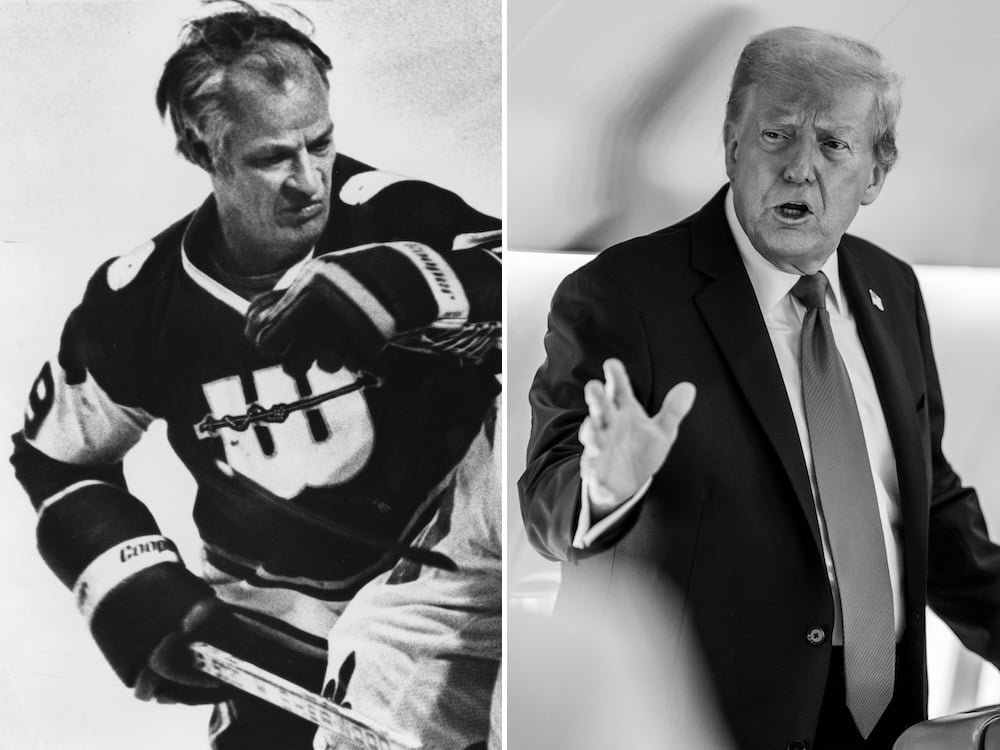 Donald Trump’s threats to halt the opening of the Gordie Howe International Bridge would have drawn a sharp elbow from the hockey legend. Howe photo by Doug Ball, the Canadian Press. Trump photo via Shutterstock.