Showing posts sorted by relevance for query NAKBA2. Sort by date Show all posts

Monday, March 04, 2024

NAKBA2
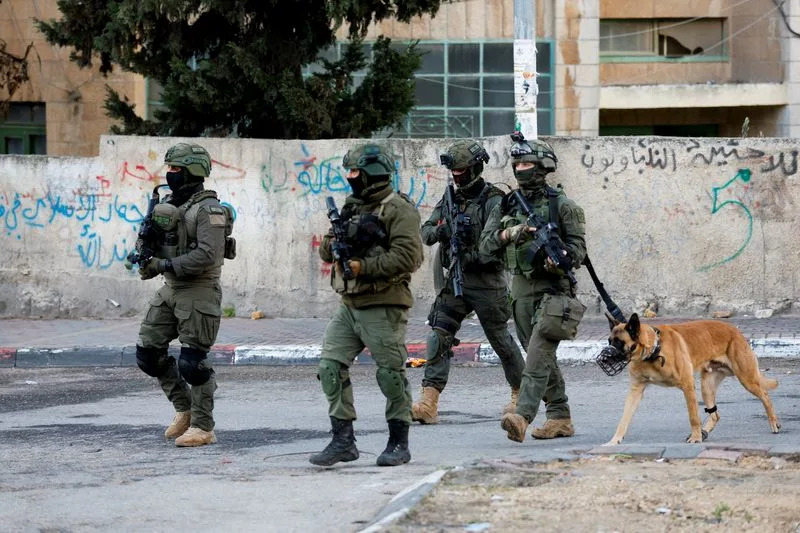
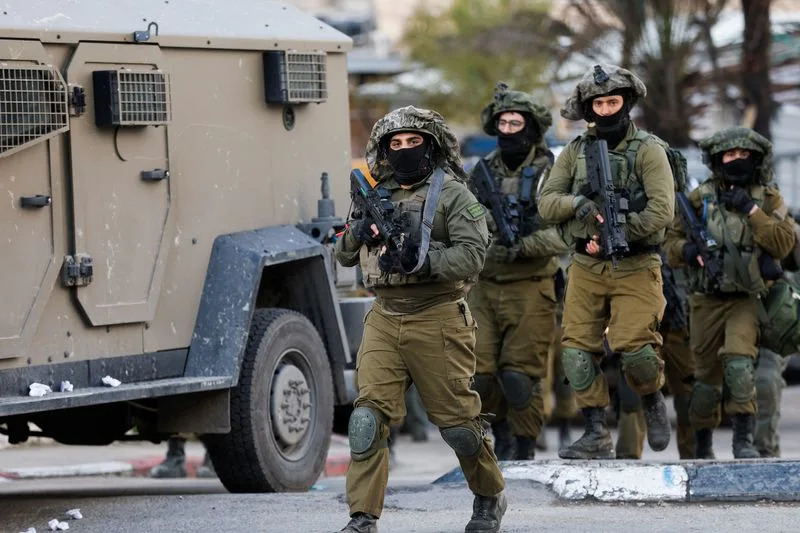
Israel carries out biggest Ramallah raid in years


Updated Mon, March 4, 2024

By Ali Sawafta

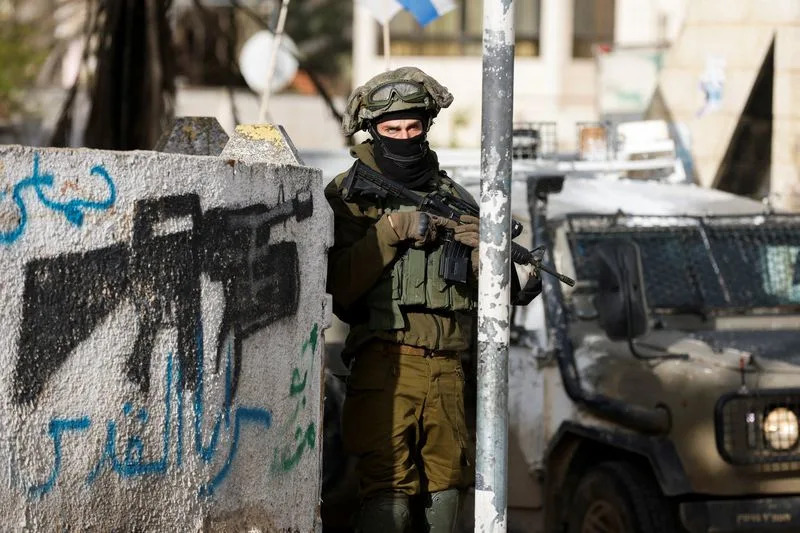
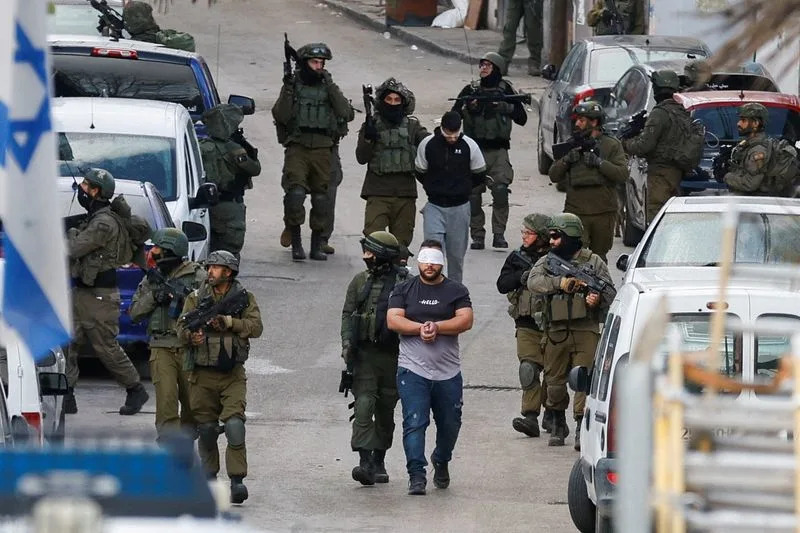
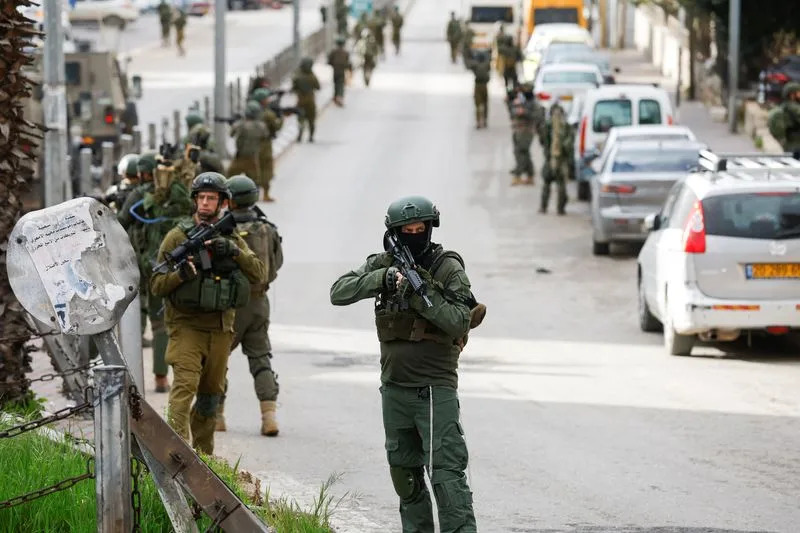
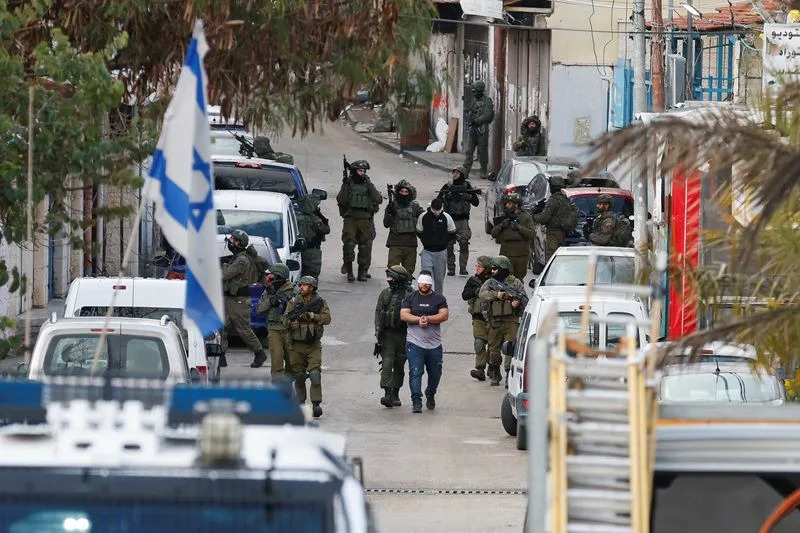
RAMALLAH, West Bank (Reuters) -Israeli forces raided the Palestinian administrative capital of Ramallah in the occupied West Bank overnight, killing a 16-year-old in a refugee camp during their biggest such operation into the city in years, Palestinian sources said on Monday.

The Israeli military said security forces had conducted a counter-terrorism operation in the camp during which a riot broke out, with rocks and petrol bombs thrown at soldiers, who responded with live fire.

In a separate West Bank raid, Israeli forces killed a 10-year-old boy and in the village of Burin, south of Nablus, the Palestinian news agency WAFA reported. Citing medical sources, it said the boy had been shot in the head by Israeli soldiers.

The Israeli military did not immediately respond to a request for comment.

Violence has surged across the West Bank in parallel to the Gaza war, with at least 400 Palestinians killed in clashes with Israeli soldiers and settlers, and Israel regularly raiding Palestinian areas across the territory it occupied in 1967.

Witnesses in Ramallah said the Israeli forces had driven dozens of military vehicles into the city, the headquarters of the Palestinian Authority (PA) led by President Mahmoud Abbas which exercises limited self-rule over parts of the West Bank.

The Palestinian health ministry said Israeli forces shot and killed 16-year-old Mustafa Abu Shalbak while raiding Am'ari refugee camp.

WAFA reported confrontations broke out as Israeli forces stormed the camp, "during which live bullets were fired at Palestinian youths", wounding Abu Shalbak in the neck and chest.

The Israeli military said security forces had conducted a six hour-long operation in the camp, apprehending two wanted suspects, questioning others and seizing "inciting material spread by Hamas".

"During the operation, a violent riot developed, in which suspects hurled rocks and Molotov cocktails at Israeli security forces, who responded with live fire. A hit was identified," it said.

An Israeli border police officer was lightly injured during the exchanges.

'UNBEARABLE HELL'

The Palestinian foreign ministry said Israeli occupation authorities were making lives of Palestinians in the West Bank "an unbearable hell" with actions including raids, detentions, and movement restrictions, warning of "serious risks" of plunging the West Bank into "violence and anarchy".

Israeli forces also tore up a main road by the Nur Shams refugee camp in the Tulkarm area of the West Bank, witnesses said.

"Every time they enter the camp they destroy more than the previous time," said Ibrahim Hamarsheh, a resident of the camp who heads the Tulkarm branch of the Palestinian Prisoners Club, which advocates for Palestinians in Israeli jails.

He said Israeli forces had also bulldozed roads in the camp.

WAFA also reported that Israeli forces had stormed the city of Nablus, and blew up the home of a man previously accused by Israel of carrying out an attack in which a British-Israeli mother and her two daughters were killed in April in the West Bank.

The man, Moaz al-Masri, was killed by Israeli forces in Nablus last May.

Israeli forces detained at least 55 Palestinians in raids across the West Bank overnight, according to the Palestinian Prisoners Club.

(Additional reporting by James Mackenzie in Jerusalem; Writing by Tom Perry, Editing by Timothy Heritage, Angus MacSwan and Ros Russell)

Friday, March 01, 2024

NAKBA2 

Israel takes control of 650 acres of West Bank land near big settlement

A spokesperson for the Palestinian Authority said the move underscored Israel's steady push to cut off Jerusalem from the Palestinian areas which surround it and undermine the possibility of creating an independent Palestinian state.

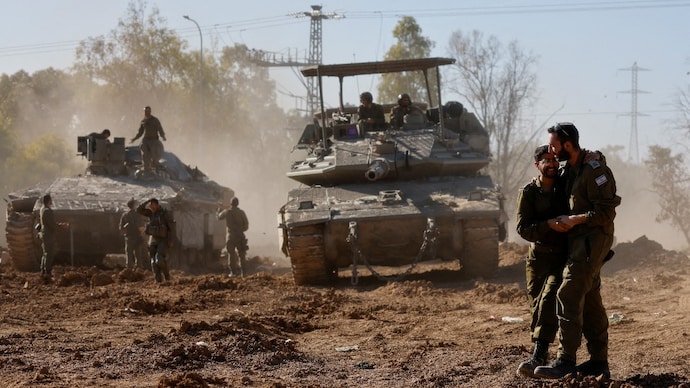
Israeli soldiers
Israeli soldiers embrace after returning from the Gaza strip, amid the ongoing conflict between Israel and Palestinian terrorist group Hamas, in southern Israel | Photo: Reuters


In Short

  • Israel appropriates land near Jewish settlement in West Bank
  • The West Bank is among territories captured by Israel
  • An announcement about land appropriation land was made by Israel's Civil Administration

  • Israel appropriated several tracts of land abutting a major Jewish settlement in the occupied West Bank on Thursday, but a source briefed on the decision told Reuters there was currently no plan for construction there.

An announcement by the Civil Administration, part of Israel's Defence Ministry, said the tracts amounted to 2,640 dunams, or 652 acres. The Israeli source said they would now be designated part of Maale Adumim settlement, east of Jerusalem.


A spokesperson for the Palestinian Authority said the move underscored Israel's steady push to cut off Jerusalem from the Palestinian areas which surround it and undermine the possibility of creating an independent Palestinian state.


"The Israeli occupation authorities deliberately defy international legitimacy and its resolutions, which have consistently declared the illegitimacy of settlements in all Palestinian territory, including East Jerusalem," Nabil Abu Rudeineh, a spokesman for President Mahmoud Abbas, said.


The West Bank is among territories captured by Israel in the 1967 Middle East war and where Palestinians, with international support, seek statehood. Most world powers deem the settlements illegal. Israel disputes that, citing historical claims to the West Bank and describing it as a security bulwark.


Prime Minister Benjamin Netanyahu's religious-nationalist government has promoted the settlements, creating friction with the United States even as the allies close ranks over Israel's war with Palestinian Hamas militants in the Gaza Strip.


On Feb. 24, U.S. Secretary of State Antony Blinken said Washington deemed West Bank settlements inconsistent with international law, reverting to a U.S. position that had been overturned by the administration of then-President Donald Trump.


Published By:
Aditi Sharma

Tuesday, November 28, 2023

NAKBA2: ETHNIC CLEANSING GAZA WEST BANK 

Israel to fight across all of Gaza after humanitarian pause: Defense minister

While the Israeli army ‘is organizing and resting and investigating, the enemy is also doing same,’ says Yoav Gallant

Ahmed Asmar |28.11.2023 - Update : 28.11.2023

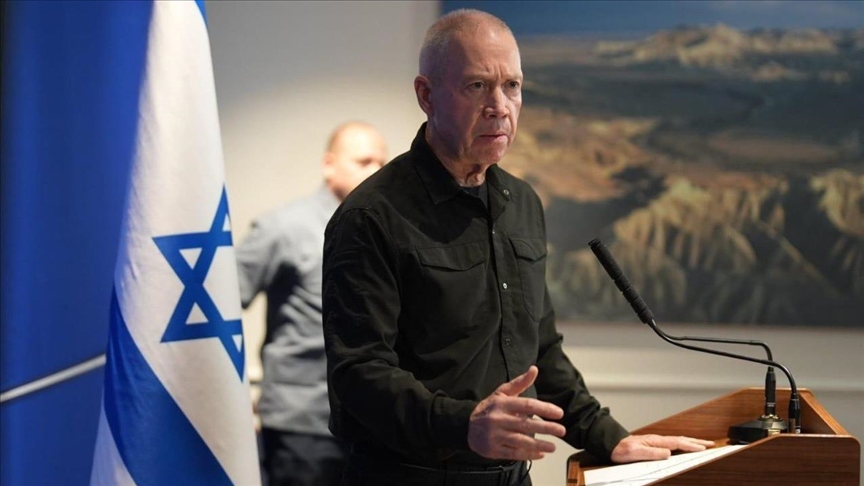
Israeli Defense Minister Yoav Gallant ( FILE PHOTO - Anadolu Agency )

ANKARA

Israeli Defense Minister Yoav Gallant said Monday that once the humanitarian pause ends in Gaza, the army will resume its military operation throughout the entire Gaza Strip with greater strength.

"You now have a few days. We will return to fighting. We will use the same amount of power and more," Gallant said while meeting with Israeli troops, according to the Times of Israel news website

"We will fight in the entire Strip," he added.

“Remember that while you are organizing and resting and investigating, the enemy is also doing the same,” he said, referring to the Palestinian group Hamas.

Qatar announced an agreement late Monday on extending a four-day humanitarian pause between Israel and Hamas in Gaza for an additional two days, under which further prisoner exchanges will be carried out.

Israel launched a massive military campaign in the Gaza Strip following a cross-border attack by Hamas on Oct. 7.

It has since killed at least 14,854 Palestinians, including 6,150 children and more than 4,000 women, according to health authorities in the enclave.

The official Israeli death toll stands at 1,200.

Tuesday, January 02, 2024

NAKBA2

Tony Blair denies report linking him role in resettling Gazans

"The Channel 12 report in Israel linking Tony Blair to a discussion about a ‘role’ in the ‘voluntary resettlement of Gazans’ in Arab and other countries is a lie," Blair said.

Former prime minister Tony Blair (Photo credit: Stefan Rousseau/PA Wire)

Former Prime Minister Tony Blair denied a recent report by Israeli TV alleging he would help “examine” the possibility of Western nations accepting Palestinian refugees. 

According to Channel 12, Blair was in Israel last week where he met with Prime Minister Benjamin Netanyahu and Benny Gantz to discuss him possibly taking on the role as a mediator in efforts to bring Palestinians out of Gaza.

National Security Minister Itamar Ben-Gvir was quick to welcome the report, saying: “This is a morally just step to take, first and foremost for Gaza border residents, and for all of Israel.”

Blair is now denying the report, calling it a lie: “The Channel 12 report in Israel linking Tony Blair to a discussion about a ‘role’ in the ‘voluntary resettlement of Gazans’ in Arab and other countries is a lie.”

“The story was published without any contact with Tony Blair or his team. No such discussion has taken place. Nor would Tony Blair have such a discussion, the idea is wrong in principle. Gazans should be able to stay and live in Gaza.”

Far-right ministers in Netanyahu’s government are advocating for the transfer of millions of Palestinians from Gaza as well as rebuilding Israeli settlements.

“We will be in security control, and we will need there to be civil [control]. I’m for completely changing the reality in Gaza, having a conversation about settlements in the Gaza Strip… We’ll need to rule there for a long time… If we want to be there militarily, we need to be there in a civilian fashion,” Finance Minister Smotrich said on Sunday.

“We want to encourage wilful emigration, and we need to find countries willing to take them in. We need to encourage immigration from there. If there were 100,000-200,000 Arabs in the Strip and not two million, the whole conversation about the day after [the war] would be completely different. They want to leave. They have been living in a ghetto for 75 years and are in need,” Smotrich told Army Radio.


UK's Blair denies link to role in

'resettlement' of Gazans

London (AFP) – Britain's former prime minister Tony Blair has strongly denied an Israeli media report linking him to talks last week about the resettlement of Palestinians from Gaza in other countries.


Issued on: 02/01/2024 - 

The Tony Blair Institute for Global Change organisation called the Israeli report 'a lie' 
© Tolga AKMEN / AFP

Channel 12 claimed on Sunday that Blair, who left office in 2007 and served as a Middle East envoy charged with building up Palestinian institutions, was in Israel last week.

The news channel said he held meetings with Prime Minister Benjamin Netanyahu and war cabinet member Benny Gantz about a mediation role after the war with Hamas.

He could also act as a go-between with moderate Arab states about the "voluntary resettlement" of Gazans, it added.

Expelling civilians during a conflict or creating unlivable conditions which force them to leave is a war crime.

The Tony Blair Institute for Global Change, a non-profit organisation he set up in 2016, said the report was "a lie".

"The story was published without any contact with Tony Blair or his team. No such discussion has taken place," it said in a statement on Monday night.

"Nor would Tony Blair have such a discussion. The idea is wrong in principle. Gazans should be able to stay and live in Gaza."
'Unwelcome person'

The Palestinian presidency in Ramallah lashed out at the report.

The presidency said it would demand that the British government "not allow this meddling with the fate and future of the Palestinian people".

"We also consider Tony Blair to be an unwelcome person in the Palestinian territories," it said, according to official Palestinian news agency Wafa.

The Channel 12 report came after two far-right Israeli government ministers called for Jewish settlers to return to the Gaza Strip after the war with Hamas, and said Palestinians should be encouraged to emigrate.

Finance Minister Bezalel Smotrich, who heads the ultranationalist Religious Zionism party, told Israeli army radio: "To control the territory militarily for a long time, we need a civilian presence."

He said Israel should "encourage" Palestinians to leave.

And on Monday, Israel's firebrand National Security Minister Itamar Ben Gvir said: "We must promote a solution to encourage the emigration of Gaza's residents."

UN chief Antonio Guterres and the head of the UN agency for Palestinian refugees, Philippe Lazzarini, are among those who have spoken out against the possible forced transfer of Gazans.

The Israeli ministers' comments drew condemnation from Hamas, the militant group whose October 7 attack from Gaza killed some 1,140 people in Israel, most of them civilians, according to an AFP tally based on Israeli figures.

Israel's relentless military response has killed more than 22,000 people in Gaza, mostly women and children, according to the health ministry in the Hamas-run territory.

UN agencies have voiced alarm over a spiralling humanitarian crisis facing Gaza's 2.4 million people, who remain under siege and bombardment, most of them displaced and huddling in shelters and tents, amid dire food shortages.

© 2024 AFP

Thursday, March 14, 2024

NAKBA2.0
Israel's religious right has a clear plan for Gaza: 'We are occupying, deporting and settling'

LONG READ

Kate Linthicum
Wed, March 13, 2024 

Israeli settlers and right-wing activists celebrate last month after breaching the barrier around the Gaza Strip. Some erected symbolic outposts before Israeli troops eventually ousted them.

Carrying planks of plywood, a group of Israeli settlers pushed past soldiers guarding the barrier surrounding the Gaza Strip and quickly got to work. Within minutes, the young men had erected two small buildings — outposts, they said, of a future Jewish settlement in the war-torn Palestinian enclave.

Their movement had hungered for this moment for years, but now, after Oct. 7, they felt it was just a matter of time before Jews would be living in Gaza again. "It is ours," said David Remer, 18. "[God] said it is ours."

Protesters march to a border checkpoint in Kerem Shalom, Israel, hoping to block aid shipments into war-torn Gaza. Israeli troops stand by at Erez Crossing as activists try to enter the military buffer zone into Gaza. Israeli troops remove a protester from a sit-in intended to block shipments of aid into the Gaza Strip.

Religious Zionists, who believe the Jewish people have divine authority to rule from the Jordan River to the Mediterranean Sea, make up only around 14% of Israel's population. But in recent years they have greatly expanded their influence in the military, the government and society at large, and their often extremist ideology is helping shape Israel's war against Hamas.


Although they are not politically homogeneous, most religious Zionists embrace far-right views. They loudly oppose a cease-fire deal to bring home Israeli hostages, and have repeatedly blocked humanitarian assistance from entering Gaza by standing in front of aid trucks.

They see the deadly Oct. 7 Hamas-led attack on Israel as proof of their longtime assertion that peace cannot be made with the Palestinians, and view Gaza as a territory that they have a religious obligation to conquer. Increasingly, they have called for the expulsion of the 2.3 million Palestinians living there.

Jewish settler activists hastily erect outposts inside the Israeli military's buffer zone for the Gaza Strip at the Erez crossing.

First, they dream of reestablishing Gush Katif, a bloc of Jewish settlements that existed in Gaza until Israel withdrew from the enclave in 2005.

It's a goal embraced by some of the top leaders in Israel's far-right government, many of whom appeared at a recent Jerusalem rally pushing for Gaza's resettlement. While videos played showing Israel's brutal military assault on the enclave and organizers shared brochures promising new houses with views of the Mediterranean Sea, National Security Minister Itamar Ben-Gvir sang religious songs alongside participants and told them: "Now is the time to return home."

On the battlefield, some religious soldiers have recorded themselves dancing with Torah scrolls and waving the orange flags of Gush Katif. Other combatants travel with mezuzahs, small boxes containing biblical Scriptures meant to be hung outside Jewish residences, to affix to Palestinian homes.

Reuven Gal, former chief psychologist for the military and a researcher at the Israel Institute of Technology, says that for many soldiers, the Gaza conflict that has killed more than 30,000 Palestinians is "not just a military operation."

"For them," he said, "it's a holy war."

A hand pointing to a passage in English in the Torah, and a sprawling community in the valley below

Top, Settler Avraham Sheinman, overlooking Nablus in the West Bank from Mt. Gerizim, points out passages in his Torah that he says show Jews have a religious obligation to conquer Palestinian territories. Bottom, Yishai Sheinman, left, and father Avraham Sheinman uncover the Torah in a synagogue in Yitzhar, West Bank. Yishai, 27, belongs to a violent extremist group devoted to expanding Israeli control of the region.More

Yair Margolis, an army reservist who was called up from his yeshiva studies last year to fight in Gaza, said during a recent break from battle that the war had a clear spiritual dimension.

"Going back to that land is returning home," he said. "This is where we are from, and this is what we are fighting for."

It’s a vision starkly at odds with Israel’s mainstream, even as the country’s political center has shifted discernibly to the right in recent years. A January poll by Israel's Channel 12 broadcaster found that 51% of Israelis oppose building Jewish settlements in Gaza, compared with 38% who support doing so.

Israel's national security chief and leader of the far-right Jewish Power Party, Itamar Ben-Gvir, center, called at a recent convention for rebuilding Jewish settlements in Gaza and expanding those in the occupied West Bank. The crowd celebrates at the Jerusalem convention, organized by far-right activists seeking expansion onto more Palestinian land.More

Prime Minister Benjamin Netanyahu, a right-wing populist, has called settling Gaza "unrealistic." But in 2022, as his ongoing corruption trials left him isolated, Netanyahu made a deal with several religious Zionist parties to form a coalition government, and his political future is now closely tied to theirs.

Beyond a pledge to maintain indefinite military control over Gaza and eventually turn over administrative duties to Palestinians, Netanyahu's postwar strategy remains murky, leaving a vacuum, political analysts say, that the religious right is eager to fill.

Israeli forces arrive at the Erez border crossing next to the northern Gaza Strip.

In a recent video from Gaza circulated on social media, an Israeli soldier dressed in camouflage stands smiling with a machine gun in front of a bombed-out building. He directly addresses Netanyahu, who is widely known by his nickname "Bibi."

"We are occupying, deporting and settling," the soldier says. "Do you hear that, Bibi?"

::

During the war in 1967, Israel captured a wide swath of Palestinian land that included the West Bank, East Jerusalem and the Gaza Strip.

Almost immediately, Jewish settlers began establishing communities in each of them, displacing Palestinians who lived there.

Tuvia Levy, far right, and Marom Harel, center, look over Palestinian towns from a security outpost in Yitzhar, West Bank. Both men live in West Bank settlements and were called up for reserve duty after Oct. 7.

While the settler movement isn't composed just of religious people, and over the years it has received backing from both right- and left-wing Israeli governments, it is ideologically driven by practitioners of Orthodox Judaism who believe God gave what they call the Land of Israel exclusively to the Jews.

Unlike the ultra-Orthodox, some of whom oppose the Zionist project and decline to serve in the military, religious Zionists embrace the teachings of rabbis who say believers have a spiritual imperative to expand Israel's borders.

Read more: Two friends, each with family trapped in Gaza, are united by anguish. 'I should be there to protect them'

Read more: A port in Gaza: Why the U.S. sees it as a solution to aid deliveries

By 2005, around 8,000 mostly religious Zionists were living in Gaza, often in neighborhoods that resembled Southern California subdivisions, with their orderly rows of red-tile-roofed homes. The settlements were heavily guarded by the military, and residents frequently clashed with their Palestinian neighbors.

Amid growing concerns about high casualties among the troops tasked with protecting the settlements, Prime Minister Ariel Sharon ordered a complete Israeli withdrawal from the enclave. Sharon, who was a supporter of settlers in the West Bank, now instructed soldiers to forcibly remove them from Gaza.

The “disengagement” from Gaza, with its scenes of screaming settlers being pulled from their homes and synagogues, was transformative for religious Zionists. Many vowed to gain more influence in the traditionally secular institutions they felt had betrayed them.

“For them it was a traumatic event,” said Yagil Levy, a professor of political sociology at the Open University of Israel. “They want to erase this trauma by any means.”

Palestinians take in the rubble left by an Israeli airstrike on residential buildings and a mosque in Rafah, Gaza Strip. (Fatima Shbair / Associated Press)

That meant building a political movement that has sought "to push the government as far right as it can go" and "completely demolish any talk of a Palestinian state," said political scientist Dahlia Scheindlin. Over time, she said, ideas that once seemed extreme — like expanding settlements in the West Bank — became normalized.

Helping their cause were the country's changing demographics: Religious Zionists, like the ultra-Orthodox, were having children at a much higher rate than their secular peers.

At the same time, they were making new inroads in the army.

Read more: Israel's media mostly keep Gaza's human toll out of sight

The military academy that has become the West Point for the religious right is built atop a wind-swept hill in the West Bank settlement of Eli. Here, young men wearing yarmulkes spend their days studying both the Torah and military strategy.

For many years, religious Zionist families were hesitant for their sons to fulfill Israel's mandatory three-year army service, worried that exposure to secular peers would erode their faith. This school, Bnei David, promised to minimize that risk, offering teenage boys a chance to fortify their religious beliefs before entering the military. Its website boasts of starting a "quiet revolution in the Israel Defense Forces."

At Bnei David in the West Bank settlement of Eli, young religous Zionist men study both the Torah and military strategy; the academy's website boasts of starting a "quiet revolution in the Israel Defense Forces."

Students are taught that God "wants a people of Israel, and there is no state of Israel if there isn’t a strong army," said Rabbi Eli Sadan, the school's founder. They're also taught by instructors who oppose the presence of women in the military and who have described gay people as "sick and perverted."

Speaking from behind a large desk strewn with rabbinical texts, Sadan said he supports a scorched-earth military strategy in Gaza, "so Israel's enemies will see the ruins and think: 'I don't want to mess with the Jews.'"

He is against the rebuilding of Palestinian society in Gaza, where at least half of all buildings have been damaged or destroyed during Israel's fierce bombing campaign. "We must eliminate the possibility of Gazans returning," he said, arguing that displaced civilians should be forced to live in tents for many years until they decide "to emigrate willingly."

A closeup of a man with glasses and a white beard, holding his fists together near his face as he speaks

Top, Rabbi Eli Sadan, the founder of the Bnei David military academy, said he supports a scorched-earth strategy in Gaza. Bottom, Students attend a class in a room at Bnei David that honors alumni who died serving in the Israeli military. The school has lost 18 former students in the Gaza war.

Sadan said his school, which recently hosted events with both Netanyahu and Israel's defense minister, has produced 3,000 soldiers, more than 50% of whom have risen to the rank of officer or higher. Since the conflict broke out, 18 alumni have died in Gaza.

The rise of religious military academies like this one has dramatically changed the makeup of the army, said Levy, the sociologist. Religious Zionists made up about 3% of officer school graduates in 1990, Levy's research shows; in 2018, they accounted for over a third.

Levy, who has written about what he calls the "theocratization of the Israeli military," said the trend has caused conflicts, with some religious soldiers refusing to serve alongside women.

A student does push-ups at the religious and military academy for religious Zionists.

A pressing question, he said, is whether religious soldiers would comply with orders to forcibly remove Jewish residents from a settlement — a scenario that could play out under the creation of a Palestinian state.

Sadan said he teaches his students to always heed commands from military superiors. But during the 2005 disengagement from Gaza, other rabbis called on soldiers to refuse orders, and some did.

"What we see is growing resistance in the ranks," Levy said. "They're trying to challenge the formal codes of the military."

::

Those hoping to establish Jewish settlements in Gaza say they will model their strategy on the West Bank, where today 500,000 settlers live among 3 million Palestinians.

Since Oct. 7, tensions here have been simmering as the line between settlers and soldiers has become increasingly blurred.

Reservist Yosef Shalom Sheinman, 30, was called up after Oct. 7 to help protect Jewish settlements in the West Bank, where he lives.

After the Hamas attack in southern Israel killed around 1,200 people, hundreds of thousands of Israeli reservists were called up for duty. Many reservists in the West Bank were instructed to don uniforms and guard their own communities.

Read more: Palestinians face beatings, fires and drones from Israeli settlers in West Bank

Among them were Yosef Shalom Sheinman, 30, who is from Har Bracha, a mountain settlement overlooking the Palestinian city of Nablus.

Sheinman's parents helped found Har Bracha in 1987 amid protests from Jewish leftists and the Palestinians who once grazed sheep here. His younger brother, 27-year-old Yishai, belongs to a famously violent extremist group known as the Hilltop Youth, which is devoted to expanding Israeli control of the region. "These are kids who would eat Arabs for breakfast," their father says proudly.

For decades, Israeli soldiers have been deployed throughout the West Bank to protect existing settlements, which most of the world considers illegal under international law. But the soldiers are also often instructed to stop the building of illegal settlement outposts. In the past, they sometimes clashed with Yishai Sheinman, tearing down new outposts he and his friends had erected.

Like many religious Zionists, Yishai Sheinman, his wife, Rashid, and their children live in a settlement on Palestinian territory despite the disapproval of Washington and international law.

Now many of the soldiers in the region are his friends — or, in the case of his older brother, his family.

The reservists are not curtailing settlement expansion, the older brother said. Instead, they're focused on patrolling nearby Palestinian villages — and making sure they aren't growing. His unit recently cut a new road through a stretch of hillside between a Palestinian hamlet and Har Bracha, in effect claiming the area for the settlement.

"This is our land," he said. "And God is with us."

On a recent afternoon, Sheinman stood with his father, Avraham, taking in views sweeping from the peaks of Jordan to the skyscrapers of Tel Aviv. Avraham Sheinman clutched a well-worn Torah, which he consulted frequently to highlight passages that he says show Jews have a religious obligation to be here. "We have a commandment to conquer it," he said.

He spoke of a war with Palestinians, but also of "an inner war" within Israel.

"Who are we? What direction are we going?" he asked. "Are we going in the direction of our destiny as a chosen people in the Land of Israel — as a Jewish state according to Jewish law? Or are we a secular leftist copy of Europe or America?"


Israeli troops try to to stop one of many far-right activists from entering the Erez Crossing military buffer zone into Gaza.

Many on the other side of the political divide view that question with the same urgency.

In an interview with Sky News this month, writer and historian Yuval Noah Harari said the biggest threat to Israel is not Hamas, Hezbollah or Iran, but Jewish extremism: "There is really a battle for the soul of the Israeli nation between patriotism on the one side and ideals of Jewish supremacy on the other."

It is too early to say exactly how the Hamas attack and the Gaza war will shape that debate. But early indications suggest they have awakened new support for the right.

Protests near the Egyptian border to halt aid delivery into Gaza were first organized by religious Zionists, but now draw secular participants. And while much of the international community holds out hope that the West Bank, East Jerusalem and Gaza will one day be recognized as a Palestinian country, faith among Israelis in a two-state solution has dimmed.

A Tel Aviv University poll found that support for peace negotiations among Israeli Jews had fallen from 48% just before the Hamas attacks to 25% a few weeks after.

Supporters of Jewish settlements talk with Israeli troops in an effort to enter war-ravaged Gaza.

Leaders of the religious right, meanwhile, are using the war as an opportunity to push through extreme policies.

Ben-Gvir, the national security chief, leads the Jewish Power party and has helped arm thousands of Israeli civilians by relaxing restrictions on gun ownership. Finance Minister Bezalel Smotrich, head of the Religious Zionist Party, recently announced plans to expand settlements in the West Bank by more than 3,000 homes. Both Smotrich and Ben-Gvir, who has been convicted of inciting racism and supporting terrorism, live in the West Bank.

Life for Palestinians there has gotten markedly worse since Oct. 7, with more than 600 settler attacks against Palestinians recorded since the war broke out, according to the United Nations, and more than 1,200 Palestinians displaced from their homes.

Palestinian activist Issa Amro lives in the historic center of Hebron, the largest city in the West Bank, in the midst of a heavily guarded Jewish settlement.

On the day of the Hamas attack, he was returning from work when several neighbors surprised him in an olive grove and began assaulting him. Some, he said, wore army uniforms probably left over from their military service.


Palestinian Issa Amro says he has lived in fear since he was assaulted by settlers, then detained and beaten at a military base. He's surrounded in Hebron, West Bank, by a heavily guarded settlement.

Amro was then taken to a military base, where he says he was detained for 10 hours and beaten.

He said he lives in fear. Every day he passes former Palestinian businesses shuttered by settlers, as well as a sign that says: "We’re occupying Gaza now."

"Every meter I walk, I think I may be shot," he said.

Amro said he doesn't blame the settlers so much as the political leaders who have allowed the settlements to flourish. He pointed to Netanyahu, who allied with Ben-Gvir and Smotrich, and to Donald Trump, who as president abandoned Washington's long-held position that West Bank settlements violate international law. "Netanyahu made them mainstream," Amro said. "The Trump administration made them mainstream."


An Israeli soldier orders Palestinian children in the West Bank city of Hebron to go back inside, barring them from playing on the street.

President Biden has since reversed the U.S. stance on West Bank settlements — and recently imposed sanctions on four Israeli settlers for carrying out violence against Palestinians. And Secretary of State Antony J. Blinken says Washington opposes the reoccupation of the Gaza Strip by Israel and any reduction of the Palestinian territory's size.

Joel Carmel, a former Israeli soldier who is now a peace activist, said the future of Jewish settlements in Gaza may depend on who wins the U.S. election in November.

"Probably the only thing holding back the resettlement of Gaza is the Biden administration," he said. "And who knows how long that's going to last."

Many Palestinians in the West Bank think it's only matter of time before Israeli settlers move permanently into Gaza.

Areej Al Jaabari, who lives in Hebron, West Bank, points toward the settlement where Israel's national security minister lives.

Areej Al Jaabari, a mother in Hebron, has watched as settlements have crept ever closer to her family home. Ben-Gvir lives in a sprawling suburban community she can see from her living room window.

"They’re gradually accomplishing their goals," she said of the settlers. "Eventually they will control everything in Gaza too."

Linthicum reported from Jerusalem and Yitzhar, Har Bracha and Hebron in the West Bank. Times staff photojournalist Marcus Yam contributed to this report.

Sunday, April 13, 2025

NAKBA2
Israeli evacuation orders leave Palestinians with less than a third of Gaza to live in: UN


April 11, 2025 
MEMO


Palestinians living in Shujaiyye neighbourhood, east of Gaza City, take some of their belongings with them and left the area Gaza City, Gaza on April 11, 2025 [Ali Jadallah/Anadolu Agency]


The UN on Friday warned that Israel’s latest evacuation orders are leaving Palestinians with shrinking space to live in Gaza, further worsening the humanitarian crisis in the enclave, Anadolu news agency reported.

In a news conference, UN spokesperson Stephane Dujarric said that Israel on Friday issued “two new displacement orders covering vast areas in northern and southern Gaza.”

“Several medical facilities and storage sites containing critical supplies are located within newly designated displacement zones,” he added.

Citing the Office for the Coordination of Humanitarian Affairs (OCHA), Dujarric warned of “life-threatening consequences” for those in urgent need of care due to newly designated displacement zones.

“With this latest development, OCHA reports that more than two-thirds of the Gaza Strip is either under active displacement orders or designated as no go zones,” he said, noting that “this leaves Palestinians with less than a third of Gaza’s area to live in, and that remaining space is fragmented.”

Dujarric further reported that it has now been 40 days since Israel imposed a full closure on cargo entry into Gaza.

READ: 400,000 displaced in Gaza since collapse of ceasefire: UN agency

“Today, six out of 10 such attempts were blocked outright,” he said, adding that since the closure by Israel “no one, including our humanitarian partners, have been permitted to bring in supplies, regardless of how critically needed those items may be.”

Warning that “everything is running extremely low,” Dujarric said: “Bakeries have shut down, life-saving medicines have run out, and water production is drastically reduced.”

In the occupied West Bank, Dujarric reported that Israeli forces killed nine Palestinians — including two children — and injured over 130 people in the first week of April.

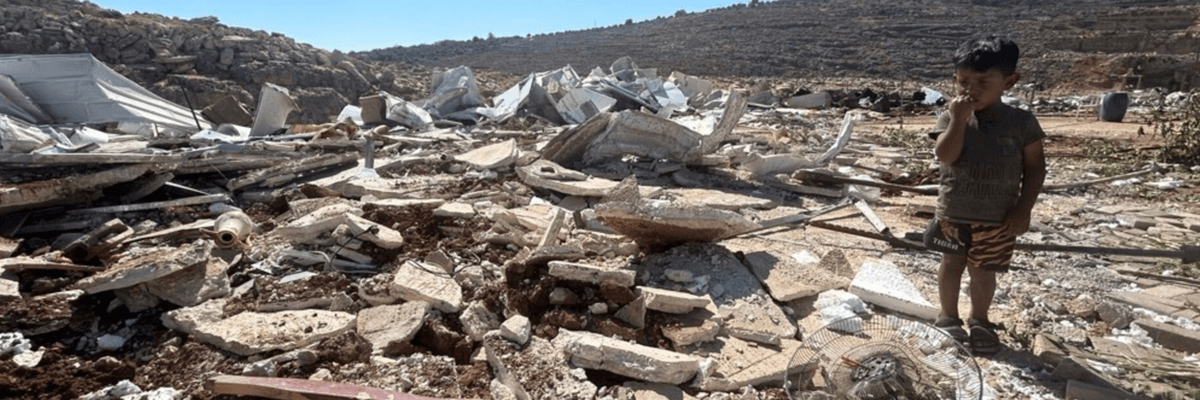
“OCHA documented demolition of more than 100 structures across the West Bank for lacking Israeli-issued building permits, which are nearly impossible to obtain,” he said, noting that it led to “displacement of more than 120 Palestinians, mostly children, and otherwise affected more than 200 people.”

Tension has been high in the occupied West Bank since the Israeli war on Gaza began, killing nearly 950 Palestinians and injuring over 7,000 others since October 2023, according to Palestinian figures.

In July, the International Court of Justice declared Israel’s longstanding occupation of Palestinian territories illegal, calling for the evacuation of all settlements in the West Bank and East Jerusalem.