Total new NHS negligence claims rise by 154 percent in 9 years
By Dr. Tim Sandle
March 14, 2025

Healthcare vehicle: An ambulance waits for the net call. Image by © Tim Sandle
The NHS provides care and treatment to the public, and in doing so, it is open to claims from patients when this care or treatment falls below an acceptable standard of care. Unfortunately, these claims have consistently risen over the last 14 years.
Beecham Peacock, a medical negligence solicitors in the North East, have revealed the true extent of medical negligence claims against the NHS – including how likely you are to have a claim settled based on trends over the last decade. This information has been passed onto Digital Journal for review.
The information was gleaned by analysing NHS Resolution Centre data on negligence claims from 2006 to 2024, covering claims of differing specialities and varying amounts. NHS Resolution is an arm’s length body of the Department of Health and Social Care.
The NHS is still a loved institution in the UK, with a 2023 poll finding that the NHS was the highest-ranking source of British pride, topping 54% of the public’s list, more so than British history (32%), culture (26%) and democracy (25%). However, reports show NHS payouts for medical negligence claims hit a new annual high of £2.8 billion last year.

How have NHS medical negligence claims changed over time?
In the year 2006/07, there was a total of 5,426 new claims against the NHS for clinical negligence, relating to instances arising from a range of services, including paediatrics, neurosurgery, ambulance-related injury and more.
Moving on to the year 2023/24, there was a total of 13,784 claims, an overall change of 154.04% or 2.02% year-on-year. Regarding claims relating to individual services, the greatest overall increase in new claims comes from Radiology services, with a rise from 86 claims in 2006-2007 to 498 claims in 2023/24 – a rise of 479.07% in 14 years.
For year-on-year increases, the largest increase in new claims relates to ambulances. Rising from 68 claims per year in 2006/07 to 214 claims per year in 2023/24 – an increase of 12.04% every year.
“The rise in new medical negligence claims against the NHS can be seen and felt across the board. We see it first-hand with more clients walking through the door,” says Vicki Wanless, medical negligence solicitor at Beecham Peacock tells Digital Journal.
“In a way, it is natural to expect some rise over this gap, considering the UK’s population has also seen a considerable rise within this time frame – a rise of roughly seven million. However, this rise in overall new claims has risen significantly since the pandemic, a time many consider to be a breaking point in pressure on the NHS,” Wanless continues.
“Overall new claims rose by 44 between 2006/07 to 2007/08, rising again by 618 between 2007/08 to 2008/09, and another 601 the year after. Between 2019/20 and 2021/22 (the years dominated by COVID-19), there was an increase of 3,401.”
How many claims are being won?
As the number of claims increases, so does the number of claimant wins, with the data showing a surprisingly high success rate for medical negligence claims against the NHS.
Analysis of 2023/2024, the most recent NHS statistics, shows a total of 10,275 settled claims against the NHS – the eighth-highest number of wins in the last 14 years.
“Over the last five years, claim wins have remained very consistent, with marginal variance in terms of the number of claim winners,” explains Wanless. “The biggest year for claim settlements was 2016/17, with 12,293 settlements – 2,018 more claims than in 2023/24.
“The most interesting takeaway from this data is how much more consistent solicitors have become in winning claims. In the nine years between 2007/07 and 2014/15, total settlements rose from 5,610 a year to 10,204 a year – with settlements averaging out at 10,801.8 per year for the years 2015-2024.
“In 2023/24 there were 13,784 claims and 10,275 settlements – that’s a success rate of 74.55% if you made a claim tomorrow.”
How much settlement money is being awarded?
Although individual case details are not disclosed in the full dataset, the data does include the range of settlement payouts. This includes the highest settlement amounts and the number of cases won each year within each payment range.
“A payment of £4,750,000+ in 2006/07 was rare, but it wasn’t unheard of,” says Wanless. “There were nine cases of £4,750,000+ settlements in both 2006/7 and 2007/08– a number that shot up to 30 in 2008/09. The most common settlement payout range in 2006/07 was £1,501 – £25,000, totalling 1,654 settlements.
“Compare this data to 2023/24, and you will notice a huge increase in payout costs across the board,” Wanless continues. “There were 139 payouts of £4,750,000+, an overall change of 1444.44%. The most common payout was in the range of £1,501-£25,000 (2,853 settlements), followed by £25,001-£50,000 (1,061 settlements) and £50,001-£100,000 (745 settlements).”
Union backlash as Starmer vows ‘flabby’ state reform and axes NHS England
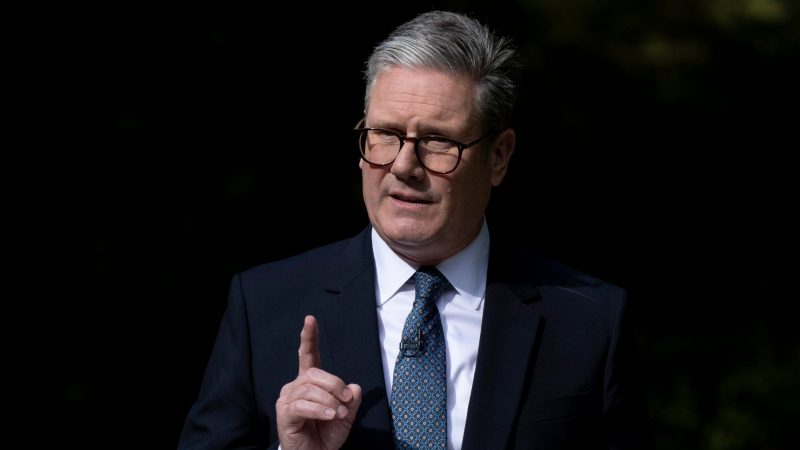
Keir Starmer is facing a backlash from trade unions over his plans to reform the “flabby” state as he announced plans to abolish NHS England.
In a speech in Hull this morning, Starmer said he could not explain to the British people why their money was being spent “on two layers of bureaucracy”, with NHS England sitting alongside the Department for Health and Social Care.
He called government “overstretched, unfocused, trying to do too much, doing it badly”, outlining a series of reforms including more use of artificial intelligence and aims to slash regulation for business.
“So today, I can announce we’re going to cut bureaucracy across the state, focus government on the priorities of working people, shift money to the front line. So I’m bringing management of the NHS back into democratic control by abolishing the arms length body NHS England.
“That will put the NHS back at the heart of government where it belongs, free it to focus on patients – less bureaucracy with more money for nurses.”
The move will give the government greater direct control of health in England, but it is likely to incense unions amid job cuts, and could spark wider concern in the party about the NHS facing cuts.
‘The ways news of the axing has been handled is nothing short of shambolic’
Unison general secretary Christina McAnea criticised the plans, slamming the way they were communicated as “shambolic”.
Normally supportive of Starmer, and a major donor to the party, McAnea’s intervention will be particularly bruising for the Prime Minister.
She said the announcement will have left NHS England staff “reeling”.
“Just days ago they learned their numbers were to be slashed by half, now they discover their employer will cease to exist.
“The way the news of the axing has been handled is nothing short of shambolic. It could surely have been managed in a more sympathetic way.
“Thousands of expert staff will be left wondering what their future holds. Wherever possible, their valuable skills must be redeployed and used to the benefit of the reformed NHS and patients.
“Ministers have to reassure employees right across the NHS that there’s a robust plan to rejuvenate a flailing NHS and deliver for working people.”
‘Deeply concerned’
Earlier, ahead of the announcement, Labour affiliate union Unite said it was “deeply concerned” about plans to cut staff at the body, saying the decision was made without union consultation.
Unite general secretary Sharon Graham said: “The NHS is one of the largest organisations in the world and hugely complex. It requires technical and clinical experts and a vast administrative staff for payroll, procurement, human resources and a multitude of other back office roles to make it work effectively.
“Taking an axe to these jobs is an ill-thought-out strategy that could end up meaning frontline healthcare staff struggle to do their jobs effectively if they aren’t paid on time, don’t have basic medical supplies or are forced to do additional administrative work rather than treat patients.”
Meanwhile Public and Commercial Services (PCS) union general secretary Fran Heathcote said: “We agree technology has a part to play in improving public services and enhancing our members’ job satisfaction, but we are also clear that it cannot be used as a blunt instrument to cut jobs.
Unions are unhappy about potential job losses while others are worried it could lead to further privatisation of the health service

Following Keir Starmer’s announcement yesterday that Labour will abolish NHS England, unions and health experts have raised concerns about the potential consequences.
While think tanks such as King’s Fund have pointed out there is “duplication and waste” as NHS England (NHSE) and the Department for Health and Social Care have a similar role, there is fear that removing it could lead to more political interference in the health service.
Some argue the move could have merit if it improves efficiency, but for it to succeed, it must result in tangible outcomes, particularly in reducing long waiting times for GP appointments and in A&E. The Prime Minister claims that the savings from scrapping NHSE will be reinvested into frontline services, but organisations are questioning how Labour will ensure this.
While Starmer emphasised that he is aiming to make the state “more agile” and less “flabby”, unions have criticised how the decision has been communicated as thousands face losing their jobs.
“Nothing short of shambolic”
UNISON general secretary Christina McAnea said that Starmer’s announcement will have left NHS England staff “reeling”.
She said: “just days ago they learned their numbers were to be slashed by half, now they discover their employer will cease to exist”.
McAnea added that “The way the news of the axing has been handled is nothing short of shambolic”, and said she felt it could have been managed in “a more sympathetic way”.
“Thousands of expert staff will be left wondering what their future holds. Wherever possible, their valuable skills must be redeployed and used to the benefit of the reformed NHS and patients.”
Unite general secretary Sharon Graham said she was “deeply concerned” about Labour cutting NHSE staff without consultation with the unions.
She said that the NHS is “one of the largest organisations in the world and is hugely complex”, noting that as well as technical and clinical experts, it requires administrative staff for payroll, procurement, human resources and other back office roles to make it work effectively.
Graham added that “Taking an axe to these jobs is an ill-thought-out strategy” and if frontline healthcare staff “aren’t paid on time, don’t have basic medical supplies or are forced to do additional administrative work rather than treat patients”, it could mean they can’t do their jobs effectively.
“Ministers will need to explain how the prize will be worth the price”
Sarah Woolnough, Chief Executive of The King’s Fund, a health policy think tank, said: “The most important question is how will the abolition of NHS England make it easier for people to get a GP appointment, shorten waits for planned care, and improve people’s health.”
“That hasn’t yet been set out – ministers will need to explain how the prize will be worth the price.”
Woolnough noted that the potential cost savings of scrapping NHS England “would be minimal” in context of the overall NHS budget, which will be £192bn in 2025/26. She also said that the government must be clear on why the restructuring needs to be done now.
She added: “As with previous NHS restructures, structural change comes with significant opportunity cost, with staff who would otherwise be spending their time trying to improve productivity, ensure safety, and get the best outcomes for patients, now worrying about whether they will have a job.”
Concerns about ministers taking on more control of the NHS
Dr Julia Patterson, chief executive of campaign group, Every Doctor, said the news that NHS England will be abolished has come “as a shock to many”.
She added: “It’s currently unclear whether this move will reduce bureaucracy, or whether NHS England will be removed, only to be replaced with a new layer of bureaucracy created by Starmer and Streeting.
“We are also concerned about ministers taking on more control of the NHS. The NHS needs long-term, sustainable plans to rebuild the service, not plans driven by a political agenda to win votes at the next election for whichever minister is calling the shots.”
“How can the answer be more cuts, delivered chaotically?”
Director of We Own It, Cat Hobbs, said that Lord Darzi’s independent review of the NHS noted that “austerity is responsible for the dire state of the NHS”, adding that staff are suffering and patients are dying due to government cuts over the past 14 years.
Hobbs questioned the cuts, stating: “How can the answer be more cuts, delivered chaotically? Where is the evidence base for this decision, where is the plan to shift money and jobs to the frontline?”
She said: “If you talk to NHS staff, they are actually desperate for more managers to free up their time to do the caring.”
She argued that if the decision is about improving patient care, Wes Streeting must demonstrate it by significantly increasing the number of GPs, hospital staff, community nurses, and frontline managers to support them in their roles.
She added: “If this decision is about democracy, Wes Streeting must prove it by listening to the 87% of the country who want to stop NHS privatisation. End the waste of outsourcing contracts, PFI deals and private consultants.
“The last thing patients need is massive cuts to an already stressed NHS and a power grab that doesn’t end wasteful privatisation.”
Olivia Barber is a reporter at Left Foot Forward
This doesn't make happy reading...

New polling has revealed what NHS staff think about the current state of the health service. It doesn’t make happy reading.
According to the poll, 86 per cent of NHS staff think the NHS is in a ‘very weak’ or ‘fairly weak’ state. By contrast, just 10 per cent of staff said it was in a ‘fairly strong’ state, and 2 per cent in a ‘very strong’ state.
In bad news for the current government, only 30 per cent of NHS staff think it is handling the NHS well, compared to 53 per cent who think it is handling it badly.
Despite this, the Labour government can at least take some solace in the fact that NHS staff have a much worse opinion of how the Tories handled the health service. 87 per cent of NHS staff think the Tories handled the NHS badly, compared to just 8 per cent who think they handled it well.
As part of the poll, NHS staff were asked to name what they deemed to be up to three of the biggest problems facing the health service.
Half (50 per cent) of all respondents said that lack of funding was one of the biggest issues. This was followed by increased demand (48 per cent), staff shortages (46 per cent), poor management (34 per cent), bad policy (22 per cent), Covid-19 (17 per cent), and privatisation and outsourcing (16 per cent).
The least common response given as to a problem in the health service was the actions of trade unions. Just 2 per cent of respondents listed this as one of the problems facing the NHS.

Chris Jarvis is head of strategy and development at Left Foot Forward

The state of women’s health
Dr Rathi Guhadasan offers some reflections for International Women’s Day.
Two years ago, former Socialist Health Association (SHA) Vice Chair Vivien Walsh wrote an article entitled “Women’s Lives Before the NHS”. Today, as we celebrate International Women’s Day, the article is a timely reminder of what our predecessors in the SHA (or Socialist Medical Association as it was then) and labour movement achieved and why it was so important.
One such predecessor was Dr Edith Summerskill, a founding member of the SMA and a minister in the Attlee government. In addition to fighting for universal healthcare provision through the NHS and passing legislation for pasteurised milk, she campaigned on issues such as equal pay for women, birth control, abortion rights and pain control during childbirth.
What would Dr Summerskill say to us today, on this International Women’s Day?
We’ve certainly come a long way from the pre-NHS circumstances described in Vivien’s article, when deaths in childbirth were four times higher than deaths from coal mining – the most dangerous job for men at that time. Today, however, UK maternal mortality rates are the highest for 20 years, with an over 50% increase in 2020-22 figures compared with 2017-19; and black and Asian women and those from the most socioeconomically deprived areas face the greatest mortality risks compared to their white and more affluent counterparts. Last year’s All Party Parliamentary Group Birth Trauma report was a devastating indictment of the state of maternity care in the UK and this has been reinforced by a succession of scandals from Shrewsbury to Nottingham.
The crisis in women’s healthcare is not limited to maternal health but extends across their lifespan. Unlike men, healthy life expectancy for women has fallen since 2014 and they spend a greater proportion of their lives in ill health and disability. According to Professor Dame Lesley Regan, women have been disproportionately impacted by the NHS funding cuts of the past 15 years:
“The net result is that we now have a 45% unplanned pregnancy rate, cervical screening is at an all-time low, while abortion rates are at an all-time high, mostly explained by the fact that women face numerous barriers when trying to access routine health maintenance services…. Women’s health services like cancer screening, contraception, abortion and maternity services have been in three silos of commissioning – Clinical Commissioning Groups, local authorities and NHS England… None of those three funding pots picks up the pieces when they don’t get it right; the people that don’t give you contraception aren’t the ones to pick up the maternity bills or the abortion bills.”
To make matters worse, women and children are often not represented in research. Many treatments for pregnant women, babies and children are used off-licence, having never been tested in clinical trials, so that any potential adverse effects will only become apparent through clinical experience. The COVID-19 vaccine is a notable example, where the conditions of pregnancy and breastfeeding were illogically conflated and both pregnant and lactating women were denied the vaccine when it was first licenced.
This ‘gender data gap’ is dangerous for women, who are continually compared to a male ‘default’ when they present to health services, not listened to or understood. For example, women presenting with heart attacks are routinely misdiagnosed when they don’t show the ‘classic’ symptoms which are taught in medical school, and which are only classic in men.
The last government’s Women’s Health Strategy call for evidence found that 84% of women surveyed reported feeling they were not listed to by health professionals. Within this shocking statistic, however, is a tangle of intersectional inequalities which need to be addressed, such as those relating to ethnicity, disability, sexuality and socioeconomic background. It should be remembered that women also disproportionately carry the burden of caring responsibilities in this country, in the face of a broken social care system, and bear the greatest impact on their employment and earning potential.
The NHS today remains largely an intervention service rather than a prevention service, missing opportunities to empower women and girls to take control of their health. SHA’s maternal health group last year called for exactly this: “Services should be focused on preventative health, reducing inequalities, and meeting the needs of women across the lifespan.” We suggest to “staff the women and not the wards”, implementing midwifery continuity of care models, delivered via integrated community-based women’s health hubs; coupling this with programmes such as Sure Start to target inequalities, addressing pay and working conditions in order to retain trained staff, and redesigning training curriculums to meet the needs of all marginalised and vulnerable women.
The situation for women and girls globally also needs urgent attention. According to UNFPA, about one in three women worldwide experience physical and/or sexual violence in their lifetime. The indefensible cuts in aid spending will hit women and children the hardest. More than 60% of all maternal deaths occur in fragile contexts and humanitarian crises. When mothers die, their children are much more likely to die, and if they survive, their nutritional and educational outcomes are nevertheless impacted. Yet every $1 invested in maternal health and family planning yields $8.4 in economic benefit.
Women give us hope
I think Dr Summerskill would still see reasons for hope today. We still have inspirational women in the labour movement, from Diane Abbott to Apsana Begum and Zarah Sultana, who tirelessly and fearlessly fight inequalities and stand up for the vulnerable. Within the SHA, we have great women leading on important policy work, from fighting NHS privatisation to women’s health, abortion rights and social care.
If you’d like to learn more about our work on these issues or get involved, please contact us at admin@sochealth.co.uk.
Dr Rathi Guhadasan is Chair of the Socialist Health Association.

No comments:
Post a Comment