Tuesday, March 03, 2026

EU to unveil ‘Made in Europe’ rules despite pushback

By AFP
March 3, 2026


Supporters of 'Made-in-Europe' rules say if the EU does not act to shield its strategic sectors like cars and chemicals, it will not have industry to defend - Copyright AFP/File Ronny HARTMANN


Raziye Akkoc, Umberto BACCHI

The EU will on Wednesday unveil “Buy European” rules to boost domestic production, which Brussels says will help defend European businesses against fierce global competition, especially from China.

Ramping up the European Union’s competitivity has gained urgency since the Covid-19 pandemic and soaring energy prices following the Ukraine war exposed the vulnerability of the bloc to supply shocks.

Expected last year, the “Made in Europe” measures were pushed back several times due to disagreements over its scope inside the European Commission and divisions among member states.

The commission will propose that if companies want public money, they must meet minimum thresholds for EU-made parts in “strategic sectors”, set to include cars, green tech and “energy-intensive” industries such as aluminium and steel.

For example, electric-vehicle manufacturers will have to make sure at least 70 percent of their car’s components are made in the EU if they want to access public money, according to the draft document, which could change.

France has led the push for the proposal that will be announced by EU industry chief Stephane Sejourne, a former French government minister.

The proposal will be subject to approval by EU states and parliament.

Its supporters say that if the EU does not shield its strategic sectors it will not have any industry left to defend.

But sceptics, including the EU’s largest economy Germany, argue that Europe can support domestic industries through a “Made with Europe” approach instead, that would see the bloc include its trading partners.

The looming rules are unpopular outside the EU with fears in countries including Britain, Canada, Japan and Turkey over how strict they will be.


– Screening foreign investment –


The proposal, known as the “Industrial Accelerator Act”, aims to to ensure foreign companies partner with European firms if they want to set up shop in the bloc and gain better access to its market, according to the draft document.

To do so it imposes conditions on foreign investments of over 100 million euros ($116 million) in “emerging strategic sectors” such as batteries and electric vehicles.

These kick in when they involve an investor from a country that holds more than 40 percent of the related global manufacturing capacity — an implicit reference to China’s dominance in those sectors.

For such projects to go ahead, foreign investors need to meet conditions including employing at least 50 percent EU workers, holding no more than 49 percent of the related EU company, and passing on technological know-how.

“If access to the EU market is one of the most valuable industrial assets in the world, it is legitimate to attach conditions that strengthen European capabilities,” said Joseph Dellatte of the Paris-based Institut Montaigne, dismissing criticism that the plans amounted to “protectionism”.

The measures are among many the EU will push to regain its competitive edge.

Later this month, the EU will propose creating a pan-European legal regime for innovative start-ups, which it says will make it easier to do business by slashing the time it takes to set up enterprises across the 27 countries.

For many, the plans are necessary to boost the development of EU green tech.

The goal is to make sure EU taxpayers’ money is “used strategically to strengthen Europe’s industrial base — rather than subsidising Chinese overcapacity”, said Neil Makaroff of the Strategic Perspectives climate think tank.

But some experts argue that if the EU wants to confront what it sees as unfair competition, Brussels has other tools at its disposal.

“If the policy goal is to make sure that your industry is not being destroyed by China, I think we have better instruments,” said Niclas Poitiers, an international trade specialist at the Bruegel think tank, pointing to rules that give the EU the power to investigate and counteract unfair foreign subsidies.
Second-hand phones surf rising green consumer wave


By AFP
March 3, 2026


Devices with all the latest bells and whistles abound at the Mobile World Congress in Barcelona, but some people just want an old, reliable phone - Copyright AFP Florent VERGNES


Robin BJALON

The second-hand market for smartphones has surged in recent years, borne up by lower prices as well as interest in eco-friendly consumption even as some still fear buying a dud.

The success of refurbished phones is a reminder that flashy new gadgets and cutting-edge capabilities, on show this week at Barcelona’s Mobile World Congress (MWC) telecoms trade fair, are not the only engines of the sector.

Around 46 percent of Europeans have already taken the plunge by buying a second-hand device, marketplace Recommerce found in a 2025 survey commissioned from pollsters Kantar.

But the picture varies around the world, as “mature markets in Europe and parts of North America tend to show higher refurbished uptake”, according to a report from analysis firm Mordor Intelligence, which estimates the second-hand market at 10 percent of worldwide phone purchases annually.

Western consumers “are increasingly aligning with circular-economy principles, prioritizing lifecycle extension and reducing electronic waste” as environmental concerns permeate public debate, the authors wrote.

Meanwhile “several emerging markets remain predominantly new device driven”.

– Price and planet –

Price remains the killer argument for refurbished phones, with second-hand models sometimes half as expensive as a factory-fresh alternative, attracting consumers who have seen purchasing power ground down by inflation.

Almost twice as many respondents to Recommerce’s survey named price as a factor in their choice, compared to the environment.

“It gives citizens and consumers yet another reason to not go out and buy a product that’s too expensive,” said Thibaud Hug de Larauze, co-founder of refurbished tech marketplace Back Market.

Although smartphone sales remain dominated by new devices from hardware giants such as Apple and Samsung, his company achieved profitability for the first time in its 12-year history in 2025.

Meanwhile the environmental impact of buying a second-hand phone can be significantly lower, avoiding the use of new materials and the carbon emissions that go into producing each device.

“A refurbished phone can have an 87-percent lower climate impact compared to a new phone,” said Steven Moore, head of climate action at the GSMA global mobile operators’ group.

– $100-billion market? –

But such arguments do little to allay the fears of prospective buyers who fear they could find they’ve handed over hundreds for a lemon.

“There’s still a perception that the phones will break sooner,” Moore said.

Hug de Larauze said refurbishing companies are trying to “counter the scepticism”, including with offers for “premium” devices with a like-new finish and fresh batteries — now accounting for around 20 percent of Back Market’s sales.

Recommerce chief Augustin Becquet said the company had turned to “transparency” to win over consumers, offering an externally audited quality label and warranties for one or two years.

“Warranties are critical,” Claire Gillies, head of BT Group’s consumer division, told AFP at the Mobile World Congress (MWC) in Barcelona.

Buyers want “standardisation… some understanding of what quality I’ll be getting”, she added.

Forecast to be worth around $70 billion this year, the refurbished device market is set to grow to $100 billion in five years’ time, according to Mordor Intelligence.

But like many other tech fields, it could fall victim to the geopolitical and trade tensions that have re-emerged since US President Donald Trump returned to the White House.

“It’s definitely not helping… it’s a shame that things are being slowed when we really need things to be accelerated,” said the GSMA’s Moore.
Chinese consumers scout lower prices, secondhand goods as spending sputters


By AFP
March 3, 2026


Stagnating wages, youth unemployment and a property crisis are making Chinese consumers rethink their spending - Copyright AFP Jade GAO


Jing Xuan TENG with Peter CATTERALL in Baoding

In a Shanghai shopping centre, customers browsed racks of used winter coats, $2 trousers and household appliances — pre-used items that would have been out of place in a major Chinese mall a decade ago.

But these days, stagnating wages, youth unemployment and a years-long property crisis are making consumers rethink their spending.

China’s leaders will likely announce policies aimed at boosting domestic consumption at the annual Two Sessions political conclave this week, but they face an uphill battle.

“Everyone is feeling the pinch financially, so everyone is looking for cheaper stuff,” said Liu, a 42-year-old secondhand book buyer visiting the Shanghai store.

A longstanding taboo in Chinese culture against used goods, seen as unclean or a shameful sign of poverty, is lifting rapidly.

“Getting a free milk tea is better than paying full price for it,” Liu, who gave only her surname, offered as an analogy for her outlook.

Online, the secondhand market is flourishing too, led by Xianyu, the Alibaba-owned answer to eBay with more than 600 million users, and Zhuanzhuan, a Tencent-backed resale platform known mainly for electronics.

Xianyu opened a physical location in 2024 and has expanded to more than 20 sites nationwide.

Its stores resemble European charity shops, with plush toys displayed alongside strollers and sneakers in varying states of wear — a novel concept in a country where the upwardly mobile have typically prized the latest luxury goods

Zhuanzhuan, which runs hundreds of small resale counters across the country, opened an enormous warehouse-like store in Beijing last year selling everything from gaming equipment to handbags.

Chinese shoppers are becoming more eco-friendly, Li Yujun, founder of a used goods store in Shanghai, told AFP.

Still, she said low prices were a major draw, with good quality secondhand items priced at 30 to 60 percent of the original cost.

“A lot of communities are organising flea markets,” Lin, a 37-year-old shopper, told AFP.

“We can buy (useful things) at very good prices.”

– Subdued festive season –

Consumption has remained stubbornly sluggish post-pandemic despite government efforts to coax spending.

The Two Sessions come just after Lunar New Year, which was extended into a nine-day public holiday aimed at encouraging people to spend on tourism and leisure.

Despite a record-breaking 596 million domestic trips throughout the holiday, tourism spending per capita was 8.8 percent below pre-pandemic levels and 0.2 percent down from last year, Goldman Sachs analysts said.

After taking a train home to her native Hebei province, Beijing resident Hua Lei told AFP she would observe a subdued festive season.

“I usually just stay inside when I come home, I don’t go out and about very much,” the 34-year-old said.

Chai Lihong, another passenger, was travelling to her son-in-law’s home in Hebei’s Baoding city.

“We took the green train, the slowest kind,” she said. “The high-speed rail is perhaps a bit expensive for rural residents.”

Authorities have held back from mass issuing stimulus checks and have tried instead to entice shoppers with subsidies and coupons limited to certain types of purchases.

However, subsidies promoting trade-in purchases for cars and appliances “have had limited effect, bringing forward spending that would have taken place anyway and leading people to curb spending elsewhere”, Duncan Wrigley from Pantheon Macroeconomics told AFP.

– ‘Pretty scary’ –

At a mall dedicated to home furnishings in central Shanghai, a furniture seller who did not want to give her name told AFP she had not seen much impact on business.

“You have to enter a competition to win the coupons,” she said, adding her daughter had had to enlist 10 friends for a coupon lucky draw to buy a bed.

She pointed to the largely empty shopping centre, which she said in past years would have been filled with customers immediately after the New Year period.

“The market situation is pretty scary right now,” she said.

Allen Feng from think tank Rhodium Group warned of diminishing returns from subsidies, as “they don’t create income”.

The International Monetary Fund has urged Beijing to expand healthcare, pensions and social benefits to improve consumer willingness to spend.

Other economists have championed more direct incentives.

Zhu Tian of Shanghai’s China Europe International Business School suggests authorities could issue a one-off handout of four trillion yuan ($580 billion) split across the entire population.

Analysts anticipate stimulus policies from the Two Sessions, with leaders saying in October they would “work toward improving living standards while increasing consumer spending”.

Authorities are now “talking about boosting consumption propensity, which is the right way to think about it”, said Feng.
Polish doctors jailed for denying woman abortion


By AFP
March 3, 2026


The death of Izabela in 2021 after an abortion was delayed set off mass protests in Poland
- Copyright AFP Wojtek Radwanski


Katarzyna SKIBA

A Polish court on Tuesday sentenced three doctors to prison sentences over the 2021 death of a pregnant woman, which sparked nationwide protests and renewed scrutiny of the country’s restrictive abortion laws.

The woman, Izabela, whose last name has not been made public, died of sepsis in 2021 while experiencing complications in the 22nd week of pregnancy.

Her death came a year after a law toughening abortion restrictions in the mainly Catholic country came into effect and reignited mass protests.

The three doctors were charged with directly endangering Izabela’s life.


A regional court in Katowice sentenced one, who was also charged with causing involuntary manslaughter, to 18 months in prison and barred him from practicing medicine for six years.

A second was sentenced to 15 months behind bars and barred from practicing for six years. The third doctor was given a one-year jail term and barred from practicing for four years.

“It’s an appropriate, fair punishment,” Karolina Kolary, a laywer for Izabela’s family, told journalists after the closed-door hearing.

“This was a case involving extraordinary negligence, a pure disregard for the most basic and fundamental medical duties,” she added.

Abortion in Poland is legal only in two circumstances: when the pregnancy resulted from a criminal act — such as rape or incest — or if it threatens the mother’s life or health.

– Septic shock –

Several pregnant women have died in Polish hospitals in recent years, in many cases after doctors refused to carry out abortions.

Izabela, 30, was at a hospital in Pszczyna, in southern Poland, after her amniotic fluid broke. The woman and the doctors were aware of defects affecting her foetus, but the termination of her pregnancy was delayed.

Less than 24 hours later, Izabela died of septic shock. She left behind a young daughter from a previous pregnancy.

According to Izabela’s family, doctors waited for her foetus to die before acting, fearing legal consequences.

The hospital said the decisions of medical staff were based on concerns for the health of both mother and foetus.

– ‘Not one more’ –

Izabela’s death was the first case linked to a 2020 decision by the Constitutional Tribunal, which ruled that severe foetal abnormalities were not legal grounds for abortion.

Prior to this ruling, 98 percent of legal abortions in Poland were performed for this reason.

The new restrictions set off a torrent of protests throughout the country, which became the largest mass demonstrations in Poland since the 1989 anti-communist movement.

After Izabela died, nationwide protests broke out again, this time under the slogan “Not One More”.

On top of the charges against the doctors, Poland’s National Health Fund (NFZ) found numerous irregularities in Izabela’s care and fined the hospital 650,000 Polish zloty ($179,000).

The Polish patients’ rights ombudsman also found that Izabela’s rights had been violated, and recommended new protocols for septic shock and for situations posing threats to a woman’s health.

– Politics –

Poland’s centrist ruling coalition promised to reverse the most restrictive elements of Poland’s abortion laws before their election in 2023 — but internal disagreements among its different factions have halted this.

Any attempt by parliament to ease the abortion laws would likely face a veto by President Karol Nawrocki, a conservative-nationalist who was endorsed by the Law and Justice (PiS) party that brought about the 2020 court ruling.

Poland has one of the most restrictive abortion laws in Europe.

In the first half of 2025, only 411 legal abortions took place, according to the NFZ.

“Izabela was not the first or last woman in Poland to die for lack of a safe abortion,” Mara Clarke, co-founder of the NGO Supporting Abortions for Everyone (SAFE), told AFP.

“I pray there are no more dead women in future,” she added.

Lawyers for the doctors said they would appeal to the Supreme Court.
Myanmar grants amnesty to over 7,000 convicted of ‘terrorist group’ support

By AFP
March 2, 2026


Myanmar's military junta granted amnesty to more than 7,000 prisoners convicted of financing, sheltering or propagandising for a "terrorist group" - Copyright AFP Habib NAQASH

Myanmar’s military junta granted amnesty on Monday to more than 7,000 prisoners convicted of financing, sheltering or propagandising for a “terrorist group”, a designation it has used to outlaw pro-democracy factions opposing its rule.

Thousands of dissenting civilians have been swept into jails since Myanmar’s military snatched power in a 2021 coup, ending a decade-long experiment with democracy and detaining elected figurehead Aung San Suu Kyi.

Pro-democracy activists backing Suu Kyi and armed groups challenging the military in a civil war have been labelled “terrorist” outfits, and far-reaching laws punish association with life prison terms and possible death sentences.

A government notice said junta chief Min Aung Hlaing ordered the releases of more than 7,300 prisoners convicted under counter-terrorism provisions.

They include laws forbidding “financing of terrorism”, harbouring “any terrorist group” and the “exhortation, persuasion, propaganda, recruitment” of any person to join such groups.

Media monitors have criticised the junta for weaponising the legislation to muzzle journalists and social media users critical of their takeover.

It was not immediately clear which groups the prisoners had been convicted of association with.

In recent months, the junta has announced pardons for some political crimes in what analysts describe as a bid to soften its image amidst a handover to a nominally civilian government after elections concluded in January.

But with Suu Kyi still jailed, her party dissolved and the dominant pro-military party securing a walkover win, critics have derided the transition as a publicity exercise to rebrand the junta’s rule.


– Hundreds freed –


An AFP journalist outside Yangon’s Insein Prison — Myanmar’s most infamous lock-up, renowned for alleged rights abuses — saw around 300 prisoners being bussed out of the compound in a convoy on Monday morning.

A gaggle of emotional relatives clutched bouquets of flowers and placards bearing loved-ones’ names as prisoners were released from Insein’s barbed-wire boundary shortly before noon.

Min Aung Hlaing granted their release to mark a public holiday on Monday “in consideration of the peace of mind of the general public as well as on humanitarian grounds”, the government statement said.

Nearly 12,500 people facing trial on the same “terrorism” charges will have their cases dropped, according to a separate statement.

The junta frequently grants prison amnesties on public holidays, and Monday’s raft of notices also announced the release of more than 2,800 other prisoners and 10 jailed foreign nationals — without detailing their offences.

After ruling by force for more than five years, the military has said its phased month-long election will return power to the people and offer a chance to end the civil war.

But the poll did not take place in swaths of the country controlled by rebel groups and Min Aung Hlaing has not ruled out serving as president.

The new parliament is due to sit in two weeks, with a president elected in early April.
Climate change forces facelift for Michelangelo masterpiece


By AFP
February 28, 2026


Copyright AFP Alberto PIZZOLI

Michelangelo’s famous The Last Judgment fresco in the Sistine Chapel is getting its biggest facelift in more than three decades to remove a light whitish residue left by sweaty visitors.

The restoration of the 16th century masterpiece in the Vatican is aimed at bringing back to light the vibrant colours of the work, which measures nearly 14 metres (46 feet) high.

Visitors will still be able to access the Sistine Chapel during the restoration but the fresco is obscured by a large scaffolding covered with a reproduction of the work.

Vatican Museums director Barbara Jatta described the white layer being removed as “a bit like a cataract”, during a press tour on Saturday of the project, due to be completed before Easter.

Jatta said the layer covered “the entire 180 square-metre surface” of the work.

The Vatican Museums said in a statement that the substance was “invisible to the naked eye” but had “dimmed” the original colours of the piece.

The fresco is being dabbed with distilled water through a layer of Japanese paper to remove the substance, identified as calcium lactate.

“Perspiration has increased in recent years because of climate change. Due to perspiration we produce lactic acid… which becomes calcium lactate,” Fabio Morresi, head of scientific research at the Vatican Museums, told reporters.

Vatican Museums staff said measures had already been taken to reduce the number of visitors present at any one time in the Sistine Chapel, which is also the place where cardinals meet in closed-door conclaves to elect new popes.


– Part of overhaul –


Morresi described the difference in the fresco before and after the treatment as like “two different worlds” and said working on the masterpiece was an “emotional” process.

The Last Judgment, which was painted between 1536 and 1541, is the centrepiece of the Sistine Chapel, and is located just behind the altar.

Then-pope Paul III was said to have been so impressed by the work that he fell on his knees and ask for divine forgiveness when he first saw it.

Of the fresco’s 391 figures, many are nude or semi-nude, which caused scandal at the time.

Many were covered up with cloths painted over the original following Michelangelo’s death.

Some of the painted cloths were removed in 1994 during the last major restoration.

The current project is being sponsored by US donors and is part of a major overhaul of the Sistine Chapel that began in 2010.

Work is normally carried out when the Sistine Chapel is closed to visitors and without the need for scaffolding but Vatican Museums officials said this was not possible for The Last Judgment because of the scale of the work.

Morresi said the restoration felt personal for him because he was hired in 1988 when the last major facelift of the Sistine Chapel was just starting and he is now nearly at retirement age.

“It’s marvellous… There’s a piece of me in here,” he said.
Judge rules Trump cannot halt New York traffic congestion pricing


By AFP
March 3, 2026


New York City: — © AFP

A federal judge ruled on Tuesday that US President Donald Trump cannot block New York City from charging motorists to drive in congested parts of Manhattan.

The $9 daytime toll for motorists entering areas of Manhattan south of Central Park was introduced in January 2025 after being approved just before the inauguration of the Republican president — a native New Yorker.

Trump argued that the toll would be bad for business, and his new Transportation Secretary Sean Duffy terminated approval for the pilot program, sparking a backlash from city officials.

The organization that administers the toll, the MTA, sued Duffy’s department in February 2025, saying the push to kill congestion pricing was unlawful.

Judge Lewis Liman of the Southern District of New York federal court had already granted a temporary approval for the charge to continue while the case proceeded.

On Tuesday he ruled that “accepting (Duffy’s) view as to the finality of agency action here would permit any government agency to forever frustrate judicial review,” meaning the pricing can continue.

At the time the toll went into effect, around 700,000 vehicles entered the congestion zone every day, and gridlock meant cars could travel just seven miles per hour (11 kilometers per hour) on average, according to officials.

The congestion pricing plan also aimed to combat air pollution.

Similar driver-tolling schemes have been operated for years in other megacities, including London, but opposition and legal challenges ahead of implementation in New York highlighted the difficulty of charging drivers in a country where a vast majority of people rely on private vehicles.

Texas port humming as Trump ramps up Venezuela oil


By AFP
February 28, 2026


Trump’s Venezuela shift drives surge in oilfield equipment demand, majors stay wary - Copyright AFP RONALDO SCHEMIDT


Moisés ÁVILA

A cargo ship teems with workers in hard hats at the Port of Houston, the latest US vessel headed to Venezuela after President Donald Trump lifted restrictions to boost oil production in the crisis-hit country.

US sanctions have crippled Venezuela for years, but Trump’s administration has been working with interim president Delcy Rodriguez after toppling autocratic leader Nicolas Maduro.

Washington has used a carrot-and-stick approach with Rodriguez, praising her for welcoming US oil companies but at the same time threatening Venezuela with punishment if she does not cooperate.

At the Port of Houston this past week, a crane loaded trucks, generators and machinery onto the Roibeira as it prepared to set sail to Venezuela, the second vessel from the shipping company International Frontier Forwarders to head to the South American nation.

Greg Diaz, the company’s Venezuelan-American owner, said there were more than 8,500 cubic meters of goods onboard, equivalent to around 120 containers.

“Before, it took us six to eight months to accumulate enough cargo to go to Venezuela,” he told AFP.

“And now, in 20 days, we’re able to complete the orders to fill our ship to max capacity and go to Venezuela and complete the orders right away.”

That demand, he said, comes from private companies in Venezuela that are investing massively — something that was impossible under Maduro.


– ‘Venezuelan dream’ –


Venezuela was once a major crude supplier to the United States, and has the world’s largest proven reserves with more than 303 billion barrels, according to global oil cartel OPEC.

This amounts to about a fifth of the world’s oil reserves.

But in 2024, Venezuela produced only about one percent of global crude, its industry left haggard by years of underinvestment, mismanagement and US sanctions.

That all changed when US forces captured Venezuela’s socialist leader Maduro in a deadly raid on the capital Caracas on January 3.

Rodriguez, who was vice president under Maduro, was accepted by Trump as Maduro’s replacement on condition she submit to Washington demands for access to Venezuelan oil.

The US Treasury has since eased a seven-year-old oil embargo on Venezuela and issued licenses allowing a handful of multinationals to operate in the country under certain conditions.

In his recent State of the Union address, Trump said the United States had received more than 80 million barrels of oil from Venezuela, describing the nation as “our new friend and partner.”

But despite American enthusiasm, major companies remain cautious.

“I think the politics of it is moving a little bit too fast,” Jorge Pinon, a researcher at the Energy Institute at the University of Texas, told AFP.

“Everybody was willing to sign” at the White House meeting with oil company executives in January, “except for Exxon, which was the only one that had the courage to say ‘we need assurances.'”

Pinon said there was no sense of urgency from the Americans to revive Venezuela’s oil industry, though, as the United States is the world’s largest producer of crude oil with secure supplies.

For now, the industry is more interested in Guyana, Brazil, and even the Gulf of Mexico.

Oil companies first “have to see what’s the state of the infrastructure” in Venezuela, Pinon added.

Political instability is another concern.

“What about if in two years, three years from now, Venezuela has free elections and a new government suddenly changes the rules?” he said.

Back at Houston’s port, Greg Diaz remained optimistic.

“It’s amazing because we’re not only helping the American drilling companies, but also the Venezuelan private companies in the oil and gas sector to buy quality US-made drill rigs,” he said.

“But also, we help the mid-size to small companies and entrepreneurs that now can buy, whether it’s one piece of machinery or a large order, and make possible the Venezuelan dream.”

UN demands probe into strike that killed 163 Iranian schoolgirls

UN demands probe into strike that killed 163 Iranian schoolgirls
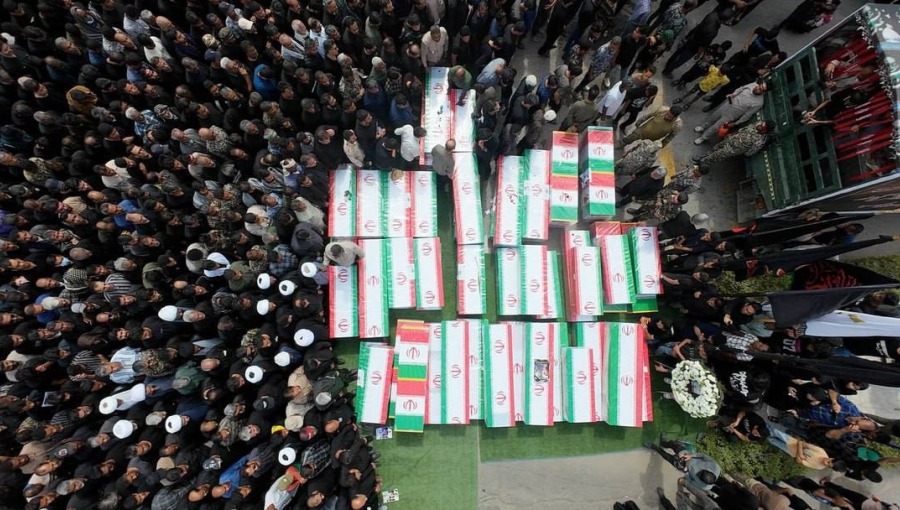
Coffins of young girls from Minab school in Iran. / bne IntelliNews
By bnm Gulf bureau March 3, 2026

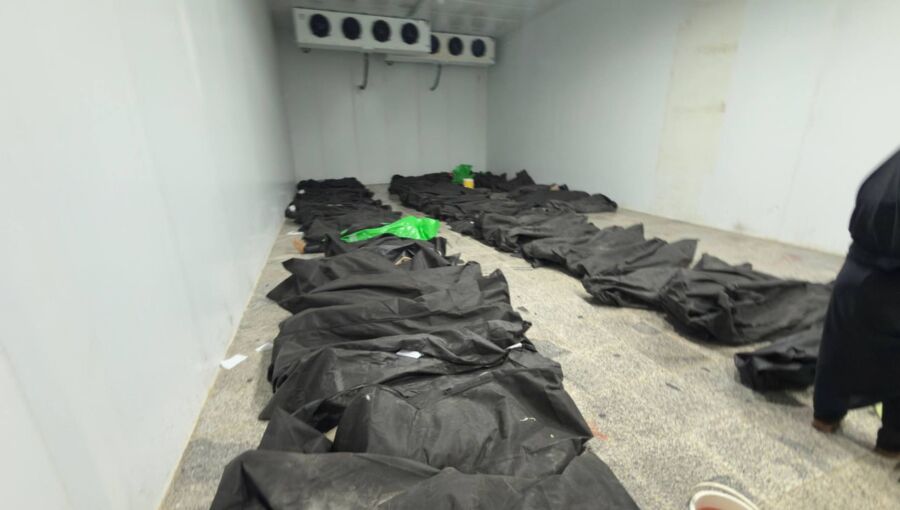
The United Nations called for an urgent investigation into a US airstrike on a primary school in Minab, southern Iran, that killed more than 163 girls, on March 3.

The incident took place at Shajareh Tayyebeh girls’ elementary school in Minab, Hormozgan province, near an IRGC base, during school hours on 28 February 2026. Pentagon and US Central Command (CENTCOM) spokespeople have said they are “aware of reports” of the strike and “investigating claims of civilian casualties,” but have not confirmed or denied US involvement or acknowledged any school hit.

UN human rights office spokesperson Ravina Shamdasani described the attack, which took place on March 1, as "absolutely horrific," noting that children were killed at the beginning of the school day.

"If there is any image that captures the essence of the destruction, despair and senselessness and cruelty of this conflict, those are the images," Shamdasani said, referring to bloodstained backpacks recovered from the scene.

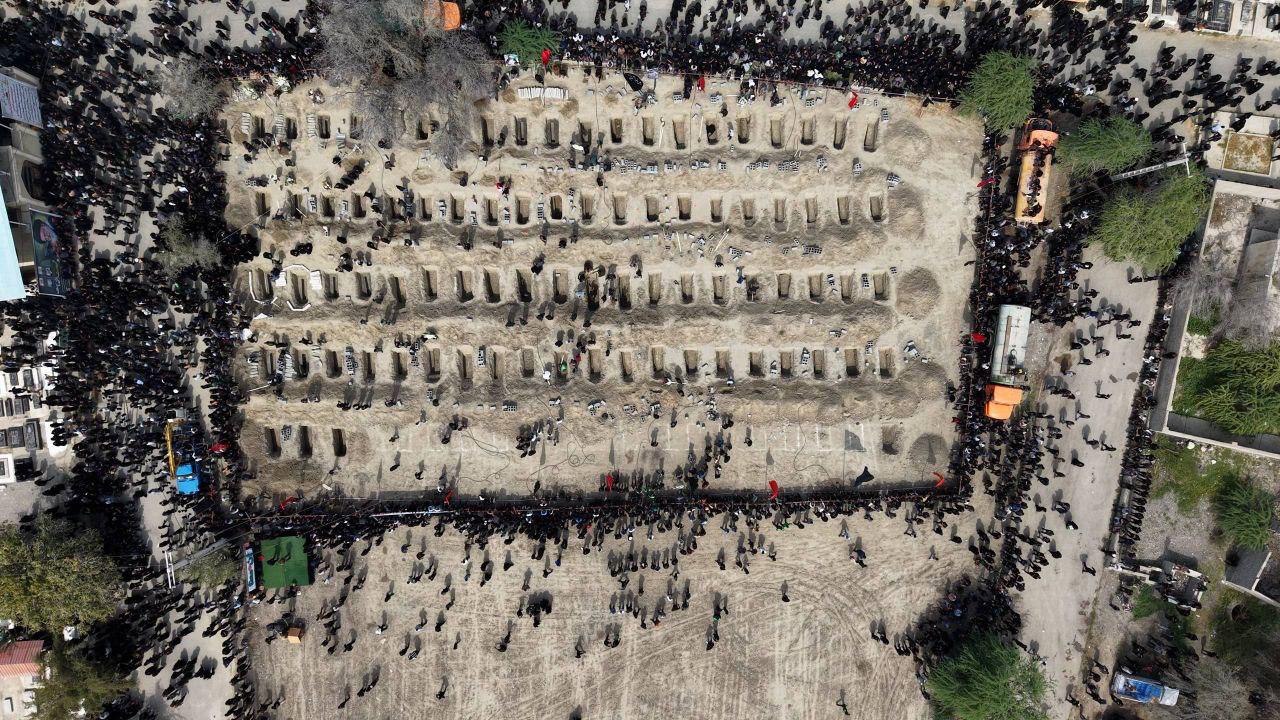
Photos of the funeral were released by Iranian news agencies on March 3.

UN High Commissioner for Human Rights Volker Turk had been "deeply shocked" by the impact of the hostilities on civilians and civilian infrastructure, Shamdasani added, calling for a "prompt, impartial and thorough investigation" into the circumstances of the Minab attack.

"The onus is on the forces that carried out the attack to investigate it. We call on them to make public the findings and to ensure accountability and redress for the victims," she said.

Shamdasani stressed that if attacks are found to have been directed against civilians or civilian objects, or to have been indiscriminate, they constitute "serious violations of international humanitarian law and may amount to war crimes."

The UN's intervention came as Iranian authorities reported at least 201 people killed and 747 injured in air strikes across the country since March 1, according to the Iranian Red Crescent Society (IRCS).

“We would not deliberately target a school,” Secretary of State Marco Rubio told reporters when pressed, referring further questions to the Pentagon. UNESCO and UN human rights monitors condemned the deaths as a potential war crime and demanded an independent probe, noting the lack of clarity over responsibility amid the widening US-Iran conflict.

State media broadcast images of funerals in Minab, where black-clad families buried victims under chants of “Death to America,” with Foreign Ministry spokesman Nasser Kanaani accusing Washington of “barbarism against innocents” to break Iranian resolve.

Iranian officials, state media and Foreign Ministry spokespeople insist the strike was deliberate or indiscriminate by US/Israeli forces, citing the school’s location near military sites and the high child death toll.

The school attack has inflamed anti-US protests across Iran and drawn sharp rebukes from Russia, China and several Arab states, even as Gulf partners quietly back the broader campaign against Tehran’s regional proxies.

Some 45 girls who survived the direct US attack are in hospital, according to reports from Hormozgan, while several are reportedly still in critical condition after families scrambled to pull them out of the rubble. 

China’s high quality commercial satellites images upend the space-based intelligence balance in Iran war

China’s high quality commercial satellites images upend the space-based intelligence balance in Iran war
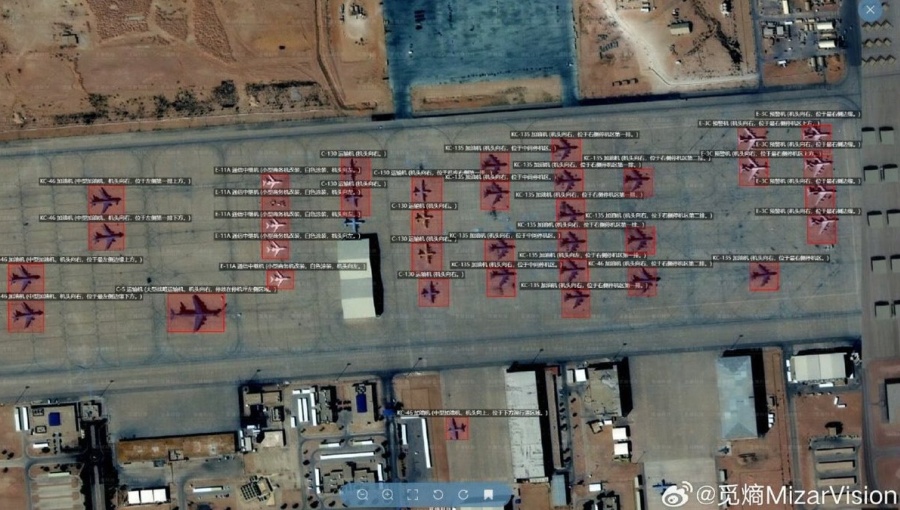
Chinese commercial satellite imagery identifying US aircraft at Prince Sultan Air Base before an Iranian strike highlights how open-source intelligence is reshaping the secrecy of modern warfare. / bne IntelliNews
By Ben Aris in Berlin March 3, 2026

A Chinese satellite picture of US fighter jets standing on the runway Prince Sultan Air Base in the Kingdom of Saudi Arabia (KSA) has shaken the military analyst community.

Released by Hangzhou-based startup MizarVision, the annotated image showed what US-based publication Aviation Week later confirmed showed over a dozen US planes massed at the airbase in preparation for the start of Operation Epic Fury on February 28.

The quality of the image had a resolution of under one meter and the planes on the tarmac were identified by what was presumed to be an AI, giving their type and specification. Until the release of this image on the public internet, it was assumed that only the US had satellites of this quality and resolution. The image suggests that the US has lost its monopoly on space-based surveillance.

China’s commercial space sector has entered an epoch-changing era in a way that could reshape modern conflicts, according to Shanaka Anslem Perera, author of The Ascent Begins and political analyst, who argues that the publication of detailed satellite imagery of US military assets in Saudi Arabia demonstrates the “democratisation of intelligence”.

The planes standing in readiness in KSA included: 15 KC-135 aerial refuelling tankers, six KC-46 Pegasus tankers, six E-3 Sentry airborne early warning aircraft, two E-11A Battlefield Airborne Communications Nodes, as well as C-130 Hercules and C-5 Galaxy transport aircraft.

Some of those details are of obvious significance. The E-3 surveillance planes are especially rare, as the US fleet is made of some 30 of these planes, easily identifiable by their very large round radar housing that sits above the fuselage and are essential for monitoring and communications during a hot conflict. A fifth of the US entire stock of these planes was plainly visible at Prince Sultan Air testifying the imminence of the start of Operation Epic Fury over a week before it started.

The picture also strongly suggests that China is sharing its advanced satellite images of US military distribution in the Middle East with Tehran that can be used to target Iran’s missile attacks on US bases as soon as the hostilities broke out.

“China is sharing its advanced satellite spy technology with Iran,” Perera said. “You are looking at a Chinese commercial satellite photograph of Prince Sultan Air Base in Saudi Arabia. Every red box is an artificial intelligence model identifying a US military aircraft by type. Every label is in Mandarin.”

“Only thirty-one E-3s remain in the entire US Air Force inventory worldwide, meaning roughly a fifth of America’s operational AWACS fleet is parked on a single ramp in the Saudi desert,” Perera noted.

The base was subsequently targeted by Iranian ballistic missiles, with AFP journalists reporting explosions in Riyadh’s eastern districts. Saudi authorities said air defences intercepted the missiles. The fate of the planes is unknown. The significance lies not in the strike itself but in the accessibility of the intelligence.

“The backbone of Operation Epic Fury, catalogued from space and published on Weibo. This is the base that Iran targeted,” he said. “Which means Iran had exactly the same intelligence picture that MizarVision gave the entire world for free.”

The release of the image represents a structural shift in military intelligence.

“This is what the democratization of intelligence looks like,” Perera said. “In 1991, only the United States could see individual aircraft on a ramp from space. In 2003, a handful of nations had that capability. In 2026, a Chinese startup publishes annotated satellite imagery of American force dispositions on social media, and Aviation Week runs the analysis before the first missile is fired.”

Citing analysis from Defence Security Asia, Perera added that “sub-meter resolution imagery distinguishing individual aircraft types fundamentally alters the secrecy calculus of pre-strike deployments”.

“You cannot mass two hundred aircraft across half a dozen bases and keep it secret when commercial satellites photograph every ramp twice a day and AI models label every airframe before an analyst finishes their coffee,” he said. “The age of hidden buildups is over.”

“The next war will not be planned in secret,” Perera concluded. “It will be watched from orbit by everyone, in every language, simultaneously.”

France deploys aircraft carrier to Mediterranean over Iran war


By AFP
March 3, 2026


Macron said the Charles de Gaulle aircraft carrier was heading to the Mediterranean - Copyright AFP/File CLEMENT MAHOUDEAU

France is sending its flagship aircraft carrier to the Mediterranean in response to the widening conflict in the Middle East, President Emmanuel Macron announced Tuesday.

“I have ordered the Charles de Gaulle aircraft carrier, its air assets, and its escort of frigates to set course for the Mediterranean,” he said in a televised speech a day after he warned of the risk of the conflict spilling over Europe’s borders.

The Charles de Gaulle carrier has been pulled out of a deployment in the North Atlantic. It made one stopover in the Swedish port of Malmo last week.

Macron said he was also sending additional air defence units to Cyprus, a day after Iranian-made drones hit the British Royal Air Force (RAF) base of Akrotiri in the Mediterranean island.

He said the frigate Languedoc and the “additional air defence assets” would arrive off Cyprus on Tuesday, as the conflict spreads after the United States and Israel launched attacks against Iran on Saturday. Britain has also put a warship in position off Cyprus.

“The United States of America and Israel decided to launch military operations, conducted outside international law, which we cannot approve of,” the French president said.

But “the Islamic republic of Iran bears primary responsibility for this situation,” he said, citing Iran’s “dangerous” nuclear programme, support for regional proxies, and orders to shoot “its own people” during protests in January.

Iran has responded by targeting Gulf states, Israel and US facilities across the Middle East, as well as threatening shipping in the area.

– ‘Self-defence’ –

“Today, the Strait of Hormuz is effectively closed. Around 20 percent of the world’s oil and liquefied natural gas passes through this strait,” Macron said. “The Suez Canal and the Red Sea are also under strain and under threat.”

“We have taken the initiative to build a coalition in order to pool the necessary resources, including military ones, so that traffic can be restored and secured in these sea lanes that are essential to the global economy,” he added.

Macron said French forces had downed drones “in self-defence” during the opening hours of the conflict.

“We reacted immediately and shot down drones in self-defence in the early hours of the conflict to defend the airspace of our allies, who know they can count on us,” Macron said, referring to defence agreements with Qatar, Kuwait and the United Arab Emirates.

Earlier, Foreign Minister Jean-Noel Barrot said France had deployed Rafale fighter jets over the UAE to protect its naval and air bases.

France has hundreds of navy, air force and army personnel in the UAE. Its Rafale aircraft are stationed at Al-Dhafra base near Abu Dhabi.

“These Rafales and their pilots are mobilised to ensure the security of our facilities,” Barrot told BFMTV in response to a question on French action over the weekend to neutralise Iranian drones.

Barrot said that a hangar at a French base in the UAE was “hit by a drone” on Sunday.
Indian police clash with pro-Khamenei protesters in Kashmir

KASHMIR IS INDIA'S GAZA


By AFP
March 2, 2026


Shia Muslim demonstrators hold a portrait of Iran's late supreme leader Ayatollah Ali Khamenei in Srinagar on March 2, 2026 after restrictions were imposed amid protests over his death by US-Israel strikes - Copyright AFP Habib NAQASH

Police in Indian-administered Kashmir fired teargas on Monday during clashes with thousands of demonstrators protesting the killing of Iran’s supreme leader Ayatollah Ali Khamenei for a second day in a row.

The clashes came a day after tens of thousands of people in the Muslim-majority region joined peaceful street demonstrations against strikes by Israel and the United States that killed the Iranian leader.

On Monday, authorities closed schools and colleges for two days and imposed restrictions on public movement by barricading many arterial roads.

The restrictions were imposed “as a precautionary measure” after a group of Muslim organisations headed by the region’s chief cleric Mirwaiz Umar Farooq called for a strike, authorities said.

The protesters clashed with security forces when they were stopped from marching to the main square in the main city of Srinagar, which was sealed off.

Demonstrations were also held in other pockets across the Kashmir valley, with protesters displaying portraits of Khamenei, slain Iranian general Qasem Soleimani and Hassan Nasrallah of Lebanese militant group Hezbollah.

They also shouted anti-Israel and anti-US slogans while waving flags associated with Iran and Hezbollah, an AFP journalist at the scene said.

“Minimum teargas shelling was resorted to when they (the demonstrators) did not heed warnings to stop,” a police officer told AFP on condition of anonymity as they were not authorised to speak to media.

Kashmir, which has a significant number of Shia Muslims, shares ancient connections with Iran, whose scholars are credited with introducing Islam and many fine handicrafts to the region.

Khamenei was given a momentous welcome during his only visit to the territory in the early 1980s.

On Sunday, the territory’s chief minister Omar Abdullah — who does not control the security forces — said mourners should be “allowed to grieve peacefully” and police should “refrain from using force or restrictive measures”.

Khamenei and top military leaders were killed on Saturday, prompting Iranian authorities to retaliate with strikes on Israel and across the Gulf.
Iranians across North America take to the streets for – and against – strikes


By AFP
February 28, 2026


A woman holds pictures of Reza Pahlavi - the son of Iran's former Shah - and US President Donald Trump as members of the Iranian community celebrate in Los Angeles - Copyright AFP Apu GOMES


Loic Pialat with Michael Mathes in Washington and Cecilia Sanchez in New York

Iranians in Los Angeles took to the streets to cheer the death of supreme leader Ayatollah Ali Khamenei Saturday, joining protests in support of the US and Israeli strikes on Iran across the North American diaspora.

In the West Coast city, singing and ululating protesters marched with flags of Shah-era Iran, carrying posters bearing US President Donald Trump’s image and wearing shirts that said “Free Iran,” an AFP reporter saw.

Their protest came as Trump said Saturday afternoon the strikes had killed Khamenei, though many marches started earlier in the day when news of the bombings first broke.

“It’s mixed feelings,” Fartach Razmjoo told AFP at a demonstration in Toronto.

“It seems this brutal regime is going to be gone, but at the same time I am very concerned about the people in Iran.”

Razmjoo said he hoped the “people in Iran now get the courage to get in the street and try to overthrow” the government.

Trump made similar calls, urging Iranians to rise up and “take over your government.”

Iran has yet to confirm Khamenei’s death.

But at an anti-war protest in New York, people expressed skepticism about the strikes, which Trump has vowed to continue “as long as necessary.”

Layan Fuleihan, a 36 year-old activist, told AFP: “Bombing people does not help them free themselves.”

“If Trump cared about democracy or if he cared about the well-being of Iranian people, he would have lifted the brutal sanctions on the Iranian economy that have made it impossible for everyday working Iranians to find enough to put food on their table,” she said.

Brent Gray, a 27-year-old engineer in the US capital Washington, said Trump was “taking military action without any congressional approval.”


– ‘Very complicated feelings’ –


The scene couldn’t have been more different in Boston, where protesters sang and stomped on an Iranian flag, while waving American flags and at least one Israeli flag.

“Iranians can finally get to live the free life that they want,” Navid Aghasadeghi told AFP.

“We don’t call it a war. We call it the Iran Rescue Operation,” said Sherry Yadegari, a 42-year-old artist in the southern city of Atlanta.

Azi Adibi, 45, also in Atlanta said she was worried about family in Iran, having been unable to reach her brother since “the internet got cut off.”

Roozbeh Farahanipour, a restaurant owner in Los Angeles’s Westwood neighborhood — sometimes known as “Tehrangeles” or Little Persia — told AFP he has “very complicated feelings.”

“I saw the footage of people dancing in the streets,” the 54-year-old said. “That reminded me of the first days of the war in Iraq. At the time, the people of Iraq were also dancing in the streets.”

“I hope the scenario will be different this time,” he said.

burs-nro/sla
Op-Ed: Iran war — ‘Vague American War Syndrome’ has come back for an encore


By Paul Wallis
EDITOR AT LARGE
DIGITAL JOURNAL
March 3, 2026


Shia Muslim demonstrators hold a portrait of Iran's late supreme leader Ayatollah Ali Khamenei in Srinagar on March 2, 2026 after restrictions were imposed amid protests over his death by US-Israel strikes - Copyright AFP Habib NAQASH

This war is already getting more disingenuous by the minute. The likely winner will be the oil sector, as usual.

If the Iranian regime falls, Big Oil gets another pet country to play with.

Inspiring, isn’t it?

Meanwhile, in the middle of a worldwide cost-of-living crisis, prices are going up as oil gets more expensive.

Any war also destroys US budget projections. It’s gonna be fun for someone, obviously.

And there’s more to come. According to the headlines 1700 targets have been hit by 4000 munitions. It’s barely the equivalent of a few days in Ukraine, but who remembers things?

Iran has launched at least 1000 missiles to little effect on neighboring countries. All-out aerial bombardment can only do so much. Iran is under no threat of invasion or any kind of external coercion.

Both sides are threatening major escalations in strikes.

This war can only be scripted so far. Day One of any war can’t be the whole story. The US is taking minimal risks, in theory, for now. The future could get a lot worse, and the war could globalize and drag out badly.

This is where ‘Vague American War Syndrome’ comes in. The US has a bad habit of never being able to turn off wars when it gets involved. They just keep going. The reasons for the wars vary, but that’s the common symptom of a war America won’t win.

In Korea, the status quo was restored after years. Millions died. In Vietnam, South Vietnam was lost, and millions died. In Afghanistan, inertia replaced objectivity, and the Taliban won, despite their military failures, and millions died. At no point was America clear about its objectives.

Add to this America’s brief attention span. Fairly soon, we’ll be at the “Look! A squirrel!” stage. America’s incredibly ineffective media aren’t going to generate much more than apathy. “Another disaster, so what?” is the likely outcome.

There’s a new issue this time, and it’s a possible precedent for both internal and external political failure.

Since when does America follow another country to war like a faithful rotting gerbil? Who’s directing US foreign policy?

The Trump administration’s unique ability to create a Coalition of the Unwilling on any subject is also now in play.

America’s Western allies are staying out. This is the incarnate form of lack of leadership.

Congress isn’t happy about being bypassed over starting a war. The midterms could derail the war with ease. Trump will go from lame duck to dead duck. That in turn means Israel is unsupported and a future administration may not be inclined to get dragged in. It also means any US commitments are to put it mildly in limbo until further notice. Try fighting a war on that basis.

How bad can it get? Bad enough.

Sometime in the next ten minutes, the geniuses will start wondering what might happen. This war may have been premeditated on the ground level, but not at the strategic long-term level.

Is Iran building a nuclear weapon? No, according to the IAEA.

Does Iran have weapons-grade materials? Yes.

Can Iran source weapons technology from just about anywhere on Earth? Yes.

Even Al Qaeda was looking at high school-level theory for bombs. Pakistan built nuclear weapons with outside help. A nuke doesn’t have to be delivered by missiles. It could be delivered by an innocent third party like a preloaded truck bomb or shipping container, for example. Dirty bombs are another cliché option.

It is incredibly naïve to think that Iran won’t be looking at any possible method of attacking Israel and the US. Think about a global Vietnam with added nukes. This mess could go on for years.

Humanity will not benefit from any of it. This really is “A War Too Far” in too many ways.

It’s Cynics vs Idiots, and you get to guess which is which.

Bored of peace? Trump keeps choosing war


By AFP
March 1, 2026


US President Donald Trump has repeatedly proclaimed himself the 'President of Peace' - Copyright AFP SAUL LOEB


Danny KEMP

On a US late-night television show Saturday, the host played a clip from 2011 of a businessman warning that president Barack Obama “will start a war with Iran because he has absolutely no ability to negotiate.”

That businessman was Donald Trump. Fast-forward 15 years and Trump, now in his own second term as president, ordered huge military strikes on Iran when talks with Tehran brought no breakthrough.

The commander-in-chief has repeatedly declared himself to be a “President of Peace,” boasted of his dealmaking ability in ending global conflicts, and complained of being cheated of the Nobel Peace Prize.

His rise to power in 2016 on an “America First” platform was partly fueled by his rejection of bloody foreign wars waged by the United States in Iraq and Afghanistan.

Back on the campaign trail in 2024, he repeatedly said he had started “no new wars.” After returning to the White House he slammed the “so-called nation-builders” who “wrecked far more nations than they built.”

In line with his vision of himself, Trump earlier this year held the first meeting of his “Board of Peace” — a body originally created to uphold the Gaza ceasefire that has morphed into a would-be United Nations featuring several authoritarians.

When the Nobel academy snubbed him, Trump even proudly accepted a peace award from football’s world governing body FIFA that appeared to have been specially created for him.


– ‘Major surprise’ –


But in the second year of his second term, Trump suddenly appears as comfortable prosecuting war as making peace.

In the space of less than two months, the man who once shunned “regime change” has reveled in the military operations that toppled Venezuela’s president and killed the supreme leader of Iran.

That’s not to mention threatening a military takeover of Greenland from NATO ally Denmark.

“All this comes as a major surprise,” said Richard Haass, a former diplomat in president George W. Bush’s administration.

“This is an administration that has shown no interest in regime change or democracy promotion elsewhere,” Haass said in a newsletter. “Why here and now is a mystery as there is no clear evidence that the Iranian regime (however unpopular and weakened) is on the edge of collapse.”

The scion of a property empire, Trump himself avoided the draft for the Vietnam war.

But the former military academy student has long shown a fascination for martial trappings, often surrounding himself with soldiers and visiting military sites.

He frequently brags about US military might, including in last year’s strikes on Iran’s nuclear facilities, and boasted of restoring America’s fighting force to its former glories with new battleships that critics say would be sitting ducks for missiles.


– ‘I got power’ –


The question now is what effect Trump’s wars will have on US voters, especially the Trump supporters who believed his campaign promises to end its “forever wars.”

The first major test will be the American public’s willingness to tolerate military casualties, with the announcement Sunday of the first three service members to die in action against Iran.

After the strikes, only one in four Americans approved of the attacks while 43 percent disapproved, according to a Reuters/Ipsos poll released Sunday.

Trump’s wars could figure heavily in the November’s midterm elections, in which Republicans already fear they could lose control of the House of Representatives.

Trump is deep under water in the polls thanks largely to voters still feeling the pinch from the cost of living — an issue the Iran strikes could exacerbate if oil prices spike.

The effect on his base will be a particular concern. Former “Make America Great Again” firebrand Marjorie Taylor Greene, who split from Trump last year, called the Iran attack a “lie.”

But Trump makes no bones about how he enjoys commanding the world’s most powerful military.

Welcoming the Florida Panthers ice hockey team to the White House in January, Trump joked that he hated the assembled players because of their good looks and “all this power.”

“But I got power too, it’s called the United States military,” he said.


Op-Ed: Yes, it’s a real war with Iran. What is supposed to be achieved?


By Paul Wallis
EDITOR AT LARGE
DIGITAL JOURNAL
February 28, 2026


Smoke rose above Tehran after explosions were heard - Copyright AFP -

Reports from the first day of Israeli and US strikes on Iran are a predictable mix of claims and counterclaims.

In the real world, things are much less clear.

big spread of “hundreds” of strikes across Iran was carried out by the US and Israel. This suggests that planning was intensive and was underway well before the strikes. There’s a long legacy of US conflict with Iran, and this is its worst manifestation yet.

Khamenei may be dead, or not. According to some reports, senior Iranian commanders were killed. This is standard practice. Eliminating command and control is canon doctrine. The next few days will show who’s in charge in Iran.

Russia isn’t able to do much, if anything at all, to help its ally. Russia and Iran are joined at the hip in Ukraine. Putin has yet again been sidelined. It’s highly unlikely that Russia will participate directly in combat or in much more than press releases.

China predicts that the “Israel-Iran conflict is unlikely to be contained”. That’s a very safe bet. China also expects a “strike and withdraw” posture from the US. That’s in line with previous US strikes, but if Israel continues to conduct its “Lion’s Roar” attacks, maybe not.

Iranian missile counterstrikes haven’t done any significant damage. The regime says it intends to deliver a “crushing” counterblow to the Israeli attacks. Technologically, Iran is well behind the eight ball in terms of capacity to penetrate US, Israeli, and regional defenses. Missile strikes can only have a percentile effect, and that percentage is likely to be low if the Iranians are using their known arsenal of antiques.

Military options are very limited. This type of attack is the only feasible option. A ground attack on Iran would be like Afghanistan cubed. It’s not even a good theoretical idea.

That’s hardly the whole story. The collateral spread is already apparent.The Gulf is likely to be closed indefinitely.
Airlines are diverting from the region.
Oil prices are expected to rise immediately.
Disruption to Middle East trade and shipping will affect global markets.
Iran’s client Yemeni agents have said they’ll start attacking shipping again.

This war could be unlike any other in the Middle East. Iran can definitely conduct regional attacks. It could be yet another endless Middle Eastern war, particularly if Iran can secure outside sources for supply.

This combination of video grabs taken from UGC images posted on social media and verified by AFPTV teams show a repoted explosion in Tehran amid strikes by the United States and Israel – Copyright AFP Mandel NGAN

The question has to be “What’s the objective?

Regime change? That’s a very difficult task. The Iranian regime is deeply entrenched. Opposition forces don’t seem organized or strong enough to conduct a revolution. The brutal response to recent protests made that obvious. Even the number of dead from those protests isn’t known. The cited very vague figures of somewhere between 7000 and 30,000 people aren’t exactly definitive.

Shutting down Iranian operations against Israel? Unlikely at best, naïve at worst. Iran’s proxy forces can source weapons from the global arms trade with Iranian support. Those sources are in no danger from a few strikes on Iran. The war against Israel could go up a notch.

Forcing Iran to negotiate its nuclear capability? There’s a level of absurdity in this one. The US said they’d “obliterated” Iran’s nukes with previous strikes. Then they started negotiations regarding those nukes. The Iranians were negotiating. If nothing else, they now have an excuse not to negotiate. Far worse is the very obvious fact that Iran can develop its capacity outside Iran and build an arsenal. Nobody’s going to be striking Russia, China, and maybe Pakistan.

Now the other questions:

Can Iran do anything about the strikes to hit Israel and the US?

Yes, it can. Iran’s international reach is global. Terror attacks, targeted strikes in the US, and global strikes at high-profile US and Israeli targets are very likely. Israel is a somewhat harder target, with intense security measures, but even the Israelis don’t pretend to be totally invulnerable.

How does either side win?

The US and Israel win by forcing Iran into a peace agreement. That could take years. Iran is unlikely to give up quickly or easily. They could lose a lot of prestige and influence if they back down too much.

Iran wins by conducting a credible, prolonged terror campaign. They don’t have anything like the assets to win a conventional war. They can do serious damage to the oil sector by maintaining the conflict.

What are the risks of expanding the war?

If this war translates into an anti-Islamic war, the risks are potentially extremely serious. All that’s needed is the perception of the West and Israel vs Islam. There’s an entire subcontinent full of jihadis and ex-jihadis. ISIS is still around. There’s a global network of possible catalysts for expansion.

This war is an extension of an endless war.

____________________________________________________________

Disclaimer
The opinions expressed in this Op-Ed are those of the author. They do not purport to reflect the opinions or views of the Digital Journal or its members.