It’s possible that I shall make an ass of myself. But in that case one can always get out of it with a little dialectic. I have, of course, so worded my proposition as to be right either way (K.Marx, Letter to F.Engels on the Indian Mutiny)
Monday, March 09, 2026
BATSHIT CRAZY
Trump Administration Plans To End Ban On Bear Baiting In Alaska National Preserves
(Alaska Beacon) — The Trump administration is seeking to open national preserves in Alaska to bear baiting by sport hunters.
The U.S. Department of the Interior on Friday announced that it will propose a new rule to overturn restrictions imposed by the Biden administration and prior to that, wider restrictions imposed by the Obama administration.
The proposed rule would allow for state regulations to apply in national preserves, which are part of the National Park System. Sport and subsistence hunting, trapping and fishing are allowed in national preserves in Alaska, under the Alaska National Interest Lands Conservation Act, or ANILCA.
The Alaska Department of Fish and Game allows hunters to use bait to hunt bears in certain places and at certain times of the year. Baiting is the practice of setting up stations with food to attract bears so they can be targeted for hunting.
In a statement, Interior Secretary Doug Burgum said the proposed rule will restore the state’s previously established authority to manage sport hunting and trapping in Alaska’s national preserves.
“For decades, Alaska’s national preserves were managed under a framework that respected the State’s authority, protected subsistence uses and ensured conservation of wildlife resources,” Burgum said in the statement. “This proposed rule restores that balance. It reduces unnecessary federal overreach, aligns federal regulations with state law, and honors the commitments Congress made in ANILCA.”
The proposed Trump administration rule, like the Biden-era and Obama-era restrictions, applies only to sport harvesters. The federal government, not the state government, regulates subsistence harvesting on federal lands in Alaska, including national preserves.
Doug Vincent-Lang, commissioner of the Alaska Department of Fish and Game, said he welcomed the new Department of the Interior plan.
“It is refreshing to see a federal agency recognize the State’s role as the primary manager of fish and wildlife within its borders and affirm the importance that federal actions not undermine that foundational responsibility,” Vincent-Lang said in a statement. “These changes support the cultural heritage and long-standing traditions of Alaskans who use these lands to fulfill their subsistence needs and continue to pass down a way of life to future generations of Alaskans.”
But conservation groups criticized the move.
Emily Thompson, executive director of the Coalition to Protect America’s National Parks, said in a statement that the proposed rule should be rejected.
“This proposed rule, like so many before it from this Administration, will endanger our national parks, the millions of visitors that visit them every year, and the animals that inhabit them,” she said in the statement. “For years, bear baiting policy in Alaska’s national preserves has been treated like a political light switch in Washington — flipped on and off with each new administration. But the consequences are anything but political. Bear baiting disrupts natural wildlife behavior and creates dangerous conditions for people visiting these lands managed by the National Park Service.”
Nicole Schmitt, executive director of the Alaska Wildlife Alliance, said the proposed rule change is not justified, noting that current rules already protect subsistence users.
“The rule change we see today was championed by Safari Club International, who just last month petitioned the Department of Interior to dismantle the power and local representation on the Federal Subsistence Board. Now, this same outside group wants to unlock Alaska’s National Preserves for expansive sport hunting, opening cherish(ed) preserves like Denali to bear baiting,” Schmitt said in a statement.
The new Trump administration proposal will be detailed in an upcoming Federal Register notice that will kick off a public comment period, the Department of the Interior said.
The new proposal is the latest in a decade-long history of rule changes for sport hunting in Alaska national preserves.
In 2015, the Obama administration issued a rule barring bear-baiting and other controversial hunting practices like killing cubs in dens, using dogs to hunt bears and shooting swimming caribou, all practices that were allowed on state land.
The first Trump administration overturned those restrictions. The Biden administration in 2024 resurrected part of the Obama administration’s restrictions, specifically focusing on the bear-baiting ban. At the time, the National Park Service determined that bear baiting posed safety risks to people and animals because it could make bears habituated to human-provided food.
The debate over state regulation of sport hunting and trapping on federal lands in Alaska has also sparked litigation.
In 2020, conservation groups, including the Alaska Wildlife Alliance, notched a victorywhen a federal court struck down the first Trump administration’s plan to allow baiting of brown bears within the Kenai National Wildlife Refuge. The state and the Safari Club International attempted to reverse that ruling, but the appeal was rejected by the 9thCircuit Court of Appeals, and the U.S. Supreme Court declined the state and Safari Club’s request to take up the case.
Alaska Beacon
Alaska Beacon is an independent, nonpartisan news organization focused on connecting Alaskans to their state government. Alaska, like many states, has seen a decline in the coverage of state news. We aim to reverse that.
LeBlanc heading to Washington after Carney says CUSMA 'broken' by U.S. tariffs
Former ministry of finance special advisor Julian Karaguesian says Dominic LeBlanc may want to ‘scope out the parameters’ of a new trade deal.
OTTAWA — Canada-U.S. Trade Minister Dominic LeBlanc is set to meet President Donald Trump’s trade czar in Washington on Friday, a day after the United States announced it was launching bilateral discussions with Mexico on the review of the continental trade p act.
LeBlanc’s office said he will be meeting with United States Trade Representative Jamieson Greer to discuss the upcoming mandatory review of the Canada-U.S.-Mexico Agreement on trade, known as CUSMA, as well as other bilateral concerns.
The continental trade pact has shielded Canada from the worst impacts of Trump’s tariffs but the president has repeatedly questioned whether CUSMA should be continued.
The Canada-U.S. relationship has been upended by Trump’s tariffs and threats of annexation. Prime Minister Mark Carney said during a media availability in Australia on Wednesday that CUSMA “effectively has been broken in the short term by U.S. actions.”
Carney said Canada is looking to this year’s trade pact review to “re-establish the trust” individuals, businesses and investors need to guide trade between the nations.
Trade talks between Canada and the United States stalled last October after Trump was angered by an Ontario-sponsored ad quoting former president Ronald Reagan criticizing tariffs.
Despite the freeze-out, LeBlanc and Greer have continued communications by phone.
Canada began domestic CUSMA consultations last year but Ottawa has not formally launched anything with the United States. Greer said last month Canadians have barriers that make it difficult to hold bilateral trade talks.
“They refuse to sell U.S. wine and spirits on their shelves,” Greer told Fox Business. “There are a variety of issues they have not addressed and aren’t addressing and this makes it a big challenge and an obstacle for starting real negotiations with them.”
Some have suggested that the contentious Canada-U.S. relationship could mean the United States and Mexico begin CUSMA negotiations with Canada on the sidelines.
Something similar happened during the original CUSMA negotiations to replace the North American Free Trade Agreement during Trump’s first term.
Robert Lighthizer, Trump’s trade representative at the time, recounted in his book that the United States and Mexico came to an agreement and “Canada was welcome to join if it wanted,” but Washington and Mexico City were “prepared to move forward bilaterally if it did not.”
Ultimately, an agreement was reached that was hailed a success in all three countries.
In a news release Thursday, Greer’s office announced that he and Mexican Secretary of Economy Marcelo Ebrard have instructed their negotiators to begin a “scoping discussion” on the trilateral trade pact.
The release said negotiators are expected to hold their first meeting the week of March 16, and to then meet regularly afterwards as part of the review.
LeBlanc’s meeting in the United States capital could lay the groundwork for Canada to be brought to the CUSMA negotiating table.
CUSMA’s review essentially sets up a three-way choice for the partner countries to make in July. They can renew the deal for another 16 years, withdraw from it or signal both non-renewal and non-withdrawal — which would trigger an annual review that could keep negotiations going for up to a decade.
This report by The Canadian Press was first published March 5, 2026.
The Canadian Press
Mexican companies eager to keep CUSMA treaty, report shows
From left to right: Canada's Prime Minister Mark Carney; Mexico's President Claudia Sheinbaum; U.S. President Donald Trump. (The Canadian Press / The Associated Press)
MEXICO CITY -- Mexican businesses are eager to maintain a trilateral trade agreement with the United States and Canada that is up for review this year, according to a report summarizing Mexico’s public consultation, released on Monday.
The consulted companies called the CUSMA treaty, which replaced the North American Free Trade Agreement in 2020, essential for investment certainty and protecting regional supply chains.
Mexico’s Economy Ministry released the 88-page report one week before the U.S. and Mexico are slated to hold bilateral discussions to kick off a three-way review of the USMCA.
With some 80% of Mexican exports going to the U.S., the treaty is critical to the Latin American country’s economy.
The pact, signed during U.S. President Donald Trump’s first term, requires Mexico, the U.S. and Canada to hold a joint review this year to extend the agreement.
If extended, the treaty will remain in place for another 16 years. If the countries don’t reach an agreement, it is subject to annual reviews, which many industries consider an effective death knell for the USMCA.
The report stresses that Mexican businesses broadly want to strengthen the pact rather than a wholesale renegotiation.
That, however, may be overly optimistic, given that Trump has publicly questioned the need for the treaty and threatened to pull out of it altogether.
(Reporting by Emily Green; Editing by Stephen Eisenhammer and Andrei Khalip)
Half of Canadian small businesses see U.S. as unreliable partner one year into trade war: CFIB
Half of Canadian small businesses no longer view the U.S. as a reliable trading partner one year into the trade war, according to a new study by the Canadian Federation of Independent Business.
The study shows the strain is showing up directly in day-to-day business dealings.
“Small businesses have faced massive uncertainty since the trade battle began last year,” Dan Kelly, president of the CFIB said in a press release.
“Small business owners have been dealing with the whiplash of trying to keep up with sudden changes and threats, including many that don’t happen or are revised within hours. With the Canada-U.S.-Mexico Agreement (CUSMA) coming up for review in the months ahead, the stakes are even higher.”
About 75 per cent of small businesses say the tariff fight has strained their relationships with U.S. partners or clients, up from 49 per cent in March 2025. More than two-thirds (68 per cent) of Canadian small business owners also continue to report being negatively affected by U.S. tariffs. Tariff pain is widespread, relief is limited
CFIB research also found tariffs hit firms unevenly, with 37 per cent of owners saying 2025 was a good year, while 35 per cent said it was a poor one.
“There’s reduced profits, reduced revenues. These are the major things, and all of this has implications on what funds they have available to reinvest in their business, or to pay employees,” said Marvin Cruz, CFIB’s senior director of research and one of the authors of the report.
“The entrepreneurial spirit is a bit dampened.”
Cruz said the pressure is pushing some owners toward tough decisions, including taking on more debt or even thinking about closing.
About 18 per cent of businesses that reported a poor year said they contemplated permanently closing because of tariffs, compared with two per cent among those reporting an average or good year.
Nearly a third, 31 per cent, of businesses that had a poor year said they took on increased debt, compared with 10 per cent for those reporting an average year and five per cent for those reporting a good year. Poor-performing businesses also reported higher levels of reduced hiring and paused investments.
Federal relief failing to support SMEs
While a recent U.S. Supreme Court decision on tariff rates is expected to provide some relief, CFIB said it will not change the situation for most Canadian exports, since many goods are already covered under CUSMA. The group said the ruling should still help the 27 per cent of businesses hurt by tariffs on non-CUSMA compliant goods.
At the same time, CFIB said steel and aluminum tariffs imposed by both countries remain a major challenge, with 44 per cent of small businesses reporting they have been affected. Limited uptake in federal tariff response initiative
CFIB also pointed to limited uptake of Ottawa’s Regional Tariff Response Initiative (RTRI), stating that less than one per cent of small businesses have applied and 77 per cent are entirely unaware the program exists.
“We keep hearing the same things from small business owners: they’re too small to qualify, they didn’t know about the program, or that the required paperwork isn’t worth the time and resources,” said Corinne Pohlmann, CFIB executive vice-president of advocacy.
CFIB said restrictive eligibility rules are a key barrier. In British Columbia, businesses must employ at least 10 full-time workers to qualify, while in Quebec, eligibility is now closed and applications are limited to manufacturing firms with annual revenues of $2 million or more.
The organization said it has sent a letter to Prime Minister Mark Carney, Finance Minister Champagne, and Canada’s Regional Development Agencies questioning the program’s design and effectiveness.
CFIB is calling on Ottawa to:Provide broad tax relief, including a reduction in the small business tax rate from nine per cent to six per cent. Create a rebate program for tariff-impacted SMEs and ensure rebates and refunds are not treated as taxable income Stay focused on maintaining the CUSMA agreement to reduce uncertainty and protect cross-border supply chains.
Methodology
Final results for the Your Voice- February 2026 survey. The online survey was conducted between February 5-24, n= 1,379. For comparison purposes, a probability sample with the same number of respondents would have a margin of error of at most +/- 2.60 per cent, 19 times out of 20.
Final results for the Your Voice – December survey. The online survey was conducted between December 4-31, 2025, n= 1,663. For comparison purposes, a probability sample with the same number of respondents would have a margin of error of at most +/- 2.40 per cent, 19 times out of 20.
Cars drive by a Mercedes-Benz dealership on the Bedford Automile in Bedford, Ohio, Friday, Feb. 20, 2026. (AP Photo/Sue Ogrocki)
WASHINGTON — Some two dozen states challenged U.S. President Donald Trump’s new global tariffs on Thursday, filing a lawsuit over import taxes he imposed after a stinging loss at the Supreme Court.
The Democratic attorneys general and governors in the lawsuit argue that Trump is overstepping his power with planned 15 per cent tariffs on much of the world.
Trump has said the tariffs are essential to reduce America’s longstanding trade deficits. He imposed duties under Section 122 of the Trade Act of 1974 after the Supreme Court struck down tariffs he imposed last year under an emergency powers law.
Section 122, which has never been invoked, allows the president to impose tariffs of up to 15 per cent. They are limited to five months unless extended by Congress.
The lawsuit is led by attorneys general from Oregon, Arizona, California and New York.
“The focus right now should be on paying people back, not doubling down on illegal tariffs,” said Oregon Attorney General Dan Rayfield. The suit comes a day after a judge ruled t hat companies who paid tariffs under Trump’s old framework should get refunds.
The new suit argues that Trump can’t pivot to Section 122 because it was intended to be used only in specific, limited circumstances -- not for sweeping import taxes. It also contends the tariffs will drive up costs for states, businesses and consumers.
Many of those states also successfully sued over Trump’s tariffs imposed under a different law: the International Emergency Economic Powers Act (IEEPA).
A FedEx cargo plane is shown on the tarmac at Fort Lauderdale-Hollywood International Airport, Tuesday, April 20, 2021, in Fort Lauderdale, Fla. (AP Photo/Wilfredo Lee, File)
Four days after the Supreme Court struck down his sweeping IEEPA tariffs Feb. 20, Trump invoked Section 122 to slap 10 per cent tariffs on foreign goods. Treasury Secretary Scott Bessant told CNBC on Wednesday that the administration would raise the levies to the 15 per cent limit this week.
The Democratic states and other critics say the president can’t use Section 122 as a replacement for the defunct tariffs to combat the trade deficit.
The Section 122 provision is aimed at what it calls “fundamental international payments problems.” At issue is whether that wording covers trade deficits, the gap between what the U.S. sells other countries and what it buys from them.
Section 122 arose from the financial crises that emerged in the 1960s and 1970s when the U.S. dollar was tied to gold. Other countries were dumping dollars in exchange for gold at a set rate, risking a collapse of the U.S. currency and chaos in financial markets. But the dollar is no longer linked to gold, so critics say Section 122 is obsolete.
Awkwardly for Trump, his own Justice Department argued in a court filing last year that the president needed to invoke the emergency powers act because Section 122 did “not have any obvious application” in fighting trade deficits, which it called “conceptually distinct” from balance-of-payment issues.
Trump slams U.S. Supreme Court's 'very unfortunate ruling' on tariffs
Still, some legal analysts say the Trump administration has a stronger case this time.
“The legal reality is that courts will likely provide President Trump substantially more deference regarding Section 122 than they did to his previous tariffs under IEEPA,” Peter Harrell, visiting scholar at Georgetown University’s Institute of International Economic Law, wrote in a commentary Wednesday.
The specialized Court of International Trade in New York, which will hear the states’ lawsuit, wrote last year in its own decision striking down the emergency-powers tariffs that Trump didn’t need them because Section 122 was available to combat trade deficits.
Trump does have other legal authorities he can use to impose tariffs, and some have already survived court tests. Duties that Trump imposed on Chinese imports during his first term under Section 301 of the same 1974 trade act are still in place.
Also joining the lawsuit are the attorneys general of Colorado, Connecticut, Delaware, Illinois, Maine, Maryland, Massachusetts, Michigan, Minnesota, Nevada, New Jersey, New Mexico, North Carolina, Rhode Island, Vermont, Virginia, Washington, Wisconsin, and the governors of Kentucky and Pennsylvania.
Lindsay Whitehurst And Paul Wiseman, The Associated Press
Judge orders refunds after U.S. Supreme Court strikes down Trump’s tariffs
U.S. President Donald Trump speaks during an event to announce new tariffs in the Rose Garden at the White House, April 2, 2025, in Washington. (AP Photo/Mark Schiefelbein, File)
WASHINGTON -- A judge with the U.S. Court of International Trade on Wednesday ordered refunds for companies that paid tariffs that were later struck down by the United States Supreme Court.
In a 6-3 ruling last month, America’s top court concluded it was not legal for U.S. President Donald Trump to use the International Emergency Economic Powers Act, better known as IEEPA, for his sweeping and erratic “Liberation Day” tariffs and fentanyl-related duties on Canada, Mexico and China.
The conservative-led court found that the U.S. Constitution “very clearly” gives Congress power over taxes and tariffs.
The Supreme Court ruling did not say whether there should be refunds, leaving companies that paid the duties to sue the federal government.
In Wednesday’s decision in the New York trade court, Judge Richard Eaton said all importers who paid IEEPA duties are “entitled to the benefit” of the Supreme Court’s decision.
Eaton was ruling specifically on a case brought by Atmus Filtration, a filtration company in Tennessee, but said he will be the only judge to hear cases about refunds.
Eaton ordered the Trump administration to finalize import paperwork without charging companies the IEEPA tariffs. If goods are past that process, U.S. Customs and Border Protection will have to recalculate them without the tariffs, Eaton said.
The Liberty Justice Center, which represented five American small businesses that pushed back on Trump’s tariffs, said the decision made it clear that all importers of record hit by IEEPA duties are entitled to refunds.
“This decision is an important step toward ensuring that businesses can recover the money they were forced to pay under tariffs the Supreme Court has now confirmed were imposed without legal authority,” the centre said in a statement on social media.
A coalition of more than 1,000 small businesses called it a victory and called on the Trump administration to act swiftly. Dan Anthony, executive director of the We Pay the Tariffs coalition, said “now the ball is in the government’s court and small businesses are concerned they will drag this out further.”
“American small businesses have waited long enough,” Anthony said in a news release. “A full, fast, and automatic refund process is what these businesses are owed and anything less is unacceptable.”
The White House has not yet responded to a request for comment. It’s unclear if the Trump administration will appeal the order or take other action to slow down the process.
Trump had warned that the Supreme Court’s decision would have catastrophic consequences for the country. After the top court’s decision came down, he said the question of refunds would get “litigated over for the next two years.”
The government had collected more than US$130 billion from the tariffs by mid-December, according to the Penn Wharton Budget Model.
In a court filing Wednesday ahead of the decision, the Trump administration indicated interest would be included if refunds are ordered.
Brandon Lord, a senior official in U.S. Customs and Border Protection’s trade office, wrote that “in accordance with applicable law, any validated refund of IEEPA duties would include interest.”
Lord indicated refunds could take some time because the department “still requires a review period to ensure no violation of other customs laws and no other duties, taxes or fees are owed.”
Some Canadian companies will be waiting on refunds but Canada had largely been shielded by the IEEPA tariffs due to a carveout under the Canada-U.S.-Mexico Agreement on trade, known as CUSMA.
Trump declared an emergency at the northern border related to the flow of fentanyl last year in order to use IEEPA to hit Canada with 35 per cent tariffs. Those duties didn’t apply to goods compliant under CUSMA.
Trump replaced his IEEPA tariffs last week with a 10 per cent worldwide tariff using Section 122 of the 1974 Trade Act. That duty can only increase to 15 per cent and it will expire after 150 days unless Congress votes to extend it.
That global tariff also does not apply to CUSMA-compliant goods.
Additionally, Canada is being hammered by Trump’s sector-specific tariffs on industries like steel, aluminum, automobiles, lumber and cabinets. By Kelly Geraldine Malone
This report by The Canadian Press was first published March 4, 2026.
With files from The Associated Press
Bay du Nord oil project hits key milestone as N.L., Equinor sign benefits agreement
A sign for the company Equinor is displayed on Oct. 28, 2020, in Fornebu, Norway. (Hakon Mosvold Larsen/NTB Scanpix via AP, File)
ST. JOHN’S — A proposed deepwater oil project off Canada’s east coast has reached a key milestone.
The Newfoundland and Labrador government announced an agreement today with Norwegian energy company Equinor on how to divvy up the development’s anticipated rewards.
Premier Tony Wakeham unveiled the benefits agreement at a St. John’s hotel alongside Tore Loseth, Equinor Canada’s country president.
The province says the agreement provides up to $6.4 billion in direct revenue to the government over the first 25-year phase of the project through royalties, taxes and a possible equity stake.
Equinor will also provide $200 million in “fabrication funds,” which the province says it will use to build a floating dry dock capable of serving ships weighing more than 18,000 tonnes.
The $11.9-billion project would be the first deepwater oil development in the country and Equinor is still considering whether to proceed.
The company has spent the past few years overhauling the project to cut costs and expects to make a final investment decision next year.
This report by The Canadian Press was first published March 3, 2026.
Putin says energy crisis has arrived but Russia is ready to work with Europe
John Zechner, chairman and founder of J. Zechner Associates, joins BNN Bloomberg to discuss the outlook on the markets amid oil worries.
MOSCOW -- Russian President Vladimir Putin said on Monday that the U.S.-Israeli war on Iran had triggered a global energy crisis and cautioned that oil production dependent on transport through the Strait of Hormuz could soon come to a halt.
Putin said that Russia — the world’s second-largest oil exporter and holder of the biggest natural gas reserves — was ready to work again with European customers if they wanted to return to long-term cooperation.
Western powers, however, have spent the past four years sharply reducing their reliance on Russian oil and gas in response to Moscow’s war in Ukraine and subsequent EU and G7 sanctions.
The loss of the European market has deprived Russia of its most lucrative customers and forced it to sell oil and gas at steep discounts to Asia.
Speaking at a televised meeting with government officials and the heads of Russia’s leading oil and gas producers, Putin said that Russia had repeatedly warned that destabilizing the Middle East could lead to an energy crisis with grave implications for the global economy — a turn of events he said had now materialized.
Oil prices exceeded $100 per barrel on Monday to reach peaks unseen since 2022 as the Strait of Hormuz, which accounts for roughly a fifth of global oil and liquefied natural gas flows, has been effectively closed due to the Iran war.
“Oil production dependent on the Strait of Hormuz risks halting completely within the next month. It has already begun to decline, and storage facilities in the region are filling with oil that cannot be transported...is extremely difficult to transport, or is extremely expensive to transport,” Putin said.
He said Russian companies should take advantage of the current situation in the Middle East, though he noted that the spike in prices was probably temporary. Oil and gas revenues make up around a quarter of total federal budget proceeds.
G7 nations said on Monday they were prepared to implement “necessary measures” in response to surging global oil prices, but stopped short of committing to release emergency reserves.
“We’re ready to work with Europeans too. But we need some signals from them that they’re ready and willing to work with us and will ensure this sustainability and stability,” Putin said.
Last week he instructed the government to consider switching remaining Russian oil and gas flows away from Europe, before the European Union starts enforcing its decision to completely ban Russian fossil fuels.
Before the Ukraine war, Europe was buying more than 40% of its gas from Russia, but combined sales of pipeline gas and LNG from Russia accounted for only 13% of total EU imports in 2025.
(Reporting by Maxim Rodionov and Vladimir Soldatkin; Editing by Guy Faulconbridge and Ros Russell)
Canadian average asking rents fall for 17th straight month to $2,030 in February: report
A rental sign is seen outside an apartment in Montreal on Thursday, June 26, 2025. THE CANADIAN PRESS/Christinne Muschi
Asking rents in Canada fell year-over-year for the 17th straight month in February to an average of $2,030. The latest monthly report from Rentals.ca and Urbanation says average asking rents were down 2.8 per cent from February 2025, as prices also fell 1.3 per cent on a month-over-month basis.
Asking rents for purpose-built apartments moved 1.9 per cent lower year-over-year to an average of $2,030, while asking rents for condominium apartments fell 5.1 per cent year-over-year to $2,082.
Measured by province, Alberta saw the steepest decline in average apartment rents at 4.4 per cent, followed by Ontario at 4.3 per cent, B.C. at 4.2 per cent and Quebec at 2.7 per cent. Average apartment rental asks rose in Nova Scotia, Saskatchewan and Manitoba.
The report says national rents are now at their lowest level in 33 months, down 7.4 per cent compared with two years ago, however average asks are still 2.3 per cent higher than three years ago.
Urbanation president Shaun Hildebrand says Canada is going through its largest downturn in rents in recent history amid an influx of supply and slow demand, which has led to “a rare opportunity for renters to take advantage of better affordability.”
This report by The Canadian Press was first published March 9, 2026.
Feds announce nearly $1 billion for domestic defence innovation, including Bombardier aircraft
As the federal government seeks to bolster its domestic defence industry, Industry Minister Melanie Joly announced more than $900 million for defence innovation in Canada, including money for drone technology and a new Bombardier aircraft.
Joly made the announcement in Ottawa on Monday at the National Research Council (NRC), alongside National Defence Minister David McGuinty and Secretary of State (Defence Procurement) Stephen Fuhr.
The funding is part of the federal government’s new defence industrial strategy unveiled in February, which pledged $6.6 billion over five years to prioritize homegrown production, double Canada’s defence exports, and create 125,000 new jobs over the decade.
The money will be invested through the NRC to grow domestic capacity in drone and aerospace technologies. More than $500 million will be put towards acquiring a new Canadian-built Bombardier Global 6500 aircraft that will be used for defence-related technology development and creating a Drone Innovation Hub in Ottawa and Montreal.
Other initiatives include launching a Biomedical Countermeasures Initiative to accelerate and develop sovereign capacity for tools like vaccines and therapeutics, and support for Canadian businesses that are developing dual-use technology, referring to tools that can be used for both civilian and military purposes.
There will also be $161 million over five years for quantum technology development.
“We are living in a much more chaotic and dangerous world and we know that national security and economic security really go hand in hand,” Joly said while speaking to the media.
Joly also pointed to the NRC, which was established during the First World War, in June 1916, and the organization’s contribution to “national war efforts” during the Second World War.
“We’ve done it before, we can do it again,” Joly said.
Asked by reporters how many jobs are linked to the more than $900 million investment, Joly couldn’t provide an answer but insisted “jobs will be created.”
“In the $900 million, there is definitely the Bombardier aircraft, which will create jobs itself in Ontario, in Quebec, but also at Cascade in B.C.,” Joly said.
Investments under the defence industrial strategy are part of Canada’s larger commitment to spend two per cent of gross domestic product (GDP) on defence in 2025-26.
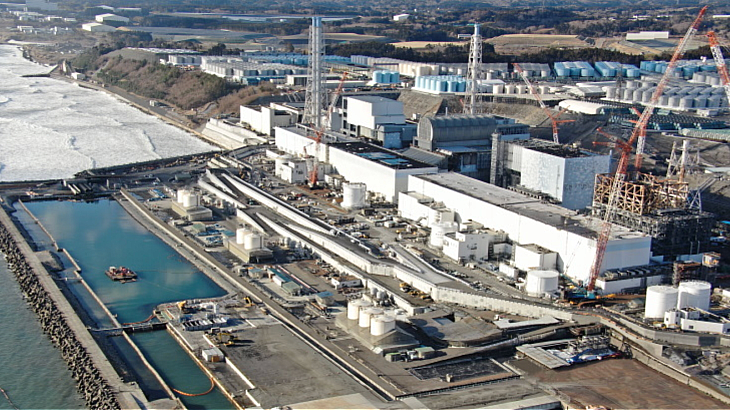
Tokyo Electric Power Company has begun its internal investigation of Fukushima Daiichi unit 3's primary containment vessel, using palm-sized micro-drones.
(Image: TEPCO)
Tokyo Electric Power Co (Tepco) said the investigation would take approximately two weeks and investigate the conditions inside the reactor as well as the access route for planned fuel debris retrieval, saying "we will continue to move forward safely and steadily with this task".
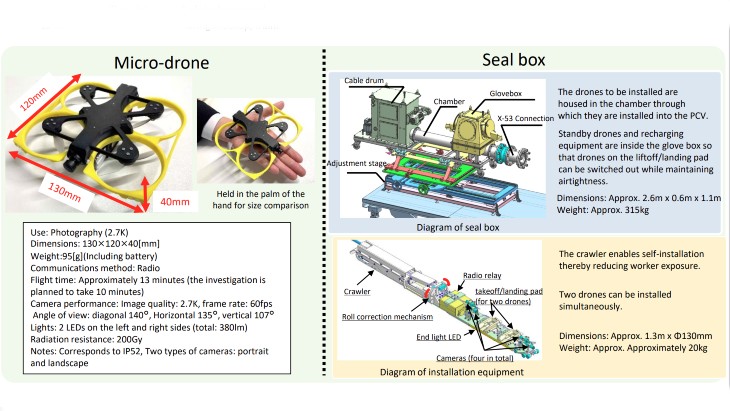
Air tightness has to be maintained at all times - see Tepco diagram below for more details - and each of the two drones flew for about 8 minutes.
The drones used are 13 centimetres by 12 centimetres, weigh 95 grams including battery, and have cameras and LED lights.
According to the plans, there will be initial flights to determine the range of radio communications in new flight areas, followed by the next stage of flights to obtain footage and then flights for detailed investigations.
According to The Asahi Shimbun, the plan for the drones to make an entire circuit inside the vessel was shortened because of poor communications. It quoted Akira Ono, president of Fukushima Daiichi Decontamination & Decommissioning Engineering Co, as saying: "There may be mist reducing visibility at times. We will make safety our top priority when deciding whether to continue the investigation."
Background
On 11 March 2011 a major earthquake struck Japan. It was followed by a 15-metre tsunami which disabled the power supply and cooling of three reactors at the Fukushima Daiichi nuclear power plant and all three cores largely melted in the first three days. In units 1 to 3, the fuel and the metal cladding that formed the outer jacket of the fuel rods melted during the accident, then re-solidified as fuel debris. Unit 4 does not contain any used fuel or fuel debris as it had already been defuelled before the accident.
There is an estimated total of 880 tonnes of fuel debris in units 1-3. To reduce the risk from this fuel debris, preparations are under way for retrieving it from the reactors.
Tepco succeeded in extracting small samples of fuel debris from the unit 2 reactor in November 2024 and in April 2025. It reportedly concluded after studying the specific removal method that it would take around 12 to 15 years just to prepare for the work. There is a fair amount of uncertainty about the distribution of fuel debris in each of the reactors and decommissioning process is expected to continue into the second half of the century.
Nuclear included in Japan-Canada strategic roadmap
Enhanced cooperation in the area of clean energy, including small modular reactors, is one of the areas highlighted in the Canada-Japan Comprehensive Strategic Roadmap.
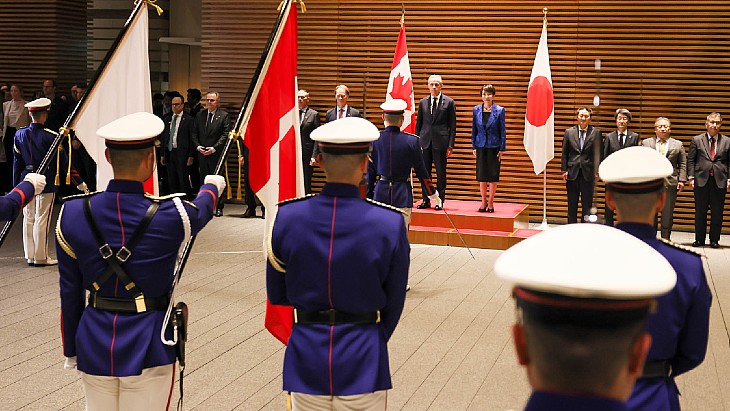
(Image: Japan's PM's office)
Details of the bilateral strategic agreement and roadmap were outlined during a visit to Japan by Canada's Prime Minister Mark Carney (see picture above).
The roadmap says that "recognising the importance of energy security and food security in an era of heightened geopolitical uncertainty" the two countries will "enhance cooperation on clean energy technologies, including nuclear technologies, (particularly small modular reactors), hydrogen and its derivatives, carbon capture, utilisation, and storage, renewables, and energy-efficient industrial processes".
Carney said: "Japan is a trusted partner and a global leader in innovation, technology, and advanced manufacturing. Together, we are strengthening our economic security, securing resilient supply chains in critical minerals and clean energy, and deepening security and defence cooperation in support of a free and open Indo-Pacific."
Japanese Prime Minister Sanae Takaichi said: "Canada is an important partner for Japan in advancing cooperation in the field of economic security ... Canada’s abundant natural resources and Japan’s technological capabilities are complementary, and concrete projects involving companies from both countries are steadily progressing. For example, production at LNG Canada, which is of great significance for Japan’s energy security, began last year, and construction of a small modular reactor - the first of its kind in the G7 - also began in Ontario. In addition, projects related to critical minerals such as graphite are under way."
In their joint statement the two leaders said "we believe the new Comprehensive Strategic Roadmap will serve as an effective guide for ongoing collaboration, enhancing our joint resilience in the face of new challenges and opportunities".
About 15% of Canada's electricity comes from nuclear power, with 17 reactors, mostly in Ontario, providing 12.7 GWe of power capacity. It also has plans to build both new large-scale nuclear capacity and small modular reactors. Japan has 33 operable reactors with a capacity of 31.7 GWe. Of these, 15 reactors have restarted since 2011 and 10 are currently in the process of restart approval. The country's current goal is, with more reactor restarts, for nuclear to generate 20% of Japan's electricity by 2030.
Rook I uranium project gets construction approval
NexGen Energy has received the final regulatory approval for the Rook I uranium project in northern Saskatchewan, and will begin construction later this year.
(Image: NexGen)
The Canadian Nuclear Safety Commission (CNSC) decision to issue the Licence to Prepare Site and Construct the proposed uranium mine and mill came 14 business days after the conclusion of the last part of the regulator's two-part hearing process. The licence - which is valid until 31 March 2036 - covers site preparation and construction activities under Canada's Nuclear Safety and Control Act: operation of the facility would need NexGen to submit another licence application which would be subject to a future licensing hearing and decision.
Rook I is described by NexGen as the largest development-stage uranium project in Canada. Centred on the Arrow deposit, a high-grade uranium deposit discovered by the company in 2014, the project is in the southern Athabasca Basin, about 155 km north of the town of La Loche. The project is situated on Treaty 8 territory, the Homeland of the Métis, and is within territories of the Denesųłiné, Cree, and Métis.
The Arrow deposit has a resource estimate of 357 million pounds U3O8 (137,319 tU) in the measured and indicated mineral resources category, grading 3.10% U3O8. Probable mineral reserves have been estimated at 240 million pounds U3O8, grading 2.37% U3O8. A 2021 NI 43-101 feasibility study for the project envisages production of up to 14 million kilograms of U3O8 annually for 24 years.
The project received environmental approval from the Province of Saskatchewan in November 2023, and, with all approvals now secured, NexGen said it is set to begin construction. A final investment decision has already been made, and the team, procurement, engineering, vendors, contractors and capital are in place to commence construction activities with advanced site and shaft sinking preparation. Construction will officially begin in this summer, the company said, and construction is expected to take four years to complete.
NexGen founder and CEO Leigh Curyer said the CNSC's approval "represents one of the most rigorous and comprehensive regulatory processes undertaken for a resource project globally" and, as well as acknowledging NexGen's team, expressed the company's "sincere gratitude" to its Indigenous Nation partners, local communities, Premier Scott Moe and the Government of Saskatchewan, Government partners, regulatory bodies, and stakeholders who have contributed to the advancement of the project over the past decade.
"The world is changing fast, and NexGen's Rook I is now ready to be a significant contributor to global requirements for nuclear energy and Canada's role as an energy superpower. As global demand for reliable, clean, baseload nuclear energy continues to accelerate at an unprecedented pace, uranium is the critical fuel for powering industrial electrification and the digital infrastructure of tomorrow. Simply put, energy is the key to our global growth," Curyer said.
In February, Reuters reported that NexGen had held preliminary talks with data centre providers about securing finance for a new mine. Speaking to investors in NexGen's fourth quarter conference call on 4 March - one day before the CNSC announcement - Curyer said the first 12 months of construction is expected to cost around CAD300 million (USD219 million). NexGen is well funded to begin construction thanks to already completed equity raises and offtake agreements. Further offtake agreements are already in advanced negotiation, with contracts expected to be announced this year, he said, but the start of construction or production will not be dependent on those new contracts being in place.
"We know exactly what we're doing every day of that 48-month process, who's doing it, who's responsible for it within NextGen," Curyer said. "And as I said, once we're in that basement rock, the highest risk around cost and schedule has been mitigated."
Curyer told investors the company would issue a detailed construction timeline once the licensing process had concluded.
Korean partnership to consider use of HTGRs
The Korea Chemical Industry Association and the Korea Atomic Energy Research Institute have signed a memorandum of understanding to cooperate in studying the deployment of high-temperature gas-cooled reactors in the petrochemical industry.
(Image: Korea Chemical Industry Association)
High-temperature gas-cooled reactors (HTGRs) are Generation IV, graphite-moderated, helium-cooled reactors (typically 100–600+ MWt) that use TRISO-coated fuel to achieve high outlet temperatures (700°C-1,000°C). They offer enhanced safety through passive heat removal, preventing core meltdowns, and are designed for industrial process heat, hydrogen production, and electricity generation.
The Korea Chemical Industry Association and Korea Atomic Energy Research Institute (KAERI) said they signed the MoU to "establish a foundation for mutual technological cooperation related to high-temperature gas reactors capable of supplying high-temperature process heat to strengthen the competitiveness of the chemical industry". They added: "As a carbon-free energy source, [the HTGR] is considered a key alternative for achieving carbon neutrality in the domestic petrochemical industry."
Through the MoU, the two organisations agreed to establish a practical technology cooperation ecosystem to achieve carbon neutrality by promoting realistic HTGR designs that reflect the needs of domestic petrochemical companies, and creating opportunities for commercialisation of HTGR-related technologies.
A signing ceremony for the MoU was held on 6 March and was attended by key officials from both organisations, including Eom Chan-Wang, vice chairman of the Korea Chemical Industry Association, and Lim In-cheol, vice president of KAERI.
"The petrochemical industry is a key customer for the high-temperature gas reactor that the institute is promoting," Lim In-Cheol said. "Based on this agreement, the Korea Atomic Energy Research Institute will build a close network with the domestic petrochemical industry and create a practical technological cooperation ecosystem."
Eom Chan-wang added: "The chemical industry is being required to achieve carbon neutrality in industrial heat energy amid global environmental regulations. Through this business agreement, we will support the establishment of a technology base that can be practically applied to domestic companies, thereby helping them secure global competitiveness."
Studsvik acquires Swedish SMR project development firm
Swedish nuclear technical services provider Studsvik has announced its acquisition of small modular reactor project development company Kärnfull Next, expanding its role from supporting the world's existing nuclear fleet into the development of new nuclear projects.
(Image: Studsvik)
The enterprise value of Kärnfull Next - which specialises in technology-agnostic small modular reactor (SMR) project development - in the transaction is about EUR6.5 million (USD7.5 million) on a cash-free, debt-free, basis. EUR3 million will be paid in cash and EUR3.5 million in newly issued Studsvik shares at closing. Additional consideration of up to EUR2 million in shares may be payable through staged payments to 2029, alongside performance-based earn-outs of up to EUR14 million linked to the successful development and sale of project development companies.
Subject to customary conditions and regulatory approvals, the transaction is expected to close during the second quarter of 2026.
"The move marks a strategic step as governments and industry increasingly turn to nuclear power to support energy security, electrification, and net-zero ambitions," Studsvik said. "By adding project development capability, Studsvik will now be able to support nuclear projects from their earliest stages through to operation and decommissioning ... the company is expected to announce further partnerships that demonstrate how this expanded capability will be applied in practice."
"Together, Studsvik and Kärnfull Next will build a truly integrated nuclear services platform - and establish Studsvik as the home for entrepreneurial ambition in nuclear," said Daniel Aegerter, founder and CEO of Armada Investment AG and the largest shareholder in Studsvik.
Studsvik AB President and CEO Karl Thedéen added: "Kärnfull Next's project development expertise combined with Studsvik's unrivalled technical capabilities creates a compelling platform for growth."
Under the agreement, Kärnfull Next founders Christian Sjölander and John Ahlberg will join Studsvik's executive team. "Together, we will accelerate Studsvik's transformation into a truly integrated nuclear services champion," they said.
In 2023, Studsvik signed a memorandum of understanding with Kärnfull Next to investigate the possibility of constructing and operating SMRs on the Studsvik industrial site near Nyköping on Sweden's east coast. Studsvik said the site is in a strategic location and houses the company's broad expertise in nuclear technology, including fuel and materials technology, reactor analysis software and fuel optimisation, decommissioning and radiation protection services as well as technical solutions for handling, conditioning and volume reduction of radioactive waste.
In March 2022, Kärnfull Next signed a memorandum of understanding with GE Hitachi Nuclear Energy on the deployment of the BWRX-300 in Sweden.
Kärnfull Next has been conducting site selection and feasibility studies in several municipalities in Sweden since 2022. By establishing multiple SMR parks as part of the same programme, the company expects to achieve economies of scale in terms of technology selection, construction partners, power purchase agreements and financing partners. In February last year, the company secured land rights for the project to build a power plant based on SMRs in the municipality of Valdemarsvik in Östergötland county in southeastern Sweden.
Centrus Energy and Oklo have announced discussions on a joint venture "focused on deconversion services for high-assay low-enriched uranium and the advancement of related fuel-cycle technologies and supply chains".
(Image: Oklo)
The joint venture's activities would take place at Centrus's Piketon site in southern Ohio, which is also near Oklo's planned 1.2 GW power campus.
According to the announcement from the two companies "the potential joint venture would aim to enable an integrated and efficient coupling of uranium enrichment and deconversion to improve efficiency and costs through co-location and expand domestic advanced nuclear fuel capacity to serve Oklo's needs and broader US nuclear deployment".
Deconversion is the step when enriched uranium is converted into a different chemical form, such as uranium oxide or uranium metal, before it is fabricated into fuel.
The two companies believe that having a central hub for deconversion services co-located with high-assay low-enriched uranium (HALEU) enrichment would eliminate the need for each fuel fabrication facility to establish its own deconversion line.
Uranium enrichment and nuclear fuel services provider Centrus's CEO and President, Amir Vexler, said: "We look forward to exploring options to co-locate and scale deconversion services to improve efficiency and support growing demand."
Jacob DeWitte, CEO and co-founder of Oklo, said: "This framework supports deeper discussions with Centrus on potential pathways to expand deconversion capacity, strengthen domestic supply chains, and advance a more efficient fuel cycle model that operates from the same location."
As part of the discussions, the two sides will "explore opportunities for potential coordination of regulatory and R&D activities, including joint engagement with US federal agencies to propose solutions that support co-location of deconversion and enrichment services".
In January Meta said it would support Oklo's project to develop a 1.2 GW power campus in Pike County, Ohio, by prepaying for power and providing funding to advance project certainty for Oklo's sodium-cooled Aurora powerhouse deployment.
The same month, the US Department of Energy awarded Centrus Energy's American Centrifuge Operating USD900 million of funding to provide uranium enrichment services. Centrus said that it intended to leverage the funding to support its multi-billion dollar expansion in Piketon, which - as well as producing HALEU - will also include additional LEU production to serve commercial utilities and the existing reactor fleet.
Decommissioning of Finnish research reactor completed
Finland's Radiation and Nuclear Safety Authority has declared that the site of the country's first nuclear reactor is no longer classified as a nuclear facility following the dismantling of the Finnish Reactor 1 in Espoo.
The FiR1 research reactor (Image: Fortum)
The Finnish Reactor 1 (FiR1) water-cooled, pool-type TRIGA Mark II research reactor was commissioned by the Helsinki University of Technology in 1962. The reactor was originally built for research and education and was later also used for isotope production and radiotherapy. Operational responsibility for the reactor was transferred to the VTT Technical Research Centre in 1971. Although licensed to operate until 2023, VTT decided in 2012 to stop the use of FiR1 for financial reasons. The reactor - with a thermal capacity of 250 kW - ran for the last time on 30 June 2015. In 2017, VTT submitted an application for permission from the Council of State to decommission the reactor, which was granted in June 2021.
In February 2021, partially used irradiated fuel from the reactor was transported to the USA for use in a TRIGA Mark I research reactor operated by the US Geological Survey in Denver, Colorado. The USGS required additional fuel to continue operating its reactor, but the production of suitable fuel had been suspended for several years.
The dismantling of the FiR1 reactor and the management of nuclear waste were carried out by VTT in cooperation with Fortum between 2023 and 2025.
The Radiation and Nuclear Safety Authority (STUK) supervised the planning and execution of the decommissioning from the beginning. The supervision ended last December when STUK decided to release the research reactor from regulatory control. After the decision, the research reactor is no longer considered a nuclear facility. The dismantled reactor area and premises in Otaniemi, Espoo, do not differ in any way from the surrounding area in terms of radiation safety, it said. The building can now be repurposed.
At the same time as FiR1 was released from regulatory control, STUK also released VTT's materials research laboratory, located in the same building, from oversight. The research laboratory had conducted studies on radioactive materials since the 1970s. The operation and decommissioning of the FiR1 research reactor were regulated by nuclear energy legislation, whereas the laboratory's activities were governed by the radiation act. The decommissioning of the laboratory was also subject to the radiation act and was carried out by VTT alongside the decommissioning of FiR1.
VTT delivered the radioactive waste generated from the dismantling and decontamination of the laboratory to Fortum for disposal at the repository located at the Loviisa nuclear power plant, just as with the reactor's waste. Before releasing the laboratory from oversight, STUK confirmed that the premises were free of radioactive contamination.
FiR1 is the first nuclear reactor to be decommissioned in Finland. The decommissioning of the country's nuclear power plants is not expected in the immediate future, but Finland is currently reforming its nuclear energy legislation and the complementary STUK regulations.
Kai Hämäläinen, a principal advisor at STUK, said the lessons learned from dismantling the FiR1 research reactor and supervising the process have been valuable in this work. "Until now, the law and regulations have not described the final stages of a nuclear facility's life cycle and the technical requirements for decommissioning in much detail. The experience gained has now been used in drafting the new law and in writing STUK's regulations," he said.
GBE-N granted licence to generate electricity
Great British Energy - Nuclear has been granted an electricity generating licence - required by all electricity generating companies - by the UK's gas and electricity markets regulator Ofgem.
How a Rolls-Royce SMR might look (Image: Rolls-Royce SMR)
Gaining such a licence, Great British Energy - Nuclear (GBE-N) said, represents "a landmark moment" in its mission to deliver Europe's first small modular reactors (SMRs). "Acquiring a generation licence is one of the first in a chain of approvals needed to construct and operate power infrastructure in the UK. Having this certification means Ofgem deems GBE-N to be a qualified, well-run organisation, which is capable of meeting national safety standards in electricity generation."
"This milestone reflects the dedication and expertise of our team, whose efforts in technical planning and rigorous compliance have enabled us to meet Ofgem's high standards," said Simon Bowen, Chair of GBE-N. "Our newly secured licence empowers us to contribute significantly to the country's energy security, bolstering grid resilience, and decarbonising our economy. This is another proof-point that we are delivering new nuclear at pace and with focus."
The UK government launched GBE-N in 2023 as an arms-length body that will be responsible for driving the delivery of new nuclear projects, with the aim of increasing the share of nuclear in the UK's electricity mix from the current 15% to 25% by 2050.
In June last year, Rolls-Royce SMR was selected as the UK government's preferred technology for the country's first SMR project. A final investment decision is expected to be taken in 2029.
In November, the government announced that Wylfa on the island of Anglesey, North Wales, will host three Rolls-Royce small modular reactors. It said the site - where a Magnox plant is being decommissioned - could potentially host up to eight SMRs.
GBE-N will start activity on the site this year with the aim for Wylfa's SMRs to be supplying power to the grid from the mid-2030s.
The Rolls-Royce SMR is a 470 MWe design based on a small pressurised water reactor. It will provide consistent baseload generation for at least 60 years. Ninety percent of the SMR - measuring about 16 metres by 4 metres - will be built in factory conditions, limiting activity on-site primarily to assembly of pre-fabricated, pre-tested, modules which significantly reduces project risk and has the potential to drastically shorten build schedules.
Alongside the announcement that SMRs would be built at Wylfa, the government announced that GBE-N had been tasked with identifying suitable sites that could potentially host further large-scale reactor projects beyond the current deployments at Hinkley Point C and Sizewell C. GBE-N will report back by Autumn 2026 on potential sites to inform future decisions in the next Spending Review and beyond. The Energy Secretary has requested this includes sites across the UK, including Scotland.
Haiyang 3 completes cold tests
Cold functional tests have been completed at unit 3 of the Haiyang nuclear power plant in China's Shandong province, State Power Investment Corporation has announced.
(Image: SPIC)
Such tests are carried out to confirm whether components and systems important to safety are properly installed and ready to operate in a cold condition. The main purpose of cold functional tests is to verify the leak-tightness of the primary circuit and components - such as pressure vessels, pipelines and valves of both the nuclear and conventional islands - and to clean the main circulation pipes. The tests mark the first time the reactor systems are operated together with the auxiliary systems.
"The cold test confirmed that the four main coolant pumps and their domestically produced frequency converters of Unit 3 are operating normally, the primary loop pressure boundary integrity is good, the pressure-bearing performance meets standards, and the installation quality of related system equipment is excellent," State Power Investment Corporation (SPIC) said. "The test was a success on the first attempt."
Completion of the cold tests lays "a solid foundation for subsequent key milestones such as hot functional testing and reactor fuel loading, as well as high-quality commissioning," it added.
Hot functional tests involve increasing the temperature of the reactor coolant system and carrying out comprehensive tests to ensure that coolant circuits and safety systems are operating as they should. Carried out before the loading of nuclear fuel, such testing simulates the thermal working conditions of the power plant and verifies that nuclear island and conventional equipment and systems meet design requirements.
The construction of two new reactors at each of the Sanmen, Haiyang and Lufeng sites was approved by China's State Council in April 2021. The approvals were for Sanmen units 3 and 4, Haiyang 3 and 4 and units 5 and 6 of the Lufeng plant. The Sanmen and Haiyang plants are already home to two Westinghouse AP1000 units each, and two CAP1000 units - the Chinese version of the AP1000 - were approved for Phase II (units 3 and 4) of each plant.
The first safety-related concrete was poured for the nuclear island of Haiyang unit 3 in July 2022, and in March the outer steel dome of the nuclear island containment building was hoisted into place. Construction of Haiyang 4 began in April last year. The planned construction period for Haiyang 3 and 4 was 56 months, with the two units scheduled to be fully operational in 2027.
Cold functional tests were completed at unit 3 of the Sanmen plant last month.
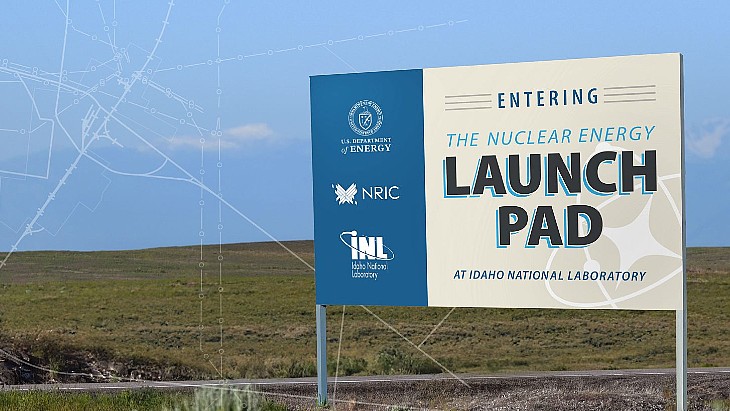
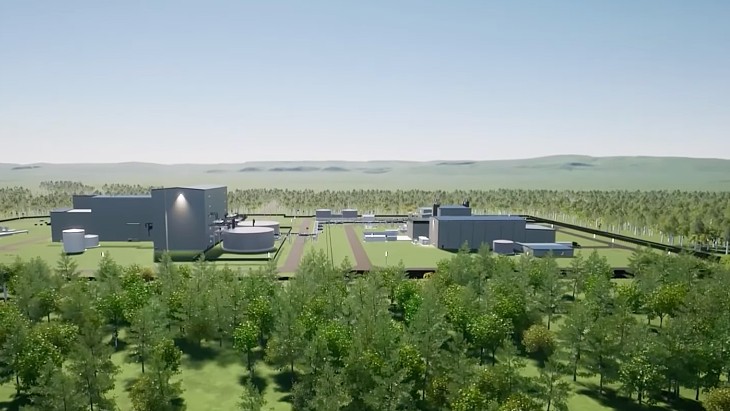
US establishes Nuclear Energy Launch Pad
The US Department of Energy and the National Reactor Innovation Center are setting up a Nuclear Energy Launch Pad designed to "promote the rapid development and implementation of advanced nuclear technologies by private industry".
(Image: INL)
The Nuclear Energy Launch Pad is intended to build on the Department of Energy (DOE) Reactor Pilot Program - which has 11 projects accepted and a target for three reactors to reach criticality by 4 July - and its Fuel Line Pilot Program, which has had 9 projects accepted and aims to establish a domestic nuclear fuel supply chain for testing new reactors.
The DOE plans to transition the pilot programmes' new and future applicants to the Launch Pad "and expand beyond authorisation to include the testing and operation necessary to scale first-of-a-kind technologies toward widescale commercial deployment. This integrated approach ensures continuity from initial pilot authorisation through extended operational validation, reducing the risk and timelines for advanced reactors and other advanced nuclear facility commercialisation".
There will be two pathways running: the Launch Pad Idaho National Laboratory, which will cover more than 2,000 acres, with eligible projects including advanced reactors, fuel fabrication, recycling, enrichment and other innovations; and Launch Pad USA, which will offer the ability to authorise the operation of nuclear reactors and fuel cycle facilities outside of Idaho National Laboratory.
The DOE will not be providing funding for successful applicants but will be providing resources. Rian Bahran, DOE deputy assistant secretary for Nuclear Reactors, said: "Through this initiative, developers can access infrastructure, expertise, and services essential for the siting, construction, and operation of their nuclear facilities."
Idaho National Laboratory Director John Wagner called it "a significant evolution in the ecosystem for advancing nuclear technologies from concept to deployment" that "offers nuclear developers something unprecedented: An 890-square-mile federal site with more than 75 years of reactor testing experience, existing infrastructure, direct access to national nuclear expertise and streamlined regulatory pathways - all enabling developers to move from demonstration to deployment at the pace America's energy security demands".
The initial request for applications "is expected in the next few months" and it will be an annual process. Applications already submitted to the DOE's pilot programmes may be transferred to the Launch Pad and will not need to reapply.
NRC issues construction permit for first Natrium plant
The US Nuclear Regulatory Commission has approved a construction permit for TerraPower's Kemmerer unit 1 project - the first such permit for a commercial-scale non-light water reactor in the country for four decades.
How a Natrium plant might look, with the nuclear island on the right and the energy island on the left (Image: Natrium)
The technology
The Bill Gates-chaired company's Natrium 345 MWe sodium-cooled fast reactor has a molten-salt-based energy storage system which allows it to temporarily boost output to 500 MWe when needed, enabling the plant to follow daily electric load changes and integrate seamlessly with fluctuating renewable resources.
The licensing process
TerraPower submitted its construction permit application to the Nuclear Regulatory Commission (NRC) in March 2024 and it was docketed by the NRC and the formal review began in May 2024. The NRC established an initial 27-month review schedule, however the review was completed in 18 months after a streamlined mandatory hearing process.
TerraPower began non-nuclear construction for the Kemmerer, Wyoming, plant in June 2024, and expects the project - which is near a retiring coal plant - to be complete in 2030. It is being developed through the US Department of Energy's Advanced Reactor Demonstration Program.
The NRC said it was the first commercial reactor approved for construction for nearly a decade and the first non-light water reactor in more than 40 years: "This is a historic step forward for advanced nuclear energy in the United States and reflects our commitment to delivering timely, predictable decisions grounded in a rigorous and independent safety review," said NRC Chairman Ho Nieh.
TerraPower's President and CEO, Chris Levesque, said: "Today is a historic day for the United States' nuclear industry. This is the first commercial-scale, advanced nuclear plant to receive this permit. Our team has worked relentlessly for over 4 years with the NRC staff to get to this moment. We had extensive pre-application engagement with the NRC; and we submitted a robust and thorough construction permit application almost 2 years ago. We have spent thousands of manpower hours working to achieve this momentous accomplishment."
What’s next?
Levesque said: "We plan to start construction on the Natrium plant in the coming weeks and look forward to bringing the first Natrium reactor and energy storage system to market in the great state of Wyoming."
The NRC said that TerraPower subsidiary US SFR Owner would need to submit a separate operating licence application which would need NRC approval before the facility could operate.
Last month, social media giant Meta announced that its future nuclear energy plans included funding to support the development in the USA of up to eight Natrium sodium fast reactors - two new units capable of generating up to 690 MW of firm power with delivery as early as 2032, plus the rights for energy from up to six other Natrium units capable of producing 2.1 GW and targeted for delivery by 2035.
The Natrium reactor is a TerraPower and GE Vernova Hitachi Nuclear Energy technology. Last month it was accepted into the UK's Generic Design Assessment process.
Largest module installed at second Lufeng unit
The CA20 module - measuring about 20 metres in length, 14 metres in width and with a height of 21 metres - has been hoisted into place at the second unit of the Lufeng nuclear power plant in Guangdong province.
(Image: CNNC)
The 'super module' was hoisted into place on 1 March, China National Nuclear Corporation construction subsidiary CNNC 23 Engineering Co Ltd announced.
(Image: CNNC)
The cuboid-shaped CA20 module - weighing more than 1,000 tonnes - consists of 32 wall modules and 39 floor modules. It will comprise plant and equipment for used fuel storage, transmission, the heat exchanger and waste collection, among other things.
(Image: CNNC)
The proposed construction of four 1250 MWe CAP1000 reactors (units 1-4) at the Lufeng site was approved by China's National Development and Reform Commission in September 2014. However, the construction of units 1 and 2 did not receive State Council approval until 19 August 2024. The first safety-related concrete for the nuclear island of unit 1 was poured on 24 February last year, with that of unit 2 following in December. Approval for units 3 and 4 is still pending. The CAP1000 design is the Chinese version of the Westinghouse AP1000.
The construction of Hualong One reactors as units 5 and 6 at the Lufeng plant was approved by the State Council in April 2022. First concrete for unit 5 was poured on 8 September 2022, with that for unit 6 following on 26 August 2023. Units 5 and 6 are expected to be connected to the grid in 2028 and 2029, respectively.
According to China General Nuclear, once all six units are in operation, the Lufeng plant will generate about 52 TWh, which will reduce standard coal consumption by almost 16 million tonnes and reduce carbon dioxide emissions by more than 42 million tonnes.
ABS & HD Hyundai to Advance Nuclear-Powered Electric Propulsion Systems
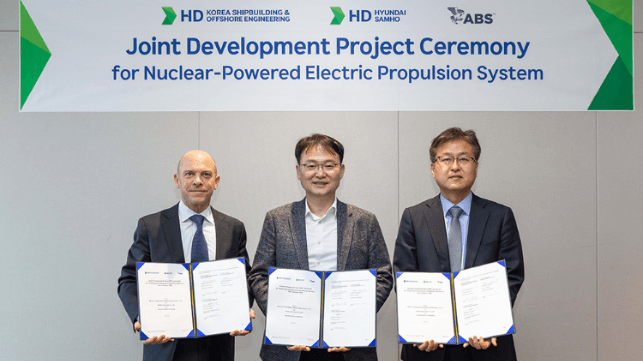
(L-R): Matthew Mueller, ABS Vice President, Regional Business Development, Hak-mu Shim, HD HSHI Executive Vice President & Byung-hun Kwon, HD KSOE Executive Vice President
ABS, HD Korea Shipbuilding & Offshore Engineering (HD KSOE) and HD Hyundai Samho Heavy Industries (HD HSHI) signed a joint development project (JDP) for the “Conceptual Design of a Nuclear-Powered Electric Propulsion System.”
The agreement forms a framework to assess the technical feasibility of a nuclear-powered electric propulsion system specific to a 16K TEU container ship.
“This project represents an important step in exploring the potential of a nuclear-powered electric propulsion system for container vessels. By combining HD Hyundai’s shipbuilding expertise with ABS’ deep engineering experience in maritime safety, we aim to evaluate technologies that can support safer, more efficient and lower-emission operations for the next generation of propulsion solutions,” said Matthew Mueller, ABS Vice President, North Pacific Business Development.
Kwon Byung-hun, Head of the Electrification Center at HD KSOE, said: “In response to the growing demand for eco-friendly ships, we are continuously pursuing the development of electric propulsion systems using nuclear energy—a carbon-free energy source. We will expand our R&D efforts to strengthen our technological competitiveness in nuclear-linked electric propulsion.”
Under the agreement, HD KSOE and HD HSHI will develop the basic design, electrical component specifications and arrangement plans for a nuclear-powered electric propulsion system tailored for container ships.
As the marine and offshore industries refocus on nuclear energy, ABS has worked to support its application at sea as well as a series of advanced development projects with leading companies. ABS released a study examining a potential SMR-powered LNG carrier, available here. The ABS Requirements for Nuclear Power Systems for Marine and Offshore Applications are available for download here. ABS also unveiled the industry’s first comprehensive requirements for floating nuclear power plants. The Pathways to a Low Carbon Future Floating Nuclear Power Plant study is available here.
The products and services herein described in this press release are not endorsed by The Maritime Executive


.jpg)


_75011.jpg)
_64714.jpg)


_66490.jpg)

_39696.jpg)
_33198.jpg)
_2db4b15e.jpg)
_1cf27b6a.jpg)