Nature14 June 2025
ByJess Cockerill
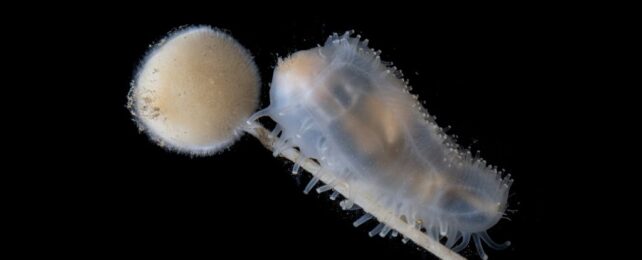
In our eyes, this very hungry sea cucumber stole the show. (Jialing Cai/The Nippon Foundation – Nekton Ocean Census/Schmidt Ocean Institute, CC BY-NC-SA)
A deep-sea expedition to one of Earth's most remote island chains has surfaced stunning pictures of the vibrant ecosystems surrounding hydrothermal vents that scientists didn't even know were there.
The 35-day journey aboard Schmidt Ocean Institute's Falkor (too) research vessel was part of the Ocean Census's race to document marine life before it is lost to threats like climate change and deep sea mining.
This expedition took an international team of scientists to the South Sandwich Islands, in the South Atlantic near Antarctica, which boasts the Southern Ocean's deepest trench.
Despite facing subsea earthquakes, hurricane-force winds, towering waves, and icebergs, the crew was rewarded with a trove of incredible new discoveries.
You might have already watched the expedition's world-first footage of a live colossal squid, but some of their other finds deserve a moment in the spotlight.
Like this vermillion coral garden thriving on Humpback Seamount, near the region's shallowest hydrothermal vents at around 700 meters deep (nearly 2,300 feet).
A deep-sea expedition to one of Earth's most remote island chains has surfaced stunning pictures of the vibrant ecosystems surrounding hydrothermal vents that scientists didn't even know were there.
The 35-day journey aboard Schmidt Ocean Institute's Falkor (too) research vessel was part of the Ocean Census's race to document marine life before it is lost to threats like climate change and deep sea mining.
This expedition took an international team of scientists to the South Sandwich Islands, in the South Atlantic near Antarctica, which boasts the Southern Ocean's deepest trench.
Despite facing subsea earthquakes, hurricane-force winds, towering waves, and icebergs, the crew was rewarded with a trove of incredible new discoveries.
You might have already watched the expedition's world-first footage of a live colossal squid, but some of their other finds deserve a moment in the spotlight.
Like this vermillion coral garden thriving on Humpback Seamount, near the region's shallowest hydrothermal vents at around 700 meters deep (nearly 2,300 feet).
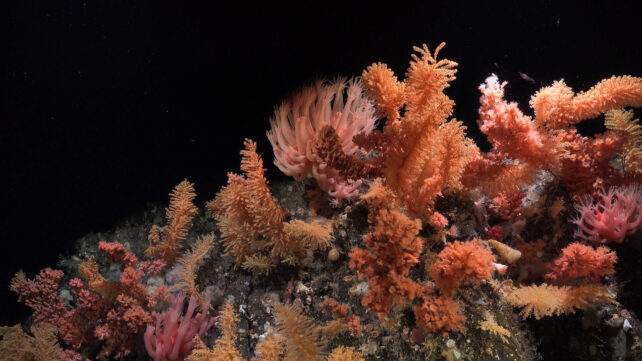
Tropical reefs aren't the only vibrant coral gardens the ocean has to offer. (ROV SuBastian/Schmidt Ocean Institute, CC BY-NC-SA)
The tallest vent chimney stood four meters (13 feet) tall, proudly sporting an array of life, including barnacles and sea snails. Like drones in a New Year's Eve sky, a fleet of shrimp whizzed round these submarine skyscrapers.
The tallest vent chimney stood four meters (13 feet) tall, proudly sporting an array of life, including barnacles and sea snails. Like drones in a New Year's Eve sky, a fleet of shrimp whizzed round these submarine skyscrapers.
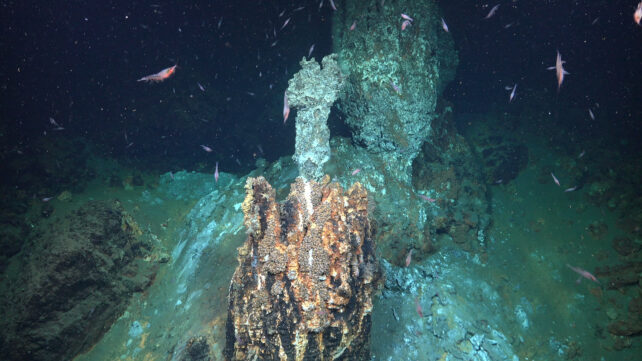
Hydrothermal vents are hubs of life in the deep sea. (ROV SuBastian/Schmidt Ocean Institute, CC BY-NC-SA)
These hydrothermal vents, on the northeast side of Quest Caldera, are the only South Sandwich Island vents explored via remotely operated vehicle (ROV) thus far; we can't wait to see what future expeditions uncover.
"Discovering these hydrothermal vents was a magical moment, as they have never been seen here before," says hydrographer Jenny Gales from the University of Plymouth in the UK.
But certain specimens deserve a close-up: like this exquisite nudibranch, unspecified, which blackwater photographer Jialing Cai snapped at 268 meters deep in the near-freezing waters east of Montagu Island
These hydrothermal vents, on the northeast side of Quest Caldera, are the only South Sandwich Island vents explored via remotely operated vehicle (ROV) thus far; we can't wait to see what future expeditions uncover.
"Discovering these hydrothermal vents was a magical moment, as they have never been seen here before," says hydrographer Jenny Gales from the University of Plymouth in the UK.
But certain specimens deserve a close-up: like this exquisite nudibranch, unspecified, which blackwater photographer Jialing Cai snapped at 268 meters deep in the near-freezing waters east of Montagu Island
.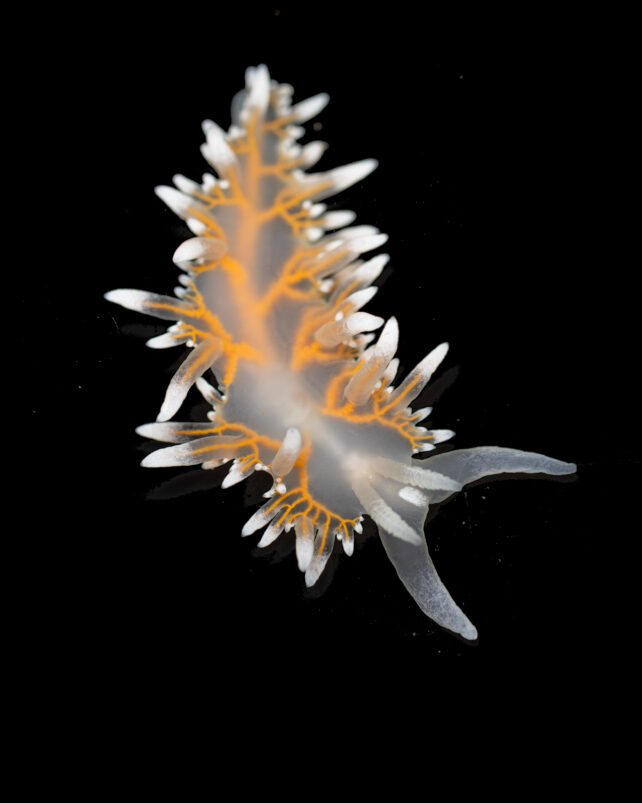
Nudibranchs are soft-bodied marine gastropods known for their vivid colors and intricate forms. (Jialing Cai/The Nippon Foundation – Nekton Ocean Census/Schmidt Ocean Institute, CC BY-NC-SA)
Nearby, a slightly more upsetting moment was captured: a grenadier fish with parasitic copepods – likely Lophoura szidati – tucked into its gills like horrid pigtails.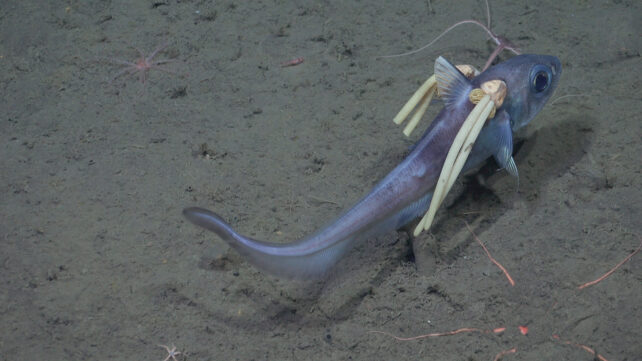
Nearby, a slightly more upsetting moment was captured: a grenadier fish with parasitic copepods – likely Lophoura szidati – tucked into its gills like horrid pigtails.
You'd at least hope they give the fish compliments throughout its day. (ROV SuBastian/Schmidt Ocean Institute, CC BY-NC-SA)
And this stout little sea cucumber, recorded 650 metres below the sea surface at Saunders East, with a gob full of what we will informally dub a deep-sea puffball.
And this stout little sea cucumber, recorded 650 metres below the sea surface at Saunders East, with a gob full of what we will informally dub a deep-sea puffball.
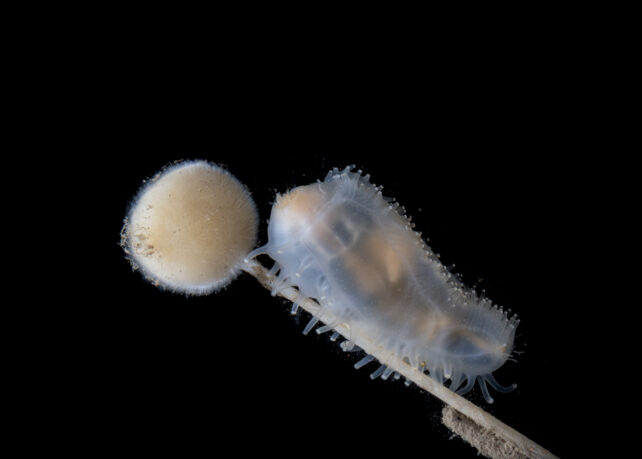 Behold, the most adorable monster of the deep. (Jialing Cai/The Nippon Foundation – Nekton Ocean Census/Schmidt Ocean Institute, CC BY-NC-SA)
Now, brace yourself for the first ever image of Akarotaxis aff. gouldae, a species of dragonfish that has evaded our cameras for two years since its discovery.
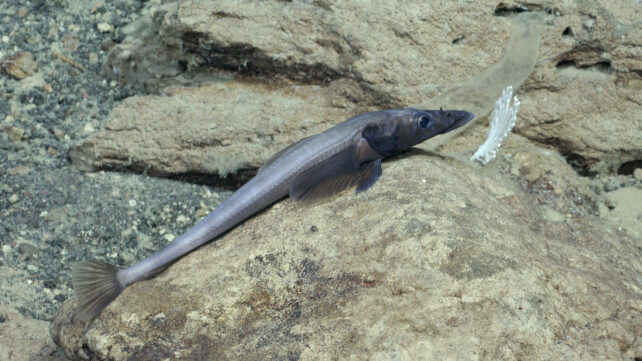
This is probably the first time you've ever seen the banded dragonfish. They're a bit camera-shy. (ROV SuBastian/Schmidt Ocean Institute, CC BY-NC-SA)
Something else that nobody's seen before? Snailfish eggs on a black coral. Not even marine biologists knew this was a thing, until now.
Something else that nobody's seen before? Snailfish eggs on a black coral. Not even marine biologists knew this was a thing, until now.
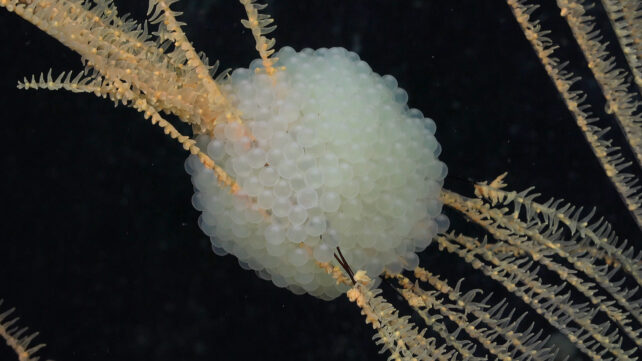
Snail eggs on a black coral. (ROV SuBastian/Schmidt Ocean Institute, CC BY-NC-SA)
"This expedition has given us a glimpse into one of the most remote and biologically rich parts of our ocean," says marine biologist Michelle Taylor, the Ocean Census project's head of science.
"This is exactly why the Ocean Census exists – to accelerate our understanding of ocean life before it's too late. The 35 days at sea were an exciting rollercoaster of scientific discovery, the implications of which will be felt for many years to come as discoveries filter into management action."
Look behind-the-scenes aboard the Falkor (too) research vessel here.
"This expedition has given us a glimpse into one of the most remote and biologically rich parts of our ocean," says marine biologist Michelle Taylor, the Ocean Census project's head of science.
"This is exactly why the Ocean Census exists – to accelerate our understanding of ocean life before it's too late. The 35 days at sea were an exciting rollercoaster of scientific discovery, the implications of which will be felt for many years to come as discoveries filter into management action."
Look behind-the-scenes aboard the Falkor (too) research vessel here.

No comments:
Post a Comment