
Lloyd Lee
Sun, September 7, 2025
Hyundai has a two-decade history of investing in America's South.
The company most recently pledged to invest an additional $26 billion into the US.
Now its scrambling to contain the fallout of an ICE raid on its largest US project ever.
The impact of an immigration raid on a sprawling Hyundai factory on Thursday is reverberating far beyond its home in rural Georgia.
The operation, called by one US official the "largest single-site enforcement operation" in history, detained nearly 500 workers, most of them South Korean.
It also jolted a company that has poured billions into America's South, helping transform the region into a major global auto manufacturing hub. For South Korea, the raid hit a national champion that has played a decadeslong role in deepening economic ties with its Western ally.
South Korea's leaders are now scrambling to contain the fallout both at home and in the United States.
Gi-Wook Shin, a sociology professor and founding director of Stanford University's Korean Studies Program, told Business Insider that the raid puts South Korean President Lee Jae Myung in a difficult position.
The Korean leader needs to balance the country's alliance overseas with his nation's own interests, he said. Back home, Lee faces his liberal supporters who, while not enthusiastic about Trump, nonetheless accept that the country needs to work with the US, Shin said.
"The Lee Government is really trying to work with the Trump administration to strengthen the alliance and really trying to accommodate Trump's policy," Shin said. "So that's why what happened now is not good timing, and Mr. Lee will be in a tough position politically inside Korea."
In recent months, South Korean officials have met with the Trump administration for trade talks and announced massive investments in the United States.
After Lee's August summit at the White House, South Korea unveiled a $150 billion investment into the US, backed by private companies. Hyundai Motor Group alone announced a $26 billion pledge — part of which would go toward a new steel mill plant in Louisiana.
The Hyundai factory raided on Thursday in Ellabell, Georgia — about 30 miles west of Savannah — is the company's largest manufacturing footprint in the South. The facility had its grand opening in late March with an event that was attended by Republican Gov. Brian Kemp.
With a joint investment from LG Energy Solutions, the so-called Metaplant grew into a $7.59 billion investment, projected to bring in 8,500 jobs to the state. Parts of the 3,000-acre campus were still under construction during the raid.
A spokesperson for LG Energy Solutions said about 250 affected workers were affiliated with the HL-GA Battery Company, a joint venture between Hyundai Motor Group and LG Energy Solution.
"For now, our top priority is ensuring the safety and well-being of our employees and partners, and we will commit our best efforts to ensure their safe and prompt returns," the spokesperson said.
When asked for comment, Hyundai Motor Group referred Business Insider to its statement released on Friday.
"We are reviewing our processes to ensure that all parties working on our projects maintain the same high standards of legal compliance that we demand of ourselves," the company said. "This includes thorough vetting of employment practices by contractors and subcontractors."
A.J. Jacobs, an East Carolina University professor who has written two volumes on the Korean automotive industry, told Business Insider that Hyundai has so far supported nearly 30,000 direct and indirect jobs in the United States.
Hyundai's first major US plant was completed in Montgomery, Alabama, in 2005. In 2009, the Korean automaker opened another plant about 90 miles away in West Point, Georgia, bringing in another 3,200 jobs.
Both investments came at a time when the regions were seeing high unemployment rates and industrial decline, Jacobs said. Alabama and Georgia weren't yet the major auto manufacturing centers they are today.
"What it's done is it brought prestige to their governors and mayors, got them re-elected, and it's brought some visibility to those states for international investors and foreign direct investment," Jacobs said. "To quantify the impact of these investments — I really couldn't even venture to guess how many billions of dollars have been invested in Alabama and Georgia prior to the Metaplant."
Because of its deep roots in the South, Jacobs said there's little that would push Hyundai to abandon its production centers there.
"In my opinion, there's almost nothing that would get them to stop producing vehicles in the United States and stop growing," Jacobs said. "They hit an all-time sales record again this month. Every year they do."
Shin, the Stanford professor, said South Korea will likely be cautious in its response, especially if the probe unveils that any of the detainees were breaking the law.
On Sunday morning, multiple Korean media reported that the president's chief of staff, Kang Hoon-Sik, announced a deal to release more than 300 South Korean workers detained in the raid. The official said a charter plane will be sent to bring the workers home.
No criminal charges have been announced.
White House spokesperson Abigail Jackson said in a statement to Business Insider that "Trump will continue delivering on his promise to make the United States the best place in the world to do business, while also enforcing federal immigration laws."
Hyunjoo Jin
Sat, September 6, 2025
REUTERS

South Korean President Lee Jae Myung visits Washington
SEOUL (Reuters) -South Korea said the U.S. government's release of images of the arrest of hundreds of Korean workers was regrettable, especially as the incident followed so closely after a summit between the two nations' leaders.
U.S. immigration officials raided a Hyundai Motor car battery factory on Thursday. On Friday, Immigration and Customs Enforcement released a video and photos of workers shackled at the wrists, waist and ankles getting on a bus after the raid.
The crackdown could risk damaging ties between Washington and Seoul, a key Asian ally and U.S. investor, when the two are trying to narrow their differences and complete a trade deal after the summit between President Donald Trump and South Korean President Lee Jae Myung.
First Vice Foreign Minister Park Yoon-joo told U.S. Under Secretary of State for Political Affairs Allison Hooker in a telephone call that it was regrettable the incident "occurred at a critical time, when the momentum of trust and cooperation between the two leaders, forged through their first summit, must be maintained," the foreign ministry said in a statement late on Saturday.
Park also asked Hooker to ensure a fair and swift resolution to the matter.
"The economic activities of our companies that have invested in the U.S. and the rights and interests of our citizens should not be unfairly infringed upon during the course of U.S. law enforcement," he said.
The arrest of some 475 workers at the plant near Savannah, Georgia, included more than 300 Koreans, and was the largest single-site enforcement operation in the history of the U.S. Department of Homeland Security, which includes ICE.
The video and photos of the raid, which involved a helicopter and armoured vehicles, showed hundreds of workers standing in front of a building, some wearing yellow vests with the names "Hyundai" or "LG CNS." Two workers hid in a pond before they were arrested.
TRUMP CALLS WORKERS 'ILLEGAL ALIENS'
U.S. lawmakers from Georgia and Congressional Asian Pacific American Caucus said on Saturday they were "deeply alarmed" by the massive raid
"Instead of targeting violent criminals, the Trump administration is going after immigrants at work and in communities of color to meet its mass deportation quotas. These senseless actions rip apart families, hurt the economy, and undermine the trust of our global partners," they said in a statement.
President Lee ordered a swift, all-out response to the arrests, Foreign Minister Cho Hyun told an emergency meeting on Saturday. Cho said he may go to Washington to meet with officials if needed.
LG Energy Solution, which is working with Hyundai to build the factory, said it had asked employees to return from U.S. business trips while suspending travel to the United States except for customer meetings.
The company said on Sunday it had sent a human resources executive to Georgia to "ensure the swift and safe release of those detained".
Hyundai Motor said it would investigate its suppliers and their subcontractors to ensure they meet regulations.
Trump, when asked about the raid, said on Friday: "I would say that they were illegal aliens and ICE was just doing its job."
(Reporting by Hyunjoo Jin; Additional reporting by Cynthia Kim; Editing by Edmund Klamann and William Mallard)
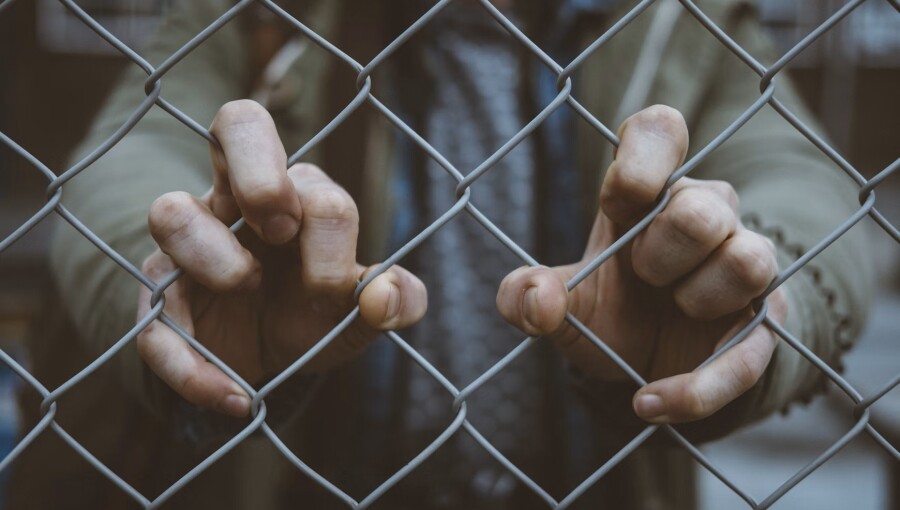
The detention of hundreds of foreign workers at a Georgia construction site has ignited a storm that spans labour rights, corporate accountability, and international diplomacy. What began as a workplace investigation, over the weekend quickly escalated into a flashpoint between Washington and Seoul, raising questions about how global companies manage sprawling contractor networks in the United States.
On September 4, 2025, US immigration officers carried out what officials have called the largest workplace immigration enforcement action in the history of the Department of Homeland Security. The operation unfolded at a Hyundai and LG Energy Solution electric vehicle battery facility under construction in Ellabell, Georgia. Approximately 475 people were detained, most of them South Korean nationals, according to The Washington Post.
At dawn that day, heavily armed officers from multiple agencies descended on the 2,900-acre construction site. Roads were blocked and security perimeters set. Workers were ordered to line up against walls while agents checked their identities. Those found with legal permission were released with slips confirming clearance to exit; others were transported to the Folkston ICE Processing Centre, more than 100 miles away.
According to CNN, several individuals tried to escape, some fleeing into a sewage pond, forcing officers to use boats to retrieve them. A handful attempted to hide in air ducts. Video later published by ICE showed detainees shackled and led to buses, sparking outrage in Seoul.
Witnesses described the scene as chaotic and intimidating, comparing it to a military zone.
Who was detained?
Officials confirmed that those taken into custody fell into three main categories: some had entered the United States without authorisation, others had overstayed visas, and many had entered under visa waiver programmes such as ESTA, which explicitly forbids employment, according to AP News and Barron’s.
Based on CBS reports, South Korea’s Foreign Minister Cho Hyun later said over 300 nationals from his country were among the detainees. Mexico’s consulate in Atlanta reported that 23 Mexican citizens were also being held.
Although the raid targeted the Hyundai site, neither Hyundai nor LG Energy Solution directly employed those detained. Instead, they were hired by contractors and subcontractors involved in the plant’s construction. The Washington Post notes that a filing by the US Attorney’s Office acknowledged it remained unclear which specific companies were responsible for hiring undocumented workers.
Hyundai Motor Group stressed that none of its own employees were among those detained. A spokesperson told CNN the firm would review vetting processes and ensure contractors and subcontractors complied fully with US employment law. “We demand the highest standards of legal compliance,” the company said, reiterating its zero-tolerance stance on unlawful practices.
The Georgia plant represents Hyundai and LG’s first fully dedicated EV and battery facility in America, a $4.3bn joint venture intended to employ up to 8,500 people. Construction has since been halted, according to the Associated Press.
South Korea’s response
The Korean government moved quickly to secure its citizens’ release. The Korea Times reports that Seoul negotiated with Washington to repatriate more than 300 detainees. A charter flight was arranged, and Foreign Minister Cho Hyun indicated he was prepared to travel to Washington personally if necessary.
Presidential Chief of Staff Kang Hoon-sik said at a policy meeting that only final administrative steps were left before citizens could be repatriated, adding that the government would stay on high alert until their return.
South Korea also voiced concern over the treatment of its nationals. Officials stressed that investment projects and citizens’ rights should not be undermined by US enforcement actions. Seoul’s Ministry of Foreign Affairs said it had urged Washington to exercise “extreme caution” when dealing with Korean workers.
Local and diaspora reaction
The raid sent shockwaves through Korean communities in the United States. The Korea JoongAng Daily reports that residents called the event “shocking” and “inhumane,” with helicopters, military vehicles and shackled workers creating imagery more akin to a war film.
On MissyUSA, a popular Korean online forum, commenters accused the US of betraying Korean investors. Others suggested Korean companies had exposed themselves by relying heavily on short-term visas not designed for employment.
One Atlanta-based immigration lawyer told JoongAng Daily that businesses should have anticipated such risks under the Trump administration’s uncompromising immigration stance. Another noted that many detained engineers and skilled staff had come on ESTA or B1/B2 visas, which were never intended for work.
Legal implications
Although being undocumented is generally a civil rather than criminal violation, prior convictions can complicate immigration status. ICE confirmed that one lawful permanent resident with past firearm and drug offences was detained. Spokesman Lindsay Williams told the Associated Press that no US citizens were held, adding, “Once citizenship is verified, we have no authority.”
Families have struggled to make contact with loved ones. James Woo of Asian Americans Advancing Justice in Atlanta said many relatives were still in South Korea, unable to reach detainees.
Immigration attorney Charles Kuck told CNN two of his clients, engineers visiting briefly under the visa waiver scheme, were mistakenly detained. Both had been authorised to travel for business consultations and were due to return to Korea within weeks.
According to CNN, the Department of Homeland Security confirmed that the raid followed months of investigation into suspected unlawful employment practices. Agencies including the FBI, DEA, IRS, US Customs and Border Protection, and Georgia State Patrol joined forces. Officials said the warrants sought employment records, recruitment documents, and immigration paperwork.
“This has been a multi-month criminal investigation,” Homeland Security Investigations chief Schrank explained, denying that it was a simple round-up. Homeland Security declared the action a warning to companies and individuals exploiting the US workforce.
Political fallout
Meanwhile, in Seoul, ruling Democratic Party lawmakers urged Washington to treat Korea’s investment commitments with respect. One described the incident as a humiliation occurring barely ten days after a Korea and US summit. Opposition politicians blamed President Lee Jae Myung’s administration for not responding more forcefully.
Diplomats on both sides now face the delicate task of resolving the crisis while safeguarding a multibillion-dollar industrial project considered vital to both countries’ economic partnership.
The raid has become more than an immigration story. It now stands as a test of how the United States enforces its labour laws while courting foreign investment, and how South Korea balances defending its citizens with protecting strategic economic ties.


No comments:
Post a Comment