It’s possible that I shall make an ass of myself. But in that case one can always get out of it with a little dialectic. I have, of course, so worded my proposition as to be right either way (K.Marx, Letter to F.Engels on the Indian Mutiny)
Tuesday, December 09, 2025
AMERIKAN STATE CAPITALI$M
U.S. Army Looks to Build Small Refineries for Critical Minerals
he U.S. Army will develop small-scale refineries to ensure domestic supply of critical minerals for defense and military purposes as the United States and the Western allies look to reduce their dependence on China.
“We ?need to come up with a way to make our own (critical minerals) domestically that we can actually monitor and control within our borders,” Mark Mezger, a munitions procurement adviser for the U.S. Army, told Reuters.
The Army is currently developing a project with the Idaho National Laboratory and gold mining company Perpetua Resources to process antimony.
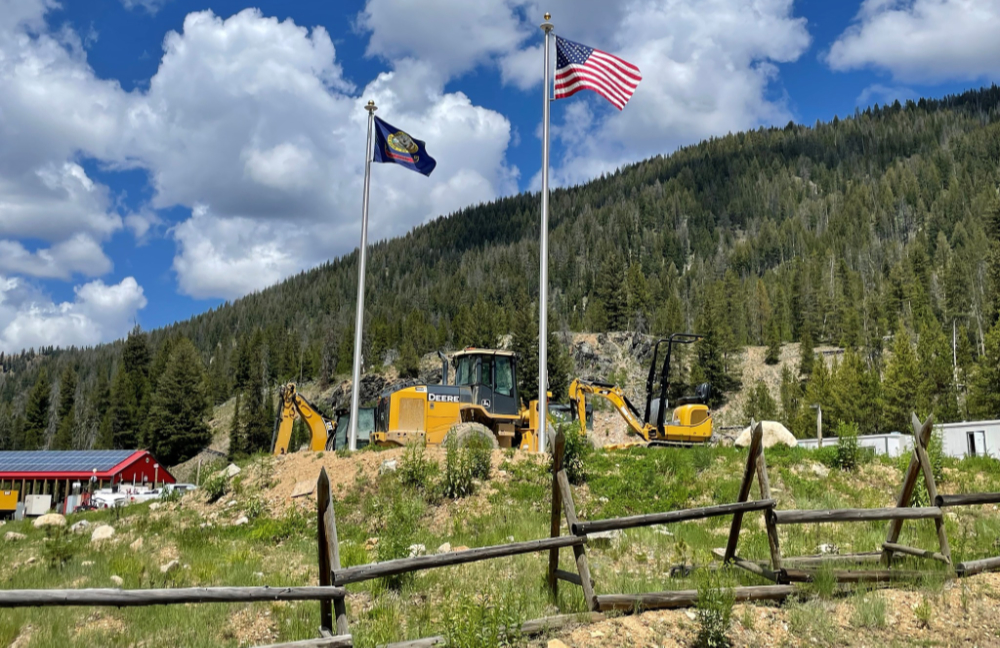
In September, the U.S. Army’s Joint Program Executive Office Armaments and Ammunition (JPEO A&A) joined Perpetua Resources Inc. to launch the Stibnite Gold Project in central Idaho. The project seeks to redevelop an abandoned mine site in Stibnite for gold and antimony sulfide, a critical component used in ammunition production. The U.S. previously obtained antimony sulfide from foreign sources until 2021 when that supply ended. “The Stibnite project currently holds the largest identified reserve of antimony in the U.S. At an estimated 148 million lbs., it is one of the largest antimony reserves outside of foreign control,” said Maj. Gen. John T. Reim, Joint Program Executive Officer Armaments & Ammunition and Picatinny Arsenal Commanding General.
The project is “in keeping with the Army’s ongoing ‘Ground-to-Round’ assured munitions strategy to locate and engage with domestic sources for critical materials as we modernize and fortify the Arsenal of Democracy,” Reim added.
The Trump Administration is ensuring funding through buying minority stakes in North American rare earth and lithium companies and projects, while companies in the U.S. and Europe are setting up alliances with miners and refiners to have magnet supply chains outside and independent of China.
The global rare earth supply chain is among the most highly concentrated across all stages of the value chain, analysts at the International Energy Agency (IEA) wrote in a commentary in October.
The US government plans to take more equity stakes in critical minerals companies, a White House official said Thursday, calling the once-rare move necessary to counter China’s dominance in the raw materials used in everything from semiconductors to MRI machines.
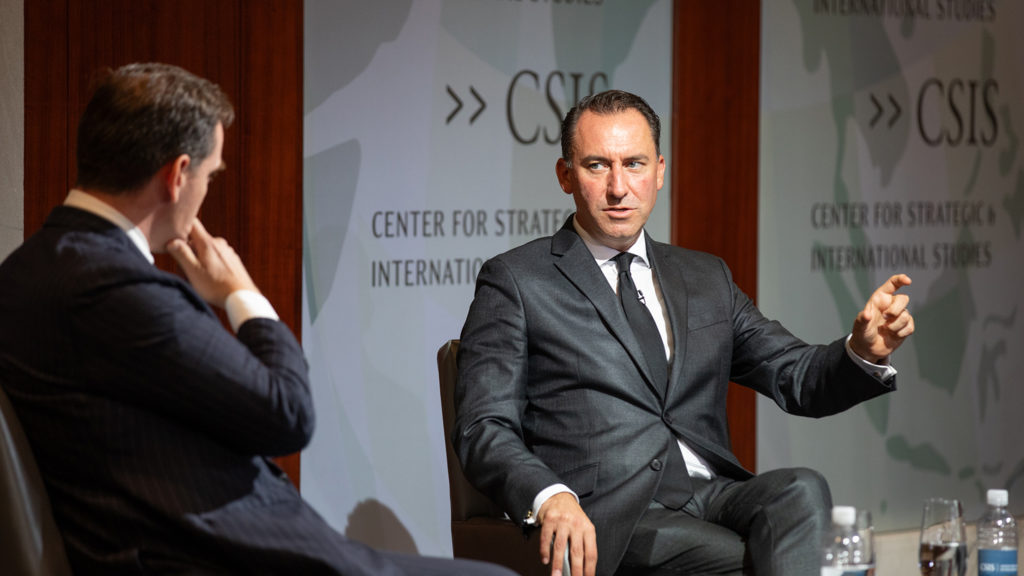
“I think they’re the norm from our perspective,” said Jarrod Agen, executive director of the National Energy Dominance Council, speaking at a forum in Washington. “There is a broad scope of different companies who are coming to us. They’re making the right case.”
Critical minerals such as gallium and cobalt are used in products ranging from iPhones to industrial magnets. They’re also vital for defense systems including missile guidance, radar and jet engines, as well as batteries and other technologies needed to cut carbon pollution. Over the past year, the Trump administration has spent over $1 billion to take stakes in critical minerals and mining companies, often sending the company’s stock prices soaring.
Agen, in a brief interview, declined to specify what company could be next.
The strategy of investing taxpayer dollars in companies the administration has deemed essential to national security comes as the US’ reliance on China for the crucial materials has become a flash point in the trade war. Beijing responded to US export restrictions by curbing shipments of rare earth elements, a move that briefly disrupted global supplies before China eased the limits after Washington lifted its countermeasures.
“We’re literally buying equity, getting equity in companies to give the backing of the US, because that’s the only way we’re going to catch up with China on these things,” Agen said in his remarks at the American Growth Summit, which was sponsored by companies such as Citigroup Inc. and NVIDIA Corporation. “They know the government is backing us. No one wants to mess with President Trump, and so we can actually get the materials.”
(By Ari Natter)
Serra Verde cuts short China offtake deals, approached by Western firms
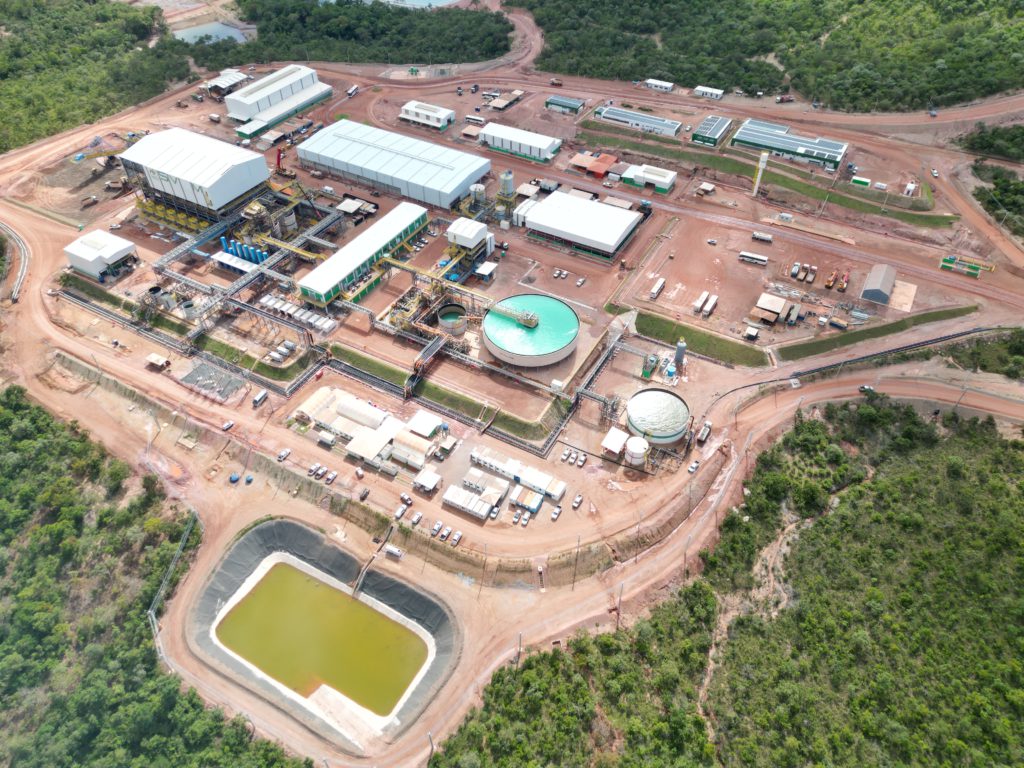
Serra Verde is expected to produce 5,000 tonnes per year of rare earth oxide. (Image: Serra Verde)
Brazilian rare earths miner Serra Verde has slashed the contract periods of its Chinese processing deals, opening up the potential to supply Western companies when their separation capacity becomes available in coming years, its CEO said.
The West has been racing to develop alternative sources of rare earths, vital for defence, electronics, electric vehicles and wind turbines, since China controls 90% of processed global supply
When Serra Verde’s mine was being developed, it agreed 10-year offtake deals with Chinese companies to buy its concentrate for processing since no other options were available.
The Serra Verde mine is rich in heavy rare earths, unlike many other Western deposits, but only now are plants gearing up in the West to process them.
“In a couple of years we’ll have some options to separate the heavies outside of China,” CEO Thras Moraitis told Reuters.
Privately-held Serra Verde renegotiated the Chinese deals and now they conclude at the end of next year, giving the company multiple options to diversify its customer base, Moraitis said.
“The Chinese, the Americans, the Japanese, the Europeans, the Canadians all have approached us, given that we are the only supplier of heavy rare earths, at least for the foreseeable future.”
Forecast shortages of heavy rare earths dysprosium and terbium could be a stumbling block in the West’s drive to create domestic supply chains of rare earths and permanent magnets.
Price floor essential
Moraitis, formerly an executive of Xstrata, which was acquired by commodity group Glencore, said a price floor guaranteed by governments was key for the development of the rare earths sector outside of China.
The US provided a guaranteed minimum price to rare earths group MP Materials in July as part of a multibillion-dollar investment by the Pentagon and sources told Reuters the mechanism would likely be extended to other firms
Serra Verde’s Brazilian mine is an ionic clay mine deposit. The standard extraction technique for such deposits in China and Myanmar has involved flushing the deposit with chemicals, which has caused contamination of water supplies and deforestation.
Serra Verde has spent several hundred million dollars building a plant that does not discharge toxic waste.
The company launched commercial production in early 2024, but has been optimizing output so it has not yet hit full output, which is expected to be about 6,500 metric tons of total rare earth oxides a year by 2027.
Serra Verde is owned by private equity groups Denham Capital, Energy and Minerals Group and Vision Blue, which is led by the former head of Xstrata, Mick Davis.
(By Eric Onstad; Editing by Mark Potter)
US vows over $1 billion for Congo critical minerals supply chain
President Trump joins President Kagame of Rwanda and President Tshisekedi of the Democratic Republic of the Congo as they sign the Washington Accords. Credit: The White House | X
The US is in talks to provide more than $1 billion for two critical minerals and railway projects in central Africa as it seeks to secure supplies deemed crucial for national security.
The US International Development Finance Corp. plans to support a new copper and cobalt venture between the Democratic Republic of Congo’s Gecamines SA and Mercuria Energy Trading, as well as a rail project linking Congo and other central and southern African nations to Angola’s coast.
“These projects will help to secure vital supply chains, expand private sector opportunity, and strengthen America’s global competitiveness, while supporting peace, prosperity, and dignity in central Africa,” DFC chief executive officer Ben Black said in a statement.
President Donald Trump has made securing minerals that are crucial for military and high-tech applications one of his priorities, with several deals with African countries emerging. Chinese companies dominate the mining and processing of many of these metals, and Washington is looking to loosen the Asian powerhouse’s stranglehold over the trade.
“The partnership would grant US end users a right of first refusal, providing US industries with access to critical minerals essential for economic growth and competitiveness,” Gecamines said about the possible DFC investment in an emailed statement.
Under the US-Congo strategic partnership, Congo has committed to shipping more of its minerals west toward the Atlantic Ocean over Angola’s Lobito railway corridor. Currently most of Congo’s exports move south or east along the road or railway.
The DFC is proposing up to $1 billion in financing to Portugal’s Mota Engil SGPS for “the rehabilitation, operation, and transfer of the Dilolo–Sakania railway line” in Congo, which would connect to the Lobito corridor.
(By Michael J. Kavanagh)
US, Congo eye minerals pact amid peace deal with Rwanda
The Democratic Republic of Congo aims to sign a minerals and infrastructure partnership with the Trump administration on Thursday as part of a series of deals targeted at ending a long-running conflict in the eastern part of the resource-rich African nation.
President Donald Trump is scheduled to meet with the presidents of Congo and Rwanda in Washington on Thursday to oversee the signature of a peace accord between the two countries.
The three-decade-long conflict is one of several that Trump has claimed to end as part of his global dealmaking, despite ongoing fighting between the Congolese army and Rwanda-backed fighters.
The central African nations will also sign an economic agreement, while the US and the Congo are expected to ink their own partnership.
Through the deal with the US, “the DRC will become a continental energy hub, a kind of logistical, strategic hub, but also an indispensable player in the critical mineral supply chains,” Tina Salama, a spokesperson for Congolese President Felix Tshisekedi, told reporters in Washington on Wednesday.
The US has been targeting Congo’s minerals to secure key inputs for technology, energy and defense and as a way of diminishing China’s dominance over the trade.
Congo is the biggest nation by landmass in sub-Saharan Africa and rich in strategic metals including cobalt, copper, tantalum, lithium and gold.
The deal with the US will support local mineral production and job creation, and offer US companies the chance to invest in resource, energy and infrastructure projects, Salama said.
This will include the development of a $1.8 billion connection to Angola’s Lobito railway corridor to the Atlantic Ocean and the Grand Inga dam, which would be the biggest hydropower plant in the world, she said.
But the investments will only move forward if Rwanda stops supporting rebel groups in Congo’s east, Salama said.
Rwanda-backed M23 rebels have occupied the region’s two biggest cities since early this year. In recent days, M23 has clashed with the Congolese army in South Kivu province.
“It’s a proof that Rwanda doesn’t want peace,” Congolese government spokesman Patrick Muyaya said alongside Salama in Washington. “Peace for us means withdrawal of Rwandan troops.”
Rwanda denies supporting the M23 and says its troops have only been taking “defensive measures” to secure its borders, in particular against a rebel group with ties to the perpetrators of the 1994 Rwandan genocide against Tutsis.
Congo has agreed to “neutralize” the group, known as the FDLR, as part of the US-backed peace agreement.
“It’s up to the DRC to show how much and how quickly they want peace,” Rwandan government spokesperson Yolande Makolo told Bloomberg Wednesday.
“Achieving peace is tied to the DRC ending all state support to the FDLR as well as other forces hostile to Rwanda, which will allow us to relax our defensive measures, but this hasn’t happened yet,” she said.
(By Michael J. Kavanagh
US minerals projects seek ‘industrial vision’ from Washington to compete with China
Washington must move even faster to bolster critical minerals projects and offset Beijing’s grip on the world’s supply of the building blocks for electronics, weapons and a range of other goods, three US mining and refining executives said on Thursday.
The push underscores how Washington’s surging support this year for the sector – including taking stakes in mining companies and guaranteeing a price floor for the only US rare earths mine – is falling short of what industry leaders say is needed amid intense Chinese competition.
Executives from Perpetua Resources, American Rare Earths and Westwin Elements told the Reuters NEXT conference in New York that the US government should release a comprehensive minerals plan, pressure Indonesia to trim nickel production, and speed up the time for the US Export-Import Bank and other agencies to approve loan funding, among other steps.
“We need an industrial vision,” said Melissa Sanderson, a director at American Rare Earths, which is working to build a rare earths mine in Wyoming.
“What we need is an integrated plan for building the critical minerals supply chain with all of the myriad inputs, antimony, nickel, copper, rare earths and how that flows through to the battery makers, to the magnet manufacturers, to the various end-users.”
KaLeigh Long, CEO of privately held Westwin, which is building the only US nickel refinery, is asking the Trump administration to pressure Indonesia to limit its nickel output, which has surged in the past two years to roughly 60% of global supply and dragged down nickel prices nearly 50% as a result.
That forced BHP and others to shutter their operations and has posed a challenge for Westwin as it aims to secure financing to refine 34,000 metric tons of nickel per year in Oklahoma by 2030.
“I’m really urging the US government to think simple,” Long said. “In terms of nickel, let’s get a quota on Indonesian production. You do that, and I can almost promise you that overnight you will see a cure in the nickel price.”
Long said a price floor for nickel from Washington would be impractical given the large size of the market for that metal and pushed for limits on Indonesia’s output instead.
“A price floor is kind of a waste of our energy right now,” she said. “I don’t see that being a stable solution or a near-term solution.”
Rare earths, though, are a much smaller market than nickel and price supports are key until there is more transparent pricing, said Sanderson, a former US diplomat and executive at copper miner Freeport-McMoRan.
The London Metal Exchange, for example, trades nickel but not rare earths, a market that China also dominates.
“The LME has shown no interest so far in trying to develop a rare earths market and part of that is because it’s currently a narrow spectrum of an already narrow market,” Sanderson said. “It would be helpful if LME were to develop a pricing mechanism for rare earths, but the question becomes, ‘Would China actually honor it?'”
Speed up financing review
Mckinsey Lyon of Perpetua, which is building an antimony and gold mine in Idaho with support from JPMorgan Chase’s $1.5 trillion investment fund for US national security, said Washington’s recent moves reflect a “frantic scramble” to understand what can be a confusing web of federal agencies and programs, each with priorities that sometimes conflict.
“Companies are getting some solutions, but what’s not happening right now is a comprehensive strategy or road map,” said Lyon.
Both Perpetua and Westwin have applied for funding from the US Export-Import Bank (EXIM), which acts as the US government’s export credit agency.
Long said Washington must move faster to approve those loans, which often have terms more attractive than with private lenders and at higher amounts. Perpetua, for instance, has asked for $1.8 billion in government loans.
“EXIM debt could allow us to execute on our commercial expansion, but the underwriting needs to speed up,” Long said. “They just simply need more processability and more people, basically.”
(By Ernest Scheyder and Shariq Khan; Editing by Franklin Paul and Matthew Lewis)
 Jarrod Agen. Credit: Center for Strategic and International Studies


 Serra Verde is expected to produce 5,000 tonnes per year of rare earth oxide. (Image: Serra Verde)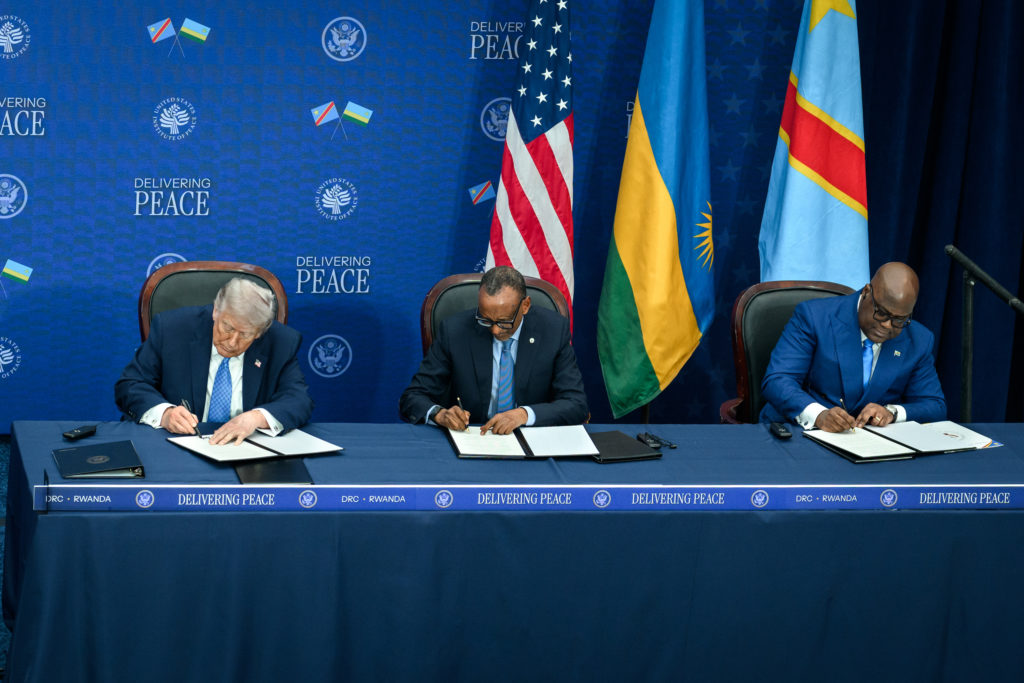


No comments:
Post a Comment