CU
Copper price climbs to fresh high on China outlook boost

Copper continued its record-breaking rally on Monday amid stockpiling of the metal in the US, while China set domestic growth as its top economic priority for next year, boosting the demand outlook.

Futures on the London Metal Exchange climbed as much as 1.3% to $11,771 a ton, surpassing the all-time high set in the previous session.\\
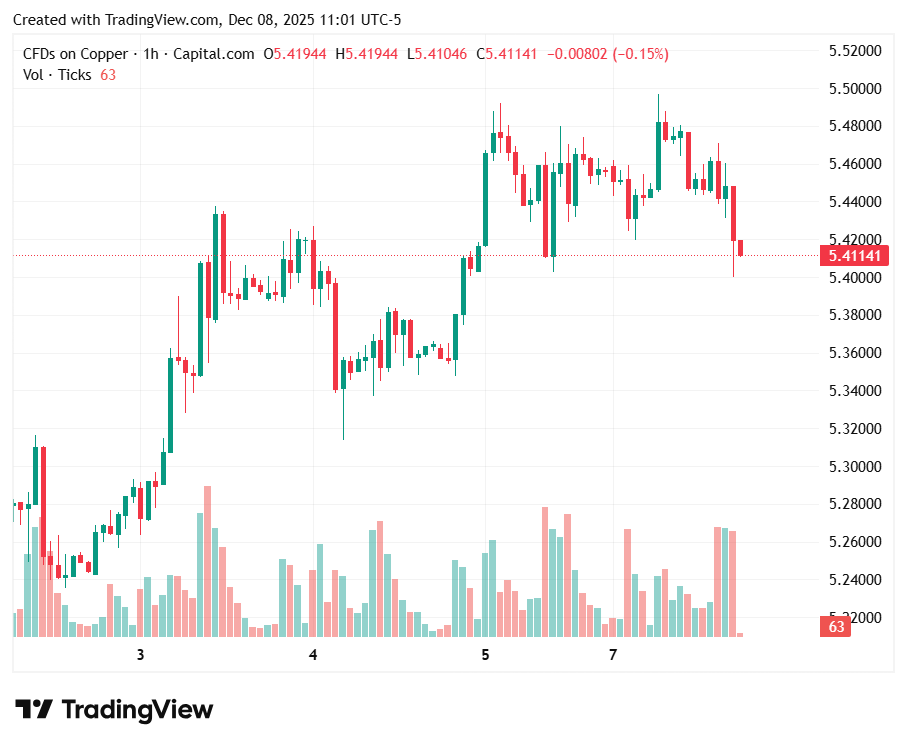
Copper has been ratcheting higher in recent weeks amid a mass exodus of the metal into the US in anticipation of expanded tariffs, raising concerns of a global supply squeeze.
The latest spike came after China — the world’s top consumer — announced it will stick with a “proactive” fiscal approach for 2026, lifting the demand prospects for industrial metals such as copper.
“The Politburo readouts present a more proactive macro environment than investors have expected,” said Xu Wanqiu, an analyst with Chinese brokerage Cofco Futures Co. “Copper will benefit from policy support toward power-grid upgrades, computing power. The momentum remains very bullish.”
Also supporting this narrative is a dwindling supply of refined copper products due to the US stockpiling. Analysts from Citic Securities Co., a Chinese brokerage, said on Monday that the global shortfall of refined copper could reach 450,000 tons next yea
Prices must average above $12,000 a ton next year to attract the investment needed in new mining capacity to ensure sufficient supply in the medium to long term, the Citic analysts said in a note.
Copper has gained 34% on the LME this year amid strong demand from data centers and electric vehicles and a tightening global supply, which was exacerbated by a series of mine outages around the world.
In the US, prices had rallied to a record on the Comex exchange at the end of July ahead of anticipated tariffs on the metal.
(With files from Bloomberg)
Column: Will the real Doctor Copper please step forward?

Copper is on a bull surge with the price hitting record highs on both the London and Shanghai markets this week.
Everyone’s talking about a copper supply crunch. Physical premiums are soaring. Smelters are being squeezed by a shortfall of mined concentrate.
Yet it’s not as if the global manufacturing sector is similarly fired up. September saw activity contract in China, Japan, Europe and, for the ninth consecutive month, the United States.
Tariff uncertainty hangs heavy on the world’s largest manufacturing nations and it is also key to understanding copper’s current euphoria.
Copper’s bull run is as much about market fracture as it is about a straightforward supply crunch.

Feast…
This week’s raid on LME copper stocks saw 54,350 tons, around a third of registered inventory, cancelled in preparation for physical load-out.
It’s highly likely this metal is destined either for the United States or to fill a supply-chain gap caused by other units heading that way.
The United States is now the market of first resort for copper thanks to the lingering threat of import tariffs.
A decision on whether to extend tariffs on copper products to refined metal has been deferred until the middle of next year.
But the CME US copper contract is still commanding a hefty premium over the international price traded on the LME, keeping the physical arbitrage window wide open.
US imports of refined copper more than doubled year-on-year to 1.19 million tons in January-August and more will arrive as long as the CME premium covers the shipping costs. Which at around $500 per ton on a three-month forward basis it more than comfortably does.
CME stocks, all customs-cleared, have mushroomed from 85,000 tons at the start of the year to 394,000 tons and now account for 55% of global exchange inventory.
There is no copper supply crunch in the United States and there’s not going to be one any time soon.
…and famine
But there is growing tightness everywhere else in the world as metal continues to gravitate towards the United States.
That’s why producers have been able to demand record premiums for deliveries next year.
Chilean producer Codelco has hiked its European premium by 39% to $345 per ton over the LME price and is pushing for $350 per ton for Chinese buyers, who find themselves in the unfamiliar position of being second in line in the copper delivery queue.
Indeed, China itself has been caught up in the physical copper scramble.
The mass relocation of copper inventory to the United States has extended to China’s bonded warehouse zones with 128,000 tons re-exported to the United States since February, according to Chinese customs.
Chinese producers have also been lifting deliveries to LME warehouses as a tightening London market opens up an export arbitrage window.
Chinese-brand copper accounted for 82% of LME registered stocks at the end of October, up from 51% at the start of January.
Yet even as global inventory is reshuffled, total exchange stocks are rising, closing November above the 700,000-ton mark for the first time since early 2020.
There is no global shortage of copper but there is a widening split between the US market and the rest of the world. It’s captured by the CME and LME forward curves – in comfortable contango and widening backwardation respectively.
‘Malignant competition’
The splintering of the copper market is not just geographical but also internal.
China has brought too much smelting capacity online in too short a time for the world’s mines to supply, a mismatch compounded by this year’s litany of disruption at some of the world’s largest mines such as Grasberg in Indonesia.
The result is a crisis of smelter profitability. Spot processing fees have been trading at negative levels for months, meaning smelters are giving away for free what should be a core revenue stream.
Several Western smelters have closed and the Chinese smelter sector is now confronted with the hangover from its previous exuberance in the form of potentially negative fees for next year’s annual contracts.
The China Smelters Purchase Team, comprising the country’s top-ten producers, has pledged to reduce production by 10% to help stabilize the raw materials market.
It will also monitor members’ spot market activity to prevent what it called “malignant competition” between smelters for concentrate.
Collective cutback announcements are standard operating procedure for China’s metal smelters whenever the going gets tough but the impact has as often as not been less than promised.
The announcement, though, is evidence of a dysfunctional raw materials market. The current annual benchmark pricing model is at risk of splintering into multiple short-term and binary deals under the pressure.
This injects another level of uncertainty into an already complex copper pricing picture.
So is the world facing an imminent copper supply crunch?
Well, it depends very much on which Doctor Copper you ask. But none of them is saying much about the state of global manufacturing right now.
(The opinions expressed here are those of the author, Andy Home, a columnist for Reuters.)
Adani, Hindalco seek Peru copper assets as demand surges
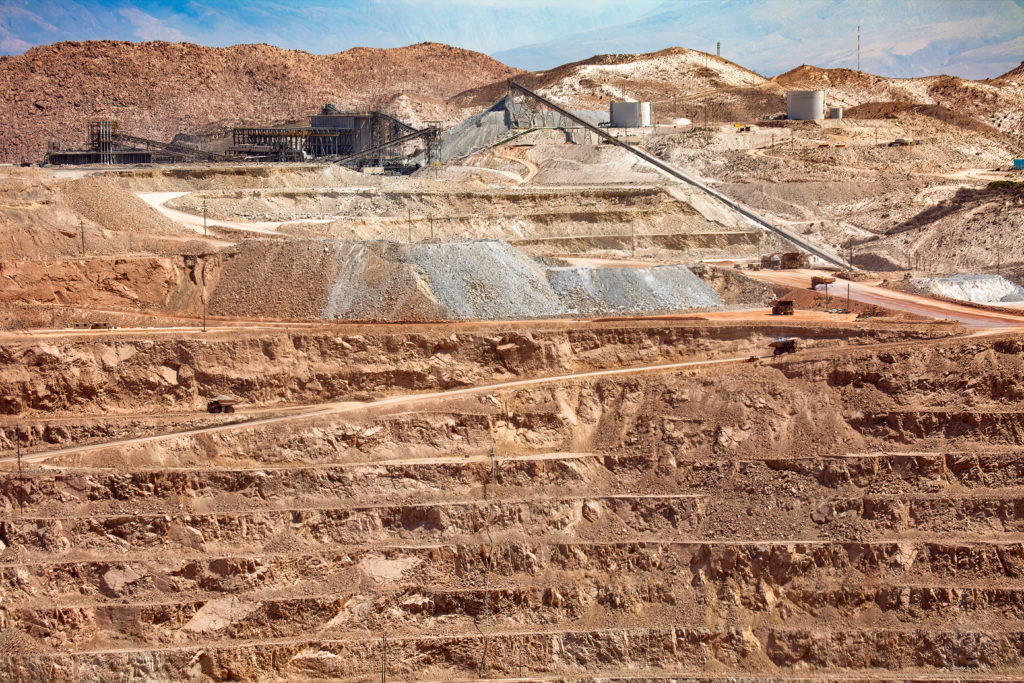
Indian conglomerate Adani and miner Hindalco Industries are exploring investments in Peru’s copper sector, either through joint ventures or by taking stakes in existing mines, a senior Peruvian diplomat told Reuters.
Peru, the world’s third-largest producer of copper used in sectors such as power lines, construction and manufacturing, is courting new investment as it negotiates a broader free trade agreement with India.
“Birla (Hindalco) and Adani are trying to invest in Peru. We are willing to facilitate,” Javier Paulinich, Peru’s ambassador to India, told Reuters in New Delhi.
Peru produced about 2.7 million metric tons of copper in 2024 and attracted $4.96 billion in foreign investment in the sector.
Anticipating a surge in demand and potential supply shortfalls, India, the world’s fastest-growing major economy, has urged its mining companies to invest overseas to secure copper supply chains and manage possible disruptions, according to a government policy document published in July.
India, the world’s second-biggest importer of refined copper, may have to source 91%-97% of its copper concentrate requirements from overseas by 2047, according to official estimates.
Adani sent a delegation to Peru earlier this year, Paulinich said, adding that Hindalco has initiated similar efforts.
“They are in the first stage, trying to find out opportunities,” he said, referring to both Adani and Hindalco.
A top company executive told Reuters last year that Indian billionaire Gautam Adani’s group would source copper concentrates from Peru and other suppliers such as Chile and Australia for its $1.2 billion copper smelter, the world’s biggest single-location plant of its type.
Adani and Hindalco did not respond to Reuters emails seeking comment.
India’s copper imports rose 4% to 1.2 million metric tons in the fiscal year to March 2025. Demand is expected to climb to 3-3.3 million tons by 2030 and 8.9-9.8 million tons by 2047, the government has said.
Free trade pact
India has also sought a detailed chapter on copper in its free trade negotiations with Peru to secure a fixed quantity of copper concentrate, Paulinich said, adding that discussions were still underway.
The free trade talks could conclude by May and the next round of meetings is scheduled for January, Paulinich said.
“It is in final stages,” he said.
(By Neha Arora and Mayank Bhardwaj; Editing by Stephen Coates)
Anglo scraps executive bonus vote as Teck merger decision looms

Anglo American (LON: AAL) has dropped a proposal to change executive bonus awards from the agenda of this week’s shareholder vote on its merger with Canada’s Teck Resources (TSX:TECK.A | TECK.B) after investors objected to the plan.
The company said the merger now hinges only on approval to issue new shares, not on executive pay changes. It added that its remuneration committee will consult investors ahead of an updated pay policy at the 2026 annual meeting.
The withdrawn proposal had sought a 62.5% minimum vesting of 2024 and 2025 share awards for executive directors, tied to completion of the Teck merger, and required a separate resolution because it fell outside the current remuneration policy.
Proxy advisor Institutional Shareholder Services Inc. recommended voting against the amendment, saying transaction-linked pay is not considered good market practice in the UK. ISS said awarding such a large portion of bonuses based on a single metric weakens the broader performance criteria used to assess management.
Anglo American noted the incentive plan was meant to support the deal and help retain senior leaders as the merger would shift the company’s headquarters to Canada.
“With the removal of this resolution, we suspect the Teck combination proposal will be strongly backed by Anglo shareholders,” analysts at Peel Hunt wrote.
Decade’s top deal
The proposed $53-billion transaction would create a major copper producer but but still needs regulatory approval.
The merger vote comes after BHP (ASX:BHP) briefly attempted to buy Anglo last month before abandoning its offer three days later.
Anglo has long been seen as a takeover target thanks to its copper portfolio, though its diamonds and platinum businesses have complicated past bids.
Shareholders of Anglo and Teck will vote on the deal Dec. 9. At least two-thirds of votes must be in favour for the deal to continue.
If approved, the combined miner would rank among the world’s top five copper producers with annual output of 1.35 million tonnes, topping Chile’s Escondida mine’s 2024 production of 1.28 million tonnes.

No comments:
Post a Comment