
63% of US Voters Oppose Attack on Venezuela as Trump’s March to War Accelerates
The new poll comes as the US president openly plots to seize Venezuela’s oil supply.
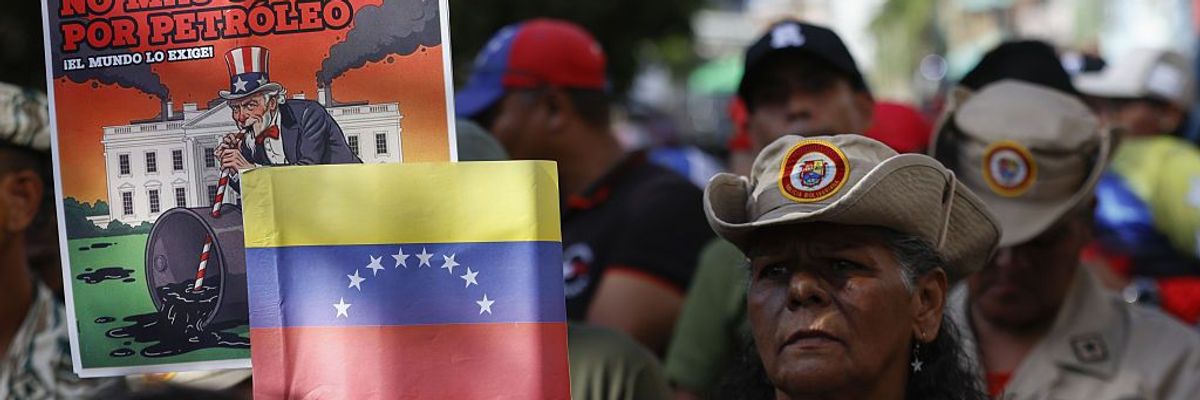
Supporters of President Nicolas Maduro and members of the Bolivarian Civil Militia participate in a protest against the US in the working-class neighborhood of Petare, Caracas, Venezuela on December 13, 2025.
(Photo by Pedro Rances Mattey/Anadolu via Getty Images)
Brad Reed
Dec 18, 2025
COMMON DREAMS
President Donald Trump has taken increasingly aggressive actions against Venezuela in recent weeks, but a new poll released Wednesday shows US voters are not on board with a new war.
A new poll from Quinnipiac University found that 63% of voters oppose military operations inside Venezuela, with just 25% registering support.
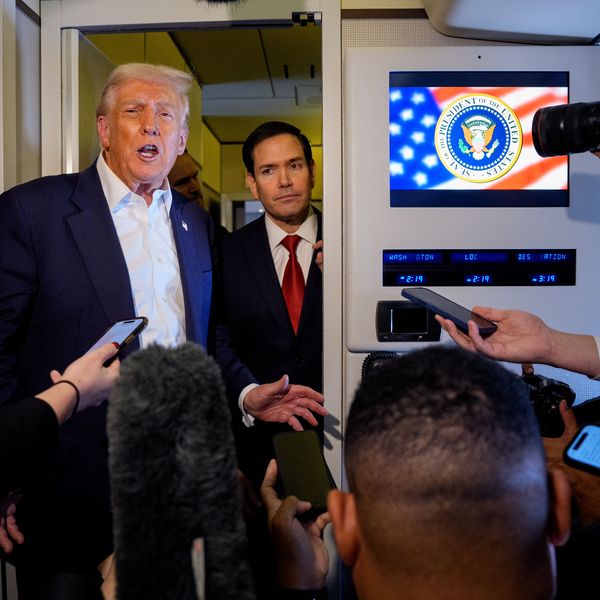
70% of US Public Opposes Military Attack on Venezuela as Trump Eyes ‘Deadly New Phase’
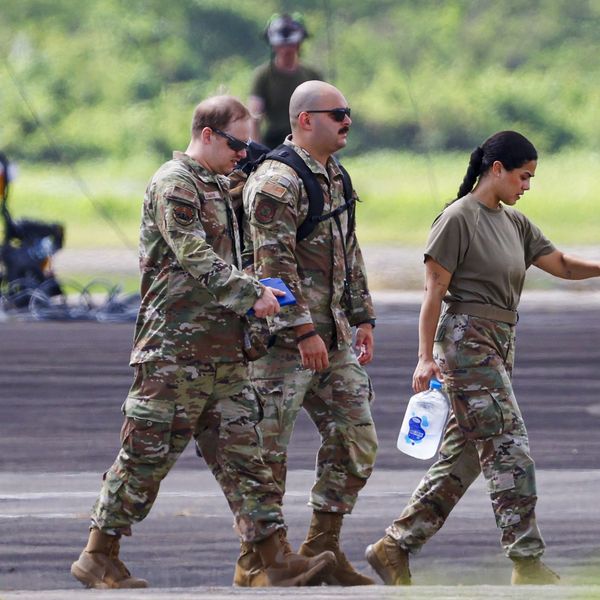
US Troops Near Venezuela Reportedly Denied Holiday Leave as Fears Grow of Unpopular and Lengthy Trump War
What’s more, a US military strike in Venezuela would draw significant opposition even from Republican voters, 33% of whom told Quinnipiac that they would oppose such an action. Eighty-nine percent of Democratic voters and 68% of independent voters said they were opposed to a US military campaign in Venezuela.
Trump’s policy of bombing suspected drug trafficking boats in international waters, which many legal experts consider to be acts of murder, drew significantly less opposition in the new survey than a prospective attack on Venezuela, but it is still unpopular, with 42% in favor and 53% opposed.
A potential war is also unpopular with Venezuelans, as a recent survey from Caracas-based pollster Datanalisis found 55% opposed to a foreign military attack on their nation, with 23% in favor.
The Trump administration’s boat strikes, which have now killed at least 99 people, have been just one aspect of its campaign of military aggression against Venezuela. The US military last week seized a Venezuelan oil tanker, and Trump has said that it’s only a matter of time before the military launches strikes against targets inside the country.
Trump on Wednesday also said that one goal of his campaign against Venezuela would be to seize the country’s oil supply.
“Getting land, oil rights, whatever we had—they took it away because we had a president that maybe wasn’t watching,” Trump said while talking to reporters. “But they’re not gonna do that. We want it back. They took our oil rights. We had a lot of oil there. They threw our companies out. And we want it back.”
Venezuela first nationalized its oil industry in 1976, and the US has no legitimate claim to the nation’s petroleum supply.
Venezuela Won’t Ever Again be a Colony: Maduro Says on Trump’s Oil Blockade

The US president has once again lashed out against Venezuela. Following a series of economic sanctions and the military deployment of over 15,000 soldiers and war ships in the Caribbean Sea, Donald Trump has decided to take further action to suffocate the government of Nicolás Maduro economically.
“Recover our oil”?: Trump’s controversial statements
While for weeks the White House has been justifying its sanctions and threats of invasion against Venezuela by accusing it of being a key node in an international drug trafficking scheme, the imposition of the naval blockade seems to have a different motivation. Trump has declared that the “TOTAL AND COMPLETE BLOCKADE OF ALL SANCTIONED OIL TANKERS” is in order to take back resources that, according to Trump, belong to the United States.
“America will not allow Criminals, Terrorists, or other Countries to rob, threaten, or harm our Nation and, likewise, will not allow a Hostile Regime to take our Oil, Land, or any other Assets, all of which must be returned to the United States, immediately,” Trump said on Truth Social.
Trump threatened: “Venezuela is completely surrounded by the largest Armada ever assembled in the History of South America. It will only get bigger, and the shock to them will be like nothing they have ever seen before — Until such time as they return to the United States of America all of the Oil, Land, and other Assets that they previously stole from us.”
Trump declared that, “For the theft of our Assets, and many other reasons, including Terrorism, Drug Smuggling, and Human Trafficking, the Venezuelan Regime has been designated a FOREIGN TERRORIST ORGANIZATION.”
The announcement was made a week after the US military seized a Venezuelan oil tanker bound for Cuba. The Maduro government has denounced this act before the United Nations, which it considers an “act of international piracy.”
“Interventionism and imperialism,” says Caracas
Venezuelan authorities have stated that Trump’s announcement is a “grotesque threat” and a violation of international law, free trade, and freedom of navigation. They denounced that Trump “claims on his social media that Venezuela’s oil, land, and mineral wealth are his property” and that “consequently, Venezuela must immediately hand over all its riches.”
Furthermore, the statement affirms: “The true intention [of Trump’s measure], which has been denounced by Venezuela and by the people of the United States in large demonstrations, has always been to appropriate the country’s oil, land, and minerals through gigantic campaigns of lies and manipulation.”
According to the statement, Venezuela will report the incident to the United Nations through its ambassador. It also called on the US people and the rest of the world to reject this measure, “which once again reveals Donald Trump’s true intentions to steal the wealth of the country that gave birth to the Liberating Army of South America… The people of Venezuela, in perfect unity with the military and police, will defend their historic rights and triumph through peaceful means.”
Caracas declared: “Venezuela will never again be a colony of any empire or foreign power, and it will continue with its people along the path of building prosperity and defending its independence and sovereignty.”
Opposition to war with Venezuela grows within the US
Meanwhile, condemnation of Trump’s decision has also emerged within the United States. Congressman Joaquín Castro said, “A naval blockade is unquestionably an act of war. A war that the Congress never authorized and the American people do not want.”
Castro added that himself, US Representative Jim McGovern, and Representative Thomas Massie, will bring a resolution to the House of Representatives calling on President Trump to “end hostilities with Venezuela.” “Every member of the House of Representatives will have the opportunity to decide if they support sending Americans into yet another regime change war,” he stated.
For its part, the Party for Socialism and Liberation (PSL) issued a statement rejecting the blockade and denouncing it as an act of war: “In his administration’s latest act of war, Donald Trump has ordered a naval blockade of Venezuela. Its stated goal is to cut off all oil revenue to force the illegal overthrow of an independent government. This is a siege designed to cause economic collapse and a humanitarian crisis as a precursor to all-out war by the United States. This aggression is about controlling Venezuela’s oil and reversing its political independence. It follows a pattern of US intervention in Latin America, where governments that resist US control are targeted for regime change.”
Furthermore, the PSL states: “Trump has made his colonial intentions clear by stating US plans to steal Venezuelan land, oil, and minerals. The people of the United States have overwhelmingly opposed military intervention in Venezuela. This war, like the war on Iraq, is built on false pretenses and imperial ambition. We must organize and mobilize to stop this blockade and prevent a wider war. No war on Venezuela.”
Courtesy: Peoples Dispatch
In Venezuela, We Have Not Been Invaded
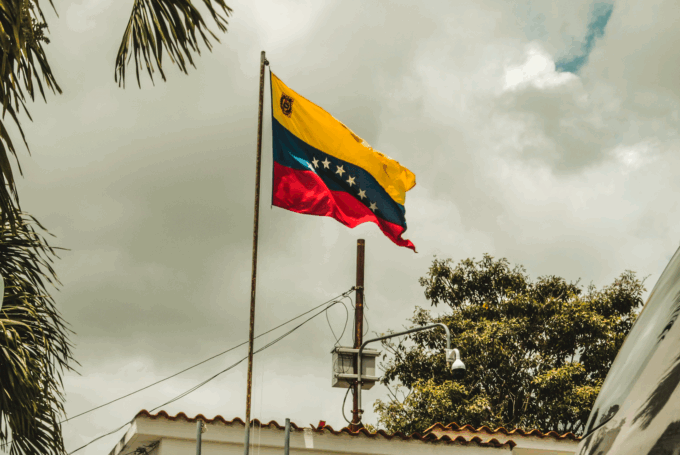
Photo by roger kuzna
I am writing these words from Caracas, the capital of Venezuela, on December 12, 2025, one day after María Corina Machado, the newly appointed Nobel Peace Prize winner, said at a press conference in Oslo, Norway, in response to a journalist’s question about whether she would accept a military invasion of Venezuela, that:
Venezuela has already been invaded. We have the Russian agents, we have the Iranian agents, we have terrorist groups such as Hezbollah, Hamas operating freely, in accordance with the regime. We have the Colombian guerrilla, the drug cartels that have taken control of 60 percent of our population, not only involving drug trafficking but in human trafficking, networks of prostitution. This has turned Venezuela into the criminal hub of the Americas.
In a week or two, my first daughter will be born, like thousands of other Venezuelan babies inside and outside the country who are about to be born or are newborns. It seems like a detail that would not matter to anyone other than the immediate circle of all our families and friends, but the words of María Corina Machado and the actions of the US government in recent months place all Venezuelans as targets of an apparently imminent military invasion which, given the narrative imposed on us—for MCM we are “the criminal hub of the Americas”—and the current global context, in which genocide in Gaza occurs with total impunity, it is logical and even prudent to think that it will seek to destroy everything in its path, hijack our future, and make us pay for our “freedom” with thousands and thousands of lives.
Venezuelan social and political forces are, and have been all these years, diverse in their positions and in their magnitudes. The problems that Venezuelans face on a daily basis have been exacerbated by the unilateral sanctions imposed on the Venezuelan people which, according to the 2014 report of the Special Rapporteur on the Negative Impact of Unilateral Coercive Measures of the United Nations, constitute a violation of international law seriously impacting the country’s population and preventing the enjoyment of human rights.
Our problems are not few, nor are they without enormous complexity, difficult to grasp in their entirety even for ourselves. We have problems, like any country; problems that have been part of our daily lives for years and have eroded in many ways the legitimacy of all political leadership in the country, whether in the government or the opposition. This diversity of political and social forces in Venezuela even includes clear and well-founded criticism of the Venezuelan government in many respects; clear and well-founded criticism from the left, from popular movements, and from Venezuelan workers of many of the paths we have taken in recent years.
Like any country, we are facing our own dilemma, a dilemma that includes, however, the fact that we are the world’s largest oil reserve and one of the largest reserves of gold, water, and coltan, at a time when the geopolitical map is being redrawn and the US empire is cynically playing its cards, Israel is seriously beginning to turn its attention to Latin America, and the major industrial and commercial powers are dividing up the world. So, while we are dealing with a circumstance common to the entire planet—the US empire in its most psychotic phase—we insist on the principle of self-determination and on our right to life, and on our conviction that we will be the ones to find the necessary channels to sustain ourselves and move forward on our own path.
The Dangerous Characterization of Venezuela for Its Possible Invasion
No, in Venezuela we are not living under invasion by China, Russia, Hamas, Hezbollah, Iran, or any other foreign force. There is no direct evidence of this. If we had been invaded, as MCM would have us believe, this would imply the direct intervention of specific forces from these countries in our daily lives, and that is not happening in any way. Government advisors, defense or trade agreements between nations —none of these things, which are regular for any country, imply any form of invasion. There is no evidence that any foreign armed, police, parapolice, or paramilitary force is operating in Venezuela with the authorization and/or support of the national government. Furthermore, unlike in other countries in the region, there are no armed conflicts arising from territorial disputes between drug cartels, nor even, at this point, more local or smaller-scale conflicts involving microtrafficking, so it would be impossible to claim that “drug cartels have taken control of 60 percent of our population.”
The idea that Trump and MCM are trying to construct, that Venezuela is the hub of operations for all the evils that populate the nightmares of the West, is nothing more than a global narrative that seeks to dehumanize Venezuela and the region enough so that, once again, as is currently the case with Gaza and Sudan and so many other conflicts, international public opinion does not know exactly whether, given the seriousness of our situation, the end does not justify the means in this case, that is, among other possibilities, our extermination. Let us never forget what happened in Libya or Iraq, to mention two of a long list of countries “liberated” from evil by the United States. And if we believe in the idea that it is impossible to replicate experiences in the Middle East or Africa in Latin America, let us not lose sight of the fact that, since September, the United States has killed at least 87 people in its attacks in the Caribbean under the same premise that Israel kills men, women, and children with impunity in Palestine: they are terrorists, not human beings, and they are terrorists because they say they are.
In the context of what has happened in Gaza—more than 70.000 children have been killed with impunity—and taking into account that MCM is a close ally of the Israeli government and Netanyahu, the words of the current Nobel Peace Prize winner are a direct attack on the lives of Venezuelans and a clear call for the genocide that the United States and Israel are committing in Gaza to be repeated in Venezuela.
Venezuelans both inside and outside the country deserve the opportunity to solve our problems according to our own criteria and our own capabilities. That is sovereignty. There is currently no invasion by any foreign force in our country, and there is no basis for thinking that we represent a threat to peace in the region.
The only and most likely possibility is that we will be invaded by the US government in pursuit of nothing more than the global maintenance of its hegemony at the expense of our resources, our sweat, and our blood, both ours and that of our children.
Footnote on December 17
Yesterday, Tuesday, December 16, US President Donald Trump declared on the social network Truth Social that:
Venezuela is completely surrounded by the largest Armada ever assembled in the history of South America. It will only get bigger, and the impact on them will be like nothing they have ever seen before —Until such time as they return to the United States of America all of the Oil, Land, and other Assets that they previously stole from us. The illegitimate Maduro Regime is using Oil from these stolen Oil Fields to finance themselves, Drug Terrorism, Human Trafficking, Murder, and Kidnapping. For the theft of our Assets, and many other reasons, including Terrorism, Drug Smuggling, and Human Trafficking, the Venezuelan Regime has been designated a FOREIGN TERRORIST ORGANIZATION. Therefore, today, I am ordering a TOTAL AND COMPLETE BLOCKADE OF ALL SANCTIONED OIL TANKERS going into, and out of, Venezuela.
It doesn’t take much analysis. It seems that between the FIFA Peace Prize and the Nobel Peace Prize, Venezuela (and the region) are about to experience levels of harmony, tranquility, and concord unlike anything we have seen before.
This article was produced by Globetrotter.
The minister also echoed Venezuelan President Nicolás Maduro’s declaration that the US seizing oil tankers is “piracy.”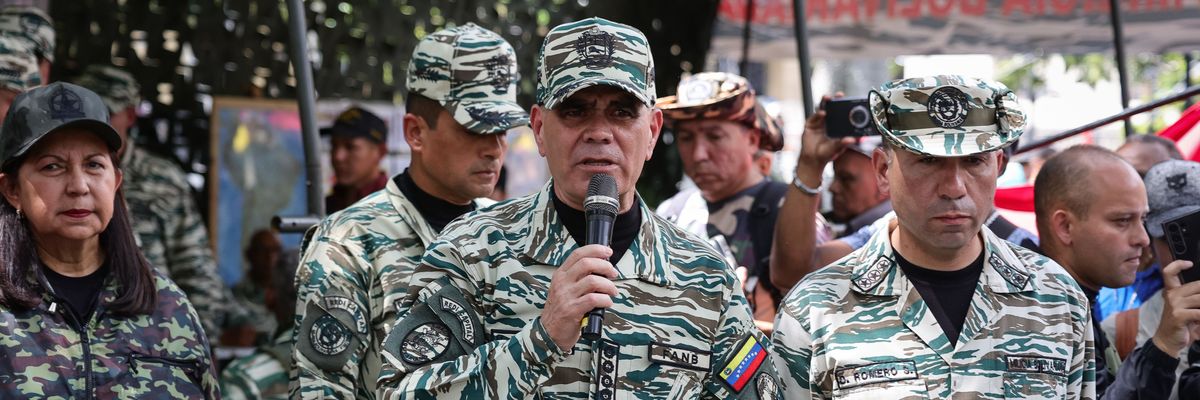
Venezuelan Defense Minister Vladimir Padrino López speaks during a training session on October 4, 2025 in Caracas, Venezuela.
(Photo by Jesus Vargas/Getty Images)
Jessica Corbett
Dec 18, 2025
COMMON DREAMS
As President Donald Trump continues his march toward a US war on Venezuela, the South American country’s defense minister on Wednesday blasted his “delusional” and “completely incoherent” claims, and echoed warnings from around the world that “it’s all about the oil.”
In addition to killing nearly 100 people by bombing alleged drug smuggling boats, Trump has authorized covert Central Intelligence Agency action in Venezuela and repeatedly threatened attacks on land. Late Tuesday, Trump declared a naval blockade that he said will continue until the nation returns to the US “all of the Oil, Land, and other Assets that they previously stole from us.”

Colombian President Petro Says Venezuela Oil ‘At Heart’ of Trump Aggression
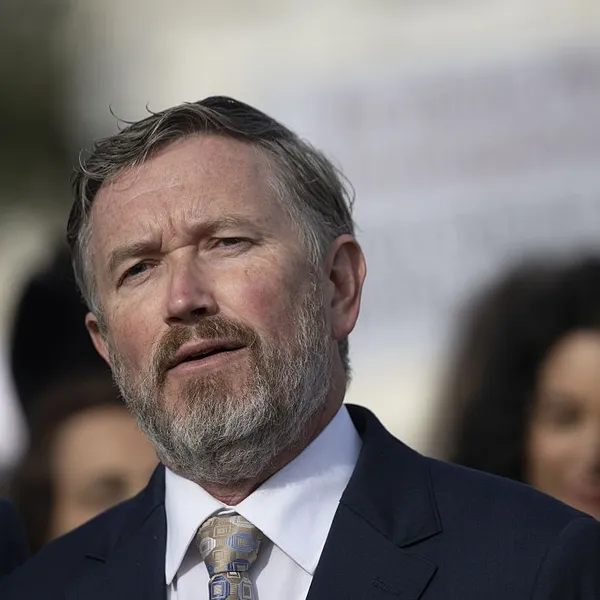
‘This is About Oil and Regime Change’: GOP Lawmaker Speaks Out Against Push for War in Venezuela
Trump appears to be referring to the presence that US companies had in Venezuela before the country nationalized its oil industry in the 1970s. On Wednesday, the Republican president told reporters: “Getting land, oil rights, whatever we had—they took it away because we had a president that maybe wasn’t watching. But they’re not gonna do that. We want it back. They took our oil rights. We had a lot of oil there. As you know, they threw our companies out, and we want it back.”
In a Wednesday speech, Venezuela’s defense minister, Vladimir Padrino López, pushed back against Trump’s blockade, threats of military action, and “delirious” claims that the country stole its own oil, land, and other assets from the United States. The minister also reiterated a declaration from Venezuelan President Nicolás Maduro that the US seizing oil tankers is “piracy.”
As CNN reported, Maduro—whom Trump aims to oust from power—gave a similar speech about the US administration’s purported goal of combating drug trafficking in Caracas on Wednesday.
“It is simply a warmongering and colonialist pretense, and we have said so many times, and now everyone sees the truth. The truth has been revealed,” Maduro said. “The aim in Venezuela is a regime change to impose a puppet government that wouldn’t last 47 hours, that would hand over the Constitution, sovereignty, and all the wealth, turning Venezuela into a colony. It will simply never happen.”
According to Anadolu Agency, Venezuelan Vice President Delcy Rodríguez said on social media this week: “We will continue to be free and independent in our energy relations. Together with President Nicolás Maduro, we will continue to defend the homeland.”
Although the Republican-controlled US House of Representatives on Wednesday night narrowly defeated a pair of war powers resolutions aimed at reining in Trump’s actions toward Venezuela, lawmakers from both major parties have also called out the administration’s drug claims and argued against launching another US war for oil.
Responding to a clip of Trump’s comments to reporters on Wednesday, US Rep. Gregory Meeks (D-NY), who sponsored one of the resolutions, wrote on social media: “I’ve said it many times before: This is not about drugs. If the goal were stopping narcotics, this administration would not be talking about oil rights or seizing tankers. That is not a lawful basis for war.”
Rep. Thomas Massie (R-Ky.), one of the few Republicans who supported the resolutions, took to the House floor ahead of the votes on Wednesday to denounce Trump’s march toward an unconstitutional war and declare that “this is about oil and regime change.”
Senate Candidate Graham Platner
“It should not be an option in our government to allow a failing presidency to just start a war because they feel like it’s politically expedient,” said the progressive running to unseat Republican Sen. Susan Collins.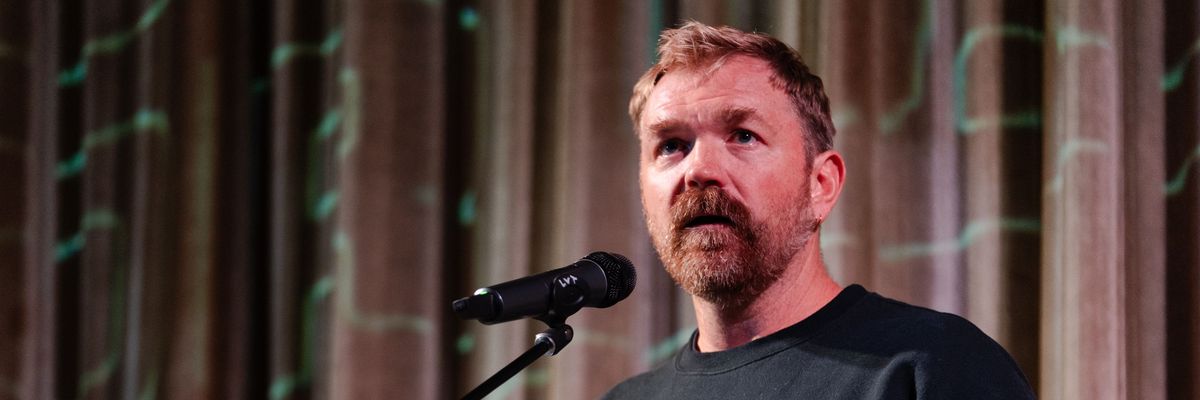
US Senate candidate Graham Platner speaks at a town hall on October 22, 2025 in Ogunquit, Maine.
(Photo by Sophie Park/Getty Images)
Jake Johnson
Dec 18, 2025
COMMON DREAMS
The progressive running to unseat Republican US Sen. Susan Collins of Maine is speaking out forcefully against President Donald Trump’s march to war with Venezuela, warning of alarming parallels with the invasion of Iraq over two decades ago.
In a video posted to social media on Wednesday night, Graham Platner—a Marine Corps and US Army veteran who served multiple combat tours in Iraq and Afghanistan—said it is “terrifying” to witness the US government “yet again trying to lead us into an illegal war that is going to do absolutely nothing for the average American.”
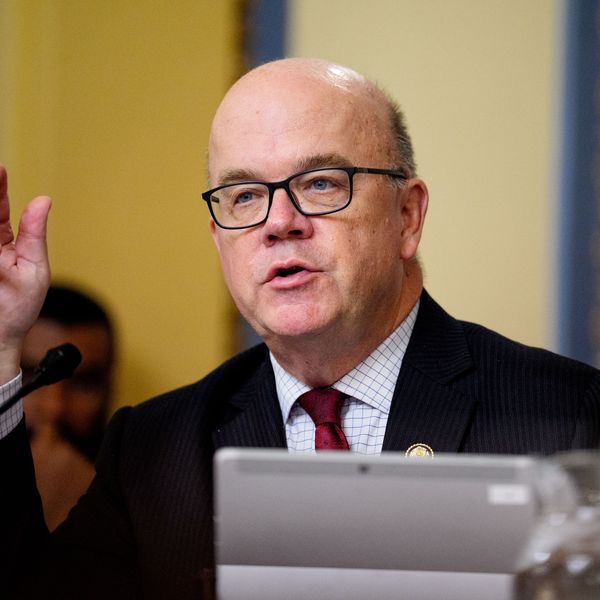
Congressmen Unveil Bipartisan War Powers Resolution to Block Trump War on Venezuela
‘This is About Oil and Regime Change’: GOP Lawmaker Speaks Out Against Push for War in Venezuela
“What is happening in Venezuela should not fool you into thinking that we are under attack, that we are under threat from Venezuela,” said Platner, who accused the increasingly unpopular Trump administration of falling back on the “most tried and true method of failing governments, which is to go start a war.”
“This is why we need to claw back war powers from the executive branch,” he added. “It should not be an option in our government to allow a failing presidency to just start a war because they feel like it’s politically expedient. That shouldn’t even be possible, and the only reason it is possible is that we have allowed it to become possible.”
Watch:
“No war with Venezuela,” Platner wrote on social media in response to the president’s announcement, expressing a view shared by 63% of US voters, according to one new poll.
Platner’s vocal condemnation of Trump’s military aggression toward Venezuela and warnings about regime change contrast sharply with his electoral opponents’ relative silence on the issue, which has drawn international alarm and outrage.
Maine Gov. Janet Mills, Platner’s establishment-backed competition in the Senate primary, told Common Dreams in a statement that “Congress should be exercising its oversight and war powers authority” to constrain Trump. The comments appeared to be Mills’ first public statement on the potential military conflict with Venezuela.
“Unsurprisingly, the president’s objectives and strategy are unclear as he drives us closer to a costly and unnecessary war,” Mills said, adding that, “unlike Susan Collins,” she would have supported a recent war powers resolution that nearly every Republican senator voted to block last month.
Collins, according to the Associated Press, gave opponents of the war powers resolution “the decisive 50th vote to defeat it” when it came up for a vote on November 6.
If passed, the measure would have required Trump to “direct the removal of United States Armed Forces from hostilities within or against Venezuela that have not been authorized by Congress.”
“The power to wage war constitutionally was given to the legislative branch to make sure that this exact kind of scenario did not happen.”
Senate opponents of Trump’s military aggression toward Venezuela directly and his ongoing, deadly strikes on boats in international waters are not giving up on efforts to rein in the lawless president.
Sen. Ruben Gallego (D-Ariz.), an Iraq War veteran who has warned Trump is on the verge of launching “Iraq War 2.0,” introduced a resolution on Wednesday aimed at halting the president’s campaign of extrajudicial executions in the Caribbean and eastern Pacific.
“The decision to use military force is one that requires serious debate, and the power to declare war unambiguously belongs to Congress under the Constitution,” said Gallego. “As an Iraq War veteran, I know the costs of rushing into an unnecessary war and that the American people will not stand for it.”
Platner echoed that sentiment in his video message on Wednesday.
“The power to wage war constitutionally was given to the legislative branch to make sure that this exact kind of scenario did not happen,” said the US Senate candidate. “The only way that we can keep it from happening again is to make sure that the power to wage war returns to the representatives of the people.”
Undeterred, members of the Congressional Progressive Caucus vowed to “continue to fight to stop Trump’s illegal war on Venezuela.”
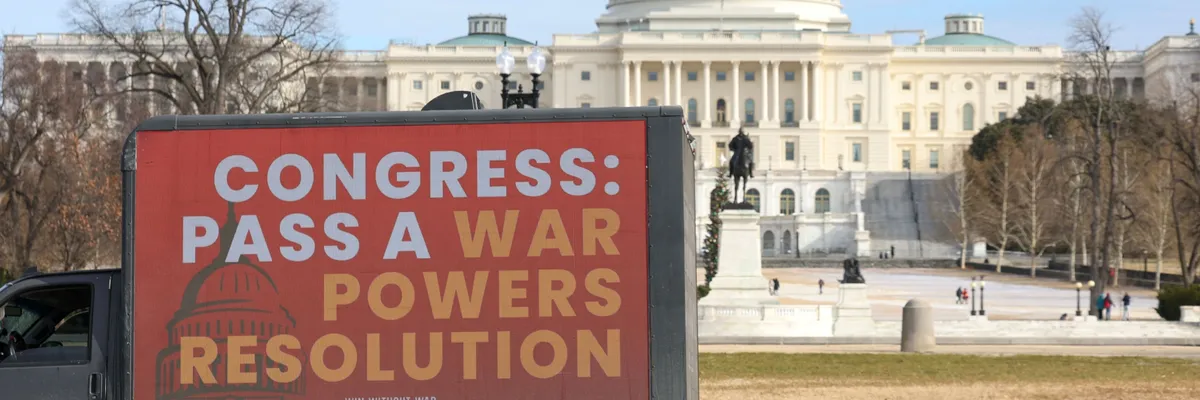
A mobile billboard sponsored by Win Without War urging members of Congress to pass a war powers resolution is seen outside the US Capitol in Washington, DC on December 15, 2025.
(Photo by Tasos Katopodis/Getty Images for Win Without War)
Brett Wilkins
Dec 17, 2025
COMMON DREAMS
House Republicans on Wednesday defeated a pair of war powers resolutions aimed at reining in US President Donald Trump’s airstrikes on alleged drug-running boats in the Caribbean Sea and Pacific Ocean and his increasingly aggressive provocations that critics fear are leading to a war on Venezuela.
The first resolution, introduced by Rep. Gregory Meeks (D-NY), demanded that the US refrain from armed hostilities “with any presidentially designated terrorist organization in the Western Hemisphere, unless authorized by a declaration of war or a specific congressional authorization for use of military force.”
Trump dubiously designated drug cartels—including the Venezuela-based group Tren de Aragua—as foreign terrorist organizations in an executive order signed on his first day back in the White House.
The resolution was defeated 210-216, with seven lawmakers not voting. Two Republicans—Reps. Don Bacon of Nebraska and Thomas Massie of Kentucky—voted in favor of the measure. Democratic Texas Reps. Henry Cuellar and Vicente Gonzalez joined their GOP colleagues in voting down the proposal.
The second resolution, introduced by Rep. Jim McGovern (D-Mass.), would have directed Trump to “remove the use of United States armed forces from hostilities within or against Venezuela, unless explicitly authorized by a declaration of war or specific statutory authorization for use of military force.”
The resolution failed by a vote of 211-213, with nine members not voting. Republicans Bacon, Massie, and Rep. Marjorie Taylor Greene of Georgia voted “yes” on the legislation, while Cuellar voted against the proposal.
“The Trump administration’s ongoing lethal US military strikes on alleged drug boats in the Western Hemisphere are legally questionable, and ineffective,” Meeks and Reps. Adam Smith (D-Wash.), Jim Himes (D-Conn.), Bennie Thompson (D-Miss.), Jason Crow (D-Colo.), and Ilhan Omar (D-Minn.)—all members of the House Foreign Affairs Committee—said in a statement following the vote.
“Under existing US law, these vessels could have been interdicted and their occupants subjected to judicial process,” the lawmakers noted. “Instead of pursuing prosecutions, this administration has deliberately avoided judicial scrutiny by conducting lethal strikes, repatriating survivors, and in at least one instance, carrying out a second strike on defenseless persons.”
The Democrats continued:
The president has failed to demonstrate the necessary authority under US or international law to conduct lethal military strikes on these boats. No one can credibly claim that these vessels, in some cases not even traveling to the United States and located thousands of miles from US soil, posed an imminent threat to the American people warranting the use of military force. Our war powers resolution sought to terminate these extrajudicial strikes, yet most Republicans chose loyalty to Donald Trump over their oath to the Constitution. By not reining in Trump’s gross abuse of power, they are sending a dangerous signal that any president can unilaterally commit US armed forces to hostilities without congressional authorization. We hope our Republican colleagues find their courage in the face of President Trump’s threats to expand this military operation into Venezuela. Should he be allowed to do so, he will no doubt provoke another forever war that the American people do not support and Congress has certainly not authorized.
The House votes follow two failed Senate attempts to stop Trump from continuing military action against alleged drug cartels without congressional approval. A vote on a war powers resolution introduced earlier this month by Senate Minority Leader Chuck Schumer (D-NY) and Sens. Tim Kaine (D-Va.), Rand Paul (R-Ky.), and Adam Schiff (D-Calif.) is expected this week. Meanwhile, Sen. Ruben Gallego (D-Ariz.) on Monday announced a separate resolution to stop US forces from launching more boat strikes.
Wednesday’s votes came after Trump escalated US aggression toward Venezuela by ordering a “total and complete blockade” on “all sanctioned oil tankers” approaching and leaving the South American country. In a social media post divorced from historical fact, Trump accused Venezuela of stealing “oil, land, and other assets” from the United States.
This, after Trump’s deployment of an armada of warships and thousands of troops to the southern Caribbean, his authorization of CIA covert action against the government of Venezuelan President Nicolás Maduro, and his threats of a land invasion of Venezuela. Most of the at least 95 people killed in the more than two dozen US strikes on boats allegedly transporting drugs have also been Venezuelans.
Undeterred by Wednesday’s votes, members of the Congressional Progressive Caucus (CPC) vowed to “continue to fight to stop Trump’s illegal war on Venezuela.”
“Tonight’s razor-thin, 211-to-213 vote on the bipartisan war powers resolution to end these illegal hostilities puts Trump on notice,” Omar, the deputy CPC chair, said in a statement.
Omar continued:
Nearly a quarter-century ago, the American people were misled by a lawless president promoting lies about weapons of mass destruction, all to invade an oil-rich country that posed no threat to us. The result was a disaster that killed thousands of American service members, triggered a humanitarian crisis in Iraq, and destabilized the entire region. Trump is pursuing the same course today in Venezuela, absurdly designating fentanyl a WMD while blockading Venezuela until the country gives him “all of the Oil, Land, and other Assets.”
“Trump has no mandate to push his unconstitutional military campaign against Venezuela,” Omar added. “If Trump continues to carry out oil tanker seizures, impose a naval blockade, and put American service members in harm’s way for an illegal regime change war, he can surely expect a vote to immediately stop this disastrous conflict.”
“Previous presidents told us to go to war over WMDs that did not exist,” said Rep. Thomas Massie. “Now it’s the same playbook.”
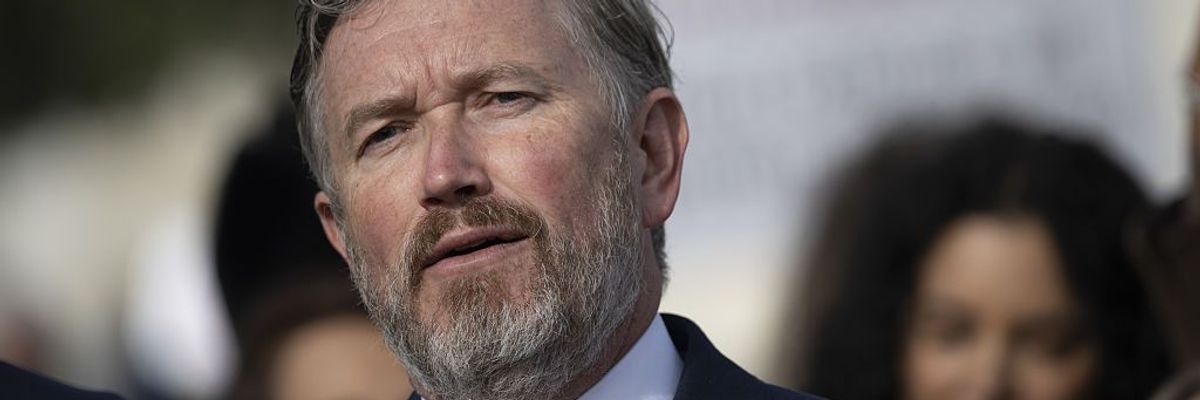
US Rep. Thomas Massie (R-Ky.) speaks during the press conference on the Epstein Files Transparency Act with survivors of Jeffrey Epstein’s abuse at the US Capitol in Washington, DC, on November 18, 2025.
(Photo by Celal Gunes/Anadolu via Getty Images)
Dec 17, 2025
COMMON DREAMS
A Republican congressman on Wednesday pushed back against President Donald Trump’s push for war with Venezuela.
Speaking on the floor of the House of Representatives, Rep. Thomas Massie (R-Ky.) demanded that Trump not take any military action against Venezuela without approval from the US Congress.
‘Venezuela, for the American Oil Companies, Will Be a Field Day,’ Says US Lawmaker Pushing Invasion
“The framers [of the US Constitution] understood a simple truth: To the extent that war-making powers devolves to one person, liberty dissolves,” he said. “If the president believes that military action against Venezuela is justified and needed, he should make the case, and Congress should vote before American lives and treasure are spent on regime change in South America.”
Massie then made clear that he wasn’t simply making a procedural case against the president’s actions, but a substantive case against going to war with Venezuela. In particular, the Kentucky congressman pointed to past US failures in regime-change wars such as Iraq and Libya to warn against making a similar case in South America.
“Previous presidents told us to go to war over WMDs that did not exist,” he said, referring to weapons of mass destruction. “Now it’s the same playbook. Except we’re told that drugs are the WMDs. If it were about drugs, we’d bomb Mexico or China or Colombia.”
Massie also argued that, if Trump were really concerned about the flow of illicit drugs into the US, he wouldn’t have pardoned Juan Orlando Hernández, the former president of Honduras who had been convicted in 2024 of conspiring to smuggle 400 tons of cocaine into the US.
“This is about oil and regime change,” Massie said.
Massie’s points about the administration’s rationale for war with Venezuela were echoed by Rep. Ilhan Omar (D-Minn.), who also delivered a speech in the US House Wednesday denouncing the rush for military action.
“This is not about drugs, this is about regime change,” she said. “And we also have the White House chief of staff [Susie Wiles] saying that this is about regime change. It has nothing to do with drugs.”
Like Massie, Omar also emphasized the role for Congress set out by the US Constitution when it comes to declarations of war.
“Only Congress has the power to declare war,” she said. “The Trump administration’s military escalation in the Caribbean is not only reckless, it is blatantly illegal. We cannot allow this kind of dangerous overreach to go unchecked.”
The first resolution demands Trump “remove United States armed forces from hostilities with any presidentially designated terrorist organization in the Western Hemisphere, unless authorized by a declaration of war or a specific congressional authorization for use of military force.”
The second resolution more explicitly “directs the president to remove the use of United States armed forces from hostilities within or against Venezuela, unless explicitly authorized by a declaration of war or specific statutory authorization for use of military force.”
Trump and his administration in recent weeks have been acting with increasing aggression against Venezuela, starting with the bombing of purported drug trafficking boats off the country’s coast, and escalating earlier this month to seizing an oil tanker that had docked at one of its ports.
On Tuesday night, Trump announced a “total and complete blockade” of all “sanctioned oil tankers” seeking to enter and leave the country.
“Venezuela is completely surrounded by the largest Armada ever assembled in the History of South America,” Trump wrote in a Truth Social post. “It will only get bigger, and the shock to them will be like nothing they have ever seen before.”
While talking with reporters on Wednesday, Trump upped the ante further and said that the US wanted to take Venezuela’s oil supply.
“Getting land, oil rights, whatever we had—they took it away because we had a president that maybe wasn’t watching,” Trump said. “But they’re not gonna do that. We want it back. They took our oil rights. We had a lot of oil there. They threw our companies out. And we want it back.”
US oil blockade of Venezuela: what we know
By AFP
December 17, 2025
US President Donald Trump's administration has been piling pressure on Venezuela's Nicolas Maduro - Copyright AFP/File Juan BARRETO
US forces in the Caribbean — where Donald Trump has deployed a massive flotilla of warships — have been tasked by the president with blockading “sanctioned oil vessels” going to and from Venezuela.
Trump’s administration has been piling pressure on the country and its government for months, in an apparent bid to oust leftist leader Nicolas Maduro — whom Washington accuses of heading a drug cartel.
The US president has said that Maduro’s “days are numbered” and pointedly refused to rule out a ground invasion, but the Venezuelan leader has remained defiant so far.
Below, AFP examines the situation in the Caribbean.
– US assets in the Caribbean –
Many questions remain over how the Venezuela blockade will play out, and it is not clear how many tankers will be impacted, or to what degree the US military — which currently has thousands of personnel in the Caribbean — would be involved.
There are currently 11 US warships in the Caribbean: the world’s largest aircraft carrier, an amphibious assault ship, two amphibious transport dock ships, two cruisers and five destroyers.
There are US Coast Guard vessels deployed in the region as well, but the service declined to provide figures on those assets “for operational security reasons.”
Washington has also flown a series of military aircraft — including long-range bombers — along the coast of Venezuela, and has reached deals with some countries in the region for the use of their airports for military flights.
– Tanker seized –
The United States has already seized one tanker off Venezuela’s coast, taking control of the M/T Skipper last week in a raid that provides a potential preview of future action.
A video released by US Attorney General Pam Bondi showed US forces descending from a helicopter onto the tanker’s deck, then entering the ship’s bridge with weapons raised.
A US court later released a heavily redacted warrant authorizing the seizure of the ship, which the document said was carried out by the Coast Guard.
– Strikes on alleged drug boats –
Washington’s forces began carrying out strikes on alleged drug-smuggling boats in the Caribbean in early September, later expanding those operations to the eastern Pacific Ocean.
The Trump administration has said the strikes — which have destroyed more than 25 vessels and killed at least 95 people — are aimed at curbing trafficking.
But White House Chief of Staff Susie Wiles told Vanity Fair magazine that the strikes are aimed at pressuring Venezuela’s leadership, saying Trump “wants to keep on blowing boats up until Maduro cries uncle.”
– ‘Quarantine’ of Cuba –
Latin American countries have been targeted with blockades in the past, most famously during the Cuban Missile Crisis in 1962, when Washington established a “quarantine” to stop the Soviet Union from bringing offensive weapons to its Caribbean ally.
Some Soviet ships decided to turn back before reaching the quarantine line, while others were stopped and searched by US forces but cleared to proceed to Cuba.
The measure — which was called a “quarantine” rather than a blockade because no state of war existed — was lifted after the United States and Moscow reached a deal to end the crisis, which is widely considered the closest the two countries came to nuclear war.

No comments:
Post a Comment