Pakistan declares 'open war' with Afghanistan and launches strikes on Kabul
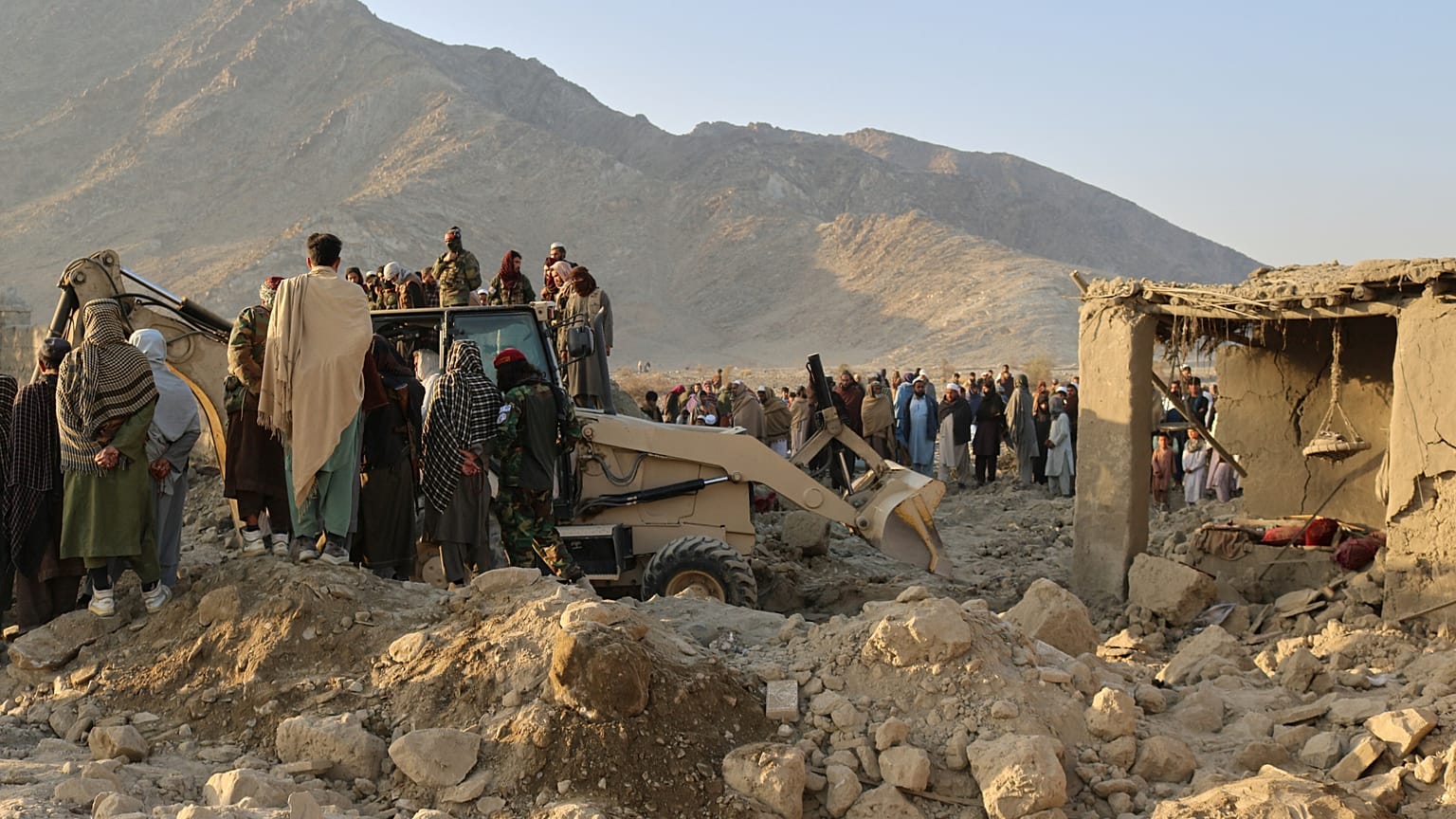
Pakistan's latest operation came after Afghan Taliban forces attacked Pakistani border troops on Thursday night over earlier air strikes by Islamabad, and follows months of border clashes.
Pakistan launched strikes on major cities in Afghanistan on Friday, including the capital Kabul, as its defence minister said his country ran out of “patience” and considers that there is now an “open war”.
It comes after Afghan Taliban forces attacked Pakistani border troops on Thursday night in retaliation for deadly Pakistani airstrikes on Afghan border areas on Sunday.
In a post on X Friday, Defence Minister Khawaja Mohammad Asif said Pakistan had hoped for peace in Afghanistan after the withdrawal of NATO forces and expected the Taliban to focus on the welfare of the Afghan people and regional stability.
Instead, he said, the Taliban had turned Afghanistan “into a colony of India,” gathered militants from around the world and begun “exporting terrorism.”
Pakistan has frequently accused neighbouring India of backing the outlawed Baloch Liberation Army and the Pakistani Taliban, allegations New Delhi denies.
Relations between the neighbours have plunged in recent months, with land border crossings largely shut since deadly fighting in October that killed more than 70 people on both sides.
Islamabad accuses Afghanistan of failing to act against militant groups that carry out attacks in Pakistan, which the Taliban government denies.
Several rounds of negotiations followed an initial ceasefire brokered by Qatar and Turkey, but the efforts have failed to produce a lasting agreement.
Both militaries said they killed dozens of soldiers in the latest round of border violence, which followed multiple Pakistani strikes on Afghanistan and clashes along the frontier in recent months.
Months of border violence
There has been a series of deadly suicide blasts in Pakistan and Afghanistan in recent months.
They included an attack on a Shiite mosque in Islamabad that killed at least 40 people and was claimed by the so-called Islamic State terrorist group.
The group's regional chapter, Islamic State-Khorasan, also claimed a deadly suicide bombing at a restaurant in Kabul last month.
After repeated breaches of the initial ceasefire, Saudi Arabia intervened this month, mediating the release of three Pakistani soldiers captured by Afghanistan in October.
Pakistan launched a sweeping crackdown in October 2023 to expel migrants without documents, urging those in the country to leave of their own accord to avoid arrest and forcible deportation, and forcibly expelling others. Iran also began a crackdown on migrants at around the same time.
Since then, millions have streamed across the border into Afghanistan, including people who were born in Pakistan decades ago and had built lives and created businesses there.
Last year alone, 2.9 million people returned to Afghanistan, the UN refugee agency has said, with nearly 80,000 having returned so far this year.
Hundreds Reportedly Killed as ‘Open War’
Breaks Out Between Pakistan and
Afghanistan
A spokesperson for the head of the United Nations implored both sides to “seek to resolve any differences through diplomacy.”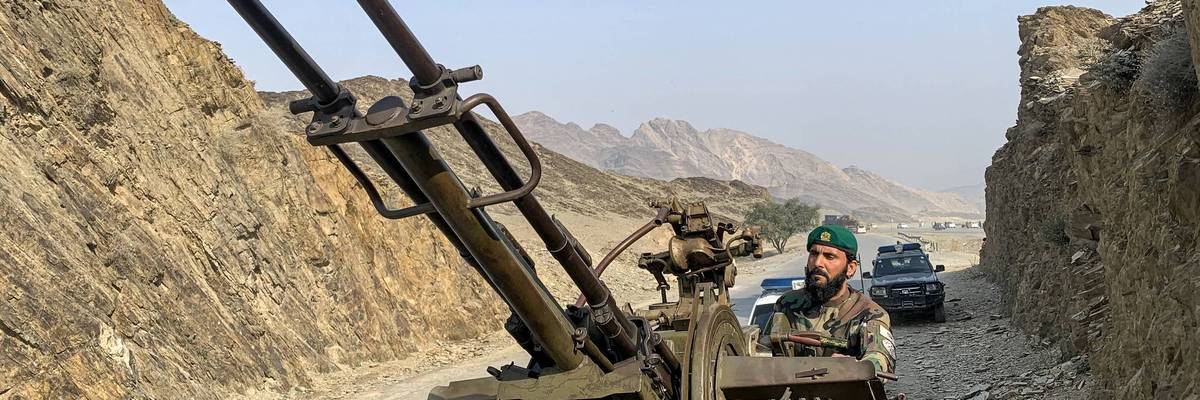
A Taliban security personnel operating an anti-aircraft gun keeps watch for Pakistani airstrikes near the Torkham border crossing between Afghanistan and Pakistan in the Nangarhar province on February 27, 2026.
(Photo by Aimal Zahir/AFP via Getty Images)
Common Dreams Staff
Feb 27, 2026
This is a developing story... Please check back for updates...
Pakistan’s defense minister said Friday that his country and Afghanistan are in an “open war” after Afghan forces attacked Pakistani border troops in what Kabul characterized as retaliation for recent airstrikes.
Pakistan, which has nuclear weapons, responded to the attack on its border troops with airstrikes on at least three Afghan provinces early Friday, reportedly killing more than 220 people. A spokesperson for Afghanistan’s Taliban government said its forces killed dozens of Pakistanis in Thursday’s onslaught.
Al Jazeera‘s Kamal Hyder, reporting from Pakistan on Friday, said that “we were able to see and hear outgoing fire from the Pakistani side that appears to be heavy artillery, which means that the clashes are still continuing.”
Stéphane Dujarric, a spokesperson for United Nations Secretary-General António Guterres, said the UN chief is alarmed by the escalating hostilities and urged the “parties to continue to seek to resolve any differences through diplomacy.”

No comments:
Post a Comment