
Cuba: Dignity is Immortal, Blockades Are Not
The island of Cuba has endured one of the longest blockades in history. Its sacrifice, however, has not been in vain.
In 1453, Ottoman troops successfully blockaded the ancient capital of Byzantium from both land and sea. Constantinople had withstood countless attacks from its Turkish rivals, but the successful blockade of supplies brought down the hitherto impregnable walls of the ancient Eastern Roman Empire.
The Ottomans did not invent anything new in this regard. As early as 332 BC, Alexander the Great of Macedonia blockaded the ancient city of Tyre after its inhabitants proved unconquerable by conventional military means. The island held out for seven months, until a furious Alexander, who could not tolerate the insolence of those who resisted, managed to breach its walls and, according to some ancient historians, destroyed half the city and killed most of its inhabitants.
The blockade of a city or country is, in fact, one of the most controversial measures that can be taken in a war. In the minds of generals and kings, it is hoped that the blockade will drive the people inside the city to despair, destroy their morale, and ultimately provoke an internal rebellion by starving and sick people, causing the resistance to capitulate.
But not all blockades have worked. Probably the most famous failure of a blockade in recent history is that of Leningrad, now St. Petersburg, which resisted the siege of the Nazi machinery from 1941 to 1944 (872 days in total). The siege of Leningrad caused the death by starvation and cold of over a million people who, despite the cruelty of Hitler’s troops, did not surrender the city until the USSR managed to counterattack and defeat the Third Reich.
Without a doubt, Cuba has written a new chapter in the history of resistance to a blockade. For more than 60 years, Cuba has managed to withstand a blockade that clearly seeks to destroy the most emblematic revolutionary process of the 20th century in the Americas. A process that declares itself socialist, that is led by a mass party (the Communist Party of Cuba) and, perhaps most importantly, that takes place on the southern border of the most powerful capitalist country in history, a country that has also proclaimed itself the staunchest rival of socialist processes in the Americas.
Indeed, the blockade against Cuba has not been absolute. For decades, solidarity from the USSR, China, Vietnam, and other socialist countries managed to sustain a process supported by the vast majority of the island’s inhabitants. However, after the fall of the USSR, Cuba faced an apparently catastrophic scenario. Washington thought it would be the end of the revolutionary government and tried to deliver the final blow during the Clinton administration by creating new sanctions and difficulties for third countries to trade with Cuba.
But Cuba resisted once again. Fidel Castro inaugurated the so-called “Special Period” during the 1990s, in which the country’s economy was reconfigured to withstand the fall of its main trading partner. And Cuba resisted.
At the beginning of the 21st century, the start of the Chavista process in Venezuela gave Cuba some peace of mind, but it continued to apply special measures. Venezuelan oil helped overcome significant energy and production problems.
However, since December 2025, when the US imposed an oil blockade on Venezuela, and January 3, 2026, the day the United States directly attacked Venezuela for the first time in its history, Cuba has been suffering from suffocation that could cause unprecedented pain for the Cuban people.
Not only has the United States ordered the suspension of Venezuelan oil sales to Cuba, but it has also threatened to impose special sanctions on any country that sells oil to the island, something that threatens the very lives of Cubans who need crude oil not only for their personal vehicles, but also to transport food, run their hospitals, produce agricultural goods, power industries, etc. It is a measure that seeks to destroy Cuba.
In fact, according to his own statements, Trump is willing to drive Cuba to despair in order to bring down the Cuban government, hoping that this will fulfill one of Washington’s most cherished fantasies, namely, the collapse of the only socialist government in America that has managed to challenge the United States with notable success.
Yet, Cuba does not pose a military challenge that threatens US security (as Washington claims). Though, it is worth pointing out that Fidel’s troops managed to defeat several military attempts to overthrow him in the 1960s, including the famous invasion of Playa Girón, where thousands of US-backed soldiers were defeated militarily by the Cuban Revolutionary Army. Nevertheless, Cuba has never attacked the United States in any way.
Nor is Cuba depriving its people of cultural, scientific, or sporting advances, given that Cuba was the first country on the continent to eradicate illiteracy; it has become one of the countries with the most doctors per capita in the world; it has a much higher life expectancy than most other Latin American countries; and it is the second country with the most Olympic medals on the entire continent (only behind the United States and far ahead of the others).
In reality, the “threat” that Cuba poses to the US government is and always has been its mere existence. The dignity of being a people that have decided their own destiny in the face of the most powerful military empire in history, Fidel insisted, is a price that the US makes Cuba pay by suppressing its potential every day.
One cannot help but imagine what Cuba would have become if the United States, the defender of the much-vaunted free market, had not stifled its economy and trade for the last six decades. What other achievements would Cuba have accomplished? How economically powerful could it have become compared to the state of extreme poverty to which the country was subjected by those who turned it into a casino and brothel for the rich in Florida, while the people in the interior of the country suffered the most ignominious material deprivation?
The Trump administration seems determined not to tolerate this existential affront any longer. Its geopolitical project is to restore a powerful imperialism, albeit through intimidation; hyper-technological, albeit with nineteenth-century ideas; revitalized, albeit through practices that isolate it from the rest of the world; in short, a powerful imperialism that continues to be symbolically challenged by that small island of almost 10 million inhabitants (roughly the population of Michigan and a little more than New York City).
Cuba is to the Trump administration, what the cities and countries that refused to surrender to great conquering empires have been: an intolerable example of the limits of military and economic power in the face of human dignity, which cannot be bought, but only sought to be destroyed through methods of siege and blockade that several great generals in history have refused to use even in periods of bloody wars, due to the suffering it brings to its inhabitants.
For now, Cuba resists. And it has always been that way. And before, it was also “for now.” But the sum of these “for nows” makes up the legends, the stories that inspire entire generations not to give in, even if they happened hundreds or thousands of years ago; that redefine the concept of heroism, not through military actions, but through the will not to lose dignity in the face of the most apocalyptic threat. Cuba is a legend that imperialism can no longer bear, and it seems that it will do everything in its power to eradicate it from the earth and from memory.
But every connoisseur of history knows that the dignity of peoples is immortal, whereas empires are not. Shelley reminds us of this in his sonnet Ozymandias, which tells of Ramses the Great, probably the most powerful pharaoh of his time, around whose monument only the ruins remain of what once seemed indestructible: “And on the pedestal these words appear:/ ‘My name is Ozymandias, king of kings:/ Look on my works, ye Mighty, and despair!’/ Nothing beside remains. Round the decay / Of that colossal wreck, boundless and bare. / The lone and level sands stretch far away.”
Courtesy: Peoples dispatch
In 1453, Ottoman troops successfully blockaded the ancient capital of Byzantium from both land and sea. Constantinople had withstood countless attacks from its Turkish rivals, but the successful blockade of supplies brought down the hitherto impregnable walls of the ancient Eastern Roman Empire.
The Ottomans did not invent anything new in this regard. As early as 332 BC, Alexander the Great of Macedonia blockaded the ancient city of Tyre after its inhabitants proved unconquerable by conventional military means. The island held out for seven months, until a furious Alexander, who could not tolerate the insolence of those who resisted, managed to breach its walls and, according to some ancient historians, destroyed half the city and killed most of its inhabitants.
The blockade of a city or country is, in fact, one of the most controversial measures that can be taken in a war. In the minds of generals and kings, it is hoped that the blockade will drive the people inside the city to despair, destroy their morale, and ultimately provoke an internal rebellion by starving and sick people, causing the resistance to capitulate.
But not all blockades have worked. Probably the most famous failure of a blockade in recent history is that of Leningrad, now St. Petersburg, which resisted the siege of the Nazi machinery from 1941 to 1944 (872 days in total). The siege of Leningrad caused the death by starvation and cold of over a million people who, despite the cruelty of Hitler’s troops, did not surrender the city until the USSR managed to counterattack and defeat the Third Reich.
Without a doubt, Cuba has written a new chapter in the history of resistance to a blockade. For more than 60 years, Cuba has managed to withstand a blockade that clearly seeks to destroy the most emblematic revolutionary process of the 20th century in the Americas. A process that declares itself socialist, that is led by a mass party (the Communist Party of Cuba) and, perhaps most importantly, that takes place on the southern border of the most powerful capitalist country in history, a country that has also proclaimed itself the staunchest rival of socialist processes in the Americas.
Indeed, the blockade against Cuba has not been absolute. For decades, solidarity from the USSR, China, Vietnam, and other socialist countries managed to sustain a process supported by the vast majority of the island’s inhabitants. However, after the fall of the USSR, Cuba faced an apparently catastrophic scenario. Washington thought it would be the end of the revolutionary government and tried to deliver the final blow during the Clinton administration by creating new sanctions and difficulties for third countries to trade with Cuba.
But Cuba resisted once again. Fidel Castro inaugurated the so-called “Special Period” during the 1990s, in which the country’s economy was reconfigured to withstand the fall of its main trading partner. And Cuba resisted.
At the beginning of the 21st century, the start of the Chavista process in Venezuela gave Cuba some peace of mind, but it continued to apply special measures. Venezuelan oil helped overcome significant energy and production problems.
However, since December 2025, when the US imposed an oil blockade on Venezuela, and January 3, 2026, the day the United States directly attacked Venezuela for the first time in its history, Cuba has been suffering from suffocation that could cause unprecedented pain for the Cuban people.
Not only has the United States ordered the suspension of Venezuelan oil sales to Cuba, but it has also threatened to impose special sanctions on any country that sells oil to the island, something that threatens the very lives of Cubans who need crude oil not only for their personal vehicles, but also to transport food, run their hospitals, produce agricultural goods, power industries, etc. It is a measure that seeks to destroy Cuba.
In fact, according to his own statements, Trump is willing to drive Cuba to despair in order to bring down the Cuban government, hoping that this will fulfill one of Washington’s most cherished fantasies, namely, the collapse of the only socialist government in America that has managed to challenge the United States with notable success.
Yet, Cuba does not pose a military challenge that threatens US security (as Washington claims). Though, it is worth pointing out that Fidel’s troops managed to defeat several military attempts to overthrow him in the 1960s, including the famous invasion of Playa Girón, where thousands of US-backed soldiers were defeated militarily by the Cuban Revolutionary Army. Nevertheless, Cuba has never attacked the United States in any way.
Nor is Cuba depriving its people of cultural, scientific, or sporting advances, given that Cuba was the first country on the continent to eradicate illiteracy; it has become one of the countries with the most doctors per capita in the world; it has a much higher life expectancy than most other Latin American countries; and it is the second country with the most Olympic medals on the entire continent (only behind the United States and far ahead of the others).
In reality, the “threat” that Cuba poses to the US government is and always has been its mere existence. The dignity of being a people that have decided their own destiny in the face of the most powerful military empire in history, Fidel insisted, is a price that the US makes Cuba pay by suppressing its potential every day.
One cannot help but imagine what Cuba would have become if the United States, the defender of the much-vaunted free market, had not stifled its economy and trade for the last six decades. What other achievements would Cuba have accomplished? How economically powerful could it have become compared to the state of extreme poverty to which the country was subjected by those who turned it into a casino and brothel for the rich in Florida, while the people in the interior of the country suffered the most ignominious material deprivation?
The Trump administration seems determined not to tolerate this existential affront any longer. Its geopolitical project is to restore a powerful imperialism, albeit through intimidation; hyper-technological, albeit with nineteenth-century ideas; revitalized, albeit through practices that isolate it from the rest of the world; in short, a powerful imperialism that continues to be symbolically challenged by that small island of almost 10 million inhabitants (roughly the population of Michigan and a little more than New York City).
Cuba is to the Trump administration, what the cities and countries that refused to surrender to great conquering empires have been: an intolerable example of the limits of military and economic power in the face of human dignity, which cannot be bought, but only sought to be destroyed through methods of siege and blockade that several great generals in history have refused to use even in periods of bloody wars, due to the suffering it brings to its inhabitants.
For now, Cuba resists. And it has always been that way. And before, it was also “for now.” But the sum of these “for nows” makes up the legends, the stories that inspire entire generations not to give in, even if they happened hundreds or thousands of years ago; that redefine the concept of heroism, not through military actions, but through the will not to lose dignity in the face of the most apocalyptic threat. Cuba is a legend that imperialism can no longer bear, and it seems that it will do everything in its power to eradicate it from the earth and from memory.
But every connoisseur of history knows that the dignity of peoples is immortal, whereas empires are not. Shelley reminds us of this in his sonnet Ozymandias, which tells of Ramses the Great, probably the most powerful pharaoh of his time, around whose monument only the ruins remain of what once seemed indestructible: “And on the pedestal these words appear:/ ‘My name is Ozymandias, king of kings:/ Look on my works, ye Mighty, and despair!’/ Nothing beside remains. Round the decay / Of that colossal wreck, boundless and bare. / The lone and level sands stretch far away.”
Courtesy: Peoples dispatch
Cuban Revolution Holds Out Against US Imperialism
Indian scholar Vijay Prashad argues that the Cuban Revolution is now the frontline in the fight against US imperialism.

Tens of thousands marched on January 16, 2026, in Havana, Cuba, to honor the 32 fallen martyrs who died defending Venezuelan President Nicolás Maduro. Photo: Presidencia Cuba
In January 2026, US President Donald Trump declared Cuba to be an “unusual and extraordinary threat” to US security, a designation that allows the United States government to use sweeping economic restrictions traditionally reserved for national security adversaries. The US blockade against Cuba began in the 1960s, right after the Cuban Revolution of 1959, but has tightened over the years. Without any mandate from the United Nations Security Council (which permits sanctions under strict conditions) the United States has operated an illegal, unilateral blockade that tries to force countries from around the world to stop doing basic commerce with Cuba. The new restrictions focus on oil. The United States government has threatened tariffs and sanctions on any country that sells or transports oil to Cuba.
On January 3, the United States attacked Venezuela and kidnapped President Nicolás Maduro Moros and National Assembly deputy Cilia Flores. As 150 US military aircraft sat above Caracas, the United States informed the Venezuelan government that if they did not concede to a list of demands, the US would essentially convert downtown Caracas to Gaza City. The remainder of the government, with no leverage in the conversation, had to effectively make a tactical compromise and accept the US demands. One of these demands was that Venezuela cease to export oil to Cuba. In 2025, Venezuela contributed about 34% of Cuba’s total oil demand. With Venezuelan oil out of the picture in the short run, Cuba already anticipated a serious problem.
But this was not all. Mexico supplied 44% of Cuba’s imported crude oil in 2025. Pressure now mounted from Washington on Mexico City to cease its oil exports to Cuba, which would then mean that almost 80% of Cuba’s oil imports would disappear. In a phone call between Mexico’s President Claudia Sheinbaum and Trump, he claimed that he told her to stop selling oil to Cuba, but she denied that, saying that the two presidents only talked in broad terms about US-Mexico relations. Either way, the pressure on Mexico to stop its oil shipments has been considerable. Sheinbaum has stressed that Mexico must be permitted to make sovereign decisions and that the Mexican people will not buckle under US pressure. Cutting fuel to Cuba would cause a humanitarian crisis, Sheinbaum said.
Trump’s savage policy has effectively cut off much of Cuba’s oil imports, which has created a major energy crisis on the island of eleven million people. There are rolling blackouts, fuel shortages for hospitals, water systems, and transportation, and rationing of electricity. Due to the lack of aviation fuel, several commercial airlines (such as Air Canada) have stopped their flights to Havana.
The United Nations has warned that the US pressure campaign (especially the policy to target fuel) threatens Cuba’s food and water supplies, hospitals, schools, and basic services. UN officials, including the UN Special Rapporteur on human rights in Cuba, have condemned the US tightening of the blockade as a measure that directly harms ordinary citizens. They pointed out that restrictions make it harder for hospitals to obtain essential medicines, dialysis clinics to operate, and medical equipment to reach patients, worsening the health crisis on the island. The Special Rapporteur described the policy as “punitive and disproportionate”, emphasizing that it violates international law and deepens socio-economic hardships. The UN has urged the United States to lift sanctions and prioritize humanitarian exemptions, stressing that dialogue and cooperation (not coercive measures) are necessary to protect Cuban lives and human rights.
A group of United Nations human rights experts condemned Trump’s executive order as a “serious violation of international law” and “a grave threat to a democratic and equitable international order.” They argued that Trump’s order seeks to coerce Cuba and third states by threatening trade sanctions, and that such extraterritorial economic measures risk causing severe humanitarian consequences. Their statement made it clear that no right under international law permits a State to impose economic penalties on third States for lawful trade relations, and they called on the Trump administration to rescind the illegal order. The UN General Assembly has voted overwhelmingly against the blockade every year since 1992, often with only the US and Israel opposed.
The Blockade by the US has had a grave impact on Cuba’s development paradigm. Since the start of the Blockade over sixty years ago, the US has cost Cuba 171 billion USD or if adjusted for the price of gold, 2.10 trillion USD. Between March 2024 and February 2025, the Cuban government estimates that the Blockade caused about 7.5 billion USD in damages, a 49% increase since the previous period. If you take the 171 billion USD number, the Cuban people lose 20.7 million USD per day or 862,568 USD per hour. These losses are grievous for a small country that attempts to build a rational society rooted in socialist values.

Tens of thousands marched on January 16, 2026, in Havana, Cuba, to honor the 32 fallen martyrs who died defending Venezuelan President Nicolás Maduro. Photo: Presidencia Cuba
In January 2026, US President Donald Trump declared Cuba to be an “unusual and extraordinary threat” to US security, a designation that allows the United States government to use sweeping economic restrictions traditionally reserved for national security adversaries. The US blockade against Cuba began in the 1960s, right after the Cuban Revolution of 1959, but has tightened over the years. Without any mandate from the United Nations Security Council (which permits sanctions under strict conditions) the United States has operated an illegal, unilateral blockade that tries to force countries from around the world to stop doing basic commerce with Cuba. The new restrictions focus on oil. The United States government has threatened tariffs and sanctions on any country that sells or transports oil to Cuba.
On January 3, the United States attacked Venezuela and kidnapped President Nicolás Maduro Moros and National Assembly deputy Cilia Flores. As 150 US military aircraft sat above Caracas, the United States informed the Venezuelan government that if they did not concede to a list of demands, the US would essentially convert downtown Caracas to Gaza City. The remainder of the government, with no leverage in the conversation, had to effectively make a tactical compromise and accept the US demands. One of these demands was that Venezuela cease to export oil to Cuba. In 2025, Venezuela contributed about 34% of Cuba’s total oil demand. With Venezuelan oil out of the picture in the short run, Cuba already anticipated a serious problem.
But this was not all. Mexico supplied 44% of Cuba’s imported crude oil in 2025. Pressure now mounted from Washington on Mexico City to cease its oil exports to Cuba, which would then mean that almost 80% of Cuba’s oil imports would disappear. In a phone call between Mexico’s President Claudia Sheinbaum and Trump, he claimed that he told her to stop selling oil to Cuba, but she denied that, saying that the two presidents only talked in broad terms about US-Mexico relations. Either way, the pressure on Mexico to stop its oil shipments has been considerable. Sheinbaum has stressed that Mexico must be permitted to make sovereign decisions and that the Mexican people will not buckle under US pressure. Cutting fuel to Cuba would cause a humanitarian crisis, Sheinbaum said.
Trump’s savage policy has effectively cut off much of Cuba’s oil imports, which has created a major energy crisis on the island of eleven million people. There are rolling blackouts, fuel shortages for hospitals, water systems, and transportation, and rationing of electricity. Due to the lack of aviation fuel, several commercial airlines (such as Air Canada) have stopped their flights to Havana.
The United Nations has warned that the US pressure campaign (especially the policy to target fuel) threatens Cuba’s food and water supplies, hospitals, schools, and basic services. UN officials, including the UN Special Rapporteur on human rights in Cuba, have condemned the US tightening of the blockade as a measure that directly harms ordinary citizens. They pointed out that restrictions make it harder for hospitals to obtain essential medicines, dialysis clinics to operate, and medical equipment to reach patients, worsening the health crisis on the island. The Special Rapporteur described the policy as “punitive and disproportionate”, emphasizing that it violates international law and deepens socio-economic hardships. The UN has urged the United States to lift sanctions and prioritize humanitarian exemptions, stressing that dialogue and cooperation (not coercive measures) are necessary to protect Cuban lives and human rights.
A group of United Nations human rights experts condemned Trump’s executive order as a “serious violation of international law” and “a grave threat to a democratic and equitable international order.” They argued that Trump’s order seeks to coerce Cuba and third states by threatening trade sanctions, and that such extraterritorial economic measures risk causing severe humanitarian consequences. Their statement made it clear that no right under international law permits a State to impose economic penalties on third States for lawful trade relations, and they called on the Trump administration to rescind the illegal order. The UN General Assembly has voted overwhelmingly against the blockade every year since 1992, often with only the US and Israel opposed.
The Blockade by the US has had a grave impact on Cuba’s development paradigm. Since the start of the Blockade over sixty years ago, the US has cost Cuba 171 billion USD or if adjusted for the price of gold, 2.10 trillion USD. Between March 2024 and February 2025, the Cuban government estimates that the Blockade caused about 7.5 billion USD in damages, a 49% increase since the previous period. If you take the 171 billion USD number, the Cuban people lose 20.7 million USD per day or 862,568 USD per hour. These losses are grievous for a small country that attempts to build a rational society rooted in socialist values.
Response from Havana
Cuba’s President Miguel Díaz-Canel has strongly condemned the tightened US measures as an “economic war” and has argued that the US policy is designed to weaken Cuba’s sovereignty. The government calls this an “energy blockade” and emphasizes that the shortages on the island are a direct result of US coercive policies. In reaction, the Cuban Revolution has implemented emergency plans, including fuel rationing to prioritize essential services such as hospitals, water systems, and public transportation. Cuba has also announced state directives to manage diminished energy supplies, including shifts toward alternative and renewable energy sources where feasible. The Chinese government has donated equipment for large-scale solar parks to be built in Artemisa, Granma, Guantánamo, Holguín, Las Tunas, and Pinar del Río. In the long-term, China will assist Cuba to build 92 solar farms to add 2,000 megawatts of solar capacity. To assist households in remote areas, the Chinese government has sent 5,000 solar kits for rooftop energy harvesting. Fuel from Mexico and Russia, as well as other countries is now on the way to Cuba. Trump’s policy of isolation has not fully succeeded.
The Cuban government said that it is in touch with Washington, but not holding direct high-level talks yet. President Díaz-Canel has said that his government would speak to the United States but only under three important conditions. First, that the dialogue will be respectful, serious, and without pressure or preconditions. Second, that the dialogue must respect Cuba’s sovereignty, independence, and political system. And finally, that the Cuban government is unwilling to negotiate the Cuban Constitution (recently revised in 2019) or Cuba’s commitment to socialism. If the United States insists on a discussion on any of these three issues, there will be no dialogue. The Cuban Revolution’s defiance on these issues is rooted in its history – since the Revolution itself was an act of defiance against the US claim on its control over the Western Hemisphere through the 1823 Monroe Doctrine (now renewed by Trump in 2025 with his Corollary). This defiance has been contagious, building a Latin American resistance to US imperialism from the 1960s to the present (including at the heart of the Bolivarian process in Venezuela).
Cuba’s President Miguel Díaz-Canel has strongly condemned the tightened US measures as an “economic war” and has argued that the US policy is designed to weaken Cuba’s sovereignty. The government calls this an “energy blockade” and emphasizes that the shortages on the island are a direct result of US coercive policies. In reaction, the Cuban Revolution has implemented emergency plans, including fuel rationing to prioritize essential services such as hospitals, water systems, and public transportation. Cuba has also announced state directives to manage diminished energy supplies, including shifts toward alternative and renewable energy sources where feasible. The Chinese government has donated equipment for large-scale solar parks to be built in Artemisa, Granma, Guantánamo, Holguín, Las Tunas, and Pinar del Río. In the long-term, China will assist Cuba to build 92 solar farms to add 2,000 megawatts of solar capacity. To assist households in remote areas, the Chinese government has sent 5,000 solar kits for rooftop energy harvesting. Fuel from Mexico and Russia, as well as other countries is now on the way to Cuba. Trump’s policy of isolation has not fully succeeded.
The Cuban government said that it is in touch with Washington, but not holding direct high-level talks yet. President Díaz-Canel has said that his government would speak to the United States but only under three important conditions. First, that the dialogue will be respectful, serious, and without pressure or preconditions. Second, that the dialogue must respect Cuba’s sovereignty, independence, and political system. And finally, that the Cuban government is unwilling to negotiate the Cuban Constitution (recently revised in 2019) or Cuba’s commitment to socialism. If the United States insists on a discussion on any of these three issues, there will be no dialogue. The Cuban Revolution’s defiance on these issues is rooted in its history – since the Revolution itself was an act of defiance against the US claim on its control over the Western Hemisphere through the 1823 Monroe Doctrine (now renewed by Trump in 2025 with his Corollary). This defiance has been contagious, building a Latin American resistance to US imperialism from the 1960s to the present (including at the heart of the Bolivarian process in Venezuela).
The Angry Tide
Latin America is going through a rapid and dangerous transformation. Country after country (from Argentina to El Salvador) have elected to power political formations from the Far Right of a Special Type. These are leaders who have committed themselves to strong conservative social values (rooted in the growth of reactionary Evangelical Christianity across the Americas), to a ruthless attack on the poor through a war on crime (shaped by a theory that calls for the arrest of any potential criminals and their incarceration, a policy pioneered by El Salvador’s Nayib Bukele), and by a sharp turn toward Western Civilization that includes an orientation towards the United States and against China (this sentiment oscillates from a celebration of Western culture to a hatred of communism). The emergence of the Far Right of a Special Type appears as if it will be in charge for a generation if it can erase the left from power in Colombia, Cuba, Mexico, Nicaragua, and Venezuela (in Brazil, this Right has already taken charge of the legislature).
The parallel attacks on Venezuela and Cuba are part of the United States’ contribution to this rise of the Angry Tide across the Americas. Trump and his cronies would like to install their kind of leaders (such as Javier Milei) across the Americas as part of the Trump Corollary to the Monroe Doctrine. It is this that revives the idea of sovereignty in the Americas. When the Puerto Rican artist Bad Bunny ended his performance at the US Super Bowl with a celebration of all the countries in the Americas, and when he named each of them, that gesture was itself part of the battle over the idea of sovereignty.
The Cuban Revolution holds out against US imperialism, but under great pressure. Solidarity with Cuba is for the Cuban people, for the Cuban Revolution, for the reality of sovereignty across the Americas, and for the idea of socialism in the world. This is now the frontline of the fight against imperialism.
Vijay Prashad is an Indian historian and journalist. He is the author of forty books, including Washington Bullets, Red Star Over the Third World, The Darker Nations: A People’s History of the Third World, The Poorer Nations: A Possible History of the Global South, and How the International Monetary Fund Suffocates Africa, written with Grieve Chelwa. He is the executive director of Tricontinental: Institute for Social Research, the chief correspondent for Globetrotter, and the chief editor of LeftWord Books (New Delhi). He also appeared in the films Shadow World (2016) and Two Meetings (2017).
This article was produced by Globetrotter.
Courtesy: Peoples Dispatch
Latin America is going through a rapid and dangerous transformation. Country after country (from Argentina to El Salvador) have elected to power political formations from the Far Right of a Special Type. These are leaders who have committed themselves to strong conservative social values (rooted in the growth of reactionary Evangelical Christianity across the Americas), to a ruthless attack on the poor through a war on crime (shaped by a theory that calls for the arrest of any potential criminals and their incarceration, a policy pioneered by El Salvador’s Nayib Bukele), and by a sharp turn toward Western Civilization that includes an orientation towards the United States and against China (this sentiment oscillates from a celebration of Western culture to a hatred of communism). The emergence of the Far Right of a Special Type appears as if it will be in charge for a generation if it can erase the left from power in Colombia, Cuba, Mexico, Nicaragua, and Venezuela (in Brazil, this Right has already taken charge of the legislature).
The parallel attacks on Venezuela and Cuba are part of the United States’ contribution to this rise of the Angry Tide across the Americas. Trump and his cronies would like to install their kind of leaders (such as Javier Milei) across the Americas as part of the Trump Corollary to the Monroe Doctrine. It is this that revives the idea of sovereignty in the Americas. When the Puerto Rican artist Bad Bunny ended his performance at the US Super Bowl with a celebration of all the countries in the Americas, and when he named each of them, that gesture was itself part of the battle over the idea of sovereignty.
The Cuban Revolution holds out against US imperialism, but under great pressure. Solidarity with Cuba is for the Cuban people, for the Cuban Revolution, for the reality of sovereignty across the Americas, and for the idea of socialism in the world. This is now the frontline of the fight against imperialism.
Vijay Prashad is an Indian historian and journalist. He is the author of forty books, including Washington Bullets, Red Star Over the Third World, The Darker Nations: A People’s History of the Third World, The Poorer Nations: A Possible History of the Global South, and How the International Monetary Fund Suffocates Africa, written with Grieve Chelwa. He is the executive director of Tricontinental: Institute for Social Research, the chief correspondent for Globetrotter, and the chief editor of LeftWord Books (New Delhi). He also appeared in the films Shadow World (2016) and Two Meetings (2017).
This article was produced by Globetrotter.
Courtesy: Peoples Dispatch
Cuba vows to defend sovereignty after deadly speedboat clash raises US tensions
_Cropped.jpg)
Cuba has vowed to counter any further armed incursions after its border guards shot dead four people and wounded six others aboard a Florida-registered speedboat whose occupants opened fire on a patrol vessel off the country's northern coastline, an episode that threatens to deepen the already strained relationship between Havana and Washington.
The confrontation took place on February 25 morning after a Cuban border guard patrol boat with five crew members on board moved to intercept the vessel, registered in Florida as FL7726SH, spotted approximately one nautical mile north-east of the El Pino channel near Villa Clara province. Cuba's interior ministry said the speedboat's occupants fired on the patrol boat as it approached, wounding its commander, and that Cuban forces responded in kind.
All ten people aboard were Cuban nationals resident in the United States, according to the ministry. The six survivors were wounded, detained and taken to Cuban medical facilities for treatment. Separately, a person dispatched from the US to participate in the operation was apprehended on Cuban territory, the ministry added.
Cuban President Miguel Díaz-Canel on February 26 said his country "does not attack or threaten" but declared that "Cuba will defend itself with determination and firmness against any terrorist or mercenary aggression that seeks to undermine its sovereignty and national stability." Foreign Minister Bruno Rodríguez said authorities were working to establish the full facts and described coastal defence as "an inescapable duty."
Following a search of the vessel, the ministry said authorities recovered an arsenal including automatic weapons, pistols, improvised explosive devices, body armour, optical scopes and military-style clothing. The government named seven of the ten passengers. Two of them, Amijail Sánchez González and Leordan Enrique Cruz Gómez, now face Cuban terrorism-related charges.
US Secretary of State Marco Rubio, himself a Cuban-American, said Washington played no part in the incident and called it "highly unusual, it's not something that happens every day." He said the administration was assembling its own account of events, including establishing whether those involved held US citizenship or permanent residency. Florida's attorney-general ordered a separate inquiry, while the US Attorney's Office for the Southern District of Florida said the facts remained "unclear and conflicting."
Moscow, a long-time ally of the communist regime, sided with Havana. Kremlin spokesman Dmitry Peskov said Cuban border guards "did what they had to do in that situation" and urged all parties to exercise restraint around the island. Russian foreign ministry spokeswoman Maria Zakharova went further, denouncing the incident as "an aggressive provocation by the United States" aimed at escalating tensions, a claim Washington has not addressed.
The clash lands at a moment of acute pressure on Cuba. Since January, Venezuelan oil deliveries, which had covered roughly half the island's energy needs, have been disrupted following the US military intervention that captured Nicolas Maduro. On January 29, the Trump administration issued a directive imposing duties on any nation supplying crude to the island, compounding a fuel crisis that has forced Havana to implement severe energy rationing.
The US Treasury Department moved on February 25 to permit limited Venezuelan oil sales to Cuba through private channels, though analysts said the measure fell well short of what the island, which relies on crude to generate over 80% of its electricity, required. According to AP, William LeoGrande, a Cuba specialist at American University in Washington, warned that the Trump administration might "use this incident as some kind of an excuse to come up with even more sanctions." He added, however, that if the Cuban government publicly displayed the seized weapons and allowed detainees to speak about their intentions, that "might put the issue to rest."
Deadly exchanges between Cuban security forces and vessels arriving from Florida are rare, though the Florida Straits have long been a corridor for people-smuggling and drug-running operations that have occasionally drawn gunfire. Cuba's foreign minister said the island had faced what he described as "numerous terrorist and aggressive infiltrations" from American territory since 1959, at great cost in lives and material damage, a lineage that stretches back to the CIA-backed Bay of Pigs invasion of 1961.
Man shot by Cuban coast guard wanted to spark uprising: ally to AFP
By AFP
February 26, 2026

The Cuban coast guard shot dead four people and wounded six others traveling in a US-registered speedboat during an exchange of fire near Cuba's shores - Copyright AFP Adalberto ROQUE
A US-based man identified by Cuba as one of those killed by its coast guard in a shootout off the Cuban coast had spoken often of wanting to liberate the island, a political ally told AFP on Thursday.
Cuba has vowed to defend itself against “terrorist and mercenary” attacks after reporting it had killed four gunmen on a Florida-registered boat — an incident that added to deepening tensions between Havana and Washington.
Michel Ortega Casanova was identified by Cuba as one of four people killed on Wednesday, with Havana saying all on board were Cubans living in the United States.
“His goal was to go and fight against a criminal and murderous narco-tyrannical (government), to see if that would spark the people to rise up,” said Wilfredo Beyra, head of the Cuban Republican Party in Tampa.
“I had warned him that it was not the time to take such action for the freedom of Cuba, that he had to wait,” the head of the Florida-based opposition political organization told AFP by telephone.
Beyra, who had known Ortega Casanova for four or five years, said he last spoke to him about 10 days ago.
Ortega Casanova, reported to be a 54-year-old truck driver, had told him several times about his intentions.
“In Florida, several groups openly declare that they are willing, through military training, to fight for the freedom of their homeland. And Michel was part of one of those groups,” he said.
Ortega Casanova had spoken of taking action “at any moment,” Beyra said.
Beyra said he also knew one of the men identified by Havana as being wounded in the incident, Leordan Enrique Cruz Gomez, who he met at a political event in Miami last year.
They had stayed in touch via calls and text messages, Beyra said, with the last of those exchanged less than two weeks ago.
Cuba Says Men on Florida Boat ‘Intended to Carry Out an Infiltration for Terrorist Purposes’
The Cuban Interior Ministry said it detained seven people involved in the plot, including one who “had allegedly been sent from the United States to facilitate the landing and reception of the armed group.”
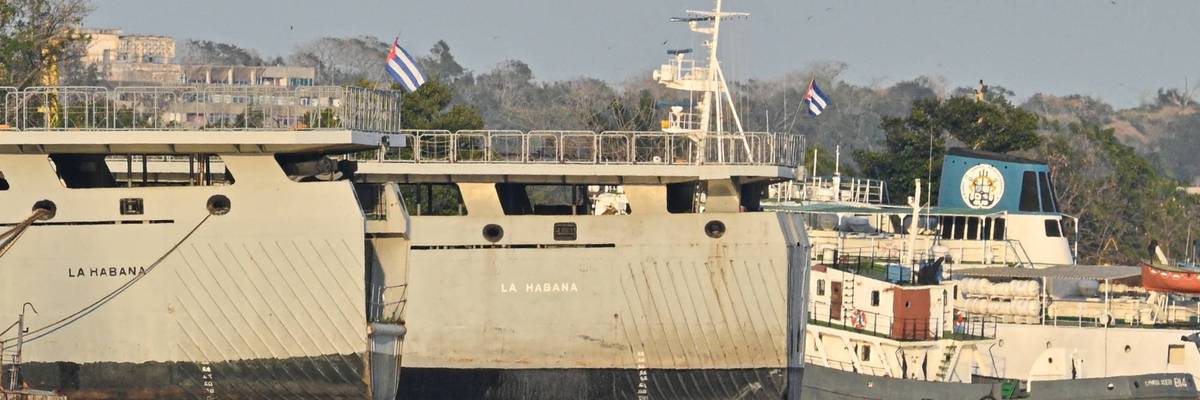
Cuban Coast Guard ships docked at the port of Havana on February 25, 2026.
(Photo by Adalberto Roque/AFP via Getty Images)
Jake Johnson
Feb 26, 2026
COMMON DREAMS
The Cuban government said Wednesday that the men on a Florida-registered boat who opened fire on Cuban soldiers in the island’s territorial waters were bent on carrying out “an infiltration for terrorist purposes.”
In a statement following news that Cuban forces had killed four people on the boat, the besieged Caribbean nation’s Interior Ministry said the vessel was carrying 10 men, all “Cuban nationals residing in the United States.”
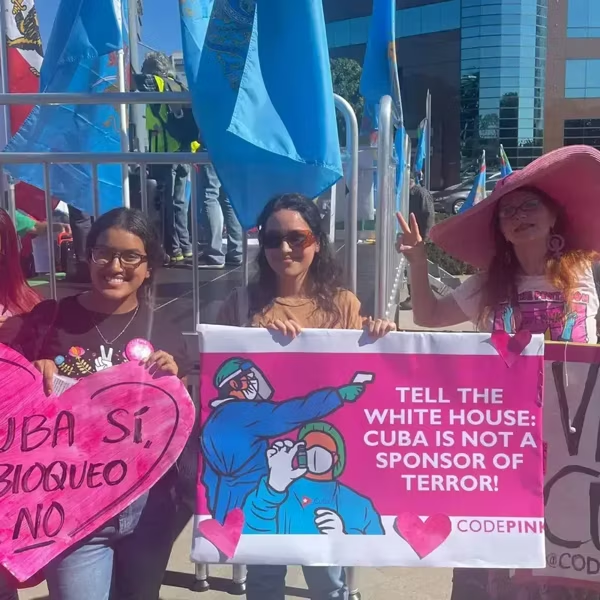
‘We Are Sailing to Cuba’: Humanitarian Coalition Announces Flotilla to Break US Blockade
The ministry said it seized assault rifles, explosives, body armor, and other items from the boat and identified seven of its passengers, six of whom were detained. Four men on the boat—which, according to reports, was last purchased in 2022—were killed in the gunfight with Cuban soldiers, who had reportedly “approached the vessel for identification.”
Cuban authorities also said another individual, Duniel Hernández Santos, was arrested “within national territory.” The Interior Ministry said Santos “had allegedly been sent from the United States to facilitate the landing and reception of the armed group and has confessed to his role.”
“The investigation remains ongoing until all facts have been fully established,” the ministry said.
The deadly incident came as Cuba continued to reel from the Trump administration’s recent intensification of decades-long economic warfare against the island. The administration is “actively seeking regime change in Cuba,” according to Wall Street Journal reporting from last month.
Wednesday’s incident called to the minds of observers past efforts, backed by the US, to topple the Cuban government, from the failed Bay of Pigs invasion to Operation Mongoose.
US Secretary of State Marco Rubio, the son of Cuban immigrants, denied that any American government personnel were involved in the incident and said it was under investigation.
“We’re going to find out exactly what happened here, and then we’ll respond accordingly,” said Rubio, a longtime supporter of regime change in Cuba. “It is highly unusual to see shootouts in open sea like that. It’s not something that happens every day. It’s something, frankly, that hasn’t happened with Cuba in a very long time.”
Four People on Florida Speedboat Killed in Shootout With Cuban Troops
“This is going to be a shitshow,” one social media user said of the deadly encounter, which occurred amid high tensions with the Trump administration.
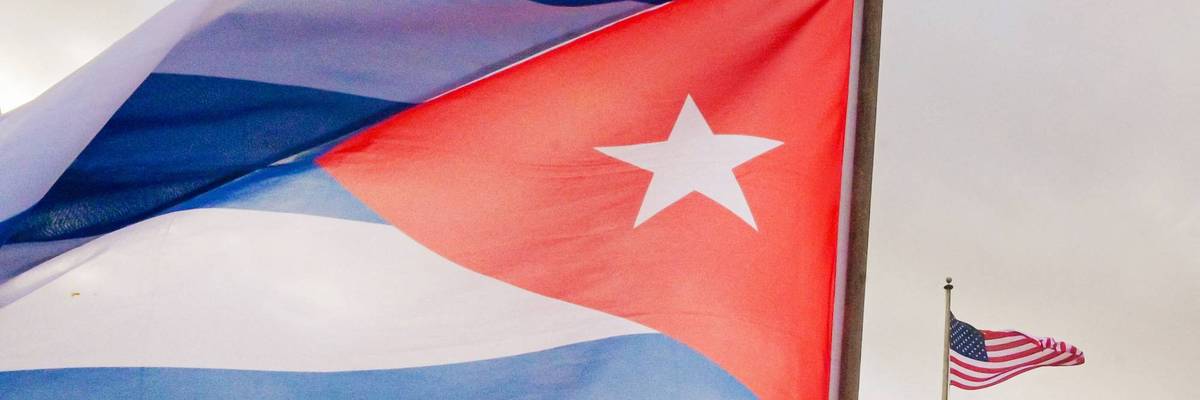
A Cuban soldier waves a national flag as he takes part in an “anti-imperialist” protest in front of the US Embassy in Havana on January 16, 2026.
(Photo by Adalberto Roque/AFP via Getty Images)
Jessica Corbett
Feb 25, 2026
COMMON DREAMS
In a deadly development that could further strain relations between Havana and Washington, DC, Cuba’s Ministry of the Interior announced Wednesday afternoon that four people on a Florida-registered speedboat were killed in a gunfire exchange with Cuban troops in the island nation’s territorial waters.
The boat, “with registration number FL7726SH, approached up to 1 nautical mile northeast of the El Pino channel, in Cayo Falcones, Corralillo municipality, Villa Clara province,” Cuba’s ministry said in a statement shared on social media. When a five-member crew of border troops “approached the vessel for identification, the crew of the violating speedboat opened fire on the Cuban personnel, resulting in the injury of the commander of the Cuban vessel.”
“As a consequence of the confrontation, as of the time of this report, four aggressors on the foreign vessel were killed and six were injured,” the ministry said. “The injured individuals were evacuated and received medical assistance. In the face of current challenges, Cuba reaffirms its determination to protect its territorial waters, based on the principle that national defense is a fundamental pillar of the Cuban state in safeguarding its sovereignty and ensuring stability in the region. Investigations by the competent authorities continue in order to fully clarify the events.”
The New York Times reported that “a US official initially said the firefight had involved a US civilian boat that was part of flotilla to get relatives out of Cuba, adding that the vessel was not a US Naval or Coast Guard boat. But later intelligence confirmed that a single boat had been attacked.”
The shootout came as Cubans contend with a humanitarian crisis resulting from President Donald Trump’s oil embargo.
The US Supreme Court Friday decision to strike down Trump’s use of an emergency law to impose sweeping tariffs sparked fresh calls for countries around the world to send oil to Cuba. Canadian Foreign Minister Anita Anand said Monday that her government is “preparing a plan to assist” the island, and Mexico on Tuesday sent two more military ships carrying humanitarian supplies.
Multiple Florida Republicans, including US Sen. Rick Scott and Congressman Carlos Gimenez, turned to social media to call for a US investigation into the shootout.
Responding to Gimenez’s post, GOP Florida Attorney General James Uthmeier announced that “I’ve directed the Office of Statewide Prosecution to work with our federal, state, and law enforcement partners to begin an investigation. The Cuban government cannot be trusted, and we will do everything in our power to hold these communists accountable.”
Also replying to the congressman, Andrés Pertierra, a PhD student in Latin American and Caribbean history at the University of Wisconsin-Madison, said: “Gimenez is already trying to use this to further escalate tensions, but so far we don’t have much confirmed information... Let’s get the facts first.”
Asked about the shooting during an unrelated press conference, US Vice President JD Vance told reporters that he had just been briefed by Secretary of State Marco Rubio, and could only say that it is “a situation that we’re monitoring” and “hopefully it’s not as bad as we fear it could be.”
The Associated Press reported that while at the airport in Basseterre, St. Kitts, Rubio told reporters that “we have various different elements of the US government that are trying to identify elements of the story,” including whether the boaters were American citizens or permanent residents.
“Suffice it to say, it is highly unusual to see shootouts in open sea like that. It’s not something that happens every day. It’s something, frankly, that hasn’t happened with Cuba in a very long time,” Rubio said.
“The majority of the facts being publicly reported are those by the information provided by the Cubans. We will verify that independently as we gather more information, and we’ll be prepared to respond accordingly,” he added. “We’re going to have our own information on this. We’re going to figure out exactly what happened.”
Rubio, the son of Cuban immigrants, made clear in an appearance before Congress last month that “we would love to see” regime change in Cuba.
Cuba has vowed to counter any further armed incursions after its border guards shot dead four people and wounded six others aboard a Florida-registered speedboat whose occupants opened fire on a patrol vessel off the country's northern coastline, an episode that threatens to deepen the already strained relationship between Havana and Washington.
The confrontation took place on February 25 morning after a Cuban border guard patrol boat with five crew members on board moved to intercept the vessel, registered in Florida as FL7726SH, spotted approximately one nautical mile north-east of the El Pino channel near Villa Clara province. Cuba's interior ministry said the speedboat's occupants fired on the patrol boat as it approached, wounding its commander, and that Cuban forces responded in kind.
All ten people aboard were Cuban nationals resident in the United States, according to the ministry. The six survivors were wounded, detained and taken to Cuban medical facilities for treatment. Separately, a person dispatched from the US to participate in the operation was apprehended on Cuban territory, the ministry added.
Cuban President Miguel Díaz-Canel on February 26 said his country "does not attack or threaten" but declared that "Cuba will defend itself with determination and firmness against any terrorist or mercenary aggression that seeks to undermine its sovereignty and national stability." Foreign Minister Bruno Rodríguez said authorities were working to establish the full facts and described coastal defence as "an inescapable duty."
Following a search of the vessel, the ministry said authorities recovered an arsenal including automatic weapons, pistols, improvised explosive devices, body armour, optical scopes and military-style clothing. The government named seven of the ten passengers. Two of them, Amijail Sánchez González and Leordan Enrique Cruz Gómez, now face Cuban terrorism-related charges.
US Secretary of State Marco Rubio, himself a Cuban-American, said Washington played no part in the incident and called it "highly unusual, it's not something that happens every day." He said the administration was assembling its own account of events, including establishing whether those involved held US citizenship or permanent residency. Florida's attorney-general ordered a separate inquiry, while the US Attorney's Office for the Southern District of Florida said the facts remained "unclear and conflicting."
Moscow, a long-time ally of the communist regime, sided with Havana. Kremlin spokesman Dmitry Peskov said Cuban border guards "did what they had to do in that situation" and urged all parties to exercise restraint around the island. Russian foreign ministry spokeswoman Maria Zakharova went further, denouncing the incident as "an aggressive provocation by the United States" aimed at escalating tensions, a claim Washington has not addressed.
The clash lands at a moment of acute pressure on Cuba. Since January, Venezuelan oil deliveries, which had covered roughly half the island's energy needs, have been disrupted following the US military intervention that captured Nicolas Maduro. On January 29, the Trump administration issued a directive imposing duties on any nation supplying crude to the island, compounding a fuel crisis that has forced Havana to implement severe energy rationing.
The US Treasury Department moved on February 25 to permit limited Venezuelan oil sales to Cuba through private channels, though analysts said the measure fell well short of what the island, which relies on crude to generate over 80% of its electricity, required. According to AP, William LeoGrande, a Cuba specialist at American University in Washington, warned that the Trump administration might "use this incident as some kind of an excuse to come up with even more sanctions." He added, however, that if the Cuban government publicly displayed the seized weapons and allowed detainees to speak about their intentions, that "might put the issue to rest."
Deadly exchanges between Cuban security forces and vessels arriving from Florida are rare, though the Florida Straits have long been a corridor for people-smuggling and drug-running operations that have occasionally drawn gunfire. Cuba's foreign minister said the island had faced what he described as "numerous terrorist and aggressive infiltrations" from American territory since 1959, at great cost in lives and material damage, a lineage that stretches back to the CIA-backed Bay of Pigs invasion of 1961.
Man shot by Cuban coast guard wanted to spark uprising: ally to AFP
By AFP
February 26, 2026
The Cuban coast guard shot dead four people and wounded six others traveling in a US-registered speedboat during an exchange of fire near Cuba's shores - Copyright AFP Adalberto ROQUE
A US-based man identified by Cuba as one of those killed by its coast guard in a shootout off the Cuban coast had spoken often of wanting to liberate the island, a political ally told AFP on Thursday.
Cuba has vowed to defend itself against “terrorist and mercenary” attacks after reporting it had killed four gunmen on a Florida-registered boat — an incident that added to deepening tensions between Havana and Washington.
Michel Ortega Casanova was identified by Cuba as one of four people killed on Wednesday, with Havana saying all on board were Cubans living in the United States.
“His goal was to go and fight against a criminal and murderous narco-tyrannical (government), to see if that would spark the people to rise up,” said Wilfredo Beyra, head of the Cuban Republican Party in Tampa.
“I had warned him that it was not the time to take such action for the freedom of Cuba, that he had to wait,” the head of the Florida-based opposition political organization told AFP by telephone.
Beyra, who had known Ortega Casanova for four or five years, said he last spoke to him about 10 days ago.
Ortega Casanova, reported to be a 54-year-old truck driver, had told him several times about his intentions.
“In Florida, several groups openly declare that they are willing, through military training, to fight for the freedom of their homeland. And Michel was part of one of those groups,” he said.
Ortega Casanova had spoken of taking action “at any moment,” Beyra said.
Beyra said he also knew one of the men identified by Havana as being wounded in the incident, Leordan Enrique Cruz Gomez, who he met at a political event in Miami last year.
They had stayed in touch via calls and text messages, Beyra said, with the last of those exchanged less than two weeks ago.
Cuba Says Men on Florida Boat ‘Intended to Carry Out an Infiltration for Terrorist Purposes’
The Cuban Interior Ministry said it detained seven people involved in the plot, including one who “had allegedly been sent from the United States to facilitate the landing and reception of the armed group.”
Cuban Coast Guard ships docked at the port of Havana on February 25, 2026.
(Photo by Adalberto Roque/AFP via Getty Images)
Jake Johnson
Feb 26, 2026
The Cuban government said Wednesday that the men on a Florida-registered boat who opened fire on Cuban soldiers in the island’s territorial waters were bent on carrying out “an infiltration for terrorist purposes.”
In a statement following news that Cuban forces had killed four people on the boat, the besieged Caribbean nation’s Interior Ministry said the vessel was carrying 10 men, all “Cuban nationals residing in the United States.”
‘We Are Sailing to Cuba’: Humanitarian Coalition Announces Flotilla to Break US Blockade
The ministry said it seized assault rifles, explosives, body armor, and other items from the boat and identified seven of its passengers, six of whom were detained. Four men on the boat—which, according to reports, was last purchased in 2022—were killed in the gunfight with Cuban soldiers, who had reportedly “approached the vessel for identification.”
Cuban authorities also said another individual, Duniel Hernández Santos, was arrested “within national territory.” The Interior Ministry said Santos “had allegedly been sent from the United States to facilitate the landing and reception of the armed group and has confessed to his role.”
“The investigation remains ongoing until all facts have been fully established,” the ministry said.
The deadly incident came as Cuba continued to reel from the Trump administration’s recent intensification of decades-long economic warfare against the island. The administration is “actively seeking regime change in Cuba,” according to Wall Street Journal reporting from last month.
Wednesday’s incident called to the minds of observers past efforts, backed by the US, to topple the Cuban government, from the failed Bay of Pigs invasion to Operation Mongoose.
US Secretary of State Marco Rubio, the son of Cuban immigrants, denied that any American government personnel were involved in the incident and said it was under investigation.
“We’re going to find out exactly what happened here, and then we’ll respond accordingly,” said Rubio, a longtime supporter of regime change in Cuba. “It is highly unusual to see shootouts in open sea like that. It’s not something that happens every day. It’s something, frankly, that hasn’t happened with Cuba in a very long time.”
“This is going to be a shitshow,” one social media user said of the deadly encounter, which occurred amid high tensions with the Trump administration.
A Cuban soldier waves a national flag as he takes part in an “anti-imperialist” protest in front of the US Embassy in Havana on January 16, 2026.
(Photo by Adalberto Roque/AFP via Getty Images)
Jessica Corbett
Feb 25, 2026
COMMON DREAMS
In a deadly development that could further strain relations between Havana and Washington, DC, Cuba’s Ministry of the Interior announced Wednesday afternoon that four people on a Florida-registered speedboat were killed in a gunfire exchange with Cuban troops in the island nation’s territorial waters.
The boat, “with registration number FL7726SH, approached up to 1 nautical mile northeast of the El Pino channel, in Cayo Falcones, Corralillo municipality, Villa Clara province,” Cuba’s ministry said in a statement shared on social media. When a five-member crew of border troops “approached the vessel for identification, the crew of the violating speedboat opened fire on the Cuban personnel, resulting in the injury of the commander of the Cuban vessel.”
“As a consequence of the confrontation, as of the time of this report, four aggressors on the foreign vessel were killed and six were injured,” the ministry said. “The injured individuals were evacuated and received medical assistance. In the face of current challenges, Cuba reaffirms its determination to protect its territorial waters, based on the principle that national defense is a fundamental pillar of the Cuban state in safeguarding its sovereignty and ensuring stability in the region. Investigations by the competent authorities continue in order to fully clarify the events.”
The New York Times reported that “a US official initially said the firefight had involved a US civilian boat that was part of flotilla to get relatives out of Cuba, adding that the vessel was not a US Naval or Coast Guard boat. But later intelligence confirmed that a single boat had been attacked.”
The shootout came as Cubans contend with a humanitarian crisis resulting from President Donald Trump’s oil embargo.
The US Supreme Court Friday decision to strike down Trump’s use of an emergency law to impose sweeping tariffs sparked fresh calls for countries around the world to send oil to Cuba. Canadian Foreign Minister Anita Anand said Monday that her government is “preparing a plan to assist” the island, and Mexico on Tuesday sent two more military ships carrying humanitarian supplies.
Multiple Florida Republicans, including US Sen. Rick Scott and Congressman Carlos Gimenez, turned to social media to call for a US investigation into the shootout.
Responding to Gimenez’s post, GOP Florida Attorney General James Uthmeier announced that “I’ve directed the Office of Statewide Prosecution to work with our federal, state, and law enforcement partners to begin an investigation. The Cuban government cannot be trusted, and we will do everything in our power to hold these communists accountable.”
Also replying to the congressman, Andrés Pertierra, a PhD student in Latin American and Caribbean history at the University of Wisconsin-Madison, said: “Gimenez is already trying to use this to further escalate tensions, but so far we don’t have much confirmed information... Let’s get the facts first.”
Asked about the shooting during an unrelated press conference, US Vice President JD Vance told reporters that he had just been briefed by Secretary of State Marco Rubio, and could only say that it is “a situation that we’re monitoring” and “hopefully it’s not as bad as we fear it could be.”
The Associated Press reported that while at the airport in Basseterre, St. Kitts, Rubio told reporters that “we have various different elements of the US government that are trying to identify elements of the story,” including whether the boaters were American citizens or permanent residents.
“Suffice it to say, it is highly unusual to see shootouts in open sea like that. It’s not something that happens every day. It’s something, frankly, that hasn’t happened with Cuba in a very long time,” Rubio said.
“The majority of the facts being publicly reported are those by the information provided by the Cubans. We will verify that independently as we gather more information, and we’ll be prepared to respond accordingly,” he added. “We’re going to have our own information on this. We’re going to figure out exactly what happened.”
Rubio, the son of Cuban immigrants, made clear in an appearance before Congress last month that “we would love to see” regime change in Cuba.

No comments:
Post a Comment