Decommissioning of Chernobyl units progressing
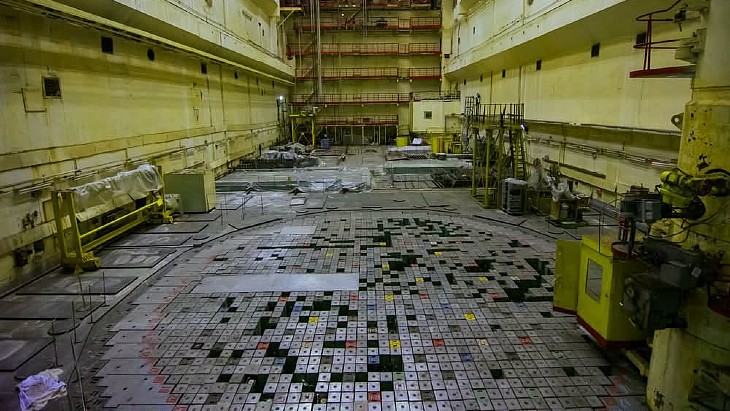
The accident in 1986 destroyed the plant's unit 4, but three other units were undamaged and continued to operate afterwards - the last one was only shut down 14 years later.
According to an update from Chornobyl Nuclear Power Plant (ChNPP), its staff have now completed 94% of preparatory work for the decommissioning of unit 2, with 44% also completed at unit 1.
Planning for the work at unit 3 is currently taking place, with "physical works scheduled to begin in 2027".
The work includes: decommissioning of systems and components located within the conservation zone premises; removal of thermal insulation and combustible materials; removal of power, signalling and control cables; sealing of wall penetrations, installation and process openings at the boundary between the conservation zone premises and the control zones; and installation of fire-resistant panels and mats at the points where wall penetrations and installation openings have been sealed, and on air ducts within the conservation zone.
Maksym Protsenko, Head of the Chornobyl NPP Engineering Centre, said: "We have decided to carry out these works using the plant's own personnel, as part of ongoing operations and in accordance with the work execution plans developed by the Chornobyl NPP Engineering Centre."
The current work is described as the second of four stages of decommissioning and "the final shutdown and conservation of the reactor installations of Units 1, 2 and 3".
These three units, all RBMK-1000 reactors, closed down in 1991, 1996 and 2000, respectively. There are also two almost-completed ones, being decommissioned.
The first phase of the work was completed by 2015, when all units were offline and had their nuclear fuel removed and transferred to the used nuclear fuel storage facility.
Once the current stage is completed, contractors will undertake work, including lowering the height of parts of the units by 12-16 metres, as well as the dismantling of loading and unloading machinery and hoisting mechanisms.
ChNPP says there will also be work to carry out "key measures aimed at ensuring safety and preparing the reactor units for long-term controlled storage" which includes:
- Dismantling systems and plant components external to the nuclear reactor
- Strengthening the barriers to the release of radioactive substances
- Reliable preservation of plant components that are not subject to dismantling
- The creation of conditions for the temporary controlled storage of radioactive substances remaining within the plant
- The collection and conditioning of radioactive waste generated during the works, and its transfer to specialised organisations for further management
ChNPP says: "The safe storage stage involves a period during which the level of radioactivity is expected to decrease naturally to acceptable levels. It is planned to move to this stage in 2034, following verification of the safety of long-term storage of radioactive materials within the limits and for the duration specified in the nuclear facility decommissioning project."
During the next stage - the dismantling of the reactor units - systems and components subject to control as sources of ionising radiation will be dismantled and removed, and subsequently placed in radioactive waste repositories. Protsenko said: "This approach to the decommissioning of the Chornobyl NPP complies with national regulations and international standards."
What about unit 4?
The situation with the fourth unit, which was destroyed during the accident in April 1986, is different. A shelter was constructed in a matter of months to encase the damaged unit, which allowed the other units at the plant to continue operating. It still contains the molten core of the reactor and an estimated 200 tonnes of highly radioactive material.
However that shelter was not designed for the very long-term, and so the New Safe Confinement - the largest moveable land-based structure ever built - was constructed to cover a much larger area including the original shelter. The New Safe Confinement has a span of 257 metres, a length of 162 metres, a height of 108 metres and a total weight of 36,000 tonnes and was designed for a lifetime of about 100 years. It was damaged by a drone strike last year and there is work taking place to return it to its full design functions before the proposed safety work on the original shelter can take place.
Read more: Chernobyl unit 4 and the decommissioning challenge
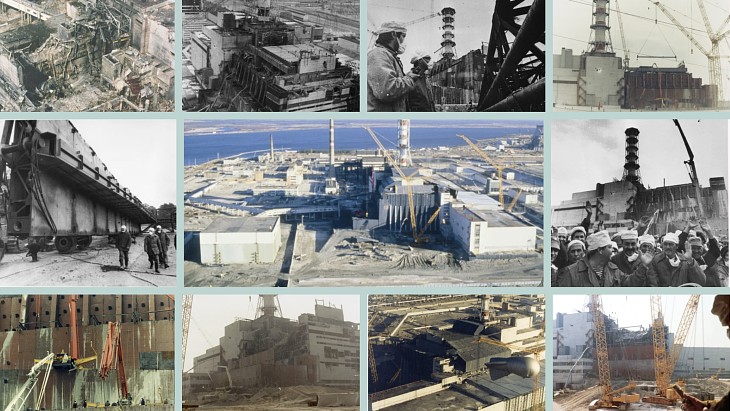
(Images: ChNPP)
Rosatom signs EPC contract for Kazakhstan nuclear plant
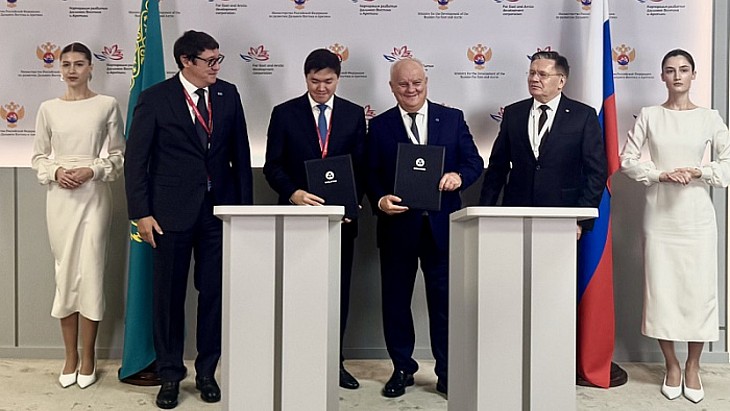
Russia's state nuclear corporation Rosatom was selected last year to lead an international consortium to build the proposed 2,400 MW capacity plant in the Zhambyl district of the Almaty region.
The new contract sets out the responsibilities of the two sides in the project, with Rosatom responsible for the project implementation "from design and procurement to construction, commissioning, and handover of the completed facility to the customer".
Survey work began in the chosen area in August 2025, with more than 60 boreholes up to 120 metres deep drilled for samples to be analysed to help in the selection of the preferred location for the units. This work is due to be completed next year, followed by the preparation of documentation for the permit application process.
The plant is due to consist of two of Rosatom's VVER-1200 pressurised water reactors, the type being used in projects in Belarus, China, Turkey, Bangladesh, Egypt and Hungary.
Rosatom Director General Alexei Likhachev said: "The signed document marks a new stage in our cooperation with Kazakhstan. Rosatom will soon complete design work and create an international consortium of equipment suppliers. At every stage of the project, we remain steadfast in our commitment to our core objective: to build and commission power units that meet the most stringent international safety and efficiency requirements. We are confident that Russian nuclear technologies will provide a reliable foundation for the energy independence and sustainable development of the Republic of Kazakhstan."
Background
An intergovernmental agreement setting out the key principles - and export loan financing - for Kazakhstan's first nuclear power plant project was signed in May during Russian President Vladimir Putin's state visit to the country.
Further details of the financing was not included in the official announcements, although the official news agency Kazinform said that preliminary estimates put the cost of the two units at about USD14.4 billion, with another USD2 billion earmarked for physical security systems and social infrastructure. It reported that the construction start was targeted for 2027, and the aim was for operation of the first unit in 2034.
In his comments after signing the agreement in May, Kazakhstan's President Kassym-Jomart Tokayev said: "There's every reason to single out energy as a very successful area of cooperation. In my view, the agreement signed today on the construction of the Balkhash Nuclear Power Plant is of exceptional significance."
Kazakhstan is the world's leading producer of uranium. Although it does not currently use nuclear energy, it is not without nuclear experience: it has three operating research reactors, and a Russian-designed BN-350 sodium-cooled fast reactor operated near Aktau for 26 years, until 1999.
Kazakhstan has been preparing for a possible nuclear power programme to reduce its reliance on fossil fuels, diversify its energy mix and reduce CO2 emissions for some time. Kazakhstan Nuclear Power Plant (KNPP), a subsidiary of Kazakhstan's Samruk-Kazyna National Welfare Fund JSC, was set up in 2014. In a referendum in 2024 more than 70% of the 7.8 million people who voted answered 'yes' to the question: "Do you agree with the construction of a nuclear power plant in Kazakhstan?"
In addition to the initial nuclear power plant, China National Nuclear Corporation is lined up to build a second one, at a site also in the Zhambyl district, adjacent to the site selected for the first plant, as well as a third plant, Kazinform News Agency reported last July. The government has set a target for nuclear to produce a 5% share of the national generation mix by 2035.
Industrial zone plan to boost localisation for Uzbek nuclear project
Excavation work began in October last year for the pit for the first of the small modular reactors at the site. About 1.5 million cubic metres of soil were excavated during the digging of a pit 13 metres deep. In March this year, Rosatom said that about 900 cubic metres were being poured during the concrete foundation work for the reactor building. After that was levelled and waterproofed, a ceremony was held in June to mark the pouring of the first concrete for the reactor building's foundation slab.
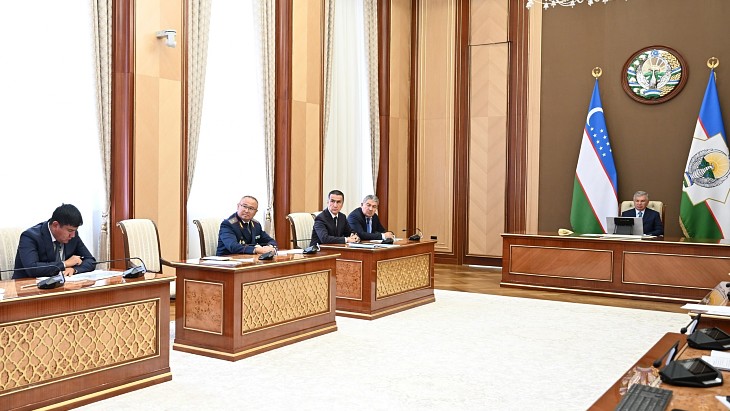
According to a presidential website report on a progress briefing to the president, it says he was told that excavation work has been completed on an area of 100 hectares at the construction and installation base, with 450 workers and specialists, and more than 100 items of specialised equipment, working at the site.
"According to preliminary estimates, local production accounts for 21 percent of the project … the head of state noted that this figure is insufficient. The goal is to increase the share of domestic production in the project to at least 30 percent, ensure that 65 percent of construction and installation work is carried out by national enterprises, and attract 7,000 local workers and specialists," the report says.
To help this process, the president approved a plan for a 200-hectare industrial zone which would attract tax and customs benefits for firms, which are expected to include "at least 100 joint ventures" and help "localise production in 15 areas through technology transfer".
For the infrastructure works - which include 39 kilometres of roads, 11 kilometres of railway and 388 kilometres of electrical networks - the president said he wanted to see a 60-70 percent share of local products and services.
There is also a plan for a 200-hectare city for nuclear workers, which will have around 10,000 apartments for about 33,000 residents and include "energy-efficient multi-story buildings, schools and preschools, healthcare, sports, and cultural facilities, recreation areas, and extensive green spaces".
The presidential office's report adds: "Taking into account the expansion of the functions of the Uzatom Agency and the Directorate for Nuclear Power Plant Construction, proposals for a phased strengthening of their organisational and personnel potential were considered.
"The head of state gave specific instructions to responsible officials to ensure high quality, safety, and timely construction of the nuclear power plant and the city of nuclear workers, expand the participation of domestic enterprises, and coordinate the implementation of infrastructure projects and personnel training programmes."
Background
Uzbekistan has a long nuclear-related history with considerable mineral deposits - it is the world’s fifth-ranking uranium supplier. It has also had two research reactors, a 10 MW tank type - WWR-SM - which has been operating since 1959 at the Institute of Nuclear Physics, Uzbek Academy of Sciences near Tashkent, and a small 20 kW one operated by JSC Foton in Tashkent which was decommissioned between 2015-19.
It has had long-term plans to develop nuclear energy capacity and a contract was signed in May 2024, during a visit to the country by Russian President Vladimir Putin. It was originally for the construction of a 330 MW capacity nuclear power plant featuring six units of the RITM-200N water-cooled small modular reactor (SMR), which is adapted from nuclear-powered icebreakers' technology, with thermal power of 190 MW or 55 MWe and with an intended service life of 60 years. The first unit was scheduled to go critical in late 2029 with units commissioned one by one.
In 2025, a supplemental agreement to the contract for the new nuclear power plant - in the Jizzakh region - covered the decision to change its contents to two gigawatt-scale VVER-1000 units and two SMRs. This increased the proposed capacity to more than 2,100 MWe, compared with the previous 330 MWe. It is the first export order for Russia's SMR. The first land-based version is currently being built in Yakut, Russia, with the launch of the first unit scheduled for 2027.
TerraPower selects more suppliers for Natrium components
_97000.jpg)
The awards include work for Merrick & Company (two contracts), Mirion Technologies Inc, BWXT Canada Ltd, Teledyne Brown Engineering Inc, Marmen Inc, Thermal Engineering International (USA) Inc, Jensen Hughes, Boston Government Services LLC, James Fisher Technologies LLC, KROHNE Nuclear, and Valserve.
TerraPower's Natrium technology features a 345 MWe sodium-cooled fast reactor with a molten salt-based energy storage system. The storage technology can temporarily boost the system's output to 500 MWe when needed, enabling the plant to follow daily electric load changes and integrate seamlessly with fluctuating renewable resources. TerraPower began non-nuclear construction for its first Natrium plant, in Kemmerer, in June 2024, and expects construction of the plant - which it says will be the first commercial-scale, advanced nuclear project in the USA - to be complete in 2030. The first Natrium project is being developed through the US Department of Energy's Advanced Reactor Demonstration Program. The Natrium reactor is a TerraPower and GE Vernova Hitachi Nuclear Energy technology.
TerraPower has already secured all the long-lead items for the project as well as the entire Natrium reactor enclosure system.
In addition to the first Natrium plant under construction, TerraPower has an agreement with Facebook and Instagram owner Meta for up to eight Natrium plants by 2035.
"These equipment awards support the construction of the Natrium plant, as well as support completion of the first-of-a-kind sodium test and fill facility that is also being constructed on the Natrium site in Wyoming," TerraPower said. "Through these award selections for the first Natrium plant, TerraPower is establishing a resilient and sustainable supply chain to bring a fleet of Natrium reactors online in the coming decade.
"Securing contracts up and down the supply chain is critical to ensuring project milestones are met and the US manufacturing base is well positioned to support the exponential growth in advanced nuclear deployment anticipated in the coming decade."
Pat Young, senior vice president and Natrium project director at TerraPower, added: "Securing supplier contracts is fundamental to establishing the resilient and sustainable supply chain needed to build advanced nuclear plants. With each contract awarded, we are strengthening our network of qualified partners and ensuring critical milestones are met as we bring the Natrium reactor to market."
Last month, TerraPower signed agreements with South Korea's Hyundai Engineering & Construction (HDEC) and SK Innovation to develop and commercialise its Natrium reactor technology across the USA, Korea and select international markets. The agreements were signed in Seoul during the first meeting among the top executives of the three companies since HD Hyundai, TerraPower and HDEC signed a trilateral memorandum of understanding in May to cooperate on next-generation sodium reactor projects.
Consortium formed for Swedish SMR project
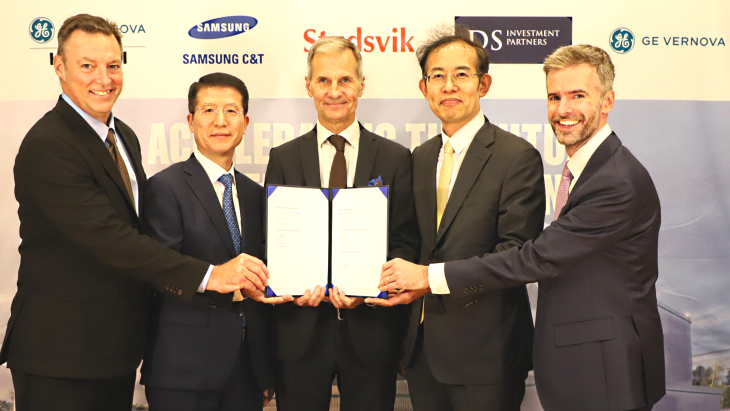
Swedish nuclear technical services provider Studsvik, GE Vernova Hitachi Nuclear Energy (GVH), GE Vernova Financial Services, DS Investment Partners and Samsung C&T announced the signing of an agreement to advance the ReFirm nuclear programme at Studsvik's sites in Sweden. The agreement is exclusive for a fixed period, which the parties may extend.
ReFirm is a multi-site small modular reactor (SMR) and new nuclear development programme that became part of the Studsvik Group through the acquisition of Kärnfull Next earlier this year. The programme is focused on light-water SMR technology, with plans for multiple units at "SMR parks". Its plan is for the first unit to be commissioned in the mid-2030s. Kärnfull Next has worked with GE Vernova Hitachi on BWRX-300 deployment in Sweden since 2022 and entered a strategic teaming agreement with Samsung C&T in December 2024.
Under the new agreement, the partners will begin joint development work immediately, including commercial, technical, regulatory and financing activities during the exclusivity period. Studsvik will lead permitting, the environmental impact assessment, site rights, community engagement and the dialogue with the Swedish state. GVH will lead reactor design, licensing support and cost estimation and acts as design authority, and, together with Samsung C&T, acts as the execution team, giving the project single-point responsibility for design and construction delivery. During the exclusivity period, South Korean investment firm DS Investment Partners will lead the investment and GE Vernova Financial Services participates in an advisory and financial structuring capacity in support of the consortium.
A joint project company will be established to support development, financing, construction, ownership and operation of the plants, with details to be finalised in definitive agreements, Studsvik said. It noted that the agreement marks the next phase of development and does not constitute a final investment decision or authorisation to construct.
_e7ee2f2d.jpg)
Illustration of a multi-unit SMR campus (Image: Studsvik)
The agreement covers sites at Nyköping and Valdemarsvik and provides for development to commence with a four-unit BWRX-300 project of about 1,200 MWe in total at one of them.
Studsvik has been investigating the possibility of constructing and operating SMRs on its industrial site near Nyköping on Sweden's east coast. The company has previously said the site is in a strategic location and houses the company's broad expertise in nuclear technology, including fuel and materials technology, reactor analysis software and fuel optimisation, decommissioning and radiation protection services as well as technical solutions for handling, conditioning and volume reduction of radioactive waste.
In March this year, Kärnfull Next submitted an application to build a power plant based on SMRs in the municipality of Valdemarsvik in Östergötland county in southeastern Sweden. It was the first application under Sweden's new Act on Government Approval of Nuclear Facilities. The application - submitted by project company ReFirm Målma AB - covers a planned SMR campus in Valdemarsvik, initially planned to host between four and six small light water reactors. In February 2025, Kärnfull Next announced it had secured land rights for the Valdemarsvik project. The property includes areas that were identified as suitable for nuclear power in studies going back as far as the 1970s.
In June, Studsvik submitted an application to the Swedish government for state support for up to 1,400 MW of new nuclear power, featuring SMRs, in the southern part of the country, with options at Valdemarsvik and Nyköping forming the basis of the application.
Studsvik said the site that hosts the first project will be decided during the development work.
"The phased, multi-unit structure is intended to support standardisation across the programme and creates opportunities to capture lessons learned from early deployment and apply them to subsequent units, helping improve cost, schedule and productivity outcomes," Studsvik said. "It will also help maximise Swedish industrial participation throughout engineering, procurement, construction, and long-term operations. This reflects the broader objective of building a supply chain that can support not only the first project, but also follow-on units and wider deployment opportunities in Sweden and Europe."
GVH's BWRX-300 is a 300 MWe water-cooled, natural circulation SMR with passive safety systems that leverages the design and licensing basis of GEH's ESBWR boiling water reactor. The first BWRX-300 is under construction at Ontario Power Generation's Darlington site in Canada, with completion expected by the end of the decade.
Agreement welcomed
"Sweden's electricity supply is a long-term play: existing nuclear capacity is ageing, and demand for baseload power is growing," said Studsvik President and CEO Karl Thedéen. "To meet that, we have looked for long-term partners and for the conditions that let projects like this succeed. In GE Vernova Hitachi and Samsung C&T we have found them. We intend to build the first project either on an existing nuclear site or on greenfield. One reactor is a project. Four is the start of an industry."
Jason Cooper, CEO of GE Vernova Hitachi Nuclear Energy, added: "Today's announcement is about helping Sweden turn its energy ambitions into reality in a timeframe that matters for its communities and industries. The country has a strong foundation of nuclear expertise and operational excellence, and the BWRX-300 combines proven boiling water reactor technology with the lessons being learned every day at the Darlington New Nuclear Project in Canada. Together with a growing global pipeline of projects across North America and Europe, this experience gives Sweden access to a technology that is moving from first-of-a-kind deployment toward fleet-scale execution."
"Samsung C&T is honoured to partner with Studsvik, GE Vernova Hitachi and the other members of the development team to support Sweden's next generation of nuclear energy," said Oh Se-chul, President and CEO, Engineering & Construction Group, Samsung C&T. "By combining proven technology, world-class EPC execution, operational excellence and financing capability, we are establishing a strong foundation for the successful development of the ReFirm programme. We are equally committed to strengthening Sweden's industrial capability, expanding local supply chains and building a long-term strategic partnership that creates lasting value for Studsvik and Sweden."
Ebba Busch, Sweden's Deputy Prime Minister, Minister for Energy, and Minister for Business and Industry, welcomed the signing of the agreement, saying: "It is an important step, a great success for Sweden as a nuclear power country and a clear acknowledgment that Sweden is once again a country where world-leading companies want to develop new nuclear power projects ... We have built strong relationships with both the United States and South Korea through several cooperation agreements, including the Technology Prosperity Deal. Now we are moving from words to action, from plans to concrete projects."

No comments:
Post a Comment