It’s possible that I shall make an ass of myself. But in that case one can always get out of it with a little dialectic. I have, of course, so worded my proposition as to be right either way (K.Marx, Letter to F.Engels on the Indian Mutiny)
Tsukuba, Japan—Animals, including humans, rely on their sense of smell to locate food, avoid predators, and communicate. This sensory ability depends on specialized receptor proteins. In vertebrates, four major receptor families mediate olfaction; these include olfactory receptors (ORs), vomeronasal type 1 receptors (V1Rs), vomeronasal type 2 receptors (V2Rs), and trace amine-associated receptors (TAARs). However, the evolutionary origin and early diversification patterns of these receptor classes remain poorly understood.
In this study, University of Tsukuba researchers examined the hagfish genome for genes linked to ORs. In total, they identified 48 OR genes, 2 V1R genes, a surprisingly large set of 135 V2R genes, and no TAAR gene. Subsequent expression analyses confirmed that most of these genes were actively expressed in the olfactory organ, indicating that they may play functional roles in smell perception. Notably, the presence of true V2Rs in hagfish overturns the long-standing assumption that these receptors evolved only in jawed vertebrates. Conversely, the results of this study suggest that functional V2Rs were already present in the common ancestor of all vertebrates and that they subsequently diversified in a lineage-specific manner. Overall, this discovery provides critical insight into the evolution of vertebrate olfaction and underscores the importance of hagfish as a model for reconstructing the sensory biology of early vertebrates.
### This work was supported by the Grant-in-Aid for the Japan Society for the Promotion of Science (JSPS; Grant Numbers JP20K15855, JP22K15164, JP24K09556, and JP24H01538 to D.G.S, and JP19K16178 to Y.Y.) and by the Sasakawa Scientific Research Grant from The Japan Science Society (Grant Number 2023-4098 to H.K.).
Original Paper
Title of original paper: Hagfish olfactory repertoire illuminates lineage-specific diversification of olfaction in basal vertebrates
KARIYAYAMA, Hirofumi (Current position: Visiting Researcher of the RIKEN Center for Biosystems Dynamics Research (BDR)) Graduate School of Comprehensive Human Sciences, University of Tsukuba
Assistant Professor YAMAGUCHI, Yoko Institute of Agricultural and Life Sciences, Academic Assembly, Shimane University
Many of the fish we eat play a key role in maintaining the seabed – and therefore our climate, new research shows.
Convex Seascape Survey scientists assessed the role of fish in bioturbation (churning and reworking sediments) in shallow UK seas.
The Atlantic cod – a staple in chip shops – jointly topped the list of these important “ecosystem engineers” (along with Atlantic hagfish and European eel).
In total, 185 fish species were found to play a role in bioturbation – and 120 of these are targeted by commercial fishing.
“Ocean sediments are the world’s largest reservoir of organic carbon – so what happens on the seabed matters for our climate,” said University of Exeter PhD student Mara Fischer, who led the study.
“Bioturbation is very important for how the seabed takes up and stores organic carbon, so the process is vital to our understanding of how the ocean absorbs greenhouse gases to slow the rate of climate change.
“Bioturbation is also important for seabed and wider ocean ecosystems.
“We have a good understanding of how invertebrates contribute to global bioturbation – but until now, we have been missing half the story.
“Our study is the first to attempt to quantify the bioturbation impact of fish, and it shows they play a significant, widespread role.”
Overfished and overlooked
Co-author Professor Callum Roberts, from the Centre for Ecology and Conservation at Exeter’s Penryn Campus in Cornwall, said: “We also found that species with the highest bioturbation impacts are among the most vulnerable to threats such as commercial fishing.
“Many of the largest and most powerful diggers and disturbers of seabed sediments, like giant skates, halibut and cod, have been so overfished they have all but vanished from our seas.
“These losses translate into big, but still uncertain, changes in the way seabed ecosystems work.”
The researchers examined records for all fish species living on the UK continental shelf, and found more than half have a role in bioturbation – sifting and excavating sediment during foraging, burrowing and/or building nests.
These different ways of reworking the sediments – termed bioturbation modes – alongside the size of the fish and the frequency of bioturbation, were used by the researchers to calculate a bioturbation impact score for each species.
Examples include:
European eel. Bioturbation mode: burrower. Bioturbation score (out of 125): 100. IUCN conservation status: critically endangered. Fished primarily using traps and fyke nets, they are considered a delicacy in many parts of Europe and Asia – commonly prepared as smoked eel or dishes like eel pie and eel soup. Threats include climate change, diseases and parasites, habitat loss, pollutants and fishing.
Atlantic cod. Bioturbation mode: vertical excavator. Bioturbation score: 100. IUCN status: vulnerable. Primarily fished using trawling and longlining, they are consumed in many forms, including fish and chips, fresh fillets, salted cod, and cod liver oil. Threats include overfishing, climate change and habitat degradation. Populations have declined in several parts of its range, particularly the North Sea and West Atlantic.
Common skate. Bioturbation mode: lateral excavator. Bioturbation score: 50. IUCN status: critically endangered. Historically targeted by trawling and longlining, this species is now protected in several regions – but often caught accidentally (bycatch). Numbers have drastically declined due to overfishing. The species is vulnerable due to its large size, slow growth rate, and low reproductive rate – only about 40 eggs are laid every other year, and each generation takes 11 years to reach maturity.
Black seabream. Bioturbation mode: nest builder. Bioturbation score: 36. IUCN status: least concern. Primarily caught using bottom trawling, gillnets, and hook and line. Fishing during the spawning season in April and May can impact population replenishment. Bottom trawling at this time has the potential to remove the fish, nests and eggs.
Red gurnard. Bioturbation mode: sediment sifter. Bioturbation score: 16. IUCN status: least concern. Historically not of major interest to commercial fisheries, the species has been targeted more in recent years (including in Cornwall). It is mainly caught by trawlers. There is currently no management for any gurnard species in the EU: no minimum landing size, no quota, etc – which could lead to unsustainable fishing.
Julie Hawkins, another author of the study, commented: “Anyone who has spent time underwater, whether snorkelling or diving, knows that fish are constantly digging up the seabed.
“It’s hard to believe that such an obvious and important activity has been largely overlooked when it comes to understanding ocean carbon burial.”
The Convex Seascape Survey is a partnership between Blue Marine Foundation, the University of Exeter and Convex Group Limited. The ambitious five-year global research programme is the largest attempt yet to build a greater understanding of the properties and capabilities of the ocean and its continental shelves in the earth’s carbon cycle, in the urgent effort to slow climate change.
The paper, published in the journal Marine Environmental Research, is entitled: “A functional assessment of fish as bioturbators and their vulnerability to local extinction.”
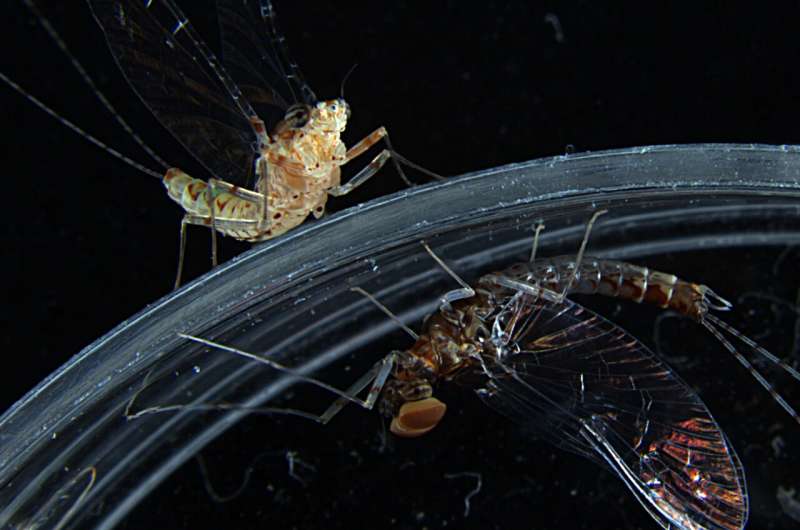
The mayfly, one of the 20 species studied in the paper. Credit: Isabel Almudi
Seven hundred million years ago, a remarkable creature emerged for the first time. Though it may not have been much to look at by today's standards, the animal had a front and a back, a top and a bottom. This was a groundbreaking adaptation at the time, and one which laid down the basic body plan which most complex animals, including humans, would eventually inherit.
The inconspicuous animal resided in the ancient seas of Earth, likely crawling along the seafloor. This was the last common ancestor of bilaterians, a vast supergroup of animals including vertebrates (fish, amphibians, reptiles, birds, and mammals), and invertebrates (insects, arthropods, mollusks, worms, echinoderms and many more).
To this day, more than 7,000 groups of genes can be traced back to the last common ancestor of bilaterians, according to a study of 20 different bilaterian species including humans, sharks, mayflies, centipedes and octopuses. The findings were made by researchers at the Centre for Genomic Regulation (CRG) in Barcelona and are published today in the journal Nature Ecology & Evolution.
Remarkably, the study found that around half of these ancestral genes have since been repurposed by animals for use in specific parts of the body, particularly in the brain and reproductive tissues. The findings are surprising because ancient, conserved genes usually have fundamental, important jobs that are needed in many parts of the body.
When the researchers took a closer look, they found a series of serendipitous "copy paste" errors during bilaterian evolution were to blame. For example, there was a significant moment early in the history of vertebrates. A bunch of tissue-specific genes first appeared coinciding with two whole genome duplication events.
Animals could keep one copy for fundamental functions, while the second copy could be used as raw material for evolutionary innovation. Events like these, at varying degrees of scale, occurred constantly throughout the bilaterian evolutionary tree.
"Our genes are like a vast library of recipes that can be cooked up differently to create or change tissues and organs. Imagine you end up with two copies of a recipe for paella by accident. You can keep and enjoy the original recipe while evolution tweaks the extra copy so that it makes risotto instead.
"Now imagine the entire recipe book is copied—twice—and the possibilities it opens for evolution. The legacy of these events, which took place hundreds of millions of years ago, lives on in most complex animals today," explains Federica Mantica, author of the paper and researcher at the Centre for Genomic Regulation (CRG) in Barcelona.
The authors of the study found many examples of new, tissue-specific functions made possible by the specialization of these ancestral genes. For example, the TESMIN and tomb genes, which originated from the same ancestor, ended up independently playing a specialized role in the testis both in vertebrates and insects. Their importance is highlighted by the fact that problems with these genes can disrupt sperm production, affecting fertility in both mice and fruit flies.
The specialization of ancestral genes also laid some foundations for the development of complex nervous systems. For example, in vertebrates, the researchers found genes critical for the formation of myelin sheaths around nerve cells, which are essential for fast nerve signal transmission. In humans they also identified FGF17, which is thought to play an important role in maintaining cognitive functions into old age.
In insects, specific genes became specialized in muscles and in the epidermis for cuticle formation, contributing to their ability to fly. In the skin of octopuses, other genes became specialized to perceive light stimuli, contributing to their ability to change color, camouflage and communicate with other octopuses.
By studying the evolution of species at the tissue level, the study demonstrates that changes in the way genes are used in different parts of the body have played a big role in creating new and unique features in animals. In other words, when genes start acting in specific tissues, it can lead to the development of new physical traits or abilities, which ultimately contributes to animal evolution.
"Our work makes us rethink the roles and functions that genes play. It shows us that genes that are crucial for survival and have been preserved through millions of years can also very easily acquire new functions in evolution.
"It reflects evolution's balancing act between preserving vital roles and exploring new paths," concludes ICREA Research Professor Manuel Irimia, co-author of the paper and researcher at the Centre for Genomic Regulation.
More information: Evolution of tissue-specific expression of ancestral genes across vertebrates and insects, Nature Ecology & Evolution (2024). DOI: 10.1038/s41559-024-02398-5
As the centennial of the Scopes Monkey Trial of 1925 approaches, a new study illustrates that the attitudes of Americans in Generation X toward evolution shifted as they aged.
The study, led by Jon D. Miller, research scientist emeritus in the Institute for Social Research at the University of Michigan, found that while students in middle and high school tended to express uncertain attitudes toward evolution, those attitudes solidified as they graduated high school, went to college and entered the workforce.
"Some may challenge whether the evolution issue is still of relevance and consider it to be a harmless curiosity," Miller said. "U.S. science and technology continue to prosper, although a substantial minority of American adults reject the idea that humans developed from earlier species of animals.
"However, we believe that there are numerous examples of public policy over recent decades when an understanding of basic biological constructs would have helped inform public and political debate on those issues."
The study, published in the journal Public Understanding of Science, used data collected from about 5,000 participants born in the center of Generation X, 1971-1974, over the course of 33 years, from middle school to midlife.
"Research on attitudes toward science typically uses a single survey or a series of surveys of different participants," Miller said. "Using the three-decade record from the Longitudinal Study of American Life enables our study to investigate how attitudes develop and shift over formative decades in the same individuals."
Middle school and high school students displayed a good deal of uncertainty about evolution, with a third having no attitude about evolution and 44% saying that the statement "human beings as we know them developed from earlier species of animals" was probably true or probably false, reflecting a degree of uncertainty about the issue.
During the 15 years after high school, 28% of these Generation X young adults concluded that evolution was definitely true and 27% thought that evolution was definitely false, according to co-author Mark Ackerman, a professor at Michigan Engineering, the U-M School of Information and Michigan Medicine.
"These results demonstrate the impact of postsecondary education, initial career experiences and the polarization of the political system in the United States," Ackerman said.
During the next 15 years (from their early 30s to their late 40s), these Generation X LSAL participants reported a small increase in the proportion of individuals seeing evolution as definitely true (30% in 2020) and a small decrease in the proportion seeing evolution as definitely false (23% in 2020). These results reflect the stabilization of the lives of LSAL respondents, with substantial numbers entering a career of their choice, starting a family and becoming more engaged with their community.
The study investigated the factors that were associated with the participants' attitudes toward evolution at three points during the study. As ina previous study by the same researchers, factors involving education tended to be strong predictors of the acceptance of evolution, while factors involving fundamentalist religious beliefs tended to be strong predictors of the rejection of evolution.
The experience of college-level science courses, the completion of baccalaureate or more advanced degrees, and the development of civic scientific literacy were strong predictors of increased acceptance of evolution.
"Our analysis of a unique longitudinal dataset allowed us to explore the development of attitudes toward a scientific topic in unprecedented detail," Miller said. "And understanding the public's attitudes toward evolution is of particular importance, since evolution is going to continue to be central to biological literacy and—scientific literacy—in the 21st century."
Besides Miller and Ackerman of the University of Michigan, authors included Belén Laspra and Carmelo Polino of the University of Oviedo (Spain), Glenn Branch of the National Center for Science Education, and Robert Pennock of Michigan State University.
Study on lamprey embryos sheds light on the evolutionary origin of vertebrate head
Scientists study developing lamprey embryos to clarify the origin of vertebrate head, paving the way to a better understanding of ancestral vertebrates
The origin of the vertebrate skull is a topic of much debate among evolutionary biologists. Some believe that the vertebrate head has developed as a result of modification of the segmental elements of the trunk, such as the vertebrae and somites. On the other hand, others believe that the vertebrate head has evolved as a new, unsegment body part, unrelated to other widely observed embryonic segments somites. Interestingly, previous studies on embryos have revealed the presence of some vestiges of somites in the head mesoderm (e.g., head cavities and somitomeres). However, homology between trunk somites and such head segments has been controversial.
The failure to understand the evolutionary origins of the vertebrate head is also attributable to the lack of studies on extant species such as lampreys, which are known to share several traits with fossil jawless vertebrates and retain primitive traits related to the head mesoderm. While some studies have focused on the embryonic morphology of lampreys, they have often fallen short because of challenges like tissue destruction and acidic fixation during examination, making it difficult to observe the formation of head mesoderm and trunk somites.
Now, however, a research team led by Assistant Professor Takayuki Onai from the University of Fukui, Japan, has utilized advanced techniques like transmission electron microscopy and serial block-face scanning electron microscopy (SBF-SEM) to understand the development of the head mesoderm and somites in lamprey embryos. The researchers also analyzed the morphology and gene expression patterns of cephalochordate and hemichordate (both being invertebrates) to understand the origins of somites and head mesoderm from an evolutionary perspective. This paper was made available online in iScience on November 13, 2023, and is co-authored by Dr. Noritaka Adachi from Aix-Marseille Université, Dr. Hidetoshi Urakubo from the National Institute for Physiological Sciences (NIPS), Dr. Fumiaki Sugahara from Hyogo Medical University, Dr. Toshihiro Aramaki from Osaka University, Dr. Mami Matsumoto from NIPS and Nagoya City University, and Dr. Nobuhiko Ohno from NIPS and Jichi Medical University.
To clarify the presence or absence of somites in the head mesoderm during early stages of diversification, the researchers focused on rosettes, which are major somite patterns and are important for the subsequent development of vertebrae. Their initial observations of lamprey embryos showed that the tissue closely related to the formation of facial muscles and other elements of the skull, known as the head mesoderm, did have cell clusters with features similar to somite rosettes. To clarify if these cell clusters were indeed rosettes, they conducted ultrastructural experiments, including the SBF-SEM and gene expression analysis. This examination of the cellular morphology and gene expression revealed that the cell clusters were clearly distinct from rosettes. “The cell clusters we observed are likely lamprey-specific features, as they are not recognizable in the head mesoderm of both hagfish and shark embryos,” explains Dr. Onai.
Furthermore, gene expression analysis also revealed the absence of segmental expression of somitogenesis-related genes, indicating their distinctiveness from somites. These findings indicate that the rosette pattern typically seen in somites is not necessarily the essential or most basic feature that defines the process of bodily segmentation.
Moreover, the experiments provide evidence that the vertebrate head mesoderm diverged during the early phases of vertebrate evolution. Furthermore, comparison of embryos of hemichordates (a basal deuterostome), amphioxus (a basal chordate), and vertebrates revealed that the somites likely arose from the “endomesoderm” tissue of an ancient deuterostome ancestor. The evolutionary origin of somites has been the central question in zoology for more than 150 years, and in this study, Onai et al., revealed the enigma. Regarding the evolutionary mechanism for the emergence of head mesoderm, they found that the head mesoderm emerged upon the segregation of mesodermal genes between the front and back parts (rostro-caudal axis) of organisms.
“Taken together, our findings revealed a different evolutionary origin for the vertebrate head mesoderm, suggesting that it evolved from the repatterning of an ancient mesoderm and diversified even before the emergence of jawed vertebrates,” concludes Dr. Onai.
In summary, the finding that the cell clusters present in the head mesoderm are distinct morphologically and molecularly from somites, favors a new model where the vertebrate head mesoderm diverged during early evolution. This sheds more light on the age-old debate on the evolution of the vertebrate head and can help us advance the understanding of our own origins.
Ultrastructure of the lamprey head mesoderm reveals evolution of the vertebrate head
Tuesday, January 16, 2024
THE HAGFISH
Researchers sequence the first genome of myxini, the only vertebrate lineage that had no reference genome
Such finding, published in ‘Nature Ecology & Evolution’, is the work of an international consortium of more than 30 institutions from 7 countries around the world
AN INTERNATIONAL SCIENTIFIC TEAM MADE UP OF MORE THAN 40 AUTHORS FROM SEVEN DIFFERENT COUNTRIES, LED BY THE RESEARCHER AT THE UNIVERSITY OF MALAGA JUAN PASCUAL ANAYA, HAS MANAGED TO SEQUENCE THE FIRST GENOME OF THE MYXINI –ALSO KNOWN AS ‘HAGFISH’–, THE ONLY LARGE GROUP OF VERTEBRATES FOR WHICH THERE WAS NO REFERENCE GENOME OF ANY OF ITS SPECIES YET.
An international scientific team made up of more than 40 authors from seven different countries, led by the researcher at the University of Malaga Juan Pascual Anaya, has managed to sequence the first genome of the myxini –also known as ‘hagfish’–, the only large group of vertebrates for which there was no reference genome of any of its species yet.
This finding, published in the scientific journal ‘Nature Ecology & Evolution’, has allowed deciphering the evolutionary history of genome duplications –number of times a genome is completely duplicated– that occurred in the ancestors of vertebrates, a group that comprises the human beings.
“This study has important implications in the evolutionary and molecular field, as it helps us understand the changes in the genome that accompanied the origin of vertebrates and their most unique structures, such as the complex brain, the jaw and the limbs”, explains the scientist of the Department of Animal Biology of the UMA Pascual Anaya, who has coordinated the research.
Thus, this study, which has taken almost a decade, has been carried out by an international consortium that includes more than 30 institutions from Spain, United Kingdom, Japan, China, Italy, Norway and the United States, including the University of Tokyo, the Japan research institute RIKEN, the Chinese Academy of Science and the Centre for Genomic Regulation in Barcelona, among others.
Ecological link
The myxini or ‘hagfish’ are a group of animals that inhabit deep ocean areas. Known for the amount of mucosa they release when they feel threatened –a focus of research of cosmetic companies– and, also, for their role as an ecological link in the seabed –since they are scavengers and are responsible for eliminating, among other things, the corpses of whales that end up at the bottom of the sea after dying–; hitherto their genome had not been sequenced due to its complexity, since they are composed of a large number of microchromosomes, which, in turn, are composed of repetitive sequences. This is in addition to the difficulty of accessing biological material.
“Besides, these microchromosomes are lost during the development of the animal, so that only the genital organs maintain a whole genome,” says Juan Pascual Anaya.
Genome duplications
To be more specific, for this study, in collaboration with the Chinese Academy of Science, the genome that has been sequenced is that of the Eptatretus burgeri, which lives in the Pacific, on the coasts of East Asia. To achieve this, the researchers generated data up to 400 times the size of its genome, using advanced techniques –Hi-C– of chromosomal proximity and managing to assemble it at chromosome level.
“This is important because it allowed us to compare, for example, the order of genes between this and the rest of vertebrates, including sharks and humans, and, thus, solve one of the most important open debates in genomic evolution: the number of genome duplications, and when these occurred during the origin of the different vertebrate lineages,” says the UMA scientist, who adds that thanks to this we now know that the common ancestor of all vertebrates derived from a species which genome was completely duplicated once.
Later, according to Pascual Anaya, the lineages that gave rise to modern mandibular and non-mandibular vertebrates separated, and each of these re-multiplied its genome independently: while the former, which include humans, duplicated it, the latter tripled it.
Evolutionary impact
An analysis of the functionality of genomes, based on extremely rare samples of myxini embryos, carried out in the prestigious laboratory of Professor Shigeru Kuratani of RIKEN; and a study on the possible impact of genome duplications on each vertebrate, developed together with the Professor at the University of Bristol and member of the Royal Society Phil Donoghue, complete this multidisciplinary research that is key to understanding the evolutionary history of vertebrates, since it provides perspectives on the genomic events that, probably, drove the appearance of important characteristics of vertebrates, such as brain structure, sensory organs or neural crest cells, among them, an increase in regulatory complexity, that is, a greater number of switches that turn genes on/off.
Juan Pascual Anaya is a scientist of the Department of Animal Biology of the University of Malaga. He studies the evolution of innovative structures that appear in different animal lineages, mainly vertebrates, for example, blood cells and the process by which they are produced, as well as other structures such as the origin of legs, hands or jaws.
He holds a degree in Biology from the University of Malaga and a PhD in Genetics from the University of Barcelona (2010). He held a postdoctoral position for 5 years, until 2015, at the RIKEN center in Japan, in the laboratory of Professor Shigeru Kuratani, where he became independent as a Permanent Scientific Researcher until 2021, year in which he returned to the UMA as a senior researcher of the ‘Beatriz Galindo’ grant program.
To be more specific, for this study, in collaboration with the Chinese Academy of Science, the genome that has been sequenced is that of the Eptatretus burgeri, which lives in the Pacific, on the coasts of East Asia. To achieve this, the researchers generated data up to 400 times the size of its genome, using advanced techniques –Hi-C– of chromosomal proximity and managing to assemble it at chromosome level.
An international scientific team made up of more than 40 authors from seven different countries, led by the researcher at the University of Malaga Juan Pascual Anaya, has managed to sequence the first genome of the myxini –also known as ‘hagfish’–, the only large group of vertebrates for which there was no reference genome of any of its species yet.
An international scientific team made up of more than 40 authors from seven different countries, led by the researcher at the University of Malaga Juan Pascual Anaya, has managed to sequence the first genome of the myxini –also known as ‘hagfish’–, the only large group of vertebrates for which there was no reference genome of any of its species yet.
A car is covered in hagfish, and slime, after an accident on Highway 101. (Reuters)
ATLANTIC JANUARY 23, 2019
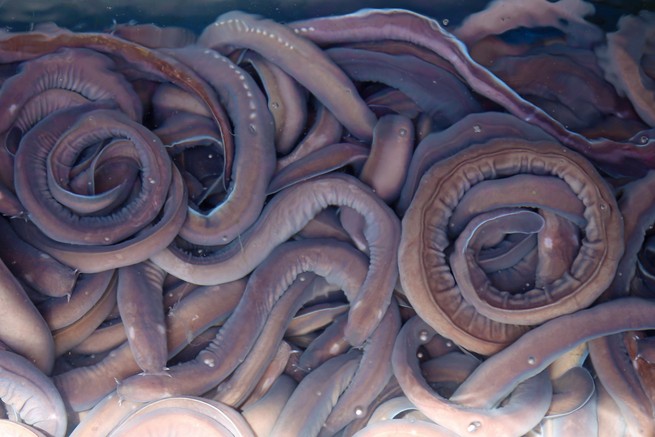
At first glance, the hagfish—a sinuous, tubular animal with pink-grey skin and a paddle-shaped tail—looks very much like an eel. Naturalists can tell the two apart because hagfish, unlike other fish, lack backbones (and, also, jaws). For everyone else, there’s an even easier method. “Look at the hand holding the fish,” the marine biologist Andrew Thaler once noted. “Is it completely covered in slime? Then, it’s a hagfish.”
Hagfish produce slime the way humans produce opinions—readily, swiftly, defensively, and prodigiously. They slime when attacked or simply when stressed. On July 14, 2017, a truck full of hagfishoverturned on an Oregon highway. The animals were destined for South Korea, where they are eaten as a delicacy, but instead, they were strewn across a stretch of Highway 101, covering the road (and at least one unfortunate car) in slime.
Typically, a hagfish will release less than a teaspoon of gunk from the 100 or so slime glands that line its flanks. And in less than half a second, that little amount will expand by 10,000 times—enough to fill a sizable bucket. Reach in, and every move of your hand will drag the water with it. “It doesn’t feel like much at first, as if a spider has built a web underwater,” says Douglas Fudge of Chapman University. But try to lift your hand out, and it’s as if the bucket’s contents are now attached to you.
The slime looks revolting, but it’s also one of nature’s more wondrous substances, unlike anything else that’s been concocted by either evolution or engineers. Fudge, who has been studying its properties for two decades, says that when people first touch it, they are invariably surprised. “It looks like a bunch of mucus that someone just sneezed out of their nose,” he says. “That’s not at all what it’s like.”
For a start, it’s not sticky. If there wasn’t so damn much of it, you’d be able to wipe it off your skin with ease. The hagfish themselves scrape the slime off their skin by tying a knot in their bodies and sliding it from head to tail.
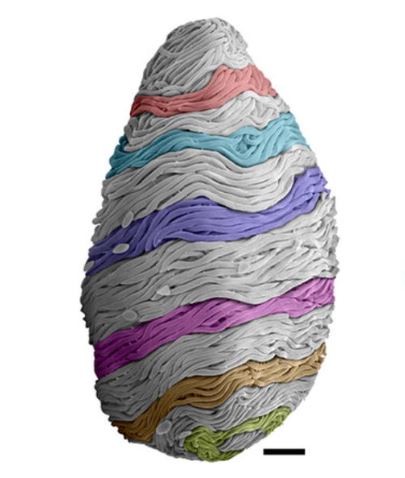
The slime also “has a very strange sensation of not quite being there,” says Fudge. It consists of two main components—mucus and protein threads. The threads spread out and entangle one another, creating a fast-expanding net that traps both mucus and water. Astonishingly, to create a liter of slime, a hagfish has to release only 40 milligrams of mucus and protein—1,000 times less dry material than human saliva contains. That’s why the slime, though strong and elastic enough to coat a hand, feels so incorporeal.
Indeed, it’s one of the softest materials ever measured. “Jell-O is between 10,000 and 100,000 times stiffer than hagfish slime,” says Randy Ewoldt from the University of Illinois at Urbana-Champaign, who had to invent new methods for assessing the substance’s properties after conventional instruments failed to cope with its nature. “When you see it in a bucket, it almost still looks like water. Only when you stick your hand in and pick it up do you find that it’s a coherent thing.”
The proteins threads that give the slime cohesion are incredible in their own right. Each is one-100th the width of a human hair, but can stretch for four to six inches. And within the slime glands, each thread is coiled like a ball of yarn within its own tiny cell—a feat akin to stuffing a kilometer of Christmas lights into a shoebox without a single knot or tangle. No one knows how the hagfish achieves this miracle of packaging, but Fudge just got a grant to test one idea. He thinks that the thread cells use their nuclei—the DNA-containing structures at their core—like a spindle, turning them to wind the growing protein threads into a single continuous loop.
A microscope image of a hagfish’s coiled slime thread (Courtesy of Douglas Fudge)
Once these cells are expelled from the slime glands, they rupture, releasing the threads within them. Ewoldt’s colleague Gaurav Chaudhury found that despite their length, the threads can fully unspool in a fraction of a second. The pull of flowing water is enough to unwind them. But the process is even quicker if the loose end snags on a surface, like another thread, or a predator’s mouth.
Being extremely soft, the slime is very good at filling crevices, and scientists had long assumed that hagfish use it to clog the gills of would-be predators. That hypothesis was only confirmed in 2011, when Vincent Zintzen from the Museum of New Zealand Te Papa Tongarewa finally captured footage of hagfish sliming conger eels, wreckfish, and more. Even a shark was forced to retreat, visibly gagging on the cloud of slime in its jaws.
“We were blown away by those videos,” Fudge says, “but when we really looked carefully, we noticed that the slime is released after the hagfish is bitten.” So how does the animal survive that initial attack? His colleague Sarah Boggett showed that the answer lies in their skin. It’s exceptionally loose, and attaches to the rest of the body at only a few places. It’s also very flaccid: You could inject a hagfish with an extra 40 percent of its body volume without stretching the skin. The animal is effectively wearing a set of extremely loose pajamas, Fudge says. If a shark bites down, “the body sort of squishes out of the way.”
More commonly, these creatures burrow into dead or dying animals, in search of flesh to scavenge. They can’t bite; instead, they rasp away at carcasses with a plate of toothy cartilage in their mouths. The same traveling knots they use to de-slime themselves also help them eat. They grab into a cadaver, then move a knot from tail to head, using the leverage to yank out mouthfuls of meat. They can also eat by simply sitting inside a corpse, and absorbing nutrients directly through their skin and gills. The entire hagfish is effectively a large gut, and even that is understating matters: Their skin is actually more efficient at absorbing nutrients than their own intestines.
Hagfish on display at a seafood market (Elizabeth Beard / Getty)
Hagfish are so thoroughly odd that biologists have struggled to clearly work out how they’re related to other fish, and to the other backboned vertebrates. Based on their simple anatomy, many researchers billed the creatures as primitive precursors to vertebrates—an intermediate form that existed before the evolution of jaws and spinal columns.
But a new fossil called Tethymyxine complicates that story. Hailing from a Lebanese quarry, and purchased by researchers at a fossil show in Tucson, Arizona, the Cretaceous-age creature is clearly a hagfish. It has a raspy cartilage plate in its mouth, slime glands dotting its flanks, and even chemicals within those glands that match the composition of modern slime. By comparing Tethymyxine to other hagfish, Tetsuto Miyashita from the University of Chicago concluded that these creatures (along with another group of jawless fish, the lampreys) are not precursors to vertebrates, but actual vertebrates themselves.
Such work is always contentious, but it fits with the results of genetic studies. If it’s right, then hagfish aren’t primitive evolutionary throwbacks at all. Instead, they represent a lineage of vertebrates that diverged from all the others about 550 million years ago, and lost several traits such as complex eyes, taste buds, scales, and perhaps even bones. Maybe those losses were adaptations to a life spent infiltrating carcasses in the dark, deep ocean, much like their flaccid, nutrient-absorbing skins are. “Hagfishes might look primitive; they’re actually very specialized,” Miyashita adds.
Their signature slime might have also evolved as a result of that lifestyle, as a way of fending off predators that were competing for cadavers. “Everything about hagfish is weird,” says Fudge, “but it all kind of fits.”
Ed Yong is a former staff writer at The Atlantic. He won the Pulitzer Prize for Explanatory Reporting for his coverage of the COVID-19 pandemic.