Showing posts sorted by date for query Wirecard. Sort by relevance Show all posts

Monday, September 15, 2025

THE GRIFT

Trump turns crypto king — but at what cost?
DW
15/09/2025 


Donald Trump has made billions from the Nasdaq debut of crypto startup World Liberty Financial. With his sons in charge and favorable policies in play, critics see a troubling mix of presidential power and personal gain.

Trump has become a huge supporter of cryptocurrencies like bitcoin
Image: Ian Maule/AFP/Getty Images

US President Donald Trump and his family are pocketing billions from cryptocurrency ventures since his return to the White House, capitalizing on a loosely regulated market he has actively shaped.

From meme coins to stablecoins, digital currencies designed to stay at a fixed value, the financial windfall is estimated at over $5 billion (€4.25 billion) on paper, sparking accusations of unprecedented profiteering by a sitting president.

Two companies drive the Trump family's crypto profits: World Liberty Financial (WLF), a decentralized finance platform that lets users with $WLFI tokens help shape the platform’s lending rules, and American Bitcoin Corp. (ABTC), a Nasdaq-listed bitcoin mining company.

WLF has earned millions from $WLFI token sales tied to Trump’s name, while ABTC, backed by his sons, holds significant bitcoin assets and saw its stock jump 110% on its debut, before settling 16.5% higher than the opening price of $6.90.

Reuters news agency reported that a Trump business entity owns 60% of WLF and is entitled to 75% of revenue from coin sales.

Concerns over influence and access

Critics believe the Republican president’s dual role as crypto beneficiary and policymaker undermines public trust and blurs the line between governance and self-enrichment.

Ross Delston, an independent American attorney and expert witness, thinks the crypto ventures could offer unscrupulous actors the chance to buy influence with Trump just by investing in his digital coins.

"This is a new avenue to allow the President to get money from anyone, including foreign individuals and states that would be prohibited by US [election] campaign laws, or someone convicted of a crime or under investigation," Delston told DW.

Although Trump and his sons are barred from selling their own tokens in WLF for now, they are almost certain to profit big in the medium term. The White House insists, however, that there are no conflicts of interest.


How Trump has changed on crypto


Trump's favorable policies toward crypto after his return to office have come as a surprise to some after he called digital currencies like bitcoin a "scam" and a threat to the dollar during his first term. Now he wants to make the United States the crypto capital of the world.

Before returning to the White House, Trump nominated longtime crypto advocate Paul Atkins to lead the Securities and Exchange Commission (SEC), the US financial markets regulator. He was confirmed in the position in April.

One of Trump's first Executive Orders, signed in January, banned any US agency from creating or promoting a central bank digital currency (CBDC), a government-issued crypto version of the dollar.

In March, he established a Strategic Bitcoin Reserve, funded by cryptocurrencies seized by US authorities, and a Digital Asset Stockpile of other currencies. These assets are now treated as national reserves.

This summer, Trump signed the Genius Act, the first federal framework for stablecoins.


Lavish dinners and political perks

The embrace of crypto has extended beyond policy into high-profile social events, most notably the White House-hosted dinners for digital asset moguls. These gatherings, often featuring lavish menus and exclusive access to the president, have drawn scrutiny for blending political power with private financial interests.

One standout event was the May 2025 Crypto Kings dinner at Trump National Golf Club in Virginia, where the top holders of Trump’s meme coin, $TRUMP, were invited after collectively spending $148 million.

The top 25 investors received private access to the president, while the four largest holders were gifted luxury Trump Tourbillon watches. Justin Sun, a China-born crypto billionaire and adviser to World Liberty Financial, was the top guest, spending $18.5 million.

Critics argue that such events serve less as forums for innovation and more as showcases for influence-peddling, where proximity to the presidency appears to be a perk of investment.

"This is maybe just one more step that this administration has taken of combining public office with private gain," Richard Briffault, a professor at Columbia Law School, told DW. "This includes making regulatory decisions, but also using the prestige of the White House and the presidency to advance the Trump family's fortunes."

Trump backer Justin Sun also bought a banana artwork at auction for $6.2 million and then ate it
Image: Peter Parks/AFP

How US regulators are handling crypto


US federal regulators have taken a markedly hands-off approach to crypto oversight, largely due to a sweeping executive order issued in January that dismantled many of the Biden-era guardrails and replaced them with a framework designed to promote innovation and accelerate adoption of cryptocurrencies.

Washington has removed some confusing rules about how crypto companies should report their finances, which made it hard for businesses to show crypto assets on their balance sheets or work with banks. By rolling them back, the administration is making it easier for crypto firms to operate and grow.

Before, the SEC was very strict, especially under its former leader, Gary Gensler. It launched many investigations and lawsuits against crypto firms. Those actions have mostly stopped under Trump 2.0.

While Biden’s approach was more about caution and control, Trump's was described by one industry insider as "crypto capitalism on steroids." While the crypto sector is now booming, the latest US policies are raising serious questions about ethics, transparency, and long-term stability.


Purge of officials sparks alarm

Concerns over political loyalty within federal agencies have also intensified, with critics pointing to a growing pattern of dismissals targeting career officials seen as out of sync with the Trump administration’s agenda.

They include Federal Reserve Governor Lisa Cook, CDC Director Susan Monarez, railroad regulator Robert Primus and, most notably, Erika McEntarfer, the head of the Bureau of Labor Statistics.

"The administration has had no compunctions about firing people, including ordinary civil servants who are just doing their jobs, if they are politically out of step with the administration," said Briffault. "There's no greater signal than the firing of the head of the Bureau of Labour Statistics. If they're willing to do that, they're willing to fire anybody."

This climate of fear and retaliation has made regulators increasingly cautious about challenging Trump’s crypto ventures, even when ethical concerns arise.

US lawmakers are now pushing Congress to bring back stronger oversight and tighten control over the latest crypto policies. They're calling for clearer rules on digital currencies, more transparency from companies like WLF, and limits on officials who hold crypto themselves. Critics warn the current setup benefits insiders and puts everyday users at risk.

"The most likely outcome is a huge increase in criminal prosecutions, regulatory enforcement actions, as well as economic dislocation following in the wake of this presidency," warned Delston.

Edited by: Uwe Hessler

Friday, January 24, 2025

The U.S. is trying to unravel a hacking plot that targeted climate activists

January 24, 2025
Heard on Morning Edition
By Michael Copley
NPR


The U.S. has accused an Israeli private investigator of orchestrating a hacking campaign that targeted American climate activists. Extradition hearings for the private investigator, Amit Forlit, were held at Westminster Magistrates' Court in London.Alberto Pezzali/AP

A yearslong U.S. Justice Department investigation of a global hacking campaign that targeted prominent American climate activists took a turn in a London court this week amid an allegation that the hacking was ordered by a lobbying firm working for ExxonMobil. Both the lobbying firm and ExxonMobil have denied any awareness of or involvement with alleged hacking.

The hacking was allegedly commissioned by a Washington, D.C., lobbying firm, according to a lawyer representing the U.S. government. The firm, in turn, was allegedly working on behalf of one of the world's largest oil and gas companies, based in Texas, that wanted to discredit groups and individuals involved in climate litigation, according to the lawyer for the U.S. government. In court documents, the Justice Department does not name either company.
Sponsor Message


As part of its probe, the U.S. is trying to extradite an Israeli private investigator named Amit Forlit from the United Kingdom for allegedly orchestrating the hacking campaign. A lawyer for Forlit claimed in a court filing that the hacking operation her client is accused of leading "is alleged to have been commissioned by DCI Group, a lobbying firm representing ExxonMobil, one of the world's largest fossil fuel companies."

Forlit has previously denied ordering or paying for hacking.

The Justice Department did not immediately respond to a request for comment.

According to a source familiar with the U.S. probe who was not authorized to speak publicly, the U.S. has investigated DCI's possible role in the hacking. Reuters and The Wall Street Journal previously reported that the U.S. government has investigated DCI.

DCI lobbied for ExxonMobil for about a decade, according to federal lobbying records. NPR has not been able to confirm what, if any, links the Justice Department may have thought DCI had with the hacking campaign. NPR has not found any indications that the Justice Department has investigated ExxonMobil in relation to this case.

DCI and ExxonMobil declined to comment on the allegations made in the London hearing. Both companies referred NPR back to statements they had provided earlier in our investigation.
Sponsor Message


Craig Stevens, a partner at DCI, said in an email that no one at the firm has been questioned by the U.S. government as part of the hacking investigation. "Allegations of DCI's involvement with hacking supposedly occurring nearly a decade ago are false and unsubstantiated. We direct all our employees and consultants to comply with the law," Stevens said. "Meanwhile, radical anti-oil activists and their donors are peddling conspiracy theories to distract from their own anti-U.S. energy activities."

ExxonMobil spokesperson Elise Otten said in an emailed statement that the company "has not been involved in, nor are we aware of, any hacking activities. If there was any hacking involved, we condemn it in the strongest possible terms."

In a court document arguing for Forlit's extradition, the lawyer for the U.S. government described a sophisticated hacking operation that spanned continents. Forlit ran security companies that gathered information using various methods, including hiring "co-conspirators to hack into email accounts and devices," according to the court filing.

A lawyer representing the U.S. government revealed in the court filing that Forlit has been indicted in the U.S. on charges of conspiracy to commit computer hacking, conspiracy to commit wire fraud, and wire fraud, according to the court filing in London.

Climate activists who were targeted by hackers say the plot that U.S. officials have been trying to unravel was aimed at disrupting their efforts to fight climate change by pushing governments and society to slash the use of fossil fuels like oil and coal.

"It was undoubtedly designed to intimidate and scare advocates from continuing their work to hold these major oil companies accountable for the decades of deception that they're responsible for," says Lee Wasserman, director of the Rockefeller Family Fund and one of the hacking victims.

The fossil fuel industry faces dozens of lawsuits filed by states and localities accusing companies of misleading the public about the risks of climate change. The industry says that those lawsuits are meritless and politicized and that climate change is an issue that should be dealt with by Congress, not the courts.

The potential impact on civil society of hacking-for-hire operations is grave, according to cybersecurity and legal experts.

"Nothing is more powerful at chilling speech and encouraging self-censorship than the feeling that your entire digital world, which probably touches your whole world, could be invaded by people who mean you harm simply because of what you're doing at work," says John Scott-Railton, a senior researcher at the Citizen Lab, a cyber watchdog at the University of Toronto that analyzed the attacks. "Simply because you're concerned about rising sea levels."

The U.S. has said previously that ExxonMobil took advantage of leaked information


The U.S. hacking investigation became public in 2019 with the arrest in New York of a business associate of Forlit's named Aviram Azari. A former Israeli police officer and private investigator, Azari eventually pleaded guilty to conspiracy to commit computer hacking, wire fraud and aggravated identity theft.

The hackers Azari hired didn't target just American climate activists, according to federal prosecutors. They also attacked government officials in Africa, members of a Mexican political party and critics of a German company called Wirecard.

U.S. District Judge John Koeltl sentenced Azari in November 2023 to more than six years in prison and ordered him to forfeit more than $4.8 million that prosecutors allege he was paid for managing the hacking campaigns.

At Azari's sentencing, federal prosecutors did not say who they believed had hired Azari to target the climate activists. The Justice Department stated in a sentencing memo that ExxonMobil was the beneficiary of the information that the attacks revealed.


Federal prosecutors asserted in the Azari sentencing memo that information stolen from climate activists was leaked to the media, resulting in news stories that "appeared designed to undermine" state climate investigations of ExxonMobil. The company's lawyers used the news stories in court as part of their defense against the state investigations, prosecutors said.

ExxonMobil said in a statement at the time that it had done nothing wrong. "ExxonMobil has no knowledge of Azari nor have we been involved in any hacking activities," the company said.

The sentencing memo in Azari's case noted a private email among climate activists that surfaced in the media in 2016. The email described plans for a closed-door meeting in New York among leading climate activists, including writer and organizer Bill McKibben and Peter Frumhoff, then the chief climate scientist at the Union of Concerned Scientists, a watchdog and research group. The meeting's goal, according to the email, was to sharpen attacks on ExxonMobil and convince the public that the company is a "corrupt institution" that pushed the world toward "climate chaos and grave harm." It also raised the prospect of legal action through state attorneys general and the Justice Department.

ExxonMobil and some Republican lawmakers cited the document as they tried to fight off state climate investigations, saying activists and prosecutors colluded to advance a political agenda.


Climate activists protest on the first day of an ExxonMobil trial outside the New York state Supreme Court building in 2019 in New York City.
Angela Weiss/AFP via Getty Images
Lawyer for U.S. government described a sophisticated hacking campaign

Azari was sent to a federal prison in New Jersey in 2023. Five months later, Forlit was arrested in London. The Justice Department has been working through British lawyers to have Forlit extradited to the U.S. to face criminal prosecution "arising from a 'hacking-for-hire' scheme," court documents show.

One of Forlit's clients from 2013 to 2018 was an unnamed "D.C. Lobbying Firm," the court filing says. That firm "acted on behalf of one of the world's largest oil and gas corporations, centred in Irving, Texas," the document says. The company, in particular, wanted to discredit people and organizations engaged in climate change litigation against it, a lawyer for the U.S. wrote. Until mid-2023, ExxonMobil was headquartered in Irving, Texas.

A lawyer representing the U.S. alleged that the lobbying firm gave Forlit targets to hack. The lawyer said there's a "strong circumstantial case" that Forlit gave the list of at least 128 targets to Azari, who then hired hackers in India.

Forlit and Azari both referred to the operation as "Fox Hunt," the lawyer for the U.S. said in the London court filing. The hacking obtained "non-public documents which were provided to the oil and gas company and published as part of a media campaign to undermine the integrity of civil investigations," according to the filing.

D.C.-based firm lobbied for ExxonMobil for about a decade

DCI, the public affairs firm that Forlit's lawyer said her client allegedly worked for, has a long history working for the fossil fuel industry.

The firm worked for a nonprofit that supports the U.S. coal industry. And one of DCI's executives was identified as a spokesman for a group that backed the controversial Dakota Access oil pipeline.

In the early 2000s, ExxonMobil provided funding for a website DCI published called Tech Central Station, which the Union of Concerned Scientists called a "hybrid of quasi-journalism and lobbying." And from 2005 until early 2016, ExxonMobil paid DCI around $3 million to lobby the federal government, according to lobbying disclosures.

The lawyer for the U.S. government said in an extradition statement that the hacking operation started in late 2015. At that time, the oil and gas industry was facing a mounting backlash. Stories by investigative journalists in 2015 revealed that ExxonMobil's own scientists warned top executives about dire risks from climate change as early as the 1970s. Despite those warnings, the oil company went on to lead a decades-long campaign to sow public confusion about global warming. Activists seized on the reports, popularizing the hashtag #ExxonKnew to argue that ExxonMobil knew about human-caused climate change despite denying it publicly.

In Washington, D.C., Democrats urged the Justice Department to investigate whether ExxonMobil misled the public about climate change. And a group of state attorneys general banded together to find "creative ways to enforce laws being flouted by the fossil fuel industry and their allies," New York's attorney general said in early 2016.

Since then, dozens of lawsuits have been filed in the U.S. against ExxonMobil and other fossil fuel corporations, largely by Democratic-led states and towns. They allege the industry misled the public for decades about the dangers of burning fossil fuels, the primary cause of climate change. The lawsuits seek damages to help communities cope with climate risks and damages.

Victims say finding out who ordered the hacking is crucial

Forlit's lawyer, Rachel Scott, focused on the litigation against ExxonMobil in her opening arguments in London. She said the U.S. is trying to prosecute Forlit in part "to advance the politically-motivated cause of pursuing ExxonMobil."

The U.S. government is not part of the climate lawsuits filed by states and localities.

It has been years since the climate activists were targeted by hackers, but finding out who directed and paid for the operation is still vital, says Matt Pawa, an environmental lawyer and hacking victim.

It's important "for the purposes of deterrence," Pawa says, "so that this is not done again."

Friday, November 22, 2024

CRIMINAL CAPITALI$M

Investors seek 750 mn euros in damages over Wirecard collapse


By AFP
November 22, 2024

Some 8,500 investors are hoping to rake back some of the money they lost when it was revealed Wirecard had a two-billion-euro hole in its accounts - Copyright AFP Pau BARRENA

A lawsuit by Wirecard investors claiming 750 million euros ($780 million) in compensation over the German payment company’s collapse in a 2020 fraud scandal had its first hearing on Friday.

Some 8,500 investors are hoping to rake back some of the money they lost when it was revealed Wirecard had a two-billion-euro hole in its accounts.

The class action lawsuit, which is being heard at Bavaria’s regional supreme court in Munich, is aimed at the company’s top management, its auditor EY and Wirecard’s insolvency administrator.

The scale of the trial means it is exceptionally being held in the arrivals hall at the former Munich-Riem international airport.

The large number of claimants could eventually swell even further, according to the court.

Around 19,000 people have lodged claims for compensation not included in the original suit and could join the case, the court said.

Central to the proceedings will be the question of whether positive audit reports from EY can be used as evidence.

In its heyday, Wirecard was heralded as a success story for German technology and was admitted into the Frankfurt Stock Exchange’s blue-chip DAX index.

The firm imploded in June 2020 after it was forced to admit that 1.9 billion euros in cash, meant to be sitting in trustee accounts in Asia, did not actually exist.

Several senior figures from the company are separately facing criminal trial over the scandal, including ex-CEO Markus Braun.

In September, a Munich court ordered three former board members, including Braun, to pay damages for “negligently” approving a loan to a business in Asia.

Tuesday, April 16, 2024

An espionage scandal rocks Austria, laying bare alleged Russian spying operations across Europe

STEPHANIE LIECHTENSTEIN
April 8, 2024


LA REVUE GAUCHE - Left Comment: Search results for WIRECARD 


 Austrian Justice Minister Alma Zadic of the Austrian Green party attends the first parliament session in Vienna, Austria, on Jan. 10, 2020, after the new government was inaugurated. Austria faces its biggest espionage scandal in decades as the arrest of a former intelligence officer brings to light evidence of extensive Russian infiltration, lax official oversight and behavior worthy of a spy novel. (AP Photo/Ronald Zak, File)


VIENNA (AP) — Austria faces its biggest espionage scandal in decades as the arrest of a former intelligence officer brings to light evidence of extensive Russian infiltration, lax official oversight and behavior worthy of a spy novel.

Egisto Ott was arrested March 29. The 86-page arrest warrant, obtained by The Associated Press, alleges among other things that he handed over cellphone data of former high-ranking Austrian officials to Russian intelligence, helped plot a burglary at a prominent journalist's apartment, and wrote up “suggestions for improvement” after a Russian-ordered killing in Germany.

Ott is suspected of having provided sensitive information to Jan Marsalek, a fugitive fellow Austrian wanted on suspicion of fraud since the collapse in 2020 of German payment company Wirecard, where he was the chief operating officer. The warrant says chat messages provided by British authorities link Marsalek directly to the Russian intelligence agency FSB.

German and Austrian media have reported that Marsalek is believed to have had connections to Russian intelligence since at least 2014. He is now thought to be in Russia.

Thomas Riegler, a historian and espionage expert affiliated with the Austrian Center for Intelligence, Propaganda and Security Studies, said the case has “the potential for one of the biggest espionage stories in recent Austrian history.”

“The case is special given its international dimension and the fact that it is not only about espionage but also about the infiltration of the Austrian political system and the weakening of the country’s internal security,” he said.

Austria, which was located next to the Iron Curtain during the Cold War and long had good connections with Moscow, is a European Union member with a policy of military neutrality — and a longstanding reputation as a spying center.

UNRAVELING THE SPIDER'S WEB

Ott, a former police officer, was an intelligence officer in Turkey and Italy from 2001 to 2012 before moving on to manage undercover agents at Austria's now-defunct domestic intelligence agency, the BVT.

He was suspended from the BVT in 2017 when allegations emerged for the first time that he could be spying for Russia, but reassigned the following year to work for the Austrian police academy. In 2021, he was suspended pending further investigation into his alleged ties to Russia and taken into custody. Authorities concluded the evidence was too thin and released him about four weeks later.

At the BVT, Ott served under Martin Weiss, the former chief of Austrian intelligence operations. Prosecutors alleged that Ott and Weiss have a “close friendship.” In the arrest warrant, they say that Weiss began to work for Marsalek and Wirecard after leaving the intelligence agency in 2018, and that he passed orders from Marsalek and Russian operatives to Ott. According to the arrest warrant, Marsalek said in a text message that he helped "evacuate" Weiss to Dubai.

Ott’s lawyer declined to comment, saying he had only recently taken over Ott’s defense. Ott has previously denied the espionage allegations and any wrongdoing.

Marsalek, 44, appears to be “the spider in the web” who is “pulling the strings,” Riegler said. There was no immediate response to an email seeking comment from Marsalek's lawyer.

DISSIDENTS, SPIES AND DATABASES

Between 2017 and 2021, the Austrian warrant says, Ott collected sensitive information on people of interest to Russia “for the purpose of transmission to Jan Marsalek and to unknown representatives of Russian authorities" by conducting numerous searches in national police databases and making requests to other European police officers, including in Italy and Britain.

Ott also allegedly requested data from the information system of Europe's border-free travel area to ascertain whether suspected Russian operatives and former Wirecard employees were wanted or subject to travel restrictions.

The warrant contains a long list of people who were spied on, including Russian dissidents, businesspeople and a former officer who had quit the FSB.

A BURGLARY, SOAKED CELLPHONES AND LESSONS LEARNED

While allegations that Ott sought information for Russia first surfaced in 2017, British intelligence recently provided Austria with significant new information.

Five Bulgarian citizens who allegedly worked as part of a network with Marsalek were arrested last year in Britain and another in February. According to the Ott arrest warrant, chat messages between Marsalek and one of the suspects in that case, Orlin Roussev, that were seized by Britain's MI5 intelligence agency point to further operations by Marsalek and his Austrian helpers.

Just five weeks after Ott was released from custody in 2021, prosecutors say he requested the address of Bulgarian investigative journalist Christo Grozev in Vienna and supplied it to Marsalek. They say Marsalek later commissioned a team to break into Grozev’s apartment and steal a laptop and USB stick.

Grozev, who tracked down Russian officers allegedly involved in the poisoning of former Russian intelligence officer Sergei Skripal in 2018 and Russian opposition leader Alexei Navalny in 2020, relocated from Vienna last year after Austrian authorities told him they could no longer guarantee his security.

Ott also allegedly got hold of the cellphones of three former high-ranking Austrian Interior Ministry officials, including a former minister's chief of staff, when they were supposed to be repaired by BVT IT specialists after falling into the water during a boat excursion on the Danube in 2017.

Prosecutors say the phones were given to an unknown agent working for Marsalek at the Vienna apartment of Ott's former son-in-law and “transferred to Moscow for further analysis.” They say the phones contained “sensitive official and private data.”

Ott also allegedly helped Marsalek smuggle a stolen SINA computer, a device used by many European governments for transmitting classified information, to Moscow. After a handover at the same Vienna apartment, Marsalek wrote in a message that the device was successfully transported to the Lubyanka — where the FSB has its headquarters in Moscow — according to prosecutors.

Investigators also found a lessons-learned analysis on Ott’s mobile phone that contained “suggestions for improvement” for Russian intelligence operations in Europe following the 2019 killing in Berlin of a Georgian citizen of Chechen ethnicity. A Russian man was caught and convicted in that case; German judges said he acted on the orders of Russian authorities.

WHAT IS AUSTRIA DOING NOW?

Ott remains in custody awaiting a decision on whether he will be officially charged, a process that will likely take a while.

However, the case has dominated the news headlines, with the various political parties blaming each other for the failure to stop Ott earlier.

Austrian Chancellor Karl Nehammer has convened a meeting of the National Security Council for Tuesday and said the country needs to boost its security to thwart Russian infiltration.

His justice minister said she plans to tighten the country's laws on espionage, which currently is explicitly banned if directed against Austria itself but not if it targets other countries or the many international organizations Vienna hosts.

Monday, March 04, 2024

Germany accuses Russia of seeking to divide Europe with leaked call


Updated Mon, March 4, 2024 
By Andreas Rinke and Rachel More

BERLIN (Reuters) -Germany accused Russia on Monday of leaking an intercepted recording of German military discussions about how to support Ukraine against the Kremlin's invasion in an attempt to divide Europe.

Russian media last week published an audio recording of a meeting of senior German military officials held by Webex discussing weapons for Ukraine and a potential strike by Kyiv on a bridge in Crimea.

Germany has confirmed the authenticity of the 38-minute call, saying it is investigating what it called an apparent act of eavesdropping by Russia that was part of an "information war".

Participants in the call discuss the possible delivery of Taurus cruise missiles to Kyiv, which Chancellor Olaf Scholz has publicly rejected. They also discuss how France and Britain are delivering and operating their own cruise missiles with shorter ranges.

While there has been little public response so far from allies, analysts say the recording is likely to strain ties given it is another major security breach and reveals the extent of German reluctance to get too involved in the war.

"This hybrid attack aimed to generate insecurity and divide us," a government spokesman said on Monday. "And that is exactly what we will not allow. We are in constant contact with our partners."

Moscow accuses the "collective West" of using Ukraine to wage a proxy war against Russia. NATO says it is helping Ukraine to defend itself against a war of aggression.

A spokesman for British Prime Minister Rishi Sunak told reporters the leak was a matter for Germany to investigate and Britain would continue to work with Germany to support Ukraine.

Still, he added that Britain was the first country to provide long-range precision strike missiles to Ukraine "and we would encourage our allies to do the same".

Tobias Ellwood, a Conservative lawmaker and former chair of the parliamentary defence committee, told the BBC's Radio Four Today programme said Russia had probably not learned anything it did not already know through the leak, given its vast spy operations.

"That doesn't prevent some serious conversations taking place in the diplomatic corridors between Germany and Britain and indeed NATO, as well as to why this happened in the first place," he said.

Germany has suffered a few embarrassing security leaks of late - authorities arrested a German Foreign Intelligence Service (BND) employee they suspected of spying for Russia in late 2022.

"It is a wake-up call that we are being targeted by (Russian President) Putin," Finance Minister Christian Lindner said on Monday.

GERMAN AMBASSADOR SUMMONED?

The Kremlin said on Monday the recording showed Germany's armed forces were discussing plans to launch strikes on Russian territory, and questioned whether Scholz was in control of the situation.

"The recording itself says that within the Bundeswehr, plans to launch strikes on Russian territory are being discussed substantively and concretely," Kremlin spokesman Dmitry Peskov told reporters.

"Here we have to find out whether the Bundeswehr is doing this on its own initiative. Then the question is: how controllable is the Bundeswehr and how much does Scholz control the situation?" Peskov said.

He said both scenarios were "very bad. Both once again emphasise the direct involvement of the countries of the collective West in the conflict around Ukraine".

The German government spokesman called accusations of war preparations "absurd" propaganda.

"The Russians were spooked by Olaf Scholz's U-turn last year on the dispatch of the Leopard 2 battle tanks," analysts at Eurointelligence wrote in a briefing note. "They now want to make sure that he sticks to his line on the Taurus missiles."

Russia's foreign ministry said in a statement it demanded an explanation from Germany's Ambassador Alexander Graf Lambsdorff about the discussion. It did not say how the ambassador responded.

It was the second time in the past week that Moscow has pounced on what it sees as evidence of Western intent to attack Russia directly.

After French President Emmanuel Macron floated the possibility that European nations could send troops to Ukraine, allies of Putin said last week that any French troops would meet death and defeat like Napoleon's soldiers who invaded Russia in 1812.

Putin said in a speech on Thursday that Western countries risked provoking a nuclear war if they sent troops to fight in Ukraine.

(Reporting by Andreas Rinke, Rachel More and Sarah Marsh in Berlin, Alistair Smout and Elizabeth Piper in London and Filipp Lebedev in Tbilisi; Writing by Mark Trevelyan and Sarah Marsh; editing by Timothy Heritage, Nick Macfie and Alex Richardson)


Germany’s Pistorius Says Russian Leak Part of Disinformation War

Verena Sepp
Sun, March 3, 2024


(Bloomberg) -- President Vladimir Putin is looking to divide Ukraine’s allies with a disinformation campaign, Germany’s defense minister said, days after Russian media published a leaked conversation about the possible deployment of German long-range missiles in Ukraine.

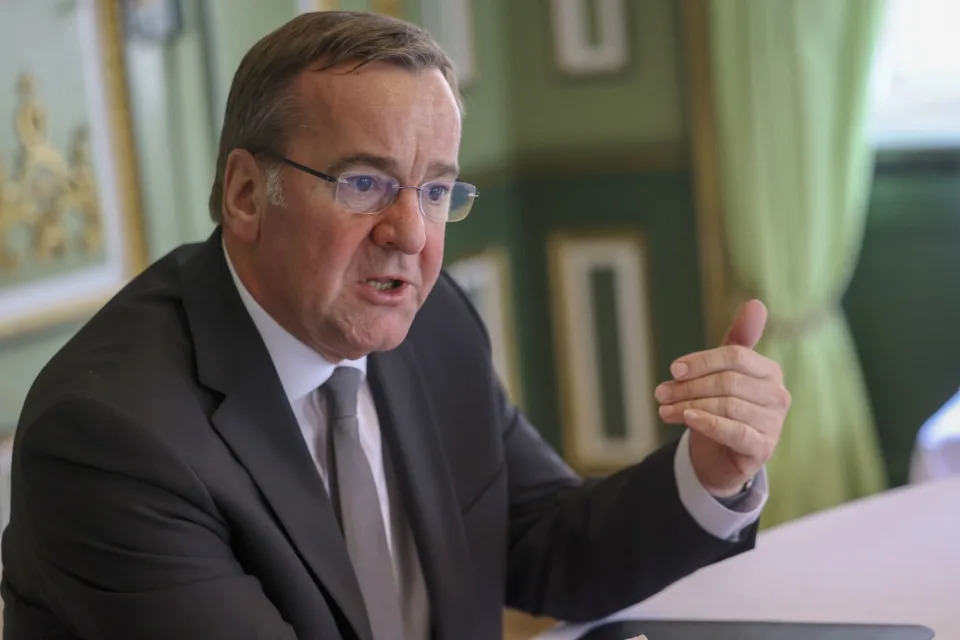
“It’s about division, it’s about undermining our unity, so we should react in a level-headed but not less determined way,” Boris Pistorius said after a hastily-convened special meeting of the defense committee in Berlin on Sunday.

“This is clearly about undermining our unity,” he said. “It is about using this recording to destabilize and unsettle us,” adding that “we should not fall for Putin’s line.”

In the 38-minute audio recording obtained by the media platform Russia Today, German air force chief Ingo Gerhartz and highly-ranked officers discussed a possible delivery of German Taurus missiles to Kyiv, and their potential impact.

“On Friday, immediately after it became known, I contacted the federal office for military counterintelligence (MAD) and instructed them to investigate the incident completely,” Pistorius said, adding that he is getting regular updates.

Read more: Germany Probes Military Security Leak After Russian Wiretap

Der Spiegel and the German press agency DPA reported separately that the recording has been determined to be authentic, while potentially doctored, and that the conversation had been conducted on the commercial, non-encrypted video calling platform Webex — with invitations sent to mobile phones via a Bundeswehr office landline.

Pistorius said it was no coincidence that the revelation came amid funeral services for Kremlin critic Alexey Navalny and new revelations about the Wirecard scandal.

Chancellor Olaf Scholz has clearly positioned himself against the deployment of German Taurus missiles in Ukraine, causing tensions among some NATO members.

Explainer-Why a leaked German military recording is causing outcry


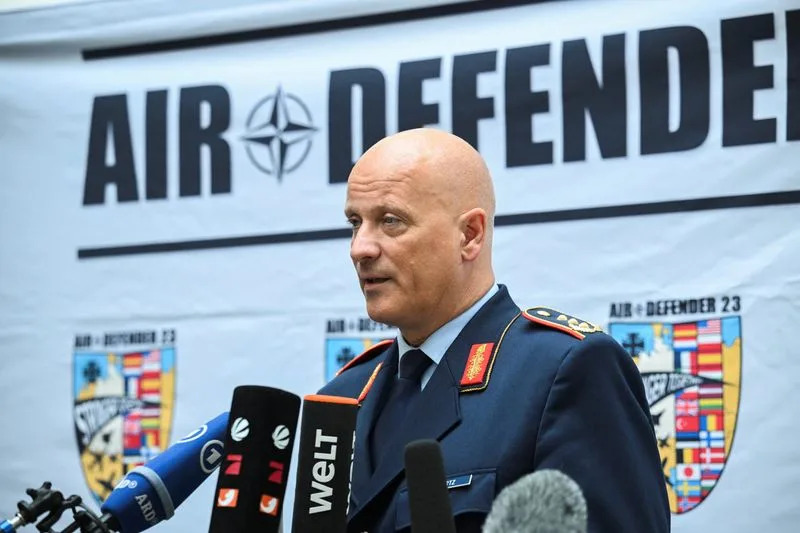
Press conference about the Air Defender 23 in Berlin


By Sarah Marsh and Andreas Rinke
Mon, March 4, 2024 

BERLIN (Reuters) - Russian media last week published an 38-minute audio recording of an intercepted online call between senior German military officials about how to support Ukraine against the Kremlin's invasion.

Germany's government has confirmed the veracity of the call.

This is what the officials discussed and the reactions to the security breach:

WHAT WAS DISCUSSED DURING THE RECORDED CALL?

In the call, German Air Force Chief Ingo Gerhartz discusses with three high-ranking Luftwaffe officials the possible delivery of Taurus cruise missiles to Kyiv, which Chancellor Olaf Scholz has publicly so far firmly rejected.

They also talk about the training of Ukrainian soldiers, and possible military targets for the missiles including the bridge linking the Russian mainland to Crimea and Russian ammunition depots.

The discussions included details of allies' operations, such as the fact British personnel were deployed in Ukraine and how Britain's Storm Shadow and France's Scalp missiles were deployed in the country.

One official talks about the fact Britain is already handling for France the satellite data needed for Ukraine to program the missiles.

He suggests it could do the same for Germany - preventing the country from being in any way directly involved in their deployment, which is a political red line for Berlin.

WHY IS THIS A SCANDAL?

Critics have denounced the fact military secrets were discussed via a standard off-the-shelf platform like WebEx, saying this demonstrates a systematic underestimation in Germany of security threats. One call participant joined from his hotel room in Singapore, government officials confirmed.

Germany's allies have not publicly criticized the leak. A spokesman for British Prime Minister Rishi Sunak told reporters it was a matter for Germany to investigate and Britain would continue to work together with Germany to support Ukraine.

But former British Defence Secretary Ben Wallace was quoted as saying by The Times that the incident demonstrated Germany was "neither secure nor reliable".

The recording also underscores the extent to which the decision on deploying Taurus missiles is a political one - and Scholz is reticent about Germany getting too directly involved in the Ukraine war or prompting an escalation of hostilities.

The Taurus missiles can reach twice as far as the Storm Shadow and Scalp missiles, and would thus enable Ukraine to even reach as far as Moscow.

HOW DID GERMANY REACT?

Germany has said the leak was a Russian "hybrid disinformation attack" that aimed to sow discord within the country and with allies. It has also called accusations of war preparations "absurd" propaganda.

German authorities say they are investigating the incident but it is unclear so far whether any security protocols were breached and no one has been fired yet.

MOSCOW'S TAKE

The Kremlin says the recording shows Germany's armed forces were discussing plans to launch strikes on Russian territory, and questioned whether this was government policy or Chancellor Scholz lost control of the situation.

Russia's foreign ministry said in a statement that it demanded on Monday an explanation from the German ambassador to Moscow Alexander Graf Lambsdorff about the discussion which "clearly demonstrates the involvement of the 'collective West', including Berlin, in the conflict around Ukraine".

RUSSIAN SPYING IN GERMANY

Germany, one of the largest providers of military hardware to Ukraine, is a major target of Russian spying operations, which have grown in scale since Russia's 2022 invasion of Ukraine, authorities have warned.

The authorities arrested a German Foreign Intelligence Service (BND) employee they suspected of spying for Russia in late 2022.

Last year, authorities arrested an officer of the military procurement agency on suspicion of passing secret information to Russian intelligence.

(Reporting by Sarah Marsh and Andreas Rinke; Editing by Tomasz Janowski)


Saturday, December 30, 2023

CRIMINAL CAPITALI$M
Wirecard lawsuit against EY claims 1.5 billion euros in damages

Reuters
Fri, December 29, 2023 

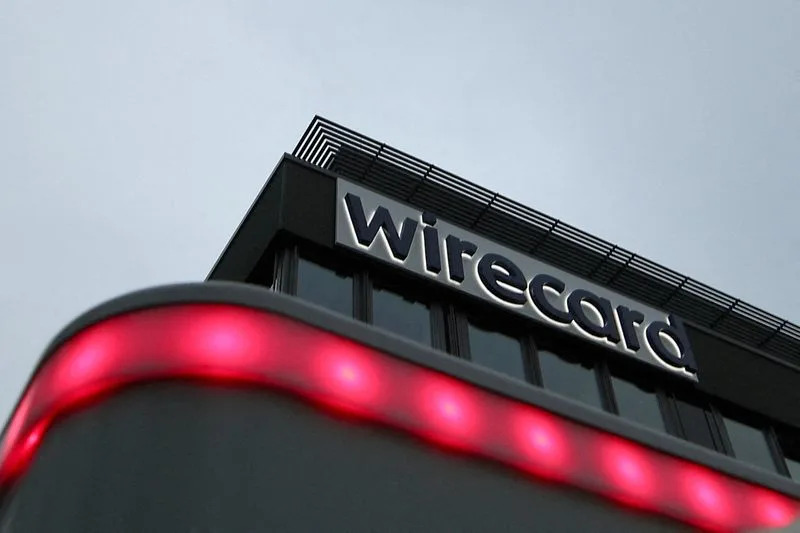
The headquarters of Wirecard AG, an independent provider of outsourcing and white label solutions for electronic payment transactions is seen in Aschheim


FRANKFURT (Reuters) - Accountancy firm EY is facing a new lawsuit claiming 1.5 billion euros ($1.66 billion) in damages over its role in auditing Wirecard's books before the German payments company collapsed in 2020.

The suit was filed by Wirecard's insolvency manager Michael Jaffe in a court in Stuttgart, a court spokesperson said on Friday.

It is one of several lawsuits EY is facing in the matter, including an investor suit filed last week claiming more than 700 million euros in damages.

EY declined to comment, as it did on last week's suit.

The accounting firm has previously rebuffed claims against it for damages in relation to Wirecard.

Wirecard filed for insolvency in June 2020, owing creditors almost $4 billion, after disclosing a 1.9 billion-euro hole in its accounts that EY said was the result of a sophisticated global fraud.

The firm's downfall shook the German business establishment, putting politicians who had backed it under intense scrutiny, along with regulators who took years to investigate allegations against the payments company that were circulating prior to its collapse.

Klaus Nieding, a lawyer representing shareholders in last week's lawsuit, said that EY should have seen "relatively easily that the alleged 1.9 billion did not exist in Wirecard's corresponding accounts," because another auditor later "found this out very quickly".


Handelsblatt first reported the value of damages sought in the Stuttgart case earlier on Friday.

($1 = 0.9051 euros)

(Reporting by Tom Sims and Alexander Huebner; Editing by Miranda Murray and Sharon Singleton)

Friday, November 17, 2023

SAM SPADE MEETS AI
Private Eye Gets Almost 7 Years for Hedge Fund Hacking Ring

Chris Dolmetsch
Thu, November 16, 2023 


(Bloomberg) -- A private investigator was sentenced in New York to 80 months in prison after he admitted to his role in a massive hacking ring that targeted hedge funds, short sellers and journalists.

Aviram Azari’s punishment was pronounced on Thursday by US District Judge John Koeltl in Manhattan. The 52-year-old Israeli had pleaded guilty in April 2022 to fraud and conspiracy to commit computer hacking, as part of a deal with US prosecutors.

Through an interpreter he expressed in Hebrew his “deep regret,” while noting he is worried for his relatives and friends in Israel, including his daughter, who is an officer in the Israeli Defense Force. Israel has been at war with Hamas forces in Gaza for more than a month.

“I take responsibility, full responsibility, for my actions,” Azari, dressed in tan prison garb, told the judge before his sentence was pronounced. He said he regretted it “with all my heart.”

Read More: Private Eye Pleads Guilty in Probe of Vast Hedge Fund Hack

Azari had admitted to hiring hackers who targeted victims with phishing emails. Prosecutors said he played a “critical role” in the scheme and was paid more than $4.8 million over almost five years to manage intelligence-gathering campaigns and attacks that can compromise entire networks. They said his clients included the now defunct German technology firm Wirecard AG.

His case was part of an investigation into a vast hacking-for-hire campaign that targeted thousands of entities including hedge funds Coatue Management LLC and Blue Ridge Capital LLC, as well as nonprofit groups fighting telecommunications companies over control of the internet and journalists from multiple news organizations.

He was arrested after landing at John F. Kennedy International Airport in September 2019 and has been in custody ever since.

Fought Hezbollah

Azar, who lives in Kiryat Yam, Israel, served as a paratrooper in the Israel Defense Forces, fought in the 2006 Lebanon War with Hezbollah and later worked as an undercover officer for the Israeli police. His lawyers said in a sentencing memo that his firm was at first a lawful business that allowed him to use his skills, before he turned down the wrong path.

“Mr. Azari was successful at growing his business,” they wrote. “He should have stopped there.”

The US had asked the judge to give Azari 94 to 111 months behind bars, saying the scheme was “incredibly sophisticated” and “wreaked financial, professional, emotional and physical devastation” on his victims. Prosecutors said in their own sentencing memo that his apprehension was a “difficult achievement” in international cybercriminal investigations and that his sentence should serve as a deterrent to would-be hackers.

They said he ran a firm known as Aviram Hawk, or Aviram Netz, that hired groups of hackers, including one based in India, to steal credentials through emails that appeared to be from trusted sources. Wirecard used his company to gather intelligence on people and financial firms that had been critical of it, they said.

“Mr. Azari was an essential link in the chain of what was a sophisticated and long-running hacking scheme,” Assistant US Attorney Juliana Newcomb Murray told the court. “The true scale of this crime is exponentially larger than the government has been able to confirm.”

Exxon Probe

Azari’s firm also targeted people and organizations fighting climate change, and stole documents that were leaked to the press, prosecutors said. That resulted in news articles about probes by New York and Massachusetts into Exxon Mobil Corp.’s knowledge of the risks of climate change that “appeared designed to undermine the integrity” of the investigations, the government said.

Prosecutors identified more than 100 victims successfully hacked by Azari, and about 200 other targets of projects managed by his firm. The number of hackers hired in the schemes numbered “in the thousands” and spanned the globe, the government said.

Three of Azari’s victims addressed him directly Thursday, including Peter Frumhoff, a Harvard University professor of environmental science and public policy, and Lee Wasserman, director of the Rockefeller Family Fund.

Frumhoff said the attacks targeting groups fighting climate change were “unnerving.” He said, “it forced me at a critical moment to become extremely wary about what emails were legitimate and which were not. I had no idea about what information had been compromised.”

Wasserman said he was “appalled and shaken” by the hack of his private emails. “It felt like Big Brother had arrived,” he said. “I found myself whispering in my own home.”

All of the victims urged Azari to give up the names of those who hired him.

“We have a right to know who the clients are,” Frumhoff said. “The public has a right to know who was paying Azari to carry out these attacks.”

Azari asked Koeltl to sentence him to five years in prison, saying he had endured a “simply unimaginable punishment” since his arrest. He said he had been held in “utterly inhumane conditions” at jails in Manhattan and Brooklyn, including a one-year lockdown in a “mold-infested, windowless cell” for more than 23 hours a day without showers, hot meals or exercise.

The case is US v. Azari, 19-cr-00610, US District Court, Southern District of New York (Manhattan).

(Updates with comments from victims.)

Most Read from Bloomberg Businessweek

Tuesday, September 26, 2023

CRIMINAL CAPITALI$M
UK suspects Wirecard's Jan Marsalek of spying for Russia

The fugitive former manager of German financial services firm Wirecard has been accused by British prosecutors of involvement in conducting espionage on Russia's behalf. He's already being tried in absentia in Germany.


Marsalek is already wanted, and being tried in absentia, in Germany, but is now also on the radar of British prosecutors
Image: Frank Hoermann/SVEN SIMON/picture alliance


The public prosecutor's office in London on Tuesday accused former Wirecard chief operating officer Jan Marsalek of involvement in a spying network for Russia.

German news outlet Der Spiegel had first reported the development, citing sources in the prosecution service, shortly before Tuesday's announcement.

Marsalek is named as part of a case against five Bulgarian nationals in the UK that was made public last week. The Austrian businessman is said to have been a contact person for the oldest of the five people arrested, who is accused of organizing and managing the cell's operations.

The cell is accused of surveilling and reporting on people and places of interest to Russia within the UK.

However, Marsalek is not charged as part of the case.

The Bulgarian suspects appeared via video link in a hearing at Westminster Crown Court in London on Tuesday.

What else did UK prosecutors say?

Marsalek's communications with the 45-year-old man were said to concern obtaining military equipment on behalf of Russian, the provision of espionage tools, communication interception and "arranging physical surveillance and hostile activity against targets of the Russiean state," accordign to the prosecution.

He further tasked the group with "surveillance against locations of relevance to Russia including a NATO base in Germany." There are dozens of US military bases in Germany, an indirect result of World War II and the period when defeated Germany was occupied by the major powers that defeated it.

The Bulgarian suspects, three mena and two women aged between 45 and 29, were arrested in February, but the case against them was made public last week. They all lived in southeast England, either in London or Norfolk. Though their names are in the public domain, DW won't name them in this story as their identities would most likely be protected at this stage were the case being tried in Germany.

The cell is thought to have been active from August 2020 through February 2023, a timeline that matches Marsalek's rapid flight from Germany as his Wirecard business fell apart almost exactly.

Thought to have fled to Russia after Wirecard's collapse


Marsalek's ties to Russia were well known and German authorities, currently trying him in absentia in connection with Wirecard's collapse in 2020, believed he fled to Minsk and probably later Russia as prosecutors closed in on him that summer.

Wirecard was a payment and banking service that rapidly went insolvent in 2020 when it became apparent it had far fewer assets than it had reported
Image: CHRISTOF STACHE/AFP/Getty Images

Wirecard rapidly went insolvent in mid-2020 as a series of corrupt business practices and cases of fraudulent reporting were unearthed, showing the lender to have reported having almost €2 billion in assets that were not in fact in its possession and were "missing."

The company had rapidly grown and risen to take a spot on Germany's DAX stock market of the country's 40 largest publicly traded blue chip companies in 2018, soon before its business model began unravel.

Marsalek's contacts to Russia have made him a person of interest for at least three different intelligence agencies since 2020.

He is currently being tried in absentia in Munich.

msh/jcg (dpa, AP, Reuters)

Monday, July 17, 2023

Ernst & Young scores mega audit deal with UBS bank


Jai Hamid 
- July 16, 2023

Ernst & Young (EY) wins major contract to audit UBS after its acquisition of Credit Suisse.
EY will start auditing the merged UBS-Credit Suisse entity from 2024.
This contract is one of the highest in global banking, EY will use international resources.

In the highly competitive landscape of financial services, professional service titan Ernst & Young (EY) has landed an exceptional contract to audit UBS, the Swiss multinational investment bank and financial services company.

EY is taking over from PricewaterhouseCoopers (PwC), following UBS’s recent acquisition of Credit Suisse.

A change in guard for UBS: From PwC to EY

EY has had a long-standing relationship with UBS, serving as the bank’s external auditor since 1998. As UBS integrates Credit Suisse into its operations—a process that experts predict will span several years—EY will begin auditing the enlarged entity from 2024.

This is one of the world’s most substantial banking audit contracts, so much so that EY is expected to draw upon its international workforce to fulfill the demands of this assignment. Although PwC has been Credit Suisse’s auditor, they will wrap up their involvement by auditing the bank’s 2023 accounts.

In the grand scheme of the world’s financial services, this auditing contract marks an impressive win for EY. The sum that UBS paid to EY for auditing in the previous year amounted to $70 million, while Credit Suisse paid PwC $90 million—a ten percent increase from the prior year.

These hefty payouts reflect the value and prestige of these audit assignments in the European market. However, for the merged UBS-Credit Suisse entity, the audit fee is anticipated to be less than the combined amount paid by the two banks separately.

Nevertheless, it still ranks among the highest audit fees in the global banking arena.

To put these numbers in perspective, HSBC paid PwC $148 million for auditing last year, and Barclays paid KPMG £71 million. The auditing fees of the Wall Street heavyweights—Citigroup, JPMorgan Chase, and Goldman Sachs—ranged between $95 million and $103 million.

EY’s global edge and recent triumphs

The global reach and integration of EY’s financial services audit practice enable the firm to harness resources and specialized skills from across its network. This arrangement is said to be more seamless compared to EY’s competitors, allowing the firm to easily share resources across borders.

This UBS audit contract reaffirms EY’s position as a dominant player in the European market for financial services auditing. Last year, the firm won a share of the €60 million-a-year audit contract of BNP Paribas, France’s largest bank. EY also serves as the auditor for Deutsche Bank, Germany’s most substantial lender.

These recent successes have come despite EY facing reputation damage from its involvement in the Wirecard scandal. However, EY has demonstrated resilience, showcasing its ability to continue winning substantial contracts in the face of adversity.

As EY gears up for this high-stakes audit assignment, it may have to discontinue its consulting services for Credit Suisse, adhering to conflict of interest regulations. The firm was previously hired by Credit Suisse to review anti-money laundering procedures in its Asian wealth business.

The Swiss Federal Audit Oversight Authority, when questioned about EY’s independence as an auditor for the unified UBS-Credit Suisse entity, chose not to comment as the matter is currently “under consideration”.

In a world where credibility and expertise are the cornerstones of success in financial services, EY’s new auditing contract with UBS affirms its position in the big leagues of global auditing.

With this venture, EY not only elevates its standing but also sets the stage for its continued growth in the audit sector of financial services.

Sunday, March 26, 2023


How Deutsche Bank caught fire as Europe’s banking crisis spreads

Simon Foy
Fri, March 24, 2023 

Deutsche Bank chief Christian Sewing - Stefan Wermuth/Bloomberg

When Christian Sewing took the reins at Deutsche Bank in April 2018, his promise was simple: to make Germany’s biggest lender more boring.

Once a titan of the banking industry that rivalled Wall Street’s biggest beasts, Deutsche never really recovered from the 2008 financial crisis.

In the face of heavy fines, sluggish performance, sweeping restructuring costs and competition from more agile US rivals, Sewing was forced to return the struggling lender to its roots as a provincial German bank.

Less than four months into the job he announced a radical restructuring plan, which included laying off a fifth of Deutsche’s workforce, closing down large parts of its investment banking division – including equities trading – and setting up a “bad bank” with €74bn (£65bn) of toxic assets.

“What we have announced is nothing less than a fundamental rebuilding of Deutsche Bank through which we are ushering in a new era for our bank,” Sewing said at the time.

After years of pain, the plan appeared to be bearing some fruit. Last year, Deutsche posted profits of €5.7bn (£5bn) – its best performance in 15 years.

But the German lender has become the latest flashpoint in Europe’s banking crisis following a sharp jump in its credit default swaps, which investors buy to protect themselves from a company defaulting on its debts. Shares in the bank fell by as much as 14pc on Friday before paring some losses.

Analysts were scrambling for reasons to explain the sudden investor flight. Andrew Coombs, at Citigroup, said concerns about Deutsche’s commercial real estate exposure and a US Justice Department investigation into banks and Russian sanctions did not appear significant enough to explain the move.

He blamed it instead on an “irrational market”. As with Credit Suisse, “the risk is if there is a knock-on impact from various media headlines on depositor psychologically, regardless of whether the initial reasoning behind this was correct or not”, he said.

Indeed, it was contagion fears that drove Credit Suisse into the arms of its fiercest rival last week after customers pulled funds from the scandal-hit bank at a rate of knots, rather than any fundamental concerns around its financial position.

German officials dismissed comparisons between Deutsche and the Swiss lender on Friday. Asked whether the German bank was the new Credit Suisse, Chancellor Olaf Scholz said: “Deutsche Bank has fundamentally modernised and reorganised its business and is a very profitable bank. There is no reason to be concerned about it.”

However, amid the market panic triggered by the collapse of Silicon Valley Bank (SVB), Credit Suisse became a target in part thanks to the litany of scandals that befell the bank in recent years.

If the Swiss lender was regarded as the European banking industry’s weakest link, then Deutsche Bank could be seen as the industry's problem child thanks to its own notorious catalogue of blunders and missteps.

The bank’s share price has been on a rollercoaster ride for years amid a steady drumbeat of embarrassing scandals and poor financial results.

Over the past decade the German lender has been forced to stump up billions of dollars in fines for money laundering, bond mis-selling, interest rates manipulation, mortgage fraud and sanctions violations, with its Frankfurt headquarters having been raided twice in the past five years.

Deutsche paid up $630m to UK and US regulators in 2017 for its unwitting role in spiriting roughly $10bn of illicit cash out of Russia between 2012 and 2015, after bank staff missed multiple warning signs of so-called “mirror trading”.

The scheme saw the lender convert roubles into dollars on behalf of wealthy Russian clients, using thousands of apparently pointless, paired equity trades in Moscow and London. It was “highly suggestive of financial crime” and should have raised red flags, the Financial Conduct Authority later said.

In another case, Deutsche agreed to pay US regulators $150m for “inexcusable” failures to prevent suspicious transactions by the late paedophile financier Jeffrey Epstein, and again for clearing hundreds of billions of dollars for Danske Bank, a lender implicated in one of the world’s largest-ever money laundering scandals.

Like many other German institutions, the bank was also left with egg on its face when its asset management arm suffered €600m of losses when its shares in payments company Wirecard – which was built on a multibillion dollar fraud – turned sour in 2020.

And the bank last year opted to settle a class action lawsuit brought by US investors for $26m, following allegations it had failed to carry out proper “know your client” checks on Epstein, Russian oligarchs including Roman Abramovich, and businesses with links to terrorist group Hezbollah.

The investors claimed Deutsche had provided banking services to a revolving carousel of “unsavoury characters”, including some engaged in criminal activity “in reckless disregard of the financial crimes they helped perpetrate”.

“Deutsche Bank has been the subject of repeated scandals, investigations and regulatory enforcements for years,” the complaint filed by investors added.

“Neither Deutsche Bank nor its top commanders have learned from past misconduct. At Deutsche Bank, history keeps repeating itself.”

As part of the settlement, Deutsche denied wrongdoing.

Analysts tried to reassure investors on Friday that Deutsche's capital and liquidity remained strong.

Stuart Graham of Autonomous Research said: “Investors are worrying about the health of the bank. We are relatively relaxed in view of Deutsche’s robust capital and liquidity positions.

“We have no concerns about Deutsche’s viability or asset marks. To be crystal clear – Deutsche is not the next Credit Suisse.”

Paul de la Baume, senior market strategist at FlowBank, told Bloomberg: “It is a clear case of the market selling first and asking questions later.

“Traders do not have the risk appetite to hold positions through the weekend, given the banking risk and what happened last week with Credit Suisse and regulators.”

On weekends, Sewing is known to enjoy a few beers at a local Greek restaurant in Osnabrueck, the rural city in northwest Germany where he lives with his wife and four children.

Rather than embarking on his usual 475-mile commute to spend the weekend back home, the 52-year-old might want to stay closer to Deutsche’s Frankfurt HQ in case contagion fears cause any more damage to Germany’s biggest lender.

Monday, March 20, 2023

Trudeau’s Pipeline Scandal

Shameless spin can’t excuse the burgeoning boondoggle and ‘global warming machine’ called TMX.


Andrew Nikiforuk 
Today
TheTyee.ca
Vancouverites protesting in 2018 after Trudeau pledged $4.5 billion to buy Kinder Morgan’s Trans Mountain pipeline expansion. The public cost has leapt to $30.9 billion. 
Photo by Darryl Dyck via the Canadian Press.

Well, the transfer of billions of dollars from ordinary Canadians to wealthy oil companies continues unabated.

The cost of the obscenely over-budget Trans Mountain pipeline expansion, as The Tyee predicted last fall, has increased again by a whopping 44 per cent from $21.4 billion to now $30.9 billion.

Brace yourself. The costs will likely go higher because the twinning of the 980-kilometre-long pipeline, which will transport bitumen from Edmonton to Burnaby, is only 80 per cent complete.


The Trans Mountain Corp., of course, blamed the cost overruns on the usual suspects: global inflation, supply chain challenges and get this, “challenging terrain and geography.”

The Tyee is supported by readers like you Join us and grow independent media in Canada


Back in 2019 even the Canada Investment Development Corp. which oversees the Trans Mountain Corp., recognized that the costs for a highly risky pipeline expansion could be a runaway train due to “difficult terrain” and “risks of cost overruns.”

Robyn Allan, the brilliant independent economist who predicted this sorry debacle, wasn’t impressed by the corporation’s latest revelations:

“This is nothing short of a disaster and it continues to shock me that Ottawa can present a boondoggle as good for the economy, and a global warming machine as something Canadians should be happy to pay for,” said Allan, who headed the Insurance Corp. of British Columbia.

If you’ve lost track of the cost overruns, consider this brief chronology:

In 2013 Kinder Morgan first promised to twin the pipeline for $5.4 billion. When project costs escalated, it bailed and sold to the Canadian government in 2018.

Trudeau then promised to build the project for $7.4 billion. That figure, as Allan warned, soon ballooned to $12.6 billion in 2020. Last year it climbed to $21.4 billion. It now stands at $30.9 billion and counting.

“All the while Alberta’s oil producers capture the financial gain through subsidized tolls without any accountability or apology,” noted Allan.

The Canadian Taxpayer Federation, a group whose financial support and membership are murky but presents itself in the media as defender of the public purse, is supposed to raise hell about such blatant fiascos. Yet is has hardly said boo about this particular hemorrhaging of public funds.

But Allan has spoken doggedly. She repeatedly warned that the controversial mega-project was never financially viable and that’s the real reason why Kinder Morgan, an indebted Texas company, shrewdly sold the project to the Trudeau government which did not do its due diligence.

She also argued that if bitumen companies such as Suncor and Cenovus wanted to expand the pipeline then they should have shouldered the risk and financed it themselves. Where’s free enterprise when you need it?

But why would bitumen miners do that if a gullible government not only buys and constructs the damn expansion for you, but offers to subsidize tolls, setting them so low that no reasonable cost recovery can take place in our lifetimes?

Allan isn’t the only one who has warned about the project’s failings.

The Institute for Energy Economics and Financial Analysis also concluded last year that Canadians would never see a return on their billions because the tolls have been set too low to ever recover costs.

The Office of the Parliamentary Budget Officer was just as blunt in its 2022 report. Given escalating costs, it concluded that “the government’s 2018 decision to acquire, expand, operate and eventually divest of the Trans Mountain assets will result in a net loss for the federal government.”

Last year an exasperated Allan wrote another detailed report on rising losses for taxpayers. It was published by West Coast Environmental Law.

“I knew there would be a further jump in construction costs, and let’s be clear, the main reason for this outrageous increase is gross project mismanagement from Trans Mountain, CDEV and the federal government,” Allan told The Tyee.

“An almost 45 per cent jump is staggering when you consider that the project was well underway and hence costs should have been relatively locked in when Trans Mountain announced last year they had skyrocketed to $21.4 billion,” she said.

In making its bad news announcement on March 10 (a Friday of course), the Trans Mountain Corp. tried to soften the blow by offering “an economic impact assessment” by the accounting firm Ernst & Young LLP.

Before we open the glowing five-page report, readers should know that Ernst & Young is one of the Big Four firms who do accounting for governments and corporations around the world.

You should also know that it was recently the accountant for three major firms: NMC Healthcare, United Arab Emirates’ largest private health-care provider; Luckin Coffee Inc., China’s largest coffee chain; and Wirecard, a German payments company. Despite glowing reports from Ernst & Young, all three companies exploded in major financial scandals.


What’s at Stake with the Trans Mountain Pipeline Expansion?
READ MORE

The British High Court of Justice, which awarded $11 million to an Ernst & Young company whistleblower in a related lawsuit in 2020, noted that EY’s conduct put the firm “in breach of the principles of integrity, objectivity and professional behaviour.”

Last year the U.S. Securities and Exchange Commission fined the company $100 million for more fraudulent behaviour.

“It’s simply outrageous that the very professionals responsible for catching cheating by clients cheated on ethics exams of all things,” said the SEC director of the enforcement division, Gurbir S. Grewal. “And it’s equally shocking that Ernst & Young hindered our investigation of this misconduct.”

The U.S. National Whistleblower Center recently concluded that the globe’s Big Four auditors including Ernst & Young had “little incentive to stay competitive by demonstrating effective auditing abilities.”

So that’s a bit of background on the accountant Trans Mountain hired to produce an “independent” report.


The Trans Mountain Boondoggle: Taxpayers Lose Billions, Oil Companies Win
READ MORE

The report defies belief. It tells you that the spending of $30 billion worth of tax dollars has paid for lots of wages, created jobs and contributed to the GDP. Therefore, we should all be happy.

Stunningly, the report does not mention the history of persistent cost overruns or lack of cost controls. Apparently there are no accounting issues when a government promises that it will build a pipeline for $7.4 billion and then ends up spending more than $30 billion on the sucker.

No private firm would consider such shoddy budgeting a glorious achievement for spending on wages and jobs.

Tellingly the EY report makes no mention of multibillion liabilities in Canada bitumen mines.

The pipeline will expand mining in the tarsands and thereby accelerate the production of toxic mining waste stored in more than 300 square kilometres of tailing ponds that have been leaking into groundwater and the Athabasca River for decades.

Cleaning up this deadly waste and other infrastructure will officially cost $33 billion and other credible calculations put the real figure closer to $130 billion. But industry has only set aside $1 billion for the job as of September 2022.


Canada’s Dirty $20-Billion Pipeline Bailout
READ MORE

Why wouldn’t Ernst & Young mention the pipeline’s connection to that inconvenient liability?

“The EY report is nothing short of silly,” concludes Allan. “It is telling us that if a project goes from $5.4 billion to $30.9 billion somehow this is better for the economy. They should be ashamed.”

The last word, here, should go to Allan. Let’s remember that she warned us that Kinder Morgan wasn’t an honourable player. She warned us that the buyout was scandalous and that the government overpaid for rusty old infrastructure only worth a billion dollars. She also warned us that the tolls had been set too low by so-called regulators. She warned us about rampant cost overruns and other lousy accounting by the Canadian government.

So here’s Allan’s bottom line, and don’t say you weren’t told. “Trans Mountain is not profitable or commercially viable so by definition it cannot have a positive impact and represents a huge taxpayer-funded economic drain.

“It doesn’t matter how many consultants Ottawa pays to spin a different story. The truth is there is no manner by which this project is a benefit to Canadians or the Canadian economy.”


Tyee contributing editor Andrew Nikiforuk is an award-winning journalist whose books and articles focus on epidemics, the energy industry, nature and more.