Friday, October 16, 2020

U.S. military says South Korean workers may be laid off amid row over costs
© Reuters/HANDOUT FILE PHOTO: American and South Korean flags at Yongin South Korea

SEOUL (Reuters) - The U.S. military will put nearly 9,000 South Korean workers on unpaid leave from April in the absence of an agreement on the sharing of costs of maintaining 28,500 U.S. troops in South Korea, it has told the government.

The allies are at odds over how much of the cost South Korea should shoulder to accommodate U.S. Forces Korea (USFK), a legacy of the 1950-53 Korean War that ended in an armistice, not a peace treaty.

Negotiations have made little progress even after the previous deal, the Special Measures Agreement (SMA), expired at the end of 2019.

The workers, who are mostly employed at U.S. bases, were put on unpaid leave in April, which led to a temporary agreement in June to let South Korea fund some 4,000 of them.

USFK, in a Oct. 5 letter to the labour ministry seen by Reuters, said temporary funding would expire on Dec. 31 and it could only pay the workers until March.

"We still face a labour funding deficit for the rest of calendar year 2021," the U.S. military said.

"Absent a signed SMA or related bilateral agreement, USFK may need to furlough ... Korean national employees starting no earlier than April 1."

President Donald Trump has said South Korea should pay more and the disagreement raised the prospect that he could push to withdraw at least some U.S. troops, as he has done elsewhere.

Cost-sharing talks were a major sticking point during an annual security meeting this week between Defence Minister Suh Wook and U.S. Secretary of Defence Mark Esper in Washington.

They said in a statement they had agreed to finalise a deal, citing "the impact of the lapse on the alliance", but failed, for the first time since 2008, to stipulate pledges to "maintain the current force level of USFK".

A South Korean military official said Esper had expressed concern the absence of a deal could "impact our joint readiness".

"But they also reaffirmed 'unshakable commitment' to the combined defence in the statement, that's what we focus on instead of the mere number of troops." said the official, who declined to be identified.

(Reporting by Hyonhee Shin; Editing by Robert Birsel)
First Nations chief calls on Trudeau to help settle Nova Scotia lobster dispute

DIGBY, N.S. — Prime Minister Justin Trudeau needs to do more than send tweets to settle an increasingly violent dispute over an Indigenous-led lobster fishery in Nova Scotia, a First Nations chief said Thursday.
© Provided by The Canadian Press

"Actions speak louder than words," Chief Mike Sack of the Sipekne'katik First Nation told a news conference Thursday in Digby, N.S., located about 40 kilometres from where a lobster pound was damaged by protesters.

"They're sitting in their offices, safe as can be, saying, 'We need safety out there.' Then send enforcement down," Sack said. "Do your job. Protect Canadians . . . . Don't just tweet about it."

The RCMP have said about 200 people were present at two violent clashes Tuesday outside lobster pounds in New Edinburgh and Middle West Pubnico.

Describing the events as a hate crime, Sack asked Trudeau to send additional law enforcement personnel to the area to ensure the violence is contained.

"This truly is systemic racism," Sack said when asked about the RCMP's actions. "Does Trudeau care about our people? Does he care about reconciliation? They talk about it, but I don't see any actions towards it . . . . The RCMP dropped the ball."

The chief said his council has decided to take legal action against those who are interfering with the band's self-regulated lobster fishery. "We'll go after everyone," he said, adding that his First Nation is considering calling in Indigenous warriors from across the country.

The non-Indigenous protesters say they are opposed to the band's decision to start a commercial lobster fishing business that has operated outside the federally regulated lobster season since mid-September.

Sack argues Indigenous people in Atlantic Canada and Quebec have a treaty right to fish for a moderate livelihood where and when they want, based on a 1999 Supreme Court of Canada decision that cites treaties signed by the Crown in the 1700s.

Many non-Indigenous critics, however, cite a clarification issued four months after the 1999 ruling, stating the Mi'kmaq treaty rights would be subject to federal regulations to ensure conservation of the resource.

Colin Sproul, head of the The Bay of Fundy Inshore Fishermen's Association, said in an interview he condemns the violent acts but added that they are the product of years of growing concern about the state of the stocks.

Video: Miller says 'space needs to be given for negotiations' among Indigenous communities after violent, tense Nova Scotia fishery incidents (Global News) https://tinyurl.com/yxkhml7h

"We're Canadians. We should expect that dialogue is always the way to solve our problems, not through violence," he said.

He also criticized the Mounties for failing to take action against any of the parties to the dispute. He said he was dumbfounded a few weeks ago when he saw Indigenous fishers trying to board a non-Indigenous boat in St. Marys Bay while an RCMP tactical squad observed.

"I can accept that Indigenous people may have seen acts of violence perpetrated against them that the RCMP walked away from, too," he said.

The RCMP confirmed Thursday they had increased the number of officers in the area following the violent incidents on Tuesday night. "What we’re hoping for is a peaceful resolution to this very important issue," RCMP Sgt. Andrew Joyce said in an interview.

In Ottawa, Minister of Indigenous Services Marc Miller said he found the images of Tuesday night's violence alarming.

"We're talking about a fundamental right to earn a moderate livelihood, that is a right the Mi'kmaq are entitled to exercise," Miller said. He noted that "moderate livelihood" has never been defined in a way that's acceptable to all sides and said non-Indigenous fishers need be involved in the discussion.

"The risk, if we don't get this right, is that people will die . . . . Violence begets violence, and that is unacceptable," he said.

Following a cabinet meeting Thursday, Nova Scotia Premier Stephen McNeil said he was "extremely disappointed" by the federal response to date around the Indigenous lobster fishery. McNeil said Ottawa needs to find a workable solution by sitting down with all sides in the dispute as soon as possible.

"This is only getting more entrenched . . . they need to be in the same room so everyone knows what each other is saying," he said.

McNeil also said the province would provide police with the "resources necessary," including manpower to ensure public safety in the area. "If more people are required, we obviously would have to pick up that bill," he said.

Provincial Justice Minister Mark Furey said he was satisfied with the RCMP response, adding that he thought it's been a "measured approach" under difficult circumstances.

Sack said during the news conference the Mi'kmaq fishery will continue despite the damage done to the holding facilities, the burning of one fisherman's boat and damage to vehicles in recent weeks.

He said the band is now in the process of purchasing the damaged plant in New Edinburgh, which he said would include a buyer's licence if the sale is completed. "It's just a matter of doing the paperwork," he said.

— With files from Danielle Edwards, Keith Doucette and Michael MacDonald in Halifax.

This report by The Canadian Press was first published Oct. 15, 2020.

Michael Tutton, The Canadian Press

Trump administration rejects California fires disaster declaration


The Trump administration has rejected a disaster declaration request over rampant wildfires that scorched California last month. A spokesperson for the Governor's Office of Emergency Services (CA OES) confirmed the development to CBS News.
© Bloomberg More California Fires Erupt As Dry Winds Make State A Tinderbox

"Confirming that the request for a Major Presidential Disaster Declaration for early September fires has been denied by the federal administration," Brian Ferguson said. "The state plans to appeal the decision and believes we have a strong case that California's request meets the federal requirements for approval. Meantime, Cal OES continues to aggressively pursue other available avenues for reimbursement/support to help individuals and communities impacted by these fires rebuild and recover."

The disaster declaration request was issued September 28. In it, Federal Emergency Management Agency Regional Administrator Robert J. Fenton Jr asked that the White House declare "a major disaster in Fresno, Los Angeles, Madera, Mendocino, San Bernardino, San Diego, and Siskiyou counties."

"The severity and magnitude of these fires continue to cause significant impacts to the state and to the affected, local jurisdictions, such that recovery efforts remain beyond the state's capabilities," the request reads in part.

The Creek Fire in Fresno and Madera counties is one of the largest in state history, having burned more than 340,000 acres, while the Bobcat Fire in Los Angeles County has consumed more than 115,000 acres. Other fires mentioned in the request include the El Dorado Fire in San Bernardino County, which has burned more than 22,000 acres; the Valley Fire in San Diego County, which has burned more than 16,000 acres; the Oak Fire in Mendocino County, and the Slater Fire in Siskiyou County, which has burned more than 156,000 acres.

It's unclear why the Trump administration denied the disaster declaration request. In the past, the president has been critical of California's response to wildfires and has blamed the recent increase in incidents on poor forest management, even though many forests in California are federally managed.

Trump acknowledges he may owe $400 million to unknown sources during town hall

U.S. President Donald Trump acknowledged that he may owe $400 million to unknown sources during a town hall television event on Thursday.
© AP Photo/Evan Vucci President Donald Trump listens during an NBC News Town Hall, at Perez Art Museum Miami, Thursday, Oct. 15, 2020, in Miami.

The amount was originally revealed after a New York Times investigation that also claims Trump paid around $750 in taxes in the 2016 and 2017 tax years and no taxes for 10 of the last 15 years.

Read more: ‘I don’t want to pay taxes,’ Trump says while disputing NYT report in debate with Biden

“When you look at the amount of money, $400 million is a peanut, it is extremely underlevered (sic)," Trump told NBC host Savannah Guthrie. "It is levered with normal banks, not a big deal."

While Trump said "levered," he most likely meant leveraged, which means money was borrowed to invest in an expected profitable venture.

Trump said that he doesn't owe the money to Russia or any "sinister people." When asked if he owes it to any foreign bank or entity, he replied, "Not that I know of."

When asked directly whether he has over $400 million in debt, as the Times claims, Trump responded, "It is a tiny percentage of my net worth."

Video: Who do you owe money to? (cbc.ca) 
https://tinyurl.com/yxbujav3

"That sounds like yes (you are confirming,)" Guthrie replied.

There is concern that Trump's debt could be a national security risk to the U.S. as it could be used to influence the president's decision-making.

Read more: Trump’s reported debts raise national security issues for possible 2nd term: experts

“Why would banks assume the risk on these loans?” Richard Painter, who served as chief ethics attorney in Republican George W. Bush’s White House Painter, said when the news first broke.

“Or did someone else quietly assume risk of that loan for the bank to make it happen?”

Trump previously has said he has "very little debt" and has highlighted the amount of debt compared to his alleged net worth.

When asked whether he paid $750 in tax for the 2016 and 2017 tax years on Thursday, Trump said it is a "statutory number" and he thinks it is a "filing number" and claimed the New York Times' numbers were wrong.

-With files from the Associated Press

After pandemic delays, RCMP union's quest for salary bump resumes

After a series of pandemic-related delays, the head of the union representing Royal Canadian Mounted Police officers says salary negotiations are back in full swing — a process that could see policing costs swell across much of the country.

The original plan was to kick off bargaining talks in March, but the pandemic delayed many face-to-face meetings for the new union which, after a years-long fight, received certification back in 2019.

"I think our membership has shown their patience with respect to this process and I'd ask them and the public to obviously realize that this is a marathon, not a sprint, and we're building from zero. So it will take some time," National Police Federation president Brian Sauvé said in an interview with CBC News.

"As far as I'm concerned, they started in a very meaningful and fruitful way."

Sauvé said that, unless future meetings are hampered by a second wave of COVID cases, he hopes to present a deal to rank-and-file members to begin voting on next summer. RCMP members have never before had a union contract.

"So we're cautiously optimistic that everything is going to continue on that path and we'll be able to accomplish a lot in the next six to eight months," he said.

The RCMP employs more than 20,000 police officers. Giving them any kind of pay boost could put new pressure on budgets for multiple levels of government.

Citing the ongoing negotiations, Sauvé won't say publicly how much of a pay hike his union is seeking. He said the goal is to bring Mounties in line with other police agencies.

According to RCMP wage figures last updated in 2016, a constable makes between $53,000 and $86,110, while a staff sergeant can make between $109,000 and just over $112,000.

A constable for the Edmonton Police Service, meanwhile, makes a salary of between $69,107 and $112,427, according to the EPS website.

"They've been obviously without a raise for going on four years now, four and a bit," said Sauvé of his members. "We want to be fairly compensated."
© CBC Brian Sauvé is president of the National Police Federation.

A spokesperson for the Treasury Board said the federal government "is committed to reaching an agreement with the National Police Federation that is fair for RCMP regular members and reservists, as well as reasonable for Canadians."

"Out of respect for the collective bargaining process, we will not comment further on negotiations," said Bianca Healy in an email.
Contract policing under review

While the RCMP is overseen at the federal level, Mounties serve as police in most provinces and in all three territories through contract agreements. They also serve in more than 100 communities outside of cities.

The provinces and territories pay the lion's share of RCMP policing contracts — about 70 per cent — while the federal government covers the rest. Municipal RCMP contracts are based on a number of different cost-sharing scenarios that vary according to a community's size and the date it first signed a policing agreement with the RCMP.

Those contract policing obligations have been cited as a costly drain on the RCMP's resources, diverting them from federal duties such as investigating organized crime and protecting national security.

"Public Safety Canada and the RCMP have confirmed there are systemic sustainability challenges impacting the whole of the RCMP," said a memo drafted by Public Safety and obtained by the Canadian Press.

The salary talks come at a moment of national and international reckoning over police budgets and use of force, driven by in-custody deaths in the United States and investigations of Canadian police services' use-of-force policies.

Sauvé said those conversations haven't made their way into the salary negotiations yet.

"From our perspective, whether it's defund-the-police or [reallocating] resources, I think those are more political discussions about how we allocate resources, how we decide how many police officers are in a community. It really goes to the budgeting and recruiting efforts and the resource methodology that the RCMP uses," he said.

"We're advancing those arguments in different forums, like the federal budget committee, different provincial budget committees, the public safety minister's office and such. So it hasn't come up in contract negotiations."
Rights group threatens lawsuit to force New Brunswick to make abortion accessible


FREDERICTON — A civil rights group is threatening New Brunswick's government with a lawsuit to force the province to repeal its abortion-related legislation and to make the procedure more widely available.
© Provided by The Canadian Press

New Brunswick denies women, girls, and trans people fair access to abortions, the Canadian Civil Liberties Association said in an Oct. 14 letter to Premier Blaine Higgs and Health Minister Dorothy Shephard.

If the government doesn't repeal its "discriminatory laws" on abortion and give wider access to the procedure, "we are prepared to commence legal proceedings," the letter reads.

Noa Mendelsohn Aviv, a director with the group, said New Brunswick is violating citizens' rights under the Charter.

"It's a fundamental rights issue and it's a matter of constitutionality and the province has not been willing to budge for a long time," she said in an interview Wednesday.

The association is targeting regulation 84-20 under New Brunswick's Medical Services Payment Act. That rule states the province will not subsidize the cost of an abortion conducted outside a "hospital facility approved by the jurisdiction in which the hospital facility is located."

Mendelsohn Aviv said that since there are only three hospitals in the province that provide abortion services -- two in Moncton and one in Bathurst -- most New Brunswickers don't have proper access to the procedure. Many, she added, don't have the means to travel to access the service.

Mendelsohn Aviv said she's confident that if the matter goes to court, her organization would win and force the province to repeal that law. The letter is just the beginning of the process, she added.

"This is step one and with any luck it will be sufficient," she said. "The cost to the government of fighting a lawsuit that they will lose is far greater than any cost to providing safe and accessible abortion care in the province."

A provincial government spokesperson refused to comment on the letter Thursday. "We do not comment on potential legal matters," Coreen Enos said in an email.

The only facility where New Brunswick residents can obtain an abortion outside a hospital is Clinic 554 in Fredericton. But its medical director, Dr. Adrian Edgar, has said the centre is facing closure because it's not financially sustainable.

Mendelsohn Aviv said the province has been called out before for its strict abortion regulations. Prime Minister Justin Trudeau reminded Higgs last year the province has an obligation to fund out-of-hospital abortions or risk penalties.

Federal Health Minister Patty Hajdu echoed Trudeau's concerns earlier this year.

“Women are not covered in specific regions of that particular province, so I have spoken with my counterpart ... and we’ll continue those conversations," Hajdu said.

"We expect the province to come into compliance and ensure there is equity in access, in particular around abortion."

This report by The Canadian Press was first published Oct. 15, 2020.

- - -

This story was produced with the financial assistance of the Facebook and Canadian Press News Fellowship.

Danielle Edwards, The Canadian Press

Rights group decries Myanmar's camps for displaced Rohingya

By GRANT PECK, Associated Press 2020-10-08


BANGKOK (AP) — The de facto detention of 130,000 ethnic Rohingya in squalid camps in Myanmar amounts to a form of apartheid, a human rights group alleged Thursday in urging the world to pressure Aung San Suu Kyi’s government to free them.

The camps are a legacy of long discrimination against the Muslim Rohingya minority in Buddhist-dominated Myanmar and were the immediate consequence of communal violence that began in 2012 between the Rohingya and the Buddhist Rakhine ethnic group. The fighting left people in both groups homeless, but almost all of the Rakhine have since returned to their homes or been resettled, while the Rohingya have not.© Provided by Associated Press FILE - In this June 24, 2014, file photo, a Rohingya boy walks with a mat as children play in the background at Dar Paing camp for Muslim refugees in north of Sittwe, western Rakhine State, Myanmar. The de facto detention of 130,000 ethnic Rohingya in squalid camps in Myanmar amounts to a form of apartheid, a human rights group alleged Thursday, Oct. 8, 2020 in urging the world to pressure Aung San Suu Kyi’s government to free them. (AP Photo/Gemunu Amarasinghe, File)

Human Rights Watch in its new report said inhuman conditions in 24 tightly restricted camps and closed-off communities in the western state of Rakhine threaten the right to life and other basic rights of the Rohingya.

“Severe limitations on livelihoods, movement, education, health care, and adequate food and shelter have been compounded by widening constraints on humanitarian aid, which Rohingya depend on for survival,” the report said. “Camp detainees face higher rates of malnutrition, waterborne illnesses, and child and maternal mortality than their ethnic Rakhine neighbors.”

“The government’s claims that it’s not committing the gravest international crimes will ring hollow until it cuts the barbed wire and allows Rohingya to return to their homes, with full legal protections,” said Shayna Bauchner, Asia researcher at Human Rights Watch and author of the report.

Myanmar’s government had no immediate response to the report. Rohingya are not recognized as an official minority in Myanmar, where they face widespread discrimination and most are denied citizenship and other basic rights. Many members of other ethnic groups consider the Rohingya to be illegal immigrants from Bangladesh.

People living in the camps cannot move freely because of formal policies, ad hoc practices, checkpoints, barbed-wire fencing and a widespread system of extortion that makes travel prohibitive, Human Rights Watch said.


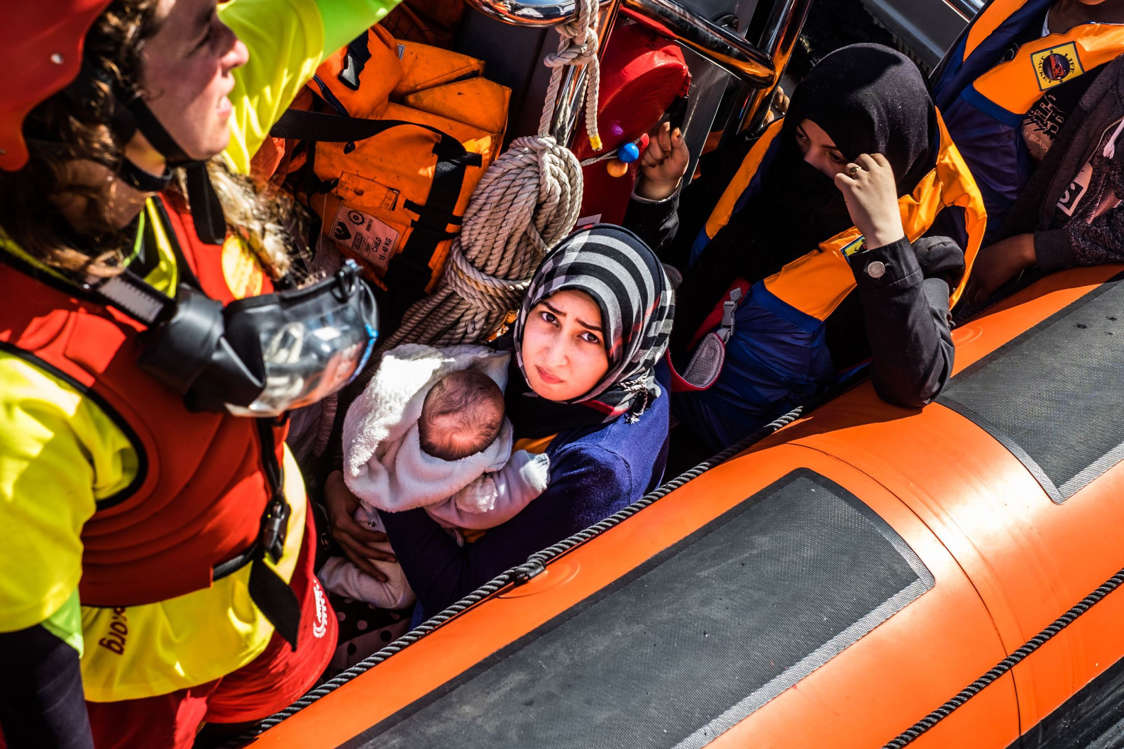
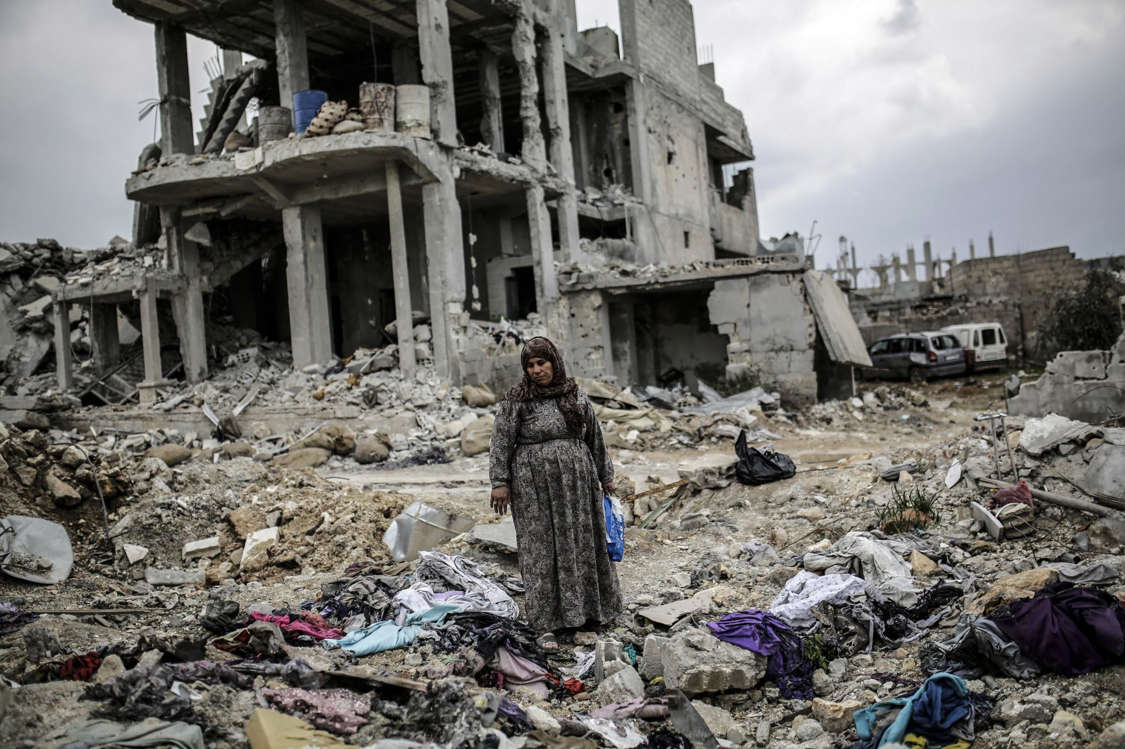
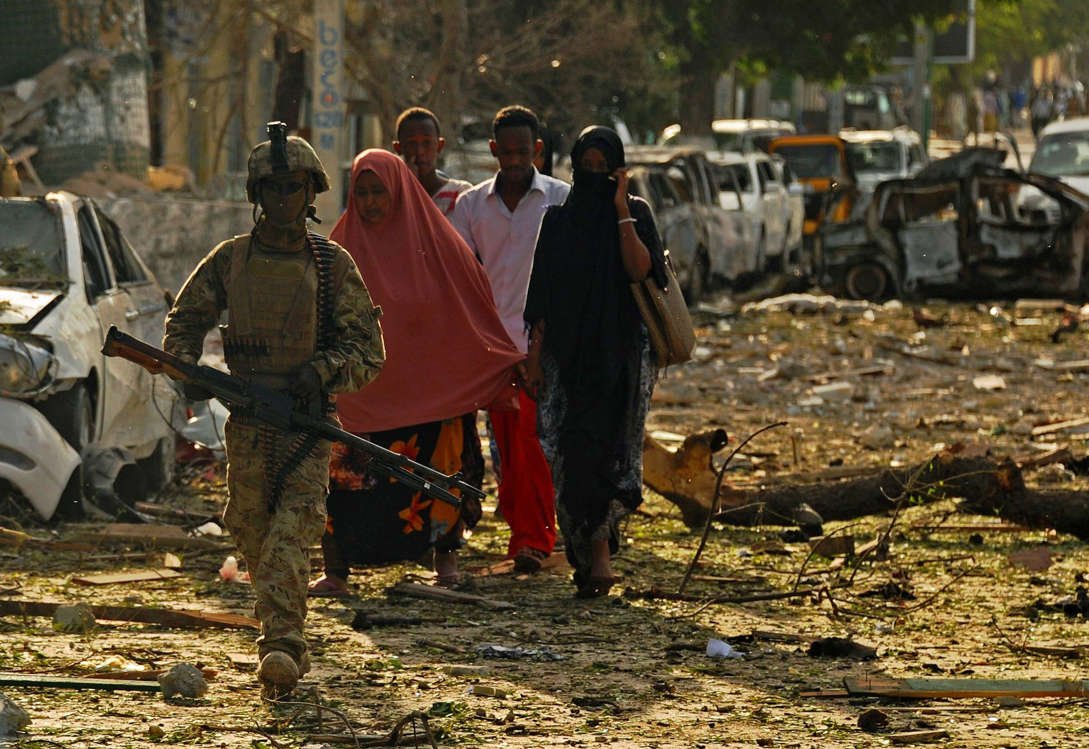
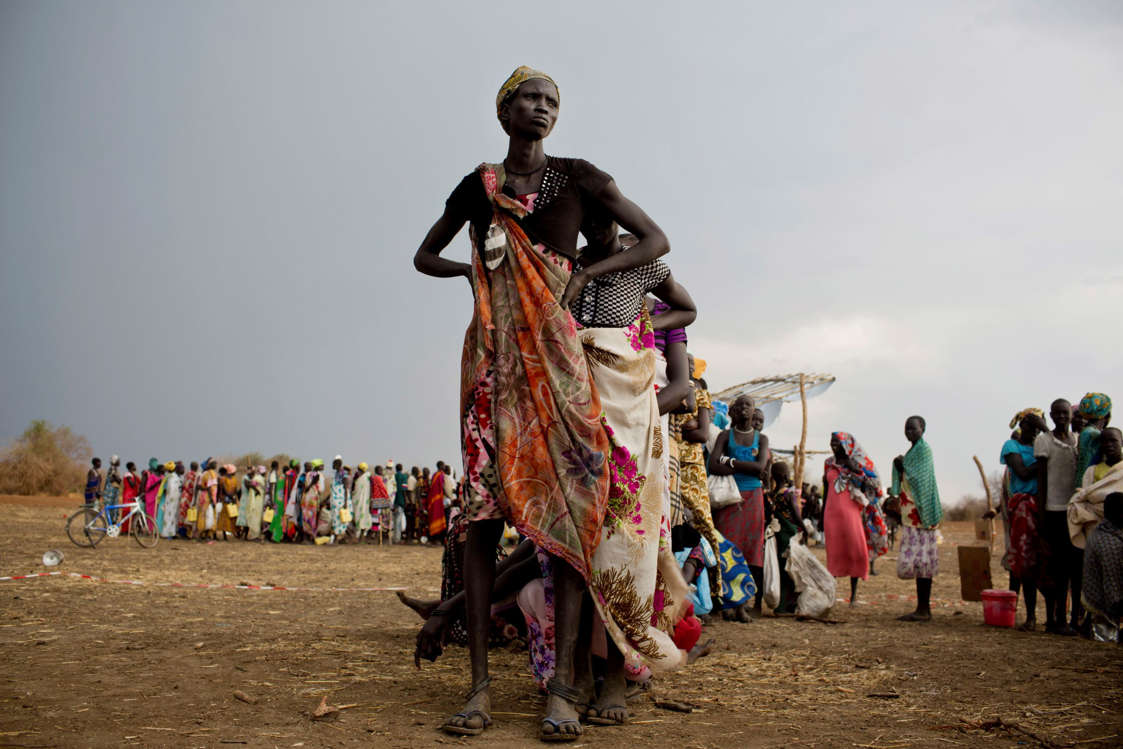
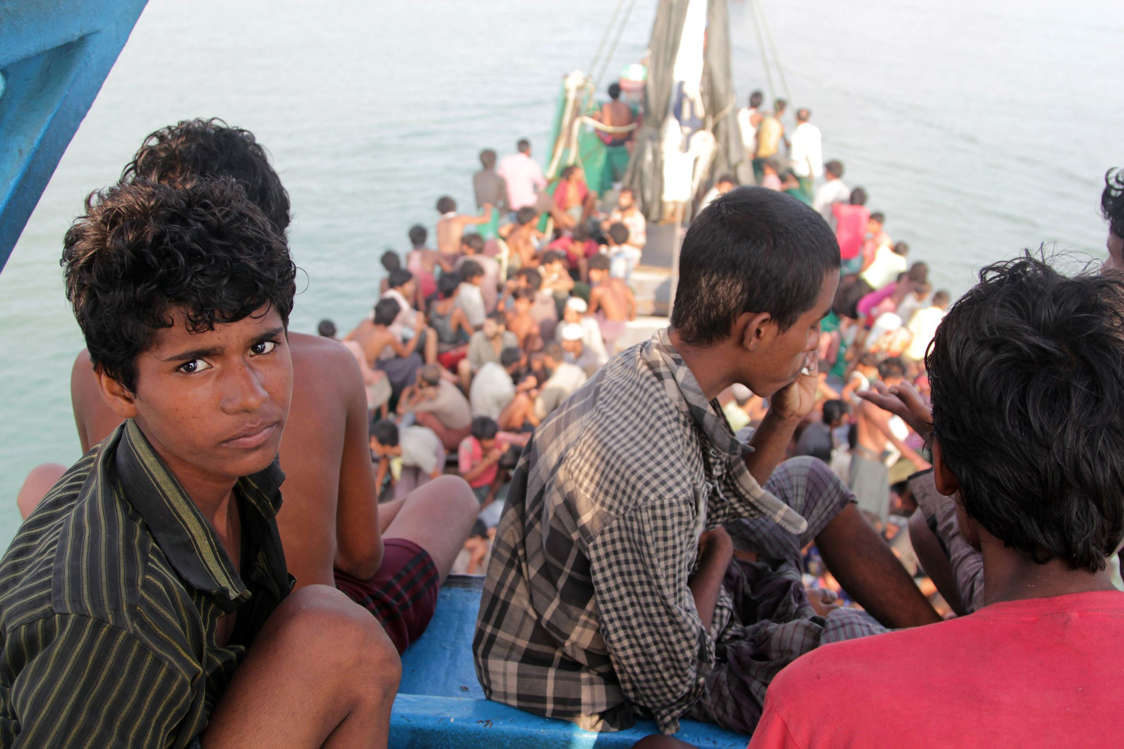
As we mark the World Day of Migrants and Refugees, take a look at the top 10 countries which generated the largest number of refugees and the top 10 countries where they have sought shelter, according to United Nations Human Rights Council (UNHRC) Mid-Year Trends 2016 data.


(Pictured) Refugees after being rescued in the Mediterranean Sea, near Libya.

The report also noted a lack of education and employment opportunities was inflicting systemic damage. “This deprivation of education is a violation of the fundamental rights of the 65,000 children living in the camps. It serves as a tool of long-term marginalization and segregation of the Rohingya, cutting off younger generations from a future of self-reliance and dignity, as well as the ability to reintegrate into the broader community,” it said.

Myanmar's government in April 2017 announced plans to begin closing the camps, but Human Right Watch said those plans entailed building permanent structures in their place, ”further entrenching segregation and denying the Rohingya the right to return to their land, reconstruct their homes, regain work, and reintegrate into Myanmar society, in violation of their fundamental rights.”

Later that year, Myanmar security forces waged a brutal counterinsurgency campaign that targeted Rohingya. The army-directed violence including the burning of villages, rape and murder and drove an estimated 740,000 Rohingya to seek refuge in neighboring Bangladesh. International courts are seeking to determine whether genocide was committed.

Related slideshow: Refugees around the globe (Provided by Photo Services)

Gallery


21 SLIDES © Marcus Drinkwater/Anadolu Agency/Getty Images

Thursday, October 15, 2020


Exclusive: Virgin Hyperloop picks West Virginia to test high-speed transport system

By Eric M. Johnson and Joey Roulette 2020-10-08

© Reuters/Handout . Artist's rendering of Virgin Hyperloop's forthcoming certification center and test track to be built in West Virginia

SEATTLE/WASHINGTON (Reuters) - Virgin Hyperloop has picked the U.S. state of West Virginia to host a $500 million certification center and test track for billionaire Richard Branson's super high-speed travel system, the company told Reuters.

The center will be the first U.S. regulatory proving ground for a hyperloop system designed to whisk floating pods packed with passengers and cargo through vacuum tubes at 600 miles (966 kmph) an hour or faster.

Later, Branson announced the decision in a press conference on Thursday, joined virtually by U.S. Transportation Department Secretary Elaine Chao, the state's Republican governor Jim Justice, and U.S. Senators from West Virginia Shelley Moore Capito, a Republican, and Joe Manchin, a Democrat.

"Today we lay the foundation for commercial deployment and operations across the United States of America and beyond," the company's Chief Executive Jay Walder told reporters.

In a hyperloop system, which uses magnetic levitation to allow near-silent travel, a trip between New York and Washington would take just 30 minutes. That would be twice as fast as a commercial jet flight and four times faster than a high-speed train.

Construction is slated to begin in 2022 on the site of a former coal mine in Tucker and Grant Counties, West Virginia, with safety certification by 2025 and commercial operations by 2030, the company said.

Federal regulators will use the center, and accompanying six-mile test track, to establish regulatory and safety standards, while Virgin will test its product and infrastructure.

The announcement comes less than three months after the Transportation Department published guidance on a regulatory framework for U.S. hyperloop systems. On Thursday, Chao said the guidance will enable the company "to spend less time on government paperwork and more time on making hyperloop systems fast, efficient, and above all, safe."

Virgin Hyperloop, which has raised more than $400 million, largely from United Arab Emirates shipping company DP World and Branson, is among a number of firms racing to launch new high-speed travel systems.

Canada's Transpod and Spain's Zeleros also aim to upend traditional passenger and freight networks with similar technology they say will slash travel times, congestion and environmental harm linked with petroleum-fueled machines.
HYPERLOOP WAS FIRST DEVELOPED BY THE RESEARCH COUNCILS IN CANADA I SAW IT IN A MODEL FORM IN THE SIXTIES AT THE ALBERTA RESEARCH COUNCIL WHERE MY UNCLE WORKED AS AN ENGINEER.

Elon Musk's Boring Company envisions commuters zipping along underground tracks in electric cars.

Virgin Hyperloop picked West Virginia after reviewing applications from 17 U.S. states to host the center.

However, the company's most likely first route could be in India, linking Mumbai to Pune, though the COVID-19 pandemic has delayed procurement and construction, initially slated for 2020.

Virgin Hyperloop also has a research and development test track near Las Vegas, Nevada.

(Reporting by Eric M. Johnson in Seattle and Joey Roulette in Washington; Editing by David Gregorio)
Trump's Indian worshipper dies 'depressed' over president's COVID-19 illness
By Sudarshan Varadhan
© Reuters/VINOD BABU FILE PHOTO:
 Bussa Krishna, a fan of U.S. President Donald Trump, adjusts a garland on a Trump statue after offering prayers at his house in Konney village

CHENNAI (Reuters) - An Indian man who worshipped Donald Trump and was upset by the news of the U.S. president contracting COVID-19 died of a cardiac arrest on Sunday, an official from his village and police said.
© Reuters/VINOD BABU FILE PHOTO:
 Bussa Krishna, a fan of U.S. President Donald Trump, wears a t-shirt with the word Trump as he poses for a photograph in Konney village

Bussa Krishna, who had said his devotion for Trump began more than four years ago when the leader appeared to him in a dream, had days ago posted a tearful video on his Facebook page wishing for his idol's recovery from the viral disease that has killed more than 1 million people worldwide.
© Reuters/VINOD BABU FILE PHOTO: 
Bussa Krishna, a fan of U.S. President Donald Trump, checks his mobile phone with an image of Trump outside his house in Konney village

Trump revealed on Oct. 2 that he had tested positive for COVID-19 and spent three nights in the hospital for treatment. He said on Sunday he had fully recovered and was due to resume campaigning on Monday ahead of the Nov. 3 U.S. election.

Venkat Goud, the head of Krishna's native Konney village and a close friend, said he was "depressed" that Trump and his wife Melania had got the disease.

"It's sad that he passed away without meeting his hero," Goud told Reuters by phone. "He had tried so hard to meet him" when Trump had come to India in February.


Raghupathi, a local police officer, said Krishna had left the village over two weeks ago to meet his parents in another part of the same southern state of Telangana.

"It is there that he passed away due to a cardiac arrest," Raghupathi, who goes by one name, said.

Reuters could not immediately contact Krishna's family members or the hospital where he was taken to. Local media said Krishna was in his late thirties.

(Reporting by Sudarshan Varadhan; Editing by Lisa Shumaker)


More homeowners in Edmonton, Calgary deferred mortgages during pandemic than in any other city

CBC/Radio-Canada


© John Bazemore, File/Associated Press Canadian Mortgage and Housing Corporation numbers show deferrals were sought in 18.9 per cent of mortgages in Alberta — double that of Ontario and Quebec.

A higher percentage of homeowners in Edmonton and Calgary deferred their mortgage payments than in any other major city in Canada, numbers shared by the Canadian Mortgage and Housing Corporation show.

In Edmonton, 21 per cent of mortgages were deferred in August, according to a list tweeted by CMHA president Evan Siddall. Calgary was close behind at 18 per cent.

Overall, deferrals were sought in 18.9 per cent of mortgages in Alberta — double that of Ontario and Quebec.

"We've been dealing — reeling — already from low energy prices and then shut downs related to COVID have led to people not being able to pay their mortgage bills and led to even more lower prices, leading to more layoffs," said Raja Bajwa, president of the Economic Society of Northern Alberta.

Canada's big banks announced mortgage-relief programs in March and April allowing mortgage payments to be deferred up to six months.

With deferrals coming to an end, it remains to be seen whether those relying on the programs will face foreclosures or find other strategies to continue payments, Bajwa said.

"This will kind of be holding our breath to see where things are at," he said.

Homeowners who took deferrals fell broadly into two categories, said Todd Bradley, a real-estate agent with Royal LePage in Edmonton, those who used the deferral as a means to stockpile cash or pay off other consumer debt and people who "really put a Band-Aid on some very intense bleeding."

"There's a big chance that they couldn't make the payments three or four months ago and they couldn't make the payments now that the deferral ends," Bradley said in an interview with CBC Radio's Edmonton AM.


"Those people are going to be in a whole world of hurt."


Bradley predicts the industry will see a jump in foreclosures.

"I don't think it's going to be calamitous, but they're going to increase."

Although the court system is getting back on track after shutting down early in the pandemic, foreclosure cases are well behind, he said.

"You won't see the foreclosures come from the court probably for another six or seven months — easily that long."

Bradley notes there could be a silver lining for potential buyers, however.

"If you do have stable employment and you have a little bit of down payment, never, ever have interest rates been this low for mortgages."

Lenders will need to plan

Mark Holtom, a mortgage broker with Dominion Lending Centres, believes part of the reason Alberta's deferral proportion was so high was because the province has fewer mortgage holders than Ontario or Quebec.

Banks were not set up to deal with the program when it began, leading to long waits on the phone, which would have been even longer in places with a higher proportion of mortgages, Holtom said.

Those looking for a deferral but not necessarily needing one would have bowed out somewhere along the way, he said.

"I think Alberta maybe was just a little bit luckier in enabling to defer them."

The impact of deferrals will likely be seen in the next six months, Holtom said. But with many people returning to work, he does not see catastrophe ahead.

"You're probably going to see a small percentage of properties that may be going into foreclosure or would normally go into foreclosure," he said.

With the courts backed up, Holtom said, lenders will have to make decisions that could mean further deferrals.

"It's in their best interest to work with those borrowers to actually come up with a plan," he said.