Tuesday, August 02, 2022

 ONCE HOME TO PIRATES & BANDITS

Calabria tourism: Not just a gangster's paradise

More famous for organized crime than culture, the southern Italian region isn't a popular destination for holidaymakers. But a growing demand for slow and experiential tourism could change that.

Might slow tourism concepts help to advertise Calabria better to international guests?

On the beach at Badolato Marina, along the pine-tree-lined Ionian coast of Calabria, Mario Gallelli is leisurely preparing his lido for summer. It's a sunny Friday morning, and a group of school children carrying bin bags, led by their teachers, are picking up litter from the empty shore.

Its reputation long tainted by associations with organized crime, Italy's southernmost mainland region of Calabria remains one of the country's least popular destinations with international travelers. According to research by Demoskopika, 1.9 million tourists visited Calabria in 2019, of which 20% were foreign. That's only 0.5% of the 65 million foreigners who visited Italy that year.

Yet with almost 800 kilometers of beautiful beaches, lush national parks, impressive historic villages, and ancient ruins, not to mention mouthwatering culinary riches and surprising cultural diversity — Calabria certainly has no shortage of attractions.
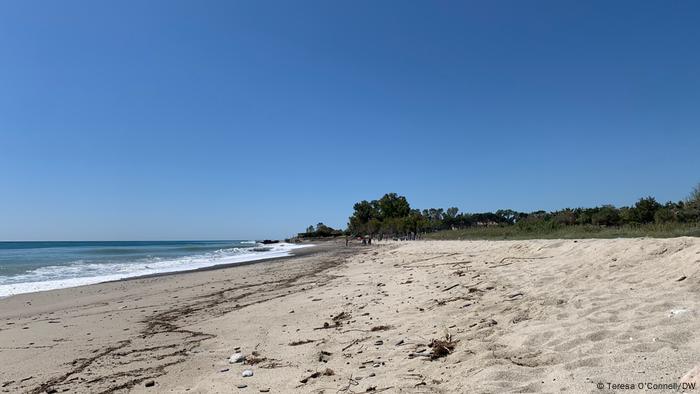
Still empty — the beach at Badolato

From challenge to opportunity

"Tourists today are looking for a more experiential holiday, and pay attention to local resources such as agriculture, food and wine, and everything a community has to offer. They want to get to know the place they visit," says professor Tullio Romita, who heads the University of Calabria's Tourism degree program. "This represents a huge opportunity for growth especially in Calabria."

The regional tourism board seeks to develop a tourism strategy that is sustainable and showcases Calabrian culture. "We have a unique heritage, with things that exist here and nowhere else," says regional work, economic development and tourism councillor Fausto Orsomarso. 

Terra dei Padri, meaning Land of the Fathers, is one project that highlights the region's history, tapping into the growing phenomenon of roots tourism. This sees the descendants of migrants returning to their family's homeland. "Of the 50, 60 million estimated descendants of Italians all over the world, many of them are Calabrian," says professor Romita. "They want to feel part of the community and reconstruct a missing piece of their identity."
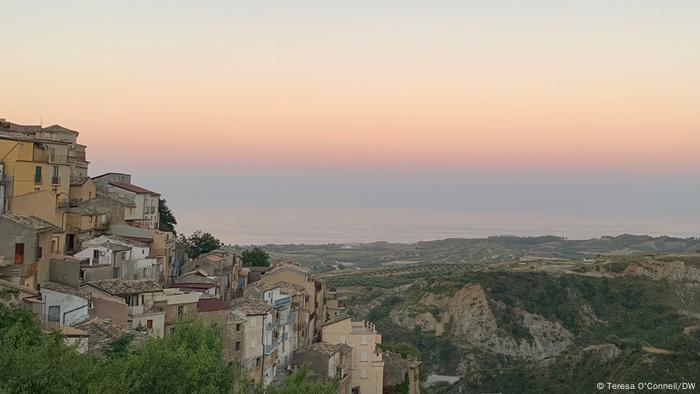
Quaint villages, stunning nature and an interesting culture — Calabria has much to offer for tourists

Albanian minority

Elsewhere, citizens have been making the most of local resources and painting local history in a new light. In the panoramic town of Pallagorio, one of several in the region where Albanian communities — known as Arbreshe — fleeing the Ottomans settled in the 15th century, is the office of Instaruga. It connects small local tourism operators with larger travel agencies, tour companies, and resellers, especially in Germany and France, helping them reach a wider audience, says co-founder Fabio Spadafora.

One of Instaruga's most appreciated experiences is the Arberia tour, which brings together the food, culture and traditions of the Albanian-speaking minority in the towns of Pallagorio, Carfizzi and San Nicola dell'Alto. Among other things, it gives people the opportunity to witness the traditional maga round dance, taste Arbreshe cuisine and learn about traditional textiles.

Experiencing the real Calabria

Among the crumbling grand palazzos of Cosenza's old town, in the shadow of the 12th-century Swabian-Norman castle, local guide Carmela Bilotto organizes tours to "experience the everyday life of the place, without sugarcoating." This area of the city, dense with history and hidden treasures, is also the poorest and least well-maintained: makeshift structural improvements to hold up the ancient buildings can be seen everywhere.
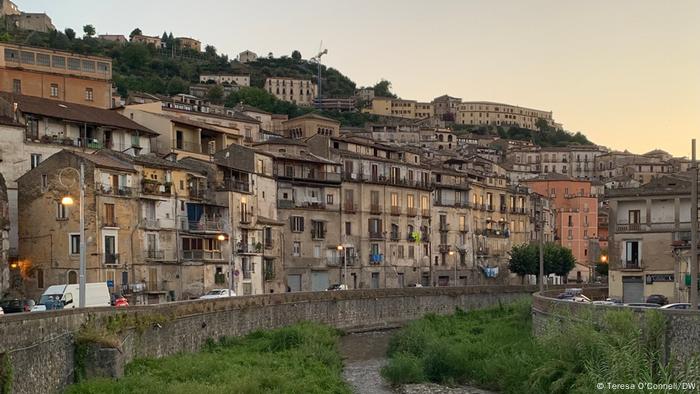
A view of Cosenza’s old town from the Crati river

"Calabria is full of contradictions," says Bilotto. "Think of the incredible linguistic diversity we have between the Pollino mountains, the areas of the Aspromonte where they still speak Greek, and the Arbreshe communities. We should communicate what we really are. Of course there's still a lot of problems in Calabria, but this is all part of the experience."

Authentic rural life

Another great way to experience authentic Calabria is to take the Cammino Basiliano hike. Overlooking the sea, the medieval village of Badolato is one of the stops along the route. In total, the 1,400-kilometer (870 mi) trail connects 140 towns in the footsteps of the Basilian monks, a Greek-Italian order that followed the teachings of Saint Basil. Passing through rugged peaks and dramatic valleys, not only promotes discovery of often neglected inland areas, but it also gives work to 40 local guides and literally puts local businesses, such as places to eat and sleep, on the map — this map incidentally can be downloaded for free by anyone who wants to embark on the hike.
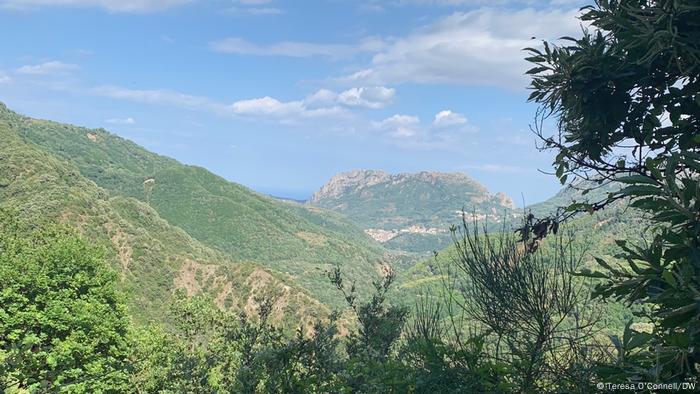
The Cammino Basiliano hiking trail leads through the Serre mountains where you can enjoy stunning views

According to ethnobotanist Carmine Lupia, who is one of the founders of the Cammino Basiliano, this type of tourism is "the only way" forward for Calabria. The rugged geography of the region, much of which is covered by mountains with difficult access, calls for a slower pace.

By promoting Calabria's unique cultural heritage and a more slow-paced tourism in order to experience it, this part of Italy could soon be attracting more international guests.

Edited by: Benjamin Restle

 Guatemala: Arrest of prominent journalist sparks outrage

Jose Ruben Zamora Marroquin's elPeriodico newspaper is famous for investigations that have revealed several cases of government corruption.

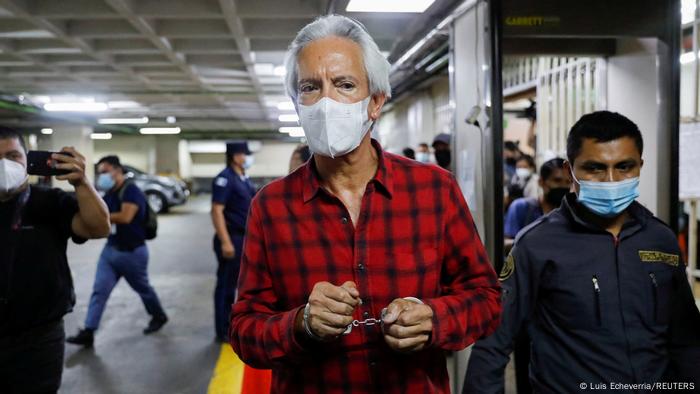
Zamora Marroquin is the founder and president of elPeriodico newspaper

Human rights activists, press freedom organizations and politicians expressed condemnation on Saturday after prominent Guatemalan journalist Jose Ruben Zamora Marroquin was arrested by police. 

Zamora Marroquin was arrested on charges of money laundering and blackmail. He was detained overnight, said Rafael Curruchiche, head of the Special Prosecutor's Office Against Impunity (FECI) on social media, after police raided his home and office earlier.

"I want to make it clear that the arrest has no relation to his quality as a journalist, but to a possible act of money laundering in his capacity as a businessman," Curruchiche said.

Zamora Marroquin, 65, founded the newspaper elPeriodico in 1996, an outlet famous for investigations that have revealed several cases of government corruption.

Speaking from a cell in a video posted to Twitter by a local journalist, Zamora Marroquin said he was beginning a hunger strike. "I haven't eaten anything nor drunk any water in 36 hours."

Journalists protested against the detention of Zamora Marroquin on Saturday, at the center of Guatemala city.

"Guatemalan authorities should immediately release and drop any criminal charges against journalist Jose Ruben Zamora, president of elPeriodico," said Committee to Protect Journalists' Advocacy Director Gypsy Guillen Kaiser in a statement. 

Human rights violations in Guatemala

The Inter-American Commission on Human Rights (IACHR) in June added Guatemala to its list of countries committing serious human rights violations. Other countries on the list include Cuba, Venezuela and Nicaragua. 

"We're going through one of the worst moments" with respect to corruption, Jordan Rodas, the country's ombudsman told AFP news agency. 

Corruption in Guatemala is at unprecedented levels under an "authoritarian" government that punishes prosecutors and judges investigating organized crime, he added.

At least five Guatemalan journalists from different media outlets are currently in exile. More than a dozen former FECI prosecutors, judges and human rights activists have fled Guatemala over complaints and arrest warrants issued against them by the FECI.

The administration of President Alejandro Giammattei has not commented on the case.

tg/sri  (AP, Reuters)


Arrest of prominent Guatemalan


journalist draws condemnation

SONIA PÉREZ D.

July 30, 2022

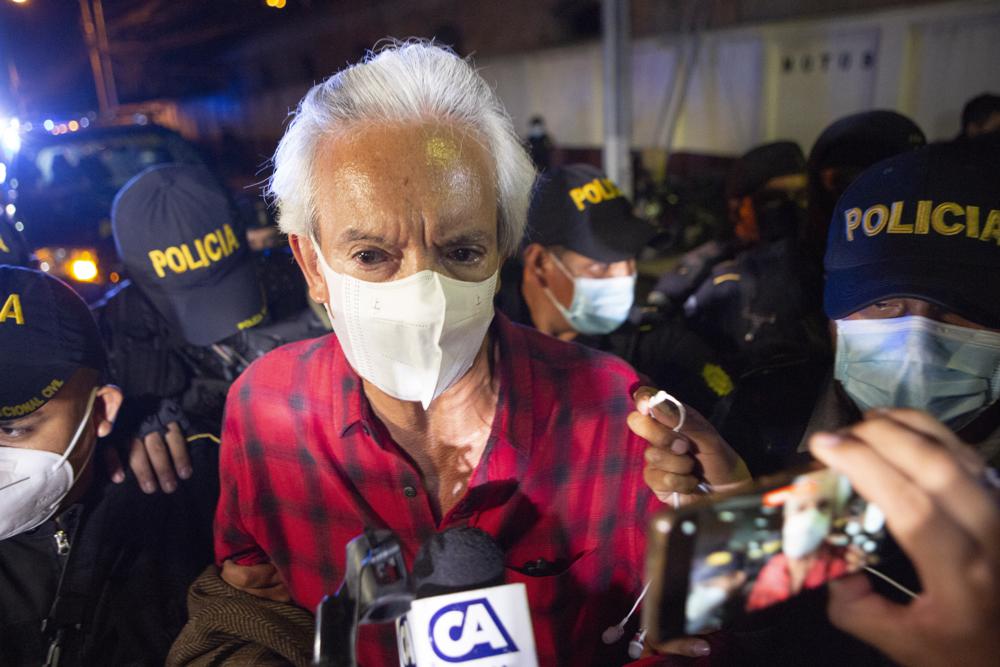
Guatemalan journalist Jose Ruben Zamora, president of newspaper El Periodico, arrives at court in Guatemala City, Friday, July 29, 2022. Security forces raided the home of renowned Guatemalan journalist Zamora, winner in 2021 of one of the King of Spain International Journalism Awards, who was arrested for the alleged crimes of blackmail, influence peddling and money laundering. (AP Photo/Oliver De Ros)


GUATEMALA CITY (AP) — A prominent Guatemalan newspaper editor who has overseen investigations into corruption has been arrested, prompting denunciations Saturday by politicians, anticorruption activists and civic groups.

Prosecution agents arrested José Ruben Zamora Marroquín at his home on Friday night, searching his home, seizing telephones and accusing him of money laundering. Zamora Marroquín is a prize-winning journalist who heads the newspaper El Periodico.

“This is an orchestrated plan, where the aim now is not to pursue those who are corrupt, but rather opponents,” said human rights activist Eleonora Muralles. “The strategy is to coopt the whole system and have judges — with serious doubts about their impartiality — put together cases and evidence against opponents.”

Journalists protested Saturday outside a courthouse where the case is being heard.

U.S. Congressman James P. McGovern, a Massachusetts Democrat, wrote that he was “deeply concerned” by the detention.

McGovern wrote in his Twitter account, “The judiciary is already decimated, is the Free Press next? Journalism is not a crime!”

Zamora Marroquín has declared a hunger strike. Speaking before a court hearing, he said, “I haven’t eaten anything nor drunk any water in 36 hours.”

The U.S. government has sharply criticized the weakening of anti-corruption efforts in Guatemala and last year cancelled the U.S. visa of Guatemalan Attorney General Consuelo Porras, who has been pursuing former prosecutors who had been conducting corruption investigations against officials..

More than former anti-corruption officials have fled the country. Now that effort appears to have extended to journalists.

Guatemala President Alejandro Giammattei has been dismissive of U.S. officials’ criticism of his attorney general and what they see as a backsliding in Guatemala on battling corruption. The country’s new special prosecutor against impunity has been placed on a U.S. list of people suspected of corruption or undermining democracy. He is accused of obstructing corruption investigations.

Giammattei’s government and prosecutors accelerated efforts begun by his predecessor to undo a U.N.-backed anti-corruption campaign that put several top officials, including former presidents, behind bars. They say those prosecutions themselves were irregular.

Moreover, a number of the Guatemalans, including two Supreme Court magistrates, were allegedly involved in a scheme to stack the Supreme and Appellate Courts with corrupt judges, according to the State Department report.

CDU leader pulls out of right-wing US-German political forum following criticism

Keynote speaker Friedrich Merz dropped out of the right-wing "Transatlantic Forum" following criticism of the guest list, which includes a gun lobbyist, members of the German far right, and Trump ally Lindsay Graham.

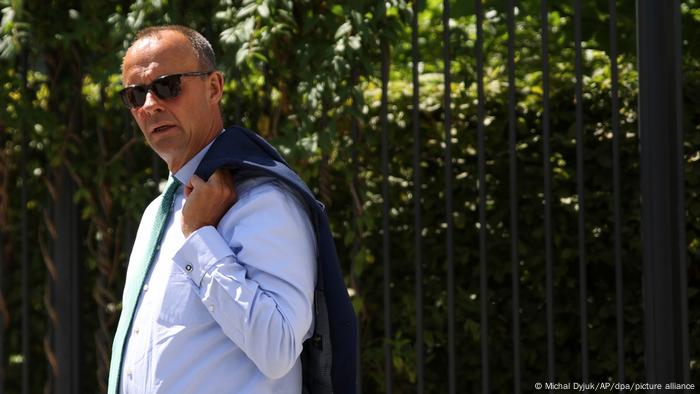
The CDU's Friedrich Merz had come under fire after signing up for a right-wing event

Christian Democrat (CDU) opposition leader Friedrich Merz dropped out as keynote speaker of a right-wing US-German political forum due to take place in Berlin at the end of August after receiving criticism for sharing space with far-right figures invited to the event.

The "Transatlantic Forum" was due to be hosted in Berlin by the representative office of the German state of Baden Wurttemberg.

However, the office said on Tuesday after further reviewing the guest list that it would not be hosting the event.

In a tweet, the office said some of the speakers showed a "close proximity" to the far-right Alternative für Deutschland (AfD) party.

"The event is therefore likely to damage the reputation of the state representation," the office said.

Merz's office did not give an explicit reason why the opposition leader pulled out, citing only a "change in the program."

It is unclear if the forum will go on after the keynote speaker and venue dropped out. 

Merz and Lindsey Graham were headliners

The event is being organized by German right-wing media organization The Republic and the US-based Tholos Foundation, which bills itself as an "advocate for free-market, low-tax and pro-competitive policies."

The keynote at the forum was to be a talk between the CDU's Merz and US Republican Senator Lindsey Graham on transatlantic relations.

After announcing his pullout, Merz's office said he still does intend to speak to Lindsay Graham in August, just not at the event.

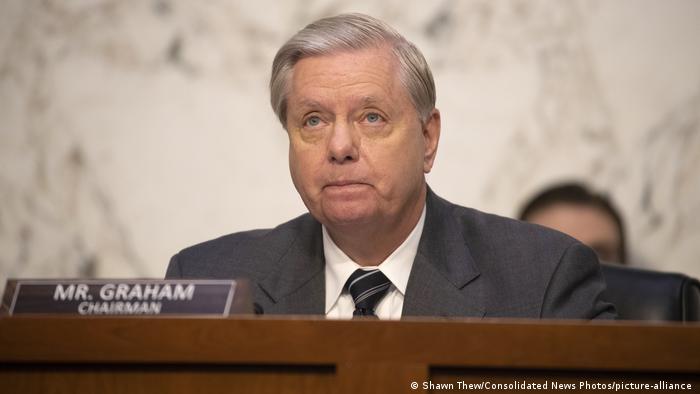
Lindsey Graham is an outspoken political supporter of Donald Trump

Graham is known as a staunch supporter of former President Donald Trump, including after the 2020 election during which Trump refused to concede defeat.

The South Carolina senator is currently fighting a subpoena to testify in a grand jury investigation in the state of Georgia over his knowledge of "a multi-state, coordinated plan by the Trump Campaign to influence the results of the November 2020 election in Georgia and elsewhere."

Social Democrat (SPD) General Secretary Kevin Kühnert told Germany's t-online news website that it was striking for Merz to speak with Graham about "saving conservative values" given the "radicalization" of the Republican Party and Trump supporters who are "actively working to erode basic democratic rights."

Controversial right-wing guests

Another US conservative on the guest list is Grover Norquist, a longtime Republican political operative and gun lobbyist who sits on the board of the National Rifle Association (NRA) and is a vocal opponent of gun control in the US.

Norquist also rallies against any government spending and in 2015 said his goal is to "cut the government down to a size where we can drown it in a bathtub."

On the German side of the guest list, is Joachim Steinhöfel, a former attorney for the AfD, who represented the party's co-chief Alice Weidel in a 2018 defamation lawsuit against Facebook.

Also invited is polemicist and publicist Henryk Broder who, among other things, has argued Germany's Middle East policy appeases Islamists.

Green party deputy parliamentary group chairman Konstanin von Notz told the Redaktionsnetzwerk Deutschland (RND) group of newspapers that it was a politically untenable for a high-ranking politician like Merz to participate in such events. 

Von Notz added Merz needed to "recover his political compass." 

German journalist Miriam Lau reported that Merz had been unaware of the complete guest list, which ended up including included figures like Steinhöfel and Broder, when he first agreed to attend. 

EU fallout grows over Orban's 'openly racist' words

Days after Hungary's Viktor Orban decried a "mixed-race" world, EU parliament leaders issued a strong rebuke.

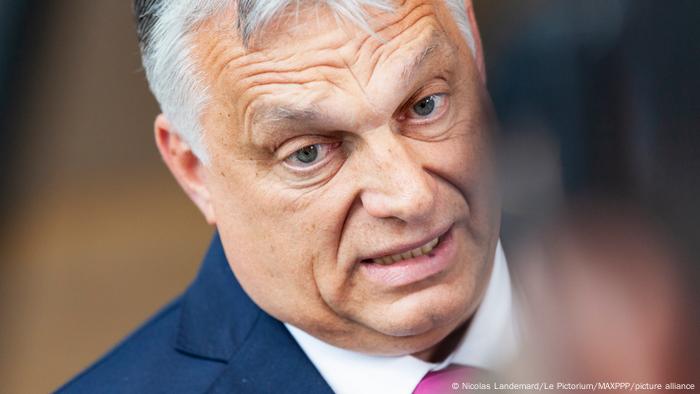
Hungary’s Viktor Orban's "mixed race" remarks prompted EU backlash

Leaders of the European Parliament's main parties on Saturday condemned Hungarian Prime Minister Viktor Orban for "openly racist" remarks he made recently.

In a speech in Romania, Orban argued that Europeans should not "become peoples of mixed race."

"Such unacceptable statements, which clearly constitute a breach of our values, also enshrined in the EU treaties, have no place in our societies," the Conference of Presidents of the EU Parliament said Saturday in a strong rebuke of the far-right leader.

It comes a week after Orban, who was critical of EU plans to call for a reduction of 15% in gas consumption, also made a backhanded reference to Nazi Germany's use of gas chambers as a tool of mass murder.

"I do not see how it will be enforced — although, as I understand it, the past shows us German know-how on that," he said.

The EU parliament leaders urged the European Commission and the European Council to condemn Orban's statements "in the strongest terms."

Von der Leyen says racism a blow to EU mutual values

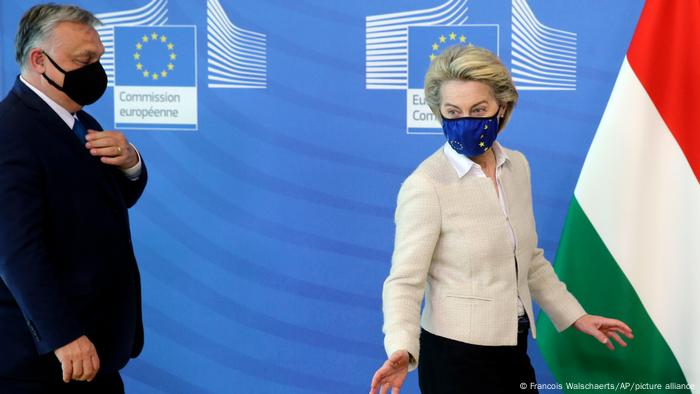
European Commission President Ursula von der Leyen stressed on Saturday that "all EU member states, including Hungary, have subscribed to global common values" which are "non-negotiable."

"To discriminate on the basis of race, is trampling on these values. The European Union is built on equality, tolerance, fairness, and justice," von der Leyen said in an interview with the Slovak news site aktuality.sk.

Without ever specifically mentioning the Hungarian prime minister,

 the European Commission President Ursula said racism is a blow against EU values

Orban adviser resigns in protest

A longtime Orban adviser, Zsuzsa Hegedus, resigned on Tuesday in the aftermath of the fallout from the prime minister's words, calling the speech "a pure Nazi text."

In response to her resignation and years of service to his government, Orban said: "You cannot seriously accuse me of racism after 20 years of collaboration."

Romanian Foreign Minister Bogdan Aurescu also denounced the comments.

The International Auschwitz Committee labeled Orban's speech "hateful and dangerous" and called on the European Union "to make it clear to the world that a Mr. Orban has no future in Europe."

That organization's vice president, Christoph Heubner, called on Austrian Chancellor Karl Nehammer to take a stand against such hate speech when Orban is on an official visit to Vienna Thursday.

Hungarian government spokesperson Zoltan Kovacs said Orban's speech was "misinterpreted," and its racist implications were far more narrowly focused than his critics' charge.

Renowned author Isabel Allende turns 80

One of the world's most widely read Spanish-language authors, Allende continues to fight for women's rights and write novels with strong female characters.

She has written over 25 books, which have been sold some 70 million times and translated into many languages. She has received 60 awards in 15 countries for her work, and two international film productions have been based on her novels.

Those are some of the hard facts about Isabel Allende, Chile's most internationally successful writer. But, as she writes on her own website, they don't tell the whole story.

"It is very strange to write one's biography because it is just a list of dates, events and achievements," she writes. "In reality, the most important things about my life happened in the secret chambers of my heart and have no place in a biography."

In fact, she doesn't even consider her books to be her biggest success, but rather the love she shares with her family and the opportunities she's had to help others. She did just that, for example, during August Pinochet's military dictatorship in Chile when she spoke out for those who were politically persecuted, and continues to help others with her Isabel Allende Foundation, which seeks to empower women.

Allende turns 80 on August 2. 

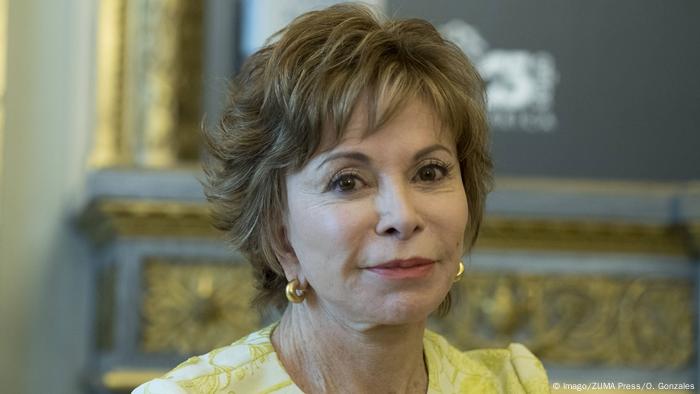
Isabel Allende in her house in Caracas in 1985

Read more: Berlin bookstore shuts down after leftist boycott

An unforgettable first novel

Nevertheless, it is the Chilean author's books that have made her world-famous — in particular, her 1982 debut novel, "The House of the Spirits." The partially autobiographical drama is about the upper-middle-class family Trueba, which suffers under the thumb of violent patriarch Esteban Trueba.

When a military coup removes the socialist president from power, Trueba puts his hopes in the new government — but is quickly disappointed. Terror and persecution sweep across the country, and the Trueba family is not spared.

Former Chilean President Salvador Allende

Former Chilean President Salvador Allende was ousted by a military coup

When Isabel Allende wrote her family drama in 1982, she had already left Chile and was living in exile in Venezuela. Her father's cousin, Salvador Allende, was the president of Chile, but was ousted by Augusto Pinochet's military dictatorship in 1973 and subsequently committed suicide.

At that point, Isabel Allende no longer felt safe in Chile.

Empowering women

Allende was born on August 2, 1942, in Lima as the oldest daughter of a Chilean diplomat. Her parents separated, and she spent a good part of her childhood living with her grandfather.

She later lived in Bolivia and Lebanon before returning to Chile, where she worked as a journalist, got married and had two children, daughter Paula and son Nicolas.

Her daughter Paula died of a metabolic disorder in 1992 at the young age of 29. In 1994, Allende dealt with her daughter's death in a very personal book called "Paula." In 1996, she established her Isabel Allende Foundation in Paula's honor, dedicated to empowering women and girls.

Allende has actively supported women's rights for many years. In 1968, she was one of founding editors of the feminist magazine "Paula" with the support of her relation Salvador Allende.

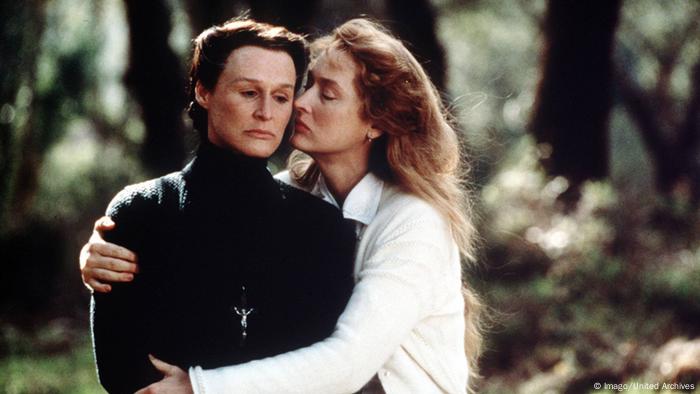
Glenn Close (left) and Meryl Streep (right) starred in the film version of Allende's "The House of the Spirits"

She also wrote stage plays and made a name for herself as a television presenter before emigrating to Venezuela.

Read more: Spiegel removes far-right book from bestseller list

Life in exile

While in exile, she began writing an imaginary letter to her deceased grandfather. She later developed the text into her novel "The House of the Spirits," which was filmed in 1993, starring Meryl Streep and Winona Ryder.

Right from the beginning, Allende's unique way of weaving together fiction and reality became apparent — a style called magical realism. She mixed the horrors of reality with a fantasy world full of magic that was always full of hope.

Critics have accused her of copying the works of Columbian Nobel Prize-winner Gabriel Garcia Marquez, who developed magical realism. Nevertheless, her epic tales of strong women won her the Chilean National Prize for Literature in 2010. 

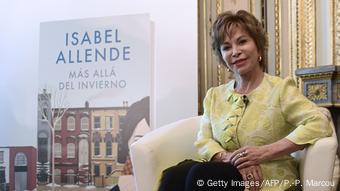
Allende is seen presenting her new book, In the Midst of Winter, in Spain in June

Allende is seen presenting her new book, "In the Midst of Winter," in Spain in June

'I still feel like a Chilean'

Allende has lived in the United States,  where she married for the second time, for more than two decades now,. But, as she told DW, Chile remains her home. "I still feel like a Chilean. My parents are Chilean, my family is Chilean and I spent the first years of my life — important, shaping years — in Chile."

Regardless, Allende's work remains globally relevant. Her latest novel, "Violeta," is a plea to those who need to assert themselves in a macho world. It is a biography of her mother Panchita, with whom the author was very close until her mother’s death in 2018.

The book is hardly a biography, but rather wishful thinking on Allende’s part. While the protagonist in the novel gains independence and freedom because of her business sense, Allende’s mother was dependent on her two successive spouses. Then again, Violeta in the novel is strong and combative, but not very emancipated when it comes to love.

The novel, which spans a century, is astonishingly contemporary. It begins with Violeta’s birth in 1920 and ends with the COVID pandemic a hundred years later. 

The octogenarian, however, has no plans to stop writing. "I enjoy writing so much. People tell me: 'You shouldn't have to write anymore, you're getting too old for that,'" the author told news agency AFP, adding, "But I love it. Why would I want to stop?"

Pakistan election commission says Imran Khan's party accepted illegal donations

Pakistan's ex-premier Imran Khan's party accepted millions of dollars in illegal funds from foreign individuals and groups, the election commission ruled Tuesday.

The case dates back to 2014 when a disgruntled founding member of Pakistan Tehreek-e-Insaf (PTI) filed a case against his party leadership accusing it of financial irregularities.

The Election Commission Pakistan found that Khan's party concealed 16 bank accounts and accepted donations from foreigners or foreign groups based in Australia, Canada, the UAE and the Cayman Islands.

Pakistani law bars political parties from receiving funds and donations from foreign individuals and companies.

The commission also said that financial details submitted by Khan were "found to be grossly inaccurate".

Pakistan's Prime Minister Shehbaz Sharif -- who came into power in April after Khan's ouster -- said the commission's verdict showed "yet again that he (Khan) is a certified liar".

"(The) Nation should ponder over the implications of his politics funded by foreigners," Sharif said in a tweet Tuesday.

The party has denied the accusations.

Responding to the decision, senior PTI leader Fawad Chaudhry said the party had taken funds from "overseas Pakistanis", not foreign nationals.

"Overseas Pakistanis are the backbone of Pakistan's economy, and we would continue to rely on them for funding," Chaudhry told reporters.

Cricket star-turned-politician Khan swept into power in 2018 thanks to an electorate weary of the dynastic politics of the country's two major parties, with the popular former sports star promising to sweep away decades of entrenched corruption and cronyism.

But in April, he was kicked out following a no-confidence vote -- brought down in part by his failure to rectify the country's dire economic situation, including its crippling debt, shrinking foreign currency reserves and soaring inflation.

He also reportedly fell out with the country's powerful military.

Khan has since staged a series of rallies, touting a claim he was pushed out of office in a "foreign conspiracy" and heaping pressure on a coalition of former opposition parties now in power.

PTI has been sent a notice to explain the prohibited funds, or it can challenge the order in court.

The commission meanwhile could pursue confiscating the prohibited funds, while the government could take the case to the Supreme Court to ban Khan's PTI party.

However, legal expert Osama Malik said: "Politically it would not be an ideal precedent for one group of political parties to ban their rivals."

The commission is also investigating a foreign funding case against two other major political parties -- Sharif's ruling PML-N and its coalition partner Pakistan Peoples Party (PPP).

Both parties deny the claims.

zz/ecl/dhc

Pakistan tribunal: Imran Khan's PTI received illegal funding

The Election Commission of Pakistan has ruled that the party of former Prime Minister Imran Khan received illegal funds from abroad. The decision could see the cricket icon and his party being banned from politics.


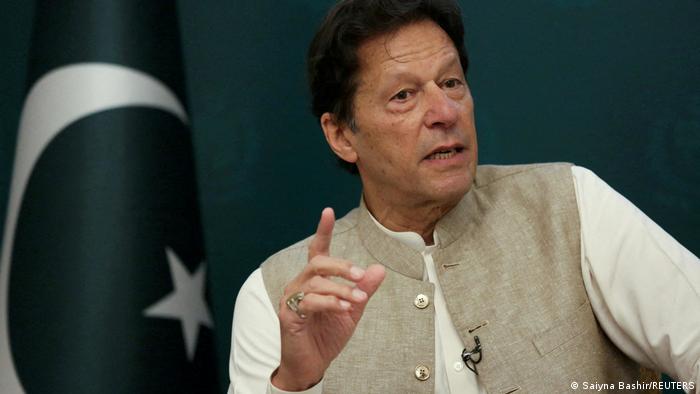
As the Oxford-educated son of a wealthy Lahore family, Khan had a reputation as a playboy before politics

Former Prime Minister Imran Khan's Pakistan Tehreek-e-Insaf (PTI) party on Tuesday said it would challenge the commission's ruling that could see it disqualified from any upcoming election.

Since he was forced from office after losing a confidence vote, Khan has been rallying his supporters to demand a new election. The country's new Prime Minister Shahbaz Sharif has rejected that demand.
What did the ruling say?

Khan's party has faced accusations of receiving funds from abroad, which is illegal in Pakistan, in a case that has lasted years.

According to Pakistani media, a three-member commission tribunal found that the PTI received funding from 34 foreigners or foreign companies.

The body said the party had submitted a fake affidavit about its bank accounts. It determined that the party had hidden 13 bank accounts that it should have declared.

The commission asked the party to submit an explanation as to why its funds should not be seized, media said.

The PTI itself says the funds in question were received from Pakistanis based overseas, which would not be illegal.

How does it mean he can be banned?


Legal expert Osama Malik told DW the decision could be used by the Pakistani government to declare the PTI a foreign aided political party.

However, a reference would have to be sent to the country's Supreme Court — which would make a final decision on this matter — within 15 days.

Malik said the PTI could respond to the possible seizure of funds or challenge the order itself in a court of law.
What was the reaction?

Former Pakistani Prime Minister Shahid Khaqan Abbasi, Khan's predecessor and one of his political opponents, said the matter should now be settled.

"It has been proved that Imran Khan is involved in the foreign prohibited funding which is illegal according to the Pakistani law and the law will take its course on this matter," he said.

The PTI's founder and Khan's former close associate Akbar S. Baba, who filed the complaint about the funding with the commission, hailed the ruling.

"All the accusations against Imran Khan have been proven," Babar told reporters, adding that Khan should step down from the party.

However, PTI spokesman Fawad Chaudhry denied that the party was guilty of wrongdoing.

"We will challenge this verdict in the court, these funds were received from overseas Pakistanis and they are patriotic people and they will continue to support our party and we have not [hidden] the funds."

Big promises turn sour

As the Oxford-educated son of a wealthy Lahore family, Khan had a reputation as a playboy before he retired from international cricket.

He was prime minister from 2018 until April of this year when he was forced to step down after the confidence vote, which he claimed was the precipitated by a US conspiracy. Washington has denied those claims.

Khan, 69, had promised sweeping reforms to eliminate corruption and cronyism. But he was accused by his detractors of economic mismanagement and foreign-policy mistakes.

Rapid inflation, rising unemployment, a weak currency and a heavy debt burden also hurt his popularity.

While Khan's supporters viewed him as the last hope for Pakistani politics, opponents chastized him for his willingness to accommodate Islamists and antagonize the West.

With reporting from Haroon Janjua in Islamabad

rc/msh (Reuters, dpa)


In Latin America, synthetic drugs becoming more popular than cocaine and marijuana

Drug cartels in Latin America are now making more money from synthetic drugs like fentanyl than the illicit substances the continent is best known for, like cocaine and marijuana.


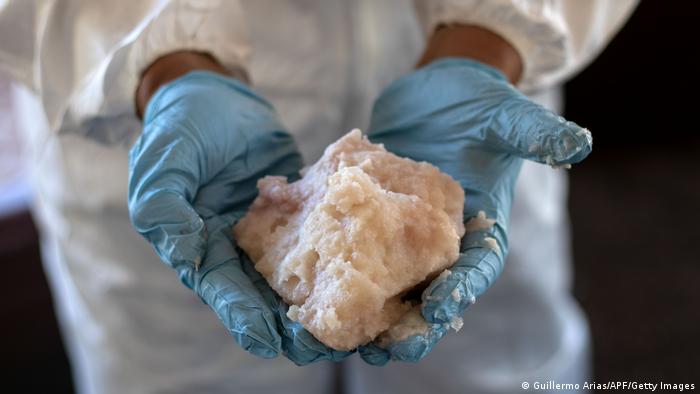
Synthetic drugs such as crystal meth, shown in production above, are becoming increasingly prevalent in Mexico


In early February this year, a number of people were hospitalized in Buenos Aires, left in life-threatening condition after taking adulterated cocaine. As a result, 24 of them died.

The Argentine authorities were forced to launch a media appeal, warning anyone who had recently purchased cocaine not to consume it under any circumstances. They subsequently discovered that the cocaine had been cut with another drug: carfentanil.

Carfentanil, which is a derivative of the powerful synthetic opioid fentanyl, is usually used to anesthetize large wild animals, like elephants. Just two milligrams — a few grains — is enough to kill a human being.

Fentanyl, on the other hand, is "only" 50 times stronger than heroin, and 100 times stronger than morphine. And in recent years, this synthetic drug has become a hugely lucrative export for Mexican drug cartels.

Cheap production, big profits

One of the reasons for this is that it costs much less to produce than traditional drugs. Reports in the Mexican media suggest that the notorious Sinaloa drug cartel now seems to be making bigger profits from fentanyl than from cocaine or any other drug.

In early July, Mexican soldiers seized a record 543 kilograms (1,200 pounds) of fentanyl in the city of Culiacan. "This is the largest seizure of this deadly drug in Mexico's history," the undersecretary of state for public security, Ricardo Mejía, announced proudly after the operation.


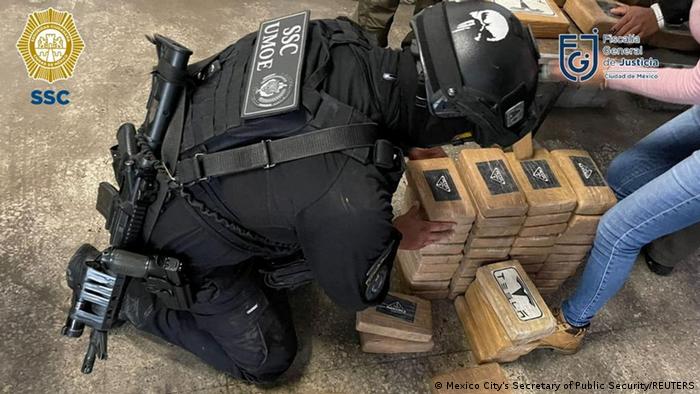
War on drugs: Just three weeks after the fentanyl seizure, police in Mexico City found 1.5 tonnes of cocaine hidden in a truck

Mejía had given a press conference in May in which he detailed why fentanyl was so lucrative for Mexican drug cartels. It takes only two hours to produce one kilogram, he explained, and in Mexico, a kilogram of fentanyl would fetch an average price of $5,000 (about €4,900).

In US cities like Los Angeles, the same amount would sell for $200,000.
Mexico: A lucrative market

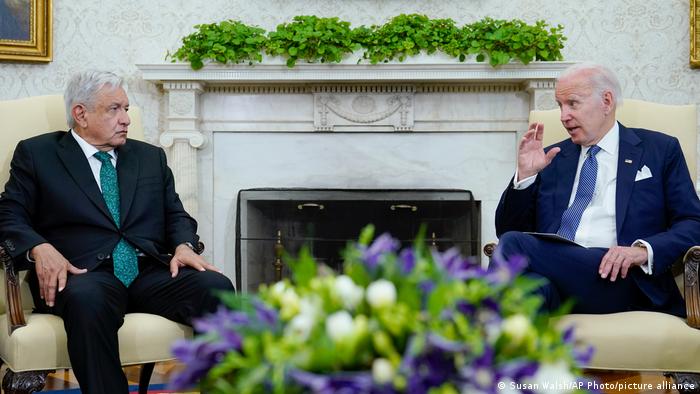
Against the backdrop of the ongoing opioid crisis in the United States, with more than 107,000 deaths in 2021 alone, the Mexican and US presidents, Manuel López Obrador and Joe Biden, have also been addressing the issue. On July 13, at their meeting in Washington, they agreed to increase their efforts and cooperation in the fight against synthetic drugs.


At their meeting earlier this month, the Mexican and US presidents agreed to increase joint efforts to combat the opioid crisis

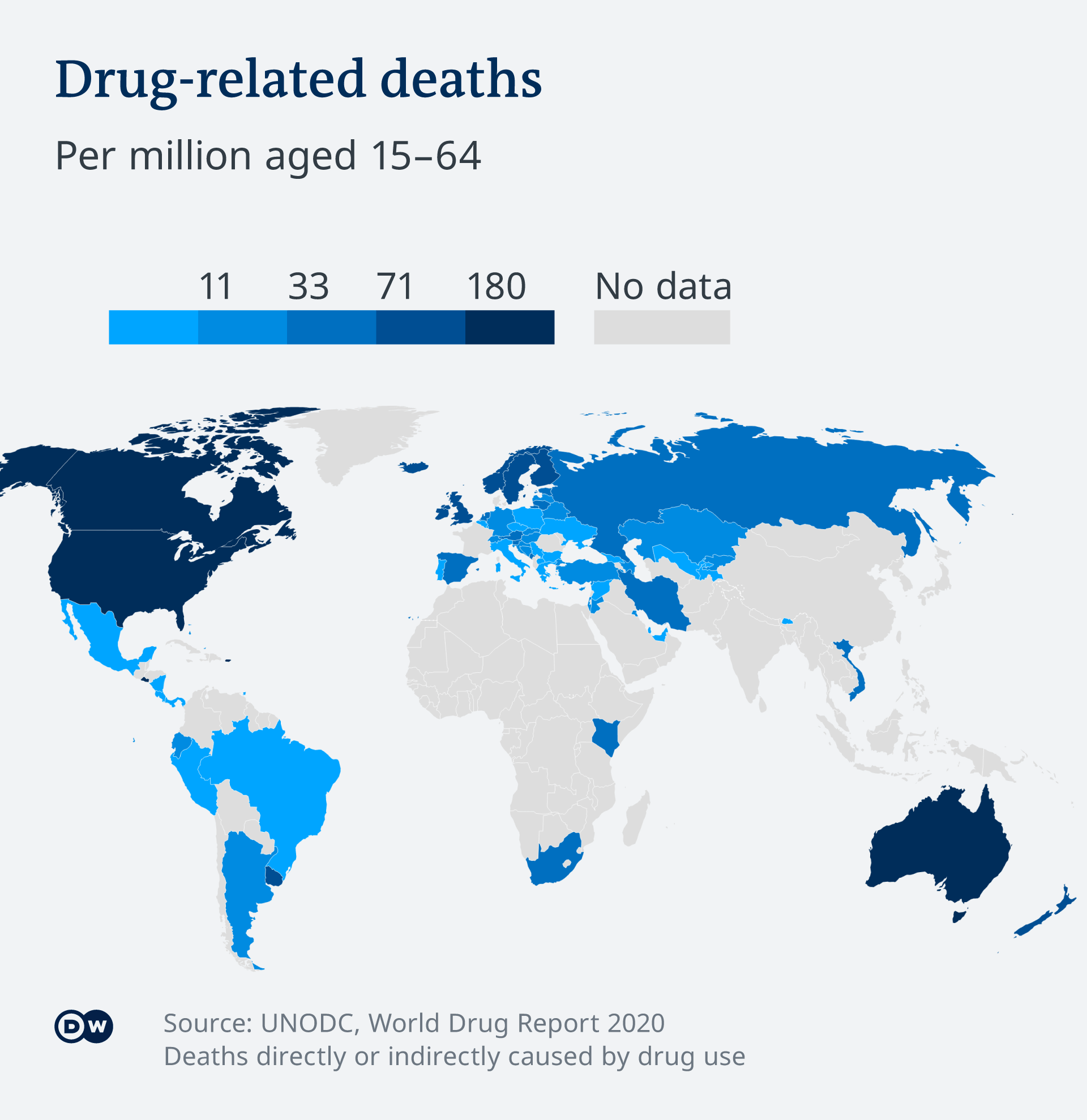
From being a transit country for drugs produced in Andean countries, Mexico has now become a burgeoning consumer market. According to the latest United Nations' World Drug Report, published every year on June 26 — the International Day against Drug Abuse and Illicit Trafficking — between 2013 and 2020, Mexico saw a 218% increase in the number of people in treatment for synthetic drug use.

At the presentation of the World Drug Report 2022, Sofia Diaz, who is the country coordinator for Mexico at the UN Office on Drugs and Crime (UNODC), stated: "Mexico is the only country on the American continent where amphetamine-type stimulants have become the leading cause of health problems requiring medical treatment."

She pointed out that, in addition to fentanyl and opioids, amphetamine-type stimulants and other synthetic drugs are also included, such as crystal meth and ecstasy.


COVID-19 and drug use

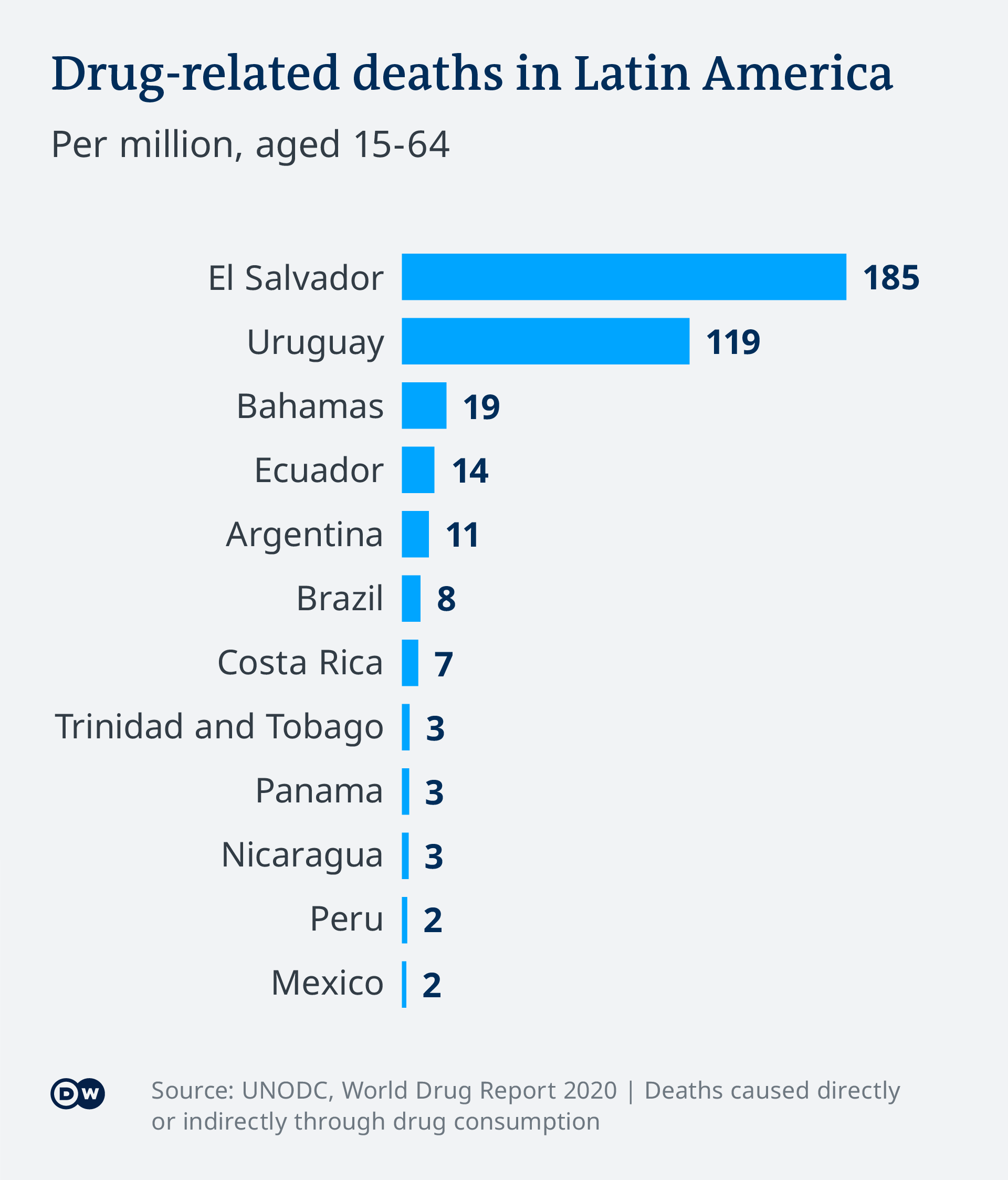
The rise of synthetic drugs in Mexico is striking on a continent that the UNODC says is characterized by the use of cannabis and cocaine. Marijuana is the main drug being treated for in Argentina, Colombia, Peru, Venezuela and almost all of Central America; whereas in Canada, Chile, Uruguay, and Paraguay, cocaine is the primarily culprit.


Until recently, marijuana and cocaine were the main drugs of choice in Latin America

The production and trafficking of synthetic drugs in Latin America is increasing much faster than that of naturally occurring drugs, Diaz warned. A January 2022 report from the Mexican ministry of health confirms this assessment. It found that overall drug use in Mexico increased 22% between 2010 and 2019, and that the COVID-19 pandemic has caused it to increase further.

Several Mexican institutions recently collaborated on a major study called VoCes-19. After surveying 55,000 adolescents in the fall of 2021, they concluded that the COVID-19 pandemic — and the resulting depression and anxiety among adolescents — had led this group to take more drugs.

According to its data, opioid and marijuana use among young people increased by 18% to 21% during pandemic times in Mexico.
Living in fear: The corporate staff exposed to corruption by their employers

Mining corporations are leaving employees without support in countries where corruption is endemic, according to activists. One former executive is now in hiding in the Philippines, fearing for his life.


Corruption is a 'chronic risk" that business employees have to face when they operate abroad

Dominic French* has barely been outside for over two years. The world that he occupies with his Filipino wife and three children is a house with a small garden in a remote region of the Philippines. "We've become pretty good at hiding," he told DW via a video call.

The house is registered in his wife's name, their children only attend online classes, and the family's only trip beyond the gates in the last few months was a dash to get booster vaccinations in May, when they wore masks and rode in a car with tinted windows. Depression and exhaustion have set in. One psychologist has diagnosed his wife and children with post-traumatic stress disorder. "We can't continue to live this way," French said. "It is not living."

A complex story has led him here, but the main reason for these precautions is simple: French is convinced his life is in danger because he is the only witness to a bribe his former employer, the Australian mining giant BHP Billiton, allegedly offered in 2008.

That crime could implicate a well-connected Filipino politician and a powerful businessman. Both of these people were named by French to DW, but are not mentioned here to protect his safety. French also provided corroborating evidence that other associates feared this particular businessman, and though contacted for comment, none were willing to go on the record for this article. The politician, meanwhile, has gained a national profile in the country.

The gift to the politician, which was brokered by the businessman, consisted of a luxury hospitality trip to the 2008 Beijing Olympics. The bribe potentially gave BHP an advantage in a legal dispute over a mining license. The company eventually retracted the bribe, but not until after it had been accepted and the court decision had been made in the company's favor.

French has good reason to be scared. During his work at BHP in 2007, he was called in by an Australian embassy security adviser, who told him there had been credible "kidnap for ransom" threats against him and other BHP expats — possibly orchestrated by a rival company. He personally knew a Canadian mining executive, John Ridsdel, who was kidnapped and murdered in the country in 2016. So it was unsurprising that after the bribery scheme became public in 2015, French became worried when suspicious white vans and unfamiliar motorcyclists appeared at his gate.

Exposure to corruption


Such dangers remain well-known in the Philippines to this day. The US government's 2021 human rights report on the country says kidnappings are "common and predominantly for criminal purposes."

BHP says it is well-aware of these concerns and insists that the safety of its employees is its "highest priority."

"We have dedicated compliance, safety and security teams across our global operations that support all of our employees, providing advice and guidance across a multitude of issues including bribery and corruption," the company told DW in a statement. "We also have multiple channels in place — including an anonymous reporting line — that encourage and help raise any concerns."

But according to Serena Lillywhite, CEO of Transparency International Australia, executives like French are often poorly equipped to deal with these issues. "There's a disconnect between: 'Oh, we want to protect our staff, but we don't necessarily want to talk about the fact that we're being tapped on the shoulder to pay bribes in so many countries where we operate,'," she told DW. "They don't want that out there. So it's always easier to throw an individual under the bus."


Multinational corporations like BHP often work in jurisdictions that are prone to corruption

French believes he is one of those employees thrown under a bus. He describes corruption as a "chronic" risk that all multinationals have to face if they operate in certain countries. "Corporations have dealt with the management of the threat in a hit and miss style, perhaps because they don't understand what is required to mitigate or manage the risk," he said.

In this kind of environment, Lillywhite added, there is an unspoken reality that everyone knows: "Bribes are paid."

"They are often hidden through expenses that look legitimate — such as consultancy fees," she added.

Western companies are caught in a dilemma: They maintain compliance standards and must — if they also want to operate in the US — refrain from bribery in foreign countries, under the Foreign Corrupt Practices Act. But on the other hand, companies also want to do business in certain countries where corruption is an endemic reality. And executives like French are often left on the front line of that gap because of their day-to-day challenges.

"This is where it's a very, very murky area," said Lillywhite. "Often, just one or two executives are left to go into a country to secure a license to operate."

Inexperience often leaves Western company executives reliant on a third-party agent, or fixer, and these are likely to be people with political connections. That makes companies particularly vulnerable to facilitating bribery. "Companies are not providing enough information to their staff to protect them from the risks of bribery," she said.

Old crime with new consequences


French's story began in 2007, when he had to undertake due diligence on one such fixer in the Philippines — the above-mentioned businessman who conveyed one of the Olympics bribes that BHP was allegedly engaged in. "He specifically said to me, in a very stern voice: People get killed in the Philippines for asking the kind of questions you're asking," French remembers. "He wasn't joking around. He was very frustrated."

French said he did not know at the time that BHP was involved in an alleged continent-wide bribery scheme of government officials in the whole Southeast Asian region — by gifting them hospitality packages for the 2008 Beijing Olympics. Those gifts would eventually be investigated by the United States Security and Exchange Commission (SEC), which implemented cease-and-desist proceedings in 2015.

"BHP Billiton footed the bill for foreign government officials to attend the Olympics while they were in a position to help the company with its business or regulatory endeavors," Andrew Ceresney, director of the SEC's Division of Enforcement, said at the time. In the ensuing settlement, when the company paid the SEC a $25 million (€24.4 million) penalty, BHP neither admitted nor denied the findings.

French believes that the accompanying news reports put him at risk — the bribery scheme was now known publicly, which meant Philippine prosecutors could decide at any time to begin investigating both the fixer and the politician. It was time to leave the country.

Though he was no longer employed by BHP, the firm took his concerns seriously and offered him an evacuation deal in July 2019. This stated that the company would provide "assistance with obtaining the necessary visas and immigration permits including payment for associated costs." That, according to French, meant a "golden visa," including the required €500,000 ($511,400) investment in the country they chose, which was Spain.

But a few months later, in September 2019, while French and his family were already in transit and had little choice but to continue, BHP altered the deal, and instead of offering him its help, the company gave him $45,000 as a lump sum payment. With that, the matter would be over — at least that's how the company saw it.

But it left French in a bind: Though he says he did not sign the second agreement, he did take the $45,000, which he needed to cover the several months' cost of moving for his family. On arrival in Spain, the changed deal meant he was left effectively as an illegal immigrant, with no way to attain the visas that had initially been promised. The upshot was: he felt he had no choice but to take his family back to the Philippines and go into hiding.

BHP disputes that any help was retracted, and claims that French's decision was his own: "BHP did not renege on any agreement with Mr [French]. Together, we agreed on a package to provide immigration and relocation assistance for Mr [French] and his family — that assistance was delivered in full," the company said in a statement. "When Mr [French] chose to take on direct responsibility for his and his family's relocation, we also provided an additional lump sum payment to assist with his decision."

Prone to corruption


Whatever happens to French now, this issue, in general, is not going away. As BHP and other mining companies pivot away from fossil fuels to rare metals essential for renewable energy, they are increasingly finding themselves contending with countries where bribery is the price of doing business. The Democratic Republic of Congo, to name one example, supplies 70% of the world's cobalt, necessary for the batteries in electric cars.

"Most of the world's critical minerals needed for the energy transition are located in corrupt jurisdictions," said Lillywhite. "You've got 34% of lithium, which is going to be needed for batteries, in corruption-prone jurisdictions. Ninety-four percent of all rare earth deposits that we currently know of are in a corruption-prone jurisdiction."

This trend, she concluded, "raises questions about how well the CEOs of those companies are at preparing and protecting their staff to operate in high-risk jurisdictions."

*Dominic French is the person's legal name in Australia, though not the one he is generally known by. At his request, that name has not been used in this article to protect his safety.

Edited by: Uwe Hessler