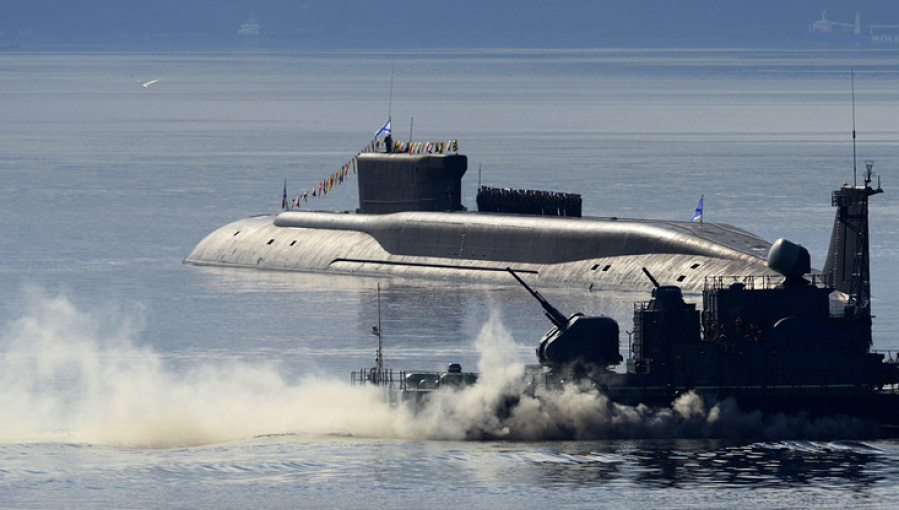
China has long ago overtaken the US when it comes to the navy, but now Beijing has also overhauled the US in submarines.
China has rapidly expanded its nuclear-powered submarine production, surpassing US launch numbers and tonnage between 2021 and 2025, according to the International Institute for Strategic Studies (IISS), highlighting a shift in the balance of naval industrial capacity.
In an analysis published on February 16, IISS said Beijing’s shipyards, particularly at Bohai, have increased output at a pace that exceeds that of the US over the past four years. Although qualitative differences compared with US and European designs persist, the increasing number of Chinese submarines presents a growing challenge for Western countries struggling to expand their own production.
China’s expansion reflects sustained investment in naval modernisation by President Xi Jinping, who has prioritised the People’s Liberation Army Navy as part of a broader push to project power further from the mainland. Satellite imagery and open-source assessments cited by IISS indicate multiple hulls under construction simultaneously at the Bohai Shipyard, suggesting improvements in modular construction and industrial throughput.
A maritime arms race is well underway that the Chinese navy is winning. China currently has more ships in its fleet than the US and is adding the equivalent of the entire French navy every four years.
China built between 115 and 125 military warships from 2020 to 2025, averaging 19 to 21 units per year. This rate surpasses the combined production of powers such as the United States, Japan, and South Korea, which together added only about 46 to 51 ships in the same period. Even if we added European production to that of the US, South Korea, and Japan, it wouldn't change much. The Chinese fleet now totals approximately 395 combat ships, eclipsing the 296 of the US, the roughly 140 of South Korea, and the 103 of Japan.
The story is similar in Chinese anti-ship ballistic missiles, where it also has a clear lead over the US, which has been asleep at the wheel, according to an analysis by bne IntelliNews military analyst Patricia Marins.
China has been trailing in submarine production until now. While US submarines are widely regarded as quieter and more technologically advanced, Washington has faced delays and cost overruns in its Virginia-class programme, according to IISS. The US Navy has acknowledged production bottlenecks in its industrial base, complicating efforts to meet domestic fleet targets while also fulfilling commitments under the AUKUS security pact with the UK and Australia.
European producers face similar constraints. The UK’s Astute-class and forthcoming Dreadnought-class submarines have encountered schedule pressures, while France’s Naval Group is balancing domestic and export orders.
IISS noted that although qualitative differences compared with US and European designs persist, the sheer scale of China’s output is altering strategic calculations. A larger fleet enhances Beijing’s ability to maintain continuous at-sea deterrence patrols and expand operations in the western Pacific.
One of the major constraints on the Chinese submarine fleet is that China has no deep-water ports on its coastline. The South China Sea is shallow, making any submarine launch from a Chinese port visible to US satellites and potentially vulnerable to missile strikes. However, the eastern coast of Taiwan drops off to several thousand meters almost immediately making it perfect for a submarine base where launches would immediately disappear into deep water making them untrickable – giving Beijing a significant military motivation for taking back control of the island state.

No comments:
Post a Comment