Saturday, September 21, 2024


Wärtsilä and Chevron Start Unique Engine Conversion to Reduce Methane Slip
LNG carrier
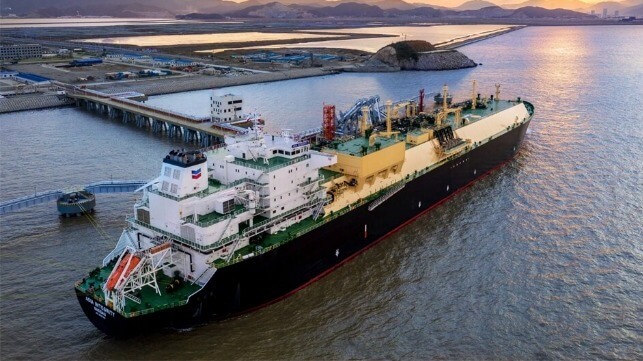
Chevron will proceed with the conversion of the engines on two of its in-service LNG gas carriers (Chevron Shipping)

Published Sep 19, 2024 7:21 PM by The Maritime Executive


Wärtsilä and Chevron Shipping Company are starting a first-of-its-kind program to convert engines on six of the company’s LNG carriers to reduce methane slip. The companies undertook a two-year collaboration to develop a unique approach to one of the key issues in the use of LNG as a marine fuel. Chevron placed an order to proceed with the conversion of the first two vessels.

"Chevron Shipping aims to reduce methane emissions intensity of our LNG fleet in support of a lower carbon future," says Barbara Pickering, President of Chevron Shipping. "We are pleased to collaborate with Wärtsilä in this industry first.

Environmentalists have focused on the release of unburnt methane which is known as methane slip. They argue that methane is a more harmful greenhouse gas as it traps more heat in the environment. The maritime engine and LNG groups respond that the newer generation of engines has reduced or eliminated methane slip while multiple initiatives are also looking at the potential of a scrubber-like installation to capture the methane from a vessel’s emissions.

Wärtsilä explains that the conversion program is designed to convert its popular dual-fuel engine to spark gas (SG) operation. The company explains that using spark ignition versus diesel pilot fuel to initiate combustion enables a more optimized combustion process. It reduces the methane slip and improves efficiency.

"This innovative project represents a notable step forward on the road to advancing lower-carbon fleets," said Roger Holm, President of Wärtsilä Marine & Executive Vice President at Wärtsilä Corporation. “Wärtsilä has an extensive track record in reducing methane slip from LNG-fuelled engines, not only as newbuild solutions but also through retrofitting existing installations.”

This new technology complements Wärtsilä's extensive portfolio of solutions aimed at reducing methane emissions from vessels. With nearly three decades of experience in LNG technology, Wärtsilä says it focuses on providing both the dual fuel flexibility provided by the DF engine, as well as with the single-fuel SG engine.

No details were announced on the timing of the conversion or where it would take place. 


Chinese Shipyard Opts for Wärtsilä Cargo Handling & Fuel Gas Supply Systems
Wärtsilä
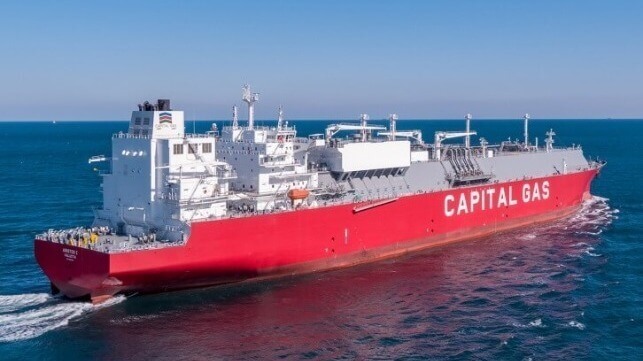
Wärtsilä Gas Solutions will supply the cargo handling and fuel gas supply systems for four new medium-sized gas carrier (MGC) vessels. © Capital Ship Management Group

Published Sep 20, 2024 1:07 PM by The Maritime Executive


[By: Wärtsilä]

Wärtsilä Gas Solutions, part of technology group Wärtsilä, will supply the cargo handling and fuel gas supply systems for four new medium-sized gas carrier (MGC) vessels. The ships are being built at the Nantong CIMC Sinopacific Offshore & Engineering (SOE) shipyard in Shanghai for Greek operator Capital Gas Ship Management. The order was booked by Wärtsilä in Q3 2024.

c is the market leader in supplying cargo handling and fuel gas supply systems for MGCs, and this order once again strengthens this position. The 40,000 cbm capacity vessels will transport and operate with liquefied petroleum gas (LPG). The Wärtsilä systems are designed to ensure safe and efficient operation with this category of cargo and fuel.

While Wärtsilä has worked closely with SOE for several years, these will be the first Wärtsilä cargo handling and fuel gas supply systems for vessels operated by Capital Gas Ship Management.

“We have a long-term relationship with SOE, having delivered a various range of gas related products and systems. Being awarded this repeat order is very important to us, since it indicates a high level of customer satisfaction,” commented Barry Yang, Sales Manager, Wärtsilä Gas Solutions, China.

The Wärtsilä equipment is scheduled for delivery to the yard commencing in March 2026.

The products and services herein described in this press release are not endorsed by The Maritime Executive.

ABS Signs MOU with HD KSOE to Advance Zero-Carbon Ships
ABS
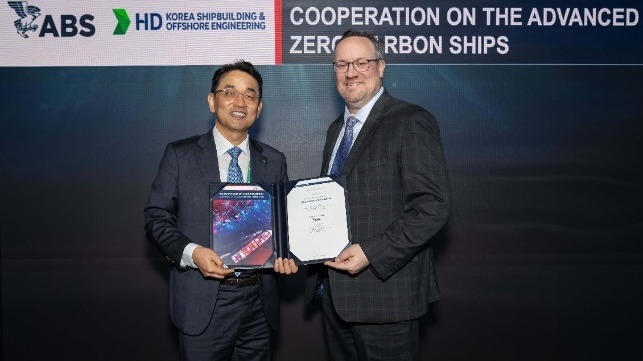
Photo Caption: Kwang-Pil Chang, Senior Executive Vice President and Chief Technology Officer, HD KSOE, with Patrick Ryan, ABS Senior Vice President and Chief Technology Officer

Published Sep 20, 2024 1:43 PM by The Maritime Executive


[By: ABS]

Enhancing their collaboration on cutting-edge marine and technology projects, ABS and HD Korea Shipbuilding & Offshore Engineering (HD KSOE) signed a memorandum of understanding (MOU) to advance the development and certification of innovative systems for next-generation, zero-carbon ships.

Representatives from both companies met at Gastech 2024 for the signing ceremony. Entitled “Cooperation on the Advanced Zero-Carbon Ships,” the MOU focuses on integrating advanced technologies in three main areas:

  • A novel LNG cargo handling system that utilizes full re-liquefaction system to suppress boil-off gas (BOG) for zero-carbon LNG carriers
  • A comprehensive ammonia fuel supply system including pressure control for large commercial vessels
  • An efficient integrated system that enhances re-liquefaction with cold ammonia fuel supply, thereby improving system efficiency and reducing power consumption

“To help safely deliver the rapid technological advances our industry needs, collaboration will be essential. ABS is proud to expand our relationship with HD KSOE, and we look forward to working together on innovative concepts to optimize and enhance next-generation vessels,” said Patrick Ryan, ABS Senior Vice President and Chief Technology Officer.

“HD KSOE and ABS are committed to advanced key technological developments for the next-generation vessel market through collaboration. We look forward to presenting a long-term vision for gas carriers and zero-carbon fueled ships, focusing on achieving net-zero emissions,” said Sung Young-jae, HD KSOE Vice President and Research Director of Decarbonization Research Lab.

ABS provides comprehensive decarbonization and sustainability solutions for the offshore and maritime industries. The ABS approach, combined with extensive technical knowledge and customized solutions, helps owners and operators achieve their decarbonization and sustainability goals. 

The products and services herein described in this press release are not endorsed by The Maritime Executive.

 

NYK Seeks to Commercialize Green Ship Recycling in Japan

ship recycling
NYK is studying commercalizing ship recycling in Japan (NYK)

Published Sep 18, 2024 3:50 PM by The Maritime Executive


Japan’s ship-owning giant NYK (Nippon Yusen Kabushiki Kaisha) is partnering to explore the opportunities for green ship recycling in Japan. Working with Oono Development Company, a Japanese demolition and waste disposal company, they had agreed to jointly study the commercialization of ship recycling.

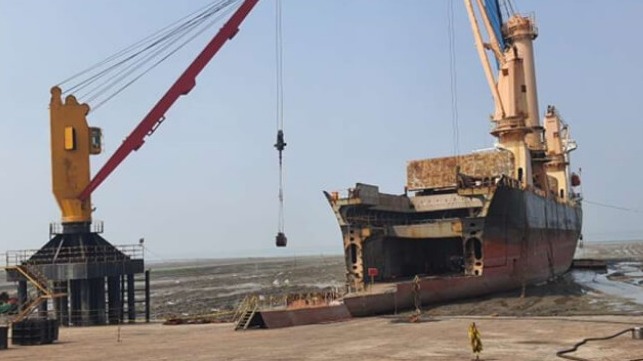
The companies point to the need for more eco-friendly ship recycling and the growing interest in recycling materials to promote a circular economy. Ships they note are made of large amounts of high-quality steel, and more than 90 percent of medium and large vessels are recycled as construction materials, recycled materials, or used equipment. Operations at Alang, India, for example, became well-known for their repurposing of materials from ships while the metals feed India and other countries' steel and construction industries.

Analysts have projected despite the current drought in ship recycling that a wave is coming as companies move to meet new environmental regulations. NYK notes however that there are currently a limited number of yards worldwide that meet the required standards for ship recycling.

They anticipate further pressure creating new opportunities as the International Maritime Organization (IMO) in June 2025 puts in force the Ship Recycling Convention. First proposed 15 years ago, the Hong Kong Convention sets new standards for safety and environmental protection. Liberia and Bangladesh were the last signatories for the Hong Kong Convention in June 2023 clearing the way for it to go into effect next year.

Promoting the circular economy and meeting trends toward decarbonization, the steel industry is shifting toward electric furnaces. Ships and other scrap steel have low impurity content which is harder to remove from molten steel making it desired and lower cost for the electric furnaces. Scrap has become increasingly attractive for the process of rerolling.


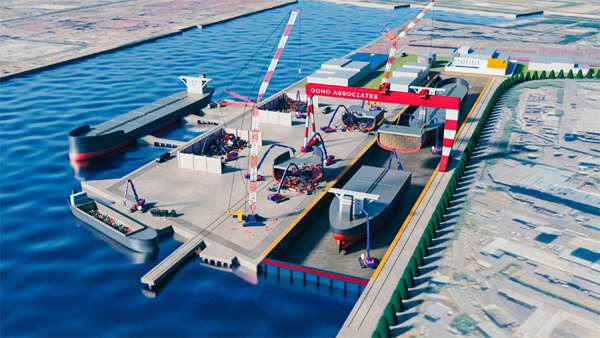
Concept for the recycling operation using Oono Development's dry dock in central Japan (NYK)


Oono Development owns Japan’s only large dry dock which can be used to handle large ocean-going vessels and offshore platforms. It is located on the eastern coast in central Japan near Nagoya and will become the center of the recycling operation. The companies highlight the site is almost a hundred acres and has mooring and a coastal quay to support the operation. The dry dock, which is over 2,600 feet (810 meters) in length can handle two large ocean-going vessels at one time.

The dry dock method for dismantling a vessel will be a key component of meeting the new environmental regulations. In addition, they will explore building a high-efficiency incineration power generation facility to complete the treatment of industrial waste. 

They anticipate business opportunities in the sale of the valuable resources from the ships, including steel and used equipment.


Seaonics Ready to Market World's First Offshore Charging Solution

Seaonics
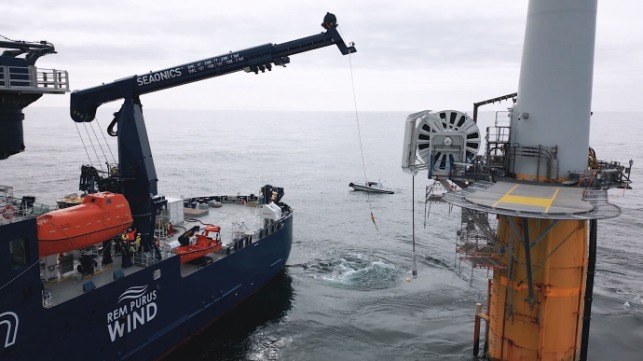
Prototype testing of the Ocean Charger charing the CSOV newbuilding Rem Power from an offshore wind turbine (Photos: Seaonics)

Published Sep 20, 2024 12:06 PM by The Maritime Executive


[By: Seaonics]

Following successful in-port and offshore prototype testing, Norwegian lifting and handling specialist Seaonics is on track to commercialise its Ocean Charger solution for electric SOVs amid strong interest from wind farm developers.

High-voltage charging tests were conducted in port to charge the batteries on the Rem Offshore-owned diesel-electric hybrid CSOV (Construction Service Operation Vessel) REM Power (built 2023) as well offshore from a charging point (cable reel, winch and control system) mounted on a wind turbine.

"At 10 years old, the turbine is one of the smallest offshore but the prototype proved it is possible to install the Ocean Charger on an existing turbine and charge an SOV from day one, using 11 kilovolt (KV) current delivering 6 MW of charge. Apart from a handful of improvement points to fix, the concept and control system are complete and the product is available for sale as is. We're first in the market and already in talks with wind farm owners," said Bjørnar Huse, Sales Manager, Offshore Energy at Seaonics.

He adds that because power current varies between wind parks and wind turbines, the commercial version will have to be customized for each project.

Significance and benefits
The ability to charge vessels offshore in a cost-effective way is a central enabler for shipbuilders to deliver zero-emission SOVs to the offshore wind industry. "Connecting vessels to the power grid in the wind farm and charging batteries regularly is a big step towards increasing sustainable operations without using any additional energy sources. It saves the time and energy needed to return to port to charge, while the operating cost of electric SOVs versus diesel and alternative fuels is much lower, because both the energy is cheaper and you reduce engine maintenance demands. You still need diesels for back-up power, but quite a lot smaller than for a full diesel operation, with lower Capex," said Huse.

A large, 60-person SOV consumes 20 to 25 MW hours per day, so at 6 MW you can potentially charge for a full day's operation in three to four hours. "But it's better for the lifetime of the battery pack to never be completely depleted nor fully charged – between 50 and 80 percent is best. You could charge for six hours at night, say, then do ad-hoc charging during the day," Huse said.

Meanwhile, wind farm owners are moving away from the idea of locating charging points on a substation or expensive floating buoys. "The standard will most likely be to locate the charging point on a turbine. Downscaling the weight and cost also means you can have many charging points reducing the need to cruise long distances to charge. The turbines are usually owned by the developer, so they can fit as many as required. It is easier mechanically to have charging points on a substation but as these are usually owned by the grid owner, there is some doubt as to who would be responsible for their maintenance and insurance etc. This will have to be sorted out project by project," Huse added.

Standardised solution
The Ocean Charger's standardised solution is cost effective because it uses an industry-standard connector plug and power levels both for offshore charging and in port. "The prototype worked using a standard vessel and crane. The plug is an industry standard used for shore charging cruise ships as well as Hoegh Autoliners' Aurora-class hybrid-electric newbuild car carriers. Tying known technology together made it easier to get to a prototype in a relatively short time. We didn't have to invent a lot of new components unlike some competitors using a bespoke plug," Huse said.

The product can be fitted to any structure and vessel and the power integrated with the vessel switchboard and the chosen charging voltage. "The main development challenges were handling the medium/high current coming on board the vessel and navigating the relevant standards (IEC, ISO etc) for marine technical equipment. For example, there are a lot of class requirements on safety distance around the plug. Existing standards also mostly still cover shore-based equipment so we had to make an offshore version of the different components," Huse added.

The current issue
Discussions are currently underway with wind park owners regarding charging current. Wind parks usually have 66 or 132 KV requiring one or two transformers – one on the charging point and another on the vessel – to get the high voltage down to medium or low voltage. "Some have asked us to explore bringing 132 KV, which is the standard current in big power lines on land, directly onto the vessel and do all the transformation onboard. However, managing such high current would require a very bespoke handling and safety system. Feasibility depends on the cost of power integration and transformers," said Huse.

"The cost-effective compromise is to stick with 11 KV, which is what the Aurora-class vessels use but is still high considering the standard shore connection for fishing vessels and small SOVs today is typically 690 or 1,000 volts, using the same equipment for both offshore and shore charging."

Grabbing the cable
The SOV approaches the charging point and uses a crane equipped with a gripper that 'grabs' the end of the cable and pulls it onto the connection area integrated on the vessel deck. The REM Power has a fully 3D compensated crane and can connect even in rough weather, but smaller SOVs and maintenance craft that don't have a crane can use the motion-compensated gangway instead. "High accuracy isn't necessary, as the automated handling system guides the plug to the right place, eliminating any need for manual operation," said Huse.

The vessel has to be on DP during charging but with a larger footprint to reduce power consumption. The cable is slack so the vessel can move 20 metres or so back and forth without damaging anything. "The DP safety system will kick in if the vessel loses position or, if necessary, the control system will automatically release the cable in an orderly manner. The system has been designed with two levels of redundancy for emergency release," Huse said.

"It is of course possible the plug may occasionally be released in a non-orderly manner and be submerged, leading to water intrusion both in the plug and cable. That may require the whole cable to be replaced involving time and cost. No industry standard plugs have been approved or are capable of being submerged, so we had to design a watertight cover. The handling system opens the cover when the plug is on board and guides it into the charging notch, and in reverse when charging is complete."

Time for tailoring
Huse says it would take a few months to customise the configuration and get approvals for a specific wind park and vessel. "For wind farms that will be installed in two to four years' time, there is ample time to do final integration design, fabrication and installation on a new chartered SOV or retrofit an existing one. Fitting the charging points to turbines before they are installed also streamlines the operation."

Seaonics can write an offer today for the Ocean Charger in its current configuration. "We know exactly how much the vessel integration will cost, and how much the charging point on a turbine will cost. Total project cost will obviously vary depending on how many charging points it entails and customisation required to match the owner's operating parameters."

The Ocean Charger was developed by a consortium led by Ålesund-based Vard Design and sister companies Seaonics and Vard Electro, alongside partners Rem Offshore, Solstad Offshore, SINTEF Energi, SINTEF Ocean, DigiCat, Sustainable Energy, Equinor, Source Galileo Norge, Corvus Energy, Plug, Shoreline, Sustainable Energy, University of Bergen, Norce and Maritime CleanTech. "Coming up with a pioneering product at speed demonstrates what great partners with different expertise can achieve in collaboration – which is the only way to accelerate sustainability in our industry," Huse concluded.

To find out more Ocean Charger, visit us at Wind Energy Hamburg on 24-27 September (Hall B2.EG, Stand 230.23).

The products and services herein described in this press release are not endorsed by The Maritime Executive.

Alfa Laval Secures Order for Ballast Water Management System Replacements

Alfa Laval
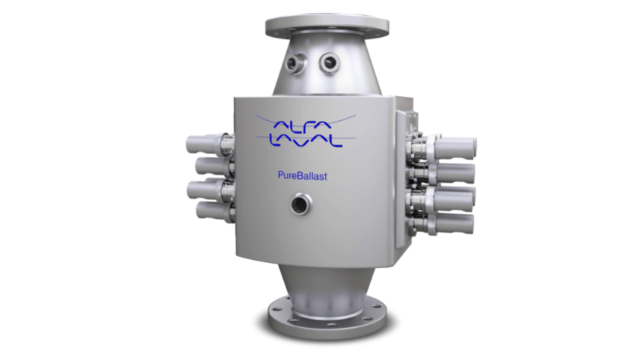
Alfa Laval PureBallast 3

Published Sep 20, 2024 12:17 PM by The Maritime Executive


[By: Alfa Laval]

Alfa Laval has received an order to replace 18 ballast water treatment systems (BWMS) onboard vessels belonging to a major European shipowner. This significant order shows the high demand for the replacement of malfunctioning systems and a growing market for Alfa Laval’s BWMS replacement offering.

Strict regulations and frequent controls are driving shipping companies to ensure their ballast water treatment systems are fully operational to avoid high costs, downtime, and potential business losses. As the majority of the world fleet is now equipped, the BWMS retrofit market is nearing saturation. Many suppliers have reduced their commitment to customers or exited the market entirely, leading to a lack of support and upgrade options as regulations evolve. This is especially challenging when the systems purchased are not functioning properly.

High demand for replacement of BWMS 
Over the past two years, Alfa Laval has replaced more than 250 systems from 30 different manufacturers, and the orderbook for replacement continues to grow. “With the consolidation of the BWMS market, we see a growing need for replacing installed BWMS systems”, says Tobias Doescher, Head of Global Sales, Business Development and Marketing, Alfa Laval PureBallast. “We have been contacted by an increasing number of shipowners and ship management companies worldwide who are experiencing issues that their current supplier cannot resolve. We are happy to step in and support our customers with cost-efficient and sustainable solutions.”

Professional approach to replacement projects
Alfa Laval has experience replacing systems using electrochlorination (EC) and UV technology. The replacement projects are handled professionally by a thorough onboard assessment of the existing system by a qualified expert. This comprehensive evaluation determines necessary replacements and identifies components that can be reused, resulting in substantial cost savings for clients. The replacement process is customized for each customer, providing them peace of mind in meeting BWMS compliance. 

“The success of this offering validates the way Alfa Laval has chosen to work - partnering for the entire lifecycle of ballast water management equipment rather than being a one-time supplier,” says Peter Sahlén, Head of Alfa Laval PureBallast. “While other suppliers are exiting the market, we are investing in our experts, actively following the regulations, and offering new services to facilitate compliance. We have even launched our new PureBallast 3 Ultra, developed based on years of customers´ feedback.”

The products and services herein described in this press release are not endorsed by The Maritime Executive.
 

China Plans First Domestic Expedition Cruise Line as Part of Polar Growth

polar cruise ship
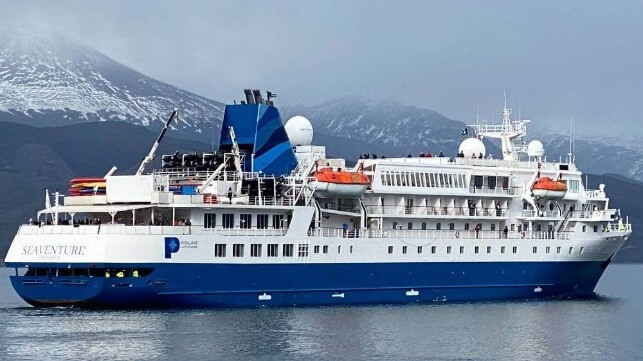
Built in 1990, Seaventure will be renamed Poseidon to launch China's first polar cruise line (Polar Latitudes)

Published Sep 16, 2024 5:00 PM by The Maritime Executive


China is set to launch its first polar expedition cruise line in 2025 with plans to build out the operation to align with government goals. The Chinese government has shown a strong interest in expanding its presence in the polar regions launching new research vessels and programs both to the Arctic and Antarctica.

The Guangdong Port and Shipping Group and Guangdong Travel Holding Group announced plans for a new brand to be called 66 Degrees Expeditions. They plan to launch operations with its first cruises to the Arctic in May 2025. 

Polar expedition cruising is one of the fastest-growing segments of the cruise industry. Historically using more basic ships focused on the destination, brands including Viking and Seabourn have entered the market with new luxury cruise ships as part of the trend to expand the market. 

Chinese state media cited figures of a 180 percent increase in Chinese tourism to the North and South Poles in 2023 versus 2019 before the pandemic. They report as outbound Chinese tourism rebounded that polar travel was up 20 percent year-over-year.

“This is a proud feat and a historic breakthrough. China finally has its own polar cruise brand,” said the former leader of the Chinese Arctic Science Expedition Team Li Shuanke.

Guangdong reports the new brand will launch with a cruise ship they plan to rename Poseidon. The 6,750 gross ton vessel was built by Japan’s Mitsubishi Heavy Industries in 1990 and first operated as the Frontier Spirit. It was purpose-built for the polar regions and her hull is ice-classed “1A Super” which is the highest ice class awarded to passenger vessels. The ship is 366 feet (111.5 meters) in length and although designed to carry up to 160 passengers it is limited to approximately 130 while in Antarctica.

The ship was operated from 1993 to 2020 as the Bremen by Hapag-Lloyd Cruises before being replaced with new purpose-built luxury expedition cruise ships. Recently, she has been operating as Seaventure marketed by a variety of polar tour companies. The ship is registered in Cyprus. During her career, she has made the transit on both the Northeast and Northwest passages.

The Chinese report she will be refitted along with the name change to Poseidon before her first season in the Arctic. Describing 66 Degree Expeditions they said it will be “international quality, Chinese friendship.” 

The brand also anticipates the construction of a fleet of expedition cruise ships. While China only introduced its first large, domestically-built cruise ship in 2024, China Merchant Heavy Industries (CMHI) shipyard in Haimen has built a series of smaller, luxury expedition cruise ships complete with the Ulstein X-bow for comfort. With the first ship introduced in 2019, CMHI plans to finish the series with the last ship due for delivery in August 2025. The seven ships were built for SunStone Maritime Group of Denmark and operate under long-term charters with various companies.

The new Chinese brand looks to build on the strong momentum in the sector. Officials said it is also part of a plan to create more global high-end cruise travel for the Chinese market.


Icebreaker Builder Davie Selects Charter-Bus Exec as New President

Davie
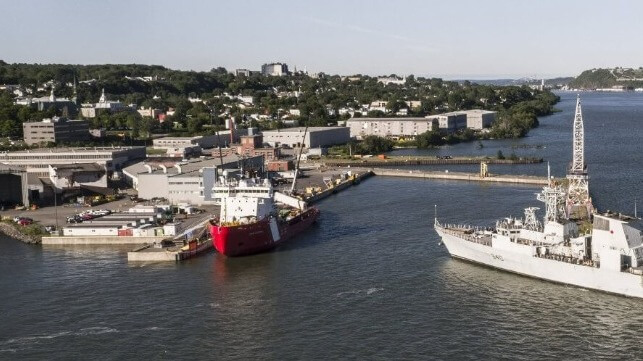
Davie's Quebec shipyard (Davie file image)

Published Sep 16, 2024 2:55 PM by The Maritime Executive


Looking to expand its icebreaker product line, the Quebec-based shipbuilder Davie has hired the CEO of a private bus company to run its Canadian operations and pursue new growth. 

Davie has selected Ms. Maxie Lafleur (left), a Montreal native and a prominent Canadian business leader, to be its new president. The position of company president was previously filled by owner and CEO James Davies, who retains his other titles and will continue to work closely with Lafleur. Mr. Davies also serves as president and CFO of Inocea, the Monaco-based firm that owns Davie and Helsinki Shipyard. 

"Maxie will ensure Davie continues to deliver on its promise to support the ambitious shipbuilding programs of Canada and our close allies in today’s challenging global environment. I am already working closely with her to advance Davie’s strategic priorities and create value for our customers," said Mr. Davies in a statement. 

Lafleur was previously the CEO of Montreal-based company Bus.com, a "transportation solutions integrator that delivers award-winning private bus services across North America." Under Lafleur's four years of leadership, Bus.com took on multiyear governmental contracts and expanded into the United States.

Before joining Bus.com, Lafleur spent five years at CAE, an aviation training and simulation company based in Montreal. She served as the firm's manager of corporate M&A until 2016, then transitioned to finance and business development roles for CAE's training solutions division, according to her LinkedIn biography. She began her business career as an auditor for KPMG's Montreal office. 

Lafleur has served on the board of directors of several companies and organizations, including Investissement Québec, Granby Zoo, logistics firm C.A.T. Global, and YPO.

"Davie is growing rapidly in Canada and internationally. I am honoured the company has put its trust in me at such a pivotal moment. I am ready to lead our efforts under the National Shipbuilding Strategy as well as developing our future vision through the ICE Pact initiative," said Lafleur in a statement. 

The ICE Pact is a new tripartite agreement on icebreaker construction between Canada, Finland and the U.S. government. Davie owns yards in Canada and Finland that have expertise in large icebreakers, and it has pledged to invest in shipyard capacity in the United States once a suitable site has been identified. 

The U.S. Coast Guard, the operator of America's two large icebreakers, has had difficulty in advancing construction of its heavy icebreaker replacement program. Due to challenges with vessel design, construction techniques and workforce availability, its Polar Security Cutter program is years behind schedule and 60 percent over budget, according to the Congressional Budget Office.

Canadian Firm Plans $1.3B Biomethane Plant at Port of South Louisiana

Plant
Courtesy Woodland Biofuel

Published Sep 18, 2024 4:17 PM by The Maritime Executive

Canadian energy company Woodland Biofuels has reached an agreement to build a $1.35 billion wood waste-to-biomethane plant at the Port of South Louisiana, the firm announced Wednesday. Upon completion, it would be one of the largest renewable natural gas refineries in the world. 

The new plant would be located at a multimodal facility at the Port of South Louisiana, and would have financial and workforce support from the State of Louisiana and local partners. If all proceeds as planned, phase one of the project - gas production - could begin as early as 2028.  

In a later phase, it would remove hundreds of thousands of tons of carbon dioxide from its chemical process stream and store it underground. The carbon sequestration site would have to be determined at a future date, but Louisiana offers many options: its geology, its existing pipeline infrastructure and its many energy-industry stakeholders make it an attractive destination for carbon storage. The state already has more than 20 carbon sequestration projects in various stages of planning or permitting. 

Woodland began operations in the 2010s as a cellulosic ethanol startup, and it built a demonstration-scale plant in Sarnia, Ontario. Its process involves gasification of biomass, and it can capture carbon dioxide during plant operations. Its initial plans called for development of a full scale wood waste-to-ethanol plant in Ontario, coupled with carbon capture and sequestration to make the plant "carbon negative." It secured about CA$5 million in support from the Canadian government to move the full-scale project forward. 

"Sarnia is definitely our first choice for a plant location," Woodland CEO Greg Nuttall told the Sarnia Observer in 2021 - though he noted that the Ontario site plan was contingent on finding carbon sequestration capacity. “[Sequestration is] what makes it carbon negative, and it’s just kind of an unknown at the moment whether the infrastructure is going to be there in Sarnia."

Woodland says that the new plan to build a plant in Louisiana would create 110 well-paid new jobs, plus more than 250 indirect new jobs in the region and 500 temporary jobs during construction. 

"Our sustainable biofuel plant will be an economic driver for St. John Parish and beyond. We look forward to establishing deep ties with the local community, and drawing on the existing world-class workforce and utilizing Louisiana’s exceptional infrastructure to execute on our project," said Nuttall in a statement Wednesday. 

According to the Maersk McKinney-Moller Center for Zero-Carbon Shipping, biomethane has strong potential as a renewable fuel for shipping when liquefied into bio-LNG. However, the center's researchers have cautioned that biomethane has the same powerful climate-warming potential as fossil natural gas if it is leaked during production or transport, assuming all else is equal in the comparison. 

"One of the main concerns regarding widespread use of methane as an energy carrier is humanity’s scant track record in avoiding anthropogenic methane emissions to the atmosphere, which are currently estimated at 350 million tonnes per year," cautioned the Maersk Center's researchers. "We consider tightening of the regulations in the biogas industry as being of the utmost importance and urgency to ensure that new plants coming into operation have incorporated the right technology to be emissions-free."


Canadian Coast Guard Calls Off MOB Search for One of Its Own

Canadian Coast Guard icebreaker
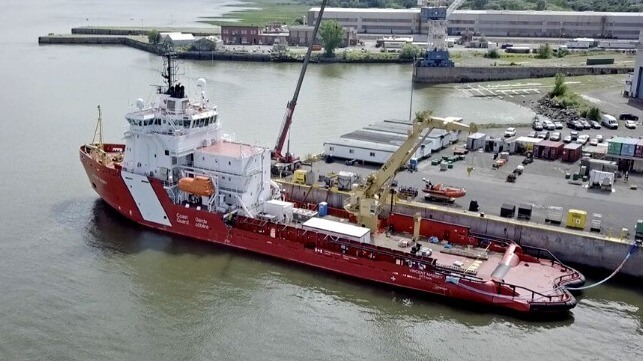
CCGS Vincent Massey entered the fleet in September 2023 (Canadian Coast Guard)

Published Sep 18, 2024 4:35 PM by The Maritime Executive


The Canadian Coast Guard confirmed that it called off an unsuccessful search for one of the crewmembers through to have gone overboard from one of its newest icebreakers. The Coast Guard issued a brief statement online saying its thoughts are with the family of the missing person as well as its crew and employees.

Few details were provided on the situation. The CCGS Vincent Massey, a midsized icebreaker commissioned into the fleet in September 2023, reported a missing crewmember on its return to base in St. John’s, Newfoundland and Labrador.

The unidentified crewmember was discovered missing when the vessel arrived in St. John’s around 9:45 a.m. local time on Monday, September 16. CBC reports an extensive search was undertaken on the vessel and when the individual could not be located the Coast Guard deployed aircraft and vessels and asked for assistance from other vessels in the area. 

The individual was last seen aboard the icebreaker Sunday evening when the vessel was underway off Newfoundland’s east coast. The search was taking place near Pouch Cove, at the northernmost tip of Newfoundland.

“We are devastated to confirm that one of our own employees has been lost at sea. Crews conducted an extensive search and rescue operation at sea and in the air, which ended last night,” the Canadian Coast Guard wrote online.

The Vincent Massey, built in Norway in 2000, is 3,300 gross tons and 275 feet (84 meters) in length. It is considered to be a medium icebreaker and has a normal complement of 19. The Canadian government working with Davie Shipbuilding launched a program in 2018 to acquire three existing vessels and refurbish them for the Coast Guard. The Vincent Massey was the third vessel and completed its overhaul in October 2022 being handed over by Davie to the Coast Guard. She was officially commissioned into the fleet in September 2023. 

No further details were released regarding the circumstances of the incident. The matter has been handed over to the Mounties (Royal Canadian Mounted Police) for investigation.


RIP

Worker Killed by Falling Stack of Pipe at Port Houston Breakbulk Yard

Pixabay
Pixabay file image

Published Sep 19, 2024 4:29 PM by The Maritime Executive


[Brief] A material-handling accident killed one person at a terminal at Port Houston on Wednesday, according to the Houston Fire Department. 

On Wednesday morning, the Houston Fire Department responded to reports that a stack of pipes had collapsed onto a worker at the port. The site was identified as the AllTrans Terminal Companies Port Houston terminal at
9640 Clinton Drive, a 25-acre storage yard for shipments of steel materials, primarily pipe. The yard is near the City Docks North Siden area of the port, and specializes in connecting breakbulk steel cargoes with rail transport. 

According to the office of County Judge Lina Hidalgo, OSHA is investigating the incident to determine the cause of the collapse and whether there were any lapses in employee protections. "I am so sorry to the colleagues, friends and family of the employee who passed away," Hidalgo said in a statement. 

In 2018, an ILA longshoreman was killed aboard a bulker at Port Houston while handling a cargo of pipe. A crane was hoisting six bundles of six-inch steel pipe out of the hold when two adjacent bundles toppled over and crushed the victim, according to consultancy Blueoceana


Report: Unsafe Crane Training Cost Second Officer His Left Leg

Kommandor Orca
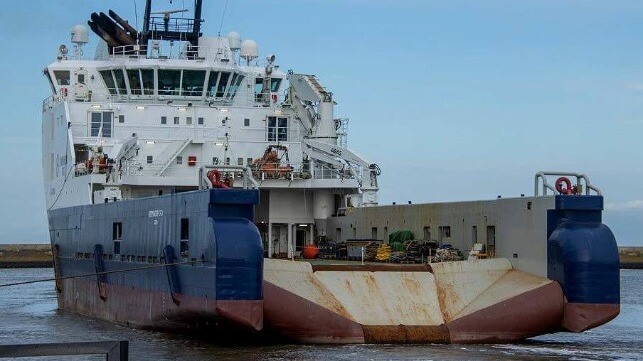
Kommandor Orca (ex name Bourbon Orca). The starboard side rail mounted crane is just aft of the deckhouse, atop the starboard bulwarka (MAIB)

Published Sep 19, 2024 7:21 PM by The Maritime Executive


A ship-wide practice of using the emergency controls on a deck crane led to an officer losing his leg aboard a survey vessel in 2022, according to the UK's Marine Accident Investigation Branch. 

On August 16, 2022, the Kommandor Orca - formerly the anchor handler Bourbon Orca, which the new operator had recently purchased and renamed - was moored at the port of Portland, UK to prepare for its very first charter as a research vessel. It was just out of shipyard after a yearlong conversion process.

That day, the crew's work included moving deck gear and machinery around the main deck. The second officer and a fitter were moving equipment with a pallet truck, and for some of the heavier pieces of gear, they decided to use the rail-mounted crane mounted on top of the starboard side bulwark. 

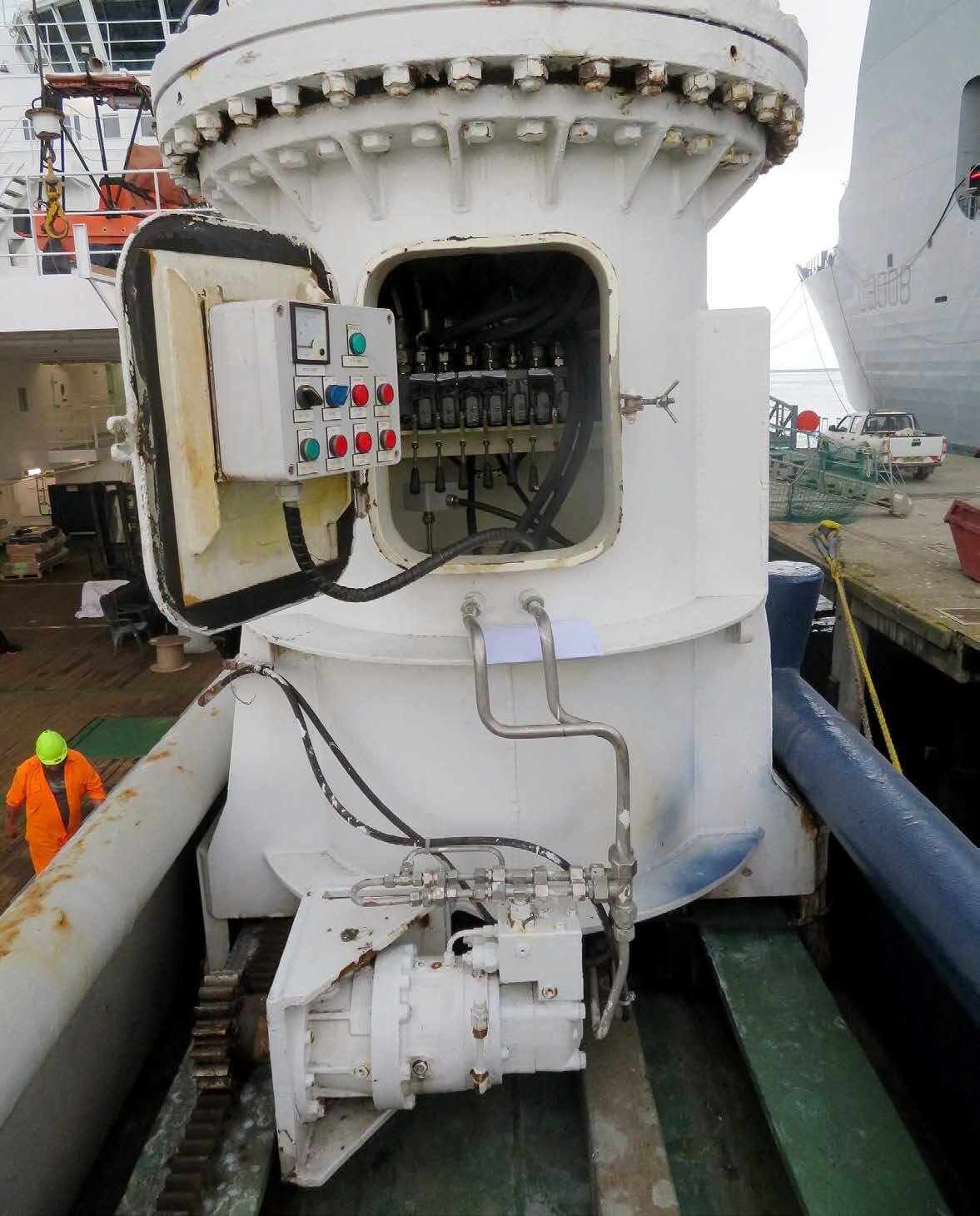
To operate the crane, the second officer climbed a ladder up onto the crane rail to reach the local hydraulic valve controls, about 12 feet above the main deck level. These controls were intended for emergency use and were hidden inside of a power supply hatch in the crane base, out of everyday view. They were located just above the drive motor for the pinion gear that moved the crane back and forth on its rail; the pinion was unguarded. To see the fitter and the load, the second officer stood with one foot on the bulwark and one on the crane drive motor - a spot the vessel designer had not intended for regular occupancy.

Local emergency hydraulic controls were located inside a small hatch in the crane base, just above the fore-and-aft traverse drive motor and pinion gear (MAIB)
The second officer used the controls to move two loads around deck, then moved to reposition the crane aft down the track for a third pick. As the crane traveled aft along the rail, he moved his left foot onto the rack, and his overalls got pulled into the pinion. Before he could regain his balance and let go of the traverse lever control, his left foot and lower leg were crushed between the rack and pinion. 

The second officer called for help, and the fitter ran up to assist him. At the officer's direction, the fitter moved the crane forward and freed the officer's badly-damaged leg. The chief officer arrived quickly and called for first aid, and he applied a tourniquet to the second officer's leg. A company representative - who was on board to watch the preparations - called for emergency medical assistance, and a helicopter was dispatched to carry the victim to the hospital. 

The man's leg was beyond surgical repair, and it had to be amputated below the knee. 

Kommandor Orca had been purchased by the new operator in September 2021, one year before the casualty. It had been in cold layup, like many offshore vessels at the time, and there was no offgoing crew to provide an operational handover or training for the new operators. The officers who commissioned the vessel for the new operator had to formulate a new SMS for the ship based on their own knowledge and the information they had available on board.  

The rail-mounted deck cranes atop the main deck bulwarks could be operated with a wireless remote control unit or the console on the bridge aft station. Both methods were functioning for the starboard crane, but the wireless unit for the port side wasn't functioning, so the crew had developed a method to use the local hydraulic valve control in the crane base. The OEM's manual noted that this was for emergency use only, but the crew was not aware of this restriction. To make the emergency controls easier to operate for everyday use, the crew had used duct tape and marker to note the function of each lever. 

When the second officer arrived on board in early August and received his familiarization training, senior officers trained him to use the emergency controls only, and he was unaware that the wireless remote control unit or the bridge control console existed. He was issued a certificate of completion of crane training in accordance with the company SMS. On the day of the casualty, he was operating the crane in the manner that he and other crewmembers had been instructed, and the hazards of the arrangement were not picked up by safety management procedures (the lifting plan, permit to work or toolbox talk).

"Operating the crane from the local controls in the pedestal was unsafe," concluded MAIB. "The crane operation training was conducted by the senior officers and so the crew might have assumed that they were being instructed in the correct methods. However, the requirement to operate the crane while working at height with no guardrails or restraints, and near to the unguarded rack and pinion gearing, was a clear sign that the process was flawed."

The vessel operator revised its SMS, installed guards and an emergency stop on the crane base, mandated the use of the remote control arrangements for the crane, retrained its crew with a third-party crane training provider, and provided the injured second officer with support and continued employment. 


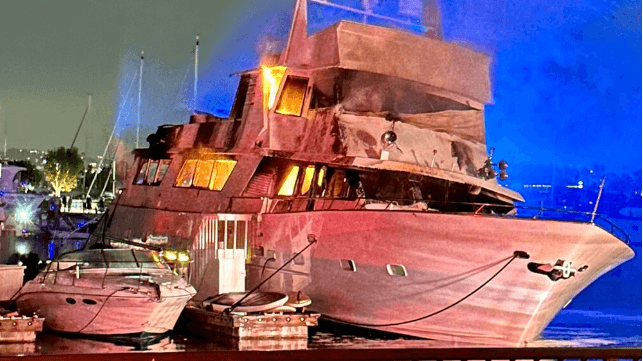
Luxury Yacht With Ammo and Fireworks Aboard Catches Fire at LA Pier

Burning yacht
Courtesy LA County Fire Department

Published Sep 19, 2024 3:21 PM by The Maritime Executive


On Wednesday night, a large yacht berthed in a Los Angeles County marina caught fire with fireworks and a large quantity of ammunition on board, prompting a large-scale response from the local firefighting department and the U.S. Coast Guard. 

The Los Angeles County Fire Department received reports of a fire aboard the yacht The Admiral at about 2030 hours on Wednesday evening. The first responders used hoses to bring the blaze under control abovedecks, but the yacht continued to burn belowdecks and soon took on a list. At about 2230 hours, The Admiral began to sink at the pier. 

Local news outlet KTLA reports that the yacht's owner informed first responders that the yacht had fireworks and about 1,000 rounds of ammunition on board. 

Two passengers were aboard when the fire broke out, and they were able to safely escape onto the shore without any injury. The vessel spilled an unknown quantity of red-dye diesel into the water, and booms have been deployed to contain the pollution. The maximum potential fuel quantity aboard the vessel is believed to be about 6,000 gallons.

The U.S. Coast Guard has deployed an environmental management team to monitor the cleanup effort, and contractors Patriot Environmental Services and Clean Harbors have been contracted to carry out pollution abatement. Officials from the county sheriffs' office and the state office of fish and wildlife are also on scene to assist.  

Superyacht Times has identified the vessel as the 1986-built Broward Marine yacht The Admiral, an all-aluminum 31-meter vessel with accommodations for up to six people.