Saturday, November 30, 2024

 INDIA

Defining Socialism: Equality of Opportunities is Pivotal


Prabhat Patnaik 


The CJI’s observations on socialism are welcome, but a welfare state in the era of neoliberalism and rising privatisation sounds contradictory.


Hearing a petition on November 22 to remove the term “socialism” from the Preamble of the Indian Constitution, the Chief Justice of India (CJI) made two significant observations: first, the term “socialism” in the Preamble of the Constitution is used not in any doctrinaire sense but refers rather to a welfare state that ensures equality of opportunity for all citizens.

Second, “socialism” in this sense is part of the basic structure of the Constitution; it is not just an add-on to the Preamble but rather something that permeates the very essence of what we want the Indian republic to be.

The CJI refrained from giving “socialism” an institutional character. All over the world, the term “socialism” has been taken to mean social ownership of the means of production, at least of the key means of production. But the CJI, defining “socialism” in terms of outcome rather than the institution of ownership, suggested that private enterprise was not incompatible with “socialism”; what really mattered was the creation of a welfare state ensuring equality of opportunity for all citizens.

The institutional definition of socialism, in terms of the ownership of the means of production, is pervasively used because social ownership is considered a necessary condition for ensuring a welfare state with equality of opportunity. The CJI, however, suggested that this outcome could be obtained even without the institution of social ownership.

To be sure, socialism is not concerned only with creating a welfare state with equality of opportunity; its objective is more far-reaching, namely to create a new community by transcending the state of fragmentation into atomised individuals that capitalism brings to a society. 

But the new community must also be characterised by a welfare state with equality of opportunity; the point is whether such a welfare state with equality of opportunity can be achieved even without social ownership of the means of production.

We believe that it cannot; but we shall not, apart from citing some obvious instances of contradiction between private enterprise and equality of opportunity, enter into this debate here. Rather, we would urge the Supreme Court to adhere to the CJI’s commitment to equality of opportunity and examine what a society characterised by equality of opportunity would have to look like.

This becomes important because nobody can possibly argue that the current Indian society, with its increasing concentration of wealth on the one hand, and growing unemployment and nutritional poverty on the other, is moving in the direction of ensuring equality of opportunity; but then the question arises: what are the markers of such a move toward equality of opportunity?

Clearly there can be no equality of opportunity in a world where there is unemployment, or what Karl Marx had called a reserve army of labour. The incomes of the unemployed are much lower than those of the employed, even if the former get an unemployed allowance. The children of the unemployed, therefore, would suffer from deprivations of various kinds that would make equality of opportunity between them and the children of others an impossibility.

Quite apart from the economic inequality arising from unemployment, there is also the stigma of unemployment, the loss of self-worth on the part of the unemployed, which necessarily makes for a traumatised childhood for the progeny of the unemployed. Such trauma can be eliminated, which is a must for equality of opportunity, only if unemployment itself is eliminated.

One way of overcoming the economic deprivation arising from unemployment would be to have the unemployed earning the same wage rate as the employed, that is, making the unemployment allowance equal to the wage-rate. But this is not possible in an economy with private enterprise.

The existence of unemployment acts as a disciplining device on the workers, not just under capitalism, but in any economy where there is a significant private sector. Because of this, the unemployed earning the same wage as the employed, or, put differently, the unemployment allowance being the same as the wage rate, would be unacceptable in such an economy, for it would then remove this disciplining device. The “sack” would lose all its punitive force, as would be the case too if there is actual full employment.

The first contradiction between equality of opportunity on the one hand, and private enterprise on the other, arises, therefore, on the question of unemployment. But whether the CJI would agree with it or not, he must recognise at least that the existence of unemployment is a barrier to equality of opportunity.

The second obvious requirement of equality of opportunity is the total elimination of, or at least a very substantial reduction in, the scope for inheriting wealth. A billionaire’s son and a worker’s son can hardly be said to have equality of opportunity if the former inherits his father’s billions.

In fact, even bourgeois economics which attributes capitalists’ profits, and hence wealth, to their having some special quality that others lack, cannot defend inheritance, for it goes against this very argument of “wealth-because-of-some-special-quality”.

This is why most capitalist countries have high inheritance taxation, the rate in Japan being 55%, and in other major countries around 40%. In India, amazingly, there is no inheritance taxation, which flies in the face of equality of opportunity.

The third requirement of equality of opportunity is that, quite apart from inheritance being proscribed, wealth differences themselves should be minimised. Wealth brings power, including political and social power, and a society where power is unevenly distributed, can hardly be said to provide equal opportunity to all. Hence, quite apart from the fact that wealth should not be allowed to get passed on to children, the effects of wealth in the form of providing an undue advantage to children during the parent’s life-time, must be prevented, for which wealth differences must be minimised. And exactly the same holds for income differences, which should also be minimised if equality of opportunity is to be ensured.

The fourth obvious requirement is that economic inequality must not be allowed to impinge on the educational qualification or the level of skill acquisition of the progeny. This, in turn, requires that the access to education and skill acquisition must be equalised for all, through a public education system that provides training of the highest quality, either free or at an extremely nominal price affordable by all.

Far from the privatisation that has been occurring in the sphere of education in our country and elsewhere under neoliberalism, which makes a mockery of equality of opportunity by excluding vast numbers of students from its ambit, there should be a universalisation of high-quality and fully-affordable public education.

In fact, even when there is such a public education system, as long as expensive private institutions exist there may be a false prestige associated with them that subverts equality of opportunity by favouring recruitment from such institutions. This has to be countered by ensuring that private institutions, if they exist, charge no higher fees than public ones. They can in short only be charitable institutions.

The fifth requirement relates to healthcare, where exactly the same considerations apply. The provision of universal high-quality healthcare, through a National Health Service under the aegis of the government, that is entirely free or demands a nominal price affordable by all, is an essential condition for equality of opportunity.

These are some absolutely obvious and yet minimal requirements for ensuring equality of opportunity. The fact that post-war social democracy, which bult up a welfare state in the advanced capitalist countries, and used Keynesian demand management to keep unemployment down to a minimum (around 2% in Britain in the early 1960s), neither succeeded in achieving genuine equality of opportunity, nor could prove to be a durable achievement (it collapsed because of the inflationary crisis of the late 1960s and the early 1970s) is significant: it shows the impossibility of achieving equality of opportunity in a society that continues to be divided along class lines.

The inflationary crisis that consumed the welfare state was a result of the high employment rate and also of the loss of that complete control over primary commodity producers in distant lands which had been provided earlier under colonialism to the metropolis. These developments intensified class conflict and inflation was the result.

It is only in a society where class antagonisms do not exist because the means of production are socially owned, that there can be genuine equality of opportunity.

But let us not argue on this issue. Let the Supreme Court remain committed to the provision of a welfare state with equality of opportunity. Any steps in that direction, even though short of socialism, should be welcome to all socialists.

Prabhat Patnaik is Professor Emeritus, Centre for Economic Studies and Planning, Jawaharlal Nehru University, New Delhi. The views are personal.

PSUs: Open Market Entities or Public Good?


Soumya Thakur 


To view public sector undertakings at par with private enterprises subject to competition laws goes against the grain of their purpose in a socialist democracy.


The central premise of public sector undertakings (PSUs) in India, such as the Steel Authority of India Ltd (SAIL), is rooted in socialist ideology— a vision where the State, through ownership and operation of critical industries, guarantees equitable access to resources and fosters national development.

In such a system, these enterprises are not mere market participants but crucial agents of social welfare and economic justice. Yet, the introduction and application of competition law— most notably, the Competition Act of 2002— gives rise to an essential question, does the regulation of PSUs through competition law undermine their socialist foundation, or can it serve as a necessary check on State power?

Public sector undertakings and the socialist framework

In a socialist economy, the State occupies a central role, controlling industries not for profit maximisation but for social welfare. PSUs were created in this image, to counter the inherent inequalities of the market and ensure that critical resources remain in public hands.

Their purpose is not to compete with private firms but to shield essential sectors— such as steel, coal, or oil— from the volatility of the free market and the pressures of private profit.

In a socialist economy, the State occupies a central role, controlling industries not for profit maximisation but for social welfare.

The State's ownership of key industries in a socialist framework serves specific purposes: addressing market failures, correcting historical regional disparities, and providing employment.

The role of the State here is not a passive one; it actively directs economic growth toward these larger social goals. And yet, the objectives of socialism stand in an inherent tension with the core principles of competition law, which emphasises market efficiency, consumer choice and the dismantling of monopolies.

Competition law’s framework

India’s Competition Act, 2002, was borne out of the broader shift towards liberalisation. It seeks to create a level-playing field by preventing monopolistic behavior, protecting consumer interests and fostering competition.

The Act does not distinguish between private and public enterprises in its enforcement, subjecting PSUs such as SAIL to the same scrutiny as private players. This raises a critical question: should PSUs, whose very existence stems from a desire to avoid market imperatives, be treated as market actors under competition law?

At first glance, the logic seems paradoxical. These entities were created to achieve goals that often require non-competitive behavior— whether it is price controls, employment generation or ensuring universal access to resources.

To subject PSUs to competition law, then, might seem to impose free-market principles on institutions designed to operate outside of those very principles.

The socialist critique of competition law’s application to PSUs

The socialist critique of applying competition law to PSUs begins with a basic premise: public sector enterprises are not just another market participant, but instruments of State policy, created to address market failures and fulfill objectives far beyond market efficiency.

Treating PSUs like private enterprises undermines their ability to act as agents of social justice and economic equality.

The State's ownership of key industries in a socialist framework serves specific purposes: addressing market failures, correcting historical regional disparities, and providing employment.

State monopolies and public interest

A socialist defence of PSUs hinges on the idea that State monopolies are not problematic, as the State— unlike a private firm— is supposed to act in the public interest.

PSUs are intended to deliver essential services, often in sectors where introducing competition would lead to unequal outcomes. For example, SAIL’s role in providing affordable steel domestically could be compromised if competition law forces it to act like a private firm, maximising profit over public service.

Efficiency versus social goals

While competition law prioritises efficiency, it is important to recognise that this goal can conflict with the socialist commitment to equity and national development.

For instance, a PSU might engage in price regulation or employment practices that appear inefficient in a competitive market but serve critical social objectives. Competition law, in targeting such behaviors, risks undermining the purpose of PSUs themselves.

Accountability or overreach?

However, the application of competition law could also be seen as introducing accountability. PSUs, shielded from market pressures, can become inefficient or complacent monopolies that fail to serve the public interest.

In this sense, competition law could prevent PSUs from becoming exploitative or inefficient, but is it justifiable to impose private sector standards of accountability on institutions designed with entirely different mandates?

Finding a balance: Public welfare and market regulation

The Supreme Court’s decision in Competition Commission of India versus Steel Authority of India Ltd (CCI versus SAIL) lays bare the sharp tensions between neoliberal market principles and the socialist foundations of public sector undertakings (PSUs) in India.

Treating PSUs like private enterprises undermines their ability to act as agents of social justice and economic equality.

In CCI versus SAIL, the court unequivocally held that PSUs are not immune from the scrutiny of competition law, ruling that they must adhere to the same regulatory framework as private enterprises and that market fairness, defined by principles of competition law, supersedes the public nature of an enterprise.

This decision, however, calls for a critical interrogation from a socialist standpoint, which fundamentally challenges the market-driven assumptions embedded in the ruling.

Legal details of CCI versus SAIL

In CCI versus SAIL (2010), the Competition Commission of India (CCI) initiated an inquiry against SAIL, alleging that it had abused its dominant position in the market by supplying steel to Indian Railways.

The case revolved around Sections 3 and 4 of the Competition Act of 2002, which prohibit anti-competitive agreements and the abuse of dominance, respectively. The issue was whether SAIL, as a PSU tasked with fulfilling a public interest mandate, should be subjected to the same competition laws as private entities.

The Supreme Court ultimately ruled that PSUs are not exempt from competition law, emphasising that the objective of competition law is to protect consumer welfare and prevent monopolistic practices, irrespective of whether the entity is publicly or privately owned.

The court’s decision hinged on the idea that even State-owned enterprises could abuse their dominant positions to the detriment of consumers and market fairness, thereby justifying their regulation under the Competition Act.

The decision further clarified the procedural aspects of CCI investigations, holding that the CCI was not required to issue a formal show-cause notice before initiating an inquiry under Section 26(1) of the Competition Act.

This marked a significant shift in the way competition law applies to PSUs, reinforcing the idea that public enterprises must be held accountable to market principles in the same way as private firms.

In CCI versus SAIL, the court unequivocally held that PSUs are not immune from the scrutiny of competition law.

A socialist critique: A neoliberal blindspot

At first glance, the ruling seems grounded in sound legal reasoning— competition law exists to prevent the abuse of dominance and State monopolies, much like private ones, could potentially harm consumer interests.

But a socialist critique exposes a deeper, more fundamental flaw in this logic: the assumption that PSUs and private enterprises operate within the same normative framework.

The court's decision, in effect, ignores the fact that PSUs such as SAIL are not merely market actors but instruments of State policy, designed to achieve broader social objectives, including equity, regional development and access to essential goods.

By subjecting PSUs to the same competition laws as private entities, the court risks undermining these very objectives.

The mechanisms of accountability for public enterprises should be distinct from those applied to private enterprises, reflecting the fundamentally different roles they play in the economy.

Erosion of social mandates

PSUs, by their nature, are meant to pursue public welfare, often at the expense of market efficiency. SAIL, for instance, may prioritise ensuring the domestic availability of affordable steel for infrastructure projects over maximising profits.

This is not a market failure but a conscious policy decision aimed at national development. The court’s failure to distinguish between the motivations behind public and private enterprises reveals a neoliberal bias that assumes market efficiency is the only legitimate standard.

But efficiency is not always aligned with the public good. In sectors like steel, energy, or railways, the objective might be ensuring equitable access or employment generation, even if these goals result in practices that appear anti-competitive by market standards.

False equivalence between public and private monopolies

The court’s assertion that State monopolies can be just as harmful as private ones is misleading. It equates the predatory practices of private monopolies— driven by profit maximisation— with the operations of PSUs, which are supposed to operate in the public interest.

The logic underpinning competition law is that monopolistic behaviour is detrimental because it is motivated by profit-driven exploitation. PSUs, however, exist precisely to avoid such exploitation.

Their monopolistic position, far from being inherently harmful, is often essential to their role in safeguarding public welfare, especially in sectors critical to national infrastructure. The decision to subject PSUs to competition law, without acknowledging this difference, fundamentally distorts the purpose of State ownership.

Dilution of State power in critical sectors

The ruling also reflects an ongoing trend of diluting State control over key sectors under the guise of market fairness. In a socialist framework, the State’s role is to intervene where market forces fail to ensure equity, access and employment.

By treating PSUs like private enterprises, the court inadvertently strengthens the neoliberal project of shrinking the State’s role in the economy. This is particularly dangerous in sectors such as steel or energy, where State intervention has historically played a critical role in ensuring that national resources are used for the broader public good, rather than being subjected to the whims of market forces.

The path forward: Socialist regulation, not market competition

The critique of CCI versus SAIL does not imply that PSUs should operate without accountability. Indeed, socialist governance also demands that public enterprises remain efficient and responsive to public needs.

However, the mechanisms of accountability should be distinct from those applied to private enterprises, reflecting the fundamentally different roles they play in the economy.

Rather than subjecting PSUs to the free-market principles enshrined in competition law, a socialist framework might advocate for a different form of regulation— one that ensures transparency, efficiency and public accountability, but does not force PSUs to compete in a market they were never designed to inhabit.


This could involve the creation of a separate regulatory framework that recognises the unique social mandates of PSUs, focusing on public welfare rather than consumer choice or market efficiency.

Such a framework could impose stricter oversight on PSUs to ensure that they remain focused on their public service objectives, while also preventing the inefficiencies and complacencies that often plague State-owned enterprises. But this regulation must be rooted in the socialist ideals that justify State ownership in the first place, not in the market-driven logic of competition law.

Conclusion: Competition law as a tool of neoliberalism

The Supreme Court’s decision in CCI versus SAIL reflects a deeper ideological shift in India’s economic governance— a shift that prioritises market competition over the socialist foundations of public sector enterprises.

From a socialist perspective, this is a dangerous erosion of the State’s ability to protect public welfare through ownership and control of key industries. By applying competition law to PSUs, the court not only ignores the unique role of public enterprises but also accelerates the neoliberal dismantling of State intervention in the economy.

The path forward lies in a more nuanced approach to regulation— one that recognises the distinct social objectives of PSUs and holds them accountable, not to market principles, but to the public good. In doing so, we might reclaim the role of the State as a protector of equity and justice, rather than a mere market participant.

Courtesy: The Leaflet


CRIMINAL CAPITALI$M

Gautam Adani breaks silence on US indictment to say his group is committed to compliance

 November 30, 2024 

Adani Group founder Gautam Adani responded for the first time on Saturday to allegations by US authorities that he was part of a $265 million bribery scheme, saying that his ports-to-power conglomerate was committed to world class regulatory compliance.

The indictment is the second major crisis to hit Adani in just two years, sending shockwaves across India and beyond. One Indian state is reviewing a power deal with the group, France’s TotalEnergies decided to pause its investments and political rows over Adani have disrupted India’s parliament.

“Less than two weeks back, we faced a set of allegations from the US about compliance practices at Adani Green Energy. This is not the first time we have faced such challenges,” Adani said in a live-streamed speech at an awards ceremony.

“What I can tell you is that every attack makes us stronger and every obstacle becomes a stepping stone for a more resilient Adani Group,” Adani said in the northern Indian city of Jaipur.

Adani Group has denied the US allegations, describing them as “baseless” and vowing to seek “all possible legal recourse”.

“In today’s world, negativity spreads faster than facts, and as we work through the legal process, I want to re-confirm our absolute commitment to world-class regulatory compliance,” Adani said in his speech, without giving further details.

Adani Group’s finance chief on Friday rejected the allegations, while the Indian government said it has not received any US request regarding the case.

At one point, Adani Group’s listed companies saw as much as $34 billion wiped off their combined market value, but the stocks have recovered ground as some partners and investors have rallied behind the conglomerate.


Fitch Prepares to Downgrade Adani Bonds Amid Bribery Scandal

By Irina Slav - Nov 26, 2024


Fitch Ratings has put some of Adani Group’s bonds on watch in preparation for a potential downgrade amid a bribery scandal that shook one of India’s largest industrial conglomerates.

Last week, U.S. prosecutors and the Securities and Exchange Commission launched probes into the company on allegations Gautam Adani’s renewable energy arm had been giving bribes to local Indian government officials to secure solar power purchase contracts.

“As alleged, the defendants orchestrated an elaborate scheme to bribe Indian government officials to secure contracts worth billions of dollars and Gautam S. Adani, Sagar R. Adani, and Vneet S. Jaain lied about the bribery scheme as they sought to raise capital from U.S. and international investors,” stated Breon Peace, United States Attorney for the Eastern District of New York.

Since then, Kenya has canceled deals worth hundreds of millions of dollars with Adani’s companies and TotalEnergies has suspended any new investments in joint energy projects with Adani Group.

Now, Fitch is downgrading the company’s debt. Indeed, the ratings on senior unsecured dollar bonds issued by four Adani subsidiaries were downgraded to negative from stable because of the U.S. indictment, Reuters reported today.

The Fitch move follows a similar one by S&P Global Ratings, which on Friday downgraded three Adani Group companies, flipping its outlook for them to negative from stable.

According to the allegations made against the Indian billionaire, his nephew and several others, they had spent $265 million on bribes for local government officials to secure commitments for purchasing solar power from Adani Green Energy. The commitments would have generated estimated profits of about $2 billion over the next two decades.

Further allegations said that Adani and the rest of the group secured some $3 billion in funding from investors and bondholders for the advancement of their solar power plans without disclosing the bribery scheme.

By Irina Slav for Oilprice.com
TURKIYE'S  MERCENARIES

Syrian army confirms rebels enter Aleppo, says dozens of soldiers killed


Reuters 
 November 30, 2024
Syrian opposition fighter takes a picture with his mobile phone as he stands at Saadallah al-Jabiri Square, after rebels opposed to Syria’s President Bashar al-Assad said they had reached the heart of Aleppo, Syria on November 30. — Reuters

The Syrian military said on Saturday that rebels had entered large parts of Aleppo city during an offensive in which dozens of soldiers were killed, forcing the army to redeploy — the biggest challenge to President Bashar al-Assad in years.

The surprise attack led by the Hayat Tahrir al-Sham has jolted the frontlines of the Syrian civil war that have largely been frozen since 2020, reviving fighting in a corner of the fractured country near the Turkish border.

The army said it was preparing a counteroffensive to restore state authority. Acknowledging the rebel advance, the Syrian army command said insurgents had entered large parts of Aleppo, which had been under full state control since government forces backed by Russia and Iran drove rebels out eight years ago.

Images from Aleppo showed a group of rebel fighters gathered in the city’s Saadallah al-Jabiri Square after entering the city overnight, a billboard of Assad looming behind them.

Syrian opposition fighters gather at Saadallah al-Jabiri Square after rebels opposed to Syria’s President Bashar al-Assad said they had reached the heart of Aleppo, Syria on November 30. — Reuters

“I am the son of Aleppo and was displaced from it eight years ago, in 2016. Thank God we just returned. It is an indescribable feeling,” said Ali Jumbaa, a rebel fighter, television footage showed.

The Syrian military command said militants had attacked in large numbers and from multiple directions, prompting “our armed forces to carry out a redeployment operation aimed at strengthening the defence lines in order to absorb the attack, preserve the lives of civilians and soldiers, and prepare for a counterattack”.

The army said that the rebels had entered large parts of Aleppo but army bombardment had stopped them from establishing fixed positions. It promised to “expel them and restore the control of the state … over the entire city and its countryside”.

Two rebel sources said the insurgents had also captured the city of Maraat al Numan in Idlib province, bringing all of that province under their control, in what would be another significant blow to Assad.

The fighting revives the long-simmering Syrian conflict as the wider region is roiled by Israel’s invasion of Gaza and Lebanon, where a truce between Israel and the Iran-backed Lebanese group Hezbollah took effect on Wednesday.

The attack was launched from insurgent-held areas of northwestern Syria that remain outside Assad’s grasp.

Two Syrian military sources said that Russian and Syrian warplanes targeted insurgents in an Aleppo suburb today.

Speaking on Friday, Kremlin spokesman Dmitry Peskov said Moscow regarded the rebel attack as a violation of Syria’s sovereignty. “We are in favour of the Syrian authorities bringing order to the area and restoring constitutional order as soon as possible,” he said.

The Syrian Civil Defence, a rescue service operating in opposition-held parts of Syria, said in a post on X that the Syrian government and Russian aircraft carried out airstrikes on residential neighbourhoods, a gas station and a school in rebel-held Idlib, killing four civilians and wounding six others.

The two Syrian military sources said Russia has promised Damascus extra military aid that would start arriving in the next 72 hours. Authorities closed Aleppo airport and roads to the city, the two military sources and a third army source said.

The Syrian army has been told to follow “safe withdrawal” orders from the main areas of the city that the rebels had entered, the three military sources said.
Iran’s Role in the Region

The rebels, including factions backed by Turkiye, said on Friday their fighters were sweeping through various Aleppo neighbourhoods.

Mustafa Abdul Jaber, a commander in the Jaish al-Izza rebel brigade, said their speedy advance had been helped by a lack of Iran-backed manpower to support the government in the broader Aleppo province.

Iran’s allies in the region have suffered a series of blows at the hands of Israel as Israel’s invasion of Gaza has expanded through the Middle East.

Iranian Foreign Minister Abbas Araqchi, in a phone call with his Syrian counterpart on Friday, accused the United States and Israel of being behind the insurgent attack.

The opposition fighters have said the campaign was in response to stepped-up strikes in recent weeks against civilians by the Russian and Syrian air forces on areas of Idlib province, and to preempt any attacks by the Syrian army.

Opposition sources in touch with Turkish intelligence said Turkiye, which supports the rebels, had given a green light to the offensive. Turkish officials were not immediately available to comment on Saturday.

Turkiye’s foreign ministry said on Friday that the clashes between rebels and government forces had resulted in an undesirable escalation of tensions.

In a statement, spokesperson Oncu Keceli said that avoiding greater instability in the region was Turkiye’s priority, adding that Ankara had warned that recent attacks on Idlib undermined the spirit and implementation of de-escalation agreements.


TikTok to ban beauty filters for users under 18 over mental health concerns

The social media platform also announced it was tightening systems to block users under the age of 13
.
Images Staff
29 Nov, 2024
DAWN

Popular social media platform TikTok will soon impose restrictions on teenagers using beauty filters that alter their appearance in an attempt to address concerns about how these filters impact mental health.

According to The Guardian, users under the age of 18 will, in the coming weeks, be blocked from artificially making their eyes bigger, plumping their lips, and smoothing or changing their skin tone.

The restrictions will apply to filters — such as “Bold Glamour” — that alter people’s features in a way that makeup cannot. However, comic filters, such as those that add bunny ears or dog noses, will remain unaffected, the publication reported.

The move comes after widespread concern that beauty filters place pressure on young users, especially girls, to adhere to unachievable standards of beauty. Failing to look like a filtered version of yourself also often has a negative impact on teenagers’ mental health.

A press release by TikTok stated that they commissioned a report from UK-based not-for-profit organisation Internet Matters to examine the role of online platforms in shaping teens’ identity and relationships.

“The final report, ‘Unfiltered: The Role of Authenticity, Belonging and Connection’, […] identified new insights about teens’ use of effects and the impact this has on their sense of self. A clear distinction was drawn between effects designed to be obvious and funny (eg animal ear effects) and effects designed to alter your appearance. Specifically, teens and parents raised concerns about ‘appearance’ effects, including that those viewing the content might not realise it had been altered.”

Additionally, the platform will provide more information about how an effect might change a user’s appearance if applied. “This is in addition to already proactively letting users know when certain effects have been used on content.”

TikTok will also refresh resources for people developing filters to enhance awareness and understanding of some of the unintended outcomes that certain filters may pose.

“By fostering a culture of authenticity, respect and support, we can create a digital world where everyone feels empowered to be their true self.”

TikTok also announced it was tightening its systems to block users under 13 from the platform. Before the end of the year, it will launch a trial of new automated systems that use machine learning to detect people cheating its age restrictions, The Guardian reported.

The platform said every month, it removes six million accounts globally because the minimum age requirement was not met.

It detailed that it was exploring how new machine learning technology could better efforts to prevent people under 13 from being on the platform.

“This technology will help detect accounts that may belong to someone under 13 so that a specially trained moderator can review the account and remove it if they believe someone doesn’t meet our minimum age.”

However, people will be able to make an appeal if they think TikTok has made a mistake.
PAKISTAN


What does the Council of Islamic Ideology have to do with VPNs anyway?

The council can play a pivotal and seminal role in matters that warrant its attention. However, for that to ever happen, it will need to leave VPNs alone. I hope it does.

November 28, 2024
PRISM/DAWN


With a gilded halo of virtue, the Council of Islamic Ideology (CII) declared the use of VPNs as “un-Islamic” earlier this month.


Before the ink had dried on public reaction, the council’s chairman, Allama Raghib Naeemi, was quick to retract his statement, citing a clerical error. Well, to look at it from a purely syntactic standpoint, unless the error lay in the prefix “un” and they intended to hail VPNs as virtuous, the retraction serves no purpose other than bewilderment.

However, this confirmation and later recantation pose an even bigger question: Has the state truly reached a point where it must lean on an institution as marginal and largely symbolic as the CII to address dissent? Naturally, this move was intended to stultify the already building opposition to the current government generally and, more specifically, to further restrict the already banned social media app, X.

Dare we add that this is the same app that the government has banned and loves using (read: tweeting)? Just by way of rationale, if the app is supposedly guiding our malleable youth to descend into moral bankruptcy, why use it yourself?

The fallout

What is entirely remiss on the minds of those that occupy the power corridors is the hit to the economy, with the impact being felt most by Internet Service Providers (ISPs) and IT companies. While many in Pakistan use VPNs primarily to access the bedevilled app X, VPNs, by their very function, serve as the arteries through which modern economies breathe. Take students, for instance, who use VPNs to access international resources — or, better yet, freelancers, who make up a significant portion of our digital exports.

For example, on June 3rd, 2023, the Pakistan Telecommunication Authority (PTA) imposed a ban on Wikipedia — the world’s largest free online knowledge repository — only to reverse the decision 48 hours later. In this window, students who needed to access Wikipedia for educational purposes had to turn to VPNs to be able to do so. What other recourse did they possibly have? Moreover, online learning platforms such as Coursera, Udemy, and edX, as well as research databases such as JSTOR and Elsevier, often impose country-specific restrictions, forcing students to use VPNs to bypass these geo-blocks for courses and certifications.

On the other plane, for freelancers to continue working, two things are essential: secure networks and consistent internet speeds. VPNs ensure both. In August of this year, the Pakistani government finally admitted to updating the Web Management System (WMS) ostensibly to enhance cyber-security. There is no way to tell whether the government was able to achieve its stated goal.

However, this “update” ended up bringing the internet down to sluggish speeds with constant disruptions across the country. VPNs were still able to provide freelancers with some breathing space, as they prevent ISPs from detecting online activity, thus avoiding bandwidth throttling. Further, VPNs encrypt data and provide freelancers with an additional layer of security — something appreciated by both freelancers and international clients alike. Such a move to target VPNs, especially following the government’s recent policy of updating the Web Management System to better restrict and control information flow, raises significant questions — more than it answers.

Proponents of this “ban” perilously narrow the scope of VPNs to merely accessing pornographic materials on the internet. Here, I will refrain from turning this article into a broader debate on whether it falls within the government’s purview to moral police its people. However, to claim that this alone is reason enough — while disregarding all the ways VPNs benefit the country, whether in terms of privacy, bandwidth optimisation, or economic contributions — and to advocate for banning them outright, is simply to miss the forest for the trees.

Many countries across the globe have implemented policies that achieve similar objectives without outright banning VPNs. For instance, Singapore employs a “light-touch approach,” filtering content at the ISP level. Similarly, under Singapore’s Infocomm Media Development Authority (IMDA), a targeted regulatory framework is used to limit public access to “harmful” websites. Such policies are precisely designed to avoid the necessity of banning VPNs, acknowledging that the benefits of these tools vastly outweigh their potential harms.

In Pakistan, however, there is evidently little thought given to the fallout of these overarching bans.

The Ministry of Planning, Development, and Special Initiatives recently highlighted that Pakistan accounts for only 0.12 per cent of global exports, down from 0.15pc in 2005. Meanwhile, Wireless and Internet Service Providers Association of Pakistan (WISPAP), Pakistan Software Houses Association (P@SHA) and The Public Relations Events Digital Activation Association (PREDA) have warned the government that these disruptions could have far-reaching consequences for Pakistan — ranging from unrecoverable financial loss to reputational loss. VPNs ensure global standards of data protection, privacy and cyber security, and any lapse could deter Pakistan’s digital export economy from reaching its projected goal of surpassing the $15 billion mark within the next five years. On the current trajectory, such measures are set to increase IT companies’ operational costs by $150 million.

The chronicles of Bannistan

This issue did not start with VPNs, nor will it end with it. In our long history, we have always found ourselves at a crossroads with technological advancements and the religious scholar’s reception of it. To quote a few examples, consider the camera, paintings, and speakers, and currently, there’s growing debate over whether cryptocurrency is permissible or not. Whatever the decision may be, I hope they will save us another “clerical error”.

Because at some point, the error stops being clerical and starts being clergical.

Last week, on Thursday, in a region neighbouring Afghanistan, Kurram, a convoy of some 200 vehicles was ambushed from all four sides, killing 43 and leaving another 30 badly wounded and injured — as of writing this report, the death toll from the latest flare-up has soared to 76. This came as a direct result of incendiary sectarian violence, which has afflicted the region for far too long now. It has further sent shockwaves across the country, leading to protests and demands for justice.

The CII stands as the sole constitutional body in Pakistan with representation from religious scholars across all schools of thought, tasked with advising the government based on the principles of the Quran and Sunnah. An issue as grave and serious as sectarian violence falls directly under its purview. Yet, who has not spoken about it until now?

As the sole representative constitutional body, it is their duty to the people and their posts to step in on an intellectual plane, take the reins, and engage and direct the discourse. Surely, this incident was a policy failure with a huge security lapse, but the underlying sentiments fuelling such brutality can be pacified. And perhaps maybe, that is the only long-term way we can tackle the fetishists of sectarian violence.

To make matters worse, mainstream coverage of the incident is lacking. The primary way information is being transmitted and received is through social media apps. And guess who almost just banned X from operating in Pakistan? The Council of Islamic Ideology.

The council can play a pivotal and seminal role in matters that warrant its attention. However, for that to ever happen, it will need to leave VPNs alone.

Header image created with generative AI


The author is an advocate based in Lahore, focusing on constitutional law and commercial litigation. He is also a columnist writing for Dawn, Express Tribune and Daily Times.


PAKISTAN

Fuelling the future

Meals at school will enhance economic productivity.
 November 30, 2024 
DAWN


HEALTH is a legal right, which has been endorsed by the Universal Declaration of Human Rights. It is a crucial indicator of a nation’s progress. Robust health ensures promising capabilities and lifelong learning abilities. It is also widely recognised that the educational goals of a nation cannot be met without a healthy foundation and sound nutritional status. Optimal nutrition at the right time and age is vital for child survival, good physical growth, cognitive development, and educational attainments for future economic productivity.


Good health, nutrition, and education are indispensable tools for a flourishing economy and human development. Nobel laureate and economist Amartya Sen has said: “Economic growth without investment in human development is unsustainable.” Investment in human development through nutritional intervention in the form of school meal programmes has proved beneficial and helped enhance academic performance, health status, and energy levels. It has also helped lessen food insecurity, poverty, malnutrition, and gender inequality.

The World Health Organisation stated a couple of years ago that nearly half of global deaths among children under five years of age are due to malnutrition. Most of these children are from the low- and middle-income countries. Studies show that children who are adequately nourished in the first 1,000 days of life (from conception until two years) are less likely to suffer from infections. Evidence has suggested that stunting resulting from malnutrition in the first 1,000 days is irreversible. However, an international study by Young Lives indicated that a window of 7,000 days in a child’s life can help him/her regain growth and development. According to Unicef, the middle childhood and adolescent phase (five to 19 years) is the second window of opportunity to improve nutritional status, reverse stunting, accelerate linear growth, and fend off malnutrition outcomes in the future.

This signifies the importance of introducing nutritional interventions at school through unprocessed foods containing micro and macronutrients, and a low-fat, salt, and sugar regime. This will not only help the dietary behaviour of the new generation transition towards healthier eating habits, it will also promote environmental sustainability.

Meals at school will enhance economic productivity.


Education is a tool for nation-building and high productivity — and a state obligation. Likewise, good nutrition serves as the foundation for good health required for sustained economic growth. In Pakistan, amid an educational emergency, 26 million children are reportedly out of school; the nutritional situation is also disappointing. According to the Global Alliance for Improved Nutrition, about 40m adolescents in Pakistan are at risk of malnutrition (21 per cent of boys and 12pc of girls are underweight, while 18pc of boys and 17pc of girls are overweight/obese). The unprecedented high cost of living and a growing population are worsening the situation. With six years left to achieve SDG 2 to end hunger and malnutrition, it is not too soon to declare and address a nutritional emergency.

According to the Investment Framework for Nutrition 2024, spending on adequate nutrition has immense benefits; every dollar spent can yield a high return of $23 in the future. The World Food Programme is committed to ensuring and investing in nutritious school meals for every child at school by 2030; this is the most widespread social safety net globally and an effective way to en­­­­sure healthy young lives.

Focusing on sc­­ho­ol education re­­forms in Pakistan, milk is being provided to schoolchildren in many places, which is a great start for school meal programmes and a step towards fulfilling the global goals of ending hunger and malnutrition by 2030. In addition, the assessment of a child’s nutritional status before school admission must also be made compulsory to monitor growth on a national level to prevent nutritional deficiencies in children.

A nutrition-sensitive food system through intersectoral efforts is required to plan and execute a well-balanced school meal programme involving experts, local producers, and stakeholders, with regional or organic products for maximum benefits. Funds from the health sector can be coupled with school meal programmes as this investment will have far-reaching effects on health. It will substantially reduce social and gender inequalities, and contribute towards a sustainable food system, public welfare, improved nutritional status, and enhanced economic growth and human capital.

Tabinda Ashraf Shahid is is editor of Scientific Investigation and Global

Network of Scientists (SIGNS).

Dr Atta ur Rehman is the founder and director of SIGNS.


Published in Dawn, November 30th, 2024
PAKISTAN

Women’s health

Zafar Mirza 
November 29, 2024 
DAWN


THE health of women in Pakistan is in jeopardy. We are talking about the health of 120.7 million citizens of the country, ie, 50 per cent of the population, according to the 2023 census. It is the largest crisis within the broader crisis of overall healthcare in the country.

Women’s health suffers more than men’s health for two reasons: one, because of, unfortunately, the lower status of women in society; and two, because of their reproductive healthcare needs.

The lower status of women in society is indeed tragic. There are alarming disparities faced by women in every aspect of life at every age. One dubious distinction we have earned globally in 2024 is that out of 146 countries Pakistan has been ranked the second last in terms of gender gap. According to the 18th edition of the Global Gender Gap Report published this year, and produced since 2006 by the World Economic Forum, Pakistan’s gender gap index stands at 0.57.

The index ranges between zero and one. A country with no gender gap would have an index of one. It is calculated with the help of data across four important dimensions of women’s lives: economic participation and opportunity; educational attainment; health and survival; and political empowerment. The index, of course, is a way of reflecting the situation; the actual crisis is far worse. The reasons for the poor status of women in society are multidimensional, intricate and intertwined.

Lack of attention to the health of women, including their reproductive healthcare needs, is one of the causes as well as a consequence of women’s poor status. Poor health further weakens the ability of women to develop and to take charge of their lives. The poor health of the girl child lowers the chances of her education, which determines the course of the rest of her life. She becomes more prone to domestic violence and sexual abuse and follows a destiny decided by others in terms of an early marriage, the number of children she will have, and even decisions about her children’s lives.

The poor health of girls and women negatively affects their chances in life to become part of the workforce, be economically independent, participate in decision-making at all levels, assume leadership positions, and appropriately nurture the next generation. And as it happens, the broad base of this pyramid is firmly cemented in poverty. Poverty and disease are in a vicious relationship — one feeds on the other.


The precarious state of the health of women in Pakistan is evident throughout their life course.

The precarious health of women in Pakistan is evident throughout their life course. The quality of health information is generally poor in Pakistan, and gender disaggregation of health data is scant and of low quality. However, on the basis of what information is available, it is clear that women’s health in Pakistan is in bad shape. Let us look at the situation a bit more closely.

Around half of the 40pc of stunted children in Pakistan are girls. The percentage of children with low weight for their height (wasting) and low weight for their age (underweight) in Sindh is as high as 23.3pc and 41.3pc respectively — the highest figures among the four provinces. Half of these children are girls.

More than half the children under five years of age in Pakistan are anaemic, while 56.6pc of adolescent girls are anaemic. One in seven women (14.4pc) in the reproductive age bracket (15 to 49 years) is undernourished and as a result, underweight for her age. Sindh has the highest percentage (22.6pc) of underweight women. They give birth to underweight children who are malnourished and thus become stunted. About 41.7pc to 57pc of women in the reproductive age bracket are anaemic. Around 30pc deliveries are conducted by untrained birth attendants, and around 34pc of deliveries take place at home.

The total fertility rate in Pakistan is 3.6 births per woman. Mothers living in the rural areas, on average, bear one more child than mothers in the urban areas. This is one of the highest TFRs in Asia. The contraceptive prevalence rate is only 34pc among the currently married women from 15 to 49 years; 66pc are not using any contraceptive. Every fourth woman who undergoes childbirth also suffers from perinatal depression, which in 90pc of the cases remains untreated.

Pakistan has the highest rate of breast cancer in Asia. Every ninth woman is in danger of developing breast cancer. Years lived with disability due to breast cancer in girls and women aged 10 to 24 years in Pakistan are the highest in the world and the burden is increasing across female age groups.

Apart from reproductive health issues, women suffer due to communicable diseases and non-communicable diseases just as much as men, if not more, due to their weaker status.

Almost all the above conditions are preventable and can be managed effectively if diagnosed at an early stage. The situation of women’s poor health, as depicted by the abysmal indicators above, and many others, is embedded in societal and cultural norms and practices, patriarchy, poverty and the chronic neglect of women care. These are societal and systemic issues that require a comprehensive and sustained response.

Apart from the moral argument, this means huge social and economic opportunity losses which are difficult to quantify. However, two aspects of women’s lack of development are evident from the fact that only 23pc of women are part of the workforce in Pakistan and women and girls earn 10pc to 30pc less than men for the same work.

To improve women’s health, the overall healthcare system has to improve in terms of its governance, financing, responsiveness and delivery, while becoming more sensitive to women’s health needs. Gender biases in healthcare must be frontally addressed.

The writer is a former health minister and currently a professor of health systems & population health at Shifa Tameer-i-Millat University.
zedefar@gmail.com

Published in Dawn, November 29th, 2024

 COP or climate hypocrisy?


Aisha Khan 
November 29, 2024
DAWN


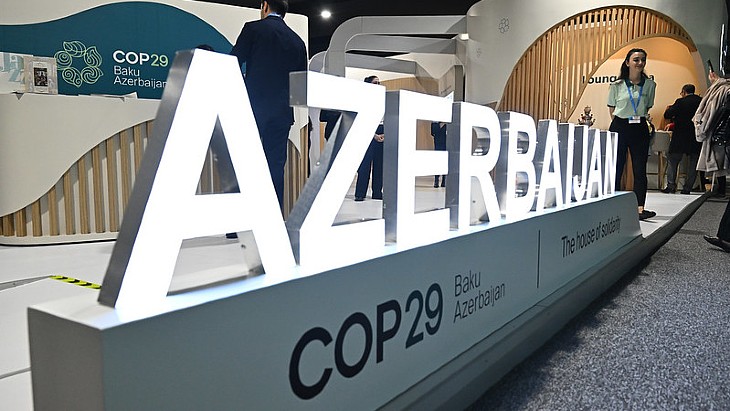
THE 29th annual Conference of Parties went into overtime in Baku as nearly 200 countries struggled to reach agreement on the final text of the declaration.

Geopolitical uncertainty, with the shadow of Donald Trump looming large over the summit, along with the absence of key Western leaders, added to the tense environment. The two-week-long dialogue started out on a bitter note of contestation and ended with an outcome that has left nations deeply divided.

Dubbed the COP of finance, expectations on reaching agreement on an ambitious New Collective Quantified Goal (NCQG) were high. With the thread of 1.5 degrees Celsius fraying rapidly, the lack of urgency, matched by requisite levels of finance, manifested itself in walkouts, objections, and rejections by some Parties.

The final text of the NCQG decision adopted on Nov 24 sets a goal to mobilise $300 billion per year by 2035 for developing countries, with developed countries “taking the lead”. It also calls on all actors to work together to enable the scaling up of finance to developing country Parties for climate action from all public and private sources to at least $1.3 trillion per year by 2035.

However, serious concerns were raised in response to the decision, challenging the scale of $300bn by 2035 as much lower than identified needs and without the guarantee of quantum to give confidence in delivering on 1.5ºC in response to the Global Stock-take. Nevertheless, the hard-fought decision and its aspirational goal of $1.3tr provide an important basis to build on the Baku-Belem roadmap to $1.3tr, with provision for a review in 2030 to assess and adjust the upward goal.

Going forward, the tripling of finance from $100bn to $300bn cannot be used as an excuse by major emitters to avoid or slack on mitigation efforts as no amount of finance can cover the cost of adaptation and loss and damage in the face of increased warming.

Many counties are calling out the hypocrisy of a system no longer fit for purpose.

Beyond the negotiations on finance, this COP saw a disappointingly low number of finance pledges. The announcements of multilateral development banks on their estimated annual climate financing by 2030, as well as the growing momentum on innovative finance, stood out as positive signals. The urgent need for finance to safeguard biodiversity and to support a just food systems transition failed to be addressed, despite repeated recognition of its criticality by leaders throughout the summit.

The key question on the implementation of the GST outcome was deferred to 2025 as Parties failed to agree on whether the follow-up should focus on the entire package or only stay limited to finance. Other implementation-focused agenda items did not send strong signals or provide momentum for further action. The Just Transition Work Programme ended similarly to the UAE dialogue, with only an agreement to continue discussions next year.

The Mitigation Work Programme was mired in disagreements during week one, failing to reach any outcome under the subsidiary bodies (SBs) sessions. Parties did complete a significant amount of work on Article 6 during COP29. However, experts expressed reservations on the urgency in pushing through Article 6 at the risk of undermining transparency and accountability.

The National Implementation Plans agenda item was postponed to SB62, and the decision on the Fund for responding to Loss and Damage offered nothing beyond encouragement to turn pledges into disbursements. The adopted text on the Global Goal on Adaptation was very similar to previous versions but the multiple mentions of means of implementation as an “enabling factor” offers some hope of adaptation finance getting properly addressed at COP30.

COP29 also marked the beginning for countries to unveil their new national climate commitments with the UAE, Brazil, and UK putting forward their economy-wide emissions reduction targets by 2035. However, Azerbaijan failed to submit a Nationally Determined Contribution despite its earlier commitment to do so as a member of the COP Troika. For any meaningful progress in the future, it will be critical that high-emitting countries prepare NDCs with credible trajectories towards net-zero while keeping temperatures below 1.5 ºC by 2030 as the target.

With the third consecutive COP held in a petro-state, (Egypt 2022, UAE 2023) the increase in the number of fossil fuel lobbyists and consulting firms raised questions about the need for the United Nations Framework Convention on Climate Change to establish a clear accountability framework and conflict of interest policy.

With mounting losses and increasing debt distress, multilateralism is coming under attack. Many countries are calling out the hypocrisy of a system no longer fit for purpose that permits violations of the rights of poor and developing countries while allowing developed countries to get away by paying lip service and making tokenistic gestures of support. However, notwithstanding all its faults, inordinate delays, and lugubrious processes, multilateralism remains the only way forward to address climate change.

For Pakistan, mired in poverty and a crippling economy with deep political divisions, the real challenge lies in aligning COP outcomes with domestic realities. This requires a holistic review and looking at outcomes through a wider geopolitical lens, taking into account not just the changing climate but also the major shifts that are taking place in the new emerging world order. Repeated assertions of vulnerability are not going to materialise into tangible solutions.

The country needs to reset its agenda and take a realistic view of its national circumstances to prepare for a bumpy future. Participation in climate negotiations is important to pitch for and be part of the process but without following up on policies at home no meaningful change can take place. Strengthening climate governance and working more closely with sub-national governments can be a good first step in this direction.

The writer is chief executive of the Civil Society Coalition for Climate Change.
aisha@csccc.org.pk

Published in Dawn, November 29th, 2024


COP29 – A Titanic Enterprise?

NOVEMBER 29, 2024

Martin Franklin assesses the outcome of this year’s environmental summit in Baku.

Almost half the world lives in climate vulnerable hotspots, where people are fifteen times more likely to die from climate impacts. Evidence of climate breakdown is increasingly apparent as extreme weather events intensify and multiply.  So, are the COPs (Conference of the Parties) charged with addressing the situation, responding adequately and whose voices are being heard?

Like last year’s COP hosts, the United Arab Emirates, Azerbaijan is a petrostate. Oil and gas accounts for over 90% of its export revenue and it plans to increase production threefold over the next decade.  Adding to its poor human rights record, dissenting voices were suppressed ahead of the conference to avoid poor publicity. 

Azerbaijan used COP29 as an opportunity to promote its economic interests.  Its deputy energy minister and chief executive of Cop29, was caught on film agreeing to facilitate oil deals before negotiations began and Azerbaijan’s President had recently asserted the right to continue investments and production of hydrocarbons which were a “gift from God.”  The Conference president was an ex-Vice President of the country’s national oil company, making it the second time in a row that a COP president had links to the oil industry.

At least 1,773 fossil fuel lobbyists attended, outnumbering the delegates from the ten most climate-vulnerable nations combined (1,033), illustrating how commercial interests dwarfed those of poor counties on the frontlines of the climate crisis.

Overshadowing everything was Trump’s re-election as US president. During his campaign Trump emphasised his climate scepticism, promising to roll back on climate measures and regulations and “drill, baby, drill”.   He has promised to withdraw the US from the Paris Agreement, as he did in his last term in office. 

COPs involve negotiations on a bewildering and complex mix of technical environmental and economic issues.  COP29 was ‘the finance COP’; its central focus was to set the New Collective Quantified Goal (NCQG) on climate finance. Put simply, it sought to agree how much money rich countries would stump up to help poor countries develop low-carbon economies, adapt to extreme weather impacts and limit global temperatures to within 1.5C (an increasingly unachievable target). An estimated $1.3tn (£1tn) a year is needed to achieve this. 

Agreement was delayed as some negotiators sought to fudge and minimise the final figure resulting in a group of nations most vulnerable to climate heating walking out in protest. Finally, it was agreed that $300bn would come directly from developed countries and public finance institutions, such as the World Bank. The remaining $1tn is to come from private investment.  Such funding is likely to be subject to delay and complexity resulting in suboptimal delivery.  

Climate justice activists argued that a ‘no deal’ would have been better than that finally agreed, opening the possibility for continuing negotiations next year in Brazil.  Past funding agreements have been inadequate, and the $300 billion per year is set to reach that figure only by 2030.  Delivery mechanisms are unclear and when inflation is considered there is little increase from the previously agreed sum. Rather than interest- bearing loans and speculative deals, justice campaigners argue that core grant funding is needed to remedy climate injustice, provide a global green new deal, a just transition and address the carbon debt owed to the global south.

The COP29 deal will not be a transfer of resources from rich to poor; it will instead perpetuate existing global inequalities. Loans will add to the crippling debts that many global south countries already suffer, and resources will not be distributed where they are needed the most.  Private investors seek profits and many climate-vulnerable areas will not offer returns. Private investment backed climate measures have predominantly focused on middle income countries while the ten most affected by climate change between 2000 and 2019 received less than 2% of total climate finance. 

There are concerns that powerful developed countries are working to dismantle key provisions of the Paris Agreement to avoid their responsibilities and obligations for climate heating. The result would be further entrenchment of ‘climate apartheid.’  Saudi Arabia’s attempt to reverse a commitment to “transition away from fossil fuels” reinforce such concerns.  Recent COPs have seen increasingly overt attempt to undermine decarbonisation and frustrated environmentalists argue that UN climate talks are “no longer fit for purpose.”

So, what are the blocks to the UN’s effort to achieve climate justice and control of the world’s temperature?  

One factor is bad faith amongst elites in the global north who see climate justice as a threat to their interests (nakedly displayed in relation to fossil fuels). Allied to this is the enduring neoliberal ideology that shapes the policies and mechanisms of institutions like the UN, World Bank, International Monetary Fund and World Trade Organization.  From this perspective, climate policies can only be conceived in the frame of economic growth via markets and financialisaton.  Grants and directly redistributive strategies advocated by climate justice groups are avoided wherever possible in favour of loans and investment opportunities that offer profits.  

The upbeat assessment of COP29 from the UN defined the positive outcomes from the Conference as progress on the development of carbon markets, creating transparency and ensuring standards (presumably to reduce scams). Carbon credits are criticised for providing a free pass to countries and businesses to continue polluting and have failed to reduce emissions. Maybe reforms could make them work in the longer term but as with technofixes like carbon capture and storage, carbon credits are promoted as a solution before being proven to work effectively.  Such approaches minimise restrictions on business as usual and reflect the influence of industrial lobbying. 

Like previous UN conferences, COP29 has disappointed countries from the global south and seen as a greenwashing exercise for Azerbaijan. Greenhouse gas emissions continue rising and the planet is heading towards 1.5C of heating in little more than a century, and we already see extreme weather taking its toll on people’s lives, livelihoods and nature.  Clearly our international political and economic institutions are failing to address the climate crisis.

COPs have come to resemble a game of musical chairs on the deck of a sinking ship but they offer the only forum with the potential to address the global threats we face. There are hopes that next year’s COP in Brazil will offer better prospects.  If so, any progress will require maximum pressure on our national and global leaderships from civil society to counter those that currently dominate proceedings.

Martin Franklin is a member of the Islington Environment Forum steering group. With thanks to Doug Weir from the Conflict and Environment Observatory.

Podcast: What happened with nuclear energy at COP29?

Friday, 29 November 2024

Did the COP29 climate conference achieve its goals? What role did nuclear energy play in the event? Why was so much focus already turning to COP30, which is due to take place in Brazil in 2025?

Podcast: What happened with nuclear energy at COP29?
(Image: Dean Calma/IAEA)

Jonathan Cobb, senior programme leader, climate, at World Nuclear Association, was in Baku, Azerbaijan, and he tells the World Nuclear News podcast that although there was no direct reference to nuclear energy in the agreement eventually reached at COP29, there was further progress among the "coalition of the willing" with six more countries signing up to the New Zero Nuclear goal of tripling nuclear capacity by 2050.

You can listen to the full interview on all good podcast platforms or via the embedded player on this page. An edited digest of the interview with Cobb is below 


What is a COP?
 

COP stands for Conference of the Parties, where the parties are the governments who signed up to the United Nations Framework Convention on Climate Change in 1992, which sought to stabilise concentrations of greenhouse gases in the atmosphere at levels which didn't harm the environment. The Kyoto Protocol set the first targets for developed countries - there were 24 of these, although the number of countries was higher because the European Union counted as one party. Efforts at COPs to set specific emission reduction targets for individual countries were unsuccessful and the approach has changed to efforts to limit global temperature increases to less than 2 degrees Celsius - ideally less than 1.5°C - above pre-industrial levels. This year we may well see a global temperature rise above 1.5°C, reflecting an urgent need to cut greenhouse gas emissions. After all these COPs, the world is yet to get to the stage of stopping rises in greenhouse gas emissions. The challenge now is that to get anywhere near hitting those temperature targets the world needs to reduce greenhouse gas emissions to net zero by 2050.

Developed vs developing countries
 

This is one of the tensions in the process because the onus has been on those countries and regions that were specified as being developed in 1992 and reflected the historic emissions there had been to that point. Now we're 32 years later and the world has changed. Economies such as China and India have expanded very rapidly over that period, and so have their greenhouse gas emissions, and yet within the COP process they remain classified as developing, with the definition and responsibilities enshrined within the United Nations Framework Convention all those years ago. It has been particularly key to conversations about providing finance from developed countries to developing countries to allow the developing countries to be able to deal with both the impacts of climate change - adapting to the impacts of climate change - but also taking measures to try to avoid their own emissions.

What was the outcome of COP29?
 

There was agreement eventually reached, at least in terms of voting through a text on new collective quantified goals and climate finance. It had previously been agreed that USD100 billion annually should be provided by developed countries to help developing countries with adaption and mitigation measures. Coming into COP29 there was an assessment that that figure needed to increase to USD1.3 trillion per year by 2035, but the eventual agreement was for a figure of USD300 billion while agreeing to work towards the goal of mobilising USD1.3 trillion - which can come from both state and private sectors. It also refers to some developing countries voluntarily contributing, which has been taken as a reference to China and India. It means that countries left COP29 equally unhappy, but there was also recognition that with the forthcoming return of President Donald Trump in the USA it was a case of going for the deal they could get rather than the deal they would be happy with.

How binding is the agreement?
 

It is certainly something that all the parties have signed up to, but there is no formal compulsion mechanism. There is a public willingness to hit this figure, but as with the USD100 billion-a-year figure, which was reached a couple of years late, there is not a specific trajectory to get to the USD300 billion figure or to the USD1.3 billion.

What about nuclear energy in COP29 agreement?
 

The first explicit acknowledgement within official COP texts of nuclear energy's role in being able to achieve the climate targets did not come until last year's COP28 Global Stocktake document, where it was included among the different mitigation technologies identified that parties could use to meet emission reduction targets. In early drafts this year there was a document which would have reflected back to the Global Stocktake last year with references to the paragraphs which include nuclear, but during the negotiations that text was pushed back to COP30. So there was no text within COP29 which referred to nuclear specifically, or referred back to the Global Stocktake from COP28. However there were plenty of positives for nuclear on the sidelines of COP where, increasingly, the really progressive action is taking place.

What was the good news for nuclear energy?
 

There was further progress from the so-called coalition of the willing, with further agreements on the sidelines of COP29 which saw six more countries - El Salvador, Kazakhstan, Kenya, Kosovo, Nigeria and Turkey - signing up to the Net Zero Nuclear goal to triple nuclear energy capacity. (Audio from the launch event, featuring World Nuclear Association Director General Sama Bilbao y Leon, Ali Zaidi, the US White House’s national climate advisor and Abdullah Bugrahan Caravel, President of the Energy, Nuclear and Mining Research Council of Turkey, can be heard from 17 minutes 40 seconds in). There were also a number of announcements from individual countries or partnerships between countries, such as the US and Ukraine on small modular reactors, and between the UK and Finland, as well as the USA setting out a proposed roadmap to hit their 200 GW of nuclear capacity goal. (You can hear from Kirsten Cutler, Senior Strategist for Nuclear Innovation at the US Department of State, talking about the tripling target, from 23 minutes in). The Net Zero Nuclear pavilion was very busy with a full programme of events and a lot of country delegations proved to be interested in discussing their policies and options - it was a real benefit of having the country pavilions and non-governmental organisations in the same area. 

Why is COP30 being seen as a more significant COP?
 

This is because countries have to submit their Nationally Determined Contributions (NDCs) between COP29 and COP30, where these will be assessed. These documents will set out what countries are proposing to do. And it will then be possible to add them all together and see whether or not too little is being done to achieve the collective goal. The COP30 in Brazil in November 2025 is expected to be where there is a judgement on what countries are saying they are going to do, and an assessment of whether or not their plans are ambitious enough. There will also be some political uncertainty, with the return of President Trump to the White House, but if the USA does step back, the question will be whether it weakens the process or whether it galvanises others to step in and take that space. But with the NDCs due to be submitted for discussion at COP30, and with 31 countries now supporting the goal of tripling nuclear energy capacity, it is expected that nuclear energy will feature in a large number of the various countries' plans.

Listen and subscribe on all major podcast platforms:

World Nuclear News podcast homepage
Apple
Spotify
Amazon Music

Episode credit:  Presenter Alex Hunt. Co-produced and mixed by Pixelkisser Production.

PAKISTAN

The triumph of folly
November 30, 2024
 DAWN


WHEN good men and women can’t speak the truth, when facts are inconvenient, when integrity and character no longer matter, when ego and self-preservation are more important than national integrity, then there is nothing left to stop the triumph of tyranny.

I find myself lost in anger and anguish. The answer for how I can go through this inner convulsion is to put pen to paper for the benefit of all those who should be deeply afraid for the future of our nation.

What is at stake in our benighted land? To put it bluntly: collective suicide is actually in progress, with conscious efforts at denial, distortion and deceit by the ruling elite, which is bent upon sowing discord and discontent through their ‘psy-ops’ techniques. This recipe for disaster will lead to the unravelling of our state and society.

Erasmus wrote in The Praise of Folly (1509): “The less talent they have, the more pride, vanity and arrogance they have. All these fools, however, find other fools who applaud them.”


An illegitimate coalition of power-hungry politicos provides a democratic façade to the machinations of the deep state. Everyone is aware that the results of the Feb 8 national polls this year were manipulated in favour of those who do not represent the majority, which was denied its mandate. Some people justify the rigging by pleading that almost all previous elections were also manipulated by the actual string pullers. There is truth in this premise of political engineering by the establishment. However, the blatant misuse of power mixed with persecution and corruption within the state agencies responsible for holding the last general elections has crossed all limits. The institutions constitutionally responsible for holding free and fair elections failed miserably in their duty.

The experiment of putting together neutral, apolitical caretaker administrations for holding free and fair elections has been an abject failure. Cabinets, including the chief executives, were selected by the deep state whose agenda was perceived to be advanced by the outgoing prime minister and leader of the opposition.

The biggest disappointment has been the Election Commission of Pakistan. The chief of the electoral watchdog brought the civil services into such disrepute that his erstwhile colleagues openly condemned his conduct as undignified and unprincipled. He has caused irreparable damage to a constitutional office of great responsibility and public trust, and flouted the orders of the apex court by pandering to the political engineers running the current political charade.

Collective suicide is in progress, with conscious efforts at denial, distortion and deceit.

The judiciary, of all the premier national institutions, has suffered the most. The open bickering and infighting among the judges of the apex court has shattered the administrative and operational autonomy of the institution required to safeguard the Constitution and ensure the fair administration of justice to the people. A farcical display of manipulation and arm-twisting within parliament resulted in a constitutional amendment that has dealt a severe blow to the judiciary. The apex court had settled the matter of appointment of the chief justice by recognising the principle of seniority; the senior-most judge after the chief justice was assured of his place at the pinnacle and there was no dispute.

The present ruling elite did not want the senior-most judge after the chief justice to take over the mantle and therefore, a constitutional amendment that can only be described as person-specific was rubber-stamped by parliament and that too without any debate or deliberation.

A parallel constitutional court has been established, with junior judges predominantly selected by the executive, to adjudicate and preside over highly sensitive issues of great public significance such as the trial of civilians in military courts and the review of the recent award of reserved minority seats to a political party by most Supreme Court judges. Unfortunately, the judiciary faces this predicament due to the strife within its own ranks.

The bureaucracy and police services have broken all previous records of becoming handy tools of a callous ruling elite. Some spineless seniors are dragging their junior officers into very awkward and embarrassing situations where human rights violations are endemic. Arguably, in no previous era, including periods of military rule, were such acts of persecution and indignity witnessed. Certain senior police officers are openly defying court orders. Political agitation and protests are handled through brutal tactics, which include late-night raids on the homes of political activists and office-bearers who are illegally detained and allegedly tortured. This kind of brutality reflects an autocratic mindset in the top echelons of the law-enforcement institutions.

There are extremely serious challenges on the internal security front. Balochistan is burning. The recent carnage in Kurram is a manifestation of the festering violence that has engulfed much of KP. The entire focus of our security establishment should be on dealing with these crises. The military and the intelligence agencies must ensure that the writ of the state is restored.

They are already engaged in kinetic operations against militant organisations in Balochistan. It has been announced recently that a full-fledged military operation is being launched to restore peace and order in the vast province. Since the last few years, the military has already been dealing with the insurgency. Staying away from an operation that entails gross human rights violations, the military must focus on winning the hearts and minds of the Baloch youth.

Finally, what has happened in Islamabad recently in a brutal crackdown on the participants of a political protest, should be cause for serious introspection by those who are calling the shots. History will judge them on how they dealt with a political crisis of this magnitude, which has been developing since the elections earlier this year. It is time to change course to fulfil the democratic aspirations of the people of Pakistan.

The writer is a former inspector-general of police.


Published in Dawn, November 30th, 2024