Friday, February 21, 2025

Data on Corporate Pollution and Emissions Now Threatened Under Trump

Researchers have published data on corporate pollution and emissions since 2004. Now the data is at risk under Trump.
February 16, 2025

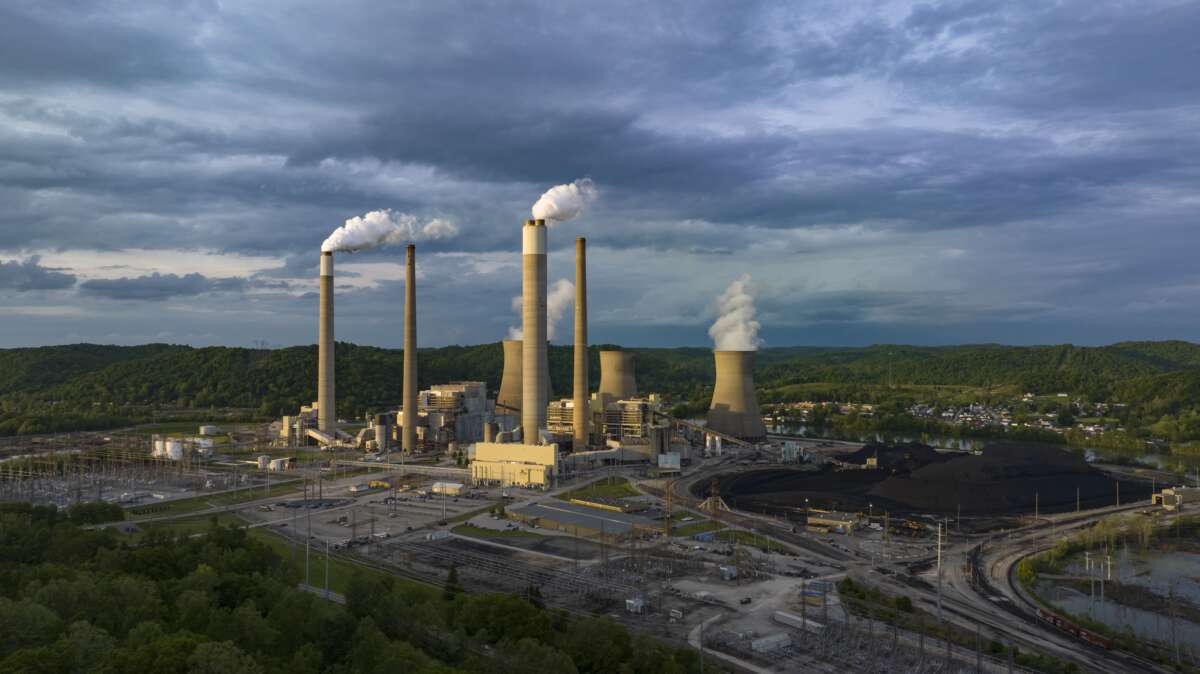
Aerial view of John E. Amos Power Plant in West Virginia.Visions of America / Joseph Sohm / Universal Images Group via Getty Images

Since the late 1980s, just 100 companies have been responsible for 71 percent of global greenhouse gas emissions. Researchers at the Political Economy Research Institute (PERI) at the University of Massachusetts Amherst publish annual lists of the top corporate air and water polluters and top greenhouse gas emitters in the U.S. They have just released the latest data amid widespread fear that our environmental crisis will rapidly worsen in the next four years as the Trump administration rolls back regulations and stalls climate action at the federal level.

In the interview that follows, Michael Ash, professor of economics at UMass Amherst and one of the main researchers behind the PERI project tracking U.S. corporate pollution, shares the latest data identifying the biggest corporate polluters, discusses the potential impact of Donald Trump’s “Unleashing American Energy” policy and offers his thoughts on how activists can push back against corporate polluters. The interview that follows has been lightly edited for clarity.

C. J. Polychroniou: PERI has released the latest yearly editions of the Greenhouse 100 Polluters, Suppliers and Coal Indexes, and Toxic 100 Air and Water Polluters Indexes. These track the environmental performance of U.S.-based industrial activity and identify those corporations that produce the largest share of emissions as well as air and water pollution. You are one of the main PERI researchers behind this project, so which industrial corporations are the biggest polluters according to the most recent data, from 2022?

Never miss another story

Get the news you want, delivered to your inbox every day.

Email*


Michael Ash: In terms of greenhouse gas (GHG) emissions, the top polluters are the large electrical generators, with Vistra Energy, Southern Company, Duke Energy, Berkshire Hathaway (which has a large generating portfolio) and American Electric Power topping the list. In fact, ExxonMobil is the only nonelectricity corporation in the Greenhouse Top 10. The dominance of electricity is not surprising because much energy in the U.S. is still produced by burning fossil fuels (around 60 percent in 2023 according to the U.S. Energy Information Administration). The coal share of U.S. electricity has declined a lot, but natural gas has expanded.

The Toxic100.org looks at industrial toxics, corporate facilities’ release of roughly 600 highly toxic substances into the environment. Here the profile is a bit different, with large chemical, plastics and rubber, and petroleum-processors at the top of the list. Dow, ExxonMobil and Tesla (largely due to the latter’s heavy metals waste at its Sparks, Nevada, battery gigafactory) are ranked high on either or both the Toxic Air and Toxic Water lists.


Big Oil Spent $445 Million to Influence 2024 Elections
In April, President Donald Trump had requested that Big Oil spend $1 billion to help him win the 2024 election. By Chris Walker , Truthout  January 23, 2025

A dimension we added recently is the supply of greenhouse gas precursors into the economy — basically the extraction and processing or imports of oil, coal or natural gas. At the top of the Greenhouse Suppliers list are large refiners, Marathon, ExxonMobil, Valero and Phillips 66, joined by a big coal producer, Peabody Corporation.

Do we know how emissions from top industrial polluters compare with gross emissions from entire states?

It seems clear that the Trump administration will give fossil fuel companies free rein, adding to the climate crisis. The new power plant rules are a case in point.

That’s a good question and I don’t have the data to draw comparisons. But we see extraordinary disproportionality in industrial pollution, an enormous share of the total pollution impacts coming from a handful of polluters at the top of the scale. This is particularly evident in the GHG domain. For the Greenhouse 100 polluters, where the top four companies alone — the electrical generators Vistra, Southern, Duke and Berkshire Hathaway — account for more than 5 percent of all U.S. greenhouse gas releases from all sources. For the Greenhouse 100 suppliers, the top of the list is again enormously concentrated, with the ultimate emissions from the top 10 greenhouse gas suppliers accounting for around 40 percent of all supply.

Does the list of the biggest industrial polluters change significantly from year to year?

We archive our data and so it’s possible to track polluters over time, although we tend to highlight the current large polluters. Polluting facilities change hands frequently, like poker chips among the major players. The lists have been generally stable with the big players: the large electricity generators on the Greenhouse 100 Polluters; large oil and coal producers on the Greenhouse 100 Suppliers; and large chemicals, plastics and rubber, and petroleum on the Toxic 100.

New rules to reduce pollution from fossil fuel-fired power in order to protect communities and improve public health went into effect only during the final months of Joe Biden’s presidency. First, why do you think the Biden administration waited so long to finalize new rules to clean up air pollution from power plants and, second, has there been an improvement in the performance of air and water polluters over the last few years?

The toxic risk picture has improved over the past 20 years, with especially large reductions in the first decade of the 21st century. That’s partly a function of industrial decline rather than industrial greening, and some polluting activities may have moved offshore rather than disappearing altogether.

Greenhouse gases present a gloomier picture. Total U.S. greenhouse gas emissions have declined, returning to roughly 1990 levels after a peak around 2005, but the decline is largely in the electrical generation sector with the conversion from coal accounting for much of the decline. Some of that conversion from coal is to renewables. However, much of the reduction represents conversion from coal to gas, which is an improvement in terms of carbon dioxide per megawatt hour, but remains a potent source of GHG emissions and leaves the U.S. well short of the path of emissions reductions to meet globally needed decarbonization targets.

The new fossil fuel electric power standards are a step in the right direction. They reduce both GHG and local pollutant emissions from existing (and new) coal facilities and from new gas facilities. These are welcome developments and should improve air quality and hasten the demise of coal. The new standards do not include the large fleet of existing natural gas facilities. If implemented, the new standards will substantially reduce GHG emissions from the electric power sector, reducing emissions by 2035 to roughly half of what they would be without the standards in place.

Both our Toxic 100 and Greenhouse 100 projects rely on critical right-to-know data mandated by law and federal regulation. The right to know may be in jeopardy. A couple of key Environmental Protection Agency websites for tracking toxics were offline for several days earlier in the month but they are back up now although no one knows for how long.

The Biden administration left office with what can only be considered a tremendously contradictory record on climate action. The Inflation Reduction Act charted a fundamentally different course for U.S. climate action, but the total emissions reduction falls way short of U.S.’s Paris climate commitment, which is in itself hardly adequate to tackle the climate crisis. On top of that, under Biden, oil production surged to record levels despite his campaign promise to end drilling on public lands.

Now, given that the Trump administration has promised a large-scale demolition of government regulations and even more gas and oil drilling, wouldn’t we expect to see an escalation of greenhouse gas emissions by U.S. industrial corporations in the years ahead? Can you address the objective behind Trump’s executive order “Unleashing American Energy” and the potential impacts it may have on climate and the environment? Also, what in your view are the best ways for activists to push back against big polluters, which include of course the Pentagon, as the U.S. military is one of the largest polluters in history?

It’s hard to respond to “Unleashing” because the policies are so incoherent, many are unconstitutional or subject to legal challenge, and many of the premises — for example, the notion that Biden instituted an “electric vehicle mandate” — are simply false.


For activists, top priorities are mobilizing to reverse the Trump administration orders and actions that are unconstitutional or otherwise illegal.

It seems clear that the Trump administration will give fossil fuel companies free rein, adding to the climate crisis. The new power plant rules are a case in point. These rules, which are inadequate in my opinion, would still substantially reduce GHG emissions from the electrical energy sector (to roughly half of their otherwise expected level in 2035). Rolling those back would be a disaster.

The withdrawal from the Paris climate agreement and rescinding Biden’s environmental justice commitments are among the ill-conceived and (literally) toxic policies that will damage public health and contribute to environmental and social degradation.

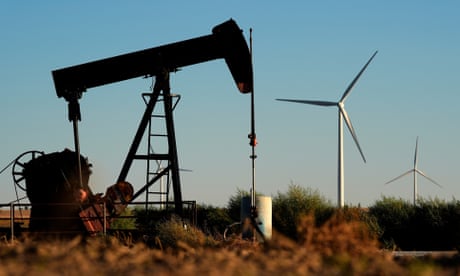
It will be interesting — if that’s the right word to use in a crisis — to see if there is in fact a rollback on renewables. I was driving across West Texas this summer on our family road trip, and looking out the windshield, at one moment we could see fracking rigs, oil derricks, vast arrays of windmills on top of buttes, and really large-scale (it’s Texas) solar farms. We were looking at an all-energy landscape, with abundance and profit taking precedence over climate and health. I suspect that the big renewable players will not part gently with their energy strategy, supported by market forces, technological progress and substantial subsidies in the Inflation Reduction Act. It’s thin gruel to hope for entrenched capitalist interests to come to the rescue.

The U.S. government is indeed one of the larger polluters on our lists. The U.S. government is seventh among GHG polluters (much of it from federal fossil energy facilities such as the Tennessee Valley Authority, but some of it from military facilities), and just outside the top 100 among toxic air polluters and a substantial source of toxic water pollution. The toxic releases are largely from U.S. military facilities.

For activists, top priorities are mobilizing to reverse the Trump administration orders and actions that are unconstitutional or otherwise illegal. Defending the right to know should be a high priority; the U.S. does a lot of regulation by right to know rather than by, say, directly prohibiting or limiting the release of toxics. Without right to know, we’re acting in the dark. There can be other sites of mobilization: State and local governments, schools (see our Air Toxics at School project) and workplaces can all become more exciting and effective sites for organizing and change.
Wealthy Investors Exploit This Loophole to Raise Rents on Poor Tenants


The loophole has remained open for decades despite widespread agreement among regulators and advocates about its harm.

February 16, 2025

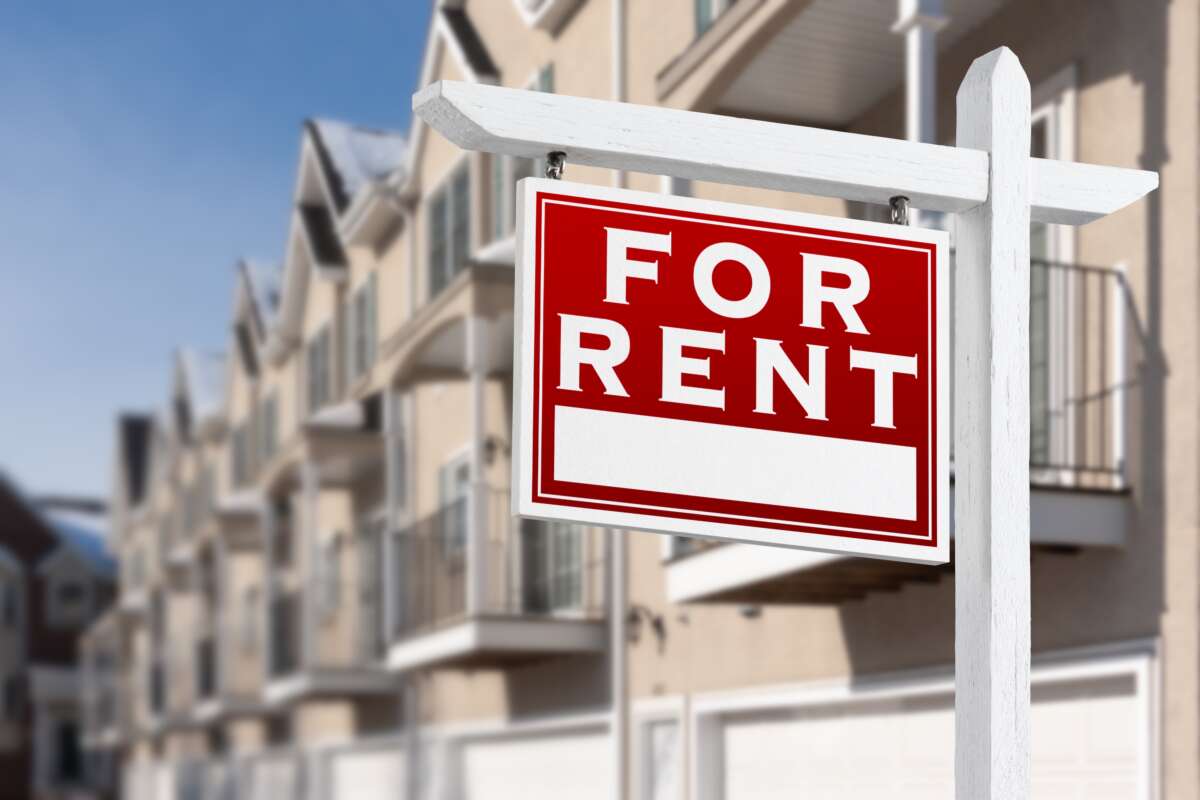
“For Rent” sign in front of a row of apartments.
iStock / Getty Images Plus

This story was originally published by ProPublica, a Pulitzer Prize-winning investigative newsroom. 

Four and a half years ago, a newly formed corporate entity purchased a low-income housing complex with 264 apartments in Phoenix. The property had received more than $4 million in federal tax credits and, in exchange, was supposed to remain affordable for decades.

The company then used a legal loophole that stripped the affordability protections from the apartments. The maneuver appears to have been lucrative for the company, which bought the property for under $20 million and flipped it two years later for $63 million. Today, advertised rents there have gone up by around 50%.

Similar stories have been playing out across the country for years, as developers and real estate investors take advantage of an obscure section of the tax code known as the “qualified contract” provision. It allows owners of low-income rental properties that have received generous tax credits to raise rents far sooner than the law typically requires.

Some 115,000 apartments in the United States have lost rent restrictions as a result, according to one estimate. Experts say these conversions are exacerbating the nation’s shortage of affordable housing, which has intensified in recent years. One report recently concluded that the country has nearly 5 million fewer housing units than it needs. The problem is most acute for those with low incomes.

The loophole has remained open for decades despite widespread agreement among regulators and advocates about its harm. Congressional efforts to repeal the provision have failed — most recently in 2023 — though state reforms have trimmed its effects. President Donald Trump has pledged to lower housing costs, but some advocates for reform are skeptical that his administration or a Republican-controlled Congress will strike a statute that can be lucrative to the real estate industry. (The White House did not respond to a request for comment.)

Related Story
Priced Out and Fed Up, Tenants Demand a National Renters Bill of Rights
As affordable housing dwindles, renters are calling for federal protections against price-gouging corporate landlords.  By Mike Ludwig , Truthout November 18, 2023

“We have an affordable housing crisis just about everywhere in the country,” said Robert Rozen, a former Senate aide who helped draft the provision and now calls for its repeal. “We can’t afford to lose more affordable units, particularly as a result of a loophole in the law.”

The statute is part of the law defining the Low-Income Housing Tax Credit, which has become the primary catalyst for new affordable rental housing in the country. The program offers developers a tax subsidy worth potentially millions of dollars in exchange for keeping units affordable and renting them only to poor and working-class tenants. Typically that’s households making below 60% of the area median income. For a family of three to qualify in Phoenix last year, it would’ve had to make $55,560 or less.

Rent and income restrictions are supposed to last at least 30 years. But, after just 14 years, property owners may ask their states to find buyers. This opt-out clause was meant to offer wary investors an early exit from the program while retaining the affordability protections on the properties. But it included a critical unintended flaw: States can only sell at prices set by a formula that almost always overvalues the properties. As a result, buyers are rarely found. If states can’t find buyers within a year, owners are free to raise rents on vacant units and, a few years later, on existing tenants as well.

“It was obviously a mistake to include this in the law,” said Rozen, now an attorney specializing in affordable housing. “We didn’t know what we were doing when we constructed the buy-out formula.”

The beneficiaries of this maneuver are often shielded from public view. The Arizona property, previously called Sombra Apartments, was flipped by a Delaware limited liability company that incorporated under the name Sombra Apartments LLC shortly before the purchase and has a small online footprint. Through a public records request, ProPublica received the application that triggered the loss of affordability protections, which shows the LLC was controlled by a real estate investment firm in Scottsdale, Arizona, called ReNue Properties. ReNue’s website says the company specializes in “the acquisition and rejuvenation of underperforming multifamily properties” and has generated an average 81% return. Michael Christiansen, whose LinkedIn profile lists him as ReNue’s CEO at the time of the transactions, did not respond to requests for comment. (More than 5,700 low-income units in the state have lost affordability protections through the same opt-out method, according to a 2023 Arizona Republic report.)

Some companies exploiting the loophole appear to have done so with the indirect assistance of Fannie Mae and Freddie Mac. The government-sponsored enterprises support the nation’s housing sector, typically by buying mortgages to inject cash into the mortgage market. Property records show that the enterprises were involved in loans to owners of low-income housing who then stripped the properties of affordability protections or are seeking to do so. The enterprises’ involvement appears at odds with their declared support for affordable housing. Spokespeople for Fannie and Freddie did not respond to requests for comment.

Two industry insiders defended the qualified contract process as a way to fight the shortage of middle-income housing. That’s the position of Charlie Moline, CEO of Moline Investment Management, who said he has used the mechanism to remove affordability protections from around 20 multifamily properties across the Midwest.

Typically, low-income housing tax credit properties are too old and worn to be converted into high-end market-rate units, he said. But, freed of the income and rent limits, the properties can become appealing to middle-income renters after some basic renovations. “No one’s displaced by what we’re doing,” said Moline, who contends that he keeps rent increases moderate. “Our goal is to expand affordable housing to the missing middle.”

That goal would be of little benefit to Lashunda Williams, a resident of a low-income apartment complex in Omaha, Nebraska, that Moline purchased last year and is taking through the opt-out process. Williams, 33, said she makes $17 an hour as a custodian at an Amazon warehouse and pays $899 for a one-bedroom apartment. “I can barely keep up with my rent half the time,” she said. If it increased, “I would have to move.”

Moline’s argument was similarly unpersuasive to Rozen, the former Senate aide. “The bottom line is the owner is increasing his rental income and tenants who the program was intended to serve are losing their affordable rents,” Rozen said. “And the federal government is being taken advantage of.”

Affordable housing proponents have long called for repealing the qualified contract provision. But congressional efforts to do so have fizzled, in part due to lobbying from developers and private equity firms with interests in low-income housing, according to a former congressional staffer involved in the repeal effort.

Advocates have had more success pushing for state-level reforms. A majority of states now incentivize or require applicants for low-income housing tax credits to waive their opt-out rights, according to Moha Thakur of the National Housing Trust. The Department of Housing and Urban Development, the Federal Housing Finance Agency and the Department of Agriculture’s Rural Housing Service have also recently proposed or enacted policies to combat the problem. That includes a 2023 FHFA requirement that Fannie Mae and Freddie Mac no longer invest in low-income housing eligible for early opt-outs. However, Fannie and Freddie can still back loans on such properties, which is more commonly how they are involved, according to Rozen. (Freddie has said it is studying the issue.) And given the Trump administration’s mass-scale attempts to demolish regulations, particularly those adopted under the Biden administration, it’s unclear whether the new policy initiatives will survive.

The state-level changes have had an impact, bringing the number of apartments lost annually through the opt-out from around 10,000 a year to between 6,000 and 7,000. Without congressional action, however, the loophole remains on the books and a threat to poor tenants. “That loophole shouldn’t exist,” said Joy Noll, a tenant of the Arizona property, who lives on modest housing and disability subsidies. If rents rise further, Noll fears she will have to move: “It made it impossible for those of us who are low income to stay.”


This piece was reprinted by Truthout with permission or license. It may not be reproduced in any form without permission or license from the source.

We need your help to become less dependent on traffic from Facebook and X. Follow us on Bluesky today!

Jesse Coburn
Jesse Coburn is a reporter at ProPublica. He joined the newsroom in 2024 after three years as an investigative reporter at Streetsblog NYC. His series there on the black market for temporary license plates led to enacted or proposed laws in three states as well as civil penalties and criminal investigations. Previously, Coburn was a reporter at Newsday, where his reporting on wrongdoing in Long Island local governments spurred investigations and reforms. Coburn’s reporting has received a George Polk Award, an IRE Award, a Sidney Award, a Deadline Club Award and other distinctions. He was also a finalist for the Goldsmith Prize for Investigative Reporting.


Group Says Some Airbnb Hosts Illegally Spiked Rental Prices Amid LA Fires


Many wildfire evacuees looked to short-term rentals as a stop-gap measure while they looked for new housing.
PublishedFebruary 15, 2025
According to a new data analysis, in January, some Airbnb hosts more than tripled nightly rates as evacuees from the Eaton and Palisades fires scrambled to find temporary housing.
Photo Illustration by Mateusz Slodkowski / SOPA Images / LightRocket via Getty Images

In January, some Airbnb hosts more than tripled nightly rates as evacuees from the Eaton and Palisades fires scrambled to find temporary housing, according to a data analysis run by Better Neighbors LA, a coalition of housing activists and labor groups that monitor short-term rental enforcement. (One of those groups, the union Unite Here Local 11, is a financial supporter of Capital & Main.) The organization says it has documented more than 3,200 cases of illegal price gouging in L.A. County’s short-term rental market.

On Jan. 7, after California Gov. Gavin Newsom declared a state of emergency in Los Angeles County, rent hikes of more than 10% were prohibited by the state’s price gouging law. Since then, California Attorney General Rob Bonta announced criminal charges against two real estate agents accused of attempting to raise rents beyond the legal limits.

On Feb. 4, L.A. City Attorney Hydee Feldstein-Soto announced she has filed suit against Blueground US, Inc. for price gouging. The company offers fully-furnished rentals on flexible terms, usually for less than a year. Feldstein Soto’s complaint says Blueground, which also lists homes on Zillow and Airbnb, raised some rents more than 50% after the fires. It is the first price gouging case against a company in the mid-term rental market to arise from the recent fires.

Now, in a letter to the Los Angeles City Council, Better Neighbors LA is also calling for legal action against price gougers in the short-term rental markets, including those overseen by companies such as Airbnb, Vrbo and Booking.com.

“It’s classic disaster profiteering, and it’s morally wrong,” said Noah Suarez-Sikes, an organizer with Better Neighbors LA.

An Airbnb spokesperson said in an email that the company’s analysis of Better Neighbors’ report shows it is inaccurate. However, Airbnb did not respond to Capital & Main’s request that it provide pricing data to refute the inaccuracies.

Better Neighbors obtained its data from Inside Airbnb, an activist group whose mission is “to provide data that quantifies the impact of short-term rentals on housing and residential communities.” Inside Airbnb compiles information that is publicly available on the Airbnb website, then verifies and analyzes it.

Airbnb hosts price their own properties, but Airbnb offers them “Smart Pricing,” an online tool that automatically suggests rates based on demand. However, the company says since the emergency declaration such demand pricing is not allowed.
The Airbnb spokesperson claimed that the company is working to help hosts comply with the law.

“We are actively sending communications to hosts to remind them of the rules, and those who attempt to raise prices by more than 10% from their pre-emergency pricing structure receive an error message. Where necessary, Airbnb has also rolled back listing prices to pre-emergency pricing to help our hosts stay compliant.”

However, a host who goes by the name Andy on Airbnb told Capital & Main that he set rates on the platform without any issues. Andy, who is designated an Airbnb “Superhost,” lists five Pasadena properties on the platform. Better Neighbors LA data reviewed by Capital & Main found that one of them, an “entire guest suite” with three bedrooms was on offer for $100 per night on Jan. 4. By Jan. 17, the nightly rent was $149, 49% higher than the pre-fire price. Andy said he relied on Airbnb to set rates.

“I always [use] smart price from Airbnb,” he wrote in an Airbnb message to Capital & Main.

In letters to L.A.’s City Council and the Los Angeles County Board of Supervisors, Better Neighbors LA said it compared pre- and post-fire Airbnb rates. It reported that in the city of L.A., hosts raised rates by more than the 10% legal maximum on more than 1,450 listings after the blazes erupted, while more than 1,750 listings spiked in unincorporated Los Angeles County and surrounding cities.

Asked to comment on Better Neighbors’ request to crack down on price gouging in the short-term rental market, City Councilmember Hugo Soto-Martinez said in a statement that “price-gouging in the middle of an emergency isn’t just immoral — it’s illegal.”

As fires scorched L.A., many burned-out Angelenos looked to short-term rentals as a stop-gap measure while they looked for new housing.

Soto-Martinez said he’s “committed to holding bad actors accountable. If these platforms won’t step up to stop the abuse, then the city must.”

Better Neighbors flagged a two-story condo on a commercial strip near Universal Studios that it said rented for $129 per night on Jan. 4, then rose 30% to $169 by Jan. 17. Capital & Main checked prices and found they were up again to $369 for the night of Feb. 5, according to Airbnb. Airbnb appears not to have acted to stop the price fluctuations.

But Thomas Bekker, who manages the property, said the price increase “has nothing to do with the fires,” arguing that the increases don’t amount to price gouging. “We gave a lot of discounts,” during the disaster, he said.

Instead, Bekker, a co-owner of Apollo Property Management, said that, similar to hotels and airlines, short-term rentals have historically set prices based on demand. He added that Airbnb would not allow significant price increases of a property’s “base rate,” which is not visible to the public. He claimed that short-term rental gouging “would be crushed in the algorithms,” or that overpriced listings would be less visible in search results.

The Better Neighbors’ reports of Airbnb price gouging come as the company has positioned itself as a major player in wildfire relief efforts through Airbnb.org, a charity it founded. Although Airbnb.org has been publicly criticized for failing to deliver promised aid to some, its website says that it has offered free emergency housing to 32,000 evacuees and first responders through its partnership with the nonprofit 211 LA.

Capital & Main requested comment from the company on specific listings such as Andy’s and others whose rates, according to Better Neighbors LA data, rose precipitously from pre-fire levels, but the company has not responded.

Better Neighbors LA’s request to the City Council to rein in alleged price gouging has been made at a time when the city has struggled to police an already unruly short-term rental market. Last December, the L.A. Housing Department estimated that about 60% of the city’s short-term rentals in multiunit buildings were, for a variety of reasons, illegal, according to a memo sent by the Housing Department’s then-interim general manager, Tricia Keane, to the City Council.

Robin Urevich is a journalist and radio reporter whose work has appeared on NPR, Marketplace, the San Francisco Chronicle and the Las Vegas Sun.


Retailers Ration Eggs as Prices Jump 18 Percent Since Trump Inauguration

Trump promised on the campaign trail that consumer prices will “come down fast” but has since reneged on that pledge.
PublishedFebruary 18, 2025

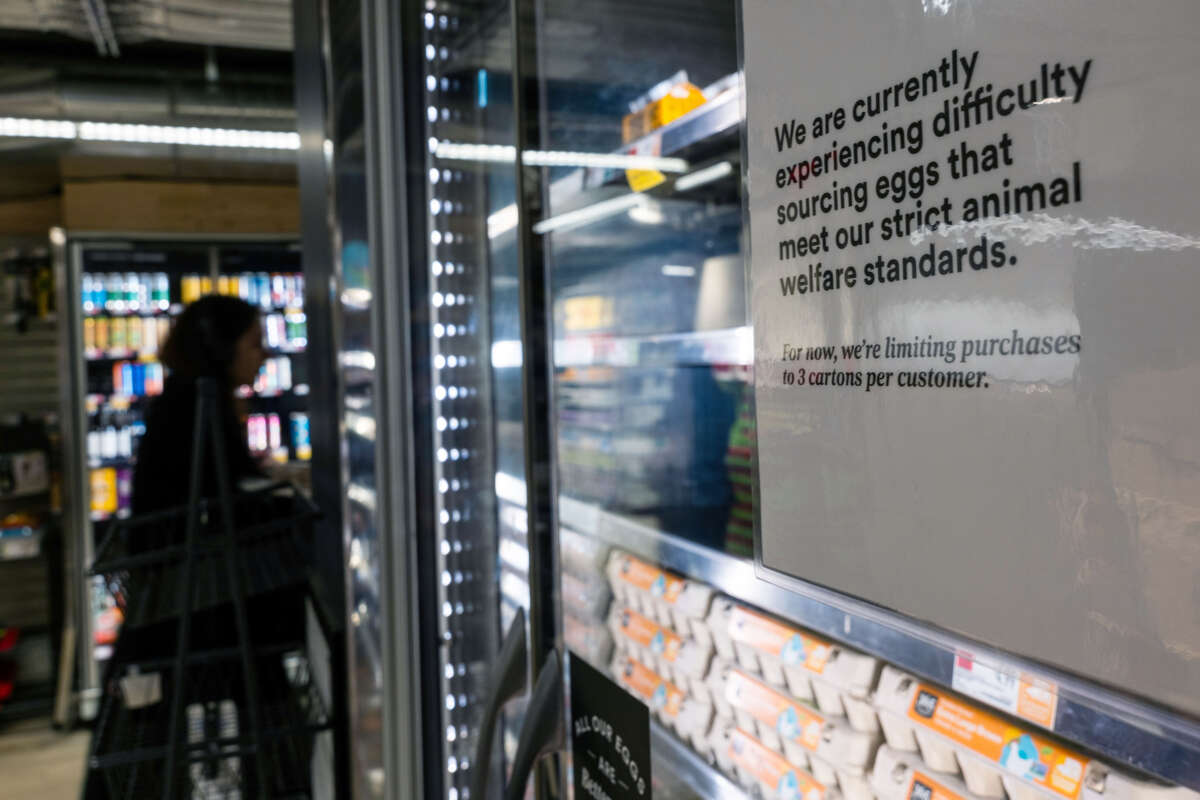
Cartons of eggs are displayed at a grocery store with a warning that limits will be placed on purchases as bird flu continues to affect the egg industry on February 10, 2025, in New York City.
Spencer Platt / Getty Images


Truthout is an indispensable resource for activists, movement leaders and workers everywhere. Please make this work possible with a quick donation.

Multiple national grocery retailers are imposing limits on how many cartons of eggs consumers can purchase amid a shortage of the product and rising grocery prices across the U.S.

As of Monday morning, the average price for a dozen eggs was around $7.74 — an increase of about 18 percent since President Donald Trump took office. According to a report from NBC News, many national chains, including Trader Joe’s, Walmart, Costco, and others, have started restricting how many eggs each shopper can buy in a single visit.

Other grocery store costs have also gone up. The cost of wheat has increased by about 11.8 percent since Trump was inaugurated, while the cost of cheese has gone up 1.59 percent.

Many have used the “price of eggs” analogy to define Trump’s focus on consumer prices (or lack thereof) since he started his second term in office, due to his multiple promises during the 2024 presidential campaign to tackle rising costs. Since becoming president again, however, his focus has been on other issues, barely taking any action to address prices at all.

In August, Trump pledged that “prices will come down” if he became president again, and “come down fast.” In September, he made a similar promise: “Groceries, cars, everything. We’re going to get the prices down,” Trump said.

But in December, after he won the election, Trump changed his tune entirely, reneging on the promises he made and de-emphasising controlling rising costs as a priority for him.

“It’s hard to bring things down once [prices go] up. You know, it’s very hard,” Trump said in a post-election interview.

Just this past week, Trump also denied that he could do anything about rising grocery prices, specifically on eggs, blaming the previous administration and the presence of bird flu in the U.S. for growing costs.

Prices were at an “all-time high” before he became president, Trump said over the weekend. “This was caused by Biden,” Trump added, stating he had “four years of virtually no inflation” during his first term.

Those comments from Trump are false or highly misleading — egg prices reached “all-time high” status after he took office. Biden also didn’t cause the price hike, but the bird flu did play a huge role in it, as farmers across the country have had to slaughter millions of hens who have either had the virus or were likely infected with it.

Trump was likely aware that bird flu was going around during the campaign, as reports about it were appearing in the fall, but it didn’t stop him from making promises to lower prices in spite of it. In other words, his promise to lower grocery store costs invites greater scrutiny as he (or at least his campaign) was likely aware of the situation relating to bird flu unfolding.

Trump has only seemingly taken one direct executive action to address consumer costs, issuing an order on his first day in office. However, that order is very ambiguous, and merely tells the heads of executive departments to pursue actions that could possibly lower costs — examining possible deregulations that likely won’t have enormous cost savings, for example. There are no deadlines within that order to take such actions and the only requirement is for progress reports to be given to Trump every 30 days.

Instead, Trump has issued myriad executive orders focusing on topics most Americans disagree with him on and are focused on restricting the human rights of marginalized communities — such as, orders attacking transgender people in the U.S., attempting to re-write the birthright citizenship standard within the 14th Amendment of the Constitution, and renaming the Gulf of Mexico in government documents to be the “Gulf of America” — but none which address the issue of tackling rising consumer prices.

Trump’s proposed and imposed tariffs on other countries’ products being imported to the U.S. will also have detrimental consequences on costs, most economists agree. Again, Trump campaigned that the tariffs would not hurt consumers — however, he has also since walked back that promise, admitting earlier this month that shoppers will experience “pain” because of them.

“We never want to raise prices. Our model is everyday low prices. But there probably will be cases where prices will go up for consumers,” Walmart CFO David Rainey said last fall, responding to Trump’s tariffs plan.


I’m 1 of More Than 600 People on CA’s Death Row. Newsom Must End Death Penalty.

Twenty-three states have abolished the death penalty. California should join them in ending state-sponsored executions.
February 18, 2025
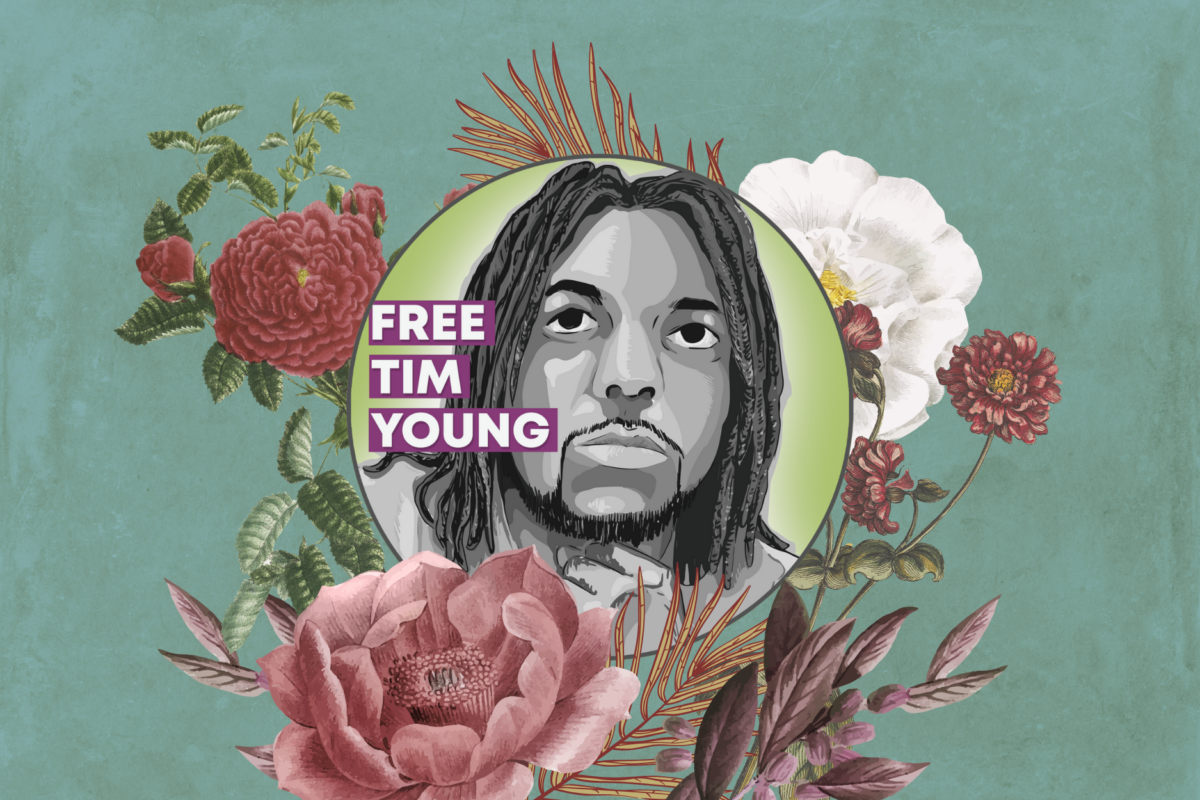
Graphic by Rikki Li (Prism), featuring artwork by the Free Tim Young campaign.
Rikki Li (Prism)

Iwas arrested on Easter Sunday in 1999 while driving through the small town of Lemoore, California. I was held in a local county jail for seven years while fighting my case. In 2006, l was convicted of murders I did not commit, then was promptly hauled off to San Quentin’s notorious death row. Though I have never been a stranger to societal injustices, there’s something about being Black and having 12 non-Black jurors come back with a racially tinged verdict of “GUILTY” that just does something to you. At that moment, my fight to abolish the death penalty began.

My 25-year fight has encompassed publishing stories about capital punishment, sharing my story with the public and working toward my own freedom. After repeated bouts of disappointment and defeat, I sat and I sulked. I wondered if the death penalty’s inequitable pendulum would ever swing back toward the arc of abolition.

As we ended 2024, I felt a shift. On December 23, President Joe Biden commuted the sentences of 37 of the 40 individuals on federal death row to life without a possibility of parole. On December 31, North Carolina’s governor at the time, Roy Cooper, commuted the death sentences of 15 of the 136 people facing execution in his state.

But I’ve come to understand that criminal legal system reforms can shift as easily as wind. President Donald Trump has already signed a sweeping execution order that directs the attorney general to “take all necessary and lawful action” to ensure that states have enough lethal injection drugs to carry out executions.

This month, President Trump’s newly installed attorney general, Pamela Bondi, released memos to the Justice Department to lift the moratorium on federal executions, instruct federal prosecutors to seek the death penalty in certain cases, and assist local prosecutors in pursuing death sentences under state law against the 37 individuals who received commutations under Biden. Bondi then ordered the transfer of a federal prisoner to Oklahoma to be executed.


Trump Issues Executive Order Restoring Federal Death Penalty
Trump falsely claimed that restoring the federal death penalty was necessary in order to deter violent crimes. By Chris Walker , Truthout  January 21, 2025


In this uncertain time, when political opinions on the death penalty are split, my hope is that my home state of California — which has the largest death row population in the United States — can show the rest of the country what is possible by fully abolishing its death penalty.

There’s been some progress. In 2019, Gov. Gavin Newsom signed a moratorium on executions in the state. It was the most hopeful I had been since the guilty verdict had been handed down in my wrongful conviction. It felt like public support, political will and the pulse of the nation were finally aligning toward a long overdue reckoning.

I was so caught up in the belief that justice was on the horizon that I went out on a limb and predicted that the death penalty was on the verge of extinction. But that was far from the truth. In California, confusing law changes and public misinformation have muddied progress.

Last year, for example, I moved to a new prison as the state phased out San Quentin’s death row. It was the result of Proposition 66, which passed in 2016 and allowed for death row prisoners to be relocated across the state. Many Californians mistook the dismantling of death row as the end of the death penalty — but Prop 66 actually streamlines and guts the appellate process with the aim of speeding up executions.

While I’m no longer at San Quentin, my death sentence is alive and well. More than 600 people incarcerated in California prisons are still at risk of execution.

I have witnessed some small slivers of hope. In April 2024, Santa Clara County District Attorney Jeff Rosen moved to change the sentences of more than a dozen prisoners from death into life behind bars with no chance of parole. Alameda County District Attorney Pamela Price also announced that her office was ordered by a federal judge to review 35 death penalty convictions, following the disclosure of prosecutorial misconduct in jury selection. Some cases have moved toward commutations or reduced sentences, according to a November article in The New Yorker.


But we cannot rely on small measures to tackle this massive injustice. Those two examples, as well as the commutations granted by President Biden and North Carolina’s former governor, amount to less than 100 people spared state-sponsored execution. According to the Death Penalty Information Center, around 2,250 prisoners currently face execution in the United States.

Twenty-three states have abolished the death penalty. It would be a momentous achievement if Governor Newsom, a leader in the Democratic Party with potential presidential aspirations, made California next.

I’ll continue to find reasons to hope, like I’ve done for the past 25 years. Last year, a consortium of nationally renowned civil rights organizations, legal organizations and a law firm filed a first-of-its-kind extraordinary writ petition in the Supreme Court of California, challenging the state’s death penalty statute as racially discriminatory and unconstitutional under the equal protection guarantees of the California constitution.

“We urge the Court to address this longstanding injustice and ensure that Black and Brown people are no longer sentenced disproportionately to death,” Lisa Romo, a senior deputy state public defender, said at the time.

I am living that longstanding injustice. My hope is that Newsom will go beyond the moratorium he ordered in 2019, and stand on the same set of unwavering principles as other Democratic leaders who have had the courage to end the death penalty.

This article is licensed under Creative Commons (CC BY-NC-ND 4.0), and you are free to share and republish under the terms of the license.


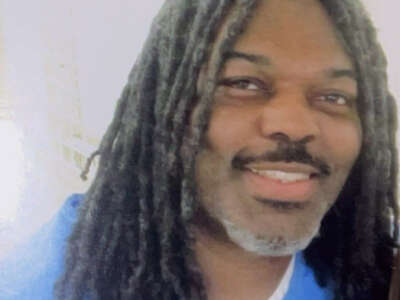
Timothy James Young
Timothy James Young is a poet, writer, editor, abolitionist and wrongfully convicted man, who has been incarcerated in California since 1999. His work has previously been featured in Scalawag Magazine, Prism, Filter Mag, Solitary Watch, and elsewhere. He is also currently studying at Southwestern College. He is also the Solitary Gardener at UC Santa Cruz, a contributor to the EXPOSED Project, a collaborator and exhibited artist at the San José Museum of Art, a collaborator with Reasonable Doubt(s), a participant and client in Making an Exoneree, and a fellow at the Institute of the Arts and Sciences. He has also edited two anthologies of poetry and non-fiction, including Measurements of Growth, published in coordination with the Solitary Gardens project. Learn more about Tim and his work at www.timothyjamesyoung.com or on Instagram: @freetimyoung.


Solar has taken off in red states. Trump’s funding freeze is causing panic

On his first day, the president paused billions of dollars in funding for clean energy projects initiated by Biden


Stephen Starr 
in Columbus, Indiana
Mon 17 Feb 2025 
THE GUARDIAN


Mike Mullett strains to see through sheets of misty rain while driving through working-class neighborhoods of Columbus, a quaint town in southern Indiana.

He’s trying to find the senior center, multi-family homes and rent-assisted properties – more than 530 in total – that he and many other locals hope will receive $4.42m in federal funding for solar electricity projects.

But now that money is at risk.

On 20 January, Donald Trump paused billions of dollars of federal grant funding for clean energy and other projects around the country initiated by the Biden administration’s Green New Deal.

“We’ve been slavishly working on a plan since April 2023 that would provide solar energy to hundreds of households in two low- and moderate-income Columbus neighborhoods,” says Mullett. The project was expected to be rolled out in April, with previously approved funding thought to have been made available by 14 February.

“Unless the Trump administration makes a 180-degree turn on funding, that expectation will obviously not be met.”


Record-breaking growth in renewable energy in US threatened by Trump


The funding is part of the US Environmental Protection Agency’s $7bn Solar for All program, which is meant to help low-income families save money on electricity costs. About $117m was set for solar projects and initiatives in Indiana.

Communities across Indiana, a solidly Republican midwestern state, were set to benefit more than most from the Biden administration’s ambitious clean energy push in what was an ultimately failed effort to win votes in Rust belt states whose voters have abandoned Democratic party politicians in recent decades.

By August 2024, $7.8bn in private investment for a host of clean energy projects including solar and battery production had come to Indiana, spurred in part by the promise of federal grants and local tax-abatement schemes.

But Trump has followed through on his election campaign promise to roll back clean energy initiatives, referring to Biden’s efforts as the “Green New Scam”.


Leading Republicans have backed his move, despite the potential economic risks to states where the president is popular.

“The executive branch of government in our system has the right to evaluate how executive branch agencies are operating,” the Republican House speaker, Mike Johnson, said on 5 February.

On 10 February, a federal judge issued an order for the Trump administration to unfreeze its funding hold.

Indiana isn’t alone in its drive for solar energy.

Solar projects ranging from utility scale to single housing efforts have proved hugely popular in red states. Texas has the second-highest number of installed solar power units, after California, enough to power more than 4.5m homes. Florida follows close behind.

A quarter of a trillion dollars – 80% of the total funding for green energy manufacturing and other initiatives – was to go to projects in Republican-leaning congressional districts across the US.

At 3.4% of its total, Indiana, where Trump won by almost 19 points in November’s presidential election, produces more state electricity from solar than Democrat-leaning states such as Illinois, Washington and New Hampshire, according to one industry organization.


“The $130m in total Solar for All funding awarded for Indiana would transform Indiana’s solar market by allowing more than 10,000 families in low-income communities around the state to directly benefit from the electric bill savings and resilience afforded by local solar,” says Zach Schalk, the Indiana program director at Solar United Neighbors Action, a non-profit that has helped invest $7.1m in solar initiatives in the state.

“It’s really a non-partisan issue if you look at the survey polling across the US. We’ve had elected officials of both parties [in Indiana] sign letters of support. We know that this is a popular program.”

But some question the importance of federal dollars in fueling solar’s growth at the utility scale, and more broadly its ability to meet the enormous demand for electricity.

“I’ve had a number of the solar [utility] companies in and in many instances they are saying that [the tax rebates and other federal funding] are nice, but the industry has matured quite a bit [to the extent] that they still have enough [profit] margin without it,” says Indiana Republican representative Ed Soliday, who has backed laws supporting solar initiatives in the state.

“What’s shaking out is that commercial solar is advancing far more than the rooftop equivalent. You can’t run a manufacturing plant on rooftop solar panels.”

Emails sent to the Indiana Republican party and a state senator representing Columbus asking if party members believed the funding pause could risk solar electricity projects and disrupt business developments were not responded to.

In Columbus, Trump’s move has been demoralizing for Mullett and others who have made a huge effort to secure funding that would see solar electricity infrastructure installed at 320 community households, 204 multi-family households and seven single-family project households.

“Most of us are retirees and volunteers,” he says. “I would say [we’ve spent] 20 hours a week at a minimum; sometimes there were weeks when we were doing 40 to 60 hours a week.”

He says that if the federal funding is lost, private funding that has been committed to help pay for the project would be gone too.

“If the pending litigation in federal district courts must run its course all the way to the US supreme court, the delay in the rollout of the [funding] would certainly be measured in months, perhaps extending even into 2026,” he says.

According to one study, Indiana residents have seen the seventh-highest electricity rate increase in the country. Nearly 83% of its electricity generation is sourced by natural gas or coal plants.

Still, the time and effort Mullet and other community members have invested in the project means they aren’t about to give up. He says the work will continue even as the funding remains in flux.

“Doing this in a way that low-income households can become involved, it’s literally a 50-year-old dream of mine,” he says.

AMERIKA

'Ludicrous': Red states claim they had zero abortions in new 'culture of fear'


REUTERS/Brian Snyder
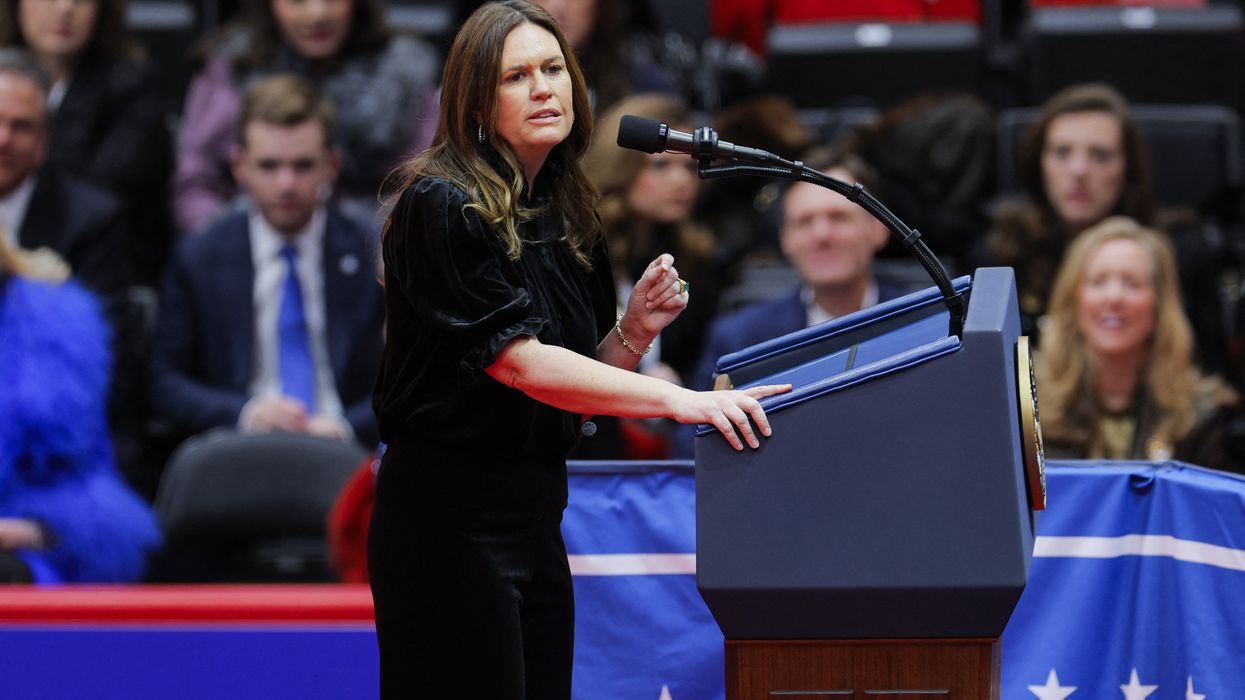
Arkansas Governor Sarah Huckabee Sanders speaks inside Capital One arena on the inauguration day of Donald Trump's second Presidential term, in Washington, U.S. January 20, 2025.

February 13, 2025


In Arkansas, state health officials announced a stunning statistic for 2023: The total number of abortions in the state, where some 1.5 million women live, was zero.

In South Dakota, too, official records show zero abortions that year.

And in Idaho, home to abortion battles that have recently made their way to the U.S. Supreme Court, the official number of recorded abortions was just five.

In nearly a dozen states with total or near-total abortion bans, government officials claimed that zero or very few abortions occurred in 2023, the first full year after the Supreme Court eliminated federal abortion rights.

Those statistics, the most recent available and published in government records, have been celebrated by anti-abortion activists. Medical professionals say such accounts are not only untrue but fundamentally dishonest.

“To say there are no abortions going on in South Dakota is ludicrous,” said Amy Kelley, an OB-GYN in Sioux Falls, South Dakota, citing female patients who have come to her hospital after taking abortion pills or to have medical procedures meant to prevent death or end nonviable pregnancies. “I can think of five off the top of my head that I dealt with,” she said, “and I have 15 partners.”

For some data scientists, these statistics also suggest a troubling trend: the potential politicization of vital statistics.

“It’s so clinically dishonest,” said Ushma Upadhyay, a public health scientist at the University of California-San Francisco, who co-chairs WeCount, an academic research effort that has kept a tally of the number of abortions nationwide since April 2022.

The zeroing out is statistically unlikely, Upadhyay said, and also runs counter to the reality that pregnancy “comes with many risks and in many cases emergency abortion care will be needed.”

“We know they are sometimes necessary to save the pregnant person’s life,” she said, “so I do hope there are abortions occurring in South Dakota.”

State officials reported a sharp decline in the official number of abortions after the Supreme Court overturned Roe v. Wade in June 2022.
Arkansas reported zero abortions in 2023, compared with 1,621 in 2022.
Texas reported 60 in 2023, after reporting 50,783 abortions in the state in 2021.
Idaho reported five in 2023 compared with 1,553 in 2021.
South Dakota, which had severely restricted abortions years ahead of the Dobbs ruling, reported zero in 2023 compared with 192 abortions in 2021.

Anti-abortion politicians and activists have cited these statistics to bolster their claims that their decades-long crusade to end abortion is a success.

“Undoubtedly, many Arkansas pregnant mothers were spared from the lifelong regrets and physical complications abortion can cause and babies are alive today in Arkansas,” Rose Mimms, executive director of Arkansas Right to Life, said in a press statement. “That’s a win-win for them and our state.”

A spokesperson for the Arkansas Department of Health, Ashley Whitlow, said in an email that the department “is not able to track abortions that take place out of the state or outside of a healthcare facility.” State officials, she said, collect data from “in-state providers and facilities for the Induced Abortion data reports as required by Arkansas law.”

WeCount’s tallies of observed telehealth abortions do not appear in the official state numbers. For instance, from April to June 2024 it counted an average of 240 telehealth abortions a month in Arkansas.

Groups that oppose abortion rights acknowledge that state surveillance reports do not tell the full story of abortion care occurring in their states. Mimms, of Arkansas Right to Life, said she would not expect abortions to be reported in the state, since the procedure is illegal except to prevent a patient’s death.

“Women are still seeking out abortions in Arkansas, whether it’s illegally or going out of state for illegal abortion,” Mimms told KFF Health News. “We’re not naive.”

The South Dakota Department of Health “compiles information it receives from health care organizations around the state and reports it accordingly,” Tia Kafka, its marketing and outreach director, said in an email responding to questions about the statistics. Kafka declined to comment on specific questions about abortions being performed in the state or characterizations that South Dakota’s report is flawed.

Kim Floren, who serves as director of the Justice Empowerment Network, which provides funds and practical support to help South Dakota patients receive abortion care, expressed disbelief in the state’s official figures.

“In 2023, we served over 500 patients,” she said. “Most of them were from South Dakota.”

“For better or worse, government data is the official record,” said Ishan Mehta, director for media and democracy at Common Cause, the nonpartisan public interest group. “You are not just reporting data. You are feeding into an ecosystem that is going to have much larger ramifications.”

When there is a mismatch in the data reported by state governments and credible researchers, including WeCount and the Guttmacher Institute, a reproductive health research group that supports abortion rights, state researchers need to dig deeper, Mehta said.

“This is going to create a historical record for archivists and researchers and people who are going to look at the decades-long trend and try to understand how big public policy changes affected maternal health care,” Mehta said. And now, the recordkeepers “don’t seem to be fully thinking through the ramifications of their actions.”

A Culture of Fear

Abortion rights supporters agree that there has been a steep drop in the number of abortions in every state that enacted laws criminalizing abortion. In states with total bans, 63 clinics have stopped providing abortions. And doctors and medical providers face criminal charges for providing or assisting in abortion care in at least a dozen states.

Practitioners find themselves working in a culture of confusion and fear, which could contribute to a hesitancy to report abortions — despite some state efforts to make clear when abortion is allowed.

For instance, South Dakota Department of Health Secretary Melissa Magstadt released a video to clarify when an abortion is legal under the state’s strict ban.

The procedure is legal in South Dakota only when a pregnant woman is facing death. Magstadt said doctors should use “reasonable medical judgment” and “document their thought process.”

Any doctor convicted of performing an unlawful abortion faces up to two years in prison.

In the place of reliable statistics, academic researchers at WeCount use symbols like dashes to indicate they can’t accurately capture the reality on the ground.

“We try to make an effort to make clear that it’s not zero. That’s the approach these departments of health should take,” said WeCount’s Upadhyay, adding that health departments “should acknowledge that abortions are happening in their states but they can’t count them because they have created a culture of fear, a fear of lawsuits, having licenses revoked.”

“Maybe that’s what they should say,” she said, “instead of putting a zero in their reports.”

Mixed Mandates for Abortion Data


For decades, dozens of states have required abortion providers to collect detailed demographic information on the women who have abortions, including race, age, city, and county — and, in some cases, marital status and the reason for ending the pregnancy.

Researchers who compile data on abortion say there can be sound public health reasons for monitoring the statistics surrounding medical care, namely to evaluate the impact of policy changes. That has become particularly important in the wake of the Supreme Court’s 2022 Dobbs decision, which ended the federal right to an abortion and opened the door to laws in Republican-led states restricting and sometimes outlawing abortion care.

Isaac Maddow-Zimet, a Guttmacher data scientist, said data collection has been used by abortion opponents to overburden clinics with paperwork and force patients to answer intrusive questions. “It’s part of a pretty long history of those tools being used to stigmatize abortion,” he said.

In South Dakota, clinic staff members were required to report the weight of the contents of the uterus, including the woman’s blood, a requirement that had no medical purpose and had the effect of exaggerating the weight of pregnancy tissue, said Floren, who worked at a clinic that provided abortion care before the state’s ban.

“If it was a procedural abortion, you had to weigh everything that came out and write that down on the report,” Floren said.

The Centers for Disease Control and Prevention does not mandate abortion reporting, and some Democratic-led states, including California, do not require clinics or health care providers to collect data. Each year, the CDC requests abortion data from the central health agencies for every state, the District of Columbia, and New York City, and these states and jurisdictions voluntarily report aggregated data for inclusion in the CDC’s annual “Abortion Surveillance” report.

In states that mandate public abortion tracking, hospitals, clinics, and physicians report the number of abortions to state health departments in what are typically called “induced termination of pregnancy” reports, or ITOPs.

Before Dobbs, such reports recorded procedural and medication abortions. But following the elimination of federal abortion rights, clinics shuttered in states with criminal abortion bans. More patients began accessing abortion medication through online organizations, including Aid Access, that do not fall under mandatory state reporting laws.

At least six states have enacted what are called “shield laws” to protect providers who send pills to patients in states with abortion bans. That includes New York, where Linda Prine, a family physician employed by Aid Access, prescribes and sends abortion pills to patients across the country.

Asked about states reporting zero or very few abortions in 2023, Prine said she was certain those statistics were wrong. Texas, for example, reported 50,783 abortions in the state in 2021. Now the state reports on average five a month. WeCount reported an average of 2,800 telehealth abortions a month in Texas from April to June 2024.

“In 2023, Aid Access absolutely mailed pills to all three states in question — South Dakota, Arkansas, and Texas,” Prine said.

Texas Attorney General Ken Paxton filed a lawsuit in January against a New York-based physician, Maggie Carpenter, co-founder of the Abortion Coalition for Telemedicine, for prescribing abortion pills to a Texas patient in violation of Texas’ near-total abortion ban. It’s the first legal challenge to New York’s shield law and threatens to derail access to medication abortion.

Still, some state officials in states with abortion bans have sought to choke off the supply of medication that induces abortion. In May, Arkansas Attorney General Tim Griffin wrote cease and desist letters to Aid Access in the Netherlands and Choices Women’s Medical Center in New York City, stating that “abortion pills may not legally be shipped to Arkansas” and accusing the medical organizations of potentially “false, deceptive, and unconscionable trade practices” that carry up to $10,000 per violation.

Good-government groups like Common Cause say that the dangers of officials relying on misleading statistics are myriad, including a disintegration of public trust as well as ill-informed legislation.

These concerns have been heightened by misinformation surrounding health care, including an entrenched and vocal anti-vaccine movement and the objections of some conservative politicians to mandates related to covid-19, including masks, physical distancing, and school and business closures.

“If the state is not going to put in a little more than the bare minimum to just find out if their data is accurate or not,” Mehta said, “we are in a very dangerous place.”


KFF Health News is a national newsroom that produces in-depth journalism about health issues and is one of the core operating programs at KFF—an independent source of health policy research, polling, and journalism. Learn more about KFF.

This article first appeared on KFF Health News and is republished here under a Creative Commons license

.

'Republican Abortion Bans Kill Women': Maternal Sepsis Rates Soar in Texas

"It is kind of mind-blowing that even before the bans researchers barely looked into complications of pregnancy loss in hospitals," said one expert.


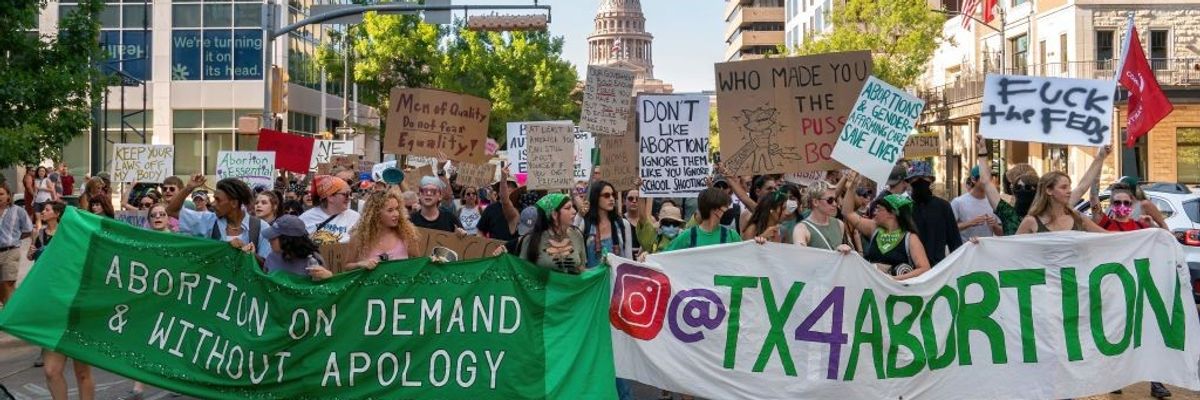
Abortion rights demonstrators march near the Texas State Capitol in Austin on June 25, 2022.
(Photo: Suzanne Cordeiro/AFP via Getty Images)

Brett Wilkins
Feb 20, 2025
COMMON DREAMS

"This is exactly what we predicted would happen and exactly what we were afraid would happen."

That's what Dr. Lorie Harper, a maternal-fetal medicine specialist in Austin, said after reviewing the data behind a ProPublica analysis published Thursday revealing that, since Texas banned abortion in 2021, the rate of sepsis soared by more than 50% for women hospitalized in the state when they lost their pregnancies in the second trimester.

In the years immediately preceding Texas' abortion ban, the rate of sepsis—a life-threatening condition caused by infection—for women hospitalized in the second trimester of pregnancy held relatively steady around 3%. Since the ban, the sepsis rate for such women has shot up to nearly 5%.


"After the state banned abortion, dozens more pregnant and postpartum women died in Texas hospitals than had in pre-pandemic years, which ProPublica used as a baseline to avoid Covid-19-related distortions," states the report by Lizzie Presser, Andrea Suozzo, Sophie Chou, and Kavitha Surana.


The analysis notes that "the standard of care for miscarrying patients in the second trimester is to offer to empty the uterus," which can lower the risk of infection and, by extension, sepsis. However, some hospitals don't allow doctors to perform the potentially lifesaving procedure until after a fetal heartbeat stops, or until they find a life-threatening complication.

That's because under Texas' misnomered "Heartbeat Law," pregnant people who have abortions cannot be penalized, but anyone who performs or aids in the procurement of the procedure faces as many as 99 years in prison, up to a $100,00 fine, and the possible loss of their professional license.

Texas empowers private individuals to sue anyone who "knowingly engages in conduct that aids or abets the performance or inducement of an abortion" after the sixth week of pregnancy, a period before which many people even know they are pregnant. Plaintiffs who win in court are entitled to a reward of $10,000 plus costs and attorneys' fees.

Although the law contains an exception for "a life-threatening physical condition aggravated by, caused by, or arising from a pregnancy," the authors of the ProPublica analysis noted that "the definition of what constitutes an emergency has been subject to confusion and debate."

In short, healthcare providers fear running afoul of the ambiguous law. This has resulted in deadly and life-threatening delays in care.

As the report highlights:
Forced to wait 40 hours as her dying fetus pressed against her cervix, Josseli Barnica risked a dangerous infection. Doctors didn't induce labor until her fetus no longer had a heartbeat.

Physicians waited, too, as Nevaeh Crain's organs failed. Before rushing the pregnant teenager to the operating room, they ran an extra test to confirm her fetus had expired.

Both women had hoped to carry their pregnancies to term, both suffered miscarriages, and both died.

"It's black and white in the law, but it's very vague when you're in the moment," Dr. Tony Ogburn, an OB-GYN in San Antonio, told ProPublica.

Republican lawmakers who helped write Texas' law have recently said they're open to revisions aimed at protecting pregnant peoples' lives in light of the harms reported by ProPublica and others. Last month, Republican Texas Lt. Gov. Dan Patrick said that "I do think we need to clarify any language so that doctors are not in fear of being penalized if they think the life of the mother is at risk."

However, it is uncertain how or when the law might be amended. Meanwhile, deaths attributed to abortion bans have also been reported—and reportedly covered up—in other states.

"It is kind of mind-blowing," perinatal epidemiologist Alison Gemmill told ProPublica, "that even before the bans researchers barely looked into complications of pregnancy loss in hospitals."


'Intimidate and humiliate': MLK family fears what Trump will do with 'secret' FBI records
(Wikimedia Commons)

February 15, 2025
ALTERNET

Three days into his second term, President Donald Trump ordered the release and declassification of FBI files on three historic figures who were assassinated during the 1960s: Dr. Martin Luther King Jr., President John F. Kennedy, and Sen. Robert F. Kennedy Jr. (D-Massachusetts). A member of Trump's administration is related to two of the three: anti-vaxxer Robert F. Kennedy Jr., now director of the U.S. Department of Health and Human Services (HHS), is JFK's nephew and the son of RFK Sr.

According to Axios reporters Marc Caputo and Russell Contreras, MLK's family "is concerned that" Trump's order "could revive the FBI's attempts to discredit him."

Caputo and Contreras, in an article published on February 15, report, "The family requested a sneak preview of the records prior to their release. Trump declined, a White House official said, but not out of animus toward the family. Why it matters: The brewing controversy pits Trump's determination to release documents the government has kept secret for more than a half-century against the family's lingering pain over how J. Edgar Hoover's FBI spied on King and tried to intimidate and humiliate him."

The Axios reporters add, "Last month, Trump ordered the release of all records the U.S. government still holds."

Caputo and Contreras note that although the FBI "released documents about King's private life previously," the "new disclosure could include more documents detailing alleged embarrassing interactions in hotel rooms, private homes and even King's house."

A friend of the King family, quoted anonymously, told Axios, "We know J. Edgar Hoover tried to destroy Dr. King's legacy, and the family doesn't want that effort to prevail."

Another source voiced the family's "deep concerns," telling Axios, "They know the right wing wants to smear Dr. King, and one way to do it is by putting these smears in the public under the guise of transparency. If there are assassination records, release those. But smears are not assassination records."

In a January 24 post on Instagram, members of the King family wrote, "The assassination of our father is a deeply personal family loss that we have endured over the last 56 years. We hope to be provided the opportunity to review the files as a family prior to its public release."

Read the full Axios article at this link.

'Un-Christian': Student 'nearly ruined' by evangelical education sounds alarm on public school trend
February 13, 2025
ALTERNET

The religious right is pushing Christianity into schools, and that can have serious repercussions -- journalist Josiah Hesse knows firsthand. In a piece at the Guardian published Wednesday, Hesse writes that “Trump’s promise to ‘bring back prayer to our schools,’ shut down the Department of Education and embrace ‘school choice’ fulfills an evangelical wishlist I’d heard about throughout my childhood.”

He attended Christian schools growing up. “The longer I stayed at the school,” he writes of the evangelical school he attended junior year, “the deeper I fell into a malaise of depression and self-harm. In addition to the stress of bullies, I had trouble getting my mind around the logic of these classes, and knew that if I didn’t understand it, and believe it, eternal torture awaited me.”

Besides, “the apocalypse was at hand, so who had time for algebra?”

He switched to public school for his senior year, where his credits didn’t transfer because the Christian school was not accredited by the government.

“Twenty-five years later,” Hesse writes, “Donald Trump and the Christian nationalist movement that put him in the White House (twice) are seeking to transform public education into something similar to what I was reared on, where science, history and even economics are taught through an evangelical conservative lens, while prayer and Bible reading are foundations of the curriculum.”

“These efforts test the boundaries of the constitution’s establishment clause, reversing a century of civil rights victories in public schools, and have the potential to fundamentally alter the way American children learn – and what they learn about,” he writes.

He explains that the indoctrination comes in two ways: putting Christian rhetoric into public schools, and using tax dollars to contribute to private religious schools through vouchers that cover tuition. A 2022 Supreme Court ruling allowed private religious schools to receive government funding.

Hesse points out that the top education official in Oklahoma, for example, has mandated that those teaching grades 5-12 incorporate the Bible into their classes. Louisiana passed a law that classrooms must display the Ten Commandments, although a judge blocked it. Back in 2012, Florida considered a constitutional amendment that would allow the state to fund religious schools, which is worth noting because it was supported by Pam Bondi, now Trump’s attorney general.

“Attempting to indoctrinate public school students into Christianity is not only unconstitutional and un-American, it’s deeply un-Christian,” Democratic Texas state representative James Talarico, a former public school teacher, told the Guardian. He has been fighting an optional new curriculum that would teach Bible stories in elementary schools. What’s more, the Texas voucher system can fund homeschool students. “So we taxpayers will be funding homeschool programs that teach students the earth is flat,” he said.

“Talarico views Texas’s efforts to create a voucher program for private Christian schools as not only bad for Jewish, Muslim and LGBTQ+ students, but also as stealing from the poor to serve the rich,” Hesse writes. A low-income student would not be able to afford $20,000 tuition with an $8,000 voucher, but a wealthy one could.

As for Hesse, he was able to get his GED. “Colleges and universities, I was told, were even worse than public schools in their liberal indoctrination, so I drifted through a decade of low-wage jobs in factories, restaurants and construction sites, as my fellow students who’d graduated from public school, then college, ascended the socioeconomic ladder.” Eventually, he began teaching himself, leading to a career in journalism.

“I have often felt a deep sorrow for students enduring the bubble of private Christian education – particularly the poor and queer ones. Now it seems that compassion must extend to those in public schools as well,” he writes.
White House names Scientology mega-donor to Kennedy Center board


Tony Ortega
Feb 14, 2025
 Underground Bunker 

[Trish makes all-American art!]

After announcing Wednesday that he would be the new chairman of the John F. Kennedy Center, President Donald Trump yesterday added the names of several other members to the Center’s Board of Trustees.

The list included second lady Usha Vance; Trump’s chief of staff Susie Wiles and her mother, Cheri Summerall; deputy chief of staff Dan Scavino; Allison Lutnick, the wife of the prospective Commerce Secretary; as well as Mindy Levine and Dana Blumberg, wives of the president of the New York Yankees and owner of the New England Patriots, as well as several others.

But the name that made us do a double-take was billionaire Trish Duggan, Scientology’s wealthiest donor.

We were just telling you on Tuesday about Trish being a director of the America First Policy Institute, a dark-money organization that Politico and the New York Times said had quietly become more important than the Heritage Foundation for helping to plan the strategy of the second Trump administration.

The AFPI’s tax records suggested that Duggan is tight with three of Trump’s cabinet picks (Linda McMahon at Education, Brooke Rollins at Agriculture, and Pam Bondi at Justice), and her selection to the Kennedy board only emphasizes just how close she is with the president after becoming, at $5 million, one of the biggest individual funders to his 2024 campaign.

We’ve written for years about Trish and her former husband Bob Duggan, who became billionaires after an investment in a pharmaceutical firm exploded in value thanks to a promising new cancer drug. They split up in 2017, but Trish has continued to be the number one donor in Scientology, called “Patron of Legend” by the church’s leader, David Miscavige. To give you a sense of the kind of money she’s still forking over, we recently found tax records that showed she had given $18.6 million to the IAS, Scientology’s membership organization, in only a single year, 2022.

Trish has a museum dedicated to herself in St. Petersburg, Florida, which shows off her glass art. And now that she’s on the Kennedy board, she no doubt will have some great suggestions for the legendary performing arts center in Washington DC.

Here are some Scientologist performers who might show up on the schedule:

Mark Isham (trumpet) and Stanley Clarke (bass) are legitimately celebrated jazz musicians who happen to be longtime Scientologists, and who have both seemed to step up their involvement in church events in recent years.

Stanley’s already scheduled to play at the Kennedy Center this May, and Mark’s film music has been performed there in the past.

Beck Hansen announced his departure from Scientology in 2019, but his longtime bassist Justin Meldal-Johnsen is still in. And what is it about bass players? Billy Sheehan is still quite outspoken about his involvement in the church.

With Scientologist singer Emily Armstrong now fronting the band, could it be time for a Linkin Park jam at the Kennedy Center? And wouldn’t David Miscavige be thrilled to see Trish rehabilitate one of his personal favorites, Broadway singer and convicted child molester James Barbour, with a triumphant appearance at the DC venue?

As for actors, the usual gang — Tom Cruise, John Travolta, Elisabeth Moss, Vonni Ribisi, Erika Christensen, Juliette Lewis — aren’t really known for performing on stage, but perhaps Trish could get them cast in something.

Well, the mind reels. But once again, the main takeaway for us is that we haven’t seen a White House with such friendly connections to Scientology since Bill Clinton was being hustled by Travolta and Cruise in the mid-1990s.

We’re really interested to see what David Miscavige does to try and take advantage of this fertile field that seems to lie before him.


Want to help?


Please consider joining the Underground Bunker as a paid subscriber. Your $7 a month will go a long way to helping this news project stay independent, and you’ll get access to our special material for subscribers. Or, you can support the Underground Bunker with a Paypal contribution to bunkerfund@tonyortega.org, an account administered by the Bunker’s attorney, Scott Pilutik. And by request, this is our Venmo link, and for Zelle, please use (tonyo94 AT gmail). E-mail tips to tonyo94@gmail.com. Find us at Threads: tony.ortega.1044 and Bluesky: @tonyortega.bsky.social

For the full picture of what’s happening today in the world of Scientology, please join the conversation at tonyortega.org, where we’ve been reporting daily on David Miscavige’s cabal since 2012. There you’ll find additional stories, and our popular regular daily features: