Saturday, April 12, 2025

UK

Gordon Brown calls for ‘economic coalition of the willing’ and closer EU ties to take on Trump’s tariffs

10 April, 2025 
Left Foot Forward


Like-minded global leaders who believe that, in an interdependent world, we have to coordinate economic policies across continents if we are to safeguard jobs and living standards.”  


TweetShareWhatsAppMail


Former Prime Minister Gordon Brown has called for an ‘economic coalition of the willing’ and closer EU ties to take on Trump’s tariffs, which he said threaten both the economic and geopolitical orders.

The President’s decision to engage in a trade war and impose sweeping tariffs has resulted in market turmoil and sell-offs sparking trillions in losses across the world.

Yesterday, in a major U-turn, Trump announced a 90-day pause for countries hit by higher US tariffs, however he said he was authorising a universal “lowered reciprocal tariff of 10%” as negotiations continued. Despite his policy reversal, the trade war with China continued too. Trump increased tariffs on goods from China to 125%, accusing Beijing of a “lack of respect” after it retaliated by saying it would impose tariffs of 84% on US imports.

Amid an upending of global trade policy, Brown, writing in the Guardian, has called for a coalition of the willing to take on Trump’s tariffs: “Like-minded global leaders who believe that, in an interdependent world, we have to coordinate economic policies across continents if we are to safeguard jobs and living standards.”

Reflecting on lessons learnt during the 2008 financial crisis, Brown said that ‘extended credit to exporting and importing firms was central to the global response’.

Alongside calling for a coordinated response to tackle the problems posed by the tariffs, Brown also called for the UK to work more closely with the EU, adding: “Indeed, the changes under way in Europe make possible a collaboration that is even more extensive than removing post-Brexit trade barriers. There has always been a tension between Europe’s desire to lead, which makes it bold, and its desire to stay united, which makes it timid, but today Europe has lower inflation than the US, and it can reduce interest rates faster.”

In a stinging criticism of Trump, Brown wrote that the “world is being brought to its knees by one economy, outside which live 96% of the population, who produce 84% of the world’s manufactured goods”.

He called for a coordinated effort to reduce interest rates as well as mobilising the World Bank and International Monetary Fund to ‘protect poorer nations where their industries could be decimated by tariffs’.


Trump’s economics slammed as ‘a load of old b*llocks’ by Andrew Neil

7 April, 2025


Veteran journalist and broadcaster Andrew Neil has slammed President Trump’s economic policies as a ‘load of old b*llocks’, as world leaders scramble to contain the impact of tariffs.

The U.S. President recently imposed a wave of tariffs, including a 10% “baseline” tariff on all imports into the US and a 25% tariff on car imports. The UK has been hit with a 10% baseline tariff.

60 countries will be hit with higher rates of up to 50%, including Cambodia, Vietnam, Malaysia and Bangladesh. Countries in the European Union face a 20% tariff.

Trump thinks tariffs are a way to boost the economy and a means to protect American workers while reviving manufacturing, despite the evidence showing that it will only serve to hike prices for US consumers while also adversely affecting the U.S. economy.

With other countries retaliating by imposing tariffs on US imports, China announcing retaliatory tariffs of 34%, fears have grown of a trade war with markets plummeting.

In the immediate aftermath of Trump’s announcement of tariffs, $2.5 trillion was wiped off the S&P index, with financial experts predicting a rise in inflation and consumer goods.

Neil told Times Radio that Trump’s economics was “a load of old b*llocks”.

He said: “Let me just tell you, in the last fifty years, this trading system that has done America so badly, in the last 50 years, real per capita incomes in America have risen from $28,000 on average to $70,000 on average that is what real incomes in America have done under this trading system that has supposedly done America so badly.

“And over the past four decades, America’s share of global GDP has stayed at 25% while Europe’s has collapsed, Britain’s has collapsed, China’s has risen, other emerging markets, like Singapore, Japan, Philippines have all risen, while America has held on to a quarter of global GDP over the past four decades.

“Now in what possible universe could you regard that system as being a bad system for America, particularly since America wrote all the rules for that system, no wonder it did well, it designed the rules.”

Neil went on to add: “We’re dealing with somebody in the Oval Office who is totally divorced from economic reality.”

Basit Mahmood is editor of Left Foot Forward
 
Anti-Elon Musk group invites Londoners to smash up Tesla in protest stunt

10 April, 2025


London vs Musk: 'a one of a kind art piece where you can - safely and legally - smash the utter f**k out of a Tesla.'


Campaign group Everyone Hates Elon has called on Londoners to join a protest stunt today, where they will smash up a Tesla to raise money for charity.

Titled ‘London vs Musk,’ the event will allow protestors to create “a one of a kind art piece where you can – safely and legally – smash the utter f**k out of a Tesla”.

The art installation will later be auctioned off to raise funds for food banks.

The group says: “There are more food banks than ever before, and more billionaires than ever before – and these are connected”.

They said the protest will allow ordinary people to “become artists” and “create a symbol of resistance to billionaire influence”.

An Instagram post shared by the group yesterday afternoon urged: “London. Tomorrow. Sign up now link in bio.”

Since Donald Trump appointed Musk to lead the Department of Government Efficiency, he has faced huge backlash for decimating government departments and slashing social security. In protest, people have attacked Tesla cars and dealerships and boycotted the brand.

The Tesla to be smashed is already destined for scrap. The group also emphasised that they do not endorse any unauthorised damage to other vehicles.

Known for its posters mocking the tech billionaire, Everyone Hates Elon has displayed ads across the London Underground and bus stops. In one, they have renamed Tesla to ‘Swasticar,’ with an image of Musk doing a Nazi salute at Trump’s inauguration.

Another ad simply reads: “Elon Musk is a bellend, signed the UK.”


GB News owner invested heavily in Elon Musk’s Tesla before US election

7 April, 2025 

Meanwhile, he also propagated pro-Musk content through his right-wing media outlets


GB News owner and hedge fund boss Paul Marshall made a huge investment in Tesla shares before the US Presidential Election last year, tripling his holdings.

DeSmog has reported that in September 2024, Marshall’s hedge fund, Marshall Wace dramatically increased its stake in Elon Musk’s electric vehicle company Tesla from 1.2 million shares in June to 3.8 million.

During this period, media outlets owned by Marshall were regularly sharing content praising Musk.

Appearing on GB News on 6 August last year, former Sun editor Kelvin MacKenzie said that if he needed open heart surgery, he would rather Musk perform his operation than an NHS doctor, who may be on strike.

Again on GB News on 17 December, Nigel Farage claimed Musk is “one of the most admired people in the world” and “a gigantic inspirational figure”.

On the same day, Suella Braverman described Musk as “one of the greatest innovators we’ve seen”.

The Spectator, which Marshall bought for £100 million in September 2024, also shared gushing content about Musk.

On 15 October, under the headline “Thank God for Elon Musk”, scriptwriter Gareth Roberts referred to the “the swoop and grandeur of SpaceX”, Musk’s space exploration firm, while dismissing Ed Miliband’s Great British Energy as “petty, noodling nonsense”.

Between September and December last year, Tesla share prices more than doubled, boosting the value of Marshall’s hedge fund shares by over $500 million during that period.

Tesla shares have since fallen back to around the same price as in September last year. It remains unclear whether Marshall sold some or all of his hedge fund’s shares in the company in the meantime.

After spending more than $277 million (£214 million) on Donald Trump’s campaign and becoming the head of his Department of Government Efficiency, Musk has faced a huge backlash for decimating government departments and slashing social security.

Olivia Barber is a reporter at Left Foot Forward

UK

Penny Mordaunt takes top job advising big tobacco firm


The former Tory MP and leadership contender abstained from a smoking ban vote last Apri

l

Former Tory MP and ex-minister Penny Mordaunt has taken a top job advising tobacco company British American Tobacco on ‘harm reduction’.

A document published today by the Advisory Committee on Business Appointments (ACOBA) raises no objections to Mordaunt taking the job, but stipulates that she must not lobby the government for two years.

The document notes that “British American Tobacco has a significant interest in government policy and regulation and has resources focussed on influencing government decisions – for example lobbying for a reduction in taxes for cigarettes, legislation on vaping and the prevention of counterfeit goods.”

However, ACOBA said that Mordaunt did not meet or make policy with British American Tobacco while in office.

Last April, Mordaunt abstained from voting on Rishi Sunak’s policy to make it illegal for anyone born in 2009 or later to buy tobacco products in the UK.

The legislation would have effectively banned smoking for future generations by raising the legal age every year, but was dropped by Sunak before the general election amid a backlash from the tobacco industry.

Hazel Cheeseman, chief executive of Action on Smoking and Health, told the Times that while British American Tobacco “talks up its approach to ‘harm reduction’, in countries where it can promote its cigarettes it does.

“The British public do not trust tobacco companies and I doubt they will be impressed by a former politician providing it highly-paid advice.”

Olivia Barber is a reporter at Left Foot Forward

UK

In the Refusing to recognise rural deprivation is holding back my constituency and areas like it
Caroline Voaden 
8, April, 2025 


Caroline Voaden MP calls for increased funding for rural areas


Caroline Voaden is the Liberal Democrat MP for South Devon

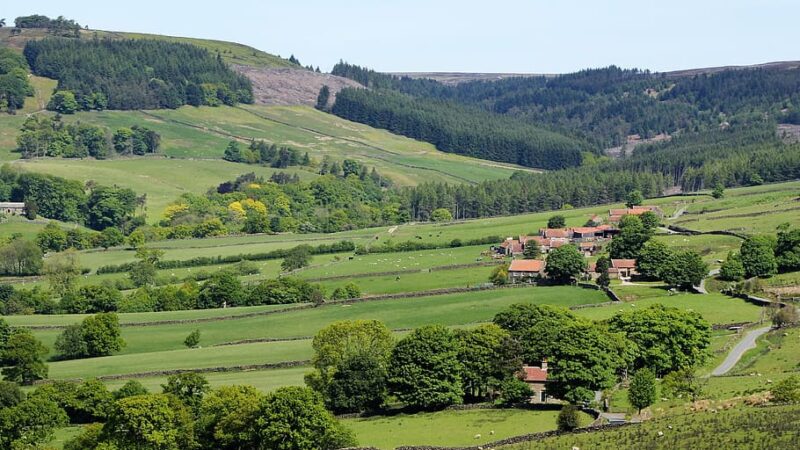
Think of the countryside and what do you see? Rolling verdant fields dotted with sheep. Narrow lanes. Tractors. Farms. Hills offering expansive views uninterrupted by anything man made.

What I’m guessing you won’t see are the hidden pockets of deep deprivation, and you won’t see them in the data, either.

The Index of Multiple Deprivation, which is used to capture need for core Local Authority services, is urban-centric and woefully out of date. All it takes is one or two very wealthy residents to skew the figures for an entire settlement.

So, the utopic vision for the countryside persists. The fields. The greenery. The space. The simple life.

But here’s the truth: deprivation is not only present in the countryside, it’s pernicious, and it’s growing.

A lot of this can be traced back to austerity. Back then, public services were slashed, shops forced to shut, and school budgets were cut.

These days in rural areas if you don’t have a car, you can’t get to work. Getting to and from the Job Centre can take an entire day. Socialising and part-time jobs for young people are made impossible where bus services don’t exist. And while the employment rate may be lower than in the cities, people often earn less, and many are self-employed.

In my constituency of South Devon, the picture is much the same. Today, there are only two banks in South Devon left open in an area of around 450 square miles. Many post offices are closing too, despite providing an essential service, particularly for older people who don’t drive and need postage and banking services.

In many places, bus services don’t exist, and taxis are prohibitively expensive – it can cost £150 for some in South Devon to do a round trip to their nearest hospital. And the proportion of rural premises with access to gigabit-capable broadband is nearly half that of urban areas.

All this before we get to the toughest challenge of all: housing.

House price growth in rural areas is outstripping towns and cities. Between December 2018 and December 2023, average house prices in predominantly rural areas increased by 22%, compared to 17% in urban ones. And, as a result, the average house price in South Devon is now 14x the average salary at £425,000.

The Government is clearly alive to this crisis, but its solution for it, to build 1.5m new homes, is a blunt and ineffective approach. Currently, Labour has hired 6 volume housebuilders to fulfil its ambition, but they’ve offered no incentives for them to prioritise social housing.

So, even if the Government can build all the homes they’ve promised, there’s no guarantee housing will become any cheaper. In fact, one study suggested building 300,000 homes every year for the next two decades would bring prices down by just 10%.

That’s a terrible result for the countryside because, here, the housing crisis isn’t just impacting people who want to get on the property ladder, it’s crippling our local services, too.

Because they bought their homes before housing became so expensive, locals who can afford to stay in villages are often older. Their children must move somewhere more affordable, and retirees move in.

The net result is an ageing population which is more reliant on the very services we are struggling to staff. Since my election, I’ve visited schools, hospitals, hospices, and fire stations, and every single one told me they are struggling to recruit. People cannot afford to live here, and our public services are struggling to cope as a result.

You’d hope all this is obvious enough for the Government to act, but, if you look at the distribution of funding, it appears not. Spending power in predominantly urban areas currently stands at £573.51 per head, compared to £407.32 in rural ones.

Urban councils get a huge 41% more per head than rural ones, despite council tax being on average 20% higher in rural areas.

This imbalance was a trend started by the Conservatives, but Labour has picked up from where they left off.

In March, the Government announced its Plan for Neighbourhoods Scheme, i.e. its version of ‘levelling up’. Under the Scheme, 75 areas across the UK will receive up to £20m to support high street regeneration, local services, and public spaces.

I can think of more than one town in the South West which could hugely benefit from this, but unfortunately, the Government only selected one town from the entire region, compared to 13 in the North West.

I recently led a Westminster Hall debate on Government support for rural communities, where I asked the Minister for Rural Affairs to reconsider this allocation and to reverse cuts in rural funding and service delivery grants.

Having moved to Devon 18 years ago, it’s become clear to me how deep the rural/urban divide is. Closing it would benefit the entire country. A recent study claimed levelling up town and country policy could generate an extra £43bn/year in England alone. If this Government is truly committed to growth, I’m sure it would want to unlock these extra funds.


Source: ARC2020

Where to find heritage grains likely to thrive in a Portuguese climate and soil conditions? This was the question asked by José da Camara Ruas, when he reached out to Seeds4All a year ago. A farmer in training at the Kalo Organic Agriculture College of Denmark, José told us about the farming project he had just started with his partner and friend, Pedro Cabral, in the Alentejo region in south Portugal.

Back then, their vision already integrated a high level of diversification—from ancient grains and species mixtures to agroforestry and the introduction of animals. Seeking to explore the specific challenges involved in setting up such a model, particularly in terms of access to land, seeds, technologies, and subsidies, we invited José for an interview in March 2025. This article looks at his initial feedback on the evolution of the project on “Regenerative Heritage Grains – From Soil to Bread”.

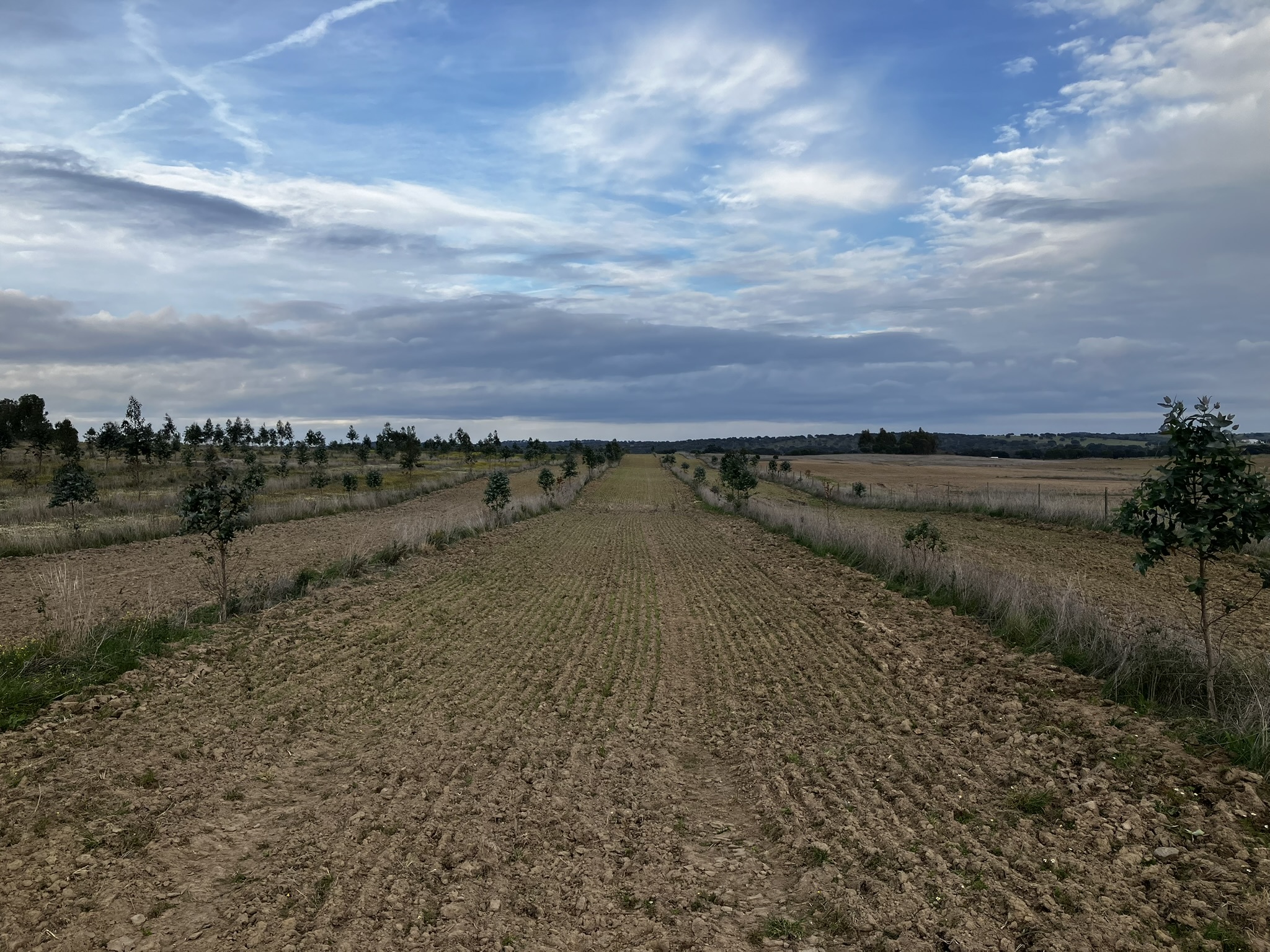
Cereal rows and tree lines in Alentejo, Portugal. Photo: José da Camara Ruas

From philosophy to agroecology

José da Camara Ruas grew up in the countryside near Évora, where his mother worked as a farmer cultivating nut trees. In high school, he studied music before pursuing a bachelor’s and master’s degree in philosophy and literature. After starting his professional career in Lisbon, José shifted his focus towards business and innovation.

As José’s career evolved, his growing interest in food production, and the role of food in health led him to take a course on syntropic agroforestry. His journey further developed when he met someone involved in the Kalo Organic Agriculture College of Denmark, where he started to study, while gaining hands-on experience through internships.

José’s first internship was with John Letts, a Canadian farmer based in England, renowned for his use of diverse heritage and ancient grain varieties, grown together as a population and undersown with white clover. Lett’s system prompted José to address a critical situation in Portugal, where 97% of cereals are imported, mainly from Spain, France and Ukraine.

This heavy reliance on imports makes it challenging to access locally produced flours made from heritage grains, despite a growing demand from artisan bakers. This is how José and Pedro’s project was born, aiming at producing high quality wheat for flavourful and nutritious products, from bread to pasta.

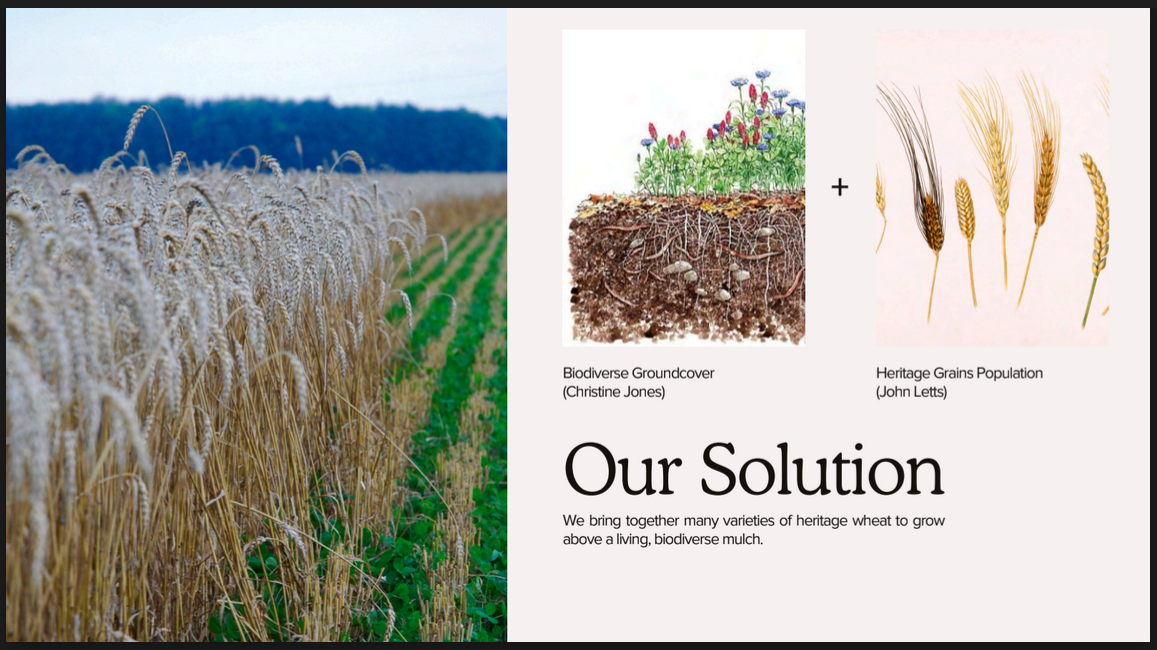
Excerpt from the project presentation file ‘Regenerative Heritage Grains—From Soil to Bread’

Importance of ancient varieties in microbial interactions

With nothing but an Erasmus grant invested in purchasing raw materials, José and Pedro embarked on their first experiment. In the winter of 2023, they sowed 2 tons of heritage seeds sourced from a neighbouring farmer, Afonso Fontoura, on approximately 8 hectares, replicating John Letts’ practices.

In the meantime, José discovered the work of Harriet Mella on the importance of feeding the seed microbiome so it can thrive and increasingly enrich the soil in return. According to Mella, heritage seeds have a greater capacity than hybrids to incorporate and interact with microorganisms due to their richer genetic diversity and enhanced adaptability.

Eager to experiment with a new seed inoculation method to boost their microbiome, José set out to find additional heritage varieties for broader diversity in his trials. He speaks about the challenges of limited diversity in the official market and the lack of information about alternatives available elsewhere:

“It takes time and patience because there isn’t really a store where you can find highly diverse collections of seeds sold in large quantities. You have to conduct extensive research and speak to many people, sometimes in different languages. It was truly an odyssey to find my grains. But they’re in the field now.”

As José points out, seed banks are crucial for preserving heritage but limited in supporting the initiation of farming projects due to the small quantities of seeds they offer.

“It’s only thanks to farmers and millers that we were able to access seeds,” he adds.

2024 sowing of several varieties of wheat in rows, separated by tree lines, at the Herdade do Freixo do Meio. Photo: José da Camara Ruas

“The more plant families diversity, the better the microbiome”

In the winter of 2024, José and Pedro sowed 10 varieties of ancient wheat in separate rows across 17 hectares of land lent by their friend Alfredo Sendim of Herdade do Freixo do Meio, as well as 5 additional hectares provided by a neighboring farmer, Herberto Brunk. Before sowing, they inoculated the seeds with microorganisms by placing them in a cement mixer along with natural compost, molasses, biochar, seaweed extract, and minerals.

“What we essentially did was provide the seeds with what they needed to truly begin interacting with their environment, and most importantly, with the soil.”

Determined to develop the most ecologically and economically coherent practices possible—allowing productive activity while regenerating the ecosystems that support it—José continued to deepen his knowledge, particularly in soil science as a key element in biodiverse farming.

Referring back to Christine Jones‘ work, he explains that the benefits of diversity for soil health become truly evident once you reach seven plant families in the field. In addition to the cereal, companion plants from Solanaceae, Polygonaceae, or Cucurbitaceae families will release a significant amount of carbon into the soil, particularly simple sugar carbon, which is easily digestible by microorganisms.

Sown roughly at the same time as the cereals, the companion crops are cut before reaching their reproductive stage, ensuring that all the carbon they would have directed towards fruit production stays in the soil. This method allows for continuous soil nourishment while promoting deeper root growth as the plants search for water. In early summer, the cereals are harvested, while the companion crops remain green, continuing to protect the soil as cover crops.

“This process is a highly effective solution for breaking soil compaction and improving its structure, reaching far beyond the shallow 15 cm where most farming occurs globally,”

says José, explaining that this method, along with other new knowledge he has acquired, will be implemented in the next sowing season.

Excerpt from the project presentation file ‘Regenerative Heritage Grains—From Soil to Bread’

Ongoing quest for access to seeds… and knowledge

In two years of experimentation, José and Pedro have already encountered significant challenges that are specific to diversification.

First of all, access to seeds: not only ancient cereal varieties, but also companion crops.

In southern Portugal, cereals must be sown in winter, as spring varieties would struggle with heat and drought. This requires finding companion crops that can grow in winter, withstand regular cutting in spring, and remain green in summer with limited water. Species compatibility is also key to prevent competition with the wheat. Additionally, the recurring problem of limited market diversity has led José to significantly narrow his criteria for his next experiment, as he chose to buy companion crop seeds from official seed companies.

Beyond the challenge of accessing raw materials, what stands out most in his story is the central struggle of accessing knowledge. José is an atypical case, as he entered this field with a primary drive to learn, understand, and continuously improve his vision and practices. But at what cost?

“If you truly want to take it to the next level, it requires a massive investment of time, money, and personal sacrifice. Knowledge may be free in one sense, but as you gain knowledge, you’re not making money.”

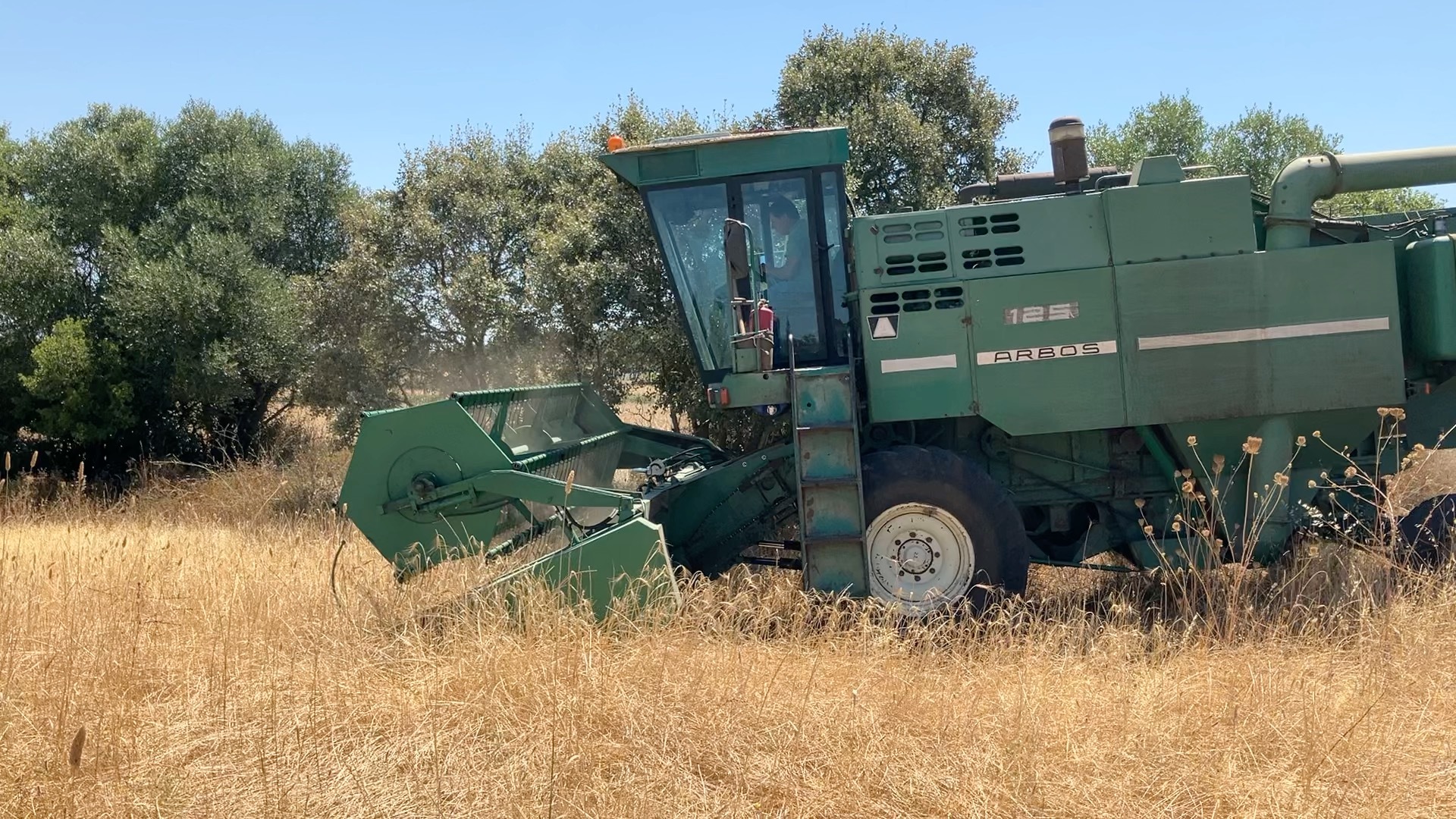
First harvest of 8 hectares of ancient grains, in summer 2024. Photo: José da Camara Ruas

Overcoming new challenges—“one step at a time”

1/ Finding land

José and Pedro’s main goal now is to secure a piece of land that they would officially lease long-term. Regenerating soil requires significant in-situ investment, which makes it crucial to quickly establish a project in a stable location.

Additionally, securing their access to land is key to introducing the agroforestry dimension to their project.

“If you plant trees, the benefits for the land will take 5 to 10 years, and the return on investment—considering that planting trees is also a way to diversify income—will take 20 to 30 years. So you need to ensure the long-term establishment of your project.”

José and Pedro would like to prioritise land in their home region, where they have local connections and easy access to support. They seek flat land, ideal for cereal cultivation, and would prefer to start with treeless land to establish a productive system, and plant trees themselves in a way that accommodates machinery.

2/ Securing subsidies

José and Pedro are planning to apply soon for young farmer subsidies, which would be more valuable if they could highlight the diversification practices they’re implementing. However, herein lies another challenge: using uncertified heritage grains means there is zero traceability.

From an administrative standpoint, the seeds they got for their trials and have been saving, are essentially invisible—without certification, they cannot be officially declared to organic agriculture authorities. This also created obstacles when trying to collaborate with an organic farmer to plant their seeds.

Photo: Courtesy of José da Camara Ruas

Advocating more structural support for diversified farming models

Difficulties in accessing appropriate technologies, comprehensive expertise, seed diversity, suitable land, and all-important subsidies… A diversified agricultural model based on inter-species cooperation brings challenges every step of the way.

This path inevitably comes with frustration and moments of discouragement. It demands resilience and determination on a personal level, but also structural privileges—such as a network of supportive relatives, a solid economic foundation, a capacity to relocate for mobility or to earn an income from diverse sources, etc.

To become more inclusive, these models must ultimately gain broader recognition, especially in terms of legislation, training and financial aids.

“It feels like there are two clear paths: either you’re a new farmer following conventional methods with resources to help you get started, or you’re an experienced farmer venturing into sustainable innovation. But here we are, new farmers trying to innovate. So, we’re stuck with the worst of both worlds—or maybe the best, depending on how you look at it.”

While José and Pedro’s story serves as an inspiring example of the potential for action, transition, and innovation in agriculture, it also makes a strong case for understanding the specific needs of diversified farming practices that promote plant diversity and soil health.

Jul 11, 2017 ... Language: English. Item Size: 219.0M. The Conquest of Bread in pdf, mobi, and epub formats, drm free. Addeddate: 2017-07-11 16:44:04. Identifier ...


Source: ESSF

“Rearming Europe” is the new watchword of European political elites. A new focus that has even surpassed the old dogmas of public debt limits. In this dossier, we visit a plurality of analyses from various points of the European left about this new arms race. A dossier organised by Carlos Carujo.

Suddenly, European institutional politics gained a focus: the arms race. With Putin and Trump negotiating the spoils of war in Ukraine and with the latter making it clear that the old Atlantic mission of the US did not fit into his new imperialist plans, a sense of disorientation seemed to have taken hold of the continent’s dominant political classes. This was filled when the European Commission put forward a plan to “rearm Europe” in the name of “security” and against a Russian threat presented as imminent. A decision that opened a multi-million-pound exception to the old dogmas of limits on deficit and public investment that have dominated the continental centre ground.

This dossier is about the left-wing responses to this strategic shift in European Union policy towards spending on the arms business. It thus includes diverse views, with different focuses and scopes, which we present as moments in an ongoing debate about the nature of what is being experienced. The articles presented here do not intend to summarise all existing positions, nor does this dossier intend to be a synthesis. Much less was it thought of as a collection of favourable opinions in the same direction. Thus, as in all cases of signed articles, but for this particular reason, it should be emphasised that the ideas expressed in these texts do not necessarily reflect the positions of Esquerda.net.

Furthermore, it is important to emphasise that the aim was not to focus on the specificities of the internal debates of the left in each country, but to visit more general analyses and arguments on the issue. Therefore, for example, the debates within the Spanish left where the government is divided, with the PSOE committing to European armament and its executive partner, Sumar, voting this Thursday in favour of a resolution presented by the Galician Nationalist Bloc deputy, Néstor Rego, against the European plan to increase military spending and for withdrawal from NATO, in which it was accompanied by Bildu and Podemos, with the Republican Left of Catalonia abstaining on the NATO point, are left out.

Equally left out is the controversy raised by the favourable vote, this Friday, of the Die Linke representatives in the Upper Chamber of the German parliament, the Bundesrat, to the constitutional amendments that end the brake on public debt in the case of “defence” and “security” expenditures, that is, in armament policies. This goes against the position taken by the party leadership and the voting direction of its deputies in the Lower Chamber, the Bundestag.

It should be remembered that the Bundesrat indirectly represents the various states of the country and is composed of members appointed by the state governments. In Mecklenburg-Western Pomerania and Bremen, Die Linke is part of these governments along with the SPD, and it was these senators who voted, justifying themselves with the consequences in terms of “financial manoeuvring room” for local governance and swearing that they will continue to fight, not against the military investment package but for the extension of the end of the debt brake to social expenditures.

The decision generated revolt among the grassroots (for example, an open letter sent to the senators on the eve of the vote gathered thousands of signatures advocating rejection of the constitutional changes) and its political consequences in a party that had been given as politically dead and made an impressive political comeback in last month’s legislative elections from a grassroots campaign are not yet clear.

The first piece of this dossier is the resolution of the National Bureau of the Left Bloc on international politics, approved today, which sees “Europe in the trap of the Trump-Putin axis and which argues that”US imperialism is still the most aggressive and constitutes a superpower that other imperialist powers seek to combine with the existence of world poles“, a process that”advances, now through conflict, now through cooperation between powers and through transnational capitalist integration“. For the Left Bloc, there are several imperialisms and”none of them will have a progressive role because they all act according to the interests of their capitalist elites“. Therefore,”recognising this reality is vital in the elaboration of an internationalist proposal capable of offering a future to humanity and conceiving a democratic order of peoples.”

Complementing it, a reflection by Luís Fazenda on how to escape the spiral of militarism created “requires a position of rupture with NATO, which is the cancer of belligerence”. For him, the context makes it “much clearer to Europeans that it does not serve them as protection”.

Miguel Urbán, on the other hand, sees in this remilitarisation a “paradigm shift” and a “shock strategy” used “not only to fulfil its long-standing goal of European military integration, but also to strengthen a model of oligarchic and technocratic federalism” and to “promote a European reindustrialisation along military lines”.

Peace culture specialist Ana Villellas prefers to criticise a militarisation that doesn’t even bother to present evidence that it can respond to the threats it enunciates as justifications. In her view, “moving away from the logic of military force and promoting other forms of international relations and a security architecture on the continent based on shared security and international law requires political courage, short and long-term vision, and a lot of chorus work, with the citizens themselves and also with other actors from other continents”.

Daniel Tanuro’s perspective centres on the idea that the Trump-Putin pact aims to divide Europe and impose authoritarian-austerity-reactionary and bellicose regimes in their respective zones of influence. And on how this calls into question the future of democratic and social rights that were born in Europe in the 19th and 20th centuries as a result of the workers’ struggle against capitalist exploitation.

In the same vein, Franco Turigliatto believes that in times of resurgence of the Roman Empire slogan “if you want peace, prepare for war”, unity of “a Europe different from the capitalist and imperialist one” is needed “more than ever”, which “is only possible through the activity and unity of the working classes”.

For his part, Jean-Luc Mélenchon ironises by posing the question: does the post-Trump era consist of obeying his demands? This is because, he reveals, what was announced as European military spending by von der Leyen is actually exactly the amount demanded by Trump for an increase in European military spending. He also notes that the situation in both the US and Europe is one of “transition to a war economy” with the aim of “inaugurating an era of expansion and accumulation without risks for the world’s floating capital and for the enormous reserve of available savings” and “reconstituting industrial production capacity”.

The idea that we are facing a war economy is countered with numbers by Adam Tooze’s analysis. Through the graphs he brings us, we follow the history of military spending in Europe and the US throughout contemporary history. Data with which he intends to illustrate the conclusion that “it will do us no good if we aggravate our anxiety by superimposing on current reality ghosts and visions of an era whose history of military violence was even darker than ours”.

Also from an economic point of view, Thomas Piketty strives to dismantle another aspect he considers a myth: the idea of Europe’s decline that would need to tighten its belt and cut social spending to focus on military spending. The French economist shows that Europe “has been recording solid balance of payments surpluses for years” and that “more than a cure for austerity, what it really needs is a cure for investment”. An investment that should primarily be in human well-being, sustainable development and collective infrastructure.

Yet another economist, Michael Roberts, is dedicated to dismantling one of the versions that, even on the left, ends up being convinced by the “rearmament” project. This is the idea that a European military Keynesianism is coming that would improve the living conditions of the working class by reindustrialising the continent. He shows that, contrary to what its supporters say, not only was it not military Keynesianism that took the US economy out of the Great Depression, but that it does not work as its supporters think. And, moreover and above all, this is, at bottom, “against the interests of workers and humanity”.

Between economics and politics, Yanis Varoufakis advocates a European institutional restructuring in the face of a system in which “no one has democratic legitimacy to decide anything”. Concluding that “in the absence of institutions to implement military Keynesianism, the only way in which Europe can rearm today is to divert funds from its crumbling social and physical infrastructure” which “will almost certainly lead the EU into an even deeper economic decline”.

Outside the EU, the British are also witnessing an arms race. MP and former Labour leader Jeremy Corbyn denounces the measures of the government of the party that expelled him from membership. He uses Yemen for this, where in addition to direct attacks, weapons manufactured by the British are killing civilians. And he advocates for an “adult approach to foreign policy” that “would analyse the underlying causes of war and mitigate them” instead of “choosing to accelerate the cycle of insecurity and war” and supporting “those who profit from destruction”.

From the same geographical point, Chris Bambery considers that the price Europeans will have to pay is clear: “more austerity” and “economies that are going nowhere fast”, which will increase the rejection of centrist governments that said until now there was no money for social policies and may benefit the far right. In his reading, it is evident that “Putin is not going to invade Poland, the Baltic States, much less Western Europe”.

From a Ukrainian point of view, Hanna Perekhoda disagrees with this consideration and enters into direct polemic with Mélenchon’s La France Insoumise. Like some other positions from the Nordic and Eastern left, the historian takes the Russian threat very seriously: “while France, Spain, Italy or Germany may not face an immediate military threat, for Poland, the Baltic States and the Nordic countries, the danger is direct”, she assesses, since Russia is one of the world’s greatest military powers “that has violated all major international agreements in the last decade”, “bombs Ukrainian cities daily” and “surpasses all European countries in military spending”.

Her criticism centres on the fact that she finds the position of some leftists who would seek only to selfishly preserve their social model, ignoring “security threats” and refusing to see Europe as a common project, to be “isolationist”. On the contrary, she defends “a defence strategy in which security is not financed through cuts in social programmes, but through increased taxes on the ultra-rich”.

Christian Zeller responds to her directly by saying that we cannot in any way approve the arming of European imperialist powers that will use the power to assert their claims by force in the context of growing rivalry for scarce and expensive minerals, rare earths, agricultural land and even water, whether in Africa, Asia or Europe or elsewhere.

He argues that “imperialist rivalry and the material consumption of armaments will cause a massive increase in greenhouse gas emissions” and that this “rearmament” will lead to an even more unequal distribution of resources and to the enrichment of the most perverse sectors of capital.

Translated for ESSF by Adam Novak

LA REVUE GAUCHE - Left Comment: Search results for PERMANENT ARMS ECONOMY