Thursday, April 17, 2025


The Meltdown of the United States


 April 17, 2025
Facebook

Photo by Eric Brehm

“The whole world has decided that the U.S. government has no idea what it’s doing.”

– Mark Blyth, “Inflation: A Guide for Users and Losers,” (New York Times, April 14, 2025.)

Professor Mark Blyth’s remarks were aimed at the Trump administration’s creation of turmoil in the world’s financial markets due to its completely inept handling of the bond markets and the start of a trade war with China.  But Blyth’s charge could have been leveled at every aspect of Trump’s governance over the past three months, beginning with the appointment of the most inexperienced and least capable cabinet secretaries and agency heads in the history of the United States.  Donald Trump’s inauguration address for his first term in 2017 talked of “American Carnage.”  Well, eight years later, here we are—American Carnage.

In less than 90 days, the United States under Trump has become a very different country.  It is not an exaggeration to say that the United States is facing a meltdown that will be difficult to reverse.  The executive branch has taken on powers that are usually associated with wartime requirements.  The legislative branch has been largely neutralized because of the near total abdication of the Republican Party.  And the judicial system is facing an unprecedented challenge from a president and vice president who have no respect for our courts and our judges.  Trump has fired at least 15 inspectors general who were tasked by the Congress to root out abuses in federal agencies.  This is an open invitation for corruption and abuse.

The United States is facing existential, constitutional, and identity crises that mark the country’s decline; the impact can already be seen in terms of our domestic and international instability.

THE CONSTITUTIONAL CRISIS:  Donald Trump’s failure to obey the Supreme Court’s unsigned order last week to take steps to garner the return of a Salvadoran migrant—Kilmar Abrego Garcia—marked the beginning of a constitutional crisis that was anticipated by many who feared Trump’s return to the White House.  Abrego Garcia was wrongfully deported to the most notorious prison in El Salvador, and there is still no evidence of wrongdoing on his part.  He has never been arrested or accused of a crime.  El Salvador President Nayib Bukele told Trump on April 14 that he would not return Abrego Garcia, and Attorney General Pam Bondi, sitting next to Trump, said that it was up to El Salvador to decide.  In a perfect example of the abject cruelty and heartlessness of the Trump administration, Bondi added that “if they want to return him, we would facilitate it, meaning provide a plane.”

Last week, Trump said he had no respect for the decisions of federal courts, but would obey the decisions of the Supreme Court.  Two days later, the Trump administration threw down the gauntlet, stating that it was not required to engage El Salvador’s government in order to facilitate Abrego Garcia’s return.  Abrego Garcia’s deportation amounted to a case of “official kidnapping,” as he was removed from the United States without due process.  Trump’s tone of defiance was backed by his Department of Justice that is moving to expand the powers of the executive branch in ways that are illegal and even unconstitutional.

THE EXISTENTIAL CRISIS:  The constitutional crisis places the United States in an existential crisis that finds leading members of the administration, particularly the Attorney General and the Deputy Chief of Staff to the president questioning fundamental concepts of the rule of law and freedom itself.  There has not been a challenge of this magnitude at any time in U.S. history with the exception of the Civil War period in the 1860s.  For the past 150 years, U.S. politicians and historians have prided the United States on its exceptionalism, which set the United States apart and justified the export of U.S. traditions and values.  “Exceptionalism” no longer works as a trope in political speeches and historical narratives.

Over the past 80 years, the United States took particular pride in playing an indispensable role in ridding the world of Fascist and Communist threats, but the Trump administration has created strategic confusion concerning U.S. goals and objectives.  The state of the Atlantic alliance is now in question; the trade and tariff war with China is worsening; and the pressure on Ukraine has raised doubts about U.S. support among allies in Europe and Asia.

THE IDENTITY CRISIS:  The identity crisis is marked by the profound meanness of Trump himself, who is personally responsible for the cruelty that marks his administration’s illegal and unconstitutional handling of refugees.  The poem on the Statue of Liberty expresses the statue’s role as a symbol of welcome and hope.  Now refugees in the United States, who have encountered violence in their own countries, find greater violence in the United States.  Trump has committed himself to deporting one million immigrants in his first year, and only a lack of funding and staffing will probably prevent that goal.  Deputy Chief of Staff Stephen Miller is directing the deportation effort, pressing 30 countries to take migrants who are not their citizens.  The case of Abrego Garcia is typical of the overwhelming meanness of the Trump team.

The revocation of the visas of foreign students by Secretary of State Marco Rubio, which appears to be his only activity these days, is another marker of the new U.S. identity.  In less than 60 days, more than 1,000 international students have had their visas revoked as part of a phony effort to fight anti-semitism on college campuses.  Columbia University student Mahmoud Khalil was the first case in this crackdown, and it has caused many international students to self-deport, which is exactly what Trump, Rubio, and Miller favor.  As a result, foreign students will not consider U.S. universities for their higher education, especially since Canada and Australia offer far more safety and support.

American citizens themselves are also experiencing the meanness of the Trump team.  Trump has revoked security protection for President Joe Biden’s son and daughter, and even talked of Hunter Biden as deserving of the death penalty, which explains why Biden pardoned his son before leaving office in the first place.  Trump’s language has created serous serious concerns for former national security adviser John Bolton, Dr. Anthony Fauci, and General Mark Milley, which probably explains Trump’s delight in removing their security protection. More than a dozen prosecutors who worked for special council Jack Smith’s criminal investigation of Trump have been fired.

Every important institution in the United States is being targeted by the troglodytes in the Trump administration, even libraries and museums that we rely on as the “most trusted sources of information in this country,” according to the CEO of the American Alliance of Museums.  We used to say that the Soviet Union was the only country in the world that had an “unpredictable past,” but that charge could be applied to the United States as well.  Last month, Trump issued an executive order called “Restoring Truth and Sanity to American History,” which promises a revision of our historical narrative.

Trump himself has targeted the Smithsonian Institution and the National Museum of African American History and Culture for retooling and revision.  Vice President J.D. Vance, who now sits on the Smithsonian’s board, is in charge of removing the institution’s “improper ideology.”  Elite universities; successful regulatory agencies; health departments; and prestigious law firms  are being targeted and weakened in the process.  Donald Trump even engineered a a direct takeover of the Kennedy Center, which was an example of his pathological narcissism.

Russian President Vladimir Putin said that the collapse of the Soviet Union in 1991 was the “greatest geopolitical disaster of the 20th century.”  It is possible that the Soviet collapse endowed the United States with too much power for its own good, leading to the misuse of power in the expansion of the North Atlantic Treaty Organization; the twenty years of war in Afghanistan, and a continued military presence in Iraq that followed a similar twenty-year war.  The greatest geopolitical disaster thus far in the 21st century may be the political and economic meltdown of the United States, which is having far-reaching results for the entire international community.

In addition to the domestic turmoil initiated by the Trump administration, the United States has been losing power and influence in the international arena, including the decline of U.S. influence in the Atlantic Alliance that had secured the safety of U.S. relations with Western Europe; the mindless and “monumental split” between the United States and China that makes no geopolitical sense whatsoever; the retreat from arms control and disarmament; the purge and politicization of the professional military; and last week’s threat to the global financial system that had secured the primacy of the U.S. dollar and U.S. bonds in international markets.  Britain lost the primacy of the pound in the wake of the Suez War in 1956.  History does not repeat itself, but it does rhyme; perhaps we are witnessing the lost primacy of the dollar due to the idiocy of the Trump national security team.

Melvin A. Goodman is a senior fellow at the Center for International Policy and a professor of government at Johns Hopkins University.  A former CIA analyst, Goodman is the author of Failure of Intelligence: The Decline and Fall of the CIA and National Insecurity: The Cost of American Militarism. and A Whistleblower at the CIA. His most recent books are “American Carnage: The Wars of Donald Trump” (Opus Publishing, 2019) and “Containing the National Security State” (Opus Publishing, 2021). Goodman is the national security columnist for counterpunch.org.


Chad

Marine Le Pen invited by the Chadian dictatorship

Saturday 12 April 2025, by Paul Martial


France’s far right Rassemblement national (RN) party has been trying to establish relations in Africa for several years now, and party leader Marine Le Pen’s visit to Chad from 14-16 March 2025 is the latest avatar. The RN leader, accompanied by one of her close associates Louis Aliot, was received by Mahamat Déby, the Chadian president who has been in power for over three years thanks to a coup d’état ostensibly supported by Emmanuel Macron. Even if relative, the RN leader’s interest in Africa, the source and cause of the much-hated “migratory submersion”, seems counter-intuitive to say the least.

The RN tour operator

Marine Le Pen was already received by former Chadian President Idriss Déby in 2018 and by Senegalese President Macky Sall in 2023. This visit was preceded by an article in the French newspaper L’Opinion, in which she made the incongruous proposal that Senegal should become a member of the UN Security Council on behalf of Africa. Myriam Lamzoudi, a local politician from the Oise region and a defector from the Les Républicains party, spares no effort in forging links between the RN and representatives from African countries and the diaspora. She scours conferences and seminars to hand out business cards and propose meetings. On her Facebook account, between two posts in her chat room, she doesn’t hesitate to praise Nelson Mandela and protest against the racist insults levelled at certain French journalists.

But beyond this, Le Pen’s few connections are mostly the fruit of the mediation of Philippe Bohn, former CEO of Air Sénégal, with a well-stocked address book on the continent. He uses his good relations within the Christian Democrat International to promote the RN’s policies to African audiences.

During her visits to Africa, Le Pen avoids certain subjects, such as the positive effects of colonization, her opposition to any repentance concerning France’s colonial policy, and restrictions on aid and visas. She is also very discreet about the statements made by her father and mentor in 1986: “I believe in the inequality of races”.

It’s worth noting that the African potentates who have agreed to receive Le Pen’s father, then his daughter, are totally indifferent to the fate of their compatriots who are the target of the racist hatred promoted in France by their interlocutor, the same indifference they have in their own country.

L’anticapitaliste 27 March 2025


Attached documentsmarine-le-pen-invited-by-the-chadian-dictatorship_a8936-2.pdf (PDF - 903 KiB)
Extraction PDF [->article8936]

Paul Martial
Paul Martial is a correspondent for International Viewpoint. He is editor of Afriques en Lutte and a member of the Fourth International in France.


International Viewpoint is published under the responsibility of the Bureau of the Fourth International. Signed articles do not necessarily reflect editorial policy. Articles can be reprinted with acknowledgement, and a live link if possible.
Palestine: Land Day, March 30th

Sunday 13 April 2025, by Louison le Guen


Since 1976, the Palestinian people have celebrated Land Day every March 30th, a day rooted in the history of Palestinian resistance and emblematic of the current struggle for survival. In 1976, the Israeli government launched a plan to Judaize the Galilee, confiscating 20,000 dunams of land (18 km2) in the midst of Arab villages. The aim was to build Jewish settlements on land belonging to Palestinian Arab citizens - the majority of the region’s population. Everywhere in Palestine, from the Galilee to the Negev, in towns and villages, there were general strikes and demonstrations.

On March 30, 1976, Israeli police opened fire, killing six people, wounding dozens and arresting hundreds. It was the first time since 1948 that Palestinian citizens of Israel had organized a response to Israeli policy as a national Palestinian collective. Since then, this date has become Land Day for Palestinians around the world, symbolizing their attachment to the land, their resistance and their struggle against occupation and colonization.

To stay, to cultivate, is to resist!

Since then, the dispossession of the land of the Palestinian people has never ceased. Since the start of the genocide in Gaza in 2024, the Israeli army has confiscated an additional 41 km2 of land in the West Bank and Jerusalem. The number of settlers has increased 5-fold in 30 years, to almost 800,000 today. In addition to the authorized settlements, which will exceed 10,000 units in the first quarter of 2025, i.e. more than in the whole of 2024, the Israeli state systematically validates all unauthorized settlements, the outposts set up by the most aggressive settlers, and sends its army to protect them.

The colonization of the West Bank continues, more than ever, and the linking of settlements accentuates the fragmentation of territories under Palestinian control. In Gaza, in addition to continuing military aggression, the genocidal state’s political offensive includes the departure of Hamas leaders to allow implementation of the Trump plan, the ‘voluntary’ exile of Gazans. The aim is to get 40% of them to leave! It’s easy to see what’s at stake, and the vital need for Palestinians to stay, cultivate and resist.
A provocation

Netanyahu’s decision to build two new roads in the occupied West Bank on the very day of March 30, 2025, should be seen as yet another provocation. The effect will be to reinforce the settlements in the Ma’ale Adumim region, east of Jerusalem, where more than 40,000 settlers are already illegally established. The Israeli NGO “Peace Now” denounces this “new apartheid road”, which will annex around 3% of the West Bank - yet another step towards the physical and political liquidation of the Palestinian question.

L’Anticapitaliste 2 April 2025


Attached documentspalestine-land-day-march-30th_a8941.pdf (PDF - 904 KiB)


Louison le Guen
Louison le Guen writes for l’Anticapitaliste.


International Viewpoint is published under the responsibility of the Bureau of the Fourth International. Signed articles do not necessarily reflect editorial policy. Articles can be reprinted with acknowledgement, and a live link if possible.
Serbian students cycle to Strasbourg, Macron prefers to receive the autocrat Vučić

Monday 14 April 2025, by Jean-Arnault Dérens


Challenged by a social movement of unprecedented scale, Serbian President Aleksandar Vučić was received on Wednesday 9 April in Paris for a working lunch with Emmanuel Macron. A gesture perceived as a provocation in Serbia, while a hundred students cycle to Strasbourg.


Aleksandar Aleksandar Vučić was smiling as he announced on Sunday evening [6 April] that he would be going ‘in two or three days to the Elysée Palace’ to ‘annoy a little more those who don’t like Serbia’. In one of his endless televised addresses to the nation, which he is fond of, he had just ruled out the possibility of early elections by pulling out of his hat the name of a complete unknown, Dr Đuro Macut, who was tasked with forming the new government, the outgoing prime minister having been ‘sacrificed’ at the end of January, without calming the wave of protest that is shaking the country.

Emmanuel Macron’s invitation was reportedly extended during a telephone conversation between the two men on 30 March, but it comes across as a real provocation at a time when around a hundred students have set off on bicycles from Novi Sad on 3 April to reach Strasbourg, where they are due to arrive on 15 April to present their demands to the European institutions. In this long 1,400-kilometre race ‘to wake up Europe’, they were welcomed as heroes in Budapest - the mayor of the Hungarian capital, an opponent of Viktor Orbán, joined the Serbian diaspora - and in Vienna. In the Austrian capital, all the Balkan diasporas gathered to cheer the student cyclists in Marie-Thérèse Square, recalling that, in all their countries, ‘corruption kills’.

Since the beginning of the movement, sparked by the tragic collapse of the canopy at Novi Sad railway station on 1 November 2024, Serbian civil society has repeatedly criticised the European Union for its silence. On 20 March, five days after the largest demonstration ever organised in Belgrade, marked by the use of a hypersonic weapon by the police, the European Commissioner for Enlargement, the Slovenian Marta Kos, caused a scandal by receiving Aleksandar Vučić in Brussels and declaring that the meeting had been ‘constructive’. Faced with the rising anger in both Serbia and Slovenia, where public opinion is very supportive of the Serbian students, the commissioner merely explained that, in her role, ‘she could not have spoken to anyone else’ but the authorities.

In fact, apart from a few rhetorical calls to ‘avoid violence’, the European Union has remained silent since the beginning of the crisis. This silence, which contrasts with the attention paid to Georgia a few months ago, is tantamount to support for the Serbian regime. But why such complacency?

The European Union, which no longer has any real prospect of enlargement to offer the Balkans, is betting solely on the ‘stability’ of the region, which it believes is better guaranteed by constant compromises with authoritarian regimes such as that of Serbia. Germany, for its part, covets the Serbian lithium reserves. However, only Aleksandar Vučić’s regime is capable of guaranteeing its exploitation, which is strongly contested by the population.
Economic interests and ‘Franco-Serbian friendship’

France, for its part, signed a contract at the end of August 2024 to sell twelve state-of-the-art Rafale fighter jets to Serbia for a trifling 3 billion euros. The planes have not yet been delivered or paid for, and it is not certain that they ever will be, as it is unclear where Belgrade could find such a sum. At the time, the Elysée’s talking points explained that Serbia needed to be ‘anchored’ in the Western camp and distanced from Russia...

This is the strategy that France has stubbornly pursued since the start of the large-scale invasion of Ukraine in February 2022. While Serbia is the only candidate country not to apply sanctions against Russia, it would be necessary to ‘give everything’ to its cunning leader in order to try to convince him that his best friends would be in the West. In reality, promises to sell only commit those who want to believe in them, and today it is Belgrade that, thanks to these virtual Rafales, has Paris on a leash.

Economic interests are not limited to fighter planes. For several years now, France has been conducting a relatively aggressive economic diplomacy in Serbia: Vinci has got its hands on Belgrade airport and Paris dreams of selling nuclear power plants to Serbia, which dreams of acquiring them. The French engineering firm Egis has been commissioned by the Serbian Ministry of Mining and Energy to conduct a preliminary technical study. For the record, this same firm was involved in supervising the construction of the Novi Sad railway station.

By receiving Aleksandar Vučić in Paris, Emmanuel Macron is going further than any other European country in supporting a regime that is overwhelmingly rejected by its population, which cannot be explained by economic interests or an obsession with stability. Since his two official trips to Serbia, in 2019 and 2024, even mangling a few words of Serbian on occasion, the French president seems to have become infatuated with his counterpart Vučić and the old spectre of ‘Franco-Serbian friendship’ dating back to the First World War and cultivated above all in some far-right circles. Serbian students are well aware of this history but, if they sing the old song Tamo daleko, which dates from this conflict, it is to demand justice and truth.

9 April 2025

Translated by International Viewpoint from Mediapart.


Attached documentsserbian-students-cycle-to-strasbourg-macron-prefers-to_a8948.pdf (PDF - 898.8 KiB)
Extraction PDF [->article8948]


Jean-Arnault Dérens
Jean-Arnault Dérens is a journalist at Mediapart.


International Viewpoint is published under the responsibility of the Bureau of the Fourth International. Signed articles do not necessarily reflect editorial policy. Articles can be reprinted with acknowledgement, and a live link if possible.
Mali: the dead end of all-out war

Tuesday 15 April 2025, by Paul Martial


An alliance is emerging between jihadist forces and pro-independence forces in northern Mali, which would improve their balance of power in the ongoing conflict.


In February, the convoy of the Minister for Higher Education was attacked in the Sikasso region, followed a week later by a second attack on the Kati-Soribougou road. This time it was the Minister of Sanitation who was targeted. These two raids were claimed by the Islamists, who continue to gain ground to the point where the state now controls only half the territory.

A desire for peace

In this difficult situation for the military junta, the announcement of talks between the al-Qaida-affiliated Groupe de soutien à l’islam et aux musulmans (GSIM) and the Front de libération de l’Azawad (FLA), which brings together all the pro-independence and autonomy organisations in northern Mali, is a new source of concern.

An initial non-aggression pact was signed in the spring of 2024 between the two organisations, which have very different agendas. The Islamists want to establish a state based on Sharia law, while the FLA is campaigning, at least for its most radical members, for secession from the country.

These talks are a response to the people’s desire for peace. This desire has been expressed for years and was reiterated during the national dialogue organised by the putschists. The FLA has said it is sensitive to this, especially as the idea is also widely shared by members of the communities where it is established. There is also the idea that the GSIM could abandon part of its programme and its most radical methods, in the image of the evolution of the al-Nosra Front, which participated in the creation of Hayat Tahrir al-Sham, which has taken over the reins of government in Syria.
Negotiations under way

It would appear that the GSIM has accepted the FLA’s proposal on how Sharia law should be applied, in a less brutal manner and under the responsibility of religious notables recognised by the communities, regardless of whether or not they are affiliated to the GSIM. For the GSIM, disaffiliation from al-Qaeda could even be envisaged if there were major upheavals within the country, such as the fall of the government or the independence of Azawad. Although the GSIM believes that the international community would find it easier to accept a state based on Sharia law than the partition of Mali. Finally, should the situation arise, the GSIM does not rule out the possibility of joint administration of towns or territories with the FLA.

This rapprochement between the two organisations is also the consequence of the attitude of the junta, supported by the Russian mercenaries of Wagner/Africa Corps, which refuses to consider a political solution to this crisis, which is rooted in economic, social and community problems.

The people are paying a high price for the ongoing conflict. In 2024, the Malian armed forces and their Russian auxiliaries killed three times as many civilians as the Islamists - even if the latter, through their policy of encircling towns, are deepening the impoverishment of the population and carrying out violent reprisals.

L’anticapitaliste 15 March 2025


Attached documentsmali-the-dead-end-of-all-out-war_a8945.pdf (PDF - 904.8 KiB)
Extraction PDF [->article8945]


Paul Martial
Paul Martial is a correspondent for International Viewpoint. He is editor of Afriques en Lutte and a member of the Fourth International in France.

International Viewpoint is published under the responsibility of the Bureau of the Fourth International. Signed articles do not necessarily reflect editorial policy. Articles can be reprinted with acknowledgement, and a live link if possible.

Trump’s racism becomes policy: Blacks, Latinos, immigrants pay the price


Wednesday 16 April 2025, by Dan La Botz


President Donald Trump’s macho, white, nationalist ideology leads him to attack women, LGBT people, workers, the poor, the disabled and others, but his racism is particularly striking. He has in myriad ways made racism against Blacks, Latinos, and immigrants official U.S. policy. From the highest levels of government to the lowest economic levels of society people of color are being discriminated against, mistreated, and victimized as at no time since the 1920s.


Some of Trump’s actions are notorious, such as his racist firing of air force general CQ Brown Jr. a Black man, as chair of the joint chiefs of staff for supposedly putting diversity, equity, and inclusion programs ahead of the defense of the United States. Other Trump actions affect millions.

Trump issued an executive order ending all federal “diversity, equity, and inclusion” or DEI programs in the federal government. Many of those leading and working in such programs were Black, Latino, or Asian, and now hundreds and perhaps thousands have been fired. DEI represented an attempt by earlier administrations to ensure that federal programs served a diverse population. Now the government will lean the other way. In a spiteful example, Trump, in making English the only official language, has terminated weather emergency announcements—hurricanes, tornados, floods—in languages other than English.

Trump’s hatchet man Elon Musk is now carrying out the firing of 13 percent of the country’s 2.4 million civilian workers, that is, 312,000 people. While Black people make up 13.7 percent of the U.S. population, they made up 18.2% in the federal workforce. For decades the federal government gave Black people opportunities for secure jobs with decent pay and benefits when many private corporations did not.

As one former Black federal employee told the nonprofit Capital B news service, ‘My whole life is built on having a parent who was working in the federal service. That definitely shaped me — all of the opportunities and experiences that I got. That’s what we’re talking about when we talk about generations that are going to be impacted by these executive orders.”

Another large group being targeted are undocumented immigrants whom Trump plans to deport from the United States. Trump claims there are 20 million, though most experts say 11 million. In his first two months in office, Trump deported only about 25,000 undocumented immigrants, fewer than former president Joseph Biden, but U.S. immigration police are gearing up for truly mass deportation in the near future.

Trump is violating the U.S. Constitution and laws in deporting some 238 Venezuelan alleged gang members without any hearings or other due process and sending them to the notorious Maximum Security Terrorism Confinement Center in El Salvador. The Los Angeles Times reports that 90% of them had no criminal records and many were identified as gang members solely by their tattoos. There are various lawsuits attempting to reverse or stop such deportations.

Even legal immigrants are in danger. Trump ended what is called “temporary protective status” for 472,000 Venezuelans, 213,000 Haitian, 110,900 Cubans, over 93,000 Nicaraguans,14,600 Afghans, and 7,900 Cameroonians who will in the next few months become subject to deportation. If deported to their native countries, many of these people will face violence from their home country’s governments.

Trump has also begun to move thousands of immigrants’ Social Security numbers into the “death master file,” so that they become “legally dead,” making it more difficult to work in the United States or to get access to credit cards or bank accounts. The idea is to make their lives so impossible that they will “self-deport.”

While it is good that many have filed court cases against these actions, it will take a powerful working-class movement of unions and Black, Latino, and immigrant workers to stop Trump.

Attached documentstrump-s-racism-becomes-policy-blacks-latinos-immigrants-pay_a8950.pdf (PDF - 905.6 KiB)
Extraction PDF [->article8950]


Dan La Botz
Dan La Botz was a founding member of Teamsters for a Democratic Union (TDU). He is the author of Rank-and-File Rebellion: Teamsters for a Democratic Union (1991). He is also a co-editor of New Politics and editor of Mexican Labor News and Analysis.


International Viewpoint is published under the responsibility of the Bureau of the Fourth International. Signed articles do not necessarily reflect editorial policy. Articles can be reprinted with acknowledgement, and a live link if possible.

Wednesday, April 16, 2025

From bad to worse: The new political setting and challenges for the Canadian left

Published 

From bad to worse: The new political setting and challenges for the Canadian left

First published at Socialist Project.

The current political conjuncture can be defined by an unfolding sense, in Canada and around the world, that neoliberal policies have failed and even capitalism itself is not working. This is driven by the weakening, dismantling, or even destruction of the things that had made the capitalist system seem ‘legitimate’ and ‘fair’ in the eyes of the working classes  rising wages, affordable housing, improving healthcare, and protecting the environment. This constitutes a growing legitimation crisis.

While the most immediate origin of this impasse is the 2008-10 ‘great financial crisis’, it is more deeply rooted in the structure of the neoliberal state, which is undergoing further deepening of its authoritarian features across most countries, especially with the coming into power of the second Donald Trump administration in the US in January 2025.

The transformation of capitalist states to a more disciplinary and market-centred policy regime emerged as states sacrificed higher taxes on the wealthy, which had supported social policies and programs, to the needs of capital for increased profits in the face of the long crisis of the 1970s. The state’s accumulation functions  the various policy supports for capitalist class profitability and economic success  became predominant over social provisioning to meet human needs for health, aging, education, culture, and so forth. To accomplish this agenda, from the 1980s, there was an extensive centralizing of state power within central banks, ministries of finance, and policing and prison agencies, all of which are substantially insulated from democratic pressures and accountability.

The role of political parties, elections, and other state institutions associated with making the system legitimate became increasingly limited and circumscribed, along with a sustained curtailment of trade union rights. Yet, in the context of rising labour market precarity and stagnating wages into the 1990s, working-class dissent was largely contained. This neoliberal state  one of privatization, de-regulation, free trade, and increased policing  led many activists and socialist writers to speak of a setback in working-class politics and a ‘hollowing out’ of liberal democracy.

The effects of the 2008 financial crisis

It was in 2008 that these developments erupted into a full-blown crisis of political legitimacy, often termed the ‘global financial crisis’. The financial crisis initially concentrated on those institutions within the state system most directly associated with ideological integration  convincing people that the capitalist system is legitimate and just  such as political parties, the mainstream media, and education institutions. It also took the form of a crisis of imperialism, ‘reverberating out’ from the American imperial centre throughout the imperial system, including Canada, as well as echoing back to the US imperial core itself. Canada being the ‘empire’s most dependable ally’, it faced many of the same contradictions as the US in managing the economic, social, and ideological effects.

The financial crisis thus revealed the interconnectedness of distinct social formations that took shape through the period of US-led globalization. Over several years, financial instability, recession and unemployment, and bailouts rippled through particular social formations in distinct rhythms defined by each national state’s location within the imperial system, their balance of class forces, and their class composition. Each state had its particular manifestations, simmering tensions, and morbid symptoms  the appearance of Trump and the MAGA movement in the US, the re-emergence of major fascist movements in Germany, Italy, France and other parts of Europe, and explosive racist riots in Britain. In Canada, there was the emergence of a populist far right in the national Conservative Party, political splits into far-right parties in several provinces, and the emergence of the People’s Party of Canada.

The crisis has been augmented by popular anxieties about impending ecological breakdown, with wildfires, flooding, and record storms all hitting across North America with frightening regularity. The patent failure of capitalist states to take meaningful steps toward addressing the mounting catastrophe has eviscerated the myth of liberal ‘progressivism’ and ‘policy incrementalism’ that things will gradually get better. The illusions that have long been critical for legitimating the capitalist system such as the notion of ‘a better future’, and even the idea of ‘the future’ itself on which such ideologies rely, has abruptly vanished, especially in the eyes of young people.

Meanwhile, the continuation of austerity and privatization have kept increasing the exposure of working-class lives to the market, rolling back what protections remained from its ravages while expanding or entrenching its centrality and power in allocating resources. A new generation that has come of age in Canada since the 2008 crisis is now confronting a political and economic order that appears utterly incapable of providing meaningful, secure lives, manifested in major challenges of housing, maintaining incomes, and job security.

This regime of ‘market authoritarianism’ has been consolidated through the hardening of centrist coalitions, leaving the electoral terrain overwhelmingly unfavourable for intervention by socialist or popular forces. In addition to highly coercive governance at home, these forces have turned to a growing militarism abroad, including increasing Great Power confrontation and the development of powerful new weapons systems such as hypersonic missiles armed with a new generation of nuclear bombs. The growth of this militarism is evident in the US/NATO-backed war in Ukraine, (now being reassessed by the Trump administration as of 2025) and the Israeli-US genocidal war on Gaza.

Donald Trump and the rise of the right

The new Trump Administration has launched an aggressive mix of authoritarian attacks on key state institutions and immigrant communities, using presidential decrees to bypass legislative oversight. This concentration of executive power is mixed with a new and aggressive imperialist discourse, with sometimes illogical threats against other states and territories, including Greenland, Panama, China, and Canada. It is unclear how long it will take for these changes to be institutionalized and how deep these changes will go in making a new authoritarianism. So far, there is little opposition being organized in the US. Elements of the capitalist class still committed to the US-led globalization project are uncomfortable with Trump’s moves (except the promise of tax cuts) but silent; the Democratic party is directionless after the defeat of the Biden agenda and the popular alienation resulting from their backing the wars in Ukraine and Gaza; and the US left and the labour movement is still organizationally sputtering, noticeably silent on threats to workers in Canada and Mexico.

The hardening of politics and the state has been initially successful in North America in warding off the growing global threat of the far-right, movements propelled especially by increasingly radicalized smaller business owners (petty-bourgeoisie) long squeezed by globalization, alongside sections of the working class that are angry and politically confused. Despite their significant contradictions and major programmatic and strategic limits of the populist and hard right, such social forces have been the primary beneficiaries of the legitimation crisis. They have proven to be able to fill, to greater or lesser degrees, the ideological spaces evacuated by social democratic and liberal political forces in Europe and North America.

The ongoing neoliberal realignment of beleaguered social democratic parties, for example, has continued to both reflect and drive working-class decomposition, underpinned by the centrifugal economic forces of dispersal and precarity, forced increases in individual responsibility in job markets, and intensification within labor processes. This process has persisted following the political defeats of Bernie Sanders (bridging the Democratic Party and the Democratic Socialists of America) in the US, Jeremy Corbyn in the British Labour Party (as with Tony Benn earlier), and the impasses of the new parties of left realignment in Greece, Spain, Germany, and elsewhere in Europe. The defeats have paved the way for corporate-backed liberal centrists to assert a renewed stranglehold on centre-left parties, with little in the way of electoral success to show for it. The NDP has followed a not dissimilar approach at both the provincial and federal levels in Canada.

The youth in Canada, US, and Europe have not been immune from embracing market and right-wing economic solutions due to their lack of confidence in their economic and social futures, manifested in growing electoral support for conservative parties, such as Pierre Poilievre’s Conservative Party of Canada and Trump’s Republican Party. Yet protest, as in previous eras  such as during the times of the anti-globalization movement, Idle No More, and Black Lives Matter uprisings  has drawn in new waves of young people. This time, it is the growth of the encampments and protests over Israel’s genocidal attacks in Gaza that has drawn new waves of young people into the world of anti-imperialist thinking, BDS actions, and progressive politics. Union organizing in the logistics sector and around Amazon, as well as other campaigns around the gig economy, have also sparked a new cohort of labour activists.

Social democratic parties such as the NDP have long given up on the possibility of challenging capitalism and have advanced little more than modest reforms of the neoliberal regime in their endless search for a ‘capitalism with a human face’. It is crystal clear that entering these parties has not formed an anti-capitalist politics or allowed a vehicle for building a new left politics to emerge. The current context of a weak radical left, fragmented working classes, and a politically cautious trade union movement has led many on the left, in both Europe and North America, to see little alternative but to join forces with mainstream political parties as ‘junior partners’ in new ‘popular fronts’ as the only path to combat the immediate threat of the growing hard-right. This takes the form in Canada of varied electoral alliances of the NDP, the Greens, and Liberals (with a variant specific to Quebec), supported by a wide matrix of organizations of the social left seeking to block further erosion of social gains.

The growing threat of the right must be addressed. But this must not come at the expense of dissolving socialist politics into coalitions whose political and economic strategies  of neoliberalism and global war-making in Eastern Europe, the Middle East, and across Asia  have been so directly responsible for the growth of hard-right forces in the first place. Indeed, in this conjuncture, it is more important than ever that the socialist left do everything possible to increase its visibility, create an organizational presence, and advance, as strongly as possible, an alternative political vision. This is not only necessary to preserve the democratic gains of the past but also to address the mounting demands of the ‘terrifying’ near future that Trump, NATO, and climate change are unrelentingly pushing us towards. If the market-based ‘solutions’ to the ecological crisis offered by the neoliberal center are inadequate, we must explicitly insist that only a fundamental challenge to capital, and a deep reorganization of the economy through a radical democracy and the implementation of a democratic planning regime, has any chance of leading to a sustainable future. That we are running out of time does not mean that centrist compromises or ultra-left posturing suddenly become more effective.

The opening for socialists

In the current moment, with the threat of Trump’s tariffs and their socioeconomic fallout there is a political opening for socialists. The need to re-calibrate Canada’s relationship to the US empire  for some, even to disengage from it  is becoming a popular topic amongst working people of all backgrounds. They express concerns about the level of integration with the US and the costs of Trump’s social and economic policies, including the demands for a radical increase in military spending and the militarization of the Arctic and the Canada-US border. Challenging Trump means different things to different sections of the capitalist class in Canada, with a majority wanting the status-quo ante, others calling for further integration, and a small minority seeking a more national-centred industrial policy, based on increasing competitiveness and capitalism, but in many ways still accommodating to the US empire and tied to export dependency. The latter includes proposals to build east-west fossil fuel pipelines, lower inter-provincial trade barriers, aggressively seek new export markets, pursue more neoliberal governance and economic policies, and accommodate demands for more spending on the military, with further military operational integration with the US and NATO in the Arctic, Europe, and East Asia.

Socialists have an opportunity to argue for disengaging with the US empire through building towards a different cooperative, socially owned, and democratically planned economy organized to meet human needs. Such an economy would be more oriented towards internal development, with social provisioning for housing, education, public transit, and healthcare for working people, and a determined move towards ecological sustainability and radically reduced carbon emissions. This would require a break with capital mobility, controls on finance and credit, a new tax regime and a halt to austerity, a move away from a reliance on fossil fuels, and a break from the more authoritarian neoliberal path that Trump is setting the US out on and that Poilievre, Doug Ford, and the Conservatives intend to tail.

The socialist left we need to build must be anti-imperialist. This does not mean sowing illusions that capitalism is ‘on its last legs’ or that the US empire is on the verge of disappearing as the dominant world power. We must soberly acknowledge the scale of the challenge. If the American empire has become more fragmented, and the American state is no longer enjoying a ‘unipolar moment’, and its primacy in the world order has eroded, it nevertheless remains the dominant global economic, military, and diplomatic power. Similarly, capitalist globalization and the mobility of capital is still very much in place, the corporations are still raking in profits, and environmental and social dislocations are not causing a rethink of the resort to price and market solutions in an attempt to resolve them. Capitalism will not collapse on its own; it must be transformed through working-class political action. This must include confronting colonialism, which is often closely linked with extractive fossil capitalism. This begins with declaring our solidarity with Indigenous Land Defenders, as a priority commitment to the right of colonized peoples to live with dignity and self-determination.

There is today a polarization of options. The politics of class compromise that defined the social democratic politics of the 20th century, coming out of world wars and the emergence of mass unionization, is no longer on the table. Even winning moderate reforms today requires direct confrontation with capital and capitalism which, in turn, requires building the deep social base necessary for this to become effective. Such efforts must go beyond the electoralism that sees voting for individual politicians as a shortcut. And it does not amount to rebuilding and enlarging conservative trade unions whose limited political horizons were so directly implicated in bringing us to where we now are. The left’s political efforts to build on the edges of the union movement can only occur in ways that leave us dependent and having to refrain from challenging the union’s political direction.

Isolated mobilizations and resistance  such as successful strikes in the auto sector and others  have been important. But they have been unable to provide a sustained breakthrough beyond the larger inertia of cynicism and fatalism on the part of the working class. The labour movement in Canada still needs to be transformed.

The socialist project moving forward

All this requires a socialist party, which can engage in working-class formation through political praxis, linking disparate struggles together and transforming unions into organs of class struggle. This is the setting the Left faces, in both Canada and beyond.

From this political statement, the Socialist Project is looking, not just at the past and present, but, like all socialists  at the future. Clearly, the present is not one of great success for the working class and socialists: the ravages of neoliberal capitalism, the vicious imperialism of Trump, the defeat and weakness of working-class movements, especially the organized labour movement, and the rise of right-wing populism and social conservatism, in the face of the inability of liberal centrism and social democracy to confront capitalism. This is not to mention the horrendous loss of life in wars such as in Gaza, Ukraine, and elsewhere or the travesty of life without clean water, in the midst of plenty, in indigenous communities.

Still, there are possibilities and hope: the working class, although defeated politically, continues to fight back, albeit in forms that lack consistency, organizational power and cohesion, and a working-class-oriented political culture and ideology. But much of the turn towards cynicism and right-wing thinking and voting reflects the reinforcement of the worst components of capitalism  unemployment, inequality, climate degradation, social breakdown, and backlash  that inevitably come with political and social leadership that daily accepts and reinforces that the myth that there can be no alternative to capitalism. Workers respond to those who offer false solutions, such as the Trumps and Poilievres of this world.

But the insecurity, anger, and frustration that drive many workers to the right can serve as the bases of an alternative to the left. Socialists have a central place in efforts to build a class understanding and identification within and across the working class, in Canada and in other countries. We have an exciting responsibility and potential to work in key working-class institutions, communities, and unions to develop a new generation of leaders from the working class to build an alternative. They can find strong motivation from the huge protests over the Gaza genocide; the deepening anger, and resentment of working people looking for housing, health care, decent jobs, and affordable food and recreation; and the growing awareness of the need to create a Canada  in solidarity with others  where working people are capable of making key economic and political decisions, in the face of the US empire’s bullying, and the business class’s compromises and driving need to make profits on the backs of working people.

This requires the building of a socialist political party, based on the actions, ideas, and organization of the working class. The working class is large and is the source of the work that drives all aspects of social and economic life, yet we are divided by sector, labour market levels, status and identity: blue collar/white collar, immigrants and native born, migrants, precarious workers, men/women, transgendered, LGBT, public/private, homeowners/renters and the homeless. Bringing together these segments and building a political movement and common identity are the task of this kind of party. Summarizing lessons from experience and struggles is a key role for socialists, and an exciting prospect for building and challenging the existing social system. 


‘The green transition is a myth’: Adam Hanieh on the ongoing centrality of oil to capitalism


Published 

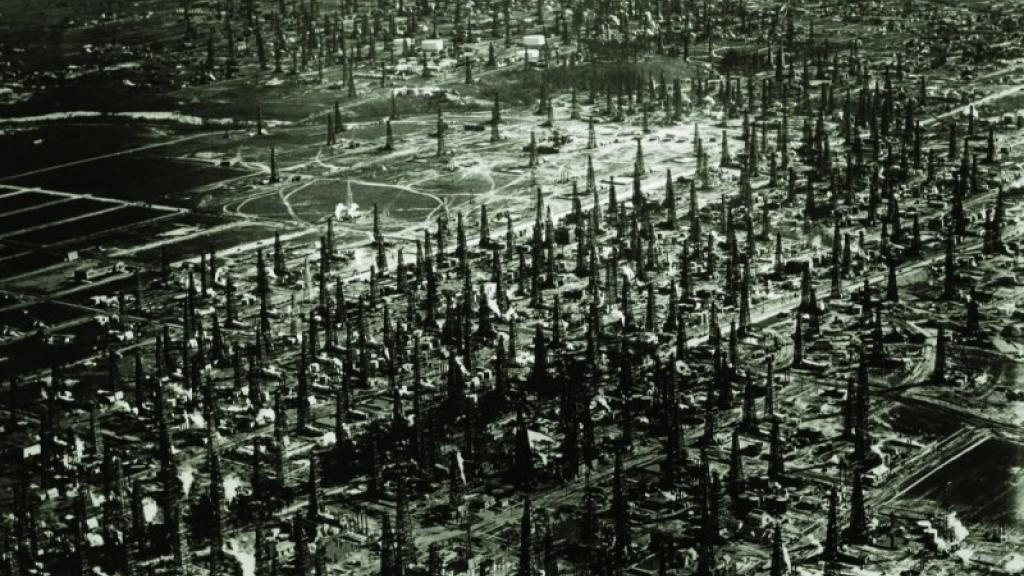
A forest of oil derricks at the Signal Hill oilfield in southern California, 1937.

[Editor’s note: Marxist scholar Adam Hanieh will be speaking at Ecosocialism 2025, September 5-7, Naarm/Melbourne, Australia. For more information on the conference visit ecosocialism.org.au.]

First published at Canadian Dimension.

Many vital left-wing books about global oil politics have been published over the last 15 or so years: Mazen Labban’s Space, Oil and Capital, Timothy Mitchell’s Carbon Democracy, Matt Huber’s Lifeblood, and Simon Pirani’s Burning Up. Perhaps none have provided quite as sweeping and synthetic of an analysis as Adam Hanieh’s Crude Capitalism: Oil, Corporate Power, and the Making of the World Market, published by Verso in September.

In Crude Capitalism, Hanieh — a professor of political economy and global development at the University of Exeter’s Institute of Arab and Islamic Studies — offers a highly readable overview of the oil industry, stretching from the late-1800s to the present day, stopping along the way for deep dives into topics ranging from the Soviet Union’s fossil economy, the rise of OPEC, and the failed promise of so-called “low-carbon solutions.”

Of particular usefulness is the book’s emphasis on petrochemicals and national oil companies, including their intertwined relationship in the Middle East and East Asia, especially China. Hanieh argues that this dynamic helps account for the United States’ ongoing support for Israel, with power over Middle Eastern oil producers used as a key lever to rebuff China’s rising global influence.

James Wilt spoke with Hanieh.

Many Canadian Dimension readers are familiar with the oil shock of 1973, where OPEC producers asserted greater control over the pricing and production of oil. Arguably far less known, but equally important, is the subsequent oil glut and the “counter-shock” of the 1980s. Can you explain this period of oil price stagnation and freefall, and how it set the stage for the rebounding of the industry in the 2000s?

This is an important period to understand better and is often overlooked in the current discussions on oil and fossil fuels more broadly. The place to start here is the world market and its dynamics at the end of the 1970s and early 1980s, following the end of the post-war economic boom. This was a moment of major economic slump and the reorganization of the world economy, and this was deeply connected to what went on with oil at that time.

One part of this was the “Volcker shock,” a pivotal moment in 1980 when Paul Volcker, then chair of the Federal Reserve, raised US interest rates to more than 20 percent. He did this in order to create a recession with the goal of halting US inflation and strengthening the US dollar vis-à-vis other currencies. It triggered a global recession between 1980 and 1982, which was the deepest recession since the Second World War. In turn, this meant a contraction in economic activity, and therefore a huge drop in consumption of oil. So there was about a 10 percent drop in oil consumption between 1979 and 1983. It is not widely recognized that this was actually the largest drop in oil demand in history. It was even more than during the COVID pandemic.

The second dynamic alongside this global recession was an increasing diversity in the geographies of oil production. New oil reserves had come online in the 1970s and early 1980s, notably in the North Sea and in Mexico, and the Soviet Union was still producing significant amounts of oil. So concurrent with the global recession, we also have increased availability of supplies of oil outside of the traditional OPEC countries. This is non-OPEC supply.

As these two trends developed, there was a really important structural shift in the global oil industry related to the way that oil was priced. Up until the early 1980s, oil prices had been set in what is described as a system of “administrative pricing.” For the first part of the 20th century, up until OPEC, it was the big Western oil supermajors who set the price of oil. These firms were called the “Seven Sisters” — the predecessors of today’s ExxonMobil, Shell, BP, Chevron and other big oil firms. They controlled oil from the moment of extraction, through refining, on to the petrol pump, with most of the world’s oil moving within their vertically integrated structures. And then after the establishment of OPEC, the big oil producers — Saudi Arabia, Venezuela, Iran — gained much more influence over the price of oil. This is what is meant by administrative pricing — the ones who controlled crude supplies set the price at which oil was sold.

But during the early 1980s, OPEC’s ability to control the price of oil had begun to slip. Partly because there were new oil supplies entering the market such as those from Mexico and UK in the North Sea. There were also new oil traders entering the picture. These were private commodity trading companies that bought oil from producer countries and then sold it on what are called spot markets, which are financial markets where short-term contracts and cash prices could be negotiated for oil between buyers and sellers, often for one-off transactions, rather than the long-term contracts that had previously been in place with the big OPEC producers.

So we’re talking about three concurrent shifts. One is the global economic slump, the crisis of world capitalism in the early 1980s. Secondly, more supply of oil coming online and an increased diversity of producers. And thirdly, this emergence of new actors buying and selling oil.

There are two principal consequences of these trends that would be useful to highlight. First is the counter-shock itself, the big drop in the price of oil that took place between 1985 and 1986 when the price of oil dropped by about 50 percent. This impacted all oil producers, but had a particularly severe impact on the Soviet Union, which was reliant on oil sales to earn foreign currency. The collapse in the price of oil played a significant part in the crisis of the Soviet political economy through the late 1980s, culminating in the USSR’s eventual breakup in 1991.

The second consequence of this counter-shock was that it really marked the breakdown of the longstanding system of administrative oil pricing. And in its place emerged a market-based system of oil pricing, in which oil futures traded on financial markets set the price of oil. This is what we have today, and it is substantially autonomous—although not separate from—the physical production and consumption of oil. The link between oil and financial markets played a big part in the emergence of what is often described as “financialization.” I think it’s a problem that so much of the discussion about oil takes place without acknowledging these changes to oil pricing mechanisms—as if the 1980s never happened and we are still living in the 1960s.

One of the more effective pieces of oil industry propaganda that we’ve seen emerge in the last while is that, beyond a fuel for transportation, petroleum products are in countless things that we use on a daily basis: plastics, synthetic fibres, and so much more. For the most part, it seems that this line has largely been disregarded by the left. In contrast, your work argues that it’s vital that we understand the material uniqueness and significance of petrochemicals, and how plastics are being posed as the future of the oil industry. Why do you think this aspect of oil consumption has often been underappreciated, and why is it important to come to grips with?

One of the key arguments in the book is that we need to break with a kind of commodity fetishism when we think about oil. What I mean by this is that we need to situate oil and oil’s meaning, if you like, in the various logics of capitalism — not as something inherent to oil itself. If we take this approach, we can see oil beyond its role as simply a liquid transport fuel, and trace how it has become so embedded throughout a huge array of our daily lives. Finance is one side to this, but the petrochemical/plastics industry is another.

This transition to a synthetic world began in the mid-20th century. And it meant that natural products like wood, glass, natural rubber and fertilizers, and so forth, were systematically displaced by products of petroleum: plastics, synthetic fibers, synthetic fertilizers, and other kinds of petroleum-based chemicals. I spend some time in the book explaining what this did for capitalism, including enabling a huge expansion in the quantity and diversity of commodities that could be produced and consumed, cheapening manufacturing and reducing labour costs, and speeding up the turnover time of capital’s circulation. Of course, it also came with disastrous ecological consequences.

This moment was fundamental to oil’s emergence as the world’s principal fossil fuel, because it enabled oil to become the material substrate to basically all of the commodities that surround us. Once you stop and pause for a minute and just look around the room and think about where all these plastics, rubbers, and paints come from, you see how ubiquitous oil (and increasingly fossil gas) really is. It has woven fossil fuels into our daily lives, but in an unseen way. It not only made the oil industry so much more powerful — in the sense that this commodity becomes integrated into everything we consume and depend upon — but it has also made oil invisible. It’s a paradox: oil is everywhere but we can’t see it.

I think this is really crucial for the left to address because it takes the discussion both about oil and where oil’s apparent power comes from in a different direction. And it also helps us think about the problem of plastics in a different way. The dominant narrative about plastics is that the problem is one of toxic waste and the need to improve recycling. Obviously plastic waste is a hugely important issue, but the problem is actually much bigger than that when we place the emergence of petrochemicals in the bigger picture of what they do for capitalism. It also helps explain why the demand for petrochemicals and plastics is growing so rapidly. The estimate is that there’s going to be a tripling in the consumption of plastics by 2060.

One of the most striking examples here is the advent of fast fashion — the rapid turnover of clothing styles involving many micro-seasons of styles, and a huge increase in the quantity of clothes that are produced. Now, one side of this is of course the highly exploited workers in factories located across the Global South producing clothes on demand for the multinational clothing companies. But it was synthetic fibres — petrochemical products like polyester — that enabled this huge increase in clothing production from the 1980s onwards. The ever present tendency for capitalism to increase the quantity of commodities produced — in this case clothing — was made possible through oil and the petrochemical commodity.

Today, oil companies describe petrochemicals and plastics literally as the future of oil. And there is also an increasing recognition that plastics themselves are a major source of greenhouse gasses. If plastics were a country, the emissions associated with their production would rank them as the world’s fifth-largest greenhouse gas emitter. So we need to think about plastics in the sense of how they have embedded the power of oil in our lives, and are thus a central question to tackling the climate crisis.

An important point you make is that historical and contemporary “energy transitions” have consistently been a process of addition, not replacement. What are a few past examples of this, and how might this understanding help us make sense of so-called low-carbon technologies like carbon capture and storage and hydrogen power?

I think there are many flaws in the way that energy transitions are typically thought about. The generally accepted notion is that capitalism is transitioning away from fossil fuels with renewables and various kinds of green technologies. We might quibble about how fast that is happening, but the assumption is that oil, gas, and fossil fuels are on their way out.

But if you look historically, energy transitions under capitalism have always been additive. The so-called coal to oil transition that happened in the middle of the 20th century is a good example. Coal, back in the early 20th century, was about 85 percent of the world’s primary energy. Now it’s much, much less: it’s about 25 percent. But if you look at the total quantity of coal that’s being consumed, we’re producing more coal than ever before. The same is true with natural gas. Natural gas only really became an important energy source in the 1980s and 1990s. Now it is significant and substantial, particularly in electricity production. But it doesn’t mean that oil or coal have declined in terms of their absolute production and consumption.

The reason for this is another feature of capitalism: the tendency to increase energy throughput, to draw in new forms of energy production and increase the total quantity of energy consumed and thus the quantities of commodities produced. The problem is that so much of the climate debate is framed in relative terms, and not in absolute terms. What matters is the absolute production of fossil fuels, not their relative share.

It’s exceedingly rare to see a global drop in energy consumption. It happened in the early 1980s with the global recession I’ve just spoken about. It happened in 1973 with the global recession associated with the oil shock. It happened in 2008, and it happened with COVID. But there has only been four times in the last six decades that we have seen a sustained drop in the global consumption of oil.

So when we look at renewables: it’s clear that, yes, there is going to be an increase in renewable sources, particularly for electricity. There may even be a drop in the relative share of fossil fuels for things like electricity production. But I think it’s unlikely that under capitalism we will see any genuine transition from fossil fuels. In this sense, the green transition is a myth. It’s not happening — and certainly not at the pace necessary to mitigate the worst case scenarios of the climate disaster.

The question of AI and the huge energy demands that are required for this sector confirm this point absolutely. Some of the predictions around the increased electricity and water needed to run data centers are mind boggling. And an increasing share may come from solar and wind (and nuclear). But this makes it even more unlikely to envision a shift away from fossil fuels.

The other kinds of technologies you mention such as hydrogen and carbon capture — these kinds of so-called low carbon solutions — raise a whole set of different problems, which I talk about in the book at length. But in short, I think really these are false or chimeric kind of solutions that are being pushed by oil companies, basically because they allow for ever increasing oil and gas production. In that sense, they’re even more dangerous than some of the illusions around renewables supplanting fossil fuels.

Another major argument in the book concerns the formation of an “East-East hydrocarbon axis” between the Middle East and Asia, which — in contrast to North America and West Europe — involves massive national oil companies and largely conventional oil resources. This aspect is another piece that seems to have been overlooked, with understandable emphasis on the private Western supermajors and consumption. Briefly, when did this East-East hydrocarbon axis start to take form, and how should it shape our understandings of the global industry?

Again, we need to start with situating oil as a crucial commodity within global capitalism and the major shift that’s taken place over the last few decades of much of global manufacturing towards China and wider East Asia. This shift in global production, much of it destined for markets in North America and Western Europe, was associated with a massive increase in the demand for oil coming from East Asia.

The share of China’s consumption of oil globally is about 14 percent of the world’s oil today, which has tripled since the early 1990s. So China now is second only to the United States in terms of global oil consumption. And this is the main reason why the world’s consumption of oil is about 40 percent higher today than it was in 1995. China has big oil supplies domestically but not enough to meet this demand. And so it had to be met by imports. The primary place where those imports came from and continue to come from were the Gulf states of the Middle East: Saudi Arabia, the United Arab Emirates, and the other monarchies of the Gulf.

Today, something like one-third of all oil consumed globally is in East Asia, and most of this is supplied through imports. China’s share of world oil imports now exceeds 20 percent. So that’s one-fifth of the world’s oil imports going just to China. And about 70 percent of all crude oil exports from the Middle East go to Asia. That’s what I mean by this East-East hydrocarbon circuit.

But it’s not just crude oil that’s important to this story. Coming back to the question of petrochemicals, we also see refined products moving from the Middle East to China and East Asia. And we see cross-border investments from big oil companies in the Gulf, and oil companies and petrochemical companies in China, moving back and forth between the two regions: joint ownership structures in major Chinese petrochemical firms that are now owned by Saudi or part owned by Saudi firms and so forth. We can see the same kind of patterns in wider East Asia, particularly South Korea and Japan.

It’s essential to put this in the global picture. The US and Canada are major oil producers — the US is the biggest oil producer in the world. But most of this North American oil circulates within North America. The Gulf’s oil production goes eastward now.

One thing this has done is really strengthened the big majority state-owned or national oil companies that are based in the Middle East. The standout company here is Saudi Aramco, the Saudi state-owned firm, which is by far the largest oil company in the world. Its profits last year were about $121 billion. If you add up the profits of ExxonMobil, Chevron, TotalEnergies, Shell, and BP, Aramco’s profits exceed all of them combined. So it’s a massive company. And it’s no longer simply a crude oil producer. It’s also one of the biggest petrochemical firms in the world now. It’s a major refiner of oil. It’s a major shipper. It owns fertilizer production sites. So all down the value chain, Aramco and the other big Gulf producers are present. They’re following the same pattern that the Western supermajors followed in the early- and mid-20th century of downstream integration. All of this is not to say that the Western companies are not important. They’re absolutely crucial. It’s instead a call to see the diversity of the actors in the global oil industry today.

How can we make sense of the role of oil in global militarism, while also accounting for major recent shifts in oil production, with Canada making up a larger share of US oil consumption, replacing OPEC imports?

There are a lot of simplistic narratives about oil, American imperialism, and the Middle East. The idea that the US wants to grab the oil supplies in the Gulf or elsewhere in the region is not the case. Saudi Arabia’s oil is owned by Saudi Arabia and produced by Saudi Arabia and the US is not going to take that oil and has no intention of doing so. The other myth, of course, is that there is a US dependency on oil from the region. The US is actually the biggest oil producer in the world: it doesn’t need oil imports from the Middle East.

But that doesn’t mean that the Middle East and Middle East oil isn’t critical to American imperialism. I don’t think we can understand the Gaza genocide today, or the crucial place of the Middle East in US geopolitical ambitions, without centering it in oil. This has been the case since after the Second World War. The US became the leading capitalist power globally alongside the rise of oil as the primary fossil fuel. These dual transitions in the world system were conjoined and very much fed one another — and the Middle East was the vital crucible in this process, as I discuss in some detail in the book.

Today, the rise of China and relative erosion of American power is closely connected to the Middle East’s importance to US imperialism. Because of China’s dependency on oil from the Middle East, and all of the refined and chemical products associated with it, there has been a growing connection politically as well as economically between China and the broader Middle East region. In this context, the US is attempting to reassert its primacy in the Middle East, particularly its alliances with the Gulf monarchies, in the face of this kind of encroachment of China’s influence.

If we ever got to a situation where the US wants to place sanctions on China, for example, a key question is going to be where China gets its oil and its access to the Middle East’s oil supplies. It’s also going to be a question of the currency in which China trades and the role of the US dollar in the global financial system. One of the ways that Russia has attempted to get around sanctions is to trade more in renminbi (Chinese yuan). China is also looking at oil trading with the Gulf in renminbi rather than US dollars, which again would play a major role in the event of any kind of US sanctions or any kind of heightening conflict between the US and China. We also need to think about the huge quantities of petrodollars that have accumulated in the Gulf — we’re talking trillions of dollars here. Where those funds are invested and what role they play in supporting the US dollar is a really important part of the story.

To come back to the wider geopolitics of the region, historically, the US had two major pillars of influence and power in the Middle East. One was Saudi Arabia and the Gulf monarchies, and the second was Israel, particularly after the 1967 war. And what the US has tried to do over the last couple of decades is bring these two pillars together: to normalize relationships between the Gulf and Israel under American hegemony. And it has been able to do that to a significant degree. The United Arab Emirates have normalized with Israel, and so has Bahrain. Saudi Arabia has openly said it would be willing to do so if there was some settlement around Palestine. So these two pillars of American power remain absolutely critical to US influence and this attempt by the US to reassert its dominance in the Middle East.

This is ultimately why the US continues to fund, support and back Israel and its war against the Palestinian people, and now across the wider region. This is an attempt to reassert American power in the face of the kinds of rivalries that we see emerging globally. The Middle East is such an important part of this global picture because of the ongoing centrality of oil to capitalism.

This interview has been edited for clarity and length. James Wilt is a Winnipeg-based PhD candidate and freelance writer. His latest book is Dogged and Destructive: Essays on the Winnipeg Police.