Sunday, July 20, 2025

COMMENT: Zelenskiy’s latest reshuffle reinforces presidential power, not government reform

COMMENT: Zelenskiy’s latest reshuffle reinforces presidential power, not government reform
Ukrainian President Zelenskiy has appointed fierce loyalist and go-getter Yuliia Svyrydenko as prime minister to shore up his hold on power and reinvigorate a flagging government. / bne IntelliNews
By Ben Aris in Berlin July 17, 2025

Ukraine’s new prime minister, Yuliia Svyrydenko, is the first to hold the post in five years – but her appointment is unlikely to signal a major shift in Kyiv’s governance. As Ukraine’s system of power has evolved under the pressure of war, the position of prime minister has become largely symbolic. In today’s political structure, only the president and his chief of staff wield real authority.

Denys Shmyhal’s unusually long tenure – five years and 133 days – was less a reflection of political strength than of technocratic loyalty. He outlasted several reshuffles not because of personal ambition, but precisely because he lacked it. Unlike his predecessors, who often clashed with presidents in the past – such as Leonid Kuchma with Leonid Kravchuk or Yulia Tymoshenko with Viktor Yushchenko – Shmyhal posed no threat to Volodymyr Zelenskiy’s centralised leadership.

Zelenskiy, uninterested in power-sharing arrangements, abandoned the idea of a politically competitive cabinet early in his presidency. After experimenting with a reformist government under Oleksiy Honcharuk, whose policy lectures reportedly irritated the president, he pivoted to appointing loyal technocrats who would implement directives without deviation.

This model held until Russia’s full-scale invasion in 2022. Since then, martial law has frozen Ukraine’s political processes: no elections, no government transitions, no parliamentary resets. “Certainly, no one inside the government was in any particular rush to test the public’s love for them at the polling stations,” said independent journalist Konstantin Skorkin in a note for Carnegie Endowment for International Peace. “But discontent and a desire for change were accumulating in Ukrainian society and needed a release valve.”

Instead of elections or genuine power-sharing, Zelenskiy’s team opted for a controlled reboot. Svyrydenko has replaced Shmyhal, who remains in government as defence minister. Rustem Umerov, whom Shmyhal replaces, will be sent to Washington as ambassador. “All that remains to complete the circle is to return Umerov’s predecessor Oksana Markarova from Washington to the government,” Skorkin noted.

According to Skorkin, the reshuffle serves to consolidate control under Andriy Yermak, the powerful head of the presidential administration. “No matter how loyal Shmyhal was, he was not Yermak’s creature, and therefore had to be replaced,” he said. Previous attempts to remove Shmyhal were blocked by Servant of the People party leader David Arakhamia, who represented a rare alternative voice within the administration.

Svyrydenko, in contrast, is portrayed as even more compliant. “She diligently writes down all the president’s instructions in a notebook, and makes her government jet available to the first lady,” Skorkin said, citing Ukrainska Pravda. Still, her career is not without merit: she rose from regional official to economy minister, attracting Chinese investment to Chernihiv and earning international recognition from Time magazine.

She is now only the second woman to serve as prime minister in Ukraine, following in the path of Yulia Tymoshenko, once dismissed as a political proxy yet still a force in parliament. Whether Svyrydenko can similarly evolve into an independent political actor remains to be seen.

“It has often been said that Zelenskiy believes more in individuals than in institutions,” Skorkin observed. “But in the established power system, the prime minister’s name does not matter – not because of institutions that work like clockwork, but because all branches of power except the presidential vertical have dried up.”

With martial law continuing and no end to the war in sight, the possibility of restoring institutional balance looks increasingly remote. “Even thinking about such a time is beginning to seem utopian,” Skorkin concluded.


 

Cities across Central Asia bearing brunt of climate crisis

Cities across Central Asia bearing brunt of climate crisis
People across Central Asia are becoming increasingly familiar with the rule that when the “wet-bulb” globe temperature (WBGT) surpasses 30.5°C, even light outdoor activity can be dangerous. / worldbank.org
By bne IntelliNews July 17, 2025

Cities across Central Asia are bearing the brunt of the worsening climate crisis. Rising temperatures are fuelling a surge in heat-related deaths, economic disruption and infrastructure damage. 

According to a report from the World Bank and the Global Facility for Disaster Reduction and Recovery, the capitals of Uzbekistan, Kazakhstan, Kyrgyzstan and Turkmenistan are among the most affected.

Tashkent, Astana and Bishkek are already experiencing between 19 and 21 excess deaths per 100,000 people annually due to extreme heat. 

Uzbekistan’s southern cities of Termez and Turtkul are, meanwhile, among the country’s hottest, and climate projections suggest conditions will become increasingly severe. 

By 2090, Nukus is expected to endure up to 77 days annually of extreme heat stress—days when the “wet-bulb” globe temperature (WBGT) surpasses 30.5°C, making even light outdoor activity dangerous.

Both Termez and Turtkul are also projected to see a sharp rise in the number of “hot days,” defined as those exceeding the 95th percentile of historical maximum temperatures.

In Ashgabat, the figure climbs to as high as 28. 

Forecasts suggest that by 2090, cumulative heat-related deaths in major cities such as Tashkent and Astana could reach up to between 10,000 and 23,000 per year.

“Tens of thousands of people have died in Europe and Central Asia due to heat over the past two decades, and by 2050 this figure could double or triple in many cities, equalling the number of road accidents,” the report notes.

The study, which analysed 70 cities across the Europe and Central Asia (ECA) region, highlights how dense construction, limited green space and outdated infrastructure contribute to the “urban heat island” effect—an environmental phenomenon where city surfaces trap and radiate heat, raising local temperatures by several degrees.

Dark asphalt, for example, absorbs up to 95% of solar radiation. 

In Tashkent, widespread road expansion and mass parking have turned the city into a “real frying pan,” according to the report.

AI modelling suggests that by the 2050s, Tashkent’s liveability may decline so sharply that its population will begin to fall.

The economic costs are already mounting. 

Rising temperatures have resulted in the loss of over 87,000 full-time jobs across the region, with Uzbekistan suffering the highest toll—over 22,000 jobs lost. 

The tourism, construction, agriculture and transport sectors—especially those reliant on outdoor labour—have been particularly hard hit by lower productivity and shorter working hours.

Infrastructure in many cities, built during the Soviet era, is now buckling under climate stress. 

Kyrgyzstan reports that extreme temperatures damage around 200 kilometres (124 miles) of roads annually. This not only results in costly repairs but also disrupts critical supply chains and trade routes.

“During heatwaves, equipment breaks down, energy systems become overloaded, and supply chains come to a standstill,” the report says. “Extreme heat also reduces physical and mental performance. It slows workers down, shortens work hours, and reduces production, especially in sectors that are exposed to extreme heat.”

Healthcare systems are under pressure as well. 

Hospitals and emergency rooms in the region are struggling to treat a growing number of patients with heatstroke and chronic illness complications. 

Vulnerable populations—particularly the elderly and low-income residents—are most at risk.

Despite these challenges, the World Bank argues that cities still have time to act.

“They can make urban spaces cooler, such as by expanding tree canopies and creating parks and gardens; protect lives during extreme heat, such as through early warning systems; adapt infrastructure to a hotter future, including by equipping schools, hospitals and homes with passive cooling systems and using heat-resistant materials; and integrate heat-resilient principles into government programmes,” the report recommends.

Other proposals include installing cooling systems in public transport, shading bus stops and redesigning urban infrastructure with climate-resilient materials.

“Cities and mayors are taking the lead in designing, financing and implementing heat-resilient measures, but to succeed they need a clear mandate, sustainable funding and close coordination with national authorities,” said Megha Mukim, senior urban economist at the World Bank. “Immediate action can help save lives and strengthen the prosperity of cities in the ECA region for decades to come.”

Mukim emphasised that real progress hinges on “ensuring action on the ground: clearly delineating responsibilities, building municipal capacity and integrating heat resilience issues into the daily activities of government bodies—from zoning to budgets and public health planning.”

With more than 70% of the region’s population living in urban areas, the stakes are high. 


Japan’s Self-Defence Forces are much more capable than many think

Japan’s Self-Defence Forces are much more capable than many think
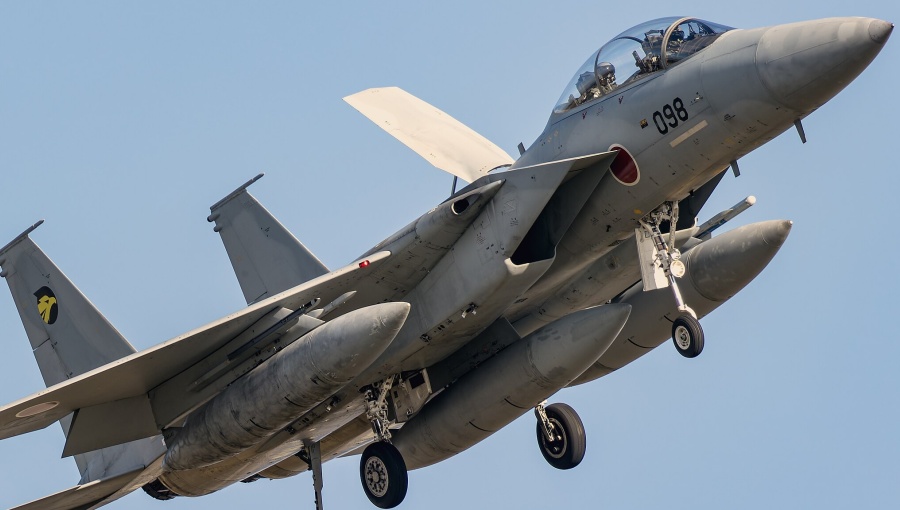
An F-15DJ Eagle from the Japanese ASDF / Cp9asngf - CC By SA 3.0
By bno - Taipei Office July 18, 2025

For much of the post-war era, Japan’s armed forces – officially termed the Self-Defence Forces (SDF) – have occupied a peculiar place in global military discourse.

Technologically advanced, tightly regulated and constitutionally constrained, the SDF has long been viewed as a capable but defensive force. Yet as tensions rise in East Asia, particularly due to China’s increasingly aggressive military posture, a proper assessment of Japan’s capabilities shows the SDF to be far more formidable than many outside the region may realise.

During the past decade Japan has quietly but steadily modernised its defence apparatus. While Tokyo avoids the loud rhetoric of some of its neighbours, its actions speak volumes. Contrary to the popular perception of a pacifist nation shackled by its post-war constitution, Japan today possesses one of the most sophisticated military forces in the region, and is rapidly adapting to meet emerging threats.

According to the International Institute for Strategic Studies (IISS), Japan’s 2023 defence budget reached a record JPY6.8 trillion (around $52.5bn), placing it among the world’s top 10 military spenders. More tellingly, Prime Minister Fumio Kishida’s government prior to his being succeeded by Shigeru Ishiba pledged to double defence spending over five years – a stark statement of intent. The goal is to reach 2% of GDP by 2027, aligning Japan more closely with Nato standards, and breaking decades of fiscal restraint on security matters.

In practical terms this can be read in many ways.

Japan’s Maritime Self-Defence Force (MSDF) is perhaps the most advanced navy in Asia after the resident detachments of US Navy elements in Japan and South Korea. Its fleet includes – at least – 36 destroyers, 24 submarines (with more on the way) and a growing number of multi-mission vessels equipped with Aegis combat systems. The Izumo-class helicopter destroyers, initially designed for anti-submarine warfare, are being refitted to operate F-35B stealth fighter jets which will effectively turn them into aircraft carriers in all but name.

The Japan Air Self-Defence Force (JASDF), meanwhile, is equipped with around 330 combat aircraft, including over 150 F-15Js and a growing fleet of F-35As approaching 40. The F-35 programme is central to Japan’s air power strategy, with Tokyo planning to acquire at least 147 of the stealth fighters, the largest F-35 fleet outside the United States.

On land, the Japan Ground Self-Defence Force (JGSDF) has over 450 main battle tanks, including the advanced Type 10 MBT, and is increasingly mobile and digitised. Some reports hint at up to 1,000 tanks currently maintained by the JGSDF. Importantly, the government has moved to develop counterstrike capabilities in a notable shift in Japan’s doctrine by acquiring Tomahawk cruise missiles and investing in indigenous long-range missile systems.

This evolution is not occurring in a vacuum, though. It is a direct response to the changing security environment in East Asia, and in particular, the challenge posed by China.

The People’s Republic of China now operates the world’s largest navy in terms of ship numbers and is expanding its air force and missile capabilities at a breathtaking pace. According to the US Department of Defense’s 2023 China Military Power Report, the PLA Navy has over 370 ships and submarines, while the PLA Rocket Force is deploying a growing number of ballistic and hypersonic missiles that could target Japanese and US assets in the region.

Nowhere is the tension more visible than in the East China Sea. The uninhabited Senkaku Islands (Diaoyu in Chinese) are administered by Japan but claimed by China. Chinese coast guard vessels often backed by armed naval ships frequently intrude into Japanese and Taiwanese waters. In 2023 alone, Japan recorded over 170 intrusions by Chinese vessels in the area. These encounters have become so routine that Tokyo has had to regularly scramble JASDF jets to intercept Chinese aircraft approaching Japanese airspace. At one point these sorties averaged over 700 such scrambles per year.

This is not an abstract strategic game. It is a day-to-day reality for Japanese defence personnel and coastal communities in Okinawa Prefecture and of course those in neighbouring Taiwan, who live under the constant spectre of Chinese provocation or even miscalculation.

Beyond the East China Sea, there is also concern about Japan’s closest neighbour – Taiwan. Japan has made it increasingly clear that any conflict involving Taiwan would have direct security implications for Tokyo. Japanese policymakers are especially worried about their southernmost island chain which stretches southwest from Kyushu towards Taiwan. These islands, many of which are sparsely populated, are seen as a weak point in Japan’s defence chain. In response, Tokyo is stationing missile batteries and troops on key islands such as Yonaguni, Ishigaki and Miyako.

As early as 2005 it was revealed that naval facilities in the region were being refitted to accommodate European, most likely British Royal Navy vessels, as well as US ships.

However, some critics argue that Japan still lacks the offensive capabilities to deter China effectively. Others point to the political sensitivity surrounding Article 9 of the Japanese Constitution, which renounces war as a sovereign right. But what is often overlooked is how far Japan has already shifted.

The 2022 National Security Strategy explicitly recognises the right to possess counterstrike capabilities, a move unthinkable just a decade ago. Moreover, Japan is deepening cooperation with allies. The US-Japan alliance remains the bedrock of regional security, but Tokyo is also building closer ties with Australia, the UK and other partners.

If the aim is to build a capable, credible and resilient defence force, then Japan is already well on its way.

In the end, Japan’s strength lies not just in its weapon systems, but in its clarity of thought and mission. Tokyo understands that peace is best preserved through strength, and in a region where threats are growing, that clarity is essential. The Self-Defence Forces may not project power like some of their counterparts, but China should make no mistake: they are a cornerstone of stability in East Asia. And as long as Beijing continues its military expansionism and aggressive posturing, that role will only grow in importance.

LA REVUE GAUCHE - Left Comment: Search results for PERMANENT ARMS ECONOMY


ASEAN in 2025: still relevant, but only just

ASEAN in 2025: still relevant, but only just
ASEAN's Big Five — (L to R) Philippine Foreign Secretary Narciso Ramos, Indonesian Foreign Minister Adam Malik, Thai Foreign Minister Thanat Khoman, Malaysian Deputy Prime Minister Tun Abdul Razak, and Singaporean Foreign Minister S. Rajaratnam. / ASEAN Image Library and Repository - PD
By bno - Taipei Office July 18, 2025

In 2025, the Association of Southeast Asian Nations (ASEAN) remains a central pillar of regional diplomacy, economic integration, and security dialogue in the region. Yet despite its long-standing importance, the bloc’s credibility and effectiveness are increasingly under scrutiny. As geopolitical tensions rise and new international groupings gain prominence, the question is being asked more frequently: is ASEAN still relevant?

Founded on August 8 1967, in Bangkok, ASEAN has long prided itself on unity in diversity, guided by the principles of non-interference and consensus-based decision-making. It has delivered real achievements - tariff reduction through the ASEAN Free Trade Area (AFTA), visa-free travel for citizens within the bloc, and a central role in hosting security forums such as the East Asia Summit. With a combined population of around 700mn and a GDP exceeding $3.9 trillion in 2025, ASEAN remains a formidable economic and demographic force.

However, just as it welcomes East Timor into the fold, recent developments have exposed the limitations of ASEAN’s model, particularly its much-criticised principle of non-interference. Nowhere is this more glaring than in its response to the ongoing crisis in Myanmar.

Since the 2021 military coup in Myanmar, ASEAN has struggled to present a coherent or effective stance. While it excluded Myanmar’s military representatives from summits, the bloc has failed to enforce its own Five-Point Consensus, agreed in April 2021 to resolve the conflict. The junta has openly defied ASEAN’s calls for dialogue and humanitarian access. Despite multiple high-level meetings and rotating chairs - Indonesia in 2023, Laos in 2024, and Malaysia in 2025 - the situation has only deteriorated, with over 50,000 dead in Myanmar’s civil war and more than 3mn displaced.

This perceived impotence has cost ASEAN credibility, particularly among human rights advocates and civil society organisations, who see the bloc as slow, cautious, and unwilling to challenge rogue behaviour within its own ranks. Malaysia’s foreign minister stated bluntly in July 2025 that “elections in Myanmar are not a priority now,” regardless of claims by junta officials – in the process all but admitting the bloc’s diminishing influence.

Compounding this are the growing number of alternative regional and international frameworks now competing for attention. The Quad (comprising the US, Japan, India and Australia) has expanded its regional initiatives, particularly in the fields of technology, defence, and climate change. Similarly, the Indo-Pacific Economic Framework (IPEF), backed by the United States, offers economic cooperation that some ASEAN states now view as more dynamic than ASEAN’s own economic initiatives.

Meanwhile, China’s Belt and Road Initiative (BRI) and the Regional Comprehensive Economic Partnership (RCEP) have deepened Beijing’s economic grip on Southeast Asia, often sidelining ASEAN processes in favour of bilateral or multilateral arrangements more aligned with Chinese interests.

Yet ASEAN is not irrelevant – not just yet.

Its sheer scale, institutional depth, and convening power remain unmatched in the region. It still plays a central role in regional diplomacy - hosting dialogues between major powers, including the US, China, India, and Japan. The ASEAN Summit, the ASEAN Regional Forum, and the East Asia Summit remain among the few platforms where these countries meet on equal footing.

In 2025, ASEAN has also made strides in digital integration, with the ASEAN Digital Economy Framework Agreement (DEFA) moving towards completion. If finalised, it could boost intra-ASEAN e-commerce and digital trade, potentially adding hundreds of billions to the region’s GDP over the next decade. Environmental cooperation is also expanding, with the ASEAN Climate Resilience Network supporting shared responses to climate threats, particularly among Mekong countries.

For ASEAN to remain relevant and regain lost credibility though, reforms are urgently needed. This may include adopting qualified majority voting in specific areas, strengthening the ASEAN Secretariat’s authority, and creating mechanisms for accountability when member states violate key agreements or norms.

The world is changing fast, and ASEAN cannot afford to cling to traditions that no longer serve its people. If the bloc can modernise while preserving its core values, it will not only remain relevant, it will thrive as a cornerstone of regional peace and prosperity. But if it continues to sit on the fence, others will step in and take its place.

UK

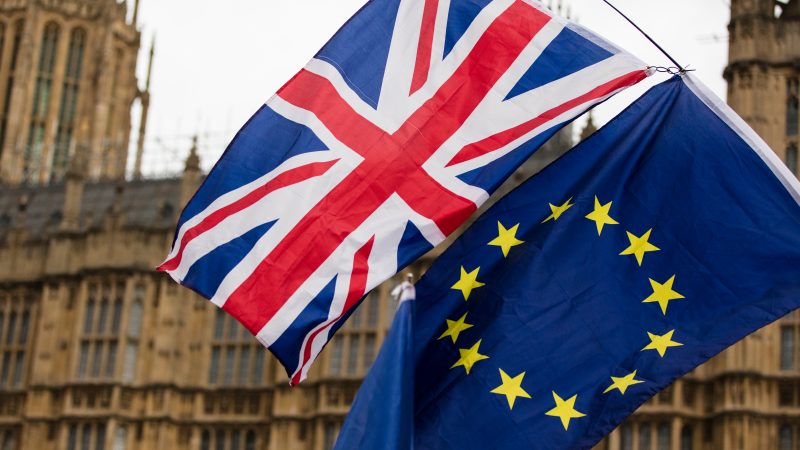
‘The growth strategy no one will say out loud: rejoin the European Union’


Photo: Shutterstock

Last week, a two-day seminar bringing together center-left participants from both Britain and the EU, including Labour MPs and party officials, MEPs, think tankers, academics and others, discussed where the “reset” in UK-EU relationships may lead to. The complexity, and the limits to what can be achieved without revisiting difficult issues, were plain for all to see.

Brexit forced unpalatable choices on Britain: either to distance itself from Europe, outside the single market and the customs union, free to make separate trade deals with the USA and others, but at great cost to the British economy, or, like Norway, Switzerland and others, to align with the European single market, attenuate the economic damage, but be obliged to follow single market rules without a full say on them when they change in the future.

Brexiteers themselves were divided on this. At the time of the referendum, some promised that Britain would remain in the single market, while others argued for “Global Britain”. The Theresa May government was torn apart on this. Johnson plumped for a hard Brexit leaving the single market and the customs union.

This has cost Britain dearly. According to the OBR and several academic studies, GDP is between four and five percent smaller than it would have been without Brexit. That would have delivered about £40bn extra tax revenue every year – our current debate about tax and spend would be very different!

These costs arise mostly from not being in the single market and the customs union. Why are they so significant?

READ MORE: ‘Suspending dissenting voices is a sign of weakness, not a show of strength’

The single market is a set of common rules on product standards, consumer protection, environmental norms, workers’ rights and fair competition. This means products made legally in one member state are legal in all of them as they are made to the same rules. They can be traded without further ado, with no need for further certification, safety tests, or border checks. Common legal remedies are available should there be any disputes. Britain is no longer part of this system as the Johnson government wanted to “actively diverge” to undercut the EU by having lower standards. That means that British goods entering the single market often require checks, certification tests, paperwork, and, for food products, health certificates.

The customs union eliminates all tariffs (border taxes) between its members, with a common external tariff for imports from third countries. That in turn means that the EU negotiates trade deals collectively – with the clout of being the world’s largest single market. It therefore often gets good trade deals. When Britain left and had to replace the deals it had, as part of the EU, by its own separate deals with countries across the world, it struggled to even get roll-overs of the same terms, let alone any better ones. It also had to make a trade agreement with the EU itself, which is by far its most important export market (and supply chain source). While it did secure a no-tariff agreement, British goods entering the EU are now subject to “rules of origin” checks which involves looking at their components and calculating the percentage of added value that is British. It’s not just EU rules, but WTO rules which require this (in both directions).

For exporters, the upshot of leaving both is reams of paperwork, extra costs and frequent delays at the border. Faced with this, many small businesses have ceased to export. Fresh products (agriculture and fish) are particularly vulnerable to delays making them worthless.

The Labour government is seeking to reduce barriers to trade by aligning with single market rules. But it is constrained by the exceedingly cautious words it put in its manifesto, ruling out joining the single market or the customs union.

READ MORE: ‘Reviving Sure Start is a great first step – a children’s minister should be the next’

The May 2025 UK-EU summit nonetheless set out some interesting first steps. A “Common Understanding” document envisages Britain following EU Sanitary and Phytosanitary rules to allow agri-food trade to be “undertaken without the certificates or controls that are currently required”. It also envisages “participation of the UK in the EU’s internal electricity market”, also entailing alignment with EU rules “where relevant”.  In both cases, alignment would be “dynamic” – meaning Britain would follow future changes to those rules. There would also be a linkage of carbon markets including Emission Trading Schemes.

Already there is talk of doing this in other sectors: chemicals and pharmaceuticals have been mentioned as possibly next in line.

Does this amount to re-joining the single market by stealth?  Well, the single market is not actually a membership organisation. It is a set of EU rules that you can align with to various degrees: Norway and Iceland are almost fully aligned; Switzerland is not far behind.

The problem, of course, is that while the EU’s current rules are still largely those shaped with full British involvement when it was a member, whenever the EU revises its rules, Britain will largely be a rule-taker. It will be consulted, but as a non-member it will not have a vote in the EU Council or Parliament.

Subscribe here to our daily newsletter roundup of all things Labour – and follow us on  BlueskyWhatsAppThreadsX or Facebook.

The only way to remedy that is to rejoin the EU, reap economic (and other) benefits, and co-decide on the rules and policies of the EU, regaining sovereignty as those rules and policies affect us anyway. But that is also a challenge. It would need years of negotiation – though not as many as some suggest given that the UK is still in line with most EU rules. It would in theory mean committing to join the euro – but as there are now seven Member States who have not joined the euro (five of which show no intention of joining) there will be scope for negotiating a similar arrangement to what Britain had before: the right to join, but not an obligation.

The EU would be willing to have us back. After all, Brexit was not good for the EU either and if the one Member State to have ever left were to come back, it would be a powerful vindication of its benefits. The one thing the EU would fear would be to repeat the whole Brexit saga again ten years down the line.

The key therefore lies in Britain. To go down the rejoin route would require a high level of public support. Recent polling shows that (after taking away the don’t knows/don’t cares), over 64% now think Brexit was a mistake and 62% favour rejoining the EU. Interestingly, these figures have been rising slowly but steadily, despite no leading politician publicly making the case to rejoin. By the time the next election manifestoes are written, it might be an idea whose time has come.


Defend the Right to Peaceful Protest – Joint Statement by 22 UK Union Leaders

“The freedoms to organise, of assembly and of speech matter; we must defend them. We call for the charges against Alex Kenny, Sophie Bolt, Chris Nineham and Ben Jamal to be dropped.” 

By the National Education Union

Twenty-two general secretaries of the trade union movement have issued a statement expressing deep concern about the erosion of the right to peaceful protest. 

Following a peaceful march for Palestine on January 18 in London, charges were brought against prominent activists, including former NEU executive member, Alex Kenny. 

The statement below calls for the charges to be dropped.

Defend the right to protest – trade union statement 

We are deeply concerned that the Metropolitan Police are bringing charges against former NEU executive member, Alex Kenny, and Sophie Bolt, CND secretary, following the peaceful protest for Palestine in London on January 18th. 

These charges follow the decision to prosecute Chris Nineham, Stop the War Coalition vice-chair, and Ben Jamal, Palestine Solidarity Campaign director. 

Alex Kenny is a long-standing, and widely respected, trade union activist who has organised peaceful demonstrations in London for decades. 

He was the chief steward for the NEU national strike demonstration in March 2023. 

He has played a leading role in many demonstrations organised in the TUC region covering London and the south east. 

We believe these charges are an attack on our right to protest. 

The right to protest is fundamental to trade unions and the wider movement. 

The freedoms to organise, of assembly and of speech matter; we must defend them. 

We call for the charges against Alex Kenny, Sophie Bolt, Chris Nineham and Ben Jamal to be dropped. 

Signed by the following Trade Union General Secretaries: 

Paul Nowak – TUC
Christina McAnea – UNISON
Sharon Graham – Unite 
Daniel Kebede – NEU 
Matt Wrack – NASUWT 
Fran Heathcote – PCS 
Dave Ward – CWU 
Jo Grady – UCU 
Eddie Dempsey – RMT 
Paul Fleming – Equity 
Paul Whiteman – NAHT
Steve Gillan – POA 
Steve Wright – FBU 
Mick Whelan – ASLEF 
Maryam Eslamdoust – TSSA
Sarah Woolley – BFAWU 
Gawain Little – GFTU 
Zita Holbourne – Artists Union 
Daniel Garnham – Security Industry Federation 
Brian Linn – Aegis 
John McGowan – Social Workers Union 
Julia Georgiou – NHBC staff Association 


UK

Birmingham Bin Strike Mega Picket 2: Five Sites, One Day!

“We are organising Mega Picket 2: Five Sites, One Day! Twenty-six organisations from across the trade union movement, including RMT, ASLEF, NEU, NASUWT, and the BMA, will be converging on Birmingham and Coventry.”

By Robert Poole and Henry Fowler, co-founders of Strike Map

As of this writing, refuse workers in Birmingham have been on strike for 127 days. The Labour-controlled Birmingham Council is threatening them with breathtaking pay cuts of £8,000. Pause for a moment and consider how that would affect you and your family. What effect would the loss of nearly £700 a month have on you? Perhaps a missed rent or mortgage payment? What would you need to sacrifice to cover this drop in income?

For most working people, losing so much money simply isn’t an option. Add to this the constant attrition caused by the rising cost of living, and you can see why the dispute has become so bitter.

Strike Map has been involved in fundraising over £3,600 of financial support for this strike. In May, Strike Map visited Birmingham to deliver a cheque to the strike fund of the beleaguered workers, and what we saw was chilling: a heavy police presence, including custody vans, and the threat of the military being drafted in. The purpose was clear: to intimidate workers and force them back to work. We knew a unified response was needed, a show of solidarity from the trade union movement.

In only a matter of hours, the steering committee of Strike Map organised what we dubbed “The Megapicket.” Our plan was simple: we would arrange a demonstration in Birmingham and send out a call for support. We called, and you answered. Hundreds of union members travelled on coaches from as far as Bristol and Leeds to the Lifford Lane depot in Kings Norton, Birmingham, to stand shoulder to shoulder with their striking brothers and sisters.

The demonstration led to the council shutting down the depot, forcing the scab workers to turn around and go home. The council is using every dirty trick in the book, including agency staff to fill the roles of striking workers. We thought that maybe these agencies didn’t realise the harm they were doing, so we encouraged supporters to let them know by writing and calling them. This led to Surecall Recruitment Ltd stopping the supply of scabs.

Rather than recognise that this show of support was indicative of the mood of the city they are supposed to serve, Labour council leaders have doubled down. Talks with ACAS have stalled, and they announced last Wednesday that they plan to effectively fire and rehire striking bin workers. Birmingham City Council is currently £3.2 billion in debt, paying £200 million a year in interest alone to Central Government, and once again, workers are being forced to pay the price for fourteen years of Tory austerity and mismanagement by politicians of all stripes.

The government has the power to step in and end this dispute, but our pleas are falling on deaf ears. Unite the union even made a symbolic move to strip Angela Rayner of her union membership at their conference.

Council bosses are resorting to the courts to undermine strike action and won a court injunction in June to stop workers blocking scab vehicles entering depots. Unite is mounting a challenge against this, but legal victories aren’t enough on their own. They need to be enforced and supported by practical, on-the-ground power.

That’s why on July 25, 2025, we are organising Mega Picket 2: Five Sites, One Day! Twenty-six organisations from across the trade union movement, including RMT, ASLEF, NEU, NASUWT, and the BMA, will be converging on Birmingham and Coventry.


We are calling on the whole labour and wider trade union movement to join us as we support the picket lines from 6 AM on July 25 at:

  • Atlas Depot, B11 2AS
  • Lifford Lane Depot, B30 3JJ
  • Perry Barr Depot, B42 2TU
  • Ryton site (Coventry), CV8 3EJ
  • Veolia Incinerator, B11 2B

RSVP to let the strikers know you are coming here.

Victory to the Brum Bin Strikers!


  • Robert Poole and Henry Fowler are co-founders of Strike Map. You can find out more about Strike Map here, and follow Strike Map on Facebook, Instagram and Twitter/X.
  • This action is supported by: Artists Union England, ASLEF, BFAWU, Blacklist Support Group, Birmingham TUC, British Medical Association, Campaign for Trade Union Freedom, Equity, FBU, GFTU, HCSA, NASUWT, National Education Union, NHS Workers Say No!, NSSN, PCS, Peace and Justice Project, POA, Psychotherapy and Counselling Union, Royal College of Podiatry, RMT, Security Industry Federation, Strike Map, Troublemakers at Work, UCU, We Demand Change.
  • Get in touch via strikemap@gftu.org.uk to add your organisation

UK

Public ownership of water works. 

But Labour is ignoring the evidence – Compass

“The past few years have laid bare the catastrophic failures of water privatisation… Bills have soared for ordinary households, while shareholders and executives continue to extract billions in dividends and bonuses.”

By Clementine Boucher, Compass

In one of the most divided moments in recent history, one issue unites an overwhelming 82% of us across political lines: water – essential to life and a natural monopoly – should be in public ownership. Whether nationally, regionally, municipally, or through a new democratic model tailored to our country’s needs.

And it’s easy to see why.

The past few years have laid bare the catastrophic failures of water privatisation. Record levels of raw sewage have been dumped into our rivers and seas. Leaking pipes waste billions of litres daily. Water companies are drowning in debt. Bills have soared for ordinary households, while shareholders and executives continue to extract billions in dividends and bonuses.

Far from delivering a cleaner, more efficient service, the private model has resulted in a system in decline – unable to keep our water clean, fair or affordable. And with no new major reservoirs built since privatisation, the sector is woefully unprepared for the pressures of climate change.

While our system has gone down the drain, others have shown there’s a better way. Paris reclaimed public control of their water in 2010. Since then, bills have fallen, democratic oversight has increased, and investment in environmental clean-up has paid off: for the first time in 100 years, people can now swim in the Seine.

But in the face of such an obvious, popular and urgent opportunity for a total overhaul of our water sector, the Labour leadership’s reaction has been frighteningly poor. They have refused to challenge the power of water companies, insisting we can regulate ourselves out of a broken model.

Take, for example, Environment Secretary Steve Reed’s repeated claim that public ownership is too expensive – based on a discredited report funded by the water industry itself. Or the so-called “reset” review of the water sector, led by Treasury insider Jon Cunliffe, which ruled out examining public ownership before it even began. Instead of starting with the question, “What works best?”, it began by protecting the interests of the status quo.

To borrow a phrase from Rutger Bregman: it feels like we’re at a firefighters conference, and not allowed to talk about water.

We think it’s time to talk about water.

That’s why Compass has joined forces with Clive Lewis MP and a growing coalition of over 20 unions, anti-sewage campaigners, democracy advocates, and charities to call for a new approach – starting with putting public ownership firmly back on the table.

Fortunately, alternatives are already being built.

Over the past few months, the People’s Commission on the Water Sector – led by four independent UK academics – has travelled across the country listening to the public, speaking with experts, and studying the world’s most effective water systems.

Unlike the official review, theirs didn’t begin by excluding public ownership; it asked which model would deliver the best results.

Their conclusion is crystal clear: public ownership brings cleaner, cheaper and fairer water. And crucially, it’s possible to start right now.

We don’t need a massive buyout or taxpayer-funded nationalisation programme. Under existing laws, the government already has the power to begin bringing water companies back into public hands without costing the public a penny. All that’s missing is the political will.

Now it’s over to us to amplify this message everywhere – to MPs, civil society, and people across the country – and build deafening pressure on the Government to finally look at this solution. That’s why we’re backing the People’s Plan for Water.

We’re demanding:

  • A clear, planned shift to public ownership, using powers Parliament already has.
  • Water boards run by those with a genuine stake in clean, affordable water – workers, citizens and communities, not distant profiteers.
  • Polluters made to pay for the damage they’ve caused, instead of the public footing the bill.

We’ve got the evidence, the solutions and the momentum. Now we must build the pressure to make it unavoidable.If you believe everyone should have access to clean, affordable water, add your name to the People’s Plan.

Labour has the power, and the responsibility, to lead. Let’s make sure they listen to the people they represent.